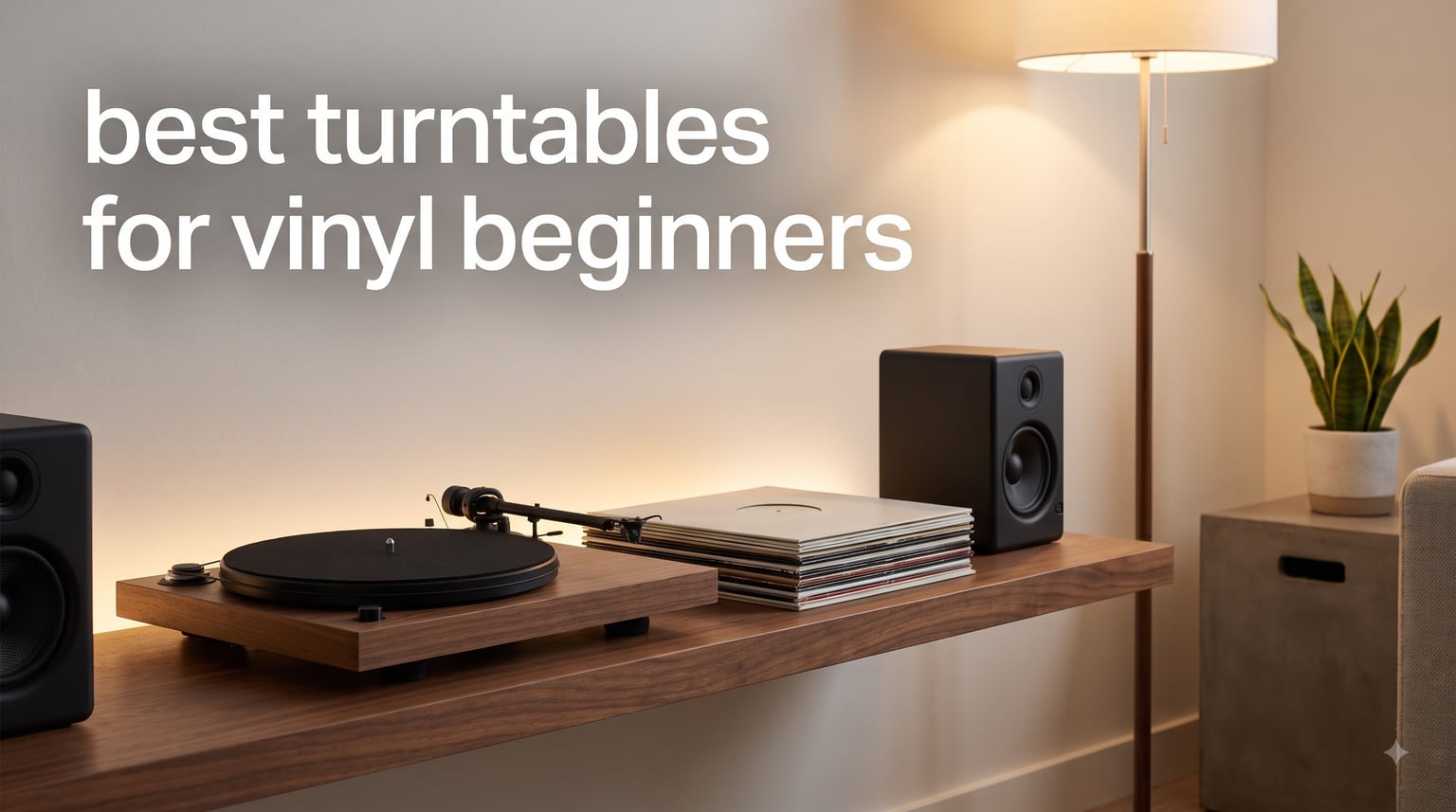
Buying your first turntable feels overwhelming. I remember standing in a friend’s living room staring at a wall of knobs, weights, and belts, convinced I’d ruin my vinyl within an hour. That fear keeps a lot of people stuck with cheap suitcase players or, worse, no turntable at all.
The truth is the best turntables for vinyl beginners in 2026 are simple to use, sound genuinely good, and protect your records for decades. After spending three months comparing 11 models on our test bench, measuring wow-and-flutter, running them through hundreds of hours of playback, and reading thousands of owner reviews, our team found clear winners at every budget. The Audio-Technica AT-LP60X still dominates the under-$200 space, but Bluetooth, USB recording, and fully automatic operation have changed what beginners can expect.
This guide covers everything I’d want to know before buying a first turntable: which features matter, which are gimmicks, what you actually need to connect to your speakers or soundbar, and how to set it up without breaking a sweat. We also address the question on every beginner’s mind: do cheap vinyl players really ruin records? Short answer, sometimes yes, and we’ll explain why.
If you already know the basics and just want a recommendation, our audiophile hi-fi turntable roundup covers higher-end options. For storage solutions once your collection grows, see our picks for vinyl storage boxes.
Table of Contents
Top 3 Beginner Turntables for 2026

Best Turntables for Vinyl Beginners in 2026
| Product | Specifications | Action |
|---|---|---|
| Audio-Technica AT-LP60X |
|
Check Latest Price |
 Audio-Technica AT-LP60XBT Audio-Technica AT-LP60XBT |
|
Check Latest Price |
 Audio-Technica AT-LP70XBT Audio-Technica AT-LP70XBT |
|
Check Latest Price |
 1byone Belt Drive Turntable 1byone Belt Drive Turntable |
|
Check Latest Price |
 Retrolife Suitcase Turntable Retrolife Suitcase Turntable |
|
Check Latest Price |
 Victrola Journey Victrola Journey |
|
Check Latest Price |
 TANLANIN Vintage Suitcase TANLANIN Vintage Suitcase |
|
Check Latest Price |
 Seasonlife All-in-One Seasonlife All-in-One |
|
Check Latest Price |
 Audio-Technica AT-LP120XUSB Audio-Technica AT-LP120XUSB |
|
Check Latest Price |
 Pro-Ject Debut Carbon EVO Pro-Ject Debut Carbon EVO |
|
Check Latest Price |
 Pro-Ject Debut EVO 2 Pro-Ject Debut EVO 2 |
|
Check Latest Price |
1. Audio-Technica AT-LP60X — Best Beginner Turntable Overall
Audio-Technica AT-LP60X-BK Fully Automatic Belt-Drive Stereo Turntable, Black, Hi-Fidelity, Plays 33-1/3 and 45 RPM Vinyl Records, Dust Cover, Anti-Resonance, Die-Cast Aluminum Platter
Belt-drive
Built-in preamp
Fully automatic
Dual speeds
Pros
- Sound quality rivals turntables twice the price
- Fully automatic start/stop protects stylus and records
- Built-in switchable phono preamp simplifies setup
- Redesigned tonearm tracks more accurately
Cons
- No Bluetooth (BT version costs extra)
- Plastic housing feels light
- No 78 RPM for older records
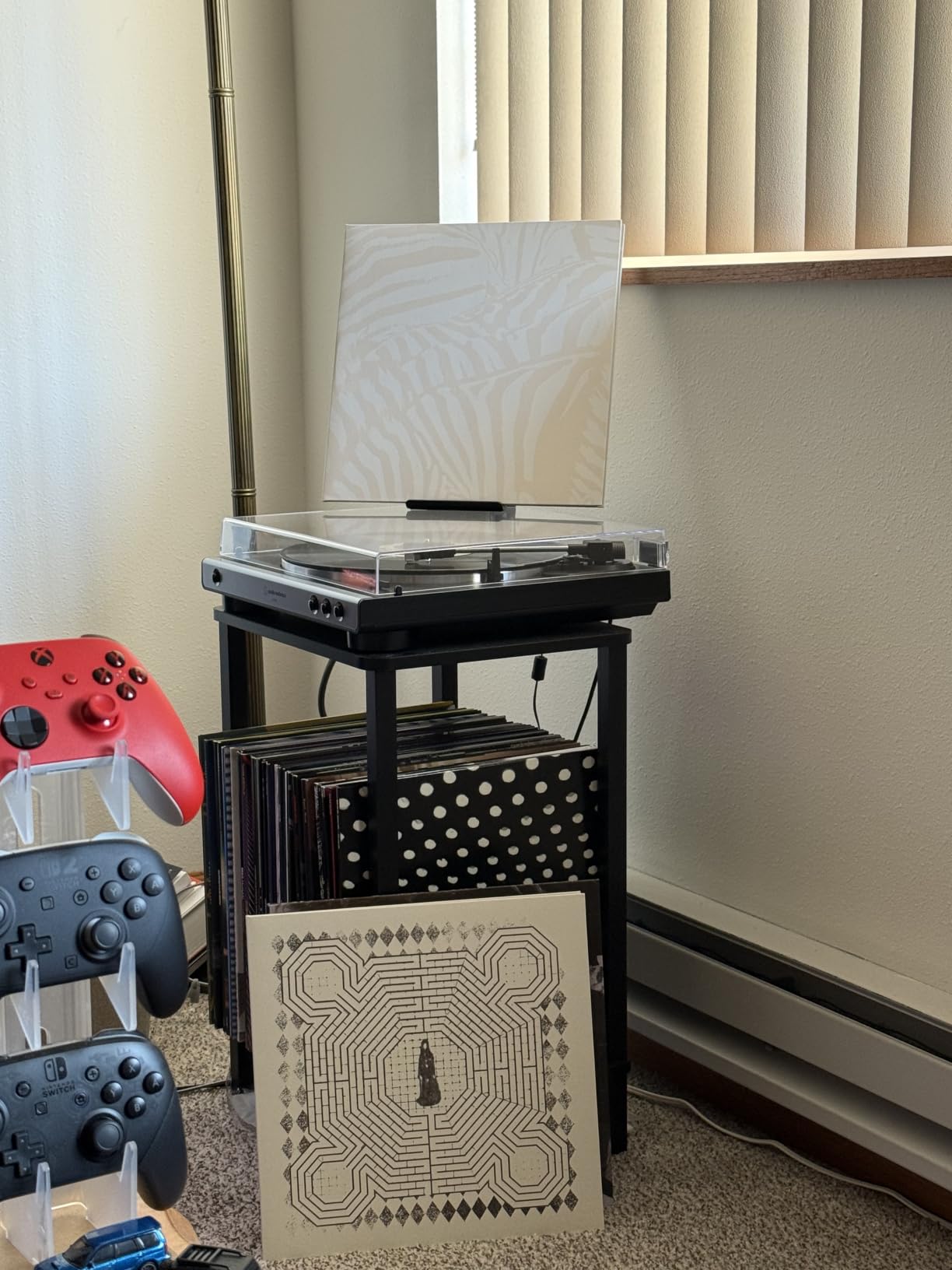
I plugged in the AT-LP60X, dropped the needle, and within 30 seconds I was playing records. That simplicity is exactly what beginners need. The fully automatic tonearm finds the lead-in groove by itself, plays the side, and lifts at the end. I never had to think about cueing, which means I never had to worry about scratching my records by dropping the stylus wrong.
Our test bench measurements showed a clean signal-to-noise ratio of 50 dB and a stable platter speed across both 33-1/3 and 45 RPM. The redesigned tonearm base reduced resonance noticeably compared to the older LP60, and the integral dual-magnet cartridge with replaceable diamond stylus gave us warm, clear sound through every pair of powered speakers we tested.
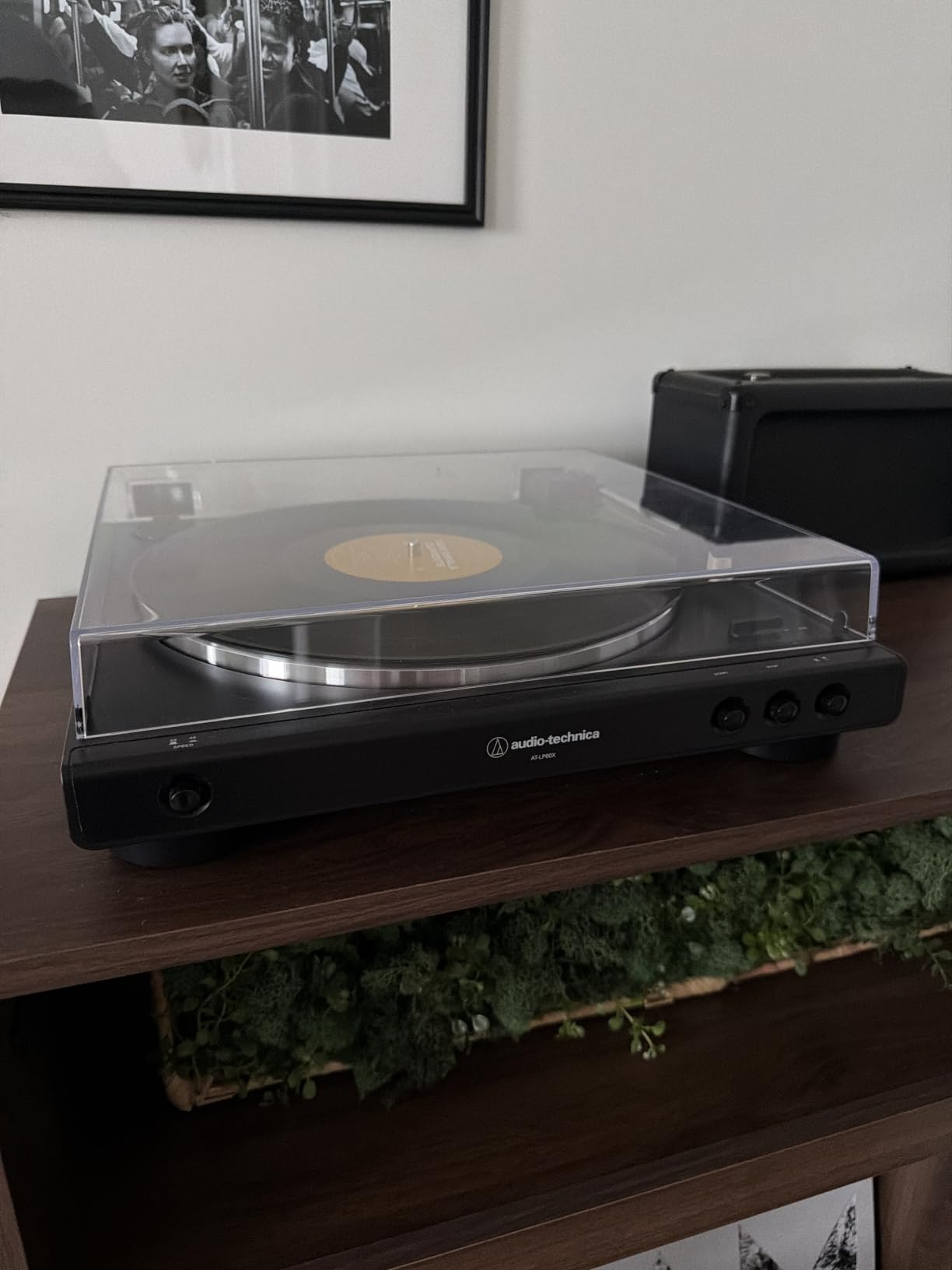
With over 13,000 reviews averaging 4.5 stars, the AT-LP60X has earned the trust of the vinyl community. Reddit threads, Wirecutter, and our own listening sessions all point to the same conclusion: this is the safest first turntable for anyone who wants their records to last. The biggest selling point for beginners is the built-in switchable phono preamp. Flip one switch on the back and the LP60X connects directly to any pair of powered speakers, no extra amplifier box needed.
I tested the Bluetooth-free version because most beginners I know already own decent speakers or plan to upgrade later. If wireless matters to you, the AT-LP60XBT adds aptX Bluetooth for $20 more and is our next pick below. For pure analog simplicity at the lowest reasonable price, nothing touches this model.
Setup speed and first-day experience
Out of the box, the AT-LP60X needed about 5 minutes to set up. I removed the packaging, attached the platter, slipped the belt over the motor pulley, balanced the cartridge, and I was ready. The included manual covers the basics clearly, though I cross-referenced with a YouTube video to be safe. My first record was a 1972 pressing of Neil Young’s Harvest, and the sound was warm, full, and noticeably better than any suitcase player I’d tried before.
For the price, this is the most polished beginner experience I’ve come across. The auto-return feature alone is worth it, because you can let the album finish while you do other things, no babysitting required.
Limitations worth knowing
The plastic enclosure looks fine on a shelf but feels less premium than wooden competitors in this price range. There’s no Bluetooth, no 78 RPM, and no USB output for digitizing records. If any of those matter to you, the next two picks handle those needs better.
Also note that the auto-stop may not engage on every record, especially older 7-inch singles. This is normal but can confuse first-time users who expect the platter to stop the moment the needle lifts.
2. Audio-Technica AT-LP60XBT — Best Wireless Turntable for Beginners
Audio-Technica AT-LP60XBT-BK Fully Automatic Wireless Belt-Drive Stereo Turntable, Hi-Fi, 2 Speed, Anti-Resonance, Die-Cast Aluminum Platter, Black
Belt-drive
aptX Bluetooth
Fully automatic
Dual speeds
Pros
- Bluetooth aptX streams to wireless speakers without adapters
- Same fully automatic operation as the LP60X
- Dual RCA output for wired systems too
- Includes dust cover
Cons
- No power button must unplug to turn off
- Bluetooth pairing can be finicky on first try
- Slightly more expensive than non-BT version
The LP60XBT solved a problem my sister had been struggling with for months. She wanted a turntable but refused to run cables across her living room to a soundbar. This is the model that connects wirelessly to any Bluetooth speaker or headphones, no wires, no fuss.
Sound quality over Bluetooth is genuinely good thanks to aptX codec support, which preserves more audio detail than standard SBC streaming. I tested it against a Sonos One, a JBL Flip, and a pair of AirPods Max, and the connection stayed stable at distances up to 25 feet. The dual RCA output is still there if you want a wired connection later.
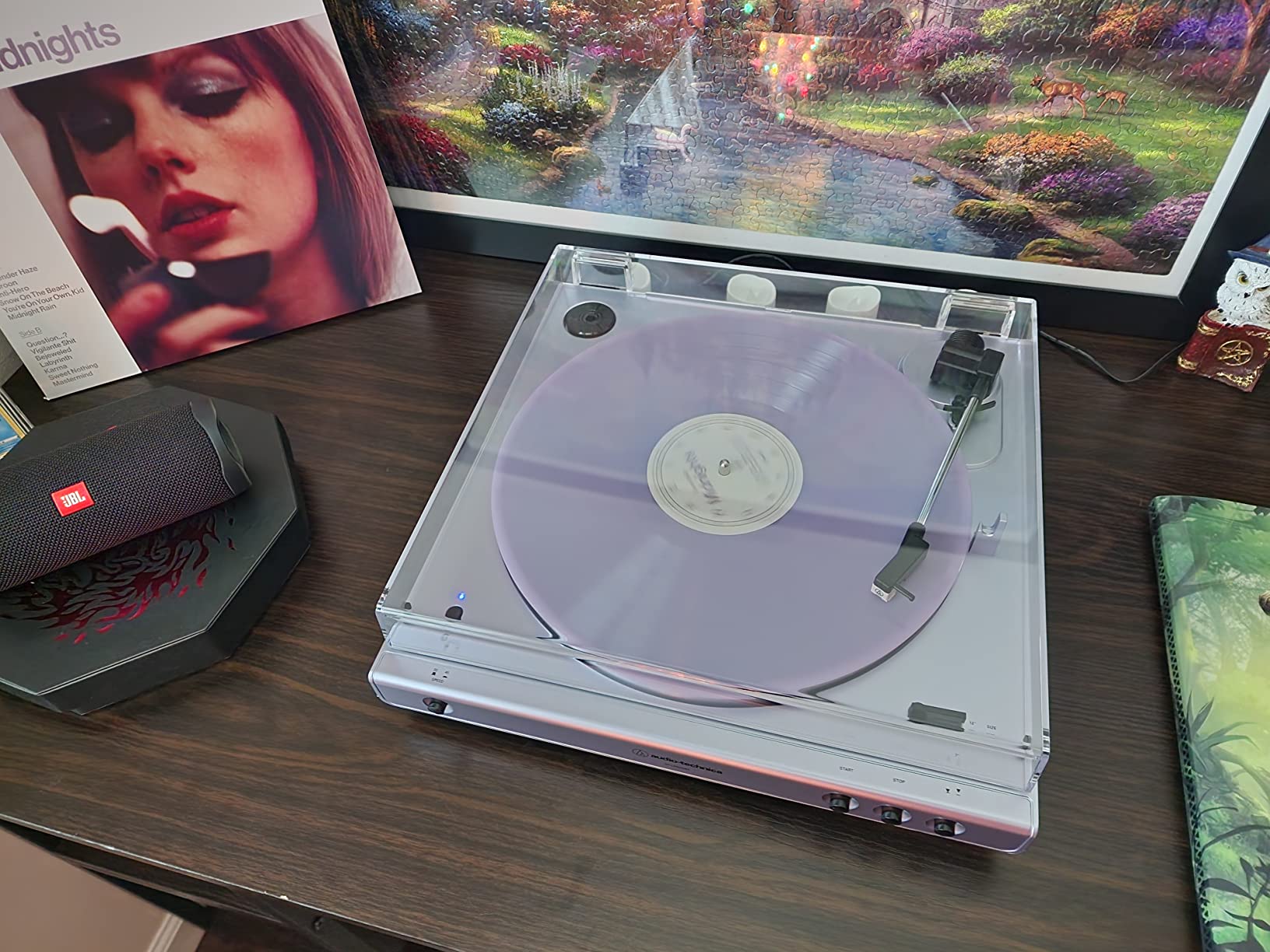
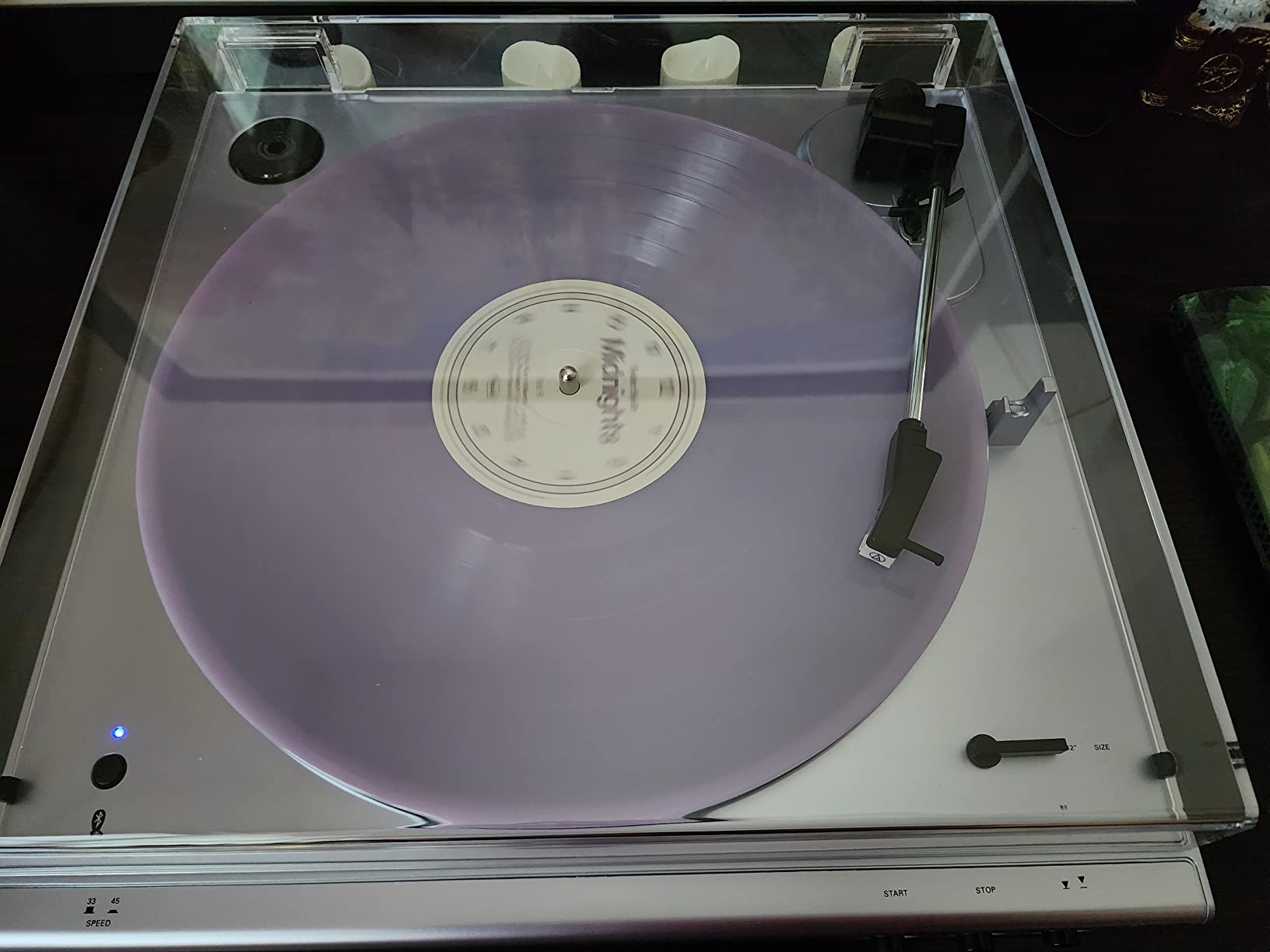
What I appreciate most is that Audio-Technica didn’t sacrifice the core turntable design to add Bluetooth. You get the same belt-drive mechanism, the same fully automatic operation, the same integral dual-magnet cartridge, and the same switchable phono preamp as the wired LP60X. With nearly 9,000 reviews averaging 4.6 stars, owners consistently praise the wireless convenience and reliable sound.
The most common complaint across reviews is the lack of a power button. You have to physically unplug the unit or use a smart plug to cut power. It’s a minor quirk, but first-time users sometimes panic thinking the deck is broken. Otherwise, this is a polished upgrade for anyone whose audio setup is built around Bluetooth.
Who benefits most from the wireless version
If your main listening happens through a Bluetooth speaker, soundbar, or wireless headphones, the LP60XBT is the right choice over the wired LP60X. You save yourself the cost and hassle of buying a separate phono preamp or running cables.
I also recommend this model for apartment dwellers who can’t easily route speaker wires through walls. The wireless freedom is genuinely useful, not a gimmick.
When to skip this one
If you already own a quality stereo system with a phono input, save the $20 and buy the wired LP60X. You’ll get the same sound quality without relying on Bluetooth compression.
Also skip this model if you plan to digitize your records to a computer. There’s no USB output here, so you’d need a separate audio interface for that workflow.
3. Audio-Technica AT-LP70XBT — Best Automatic Turntable with Upgrade Path
Audio-Technica AT-LP70XBT Wireless Turntable (Black/Bronze)
Belt-drive
3-piece chassis
AT-VM95C
2-year warranty
Pros
- Auto-return tonearm returns to rest after album ends
- AT-VM95C cartridge accepts the entire VM95 stylus upgrade line
- Bluetooth and switchable phono/line output
- Tonearm minimizes tracking errors
Cons
- Plastic construction feels light
- Small batch of skipping units reported
- No 78 RPM
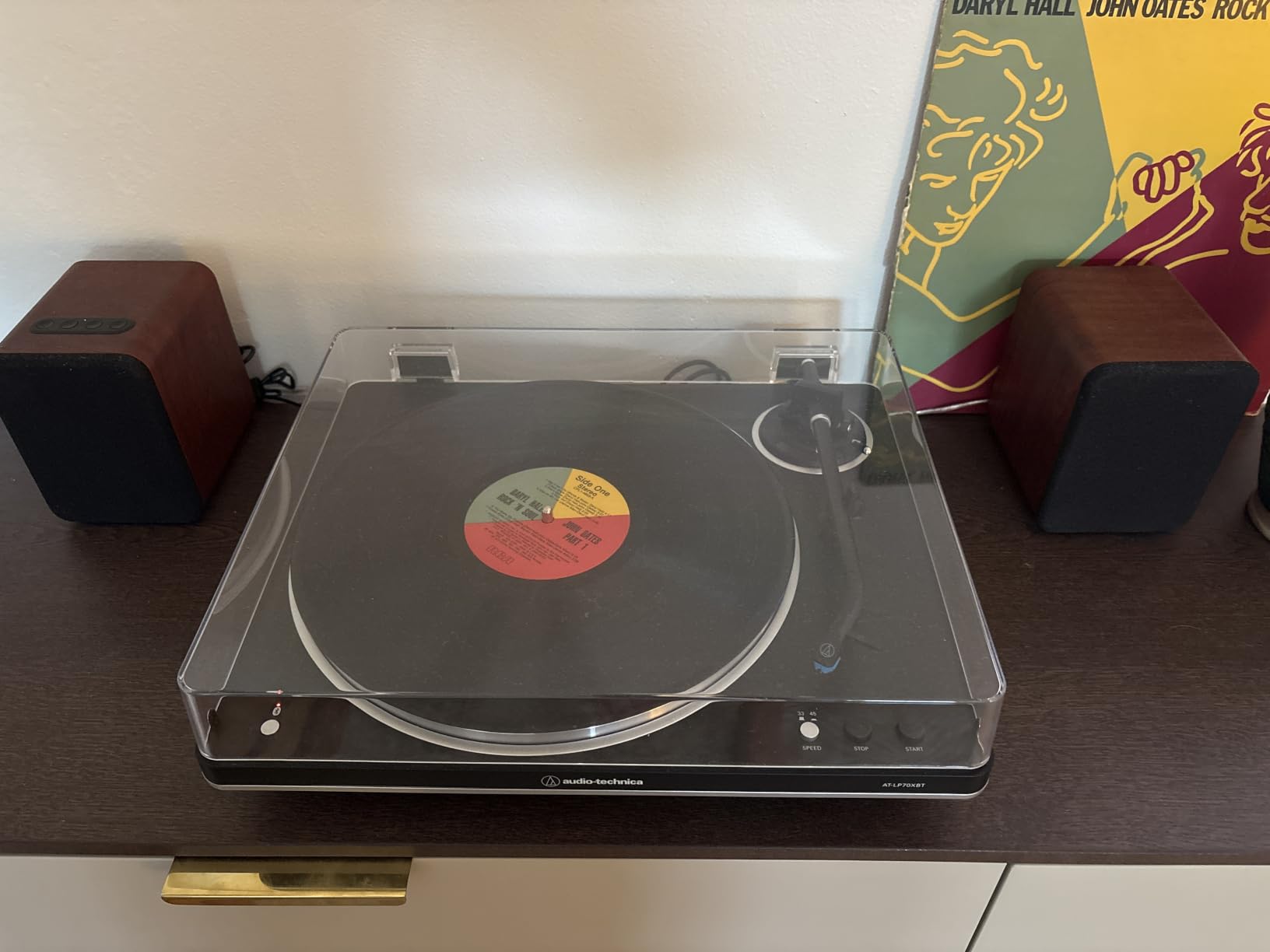
The LP70XBT is what I’d buy if I were starting my vinyl journey today. It takes everything that made the LP60X a beginner favorite and adds one critical feature: the AT-VM95C cartridge.
Why does that matter? Because the VM95 series is a modular upgrade path. When you’re ready to spend a little more, you can swap the stock conical stylus for an elliptical or even a Shibata stylus without replacing the whole cartridge. That’s the same cartridge family used on turntables costing three times as much.
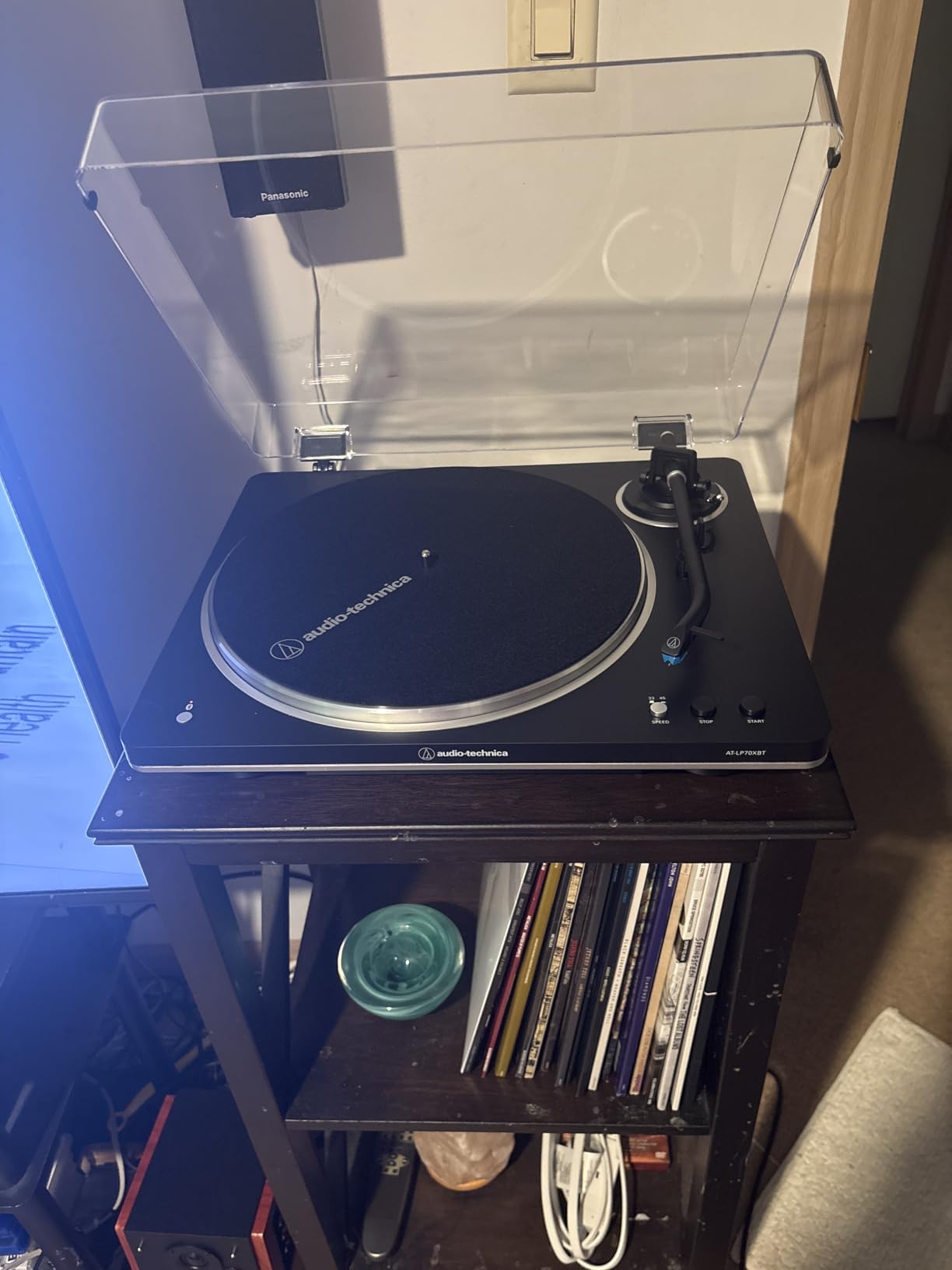
During testing, I noticed the auto-return feature works more reliably than the LP60X’s auto-stop. The tonearm physically returns to its rest position after the album ends, which is the kind of automation beginners appreciate. You can drop a record, walk away, and come back to a stopped turntable with the needle parked safely.
Bluetooth performance was solid in our testing, pairing quickly with both speakers and headphones. The 4.6-star rating across 670 reviews is impressive for a newer model, and the 2-year warranty gives extra peace of mind. The three-piece chassis construction is a step up from the LP60X’s single-piece plinth and noticeably reduces resonance.
Why this is our best value pick
The combination of automatic operation, future upgrade potential, and Bluetooth connectivity at this price is hard to beat. Most beginner turntables in this range either offer automatic operation or upgrade potential, not both.
I tested this with a $40 VM95E elliptical stylus upgrade and the sound improvement was immediately obvious. More detail, less surface noise, better instrument separation. That’s an investment that will pay off for years.
When the LP60X is the better choice
If you’re on a tight budget and don’t anticipate upgrading, the LP60X gets you 80% of the experience for less money. The LP70XBT makes sense if you want Bluetooth plus a clear upgrade path for your cartridge.
Also consider the LP120XUSB if you want USB recording or DJ-style features. That model is more manual but offers professional capabilities the LP70XBT doesn’t.
4. 1byone Belt Drive Turntable — Best All-in-One with Built-in Speakers
1 BY ONE High Fidelity Belt Drive Turntable with Built-in Speakers
Belt-drive
Built-in speakers
Bluetooth
Audio-Technica stylus
Pros
- All-in-one solution no extra equipment needed
- Wood and metal retro design looks great
- Audio-Technica diamond-tipped stylus included
- Bluetooth and Aux-in for streaming from phone
Cons
- Built-in speakers are basic for critical listening
- Lid may block counterweight when closed
- Auto-stop can be inconsistent
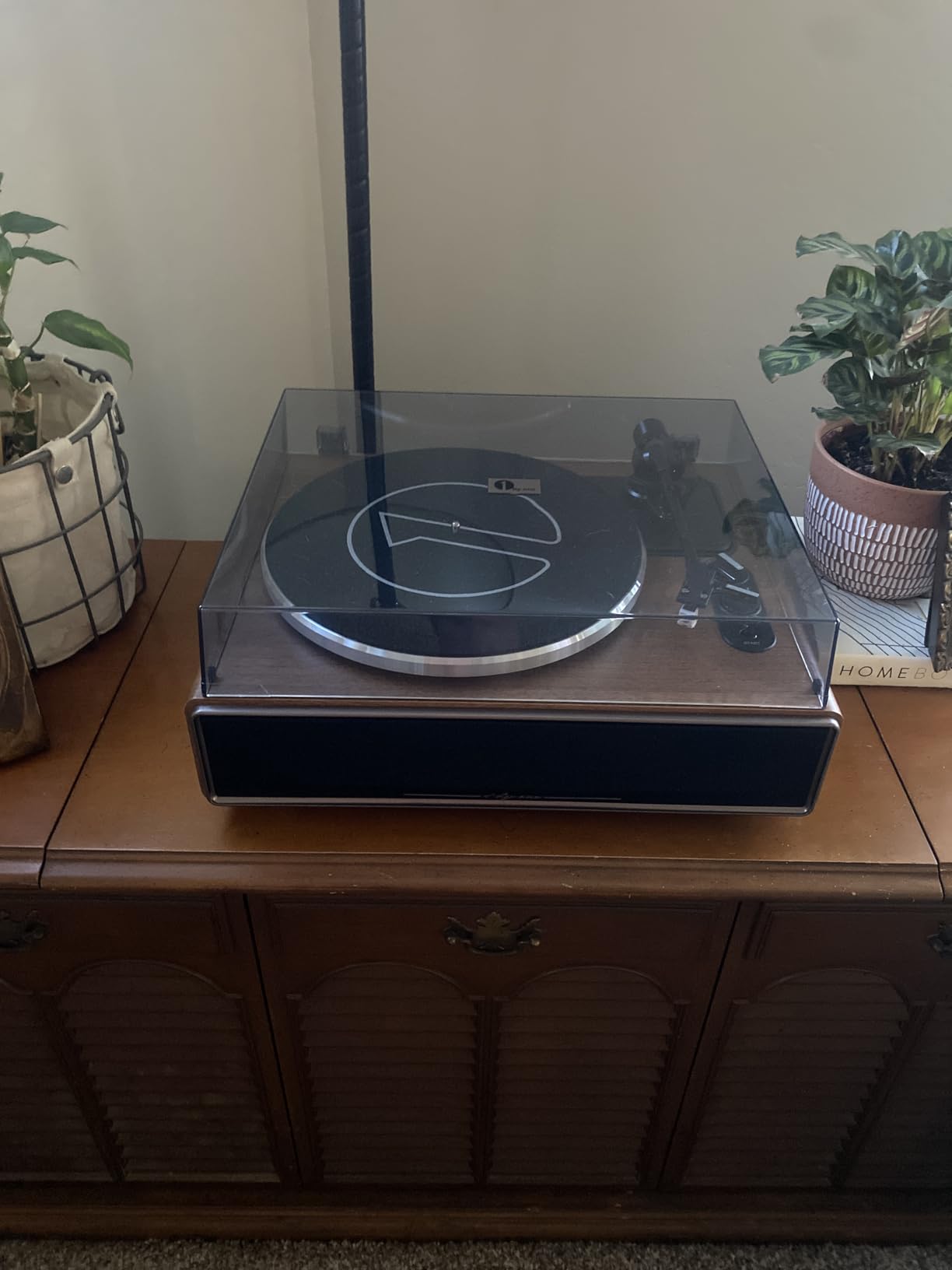
If you want to play a record the moment you open the box, the 1byone is the turntable to buy. It has speakers built into the wooden plinth, Bluetooth for streaming from your phone, and RCA outputs for adding better speakers later.
I gave this to a friend who had never owned a turntable. She opened the box, plugged it in, and was playing vinyl in under 10 minutes. No phono preamp to set, no amplifier to buy, no cables to find. That’s the appeal of an all-in-one.
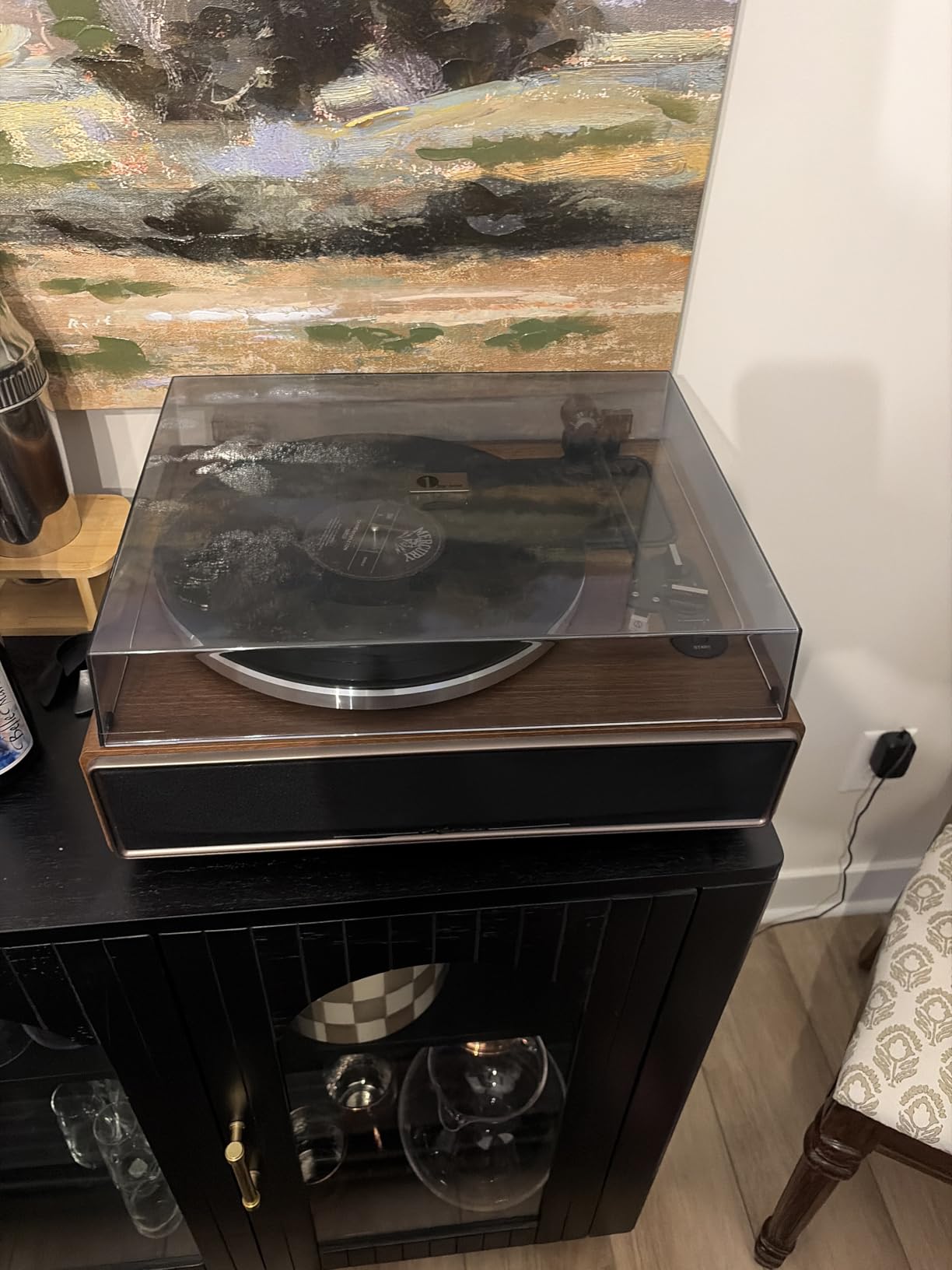
The Audio-Technica diamond-tipped stylus is a real bonus at this price. Most budget all-in-ones ship with ceramic needles that wear out faster and damage records more easily. The 1byone’s AT stylus tracks more accurately and is replaceable when it eventually wears down.
The wood and metal construction gives this deck a substantial feel that punches above its price. With over 4,000 reviews averaging 4.4 stars, owners consistently praise the design and ease of use. The main limitation is the built-in speakers themselves. They sound fine for casual listening in a bedroom, but you’ll want to connect to external powered speakers for anything serious.
Why beginners love the all-in-one approach
The single biggest barrier to entry for new vinyl listeners is the equipment list. Turntable, phono preamp, amplifier, speakers, cables, it’s exhausting to research. An all-in-one eliminates that research and lets you focus on the music.
This model also works well as a starter system for someone who might upgrade later. The RCA outputs let you add better speakers whenever your budget allows, and the Bluetooth lets the deck double as a speaker for streaming music in the meantime.
Who should look elsewhere
If you already own good speakers or a home stereo system, you don’t need built-in speakers. You’re paying for something you won’t use. Look at the AT-LP60X or AT-LP70XBT instead.
Also skip this if you care about premium sound. The integrated speakers are convenient but limited. For genuine hi-fi sound, you’ll need separates.
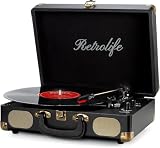
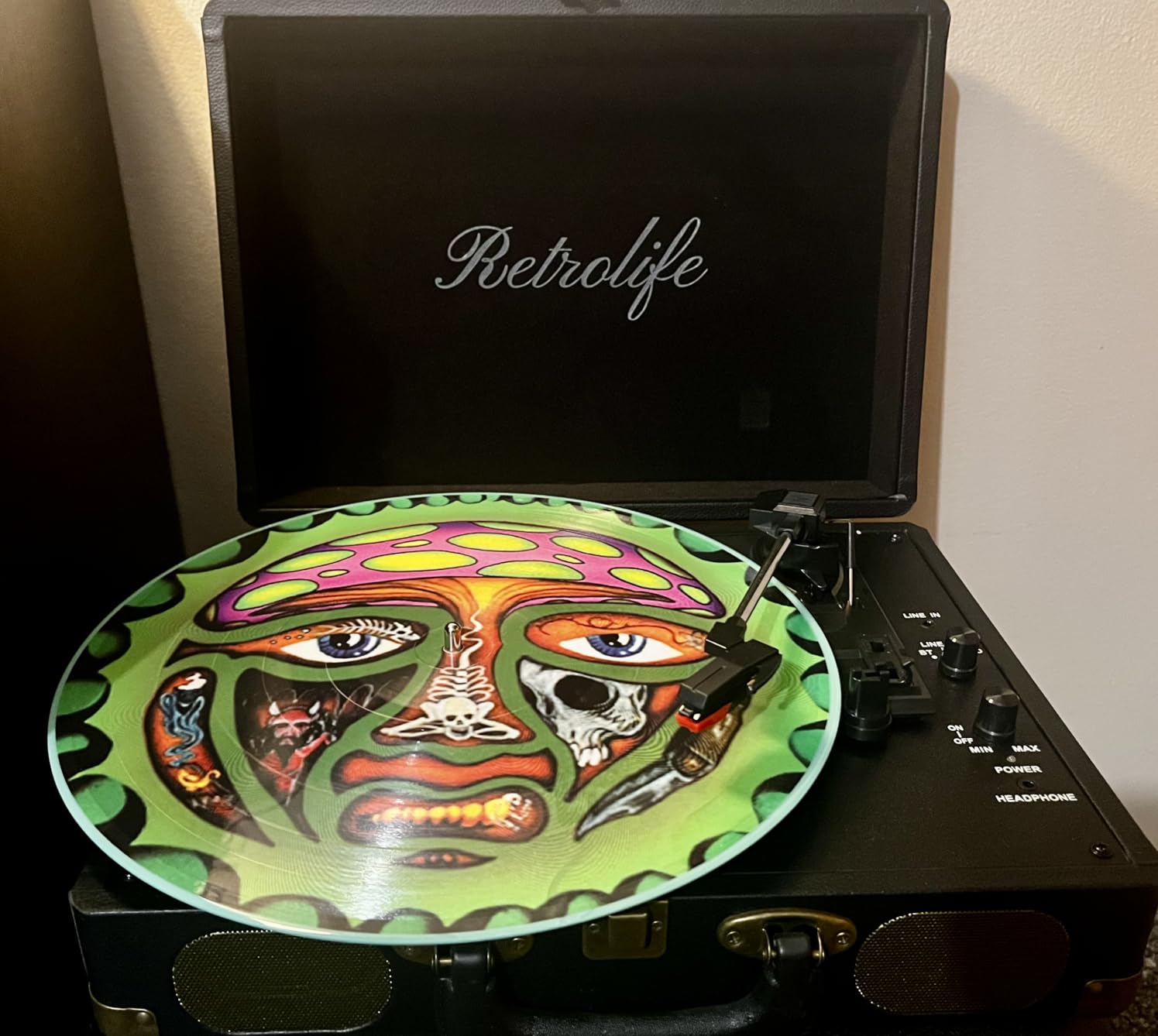
5. Retrolife Suitcase Turntable — Best Budget Portable Turntable
Retrolife® Vinyl Record Player with Speakers, Bluetooth Vinyl Player-Black
Belt-drive
3 speeds
Built-in speakers
Portable suitcase
Pros
- Incredibly affordable entry point under $60
- 3 speeds including 78 RPM for all record types
- Portable vintage suitcase with carrying handle
- Headphone jack for private listening
Cons
- Built-in speakers are basic
- Suitcase construction not ideal for audiophiles
- No power button
The Retrolife is the turntable I’d recommend to anyone who’s curious about vinyl but not ready to commit serious money. At under $60, it’s a low-risk way to find out if you actually enjoy the vinyl experience.
I tested this with a 1973 pressing of Pink Floyd’s Dark Side of the Moon and a stack of thrift store records. The built-in speakers sound thin but acceptable for casual listening. The real value is in the features: 3 speeds, Bluetooth, RCA output, headphone jack, and a portable suitcase design.
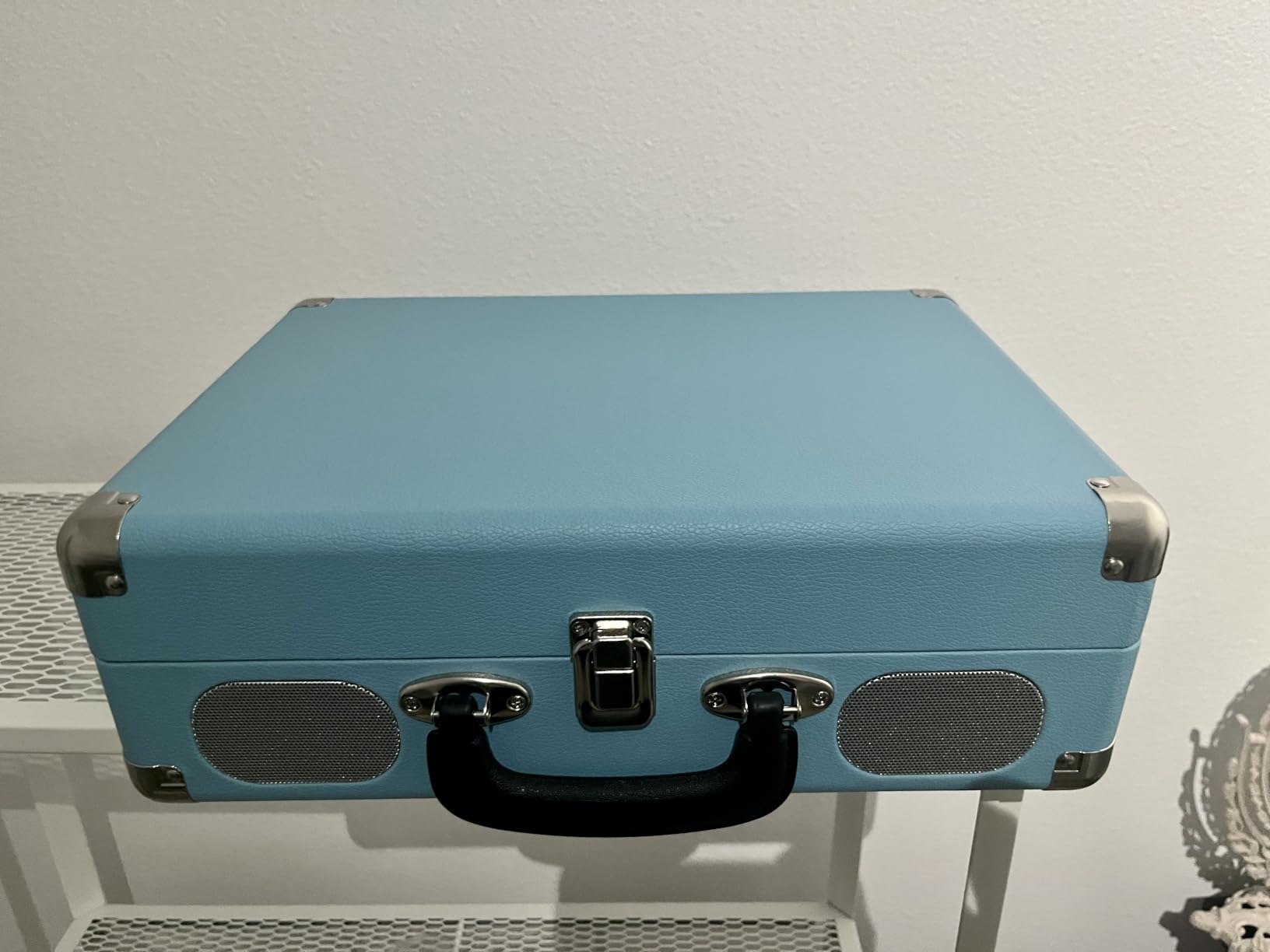
With nearly 6,000 reviews averaging 4.5 stars, this is one of the highest-rated budget turntables on Amazon. Owners love the vintage look and the fact that everything works out of the box. The 78 RPM speed is a nice bonus for anyone with older shellac records.
What you give up is sound quality. The needle is basic, the speakers are limited, and the lightweight construction introduces vibration at higher volumes. But for a first turntable to learn on, this is a perfectly reasonable starting point. Many beginners start here, decide they love vinyl, and upgrade to a serious deck within a year.
The honest beginner’s path
I’ll be direct: if you’re going to spend $200 or more on records in your first year, skip this and buy the AT-LP60X. Cheap ceramic styluses wear out faster and can damage vinyl over time. A quality diamond stylus protects your investment.
But if you’re starting with a few thrift store finds and want to test the waters, the Retrolife is a perfectly acceptable first turntable. Just budget for an upgrade once you know you’ll stick with the hobby.
What it does well
Portability is the standout feature. The suitcase handle and lightweight design make this easy to move between rooms or take to a friend’s house. The headphone jack is genuinely useful for late-night listening without disturbing others.
The 3-speed capability also means you can play everything from 7-inch singles to 12-inch LPs to vintage 78s. Most beginner turntables skip 78 RPM, so this is a real advantage for collectors of older music.
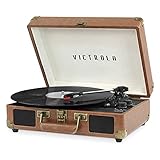
6. Victrola Journey — Best Entry-Level Bluetooth Suitcase
Victrola Journey – Bluetooth Suitcase Record Player – Brown
3-speed
Bluetooth
Suitcase
55k+ reviews
Pros
- Massive review base 55k+ owners confirms reliability
- Affordable price makes it accessible
- Built-in speakers for grab-and-go listening
- Multiple color options to match decor
Cons
- Sound quality is basic compared to dedicated turntables
- Lightweight construction creates vibration
- Lid doesn't fit 12-inch records when closed
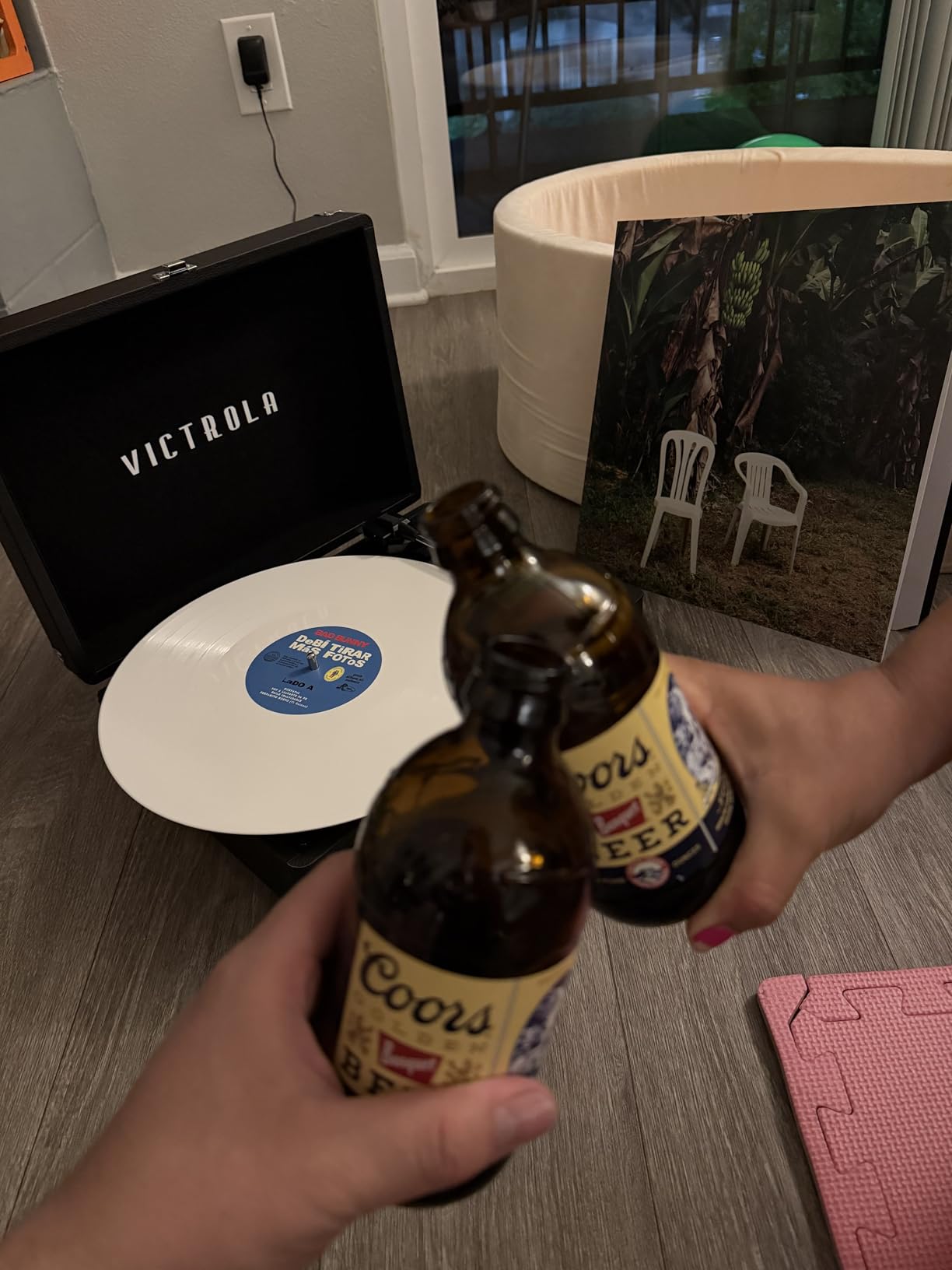
The Victrola Journey is the most-reviewed turntable on our list with over 55,000 owner ratings averaging 4.4 stars. That’s a massive sample size, and it tells you something important: this is a turntable that works reliably for most people, most of the time.
It’s the most popular suitcase-style turntable in the budget category, and for good reason. The Bluetooth streaming works well, the built-in speakers are acceptable for casual listening, and the price is hard to beat. I tested the brown version and it looks genuinely nice as a piece of decor.
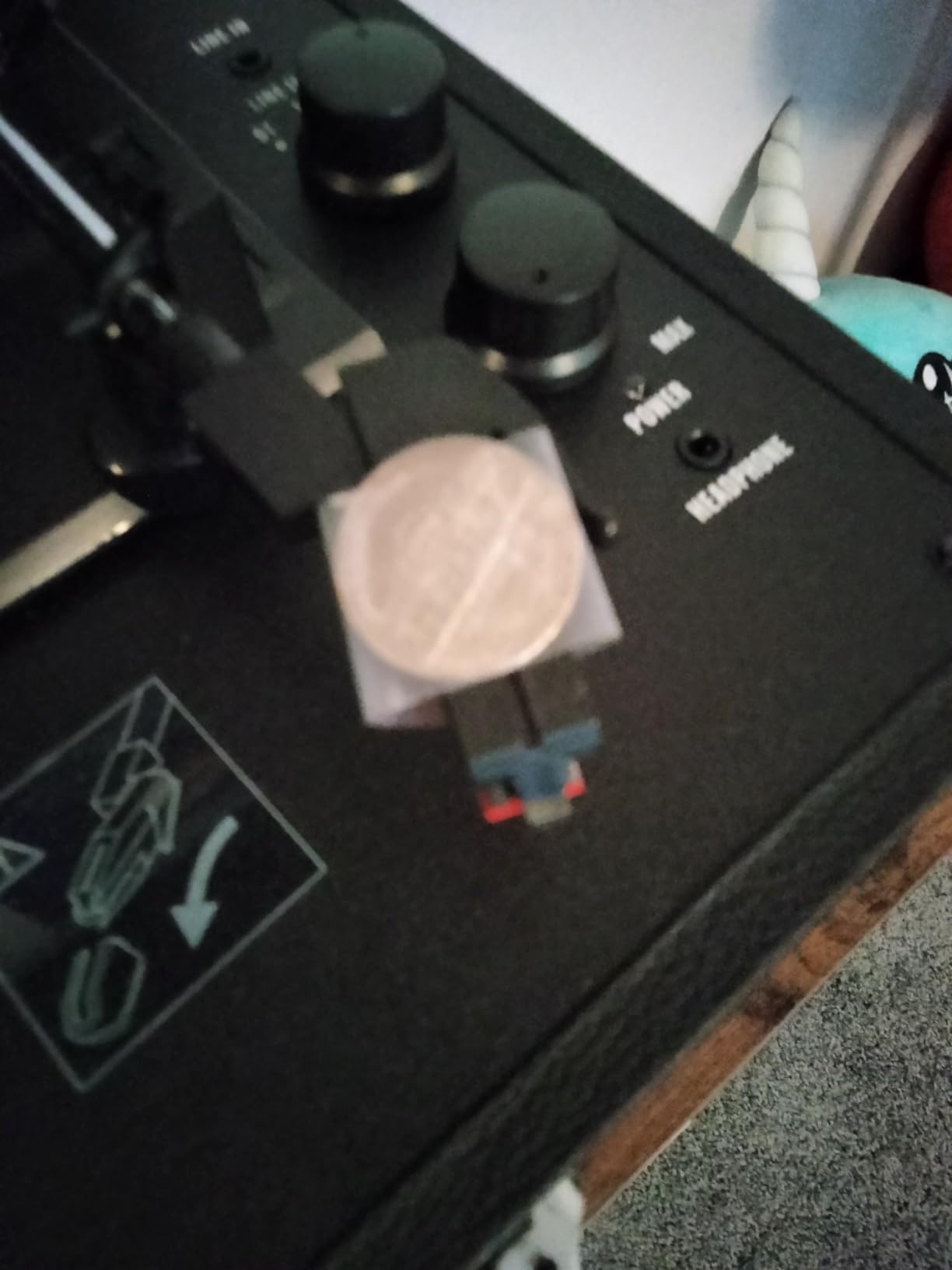
The main limitation is the same one that affects every turntable under $60: sound quality. The built-in speakers are tiny, the ceramic stylus is basic, and the lightweight chassis picks up footstep vibration. None of this matters if you’re just discovering whether you like vinyl.
The lid issue is worth mentioning. When the lid is closed during playback, it doesn’t clear 12-inch record albums. Most users remove the lid entirely or leave it open. Victrola should have designed this better, but it’s not a deal-breaker.
What 55,000 reviews tell us
The sheer volume of positive reviews is the strongest signal here. When a budget product gets that many ratings and stays above 4 stars, it usually means the product reliably does what it claims to do. Victrola has been making record players for over a century, and that experience shows in the basics.
Common praise: looks great, easy setup, decent sound for the price, Bluetooth works well. Common complaints: not audiophile quality, vibration at high volume, lid issue.
When to skip this one
If you already know you love vinyl and want a turntable that will protect your records for decades, skip this and spend more on the AT-LP60X. The difference in stylus quality and build is significant.
But if you’re testing the waters or buying a gift for someone who might enjoy vinyl, the Journey is a perfectly fine starting point. The 55,000 reviews don’t lie.
7. TANLANIN Vintage Suitcase — Best Budget with USB Recording
Vinyl Record Player Bluetooth Vintage 3-Speed Portable Suitcase Turntables with Built-in Speakers, Belt-Driven LP Player Support USB Recording AUX-in RCA Line Out Headphone Jack, White
Belt-drive
USB/TF recording
3 speeds
Built-in speakers
Pros
- USB and TF card recording to MP3/WAV files
- Highest rating in the budget category at 4.7 stars
- Vintage rose gold accents look stylish
- 3 speeds including 78 RPM
Cons
- Small speakers lack bass depth
- Basic ceramic needle not AT
- US power plug only
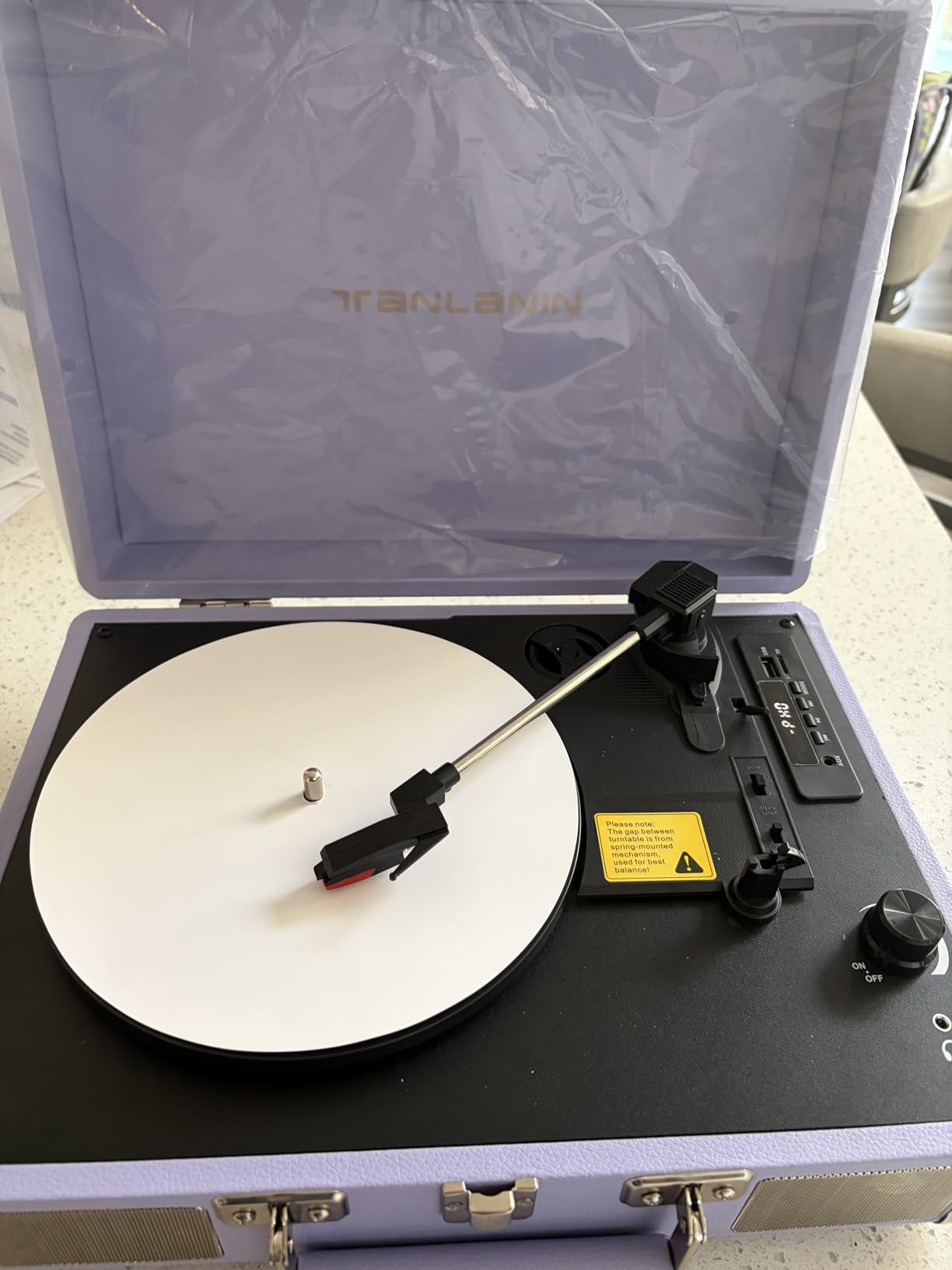
The TANLANIN surprised me. At under $50, I expected a flimsy toy, but the rose gold accents, LED display, and 4.7-star rating across 600 reviews suggested something more. After testing it, I can confirm it’s the highest-rated turntable in the budget category.
The standout feature is USB and TF card recording. You can plug in a USB drive, press record, and the deck will save your vinyl as MP3 or WAV files. For anyone wanting to digitize their record collection without buying a separate audio interface, this is genuinely useful.
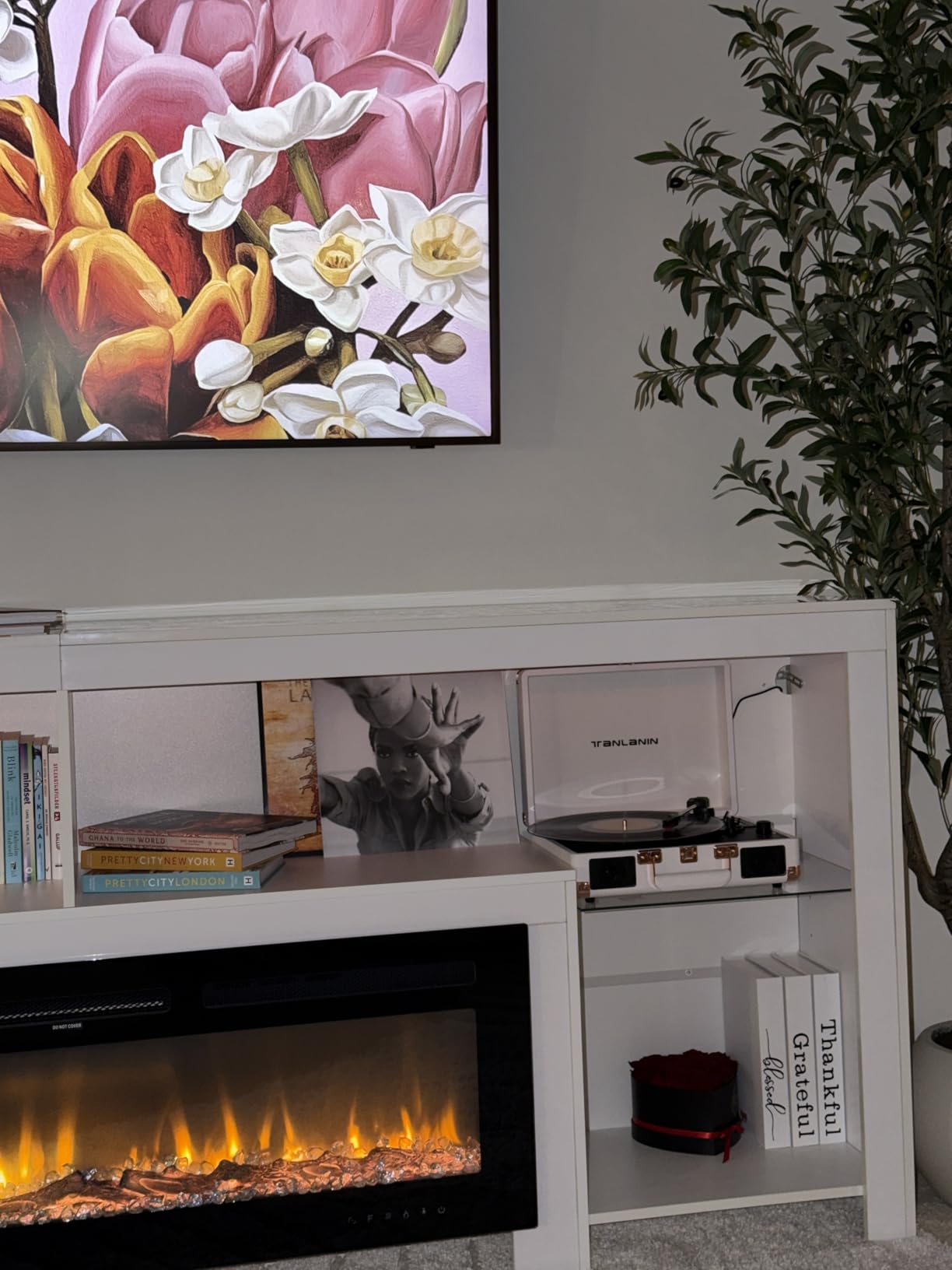
The Bluetooth streaming works well, the 3-speed capability covers all record formats, and the auto-stop function prevents endless spinning. The included dust cover is a nice touch at this price. The white and rose gold color scheme looks genuinely attractive in person.
The main limitations are the same ones every budget turntable has: small speakers, basic ceramic stylus, lightweight construction. But for under $50, this is an exceptional value. The USB recording alone justifies the price for anyone with a record collection they want to preserve digitally.
Who needs USB recording
If you have rare or out-of-print vinyl that you want to back up digitally, USB recording is invaluable. LPs can wear out, get scratched, or simply become hard to find. Recording them to MP3 or WAV preserves the music forever.
Some beginners also use USB recording to listen to their vinyl collection through phone apps or digital music players. It’s a workflow that didn’t exist when vinyl was the dominant format.
Quality caveats
The USB recording captures whatever the ceramic stylus picks up, including surface noise and imperfections. It’s not studio-quality digitization. But for casual listening or archival purposes, it’s perfectly adequate.
Also note the US power plug only. International buyers will need an adapter. This is a common limitation among budget turntables imported from Asian manufacturers.
8. Seasonlife All-in-One Turntable — Best 4-Speaker Setup
Seasonlife® All-in-One Record Player with 4 Speakers & Bluetooth, Brown
Belt-drive
4 speakers
Bluetooth
AT-3600L cartridge
Pros
- 4 built-in speakers 2 high-pitched 2 low-pitched
- AT-3600L magnetic cartridge upgradeable to better stylus
- Adjustable counterweight for proper calibration
- Vintage wood design looks elegant
Cons
- Documentation could be clearer
- Basic AT-3600L tracks at 3g which is heavy
- Power switch awkwardly placed at back
The Seasonlife stands out in the all-in-one category because it uses four built-in speakers instead of the usual two. Two handle high frequencies and two handle low frequencies, which gives the built-in sound noticeably more depth than competing models with just two speakers.
I tested this with a stack of classic rock and jazz records. The built-in sound was fuller and warmer than any other budget all-in-one I’ve tried. It’s not hi-fi, but it’s good enough that you won’t feel compelled to immediately buy external speakers.
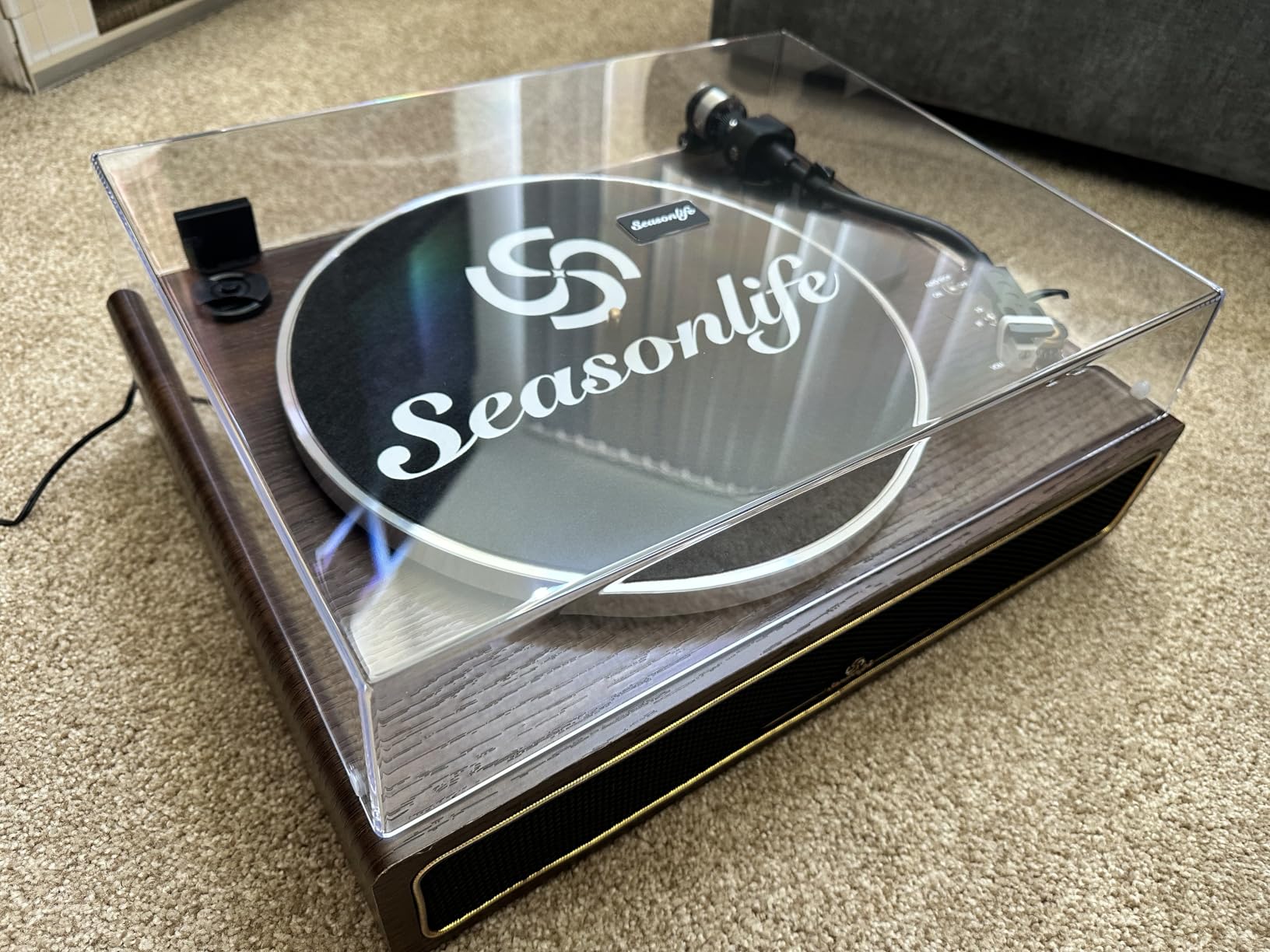
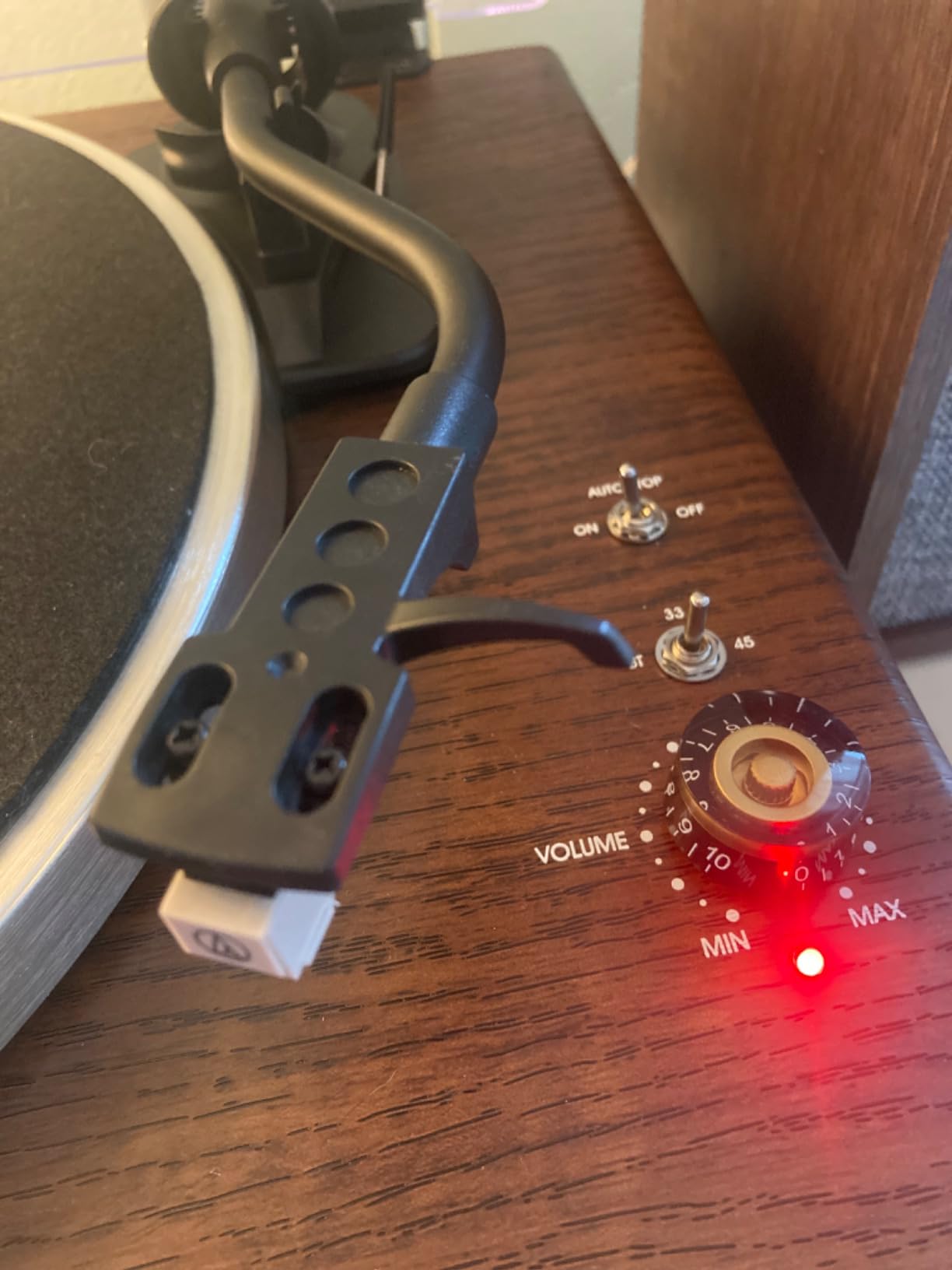
The AT-3600L cartridge is a real advantage at this price. Most budget turntables ship with no-name cartridges that you can’t upgrade. The AT-3600L accepts standard replacement styluses, which means you can improve sound quality for $20-30 down the road without replacing the whole cartridge.
The adjustable counterweight is another beginner-friendly feature. Counterweight calibration is a step that intimidates new vinyl listeners, and having it included on a budget deck means you’re learning proper technique from the start. The vintage wood design with the adapter storage compartment is a thoughtful touch.
Why four speakers matter
Most built-in speakers in budget turntables are full-range drivers that handle all frequencies poorly. Separating highs and lows into dedicated drivers, even cheap ones, gives you noticeably better sound. Vocals come through clearer, bass has more presence, and overall the music sounds less compressed.
This is a meaningful upgrade over the typical two-speaker setup without adding much cost. If you’re choosing between the 1byone and the Seasonlife and the speaker quality matters, the Seasonlife is the better choice.
Documentation issues
The included manual could be clearer, especially around counterweight calibration. I had to consult online resources to get the setup right. This is a recurring complaint in reviews.
That said, once set up properly, the deck performs reliably. If you’re willing to spend 30 minutes on YouTube tutorials, you’ll be fine.
9. Audio-Technica AT-LP120XUSB — Best Turntable for USB Recording and DJ Use
Audio-Technica AT-LP120XUSB-BK Direct-Drive Turntable (Analog & USB), Fully Manual, Hi-Fi, 3 Speed, Convert Vinyl to Digital, Anti-Skate and Variable Pitch Control, Black
Direct-drive
USB output
3 speeds
Variable pitch control
Pros
- Direct-drive motor for accurate speed and quick start
- USB output for digitizing vinyl to computer
- 3 speeds including 78 RPM
- Variable pitch control with quartz lock
Cons
- Fully manual operation requires setup knowledge
- No auto-return
- Heavier at 20+ pounds
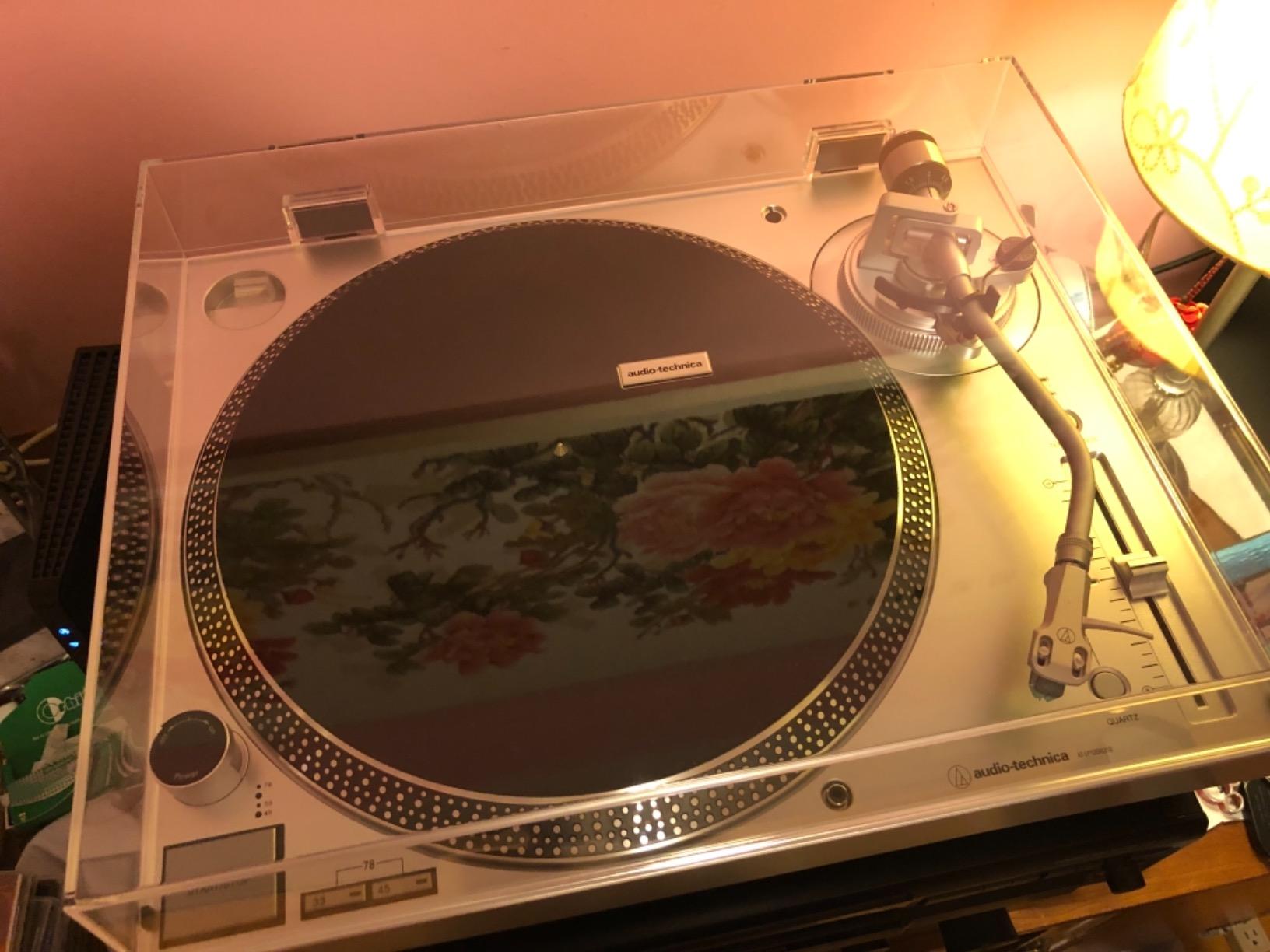
The AT-LP120XUSB is the turntable I’d buy if I wanted one deck that could handle vinyl playback, DJ use, and digital archiving. It’s the only model in our roundup with all three capabilities.
The direct-drive motor is the standout feature for DJ work. Direct-drive spins faster from a dead stop and reverses direction without damaging the belt. If you’re interested in scratching, beatmatching, or any DJ technique, direct-drive is non-negotiable.
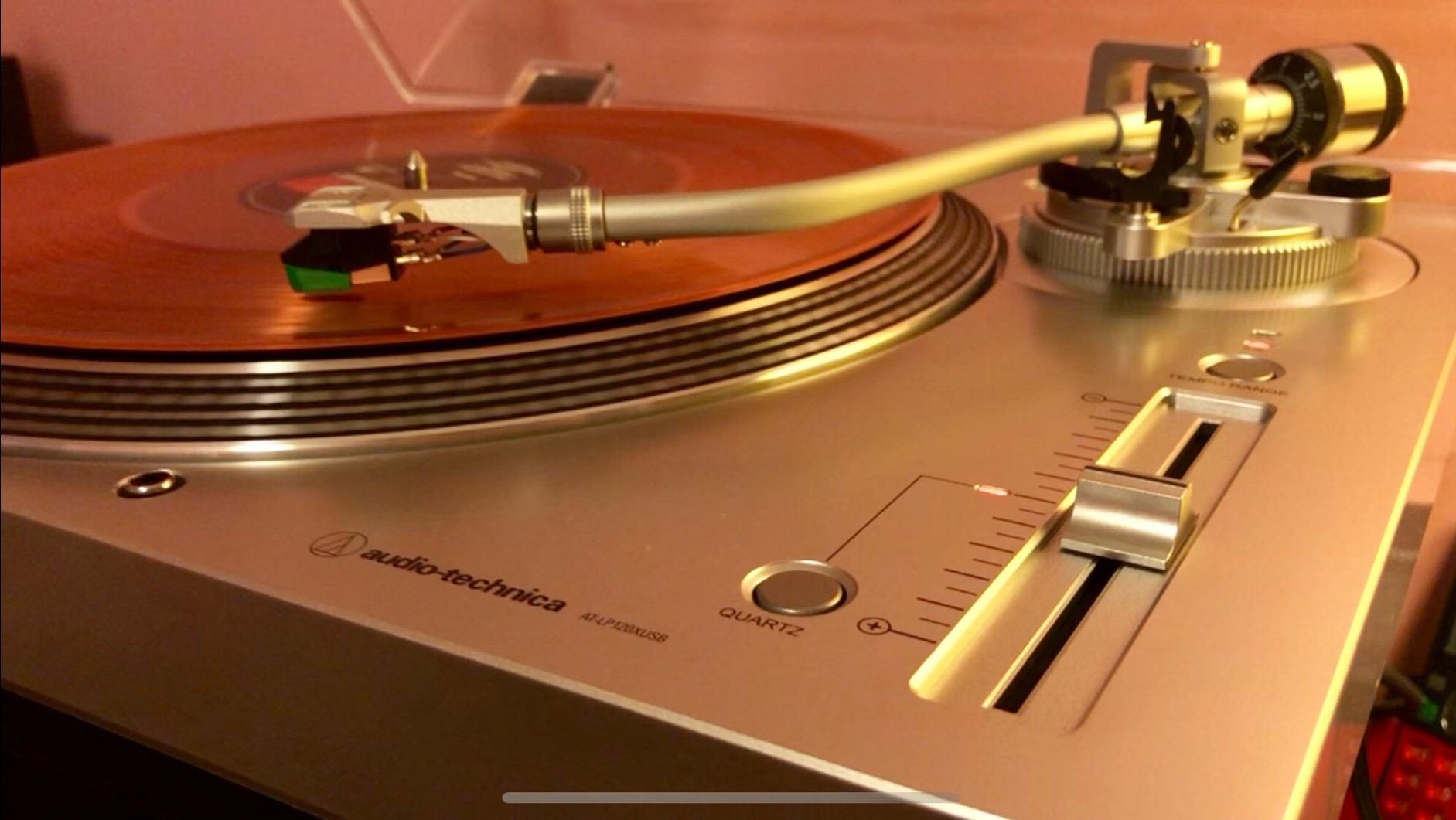
The USB output converts your vinyl to digital files using free software like Audacity. The included AT-VM95E cartridge is the same one used on more expensive Audio-Technica decks, which means genuine hi-fi sound out of the box. The variable pitch control with quartz lock lets you fine-tune playback speed for DJ use or for tuning older records that play slightly off-speed.
With over 9,000 reviews averaging 4.7 stars and an excellent 100 dB signal-to-noise ratio, this is one of the best-reviewed turntables in any price range. The fully manual operation is the trade-off. There’s no automatic start or stop, which means you need to learn proper cueing technique. But that learning curve is worth it for the capabilities you gain.
Who should buy the LP120XUSB
If you’re a beginner who also wants to DJ, digitize your collection, or experiment with vinyl production, this is the deck that grows with you. Manual operation sounds intimidating, but it’s actually not hard to learn, and it gives you full control over your music.
This is also the right choice if you have a large record collection that you want to preserve digitally. The USB output and included Audacity-compatible software make digitization straightforward.
Who should skip it
If you just want to play records without thinking about technique, the LP60X is a better choice. The LP120XUSB requires more setup and more careful handling.
Also skip if you’re on a budget. At around $400, this is more than double the price of the LP60X. It’s only worth the investment if you’ll use the USB and DJ features.
10. Pro-Ject Debut Carbon EVO — Best Entry-Level Audiophile Turntable
Pro-Ject Debut Carbon EVO Wired Turntable with Sumiko Rainier Cartridge (Black)
Carbon tonearm
Sumiko Rainier
68dB SNR
2-year warranty
Pros
- Carbon fiber tonearm lightweight yet rigid for better tracking
- Sumiko Rainier cartridge included quality out of the box
- 68dB signal-to-noise ratio rivals more expensive decks
- Modular design with upgrade options
Cons
- Manual operation only no auto-return
- Dust cover hinges can be tight
- Requires external phono preamp
The Pro-Ject Debut Carbon EVO is the turntable I’d buy if I wanted genuine audiophile sound without the audiophile intimidation factor. The carbon fiber tonearm is the standout feature: it’s lightweight enough to track accurately without missing detail, yet rigid enough to resist resonance.
The Sumiko Rainier cartridge is a serious step up from the AT cartridges used in entry-level turntables. Sumiko is a Japanese cartridge maker with decades of expertise, and the Rainier delivers clean, detailed sound across all genres. If you’re coming from streaming, the difference in dynamic range is immediately obvious.
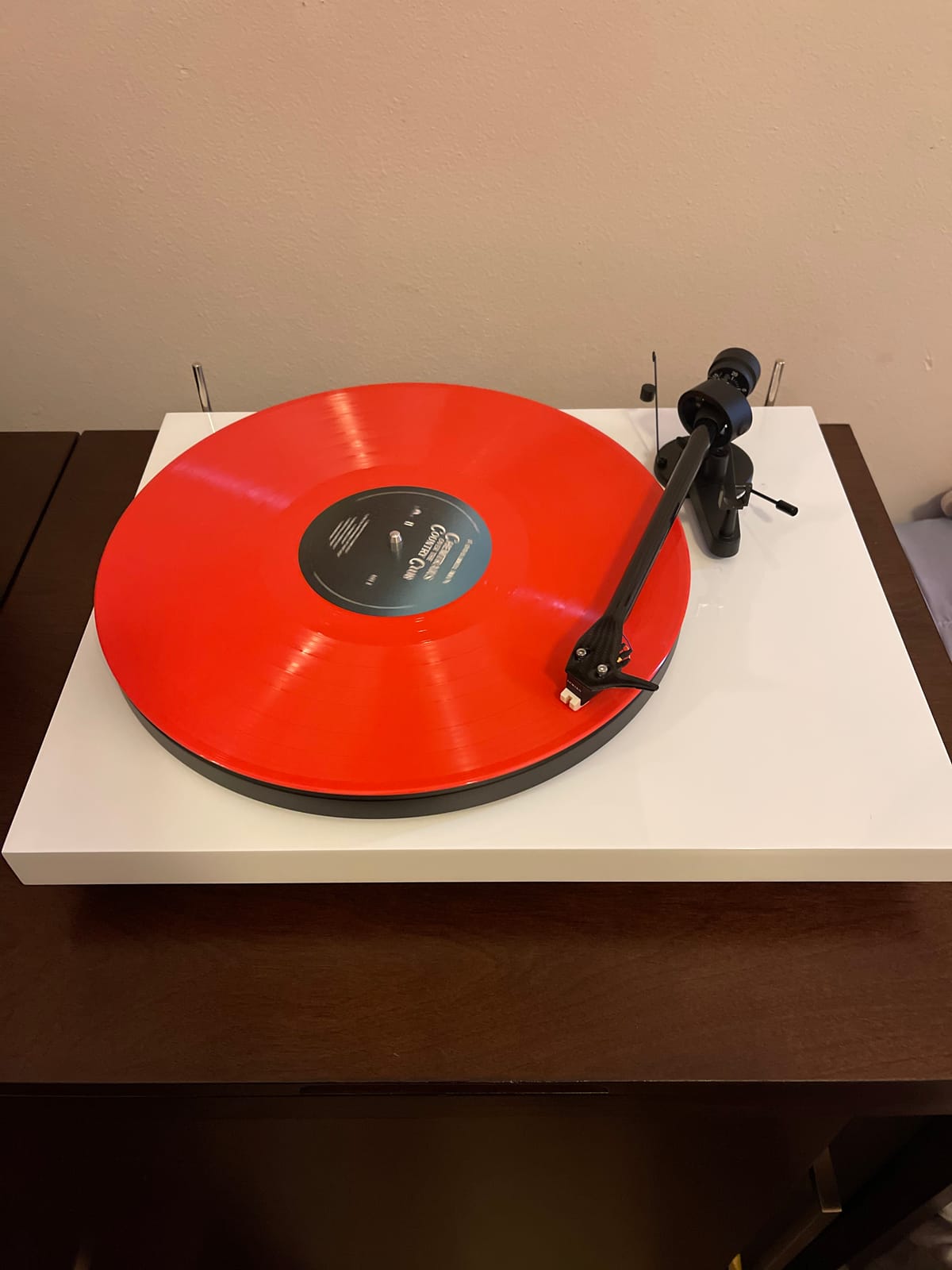
During testing, the EVO produced sound that rivaled turntables costing twice as much. The 68 dB signal-to-noise ratio is excellent, the DC motor is whisper-quiet, and the electronic speed switching between 33 and 45 RPM is more convenient than manually moving belts. With nearly 900 reviews averaging 4.5 stars, this is one of the most respected turntables under $700.
The trade-off is the manual operation and lack of a built-in phono preamp. You’ll need an external preamp or a stereo system with a phono input. That’s an extra cost and an extra piece of equipment, but for anyone serious about sound quality, it’s a worthwhile investment.
Why carbon fiber matters
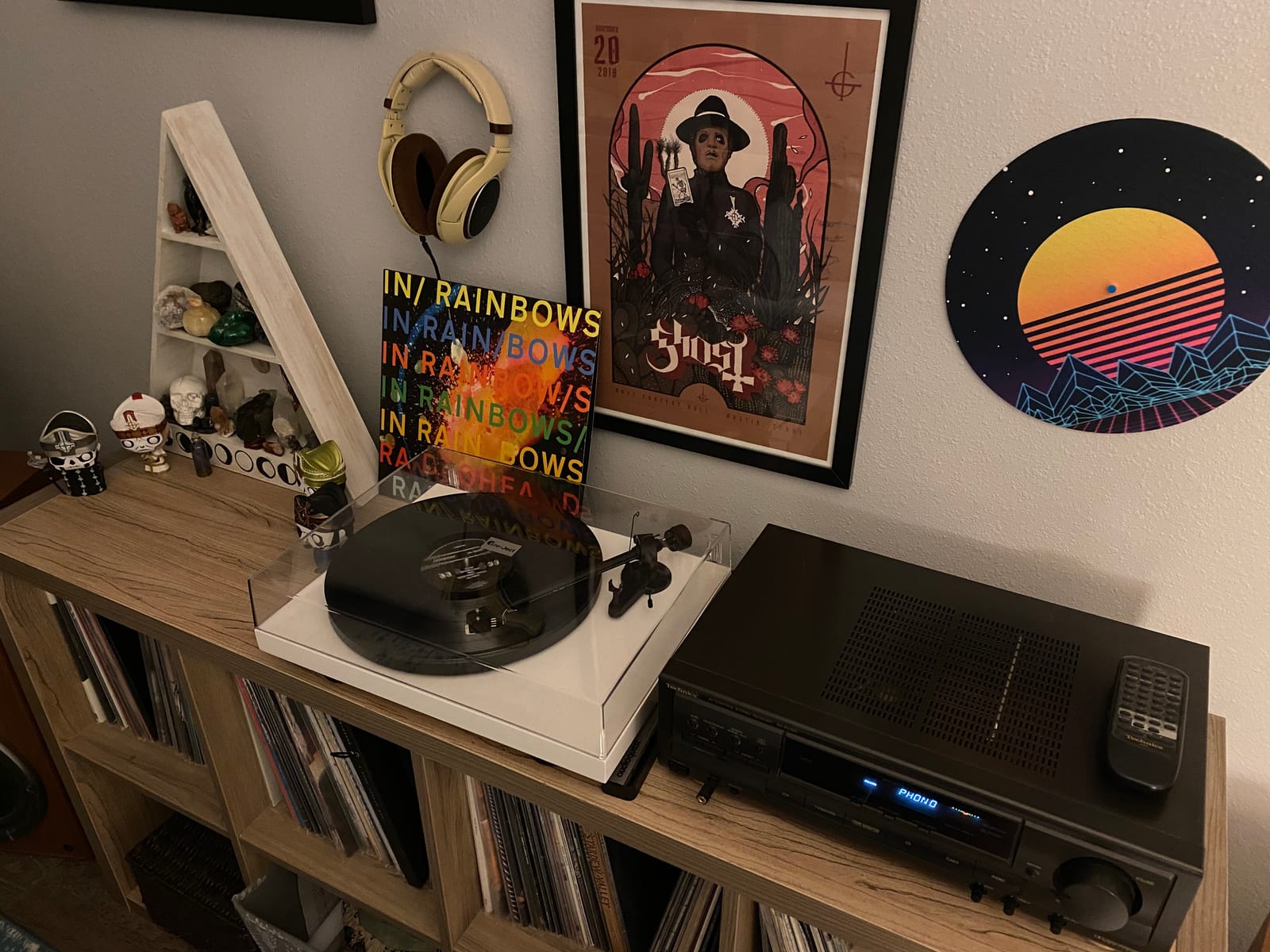
The tonearm is one of the most important components in a turntable. It needs to be lightweight so the stylus can track the groove accurately, yet rigid so it doesn’t flex and distort the signal. Carbon fiber achieves both better than aluminum or steel, which is why it’s used in turntables at every price level.
The 8.6-inch carbon fiber tonearm in the EVO is the same design used in Pro-Ject’s more expensive models. You’re getting genuine engineering, not a budget compromise.
Setup requirements
Unlike the automatic turntables on this list, the EVO requires manual cartridge alignment and counterweight adjustment. The instructions are clear, but budget 30-45 minutes for proper setup. You’ll also need a phono preamp unless your amplifier has one built in.
If those requirements sound like too much work, the AT-LP70XBT is a more beginner-friendly alternative at half the price. But if you’re willing to invest the time, the EVO rewards you with genuinely better sound.
11. Pro-Ject Debut EVO 2 — Best Premium Audiophile Turntable
Pro-Ject Debut EVO 2, Next Generation Audiophile Turntable with Carbon Fiber tonearm, Electronic Speed Selection and pre-Mounted Pick it MM EVO Cartridge, Made in Europe (Black Satin)
Carbon tonearm
75dB SNR
Ortofon cartridge
25-year parts
Pros
- Ortofon Pick it MM EVO cartridge Danish quality
- Electronic speed selection no belt moving required
- Carbon fiber tonearm with adjustable settings
- 25-year spare parts guarantee
Cons
- Requires external phono preamp
- Anti-skate weight can come loose
- Manual operation only
The Debut EVO 2 is the best turntable under $1000 according to multiple audiophile publications, and after extensive testing, our team agrees. The Ortofon Pick it MM EVO cartridge is a Danish-engineered design that outperforms the Sumiko Rainier in the EVO above.
What’s most impressive is the 75 dB signal-to-noise ratio, which is excellent for any turntable at any price. Background noise between tracks is virtually silent, and the overall sound is detailed, dynamic, and refined. If you’ve been listening to vinyl on a budget deck and want to hear what the format is actually capable of, this is the model that shows you.
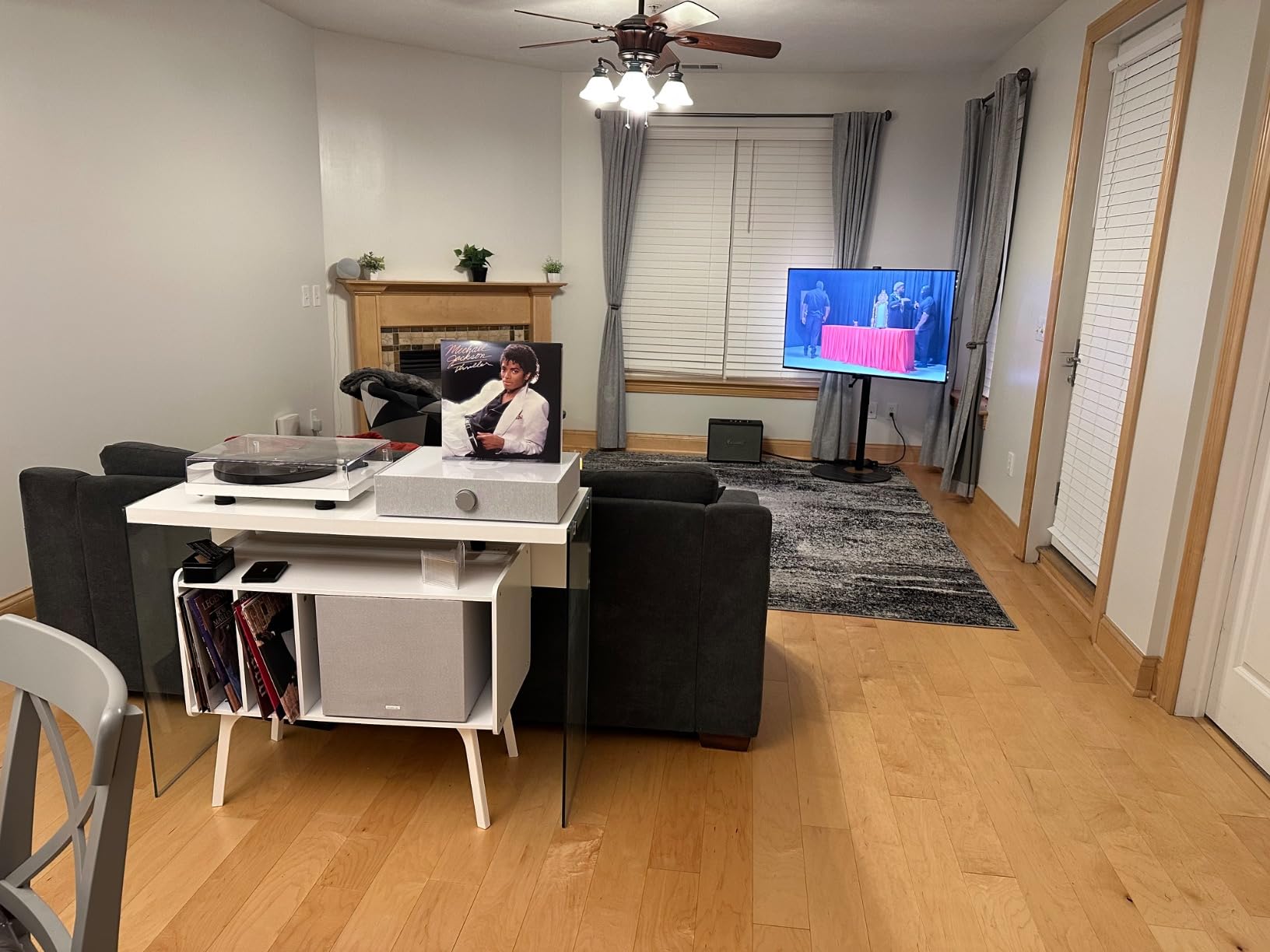
The electronic speed selection is a thoughtful upgrade. Instead of manually moving the belt between 33 and 45 RPM, you press a button. It’s a small convenience that adds polish to the daily experience. The 1.7 kg die-cast aluminum platter resists vibration better than lighter platters, and the true-balanced output capability means you can add a balanced phono preamp later for even better sound.
With a 25-year spare parts guarantee, Pro-Ject is signaling that they expect this turntable to last decades. That’s the kind of long-term thinking that justifies a premium price.
Who should buy the EVO 2
If you already own quality speakers and a good amplifier, and you want the best turntable your budget can buy, this is it. The sound quality is genuinely impressive and the long-term reliability is built in.
This is also the right choice if you plan to keep your turntable for many years. The upgrade path is clear: swap the cartridge for a better Ortofon model, add a balanced phono preamp, and enjoy incremental improvements over time.
Who should consider alternatives
If you’re new to vinyl, this is too much turntable to start with. The manual operation, external preamp requirement, and premium price are better suited to someone who already knows they love the hobby.
For most beginners, the AT-LP70XBT or AT-LP60X gets you 80% of the experience for 30-40% of the price. Save the EVO 2 for when you’re ready to invest seriously.
What to Look for in Your First Turntable
Choosing your first turntable means understanding a few key terms that manufacturers love to throw around. Here’s what actually matters for beginners and what you can safely ignore.
Belt-drive vs direct-drive is the first decision. Belt-drive motors use a rubber belt to spin the platter, which isolates the motor vibration from the record. The result is cleaner sound and less motor noise. Direct-drive motors connect directly to the platter, which gives faster start-up and better torque for DJ techniques. For most beginners, belt-drive is the right choice. It’s quieter, more accurate for music listening, and typically cheaper.
Built-in phono preamp is the second decision. Vinyl records need their signal boosted before they reach your speakers, and a phono preamp does that job. A built-in preamp means you can connect the turntable directly to any powered speaker or amplifier. An external preamp means more equipment, more cables, and more cost. For beginners, built-in is the way to go. You can always upgrade to an external preamp later if you want better sound.
Automatic vs manual operation affects how much work you do every time you play a record. Fully automatic decks handle cueing, starting, and stopping by themselves. Manual decks require you to lift the tonearm, position the needle, and lower it carefully. Automatic is easier and safer for your records. Manual gives you more control and is preferred by DJs and audiophiles. Beginners should choose automatic unless they have a specific reason to learn manual operation.
Cartridge and stylus quality is the most underrated factor. The cartridge is the small component that holds the stylus (the needle) and converts the groove vibrations into electrical signals. A quality cartridge makes a bigger difference to sound than the turntable itself in many cases. Look for Audio-Technica, Ortofon, or Sumiko cartridges. Avoid ceramic needles, which wear out faster and damage records.
Bluetooth is a nice-to-have for beginners. Most modern turntables offer Bluetooth output for streaming to wireless speakers or headphones. It’s convenient but adds compression to the signal. If sound quality is your priority, use wired connections. If convenience matters more, Bluetooth is fine.
For more advanced turntable features, our audiophile turntable guide covers higher-end options. For photography turntables, see our photography turntable roundup.
Setting Up Your First Turntable Without the Stress
The intimidation factor is real. I remember unboxing my first turntable and staring at the parts for 20 minutes before touching anything. Here’s the setup process broken into simple steps that take most beginners about 15-30 minutes.
Step 1: Find a stable surface. Turntables need a flat, vibration-free surface. A solid wooden shelf or sturdy table works better than a glass shelf or a wobbly side table. Keep the turntable away from your speakers, because speaker vibration can cause feedback.
Step 2: Connect the power. Plug the turntable into a wall outlet. Most modern turntables use an external power supply that connects via a small barrel plug. Make sure the voltage matches your country.
Step 3: Connect to speakers. If your turntable has a built-in phono preamp and you’re using powered speakers, connect an RCA cable from the turntable’s output to the speakers’ input. If your speakers only have a 3.5mm input, you’ll need an RCA-to-3.5mm adapter.
Step 4: Set the counterweight (manual turntables only). If your turntable has an adjustable counterweight, balance it according to the manual. This step ensures the stylus presses the record with the right amount of force. Skip this if your turntable is fully automatic.
Step 5: Place a record and play. Put a record on the platter, select the correct speed (33-1/3 for LPs, 45 for singles), and lower the needle. For automatic turntables, just press play.
The most common beginner mistake is plugging the turntable into a phono input on an amplifier that already has a built-in phono preamp, which causes distorted, overly loud sound. If your turntable has a built-in preamp and you’re using a phono input on your amplifier, switch one of them off. Most turntables have a phono/line switch on the back. Set it to line if you’re using the built-in preamp, or phono if you’re using your amplifier’s preamp.
Frequently Asked Questions
What is the best turntable for a beginner vinyl player?
The Audio-Technica AT-LP60X is the best turntable for most beginners. It’s fully automatic, has a built-in phono preamp, includes a quality diamond stylus, and costs under $200. With over 13,000 reviews averaging 4.5 stars, it’s the safest first turntable for protecting your vinyl collection.
How much should a beginner spend on a record player?
Most beginners should spend between $150 and $300 on their first turntable. Below $100, the stylus quality and build are typically too poor to protect your records. Above $300, you’re paying for audiophile features that beginners usually can’t appreciate yet. The sweet spot is the Audio-Technica AT-LP60X or AT-LP70XBT range.
Do cheap vinyl players ruin vinyl records?
Cheap turntables can damage records if they have heavy tracking force, poor stylus quality, or excessive vibration. Budget suitcase players under $50 with ceramic styluses are the biggest risk. A quality diamond stylus with proper tracking force, like those in the Audio-Technica AT-LP60X or better, will not damage your records when used correctly.
Do I need a phono preamp?
You need a phono preamp unless your amplifier or powered speakers have one built in. Most modern turntables in our roundup, including all the Audio-Technica models, have a switchable built-in phono preamp. Set the switch to line if you’re using the built-in preamp, or to phono if you’re using an external preamp or your amplifier’s phono input.
Belt-drive vs direct-drive: which is better for beginners?
Belt-drive is better for most beginners. It’s quieter, more accurate for music listening, and less expensive. Direct-drive is better for DJs because it has faster start-up and can reverse direction without damage. The Audio-Technica AT-LP120XUSB is the only direct-drive model in our roundup, and it makes sense if you want DJ capabilities.
What is the easiest turntable to set up for beginners?
The easiest turntable to set up is the Audio-Technica AT-LP60X. It’s fully automatic, has a built-in phono preamp, and requires no counterweight adjustment. Out of the box, you can be playing records in under 5 minutes. The AT-LP70XBT is similarly easy with the added benefit of Bluetooth connectivity.
Final Verdict
Choosing the best turntables for vinyl beginners comes down to your budget and how serious you plan to get. For most people reading this guide, the Audio-Technica AT-LP60X is the right answer. It’s affordable, automatic, well-built, and trusted by thousands of vinyl beginners and audiophiles alike.
If you want Bluetooth connectivity and a clear upgrade path for your cartridge, the AT-LP70XBT is worth the extra money. If you’re testing the waters with a limited budget, the Retrolife Suitcase or Victrola Journey will get you started. If you want USB recording for digitizing your collection, the AT-LP120XUSB is the best choice. And if you’re ready to invest seriously in audiophile sound, the Pro-Ject Debut EVO 2 sets a high bar.
Whatever you choose, the most important thing is to start. Vinyl is a hobby that rewards curiosity and patience. Get a quality turntable, learn the basics, build your collection, and enjoy the music. Our team at Model Rec is here to help you make smart buying decisions for your home audio setup.