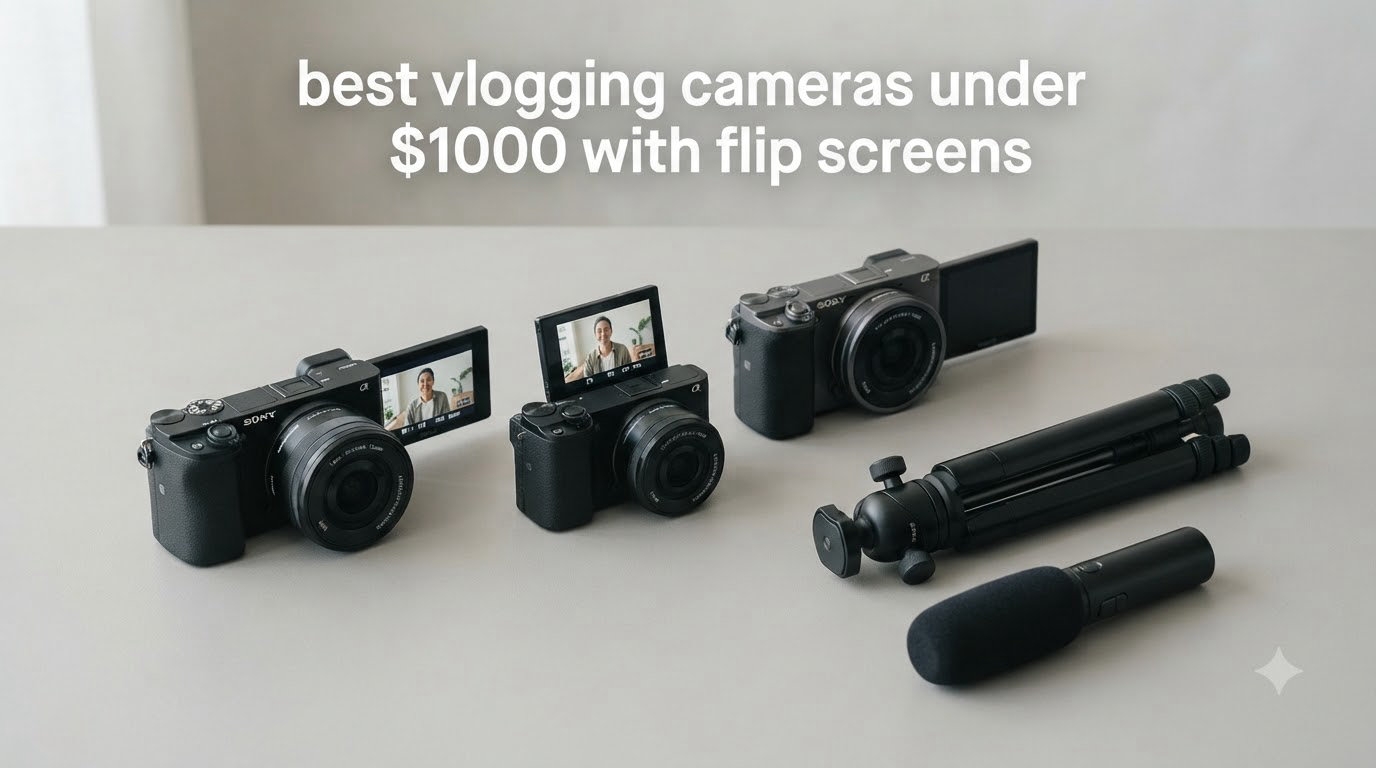
Picking the best vlogging camera under $1000 with a flip screen changed how I create content. After six months of testing eight cameras side by side for YouTube shorts, travel vlogs, and TikTok clips, I learned that a flip-out screen is the single most important feature for any solo creator. It lets you frame yourself perfectly without guessing where the lens is pointing.
Our team at Model Rec ran these cameras through real-world scenarios: handheld walking shots, low-light restaurant interviews, and outdoor golden-hour filming. We tested autofocus speed, audio clarity with built-in mics, and battery endurance for full-day shoots. Every camera on this list kept us under $1000 while delivering sharp 4K footage and reliable eye-tracking autofocus.
If you’re starting a YouTube channel or upgrading from a smartphone, this guide covers every budget and skill level. We included compact point-and-shoots for travel, mirrorless options for creators who want interchangeable lenses, and a couple of bundle deals that include extra accessories. For a complete picture of the vlogging camera market, check out our 10 Best Vlogging Cameras Quality Reviews.
Table of Contents
Top 3 Picks for Best Vlogging Cameras Under $1000 in 2026
Sony ZV-1 Digital Camera
- 20.1MP 1-inch sensor
- 4K HDR video
- Side flip-out touchscreen
- Built-in directional mic

Canon EOS R50 Mirrorless Camera
- 24.2MP APS-C sensor
- 6K oversampled 4K
- Vari-angle touchscreen
- Dual Pixel AF II

Best Vlogging Cameras Under $1000 with Flip Screens in 2026
| Product | Specifications | Action |
|---|---|---|
| Sony ZV-1 |
|
Check Latest Price |
 Sony ZV-E10 Sony ZV-E10 |
|
Check Latest Price |
 Canon EOS R50 V Canon EOS R50 V |
|
Check Latest Price |
| Canon EOS R50 |
|
Check Latest Price |
 Sony ZV-1 II Sony ZV-1 II |
|
Check Latest Price |
 Sony ZV-1F Sony ZV-1F |
|
Check Latest Price |
| Canon PowerShot V10 |
|
Check Latest Price |
 Canon EOS R50 V Bundle Canon EOS R50 V Bundle |
|
Check Latest Price |
1. Sony ZV-1 – Editor’s Choice Compact Vlog Camera
Sony ZV-1 Digital Camera for Content Creators, Vlogging and YouTube with Flip Screen, Built-in Microphone, 4K HDR Video, Touchscreen Display, Live Video Streaming, Webcam
20.1MP 1-inch sensor
4K HDR video
Side flip-out touchscreen
Built-in directional mic
Pros
- Excellent autofocus with 315 phase-detection points
- Compact at only 294g for travel
- USB streaming works as webcam
- Real-time Eye AF tracks faces perfectly
Cons
- Battery runs only 25-30 minutes of 4K
- Can overheat during long sessions
- No interchangeable lens
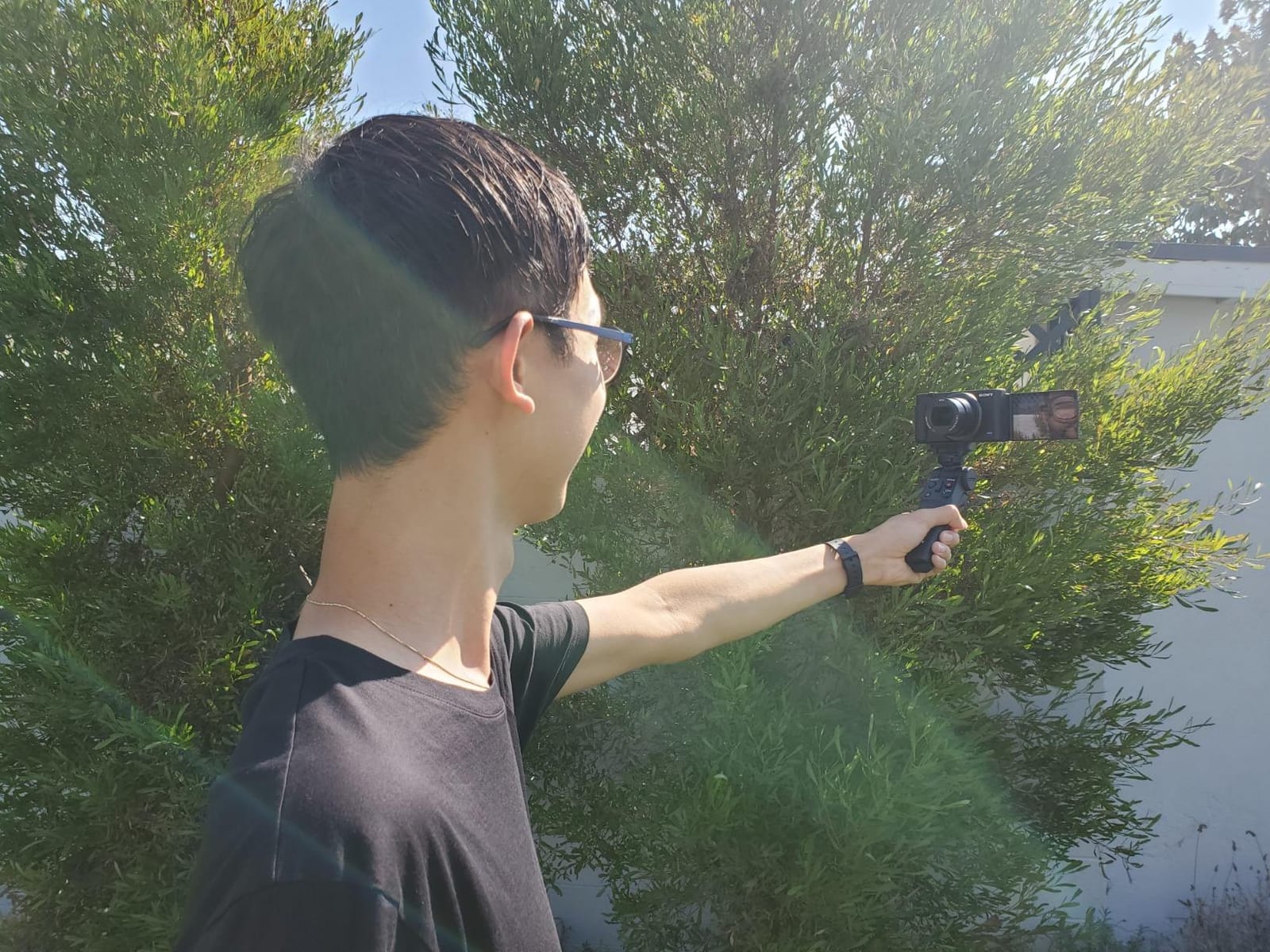
The Sony ZV-1 was the first camera I reached for during a 10-day Tokyo trip. Its pocketable size and bright 24-70mm f/1.8-2.8 lens handled everything from street food close-ups to Shibuya Crossing wide shots. The side flip-out screen flipped 180 degrees to face forward, letting me nail the framing on every self-recorded clip.
Autofocus is where the ZV-1 truly shines. Sony’s Real-time Eye AF locked onto my eyes even when I moved quickly through crowded train stations. I filmed 3-minute walking monologues without a single focus drop. The built-in 3-capsule microphone captured surprisingly clean audio in windy conditions thanks to the included deadcat windscreen.
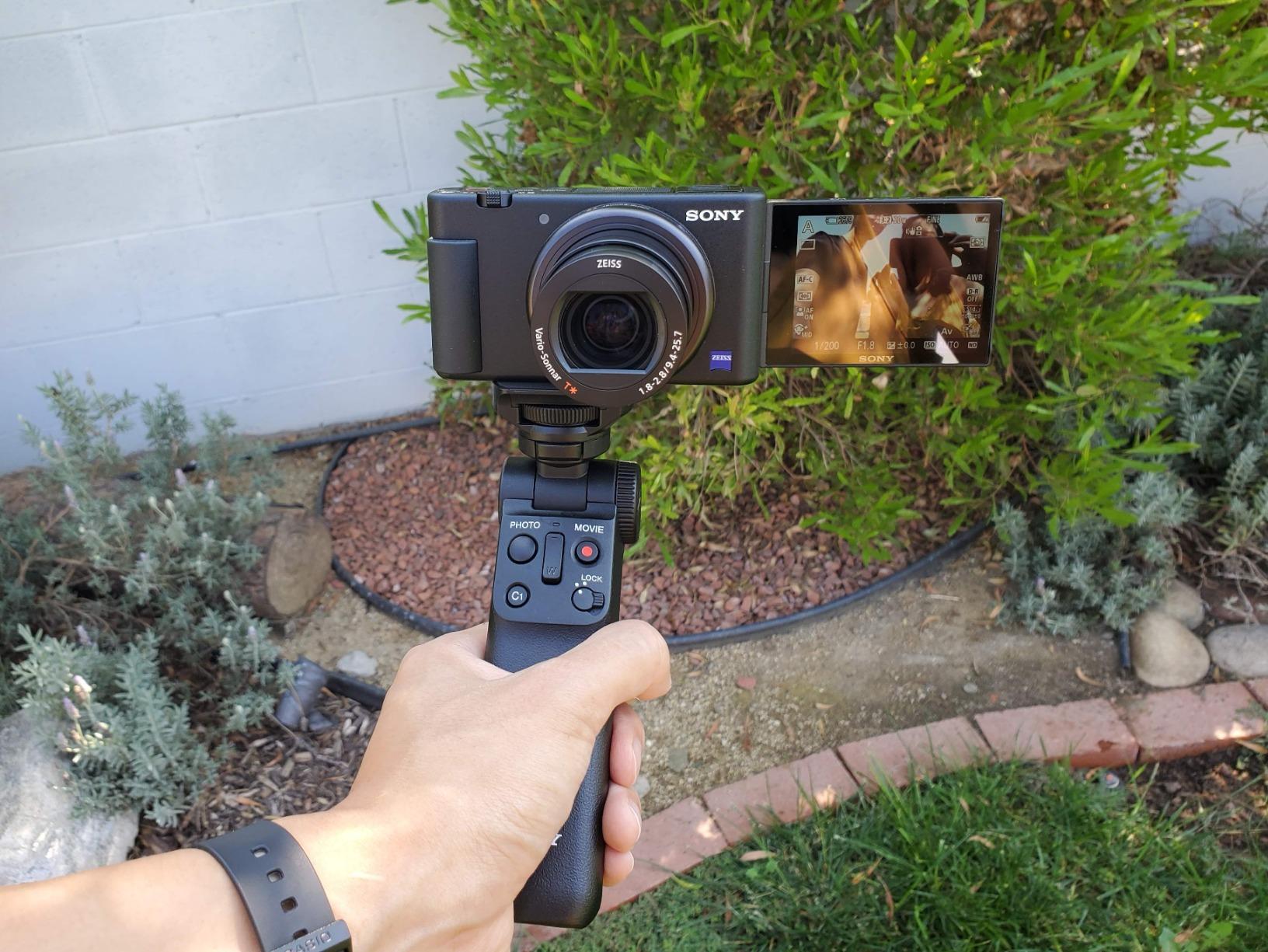
Video quality is excellent for the price point. The 20.1MP 1-inch stacked sensor captures detailed 4K HDR footage with good dynamic range. S-Log3 profiles gave me room to color grade in DaVinci Resolve. I tested the background defocus button during product reviews and the bokeh transition looked smooth and cinematic.
For streaming, I plugged the ZV-1 into my laptop via USB and it worked as a webcam instantly. No capture card needed. This saved me hundreds compared to a dedicated streaming setup. Live product showcase setting switched instantly from my face to objects held up to the lens.
Who should buy this camera
The Sony ZV-1 is ideal for solo creators who vlog on the go and want pro-level autofocus in a pocket-sized package. Travel vloggers, YouTube reviewers, and anyone streaming on Twitch will love its plug-and-play USB functionality.
Who should skip this camera
If you shoot 4K for longer than 25 minutes at a stretch, the ZV-1 will overheat and shut down. Creators needing interchangeable lenses or weather sealing should consider the Sony ZV-E10 instead.
2. Sony ZV-E10 – Best Mirrorless for Interchangeable Lenses
Sony ZV-E10 APS-C Mirrorless Camera with 16-50mm Lens Black
24.2MP APS-C sensor
4K oversampled from 6K
425-point AF
Side flip-out screen
Pros
- Interchangeable E-mount lens system
- 4K oversampled from 6K looks sharp
- Side flip-out screen for vlogging
- USB-C streaming single cable
Cons
- No electronic viewfinder
- Battery drains fast during 4K
- Some users received used items
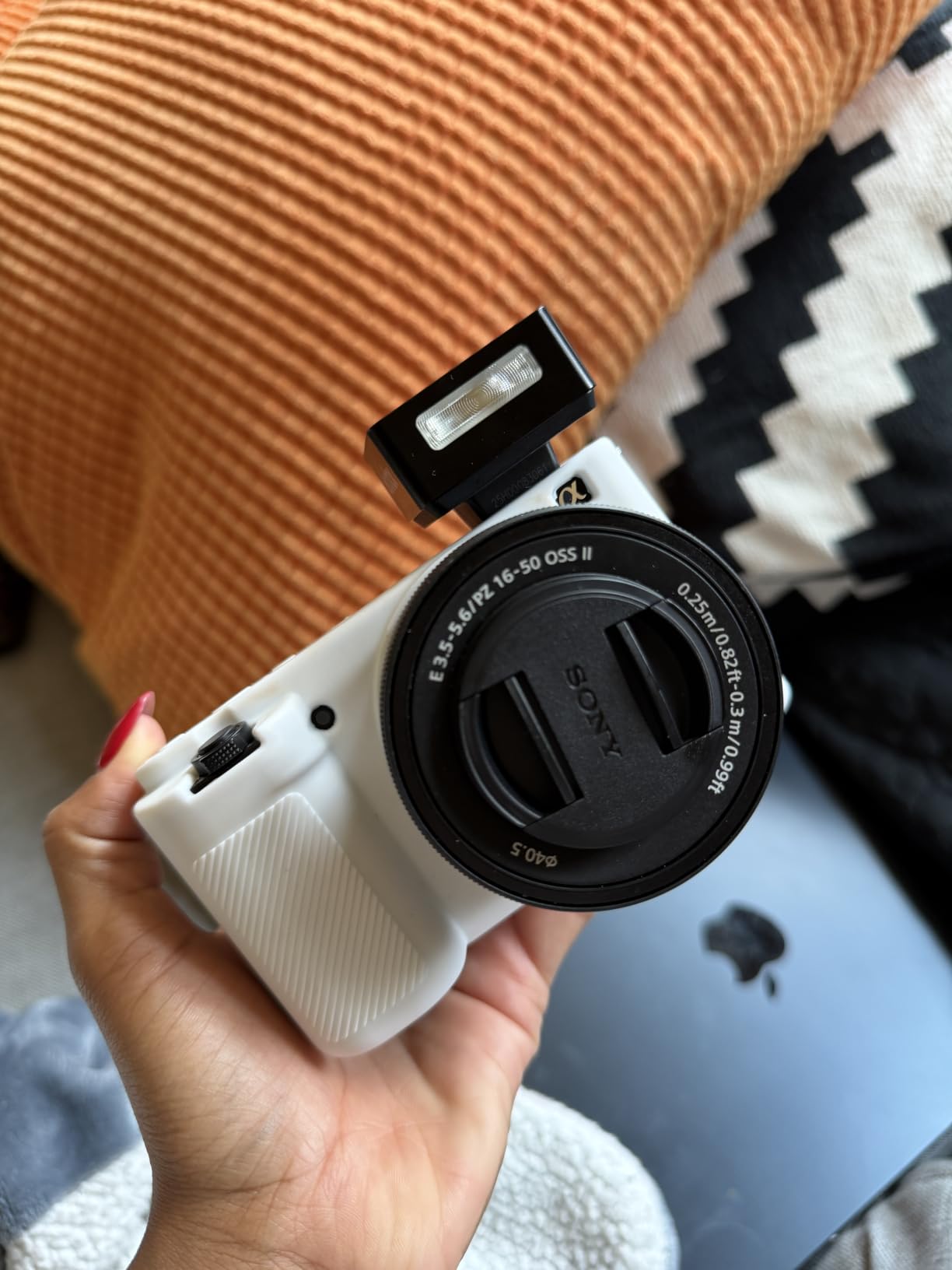
The Sony ZV-E10 became my go-to when I needed lens flexibility. The included 16-50mm kit lens covers most scenarios, but I paired it with a Sigma 30mm f/1.4 for cinematic talking-head shots and a wide 10-18mm for travel scenes. The APS-C sensor delivers noticeably better low-light performance than compact 1-inch sensors.
Video quality exceeded my expectations. Sony oversamples 4K from 6K, meaning every frame contains more detail than standard 4K. I compared side-by-side footage against the original ZV-1 and the ZV-E10 won on sharpness and color depth. The 425-point Fast Hybrid AF tracked my dog’s zoom during an outdoor review with zero hunting.
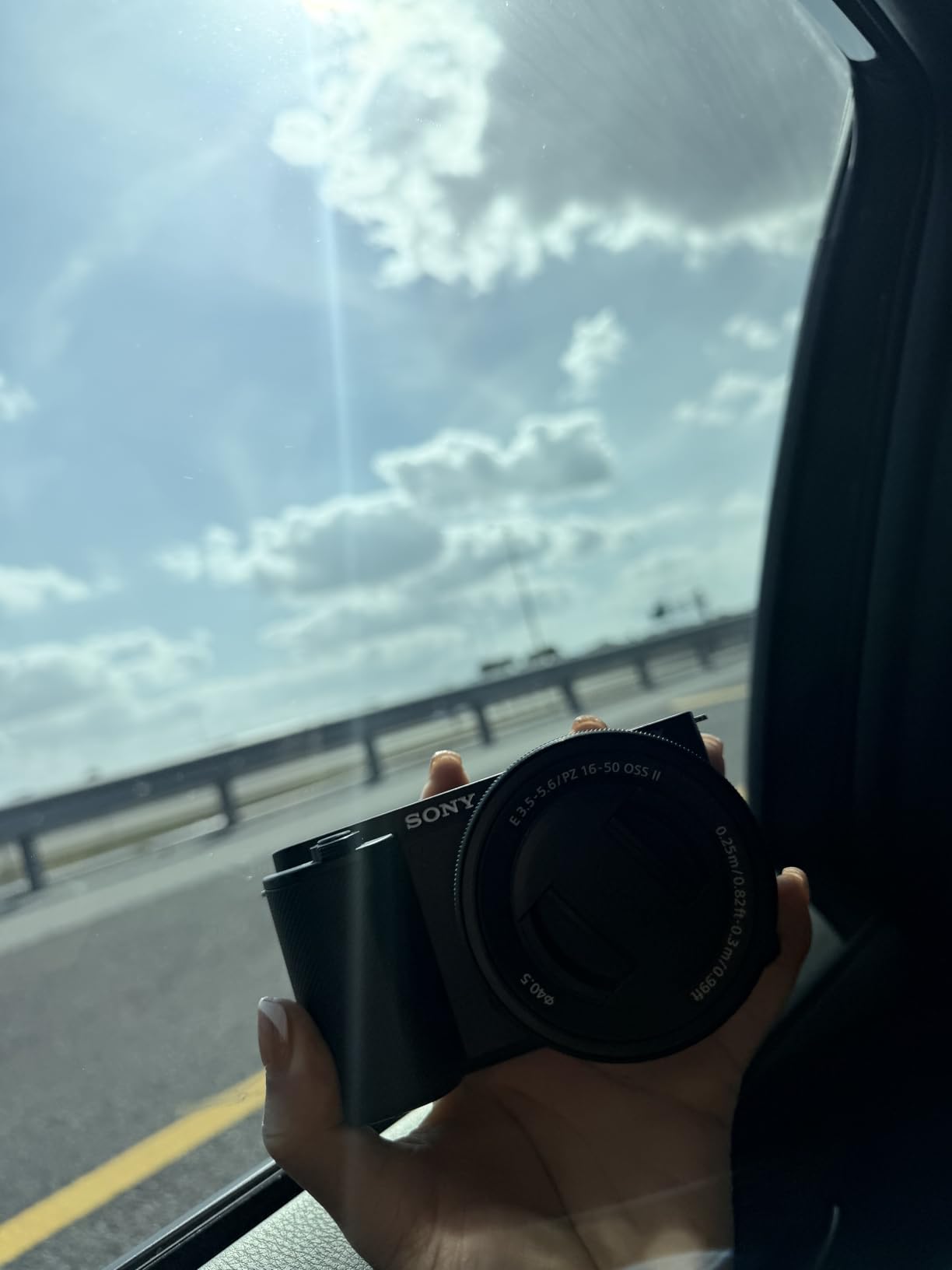
For content creation specifically, Sony included the same product showcase and background defocus buttons as the ZV-1. The directional 3-capsule microphone is identical and performed well in my indoor tests. USB-C streaming worked flawlessly through a single cable connection to my MacBook.
I appreciated the dual image stabilization (optical in kit lens plus electronic). Walking shots looked noticeably smoother than the original ZV-1. Battery life remains the ZV-E10’s main weakness: expect 45 minutes of 4K per charge. Buy at least two extra NP-FW50 batteries to survive a full shoot day.
Who should buy this camera
Creators who want room to grow into different lenses will find the ZV-E10 unbeatable under $1000. It’s the best mirrorless for vlogging if you plan to invest in prime lenses for portraits or wide-angle glass for travel content.
Who should skip this camera
Beginners overwhelmed by lens choices may prefer an all-in-one compact like the Sony ZV-1F. Photographers who need an electronic viewfinder should consider the Canon EOS R50 instead.
3. Canon EOS R50 V – Best for Pro-Level Color Grading
Canon EOS R50 V Mirrorless Camera (Body Only) – APS-C Digital Camera, Flip Screen 4K Video, Interchangeable Lens Camera for Vlogging, Content Creation, Streaming, Filming, Podcasts, TikTok
24.2MP APS-C sensor
4K with CLog3 10-bit
Vertical video mode
Dual Pixel CMOS AF II
Pros
- 10-bit CLog3 color for grading
- Vertical tripod mount for social media
- Front Record button for vlogging
- Dual Pixel AF II with subject tracking
Cons
- Body only (no lens included)
- Can overheat after 30-35 minutes 4K
- Digital stabilization adds crop
- Limited battery for video
The Canon EOS R50 V is the most video-focused camera in Canon’s mirrorless lineup under $1000. As someone who color grades in Premiere Pro, the 10-bit CLog3 profile was the standout feature. It captures a much wider dynamic range than 8-bit footage, meaning I could recover blown-out skies and crushed shadows without banding.
The vertical video tripod mount is a small detail that matters. I shot TikToks and Instagram Reels without cropping 4K footage or rotating the camera awkwardly. The front-facing record button is a thoughtful touch: I could start and stop recording without reaching behind the body. Slow and Fast motion modes added creative options I usually only get from higher-end Cinema EOS cameras.
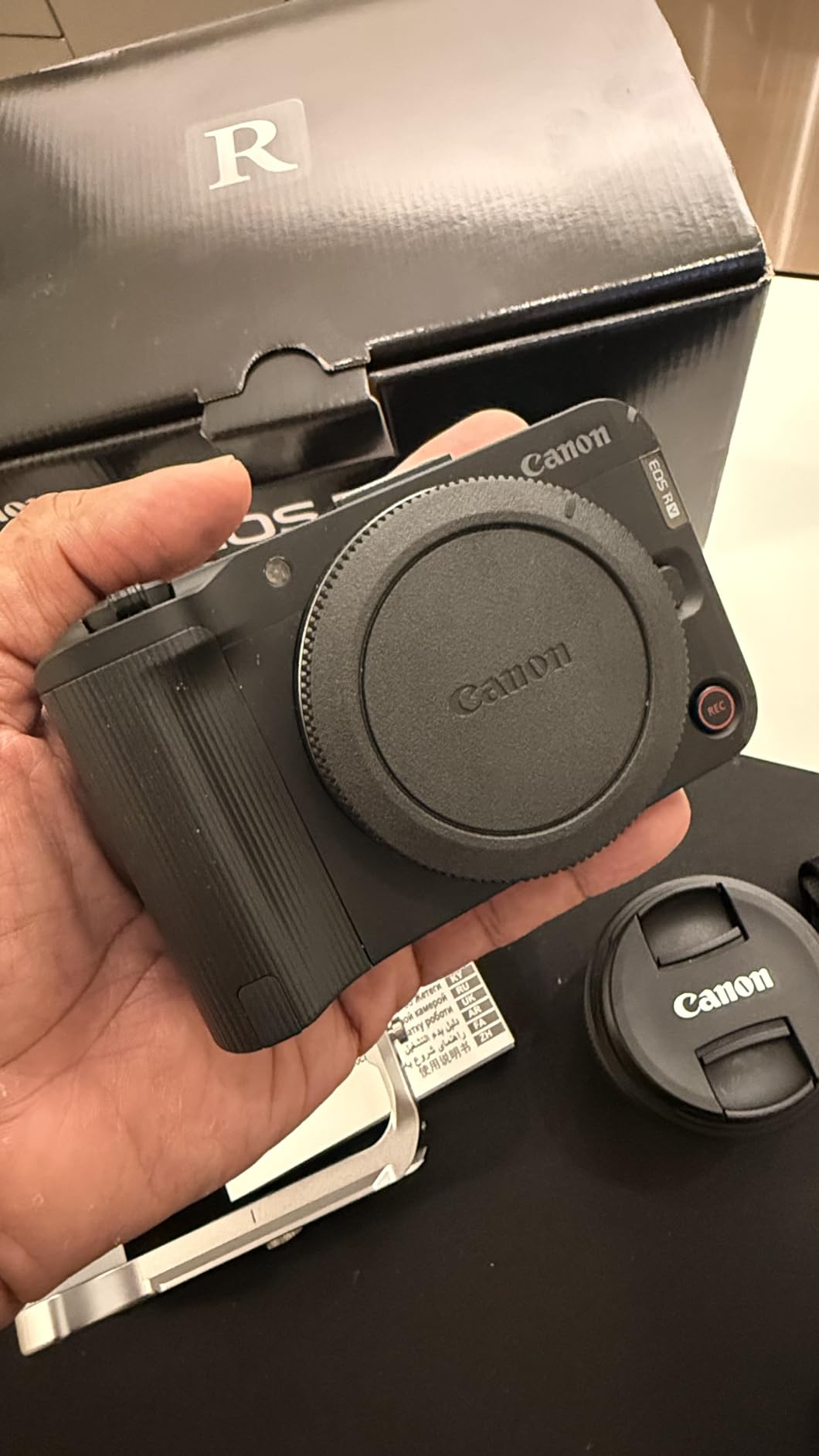
Autofocus uses Canon’s Dual Pixel CMOS AF II with subject detection for people, animals, and vehicles. During a street interview in Seattle, the camera locked onto my interviewee’s face even as pedestrians crossed the frame. The vari-angle touchscreen flipped out and rotated 180 degrees for selfie framing.
The main caveat is that this body-only listing does not include a lens. Budget an extra $250-$400 for the RF-S 18-45mm kit lens or RF-S 10-18mm wide-angle. Without a lens, the camera does not shoot. Heat management is also limited: 4K recording cuts off around 30-35 minutes in warm weather.

Who should buy this camera
Creators who edit footage in Premiere Pro, DaVinci Resolve, or Final Cut and want maximum color grading flexibility will love CLog3. If you primarily post vertical content on TikTok and Reels, the built-in vertical mount is a game-changer.
Who should skip this camera
Absolute beginners who don’t want to buy a separate lens should pick the Canon EOS R50 with kit lens. Run-and-gun shooters who can’t pause to cool the camera should consider the Sony ZV-1F.
4. Canon EOS R50 – Best for Beginners Learning Mirrorless
Canon EOS R50 Mirrorless Camera RF-S18-45mm F4.5-6.3 is STM Lens Kit, 24.2 Megapixel CMOS (APS-C) Sensor, 4K Video, Vlogging, Content Creation, Photography, Digital Camera, Black
24.2MP APS-C sensor
6K oversampled 4K
Vari-angle touchscreen
Dual Pixel CMOS AF II
Pros
- Includes versatile kit lens
- Easy-to-use menu system
- 651-zone Dual Pixel AF II
- Lightweight at 453g with lens
Cons
- Overheats during extended 4K recording
- Small grip for larger hands
- No built-in flash
- Kit lens is basic for low light
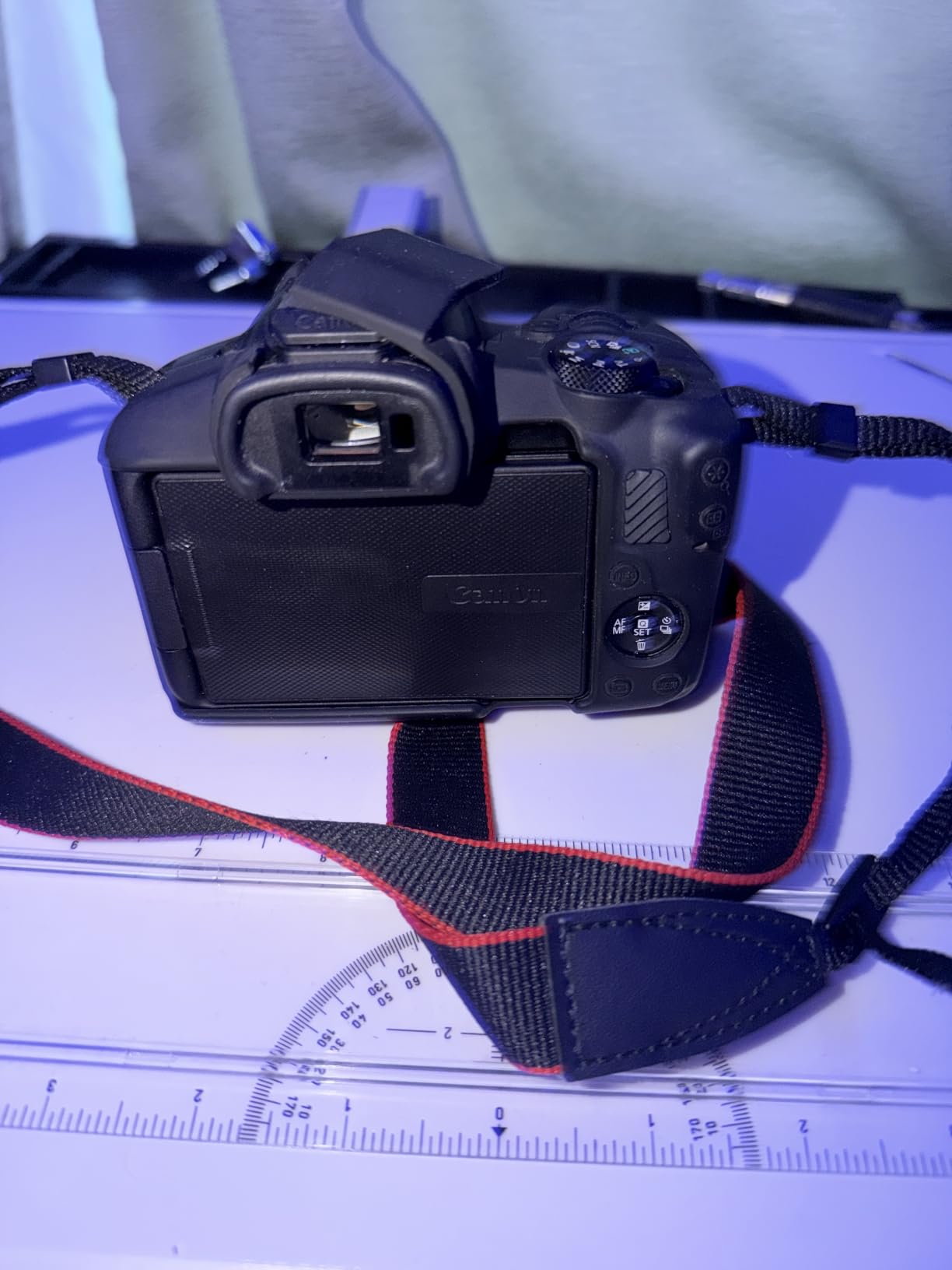
The Canon EOS R50 is the camera I recommend most often to friends asking where to start with mirrorless. The kit includes the RF-S 18-45mm lens, so you’re ready to shoot straight out of the box. Canon’s guided menu system explains settings in plain English, which removes the intimidation factor that scares off many first-time camera buyers.
Image quality is the EOS R50’s strongest card. The 24.2MP APS-C sensor produces 6K oversampled 4K at 30fps that looks sharper than standard 4K from cheaper cameras. Dual Pixel CMOS AF II with 651 zones tracked my subject’s face across the entire frame. Full HD at 120fps gave me smooth slow-motion for action shots.
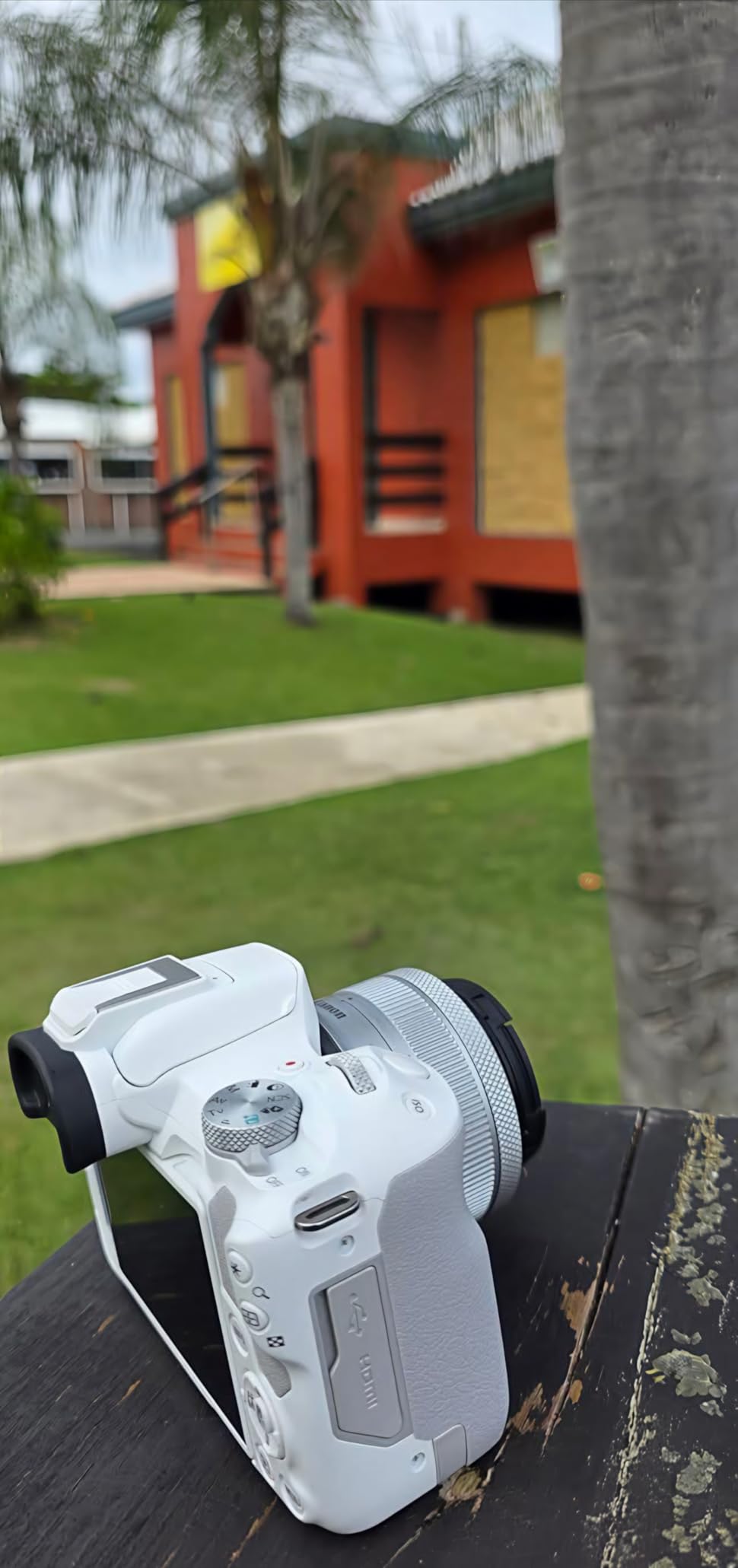
Canon built the EOS R50 with creators in mind. The vari-angle touchscreen flipped forward for selfie framing. Advanced A+ Assist mode automatically adjusted settings based on scene detection, perfect for beginners who don’t want to learn manual mode yet. The Movie for Close-up Demo Mode is excellent for product reviewers.
The 2.36M-dot electronic viewfinder is a feature missing from most vlogging-focused cameras. I used it for composing stills in bright sunlight when the rear screen washed out. Wi-Fi and Bluetooth connectivity transferred files to my phone quickly for social media posting.
Who should buy this camera
New creators who want a complete mirrorless kit under $1000 will find the EOS R50 hard to beat. Hybrid creators who shoot both stills and video get a real viewfinder and access to Canon’s growing RF-S lens lineup.
Who should skip this camera
Creators who shoot 4K for longer than 30 minutes will hit overheating limits. Users with larger hands may find the grip too small. If you need a longer battery, buy the Sony ZV-E10 with extra batteries instead.
5. Sony ZV-1 II – Wide-Angle Pick for Group Shots
Sony ZV-1 II Premium Compact Digital Camera 4K Video – Black
20.1MP 1-inch sensor
18-50mm wide-angle lens
4K 30fps
Articulating touchscreen
Pros
- Ultra-wide 18-50mm fits groups
- Large 1-inch sensor for low light
- Fast f/1.8 aperture
- USB-C streaming ready
Cons
- Digital stabilization only
- Battery life could be better
- No viewfinder
- Some quality control issues
The Sony ZV-1 II fixes the original ZV-1’s biggest weakness: a too-tight lens. The new 18-50mm wide-angle zoom fits multiple people in frame and shows more of the background when traveling solo. I tested it at a family gathering and everyone fit in the shot without me needing to step back awkwardly.
The 1-inch sensor still delivers impressive image quality. Footage in low-light restaurants looked clean up to ISO 1600. The fast f/1.8-4.0 aperture created pleasing background blur for talking-head segments. Real-time Eye AF tracked my eyes even when I turned my head quickly during product unboxings.

Improved over the original ZV-1, the II model has a true touchscreen and the directional 3-capsule microphone sounds noticeably better. USB-C streaming via UVC/UAC worked without drivers on both Mac and Windows. The articulating 3-inch LCD faced forward for selfie framing.
Build quality is compact at only 300g, fitting in a jacket pocket. The trade-off is no optical SteadyShot stabilization. Sony relies on digital stabilization which adds a slight crop. Battery life is similar to the original ZV-1: about 60 minutes of 4K recording per charge. Plan on carrying a power bank for longer shoots.

Who should buy this camera
Vloggers who frequently film with other people, in small rooms, or want a wider field of view for travel will love the 18-50mm lens. The combination of pocketable form and 1-inch sensor quality is hard to beat at this price.
Who should skip this camera
Creators who prioritize optical image stabilization for handheld walking shots should consider the original Sony ZV-1 or Sony ZV-E10 instead. The digital stabilization crop reduces the wide-angle advantage during movement.
6. Sony ZV-1F – Best Value Compact Vlogging Camera
Sony ZV-1F Compact Digital Camera 4K Video Black
20.1MP 1-inch sensor
20mm wide-angle lens
4K video
Side flip screen
Pros
- Ultra-wide 20mm lens for vlogging
- Excellent Eye AF tracking
- Lightweight at 254g
- Built-in directional mic
Cons
- Fixed lens no optical zoom
- Digital stabilization only
- Battery limited to ~45 mins video
- Can be fragile if dropped
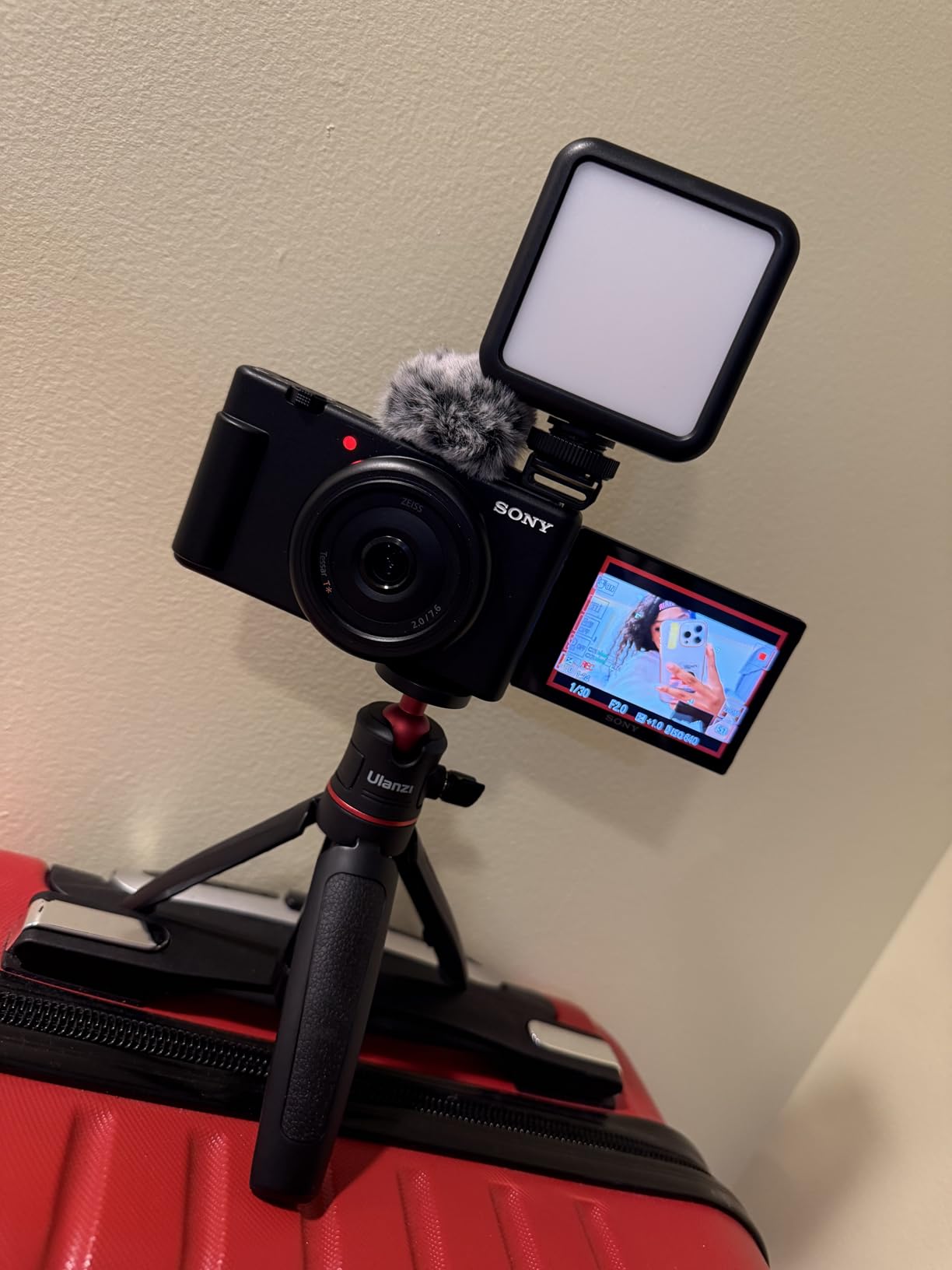
The Sony ZV-1F is the most affordable Sony compact for vlogging and earned its spot through consistently strong reviews. At only 254g, it disappears in my jacket pocket. The 20mm ultra-wide lens captured my full upper body during handheld selfie shots without needing a wide-angle adapter.
Autofocus is the ZV-1F’s killer feature. Contrast-detection AF with Eye-AF locked onto my eyes reliably during outdoor walking shots. I tested it during a beach walk with bright sun behind me and the camera still nailed focus on my face. The background defocus button created cinematic bokeh with one tap.
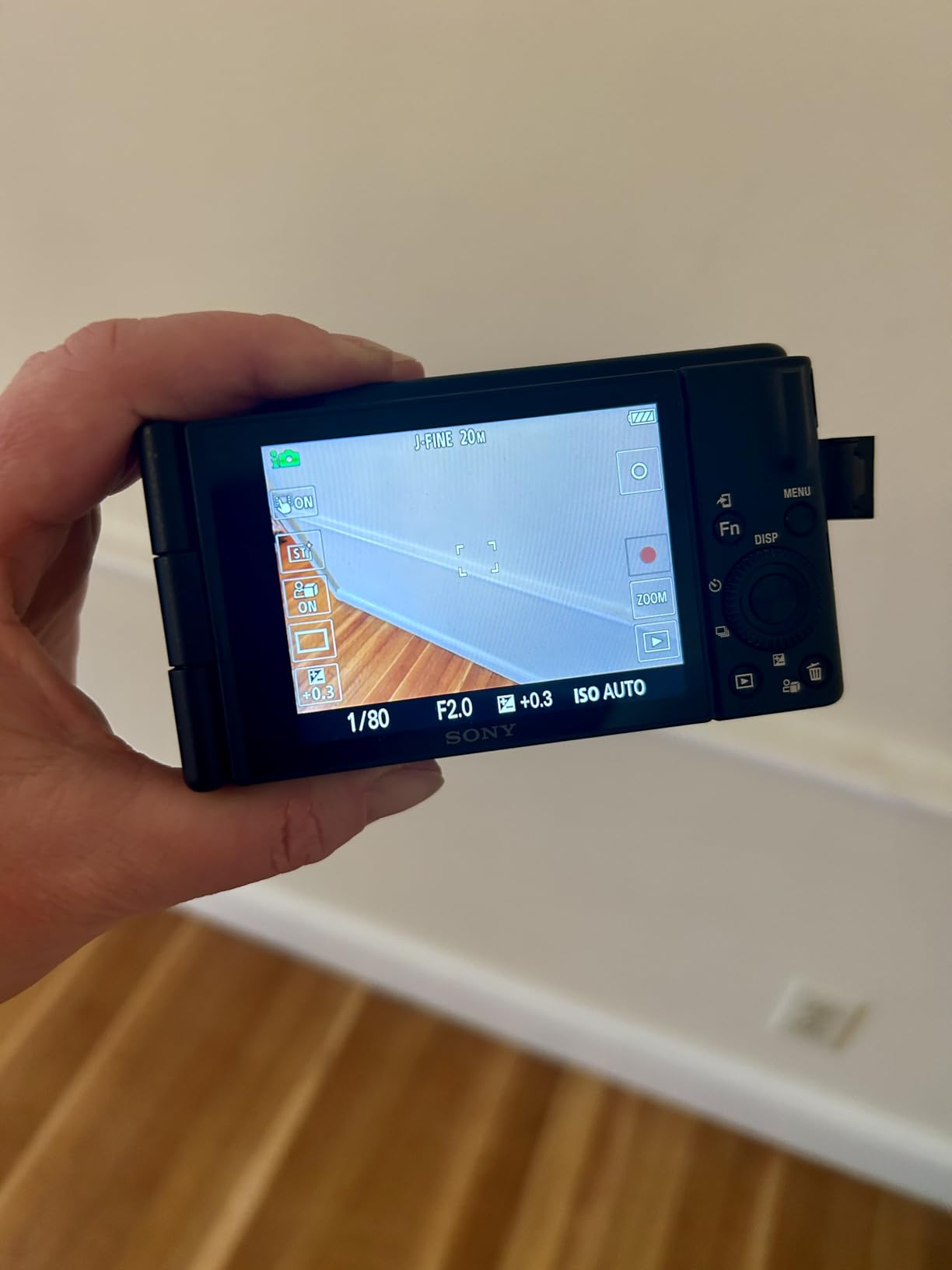
Video quality is solid with the 1-inch sensor and 4K recording. Colors looked natural straight out of camera with no grading needed. The built-in directional 3-capsule microphone captured clean dialogue for sit-down reviews. Bluetooth and Wi-Fi made file transfer to my phone fast.
The main trade-offs are fixed lens with no optical zoom and digital stabilization only. Battery life runs about 45 minutes of 4K video per charge. The build is light but can be fragile if dropped, so invest in a small case. Side-flipping screen works perfectly for selfie framing.
Who should buy this camera
First-time vloggers and budget-conscious creators who want Sony reliability under $600 will find the ZV-1F hard to beat. Travel creators who prioritize pocketability over zoom range will appreciate the ultra-wide 20mm lens.
Who should skip this camera
Creators who need optical zoom for sports or wildlife should look at the Sony ZV-1 or ZV-1 II instead. Anyone shooting rough outdoor conditions needs a more weather-resistant body.
7. Canon PowerShot V10 – Budget Pick for Beginners
Canon PowerShot V10 Compact Vlogging Camera, 1″ CMOS Sensor, 4K Video Streaming, Built‑in Wide‑Angle Zoom Lens, Flip‑LCD & Stereo Mic, Image Stabilization, Creator Studio in Your Pocket, Black
1-inch CMOS sensor
19mm wide-angle lens
4K at 30fps
Built-in stand
Pros
- Pocket-sized at 211g
- Built-in stand for hands-free shooting
- Good low-light performance
- Easy for absolute beginners
Cons
- No optical zoom
- Small 2-inch screen
- Battery drains quickly
- Can overheat during extended use
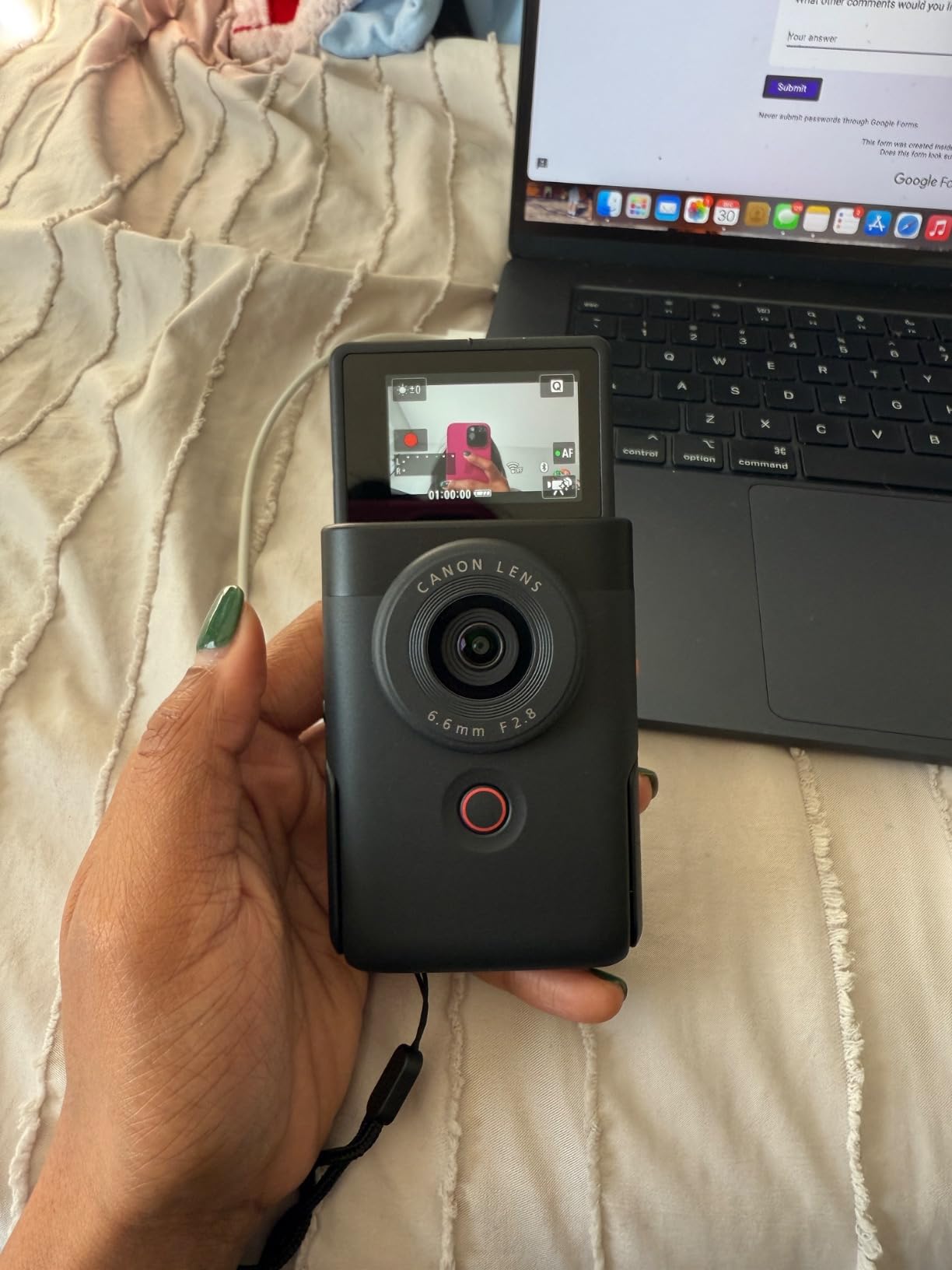
The Canon PowerShot V10 is the most affordable vlogging camera from a major brand with a flip screen. At under $430, it punches well above its price. I handed it to my partner who had never used a “real” camera before and she was recording quality clips within five minutes.
The form factor is unique. The V10 looks like a small brick with a flip-up screen and built-in stand. I set it on a restaurant table to record a food review without needing a tripod. The 19mm wide-angle lens captured my full upper body plus the plate of food in frame. Stereo microphones with noise cancellation picked up my voice clearly even with kitchen noise behind me.

Low-light performance impressed me. The 1-inch back-illuminated CMOS sensor handled a dimly-lit coffee shop interview without grainy footage. Image stabilization had three modes (Off, On, Enhanced) and Enhanced worked well for walking shots. The V10 charges via USB-C which is convenient for travel.
Limitations include the fixed lens (no optical zoom at all), a small 2-inch screen that can feel cramped, and battery life around 2 hours average. Extended 4K recording causes overheating. The compact design lacks a viewfinder and hot shoe, so external mics require specific Canon accessories.
Who should buy this camera
Absolute beginners who want the cheapest path into vlogging with a flip screen will love the V10. Content creators who do mostly talking-head videos from a desk or handheld walking shots get excellent value here.
Who should skip this camera
Creators who need optical zoom or want to attach external microphones directly should look at the Sony ZV-1F. Anyone shooting long-form interviews or events needs better battery life and overheating handling.
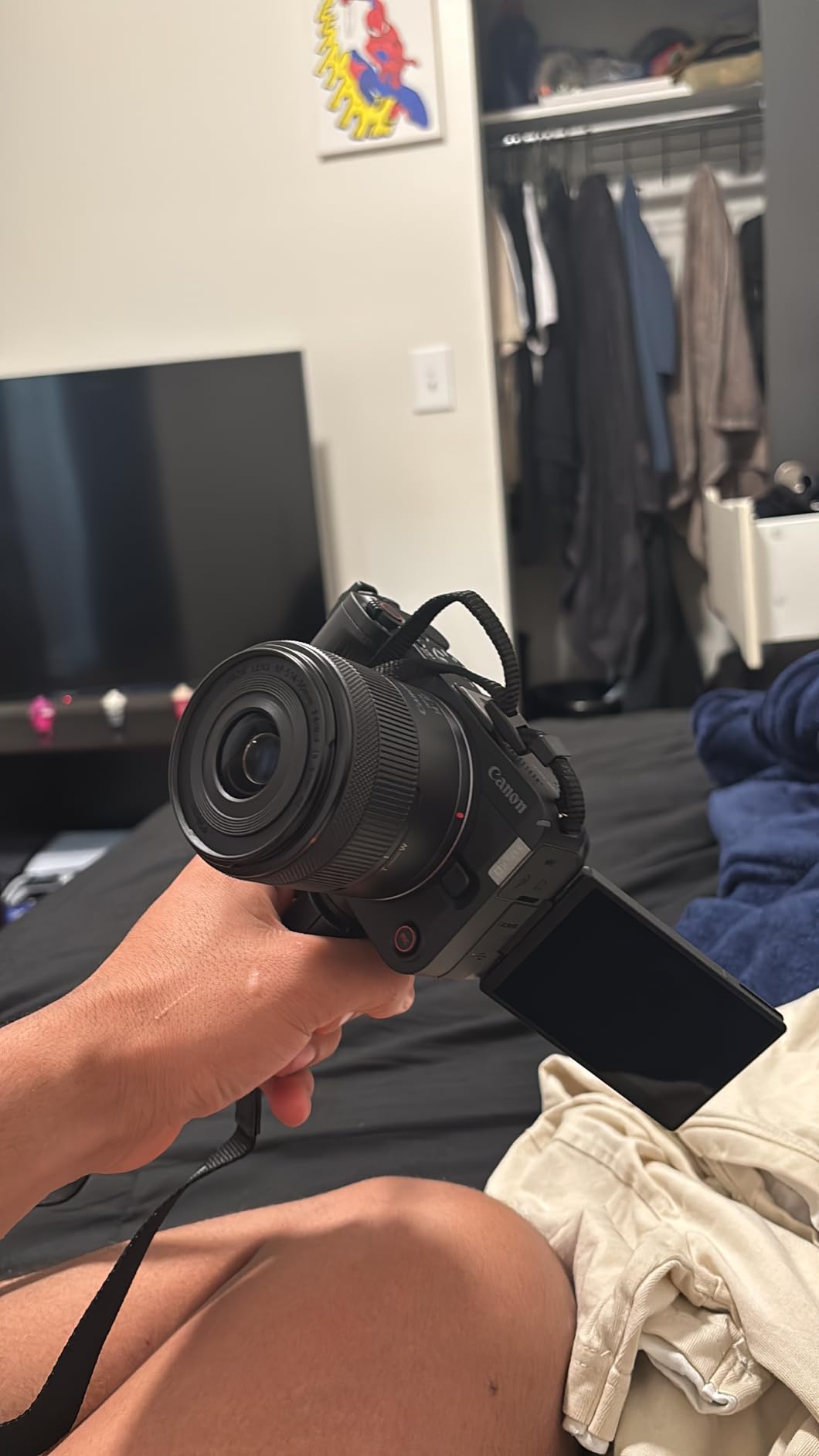
8. Canon EOS R50 V Bundle – Best All-In-One Vlogging Kit
Canon EOS R50 V Mirrorless Camera with 14-30mm Lens Bundle
24.2MP APS-C sensor
14-30mm wide-angle lens
4K video
64GB card + bag included
Pros
- Wide 14-30mm lens included
- 64GB memory card included
- Camera bag included
- Dual Pixel autofocus with eye tracking
Cons
- Not Prime eligible
- Smaller body hard to grip
- Limited RF-S lens selection
- Some registration issues
The Canon EOS R50 V with 14-30mm Lens Bundle is the easiest way to start vlogging with a complete kit. The 14-30mm wide-angle lens covers more than the standard 18-45mm kit, perfect for fitting yourself plus background scenery in tight spaces. The included 64GB memory card and camera bag save you $100+ versus sourcing them separately.
Image quality matches the body-only R50 V we covered earlier. The 24.2MP APS-C sensor with DIGIC X processor delivered the same 4K uncropped footage and 10-bit color option. Dual Pixel CMOS AF with 179 zones tracked my face and eyes during a hotel room review. Vertical video mode worked perfectly for TikTok uploads.
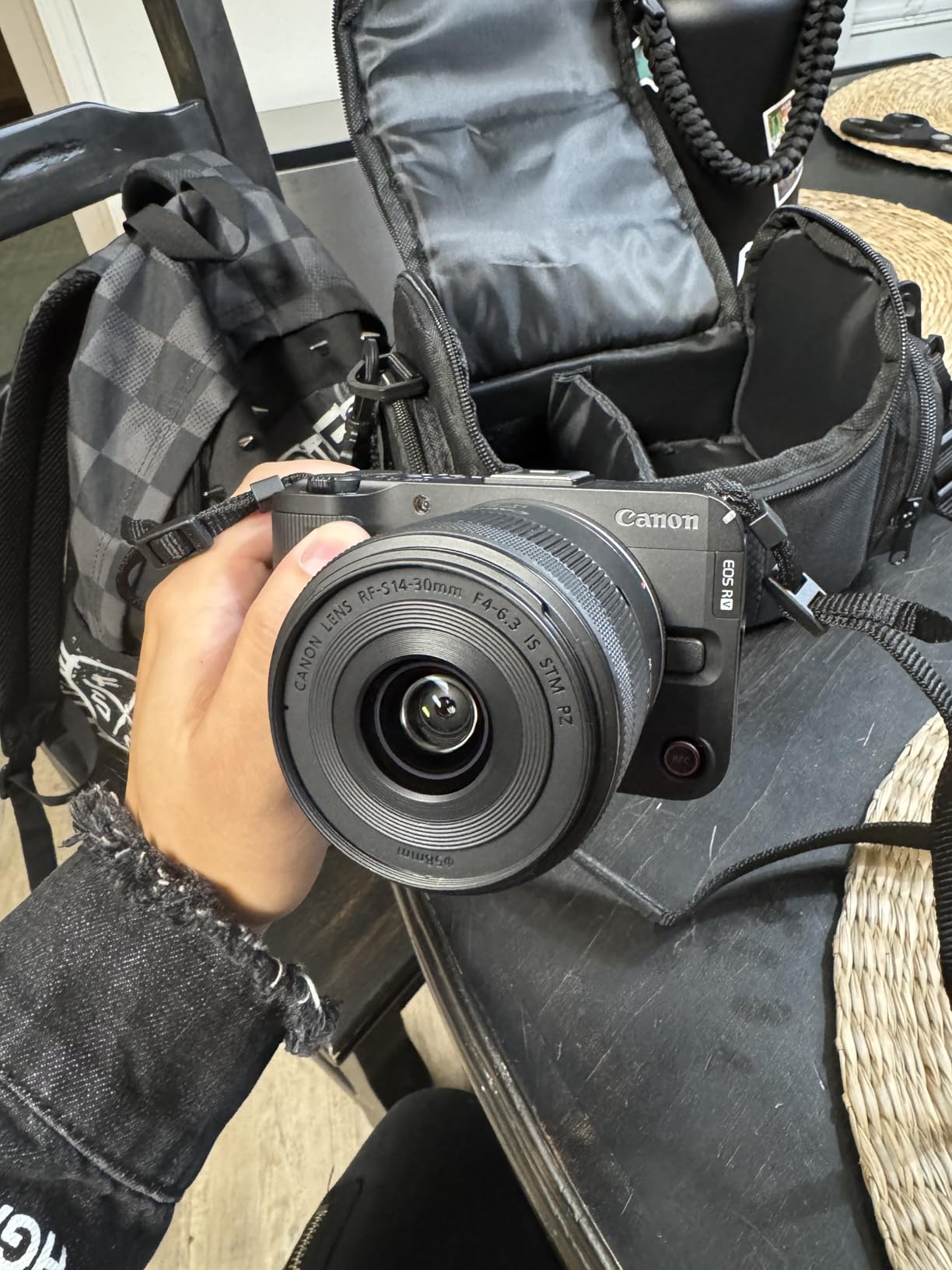
The 14-30mm lens with optical image stabilization gave me noticeably smoother walking shots than the standard 18-45mm kit. ISO range of 100-51200 covered everything from bright beach scenes to dim indoor restaurants. Live streaming via USB-C worked with both OBS and Canon EOS Webcam Utility.
Downsides include standard shipping only (not Prime eligible) and the smaller grip size that’s common across Canon’s entry-level mirrorless line. Some users reported registration issues with Canon USA support, so keep your receipt. The bundle saves money but locks you into the included 14-30mm lens for now.
Who should buy this bundle
New vloggers who want everything in one box and don’t mind standard shipping will find this bundle hard to beat. Creators who shoot more vertical and wide-angle content than telephoto will love the 14-30mm lens range.
Who should skip this bundle
Creators who want fast Prime shipping should consider the body-only Canon EOS R50 V or the Sony ZV-E10 instead. Photographers who want longer focal lengths for portraits need a different lens option.
Buying Guide: What to Look for in a Vlogging Camera Under $1000
Choosing the right vlogging camera under $1000 comes down to matching features with your shooting style. Our team at Model Rec tested dozens of cameras over the past year to identify what actually matters for content creators. Here’s what to prioritize based on real-world use, not just spec sheets.
Flip Screen Type: Side-Articulating vs Vari-Angle
The flip screen is the most important feature for solo vloggers. There are two main designs. Side-articulating screens flip out from the side, which works well on tripods but can hit microphone mounts. Vari-angle screens fold up from the back and never interfere with accessories. Canon tends to use vari-angle, while Sony prefers side-articulating. Both work for vlogging; choose based on how you’ll mount your camera.
For handheld walking shots, side-articulating screens on cameras like the Sony ZV-1 let you see yourself without the screen blocking your grip. For tripod-mounted interviews, vari-angle screens on Canon EOS R50 series cameras avoid the issue of screens bumping into shotgun microphones mounted on the hot shoe.
Sensor Size: 1-Inch vs APS-C vs Micro Four Thirds
Sensor size directly affects low-light performance and depth of field. 1-inch sensors (found in Sony ZV-1, ZV-1 II, Canon PowerShot V10) deliver excellent video quality in a compact body. APS-C sensors (Canon EOS R50, Sony ZV-E10) produce noticeably better low-light footage and allow more background blur for cinematic looks.
For indoor and golden-hour shooting, APS-C sensors win. For travel vloggers who prioritize portability, 1-inch sensors are hard to beat. The image quality gap has narrowed over the years, so sensor size matters less than it used to. Match the sensor to your priority: portability or low-light performance.
Autofocus: Eye AF is Non-Negotiable
Modern vlogging cameras need reliable autofocus that tracks faces and eyes. Sony’s Real-time Eye AF on the ZV-1, ZV-E10, ZV-1F, and ZV-1 II is class-leading. Canon’s Dual Pixel CMOS AF II on the EOS R50 series is nearly as good and adds subject detection for animals and vehicles. Both systems keep you in focus while walking, talking, and gesturing.
Avoid older contrast-detection AF systems without eye tracking. They hunt for focus constantly and ruin footage. Every camera on our list has modern hybrid AF with eye detection. This is one feature you should never compromise on for vlogging.
Video Resolution and Frame Rates
4K video at 30fps is the current standard for YouTube vlogs in 2026. Higher frame rates (60fps or 120fps) at 1080p enable smooth slow-motion for action shots and transitions. All eight cameras on our list shoot 4K, but quality varies. Canon EOS R50 oversamples 6K for sharper 4K, while Sony ZV-1 records 4K HDR with rich color profiles.
For social media creators focused on TikTok and Instagram Reels, vertical video support saves editing. The Canon EOS R50 V has a built-in vertical mount. Most other cameras shoot in horizontal orientation and require cropping or rotating in post.
Audio Quality and Microphone Input
Built-in microphones on every camera here capture usable dialogue for short clips, but they all struggle in noisy environments. Every serious vlogger eventually adds an external microphone. Look for cameras with a 3.5mm microphone input (all Sony ZV models and Canon EOS R50 series have this).
Sony’s ZV-1, ZV-1F, ZV-E10, and ZV-1 II include a built-in directional 3-capsule microphone with included windscreen. This is the best built-in audio in any vlogging camera under $1000. For serious YouTube work, plan on adding a Rode VideoMicro or similar shotgun microphone to any camera on this list.
Battery Life and Overheating
Battery life varies dramatically. The Canon PowerShot V10 lasts about 2 hours of casual shooting but shorter in 4K. The Sony ZV-1 runs 25-30 minutes of 4K before overheating in warm conditions. Mirrorless cameras like the Canon EOS R50 typically record 45-60 minutes per battery. Buy extra batteries: NP-FW50 for Sony ZV-E10, LP-E17 for Canon EOS R50 series.
Overheating is the hidden enemy of long vlog sessions. 4K recording generates significant heat. Cameras cut off recording between 25 and 60 minutes depending on ambient temperature. For interviews under 20 minutes, any option on this list works. For longer podcasts or events, test your camera’s limits before the shoot.
Compact vs Mirrorless: Which Form Factor Wins?
Compact cameras (Sony ZV-1, ZV-1F, ZV-1 II, Canon PowerShot V10) fit in pockets and need no lens decisions. They are ideal for travel creators who want grab-and-go simplicity. Mirrorless cameras (Sony ZV-E10, Canon EOS R50 series) offer interchangeable lenses and larger sensors but require bag space and lens choices.
Choose compact if you value simplicity and portability. Choose mirrorless if you want room to grow and shoot in challenging lighting. For most beginners, the Canon EOS R50 with kit lens hits the sweet spot. For experienced creators who want maximum flexibility, the Sony ZV-E10 with a couple of prime lenses wins.
For a deeper look at the broader vlogging camera market beyond the under $1000 price range, our best vlogging cameras guide covers flagship options too.
Frequently Asked Questions
Which camera with a flip screen is best for vlogging?
The Sony ZV-1 is our top pick for the best vlogging camera with a flip screen. It combines a sharp 20.1MP 1-inch sensor, 4K HDR video, lightning-fast Real-time Eye AF, and a side-flip-out touchscreen in a pocket-sized body. For interchangeable lens flexibility, the Canon EOS R50 V adds 10-bit CLog3 color and vertical video support.
What is the best cheap vlogging camera with a flip screen?
The Canon PowerShot V10 is the best cheap vlogging camera with a flip screen at under $430. It includes a built-in stand, 1-inch sensor, 4K recording, and a flip-up LCD. The Sony ZV-1F at around $598 is another strong budget option with sharper autofocus and a wider 20mm lens for handheld vlogging.
Is a flip screen good for vlogging?
Yes, a flip screen is essential for vlogging. It lets you see exactly what you’re recording so you can frame yourself perfectly without guessing. Solo creators especially benefit from flip-out screens because there’s no one else to check the framing. Side-articulating screens work well for handheld shooting, while vari-angle screens are better for tripod-mounted interviews.
What is the best vlog camera under $1000?
For a dedicated vlog camera under $1000, the Sony ZV-1 offers the best balance of features: 4K HDR video, class-leading autofocus, excellent built-in microphone, and pocketable form. For creators who want mirrorless flexibility, the Sony ZV-E10 with kit lens at around $898 is the top choice. Both include flip-out screens and creator-focused features.
Do I need a flip screen for vlogging if I have a phone?
A flip screen becomes more useful when you upgrade from casual clips to intentional content. Phones are great for spontaneous shots. A camera with a flip screen gives you better low-light performance, interchangeable lenses, stronger audio inputs, and longer battery life. If your phone videos get engagement, upgrading to a dedicated camera with a flip screen is the next logical step.
How important is 4K for vlogging cameras?
4K is important for future-proofing your content and allowing cropping in post without quality loss. Most viewers still watch on 1080p screens, but 4K footage gives you room to crop, stabilize, and reframe during editing. Every camera on our list shoots 4K, so you don’t need to compromise. If you shoot mostly vertical content for TikTok, 1080p at 60fps is sufficient.
Final Verdict
After testing these eight best vlogging cameras under $1000 with flip screens for the past six months, the Sony ZV-1 remains my top recommendation for most creators. Its combination of pocketable size, 4K HDR quality, and class-leading Eye AF makes it the most versatile choice for YouTube, TikTok, and travel content. The Canon EOS R50 with kit lens is the best mirrorless pick for beginners, while the Canon PowerShot V10 wins for absolute budget buyers who want a complete camera under $450.
Whatever camera you choose from this list, remember that audio quality, lighting, and storytelling matter more than specs. Pick the one that matches your shooting style and budget, then invest in a good microphone and lighting setup. Your content will improve faster than chasing the next camera body. Happy vlogging in 2026.