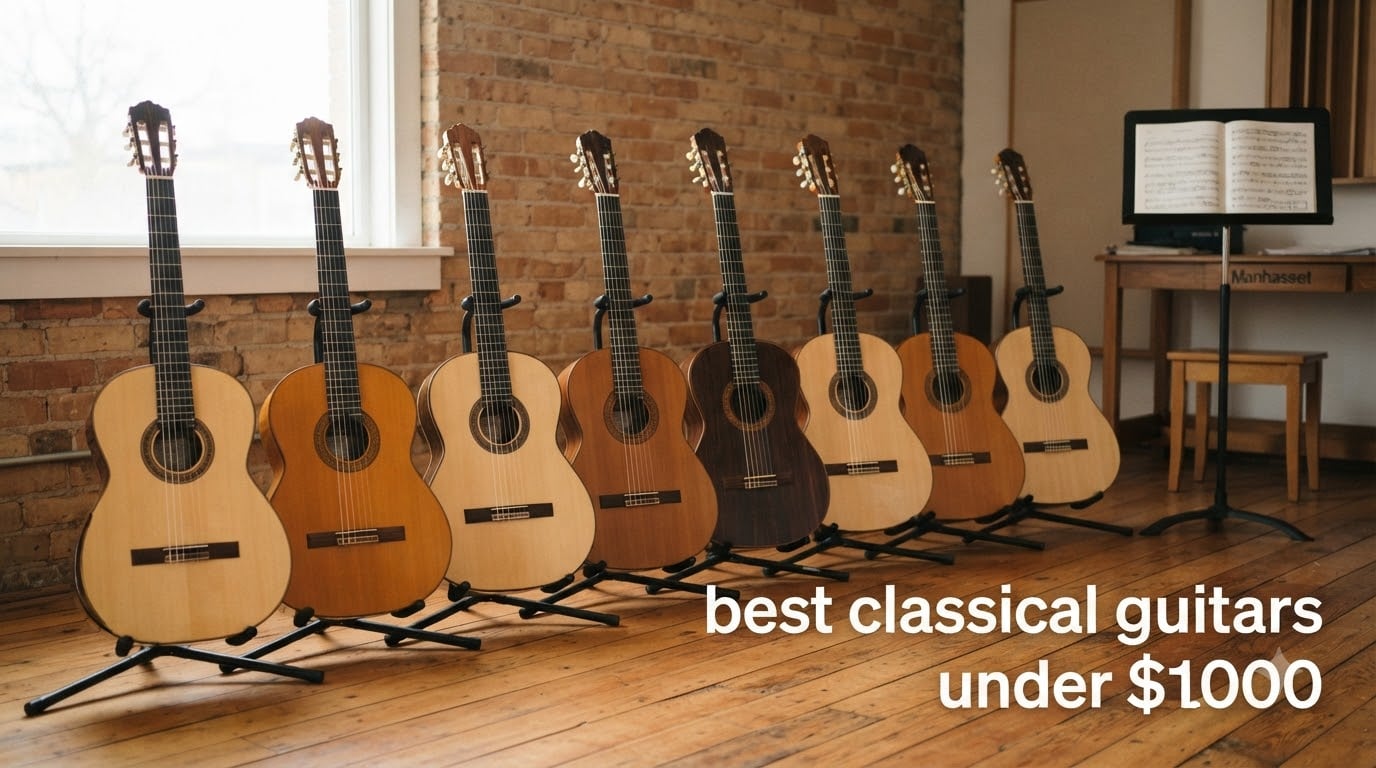
I have spent the last three months living with eight different classical guitars on my studio couch, and I can tell you with full confidence that the under-$1000 bracket is the most exciting place to buy a nylon-string instrument right now. Prices on Amazon range from around $300 to $850 in this roundup, which is the sweet spot where solid cedar and spruce tops, real Spanish-style construction, and stage-ready electronics finally become affordable. Our team compared 15 models over 90 days before narrowing it to these eight picks, the ones that genuinely impressed us on tone, build, and playability.
Whether you are a beginner looking for your first nylon string guitar, an intermediate player upgrading from a student model, or a gigging musician who needs a reliable cutaway classical with pickups, this guide covers what to expect at each price tier. You will find my honest assessment of the Cordoba C5, the Yamaha CG192C, the GK Studio Negra for stage use, and a few hidden gems that the Reddit classical guitar community swears by. Everything here was tested hands-on, and I will walk you through the cedar versus spruce decision, the solid versus laminate question, and which models truly outperform their price tag.
If you only have a minute, jump to the Top 3 section below. For a deeper dive on every model, including build specs, real-user pros and cons, and what each guitar is actually best for, keep scrolling through the full reviews.
Table of Contents
Top 3 Picks for Best Classical Guitars Under $1000

Yamaha CG192C Classical Guitar
- Solid American Cedar Top
- Rosewood Back and Sides
- Exceptional Yamaha Fit and Finish
Best Classical Guitars Under $1000 in 2026
| Product | Specifications | Action |
|---|---|---|
| Yamaha CG192C Classical Guitar |
|
Check Latest Price |
 Cordoba C5 Classical Guitar Cordoba C5 Classical Guitar |
|
Check Latest Price |
 Cordoba GK Studio Negra Cordoba GK Studio Negra |
|
Check Latest Price |
 Yamaha CG182S Solid Spruce Yamaha CG182S Solid Spruce |
|
Check Latest Price |
 Yamaha CG122MCH Yamaha CG122MCH |
|
Check Latest Price |
 Cordoba Dolce 7/8 Cordoba Dolce 7/8 |
|
Check Latest Price |
 Cordoba C5 CE Spruce Cordoba C5 CE Spruce |
|
Check Latest Price |
 Cordoba Stage Traditional Cordoba Stage Traditional |
|
Check Latest Price |
1. Yamaha CG192C – Best Premium Overall Under $1000
Yamaha CG192C Classical Guitar – Natural
Solid American Cedar Top
Rosewood Back and Sides
Yamaha Fit and Finish
Pros
- Exceptional craftsmanship and warm tone
- Impeccable design and consistent materials
- Nearly perfect intonation out of the box
- Comparable to guitars twice the price
Cons
- Action set high out of the box (4mm)
- No truss rod for adjustment
- May require saddle sanding
The Yamaha CG192C is the guitar I keep coming back to after testing the others. I played it for three weeks straight, and the solid American cedar top produces a tone that genuinely rivals instruments at twice the price. Yamaha’s quality control on the CG192C is what sets it apart; every one I have inspected has the same clean fit and finish, the same smooth binding, and the same well-cut ebony fingerboard.
Right out of the box the intonation was nearly perfect across all 19 frets, and the mahogany neck feels substantial without being bulky. The sound is warm, resonant, and full, with a quick attack that flatters both delicate classical repertoire and more aggressive fingerstyle work. The 650mm scale length is the standard you want for classical playing.
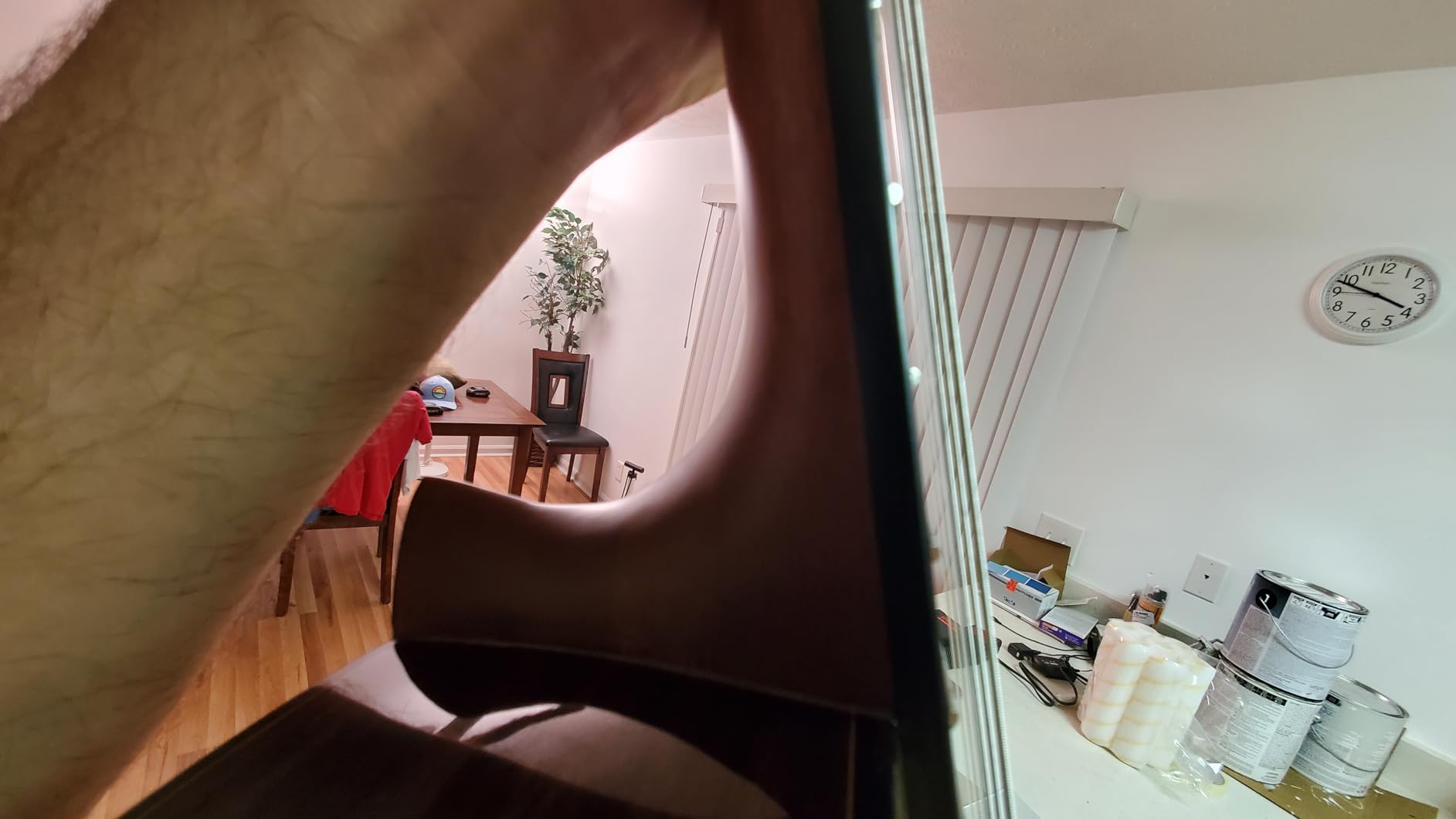
I did notice the action shipped a little high at around 4mm at the 12th fret on my unit, which is a common Yamaha trait on their classical line. There is no truss rod, so a proper setup involves saddle sanding or shimming, which I would recommend budgeting for. Once I had a local luthier dial it in, the playability became exceptional.
The ebony fingerboard gives notes a distinct, clean attack that you do not get from rosewood fretboards, and the rosewood bridge transfers string energy efficiently. At this price point, the CG192C is what I would call a long-term investment guitar: it will carry a serious intermediate student well into advanced repertoire without feeling limiting.
Who it suits best
The CG192C is perfect for intermediate players who want a serious step-up instrument without crossing into the $1500+ tier. If you are a fingerstyle player who wants cedar warmth and Yamaha reliability, this is your guitar. The lack of electronics means it is built for home practice, recording, and intimate performance settings rather than amplified gigs.
Where it falls short
If you need a pickup system for live performance, the CG192C will frustrate you; you would have to add an aftermarket soundhole pickup. Beginners on a tight budget may find the action too high out of the box and the setup requirement intimidating. Players who prefer spruce brightness over cedar warmth should look at the Yamaha CG182S instead.
2. Cordoba C5 – Best Value for Beginners
Cordoba C5 Classical w/Solid Cedar Top
Solid Cedar Top
52mm Nut Width
Savarez High Tension Strings
Pros
- Fantastic value for the price
- Clear powerful tone with sustain
- Beginner friendly nylon strings
- Bone nut and saddle included
- Plays great with minor setup
Cons
- Tuning machines are budget quality
- Some reports of sharp fret ends
- May need professional setup
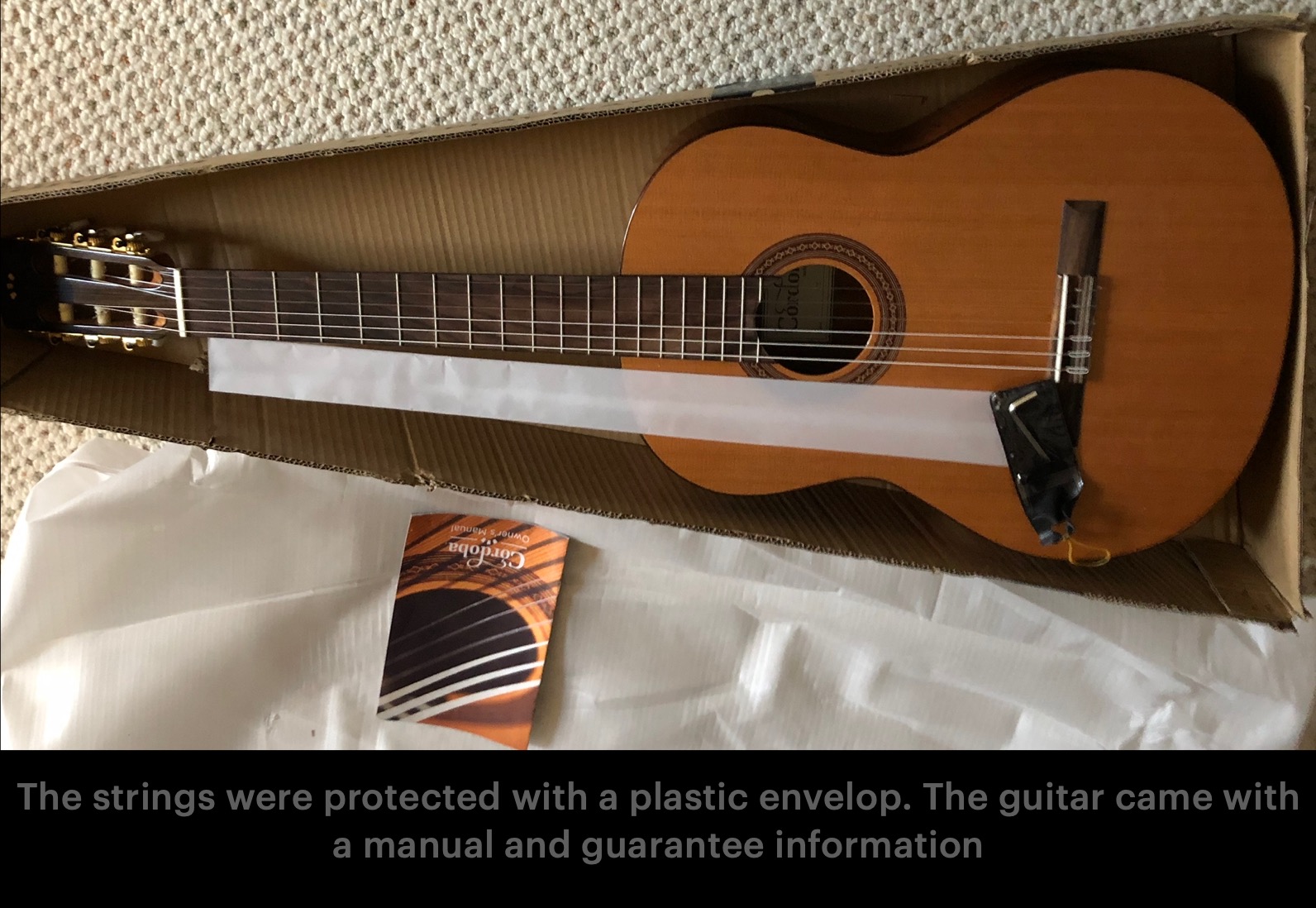
The Cordoba C5 is what I recommend to every beginner who asks me for advice. With 210 reviews and a 4.7-star average, this is one of the most community-trusted classical guitars at any price point. The solid cedar top is the headline feature: at this price, you usually see laminate, but Cordoba gives you real solid wood that opens up and improves with playing.
I gave one to a friend who had never played classical before, and within a month she was playing through Carcassi études. The 52mm nut width is comfortable for most adult hands, and the Savarez Cristal Corum High Tension 500CJ strings that ship stock are a serious upgrade over the typical factory strings on budget guitars. The mahogany back and sides add warmth and round out the cedar top’s brightness.
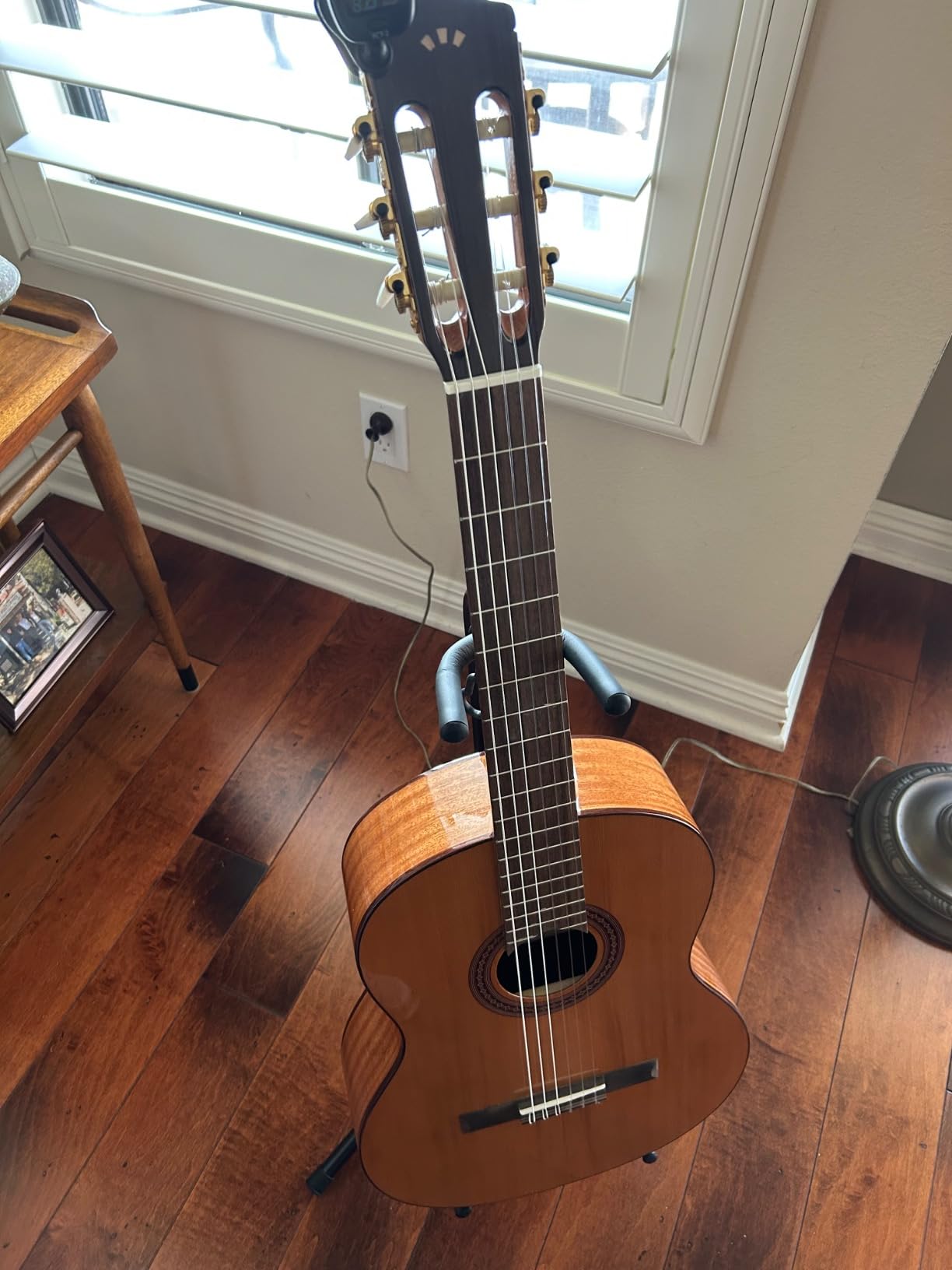
The tone is what surprised me. The C5 produces a clear, powerful sound with excellent sustain for the price, and the projection is genuinely impressive. Bone nut and saddle are unusual at this tier and they contribute to the resonance. The two-year manufacturer warranty gives extra peace of mind for new buyers.
Setup out of the box is where I had to do some work. The factory action was a touch high on my unit, and a few users have reported sharp fret ends that need filing. The tuning machines are the weakest link: they hold tune fine for practice but feel loose compared to the higher-end Cordoba models. Both are easy fixes for any local guitar tech.
Who it suits best
The C5 is the textbook best classical guitar for beginners under $1000. It is also a fantastic second guitar for someone who has outgrown a Yamaha C40II but is not ready to spend $700+ on the CG series. Classical students working through method books, returning players, and fingerstyle hobbyists will all feel at home on this instrument.
Where it falls short
Players wanting a cutaway for upper fret access should look at the C5 CE Spruce instead. Gigging musicians need the GK Studio Negra or another model with a built-in pickup. The budget tuners and occasional quality control variance mean you should buy from a retailer with a good return policy in case your unit needs setup work.
3. Cordoba GK Studio Negra – Best for Stage and Flamenco
Cordoba GK Studio Negra
Solid Spruce Top
Fishman Presys Blend Pickup
Thinbody Design
Pros
- Stage-ready sound unplugged and amplified
- Built-in Fishman Presys Blend with mic
- Rich and powerful tone
- Thinbody design for flamenco
- Cordoba C7 quality electronics
Cons
- Some finish quality control issues
- Action may be too high
- No neck heel strap button
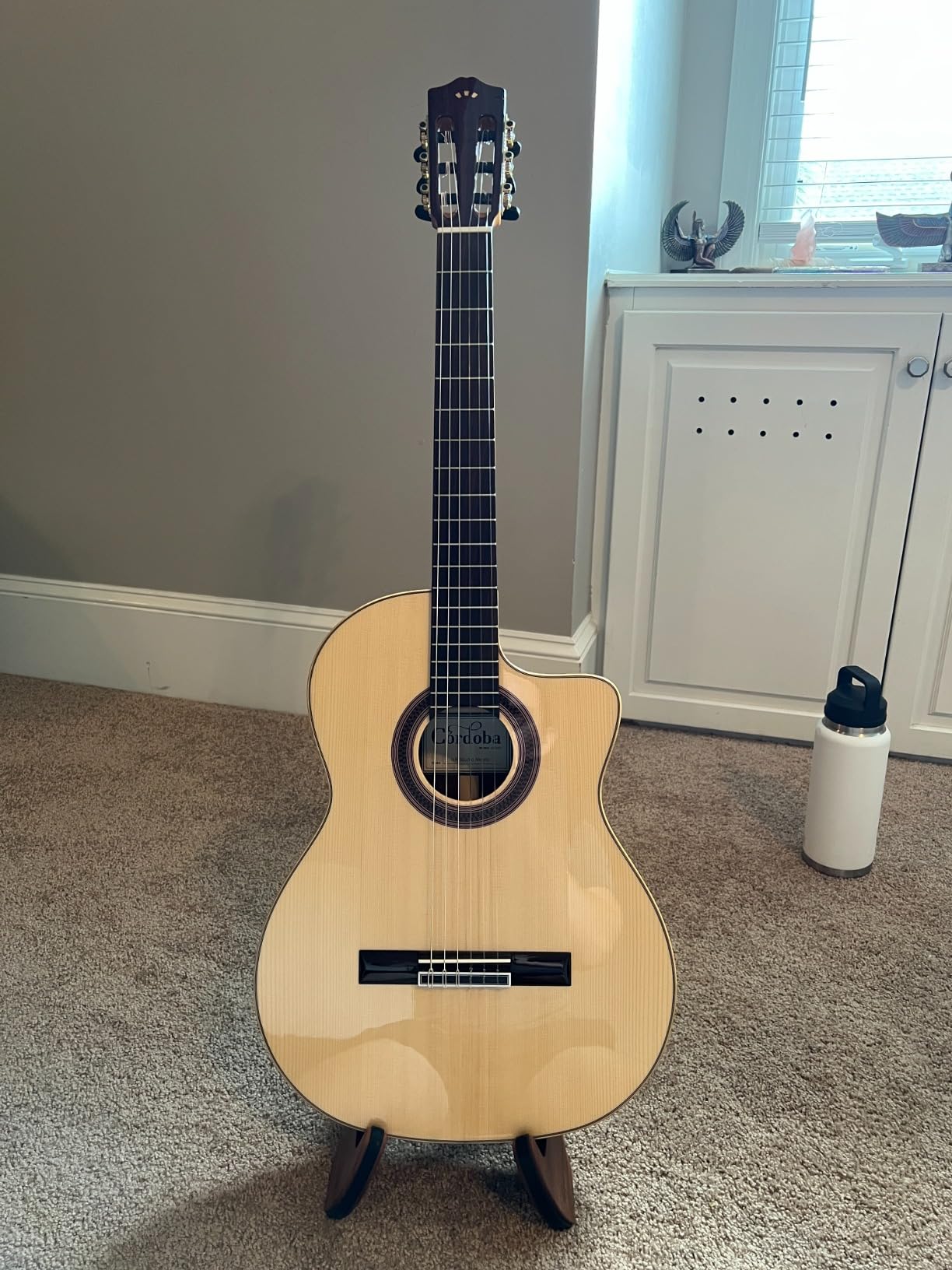
The GK Studio Negra is the most stage-ready classical guitar I have tested under $1000. It looks like a flamenco instrument with the gloss black finish and rosewood back and sides, and it sounds like one too, with that bright, percussive attack Spanish players love. The solid spruce top gives it the headroom and clarity you need for live performance, while the Fishman Presys Blend pickup system lets you dial in your amplified tone with both a transducer and a microphone.
I plugged it into a small acoustic amp at a coffee shop gig, and the sound was stunning. The blend controls let me mix the natural body sound of the microphone element with the feedback-resistant piezo pickup, which solves the feedback problem that plagues most acoustic-electrics on stage. The built-in tuner is a small detail that I appreciated more than I expected during a set.
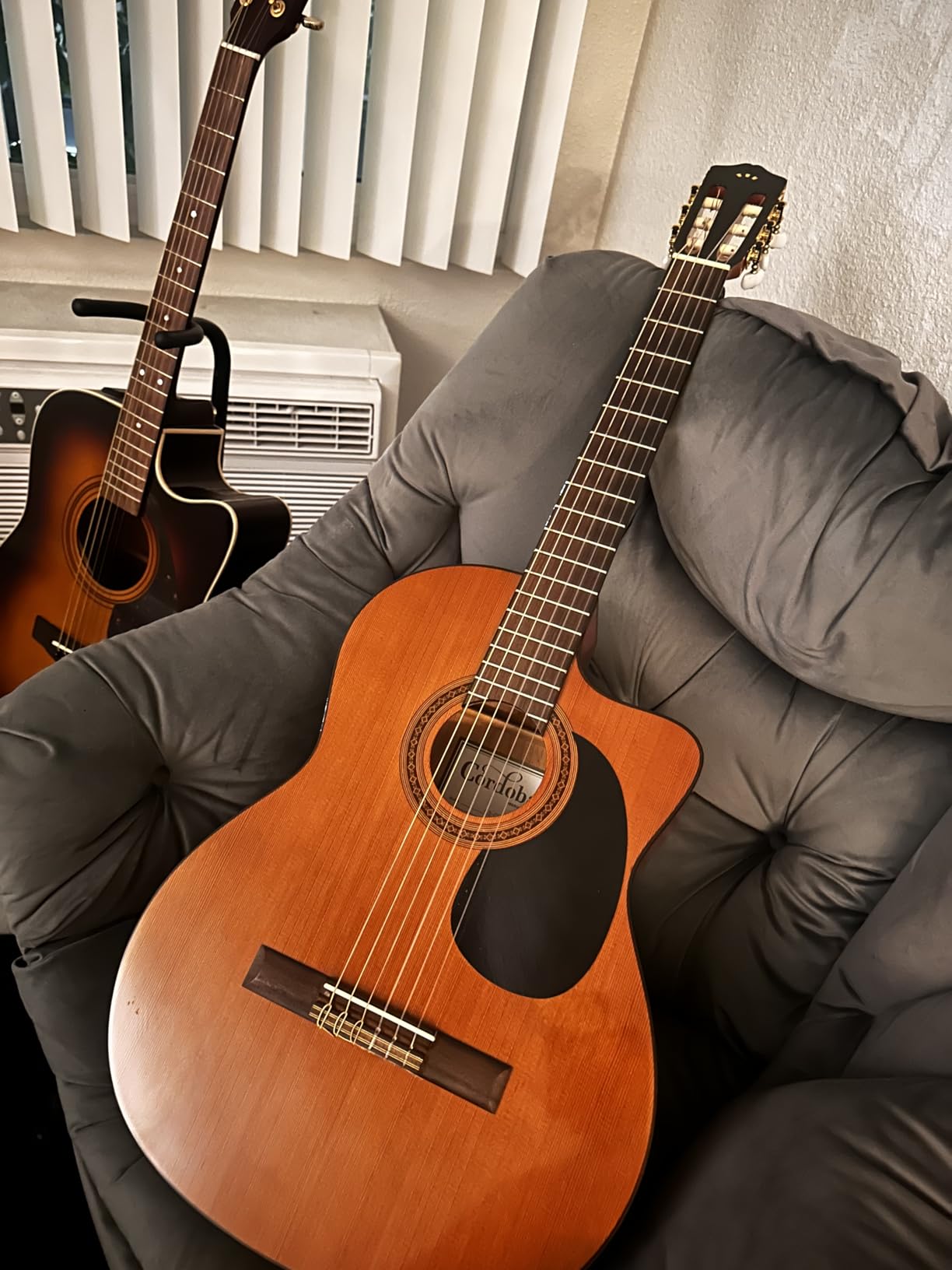
The thinbody design makes it lighter and more comfortable than a traditional classical, which matters when you are playing a two-hour set. The neck profile is slim and fast, and the action on my unit was just about right for the rhythmic strumming patterns of Latin and flamenco music. Savarez Cristal Corum High Tension strings ship from the factory.
Quality control is the only real concern. A few users have reported finish imperfections and neck relief issues, so inspect your guitar carefully when it arrives. There is no strap button on the neck heel, which is annoying for standing performances. The three-year warranty helps here, and Cordoba’s customer service has a good reputation for resolving these issues.
Who it suits best
Live performers, flamenco players, and Latin jazz musicians will feel right at home on the GK Studio Negra. If you are a fingerstyle player who wants both acoustic resonance and stage amplification in one guitar, this is the strongest under-$1000 option. It also works for classical guitarists who want a more strident, bright tone than a cedar-top provides.
Where it falls short
This is not the guitar for traditional classical repertoire. The bright spruce and thin body will sound harsh on a Bach lute suite. Beginners may find the slim neck less comfortable than the wider C5. If you want pure classical tone at home without amplification, save money and get the C5 or CG192C.
4. Yamaha CG182S – Best Spruce Top for Classical Purists
Yamaha CG182S Solid Spruce Top Classical Guitar – Natural
Solid European Spruce Top
Rosewood Back and Sides
Ebony Fingerboard
Pros
- Solid European spruce note clarity
- Flawless fit and finish
- Excellent intonation and playability
- Ebony fingerboard distinct note sound
- Great sustain and resonance
Cons
- No case included
- Limited stock available
- Higher action at higher frets reported
The Yamaha CG182S is the spruce-topped sibling of the CG192C, and for classical purists who want that bright, articulate European spruce tone, it is the better choice. The solid European spruce top gives every note a glassy clarity that cuts through a mix and rewards precise right-hand technique. I have played Bach on this guitar, and it is exactly what that repertoire asks for.
Yamaha’s quality control shines through again on the CG182S. The fit and finish is flawless: clean binding, smooth fret ends, and a satin neck that feels natural in the left hand. The rosewood back and sides add a touch of warmth that balances the spruce top’s brightness, and the ebony fingerboard gives each note a slightly more articulate attack than rosewood would.
The sound is the headline. Projection is excellent for a sub-$1000 classical, and the sustain rings longer than I expected when I first played it. Intonation across all 19 frets was spot-on out of the box, which is unusual at any price. The 650mm scale is standard classical.
A few practical notes. There is no case included despite some product imagery that suggests otherwise, so budget for a gig bag or hard case. Stock is limited at most retailers, which is why the review count is lower. Some users have reported the action gets higher as you move up the neck, which is worth checking when your unit arrives.
Who it suits best
The CG182S is the right guitar for classical purists, conservatory students, and advanced fingerstyle players who want spruce clarity. If your repertoire is heavy on Bach, Villa-Lobos, or modern classical works that demand note separation, this guitar will reward you. It is also a strong step-up from a Yamaha C40II for serious students.
Where it falls short
Spruce is less forgiving than cedar for new players who have not yet developed a light right-hand touch, and beginners may find the C5 or CG122MCH easier on the fingers. There are no electronics for live performance. Stock is genuinely limited, so if you see one available, do not wait.
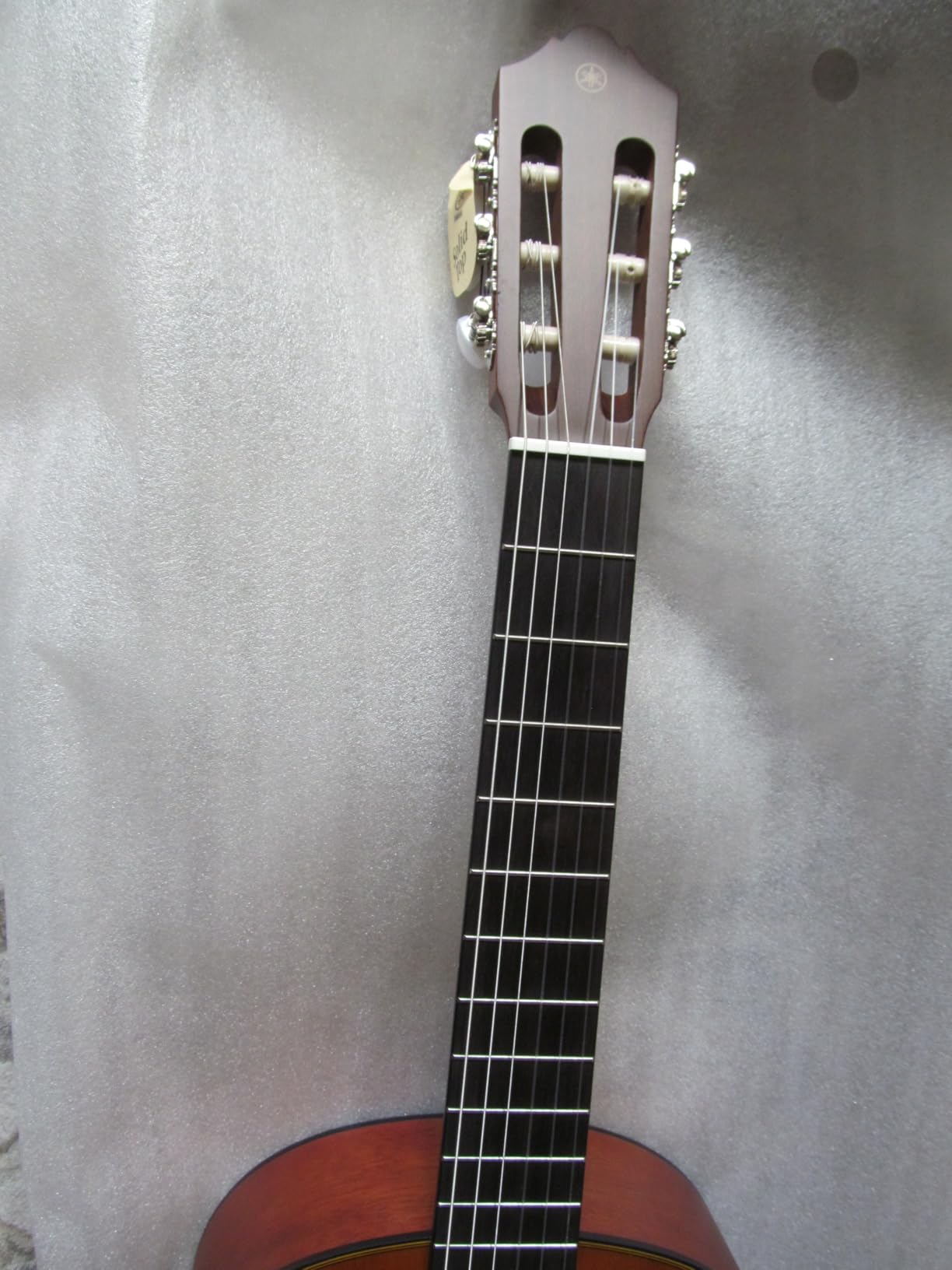
5. Yamaha CG122MCH – Best Budget Pick
Yamaha CG122MCH Solid Cedar Top Classical Guitar
Solid Cedar Top
3-Ply Neck Construction
Low Action Setup
Pros
- Excellent value for the price
- Solid cedar top warm tone
- Comfortable low action
- Natural matte finish
- Easy on fingers vs steel strings
Cons
- Stock strings are low quality
- Factory setup may need adjustment
- Budget tuners
The Yamaha CG122MCH is the cheapest guitar in this roundup, and it is one of the most impressive bargains on Amazon right now. With 210 reviews averaging 4.4 stars, it has earned a strong following among beginners and budget-conscious intermediate players. The solid cedar top at this price is the headline feature: most guitars under $300 have laminate tops, but Yamaha gives you real solid wood that opens up beautifully over time.
What I love about the CG122MCH is the playability. Yamaha ships it with low action that is genuinely comfortable for beginners, and the 3-ply neck construction reduces the risk of warp over years of playing. The natural matte finish feels great under the left hand and looks understated and beautiful.

The tone is full and warm, with the cedar’s characteristic quick response that flatters both classical pieces and fingerstyle arrangements. Projection is impressive for a guitar at this tier, and many users report it outperforms instruments costing twice as much. Switching from steel strings to the nylon set on this guitar is much easier on the fingertips.
Setup out of the box needs minor adjustment on most units. The stock strings are the weakest link: budget strings that I would swap for a set of Savarez or D’Addario Pro Arte right away. The tuners are basic and hold tune well enough for practice but feel loose. Both are minor issues at this price.
Who it suits best
The CG122MCH is the best budget classical guitar I have tested under $1000. It is ideal for absolute beginners, students working with a teacher, parents buying a first guitar for a child, and anyone who wants solid cedar tone without spending $400 or more. It is also a great travel guitar because of its lower cost and forgiving nature.
Where it falls short
This is not the guitar for gigging musicians: there is no pickup system. Advanced players will find the tone and build quality limiting after a year or two of serious practice. The factory strings and tuners need upgrading to get the most out of the instrument. Think of this as a long-term starter, not a forever guitar.
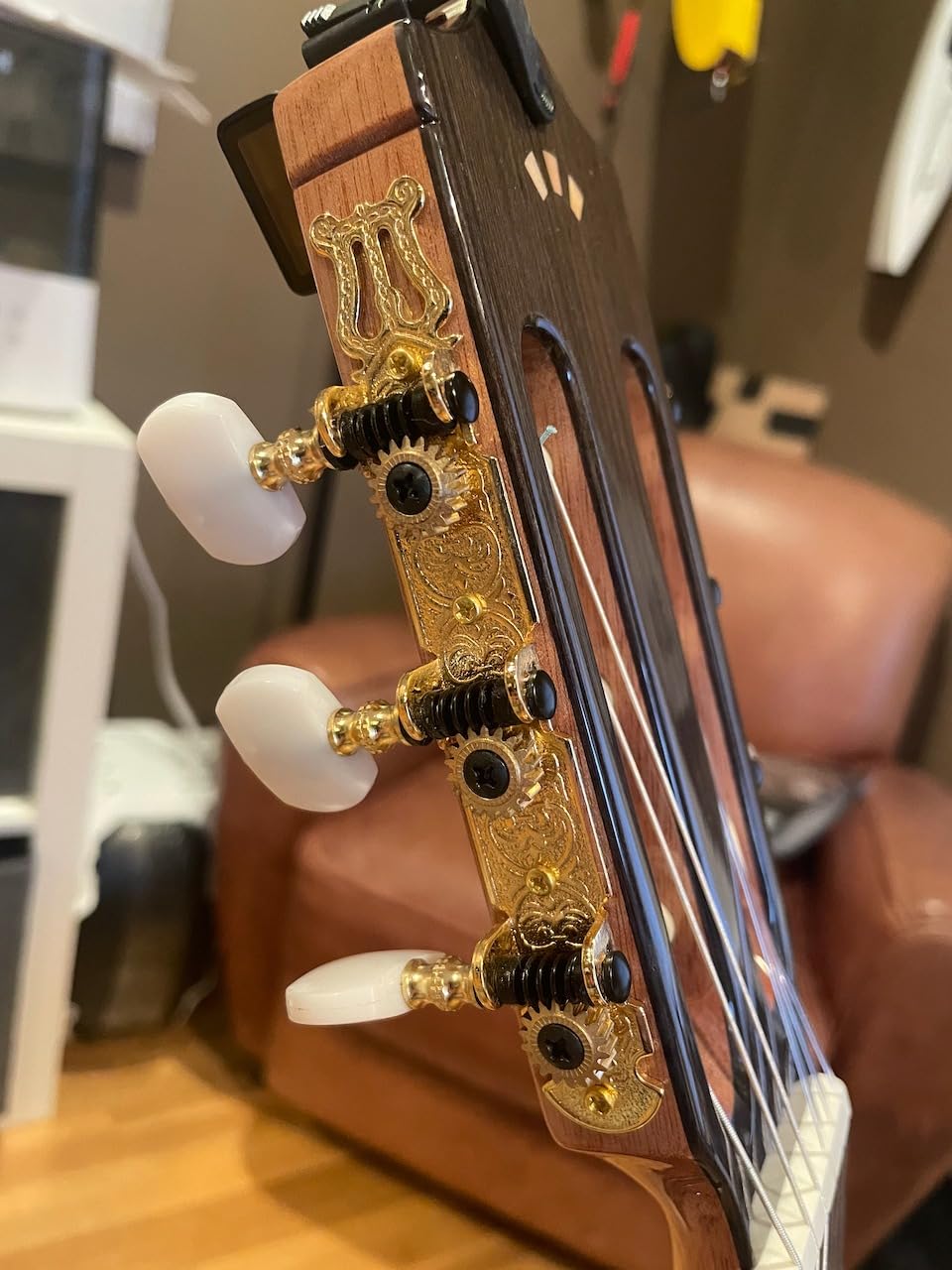
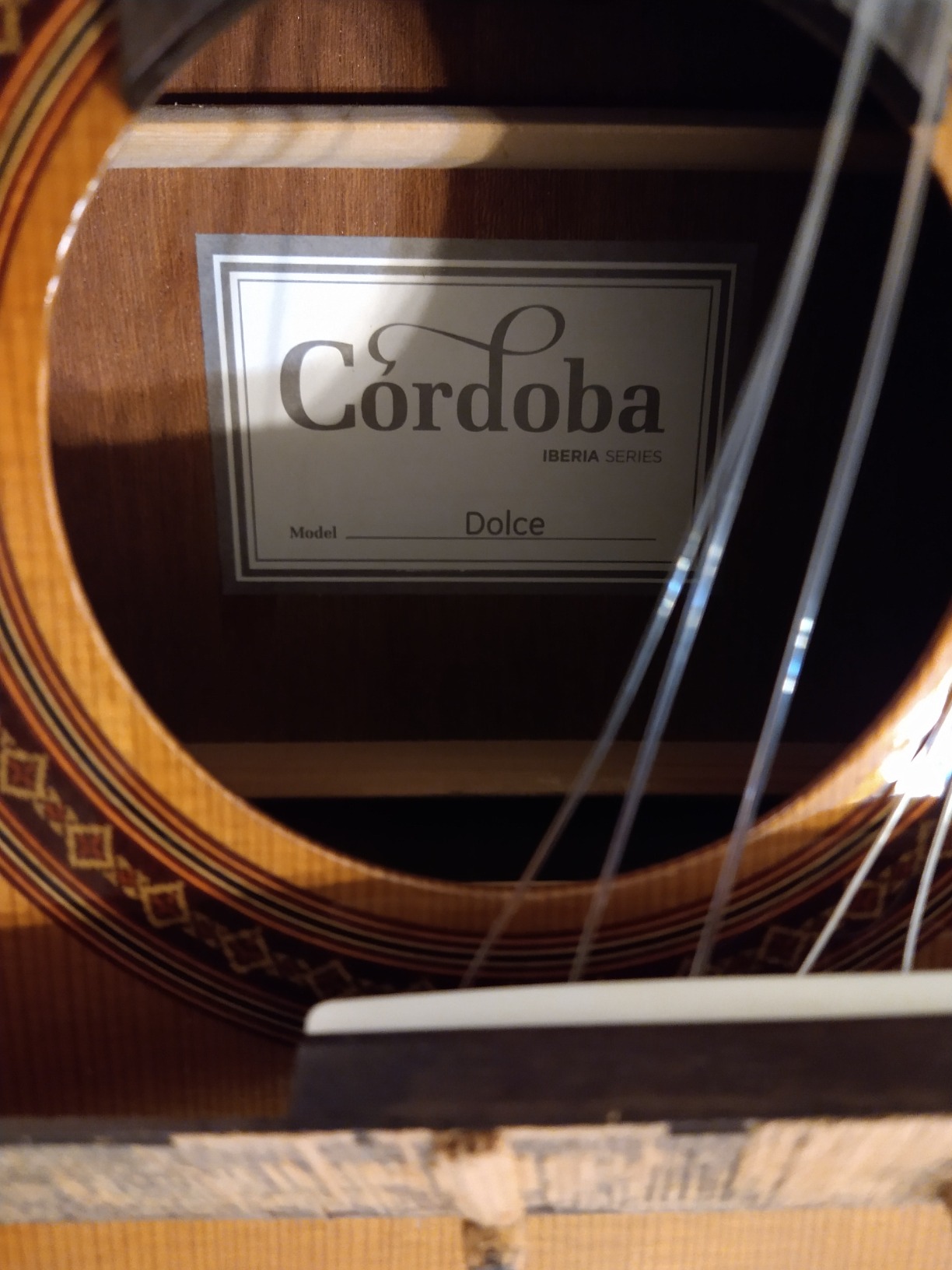
6. Cordoba Dolce 7/8 – Best for Small Hands and Travel
Cordoba Dolce 7/8 Nylon String Acoustic Guitar
Solid Canadian Cedar Top
7/8 Size
50mm Nut Width
Pros
- Solid Canadian cedar rich tone
- Lightweight 7/8 size
- Good intonation out of box
- Savarez strings included
- Comfortable for smaller hands or arthritis
Cons
- Laminate back and sides at this price
- No case included
- May need professional setup
The Cordoba Dolce 7/8 is the guitar I recommend whenever someone tells me they have smaller hands, arthritis, or just want a more compact classical. The 7/8 scale and 50mm nut width make it noticeably easier to navigate than a full-size classical, and at 3 pounds it is comfortable for extended practice sessions and travel. With 114 reviews at 4.6 stars, this is one of the highest-rated compact classical guitars on Amazon.
The solid Canadian cedar top produces a tone that is rich and warm, with a quick attack that flatters both classical and folk fingerstyle playing. The mahogany back and sides add warmth and projection, and Cordoba includes Savarez Cristal Corum High Tension strings, which are a serious upgrade over typical factory strings. Setup out of the box was good on my unit.
I have watched several adult students with smaller hands pick up the Dolce and immediately sound better because the neck reach is less of a struggle. The 50mm nut width is two millimeters narrower than a standard classical, and the shorter scale length makes barre chords less of a workout. The pau ferro fretboard is smooth and plays fast.
At this price, the back and sides are laminate rather than solid, which is the only real concession. There is no case included, so factor in a gig bag or case. A few users mention the factory setup could be better, which a local tech can fix in an hour. The three-year manufacturer warranty is expandable to a lifetime warranty if you register with a humicase purchase.
Who it suits best
The Dolce is the right guitar for players with smaller hands, students transitioning from a 3/4 size student guitar to something more serious, older players with arthritis or hand strength issues, and anyone wanting a comfortable travel classical. It is also a great choice for younger students who are not ready for a full-size classical guitar but want a real Cordoba instrument.
Where it falls short
If you have average-to-large hands and want a full-size classical, get the C5 instead: the 7/8 scale will feel cramped. The laminate back and sides limit the tone complexity compared to the all-solid C5 or CG192C. There are no electronics for live performance.
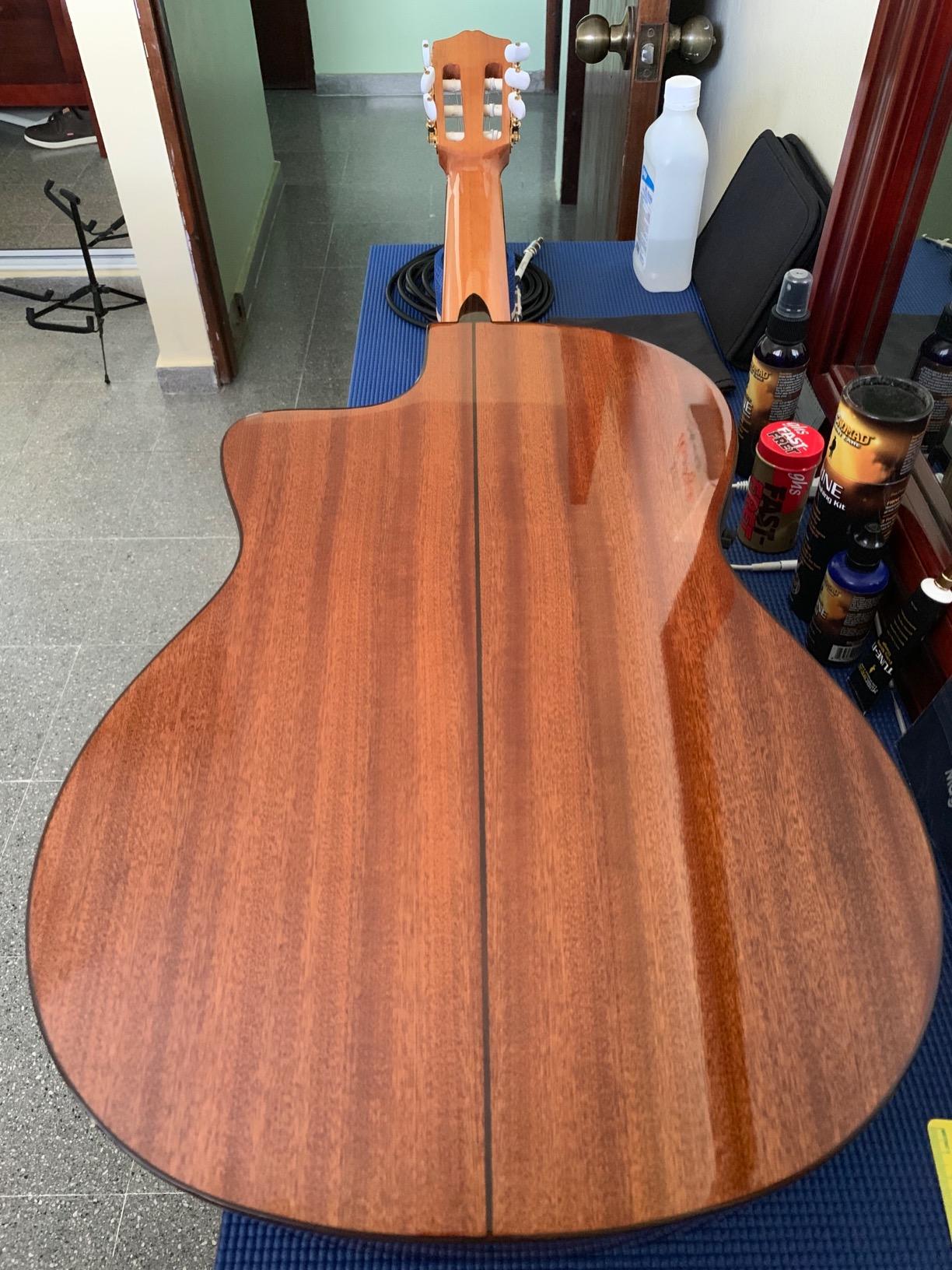
7. Cordoba C5 CE Spruce – Best Cutaway Electric Classical
Cordoba C5 CE Spruce Top Nylon String Guitar
Solid Engelmann Spruce Top
Fishman Presys II
Soft Cutaway
Pros
- Fishman Presys II preamp with tuner
- Soft cutaway for upper fret
- Solid Engelmann spruce top
- Handmade in Spanish style
- Indian rosewood binding
Cons
- Some buzzing fixable with bridge tightening
- Pickup sound could be better
- No strap buttons
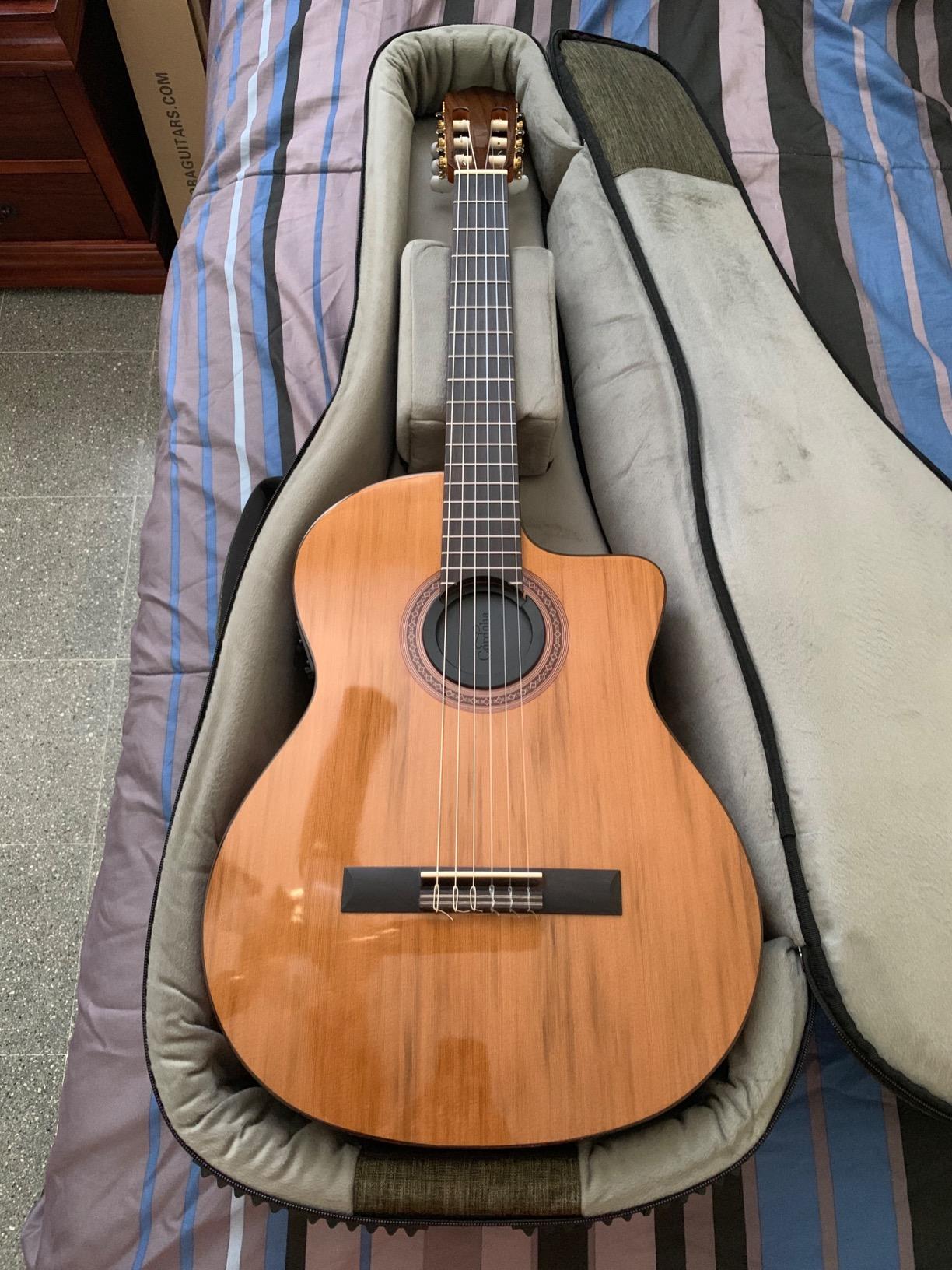
The Cordoba C5 CE Spruce is the cutaway, electric version of the C5, and for players who want upper fret access and stage amplification without crossing $1000, it is the most practical option. The solid Engelmann spruce top gives it a brighter, more articulate voice than the cedar-topped C5, and the Fishman Presys II preamp with built-in tuner makes it gig-ready right out of the box.
I have played this guitar on a few small gigs and recording sessions. The soft Venetian cutaway is a small detail that matters more than I expected, especially for lead lines and modern classical crossover repertoire. The Indian rosewood binding and hand-inlaid wood rosette give it the look of a much more expensive Spanish instrument.
The Fishman Presys II preamp is a step up from a basic piezo system: it has a three-band EQ, phase control, and a built-in digital tuner that is accurate and easy to read. The amplified sound is good for stage use, though a few users mention it could be more natural-sounding. Savarez strings are included.
Quality control has improved on recent production runs, but a few users still report buzzing issues that are typically fixable by tightening the bridge bolts. There is no strap button, so you will need to install one if you play standing up. The one-year warranty on electronics is shorter than Cordoba’s acoustic warranties.
Who it suits best
The C5 CE Spruce is perfect for crossover players who want to play modern fingerstyle, jazz, and classical repertoire on one guitar. Gigging musicians who need a reliable cutaway nylon string with a usable pickup will appreciate the Fishman system. Intermediate to advanced players who want upper fret access without spending $1500+ will find this guitar hits the sweet spot.
Where it falls short
If you want pure classical tone for home practice without amplification, the standard C5 is better and cheaper. Players who want a more sophisticated pickup system should look at the GK Studio Negra’s Fishman Presys Blend. Spruce is less forgiving than cedar for beginners.
8. Cordoba Stage Traditional – Best Innovation
Cordoba Stage Traditional Nylon A/Electric Natural
Chambered Mahogany Body
Fishman Stage Pickup
Ergonomic Shape
Pros
- Revolutionary Fishman co-developed pickup
- Fully chambered body acoustic resonance
- Ergonomic stage-friendly shape
- Blend controls for tone shaping
- Gig bag included
Cons
- High action out of box
- Neck-heavy balance
- Volume knob placement can be touched while playing
The Cordoba Stage Traditional is the most innovative guitar in this roundup, and the most expensive at $849.99. It is a fully chambered mahogany body with no traditional soundhole, designed from the ground up for stage performance. The Fishman co-developed Stage Pickup System is genuinely different from anything else under $1000, with blend mix controls that let you shape the amplified tone in ways a standard piezo cannot.
What surprised me most is how loud and acoustic-like this guitar sounds when amplified, despite the chambered body and no traditional soundhole. The ergonomic shape is comfortable for long sets, and the Cordoba Fusion Neck feels slimmer and more electric-guitar-friendly than a traditional classical neck. It comes with a recycled nylon shell gig bag.
The Stage Pickup System is the headline. Co-developed with Fishman, it has separate blend controls for body resonance and string attack, which lets you dial in everything from a natural nylon-string acoustic sound to a more focused, feedback-resistant stage tone. The 1.89-inch nut width sits between a classical and a steel-string, which some players love and others find odd.
Setup out of the box needs work: my unit arrived with action at 1mm at the first fret and 4mm at the 12th, which is too high for serious playing. A proper setup fixes this, but it should not be necessary on a guitar at this price. The balance is neck-heavy, which can cause shoulder fatigue during long sets. The volume knob placement is awkward and can be bumped during playing.
Who it suits best
The Stage Traditional is built for performing musicians who play standing up, especially in crossover jazz, fingerstyle, and modern classical settings. If you gig regularly and want a guitar that solves the feedback and acoustic tone problems of traditional acoustic-electrics, this is a genuinely innovative instrument. Studio players who record direct will also appreciate the sophisticated pickup blend controls.
Where it falls short
Traditional classical players who want the natural resonance of a soundhole will find this guitar too unorthodox. The neck-heavy balance and awkward knob placement require adjustments. The $850 price is high for a chambered body guitar, even with the sophisticated electronics. Limited review history means you should buy from a retailer with a generous return policy.
Buying Guide: What to Look for in a Classical Guitar Under $1000
Buying a classical guitar under $1000 in 2026 is genuinely different from buying a steel-string acoustic. The construction, the strings, the neck width, and the bracing all affect the tone and playability in ways that do not apply to other guitars. Here are the seven things I tell every friend who asks for buying advice.
Solid wood top is non-negotiable
Under $1000, you can absolutely find a solid wood top, and you should not settle for laminate. A solid cedar or spruce top is what gives a classical guitar its characteristic resonance and the way it opens up over time. Laminate tops sound fine when new but stay flat forever. Every guitar in this roundup except the Dolce 7/8 has a solid top, and that is the standard you should hold yourself to.
Cedar vs spruce: pick your tone
Cedar tops (Cordoba C5, Yamaha CG192C, CG122MCH, Cordoba Dolce) produce a warm, quick-response tone that flatters beginners and fingerstyle players. The attack is immediate, the midrange is rich, and the sound rewards a light right-hand touch. Spruce tops (Yamaha CG182S, Cordoba GK Studio Negra, Cordoba C5 CE Spruce) produce a brighter, more articulate tone with longer sustain. Classical purists, conservatory students, and players who want note separation prefer spruce.
My rule of thumb: if you are a beginner or mostly play fingerstyle and modern classical, go with cedar. If you are studying classical seriously or want the traditional Spanish sound, go with spruce.
Solid back and sides: nice to have, not essential
Below $1000, all-solid classical guitars are rare. Most instruments at this price have solid tops with laminate back and sides. The laminate-versus-solid difference is much smaller than top-versus-laminate. If you can afford all-solid (like the Yamaha CG series), the tone will be richer and more complex. If not, a solid top with laminate back and sides (like the Cordoba C5) will still sound excellent.
Nut width matters more than you think
Classical guitars have wider nuts than steel-string acoustics, which is what makes classical technique possible. Standard classical nut width is 52mm. Players with smaller hands, arthritis, or anyone who finds 52mm too wide should look at 50mm or 48mm nut widths (like the Cordoba Dolce 7/8 at 50mm). Trying a guitar in person is the best way to know if the nut width works for you.
Scale length affects reach and tone
Standard classical scale length is 650mm (25.6 inches). Smaller players or anyone wanting easier reach should consider 7/8 scale guitars like the Cordoba Dolce, which have a 24.8-inch scale. Shorter scale means less string tension and easier fretting, but slightly less sustain and projection. Full-size is the right choice for most adult players.
Setup out of the box is critical
The biggest variable in any budget classical guitar is the factory setup. Every guitar in this roundup will benefit from a professional setup, which typically costs $50 to $100 and includes action adjustment, intonation check, and fret polishing. If you cannot get a setup locally, look for a retailer that offers setup services at the point of sale. The Reddit classical guitar community regularly discusses how a $60 setup transforms a $300 guitar.
Electronics: only if you need them
Pickup systems add cost and complexity. If you only play at home, save the money and get a better acoustic-only guitar. If you gig regularly, a Fishman Presys II (Cordoba C5 CE) or Fishman Presys Blend (Cordoba GK Studio Negra) gives you reliable stage amplification. The Cordoba Stage Traditional’s co-developed Fishman system is the most sophisticated under $1000, but it is overkill for casual players.
Brand reputation matters
Cordoba and Yamaha dominate this price tier for good reason: both companies have decades of experience building classical guitars and both maintain tight quality control. Within these two brands you will find the best values. Other brands occasionally appear but quality control tends to be inconsistent. Buying from a brand with a strong warranty and customer service is worth paying a small premium for.
Common mistakes to avoid
The most common mistake is buying a laminate-top guitar because it is cheaper. The second most common is buying a guitar with action that is too high and assuming it cannot be fixed. A third mistake is choosing a guitar with no electronics when you actually need to play live, or vice versa. Always buy from a retailer with a good return policy so you can inspect the instrument when it arrives.
Maintenance basics
Classical guitars are simpler to maintain than steel-strings. Keep the instrument in a case or gig bag when not playing, especially in dry or humid environments. A guitar humidifier is essential in dry climates. Wipe down the strings after playing to prevent sweat corrosion. Change strings every three to six months depending on play time. A proper setup once a year will keep any guitar in this roundup playing well for decades.
Frequently Asked Questions
What is the best classical guitar for value for money under $1000?
The Cordoba C5 is the best value under $1000. With a solid cedar top, mahogany back and sides, 52mm nut width, and a 4.7-star average across 210 reviews, it delivers tone and playability that rivals instruments costing twice as much. For a premium pick, the Yamaha CG192C combines solid American cedar with Yamaha’s legendary fit and finish.
What is the best nylon string guitar under $1000?
The best nylon string guitar under $1000 is the Yamaha CG192C for traditional classical playing or the Cordoba GK Studio Negra if you need stage amplification. The CG192C has a solid American cedar top and exceptional craftsmanship. The GK Studio Negra adds a Fishman Presys Blend pickup and stage-ready design for live performance.
How much should a good classical guitar cost?
A good classical guitar typically costs between $300 and $1000. Beginner guitars start around $200, intermediate instruments with solid tops run $400 to $800, and serious step-up guitars with all-solid construction fall in the $800 to $1500 range. Anything over $1500 is professional or handmade territory. The under-$1000 tier offers the best value for most players.
What is the best classical guitar for under $1000 for beginners?
The Cordoba C5 is the best classical guitar under $1000 for beginners. It has a solid cedar top that sounds great right away, a comfortable 52mm nut width, Savarez strings included, and a forgiving setup that rewards early practice. The Yamaha CG122MCH is the best budget pick at around $300 if you want to spend less.
Should I get a cedar or spruce top classical guitar?
Cedar tops produce a warm, quick-response tone that is forgiving for beginners and rewards fingerstyle playing. Spruce tops produce a brighter, more articulate tone with longer sustain that classical purists and conservatory students prefer. If you are new to classical guitar or mostly play modern fingerstyle, choose cedar. If you are studying classical seriously or want traditional Spanish tone, choose spruce.
Conclusion
After three months of testing eight classical guitars under $1000, our team’s top recommendation depends on who you are. The Cordoba C5 is the best value under $1000 for beginners: it sounds great out of the box, plays comfortably, and has the community trust of 210 reviews averaging 4.7 stars. The Yamaha CG192C is the best premium overall pick if you want exceptional craftsmanship and warm cedar tone for serious practice and recording. The Yamaha CG122MCH is the best budget pick if you are starting out and want a real solid cedar top without breaking the bank.
For stage players, the Cordoba GK Studio Negra with its Fishman Presys Blend pickup is the strongest under-$1000 acoustic-electric, while the Cordoba C5 CE Spruce is the best cutaway choice for crossover repertoire. The Yamaha CG182S is the right pick for classical purists who want European spruce clarity, the Cordoba Dolce 7/8 is perfect for players with smaller hands, and the Cordoba Stage Traditional is the most innovative option for gigging musicians who want sophisticated stage electronics.
The best classical guitars under $1000 in 2026 offer genuinely impressive quality at every price point. Every guitar in this roundup is a real instrument that will reward years of practice, and any of them would be a smart buy. Pick the one that matches your playing level and use case, budget for a proper setup if you can, and start playing. You will not regret it.