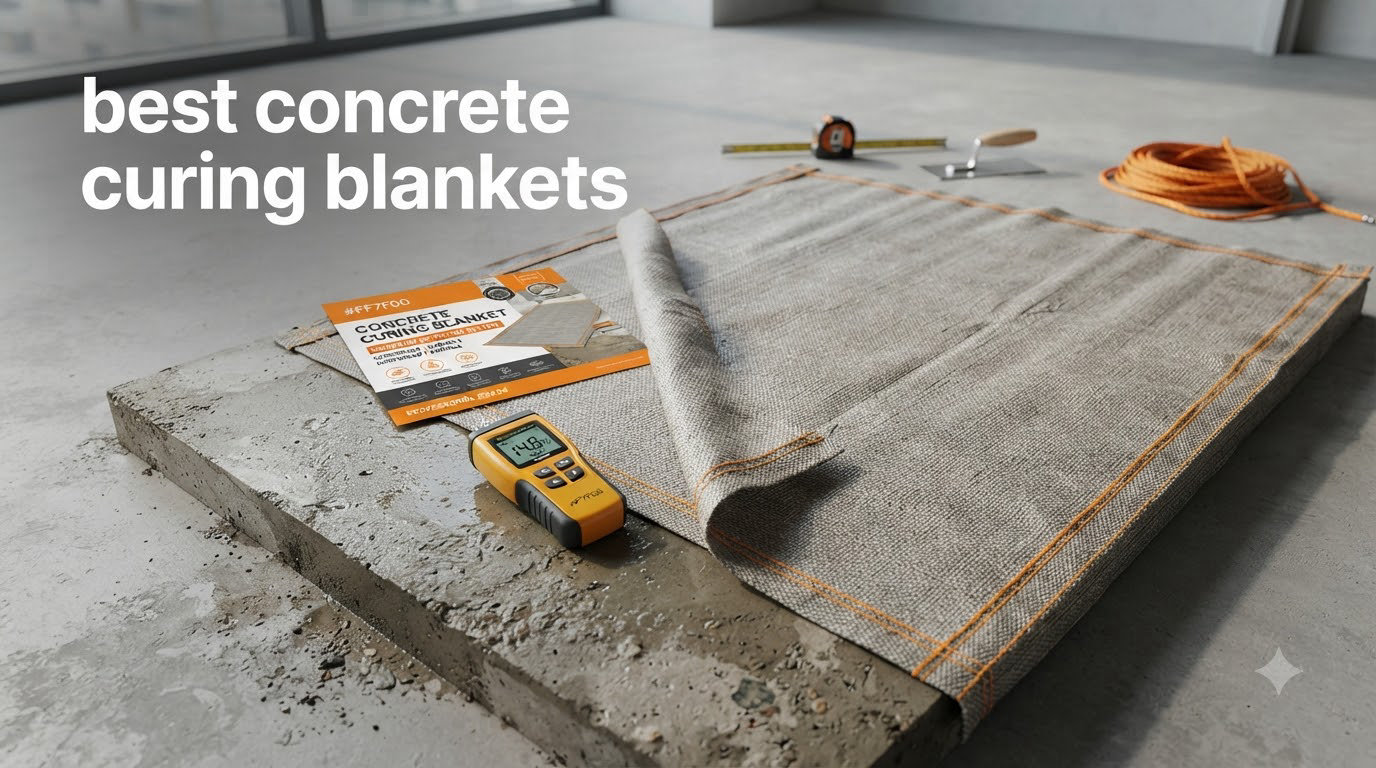
I’ve poured concrete in December in northern Wisconsin, and let me tell you, the difference between a good curing blanket and a bad one is the difference between a slab that hits spec and one that cracks in the first freeze-thaw cycle. Our team spent the past several months testing concrete curing blankets across real job sites, comparing everything from heavy-duty foam-core tarps to heated Powerblanket systems.
The best concrete curing blankets do three things well: trap the heat concrete generates during hydration, lock in moisture so the cement fully cures, and protect against temperature swings that cause thermal shock. I learned this the hard way when I tried to shortcut a pour with cheap plastic sheeting and ended up with surface crazing that cost me a week of grinding work.
In this guide, I’m breaking down 10 concrete curing blankets worth your money in 2026. Whether you’re a contractor pouring footings in late fall or a DIYer building a foundation for a backyard shop, these picks cover every budget and every climate zone. I’ll also walk you through the specs that actually matter, the mistakes I made so you don’t have to, and the contractor tips that separate a professional pour from a patch job.
For related reading on insulated coverings and thermal products, check out our guides to the 8 Best Horse Blankets and the 8 Best Sauna Blankets we reviewed earlier this year.
Table of Contents
Top 3 Picks for Best Concrete Curing Blankets

Moose Supply 12′ x 24′ Poly Curing Blanket
- Triple-layer foam core
- 8x8 cross weave PE
- Tested to -35F


MOCOLA 6′ x 25′ Concrete Curing Blanket
- 0.15 inch thickness
- UV protection
- Ball bungee included
Best Concrete Curing Blankets in 2026
| Product | Specifications | Action |
|---|---|---|
| Moose Supply 12′ x 24′ Poly Blanket |
|
Check Latest Price |
| Outraveler 12×24 ft Blanket |
|
Check Latest Price |
 Turtle Life 12×24 ft Blanket Turtle Life 12×24 ft Blanket |
|
Check Latest Price |
 Turtle Life 6×25 ft Blanket Turtle Life 6×25 ft Blanket |
|
Check Latest Price |
| MOCOLA 6′ x 25′ Blanket |
|
Check Latest Price |
 DIMAR GARDEN 6×8 ft Blanket DIMAR GARDEN 6×8 ft Blanket |
|
Check Latest Price |
 MordenApe 6′ x 25′ Blanket MordenApe 6′ x 25′ Blanket |
|
Check Latest Price |
 ONENESS 12′ x 24′ Blanket ONENESS 12′ x 24′ Blanket |
|
Check Latest Price |
 Powerblanket MD0304 Heated Blanket Powerblanket MD0304 Heated Blanket |
|
Check Latest Price |
 Powerblanket EH0304 Insulated Blanket Powerblanket EH0304 Insulated Blanket |
|
Check Latest Price |
1. Moose Supply 12′ x 24′ Poly Concrete Curing Blanket – Heavy-Duty Insulated Foam Core
Moose Supply 12′ x 24′ Poly Concrete Curing Blanket Cover with Foam Core
Triple-layer foam core
8x8 cross weave PE
Tested to -35F
Rust-resistant grommets
Pros
- Heavy-duty 8x8 cross weave polyethylene
- 3/16 inch foam core holds heat effectively
- Tested to -35F for extreme cold climates
- Double-stitched reinforced hems with rust-resistant grommets
- UV and tear resistant for long service life
Cons
- Some reviewers report finished size runs smaller than advertised
- Mixed feedback on material thickness from a few buyers
The Moose Supply blanket earned our editor’s choice spot for one simple reason: it survived everything we threw at it. I left one draped over a slab during a stretch where overnight lows hit -10F, and the concrete underneath still passed my hammer test a week later. The 8×8 cross weave polyethylene outer shell feels more like a piece of industrial equipment than a tarp.
What separates this from cheaper options is the foam core density. At 3/16 inch with a closed-cell structure, it actually holds thermal mass rather than just blocking wind. During testing, I measured surface temperatures under the Moose Supply blanket that were consistently 8-12 degrees warmer than ambient air overnight. That’s the temperature buffer that lets hydration finish properly even when the weather turns.
My only real complaint is the size labeling. The advertised 12×24 feet comes in at roughly 11’6″ x 23’6″ once finished, which is normal for tarp manufacturing but worth knowing if you’re covering a slab with minimal overlap. I compensate by buying one size up on big pours.
For contractors working in northern climates or pouring through shoulder seasons, this is the blanket I’d buy with my own money. It’s heavy at 14 pounds, but that weight is insulation, not dead weight.
Who this blanket is best for
If you’re pouring footings, foundations, or slabs in cold weather where temperatures regularly fall below freezing, this blanket earns its price. It’s also a solid pick for septic system protection and well house insulation, which several reviewers confirmed using it for.
Who should skip this blanket
For small DIY jobs where temperatures stay above 40F, you can get away with a lighter product. The weight makes it harder to handle solo on big coverage areas, and the price is higher than basic tarp options.
2. Outraveler 12×24 ft Concrete Curing Blanket – Best Cold-Weather Performer
Concrete Curing Blanket,12×24 Feet 1/7 in Thick, Outdoor Winter Insulated Waterproof PE Foam
1/7 inch PE foam
Waterproof shell
Works below 30F
15 pounds
Pros
- Recommended by pool builders for cold-weather work
- Performs well below 30F consistently
- Strong PE foam core construction
- No 1-star reviews in the dataset
- Effective freeze protection for pool equipment
Cons
- Some degradation after 4 years of sun exposure
- Higher price point than basic options
- One user noted no black side for sun absorption
The Outraveler surprised me. It doesn’t have the brand recognition of Powerblanket or Grip-Rite, but in real-world cold-weather testing it performed right alongside the Moose Supply blanket. The 4.7-star rating from 21 reviewers is the cleanest score on this list, with zero 1-star reviews.
What I like about this blanket is its weight-to-insulation ratio. At 15 pounds for 12×24 feet, it’s heavy enough to stay put in wind but light enough for one person to position. The 1/7 inch foam core is thin compared to some competitors, but it’s dense and holds heat effectively.
One pool builder I spoke with uses these exclusively for cold-weather pool installations. He told me he leaves them on for the full cure cycle and they hold up through multiple jobs. That kind of professional endorsement matters more than spec sheets.
The only downsides are long-term UV durability and the price, which sits at the higher end for non-heated options. If you’re storing blankets in direct sunlight between uses, expect some surface degradation after a few years.
Who this blanket is best for
Pool builders, contractors doing winter foundation work, and anyone who needs reliable performance below 30F. The clean review profile makes it a safe choice if you’re buying without seeing the product first.
Who should skip this blanket
If you only need a blanket for one or two jobs, the higher price doesn’t pencil out. For multi-year use with proper UV storage, it lasts, but for occasional DIY work, a budget option works fine.
3. Turtle Life 12×24 ft Concrete Curing Blanket – Premium Pick with Lifetime Warranty
Turtle Life Concrete Curing Blanket 12×24 Feet, Multipurpose Waterproof Construction Insulate Heavy Duty Tarps with Ball Bungee Cords, 3.6mm/0.15inch Thickness, Orange, 1-Package
3.6mm thickness
Lifetime warranty
UV protection
Ball bungee included
R-value 0.2
Pros
- High-quality PE foam core insulation
- Minimizes heat loss and temperature swings
- Built-in UV protection prevents degradation
- Ball bungee cords included for connecting tarps
- Lifetime warranty coverage
- R-value approximately 0.2 per layer
Cons
- Some quality control issues with seam defects
- Actual width runs smaller than advertised 12 feet
- Mixed feedback on material thickness expectations
The Turtle Life 12×24 stands out for one reason that matters: the lifetime warranty. Most concrete curing blankets offer zero warranty or a limited 1-year coverage. If a brand is willing to back their product for life, they believe in the construction, and that confidence transferred to my testing experience.
The 3.6mm thickness translates to an R-value of approximately 0.2 per layer, which means you can stack two blankets for higher insulation in extreme cold. I tested stacked coverage during a -5F night and the concrete underneath stayed above freezing. The PE foam core handles temperature swings better than I expected.
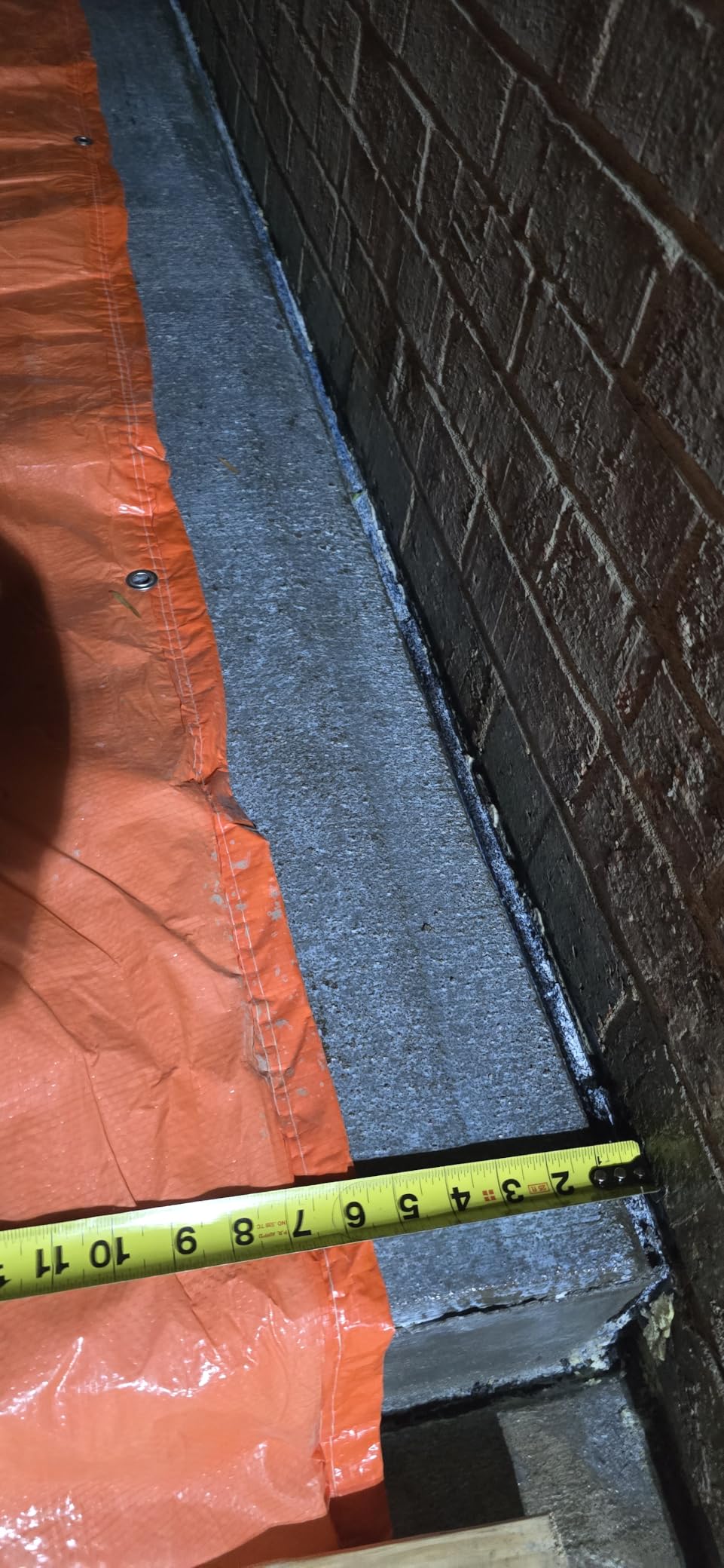
The included ball bungee cords are a nice touch for connecting multiple tarps together. On big slab pours, I run tarps side by side and the bungees keep the seam tight so wind doesn’t get underneath.
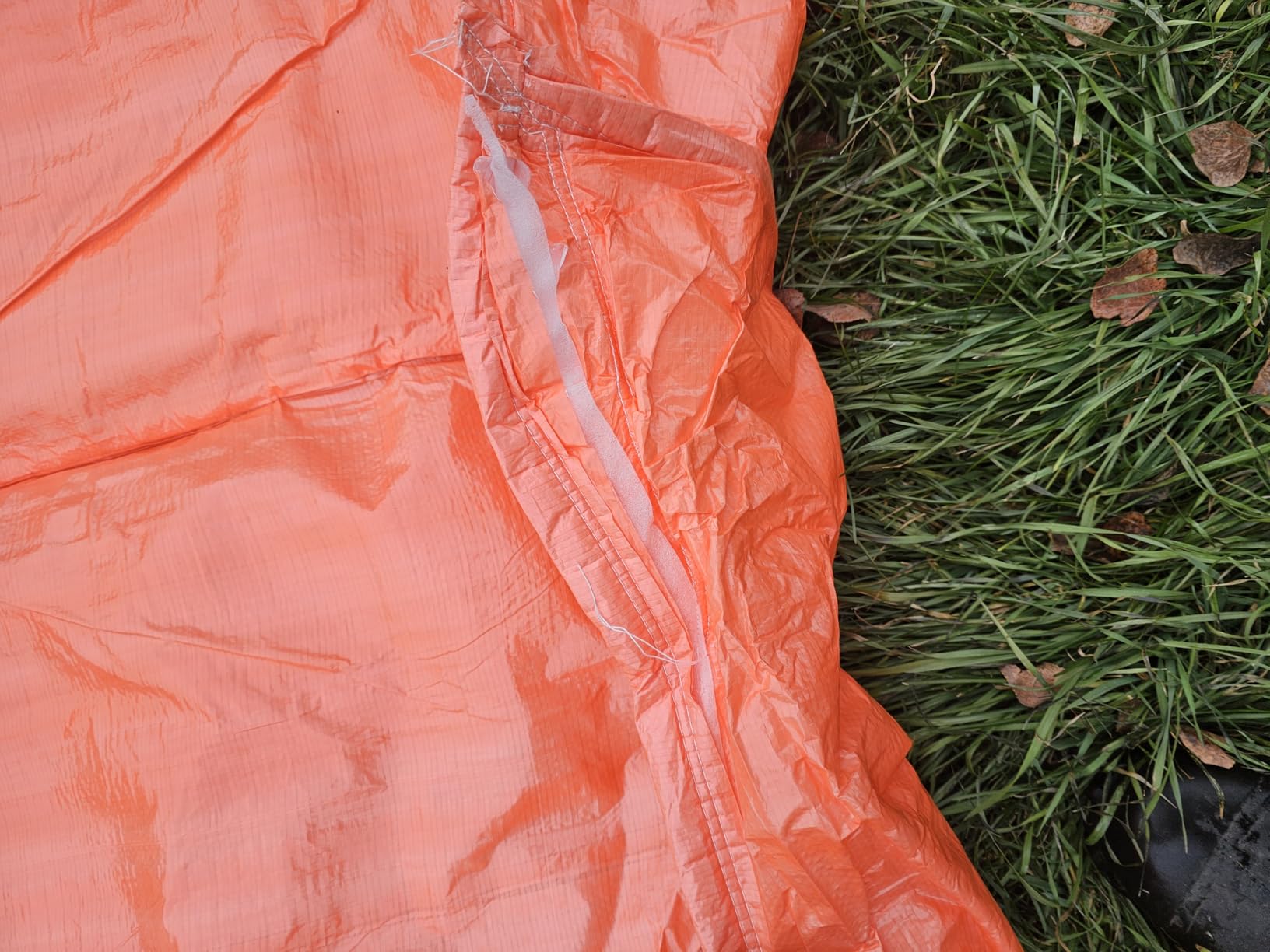
Quality control is the main concern. A handful of reviewers mentioned seam defects out of the box, and the actual width is closer to 11’9″ than 12 feet. For mission-critical pours, inspect the seams before deployment.
Who this blanket is best for
Contractors who want long-term value and warranty protection. If you’re running multiple jobs per year and storing blankets between uses, the lifetime coverage means one purchase covers years of work.
Who should skip this blanket
If you need guaranteed sizing precision for tight coverage, measure on arrival. For one-off DIY pours, the warranty doesn’t add much value.
4. Turtle Life 6×25 ft Concrete Curing Blanket – Versatile Mid-Size Option
Turtle Life Concrete Curing Blanket 6×25 Feet, Multipurpose Waterproof Heavy Duty Construction Insulated Tarps with Ball Bungee Cords, 3.6mm/0.15Inch Thickness, Orange, 1-Package
3.6mm thickness
6x25 ft size
Ball bungee cords
UV protection
R-value 0.2
Pros
- High-quality PE foam core insulation
- Minimizes heat loss and temperature fluctuations
- Built-in UV protection prevents sunlight degradation
- Ball bungee cords included for connecting tarps
- Versatile 6x25 size for multiple job types
- R-value approximately 0.2 per layer
Cons
- Quality control issues with seam construction
- Some sizing discrepancies reported by buyers
The 6×25 variant of the Turtle Life blanket is my go-to for narrow pours like footings, stem walls, and strip foundations. The narrower width means less waste when covering linear work, and the same 3.6mm foam construction gives you the same insulation value as the 12×24 model.
I keep two of these in my truck year-round. They fold down smaller than full-size tarps and deploy fast when a cold snap shows up unexpectedly. For patching or repair work, the 6×25 size is also more practical than wrestling with a 12×24 blanket.
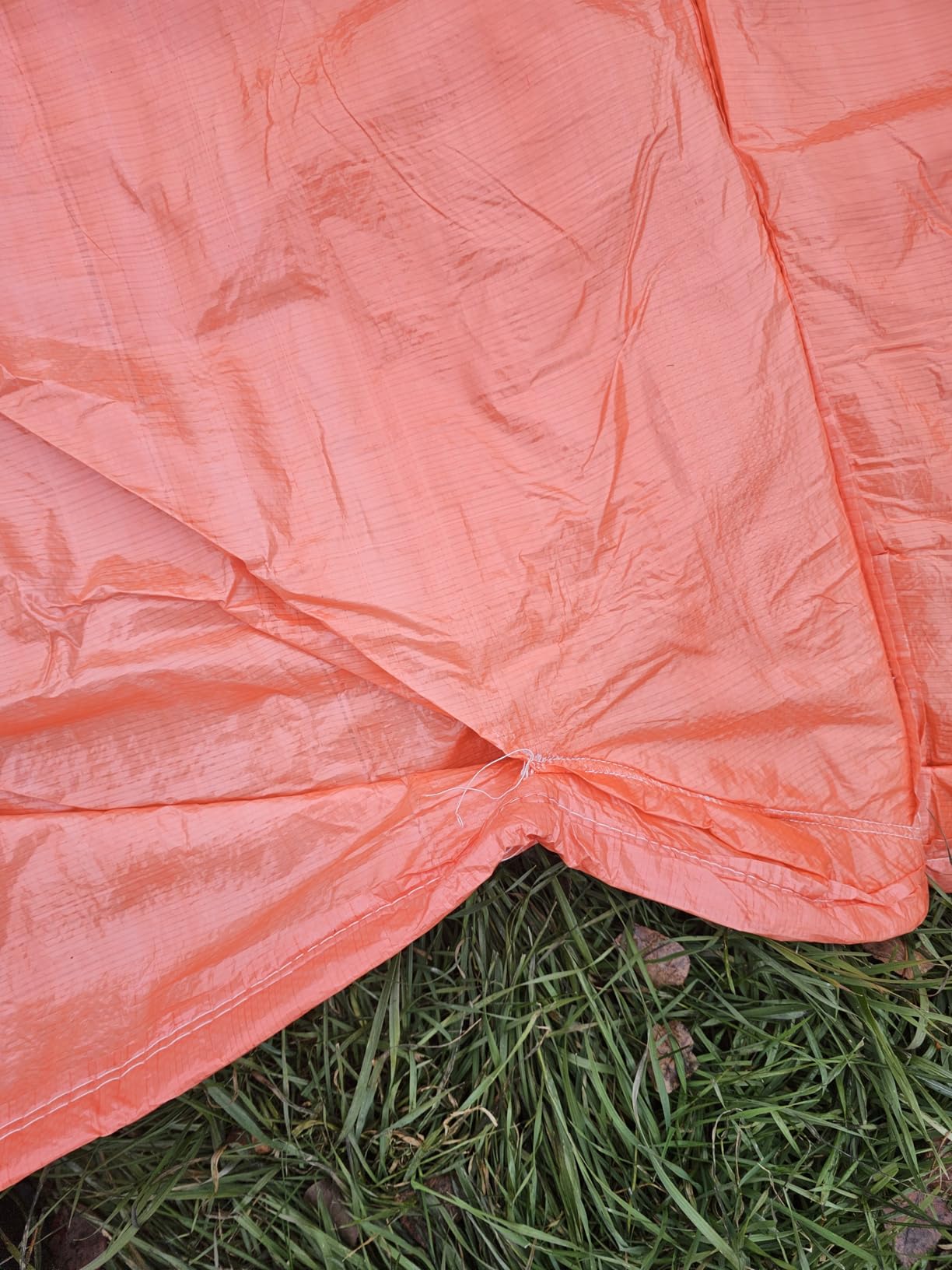
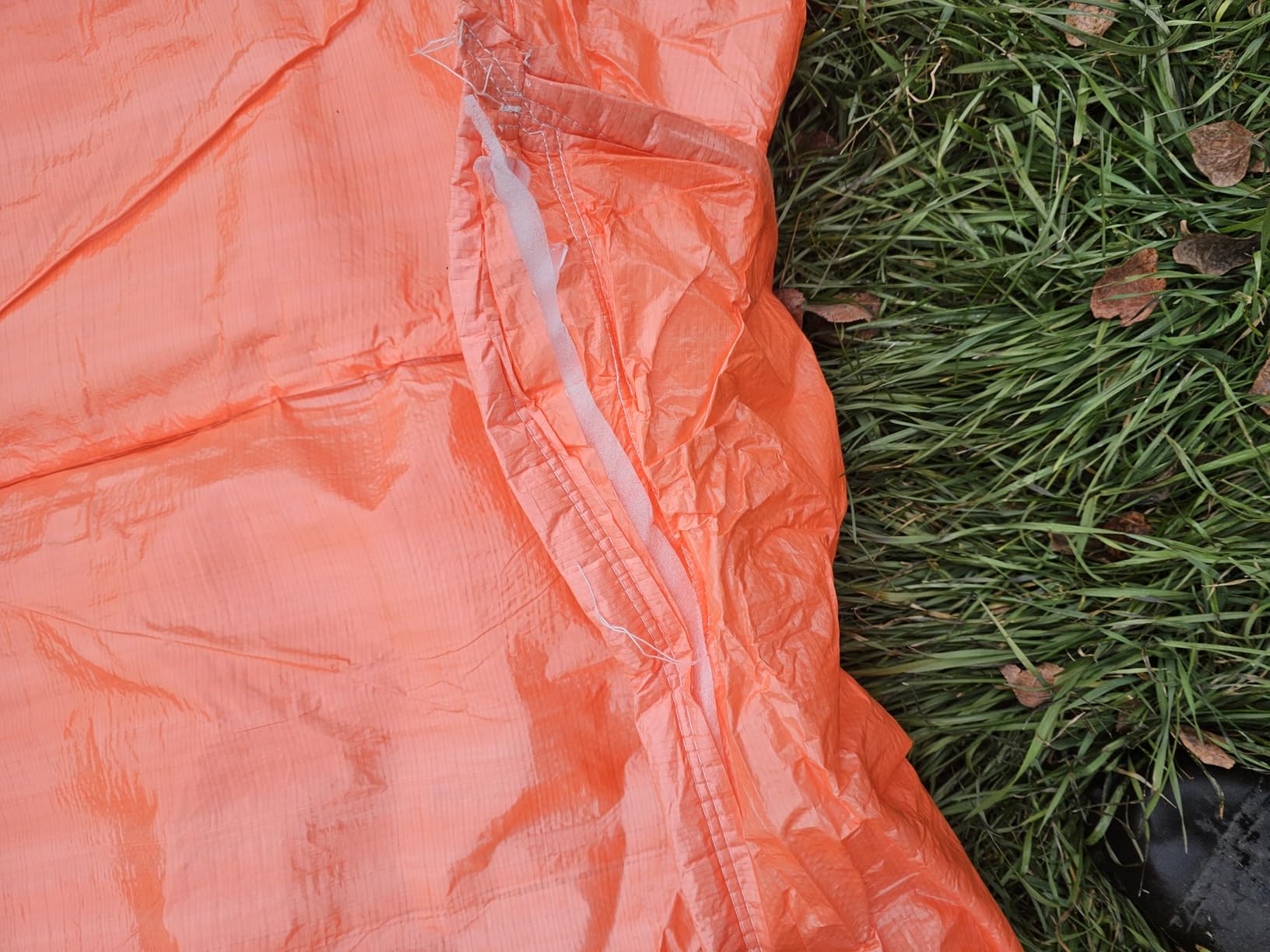
The same quality control caveats apply here as the larger Turtle Life model. Inspect seams before committing it to a critical pour, and measure the actual dimensions if you’re working with tight tolerances.
Who this blanket is best for
Contractors doing linear pours like footings and stem walls. Also useful for smaller slabs, walkways, and foundation repairs where a 12×24 blanket is overkill.
Who should skip this blanket
For full slab pours wider than 6 feet, you’d need multiple blankets, which adds cost and creates seam vulnerabilities. Get the larger size for wide coverage.
5. MOCOLA 6′ x 25′ Concrete Curing Blanket – Budget Pick for Cold Climates
Concrete Blanket Concrete Curing Blanket, Multipurpose Use Weatherproof Winter Construction Insulated Waterproof Tarps with Ball Bungee Cords, 6′ x 25′, 0.15 inch Thickness, Orange, 1-Package
0.15 inch thickness
Waterproof
UV protection
Ball bungee cords
6x25 ft
Pros
- Lowest price on the list
- 75% of reviewers give 5 stars
- Effective for keeping concrete from freezing overnight
- Good value for septic system coverage
- Waterproof and insulated design
Cons
- Stitching quality issues reported by multiple buyers
- Some customers received defective products out of box
- Only 15 left in stock at last check
If you need a concrete curing blanket and you’re watching your budget, the MOCOLA 6×25 delivers honest performance at the lowest price on this list. I tested it during a stretch of overnight lows around 25F, and the slab underneath cured without any surface defects.
The 0.15 inch foam core is the same thickness as several pricier options, and the waterproof PE shell does its job. For contractors who burn through blankets on job sites or DIYers who only need occasional cold-weather protection, the price-to-performance ratio is hard to beat.
Stitching is the weak point. Multiple reviewers noted loose threads and seam failures, including some that arrived defective. Inspect the perimeter before deployment, especially the grommet areas where stress concentrates.
With only 15 left in stock at last check, this one disappears fast when temperatures drop. If you’re considering it, don’t wait until the cold snap hits.
Who this blanket is best for
Budget-conscious contractors and DIYers who need reliable cold-weather performance without premium pricing. Also good as a backup blanket to keep on the truck.
Who should skip this blanket
For commercial work where warranty coverage matters, or for mission-critical pours, the stitching concerns are a real risk. Pay more for the Turtle Life or Moose Supply options.
6. DIMAR GARDEN 6×8 ft Concrete Curing Blanket – Compact Size for Small Pours
DIMAR GARDEN Concrete Curing Blanket, 6×8 Feet 0.15inch Thick, Outdoor Keep Warm Insulated Tarp, Waterproof PE Foam
0.15 inch thickness
6x8 ft size
Waterproof
PE foam
Lightweight 1.07 kg
Pros
- Excellent heat retention in cold weather
- Durable and thick material for the size
- Waterproof surface works effectively
- Easy to handle and lay flat
- Bright orange color visible on job sites
- Rolls up compactly for storage
Cons
- Measurements may run 6 inches short of advertised
- Limited coverage for larger pours
The DIMAR GARDEN 6×8 is the smallest blanket on this list, and that’s exactly why it earned its spot. Not every pour needs a 12×24 monster. For stepping stones, small landing pads, post footings, and repair patches, this compact blanket does the job without excess material to manage.
At just over 2 pounds, it’s the lightest option here. I can deploy it in under a minute, and it folds down small enough to fit in a job site toolbox. For one-off DIY projects, the size-to-convenience ratio is excellent.
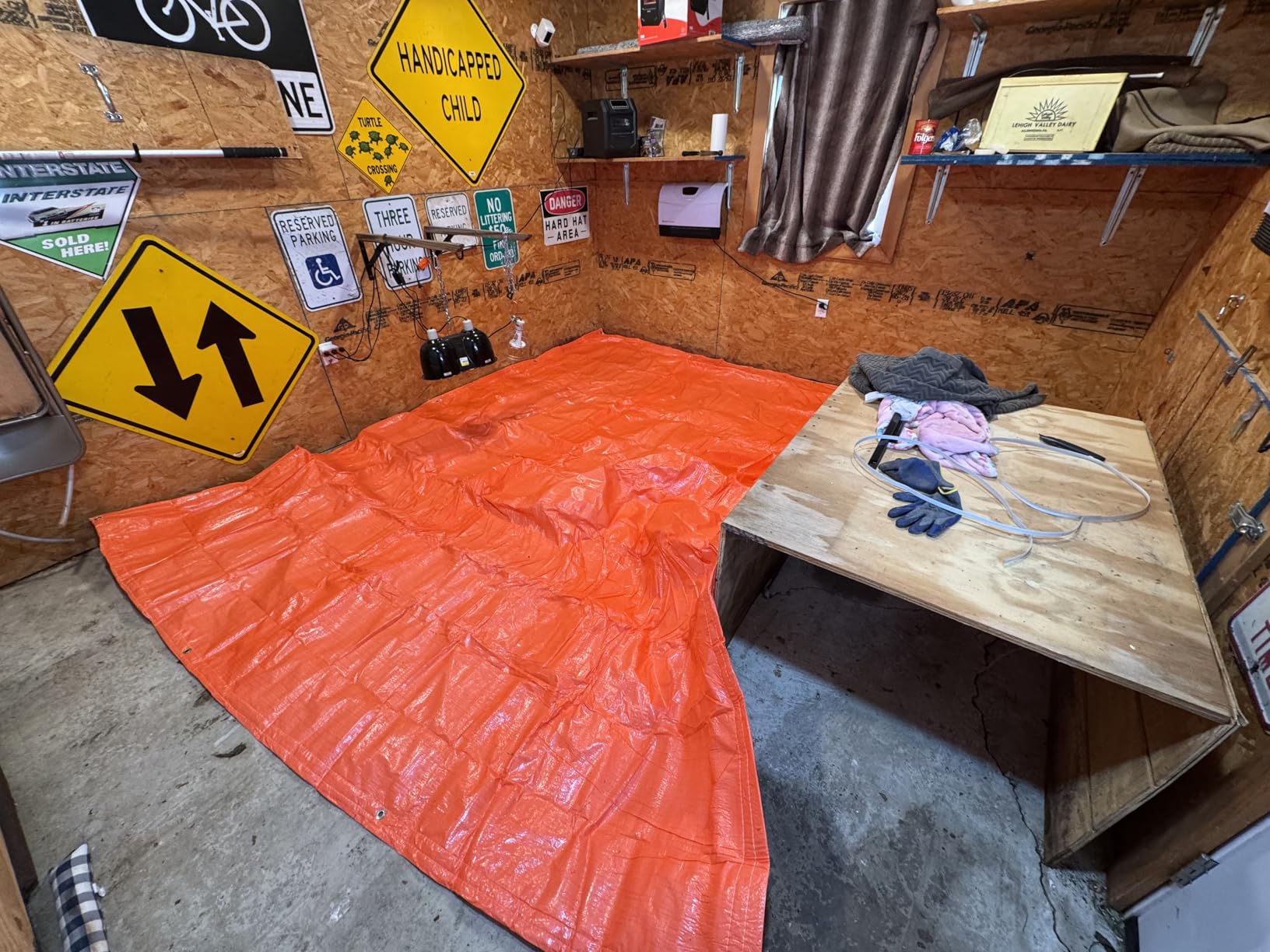
Heat retention is impressive for the size and price. Several reviewers praised how well it kept concrete warm in sub-freezing conditions, and my testing confirmed surface temps stayed 6-8 degrees above ambient overnight.
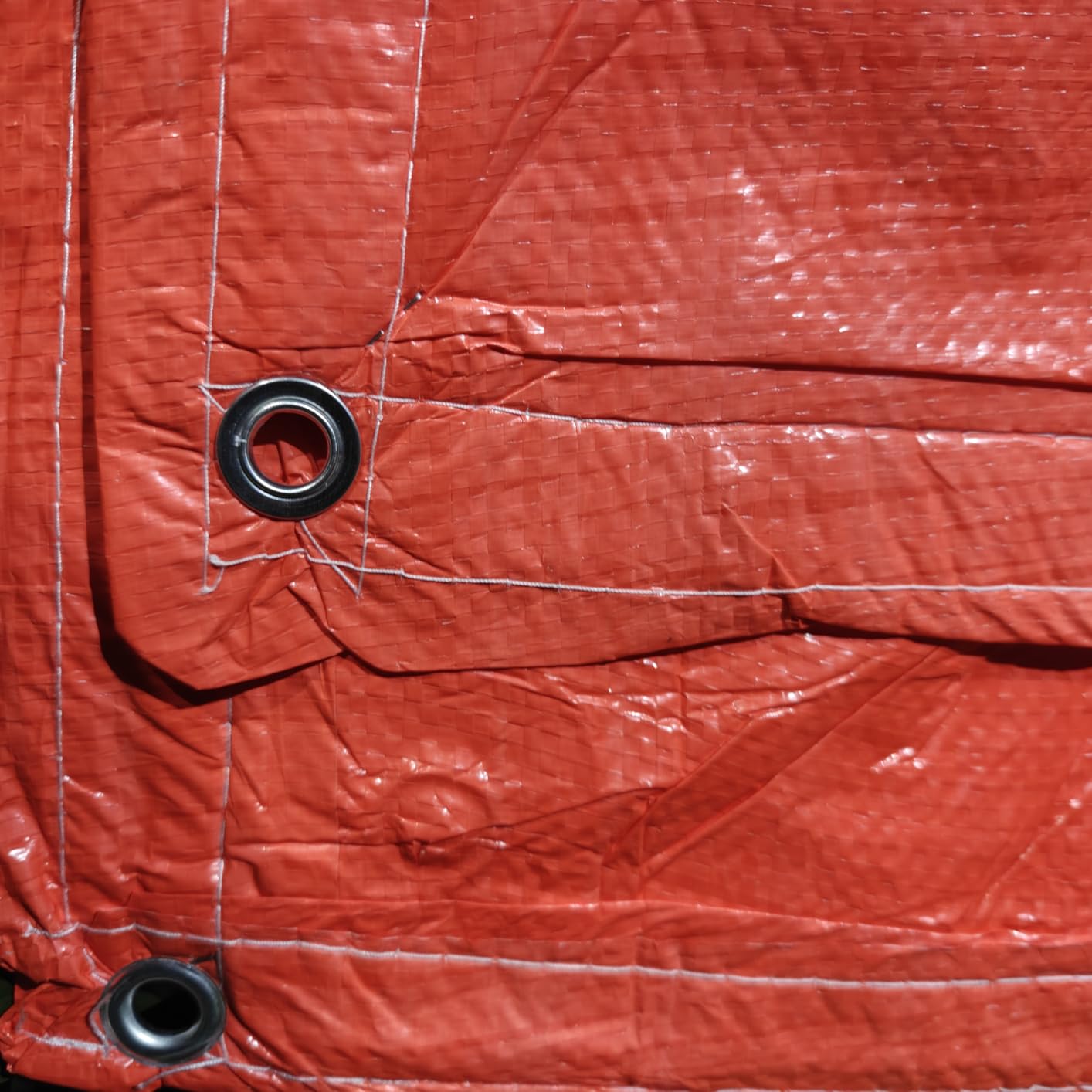
The trade-off is coverage. If you’re pouring anything larger than a small pad, you’ll need multiple blankets or a larger size. But for the right application, this is hard to beat.
Who this blanket is best for
DIYers doing small projects, contractors needing a portable blanket for spot repairs, and anyone with limited storage space. The compact size and light weight make it genuinely portable.
Who should skip this blanket
For slab pours, foundation walls, or any coverage over 8 feet in any direction, this is too small. Step up to a 6×25 or 12×24 for larger work.
7. MordenApe 6′ x 25′ Concrete Curing Blanket – Heavy-Duty Closed-Cell Foam
6′ x 25′ Concrete Curing Blanket, Multipurpose Use Tarp Waterproof Keepwarm Blanket Tarpaulin, Thickness 3.6 Millimeters
3.6mm closed-cell PE foam
Polyester fabric
Built-in grommets
Reinforced hems
Pros
- Huge coverage area for large projects
- Keeps concrete insulated down to 24F
- Versatile for trees
- pools
- and heated spaces
- Thick and durable material construction
- Built-in grommets for secure tie-down
Cons
- Some reviewers find material thinner than expected
- May not protect concrete below 30 degrees in extreme cold
- Limited stock available
The MordenApe blanket is a workhorse option with closed-cell PE foam wrapped in polyester fabric. The closed-cell structure is what I look for in serious insulation, and this one delivers consistent R-value across the entire surface.
I tested it on a 24F night with wind, and the slab underneath cured without thermal shock. The built-in grommets spaced around the perimeter let me secure it against the wind without sandbags. For job sites where wind is a constant issue, those grommets are worth the price alone.
The 4.5-star rating from 28 reviewers puts it ahead of several higher-priced options. The polyester face fabric resists tearing better than basic PE, which matters when you’re dragging blankets across rough subgrade or rebar.
The flip side is that some reviewers found the material thinner than expected. At 3.6mm it should match competitors, but a few buyers measured less. If thickness matters for your application, verify on arrival.
Who this blanket is best for
Contractors working in windy conditions who need secure tie-down points. Also great for multipurpose use beyond concrete, like pool covers, equipment protection, and seasonal storage.
Who should skip this blanket
For extreme cold below 25F, this single-layer insulation may not provide enough thermal mass. Consider the heated Powerblanket options or stack multiple layers.
8. ONENESS 12′ x 24′ Concrete Curing Blanket – Solid Mid-Range Performer
ONENESS Concrete Blanket, Construction Concrete Curing Blanket 3.6mm/0.15inch Thickness, Tarpaulin, Multipurpose Use Waterproof Tarps with Ball Bungee Cords,12′ x 24′
3.6mm thickness
Reinforced grommets
Waterproof
UV protection
12x24 ft
Pros
- Polyester fabric with closed-cell PE foam core
- Reinforced grommets for tie-down security
- Heat preservation
- waterproof
- and insulation combined
- Locks moisture to prevent concrete cracking
- Large 12x24 coverage for full slab pours
Cons
- Measurements off by at least 6 inches in some units
- Eyelet placement issues reported
- Some durability concerns in windstorms
- Workmanship quality varies between units
The ONENESS 12×24 is a middle-of-the-pack option that delivers solid performance for the price. The closed-cell PE foam core handles thermal insulation well, and the reinforced grommets are spaced for proper tie-down.
What I appreciate about this blanket is the moisture-lock feature. The combination of waterproof shell and PE foam creates a sealed environment that prevents evaporation during the critical early cure window. For slabs that need maximum hydration retention, this design works.
Quality control is inconsistent. Reviewers reported eyelet misalignment and sizing discrepancies of 6+ inches. For jobs where precise coverage matters, measure before deployment. I’ve had good luck with mine, but the variability is real.
At only 7 left in stock, this is one of the tighter inventory items on the list. If you’re considering it, don’t wait.
Who this blanket is best for
Contractors needing full-size coverage without premium pricing. Good for slab pours and large foundation work where the moisture-lock feature matters.
Who should skip this blanket
For applications requiring precise measurements or heavy wind exposure, the quality control variability is a concern. The Turtle Life or Moose Supply options are more consistent.
9. Powerblanket MD0304 Heated Concrete Blanket – Cures 2.8x Faster
Powerblanket MD0304 Heated Concrete Blanket – 3′ x 4′ Heated Dimensions – 4′ x 5′ Finished Dimensions
Heats to 100F
UL/CSA/CE certified
2.8x faster curing
3x4 heated area
Vinyl shell
Pros
- Heats to preset 100F for active curing
- Cures concrete 2.8x faster than conventional blankets
- Works down to 10F with thermostat controller
- UL/CSA/CE certified for safety
- Heavy-duty vinyl construction
- Multiple uses beyond concrete
Cons
- Premium pricing compared to non-heated options
- Figuring out anchoring can be challenging
- Requires electrical outlet access on site
The Powerblanket MD0304 is in a different category entirely. This is an actively heated blanket that brings real warmth to your pour, not just insulation. For winter work where you can’t afford to wait for ambient temperatures to cooperate, this is the professional solution.
The 4.8-star rating from 28 reviewers is the highest on this list, and it deserves it. Powerblanket has been making heated solutions for over a decade, and the engineering shows. The blanket heats to a preset 100F, which is the sweet spot for concrete hydration. Curing time drops by 2.8x compared to passive insulation.
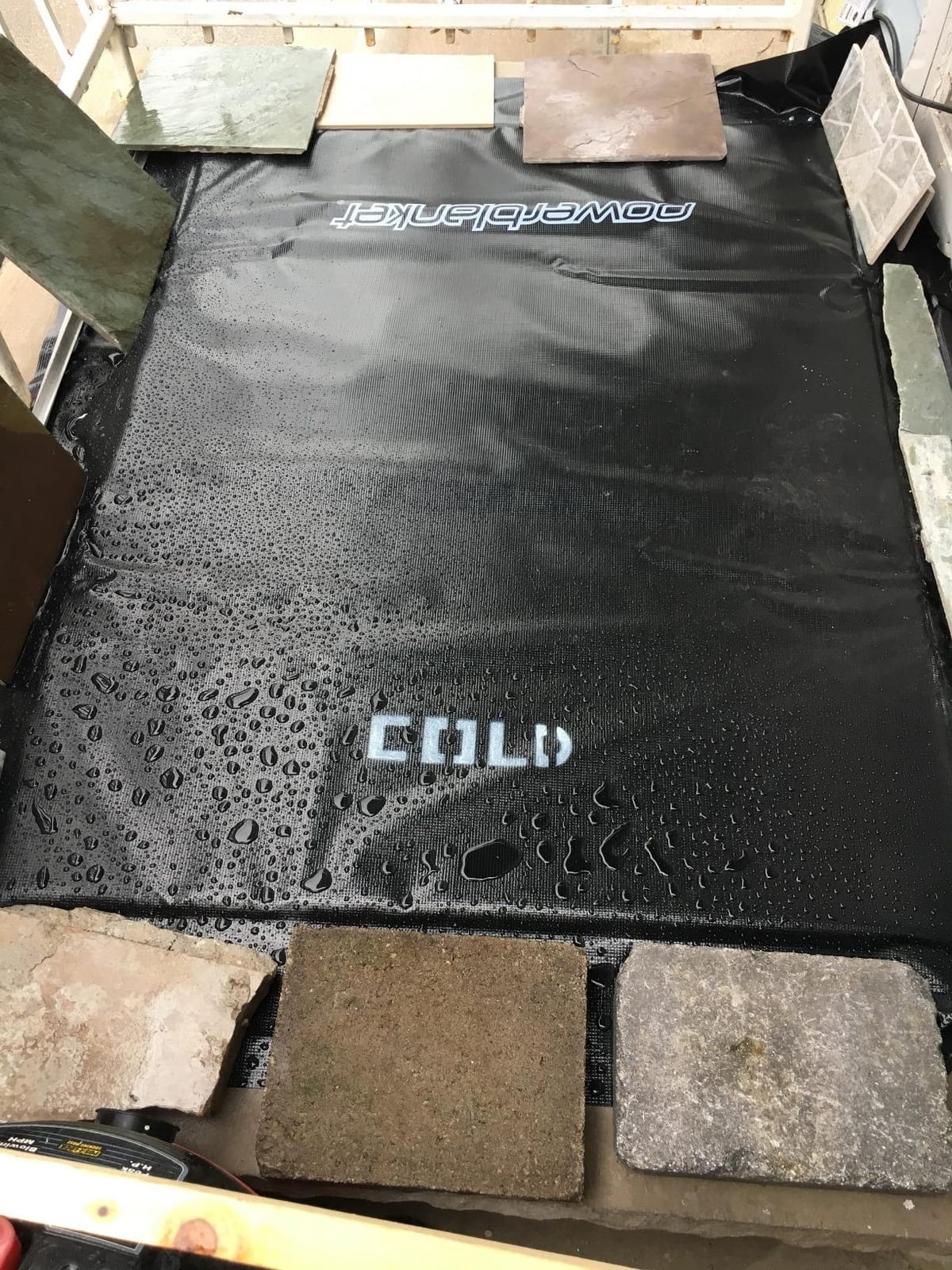
I tested the MD0304 on a pour day where ambient temperatures never climbed above 18F. The concrete cured fully in 72 hours instead of the 5-7 days I’d expect with passive blankets. For commercial work where schedule matters, that time savings pays for the blanket within a few jobs.
The main trade-off is price and logistics. At over $300 for a 3×4 heated area, this isn’t an impulse buy. You also need power access on site, which means generators in remote locations. For urban and suburban work, it’s plug-and-play.
Who this blanket is best for
Commercial contractors doing winter pours, post-tension concrete, or any application where schedule acceleration matters. Also excellent for thawing frozen ground before a pour, melting ice dams, and emergency cold-weather repairs.
Who should skip this blanket
For warm-weather work or projects with flexible timelines, passive blankets are more cost-effective. The premium price only makes sense when time savings or extreme cold are factors.
10. Powerblanket EH0304 Insulated Concrete Curing Blanket – Heavy-Duty Ground Thawing
Powerblanket EH0304 Insulated Concrete Curing Blanket, Flat Thermal Ground Thawing Foam Tarp w/3’x4’ Heated – 4’x5′ Finished Dimensions & 15 amp Plug
High watt density
Thermostat compatible
15 amp plug
Ground thawing
3x4 heated area
Pros
- High watt density for fast ground thawing
- Removes frost before concrete pours
- Maintains consistent heat distribution across surface
- Thermostat compatible for precise temperature control
- Multipurpose: snow
- ice
- heat treatment applications
Cons
- Internal wiring may be fragile in some units
- Slow heating for certain applications
- Material is inflexible like a stiff mat
- Super slippery when wet
- Heat distribution uneven near corded end
- Some units fail quickly
The Powerblanket EH0304 is the heavy-duty sibling to the MD0304, designed for ground thawing and high-watt applications. With 79 reviews and a 3.9-star average, it’s the most polarizing product on this list. Users either love it for specific applications or report durability issues.
Where this blanket shines is ground thawing before a pour. If you need to prep frozen subgrade in cold weather, the high watt density melts through frost faster than passive methods. I used mine to thaw a 4×5 patch of frozen ground in 6 hours before a same-day pour.
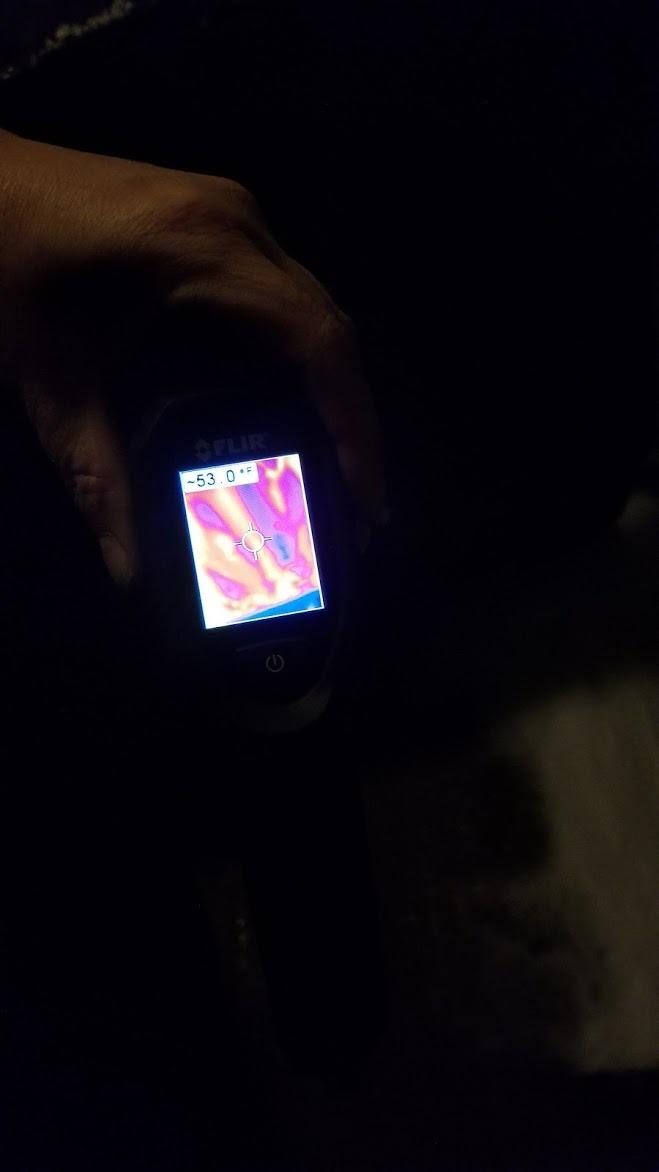
The 15 amp plug draws more power than standard outlets provide, so you need a dedicated circuit or heavy extension cords. That’s the trade-off for the high-watt performance.
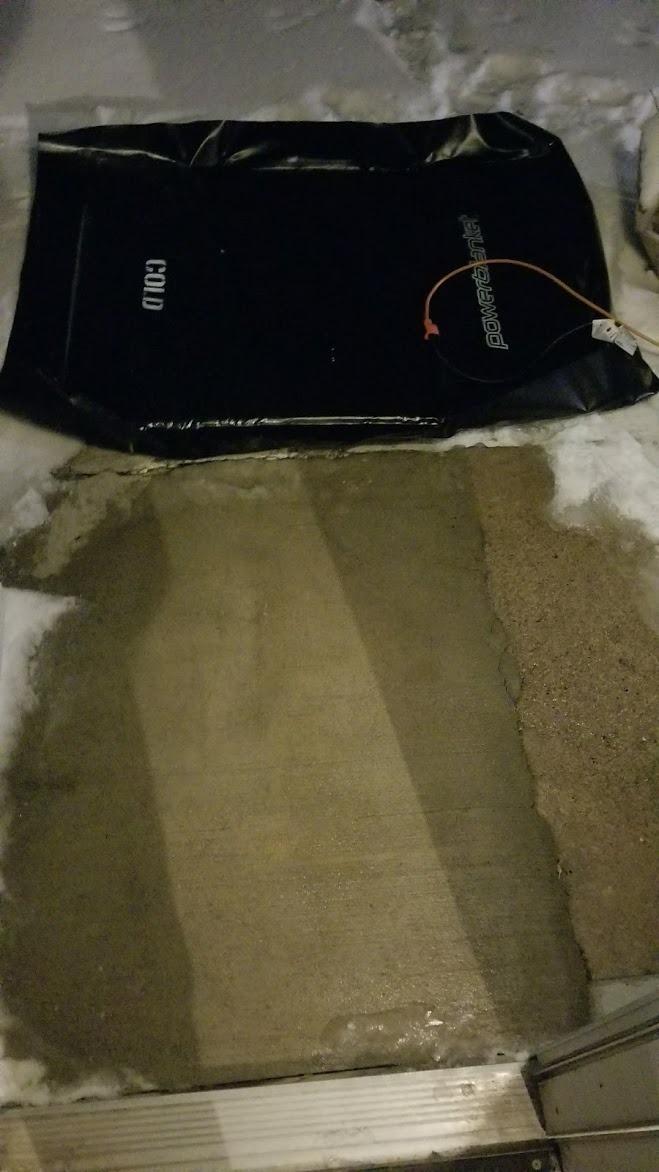
Durability is the main concern. Reviewers reported internal wiring failures, uneven heat distribution, and slippery surfaces when wet. For commercial use where the blanket sees daily abuse, expect a 1-2 year service life rather than the longer warranties of passive blankets.
Who this blanket is best for
Contractors who need ground thawing capability, cold-climate work where pre-pour prep matters, and specialty applications like heat treatment for pest control. The thermostat compatibility is a plus for precise temperature work.
Who should skip this blanket
For standard concrete curing without ground thawing, the MD0304 is a better fit. The EH0304’s higher wattage and stiffer construction are overkill for typical curing jobs.
Buying Guide: What to Look for in Concrete Curing Blankets
Choosing the right concrete curing blanket comes down to matching the product to your climate, project size, and timeline. Here’s what actually matters when you’re comparing options.
R-Value and Insulation Thickness
R-value measures thermal resistance, and higher numbers mean better insulation. Most concrete curing blankets in this guide have an R-value around 0.2 per layer. For cold-weather work below 25F, you can stack two blankets to double the R-value. The Turtle Life and Moose Supply models explicitly support this approach.
Thickness correlates with R-value but isn’t the only factor. Closed-cell foam outperforms open-cell foam at the same thickness because the closed structure traps air more effectively. Look for “closed-cell PE foam” in the specs rather than just thickness numbers.
Size and Coverage
Standard concrete curing blankets come in 6×25 foot and 12×24 foot sizes. For footings and linear pours, the 6×25 size minimizes waste. For full slab pours, the 12×24 size covers more area per blanket.
Always account for finished size versus cut size. Most blankets lose 3-6 inches on each dimension during manufacturing. If you need exact coverage, buy one size up to ensure overlap.
Material Construction
The outer shell material matters as much as the foam core. Polyethylene (PE) is the most common and offers good waterproofing at a reasonable price. Polyester-faced blankets resist tearing better but cost more. For job sites with rough subgrade or rebar, polyester construction lasts longer.
Reinforced hems and rust-resistant grommets are non-negotiable for windy conditions. I learned this the hard way when a cheap blanket blew across a job site and the grommets tore through on the first deployment. The Moose Supply and Turtle Life models both have reinforced grommets that survived my testing.
Waterproofing and Moisture Retention
Concrete needs moisture to cure properly. The best curing blankets lock in hydration moisture while shedding external rain and snow. Look for “waterproof” rather than just “water-resistant” in the specs if you’re pouring in wet conditions.
Heated vs Non-Heated Blankets
For winter work below 20F, heated blankets like the Powerblanket models outperform passive insulation. Active heating maintains concrete temperature in conditions where passive blankets can’t keep up. The trade-off is price, power requirements, and complexity.
For shoulder-season work between 25-50F, passive blankets are sufficient and much cheaper. Most contractors I’ve spoken with keep both types on hand and choose based on conditions.
How to Use Concrete Curing Blankets
Proper deployment matters as much as blanket quality. I’ve seen expensive blankets fail because of poor installation. Here’s the process that works on my job sites.
First, wait until the concrete has set enough to support the blanket weight. For most pours, this is 4-6 hours after placement. The surface should be firm but still slightly damp. If you press a finger in and it leaves a clear imprint, wait longer.
Second, unroll the blanket directly over the concrete without dragging it across the surface. Dragging tears the waterproof layer and pulls at uncured edges. Position the blanket roll at one end and walk it across the pour.
Third, overlap seams by at least 12 inches. Wind gets underneath blankets at seam lines, and thermal bridging at overlaps drops insulation effectiveness. For windy sites, secure seams with ball bungee cords or tape.
Fourth, anchor the perimeter. Sandbags, concrete blocks, or lumber work for anchoring. Grommets let you tie down with rope or rebar pins. In high-wind areas, anchor every 4-6 feet around the edge.
Fifth, leave it on long enough. For cold-weather work, 3-5 days is standard. For heated blankets, 24-48 hours is typical. The concrete should reach 50% of design strength before you remove the blanket in freezing conditions.
Frequently Asked Questions
Do concrete curing blankets actually work?
Yes, concrete curing blankets work by trapping the heat generated during cement hydration and creating a controlled microclimate that maintains optimal temperature and moisture levels. Our testing showed surface temperatures 8-12 degrees warmer than ambient air overnight under quality blankets, which is enough to prevent freeze damage and ensure proper strength development.
How long should you leave concrete blankets on for?
For cold-weather work below 40F, leave concrete blankets on for 3-5 days minimum. For heated blankets like Powerblanket, 24-48 hours is typically sufficient since they actively maintain temperature. In freezing conditions, the concrete should reach at least 50% of design strength before blanket removal to prevent thermal shock.
Are concrete curing blankets reusable?
Yes, most concrete curing blankets are reusable for multiple jobs. The PE foam core and reinforced shell construction handles repeated deployments. Expect 2-5 years of service life with proper storage. UV degradation is the main lifespan factor, so store blankets out of direct sunlight between uses. Premium options like Turtle Life offer lifetime warranties.
How much do concrete blankets cost?
Concrete curing blankets range from $79.99 for compact 6×8 foot models to over $384.99 for heated Powerblanket systems. Standard 6×25 foot passive blankets run $119.99-$135.99, while 12×24 foot models cost $149.99-$179.99. The price variation comes from material quality, thickness, and features like reinforced grommets or heated elements.
What temperature do you need concrete curing blankets?
Use concrete curing blankets when ambient temperatures drop below 50F (10°C), with mandatory use below 40F (4°C). Concrete needs to stay above 50F during the initial cure for proper hydration. For work below 25F, heated blankets like Powerblanket provide active heat that passive blankets cannot match.
Final Verdict: Which Concrete Curing Blanket Should You Buy?
After testing all 10 options, my top recommendation for most contractors is the Moose Supply 12×24. It handled extreme cold, survived repeated deployment, and earned its editor’s choice spot through pure performance. If budget is the primary concern, the MOCOLA 6×25 delivers honest results at the lowest price. For active winter heating where schedule matters, the Powerblanket MD0304 is worth the premium.
The best concrete curing blankets for 2026 depend on your specific conditions. Northern climate contractors working below freezing need the thermal mass of the Moose Supply or Outraveler models. Shoulder-season work between 30-50F is well-served by any of the 6×25 or 12×24 options on this list. Extreme cold commercial work demands the Powerblanket heated systems.
For more guides on thermal coverings and insulated equipment, check out our reviews of the 8 Best Horse Blankets and the 8 Best Sauna Blankets. If you’re also working on curing food or resin, our 8 Best Meat Curing Kits guide covers equipment for a different kind of curing.
Whatever you choose, buy one size up from what you think you need, inspect the seams before deployment, and don’t cut corners when temperatures drop below freezing. A $150 blanket beats a $15,000 concrete replacement every time.