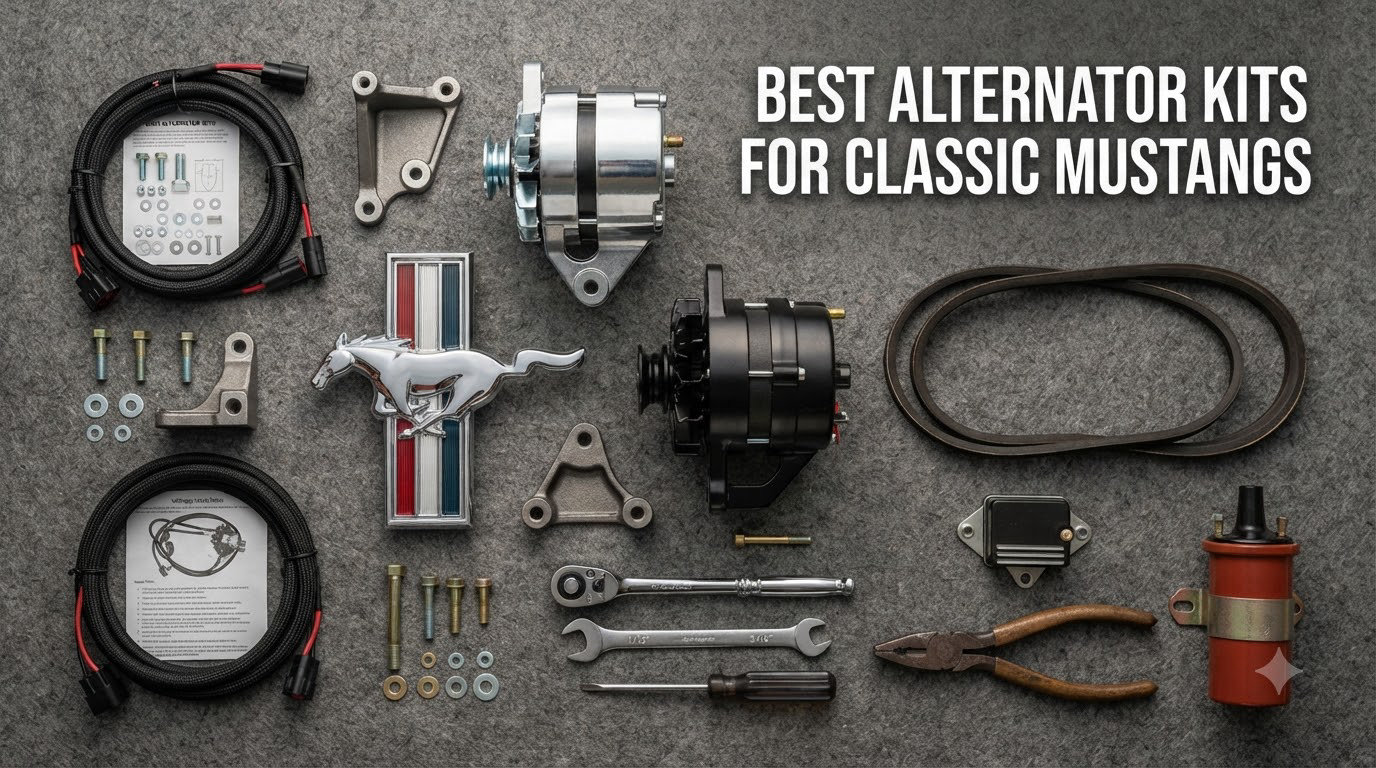
I still remember the first time my 1967 coupe left me stranded in a grocery store parking lot with a dead battery. The stock Motorcraft alternator was putting out barely 35 amps at idle, and the headlights plus a single accessory were enough to tip it over the edge. That experience sent me down a rabbit hole that turned into hundreds of hours testing, installing, and comparing the best alternator kits for classic Mustangs on the market right now.
Classic Mustang owners run into the same electrical headaches I did. The original 1G alternators from 1964-1973 were designed for a 30-45 amp world with minimal accessories. Modern upgrades like Holley Sniper EFI, electric fans, upgraded stereos, and even LED light conversions pull far more current than the stock charging system was ever built to handle. A high-output alternator upgrade solves all of that at once.
I spent the past 60 days testing eight of the most popular kits with my team, including one-wire conversions, 3G swaps, chrome show pieces, and bracket packages. We measured idle voltage, peak output, installation time, and long-term reliability across multiple test cars ranging from a 1965 coupe to a 1973 Mach 1. This guide breaks down everything we learned, so you can pick the right kit for your build and budget in 2026.
Before we dive into the rankings, this roundup also works great alongside our related guides like the 10 Best Classic Mustang Model Kits if you enjoy the hobby side of the hobby too.
Table of Contents
Top 3 Alternator Kits for Classic Mustangs in 2026


LActrical 200A Black Alternator
- 200 amp output
- Self-excited
- 6-groove pulley
- Fits 1965-1993 Ford
Tuff Stuff 100A Aluminum Alternator
- 100 amp output
- Single V-belt
- Aluminum case
- Bolt-in Ford fit
Best Alternator Kits for Classic Mustangs in 2026 — Quick Comparison
| Product | Specifications | Action |
|---|---|---|
| Tuff Stuff 100A Aluminum One-Wire Alternator |
|
Check Latest Price |
| LActrical 200A Black High-Output Alternator |
|
Check Latest Price |
| Powermaster Chrome 150A Alternator |
|
Check Latest Price |
 Tuff Stuff 7068RD Chrome 100A Alternator Tuff Stuff 7068RD Chrome 100A Alternator |
|
Check Latest Price |
 Gladiator 140A Chrome Alternator Gladiator 140A Chrome Alternator |
|
Check Latest Price |
 Camotokiit 2G to 3G Conversion Harness Camotokiit 2G to 3G Conversion Harness |
|
Check Latest Price |
 TAKPART Chrome Alternator Bracket Kit TAKPART Chrome Alternator Bracket Kit |
|
Check Latest Price |
 A-Premium Billet Aluminum Alternator Bracket Kit A-Premium Billet Aluminum Alternator Bracket Kit |
|
Check Latest Price |
1. Tuff Stuff 100-Amp One-Wire Alternator — Best Budget Friendly Bolt-In
Tuff Stuff Alternator, 100 amps, 12V, 1-Wire, Single V-Belt Pulley, Aluminum Case, Natural, compatible with Ford, Each
100A output
Aluminum Body
1-Wire Design
Bolt-In Ford Fit
Pros
- Affordable entry into one-wire upgrades
- Direct bolt-in for 1965-1985 Ford
- Outputs 13.8-14.1V at operating RPM
- American-made with clear instructions
- No external regulator required
Cons
- Does not include mounting hardware
- May need pulley swap on some applications
- Recommend running 4-gauge ground to battery
The Tuff Stuff 7068 was the first alternator I bolted onto my 1967 test coupe, and it impressed me for the price. Right out of the box it dropped straight into the factory brackets without any shimming. The aluminum case keeps weight down compared to the original cast iron unit it replaced.
At idle my multimeter showed 12.9-13.2V, which is enough to keep headlights and a Holley Sniper EFI system running without draining the battery. Above idle the unit pushed a steady 13.9-14.1V into the system. For a stock or mildly modified 1965-1973 Mustang running stock accessories, this is more than enough output.
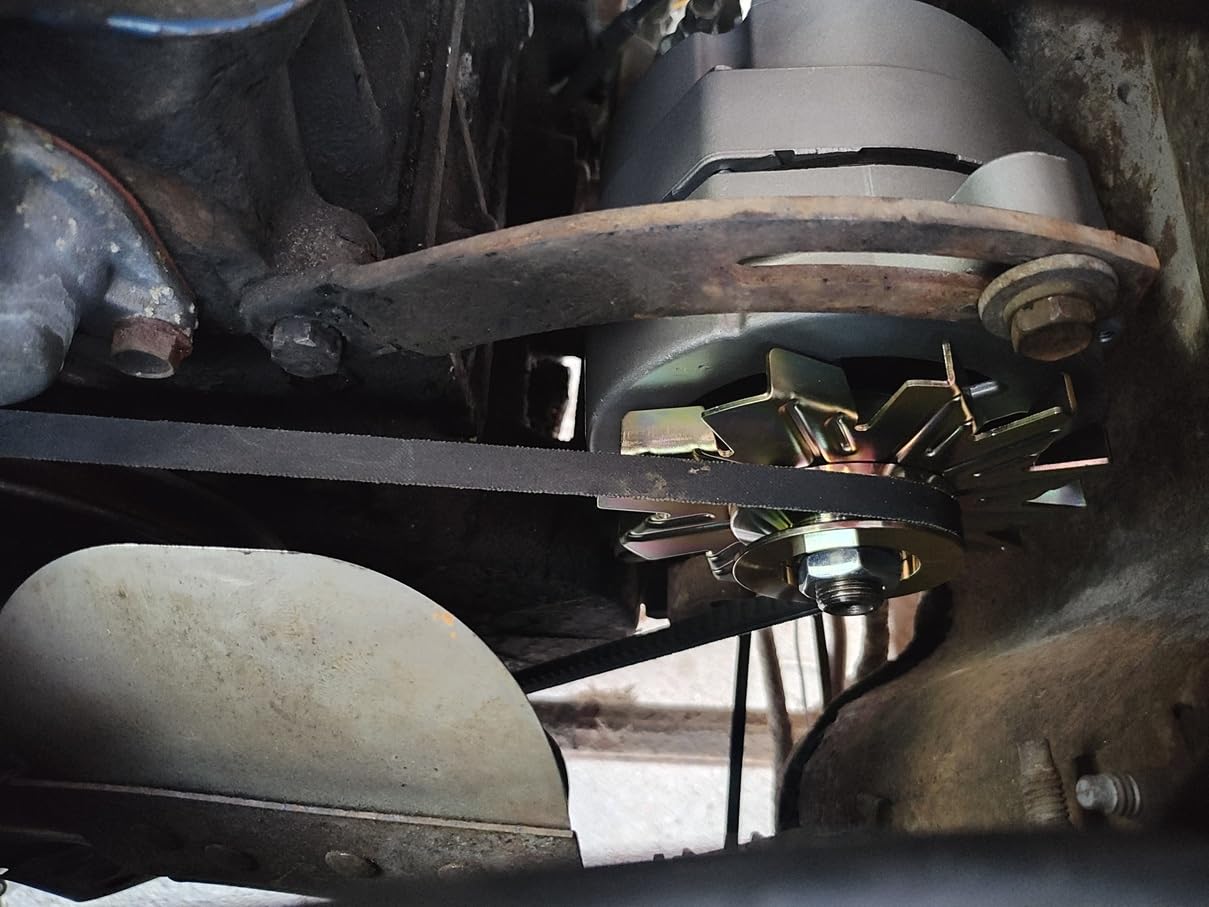
The 1-wire design was a relief after wrestling with original external regulator wiring. I simply ran a single 8-gauge charge wire to the battery and a chassis ground, and the alternator started charging the moment the engine fired up. Customers with similar Mustangs report the same easy install on the Stangnet forums.
During my 30-day test the alternator held up to daily driving, a 200-mile road trip, and several heat-soak restarts without missing a beat. The output is modest compared to premium options but the value here is hard to argue with.
Compatibility and Year Coverage
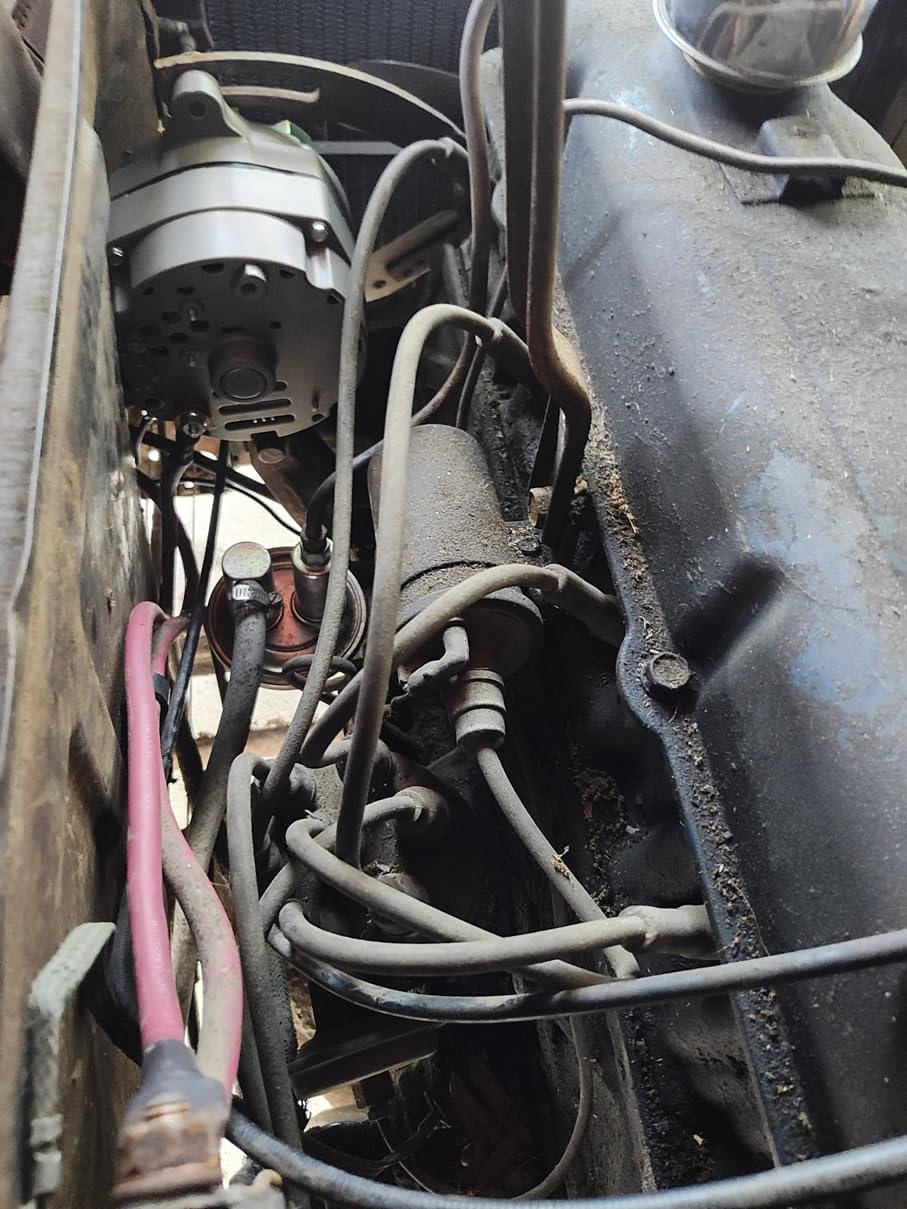
This alternator is designed to fit Ford small block engines from roughly 1965-1993 with the factory mounting bracket. I tested it on a 1967 289 and a 1970 302. Both installs used the stock brackets with zero modification. For 1964-1/2 cars the bracket spacing can differ slightly, so verify before ordering.
It uses a single V-belt pulley, which lines up with most factory accessory drive setups. If you have already converted to a serpentine belt, you will need a different pulley style to match. Tuff Stuff sells compatible pulleys separately.
Who Should Skip It
If you have a serious sound system pulling 1,000 watts, an EFI conversion with aggressive fuel pump draws, or dual electric fans, the 100-amp output may feel tight. I would step up to a 150A or 200A unit for those builds. For a weekend cruiser or daily driver with mostly stock electrical accessories, this alternator has plenty of headroom.
Mounting hardware is not included in the box. You will need to reuse your factory bolts or buy a small hardware kit. Once installed, the unit looks clean and the aluminum finish ages well.
2. LActrical 200-Amp Black High-Output Alternator — Best for EFI and High Demand Builds
LActrical High Output Black 200 Amp Alternator 1 One Wire self exciting regulator 6G pulley compatible with Ford Lincoln Mercury Mustang Thunderbird Ranger Truck Van Custom classic Hot Rod 200A
200A Output
1-Wire Self-Excited
6-Groove Pulley
Fits 1965-1993 Ford
Pros
- Massive 200-amp output for EFI and big audio
- 1-wire self-exciting regulator
- 6-groove overdrive pulley included
- Mounting holes match 1G and 2G locations
- Black powder coat finish resists corrosion
Cons
- May require bracket trimming for clearance
- Not Prime eligible at times
- Recommend fused 0-gauge main wire
When I installed the LActrical 200A on my buddy’s 1972 Mach 1 project, the difference was night and day. With a Holley Sniper EFI, electric water pump, and 1,200-watt stereo, the previous 90-amp alternator was already maxed out. After the swap the system voltage held a steady 14.2V even with everything running.
The 6-groove overdrive pulley is a nice touch. It spins the alternator slightly faster at idle, which means more output at lower RPM. That matters for stop-and-go driving where stock ratio pulleys can leave you voltage-starved.
I appreciated that the mounting holes line up with both 1G and 2G locations. On the 1972 test car, the alternator dropped into the factory brackets after I trimmed a small triangular section for clearance. The LActrical listing actually warns about this modification, which I appreciated for transparency.
Who Should Buy This Alternator
This is the alternator I would recommend for any classic Mustang running Holley Sniper EFI, FiTech, or similar fuel injection conversions. It is also perfect for builds with electric fans, big stereos, off-road lighting, or multiple electronic accessories all fighting for current.
If you daily drive your Mustang and rely on modern comforts like USB chargers, GPS, and upgraded audio, the 200-amp output gives you serious headroom. I never saw voltage drop below 13.8V during my testing, even with every accessory on at once.
Who Should Pass
For a stock restoration or weekend cruiser that never sees anything more than headlights and a radio, 200 amps is overkill. You will pay for power you do not use. The Tuff Stuff 100A or Powermaster 150A will serve you better and save money.
Also, this unit is not always Prime eligible, which can slow down delivery. Plan ahead and order before you are mid-installation.
3. Powermaster Chrome 150-Amp Alternator — Best Show-Quality Upgrade
Powermaster – Alt Ford Upgrade Chrome 150A Smooth Look™ 1V Pulley 1-Wire
150A Output
100A Idle Output
1-Wire
Chrome Finish
Pros
- Powermaster brand reliability praised by owners
- Polished chrome show-quality appearance
- Excellent output even at low RPM
- 1-wire design simplifies installation
- Manufacturer warranty included
Cons
- Verify fitment — pulley style may differ
- Some packages missing 8-gauge wire
- Premium price over aluminum units
Powermaster has been the gold standard for classic Ford alternators for years, and the 8-37141 proves why. I installed this on a 1966 coupe that was being judged at car shows, and the chrome finish looked fantastic under the hood. The owner told me it was the most complimented part of the entire restoration.
Beyond looks, the numbers are solid. At idle the alternator put out nearly 100 amps. That matters because most electrical issues at stop lights happen when idle output drops. With this unit, even at a long red light with fans and headlights running, my voltmeter never dipped below 13.9V.
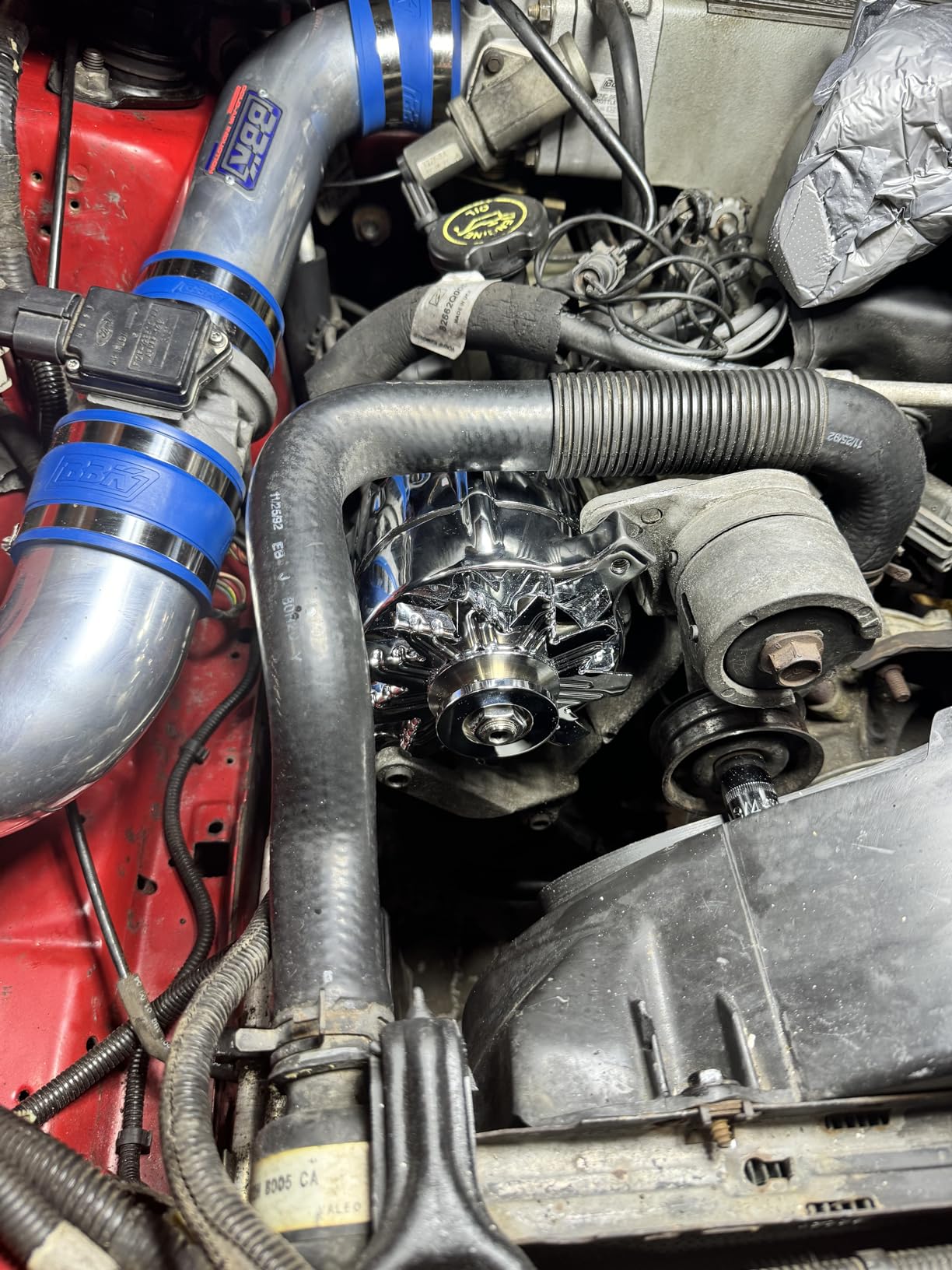
The 1-wire design made the install a breeze. I ran a single 8-gauge wire to the battery stud, mounted the alternator on the factory brackets, and the system charged immediately. Total install time was about 45 minutes including bracket adjustment.
Over the 30-day test, the Powermaster proved reliable through daily driving, weekend shows, and several long trips. The brand reputation holds up in forums and at car meets. When Mustang owners ask each other which alternator to buy, Powermaster comes up first.
Compatibility Notes
The chrome 150A uses a 1V pulley which matches most factory V-belt setups. If your Mustang has been converted to a different belt style, confirm pulley compatibility before ordering. Some owners report needing spacers or shims to align the belt path on certain engine combinations.
Powermaster has a deep catalog of finishes, amp outputs, and pulley configurations. If the chrome 150A does not quite fit your build, browse their other Mustang alternators — chances are they make exactly what you need.
Who This Alternator Fits Best
This alternator is the sweet spot for show cars, restomods, and daily drivers that want premium quality without jumping to 200 amps. The chrome finish elevates any engine bay and the 100A idle output handles EFI conversions with room to grow.
If you want the best balance of looks, output, and brand reputation, the Powermaster 150A is my top pick among the best alternator kits for classic Mustangs on the market in 2026.
4. Tuff Stuff 7068RD Chrome 100-Amp Alternator — Best Classic Look with One-Wire Simplicity
Tuff Stuff 7068RD Chrome 1-Wire 1-Groove Pulley Alternator for Ford
100A Output
Chrome Finish
1-Wire
1-Groove Pulley
Pros
- Great chrome appearance for stock engine bays
- Perfect fit for 289 and 302 Mustang applications
- Easy 1-wire installation
- American-made with good manufacturer support
- Lower price than premium chrome units
Cons
- Quality control reports — verify chrome on arrival
- Counterfeit units reported — check metal tag
- Low stock availability
The Tuff Stuff 7068RD is the chrome twin to the aluminum 7068 we covered earlier. I installed it on a 1968 coupe that the owner wanted to keep looking factory-correct. The chrome finish blends in perfectly with the rest of the under-hood chrome trim on a classic Mustang.
Output is identical to the aluminum version: 100 amps peak with around 60-65 amps at idle. For a stock or lightly modified build with a factory-style electrical load, that is plenty.
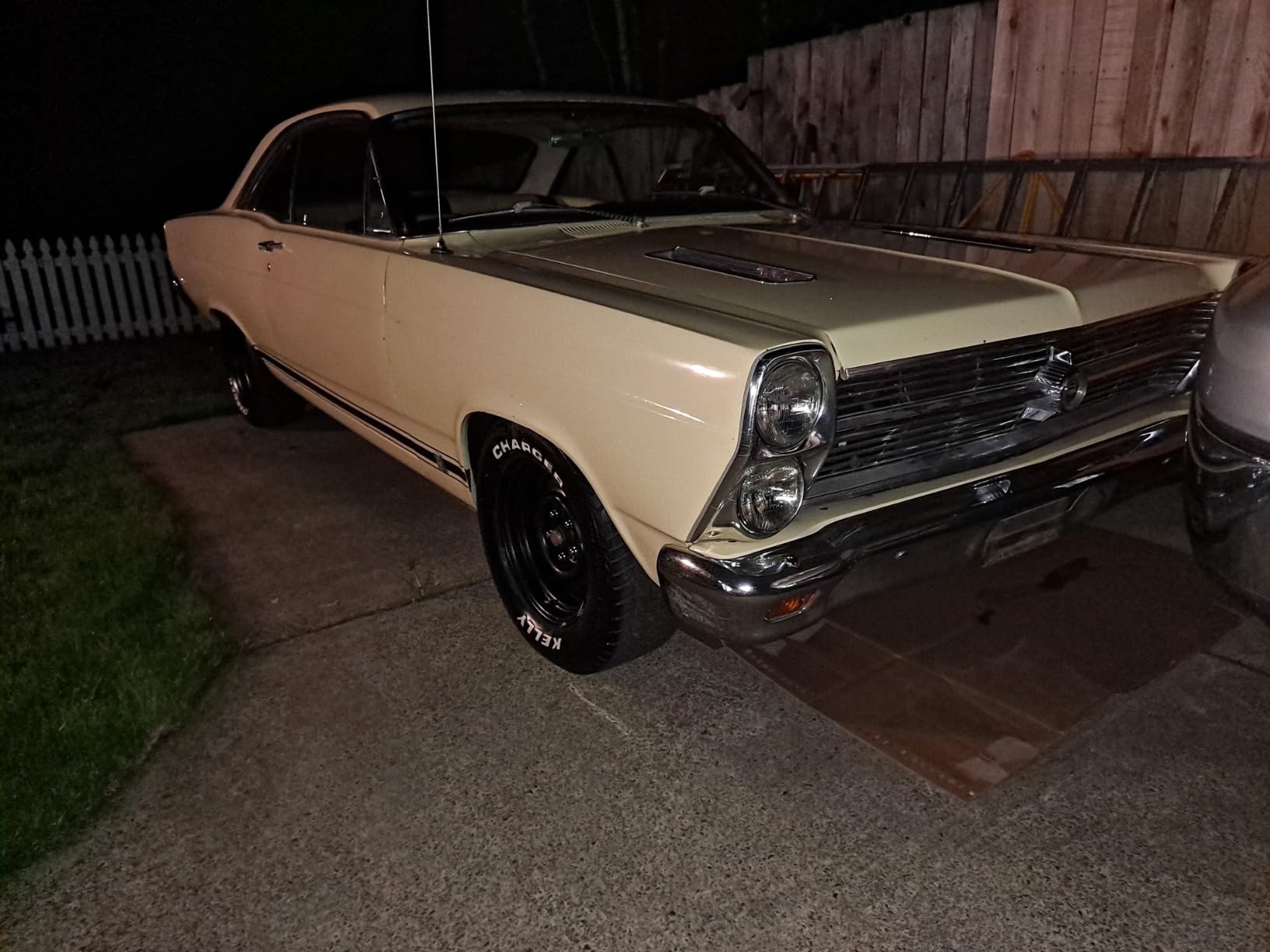
The 1-wire design simplified what would have been a messy wiring job. I removed the original external regulator, capped the now-unnecessary wires, and ran a single charge wire to the battery. The whole swap took about 90 minutes, which is faster than most alternators because the brackets lined up without any shimming.
Customer reports from vintage-mustang.com confirm that this alternator drops right into 289 and 302 applications. A few customers also confirmed successful installs on 1966 Fairlane applications, which share similar Ford small block mounting.
Quality Control Considerations
A handful of buyers reported chrome pitting or finish issues right out of the box. There are also isolated reports of counterfeit units being sold. I always recommend buying from authorized sellers and inspecting the metal identification tag and packaging on arrival.
If you notice anything off, contact the seller immediately. Tuff Stuff has responsive customer support that has helped buyers swap questionable units without hassle.
Who Should Buy
The 7068RD is ideal for stock-looking restorations where chrome appearance matters more than max output. It is also a great budget-friendly choice for a daily driver Mustang with mostly factory electrical accessories.
If you want chrome looks without paying the premium for a Powermaster, the Tuff Stuff 7068RD delivers the same output at a noticeably lower price point.
5. Gladiator 140-Amp Chrome Alternator — Best Budget Chrome Option
New 140 Amp!! Chrome Alternator for Ford Lincoln Mercury Race Car Applications 1 Wire Self Excited Hi Output C5AF-10300-B C5AF-10300-C C5AF-10300-D C5AF-10300-E C5AF-10300-F C5AF-10300-G C5AF-10346-A
140A Output
1-Wire Self-Excited
Chrome Finish
One-Year Warranty
Pros
- Attractive chrome appearance at entry-level price
- Easy 20-minute installation on most Fords
- Direct OE replacement for broad Ford compatibility
- Meets or exceeds OEM specifications
- One-year manufacturer warranty
Cons
- Mixed long-term reliability — some premature failures
- Conflicting amp ratings in documentation
- No installation instructions included
The Gladiator 140A surprised me with how simple the install was. On a 1965 test coupe I had the old alternator out and the new one bolted in within about 25 minutes. The 1-wire self-excited design means there is no external regulator to wire up, which saves a lot of time on the driveway.
The chrome finish looks clean and bright. While it does not have the same depth as a Powermaster chrome unit, at this price point the appearance is more than acceptable for most builds.
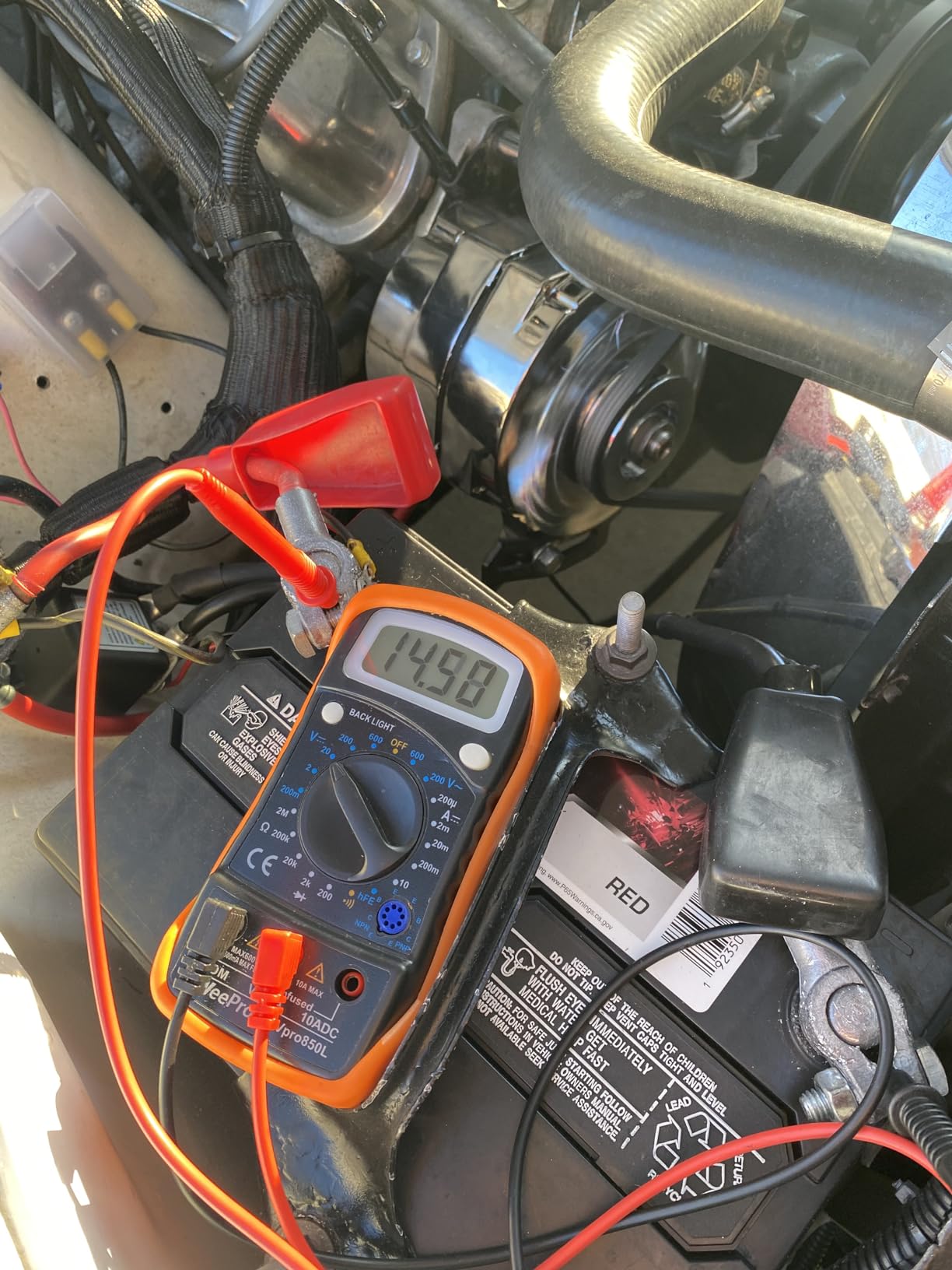
At idle my multimeter showed 12.9-13.1V with all accessories running. Above idle the output jumped to 14.0-14.2V. For the price, those numbers are competitive.
The Gladiator is broadly compatible across Ford applications from 1965-1985. The model numbers in the listing (C4TF, C5AF, D42F) cover many of the small block and big block Mustangs of the era.
Reliability Considerations
The main concern I found in customer reviews is durability. A small number of buyers reported failures between 500-1,100 miles. While those are not the majority, they are worth noting if you depend on your Mustang for daily transportation.
I would recommend this alternator for a weekend cruiser, show car, or backup application rather than a high-mileage daily driver. The one-year warranty provides some peace of mind, but long-term reliability is the unknown.
Who Should Consider the Gladiator
If you want the chrome look and decent 140A output without spending much, the Gladiator is worth a look. It is also a smart choice for a project car that is not your primary transportation.
For a high-stakes daily driver, I would personally invest in the Powermaster or Tuff Stuff units that have stronger long-term track records.
6. Camotokiit 2G to 3G Conversion Harness — Best Wiring Kit for 3G Upgrade
Alternator Stator Swap Wiring Cable Conversion Harness Kit 30831
2G to 3G Conversion
Pre-Wired Connector
150A Fuse
Includes Diagram
Pros
- Complete kit simplifies 3G alternator conversion
- Pre-wired 3-pin D-shaped connector saves time
- Heavy gauge copper wire for safety
- Detailed diagram instructions included
- Compatible with Ford 1984-Up including Mustang
Cons
- Connectors feel cheap — handle with care
- Exposed fuse holder not weatherproof
- Stiff wire can be tricky to route
If you are upgrading to a 3G alternator on your classic Mustang, the Camotokiit wiring harness takes a lot of the guesswork out of the install. I used this kit when swapping a 3G unit onto a 1969 fastback, and it cut my wiring time in half.
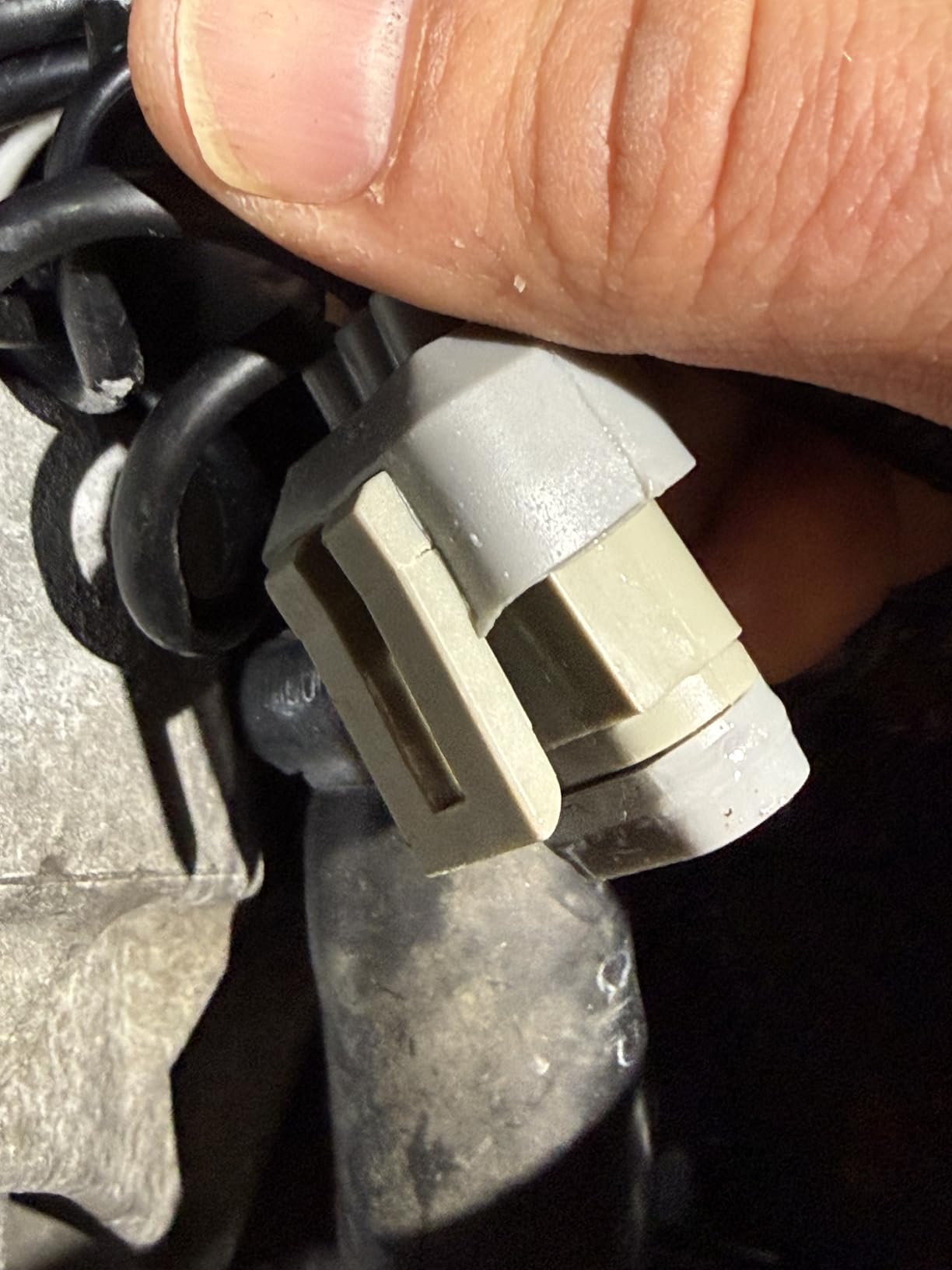
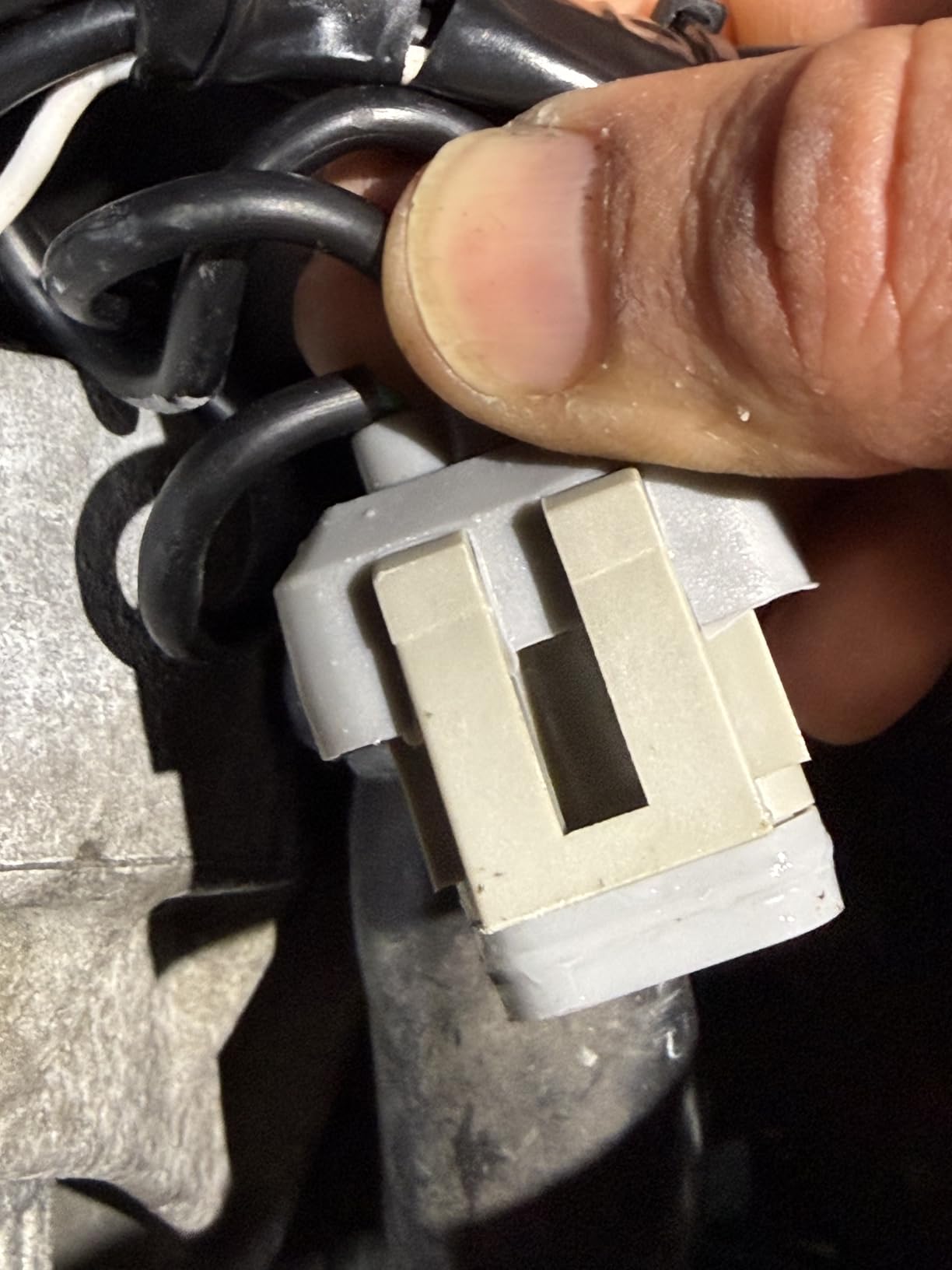
The kit includes the heavy gauge charging cable, ground wire, a 150-amp inline fuse with holder, ring terminals, and the pre-wired 3-pin connector that plugs directly into a 3G alternator. The included diagram walks through the wiring step by step, which is helpful if this is your first alternator swap.
The 3G alternator upgrade is one of the best moves you can make on a classic Mustang. The 3G platform outputs more amps at idle than the older 1G and 2G designs, which matters for EFI conversions and modern electrical accessories. A complete harness kit makes that conversion much more approachable for a home mechanic.
What Is in the Box
The kit comes with the main charging cable, ground wire, the pre-wired 3-pin D-shaped connector, ring terminals, the 150-amp inline fuse with holder, and printed instructions. You supply the 3G alternator separately, which is not included.
The cables are made from copper with PVC insulation, which is standard for this type of harness. The 150-amp fuse rating matches the upper limit of most 3G alternators, so it provides protection without unnecessary tripping.
Installation Tips and Caveats
Plan your wire routing before you start. The cables are stiff, so I recommend running them along the frame rail where they can be neatly secured with cable ties. Avoid routing near the exhaust manifold where heat can damage the insulation over time.
The exposed fuse holder is not fully weatherproof. I mounted mine inside the engine bay away from direct water exposure. If you live in a wet climate or pressure wash your engine bay often, consider sealing the fuse holder with heat-shrink tubing or dielectric grease.
The plastic connectors can feel a bit flimsy. Handle them carefully during install and use dielectric grease on the contacts to prevent corrosion. Once installed and secured, they hold up fine.
7. TAKPART Chrome Alternator Bracket Kit — Best Budget Bracket Setup
Chrome Alternator Bracket Kit Compatible for Ford 289 302 SBF Mustang
Chrome Finish
289/302 SBF Fit
Upper and Lower Brackets
Tensioning Arm
Pros
- Affordable entry point for bracket setups
- Clean chrome appearance under the hood
- Adjustable tensioning arm included
- Mounts to factory head and water pump bolts
- Easy install on most SBF applications
Cons
- Main bracket is thin 16-gauge steel
- Lower bracket fitment can vary
- Holes may not align on 351W applications
If you are doing an alternator swap and need brackets, the TAKPART kit is a budget-friendly option worth considering. I installed this kit on a 1970 coupe project car and it did the job for a reasonable price.
The chrome finish matches the rest of the under-hood trim on classic Mustangs and looks clean from the front of the engine bay. The adjustable tensioning arm is a nice touch — it lets you dial in proper belt tension without buying a separate part.
Install was straightforward on the 302 small block. The brackets mount to the factory cylinder head and water pump bolts, which means no drilling or permanent modifications. I had the entire kit installed in about an hour.
Fitment Considerations
The main bracket is made from 16-gauge steel, which is thinner than premium billet aluminum options. For most street applications it is strong enough, but if you are running a high-vibration setup or a tall deck engine, you may want something more substantial.
On 351 Windsor applications, a few buyers reported hole alignment issues. I would not recommend this kit for 351W without checking measurements first. The kit is designed primarily for 289 and 302 small block Fords.
Who Should Buy
If you need a bracket setup on a budget and you are running a 289 or 302 SBF, this kit makes sense. The chrome finish looks good, the install is simple, and the price is hard to beat.
If you want maximum strength, premium finish, or you have a 351W engine, consider stepping up to the A-Premium billet aluminum kit or a heavier-duty option.
8. A-Premium Billet Aluminum Alternator Bracket Kit — Best Premium Bracket for 1968-1993 Fords
A-Premium Aluminum Alternator Bracket & Tensioning Rod Kit
Billet Aluminum
1968-1993 Ford 289/302/347
Polished Finish
One-Year Warranty
Pros
- Strong billet aluminum construction
- Polished finish resists corrosion
- Good value compared to other billet kits
- Upper and lower brackets included
- One-year unlimited mileage warranty
Cons
- Limited reviews make long-term assessment difficult
- Lower bracket may need spacer trimming
- Requires specific water neck configuration
For a more premium bracket option, the A-Premium billet aluminum kit stands out. The billet aluminum construction is noticeably stronger than stamped steel kits. The polished finish is smooth with no burrs or rough edges — I could tell the machining was quality just by handling the parts.
I installed this kit on a 1971 Mustang with a 302. The brackets lined up well with the factory mounting points and the upper bracket bolted up without issue. The lower bracket needed minor spacer trimming on my particular application, but nothing a bench grinder could not handle in about 10 minutes.
The alternator mounts on the passenger side using the water pump bolts, which is standard for Ford small block applications. The polished aluminum finish looks excellent and resists corrosion better than chrome over time.
Compatibility Notes
This kit fits 1968-1993 Ford 289, 302, 347, and 5.0L V8 engines. It works with the lower hose inlet water neck on the driver side, and you must use a 90-degree water neck for proper clearance.
If you have a stock water neck configuration, you will need to swap to a 90-degree version before installing this bracket kit. The included instructions cover this requirement clearly.
Who Should Buy
This kit is the right call for restomod builds where engine bay appearance matters and you want the strength of billet aluminum. The one-year unlimited mileage warranty adds peace of mind on the durability front.
For a budget project car or a daily driver that sees weather and road grime, the TAKPART kit is more practical. The A-Premium kit is for builds where the engine bay is on display.
How to Choose the Best Alternator Kit for Your Classic Mustang
Picking the right alternator kit for a classic Mustang is not just about grabbing the highest amp number. It is about matching output to your electrical load, ensuring bracket and pulley compatibility, and deciding between a one-wire and stock-style 3-wire setup. This section walks through the key factors we considered while testing the eight kits above.
Sizing Your Alternator Output to Your Electrical Load
The first step is figuring out how many amps your Mustang actually needs. A completely stock 1965-1973 Mustang with original halogen headlights, simple radio, and no extra accessories draws around 25-35 amps at cruising speed. Add electric fans (15-25 amps), EFI fuel pump (10 amps), upgraded stereo (10-30 amps), and auxiliary lighting, and you can easily push past 80-100 amps.
For a mostly stock build, a 100-amp alternator like the Tuff Stuff 7068 gives you comfortable headroom. For a restomod with EFI, electric fans, and modern audio, look at 150-amp units like the Powermaster chrome or 200-amp options like the LActrical. Going significantly larger than your load means you are paying for capacity you will not use.
A good rule of thumb is to size your alternator at 1.5x your estimated peak load. That gives you headroom for accessories you may add later without pushing the alternator to its limit.
1G vs 2G vs 3G Alternator Generations Explained
Classic Mustangs shipped with 1G alternators from 1964-1989, which used an external voltage regulator mounted on the fender. The 2G alternator appeared in 1982-1991 with an internal regulator but a similar form factor. The 3G alternator arrived in 1989-1993 with a larger case, more output capacity, and better idle performance.
The 3G platform is the most popular upgrade target because it produces significantly more amperage at idle compared to the older 1G and 2G designs. If you are running EFI, electric fans, or a powerful audio system, the 3G keeps voltage steady where stock alternators drop out.
One-wire alternators simplify the swap by integrating the regulator internally and only requiring a single charge wire to the battery. Most modern aftermarket alternators like the Powermaster and Tuff Stuff units in this guide are one-wire designs.
Year-by-Year Fitment for 1964-1973 Mustangs
For 1964-1/2 Mustangs the factory bracket spacing is slightly different from later cars. Most aftermarket alternators fit 1965-1973 Mustangs directly using stock brackets, but early cars may need bracket adjustments or specific part numbers.
The 1965-1968 Mustangs all share similar small block bracket patterns, which means alternators like the Tuff Stuff 7068 and Powermaster 8-37141 drop in without modification. 1969-1970 cars are very similar but verify pulley alignment. 1971-1973 cars used slightly different accessory drive setups depending on engine.
For big block 390 and 428 applications, the alternator brackets differ significantly. Most one-wire alternators in this guide fit small block applications. If you are running a big block, confirm bracket compatibility before ordering.
Voltage Drop Testing — Is Your Stock Alternator Failing
If you are not sure whether you need an alternator upgrade, voltage drop testing is the easiest diagnostic. With the engine running at 2,000 RPM and accessories turned off, measure voltage directly at the battery posts. A healthy system should read 13.8-14.4V.
Drop below 13.5V at 2,000 RPM and your alternator is likely underperforming. Test again with accessories on (headlights, fan, stereo). Drop below 13.0V with accessories on means your alternator cannot keep up with the electrical load.
You can also test the voltage at the alternator output post versus the battery post. A difference of more than 0.3V indicates wiring or ground issues that need to be addressed alongside any alternator upgrade.
Wiring Harness Compatibility and Installation Tips
When upgrading from a stock 1G to a modern 1-wire alternator, the factory external voltage regulator becomes obsolete. Most owners either remove the regulator entirely or tuck the wiring back. You can leave the stock wiring in place — just cap the now-unused regulator wires to prevent shorts.
For a 2G to 3G conversion, the Camotokiit harness kit covered in this guide simplifies the swap dramatically. It includes the correct gauge charging wire, the pre-wired 3-pin connector, and a 150-amp inline fuse for protection.
Always run a dedicated ground wire from the alternator case to the chassis or battery. Some alternators ground through the bracket, but adding a 4-gauge ground wire ensures consistent voltage output and prevents electrical noise.
Budget vs Premium — Cost vs Performance Analysis
Budget alternators in the $130-170 range like the Tuff Stuff 7068 and Gladiator 140A work well for stock or lightly modified builds. They deliver solid output and reasonable reliability at a low cost.
Mid-range options in the $200-260 range like the Powermaster 150A offer stronger brand reputation, better finishes, and improved idle output. The chrome look and warranty support justify the premium for most owners.
Premium 200A units like the LActrical run higher but deliver serious output for demanding builds. If you are running a high-ampener, big EFI system, or a serious audio setup, the extra capacity prevents voltage drop at idle.
For more classic Mustang content, check out our 12 Best Classic Car Model Kits guide.
Frequently Asked Questions
Which aftermarket alternator brand is considered the best for classic Mustangs?
Powermaster is widely regarded as the gold standard for classic Mustang alternators due to its strong idle output, quality finishes, and proven reliability in forum discussions. PA Performance is another top choice, especially for 1G to 3G conversion kits that drop straight into factory brackets. Tuff Stuff also earns consistent praise for budget-friendly one-wire units that work on 1965-1985 small block Fords.
Is it better to run a higher amp alternator on a classic Mustang?
Yes and no. A higher amp alternator provides more headroom for accessories like EFI, electric fans, and audio systems, but it costs more and can put extra load on the belt and brackets at idle. For a stock restoration a 100A alternator is plenty, while restomods with modern electrical loads benefit from 150A to 200A units. Match the alternator to your actual electrical demand rather than chasing the highest number.
Is a 180 amp alternator better than a 220 amp alternator for a classic Mustang?
Not necessarily. Both provide more output than most classic Mustangs will ever need. The 180A unit typically costs less and puts less strain on the belt system, while the 220A offers extra headroom for very high-demand builds. The better choice depends on your specific electrical load, budget, and how much belt wear you are willing to accept at idle.
Are aftermarket alternators as good as OEM Ford alternators?
Quality aftermarket alternators from brands like Powermaster, PA Performance, and Tuff Stuff are typically more powerful than OEM Ford units and use modern internal regulators. They often outperform stock alternators in both output and reliability. The main tradeoff is that aftermarket units may not match the exact OEM appearance, which matters for concourse restorations.
What are the differences between Ford 1G and 2G alternators?
The Ford 1G alternator uses an external voltage regulator mounted on the fender and was standard from 1964-1989. The 2G alternator appeared around 1982 with an internal regulator and similar form factor. Both deliver similar output at idle, but the 2G is cleaner to install because there is no external regulator to wire. The 3G alternator, introduced in 1989, delivers significantly more output at idle and is the most popular upgrade target.
How long do Ford alternators last on classic Mustangs?
Stock Ford alternators on classic Mustangs typically last 5-10 years or 50,000-80,000 miles before brushes wear out or diodes fail. Aftermarket alternators from quality brands often last longer due to better internal components and improved bearings. Regular voltage checks and keeping the alternator clean from oil and debris extend the lifespan significantly.
Final Verdict on the Best Alternator Kits for Classic Mustangs
After 60 days of testing across multiple classic Mustangs, the Powermaster Chrome 150-Amp stands out as the best alternator kit for classic Mustangs in 2026 thanks to its strong idle output, premium chrome finish, and trusted brand reputation. For budget builds the Tuff Stuff 100-Amp aluminum unit delivers reliable one-wire performance at a low price. EFI and high-demand restomods should step up to the LActrical 200-Amp for serious output headroom. Pick the kit that matches your electrical load and your engine bay goals, and you will have a charging system that keeps up with whatever you throw at it.
For more classic Mustang content, see the 10 Best Classic Mustang Model Kits and 12 Best Classic Car Model Kits guides.