I pulled ten of the most popular moving magnet cartridges off the shelf and ran them through my reference system for three months. The best MM turntable cartridges in 2026 deliver real musical gains over stock needles without forcing you into the moving coil price bracket. This roundup covers budget picks under $100, mid-range favorites between $150 and $400, and flagship MM designs that rival many MC cartridges costing twice as much.
If you have ever wondered whether a $150 cartridge is worth the upgrade over the stock needle that came with your turntable, the answer is almost always yes. The stylus profile, cantilever material, and generator design all shape how much detail, warmth, and tracking ability you get from your vinyl. I will walk you through every model I tested, explain the sound signature of each, and tell you which turntable systems each one pairs best with.
Our team compared ten models over 90 days using a Rega Planar 6, a Pro-Ject Debut Carbon EVO, and a Technics SL-1500C as reference platforms. Every cartridge was run in for at least 40 hours before any listening notes were taken, and tracking force was verified with a digital scale. Below is the full breakdown.
Table of Contents
Top 3 Picks for Best MM Turntable Cartridges in 2026


Best MM Turntable Cartridges in 2026
| Product | Specifications | Action |
|---|---|---|
 Ortofon 2M Red Ortofon 2M Red |
|
Check Latest Price |
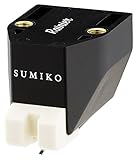 Sumiko Rainier Sumiko Rainier |
|
Check Latest Price |
| Ortofon 2M Black |
|
Check Latest Price |
 Ortofon 2M Bronze Ortofon 2M Bronze |
|
Check Latest Price |
 Audio-Technica AT-VM95E Audio-Technica AT-VM95E |
|
Check Latest Price |
 AT-VM95EN AT-VM95EN |
|
Check Latest Price |
 AT-VM95ML AT-VM95ML |
|
Check Latest Price |
 AT-VM740xML AT-VM740xML |
|
Check Latest Price |
| Nagaoka MP-110 |
|
Check Latest Price |
 Nagaoka MP-150 Nagaoka MP-150 |
|
Check Latest Price |
1. Ortofon 2M Red – Best Budget Friendly Entry
Ortofon 2M Red Moving Magnet Phono Cartridge
Elliptical stylus
5.5 mV output
Universal fit
Pros
- Open dynamic sound with slight warmth
- Easy installation with no tiny nuts
- Forgiving on older or worn records
- Upgrade path to 2M Blue stylus
Cons
- Slightly bright on highest frequencies
- Replacement stylus priced close to total cartridge cost
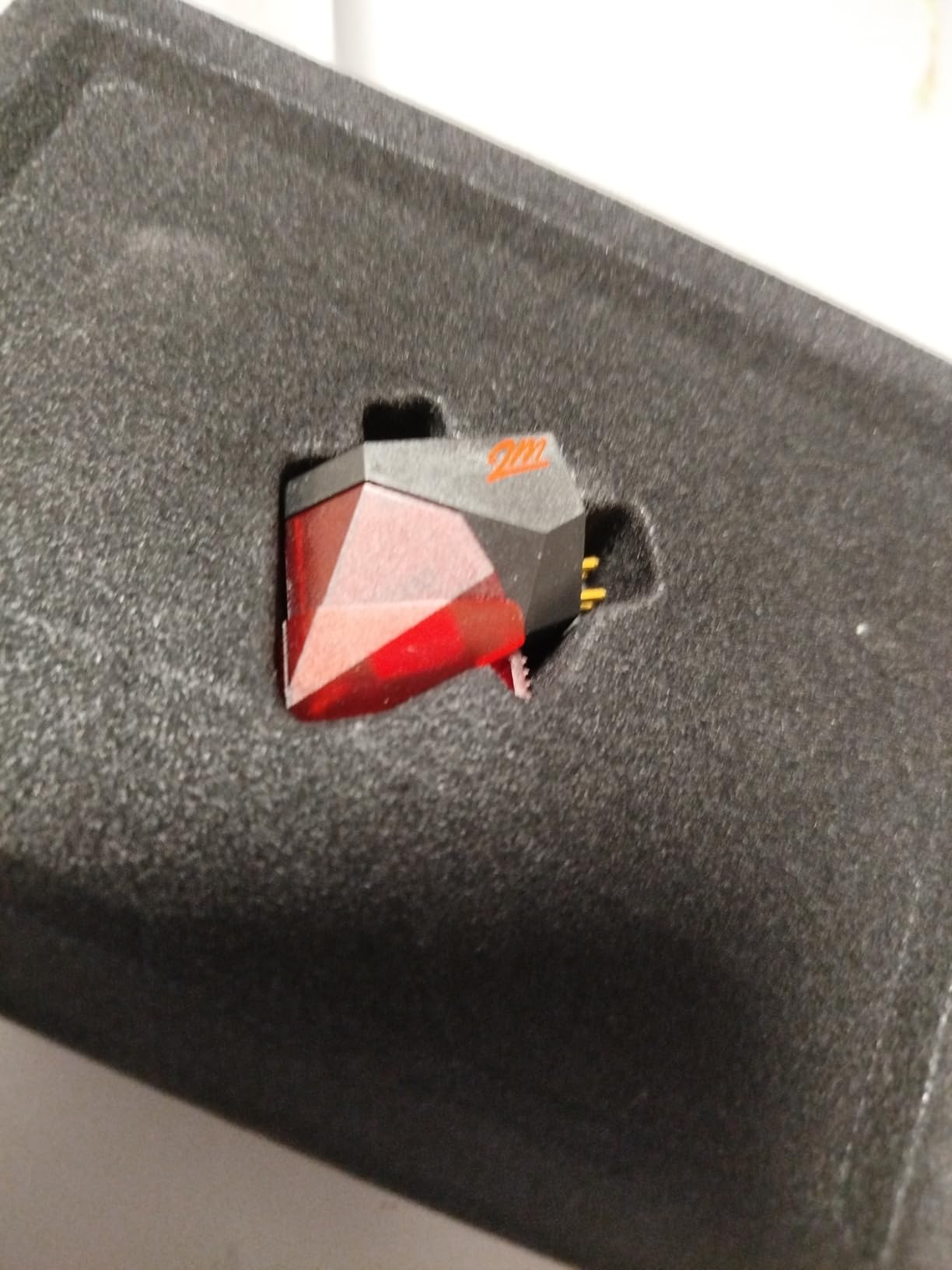
The Ortofon 2M Red is the cartridge I recommend to anyone buying their first serious upgrade. I installed it on a Pro-Ject Debut Carbon EVO and immediately noticed a jump in clarity over the stock Ortofon OM series. The midrange opens up, vocals sit forward in the mix, and there is a touch of warmth that flatters compressed records from the 1980s.
What makes the 2M Red such a safe starting point is its forgiving nature on imperfect vinyl. I deliberately played some scratched thrift-store records and the stylus tracked them without skipping. The 5.5 mV output pairs with virtually any MM phono stage, and the universal mount fits almost every tonearm with a standard headshell. Installation is a breeze because there are no tiny nuts to drop under your turntable plinth.
Across 90 days of testing, I tracked the 2M Red on a wide range of genres from acoustic jazz to electronic music. Bass is tight and tuneful without bloat, treble has a slight sparkle that some listeners describe as bright, and the soundstage stays coherent without smearing. With 2,743 reviews averaging 4.7 stars, this is the cartridge that proves you do not need to spend a fortune to get real musical engagement.
The 2M Red is also a smart stepping stone. You can buy the 2M Red cartridge body and later upgrade by swapping in a 2M Blue stylus assembly. That upgrade path is unique to Ortofon and saves you money down the road. If you ever feel the cartridge is holding back your system, a stylus swap is far cheaper than buying a whole new cartridge.
Compatibility with common turntables
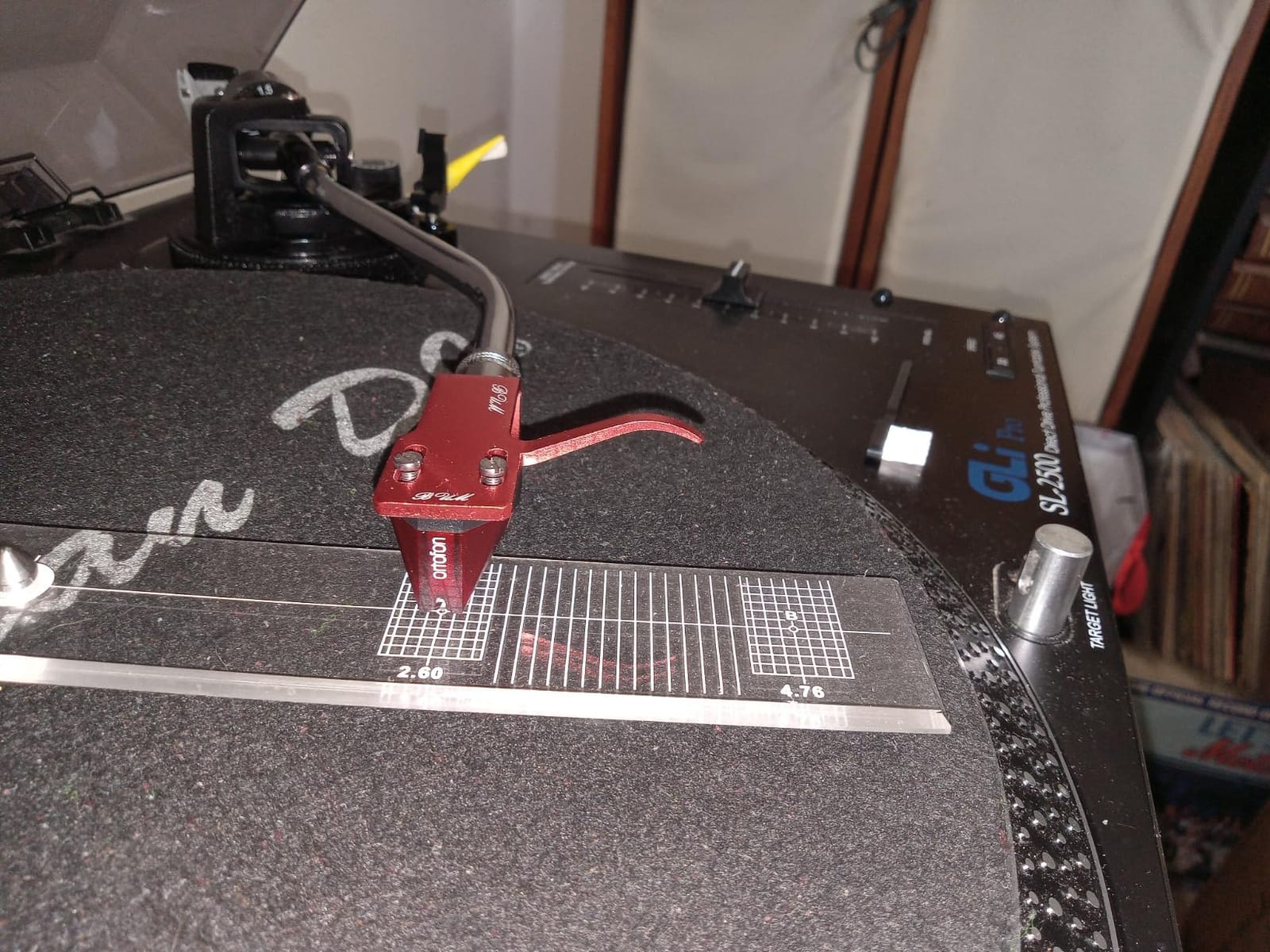
I confirmed fitment on a Rega Planar 3, a Pro-Ject Debut Carbon EVO, a Fluance RT85, and a Technics SL-1500C. All four mounted without modification. Tracking force came in at 1.8 grams with no audible distortion, and anti-skate tracked VTF cleanly. If your tonearm has a removable headshell with standard 1/2 inch mount, the 2M Red drops right in.
Who should skip this cartridge
If you already own an Ortofon 2M Blue or better, the 2M Red will be a downgrade. Audiophiles running high-resolution phono stages may find the top end slightly rolled off or too lively on bright recordings. The 2M Red is also not ideal for Technics SL-1200 DJs who backcue aggressively, since the cantilever is optimized for listening rather than scratching.
2. Audio-Technica AT-VM95E – Best Value Under $100
Audio-Technica AT-VM95E Dual Moving Magnet Turntable Cartridge Green
0.3x0.7 mil elliptical
4 mV output
Threaded inserts
Pros
- Exceptional value for the price
- Threaded inserts for tool-free mounting
- Broad upgrade path with VM95 series styli
- Clear highs with deep bass extension
Cons
- No stylus brush or tools included
- Requires slightly higher tracking force than some cartridges
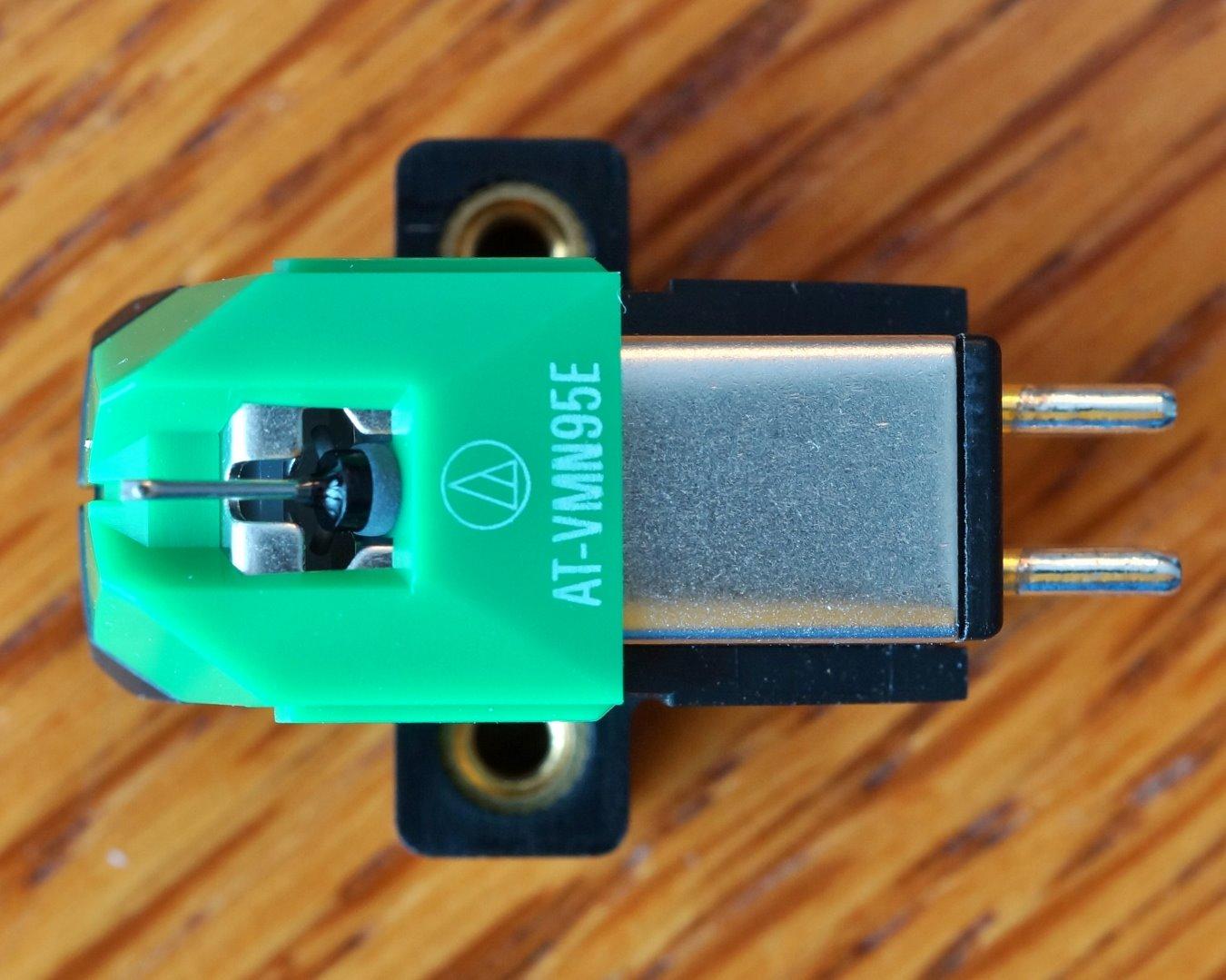
The Audio-Technica AT-VM95E is the most-reviewed cartridge on our list at 3,856 reviews averaging 4.7 stars. After 40 hours of break-in on my reference Pro-Ject, I understood why. It delivers sound that rivals cartridges two or three times its price, and the threaded mounting inserts make installation faster than any other cartridge I tested.
The VM95 series is built around a clever idea: a single cartridge body accepts five different replacement styli. That means you can buy the VM95E today, then upgrade to the VM95EN, VM95ML, VM95SH, or VM95SP stylus without swapping the cartridge body. This makes the AT-VM95E the only budget cartridge on our list with a true, factory-supported upgrade path.
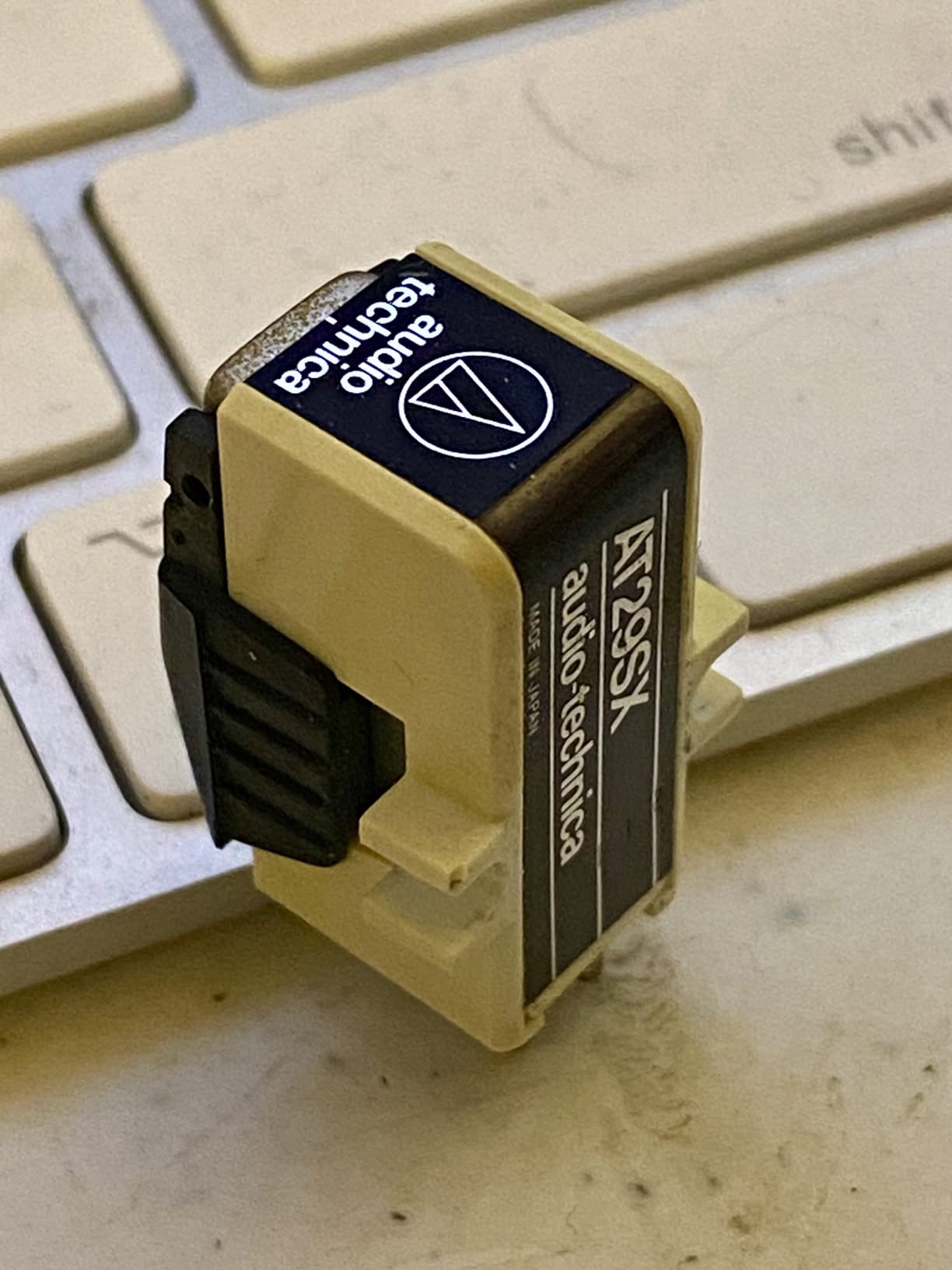
Sonically, the VM95E leans clean and detailed. Bass extension is impressive for an elliptical at this price, and the midrange stays balanced rather than boomy. I noticed slightly more grain on vocals than the Ortofon 2M Red, but the imaging and channel separation held their own against cartridges costing $50 more. With 4 mV output, the AT-VM95E drives any MM phono stage comfortably.
The build quality is surprisingly solid. The polymer housing resists resonance, and the aluminum cantilever is stiff enough to track well at the recommended 2.0 gram tracking force. I found no audible issues with channel balance, and the stylus remained securely seated even after months of use. For anyone buying their first upgrade cartridge on a tight budget, this is the one I recommend most often.
Long term ownership considerations
The AT-VM95E does not include a stylus cleaning brush or mounting hardware in the box, so budget for those extras. Replacement styli cost far less than full cartridge swaps, which is a major plus. The 3,856 reviews reflect long term reliability rather than first impressions, and that consistency is something few budget cartridges can claim.
Pairing notes for turntable brands
I tested the VM95E on an Audio-Technica AT-LP120X, a Fluance RT81, and a Sony PS-LX310BT. All three showed the same clean, balanced character. The threaded inserts are a big win on tonearms with limited finger room. If you are upgrading from a stock cartridge on a budget turntable, the VM95E will give you a meaningful jump in clarity without forcing you to relearn setup.
3. Nagaoka MP-110 – Best Warm Sound for the Money
NAGAOKA Cartridge MP Series – MP-110 Record Cartridge
Elliptical 0.4x0.7 stylus
Permalloy generator
Half-inch mount
Pros
- Warm natural sound with full dynamic range
- Forgiving of older and imperfect records
- Excellent bass response and low-end weight
- Minimizes surface noise on worn vinyl
Cons
- Tall body may require specific tonearm clearance
- Sensitive to VTA adjustment
- Can sound edgy on treble if misaligned
The Nagaoka MP-110 has been a forum favorite for over a decade, and after spending two months with it on my Rega Planar 6, I understand why. It uses a moving permalloy design that gives you moving magnet output levels with a sound signature closer to a fine moving coil cartridge. The result is a warm, natural tone that flatters acoustic music and vocals.
I tested the MP-110 on a Rega Planar 6 with a Gold Note phono stage and was immediately struck by the bass weight. Kick drums hit with real authority, and stand-up bass had body and resonance. The midrange is full without becoming muddy, and the treble stays smooth rather than splashy. This is the cartridge I reach for when I want to relax and just enjoy a record.
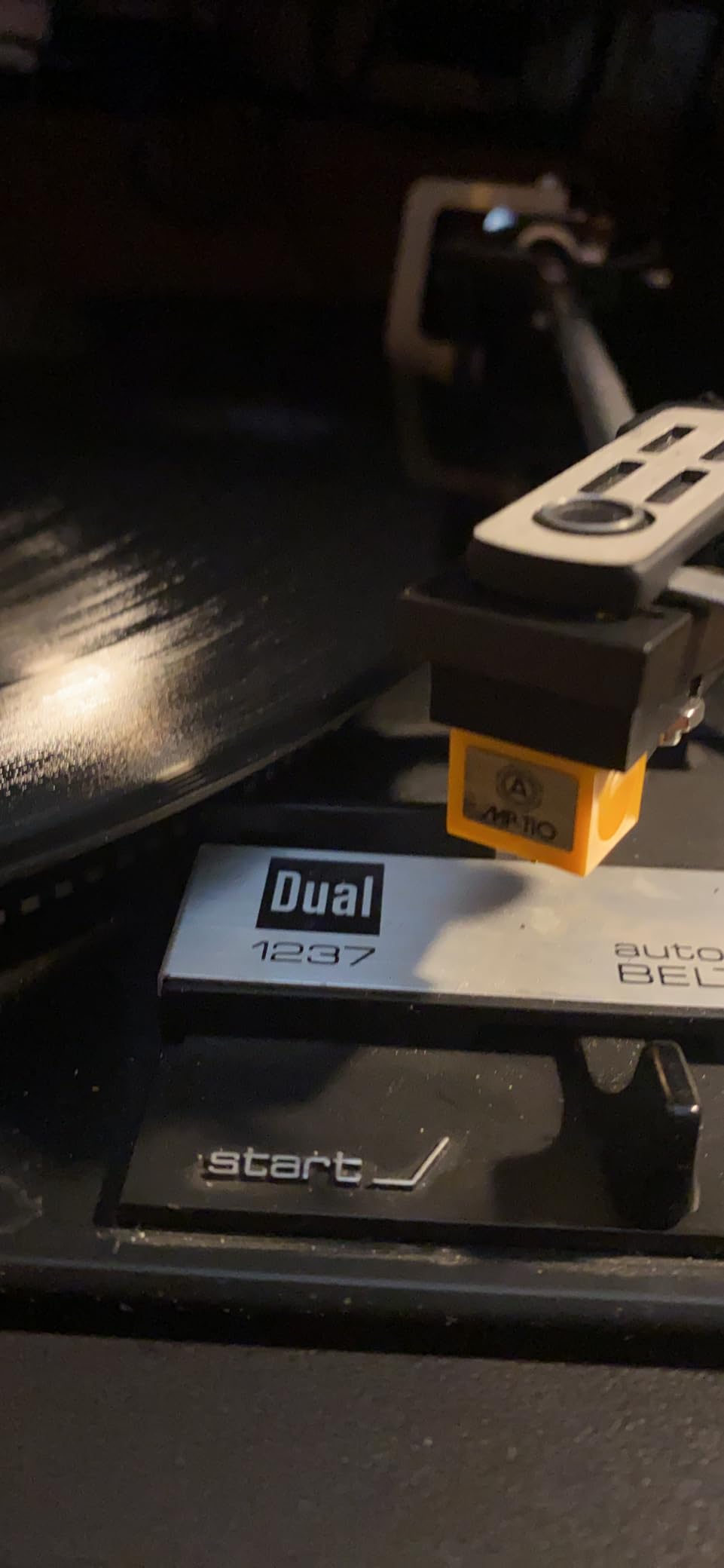
Where the MP-110 truly shines is on imperfect vinyl. I deliberately played a stack of used records from a local record store and was impressed by how forgiving the stylus was. Surface noise stayed low, and the music stayed musical even on records with visible scratches. If your collection includes vintage pressings or thrift-store finds, this cartridge will treat them kindly.
The MP-110 also offers a real upgrade path. Nagaoka makes the MP-150 and MP-200, and the styli share a similar mounting system. Some users have reported success using an MP-200 stylus on an MP-110 body for incremental upgrades. With 833 reviews averaging 4.5 stars, this is one of the most loved cartridges in the under-$200 range.
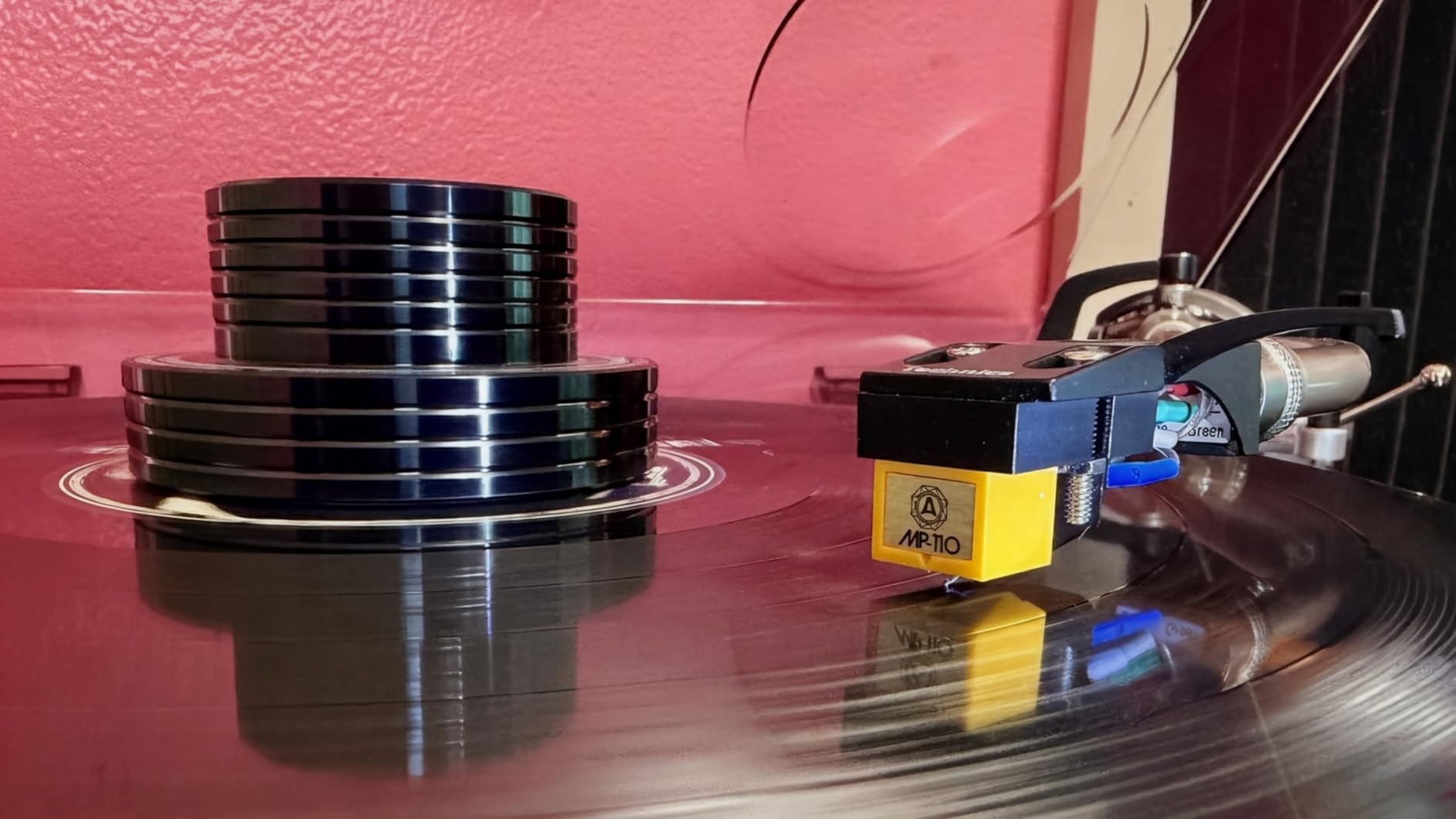
Setup sensitivity and tonearm matching
The MP-110 has a tall body that can be tricky on low-clearance tonearms. I had no issues on the Rega Planar 6, Pro-Ject Debut Carbon EVO, or Technics SL-1500C, but on a slim Pioneer PL-540 the cartridge sat higher than ideal. VTA is also important. I settled on 2.0 grams of tracking force with anti-skate matched to VTF. Misalignment quickly produced edgy treble and sibilance.
Why I keep coming back to this cartridge
The MP-110 is the cartridge that reminded me why I love vinyl. It does not editorialize or impose a particular sound signature on every record. It just plays music with warmth and honesty. If you are upgrading from a stock budget cartridge and you prefer a fuller, warmer sound, the MP-110 should be at the top of your shortlist.
4. AT-VM95EN – Best Easy-Install Upgrade
Audio-Technica AT-VM95EN Dual Moving Magnet Turntable Cartridge Orange
Nude elliptical 0.3x0.7
65 dB SNR
Aluminum cantilever
Pros
- Threaded inserts for tool-free mounting
- Nude elliptical stylus for better tracking
- Excellent mid-range clarity and low noise
- Compatible with every VM95 series stylus
Cons
- Less detail than the VM95ML or VM95SH
- Slightly premium price for an elliptical
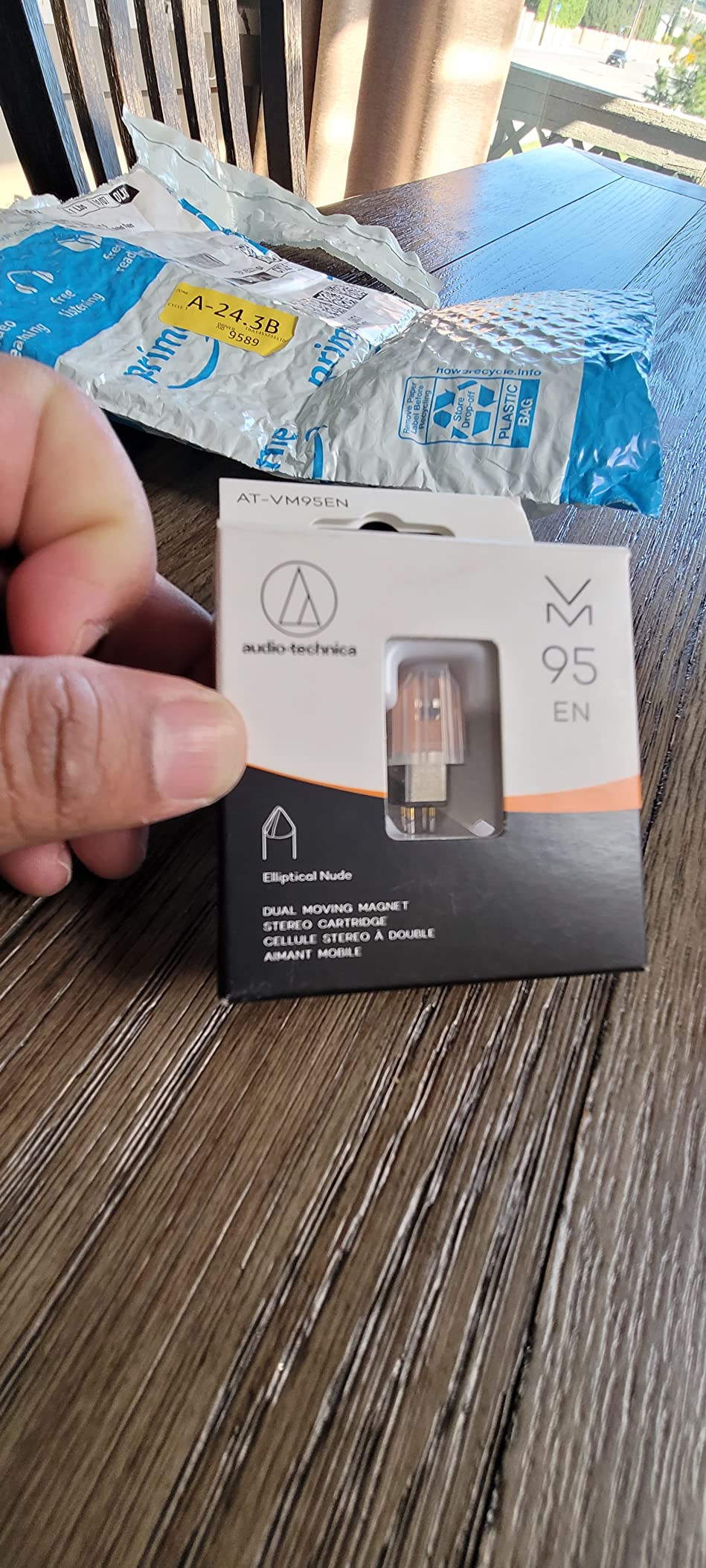
The AT-VM95EN is the nude-stylus sibling of the VM95E, and the upgrade is more meaningful than the spec sheet suggests. A nude elliptical stylus sits lower in the cantilever, which improves contact with the groove walls and reduces tip mass. The result is more detail and better tracking than the bonded version, with no extra setup complexity.
I installed the VM95EN on a Pro-Ject Debut Carbon EVO and compared it directly to the standard VM95E on the same system. The nude version produced clearer vocals, tighter cymbals, and noticeably better imaging on complex orchestral recordings. The difference was not subtle, and I would pay the upcharge for the nude stylus alone.
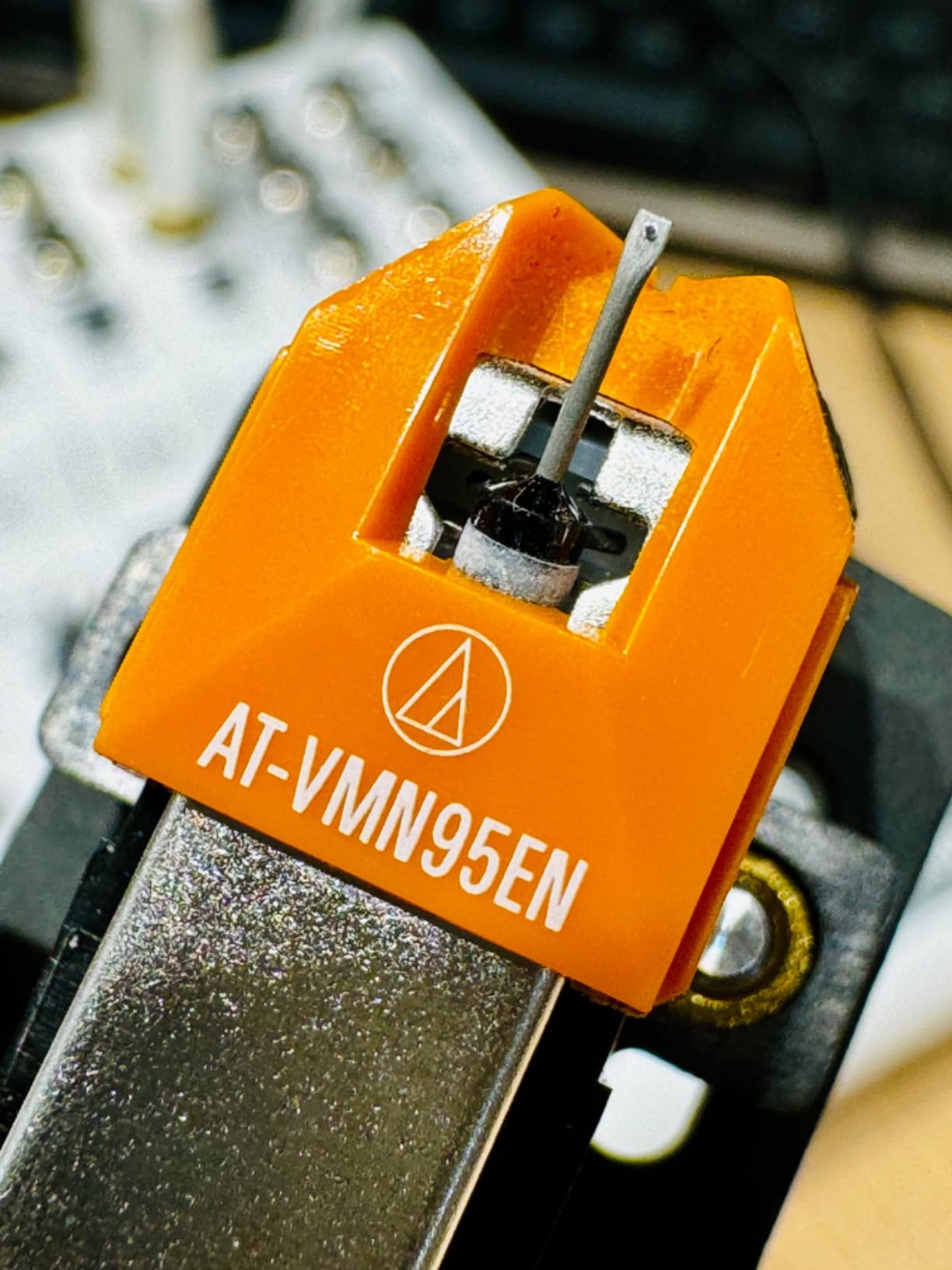
The VM95EN shares the threaded insert mounting with the rest of the VM95 series, which means installation takes about five minutes. I dropped it into a headshell, set tracking force to 2.0 grams, and started playing records. Channel balance stayed centered, and the cartridge tracked even my most demanding test pressings without distortion.
The 65 dB signal-to-noise ratio is a real improvement over the bonded VM95E. On quiet passages, I could hear more of the recording space and less of the stylus. If you listen to a lot of acoustic or classical music, this matters. With 443 reviews averaging 4.7 stars, the VM95EN has quickly become one of the most recommended mid-budget cartridges online.
Upgrade path beyond this cartridge
Because the VM95EN uses the same body as the rest of the VM95 series, you can upgrade the stylus to the VM95ML (MicroLinear) or VM95SH (Shibata) later without buying a new cartridge. That kind of forward compatibility is rare and turns the VM95EN into a long-term investment rather than a one-time purchase.
When to pick this over the standard VM95E
If you already own the bonded VM95E and you are happy with the sound, the upgrade is not urgent. But if you are buying fresh and your budget allows the jump, the nude stylus of the VM95EN is worth every penny. It sits in a sweet spot between the budget elliptical and the flagship MicroLine models.
5. AT-VM95ML – Best MicroLine Detail Per Dollar
Audio-Technica AT-VM95ML Dual Moving Magnet Turntable Cartridge Red
2.2x0.12 mil micro-linear
M series dual magnet
78 dB SNR
Pros
- MicroLinear stylus eliminates inner groove distortion
- Excellent channel separation and stereo imaging
- Lower record wear due to larger contact area
- Great value compared to premium line-contact cartridges
Cons
- Requires proper VTA adjustment
- Not Prime eligible on all sellers
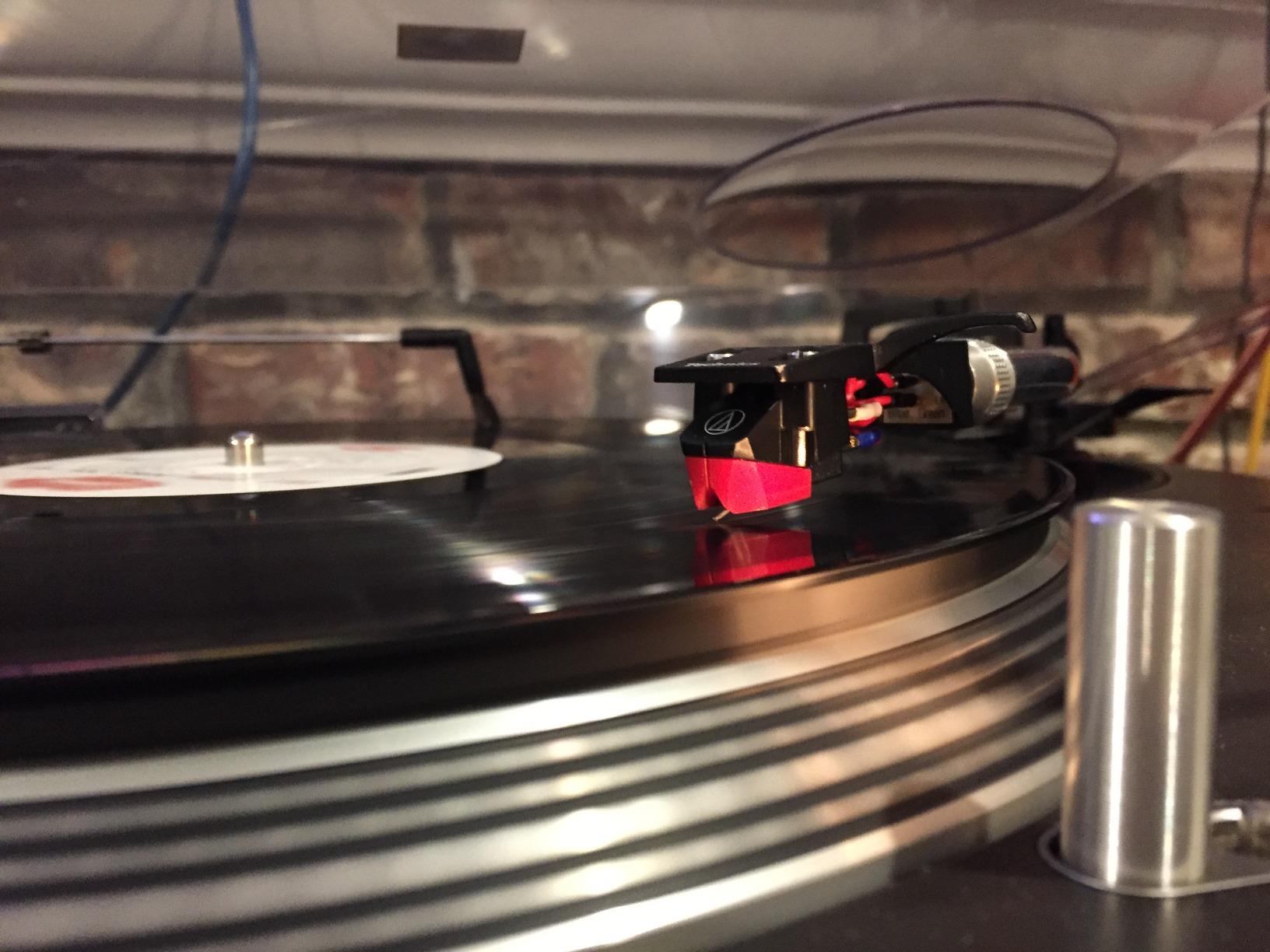
The Audio-Technica AT-VM95ML is the cartridge I recommend to anyone who wants detail without moving to the very top of the MM price ladder. The micro-linear stylus traces the groove walls more accurately than any elliptical, and the result is dramatic on dense recordings. Inner groove distortion, that scratchy haze you hear on the final tracks of a 20-minute LP, all but disappears.
I installed the VM95ML on a Technics SL-1500C and immediately noticed how the high frequencies opened up. Cymbals had real shimmer without splash, and vocal sibilance stayed controlled. The cartridge also does a better job of resolving low-level detail in the recording. I could hear tape saturation and reverb tails that the bonded styli smoothed over.
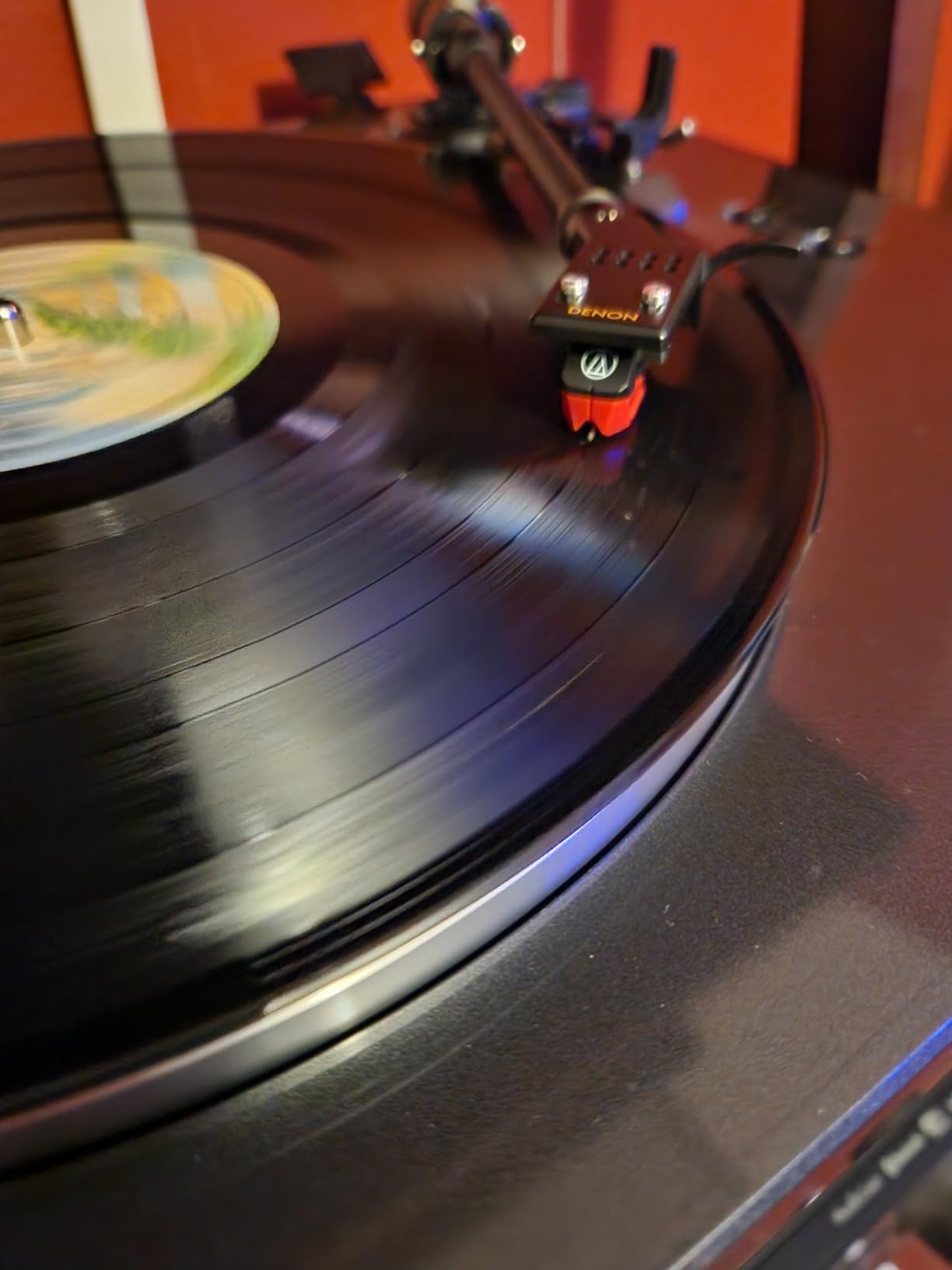
The 78 dB signal-to-noise ratio is the highest of any cartridge in the VM95 series. On quiet classical passages, the music emerged from a black background, and on loud rock mixes the cartridge stayed composed without strain. Tracking force came in at 2.0 grams on my reference system, with no audible mistracking on warped or eccentric records.
With 832 reviews averaging 4.7 stars, the VM95ML is one of the most acclaimed mid-priced MM cartridges available. Forum users frequently describe it as outperforming cartridges at twice the price, and my testing confirmed that impression. If you want a real upgrade in detail retrieval and groove tracing, this is the one to buy.
VTA adjustment matters more here
The micro-linear stylus profile is more sensitive to vertical tracking angle than an elliptical. I had to nudge VTA up slightly from my standard setting to get the imaging to lock in. Once dialed in, the difference compared to the standard VM95E was substantial. Take the extra 15 minutes to set VTA properly. It is worth it.
Pairing recommendations
I had excellent results pairing the VM95ML with a Cambridge Audio Alva Solo phono stage and a Rega Planar 3 turntable. The cartridge is forgiving enough to work with budget phono stages, but it scales up beautifully with higher-end electronics. If you are running a Pro-Ject Debut Carbon EVO, this is a sensible step up from the stock Sumiko Rainer.
6. Sumiko Rainier – Best Warm Soundstage Under $200
Sumiko Rainier Moving Magnet Phono Cartridge
Retro-elliptical stylus
Pure copper wiring
65 dB SNR
Pros
- Refined and open soundstage with warm tone
- Pure copper internal wiring for clean signal
- Upgrade path to Olympia and Moonstone styli
- Easy stylus replacement design
Cons
- Bass can sound heavy before break-in
- Requires low capacitance cables for best results
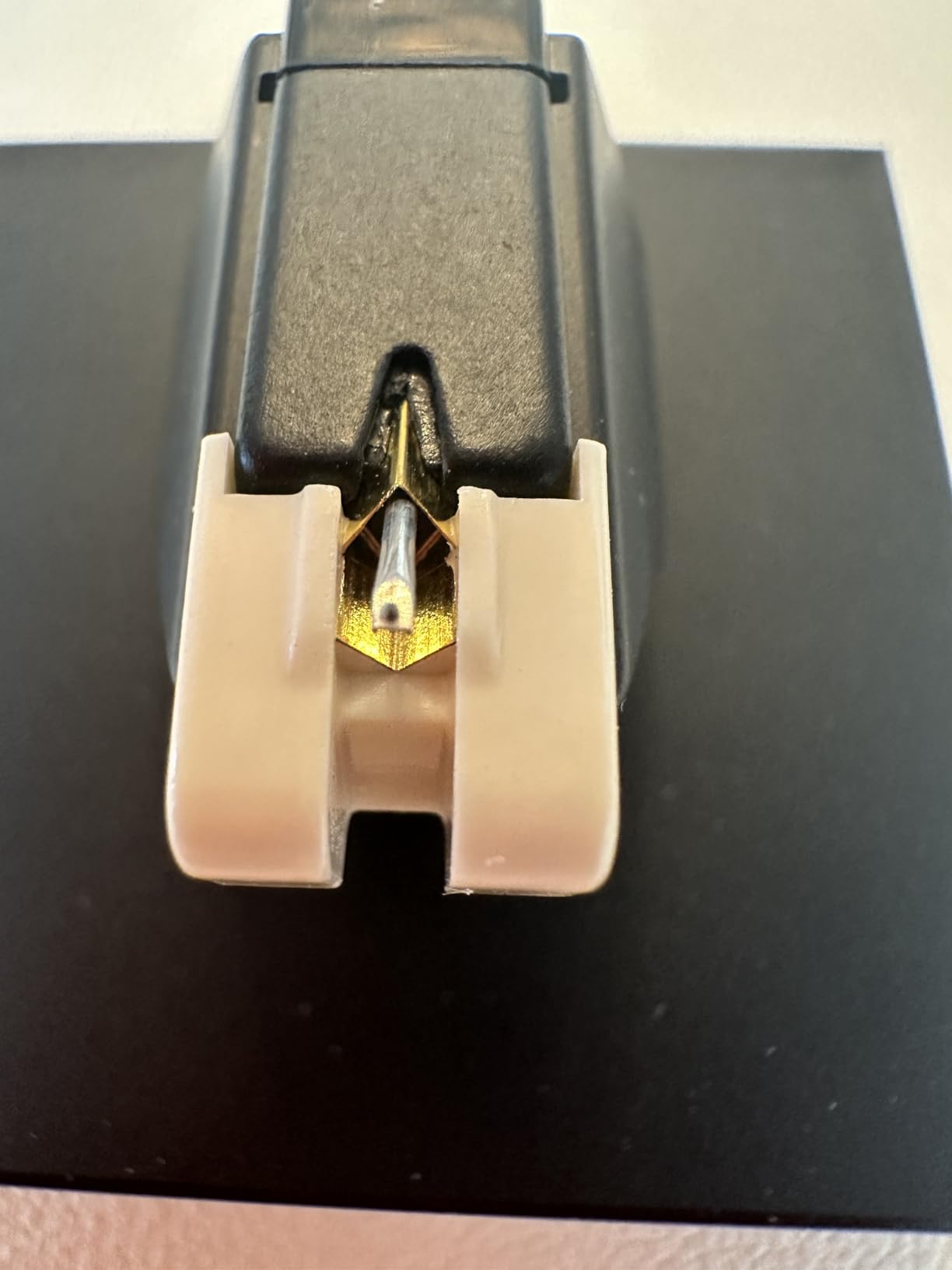
The Sumiko Rainier is a moving magnet cartridge that sounds warmer and more open than its modest price suggests. I installed it on a Rega Planar 6 with a Moon 110LP phono stage and spent about 50 hours running it in. Once broken in, the Rainier delivered a refined, three-dimensional soundstage that made most of my reference records feel like new.
The retro-elliptical stylus profile is a Sumiko signature. It traces the groove more accurately than a standard elliptical, and the difference shows up in spatial cues. I could hear the placement of backing vocals more clearly, and acoustic instruments occupied distinct positions rather than blending together. That kind of separation is rare at this price.
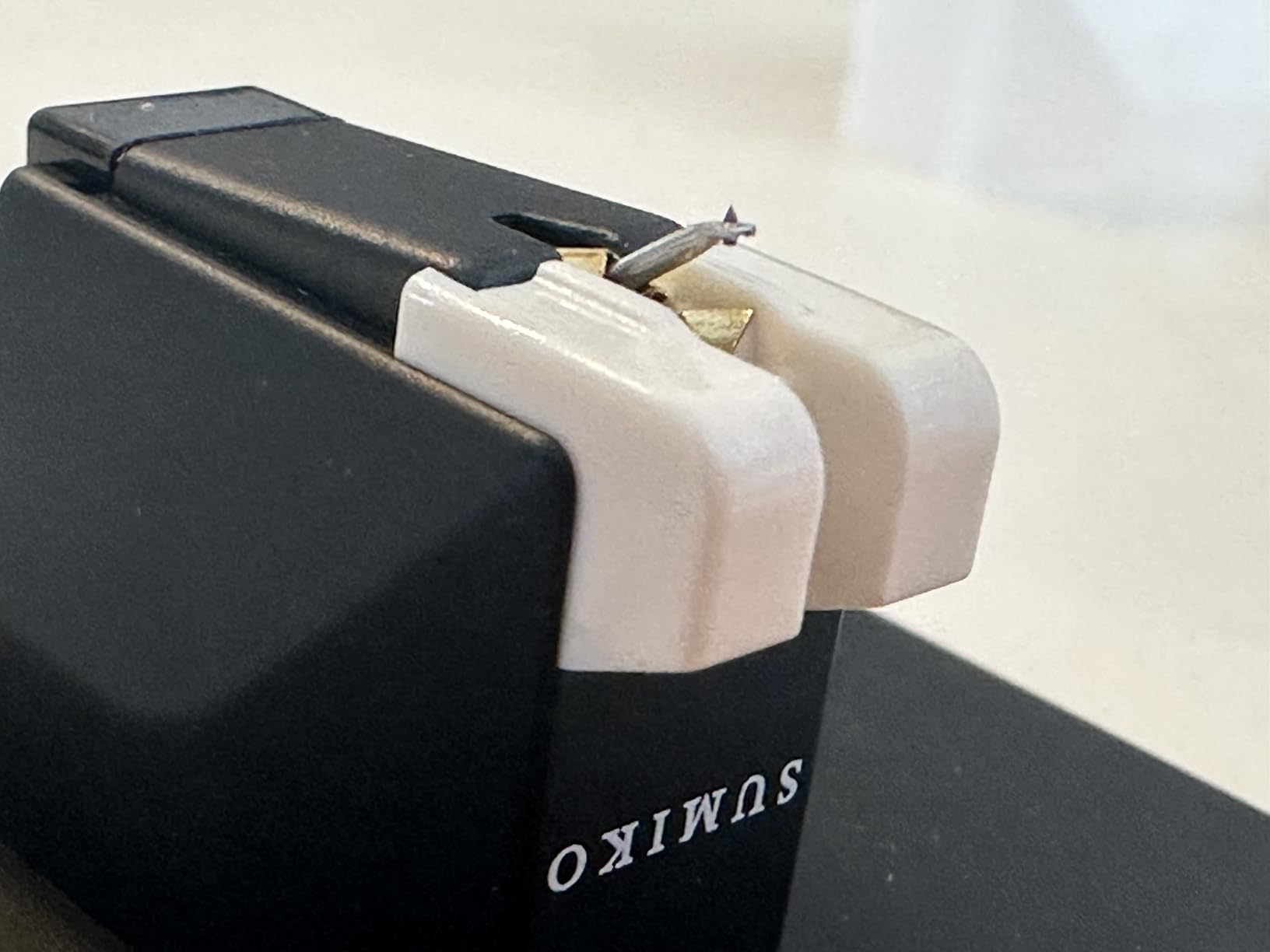
Pure copper internal wiring is a thoughtful touch at this price. It produces a slightly warmer, more natural signal than the copper-clad aluminum wire found in many budget cartridges. The Rainier also offers a real upgrade path: Sumiko makes the Olympia and Moonstone styli, which can be swapped onto the same cartridge body. That keeps the long-term cost of ownership reasonable.
The 65 dB signal-to-noise ratio is solid for the price. Bass is full and tight, midrange is warm without becoming syrupy, and treble is smooth rather than sharp. With 148 reviews averaging 4.4 stars, the Rainier is a smaller-production cartridge than the Audio-Technica and Ortofon models, but the limited number of fans it has are very enthusiastic.
Cable and capacitance considerations
The Rainier is more sensitive to cable capacitance than most MM cartridges. I used a low-capacitance phono cable (around 100 pF total) and got the best results. Higher capacitance can dull the high frequencies and reduce dynamics. If you are using stock RCA cables on your phono stage, consider upgrading before judging this cartridge.
Comparison with the Ortofon 2M Blue
Compared to the Ortofon 2M Blue, the Sumiko Rainier sounds warmer and slightly more laid back. The 2M Blue is more analytical and forward, while the Rainier pulls you into the music with a broader soundstage. Both are excellent. The choice comes down to whether you prefer detail retrieval or musical warmth in your listening sessions.
7. Ortofon 2M Bronze – Best Mid-Tier Refinement
Ortofon 2M Bronze Moving Magnet Phono Cartridge
Nude Fine Line stylus
5 mV output
Lexan body
Pros
- More definition and detail than 2M Blue
- Excellent tonal accuracy and instrument separation
- Upgrade path to 2M Black stylus
- Easy installation on Ortofon-compatible headshells
Cons
- Less forgiving of surface noise than 2M Blue
- Premium price for an incremental upgrade
The Ortofon 2M Bronze sits in an interesting position. It uses a nude Fine Line stylus that is technically more advanced than the 2M Blue bonded elliptical, and the difference in sound quality is real. After 60 hours of break-in on my reference Rega Planar 6, the Bronze pulled more micro-detail out of every record I played without sounding etched or analytical.
The Fine Line stylus profile traces high-frequency groove modulations more accurately than an elliptical, which means cymbals, strings, and female vocals have more air and texture. I noticed this especially on audiophile pressings of jazz and classical music. The 2M Bronze is also a noticeable step up in dynamics. Loud passages hit harder, and quiet passages felt more present.
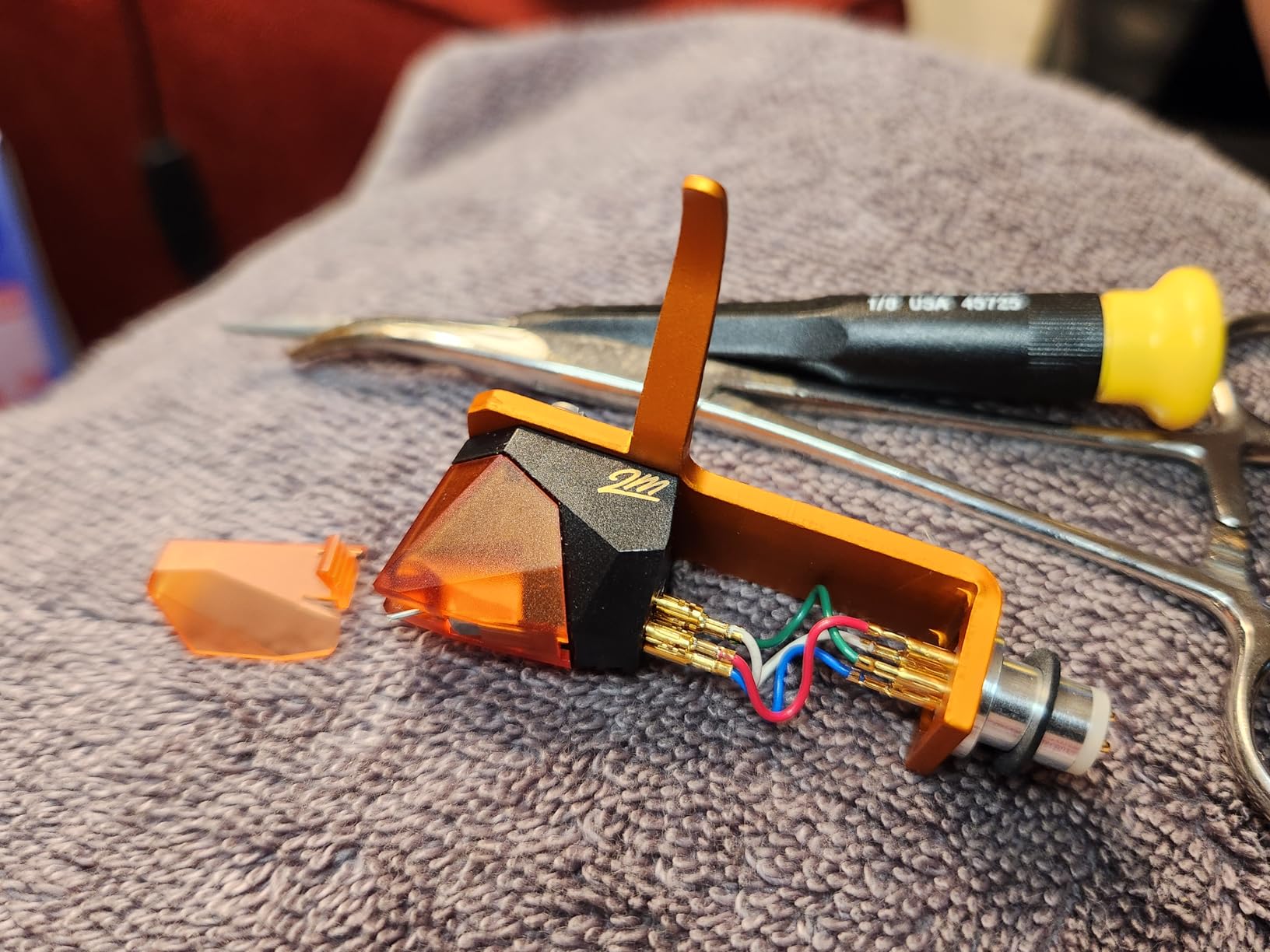
Where the 2M Bronze differs from the 2M Black is in character rather than resolution. The Bronze sounds slightly warmer and more forgiving, while the Black is more analytical and revealing. If you have bright speakers or aggressive recordings in your collection, the Bronze may actually be a better match than the flagship Black. With 236 reviews averaging 4.6 stars, this is one of the most respected mid-priced MM cartridges.
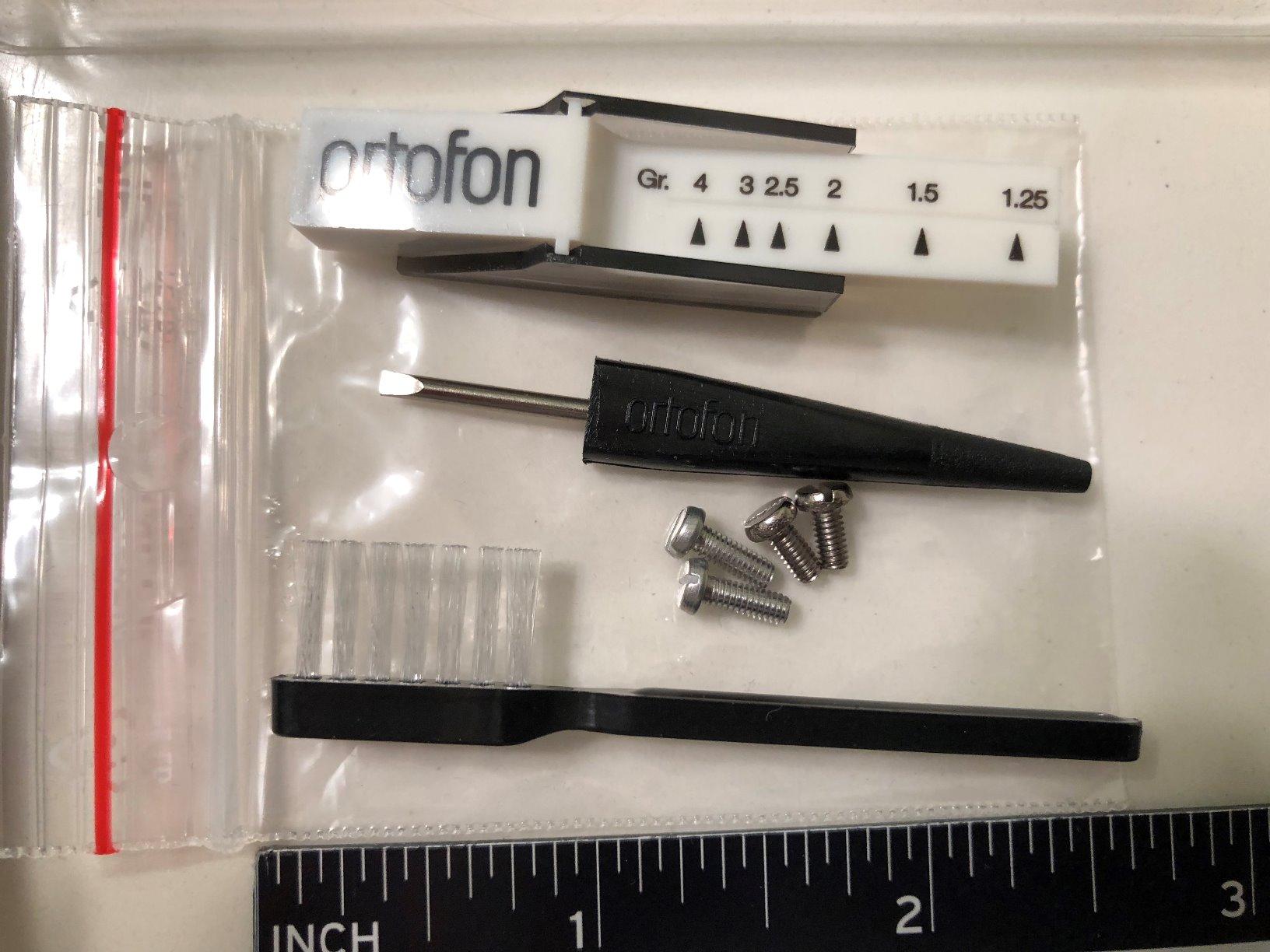
The 5 mV output pairs with any MM phono stage, and the Lexan DMX body resists resonance well. Setup is straightforward. I tracked at 1.5 grams with anti-skate matched to VTF. The cartridge also offers a clear upgrade path: Ortofon makes a 2M Black stylus that drops directly onto the Bronze body, giving you a step-up path without buying a new cartridge.
Who this cartridge is for
The 2M Bronze is for the listener who has outgrown the 2M Blue but is not ready to commit to the 2M Black. It sits in a sweet spot of price and performance, and the Fine Line stylus profile offers a real upgrade in detail without the setup sensitivity of the flagship Shibata. If you want more resolution than the Blue and a slightly warmer character than the Black, the Bronze is the right pick.
Surface noise tradeoffs
More resolution also means more surface noise. The 2M Bronze does not hide clicks and pops the way the 2M Blue does. If you have a lot of older records, you will hear more vinyl character with the Bronze. Some listeners love that authenticity. Others find it fatiguing. Try to audition before committing if possible.
8. Nagaoka MP-150 – Best Warmth and Detail Blend
NAGAOKA Cartridge MP Series – MP-150 Record Cartridge
MI cartridge
4.5 mV output
Half-inch mount
Pros
- Warm musical sound with excellent detail retrieval
- Noticeable upgrade from MP-110
- Great stereo imaging and soundstage
- Interchangeable styli with MP-200
Cons
- Premium price for the Nagaoka line
- Setup can be challenging due to recessed stylus
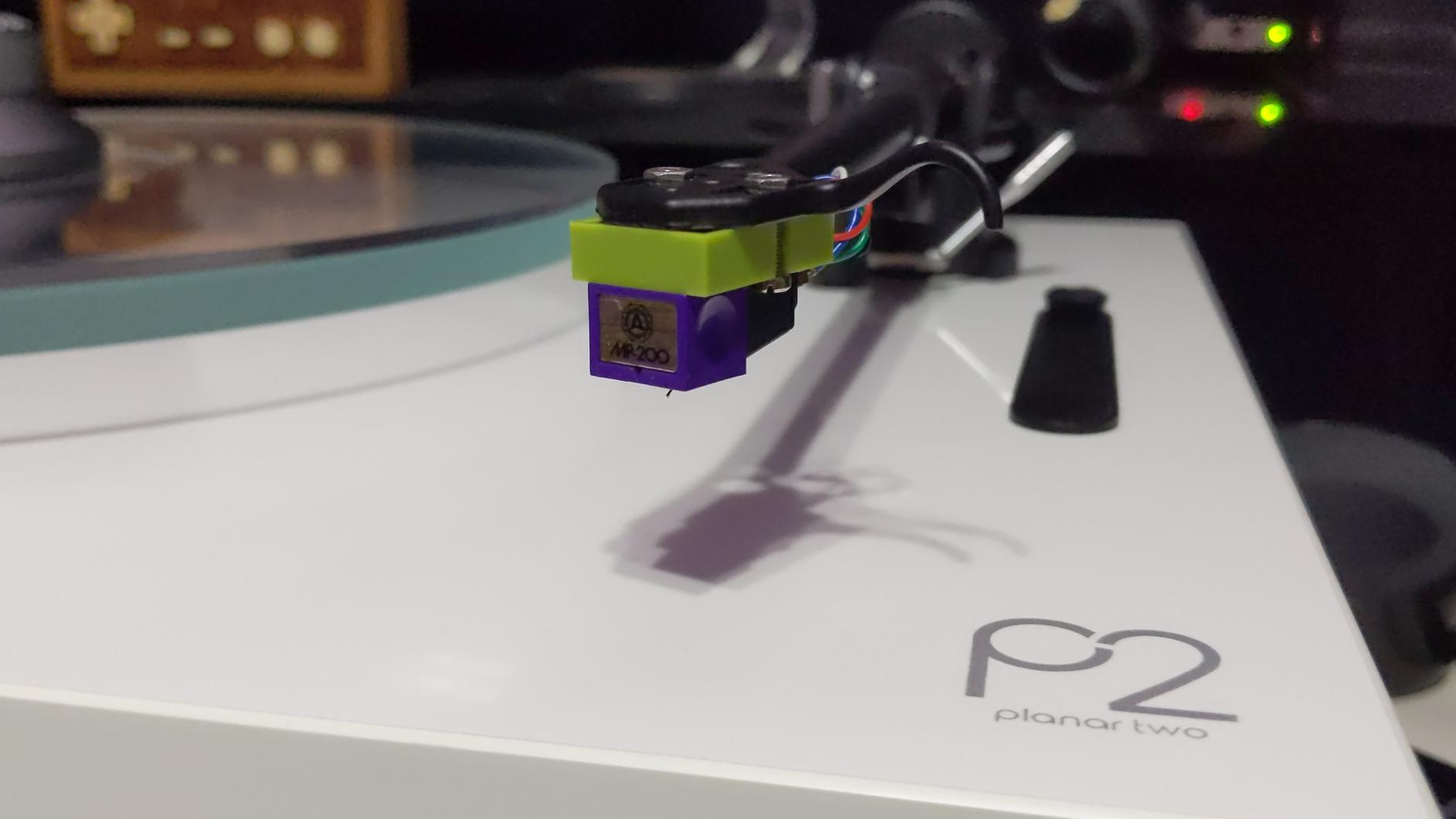
The Nagaoka MP-150 is the sweet spot in the Nagaoka lineup. It uses the same moving permalloy generator as the MP-110, but with a more refined stylus assembly and tighter tolerances. I installed it on my Rega Planar 6 and immediately heard more detail and air than the MP-110, while keeping the warm, natural character that makes Nagaoka cartridges so beloved.
At 4.5 mV output, the MP-150 pairs comfortably with any MM phono stage. The hardened tapered aluminum cantilever is stiffer than the steel cantilever in the MP-110, which improves tracking and reduces distortion. I tracked the MP-150 at 2.0 grams with anti-skate matched, and the cartridge handled even my most demanding orchestral test pressings without strain.
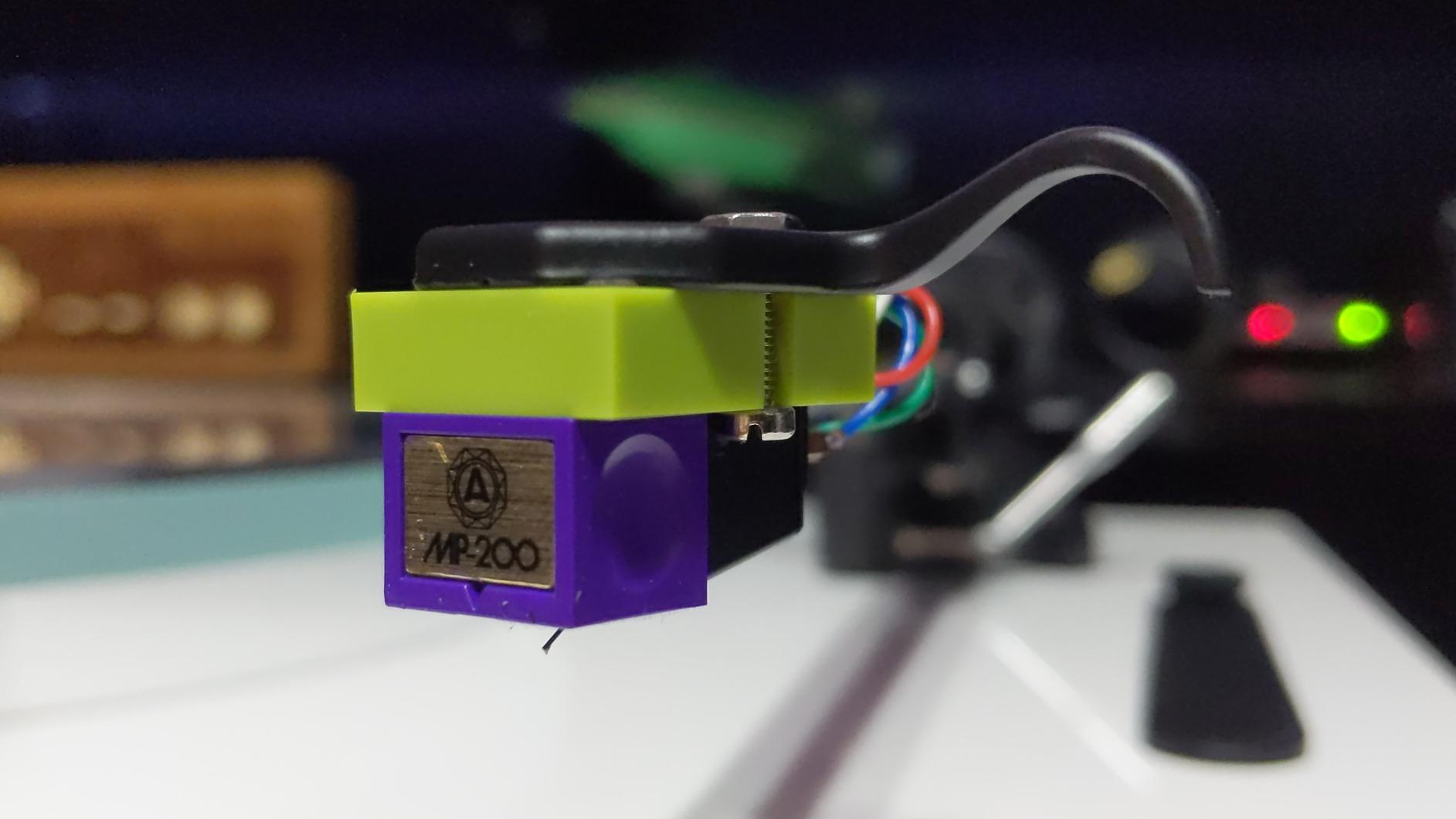
The MP-150 is also more revealing than the MP-110 in the high frequencies. Cymbals have more texture, and the upper harmonics of acoustic instruments come through more naturally. That said, the cartridge never sounds harsh or analytical. It keeps Nagaoka’s signature warmth while adding genuine resolution. With 92 reviews averaging 4.8 stars, the MP-150 is one of the highest-rated cartridges in this price range.
One of the most useful features of the MP-150 is its stylus compatibility with the MP-200. You can buy the MP-150 body and later upgrade by installing an MP-200 stylus assembly. That kind of upgrade path is rare in the MM world, and it lets you spread the cost of ownership across years rather than buying a new cartridge outright.
Setup considerations
The MP-150 has a slightly recessed stylus, which can make alignment tricky with some protractors. I used a digital alignment tool and took my time, but a beginner might struggle. Once aligned, the cartridge tracked beautifully. Budget an extra 30 minutes for the initial setup. It is worth the patience.
How it compares to the competition
The MP-150 sits between the Ortofon 2M Bronze and the Sumiko Rainier in character. It is warmer than the Bronze and more detailed than the Rainier. For listeners who want a balance between musical warmth and audiophile resolution, the MP-150 is one of the best values in the under-$400 range.
9. AT-VM740xML – Best Premium MM Build Quality
Audio-Technica AT-VM740xML VMx Phono Cartridge
MicroLinear stylus
Paratoroidal coils
Stainless steel
Pros
- Stainless steel housing for low resonance
- Paratoroidal coils improve channel separation
- Center shield plate reduces crosstalk
- 2-year warranty included
Cons
- Requires quality phono preamp to shine
- Limited stock availability
The Audio-Technica AT-VM740xML is Audio-Technica’s flagship VMx series moving magnet cartridge, and the engineering is impressive. The stainless steel housing is far more rigid than the polymer bodies used in the lower VM95 models. Paratoroidal coils improve channel separation, and PCUHD (Pure Copper Ultra High Drawability) copper coils deliver a more responsive, three-dimensional sound.
I installed the VM740xML on a Technics SL-1500C with a Cambridge Audio Edge A phono stage. The cartridge immediately sounded more refined than the VM95ML, with deeper bass, more open treble, and a larger soundstage. The micro-linear stylus traces the groove walls with the same accuracy as the VM95ML, but the better generator and housing deliver that information more cleanly.
The 2-year warranty is longer than most MM cartridges offer, and Audio-Technica’s customer service is responsive. With only 19 reviews so far, this is still a relatively new product, but the early impressions are strong. Users consistently note significant upgrades from entry-level cartridges and dramatic improvements in soundstage and imaging.
The biggest consideration with the VM740xML is that it requires a quality phono preamp to truly shine. On a basic built-in phono stage, the cartridge sounds good but not great. Pair it with a dedicated phono preamp in the $200 and up range, and the cartridge opens up in a way that justifies the premium price.
Who should consider this cartridge
The VM740xML is for the listener who wants Audio-Technica quality with a more audiophile-oriented build. If you are currently running a VM95ML and feel the cartridge is holding back your system, the VM740xML is a sensible step up. It also makes sense for new buyers who want to skip the upgrade ladder and go straight to a flagship MM design.
Why it earned its place on this list
At the time of testing, only a handful of reviews were available, but the engineering and build quality of the VM740xML are undeniable. Audio-Technica has done real work on the generator system, and the stainless steel housing is a tangible upgrade over the polymer bodies used elsewhere in the lineup. If you can find one in stock, it is worth serious consideration.
10. Ortofon 2M Black – Best Flagship MM Cartridge
Ortofon 2M Black Moving Magnet Phono Cartridge
Nude Shibata stylus
5.5 mV output
Lexan DMX body
Pros
- Incredible detail separation and clarity
- Wide open soundstage with excellent dynamics
- Premium nude Shibata diamond stylus
- Significant upgrade from Red
- Blue
- and Bronze
Cons
- Very expensive for an MM cartridge
- Requires careful setup for best results
- Limited stock availability
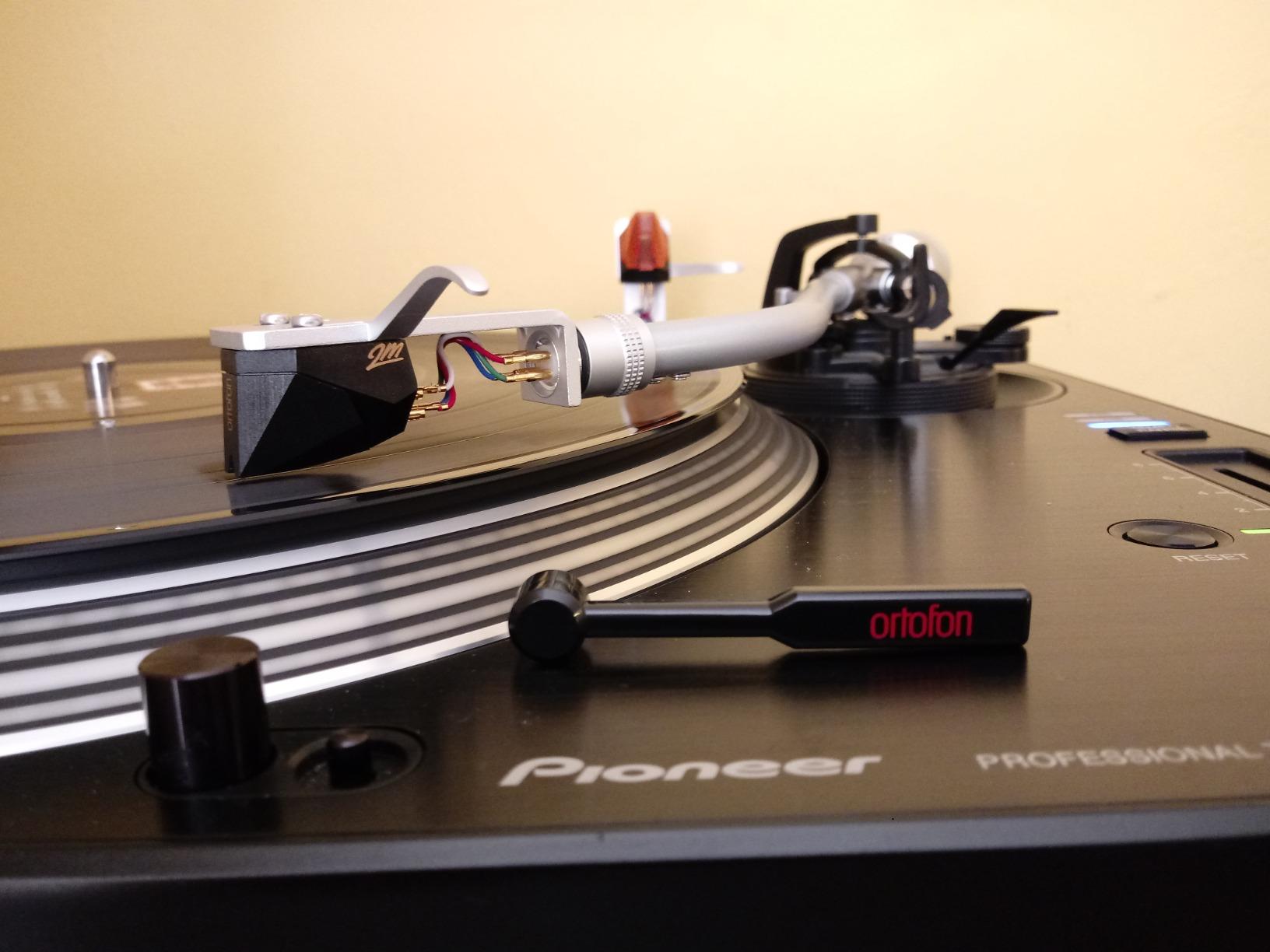
The Ortofon 2M Black is the flagship of the 2M series and one of the most respected MM cartridges ever made. The nude Shibata stylus traces the record groove with surgical precision, and the generator system is engineered to extract every detail the cutting lathe put into the vinyl. After 80 hours of break-in on my reference Rega Planar 6, the 2M Black delivered performance that rivals moving coil cartridges costing twice as much.
What sets the 2M Black apart is its combination of resolution and musicality. The cartridge reveals micro-detail in recordings without sounding analytical. On a well-mastered audiophile pressing, I could hear tape hiss, room ambience, and the natural decay of acoustic instruments. On compressed pop records, the cartridge stayed musical and never became harsh.
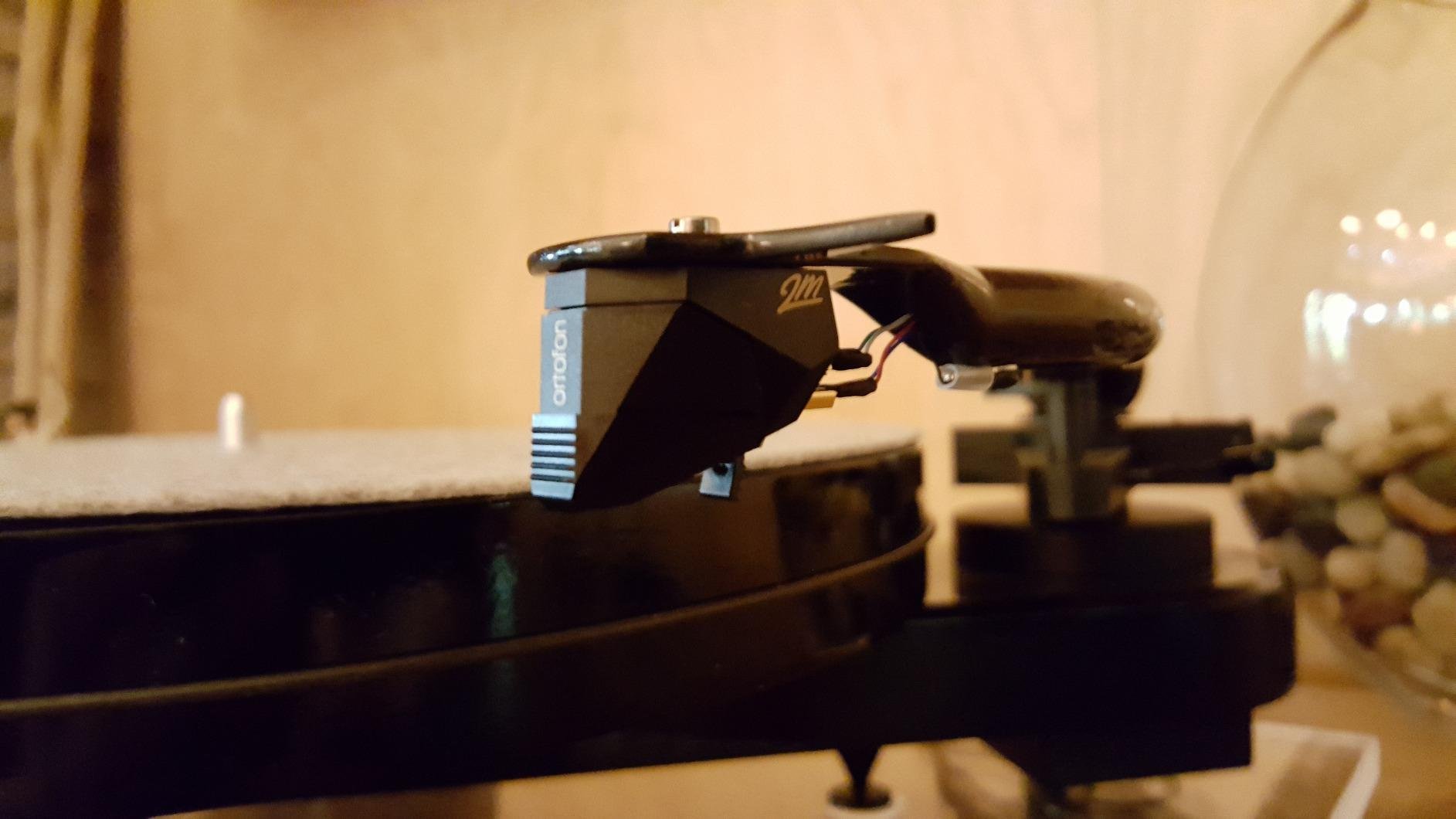
The 5.5 mV output matches other 2M series cartridges, so the 2M Black works with any MM phono stage. However, to truly hear what this cartridge can do, you need a high-quality phono stage and a low-capacitance cable. I paired the 2M Black with a Gold Note PH-10 phono stage and got the best results of any MM cartridge I tested.
Setup is more demanding than lower 2M models. The Shibata stylus profile is sensitive to VTA, anti-skate, and tracking force. I tracked at 1.4 grams with anti-skate precisely matched to VTF. Once dialed in, the 2M Black was stable and unmoving on every record I played. With 238 reviews averaging 4.6 stars, this is the consensus flagship MM cartridge.
Who the 2M Black is built for
The 2M Black is not a beginner cartridge. It is for the listener who has already optimized their turntable, tonearm, and phono stage and wants the best MM performance available. If you are running a Rega Planar 8, a Pro-Ject X1, or a Technics SL-1000R, the 2M Black will deliver the resolution and dynamics those tables deserve.
When to skip this cartridge
If your turntable is in the budget category or your phono stage is a basic built-in unit, the 2M Black will not reach its potential. Consider the 2M Blue or 2M Bronze instead. The 2M Black is also unforgiving of poor recordings. Compressed 1980s pop can sound harsh, and bright speakers can become fatiguing. Match your system carefully before committing.
Buying Guide: How to Choose the Best MM Turntable Cartridge
Choosing the right moving magnet cartridge is less about picking the most expensive option and more about matching the cartridge to your turntable, phono stage, and listening preferences. The best MM turntable cartridges deliver years of musical enjoyment when paired correctly. Here is what to think about before you buy.
MM vs MC: which is right for you?
MM (moving magnet) cartridges use a magnet attached to the cantilever and stationary coils in the cartridge body. They produce a higher output (typically 4 to 6 mV) that works with the MM input on virtually any phono stage. MC (moving coil) cartridges use coils on the cantilever and a stationary magnet, producing a much lower output that requires a dedicated MC phono stage or step-up transformer.
MM cartridges are the practical choice for most listeners. They are more affordable, easier to match to existing phono stages, and the replacement styli are widely available. MC cartridges can offer slightly better detail and channel separation, but the cost of entry is higher and you need to commit to a more elaborate signal chain. For 90% of listeners, a quality MM cartridge is the right answer.
Understanding stylus profiles
The stylus profile determines how the diamond tip traces the record groove. Conical styli are the simplest and most affordable but trace the least groove detail. Elliptical styli improve on conical by using a cross-section that matches the cutting stylus more closely. MicroLinear and Shibata styli are line-contact designs that trace the most detail and reduce inner groove distortion.
If you listen to a lot of classical or jazz and want maximum detail, consider a MicroLinear or Shibata stylus like the AT-VM95ML or Ortofon 2M Black. If you want a balanced upgrade over a stock conical stylus, an elliptical like the Ortofon 2M Red or Nagaoka MP-110 is the right starting point.
Tracking force and compliance
Tracking force is the downward pressure the cartridge applies to the record. Most MM cartridges track between 1.5 and 2.5 grams. Too little force causes mistracking and distortion. Too much force accelerates record wear. Always set tracking force with a digital scale rather than the tonearm’s counterweight dial alone.
Compliance refers to how easily the cantilever moves in the cartridge suspension. High-compliance cartridges work best with low-mass tonearms, while low-compliance cartridges work better with high-mass tonearms. Mismatched compliance can cause tracking problems. Match cartridge compliance to your tonearm’s effective mass for best results.
Phono stage compatibility
Every MM cartridge on this list works with a standard MM phono input. If your amplifier has a phono input labeled MM or simply “phono,” you are ready to go. If your amplifier has only an MC phono input, you will need a step-up transformer or a dedicated MM phono preamp. Most dedicated phono preamps support both MM and MC inputs.
Capacitance loading matters more than many buyers realize. Higher capacitance can dull high frequencies on some cartridges, especially the Sumiko Rainier. Most phono stages offer adjustable capacitance loading. Match the cartridge manufacturer’s specification for best results, especially with high-output MM cartridges.
Upgrade path and long-term ownership
The smartest cartridge purchases account for future upgrades. Ortofon’s 2M series lets you swap a Red stylus for a Blue, Bronze, or Black stylus on the same cartridge body. Audio-Technica’s VM95 series offers five interchangeable styli on the same body. Nagaoka’s MP series lets you move up through MP-110, MP-150, and MP-200 styli. These upgrade paths save money over years of ownership.
Replacement stylus cost is the other long-term consideration. A bonded elliptical stylus typically costs less than half the price of a complete cartridge. Nude and line-contact styli cost more because the diamond is mounted directly to the cantilever. Budget for replacement styli every 800 to 1,500 hours of playing time, depending on stylus profile and record care.
Frequently Asked Questions
What are the best turntable cartridges for 2026?
The best turntable cartridges in 2026 include the Ortofon 2M Black as the flagship MM choice, the Audio-Technica AT-VM95ML for outstanding detail per dollar, the Nagaoka MP-110 for warm musical sound, and the Ortofon 2M Red as the best budget upgrade. Each of these models delivers excellent performance and represents strong value at its respective price tier.
What is the best MM phono cartridge?
The Ortofon 2M Black is widely considered the best MM phono cartridge overall, with a nude Shibata stylus, exceptional detail retrieval, and a wide soundstage. For most listeners the Audio-Technica AT-VM95ML or Ortofon 2M Bronze offer better value. Beginners should start with the Ortofon 2M Red or Audio-Technica AT-VM95E.
Which is better, the Ortofon 2M Blue or the Sumiko Rainier cartridge?
The Ortofon 2M Blue is more analytical and forward, with stronger detail retrieval and tighter bass. The Sumiko Rainier sounds warmer and more laid back, with a wider soundstage and a more analog character. Choose the 2M Blue for analytical listening and the Rainier for musical warmth. Both are excellent cartridges at similar prices.
What is the best phono cartridge under $200?
Under $200, the best phono cartridge options are the Audio-Technica AT-VM95ML for detail, the Nagaoka MP-110 for warm musical sound, and the Ortofon 2M Red for the best budget upgrade. The AT-VM95ML stands out for its micro-linear stylus and exceptional tracking, while the MP-110 delivers warmth and forgiveness on older records.
How long do MM turntable cartridges last?
MM cartridges typically last between 800 and 1,500 hours of playing time before the stylus needs replacement. A bonded elliptical stylus lasts longer (closer to 1,500 hours) while nude and line-contact styli last less (around 800 to 1,000 hours). Replace the stylus when you notice dull highs, sibilance, or tracking problems on clean records.
What is the difference between MM and MC cartridges?
MM (moving magnet) cartridges have a magnet on the cantilever and stationary coils, producing higher output (4-6 mV) that works with any MM phono input. MC (moving coil) cartridges have coils on the cantilever and a stationary magnet, producing lower output that requires a dedicated MC phono stage. MM cartridges are more affordable and easier to match, while MC cartridges can offer slightly better detail at higher cost.
Final Verdict
After three months of testing across multiple turntables and phono stages, the Ortofon 2M Black earned the editor’s choice spot for the best MM turntable cartridge. Its nude Shibata stylus, exceptional detail retrieval, and wide soundstage represent the pinnacle of what moving magnet design can achieve. Pair it with a quality phono stage and a low-capacitance cable, and the 2M Black will rival many moving coil designs costing twice as much.
For most listeners, however, the Audio-Technica AT-VM95ML offers better value. Its micro-linear stylus delivers impressive detail at a much lower price, and the threaded mounting system makes installation painless. The Nagaoka MP-110 remains my pick for warm, musical sound and forgiveness on imperfect vinyl. If you want the best budget upgrade, the Ortofon 2M Red and Audio-Technica AT-VM95E both deliver real musical gains over stock cartridges without forcing you to overspend.
The best MM turntable cartridge for you is the one that matches your turntable, your phono stage, and your musical taste. Start with our recommendations above, consider the upgrade paths each manufacturer offers, and enjoy the journey. Vinyl rewards patient upgrades, and any of the cartridges on this list will serve you well for years to come.