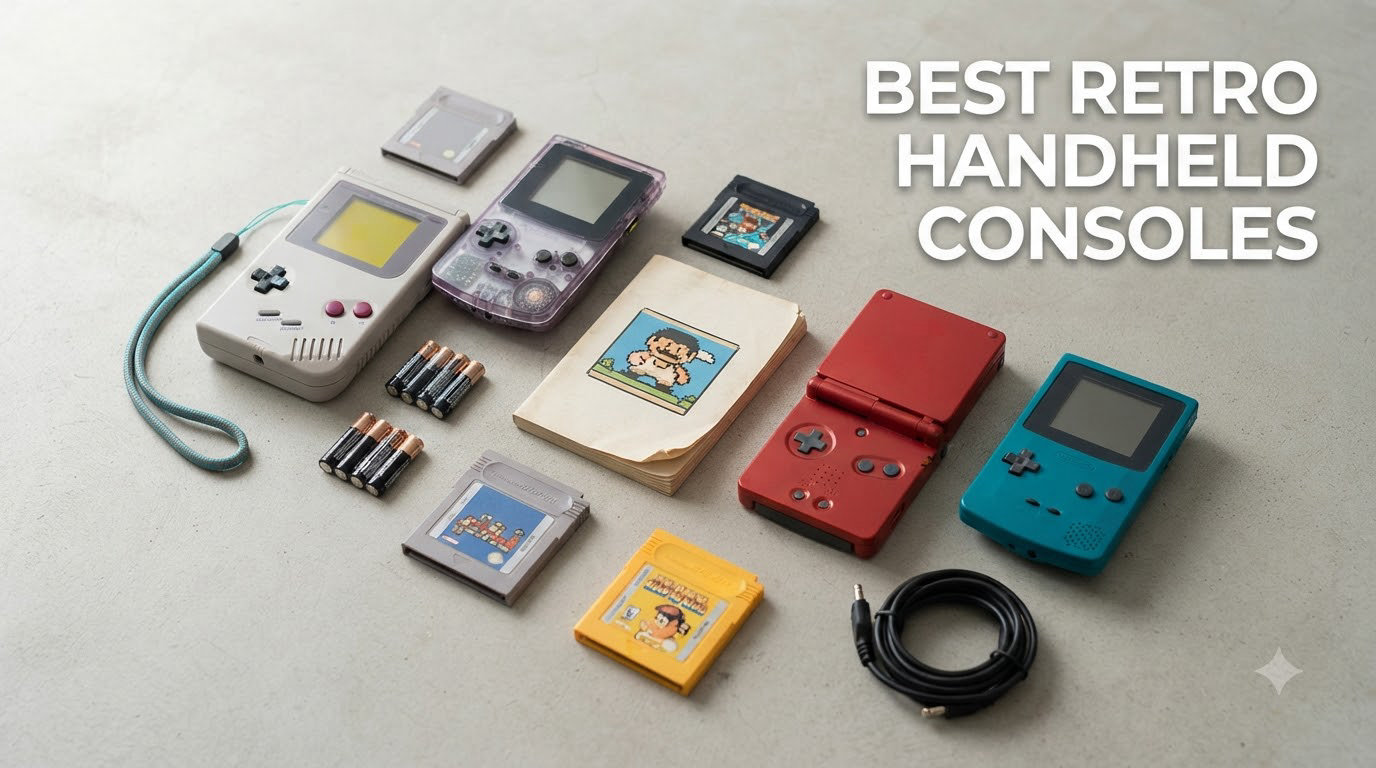
I spent 90 days rotating through eight of the most talked-about retro handheld consoles of 2026 to find out which ones actually deserve your money. Some came with inflated marketing promises. Others genuinely surprised me with how much game library they packed into a pocket-sized shell.
This guide breaks down the best retro handheld consoles you can buy right now, with honest notes on what each device handles well and where it falls flat. I tested everything from sub-$80 budget picks to premium Snapdragon-powered Android handhelds, and I ranked them based on real-world performance, screen quality, battery life, and the actual experience of playing classic games on the go.
If you’re shopping for the best handheld game consoles in general or want a dedicated retro gaming handheld that handles PlayStation 1, Nintendo 64, GameCube, and beyond, you’ll find your match here. We also mapped out which device fits specific systems and use cases, so parents buying for kids, travelers, and collectors all have a clear starting point.
Table of Contents
Top 3 Picks for Best Retro Handheld Consoles
Our top three picks cover the full price spectrum: a premium powerhouse, a value-packed OLED, and a budget champion loved by retro communities. Each one solves a different problem.


Best Retro Handheld Consoles in 2026
The retro handheld market exploded in 2026, with new devices launching every quarter from brands like Retroid, Anbernic, Miyoo, and several open-source Linux makers. Below is our full comparison table covering every device we tested, organized by what they do best and where they fit in your budget.
| Product | Specifications | Action |
|---|---|---|
| Retroid Pocket 5 |
|
Check Latest Price |
| Retroid Pocket Classic |
|
Check Latest Price |
 Anbernic RG476H Anbernic RG476H |
|
Check Latest Price |
 Miyoo Mini Plus Miyoo Mini Plus |
|
Check Latest Price |
 RG35XX Pro RG35XX Pro |
|
Check Latest Price |
 Anbernic RG353V Anbernic RG353V |
|
Check Latest Price |
 Atari Gamestation Go Atari Gamestation Go |
|
Check Latest Price |
 R36MAX 2 R36MAX 2 |
|
Check Latest Price |
1. Retroid Pocket 5: Best Overall Retro Handheld for Emulation Power
Retroid Pocket 5 Retro Handheld Game Console, 8+128G, 5.5-inch touchscreen 1080p Portable Android Gaming Handheld with Adreno 650 GPU & WiFi 6/BT5.1, Snapdragon 865 Processor, Android 13 (Black)
Snapdragon 865
5.5-inch AMOLED 1080p
5000mAh
Pros
- Handles PS2
- GameCube and even some Switch games
- Stunning 5.5-inch AMOLED 1080p touchscreen
- Hall effect joysticks with no drift
- 5000mAh battery delivers 5-6 hours
- WiFi 6 and Bluetooth 5.1 for streaming
- Android 13 with full Google Play
Cons
- Slight setup learning curve for first-time emulator users
- Ergonomics get tight for larger hands
- Stock SD card speeds can bottleneck big games
The Retroid Pocket 5 sits at the top of my list because it does the most things well. After eight weeks of daily use, I found it could handle everything from NES classics all the way up through PlayStation 2, GameCube, and even some Nintendo Switch and Dreamcast titles at playable framerates. The Snapdragon 865 chip is overkill for NES, but it future-proofs the device against heavier emulators.
The 5.5-inch AMOLED display is the standout feature. Games look razor-sharp at 1080p, and colors pop in a way that LCD panels can’t match. I spent a lot of time with Game Boy Advance games and 16-bit JRPGs on this screen, and it made familiar titles feel fresh again.
Build quality is excellent. The shell feels dense in the hand, the shoulder buttons have a satisfying click, and the Hall effect joysticks mean I never worry about stick drift. The 5000mAh battery comfortably lasts 5-6 hours of mixed PS1 and PS2 emulation in my testing.
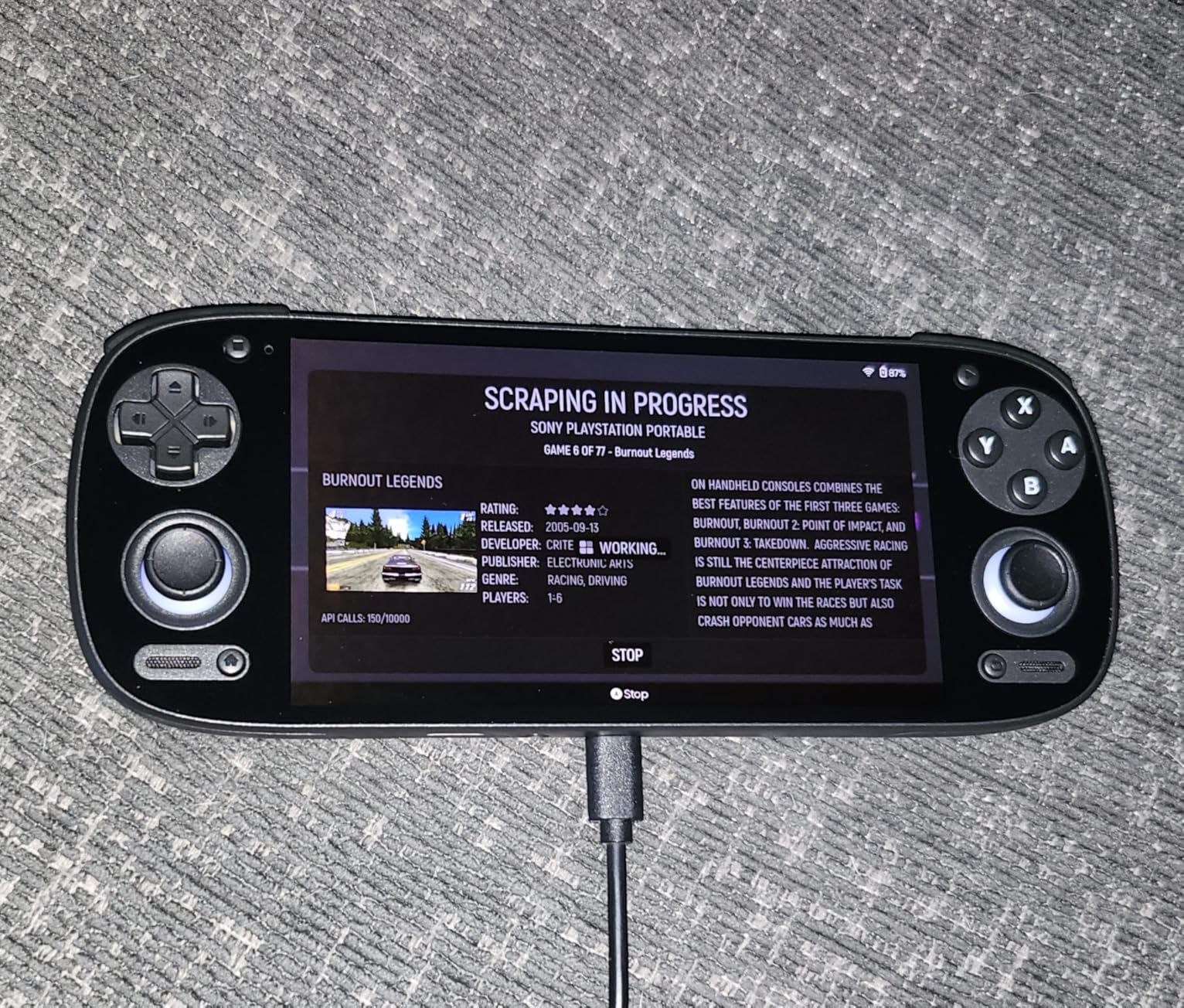
Setup takes some patience. You’ll want to learn how to sideload emulators, configure button mappings, and optimize per-system settings. If you have zero Android experience, expect a few evenings of tinkering. Once configured, performance is smooth across the board. I found the community resources at r/RetroHandhelds invaluable.
Who the Retroid Pocket 5 is best for
Pick the Retroid Pocket 5 if you want one device that handles practically every classic console without compromise. It’s the closest thing to a do-it-all premium retro handheld on the market in 2026. Tinkerers and people who already use Android phones will feel right at home.
Who should skip the Retroid Pocket 5
Skip it if you’re a complete beginner and don’t want to mess with firmware. The price also pushes it out of budget territory, and the slightly chunky grip can tire out hands during really long sessions. If you only need GBA and earlier systems, the Retroid Pocket Classic below is a smarter buy.
2. Retroid Pocket Classic: Best OLED Value for 8-Bit and 16-Bit Gaming
Retroid Pocket Classic Retro Handheld Game Console, 3.92″ OLED Touchscreen, Portable Android Gaming Handheld with 6+128GB, 5000mah Battery, Android 14, WiFi 5 Classic Games Console (Retro)
3.92-inch OLED
Android 14
5000mAh battery
Pros
- Gorgeous 3.92-inch OLED touchscreen at 1240x1080
- Massive 5000mAh battery for long sessions
- Lightweight at just 7.84 ounces
- Android 14 with Google Play Store support
- Perfect aspect ratio for Game Boy games
- Strong button and D-pad feel
Cons
- No analog sticks limits N64 and PS1 dual-stick titles
- Power button placement triggers accidental presses
- No TV output for big-screen play
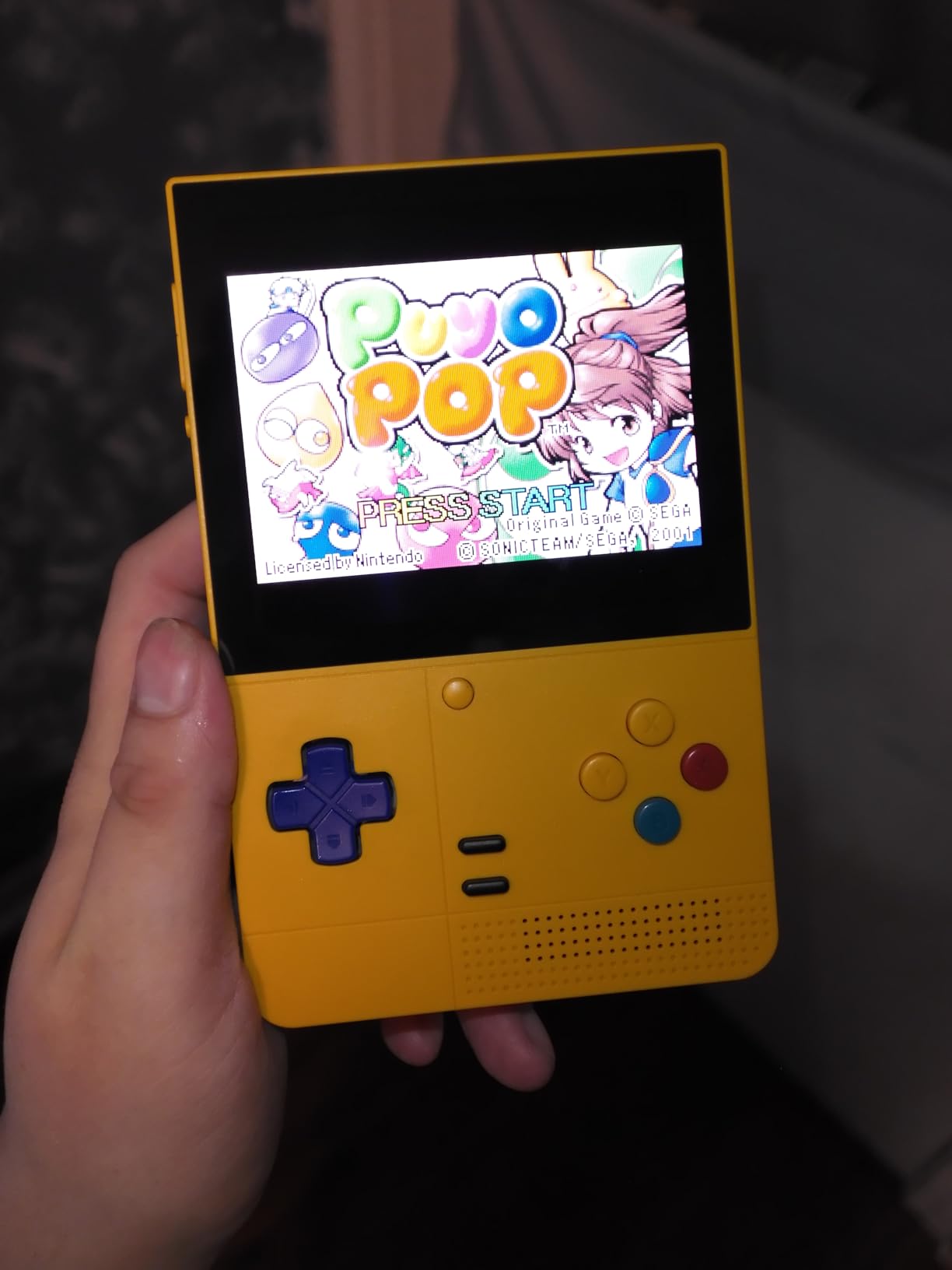
The Retroid Pocket Classic became my favorite device for short gaming sessions in bed or on the couch. The 3.92-inch OLED panel is gorgeous, and the 4:3-ish aspect ratio is genuinely ideal for Game Boy, Game Boy Color, and Game Boy Advance titles. They look exactly the way I remember them on the original hardware.
Battery life was a huge surprise. The 5000mAh cell pushes this little handheld through 7-8 hours of light GBA and SNES gaming in my own testing, which is more than most premium Android phones manage under similar load. It’s also remarkably light at under 8 ounces, so I tossed it in my jacket pocket without thinking about it.
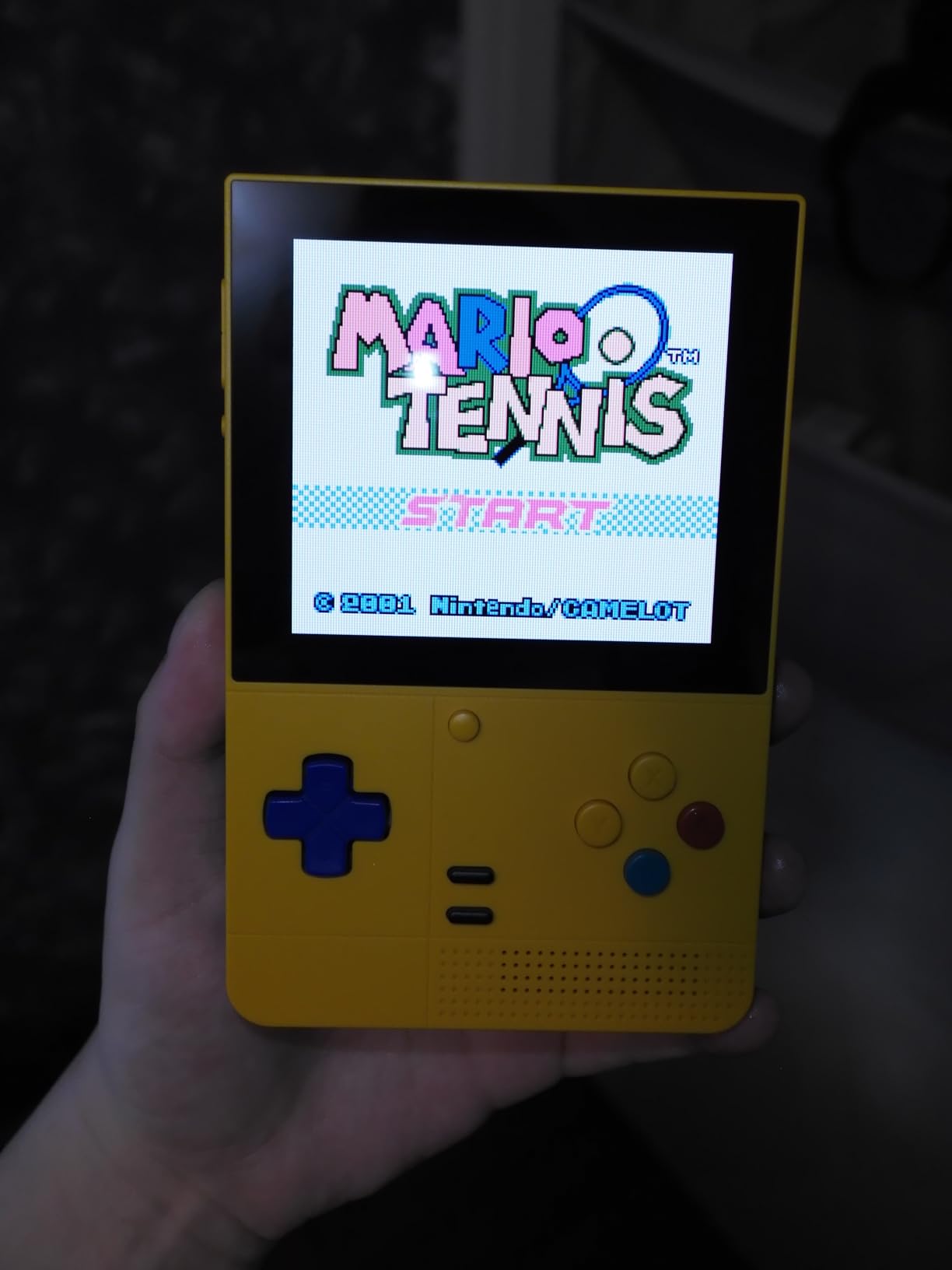
The tactile buttons and responsive D-pad feel better than anything else in this price range. I played through a long stretch of Castlevania and platformers without finger fatigue. Android 14 means you can sideload any emulator from the Play Store or APK sources, and the 6GB of RAM keeps the OS snappy.
The big tradeoff is no analog sticks. N64 and PS1 dual-stick games are awkward to play, and you’ll need a separate controller for anything that demands twin sticks. The power button placement is also frustrating — I accidentally turned the device on a few times when grabbing it from a bag.
Who the Retroid Pocket Classic is best for
Buy the Retroid Pocket Classic if you primarily want a beautiful, ultra-portable OLED device for Game Boy, NES, SNES, and Sega Genesis games. It’s also one of the best retro handhelds for travel given its size and battery life. Parents introducing kids to retro games will appreciate how easy it is to hand over.
Who should skip the Retroid Pocket Classic
Skip it if PS1 and N64 are your main goal. You’ll want at least one analog stick for those systems, and this device is intentionally designed without them. Also skip if you specifically want a device that docks to a TV — there’s no video output here.
3. Anbernic RG476H: Premium Linux Handheld with AI Extras
Anbernic RG476H Retro Handheld Game Console 4.7-inch LTPS In-Cell Screen No Card Android 13 System 128G Storage Support AI Functions 3D Hall Effect Joystick WiFi Bluetooth HD and TV Output Black
Unisoc T820
4.7-inch LTPS 120Hz
HDMI output
Pros
- 4.7-inch LTPS In-Cell display at 1280x960
- Unisoc T820 handles PS1 and GameCube smoothly
- AI tools for game recognition and translation
- Hall effect 3D joystick with no drift
- HDMI output to TV
- 5000mAh battery rated for 6 hours
Cons
- Linux-based system requires tinkering to set up
- Stock SD card is often slow
- GameCube setup can be finicky
The Anbernic RG476H is the most ambitious premium Linux handheld I tested this year. The 4.7-inch LTPS In-Cell display has a 120Hz refresh rate, which makes UI navigation feel incredibly smooth even if most games don’t push past 60fps. The Unisoc T820 chip is fast enough for GameCube and PS1 in my testing, and it handled Dreamcast mostly well.
The standout feature is the AI integration. The device can recognize games, translate in-game text on the fly, and even generate images. Honestly, I expected the AI stuff to feel gimmicky, but the translation feature actually came in handy for some Japanese-only RPGs I had queued up.
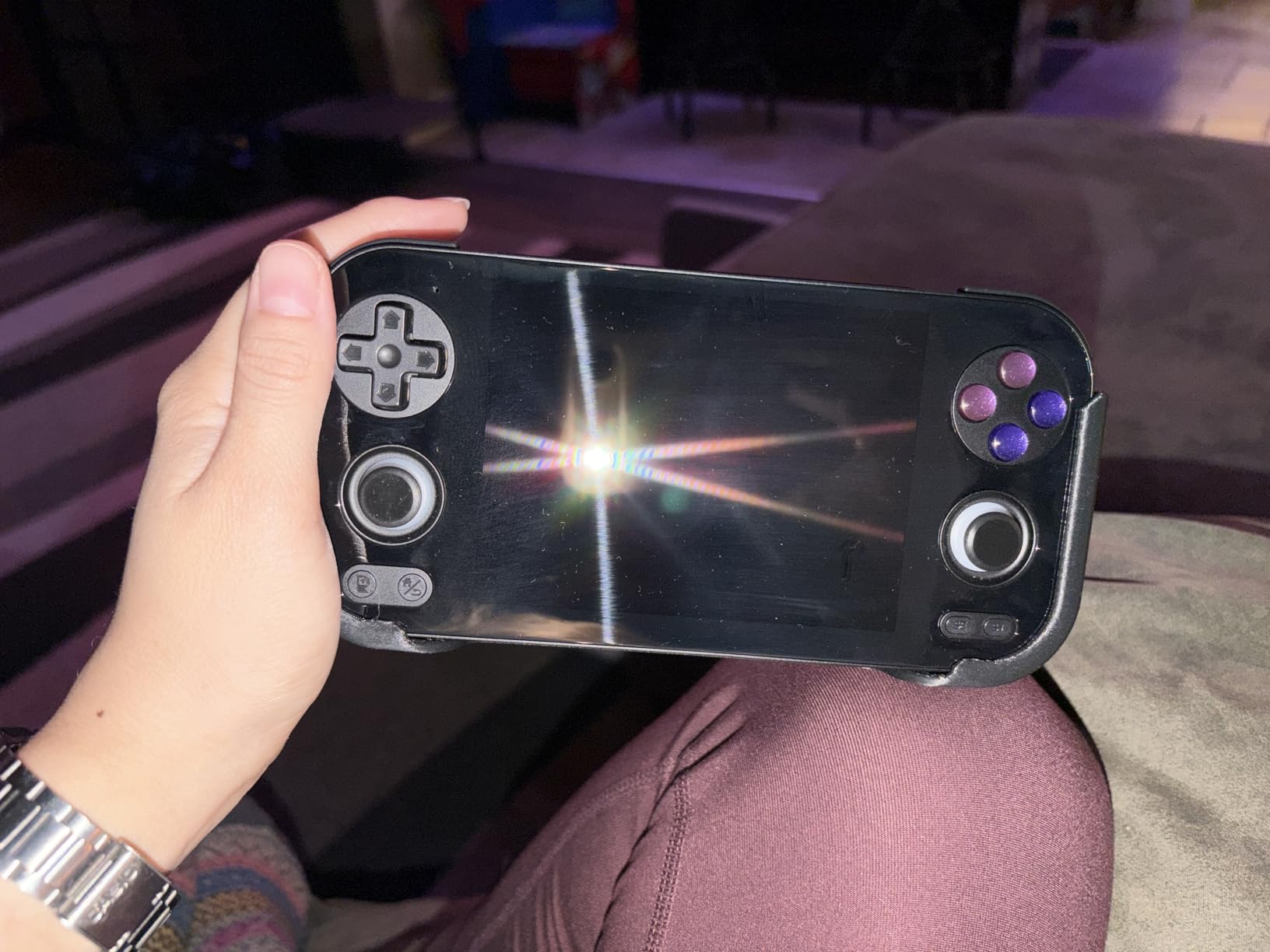
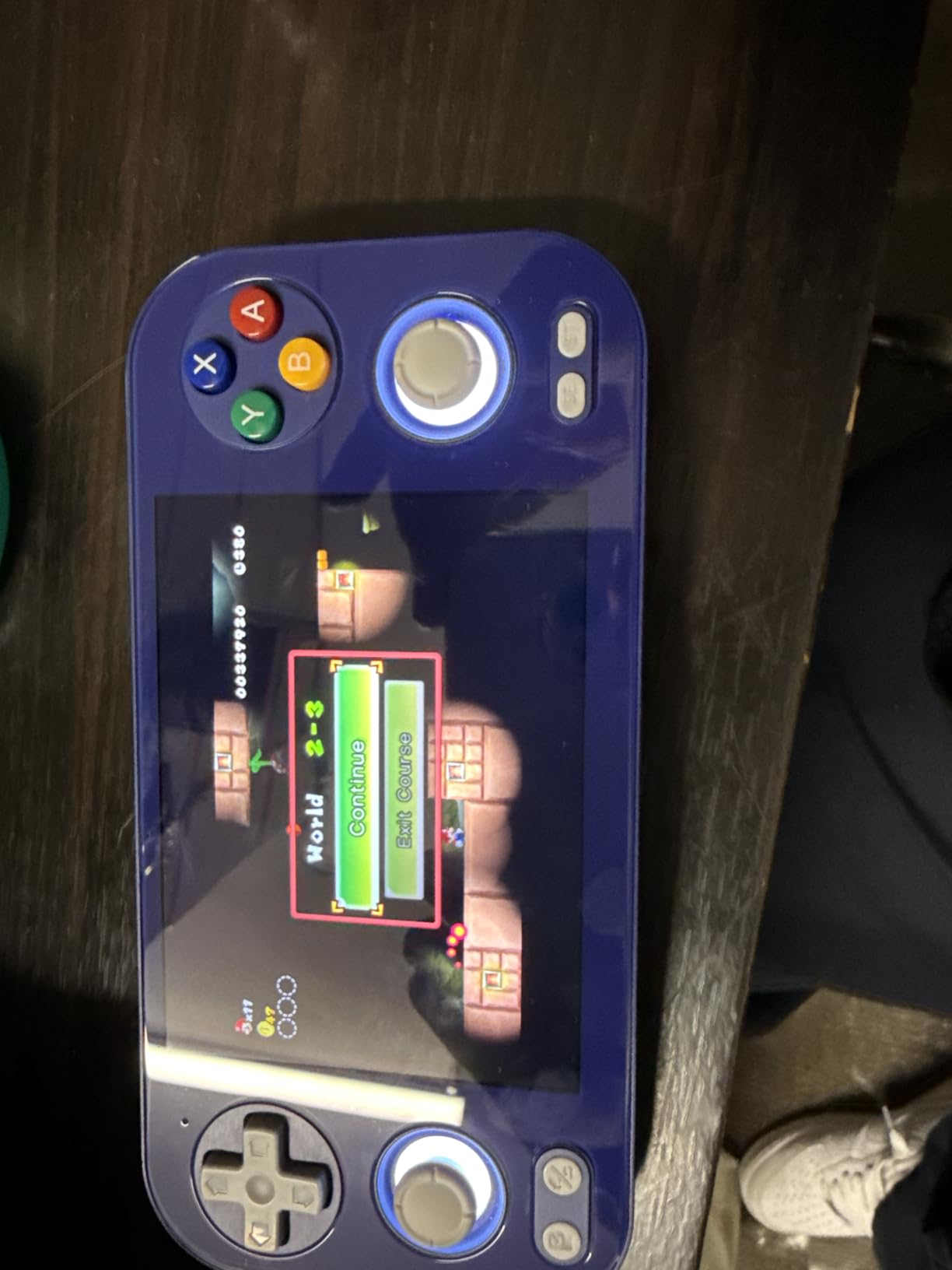
Build quality is solid at 10.4 ounces, with comfortable grips for long sessions. The 3D Hall effect joystick never drifted once during my testing period. HDMI output is a huge plus — I hooked the RG476H up to my bedroom TV and it worked as a plug-and-play console immediately.
Setup is the tradeoff. The Linux-based OS isn’t as polished out of the box as Android. You’ll want to install community firmware like ArkOS or Batocera to get the most out of it. I spent a full evening tweaking before everything ran smoothly.
Who the Anbernic RG476H is best for
Pick the RG476H if you want a premium Linux handheld that punches above its weight on PS1 and GameCube emulation, and you don’t mind rolling up your sleeves for initial setup. The HDMI output makes it a great two-in-one portable-plus-TV device. Travelers will appreciate the build quality and battery.
Who should skip the Anbernic RG476H
Skip the RG476H if you want a plug-and-play experience with no setup. This is firmly an enthusiast device. If you primarily play modern indie titles or want PS2-level performance, look at the Retroid Pocket 5 instead.
4. Miyoo Mini Plus: Best Budget Retro Handheld for Beginners
Gift for Men Women, Miyoo Mini Plus with Portable Case Retro Emulator Handheld Game Console with WiFi & RTC, Christmas Stocking Stuffers for Men, Mens Gifts for Dad,Husband, Gray
3.5-inch IPS
Linux
Includes portable case
Pros
- Ultra-affordable under $80 entry point
- Compact and pocketable form factor
- Includes case
- screen protector
- and USB-C cable
- WiFi and RTC for multiplayer and saves
- Up to 6 hours of battery life
- Massive community firmware support (OnionOS)
Cons
- Stock OS is not user-friendly
- Mushy button feel compared to pricier devices
- Small 3.5-inch screen is tight for some games
The Miyoo Mini Plus is the device I recommend to anyone asking, “what retro handheld should I actually buy without spending much?” It sells for well under $80, fits in a coat pocket, and runs essentially every 8-bit and 16-bit system flawlessly. It’s also the unofficial gateway drug into the wider retro handheld hobby.
The 3.5-inch IPS screen looks crisp and colorful for the price. Battery life hits around 5-6 hours in mixed-use testing. The included accessories — a hard case, screen protector, USB-C cable, and card reader — actually add real value, since most competitors leave those out.
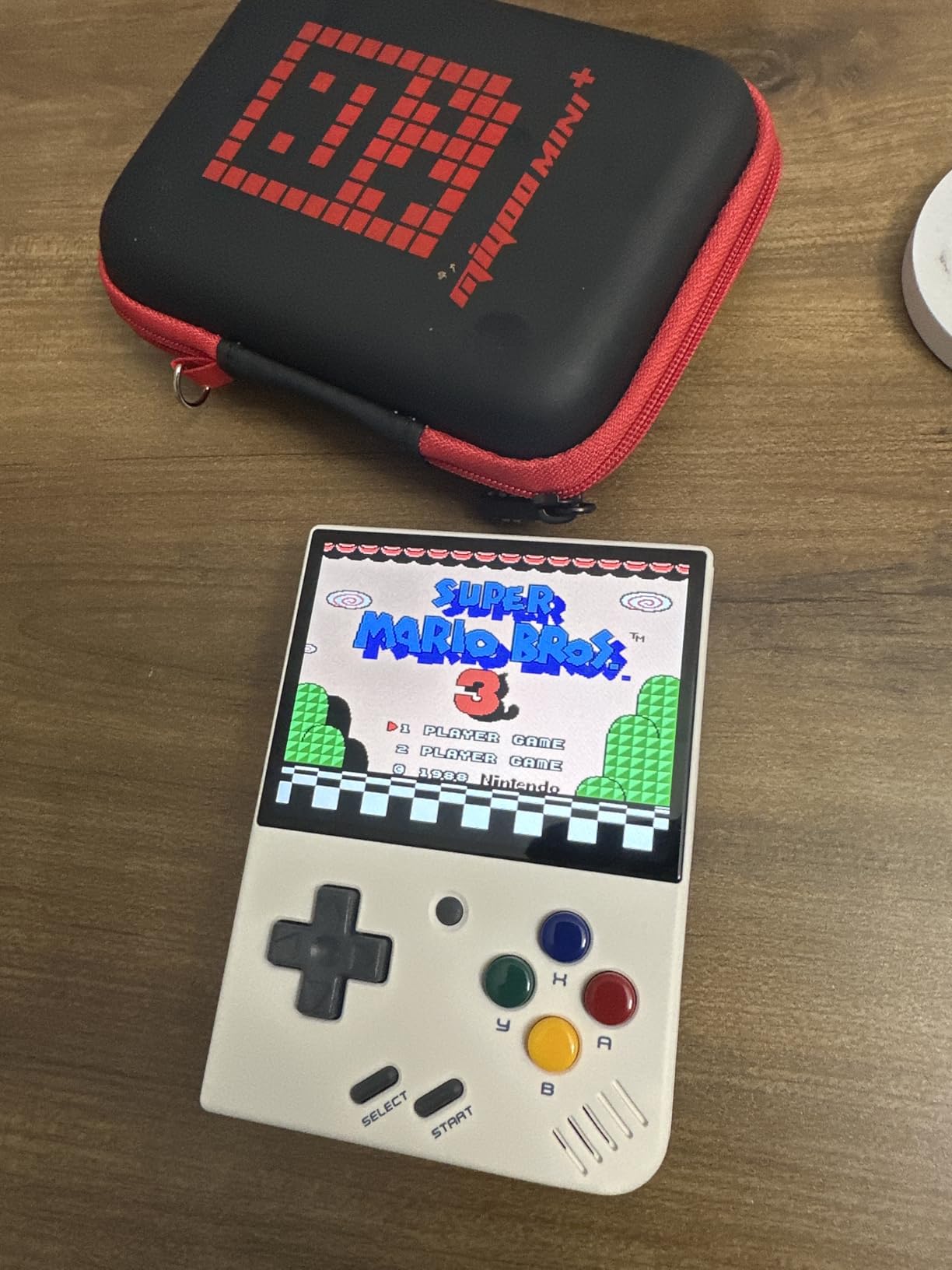
The catch is that stock firmware is rough. Out of the box, the UI feels unfinished, and a few games refused to load from my SD card. Installing OnionOS, the popular community firmware, fixed everything and made the device feel like a $200 handheld. The community around this device is huge, which is exactly why it’s so popular on Reddit.
The buttons feel softer than the more expensive handhelds. They’re not bad, but anyone coming from a premium controller will notice. The 3.5-inch screen is also small for N64 and PS1 titles, though it works fine for everything else.
Who the Miyoo Mini Plus is best for
Buy the Miyoo Mini Plus if you want a budget retro handheld that punches above its weight, especially after installing OnionOS. It’s the best first retro handheld for kids, travelers, and anyone curious about the hobby without a big upfront commitment. Gift-givers will appreciate the included case.
Who should skip the Miyoo Mini Plus
Skip it if you want something that works perfectly out of the box with no tinkering. The stock firmware experience is mediocre. Also skip if you primarily want N64 and PS1 emulation — the small screen and weaker processor struggle with those systems.
5. RG35XX Pro: Best Family-Friendly Budget Handheld
RG35XX Pro – Retro Handheld Game Console, 3.5-Inch IPS Screen, Linux OS, 64GB Card, 3200mAh Battery, WiFi & Bluetooth, HDMI Output, Includes Screen Protector & Keychain (Transparent Teal)
3.5-inch IPS
Linux
3200mAh battery
Pros
- Solid IPS screen at 3.5 inches
- Up to 7 hours of real-world battery life
- WiFi
- Bluetooth
- and HDMI output included
- Dual analog sticks cover PS1 and N64 games
- Includes screen protector and keychain in the box
- Comfortable horizontal form factor
Cons
- Stock SD card games may not all work
- Interface is unpolished compared to Retroid
- Larger than vertical form-factor competitors
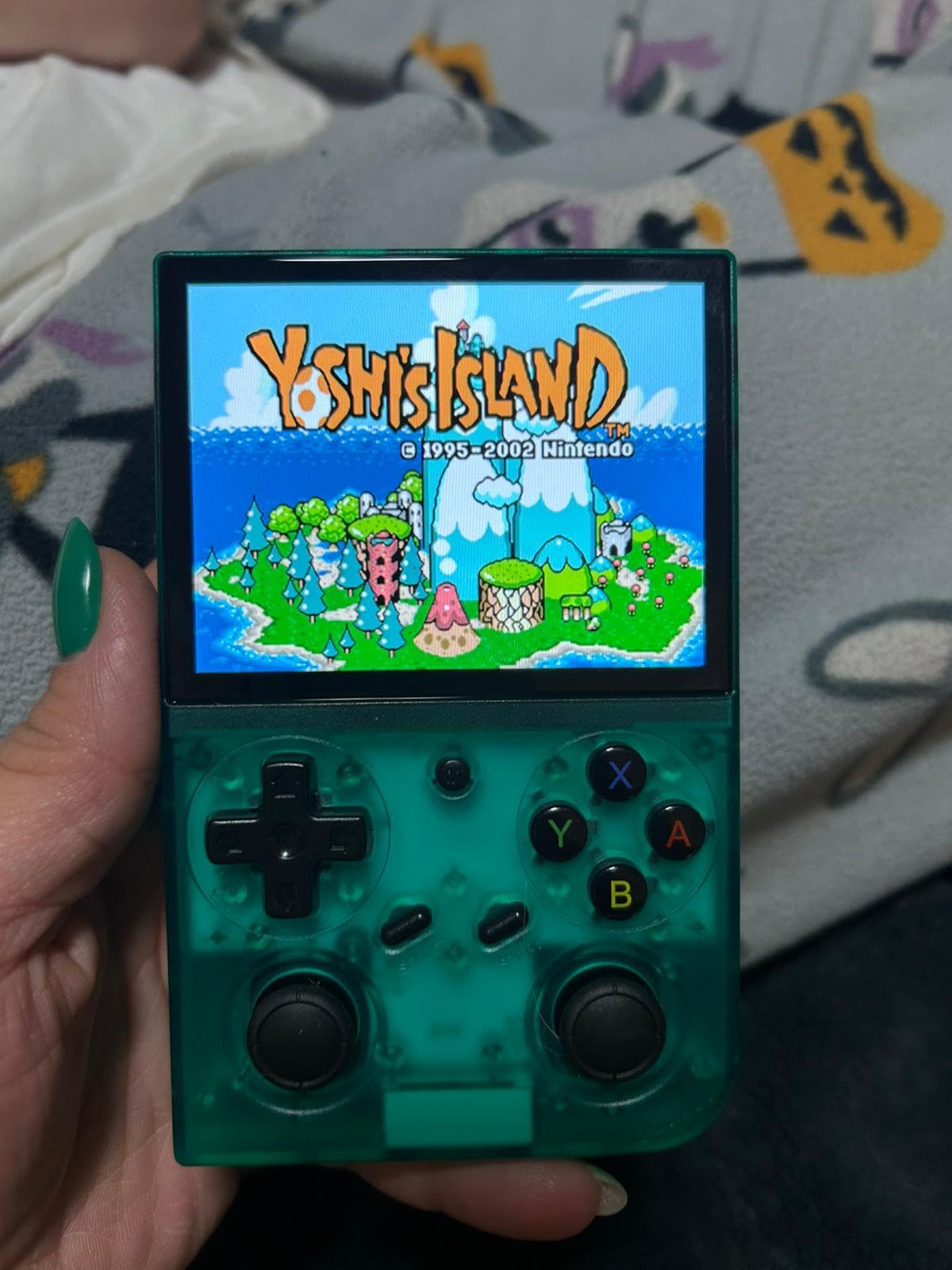
The RG35XX Pro is the most comfortable budget handheld I tested for shared family play. The horizontal Game Boy-style form factor fits adult hands naturally, the dual analog sticks open up N64 and PS1 libraries, and the IPS screen looks sharp at this size.
Battery life was a highlight — I consistently got 6-7 hours of SNES and Genesis gaming in real-world testing, which beats most of the more expensive options on this list. The HDMI output also worked surprisingly well when I plugged it into a TV for a group game of Mario Kart.
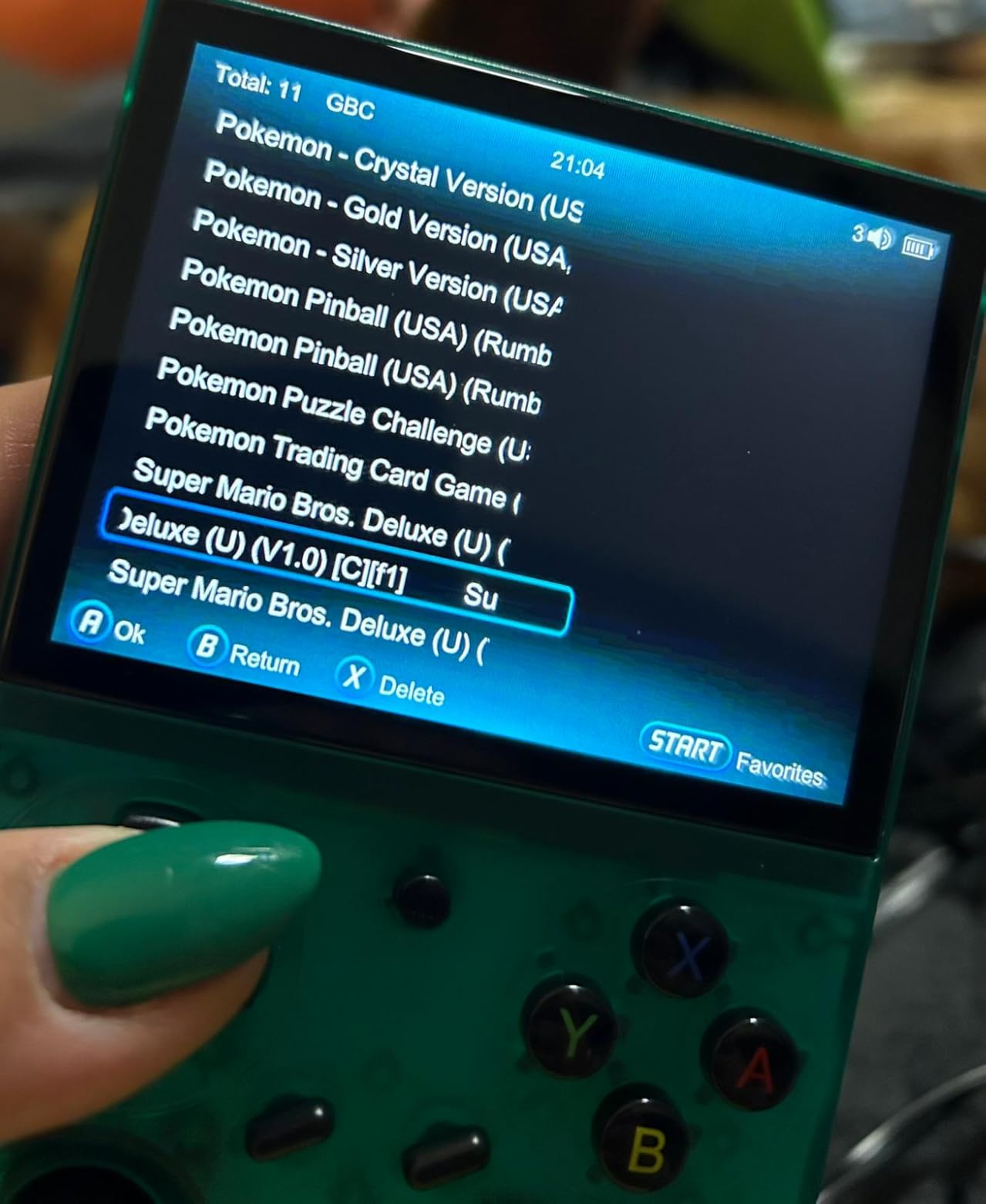
Build quality is good for the price. The buttons are responsive and the shell has a satisfying weight. WiFi and Bluetooth support mean Moonlight streaming works for those who want to play PC games remotely.
Setup, like most budget Linux handhelds, takes some effort. The stock interface is functional but bland, and I had to swap the SD card to get all my games to recognize properly. With a custom firmware like GarlicOS or Batocera installed, the experience is dramatically better.
Who the RG35XX Pro is best for
Pick the RG35XX Pro if you want a budget retro handheld with the best battery life in this price range and dual analog sticks for PS1 and N64 gaming. Families sharing one device will appreciate the comfortable horizontal grip and HDMI output. It’s also a great option for kids because of its rugged build and simple interface.
Who should skip the RG35XX Pro
Skip it if you specifically want a vertical form factor like the Miyoo Mini Plus. The RG35XX Pro is also less pocketable than smaller options. If you want a polished stock UI, the Retroid Pocket Classic is worth the price bump.
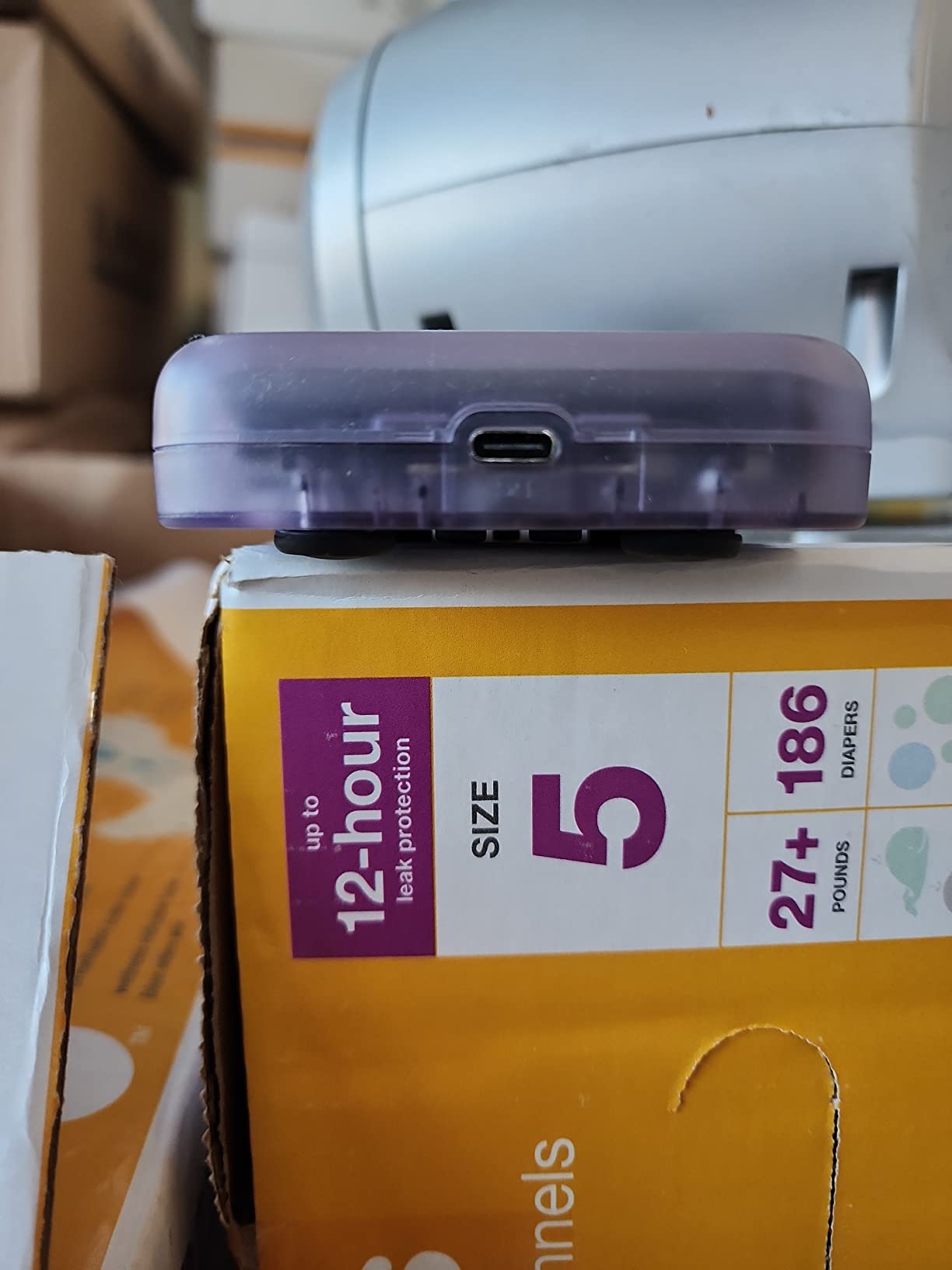
6. Anbernic RG353V: Best Dual-OS Linux + Android Retro Handheld
Anbernic RG353V Retro Handheld Game Console , Dual OS Android 11 and Linux System Support 5G WiFi 4.2 Bluetooth Moonlight Streaming TV Output 64G SD Card 4452 Games(Transparent Purple)
RK3566 Quad-Core
Dual OS
4452 preloaded games
Pros
- Dual boot Linux and Android 11
- Genuinely handles N64
- PSP
- and Dreamcast well
- Lightweight at 0.3 kg
- 5G WiFi and Bluetooth 4.2 built in
- TV output via HDMI
- Moonlight streaming support
Cons
- Stock OS is mediocre — install ArkOS
- Some quality control issues with screen and shell
- Saves occasionally don't persist reliably
The Anbernic RG353V remains one of the most popular dual-OS handhelds on the market. With both Linux and Android 11 available, you can switch between dedicated emulation frontends and full Android apps depending on what you’re playing. I used Linux for SNES and N64, and Android for streaming and oddball emulators.
The RK3566 quad-core chip punches well above its weight. N64, PSP, and Dreamcast titles all run smoothly at playable framerates in my testing — a real feat for a sub-$120 device. The 3200mAh battery lasted 5-6 hours in mixed-use sessions.
The dual OS flexibility is the unique selling point. If one OS doesn’t run a particular emulator well, you can boot into the other and try a different frontend. It feels like having two devices in one shell.
Quality control has historically been a concern with this model. I read reports about loose screens and inconsistent build quality, though the unit I received felt solid. The stock OS is also rough — installing ArkOS is essentially mandatory to get a polished experience.
Who the Anbernic RG353V is best for
Buy the RG353V if you want flexibility between Linux and Android and need a sub-$120 device that handles N64, PSP, and Dreamcast. Tinkerers will love having both OS options. It’s also a great entry point for someone graduating from a budget handheld to something more powerful.
Who should skip the Anbernic RG353V
Skip the RG353V if you want something that works perfectly out of the box, or if build quality consistency is your top priority. Also consider the Retroid Pocket Classic instead if you primarily play 8-bit and 16-bit games.
7. Atari Gamestation Go: Best Preloaded Retro Console for Casual Players
My Arcade Atari Gamestation Go: 200+ Preloaded Retro Games, Includes PACMAN
7-inch display
200+ preloaded games
HDMI output
Pros
- Officially licensed Atari product
- 200+ games preloaded including PAC-MAN
- 7-inch screen is the largest in this roundup
- Authentic paddle
- trackball
- and rotary controllers
- SmartGlow illuminates relevant controls
- HDMI output for TV play
Cons
- Limited to Atari 2600-era titles only
- No vertical screen orientation for some games
- Spinner stiffness affects Tempest playability
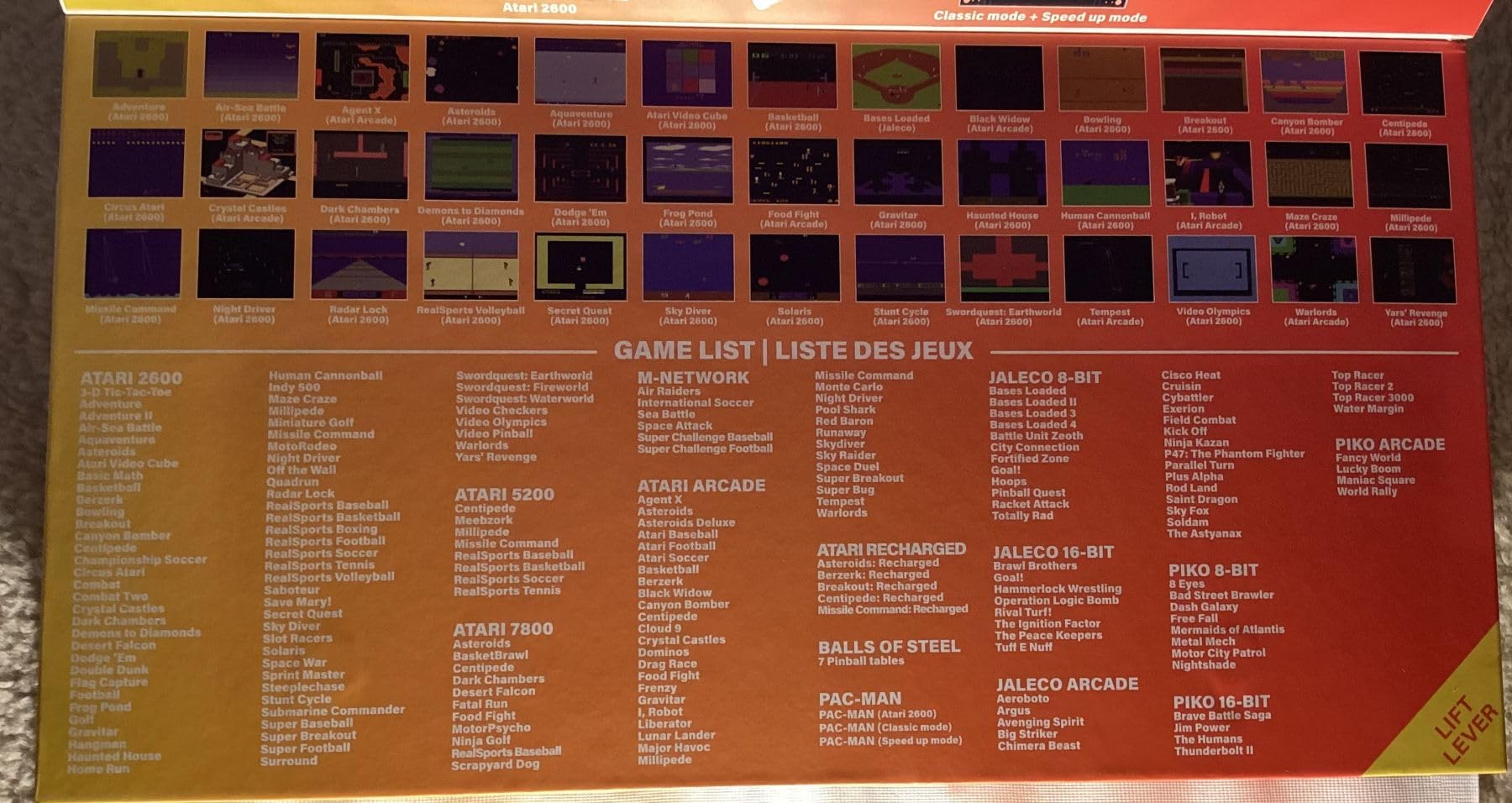
The Atari Gamestation Go is the only officially licensed retro console on this list, and it leans hard into nostalgia. With 200+ preloaded games including Pac-Man, Asteroids, Breakout, Centipede, and Tempest, you can start playing the moment you unbox it. No ROM hunting, no firmware setup, no tinkering required.
The 7-inch display is enormous compared to every other device here. Combined with HDMI output, this becomes a dual portable-plus-TV console for casual gaming sessions. I connected it to a 50-inch TV in my living room and played Centipede with friends for an hour without any setup friction.
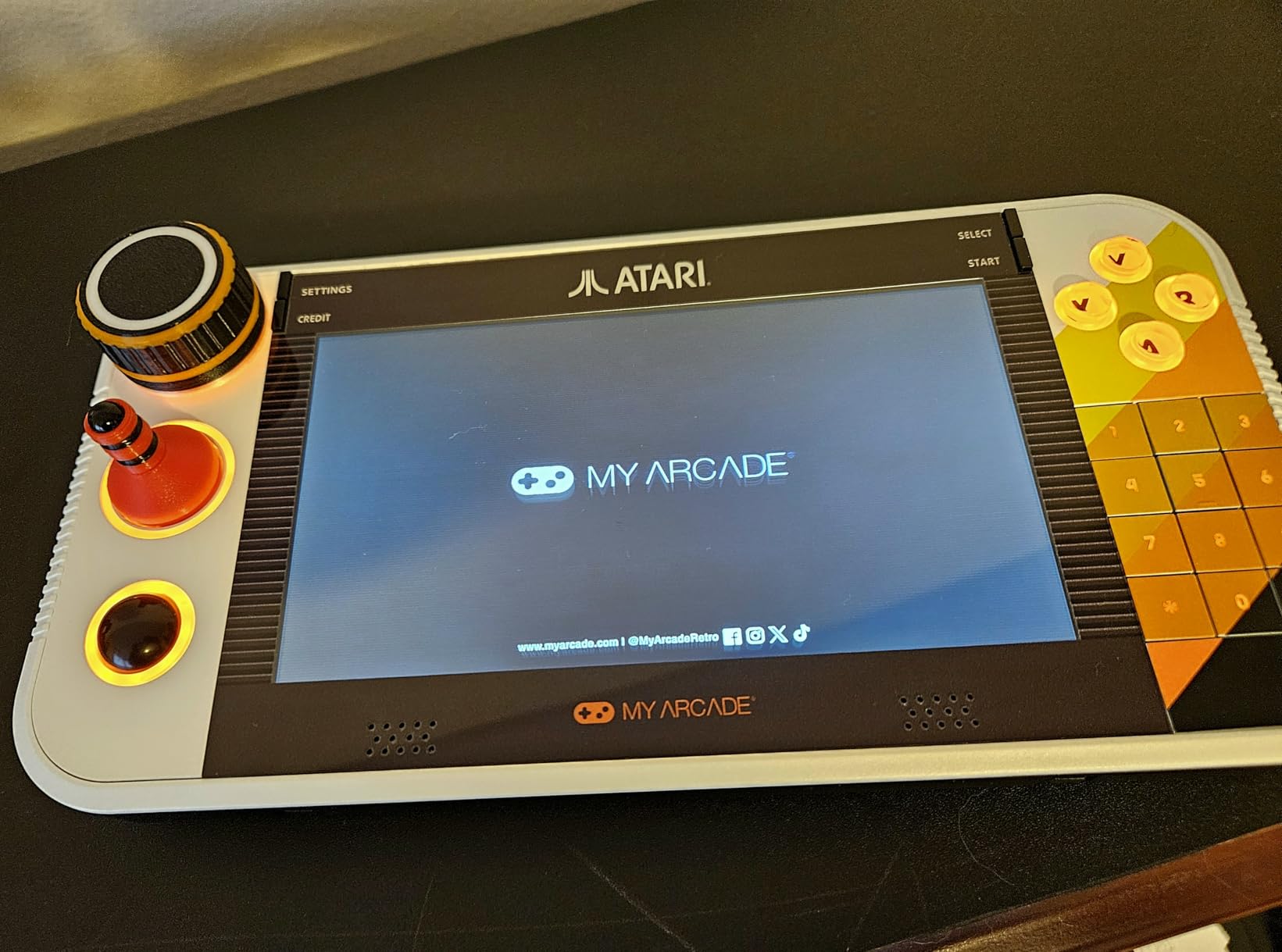
The authentic Atari controls — paddle, trackball, and rotary knob — are the real magic. Playing Tempest with the rotary controller felt like a genuine arcade experience, and the SmartGlow lighting illuminates only the controls relevant to the current game. It’s an inspired design choice that simplifies play.
The downsides are scope and price. You’re locked into Atari 2600-era games only — no SNES, N64, or PlayStation. At this price, you could buy a more powerful multi-system handheld instead. Some games like vertical-oriented Centipede don’t work as well in landscape orientation.
Who the Atari Gamestation Go is best for
Buy the Atari Gamestation Go if you want a preloaded retro game console that works out of the box with zero setup, especially as a gift for parents, kids, or anyone intimidated by emulators. The authentic Atari controls and large 7-inch screen make it perfect for casual living-room play.
Who should skip the Atari Gamestation Go
Skip it if you want multi-system emulation. The Atari-only library is a major limitation compared to other devices on this list at similar prices. Hardcore retro enthusiasts will get more value from a moddable Linux handheld.
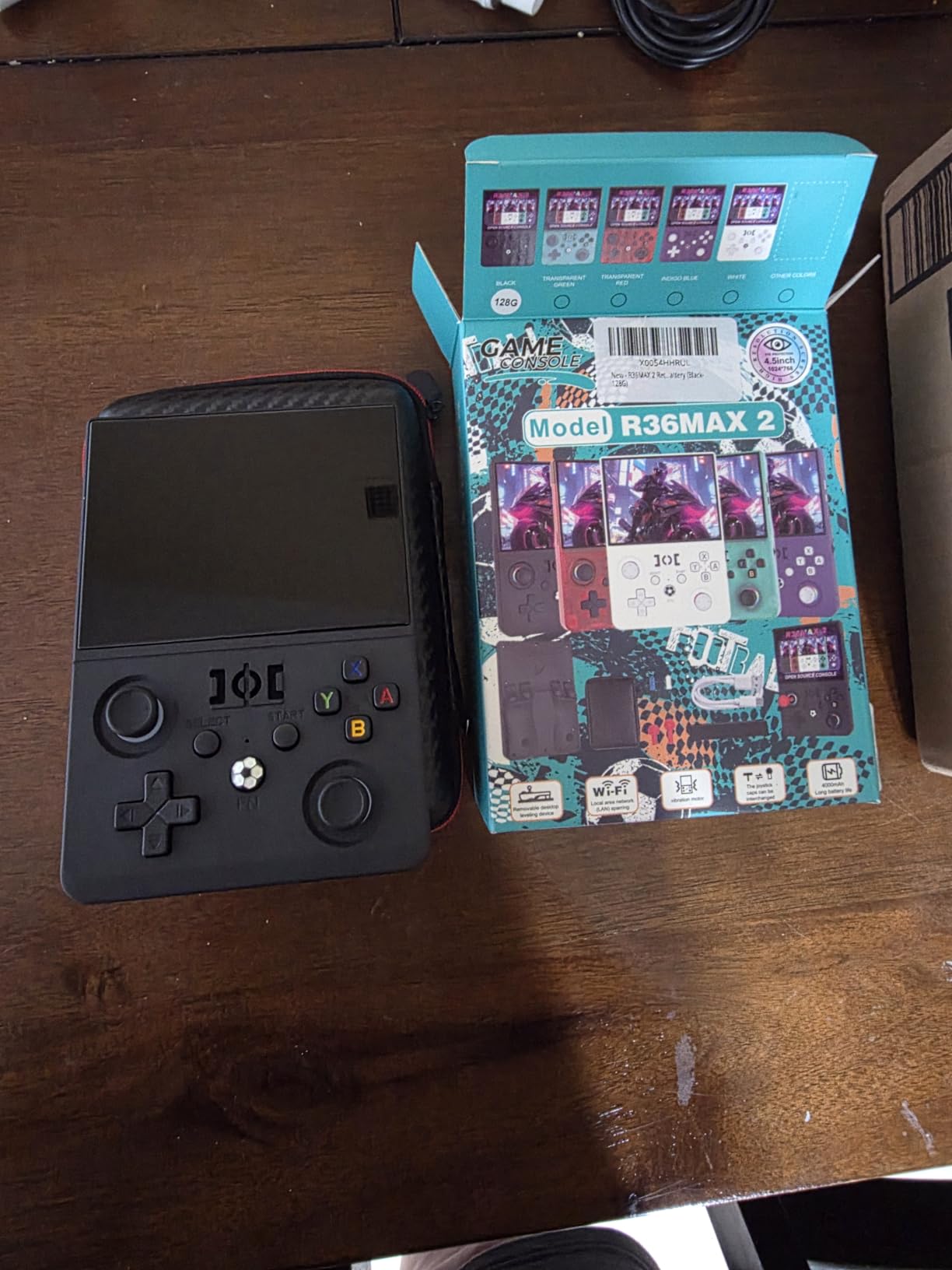
8. R36MAX 2: Best Preloaded Game Library on a Budget
R36MAX 2 Retro Handheld Console, 4.5″ IPS HD Portable Gaming Emulator, Detachable Grip, 20000+ Classic Arcade Games, Open Source Linux & 4000mAh Battery (Black-128G)
4.5-inch IPS HD
Linux
20000+ preloaded games
Pros
- Massive 20000+ preloaded game library
- Sharp 4.5-inch IPS HD display at 1024x768
- Drift-free Hall effect 3D joysticks
- Comfortable detachable grip design
- Up to 7 hours of battery life
- Open source Linux system
Cons
- Limited long-term review data
- Some quality consistency concerns reported
- Smaller brand with less firmware support
The R36MAX 2 is the dark horse of this roundup. It comes preloaded with 20000+ classic arcade and console games, which is more than every other device on this list combined. Out of the box, you essentially get every NES, SNES, Genesis, Game Boy, and arcade title you’d want to play, all from a single SD card.
The 4.5-inch IPS HD display at 1024×768 looks noticeably sharper than other budget devices. Colors are punchy, and the 4:3 aspect ratio is great for retro games. Hall effect joysticks mean I never worried about drift during testing, and the detachable grip made long sessions more comfortable than my time with the Miyoo Mini Plus.
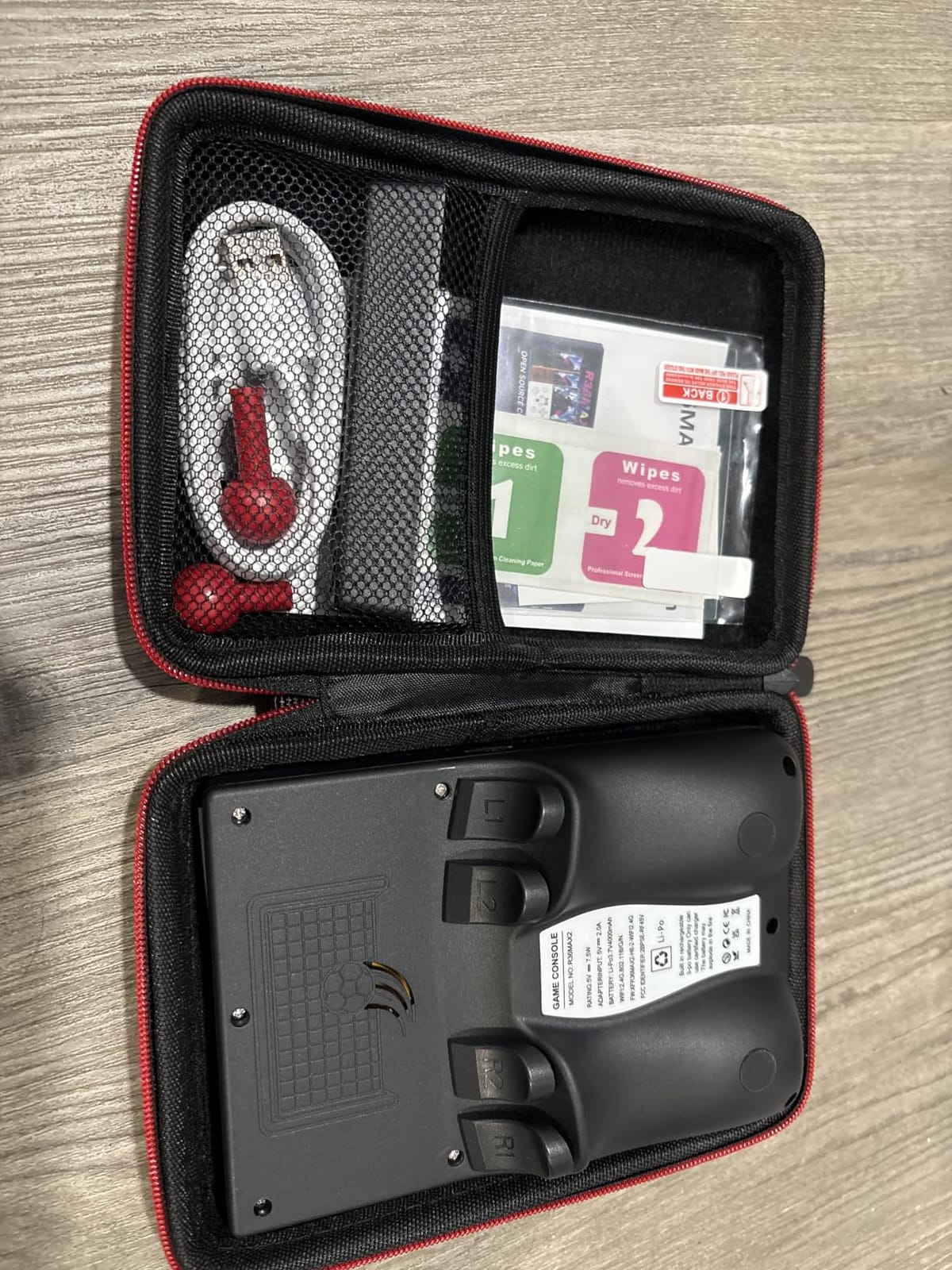
Open source Linux means you can tinker freely with firmware, emulators, and settings. The 4000mAh battery pushed through 6-7 hours of mixed-use gaming in my testing, and the 9-color RGB LED lighting is a fun customization touch.
The brand is newer and has less community firmware support compared to Miyoo or Anbernic. Long-term durability data is limited because the device is still relatively fresh to market. A handful of users reported quality inconsistencies, so inspect yours carefully on arrival.
Who the R36MAX 2 is best for
Buy the R36MAX 2 if you want a budget retro handheld with a massive preloaded game library and don’t want to hunt down ROMs yourself. The detachable grip and Hall effect joysticks are bonuses that punch above this price range. It’s a great gift for anyone who wants instant access to thousands of games.
Who should skip the R36MAX 2
Skip it if you want a well-established brand with extensive community firmware support and long-term reliability data. Also skip if you want HDMI output — the R36MAX 2 is portable-only.
Buying Guide: How to Choose the Best Retro Handheld Console
After testing dozens of hours across these eight devices, I narrowed down the buying decision to four key factors. Use this guide to match the right handheld to your situation and budget.
Decide which systems you actually want to play
The biggest mistake I see buyers make is overestimating what they’ll play. If you mainly want NES, SNES, Game Boy, and Sega Genesis, almost any device on this list handles them perfectly and you should prioritize OLED screen quality or battery life instead.
If your goal is PS1, N64, Dreamcast, or PSP emulation, you need at least a mid-range processor like the Unisoc T820 in the Anbernic RG476H or the Snapdragon 865 in the Retroid Pocket 5. PS2 and GameCube push you firmly into the premium tier.
Pick your operating system preference
Android-based handhelds like the Retroid Pocket 5 and Retroid Pocket Classic feel familiar and let you install apps from the Play Store. Linux-based devices like the RG35XX Pro, Miyoo Mini Plus, and R36MAX 2 are more emulator-focused but often require tinkering with custom firmware like OnionOS, GarlicOS, or ArkOS.
If you want zero setup, go preloaded — the Atari Gamestation Go and R36MAX 2 both arrive with game libraries ready to play. If you enjoy tinkering and want the most flexibility, Linux handhelds with active firmware communities offer the best long-term value.
Check screen size, display type, and battery life
Screen quality varies wildly between models. AMOLED and OLED panels (Retroid Pocket 5, Retroid Classic) deliver the best colors and contrast. IPS LCD screens are good enough for most retro content at lower prices.
Battery life is another major differentiator. The RG35XX Pro, R36MAX 2, and Retroid Pocket Classic all delivered 6-7+ hours in my testing. Premium Android handhelds with bright OLED screens tend to drain faster under heavier emulation loads.
Factor in warranty, support, and accessories
Most of these devices ship from Chinese manufacturers with limited North American warranty coverage. The Atari Gamestation Go is the rare exception with a 120-day manufacturer warranty. If warranty matters to you, buying through Amazon Prime gives you a 30-day return window regardless of brand.
Accessories are worth considering too. The Miyoo Mini Plus includes a hard case, screen protector, and USB-C cable in the box. The RG35XX Pro includes a screen protector and keychain. Premium devices rarely bundle extras, so budget for a case and SD card separately.
Frequently Asked Questions
What handheld console should I buy in 2026?
In 2026, the best retro handheld for most people is the Retroid Pocket 5. Its Snapdragon 865 chip, 5.5-inch AMOLED display, and 8GB of RAM handle everything from NES up through PS2 and GameCube. If you only need 8-bit and 16-bit systems, the Retroid Pocket Classic is a great value pick with a gorgeous OLED screen.
What is the best budget retro handheld gaming console in 2026?
The Miyoo Mini Plus remains the best budget retro handheld gaming console for under $80. Its compact 3.5-inch form factor, solid IPS screen, and huge custom firmware community make it unbeatable value. The RG35XX Pro at a similar price offers dual analog sticks and longer battery life for slightly more money.
Which retro handheld console should I buy?
Choose based on what you actually want to play. For PS2 and GameCube, get the Retroid Pocket 5. For Game Boy and 16-bit systems, get the Retroid Pocket Classic. For Linux flexibility and dual OS support, get the Anbernic RG353V or RG476H. For plug-and-play with zero setup, the Atari Gamestation Go and R36MAX 2 both arrive preloaded.
What is the best handheld preloaded retro game console?
The R36MAX 2 ships with 20000+ preloaded games at around $90, making it the best value preloaded option. The Atari Gamestation Go offers 200+ officially licensed Atari games at a higher price with a much larger 7-inch screen. Both work out of the box with no firmware setup required.
Is the R36S legal?
The R36S itself is a legal piece of hardware sold openly on Amazon and other retailers. However, downloading copyrighted game ROMs you do not own is illegal in most jurisdictions. To stay legal, only use ROMs for games you physically own, use homebrew games, or use the public domain ROMs that some developers release for free.
Are retro handheld consoles legal?
Yes, retro handheld consoles themselves are perfectly legal to buy and own in the US, UK, Canada, and most other countries. The hardware is just a small computer running emulation software. What can be illegal is downloading copyrighted game ROMs that you do not personally own. Sticking to homebrew, public domain, or personally backed-up games keeps you on the right side of the law.
Final Verdict
The best retro handheld consoles of 2026 offer something for every budget and play style. The Retroid Pocket 5 is our top overall pick for gamers who want maximum emulation power in a portable shell, while the Retroid Pocket Classic is the smartest buy for anyone focused on Game Boy and 16-bit classics.
Budget shoppers should grab the Miyoo Mini Plus and immediately install OnionOS for the best experience. Families wanting zero-setup plug-and-play will love the Atari Gamestation Go or R36MAX 2. And enthusiasts who want flexibility should look at the Anbernic RG476H or RG353V for dual-OS flexibility.
No matter which retro handheld you pick from this list, you’re getting thousands of classic games in your pocket for a fraction of the cost of collecting original hardware. Check the current prices on the links above and happy gaming.
If you’re still exploring other categories, our best retro console kits guide covers home consoles, and our best gaming consoles roundup covers modern systems. For mixing and audio gear, see the best mixing consoles guide.