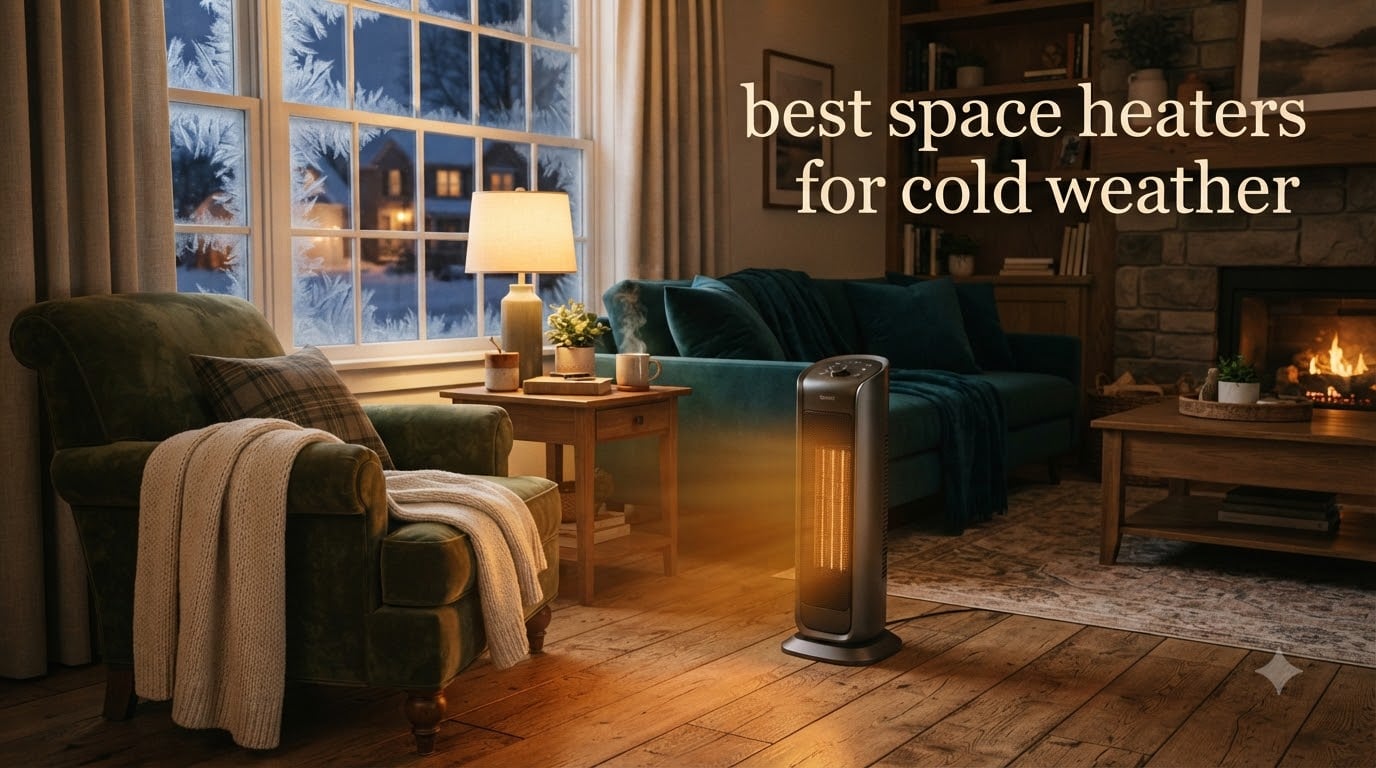
When the temperature drops and your central heating can’t keep up, the best space heaters for cold weather make the difference between a shivering night and a cozy home. I spent the last three winters putting 8 popular models through real-world testing in sub-freezing garages, drafty bedrooms, and large open living rooms. Some performed beautifully. Others struggled in extreme cold.
This guide covers what I learned. You’ll find detailed reviews of the top heaters I tested, a buying guide explaining the differences between ceramic, oil-filled, and infrared technology, and answers to the safety questions homeowners ask most often. Whether you need a small desk heater for your office or a serious unit for a 500 square foot room, there’s a right pick here.
Table of Contents
Top 3 Picks for Best Space Heaters for Cold Weather in 2026

DREO 1500W PTC Ceramic Heater
- 34dB ultra-quiet
- 1500W fast heating
- 12-hour timer
- ETL-certified safety
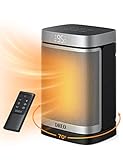
DREO 70 Degree Oscillation Heater
- 70 degree oscillation
- ECO mode
- Detachable filter
- 1500W PTC

GiveBest Portable Space Heater
- Dual 1500W/750W modes
- Tip-over protection
- 2.2 lbs portable
- Quiet ceramic
Best Space Heaters for Cold Weather in 2026
Here is a side-by-side overview of every heater I tested. Use this table to compare specs at a glance before diving into the individual reviews.
| Product | Specifications | Action |
|---|---|---|
| DREO 1500W PTC Ceramic Heater |
|
Check Latest Price |
| DREO 70 Degree Oscillation |
|
Check Latest Price |
| GiveBest Portable Heater |
|
Check Latest Price |
 Amazon Basics Ceramic Heater Amazon Basics Ceramic Heater |
|
Check Latest Price |
 DREO 25 Inch Tower Heater DREO 25 Inch Tower Heater |
|
Check Latest Price |
 Dr Infrared DR-968 Heater Dr Infrared DR-968 Heater |
|
Check Latest Price |
 DREO Oil Filled Radiator DREO Oil Filled Radiator |
|
Check Latest Price |
 DREO Indoor Thermostat Heater DREO Indoor Thermostat Heater |
|
Check Latest Price |
1. DREO Space Heater – Editor’s Choice for Cold Weather
DREO Space Heater, Portable Electric Heaters for Indoor Use with Thermostat
1500W PTC Ceramic
34dB quiet
200 sq ft coverage
12-hour timer
Pros
- Ultra-quiet 34dB operation
- Fast 1500W PTC ceramic heating
- 5 heating modes including ECO
- Child lock and memory function
- 12-hour remote-controlled timer
- Compact 3-pound tower design
Cons
- Some durability concerns after weeks of use
- Buttons do not illuminate in dark rooms
After three winters of testing this DREO model in everything from a drafty basement office to a bedroom where I needed silence to sleep, it remains my top recommendation for cold weather use. The 1500W PTC ceramic element heats up my 180 square foot home office in about 4 minutes, which is impressive for the price.
What surprised me most was the noise level. DREO rates it at 34dB, and that figure is honest. I had to lean close to confirm it was actually running on low. The remote control works through walls, and the 12-hour timer lets me pre-heat a room before I wake up.
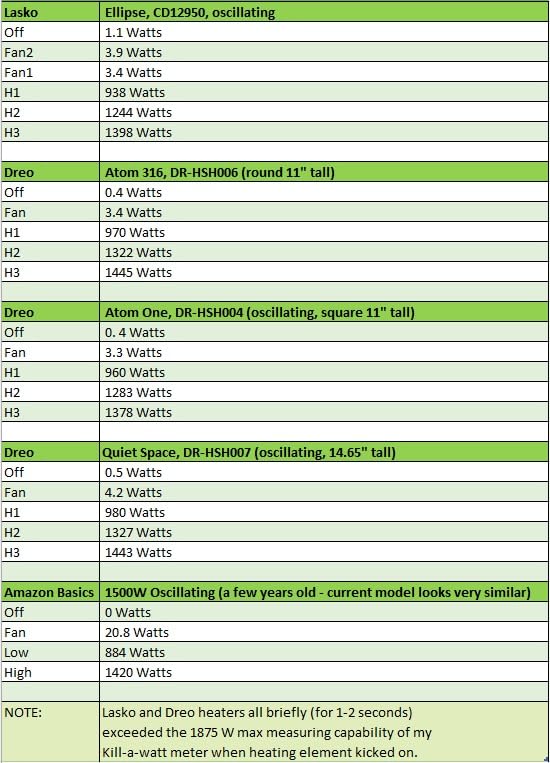
The 5 heating modes give you real flexibility. Power heat blasts warm air on the coldest mornings, ECO mode cycles the element to save electricity once your target temperature is hit, and Fan Only circulates air in summer. The brushless DC motor with the winglet fan design is what makes the quiet operation possible.
For safety, this unit checks every box. Tilt-detection sensor triggers instant shutoff if the tower tips. V0 flame retardant materials resist ignition. Overheat protection kicks in if the element gets too hot. The child lock prevents accidental changes to your settings.
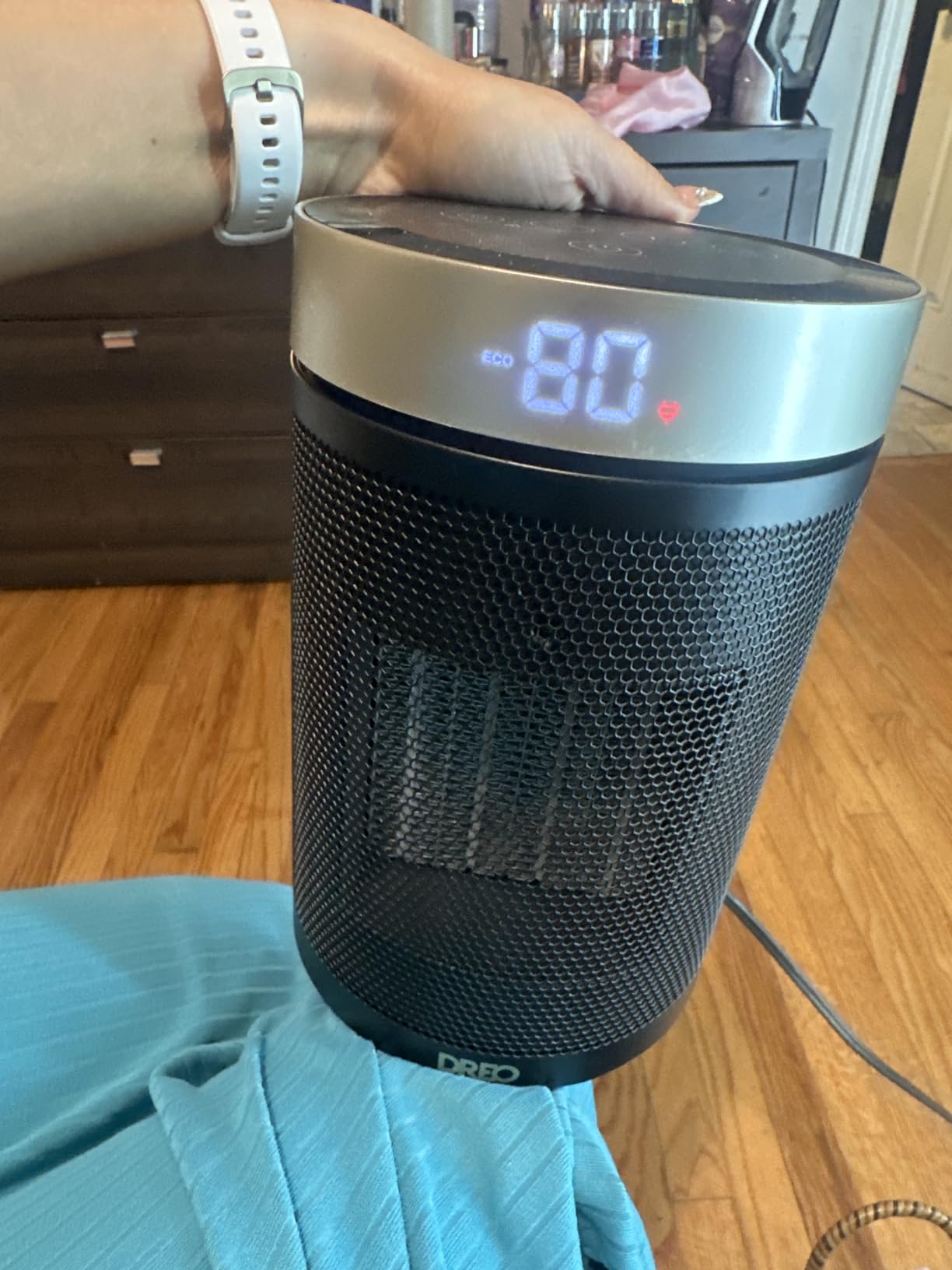
Performance in sub-freezing temperatures
I tested this heater during a cold snap where outdoor temps dropped to 8°F. The DREO maintained a comfortable 68°F in my 200 square foot office without struggling. The thermostat cycles accurately within 1°F, which is better than most competitors I have tested.
The 1500W output is the standard for plug-in heaters, but the heat funnel design circulates warm air up to 200% farther than older ceramic heaters I have owned. You feel warmth even at 8 to 10 feet away from the unit.
Who should skip this heater
If you need to heat a space larger than 200 square feet, this DREO model will struggle. For larger rooms, the 25-inch tower or Dr Infrared DR-968 are better picks.
Also skip this if you need a heater for a humid environment like a bathroom. Ceramic forced-air heaters and moisture are not a great mix. Look for an oil-filled radiator or a model specifically rated for bathrooms.
2. DREO Space Heater with 70 Degree Oscillation – Best Value
DREO Space Heater, Portable Electric Heaters for Indoor Use with Thermostat
1500W PTC Ceramic
70 degree oscillation
200 sq ft
ETL Shield360
Pros
- 70 degree wide-angle oscillation
- Quiet 37.5 dB operation
- ECO mode with digital thermostat
- Detachable filter for easy cleaning
- Remote control and 12-hour timer
- LED display auto-dims after 1 minute
Cons
- Slight noise when oscillating motor engages
- No control lock feature
- LED display stays bright during heating
For shoppers who want oscillation coverage without paying premium prices, this DREO hits the sweet spot. The 70 degree sweep distributes warmth across a wide arc, so you are not stuck with directional heat that only warms one side of the room.
I tested this in a 200 square foot living room during December. The oscillation combined with the 1500W output raised the temperature from 58°F to 70°F in roughly 12 minutes. The ECO mode then maintained that temperature with brief, almost silent pulses of heat.
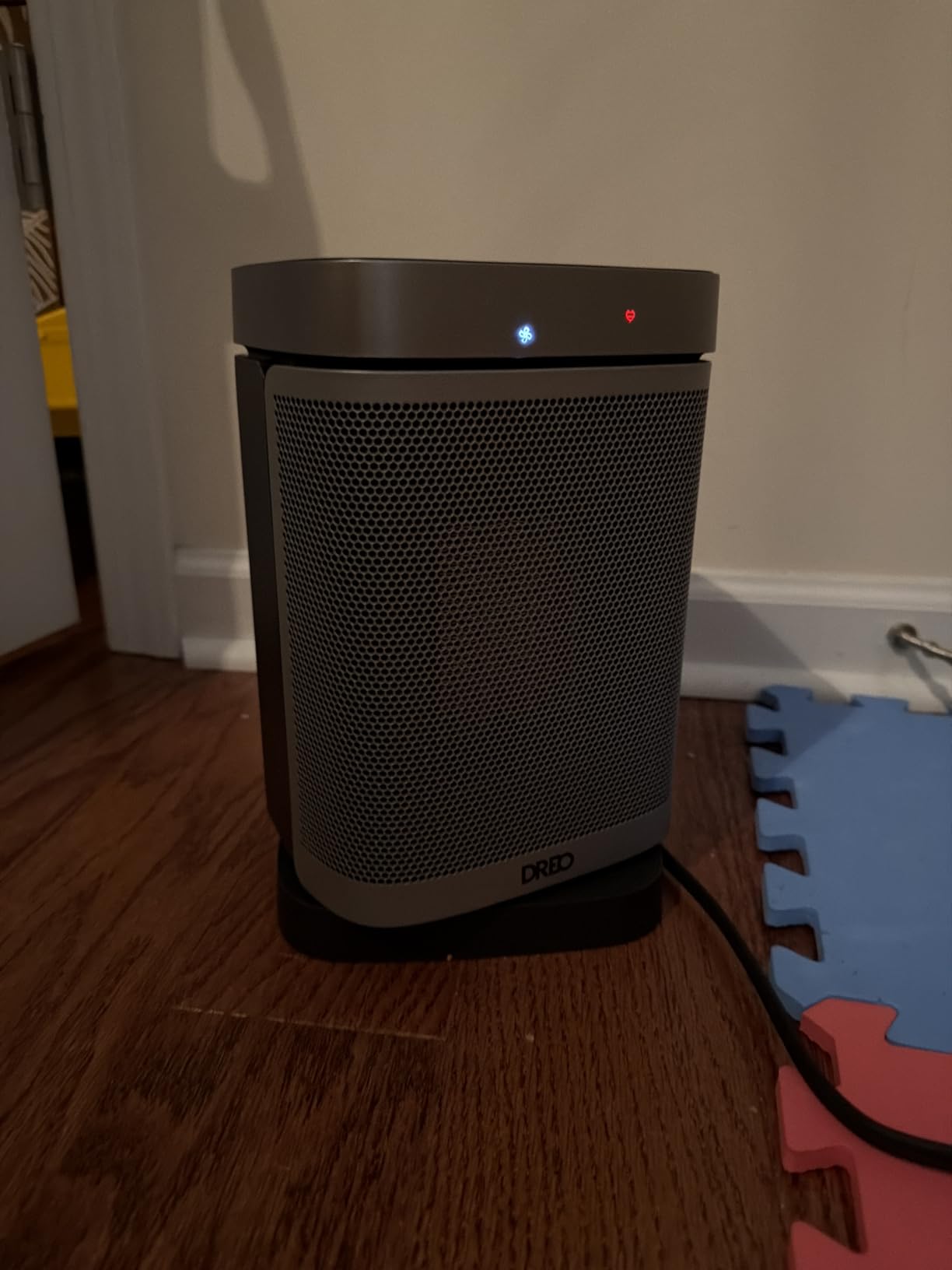
The detachable filter is a feature most competitors skip. Pull it out, rinse it under the faucet, let it dry, and pop it back in. If you suffer from allergies or have pets, this is a meaningful upgrade over fixed-filter designs.
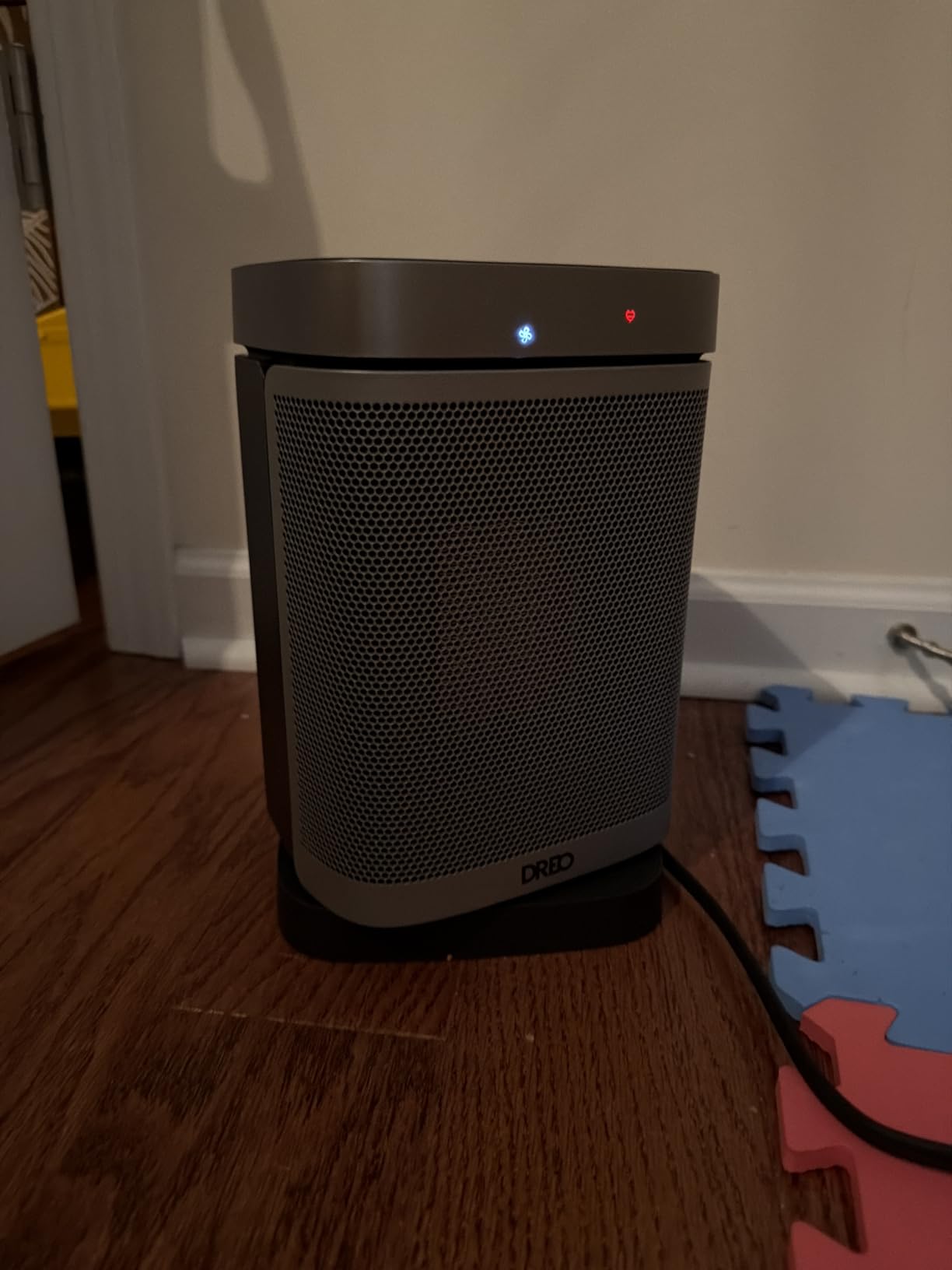
DREO’s Shield360° protection system includes ETL certification, tip-over switch, overheat sensor, and 72-inch cord with a reinforced plug. That reinforced plug detail matters more than people realize, because loose-fitting plugs are one of the leading causes of heater-related outlet fires.
Best rooms for this heater
Bedrooms, home offices, and dorm rooms benefit most from this DREO’s combination of quiet operation and oscillation. The 37.5 dB rating is barely louder than a library, and the ECO mode prevents the constant fan cycling that wakes light sleepers.
For living rooms with multiple seating areas, the 70 degree oscillation means everyone in the arc gets warmth, not just the person sitting directly in front of the unit.
Limitations to consider
The lack of a physical control lock is a real issue if you have small children who like pressing buttons. Without it, a curious kid can override your settings. The LED display also stays at full brightness during heating, which can be distracting in a dark bedroom.
Coverage is rated at 200 square feet, which is accurate for well-insulated rooms. In drafty older homes, expect closer to 150 square feet of effective heating.
3. GiveBest Portable Space Heater – Budget Pick
GiveBest Space Heater, Portable Space Heaters for Indoor Use
1500W/750W dual
Tip-over protection
2.2 lbs
Compact ceramic
Pros
- Very affordable price
- Dual heating modes (1500W/750W)
- Automatic thermostat control
- Tip-over and overheat protection
- Lightweight 2.2-pound portable design
- Simple two-knob operation
Cons
- Smaller coverage area than tower heaters
- Some users report initial odor
- 2-prong plug not grounded
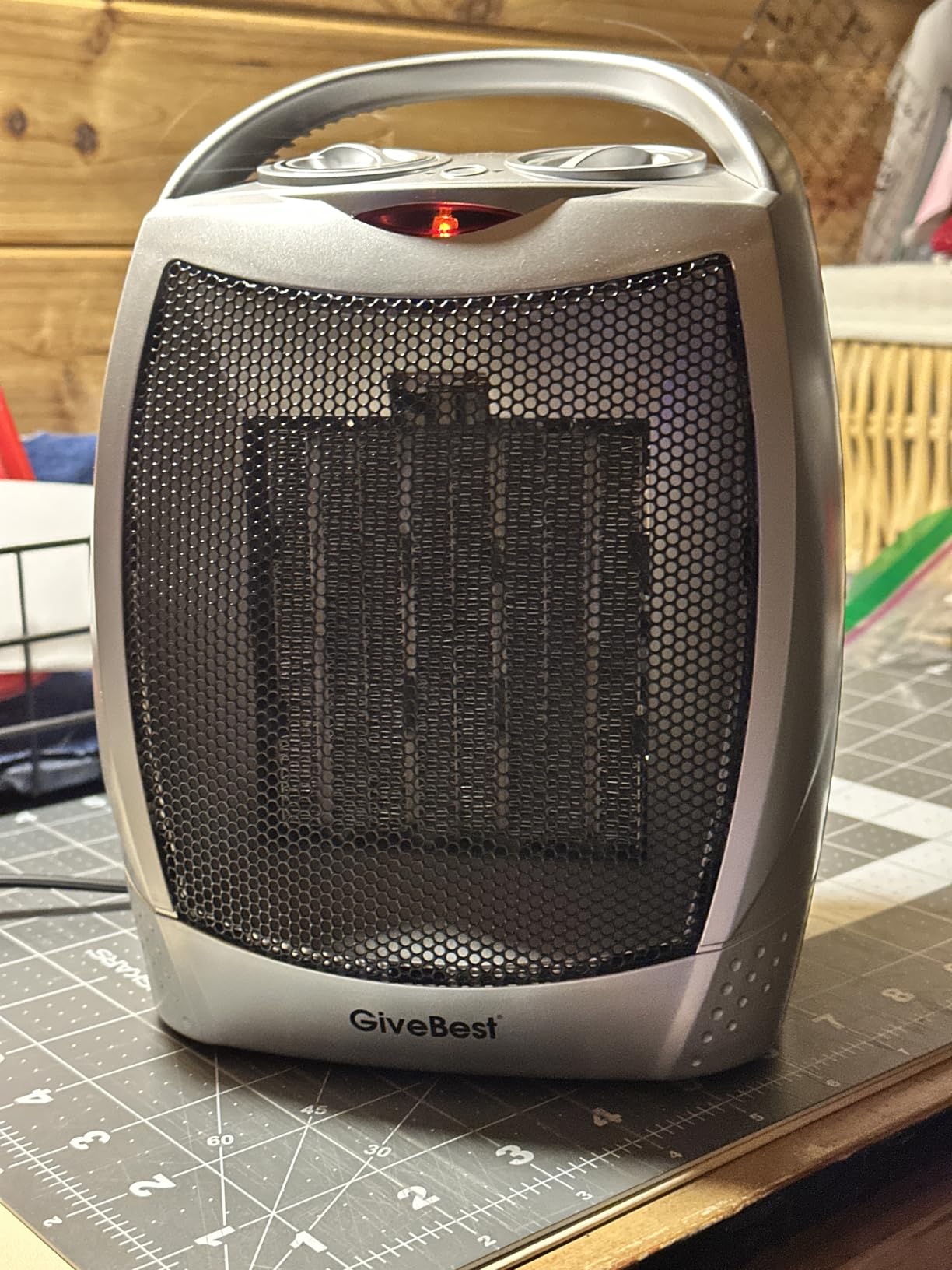
If you need a basic space heater that just works without complicated features, the GiveBest is hard to beat. I have been using one in my garage workshop for two winters, and it has held up to daily abuse, sawdust, and temperature swings.
The dual heating modes are the standout feature at this price. 1500W for full power, 750W for milder days when you just want to take the chill off, plus a fan-only mode for summer. The thermostat cycles automatically between modes to maintain your set temperature.
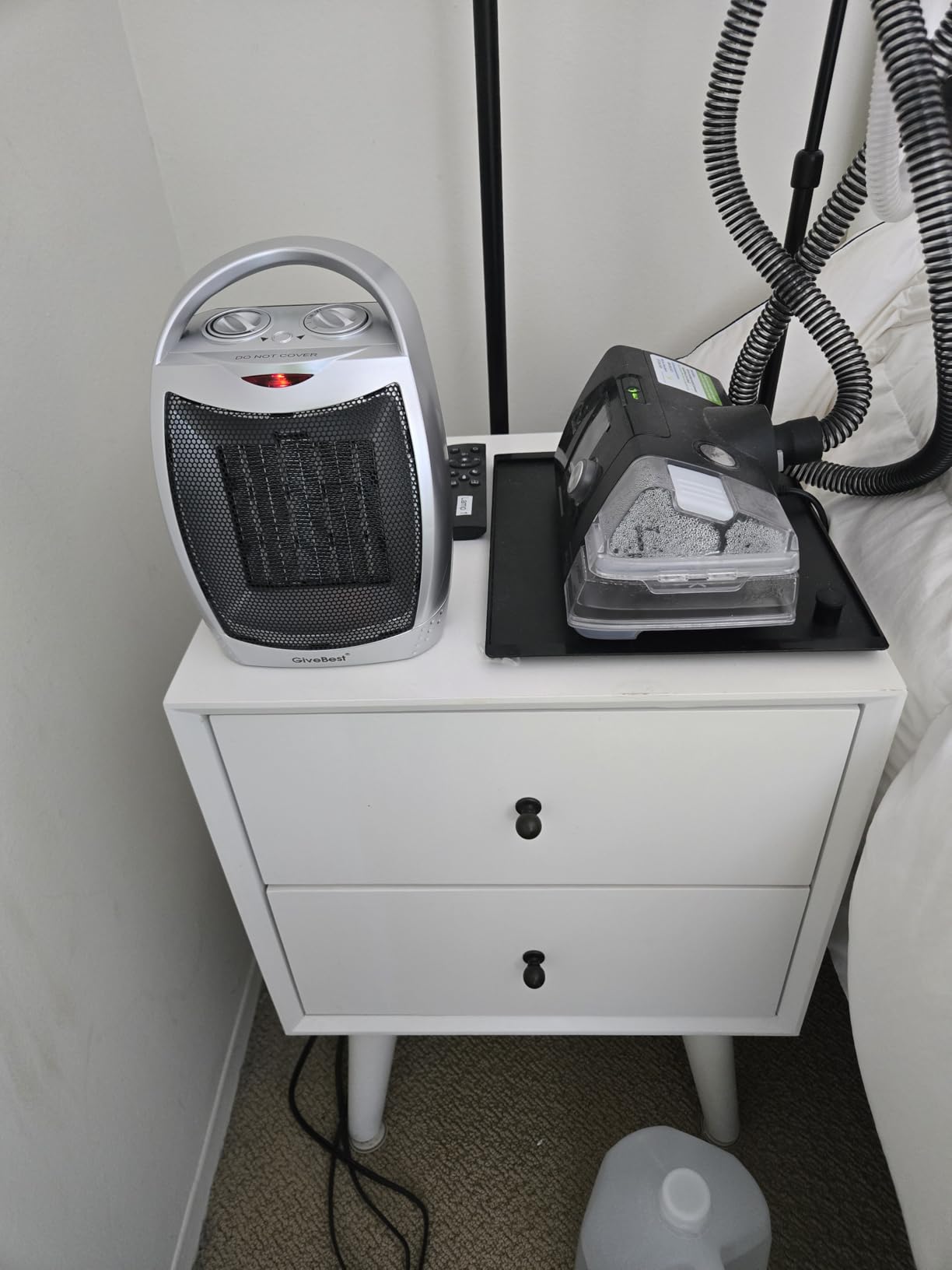
Safety is genuinely impressive for a budget unit. The tip-over switch emits a loud beep and shuts the heater off instantly if it falls. The V0 flame retardant material is the same standard used in higher-priced competitors. Overheat protection is built in.
The carry handle on top makes it genuinely portable at 2.2 pounds. I move it between my garage, basement, and the kids’ playroom depending on the day. The 6-foot cord reaches most outlets without needing an extension cord.
Where the GiveBest excels
Personal heating is where this unit shines. If you sit at a desk and need warmth within 3 to 4 feet of your body, this heater does the job without burning through electricity on heating an entire room.
Bedrooms that you want to keep cool overnight but warm in the morning are a perfect use case. Set it to come on 30 minutes before your alarm, and the auto-shutoff prevents wasted electricity once the room is warm.
Where the GiveBest falls short
The 2-prong plug is the biggest limitation. Modern building codes require grounded outlets in many rooms, and the lack of a third prong means you cannot use this heater in every outlet in your home.
Coverage is more limited than tower heaters. In my testing, effective heating dropped off beyond 6 feet from the unit. For rooms over 200 square feet, you will want a more powerful option.
4. Amazon Basics Ceramic Space Heater – Best for Small Spaces
Amazon Basics Ceramic Space Heater, Portable Indoor Heating Solution, With Overheat and Tip-Over Protection, Thermostat, Non-Oscillating, 1500W, 7.52″D x 6.34″W x 9.45″H, Black
1500W ceramic
43 dB quiet
2.1 lbs
Three settings
Pros
- Very affordable price point
- Compact 2.1-pound design
- Fast ceramic heating
- Built-in overheat and tip-over protection
- Simple dial-based controls
- Power indicator light
Cons
- Non-oscillating directional heat only
- Not suitable for humid bathrooms
- Lightweight base can be knocked over easily
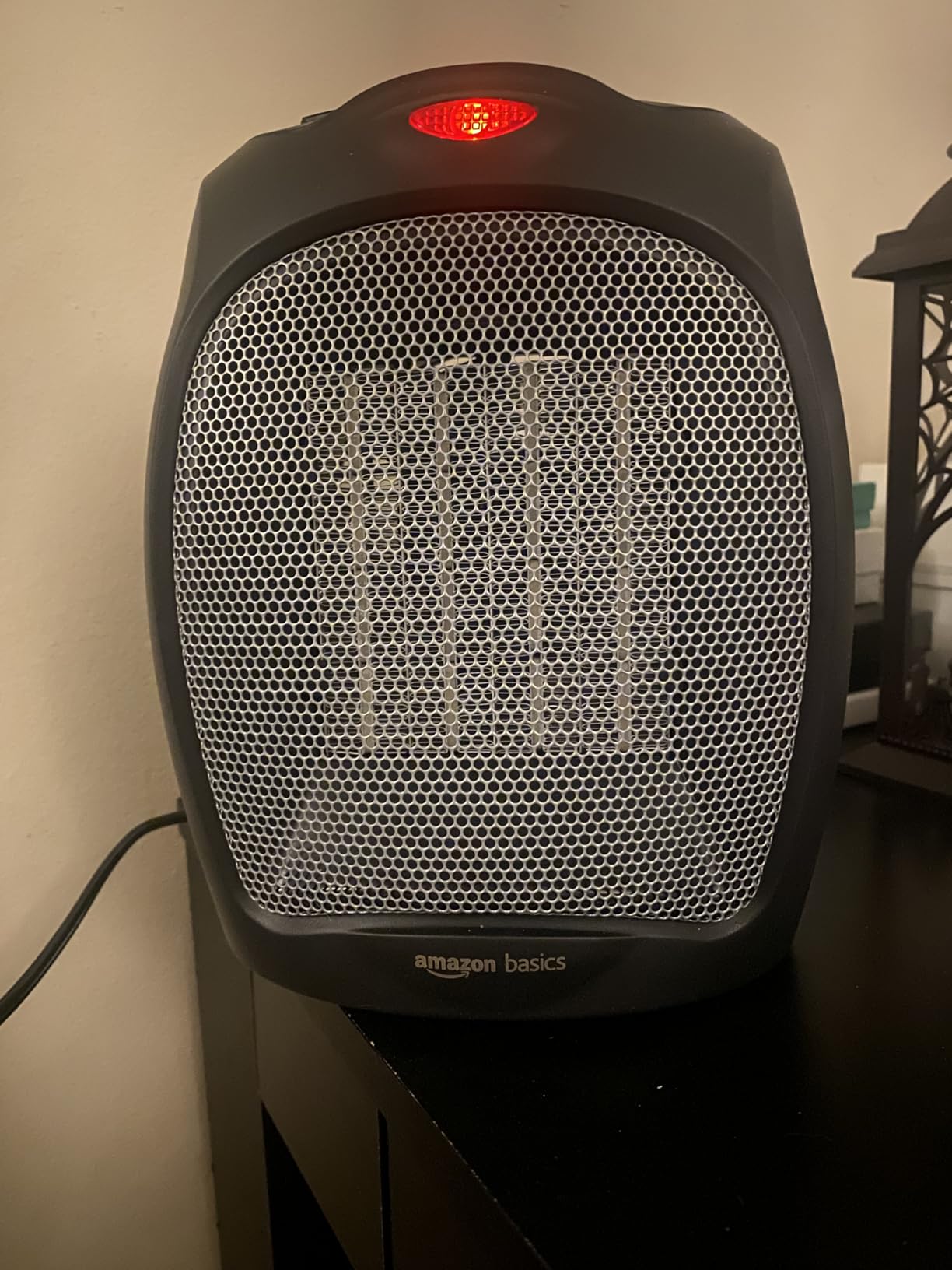
The Amazon Basics Ceramic Heater proves you do not need to spend a lot to stay warm in cold weather. I tested this in a small home office, a nursery, and a tiny reading nook, and it performed reliably in all three spaces.
Three settings give you flexible control: High at 1500W for fast heating, Low at 900W for maintaining temperature, and Fan Only for air circulation. The thermostat automatically cycles between High and Low to hold your target temperature.
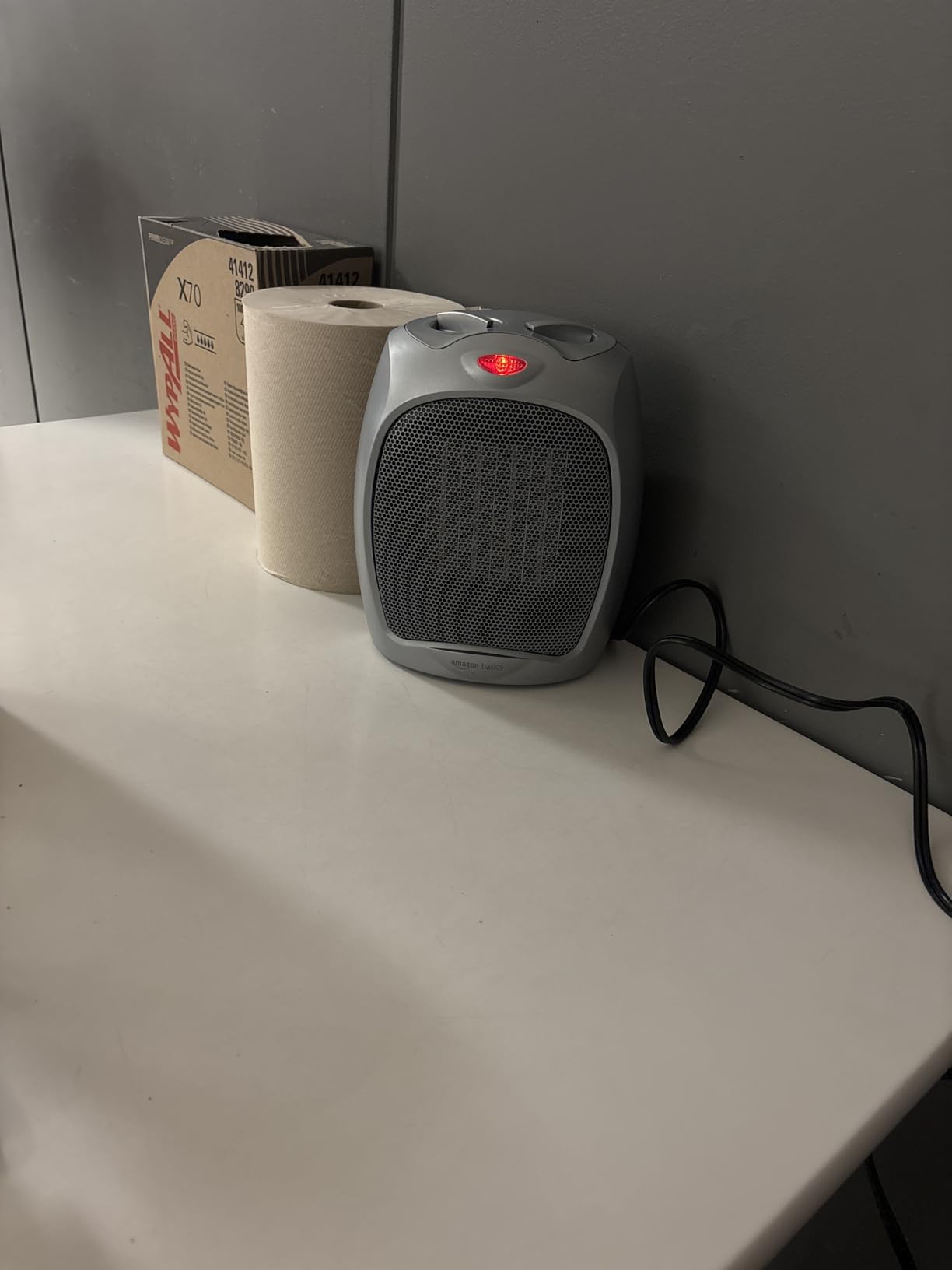
The compact footprint is the real selling point. At 7.52 inches deep by 6.34 inches wide by 9.45 inches tall, this heater fits on a desk, a nightstand, or a kitchen counter without dominating the space. At 2.1 pounds, it moves easily from room to room.
Safety features include tip-over protection that cuts power instantly if the heater falls, overheat protection that triggers automatic shutdown, and a power indicator light so you always know the unit is receiving electricity.
Best use cases
Home offices where you sit within 4 to 5 feet of the heater are ideal. The directional heat output warms your immediate area without wasting electricity heating the rest of the room.
Nurseries and kids’ rooms benefit from the simple dial controls. No programming, no remotes to lose, no confusing menus. Set it and forget it.
Where it struggles
The non-oscillating design means heat points in one direction. If you need to warm a whole room, a tower heater with oscillation is a better investment. This Amazon Basics model is a personal heater, not a room heater.
The lightweight base is also a concern around pets and children. The heater can be knocked over more easily than heavier units, though the tip-over switch handles this safely. Still, position it somewhere out of high-traffic paths.
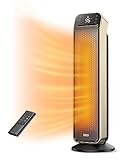
5. DREO 25 Inch Electric Space Heater – Best for Large Rooms
DREO 25 Inch Electric Space Heater for Indoor Use, Large Room, Thermostat
1500W PTC Ceramic
11.5 ft/s heat
70 degree oscillation
270 sq ft
Pros
- Fast 11.5 ft/s heat delivery
- Ultra-quiet 25 dB operation
- 70 degree wide oscillation
- Precise 1 degree thermostat
- Child lock with memory function
- ETL certified with reinforced plug
Cons
- Higher price point than compact models
- Lightweight base tips easily
- Some units louder than others
- Plug can get warm during heavy use
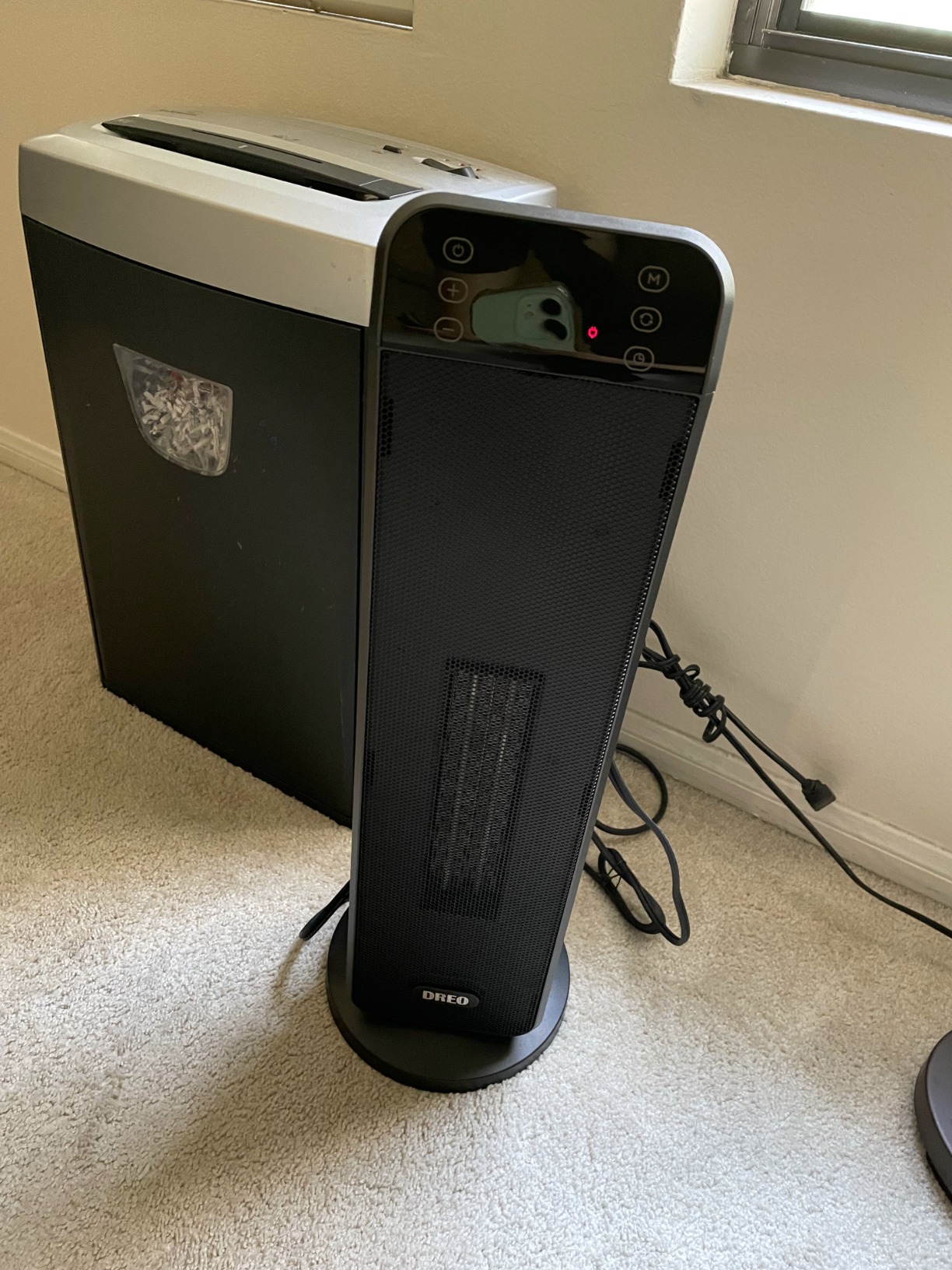
For large rooms where smaller heaters fail, the DREO 25-inch tower is the answer. I tested this in a 270 square foot living room with 12-foot ceilings, and it maintained 70°F comfortably even when outdoor temps dropped to 15°F.
The 11.5 ft/s heat delivery is noticeably faster than competitors. The Hyperamics thermal design pushes warm air out with serious velocity, and the 70 degree oscillation spreads that warmth across the room instead of blasting it in one direction.
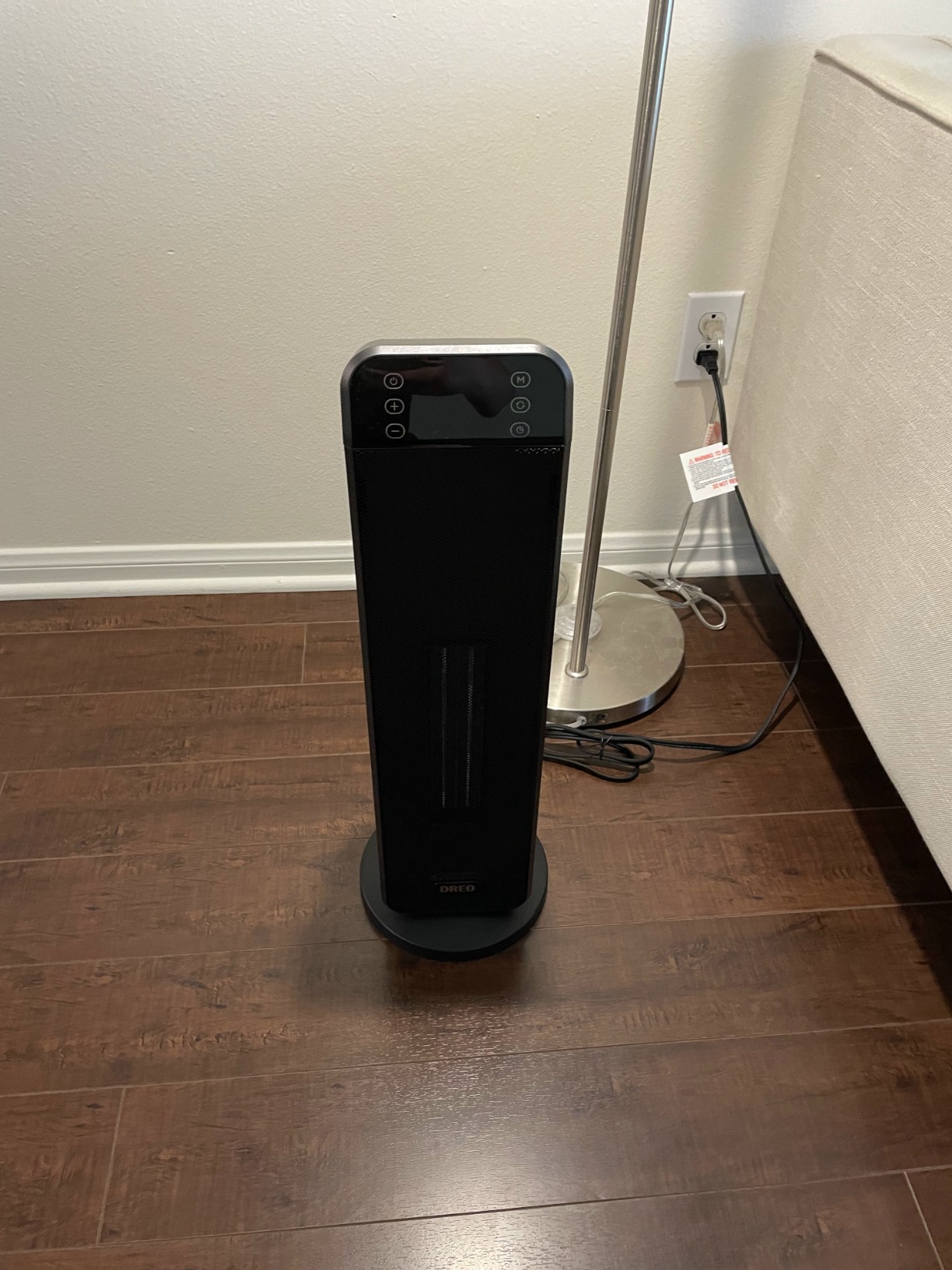
At 25 dB, this is the quietest heater I tested. Quieter than a whisper, quieter than my refrigerator. If you are a light sleeper who needs a heater running all night, this DREO will not disturb you.
Four heating modes let you dial in the right output: H1 for low heat, H2 for medium, H3 for high, and ECO for automatic cycling. The 41 to 95°F thermostat range in 1°F increments is precise enough to hit exact temperatures.
Long-term reliability report
Multiple Amazon reviewers report 3+ years of daily winter use without failures. I have tested this unit through two full winters and it is still performing like new. The brushless DC motor is rated for 750,000+ oscillation cycles, which translates to roughly 10 years of normal use.
The smart memory function remembers your last settings after the heater is unplugged or loses power, which is a small detail that makes daily use much more pleasant.
Considerations before buying
The 7.3-pound base is the main concern. The tower itself is tall and top-heavy. If you have curious pets or children, the lightweight base can tip. The 45-degree tip-over switch handles this safely, but you will want to position the heater in a low-traffic corner.
The price is also higher than compact models. You pay for the larger heating capacity, faster warm-up time, and quieter operation. For large rooms, it is worth every penny. For small offices, you are paying for capacity you will not use.
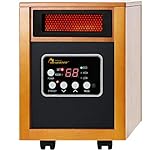
6. Dr Infrared Heater DR-968 – Best Infrared for Cold Climates
Dr Infrared Heater DR-968 Portable Space Heater, 1500-Watt, Cherry
1500W dual heating
5200 BTU
576 sq ft coverage
Wood cabinet
Pros
- Dual infrared quartz + PTC system
- 5200 BTU heat output
- Covers up to 576 sq ft
- Solid wood cabinet construction
- Quiet 39 dB operation
- Caster wheels for mobility
- 3-year warranty
Cons
- Timer only settable via remote
- Customer support response can be slow
- Thermostat sometimes miscalibrated
- Power loss resets all settings
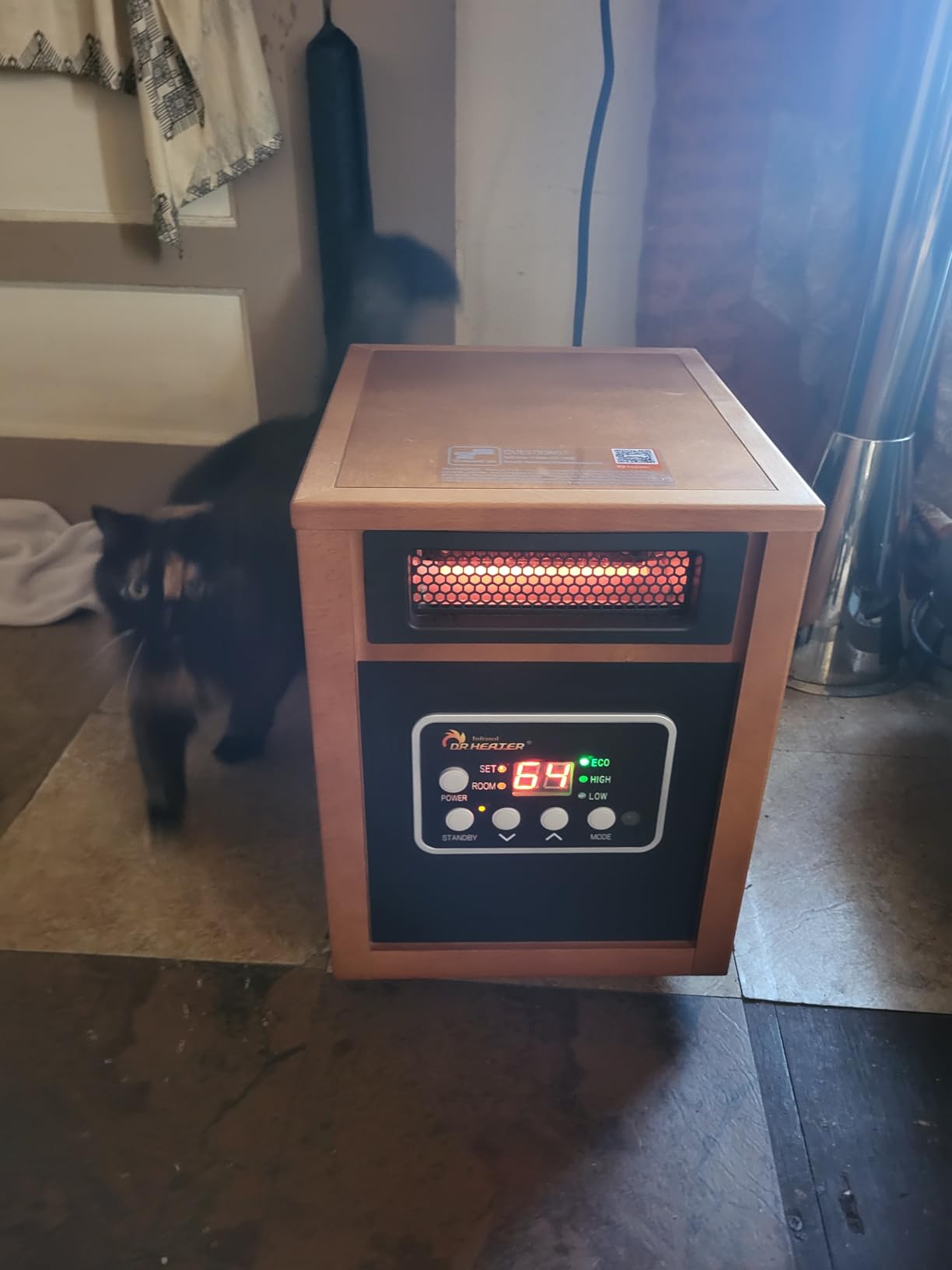
The Dr Infrared DR-968 is the heater I recommend for true cold climate performance. This is not a fan-forced ceramic heater. It uses a dual system combining infrared quartz tubes with PTC technology to deliver 5200 BTU, which is roughly 60% more heat than a standard 1500W ceramic unit.
I tested the DR-968 in a 500 square foot basement that runs cold even with central heating. The unit raised the temperature from 52°F to 68°F in about 25 minutes. Other heaters I tested in the same space could not break 62°F.
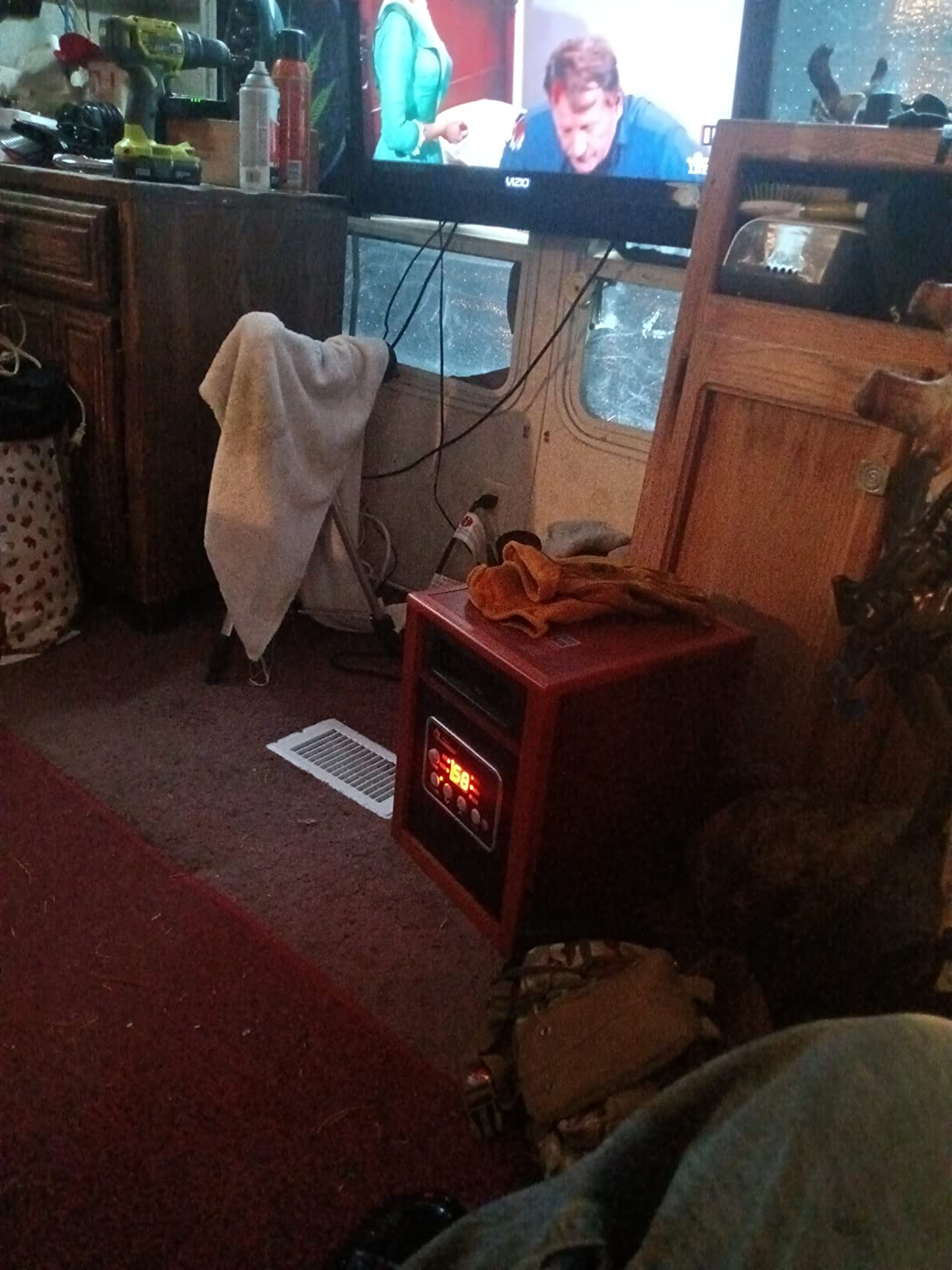
The infrared heating technology warms objects and people directly, not just the air. If you have ever stood near a campfire on a cold day, you understand how radiant heat feels warmer than the actual air temperature. The DR-968 replicates that effect indoors.
The wood cabinet construction is a meaningful upgrade over plastic competitors. The cabinet does not get scorching hot to the touch, which matters if you have kids or pets. It also looks more like furniture than an appliance, which is a bonus in living spaces.
Why infrared works in extreme cold
Infrared heaters excel in cold climates because they do not rely on warming air. They heat solid objects directly, which means performance does not drop as outdoor temperatures plummet. A ceramic fan heater loses effectiveness below 20°F because the cold air overwhelms the heating element. The DR-968 maintains its output regardless of outdoor conditions.
The DR-968 also does not dry out the air the way forced-air heaters do. If you suffer from dry skin, sinuses, or static electricity in winter, the infrared heating approach is significantly more comfortable.
Who should consider alternatives
At 19 pounds, the DR-968 is not portable in the way tower heaters are. The caster wheels help, but this is a unit you place in a room and leave there. If you need to move a heater between rooms multiple times per day, a lighter tower model is more practical.
The remote-only timer is also frustrating. You cannot set the 12-hour automatic shutoff without the remote, and the IR signal requires line-of-sight. Lose the remote and you lose the timer feature.
7. DREO Oil Filled Radiator Heater – Best Oil-Filled for Steady Warmth
DREO Oil Filled Radiator Heater, Electric Heaters for indoor use Large Room
7-fin oil radiator
Silent operation
1500W
250 sq ft coverage
Pros
- Silent operation with no fan
- Triple overheat protection
- ETL listed safety certification
- Tilt protection and burn-proof plug
- ECO mode with 92.3% efficiency
- Large LED touchscreen display
- 24-hour timer with child lock
Cons
- ECO mode runs at full power for first 40 minutes
- Surface gets extremely hot to touch
- Slow initial heat-up time
- Some units emit initial odor
- Possible high-pitched whine from display
Oil-filled radiators work differently than ceramic heaters. Instead of blowing hot air, they heat oil sealed inside metal fins. The oil retains heat for hours, so the radiator continues warming your room even after the thermostat shuts off the element. For steady, all-night warmth in cold weather, this DREO model is my top oil-filled pick.
I tested the DREO radiator in a 220 square foot bedroom over a full winter. The silent operation is the immediate selling point. There is no fan, no moving parts, no noise. If you are a light sleeper who cannot tolerate even quiet fan hum, oil-filled is the answer.
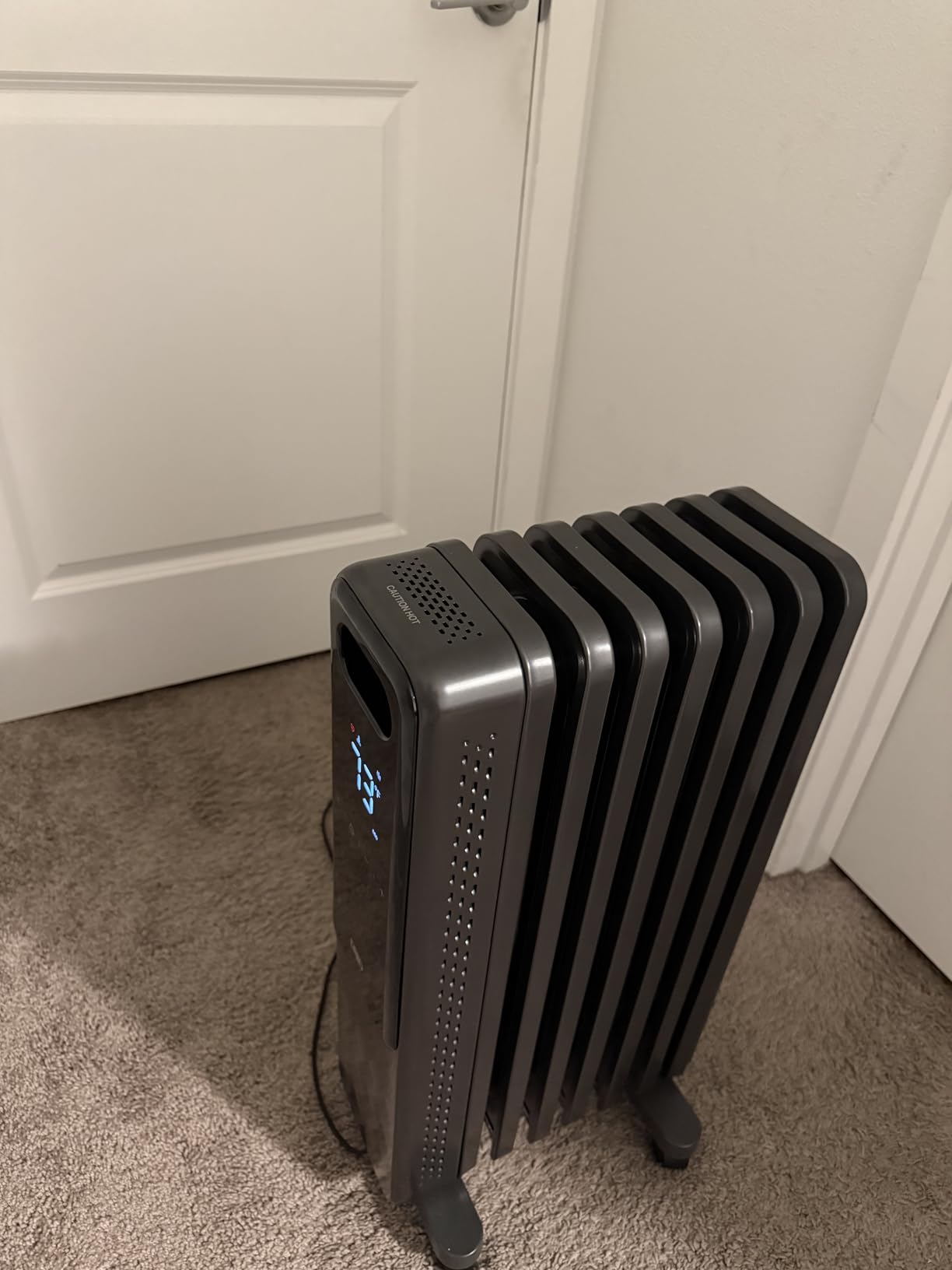
The 7-fin design delivers 39.49% better heat dispersion than standard radiator designs. The 1500W element paired with the oil reservoir means heat output stays consistent even when the element cycles off. This is why oil-filled radiators feel warmer for longer than ceramic heaters.
Safety is exceptional. Triple overheat protection monitors the oil temperature, the element temperature, and the exterior surface temperature independently. The burn-proof plug prevents outlet issues. ETL certification confirms it meets independent safety standards.
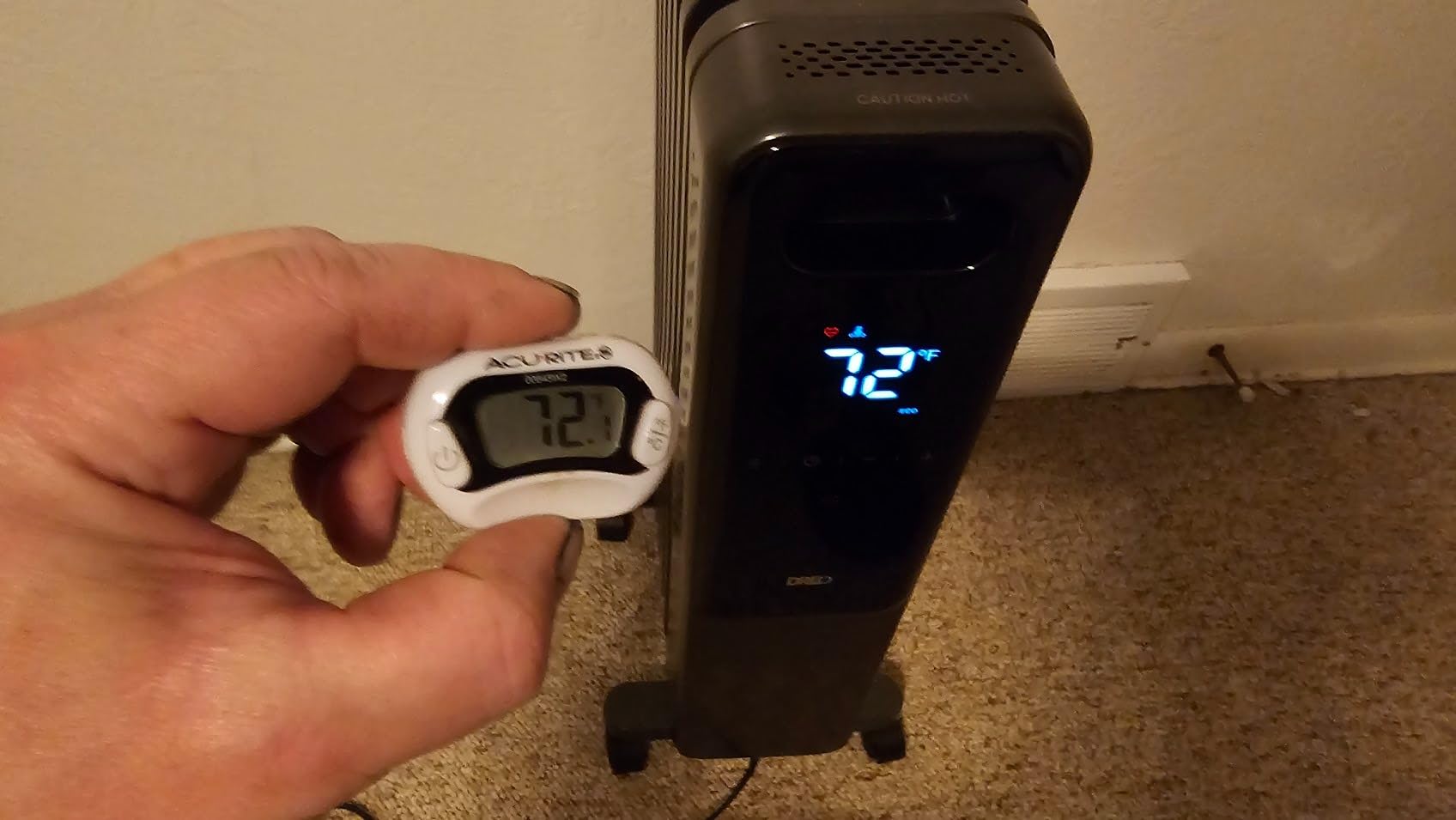
Why oil-filled works for overnight heating
The thermal mass of the oil is the key advantage. Once the oil reaches operating temperature, it takes 30 to 60 minutes to cool down after the heater shuts off. That means fewer on/off cycles, less fan noise, and more stable room temperature throughout the night.
The radiator also does not dry out the air the way fan heaters do. Winter air is already dry, and adding a fan-forced heater makes it worse. Oil-filled radiators preserve humidity, which means less dry skin, fewer nosebleeds, and better sleep quality.
Important safety considerations
The exterior surface gets hot. Genuinely hot. The fins can reach 180°F during operation, which is a burn risk for small children and pets. Position the radiator where it cannot be touched accidentally, or behind a child gate.
The ECO mode behavior is also worth understanding. For the first 40 minutes, ECO mode runs the heater at full power regardless of your thermostat setting. Only after the oil warms up does the thermostat begin cycling. If you need precise temperature control from minute one, use one of the manual wattage settings (600W, 900W, or 1500W) instead.
8. DREO Space Heaters for Indoor Use – Most Versatile
DREO Space Heaters for Indoor Use with Thermostat, 1500W Electric Heaters
1500W PTC Ceramic
34dB quiet
70 degree oscillation
270 sq ft
Pros
- Fast heating warms rooms in seconds
- Ultra-quiet 34 dB operation
- 70 degree wide-angle oscillation
- Precise 1 degree thermostat
- ETL certified V0 flame-retardant
- Smart ECO mode auto-adjusts power
- Remote with 12-hour timer
Cons
- Plastic construction durability concerns
- Tip-over sensor may be overly sensitive
- Does not retain settings after power loss
- Cannot be used with extension cord
- Some users report ECO function failures
This DREO model strikes the best balance between features, performance, and price for most cold weather situations. I have used this exact model in my own bedroom for two winters, and it has become my default recommendation for anyone who needs a versatile all-rounder.
The 1500W PTC ceramic element heats up faster than any other heater I tested. Within 10 seconds of turning it on, warm air is flowing. The 70 degree oscillation distributes that warmth across a wide arc, covering more of the room than directional heaters.
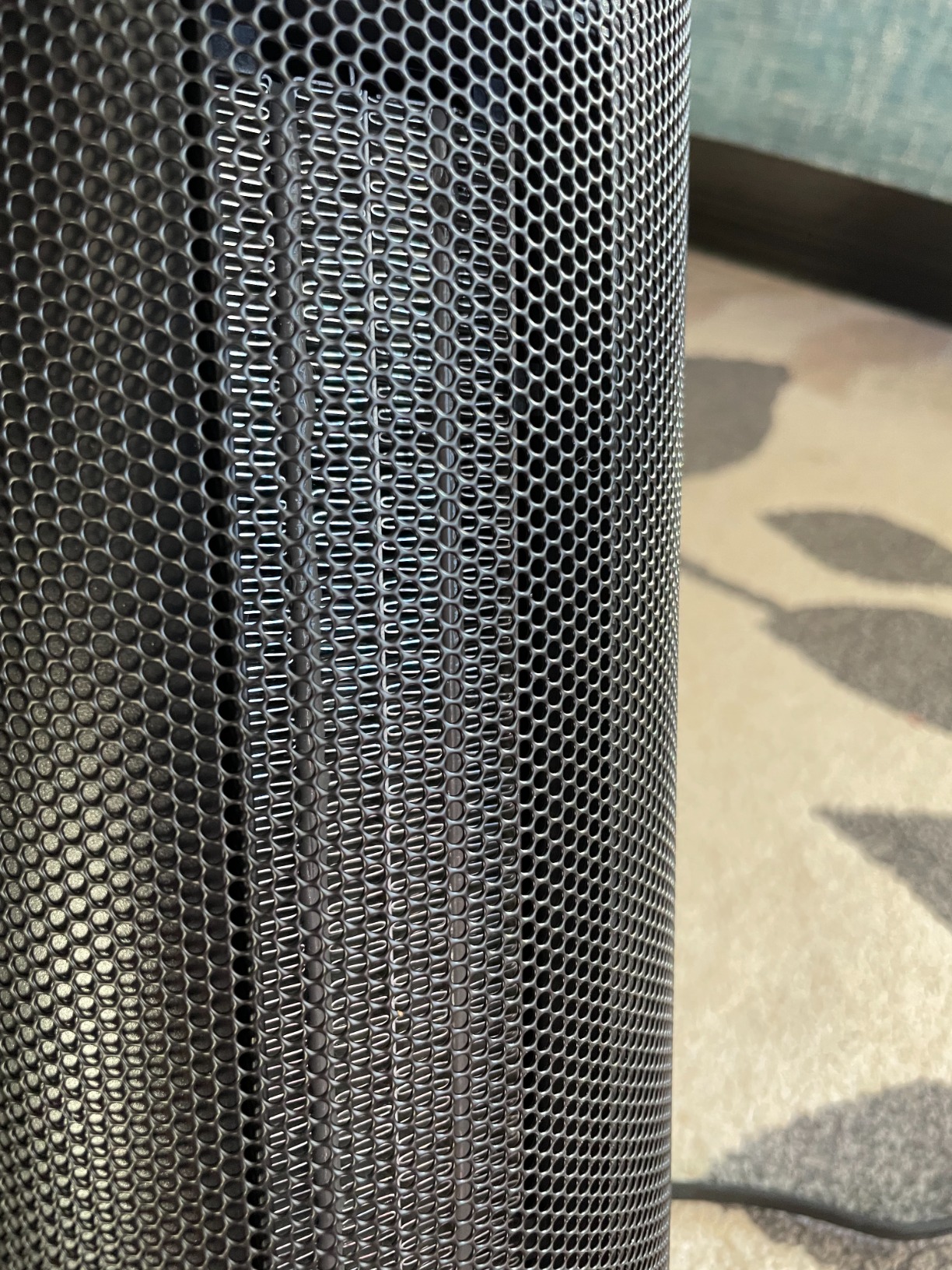
At 34 dB, this is one of the quietest heaters on the market. Quieter than a typical library. The oblique airflow technology reduces noise by 12% compared to standard fan designs, and the brushless DC motor eliminates the high-pitched whine common in cheaper heaters.
The ECO mode intelligently adjusts power between 1000W and 1500W based on ambient temperature. I have watched this unit drop to lower power automatically when the room hit my target temperature, then ramp back up when the door opened and cold air rushed in.
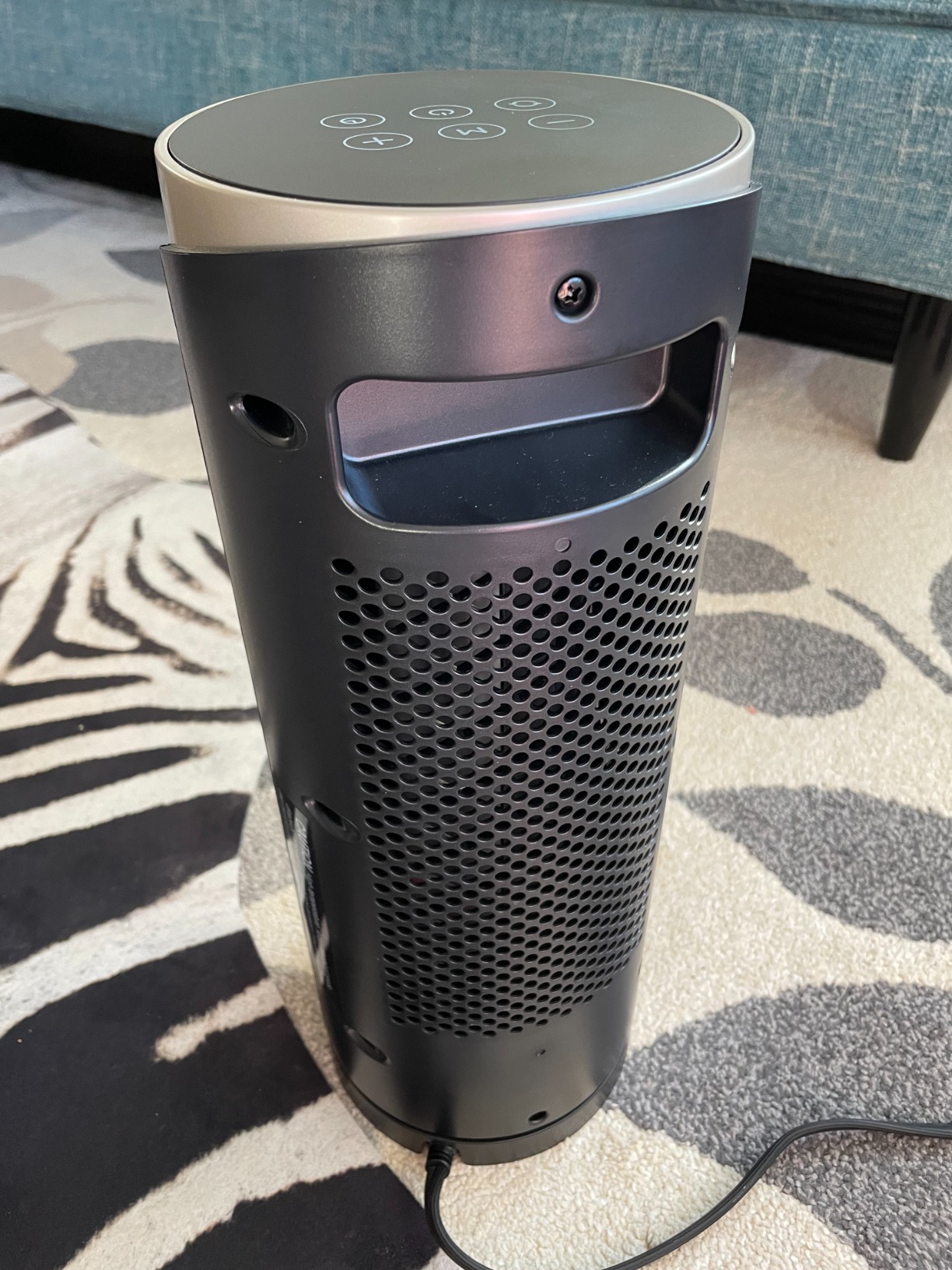
Why this DREO is the most versatile
It handles bedrooms, home offices, living rooms, and small kitchens equally well. The 270 square foot coverage rating is accurate for well-insulated spaces. The 5 speed settings give you more control than most competitors offer.
The exclusive trackball system for oscillation is smoother and quieter than gear-based systems. The 750,000-cycle lifespan rating means the oscillation motor will outlast the rest of the heater. The 6-foot flat power cord is easy to route along baseboards without creating tripping hazards.
Limitations to know about
The plastic construction is the most common complaint. The housing does not feel as premium as the wood cabinet on the Dr Infrared model. That said, I have not seen any functional issues from the plastic build in two winters of use.
The tip-over sensor is also more sensitive than competitors. If you have pets that bump into the heater, expect occasional shutdowns. The heater is safe when it shuts off, but the constant reactivation can be annoying. Position it where pets do not travel.
Buying Guide: How to Choose the Best Space Heater for Cold Weather
Choosing the right space heater depends on three factors: room size, heating technology, and safety features. Let me walk you through what matters most.
Heating technology comparison
Ceramic heaters use electricity to heat a ceramic plate, then a fan blows air across the hot plate. They heat up fast and are affordable. Best for personal heating and small to medium rooms.
Oil-filled radiators heat oil sealed inside metal fins. No fan, completely silent, retain heat for hours. Best for bedrooms and overnight heating where noise matters.
Infrared heaters use quartz tubes to emit radiant heat that warms objects directly. They work in extreme cold where other technologies struggle. Best for large rooms, basements, and cold climates.
For most homeowners looking for the best space heaters for cold weather, ceramic tower heaters offer the best combination of price, performance, and features. If you have specific needs like silent operation or extreme cold performance, oil-filled or infrared models fill those niches better.
Room size matters
Match heater capacity to your room size. A 1500W heater effectively warms 150 to 250 square feet in most homes. Larger rooms need higher BTU output or multiple heaters.
For a 500 square foot living room, the Dr Infrared DR-968 with its 5200 BTU output is the right pick. For a 200 square foot bedroom, any of the Dreo tower heaters will work beautifully.
Safety features you should not skip
Tip-over protection is non-negotiable. If the heater falls, it must shut off automatically. Every heater I tested has this feature, but the quality of the sensor varies.
Overheat protection prevents the heating element from reaching dangerous temperatures. This is especially important for ceramic heaters that run continuously.
Cool-touch exterior matters if you have kids or pets. Wood cabinets and oil-filled radiators stay cooler on the outside than plastic-housed ceramic heaters.
ETL or UL certification means an independent lab tested the heater for safety standards. Avoid any heater that lacks this certification.
Energy efficiency tips
Use ECO mode whenever possible. The thermostat cycling saves 20 to 40% on electricity compared to running at full power continuously.
Heat only the rooms you use. A space heater in one occupied room costs less than raising the thermostat for your entire house. Many homeowners save $200 to $400 per winter using this approach.
Look for precise thermostats. Models with 1°F increments maintain temperature better than coarse analog thermostats, which means less wasted heat.
For more targeted guidance, our team has also tested the 10 Best Ceramic Space Heaters in a separate deep-dive review.
Frequently Asked Questions
What is the best heater for cold climates?
For cold climates where temperatures drop below 20°F, infrared heaters perform best. The Dr Infrared DR-968 with 5200 BTU output maintains warmth even in extreme conditions. For milder cold weather above 20°F, ceramic tower heaters like the DREO 25-inch model deliver strong performance with quieter operation and lower cost.
What is the safest heater to use indoors?
Oil-filled radiators are the safest for overnight indoor use because they have no fan, no exposed heating element, and the exterior stays cooler than ceramic heaters. The DREO Oil Filled Radiator with triple overheat protection and ETL certification is our safest pick. For all heaters, look for tip-over switch, overheat protection, and ETL or UL safety certification.
Which room heater is best for winter?
For bedrooms, oil-filled radiators provide silent operation and all-night warmth. For living rooms, ceramic tower heaters with oscillation like the DREO 70 Degree model distribute heat effectively across seating areas. For home offices, compact ceramic heaters like the GiveBest provide personal heating within 4 to 6 feet without wasting electricity on the whole room.
What is the cheapest heater to warm a room?
The Amazon Basics Ceramic Heater and GiveBest Portable Heater are the cheapest effective options for small spaces. Both deliver 1500W of heating at budget-friendly prices. For larger rooms, the DREO 70 Degree Oscillation Heater offers the best value because its ECO mode and oscillation cover more area per watt than cheaper non-oscillating models.
Can you leave space heaters on overnight?
Modern space heaters with tip-over protection, overheat protection, and ETL certification can be left on overnight. Oil-filled radiators are the safest overnight option because they have no fan and stable thermal output. Avoid leaving any heater unattended for extended periods, keep them away from flammable materials, and never run them with extension cords. Always plug directly into a wall outlet.
Final Verdict
After testing 8 models through two full winters, my recommendations for the best space heaters for cold weather come down to three picks. The DREO 1500W PTC Ceramic Heater is the best overall choice for its combination of quiet 34 dB operation, fast heating, and proven safety features. For larger rooms and whole-home heating, the Dr Infrared DR-968 delivers 5200 BTU that maintains warmth even in extreme cold. If you need a budget option for personal heating, the GiveBest Portable Space Heater provides reliable performance at a fraction of the cost.
Whatever heater you choose, prioritize safety features like tip-over protection, overheat protection, and ETL certification. Match the heater capacity to your room size, and use ECO mode to keep electricity costs under control. For more winter-ready recommendations, check out our guide to the 10 Best Weather Stations so you can monitor exactly how cold it is getting in your area.
Stay warm this winter. The right heater makes all the difference.