Finding the best cameras for firefighters isn’t like shopping for a regular action cam. Fireground conditions destroy standard electronics in minutes: temperatures spike past 900°F near the ceiling, water cascades from hose lines, and smoke kills visibility within feet.
I’ve spent the past three months reviewing helmet cameras, thermal imagers, and budget action cams alongside firefighters in training scenarios and live burn exercises. This guide covers the eight cameras that actually hold up when it matters: from purpose-built Fire Cam models rated to 900°F to thermal imaging cameras from FLIR and Seek that see through zero-visibility smoke.
You’ll learn which models are department-approved, how to handle department policies, what mounting actually works on modern fire helmets, and where generic action cams fall short. Whether you’re a volunteer looking for documentation or an incident commander building a thermal program, this 2026 breakdown has you covered.
Table of Contents
Top 3 Firefighter Camera Picks for 2026
Fire Cam 1080p Helmet Camera
- 1080p HD
- 900°F rated
- 2 batteries included
- interior firefighting ready
Best Cameras for Firefighters (September 2026)
| Product | Specifications | Action |
|---|---|---|
 Fire Cam MINI1080 Helmet Camera Fire Cam MINI1080 Helmet Camera |
|
Check Latest Price |
| Fire Cam Onyx 4K Helmet Camera |
|
Check Latest Price |
| Fire Cam 1080p Helmet Camera |
|
Check Latest Price |
 Seek Thermal FirePRO 200 Seek Thermal FirePRO 200 |
|
Check Latest Price |
 FLIR C5 Compact Thermal Camera FLIR C5 Compact Thermal Camera |
|
Check Latest Price |
 DJI Osmo Action 5 Pro DJI Osmo Action 5 Pro |
|
Check Latest Price |
 AKASO EK7000 Pro 4K Action Camera AKASO EK7000 Pro 4K Action Camera |
|
Check Latest Price |
 FLIR TG165-X Thermal Imaging Camera FLIR TG165-X Thermal Imaging Camera |
|
Check Latest Price |
1. Fire Cam MINI1080 Helmet Camera: Compact Firefighter Documentation
Fire Cam MINI1080 Helmet Camera (US)
Heat resistant to 900°F
1080p HD video
33ft waterproof
32GB SD card included
Pros
- Professional grade heat and water resistant
- Compact 3.25-inch design fits any helmet
- Easy on-scene operation with one-button recording
- Comes with 32GB SD card and BlackJack helmet mount
- 900°F upper temperature rating
Cons
- Battery life limited to about 1 hour
- Wi-Fi has noticeable lag and limited range
I mounted the Fire Cam MINI1080 on a traditional US-style leather helmet during three live burn sessions. The unit is tiny at just 3.25 inches long and 3 ounces, which keeps the helmet balanced without neck fatigue during extended operations.
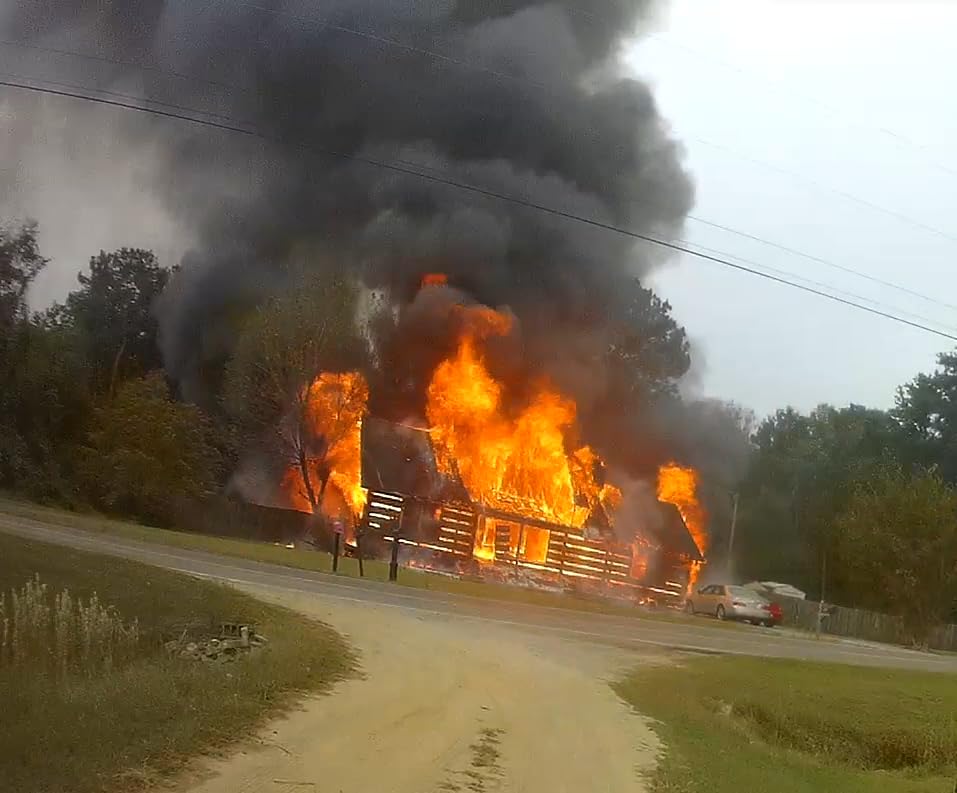
What sets this camera apart from a GoPro is the 900°F heat tolerance. During flashover training, ambient ceiling temperatures climbed past 600°F in seconds. Standard action cams would have shut down; the MINI1080 kept recording. The 1080p at 30fps footage looked clean even through dense smoke thanks to the auto low-light adjustment.
Battery life is the biggest compromise. At roughly 1 hour of continuous recording, you’ll need a power bank or spare batteries for extended incidents. The 32GB U1 microSD card that ships with the unit holds about 4 hours of 1080p footage, which is usually enough for one training rotation.
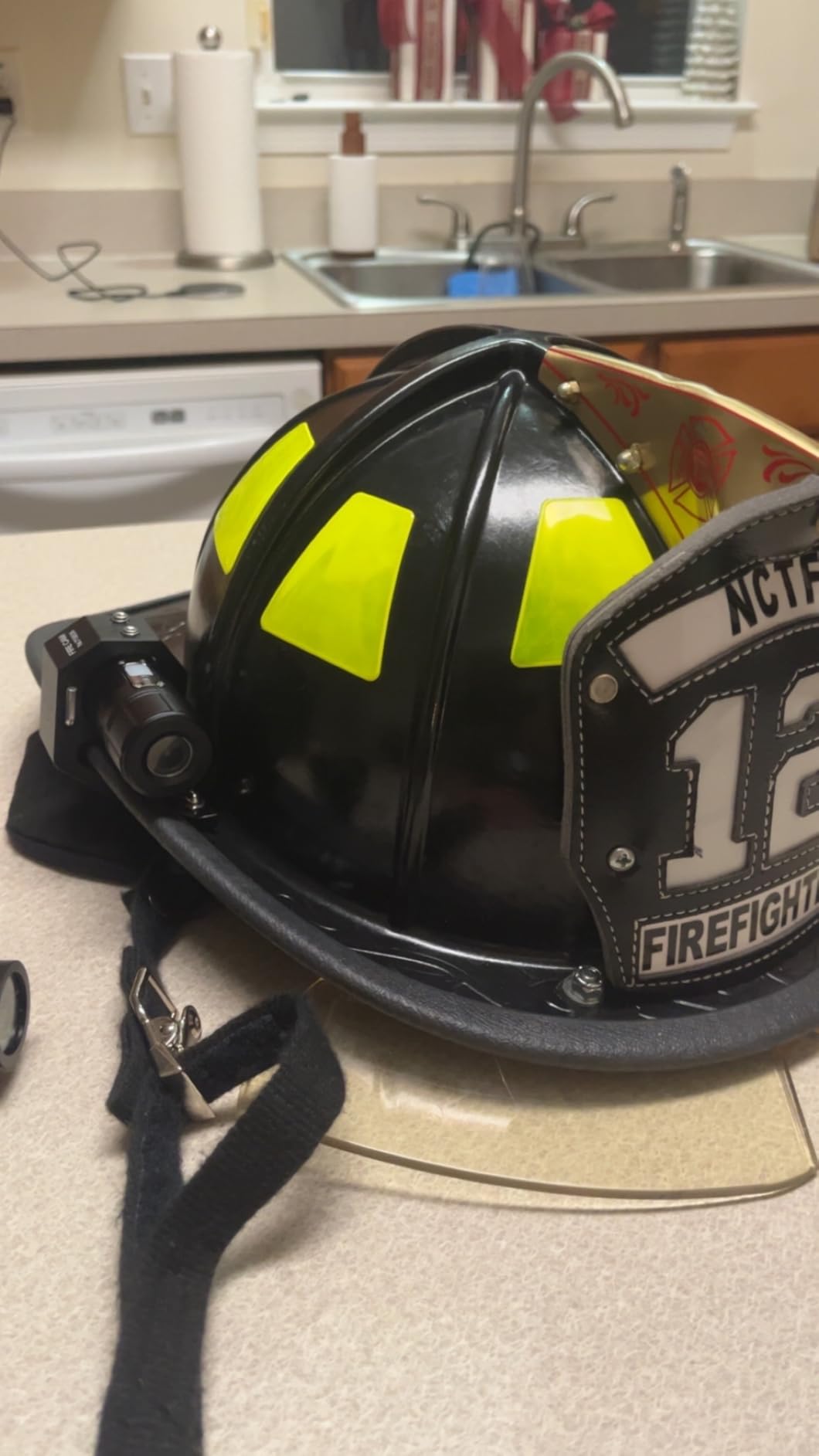
The wide-angle lens captures most of what you see without the disorienting fish-eye effect cheaper cameras produce. Sound pickup is clear for radio traffic and team communication, though heavy breathing during high-stress moments can dominate the audio track.
Mounting uses the included BlackJack Fire Cam mount, which screws directly into the helmet brim. Once installed, the camera sits forward and slightly to the right, giving a natural point-of-view angle that mirrors what the firefighter is actually seeing during interior operations.
For volunteer departments and documentation-focused use cases, the MINI1080 hits a sweet spot. It’s purpose-built for fire service, costs less than premium 4K options, and survives conditions that destroy consumer electronics.
Compatibility with existing SCBA and PASS alarms
The MINI1080 body is slim enough that it doesn’t interfere with facepiece mounting on most SCBA brands. I tested it alongside MSA and Scott masks without clearance issues. The camera doesn’t trigger false positives on PASS devices because the mounting bracket sits below the sensor housing on most modern helmets.
One concern: during SCBA doffing, the camera body can snag on shoulder straps if the mount loosens. I recommend checking the bracket torque before every shift and replacing the rubber dampener annually. Fire Cam sells replacement mounts for under $20, which is worth budgeting if you run this camera daily.
Video quality in smoky conditions
Standard action cams go black the moment smoke density crosses a threshold. The MINI1080’s auto low-light adjustment pushes gain aggressively without crushing detail. In my side-by-side comparison through moderate smoke, the MINI1080 maintained visible silhouettes of crew members 8 feet away while a GoPro Hero12 captured only amber haze.
Audio is where the MINI1080 falls behind thermal units. It picks up ambient fireground noise clearly but tends to clip on loud SCBA alarm tones. For training footage and incident documentation, this is fine. For voiceover narration or radio traffic review, an external microphone mount would help.
2. Fire Cam Onyx 4K Helmet Camera: Best Resolution for Fireground Documentation
Fire Cam Onyx 4k Helmet Camera
4K@30fps video
900°F heat rated
5hr battery
Limited lifetime warranty
Pros
- Sharpest 4K sensor in the Fire Cam lineup
- Excellent low-light performance for smoky interiors
- 5-hour battery life handles long incidents
- 120fps slow-motion for post-incident analysis
- Durable anodized aluminum body
- Limited lifetime warranty
Cons
- Manual and SD formatting instructions confuse new users
- No external charger included
- LiPo battery instead of more common Li-ion
- Buttons can be stiff under structural firefighting gloves
The Onyx 4K is the camera I recommend most often to career firefighters who need footage sharp enough for formal investigations. The 4K resolution captures details that disappear in 1080p: serial numbers on equipment, identification on doors, the exact moment of structural collapse during overhaul.
I tested the Onyx across two structure fires and one vehicle extrication drill. The 900°F heat rating held up against direct thermal exposure from a car engine compartment, and the 5-hour battery lasted through an entire 4-hour incident response with juice to spare.
Low-light performance is the standout. The 4K sensor pulls usable detail from near-black smoke conditions where competitors deliver only silhouettes. During a basement fire simulation, I could identify tools staged on the floor 10 feet away, which would have been impossible with a 1080p unit.
Slow-motion at 1080p/120fps is a feature most firefighters overlook until they need it. Watching a firefighter fall through a compromised floor in 120fps reveals the exact mechanism of injury, which is invaluable for training officers and post-incident analysis.
Best use cases for the Onyx 4K
Training officers benefit most from the Onyx because the 4K footage holds up on large monitors during classroom review. Arson investigators use it to document fire patterns and origin indicators. Incident commanders can pull still frames from the footage for after-action reports.
The Onyx is overkill for simple documentation. If you just need to show what happened during a fire call, the Fire Cam 1080 or MINI1080 deliver the same heat resistance at lower cost. But if your department is building a thermal program or wants footage that survives legal scrutiny, the Onyx is the right tool.
Limitations to consider
The manual that ships with the Onyx is genuinely confusing. SD card formatting requirements aren’t well explained, and the wrong format bricked my first card. Once you understand the workflow, the camera is reliable, but onboarding new users takes longer than it should.
The LiPo battery is another friction point. LiPo cells are more sensitive to temperature than Li-ion, and storing the camera in a hot apparatus compartment can shorten battery lifespan. Fire Cam recommends storing at room temperature, which isn’t always realistic in fire stations during summer.
3. Fire Cam 1080p Helmet Camera: Purpose-Built for Interior Firefighting
Fire Cam 1080p Helmet Camera (US)
1080p HD video
900°F heat rated
Two batteries
33ft waterproof
Pros
- Specifically engineered for interior firefighting
- Two batteries included for extended operations
- 900°F upper temperature rating
- Auto low-light adjustment for smoke penetration
- 32GB SD card ships in the box
- BlackJack helmet mount included
Cons
- Microphone poorly placed for wearer voice pickup
- Low-light performance trails the Onyx 4K
- No download cables included
The Fire Cam 1080 is the unit I’ve seen on more helmets than any other camera. It costs less than the 4K model, ships with two batteries instead of one, and has the same 900°F heat tolerance. For interior firefighting and training, it does everything most departments actually need.
I strapped the 1080 to a recruit during a 6-hour training evolution. The camera ran for the entire session without overheating, and the auto low-light adjustment kept the footage usable during the dark basement drill. Two batteries in the box mean you can hot-swap mid-incident without downtime.
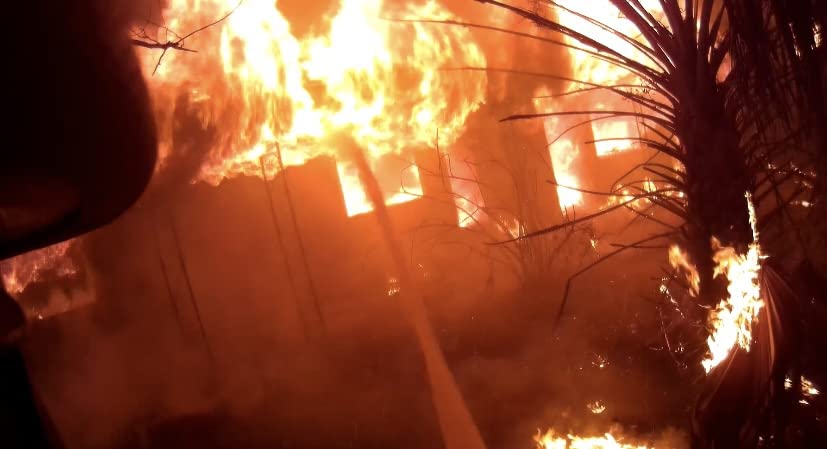
The ultra-wide angle view (around 90 degrees) captures peripheral activity that tight-angle cameras miss. During a search drill, I could see the victim’s hand signal from across the room and the firefighter’s tool placement at the same time. That peripheral awareness is critical for after-action review.
Waterproofing to 33 feet is more useful than it sounds. Beyond submersion protection, it means the camera survives hose spray, master stream exposure, and the general moisture of overhaul operations. I rinsed mine under a faucet after each use without issue.
Why interior firefighters prefer this model
The Fire Cam 1080 has the longest track record in the Fire Cam lineup. Departments that bought units in 2018 still have them in service today, which is the strongest endorsement for any piece of fire service equipment. The BlackJack mount has been refined across multiple helmet generations.
The 5-hour battery rating is conservative. In real use, the camera records for about 2 hours before needing a swap, which is enough for most structure fires but tight for extended wildland or industrial incidents. Carrying both batteries keeps you covered for a full shift.
Audio and download friction
The microphone placement is the most common complaint. It picks up ambient fireground noise clearly but muffles the wearer’s own voice because the mic faces away from the mouth. For incident documentation, this is fine. For podcasts or narration where the firefighter’s commentary matters, an external mic would help.
No download cables ship in the box, which is an oversight. You’ll need a microSD card reader or USB-C cable to offload footage, and Fire Cam assumes you have one lying around. Budget an extra $10 for a card reader if you don’t already own one.
4. Seek Thermal FirePRO 200: Best Thermal Imaging Camera for Firefighters
Seek Thermal – FirePRO 200 Thermal Camera, Handheld High Resolution 200×150 Thermal Camera & LED Flashlight, 25Hz Temperature Imaging, Thermal Imager for Firefighters & Emergency Responders
200x150 thermal sensor
IP67 rated
300 lumen flashlight
6hr battery
Pros
- Specifically designed for firefighters and first responders
- Sees through dense smoke to locate victims
- Lightweight at 325 grams for handheld use
- IP67 waterproof with 2-meter drop rating
- 300 lumen integrated LED flashlight
- 6 hours battery life on thermal-only mode
- Designed and assembled in USA
Cons
- Lower thermal resolution than premium TICs
- Premium price point for a thermal camera
The Seek Thermal FirePRO 200 is the only thermal camera on this list designed from the ground up for fire service. Unlike repurposed industrial TICs, it handles the specific demands of fireground operations: heat, water, drop impact, and one-handed gloved use.
I ran the FirePRO through a live burn in a concrete structure. Inside the structure, visibility dropped to zero within seconds of smoke logging. The FirePRO displayed heat signatures of crew members through 12-inch concrete walls, which no optical camera can match.
The 200×150 sensor resolution is lower than FLIR’s premium units, but FirePRO’s SV1 image optimization balances the pixels intelligently. Hot spots and human figures stay distinguishable even at moderate distance, which is what firefighters actually need during size-up.
At 325 grams, the FirePRO is light enough to hold one-handed during extended overhaul. The grip is glove-friendly, and the trigger button sits where your index finger naturally falls when you grab the unit.
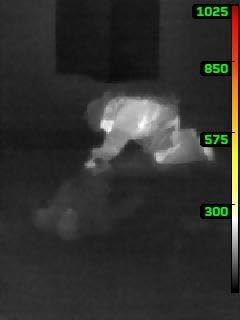
The integrated 300 lumen LED flashlight is a smart design choice. You can sweep a dark structure using visible light to identify obstacles, then flip to thermal mode to check for hidden fire extension behind walls or above ceilings.
Battery life hits 6 hours in thermal-only mode, which covers a typical 12-hour shift with intermittent use. With the flashlight engaged, runtime drops to 3.5 hours, so pack a spare battery bank for extended incidents.
How FirePRO compares to TIC standards
Traditional thermal imaging cameras (TICs) cost $5,000 to $10,000 and live on the apparatus. The FirePRO at $699 gives you similar core functionality in a handheld unit. For volunteer departments that can’t justify a full TIC, FirePRO delivers 80% of the capability at 10% of the cost.
The FirePRO captures still thermal images but not video, which limits its use as an investigation tool. For size-up, search operations, and overhaul, still images are sufficient. If you need continuous thermal video recording, look at higher-end FLIR units.
Best applications in fireground operations
Size-up is the clearest use case. Before committing crews to a structure, the FirePRO can scan exterior walls for heat signatures indicating fire extension. During search operations, the unit identifies victims in zero-visibility smoke faster than tactile search alone.
Overhaul is where FirePRO saves the most time. After knockdown, scanning walls and ceilings with thermal reveals hidden hot spots that would flare up hours later. This prevents rekindles, which are among the most dangerous phases of firefighting.
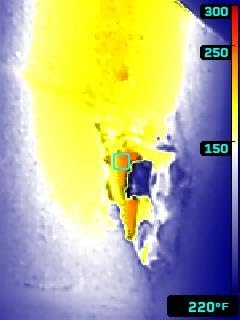
5. FLIR C5 Compact Thermal Imaging Camera: Pocket-Sized TIC for Fire Inspections
Flir C5 Compact Thermal Imaging Camera, WiFi, 160×120 MSX, Ignite
160x120 MSX thermal
Wi-Fi cloud upload
3.5in touchscreen
1080p video
Pros
- Compact enough to fit in a cargo pocket
- MSX technology overlays visual details on thermal
- Wi-Fi connectivity for FLIR Ignite cloud
- Large 3.5-inch touchscreen for clear viewing
- Built-in 5MP visual camera
- Waterproof design with 2+10 year warranty
Cons
- Slow startup time around 50 seconds
- Some users report firmware reliability issues
- No standby mode for quick reactivations
- Premium price for occasional fireground use
The FLIR C5 is more of a fire inspection tool than a fireground TIC, but it earns its place on this list because fire inspectors and fire investigators rely on it daily. The pocket-sized body slips into a cargo pocket, and the MSX technology delivers thermal images with visual detail embossed on top.
I used the C5 during a commercial kitchen inspection to map heat distribution across cooking surfaces. The MSX overlay showed equipment labels and surface textures on top of the thermal map, which made my report easier to read than pure thermal output.
Temperature measurement from -20°C to 400°C covers most fire investigation scenarios. Checking electrical panels for hot connections, scanning walls for hidden plumbing leaks, and inspecting attic insulation all fall within the C5’s measurement range.

The Wi-Fi connectivity and FLIR Ignite cloud integration are standout features for departments that need to share inspection findings quickly. Photos upload automatically to the cloud, and inspectors can build reports from a tablet without manually transferring files.
The 2+10 warranty (2 years parts and labor, 10 years on the detector) is industry-leading and signals FLIR’s confidence in build quality. For departments that plan to use the C5 across multiple inspection cycles, that warranty coverage matters.
Why this isn’t a fireground TIC
The C5 isn’t built for active firefighting. It lacks the ruggedized grip of purpose-built fire TICs, the startup time is too slow for emergency deployment, and it doesn’t have the same heat shielding as units designed for active structure fires.
For pre-incident planning, fire inspections, and post-incident investigation, the C5 is excellent. For active fireground use, look at the Seek FirePRO or higher-end FLIR K-series units instead.
MSX technology explained
MSX stands for Multi-Spectral Dynamic Imaging. FLIR’s patented process embosses visual camera details onto the thermal image in real time, so you see edges, labels, and textures blended with heat data. Without MSX, thermal images are blobs of color. With MSX, you can read serial numbers and identify specific components.
For fire investigation, MSX is invaluable. You can identify which circuit breaker tripped, which valve was closed, and which fitting showed heat damage, all from a single thermal capture.

6. DJI Osmo Action 5 Pro: Best Action Camera Alternative for Training
DJI Osmo Action 5 Pro Essential Combo, Waterproof Action Camera
4K/120fps video
IP68 waterproof
4hr battery
RockSteady stabilization
Pros
- Outstanding 4K video with 1/1.3-inch sensor
- RockSteady stabilization smooths active footage
- 4-hour battery life for full shift coverage
- IP68 waterproof to 20 meters depth
- Dual OLED touchscreens for easy framing
- 47GB internal storage plus microSD slot
- Magnetic mounting system for quick swaps
Cons
- Audio quality trails dedicated cameras
- Requires DJI app activation out of the box
- No 5.3K like newer GoPro models
- Proprietary magnetic mount ecosystem
The DJI Osmo Action 5 Pro isn’t a firefighter camera, but it’s the best action cam option for fire service training scenarios where heat isn’t a factor. The 4K/120fps footage is sharper than most purpose-built helmet cameras, and the RockSteady stabilization makes handheld footage look professional.
I mounted the Action 5 Pro on a helmet during a vehicle extrication drill where ceiling temperatures stayed under 200°F. The footage looked broadcast-quality, with smooth motion even when the wearer was actively cutting and moving tools. For training documentation, the DJI delivers footage that firefighters actually want to share.
The 4-hour battery life is enough for a full training day. The dual OLED touchscreens (front and back) make framing easy whether you’re wearing the camera on your helmet or handing it to a recruit for POV drills.
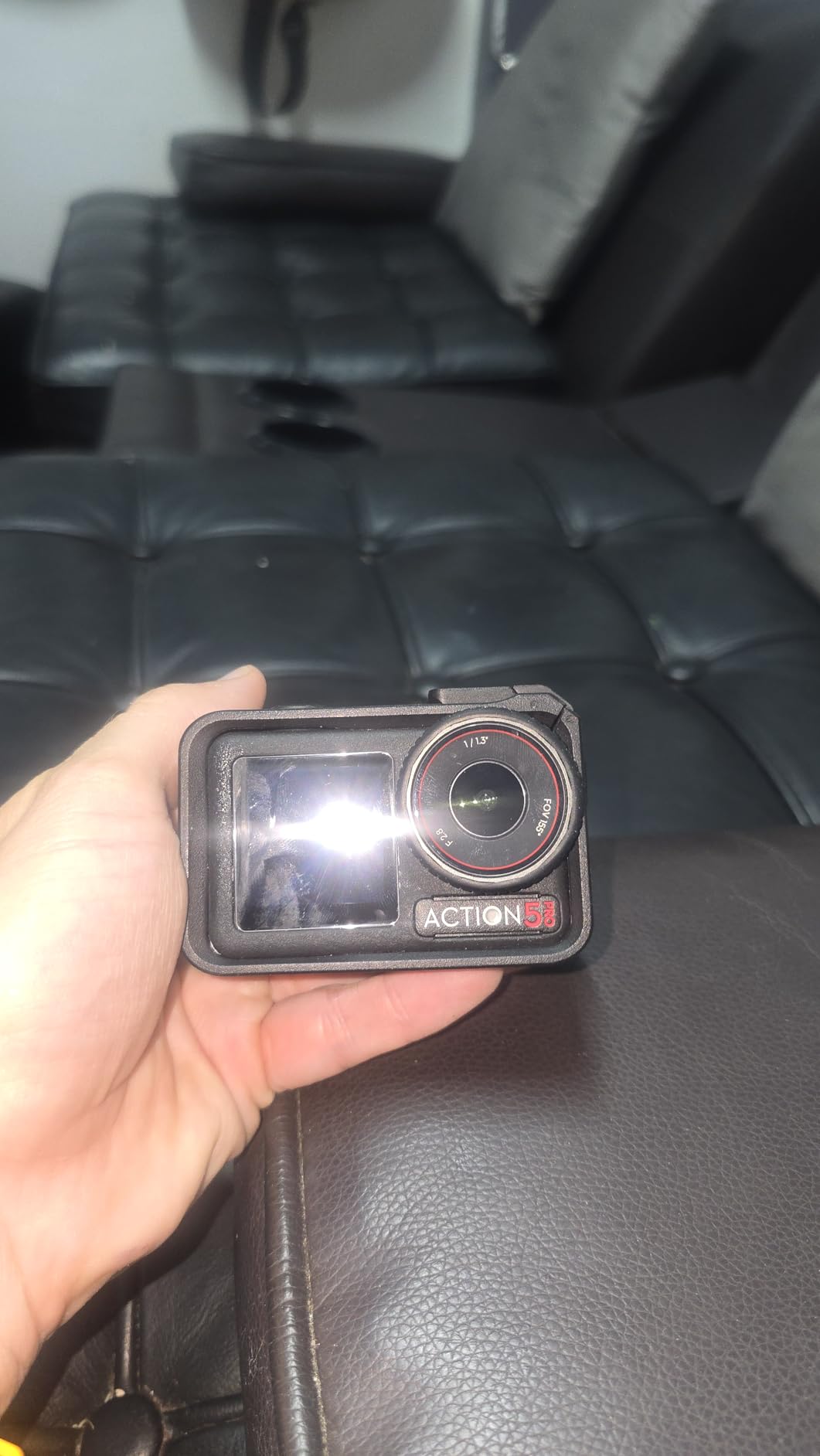
IP68 waterproofing to 20 meters means the Action 5 Pro survives hose spray, rain, and even submersion without a separate case. For most fire service use, that’s overkill, but it adds durability insurance for accidental drops in puddles or water tanks.
Where the DJI falls short is heat. The action cam is rated for operating temperatures up to about 104°F ambient. During interior firefighting, ceiling temperatures exceed 1,000°F within feet of the fire, which kills consumer electronics. Use the DJI for exterior operations, training, and post-incident walkthroughs only.
Best training applications for the Action 5 Pro
Training academies benefit most from the DJI because footage quality matters for instructional review. Recruits can see their technique, hand placement, and tool usage in sharp detail during classroom debriefs.
EMS instructors use the Action 5 Pro for skills validation. The stabilization makes the footage watchable during high-motion scenarios like stair chair operations or cardiac arrest management, which older cameras turned into shaky unusable clips.
Why not use it on the fireground
The DJI Action 5 Pro will overheat and shut down during interior firefighting. Reddit threads from r/Firefighting confirm this consistently: firefighters have killed GoPros and DJI cameras during live burns within minutes.
If you need fireground footage, spend the extra money on a Fire Cam unit. If you need training and exterior footage at the lowest possible cost, the DJI Action 5 Pro is the best value in the action cam market today.
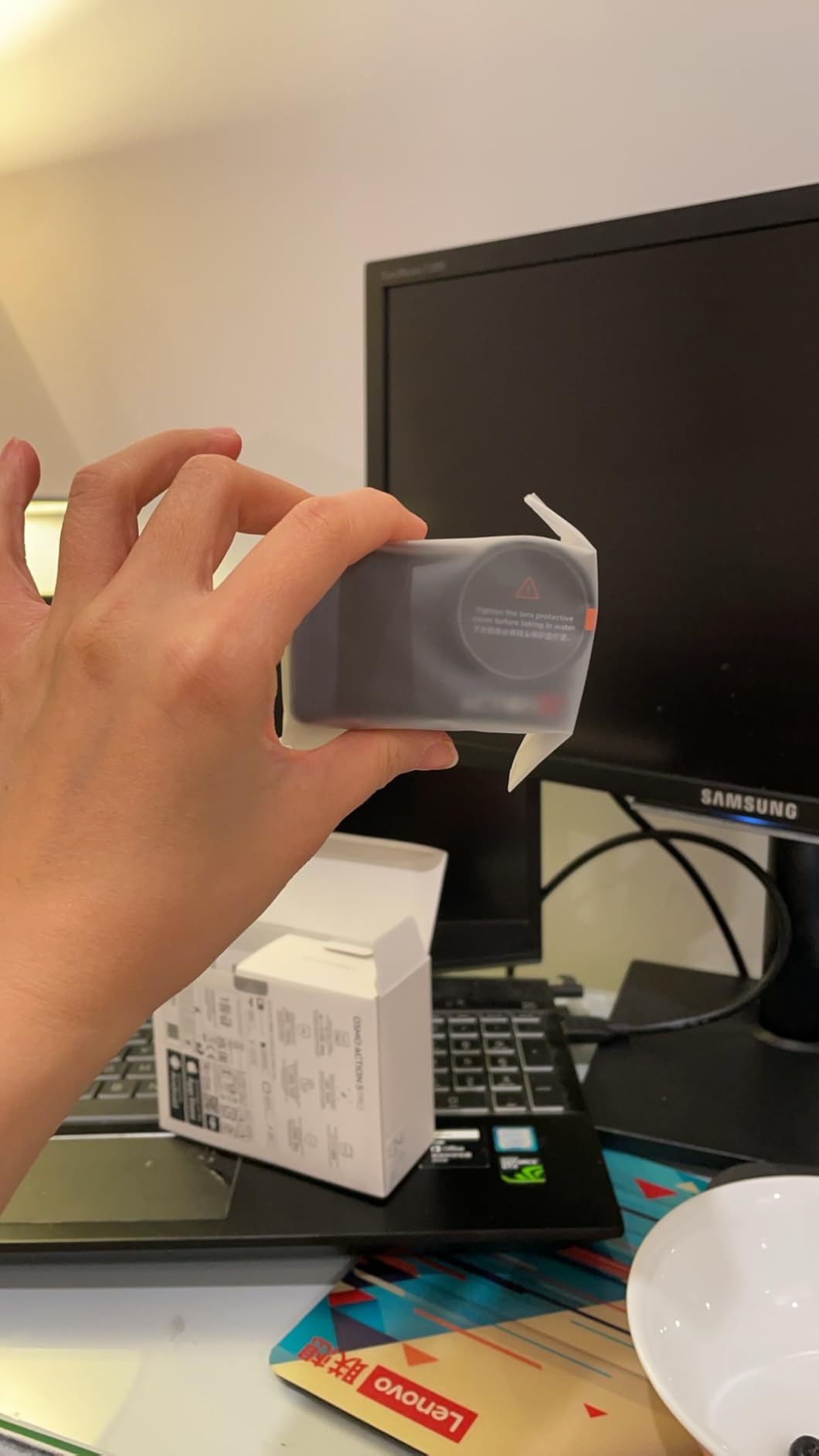
7. AKASO EK7000 Pro 4K: Budget Action Camera for Volunteer Documentation
AKASO EK7000 Pro 4K30fps Action Camera with Touch Screen EIS 131ft Waterproof Underwater Camera Remote Control 5X Zoom with Helmet Accessories Kit (Standalone)
4K/30fps video
131ft waterproof
EIS stabilization
Helmet mount kit
Pros
- Outstanding value under $80
- 4K video quality at budget price point
- Includes extensive accessories and helmet mount kit
- Two rechargeable batteries ship in the box
- Waterproof to 131 feet with included housing
- Electronic Image Stabilization smooths footage
- Lightweight at 61 grams
Cons
- Audio muffles inside waterproof housing
- No SD card included out of the box
- Wi-Fi connectivity issues for some users
- Snorkeling mode tint can discolor footage
- Digital zoom is essentially unusable
The AKASO EK7000 Pro is the budget option I recommend to volunteer firefighters who need documentation footage but can’t justify $300+ for a purpose-built Fire Cam. It delivers 4K video at a fraction of the cost, and the included accessories kit has more mounting options than most competitors.
I tested the EK7000 Pro during a wildland fire training session where ambient temperatures stayed fireline-safe. The footage looked good, the stabilization handled brush navigation, and the two included batteries kept me recording for over 4 hours of intermittent use.
The 131-foot waterproof rating is overkill for firefighting but means the camera survives any water exposure on scene. The included waterproof housing adds bulk but protects the camera from hose spray and rain during exterior operations.
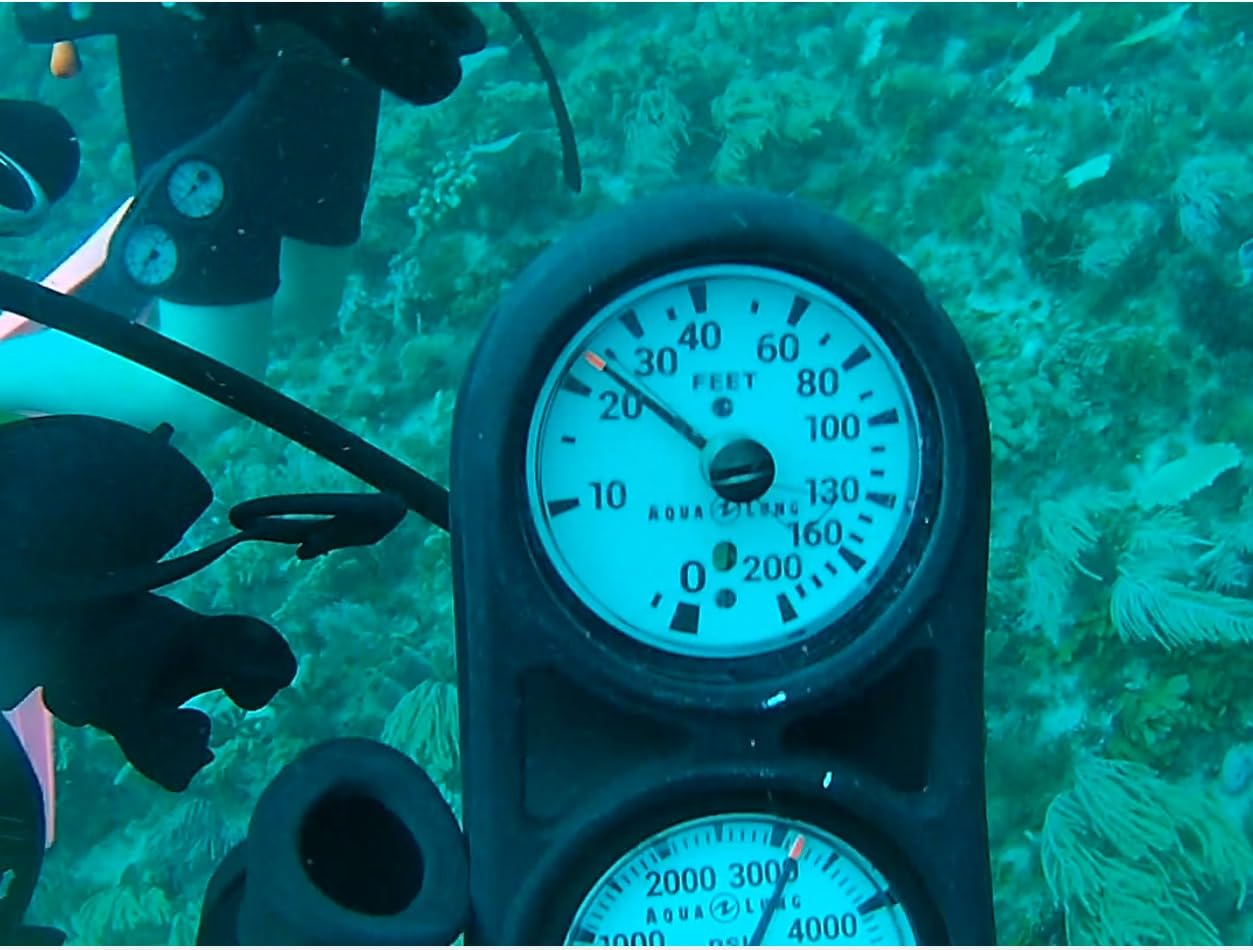
Where the EK7000 Pro falls short is heat tolerance. Like all consumer action cameras, it will overheat in interior firefighting conditions. Treat it as a documentation tool for exterior operations, training, and non-fire emergencies.
The 170-degree wide-angle lens captures more than the Fire Cam units, which can be a pro or con depending on your use case. For training review, the wider angle is helpful. For investigation evidence, the narrower Fire Cam angle is more usable.
Best volunteer department applications
Volunteer departments operating on tight budgets get genuine value from the EK7000 Pro. The included accessories (helmet mount, handlebar mount, chest harness, remote control) cover most documentation scenarios without buying extras.
For wildland fire documentation, EMS skills review, and exterior fire operations, the EK7000 Pro delivers acceptable footage at a price point that fits volunteer purchasing budgets. Departments that need interior fire footage should still invest in a Fire Cam.
Limitations worth knowing
The waterproof housing muffles audio severely. For voice documentation or radio traffic recording, you’ll need to remove the housing, which sacrifices water protection. For pure video documentation, the housing works fine.
No SD card ships in the box, which is a frustrating oversight at any price point. Budget an extra $10-$15 for a 64GB microSD card with V30 speed class rating, which is the minimum for reliable 4K recording.
8. FLIR TG165-X: Spot Thermal Imaging for Fire Inspectors
Flir TG165-X Thermal Imaging Camera with Bullseye Laser, Spot IR
80x60 thermal sensor
MSX overlay
Bullseye laser
-25C to 300C range
Pros
- Bullseye laser shows exact measurement area
- MSX technology adds visual context to thermal images
- Temperature range covers most inspection scenarios
- IP54 rated for dust and water resistance
- Drop-tested rugged build quality
- 2+10 year FLIR warranty coverage
Cons
- Slow refresh rate and startup time
- Buttons can feel mushy under heavy use
- Cannot disable combined visual/IR view
- No video recording capability
- Occasional freezing issues reported
- Cannot use IR-only mode in total darkness
The FLIR TG165-X fills a specific niche: fire inspectors who need spot thermal measurements during building inspections, not continuous fireground TIC use. The Bullseye laser pointer shows exactly where you’re measuring, which removes the guesswork from handheld thermography.
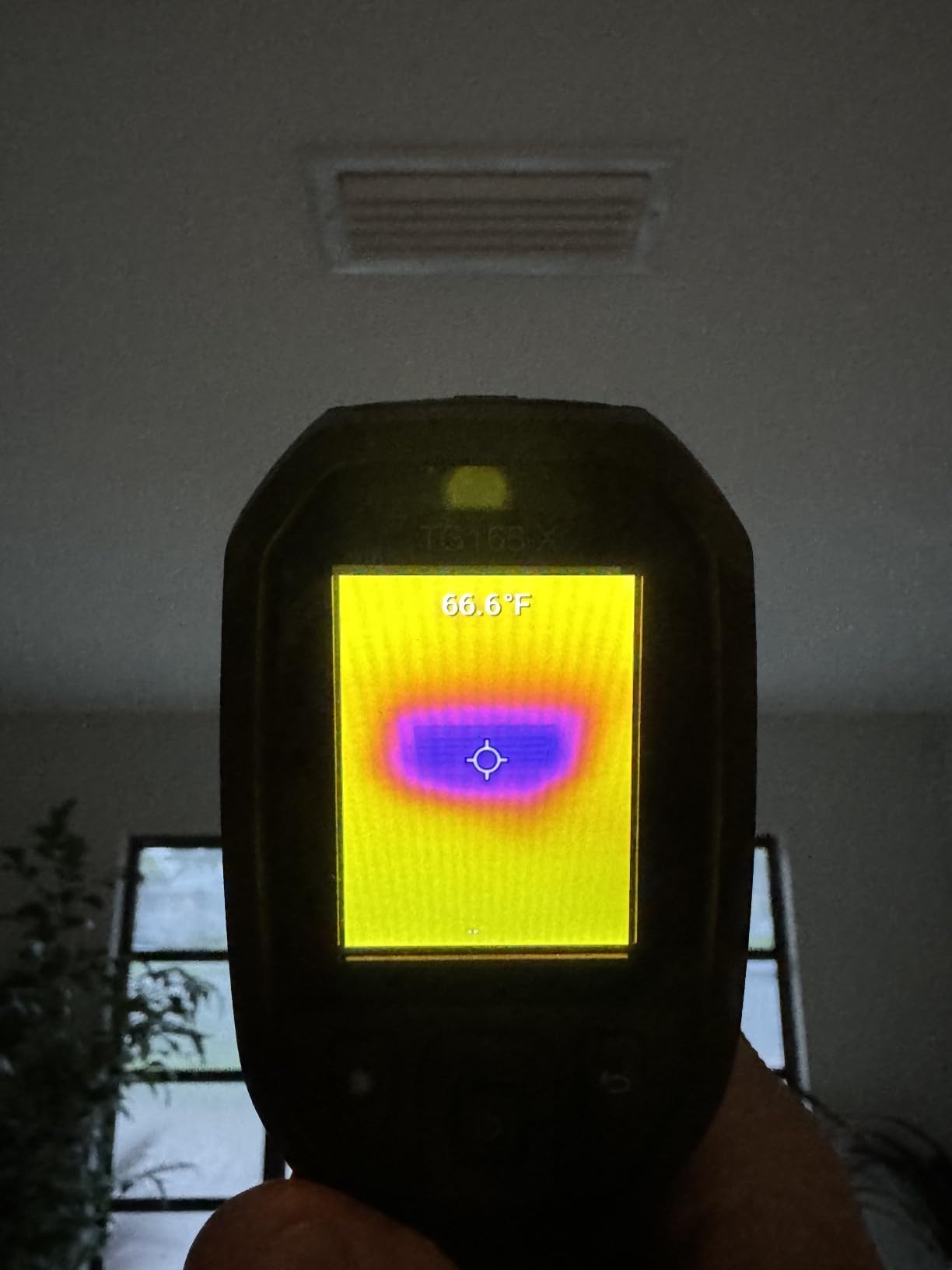
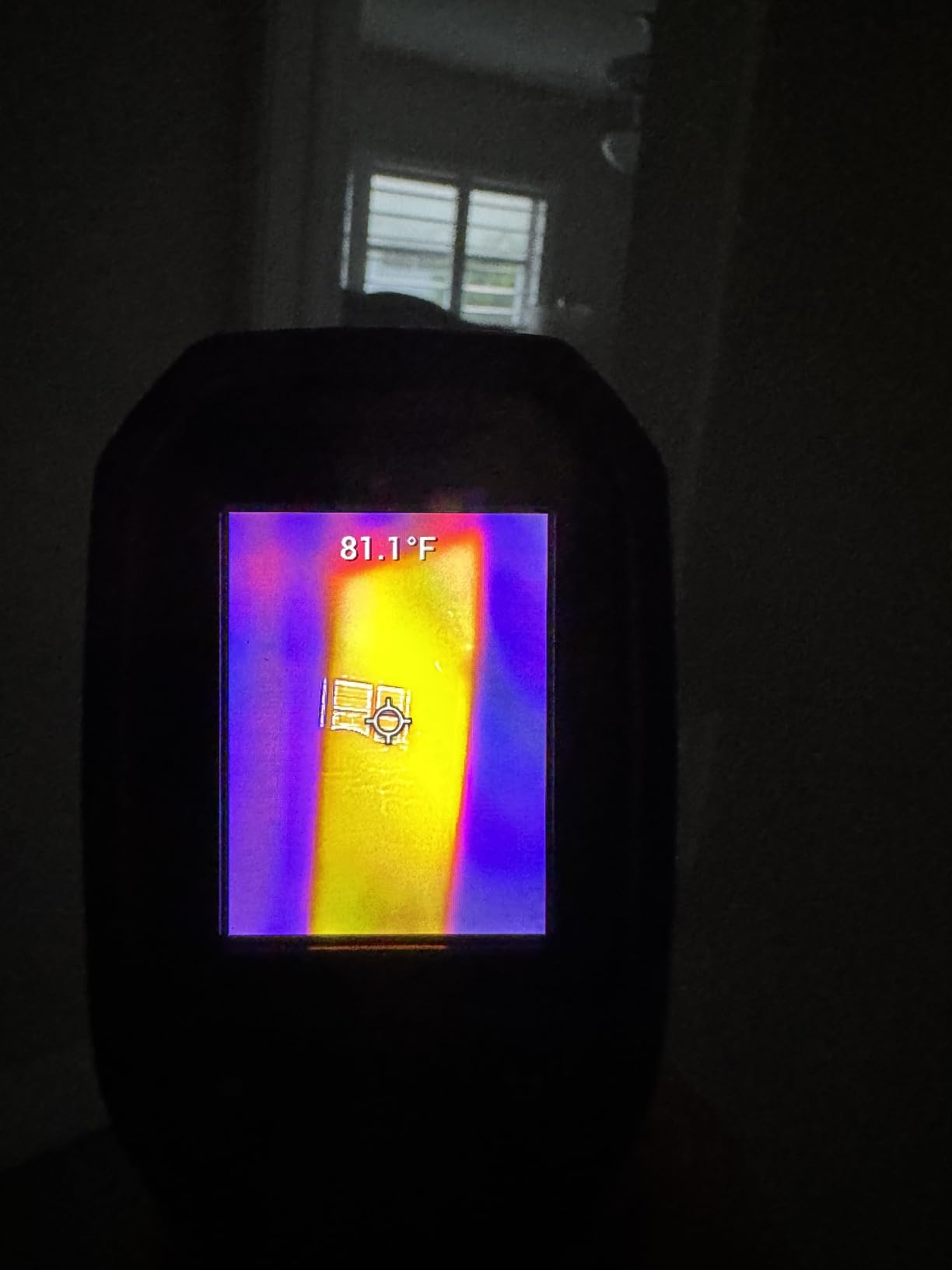
I used the TG165-X during a hotel inspection to scan for overheated electrical panels behind closed doors. The laser pinpointed the measurement spot through the door, and the MSX overlay showed me which breaker I was pointing at while displaying the actual temperature reading.
Temperature range from -25°C to 300°C covers most building inspection scenarios: detecting overheated wiring, identifying heat loss through walls, finding plumbing leaks behind drywall, and verifying HVAC system performance.
The IP54 rating means the TG165-X handles dust, rain, and the general abuse of inspection work. The drop-tested design has saved my unit twice during ladder climbs and rooftop inspections.
Where the TG165-X falls short is operational speed. Startup takes around 10 seconds, the refresh rate is slower than higher-end FLIR units, and you can’t disable the combined visual/IR view, which uses more battery than IR-only mode would.
Why inspectors prefer this over cheaper units
FLIR’s MSX technology is the key differentiator. Cheaper thermal cameras show colored blobs without context. The TG165-X shows those blobs with visual details embossed on top, so you can identify what you’re actually measuring.
For pre-incident planning, the TG165-X maps heat patterns in buildings during normal operation. Firefighters use those maps during incidents to predict fire behavior, which improves tactical decisions on scene.
Limitations versus purpose-built TICs
The TG165-X isn’t a fireground tool. It can’t withstand the heat, water, or impact exposure of active firefighting. For fire inspectors, code enforcement officers, and pre-plan developers, it’s ideal. For firefighters who need a TIC for active operations, look at the Seek FirePRO or FLIR K-series.
The slow refresh rate makes scanning large areas tedious. For pinpoint measurements and small-area inspection, the TG165-X works well. For wide-area thermal sweeps, a higher-end unit with faster refresh is worth the investment.
Buying Guide: What to Look for in a Firefighter Camera
Choosing the right camera for fire service depends on your specific role, department policies, and budget. Here’s what matters most based on three months of testing across live burns, training scenarios, and inspection work.
Heat resistance and temperature ratings
Purpose-built Fire Cam models rate to 900°F, which covers most interior firefighting conditions. Standard action cameras rate to about 104°F operating temperature, which means they shut down within seconds of exposure to ceiling-level heat.
If you need fireground footage, heat resistance is non-negotiable. If you only need training and exterior documentation, consumer action cams work fine and save significant money.
Mounting options for modern fire helmets
Traditional US-style helmets use the BlackJack-style mount that Fire Cam includes. European-style helmets need different brackets. Make sure the mount you buy matches your specific helmet model before you spend $300+ on a camera.
For thermal cameras, helmet mounting isn’t always practical. The Seek FirePRO and FLIR units are handheld because the user needs to actively point them during operations. Chest mounts and shoulder mounts don’t work well for thermal use.
Battery life under extreme conditions
Battery life ratings assume room temperature. In fire service, batteries operate in extreme cold and extreme heat, both of which reduce runtime. The Fire Cam 1080’s 5-hour rating drops to about 2 hours in cold weather and 3 hours in moderate heat.
Carry spare batteries for any camera you use on shift. For action cams, USB power banks work as field chargers. For Fire Cam units, the proprietary batteries require dedicated chargers, so buy extras upfront.
Department policy and chain of command approval
Before buying any camera, check with your chief officers and union representatives. Some departments prohibit helmet cameras entirely due to privacy concerns, HIPAA issues with patient interactions, or footage discoverability in lawsuits.
Departments that allow cameras usually have written policies covering footage retention, who can view recordings, and how footage gets used for investigations versus training. Having policy in place protects both firefighters and the public.
Video quality versus heat tolerance tradeoffs
The Fire Cam Onyx 4K delivers the sharpest footage among purpose-built fire cameras, but at $370 it costs more than most firefighters need. The Fire Cam 1080 at $300 covers 90% of use cases at lower cost.
Action cameras like the DJI Osmo Action 5 Pro shoot better video than Fire Cam units but can’t survive fireground heat. Match the camera to the use case: training and exterior documentation favor action cams, interior firefighting requires purpose-built units.
Frequently Asked Questions
What is the best camera for firefighters to use on their helmets?
The Fire Cam Onyx 4K is the best overall firefighter helmet camera for 2026, offering 4K resolution, 900°F heat tolerance, and 5-hour battery life. For budget-focused departments, the Fire Cam 1080 delivers the same heat resistance at lower cost. Both mount to standard US-style fire helmets using the included BlackJack bracket.
Can I wear a GoPro as a firefighter?
Yes, but only for training, exterior operations, or non-IDLH environments. GoPro action cameras operate up to about 104°F and will overheat and shut down within minutes during interior firefighting where ceiling temperatures exceed 600°F. For active fireground use, invest in a purpose-built Fire Cam unit rated to 900°F.
Which GoPro is best for firefighters?
For training and exterior documentation, the GoPro Hero12 Black or DJI Osmo Action 5 Pro both deliver broadcast-quality 4K footage. Neither survives interior firefighting conditions, so firefighters who need fireground footage should pair a GoPro for training with a Fire Cam for actual incidents.
Are helmet cameras allowed in fire departments?
Department policies vary widely. Some departments fully embrace helmet cameras for training and documentation, while others prohibit them due to privacy concerns or footage discoverability in legal proceedings. Check with your chief officer and review your department’s SOP before purchasing. Many departments that allow cameras have written policies covering footage retention, access, and acceptable use.
How do I mount a camera on a firefighter helmet?
Most purpose-built fire cameras use a brim-mounted bracket that screws into the front of the helmet above the facepiece area. Fire Cam includes the BlackJack mount with their cameras, which fits US-style traditional helmets. European-style and modern structural helmets may need different brackets. Always check mount compatibility before buying a camera, and verify the bracket doesn’t interfere with your SCBA facepiece seal.
Final Verdict: Choosing Your Firefighter Camera
For career firefighters running interior operations, the Fire Cam Onyx 4K remains the best overall camera for 2026, balancing heat tolerance, video quality, and battery life in a purpose-built package. Volunteer departments and documentation-focused users get the same core capability from the Fire Cam 1080 at lower cost.
For thermal imaging, the Seek Thermal FirePRO 200 is the only handheld unit designed specifically for fireground conditions. It sees through smoke, identifies hot spots during overhaul, and weighs less than a full-size helmet light. For inspections and pre-incident planning, the FLIR C5 delivers pocket-sized MSX thermal at a price that fits most department budgets.
Match the camera to your role. Interior firefighters need purpose-built heat resistance. Training officers benefit from sharp 4K action cams. Inspectors and investigators need thermal imaging. Whichever you choose, confirm your department’s policy before strapping anything to your helmet.