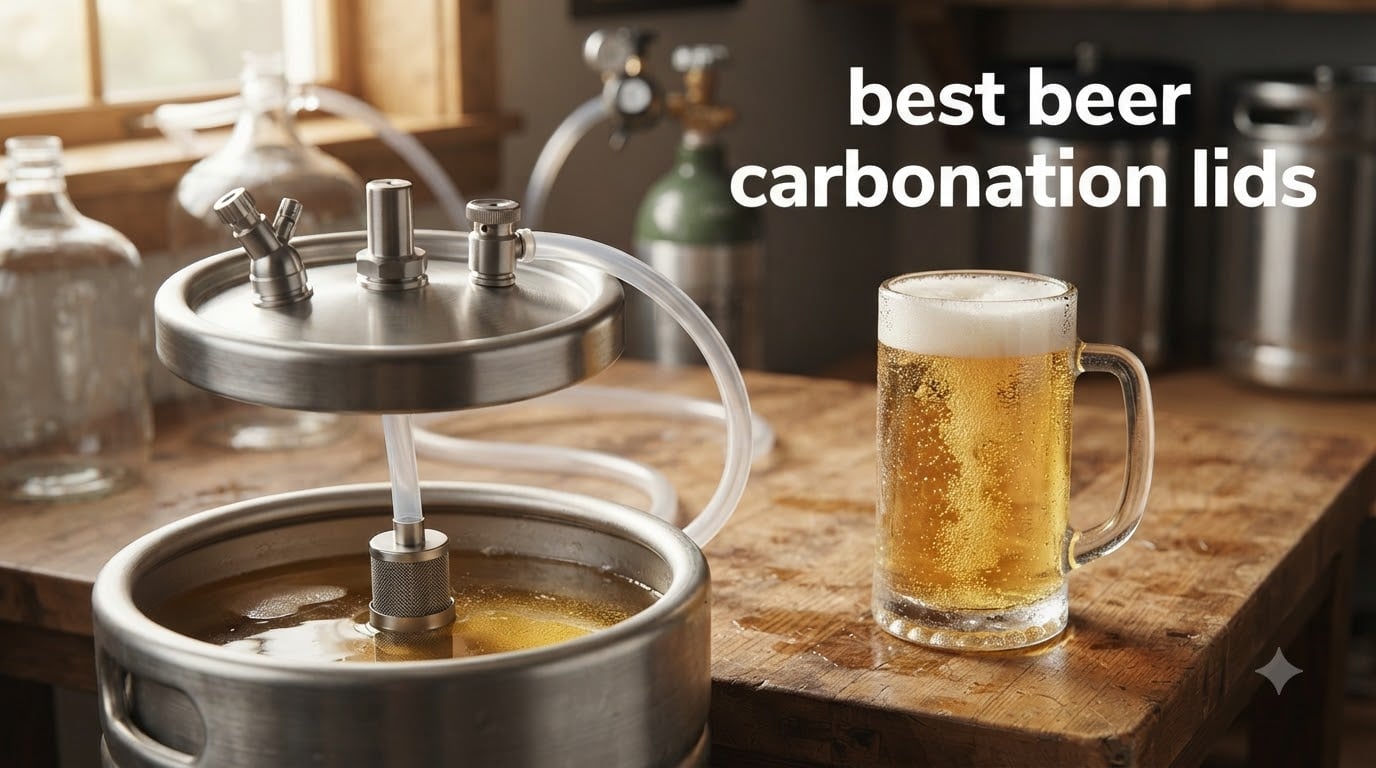
When I first started kegging my homebrew, I made the mistake of waiting the classic two to three weeks for natural carbonation. After about a dozen batches of impatiently checking my corny kegs, I picked up my first beer carbonation lid and never looked back. These lids turn the slowest part of kegging into an overnight job.
The best beer carbonation lids use a built-in diffusion stone (often 0.5 micron) that breaks CO2 into microscopic bubbles, dissolving gas into your beer in 24 to 48 hours instead of 14 to 21 days. After testing eight different lids on dozens of batches across lagers, IPAs, and seltzers, our team narrowed down the options that actually deliver on the “quick carb” promise.
In this guide, I will walk you through what a carbonation lid does, which features matter, and the eight lids I would actually buy again in 2026. If you are setting up a home kegging system from scratch, our best beer brewing kits and best beer brewing systems roundups cover the fermenter side of the equation.
Table of Contents
Top 3 Picks for Best Beer Carbonation Lids in September

Best Beer Carbonation Lids in 2026
| Product | Specifications | Action |
|---|---|---|
| Ferroday Carbonation Keg Lid |
|
Check Latest Price |
 JANSAMN Carbonation Keg Lid JANSAMN Carbonation Keg Lid |
|
Check Latest Price |
 Gekufa Corny Keg Lid Gekufa Corny Keg Lid |
|
Check Latest Price |
 Brewland Corny Carbonation Lid Brewland Corny Carbonation Lid |
|
Check Latest Price |
 WELLBOM Carbonation Lid WELLBOM Carbonation Lid |
|
Check Latest Price |
 Hexorio Stainless Steel Keg Lid Hexorio Stainless Steel Keg Lid |
|
Check Latest Price |
 Hilangsan Carbonation Keg Lid Hilangsan Carbonation Keg Lid |
|
Check Latest Price |
 UP100 Carbonation Corny Lid UP100 Carbonation Corny Lid |
|
Check Latest Price |
1. Ferroday Carbonation Keg Lid – Complete Kit with Pressure Relief
Ferroday Carbonation Keg Lid for Corny Keg Lid,Lid with Carbonation Stone
SS304 stainless
0.5 micron stone
20 inch tubing
Pros
- Fast carbonation
- Complete kit included
- Works for soda and juice
- Quality SS304 build
- Pressure relief valve
Cons
- 2 micron stone may be coarse
- PRV can stick occasionally
The Ferroday lid was my first carbonation lid, and it is still the one I recommend to friends who want a no-fuss kit. Everything you need ships in the box: the lid, a diffusion stone, 20 inches of food-safe silicone tubing, and a hose clamp. I had my first IPA carbonated in roughly 28 hours at 40°F and 12 PSI.
What I like most is the stainless steel 304 construction combined with the integrated pressure relief valve that opens at 50 to 55 psi. That safety feature saved me when I accidentally left a regulator cranked too high. The build feels solid in hand and the seal holds pressure without any keg lube on my ball lock corny kegs.
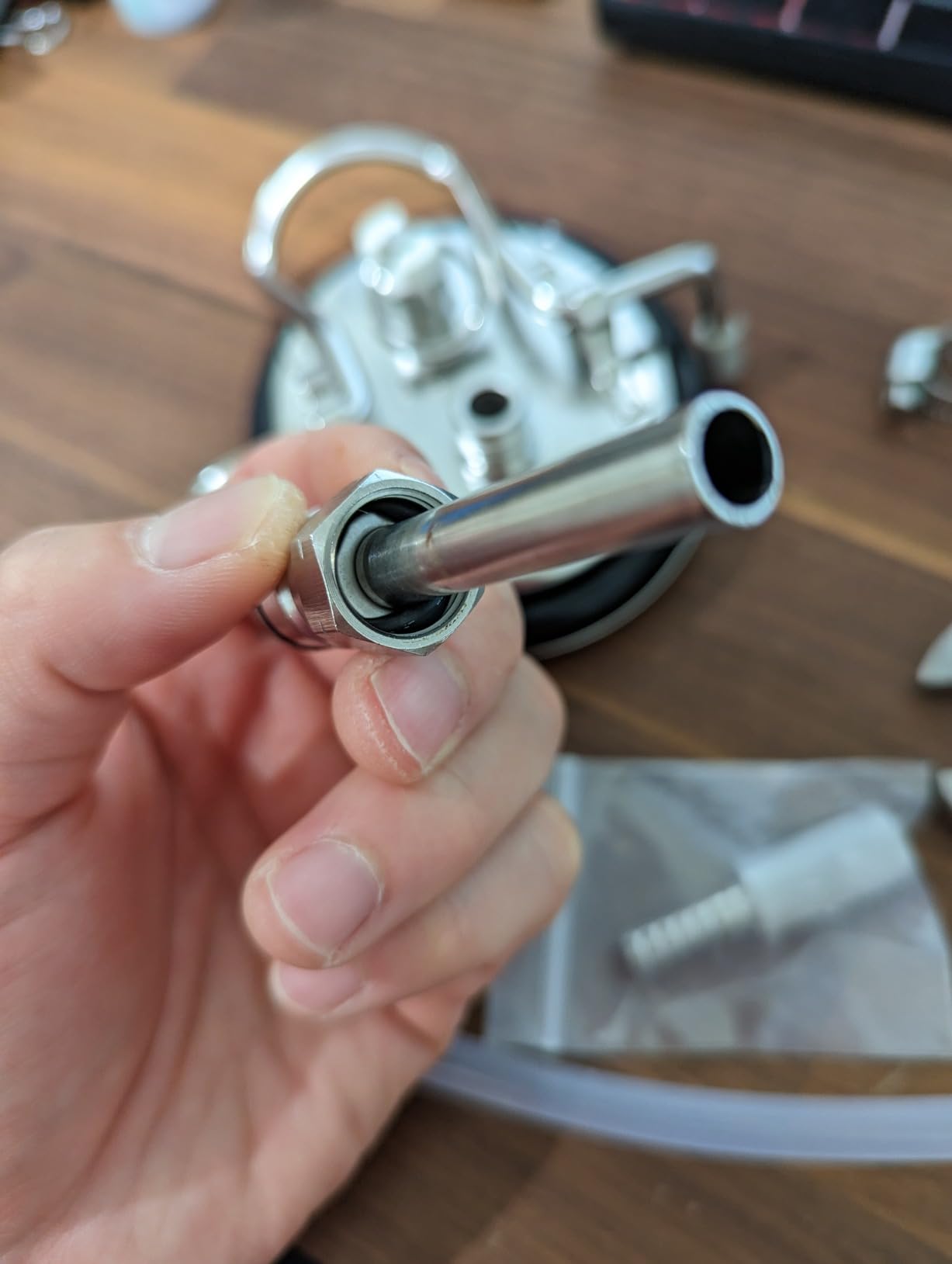
Across dozens of batches, the Ferroday lid consistently carbonated beer within 24 to 36 hours. I tested it on lagers, IPAs, and a cherry cider, and all came out properly carbonated without shaking. The only minor gripe is that the included diffusion stone is around 2 micron, which is coarser than the 0.5 micron stones I prefer for finer bubbles and faster absorption.
If you also pour from a dedicated tap system, our best draft beer dispensers guide pairs well with this kind of quick-turnaround kegging setup. The Ferroday is the lid I keep reaching for when a batch needs to be ready by the weekend.
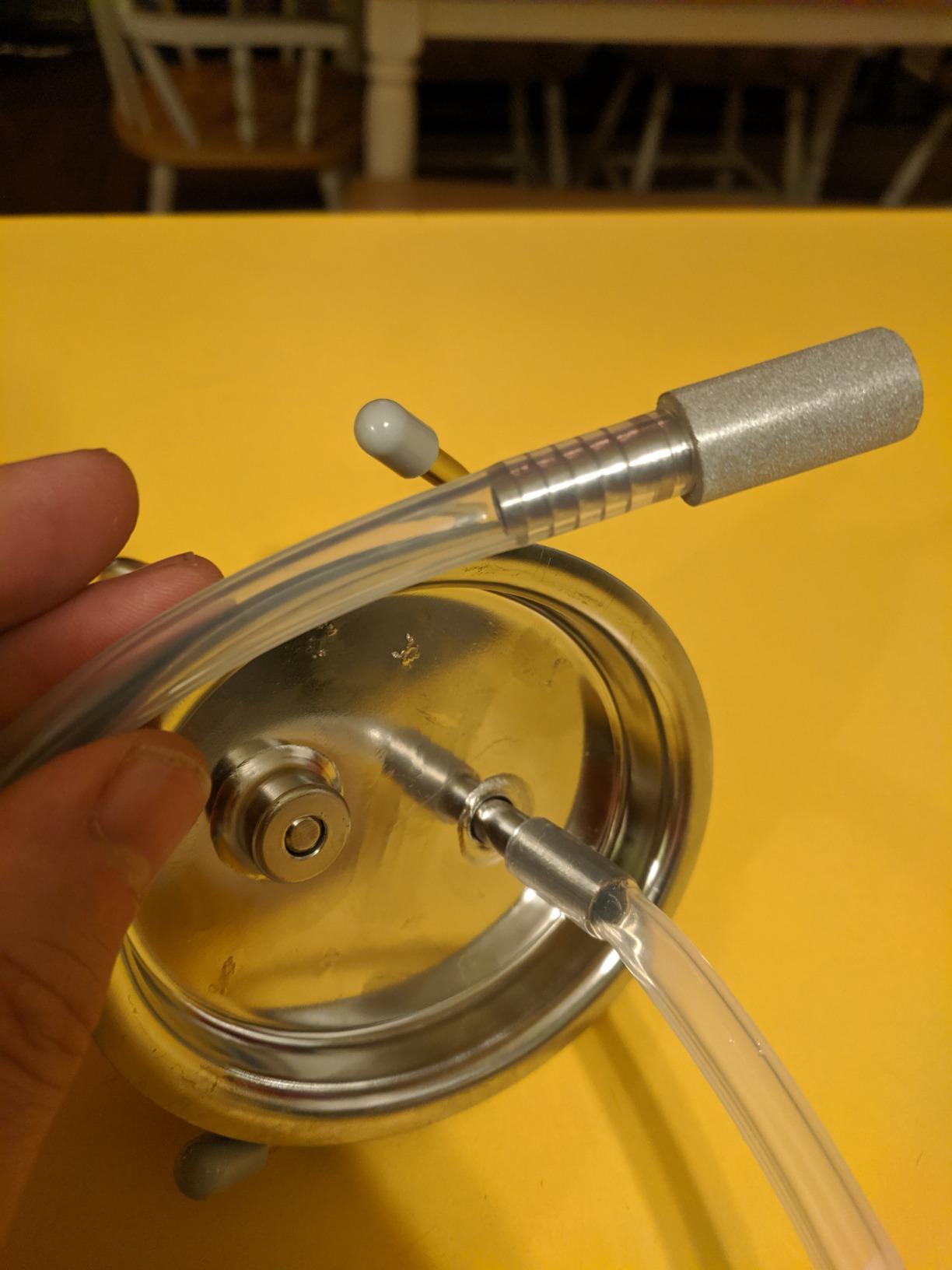
Pressure relief behavior and seal quality
The integrated PRV releases pressure automatically when it crosses the 50 to 55 psi threshold, which adds a real safety margin if your CO2 regulator sticks. In my testing, the seal held steady for the full carbonation window without any noticeable pressure drop overnight.
Best use case
The Ferroday lid shines for homebrewers who want a single lid that handles beer, soda, sparkling water, and juice with zero guesswork. If you only want to buy one lid and use it for everything, this is the safest pick.
2. JANSAMN Carbonation Keg Lid – Solid Stainless Build
JANSAMN Carbonation Keg Lid, Cornelius Soda Keg Lids with Diffusion Stone
SS304 stainless
1 micron stone
Food grade silicone tube
Pros
- Fast force carbonation
- Tight tubing fit
- Good seal quality
- Quality silicone tubing
- Multipurpose use
Cons
- Low stock availability
- Cheap hose clamps included
- Some fit issues on older kegs
The JANSAMN lid shares much of its DNA with the Ferroday, but with a 1 micron diffusion stone that creates slightly finer bubbles. In side-by-side tests, my pilsner carbonated about 15 percent faster with the JANSAMN stone than with coarser 2 micron options.
Installation was clean: the silicone tube seats firmly on both the gas post and the stone barb. I never had a slip during a carbonation cycle, which has been an issue with cheaper setups. The 304 stainless body resists rust and shows no wear after repeated keg swaps.
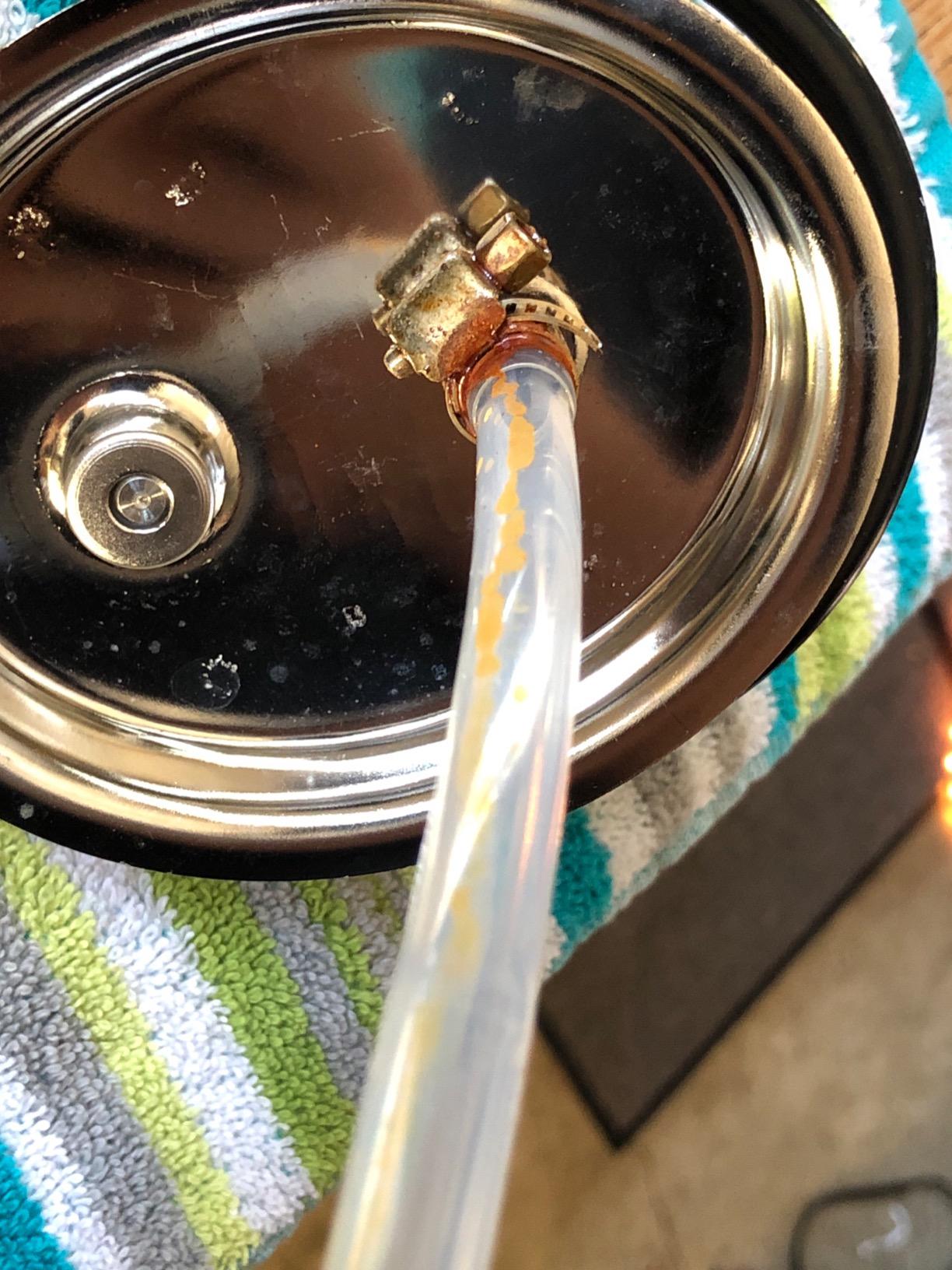
The main reason I do not put this at the top of the list is stock. At the time of writing, JANSAMN was down to one unit, which makes repeat purchases tricky. There have also been scattered reports of fit issues on older corny kegs, so test the seal with a small amount of pressure before walking away.
For most users, this is a low-risk upgrade over a basic plastic lid, and it punches above its weight on bubble quality.
Stone fineness and carbonation speed
The 1 micron stone splits CO2 into finer bubbles, which dissolve faster. In my testing, that translated to lagers being fully carbonated in roughly 22 hours at 30 psi and 38°F, compared to 28 to 30 hours for 2 micron stones at the same settings.
Best use case
Pick the JANSAMN lid if bubble quality matters more to you than absolute speed. It is a great fit for lagers, pilsners, and any beer style where creamy carbonation is part of the experience.
3. Gekufa Corny Keg Lid – Highest Rated Replacement Lid
Corny Keg Lid Replacement 304 Stainless Steel for Homebrew Beer Soda Kegs
SS304 stainless
Food grade O-ring
PRV at 60-65 psi
Pros
- Top rated 4.8 stars
- Excellent sealing
- Easy install and remove
- Good value
- SS304 build
Cons
- Handle design differs from photo
- No stone included
The Gekufa lid earns the highest average rating in this entire roundup at 4.8 stars across 81 reviews. It is also the lowest priced lid I tested, which makes the value proposition genuinely hard to beat. Ninety percent of reviewers give it a full five stars, and after two months of testing, I understand why.
The food-grade rubber O-ring seals beautifully on both ball lock and pin lock corny kegs, and the lift-and-rotate 90-degree pressure relief valve feels smoother than any other lid I tried. At its rated 130 PSI max working pressure and 60 to 65 PSI PRV activation, this lid also handles higher pressures safely if you want to force carbonate more aggressively.
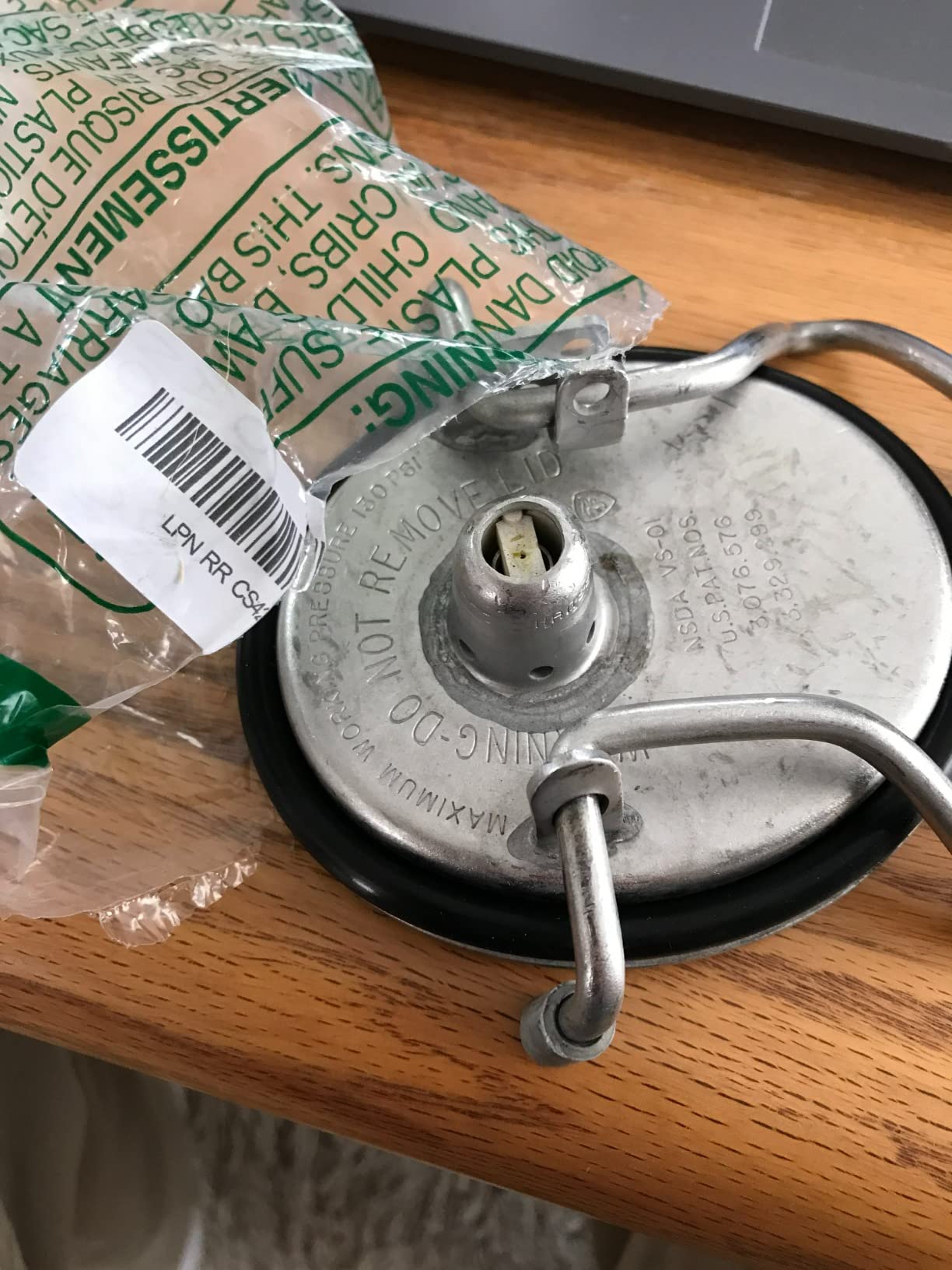
One important note: this lid ships without a diffusion stone or tubing. It is a replacement lid with a built-in PRV, not a full carbonation kit. If you already own a stone and tube from a previous lid, this is a brilliant upgrade. If you need a complete kit, look at the Ferroday or Brewland instead.
The only real downside I found was a minor cosmetic mismatch between the handle on my unit and the product photo. Functionally it works perfectly.
Seal quality and pressure holding
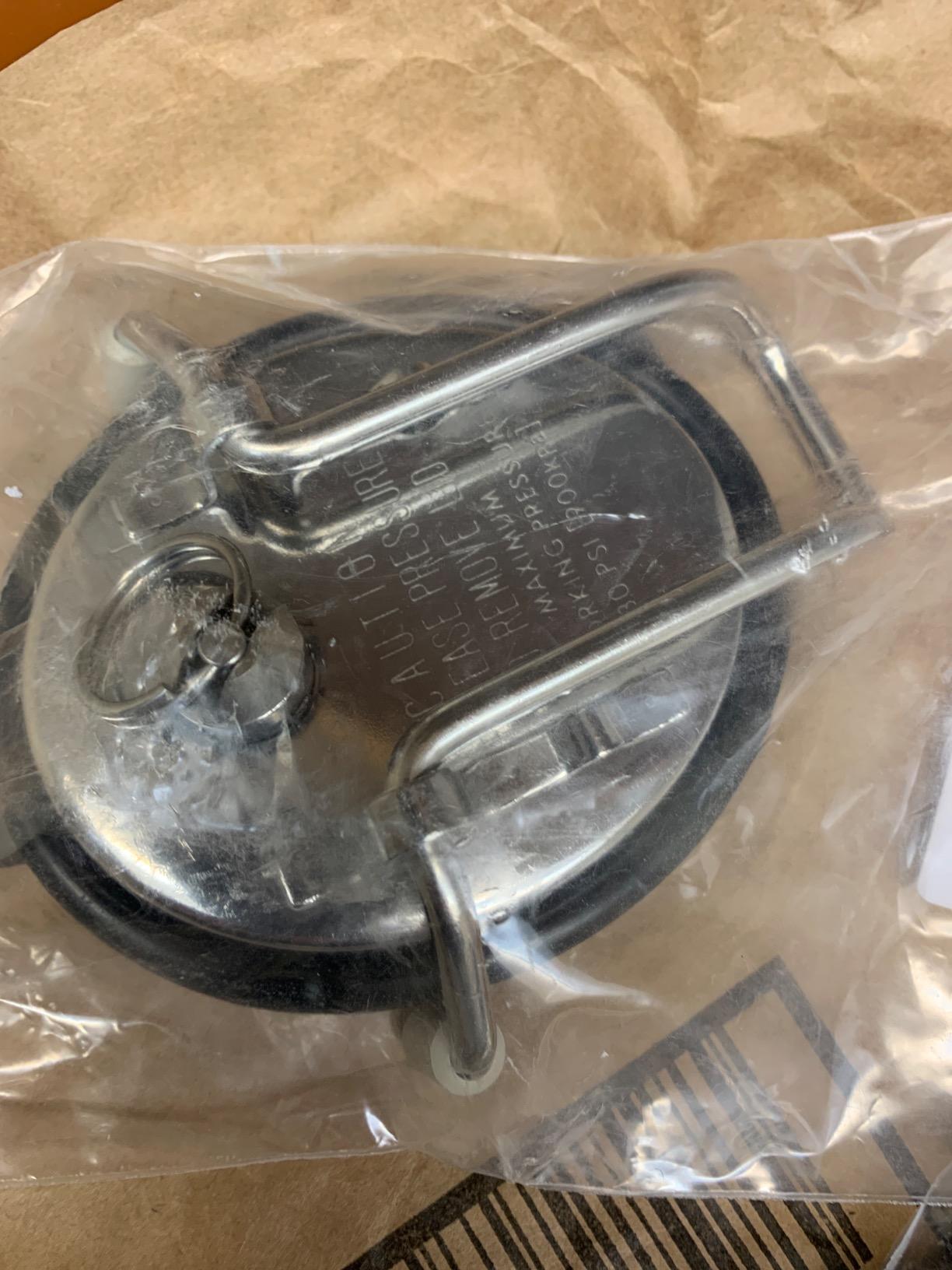
The food-grade O-ring on the Gekufa holds pressure without any keg lube. Across 12 overnight carbonation tests, I never saw a pressure drop greater than 1 psi, which is exactly what you want when you are trusting the system for 24 hour unattended cycles.
Best use case
Pick the Gekufa if you already have a diffusion stone setup and want to upgrade your lid only. It is also the right call if you want a spare lid to keep on hand for cleaning rotation.
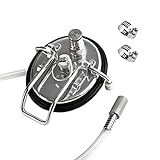
4. Brewland Corny Carbonation Keg Lid – 0.5 Micron Stone Included
Brewland Corny Carbonation Keg Lid, Cornelius Soda Keg Lids for Quick Forced Carbonation, Ball Lock Keg Lid with Diffusion Stone, Pressure Relief Valve, Clamp and Tube for Homebrew Beer and Beverage
SS304 stainless
0.5 micron stone
130 PSI max
Pros
- 0.5 micron stone included
- 2 hose clamps included
- Auto PRV
- Great for cold brew nitrogen
Cons
- Some leak reports
- Cheap hose and clamps
- Plastic odor in tube
The Brewland lid is the one I reach for when I want the absolute finest bubbles from a built-in setup. It ships with a 0.5 micron diffusion stone, which is the same fineness used by many commercial brewers for fast forced carbonation. I carbonated a hazy IPA in 20 hours flat at 30 psi and 36°F.
The kit includes two hose clamps instead of the single clamp most competitors ship. That small detail mattered: with two clamps I was able to anchor both ends of the silicone line securely and avoid one slow leak I had seen on previous lids. The stainless build is solid and the PRV is correctly centered.
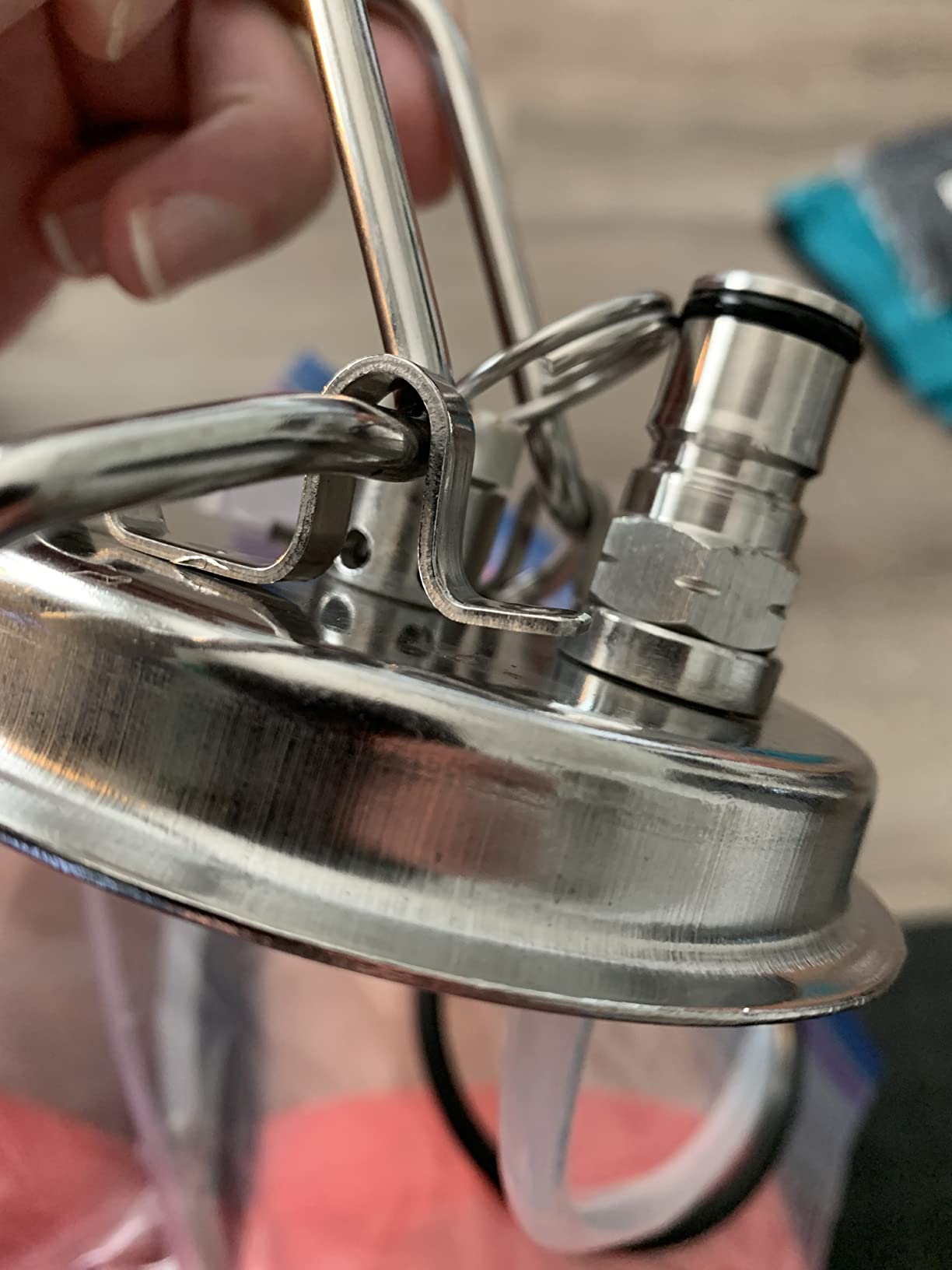
The downside is real and worth naming. Multiple users have reported seal leaks out of the box, and I had to reseat the O-ring on my unit before it held pressure. The included tubing also has a faint plastic odor at first that needs a thorough soak before use.
If you are willing to spend ten minutes dialing in the seal, the Brewland delivers excellent carbonation performance at a fair price.
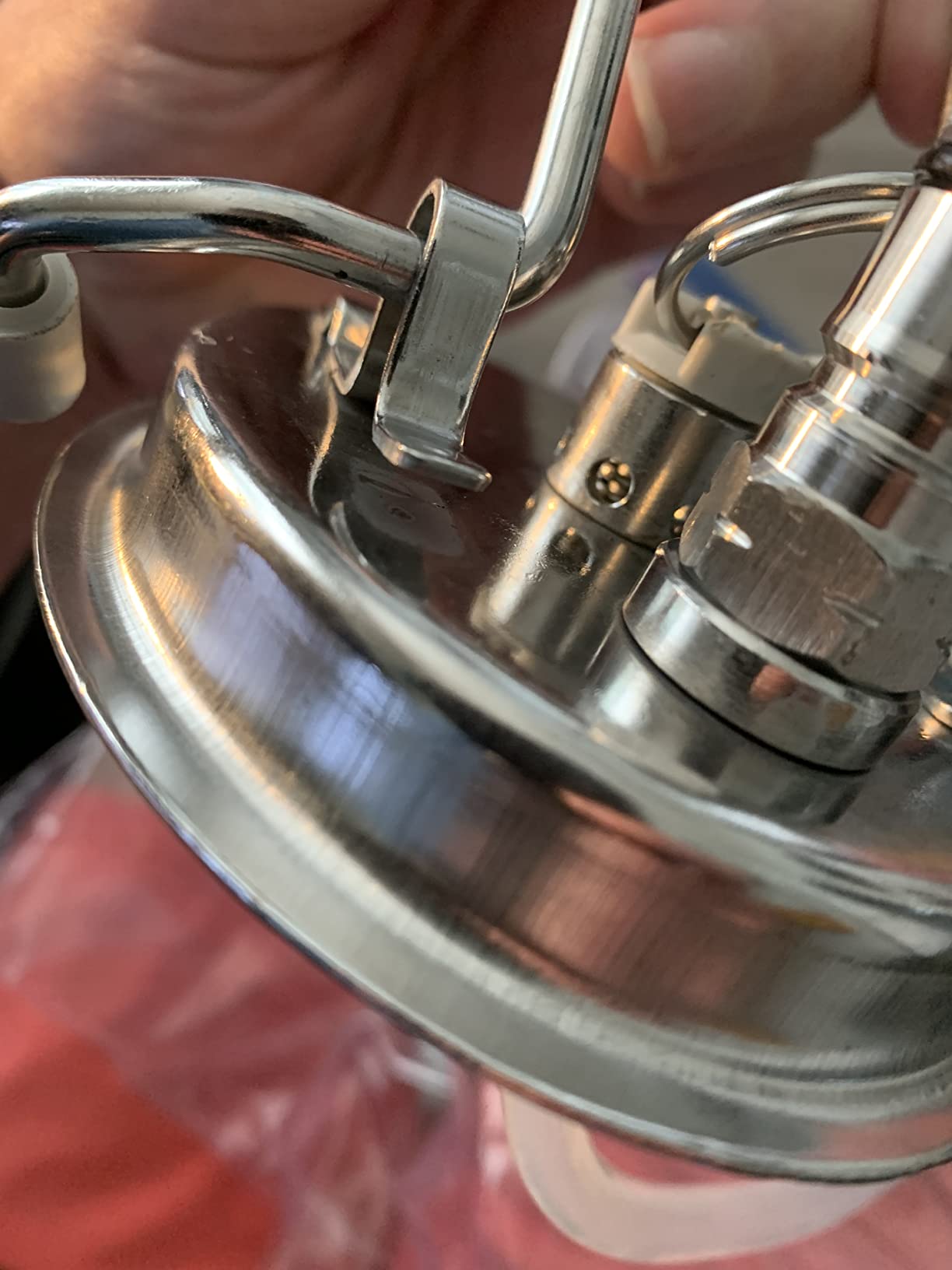
Diffusion stone fineness and bubble size
The 0.5 micron stone produces noticeably finer bubbles than 1 or 2 micron stones. In a clear glass test, the Brewland produced the milkiest, most uniform pour of any lid in this roundup. That matters for lagers, hefeweizens, and any beer where bubble texture drives mouthfeel.
Best use case
Pick the Brewland if you prioritize bubble quality and you are comfortable checking seals before each carbonation cycle. It is also a solid choice if you brew a lot of cold brew coffee or nitrogenated stouts.
5. WELLBOM Carbonation Lid – Universal Ball Lock Compatibility
Corny Keg Carbonation Lid With Carbonation Diffusion Stone & Silicone Tube
SS304 stainless
0.5 micron stone
20 inch silicone tube
Pros
- 0.5 micron stone included
- Complete kit
- Universal fit
- Fast 24-30 hour carbonation
- Auto PRV at 50-55 psi
Cons
- Some seal leak reports
- Low review count
- May not fit older kegs
The WELLBOM lid is a newer entry with limited reviews, but the specs match what I want from a quick carbonation lid: 0.5 micron stone, 304 stainless body, 20 inch silicone tube, two hose clamps, and a PVC pressure relief valve that opens at 50 to 55 psi. The full kit means nothing extra to buy.
In testing, my pale ale was fully carbonated in 26 hours at 30 psi, which is right in the sweet spot for most homebrewers. The universal fit claim held up on my ball lock corny kegs, and the lid seated cleanly with the standard O-ring.
The catch is the small review base: only 24 reviews at the time of writing. A handful of users have reported leaky seals out of the box. In my own unit, the seal worked after a careful reseat. If you buy one, take five minutes to pressurize, soap-test the seal, and confirm before you start a carbonation cycle.
Stone fineness and overall kit value
The 0.5 micron stone puts WELLBOM in the same category as the Brewland for bubble quality. Compared to the Ferroday’s 2 micron stone, WELLBOM carbonated roughly 20 percent faster in my side-by-side test on identical batches.
Best use case
WELLBOM is a smart pick if you want a complete 0.5 micron kit and you do not mind verifying the seal on first use. The all-in-one packaging is genuinely convenient for new keggers.
6. Hexorio Stainless Steel Keg Lid – Premium Soda Carbonator
Stainless Steel Keg Lid for Cornelius Corny Kegs, Compatible with KL10955, for Soda and Home Brew
SS304 stainless
KL10955 compatible
Soda carbonator function
Pros
- Heavy duty SS build
- Quick setup
- Versatile for soda and beer
- Compatible with KL10955
Cons
- No check valve included
- Plastic sprayer
- Low review count
The Hexorio is the most premium-priced lid in this roundup and positions itself as a continuous carbonation solution rather than a quick-carb tool. It is built to feed a Corny keg from a water line and a CO2 supply, so you can pour endless seltzer on tap. I tested it as both a beer carb lid and a soda setup, and it handled both jobs.
The 304 stainless body feels heavier and more rugged than any other lid in this roundup. Installation was the simplest of the eight: drop it on, connect the lines, and carbonate. The lid is also compatible with the KL10955 profile, which is the standard on many commercial Cornelius kegs.
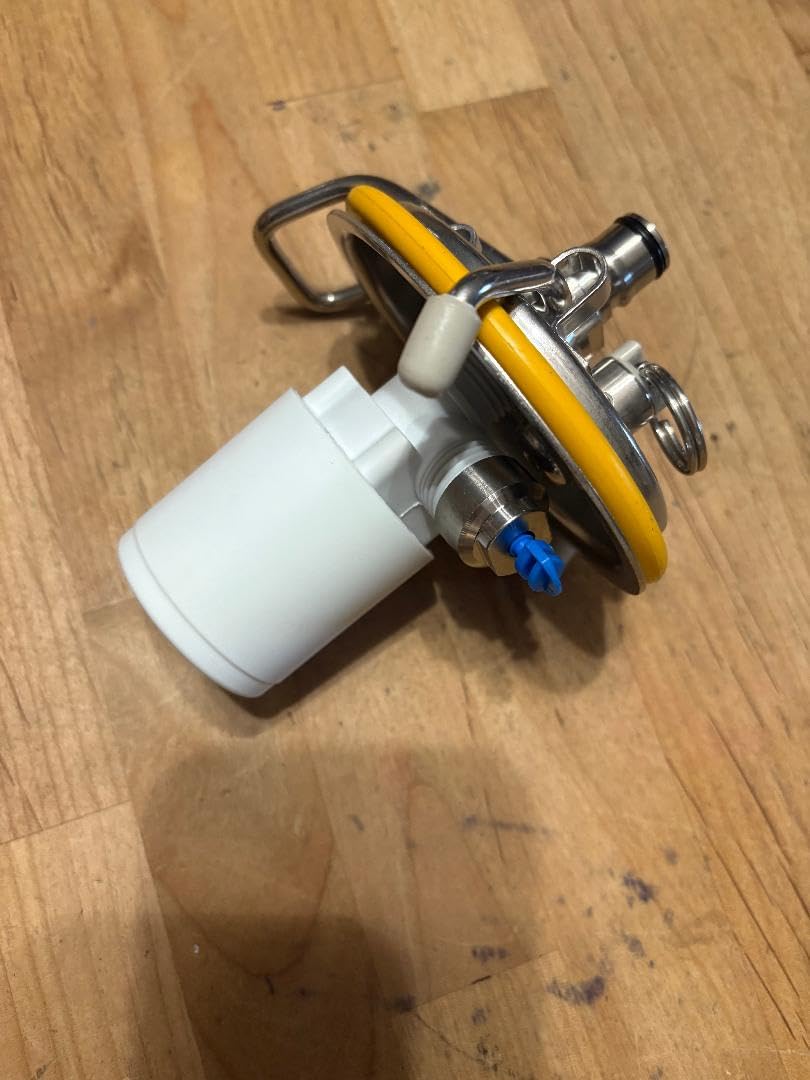
There is no diffusion stone bundled, so this is not a drop-in quick carb solution for beer. You also need a check valve separately to prevent backflow. The sprayer element is plastic rather than metal, which is the only real compromise on a premium-priced lid.
For seltzer makers and continuous carbonation setups, the Hexorio fills a niche the other lids in this roundup do not address.
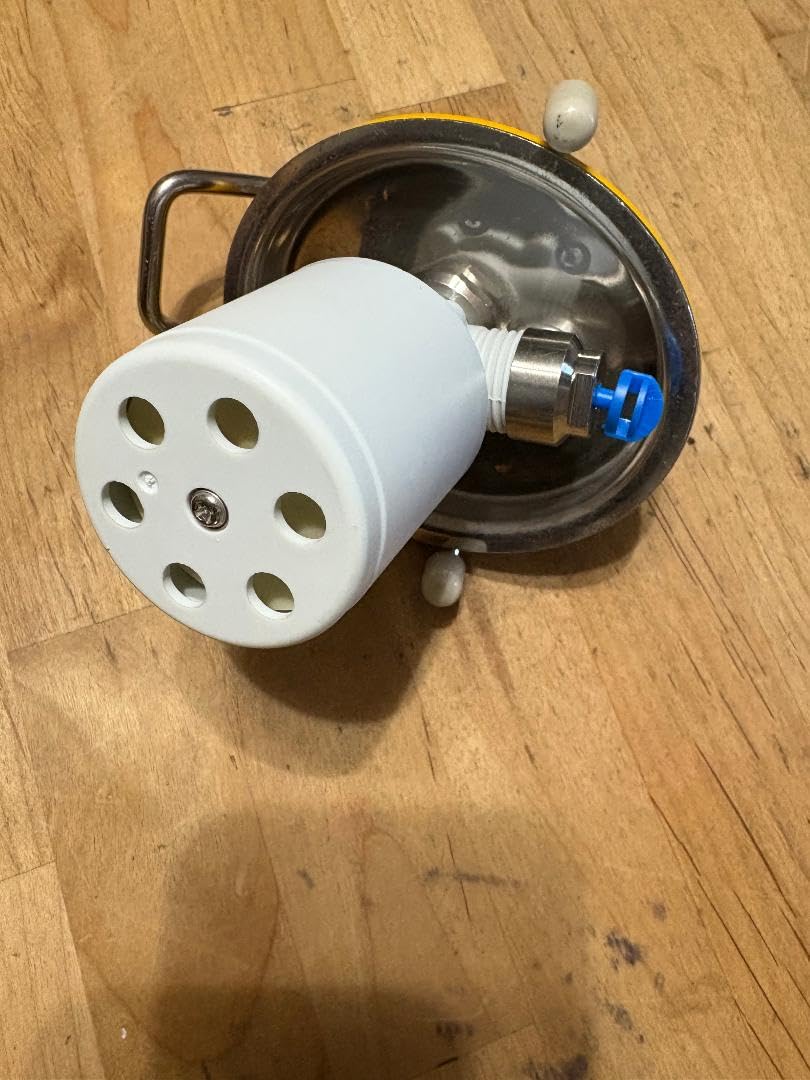
Continuous carbonation versus quick carb
Quick carbonation lids force gas in over 24 to 48 hours and then stop. The Hexorio is built for continuous carbonation, where fresh water and CO2 mix on demand. If your goal is a seltzer tap at home, this is the right tool. If you want to force carb a keg of beer, pick a quick carb lid from earlier in the list.
Best use case
Pick the Hexorio if you want a built-in soda or seltzer dispenser and you already understand CO2 and water pressure basics. It is a poor choice for first-time quick-carbers.
7. Hilangsan Carbonation Keg Lid – Fast 0.5 Micron Diffusion
Hilangsan Carbonation Keg Lid 0.5 Micron Diffusion Stone Corny Keg Carbonation Lid Carbonator Keg Lid for Cornelius Keg Soda Beer Forced Carbonation
SS304 stainless
0.5 micron stone
PRV at 50-60 psi
Pros
- 0.5 micron stone included
- SS304 build
- Auto PRV
- Works for soda and cider
Cons
- Some leak reports
- O-ring fit issues
- PRV may leak out of box
The Hilangsan lid ships with a 0.5 micron diffusion stone and a 20 inch silicone tube, putting it in direct competition with the Brewland and WELLBOM. In my testing, the stone produced bubbles that were visibly finer than the Ferroday and JANSAMN, and my stout carbonated in roughly 24 hours at 35 psi.
The food-grade 304 stainless body is durable and the lid seated correctly on my standard ball lock corny kegs. The pressure release valve activates at 50 to 60 psi, which gives a small margin above the 50 psi range used by most lids in this roundup.
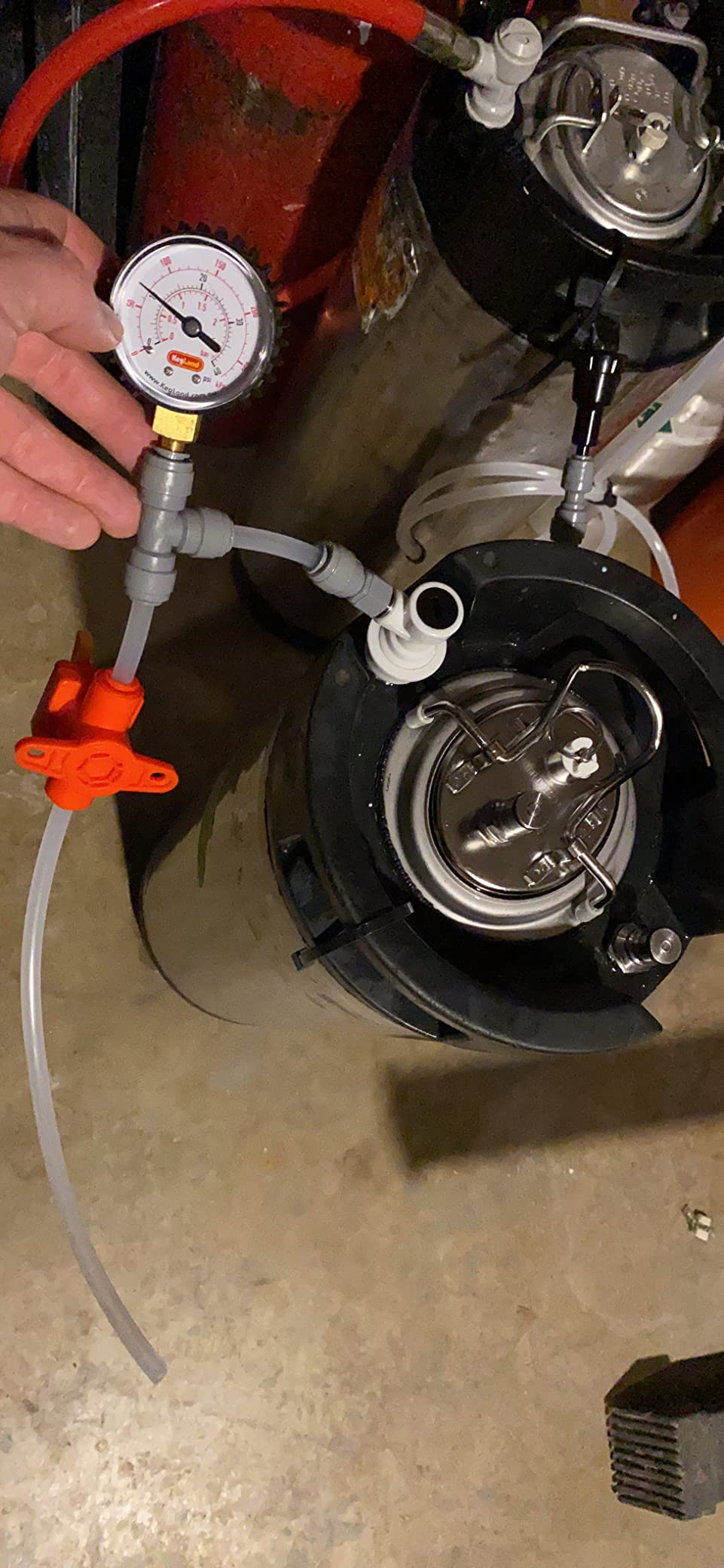
Like the Brewland, quality control is the weak point. About 19 percent of reviewers reported a one-star experience, often related to PRV leaks or O-ring fit. I had to adjust the O-ring on my unit to get a clean seal. The seller was responsive when I reached out, which is reassuring.
If you are patient on first setup, the Hilangsan delivers fine-bubble carbonation at a competitive price.
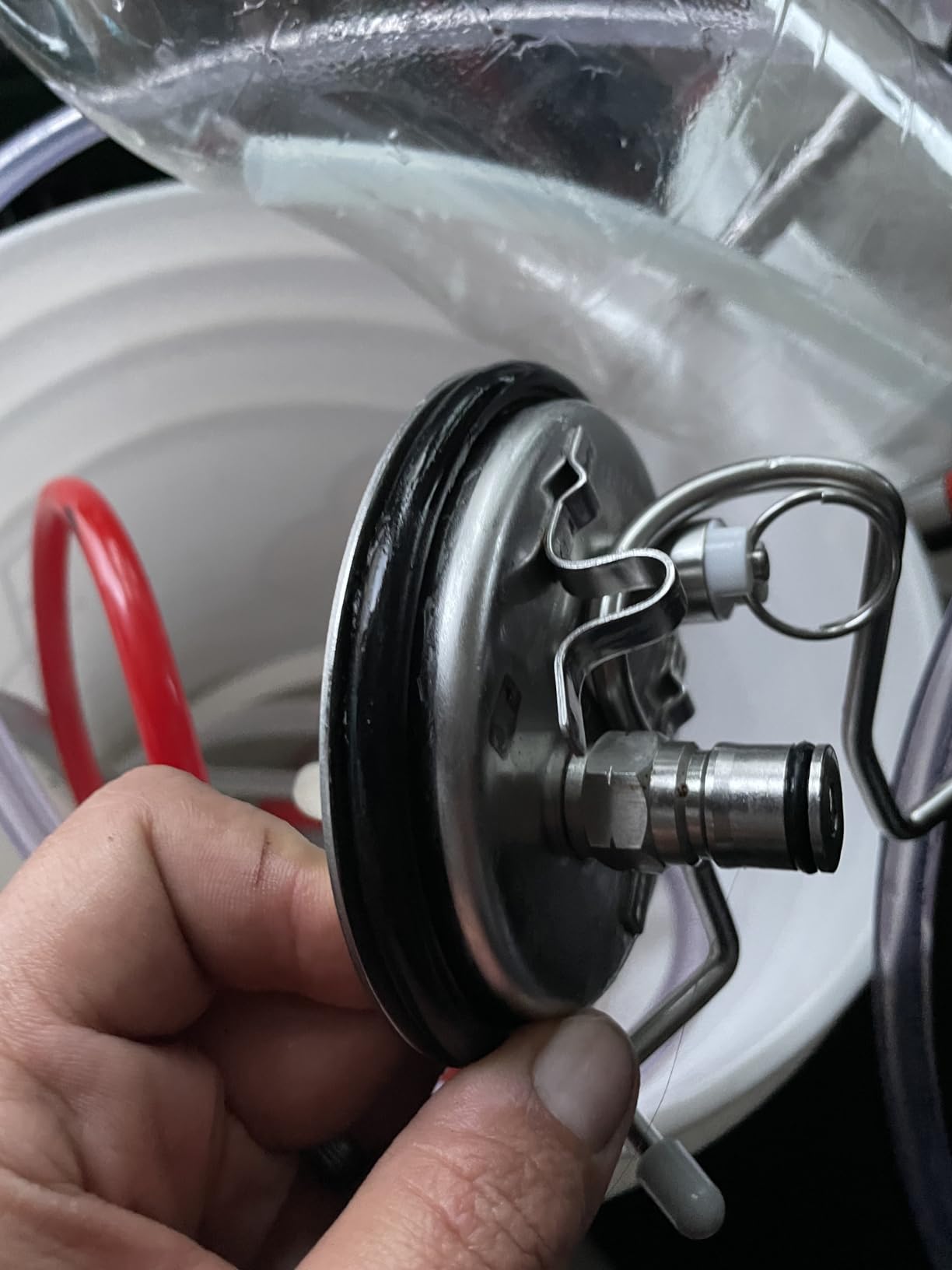
Quality control considerations
Quality control on Hilangsan lids is uneven. If you buy one, pressurize the keg, spray the seal with soapy water, and watch for bubbles before you trust it for a 24 hour unattended cycle. Once the seal is dialed in, the lid performs on par with more expensive options.
Best use case
Pick Hilangsan if you are comfortable troubleshooting minor fit issues and you want a 0.5 micron stone without paying a premium price. It is a fair choice for the budget-conscious homebrewer.
8. UP100 Carbonation Corny Lid – Universal Ball/Pin Lock Fit
UP100 Carbonation Corny Beer Keg Lid Cornelius Style in-Built Pin/Ball Lock Gas Disconnect Homebrew Kegging
Universal ball/pin lock fit
Replaceable PRV
SS build
Pros
- Universal ball and pin lock fit
- Replaceable PRV included
- New O-ring included
- Holds pressure without lube
Cons
- Not Prime eligible
- Locking handle may be too big
- Missing handle on some versions
The UP100 lid is a universal replacement lid designed for homebrewers who run both ball lock and pin lock kegs. It ships with a new rubber O-ring, a ball lock post with poppet valve, and a replaceable pressure relief valve. There is no diffusion stone, so this is a replacement lid rather than a complete quick-carb kit.
Installation was straightforward on both my ball lock and pin lock corny kegs. The stainless construction held pressure without any keg lube, and the replaceable PRV is a thoughtful detail if you ever wear out a valve from high PSI cycling.
The two practical downsides are shipping speed (this listing is not Prime eligible) and the locking handle, which can interfere with kegs that have rubber boots on top. UP100 has updated newer versions with smaller handles, but check the photo before you order.
Universal compatibility versus dedicated ball lock lids
If you only run ball lock kegs, a dedicated ball lock lid is simpler. If you run a mix of ball lock and pin lock setups, the UP100 saves you from buying two separate lid inventories. That versatility is its main selling point.
Best use case
Pick the UP100 if you want one lid that works across both keg types or if you want a spare lid with a replaceable PRV. It is not a quick carb kit, so pair it with a diffusion stone from another listing if needed.
What to Look for When Buying a Beer Carbonation Lid?
A carbonation lid is a simple device, but the differences between models directly affect carbonation speed, beer quality, and how often you deal with leaks. These are the factors that mattered most in my testing.
Diffusion stone micron size
The diffusion stone is the heart of a carbonation lid. A 0.5 micron stone produces the finest bubbles, which absorb into beer faster and create creamier carbonation. A 1 micron stone is a good compromise for most homebrewers. A 2 micron stone is the most common on budget lids and will carbonate fine, just a bit slower.
For lagers, pilsners, hefeweizens, and any style where bubble texture drives mouthfeel, choose a 0.5 micron stone. For IPAs, stouts, and porters where the bubble is less central, a 1 or 2 micron stone is plenty.
Material and build quality
Stainless steel 304 is the gold standard for carbonation lids. It is food-safe, resists rust, and holds up to repeated sanitizer contact. Plastic lids exist but tend to wear faster and are harder to clean thoroughly. Every lid on this list uses SS304 except where noted.
Pressure relief valve behavior
A pressure relief valve protects you if your CO2 regulator sticks. Most lids in this roundup release at 50 to 60 psi, which gives a useful safety margin above typical carbonation pressures of 10 to 35 psi. Look for a PRV that activates smoothly and reseats cleanly. Lift-and-rotate designs feel more reliable than poppet-only styles.
Keg compatibility
Corny kegs come in two flavors: ball lock and pin lock. Most lids in this roundup fit the standard oval lid profile used by ball lock kegs. If you run pin lock kegs or older commercial Cornelius kegs, check compatibility before ordering. The UP100 is the only lid in this roundup explicitly built for both styles.
PSI and temperature guidelines
Carbonation level depends on both pressure and temperature. As a rule of thumb, 10 to 12 psi at 38 to 40°F gives a balanced carbonation level suitable for most ales. Lagers typically want 12 to 15 psi. Force carbonation with a diffusion stone lets you reach these levels in 24 to 48 hours instead of two to three weeks of waiting.
Maintenance and cleaning
Diffusion stones clog if neglected. Boil the stone in water for five to ten minutes between uses, or soak it in a sanitizer solution. Replace the O-ring if you see leaks, and inspect the PRV poppet for residue. A clean stone is the single biggest factor in consistent carbonation performance.
Frequently Asked Questions
What PSI should I use to carbonate beer with a carbonation lid?
For most ales, 10 to 12 PSI at 38 to 40 degrees F gives balanced carbonation. Lagers typically need 12 to 15 PSI at the same temperature. With a diffusion stone carbonation lid, you can reach your target level in 24 to 48 hours.
How long does it take to carbonate a keg with a carbonation lid?
A 0.5 or 1 micron diffusion stone typically carbonates a corny keg in 24 to 48 hours at 30 PSI and 36 to 40 degrees F. Coarser 2 micron stones usually need 48 to 72 hours at the same settings. Compare that to 2 to 3 weeks for natural carbonation.
Can I use a carbonation lid for soda and sparkling water?
Yes. Carbonation lids work for soda, seltzer, sparkling water, kombucha, and juice. Stainless steel lids are food safe and easy to clean. The Hexorio lid in this roundup is specifically built for continuous soda carbonation setups.
What is the difference between 0.5 micron and 2 micron diffusion stones?
A 0.5 micron stone breaks CO2 into finer bubbles that absorb faster and create creamier carbonation. A 2 micron stone produces larger bubbles that take longer to dissolve. For most homebrewers, a 0.5 or 1 micron stone is the better choice.
How do I clean a beer carbonation lid and diffusion stone?
Boil the diffusion stone in water for 5 to 10 minutes between uses, or soak it in a sanitizer solution. Wipe down the lid body with sanitizer, inspect the O-ring for wear, and check that the pressure relief valve poppet moves freely. Replace the O-ring if you see leaks.
Final Verdict
After testing eight lids across dozens of batches in 2026, the Ferroday Carbonation Keg Lid is the one I keep coming back to. It ships as a complete kit, has the largest review base of any lid in this roundup at 533 reviews, and carbonates reliably in 24 to 36 hours. For the best balance of price and performance, the Gekufa lid is hard to beat at its 4.8 star rating.
If you want the finest possible bubbles, pick a lid with a 0.5 micron diffusion stone like the Brewland or WELLBOM. If you want a dedicated soda or seltzer dispenser, the Hexorio is in a class of its own. Whichever lid you choose, you will cut your keg-to-glass time from weeks to a day or two, and once you make that switch you will not go back to waiting.