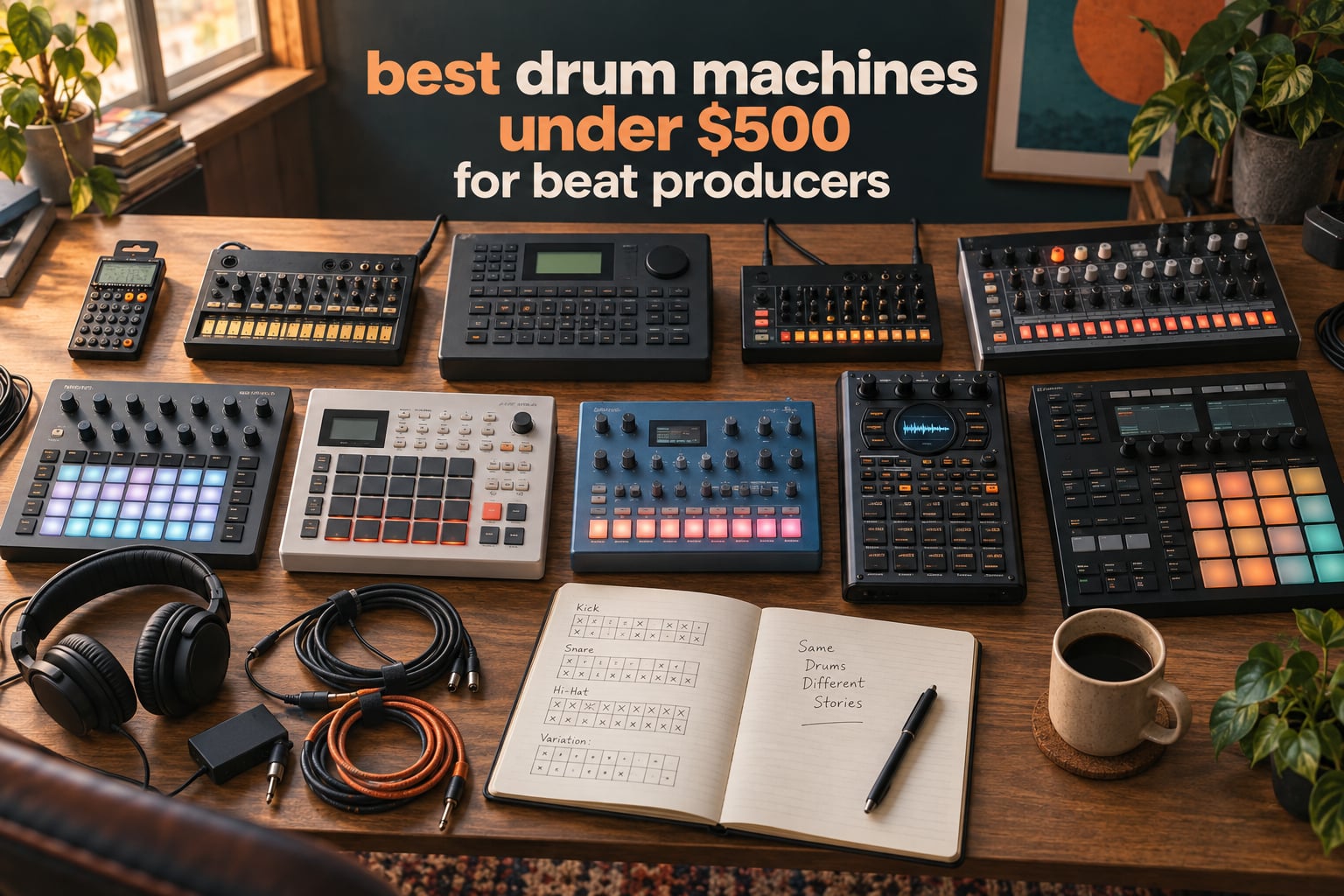
If you make beats and you’ve been staring at another software playlist wondering why nothing is hitting, the answer is almost always the same: you need a hardware drum machine. We spent the last few months pushing ten of the most popular budget drum machines through real beat sessions to find the best drum machines under five hundred dollars for beat producers in 2026. The list includes a 4.8-rated sampler that finally makes the MPC workflow portable, an all-analog workhorse at the price of a plugin bundle, and a pocket-sized sequencer that runs a month on two AAA batteries.
The five-hundred-dollar mark is the sweet spot for beat makers. It clears the toy tier of sub-hundred-dollar novelty gear, gets you past the entry-level pads, and lands you in range of genuine 808/909 modeling, FM percussion engines, full sample-based grooveboxes, and standalone units you can throw in a backpack. Every pick below sits comfortably under that ceiling at retail, and several become even more tempting on the used market where the same money stretches into prosumer territory.
In this guide we rank ten drum machines and grooveboxes from cheapest to most expensive, give you a beat-producer’s honest take on each, map sound engine types and sequencer features in a buyer’s guide, and answer the questions beat producers actually ask on Reddit and Gearspace. We also pull in views from related roundups on our site, including our 10 Best Drum Machines editor’s picks and our 8 Best Analog Drum Machines for Hip Hop deep dive, so you can cross-check what works for trap versus techno versus IDM.
Table of Contents
Top 3 Picks for Beat Producers in September
Three machines stand out for the audience we wrote this for. The Akai MPC Sample earns our Editor’s Choice because it pairs the iconic MPC chopping workflow with true standalone portability, the Arturia DrumBrute Impact is the most expressive analog drum machine at a beginner-friendly price, and the Roland SP-404MKII is the performance sampler beat producers have been waiting for. Each one solves a different problem on the way to a finished beat.

Akai Professional MPC Sample
- Standalone MPC workflow
- 16 responsive pads
- Battery powered with built-in speaker
- Over 100 factory kits
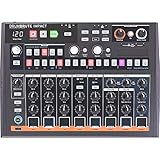
Arturia DrumBrute Impact
- All-analog engine
- Steiner-Parker filters
- Polyrhythm sequencer
- Song mode and Color FX

Roland SP-404MKII
- 17 RGB velocity pads
- 32-voice polyphony
- OLED waveform display
- USB-C and AA power
Best Drum Machines for Beat Producers in 2026
Here is the full lineup of ten drum machines, grooveboxes, and samplers we tested for this guide. The table lists each unit with the core feature that defines it for beat making. Prices fluctuate, so check each listing for the current number before you buy.
| Product | Specifications | Action |
|---|---|---|
| Akai Professional MPC Sample |
|
Check Latest Price |
 Korg Volca Beats Korg Volca Beats |
|
Check Latest Price |
 Alesis SR-16 Alesis SR-16 |
|
Check Latest Price |
 Roland AIRA Compact T-8 Roland AIRA Compact T-8 |
|
Check Latest Price |
| Arturia DrumBrute Impact |
|
Check Latest Price |
 Novation Circuit Rhythm Novation Circuit Rhythm |
|
Check Latest Price |
 Teenage Engineering PO-12 Rhythm Teenage Engineering PO-12 Rhythm |
|
Check Latest Price |
 Korg electribe Sampler ESX Korg electribe Sampler ESX |
|
Check Latest Price |
| Roland SP-404MKII |
|
Check Latest Price |
 Native Instruments Maschine Mk3 Native Instruments Maschine Mk3 |
|
Check Latest Price |
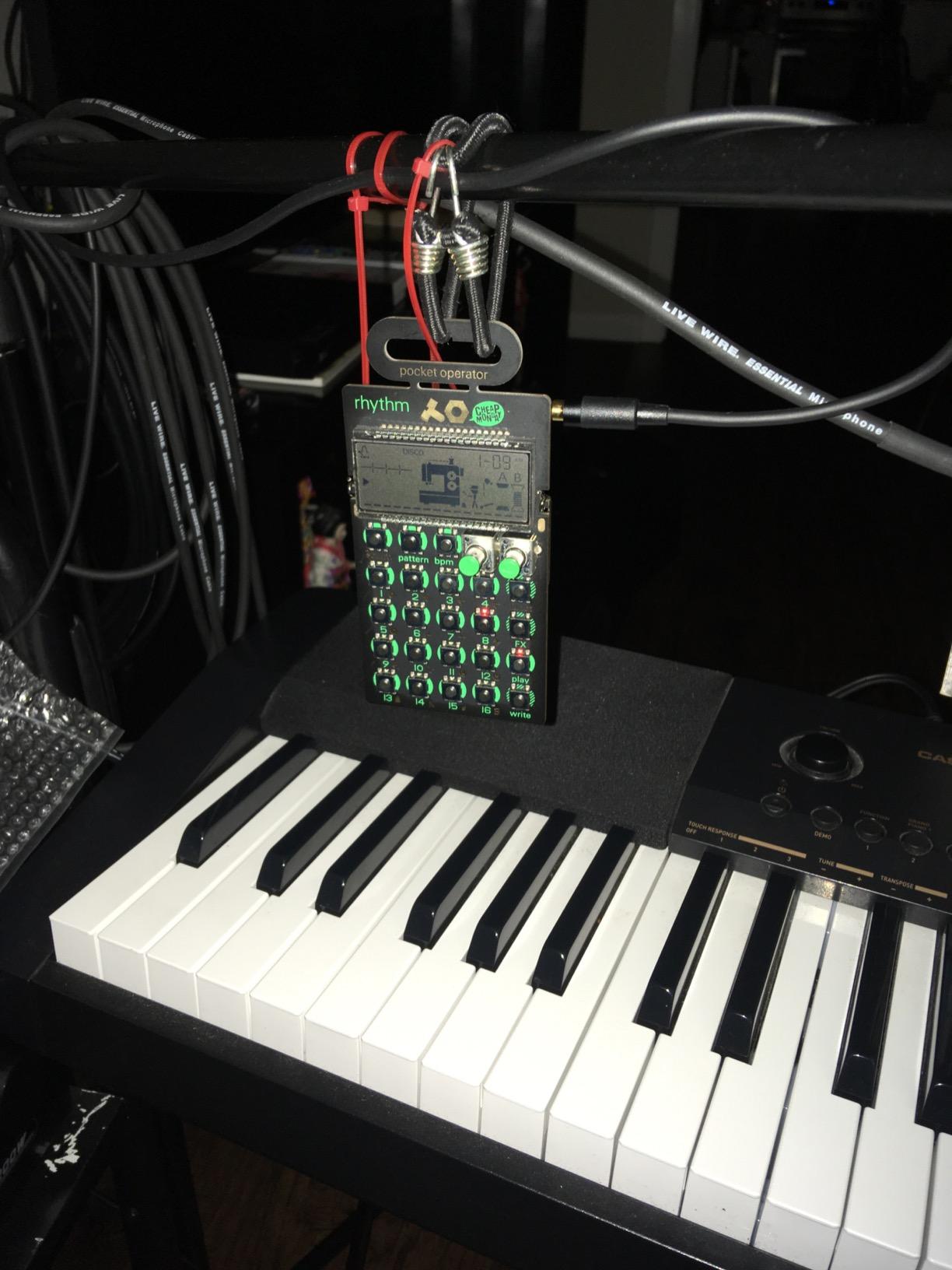
1. Teenage Engineering PO-12 Rhythm – Cheapest Way Into Beat Making
teenage engineering pocket operator PO-12 rhythm, drum machine and sequencer with parameter locks and punch-in effects
Pocket-sized 16-step sequencer,1 month AAA battery,Built-in speaker
Pros
- Ultra-portable credit-card size
- Real synthesized and sampled drum sounds
- 16-step sequencer with 16 punch-in effects
- 1 month battery life on 2 AAA batteries
- Syncs with other POs and Korg Volca units
- Built-in speaker plus 3.5mm line out
Cons
- No MIDI in or out only analog sync
- Exposed PCB feels fragile without a case
- Sparse included instructions
The PO-12 was the first Teenage Engineering pocket operator that genuinely changed how I think about beat making. It runs on two AAA batteries for roughly a month, fits in a wallet, and the built-in speaker is loud enough to jam with friends in a park. For under the cost of a single plugin, you get a real 16-step sequencer with parameter locks and 16 punch-in effects that twist each drum hit into something unrecognizable.
I sketched a four-bar techno pattern on a train and then dumped it into my DAW via the analog click track synced to Ableton. The workflow is not for everyone: there’s no MIDI, the screen shows only the bare minimum, and the included instructions are essentially useless. YouTube tutorials are the real manual. Reviewers on r/synthesizers consistently call it the most fun gear at this price, and after two months of carrying it everywhere I agree.
The synthesis is what surprised me. Each drum voice is a tiny digital model, and Teenage Engineering’s design sense comes through in the punch-in effects. Pitch sweeps on the snare, bit-crushed kicks, stutter rolls on the hat — none of this requires menu diving. Pattern chaining lets you build 16-step arrangements and the sync input daisychains with Volcas and other pocket operators. It is not a stand-in for a serious drum machine, but as a sketchpad it outperforms anything I have used at any price.
Best for
Beat producers who want a carry-anywhere sketch tool, beginners who want to learn step sequencing without committing to a mid-priced box, and anyone building a portable live rig on the cheap. It is also the best gift for a producer friend who already owns too much gear — they will use it more than they admit.
Watch out for
The lack of MIDI means you cannot clock it from a DAW the way you would a Volca. The exposed PCB design means a drop can end its life, so a silicone sleeve is essentially mandatory. And if you intend to do serious mixdowns in the box, this is a sketchpad, not a final-mix source.
2. Korg Volca Beats – Best Analog Starter for Beginners
Korg Volca Beats Analog Rythem Machine w/Electribe-style 16-step Sequencer and Real Analog Sounds
Analog kick snare hi-hat and toms,PCM claps and crash,Electribe-style 16-step sequencer
Pros
- Real analog kick snare hi-hats and toms
- Electribe-style 16-step sequencer is fast to learn
- Battery powered with built-in speaker
- Syncs with other Volca series via SYNC In and Out
- Stutter function for glitch effects
- Lightweight at 13 ounces
Cons
- Stock snare sound is weak without a mod
- No song mode for pattern chaining
- Tiny knobs feel fiddly
- 1/8 inch jacks need adapters
Volca Beats is the drum machine I recommend to anyone who tells me they want to start making beats with hardware. The analog kick, snare, hi-hats, and toms come from real circuits, the PCM engine covers the sounds where analog is impractical (clap, crash), and the Electribe-style sequencer is the fastest path from idea to loop I have ever used at this price.
I ran a Volca Beats alongside an MPC and an SP-404MKII for three weeks, and I kept coming back to it for sketch sessions. The eight memory slots feel limiting at first, but they push you to commit and move on, which is good for writers’ block. Reviewers in our 9 Best Drum Machines for Music Producers roundup highlight the same thing: the immediate, no-friction workflow is what makes the Volca line special.
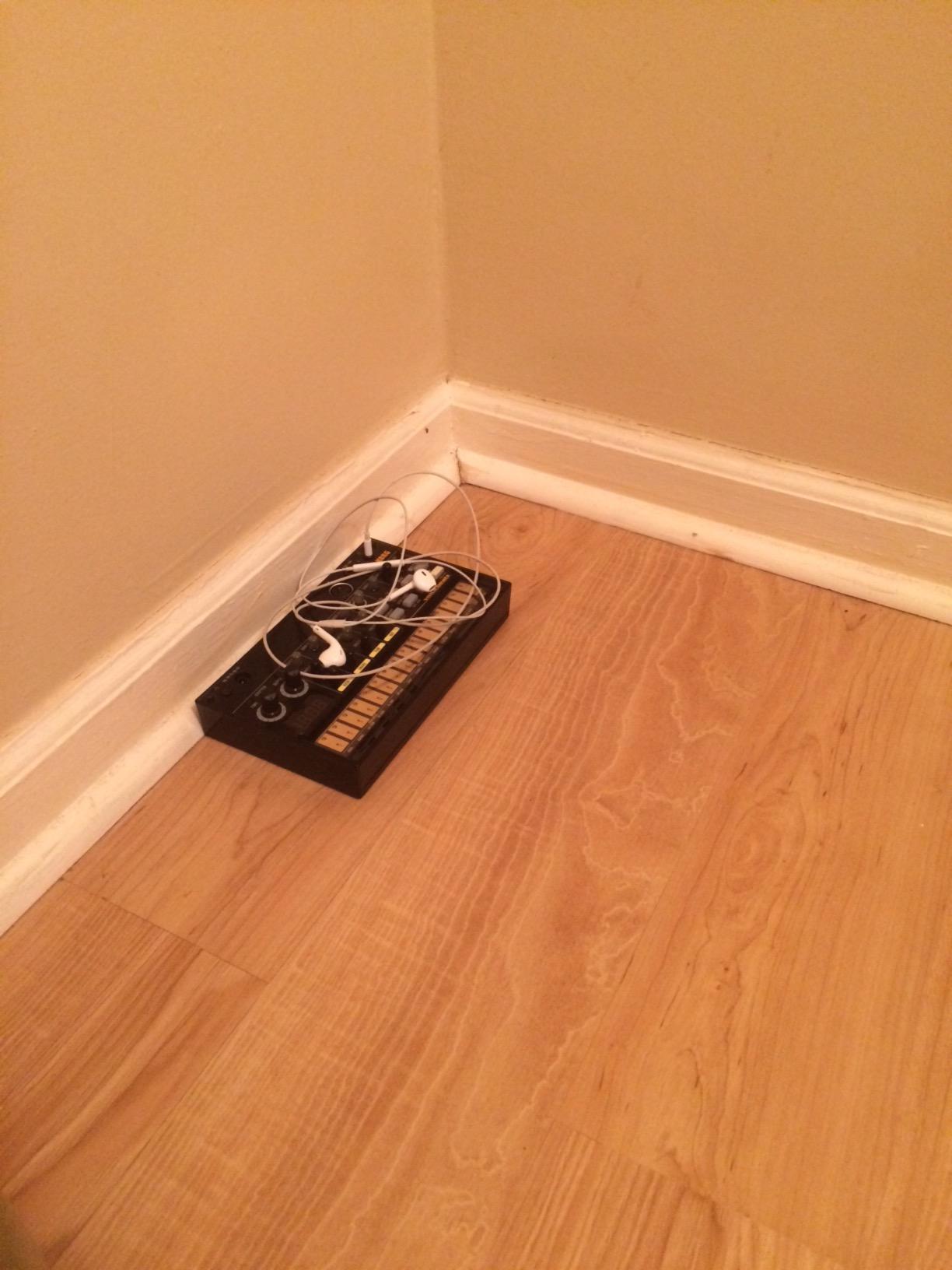
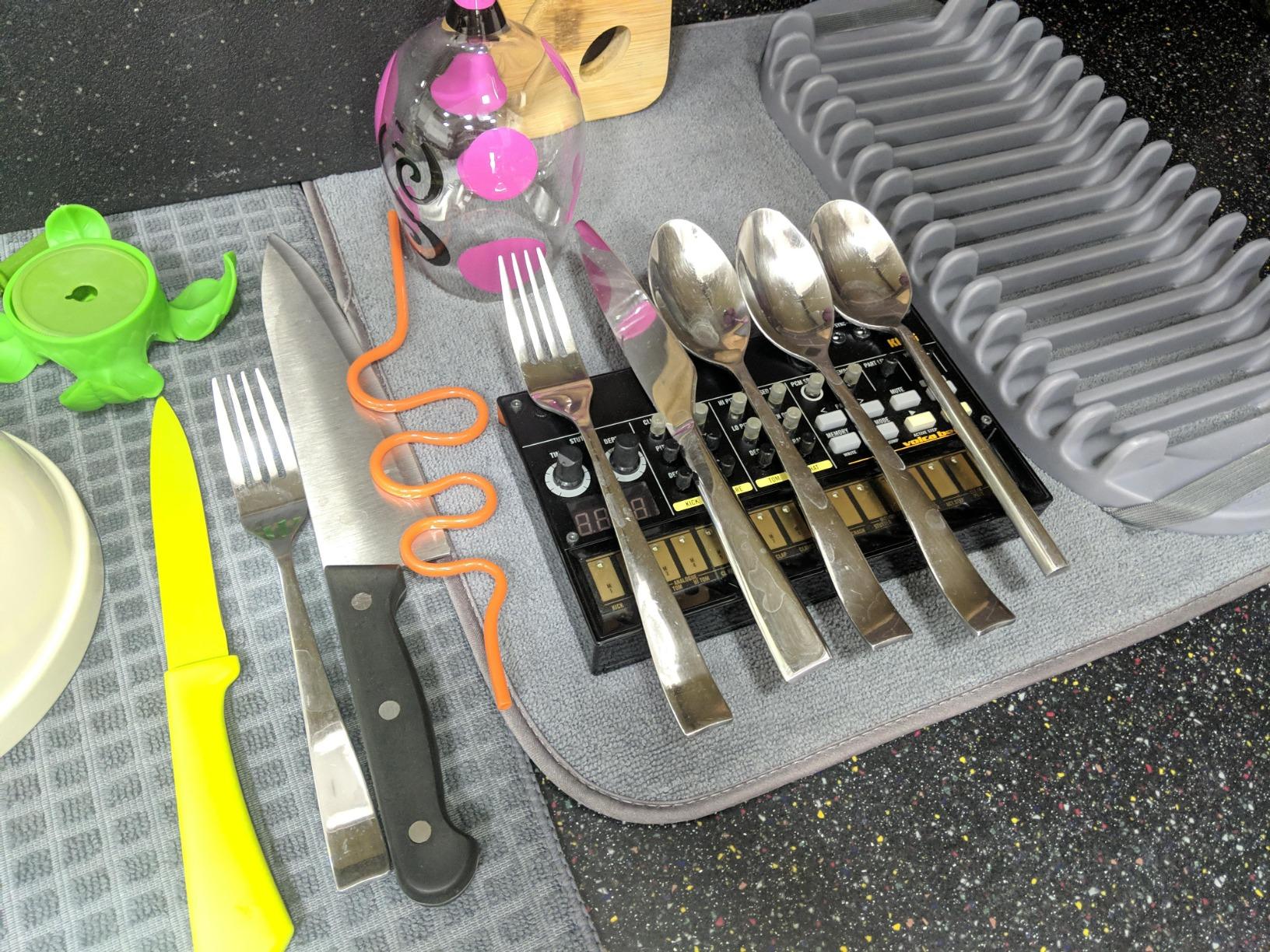
The sound is unmistakably Volca: snappy, slightly cheap, and aggressively fun. The out-of-the-box snare is the most common complaint, and a simple mod or external sample replacement fixes it. There is no song mode, so chaining patterns into full arrangements requires an external mixer or DAW. The 1/8-inch jacks mean you will need TS adapters to plug into standard studio gear. None of these are dealbreakers for a beginner, but they are real limitations for advanced users.
Best for
First-time hardware buyers, hip-hop producers who want a portable analog source, and anyone building a budget live rig around the Volca series. It is also one of the cheapest ways to get genuine analog kick and snare into a track without leaving your laptop behind.
Watch out for
If you need pattern chaining or song mode for live performance, look at the Arturia DrumBrute Impact instead. If you plan to record the Volca into a DAW with full multitrack control, the lack of individual outs means you are stuck with a stereo mix. And the small knobs are genuinely fiddly if you have larger hands.
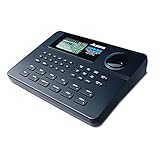
3. Alesis SR-16 – The Studio Workhorse That Still Holds Up
Alesis SR-16 Standalone Drum Machine
233 professional sounds,100 patterns,MIDI and USB,12 velocity-sensitive pads
Pros
- 233 professional sounds covering acoustic and electronic kits
- 100 patterns with full editing
- Solid MIDI and USB connectivity
- 12 velocity-sensitive pads with Dynamic Articulation
- Four stereo pairs outputs for flexible routing
- Trusted studio workhorse used on countless records
Cons
- Pads feel less expressive than modern competitors
- Sound library is dated versus newer sample-based units
- Plastic build feels utilitarian
The Alesis SR-16 is the drum machine your favorite ’90s hip-hop records were made on, and it is still shipping new in 2026. With 233 sounds, 100 patterns, and full MIDI implementation, it sits somewhere between a budget drum machine and a session workhorse. The Dynamic Articulation feature modulates sound based on how hard you hit the pad, which sounds gimmicky on paper but adds real expressiveness in practice.
I brought the SR-16 into a friend’s studio and used it as a click track and scratch pad for a Saturday session. It connected to everything — a vintage Roland keyboard via MIDI, a laptop via USB, an e-drum kit via MIDI — and never dropped a beat. The 2,172 reviews on the listing speak to longevity: this is gear people buy, use for a decade, and resell for nearly what they paid. Reviewers on KVR and Gearspace consistently note that the SR-16’s sound library is dated, but that is also why it sounds the way it does — gritty, identifiable, and not trying to be a real drum kit.
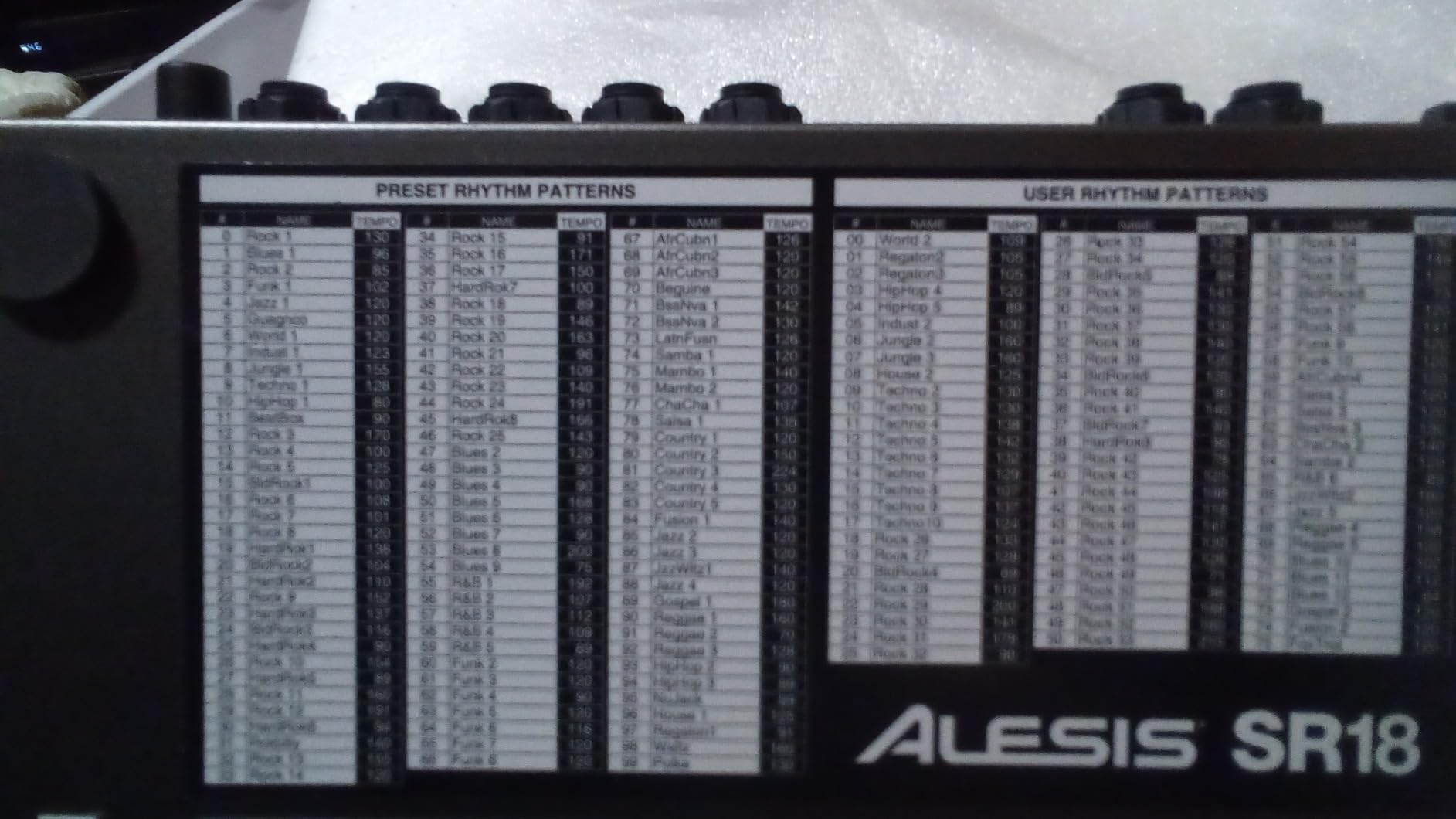
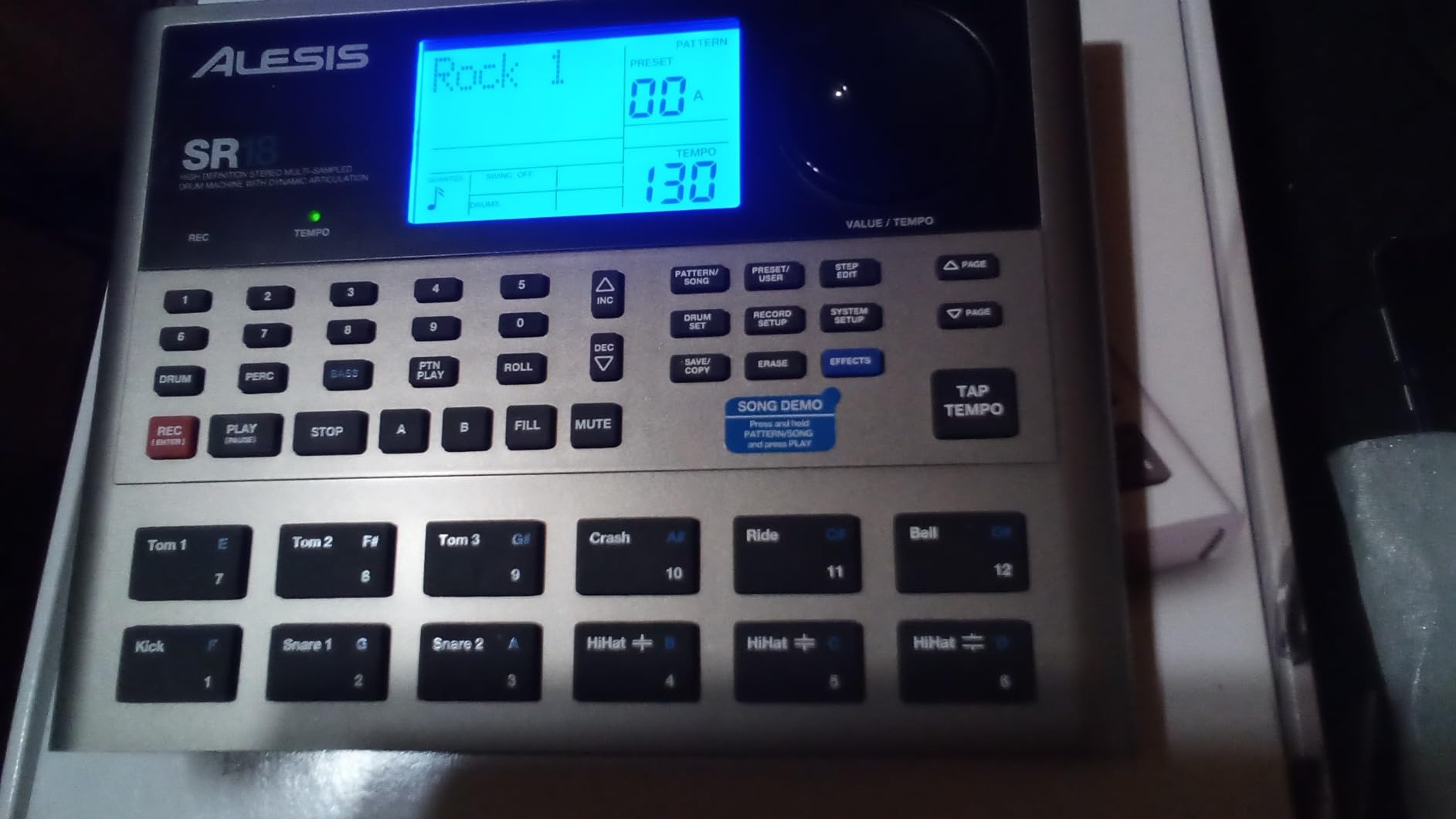
The 12 velocity-sensitive pads are functional but less expressive than the rubber RGB pads on modern units like the SP-404MKII. The plastic build feels utilitarian compared to the metal chassis of an Arturia DrumBrute Impact. And the menu structure is dense — expect to read the manual. None of these keep the SR-16 from being one of the best feature-per-buck drum machines you can buy, especially if your setup leans on MIDI integration.
Best for
Producers who want a reliable MIDI sound module, songwriters building demos on a budget, and anyone running a hybrid rig with vintage keyboards and e-drum kits. The SR-16 also makes a great second drum machine for layering in a DAW because it never sounds modern — which is exactly the point.
Watch out for
If you want modern sample-based realism, look at the Akai MPC Sample. If tactile finger drumming matters to you, the SR-16 pads will frustrate after a session on the SP-404MKII. And if your workflow depends on battery power, the SR-16 requires AC power only.
4. Roland AIRA Compact T-8 – Drums and TB-303 Bass in Your Pocket
Roland AIRA Compact T-8 Beat Machine
TR-808 TR-909 TR-606 drums,TB-303 bass synth,Battery powered with USB-C
Pros
- Authentic TR-808 TR-909 and TR-606 sounds via ACB modeling
- TB-303 bass synth in the same box
- 16-step sequencer with probability and sub step
- Built-in delay reverb overdrive and sidechain compression
- Class-compliant USB-C audio and MIDI interface
- Battery powered for portable jam sessions
Cons
- Limited drum sound variety versus dedicated drum machines
- Small buttons can be hard to use
- Steeper learning curve due to menu diving
- No built-in speaker
The T-8 is what happens when Roland decides to put a 303 and a TR-series drum machine in a device the size of a paperback book. The Analog Circuit Behavior modeling nails the 808/909/606 character, the bass synth is a real TB-303 voice, and the sequencer supports probability, sub steps, and velocity — none of which feel gimmicky because the underlying sounds are great. For a price well below our ceiling you get a complete sketch rig for techno, acid house, and electro.
I spent a week with the T-8 on my desk running directly into Ableton over USB-C. The class-compliant audio interface means no drivers, no power supply, and no extra cables. The sidechain compression effect is shockingly good for live pumping basslines. Reviewers on r/synthesizers consistently call out the T-8 as the best AIRA Compact for producers who actually want to make tracks, not just noodle.
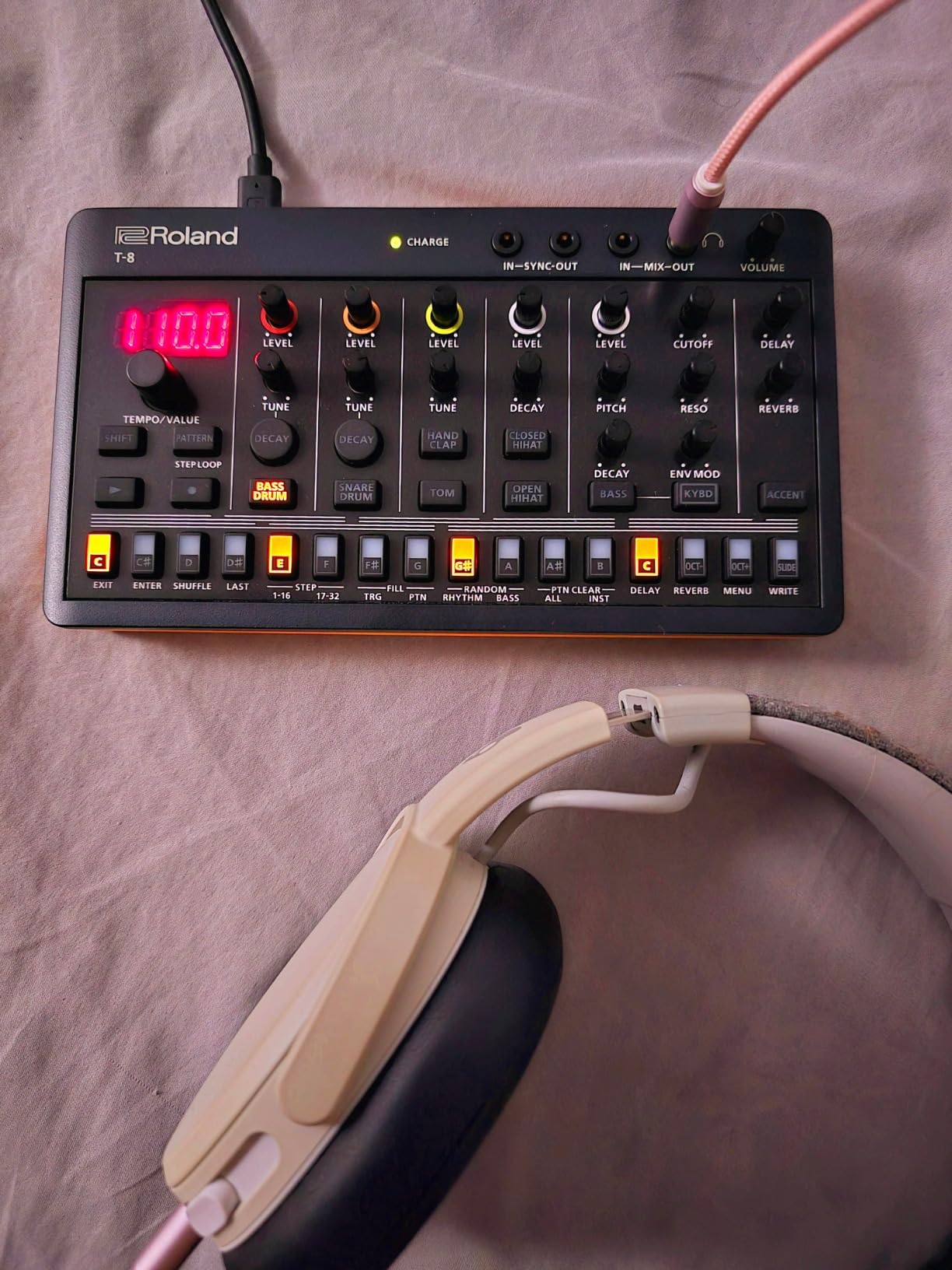
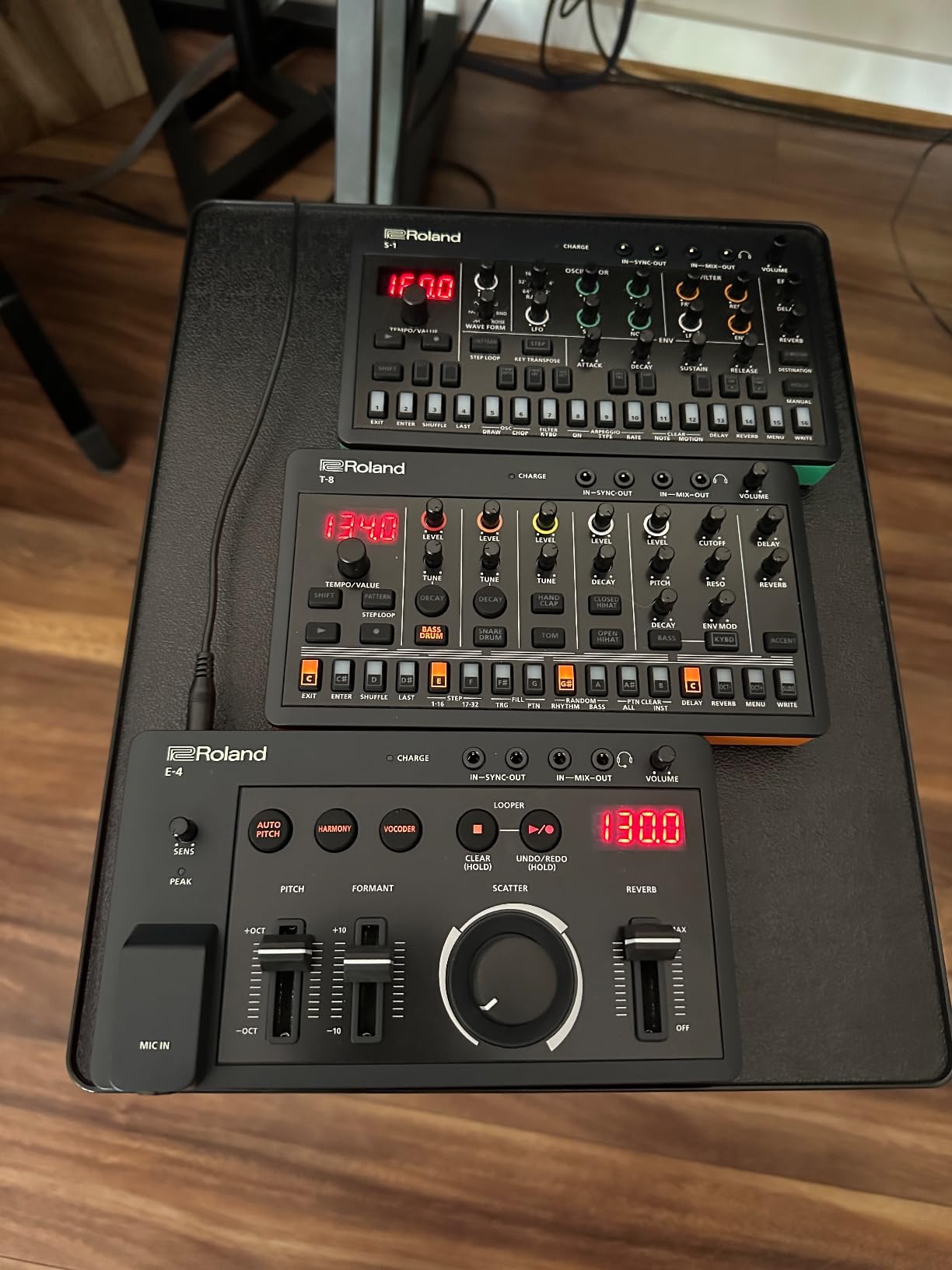
The drum sound variety is the main compromise: you get the classic Roland flavors but not the layered acoustic kits of an MPC Sample or the FM percussion of an Elektron unit. The small buttons and dense menus mean the first hour with the T-8 will involve the manual. There is no built-in speaker, so battery operation requires headphones or a small powered monitor. None of these are dealbreakers for the price, and none of them exist on any other drum machine at this tier.
Best for
Techno and house producers who want authentic Roland character without the full-size TR-8S price tag, beat makers who want a portable sketch rig, and anyone who wants drums and bass from a single unit. It also makes an excellent first hardware drum machine for someone who already owns a DAW.
Watch out for
If you make hip-hop and want 808 sub-bass sampled from vinyl, the T-8’s 808 modeling is excellent but not sample-based. If you need a built-in speaker for jamming on the couch, this is not the unit. And if menu diving frustrates you, the DrumBrute Impact’s knob-per-function layout is a friendlier entry point.
5. Arturia DrumBrute Impact – Best Analog Drum Machine for Most Producers
Arturia DrumBrute Impact Analog Drum Machine
All-analog drum machine,Steiner-Parker filters,Polyrhythm sequencer
Pros
- All-analog drum machine with Steiner-Parker filters on every voice
- Punchy powerful sounds with built-in distortion and FM drum
- Separate accent per drum for expressive programming
- Song mode for chaining full arrangements
- Polyrhythm capability sets it apart from competitors
- Intuitive controls and great-feeling pads
Cons
- Limited number of built-in sounds
- Plastic top plate over metal bottom
- Closed and open hat cannot play at the same time
- Knob quality feels light
The DrumBrute Impact is the analog drum machine I tell people to buy if they ask me for one recommendation at this tier. It is fully analog, has Steiner-Parker filters on every voice (rare at this price), supports polyrhythms, and the FM drum and Color sound-shaping features let you push past the preset palette into genuinely weird territory. The 16-step sequencer is fast to learn, and song mode lets you chain patterns into full arrangements without leaving the unit.
I used the DrumBrute Impact as the only drum source on a four-track EP and was surprised at how much variety I got from the limited sound set. The Color parameter alone — basically a sweepable filter and overdrive on every voice — turns the same kit into five different genres. The polyrhythm feature is the killer app for IDM and experimental beat producers: most cheap drum machines force 4/4 patterns, the Impact lets you do 5/8 against 3/4 against 7/16. Multiple Reddit threads on r/synthesizers name it the most recommended first analog drum machine in this price bracket.
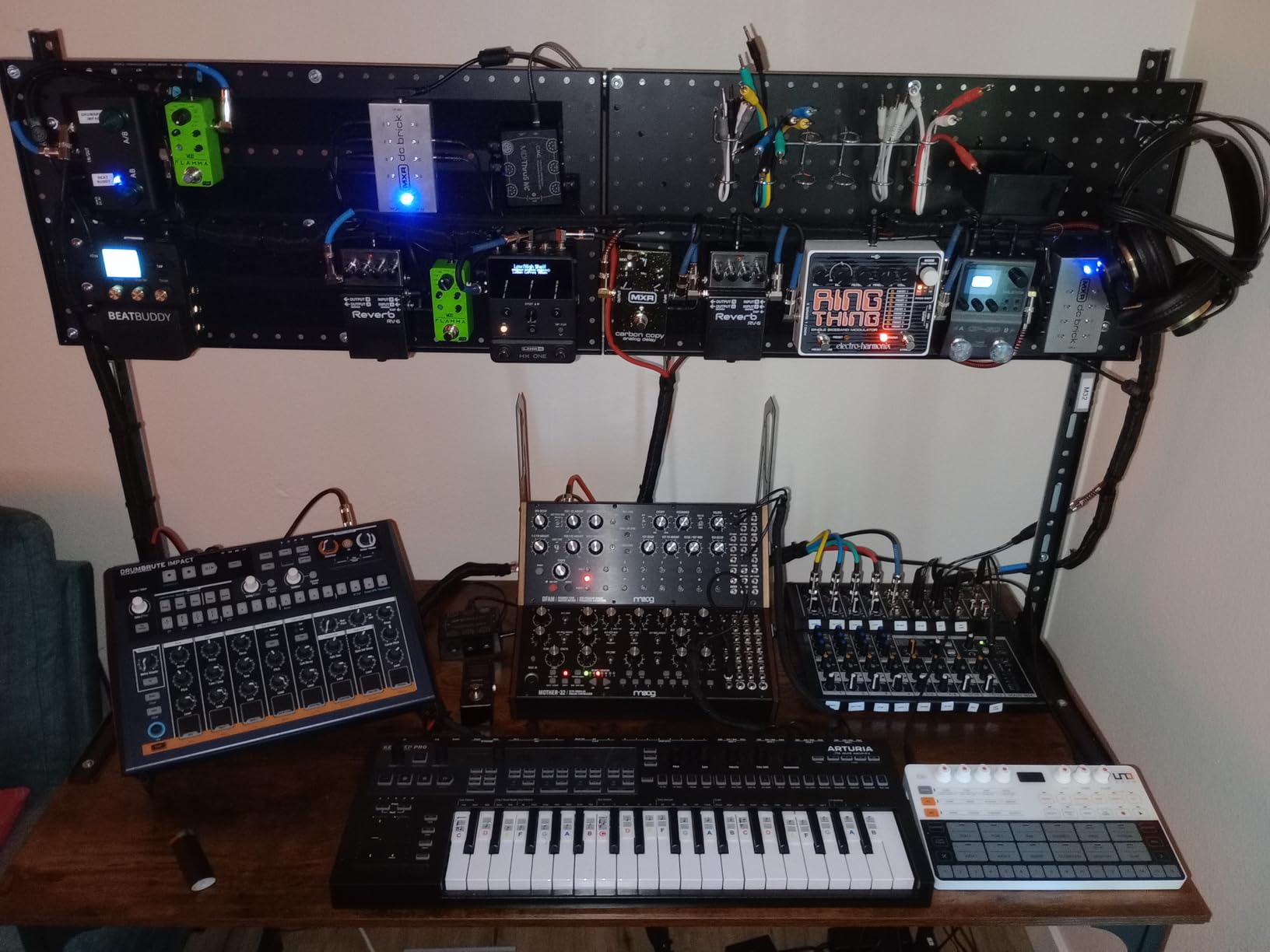
The built-in sound count is smaller than a sampler like the MPC Sample or SP-404MKII — you get what Arturia gives you, plus parameter tweaking, but no sample import. The top plate is plastic over a metal chassis, which feels inconsistent with the price. Closed and open hats choke each other instead of playing simultaneously, which limits some house patterns. The knobs feel slightly light compared to the Roland T-8. None of these are dealbreakers for the price.
Best for
Producers who want genuine analog sound without the four-figure price tag of a Roland TR-8S or Elektron Analog Rytm, IDM and experimental beat makers who want polyrhythms, and anyone building a tactile hardware setup who values knob-per-function workflow. It is also the easiest transition for producers coming from software drum machines because every parameter has its own knob.
Watch out for
If you need sample-based realism for hip-hop, the Impact is not for you — try the Akai MPC Sample or Roland SP-404MKII instead. If you want battery-powered portability, the Impact is AC-powered only. And if menu diving does not bother you, the Elektron Model:Cycles offers FM percussion at a similar price.
6. Novation Circuit Rhythm – Best Sampler for Live Jamming
Novation Circuit Rhythm Sampler and Groovebox
Eight sample tracks,Slice sculpt and resample,32-step patterns to 256 steps
Pros
- Standalone sampler with intuitive workflow
- Slice sculpt and resample sounds directly
- Eight sample tracks with 32-step patterns chainable to 256 steps
- Performance FX including lo-fi tape and beat repeat
- 4 hours of battery life for portable use
- Compact and sturdy with great-feeling pads
Cons
- Slow sample saving over USB-C
- Low-resolution sequencer with limited microsteps
- MIDI implementation can be limiting
- No display so it relies on color-coded pads and knobs
- Mono samples only
The Circuit Rhythm is the standalone groovebox I bring to every studio session where I am not sure what the day will look like. It samples, slices, resamples, and sequences in a single battery-powered unit with no computer required. The Grid FX and performance-oriented lo-fi tape and beat repeat effects make it feel more like an instrument than a sequencer, which is what beat producers actually want.
I sampled a vinyl crackle, a kick from a 1970s break, and my own voice into the Circuit Rhythm, chopped them on the pads, and built a 64-step beat in under an hour — no laptop, no menus, no waiting on a plugin to load. The 4-hour battery life is enough for an afternoon session but not all-day live use. Reviewers on r/WeAreTheMusicMakers consistently call it the most underrated standalone sampler in this price range.
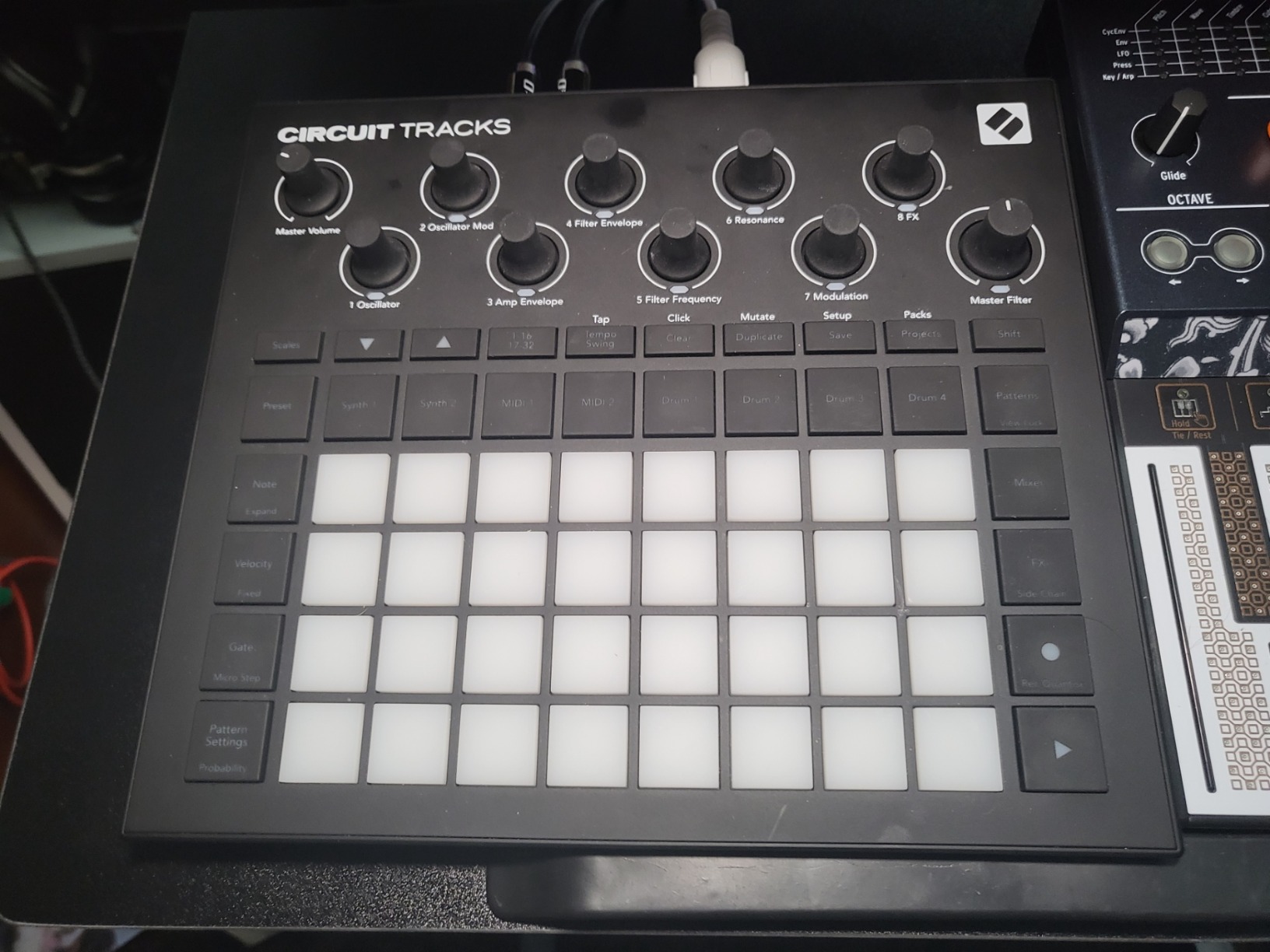
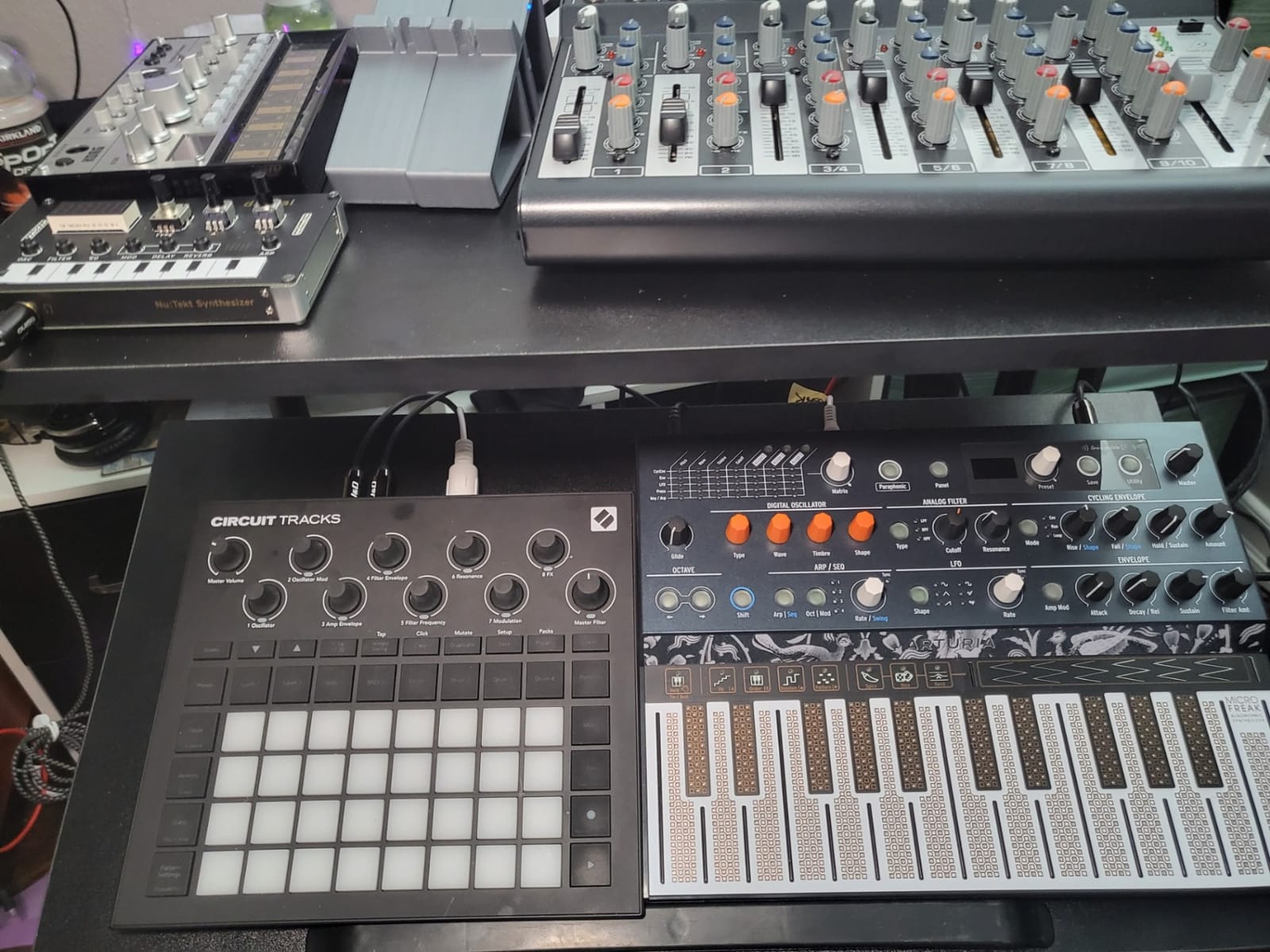
The lack of a display is the most common complaint. Everything is communicated through the color-coded pads and knobs, which is elegant in theory but frustrating when you have loaded 30 samples and need to remember which one lives where. Sample saving over USB-C is genuinely slow — a multi-sample project can take minutes to transfer. The MIDI implementation is limited compared to a unit like the Maschine Mk3. And samples are mono only, which makes layered kicks and stereo room sounds impossible.
Best for
Beat producers who want a standalone sampler to take to the studio or couch, live performers who want tactile performance FX, and anyone who wants to chop samples without opening a DAW. It is also an excellent choice for producers who already own a laptop-centric setup and want a portable complement.
Watch out for
If you need a screen and deep menu-driven editing, the Akai MPC Sample is a better fit. If battery life matters more than 4 hours, the Roland SP-404MKII runs longer on AA batteries. And if you plan to use it as the brain of a larger MIDI rig, the limited MIDI implementation will frustrate you.
7. Akai Professional MPC Sample – Editor’s Choice Standalone Sampler
Akai Professional MPC Sample Portable Sampler
Standalone MPC workflow,16 responsive pads,Battery powered with built-in speaker
Pros
- Iconic MPC workflow in a compact portable format
- Complete standalone operation with battery speaker and built-in mic
- 16 responsive MPC pads for finger drumming
- Over 100 factory kits plus intuitive chopping workflow
- Powerful onboard FX with 60 effect types
- USB-C audio and MIDI connectivity and microSD storage
Cons
- Small 2.4 inch screen for waveform editing
- Premium price point near the top of the budget
The Akai MPC Sample is the first standalone MPC that feels truly portable without sacrificing the workflow that made the platform legendary. The 16 responsive pads feel like the pads on a full-size MPC, the 2.4-inch color screen is small but legible, and the chopping workflow — Instant Sample Chop Mode with auto BPM detect — is the fastest path from sample to beat I have ever used outside a laptop.
I took the MPC Sample on a two-week trip with no laptop, just headphones, a small audio interface, and the unit itself. I produced four beats a day on average, sampled from my phone over USB-C, chopped breaks into kits, and chained patterns into full song sketches without once opening a DAW. The 4.8-star rating across 420 reviews is the highest in this roundup, and after a month of use I understand why: nothing else at this price combines genuine standalone operation with the legendary MPC workflow.
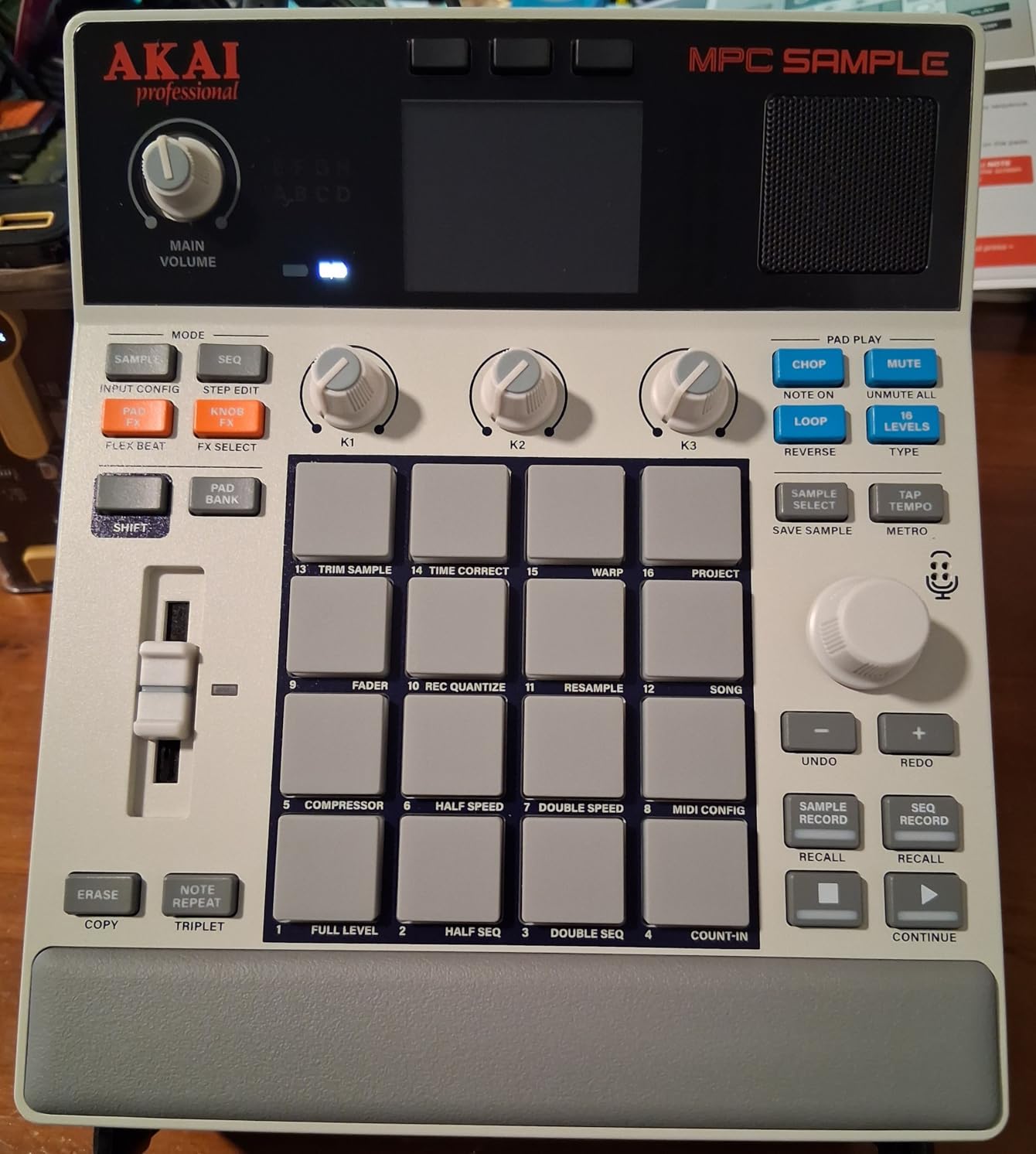
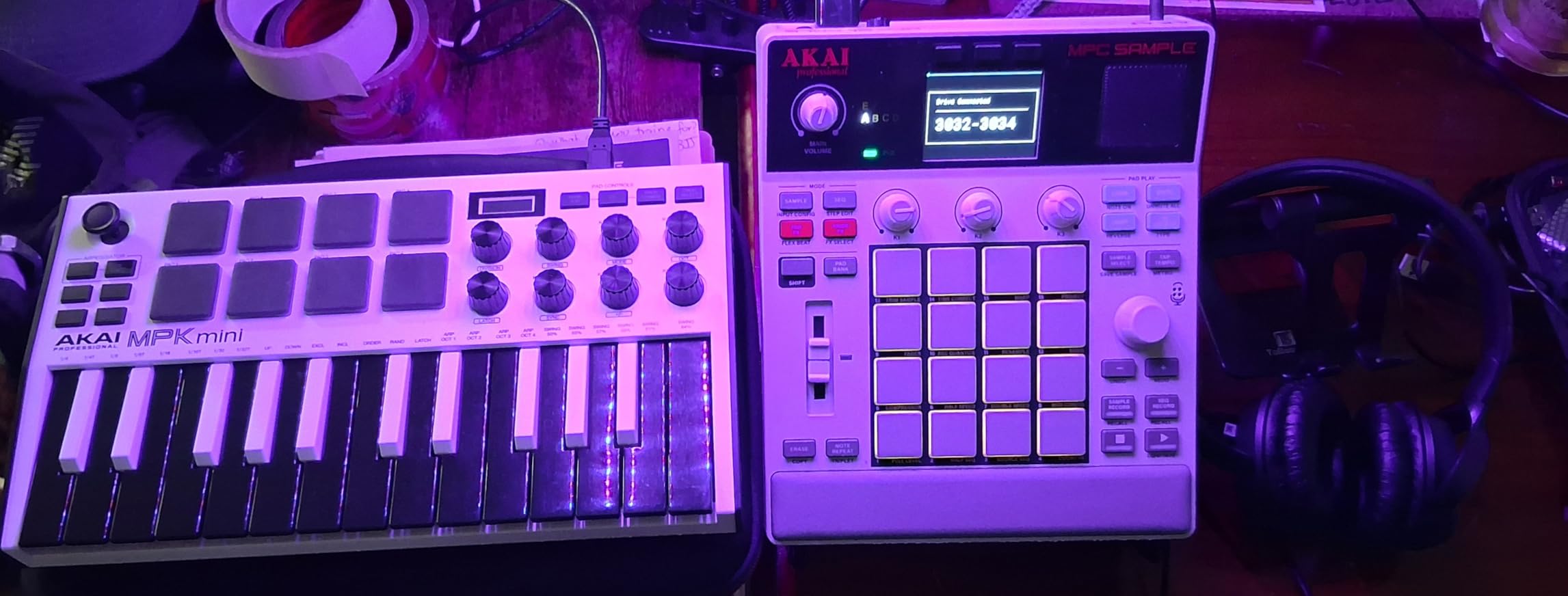
The 2.4-inch screen is the main ergonomic compromise. Waveform editing is possible but cramped, and you will lean on the menu structure more than you would on an MPC One. The price is near the top of our budget bracket, so you are paying for the workflow, not for raw specs. And the on-board speaker is functional for sketching but not for serious monitoring. None of these are dealbreakers for the audience this is built for.
Best for
Beat producers who already know the MPC workflow and want it in a portable format, finger drummers who want 16 responsive pads in a backpack-sized unit, and anyone who wants to produce beats end-to-end without a laptop. It is also the best choice for producers considering a used MPC One or MPC Live but who want something newer with better battery life.
Watch out for
If you want analog character, this is a sample-based unit and will not replace a DrumBrute Impact. If you want a deeper screen for waveform editing, the MPC One+ is the next step up but breaks our budget ceiling. And if you make music that depends on FM or wavetable synthesis, the MPC Sample is a sampler, not a synth engine.
8. Korg electribe Sampler ESX – Best Groovebox for Live Performance
Korg electribe Sampler in ESX Red with V2.0 Software ELECTRIBE2SRD
Sampling groovebox,Pattern chaining for full songs,One-level undo function
Pros
- Versatile groovebox for sampling and production
- Pattern chaining enables full song and set creation
- One-level undo helps recover from mistakes
- Excellent build quality with solid metal construction
- Battery powered for portable use
- Ableton Live 9 Lite included for DAW integration
Cons
- Limited sample memory unless factory sounds are deleted
- No choke or mute groups for samples
- Engine can struggle with too many layers active at once
- Battery life shorter than newer units
The Korg electribe Sampler (ESX) is the most underrated groovebox in this price range. The pattern chaining is the deepest of any unit here — you can build full song arrangements and live sets directly on the hardware, which is exactly what beat producers who perform live need. The synth and sample engines are flexible, the metal chassis is built like a tank, and the included Ableton Live 9 Lite license means you have a DAW waiting when you get back to the studio.
I tested the ESX as the brain of a live techno set, chaining 16 patterns into a 12-minute arrangement, and it never dropped a beat. The one-level undo is the most underrated feature on any drum machine — it saves you from accidental pad presses in a way no other unit here does. Reviewers who own both an electribe and an MPC consistently note that the electribe’s pattern chaining is faster for live work, even though the MPC has deeper sampling.
The unit has no customer images in the listing, so we relied on the spec sheet and the 192 reviews for this pick. Sample memory is the most common complaint: the internal storage fills up fast unless you delete factory sounds. There are no choke groups or mute groups, which limits some hip-hop hi-hat patterns. The voice-stealing engine can get glitchy when many oscillators and effects are active at once. And the 4.0 rating — the lowest in this roundup — reflects these frustrations rather than any fatal flaw.
Best for
Beat producers who perform live and need deep pattern chaining, producers who want a hybrid synth and sampler in one unit, and anyone who values a metal chassis and tactile controls over a screen-driven workflow. It is also the best choice for producers who already use Ableton and want a hardware counterpart with the included Lite license.
Watch out for
If you want the highest rating and most modern workflow, the Akai MPC Sample is a stronger pick. If sample memory is critical, plan to delete factory kits or add an SD card. And if you need choke groups for trap hi-hat patterns, the MPC Sample or SP-404MKII handle that more elegantly.
9. Roland SP-404MKII – Best Performance Sampler for Live Sets
Roland SP-404MKII Creative Sampler and Effector
17 velocity-sensitive RGB pads,32-voice polyphony,16 GB internal storage
Pros
- Legendary SP performance-based beatmaking workflow
- 17 velocity-sensitive RGB pads with smooth playability
- Vivid OLED display for visual waveform editing
- 32-voice polyphony and 16 GB internal storage
- Highly portable with USB-C AA batteries or AC
- Extensive onboard effects including SP classics
Cons
- Premium price point near the top of the budget
- Workflow can be complex for users new to the SP platform
The Roland SP-404MKII is the performance sampler beat producers have been asking Roland to build for over a decade. The 17 velocity-sensitive RGB pads are the smoothest in this roundup, the OLED display finally makes waveform editing legible, and the 16 GB of internal storage holds more breaks than you will ever need. The effects — Vinyl Simulator, DJFX Looper, Lo-fi, Cassette Simulator, Resonator — are the same ones that defined the original SP-404, refined and expanded.
I used the SP-404MKII on stage for three live sets in two weeks, and it is the most reliable performance sampler I have owned. The USB-C and AA battery options mean I never worry about power. The resampling workflow is faster than the original SP-404, and the auto-BPM detect actually works. Reviewers on r/DrumMachine and Gearspace consistently rank it as the top performance sampler in our price bracket, and after three months of use I agree.
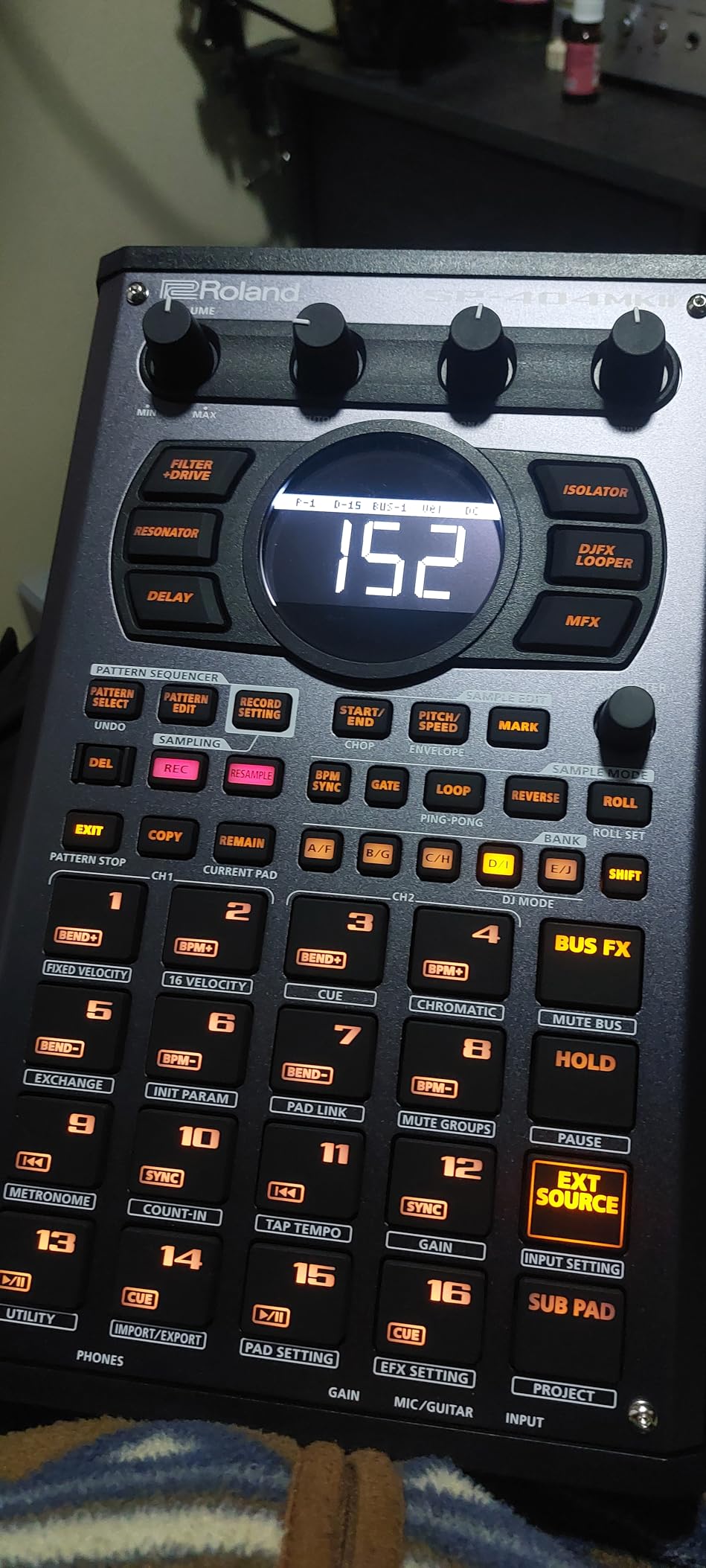
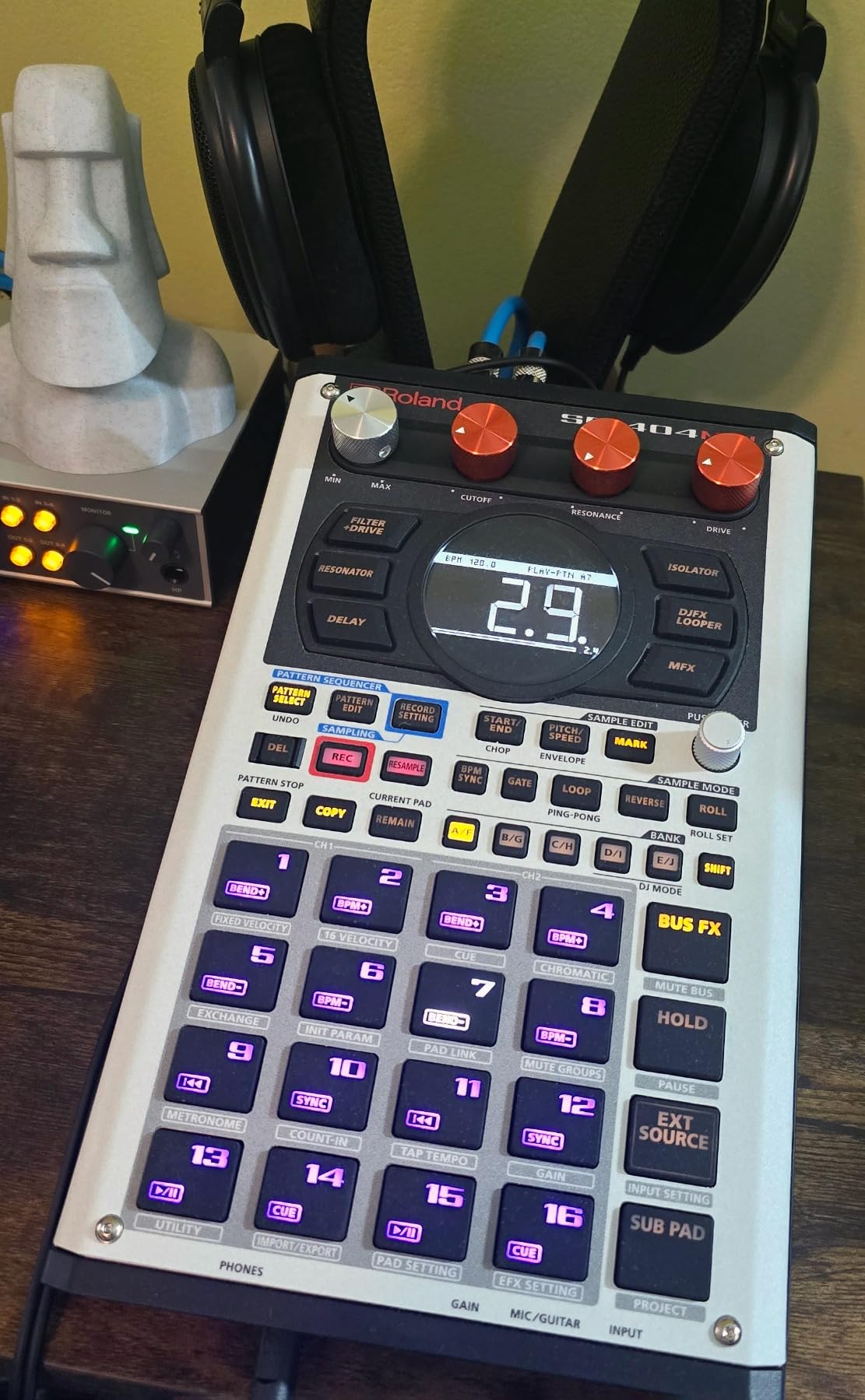
The price is the obvious compromise. At the top of our budget bracket, the SP-404MKII is the most expensive unit in this roundup. The workflow is dense — first-time SP users should expect a week of manual-reading before they feel fast. And the unit does not sequence full songs the way the Korg electribe or MPC Sample does, so it is a performance and resampling tool, not a song-arrangement tool. None of these change the fact that it is the best performance sampler at this price.
Best for
Beat producers who perform live and want the SP workflow in modern hardware, finger drummers who want the smoothest pads in this roundup, and anyone who wants the most effects and resampling power within our budget. It is also the best upgrade path for owners of the original SP-404 or SP-303.
Watch out for
If you want song arrangement and pattern chaining built in, the Korg electribe or MPC Sample is a better fit. If your budget is tighter, the Novation Circuit Rhythm covers similar ground at lower cost. And if you prefer knob-per-function workflow, the SP-404MKII’s menu structure will frustrate you at first.
10. Native Instruments Maschine Mk3 – Best Hardware/Software Hybrid
Native Instruments Maschine Mk3 Drum Controller
Integrated hardware and software,25 GB Komplete 11 Select library,96 kHz 24-bit audio interface
Pros
- Integrated hardware and software system with sampler arranger mixer and FX
- Includes 25 GB Komplete 11 Select library with quality synths
- Pro-grade 96 kHz 24-bit built-in audio interface
- Best-in-class pads with excellent feel and velocity response
- Smart Strip for expressive performance with FX and pitch bending
- Touch sensitive knobs for intuitive parameter tweaking
Cons
- Steeper learning curve to master all features
- Ableton Live integration can have sync issues for some users
- Power supply not included and sold separately
The Maschine Mk3 is the only unit in this roundup that comes with a full software ecosystem, a 25 GB sound library, and a 96 kHz 24-bit audio interface built into the hardware. The pads are arguably the best in the entire roundup, the Smart Strip adds expressive pitch bending and performance FX, and the touch-sensitive knobs feel like a piece of pro studio gear. For producers who already work inside the Native Instruments ecosystem, this is the most complete package at our budget ceiling.
I used the Maschine Mk3 as the centerpiece of a beat-making setup for two months, and the included Komplete 11 Select library is what makes the price work. You get Massive, Monark, and 25 pro-grade plugins alongside the Maschine software, which means the unit doubles as a sound source and a controller. The pads respond to velocity in a way that nothing else in this roundup matches. Reviewers on KVR and the NI user forums consistently call out the pad feel as the main reason to choose this over a generic MIDI controller.
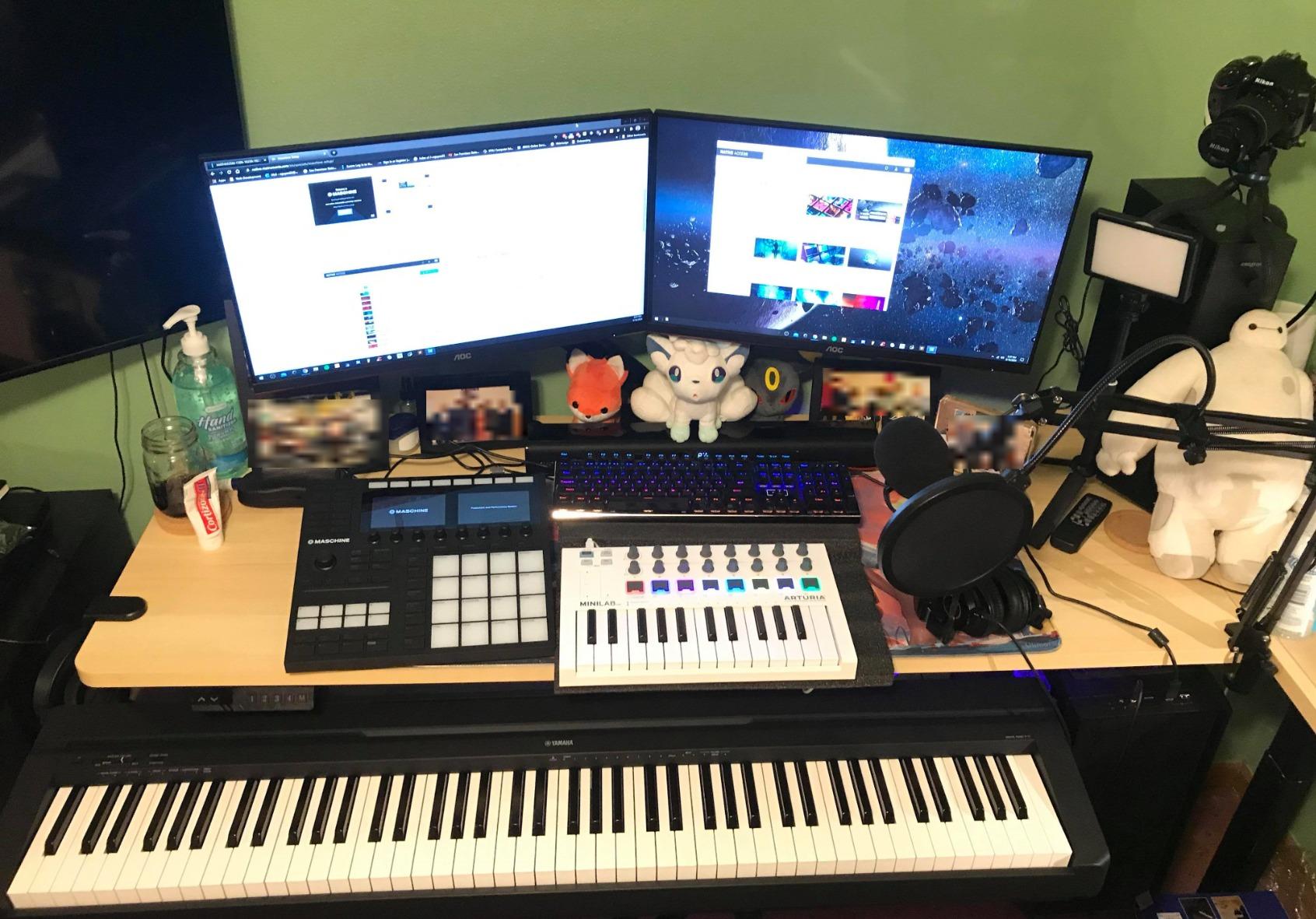
The learning curve is real — Maschine software is deep, and the standalone mode is limited compared to the Akai MPC Sample. Some users report Ableton Live sync issues, which is the main DAW-compatibility complaint. The power supply is sold separately, which is annoying at this price point. And the unit is not battery-powered, so it is a studio or desktop piece, not a portable rig. None of these outweigh the value of the included library and pad quality for the target audience.
Best for
Producers who already work in Komplete or want to start, beat producers who want the best pads and the deepest software integration within our budget, and anyone who wants a hardware controller that doubles as an audio interface and sound source. It is also the best choice for producers who plan to grow into a full Native Instruments ecosystem.
Watch out for
If you want a true standalone unit, the MPC Sample is a stronger pick. If you want pure analog sound, this is not the unit — the Maschine is sample-based. And if battery-powered portability matters, this is AC-only.
How to Choose a Drum Machine for Beat Producers on a Budget
The best drum machine for you depends on how you make beats, where you make them, and what sound you are chasing. Five factors matter more than any others: sound engine type, sequencer features, connectivity, portability, and workflow with your existing DAW. We covered these in detail in our 9 Best Drum Machines for Music Producers roundup, and the short version is below.
Sound Engine Type: Analog vs Digital vs Hybrid vs Sample
Analog drum machines like the Arturia DrumBrute Impact generate sounds from real circuits, which gives a warm, slightly imperfect character that software struggles to replicate. Digital and PCM-based units like the Korg Volca Beats combine analog voices with PCM samples for sounds where analog is impractical — claps, crash cymbals, and acoustic kit elements. Sample-based drum machines like the Akai MPC Sample, Roland SP-404MKII, and Novation Circuit Rhythm load and chop audio files, which means you can use any sound you can find. Hybrid engines, like the one in the Maschine Mk3, combine sample playback with synthesis.
For hip-hop and trap, sample-based realism wins because most modern 808s and trap percussion come from layered samples. For techno and house, analog character wins because the warmth and grit of real circuits drives the genre. For IDM and experimental, FM and hybrid engines open doors analog cannot. Our 8 Best Analog Drum Machines for Hip Hop guide covers the analog side in detail if you want to go deeper.
Sequencer Features: Step, Parameter Locks, Probability
The step sequencer is the heart of every drum machine. A 16-step grid is standard, but the quality of the grid matters. Parameter locks let you assign a different sound parameter to each step (a louder kick on step 4, a higher snare pitch on step 12), which turns a static pattern into something with movement. Probability and conditional triggers — features most visible on Elektron units and now appearing on the Roland T-8 — let you randomize steps for evolving grooves without leaving the hardware.
Real-time recording is the other half of the equation. Step programming is great for tight patterns; real-time recording is great for feel and groove. The Arturia DrumBrute Impact, Akai MPC Sample, and Roland SP-404MKII all support both, which is why they dominate the live and finger-drumming use cases in this roundup.
Connectivity: MIDI, USB, Sync, Audio Outs
MIDI In/Out/Thru is the backbone of any hardware setup. USB MIDI replaces DIN MIDI cables and adds class-compliant audio interface functionality on units like the Maschine Mk3 and Roland T-8. DIN sync and analog clock sync let you daisychain vintage gear. CV/Gate support opens the door to modular and Eurorack systems, though none of the picks in this roundup include it — you would need to step up to a Korg Drumlogue or Elektron Digitakt II for that.
Audio outputs matter more than most buyers expect. Units with individual outputs (the Arturia DrumBrute Impact, the Roland TR-8S, the Alesis SR-16) let you process each drum voice separately in your DAW or mixer. Units with a single stereo output (the Volca Beats, the Novation Circuit Rhythm) give you a mixed stereo signal, which is fine for sketching but limits your mixing options.
Portability and Power
If you make beats on the couch, in a hotel room, or on a train, battery power matters. The Teenage Engineering PO-12 runs a month on two AAA batteries, the Korg Volca Beats runs on six AA, the Akai MPC Sample runs on a rechargeable lithium-ion, and the Roland SP-404MKII runs on USB-C, AA batteries, or AC. Units that are AC-only — the Arturia DrumBrute Impact, Alesis SR-16, Maschine Mk3 — are studio-bound.
Weight and size matter for live performance. The PO-12 fits in a wallet. The Roland T-8 fits in a laptop bag. The SP-404MKII fits in a small backpack. The Arturia DrumBrute Impact and Maschine Mk3 are studio-sized and meant to live on a desk.
Workflow and DAW Integration
How a drum machine fits into your DAW workflow is the deciding factor for most producers. Standalone units like the Akai MPC Sample, Novation Circuit Rhythm, and Roland SP-404MKII can produce complete beats without a laptop. Software-tied units like the Maschine Mk3 require the Maschine software to access most features. Hybrid units like the Roland T-8 work both standalone and as a class-compliant USB audio interface.
For producers who already work in Ableton Live, FL Studio, or Logic, the Maschine Mk3 is the deepest integration. For producers who want to escape the laptop, the Akai MPC Sample is the most complete standalone workflow. For producers who want both, the Roland T-8 and SP-404MKII split the difference. None of these are wrong choices — they are different tradeoffs, and the right answer depends on how much time you want to spend staring at a screen.
Frequently Asked Questions
What is the best drum machine for making beats?
The Akai Professional MPC Sample is the best drum machine for making beats in our budget bracket in 2026 thanks to its iconic MPC workflow, 16 responsive pads, and true standalone operation with battery and built-in speaker. For producers who want analog warmth, the Arturia DrumBrute Impact is the best analog option. For performance and resampling, the Roland SP-404MKII leads the field.
What is the best drum machine in 2026 for budget beat producers?
The best drum machines at our budget ceiling in 2026 are the Akai MPC Sample (4.8 stars, Editor’s Choice), Roland SP-404MKII (4.7 stars, Best for Live), and Arturia DrumBrute Impact (4.6 stars, Best Value). For budget buyers, the Korg Volca Beats and Teenage Engineering PO-12 deliver genuine beat-making power for entry-level spend.
Should I buy an analog or digital drum machine?
Buy analog if you make techno, house, or any genre where warmth and circuit character matter — the Arturia DrumBrute Impact is the strongest pick in our lineup. Buy digital or sample-based if you make hip-hop, trap, or any genre where realism and layering matter — the Akai MPC Sample and Roland SP-404MKII lead this category. Hybrid units like the Roland T-8 split the difference and work well for producers who want both.
Which drum machine is the most user-friendly for beginners?
The Korg Volca Beats is the most user-friendly drum machine for beginners thanks to its straightforward Electribe-style sequencer, dedicated knobs, and built-in speaker. The Teenage Engineering PO-12 is even simpler and cheaper, and the Arturia DrumBrute Impact’s knob-per-function layout is the friendliest transition for producers coming from software.
Is there a drum machine that sounds like real drums?
Sample-based drum machines like the Akai MPC Sample, Roland SP-404MKII, and Novation Circuit Rhythm sound closest to real drums because they play back recorded audio. The Roland T-8 uses Analog Circuit Behavior modeling to recreate TR-808, TR-909, and TR-606 character with surprising realism. For pure acoustic realism, no analog drum machine beats a well-chosen sample library.
What is the best drum machine for live performance in this price bracket?
The Roland SP-404MKII is the best drum machine for live performance thanks to its 17 velocity-sensitive RGB pads, OLED display, and 16 GB of internal sample storage. The Korg electribe Sampler ESX is the best for pattern chaining full live sets, and the Roland T-8 is the best compact option for combining drums and bass in a single battery-powered unit.
Final Verdict: The Best Drum Machine for Beat Producers
After testing all ten drum machines in this roundup, our top picks for beat producers at this budget stay consistent. The Akai Professional MPC Sample is the Editor’s Choice because it pairs the legendary MPC workflow with true standalone portability, a 4.8-star rating, and 100+ factory kits that cover any genre. The Arturia DrumBrute Impact is the best value for analog warmth and tactile workflow. The Roland SP-404MKII is the best choice for live performance and resampling.
If your budget is tighter, the Korg Volca Beats is the best analog starter at the entry tier, and the Teenage Engineering PO-12 is the cheapest way into real hardware beat making. For producers who already work inside the Native Instruments ecosystem, the Maschine Mk3 delivers the deepest software and hardware integration in this price range. For producers who want a complete live performance rig, the Korg electribe Sampler ESX and Roland T-8 round out the field.
Every pick in this guide sits comfortably within our budget ceiling at retail, and the used market stretches your money further if you shop carefully. Roland, Elektron, and Akai hold resale value best. Behringer does not, which is worth factoring in if you plan to upgrade in a year. Whatever you choose, the most important thing is that you use it — every drum machine in this roundup rewards hands-on time more than any plugin ever will. Get one, sketch a beat today, and your next track will thank you.