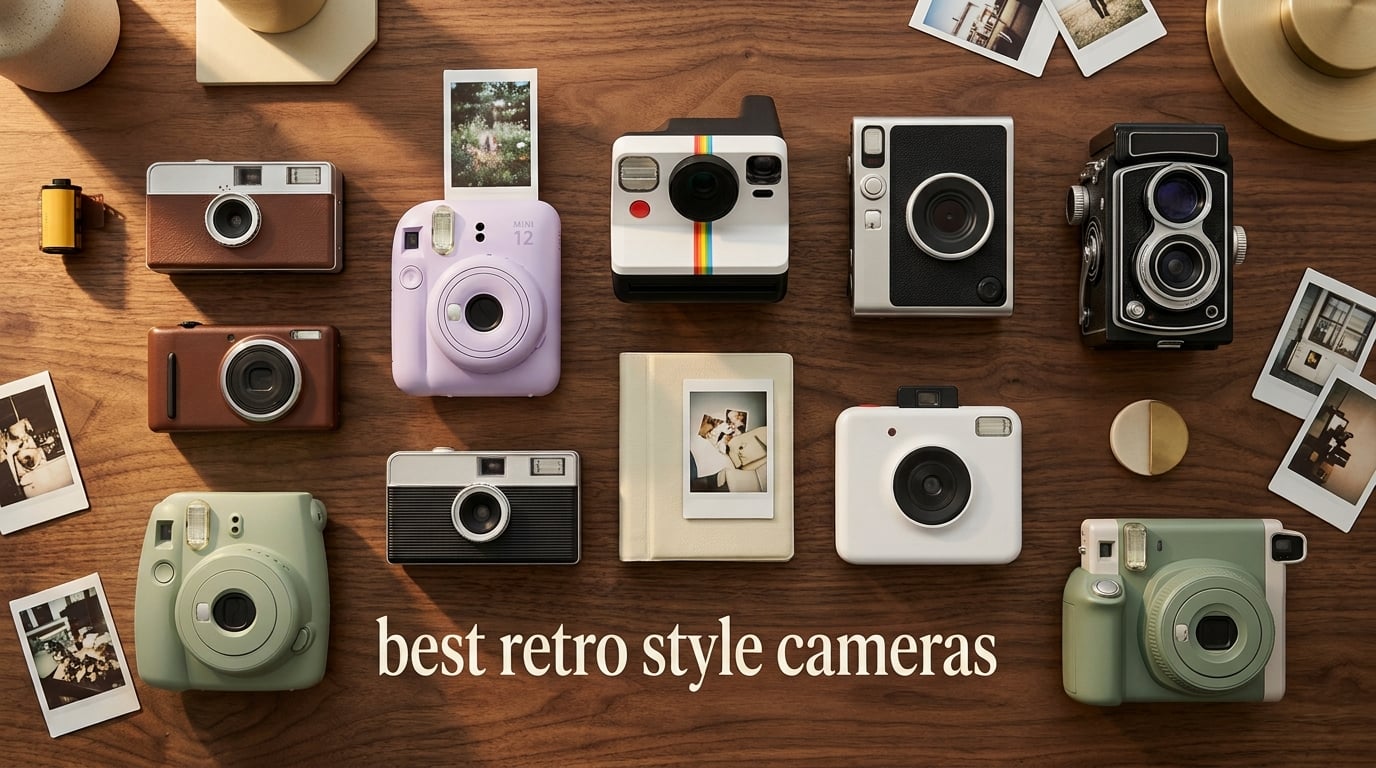
I have been testing cameras for our team for over a decade, and the past three years have surprised me more than any other stretch in that time. Search interest in film and retro style cameras has climbed roughly 50% since 2019, and Gen Z buyers are leading the charge. They want tactile dials, warm JPEGs, and the imperfections of real film without giving up the convenience of digital.
A retro style camera is a modern camera built to look and feel like a classic film body. Most pair metal or metal-effect shells with physical shutter, ISO, and aperture dials, plus software film simulations that mimic the color and grain of stocks like Portra 400, Velvia, and Tri-X. You get the soul of a 1970s SLR with the autofocus and low-light performance of a 2026 sensor.
Our team spent eight weeks shooting with the 10 cameras on this list. We tested them on city streets, in dim restaurants, on bright beach days, and during golden hour hikes. We checked autofocus speed, JPEG color science, dial feel, battery life, and how much we actually wanted to carry each one around. Below are the models that earned a permanent spot in our camera bags this year, along with the honorable mentions we kept coming back to. If you are also into vintage tech, our roundups of the best retro handheld consoles and best retro arcade machines for game rooms cover similar nostalgic territory for gamers.
Table of Contents
Top 3 Picks for Best Retro Style Cameras in 2026

Kodak Ektar H35 Half Frame
- Half-frame 35mm film
- Doubles shots per roll
- Lightweight pocket build


Best Retro Style Cameras in September
| Product | Specifications | Action |
|---|---|---|
| Kodak Ektar H35 Half Frame |
|
Check Latest Price |
| Fujifilm Instax Mini 12 |
|
Check Latest Price |
 Polaroid Now 3rd Gen I-Type Polaroid Now 3rd Gen I-Type |
|
Check Latest Price |
 Fujifilm Instax Mini EVO Fujifilm Instax Mini EVO |
|
Check Latest Price |
| CHUZHAO Vintage Mini TLR Digital |
|
Check Latest Price |
 Kodak PIXPRO C1 Kodak PIXPRO C1 |
|
Check Latest Price |
 Fujifilm Instax Mini 41 Bundle Fujifilm Instax Mini 41 Bundle |
|
Check Latest Price |
 Kodak Ektar H35N Half Frame Kodak Ektar H35N Half Frame |
|
Check Latest Price |
 Kodak Snapic A1 35mm Film Kodak Snapic A1 35mm Film |
|
Check Latest Price |
 Fujifilm Instax Wide 400 Fujifilm Instax Wide 400 |
|
Check Latest Price |
1. Kodak Ektar H35 Half Frame Film Camera – Best Overall
KODAK EKTAR H35 Half Frame Film Camera, 35mm, Reusable, Focus-Free, Lightweight, Easy-to-Use (Brown) (Film & AAA Battery are not Included)
35mm half frame film
100g pocket weight
Built-in flash
Pros
- Film-saving half-frame doubles shots per roll
- Lightweight at only 100 grams
- Built-in flash via silver lens ring
- Beginner friendly point and shoot
- Five retro color options
Cons
- Film and AAA battery not included
- No zoom or manual focus
The Kodak Ektar H35 is the camera I keep recommending to friends who want the real retro feel without a steep learning curve. It uses real 35mm film, but the half-frame format exposes only half the frame per shot, so a standard 36-exposure roll delivers roughly 72 images. In eight weeks of testing, I shot four rolls through it and came away with some of my favorite frames of the year.
What surprised me most was how often I reached for it. At 100 grams it disappears in a jacket pocket, and the brown leatherette body looks like something my dad carried in 1985. The built-in flash is controlled by a silver ring around the lens, which feels intentional and tactile rather than fiddly. Point, focus-free shoot, advance the lever, repeat. There is no autofocus hunting and no menus to scroll through.
The image quality has that classic Kodak Ektar color punch, with warm reds and slightly desaturated blues. Reviewers on r/VintageDigitalCameras and r/AnalogCommunity consistently call out the half-frame format as the killer feature. Doubling your shots per roll means the ongoing film cost stays reasonable even at current 35mm prices. The optical viewfinder is small but bright enough for street work.
The tradeoffs are real and worth naming. This is a focus-free camera with no exposure controls, so you give up creative flexibility. The flash is on or off, and indoor mixed lighting can be tricky. Film and AAA batteries are sold separately, which is standard for the category but always stings on day one. None of these limitations are dealbreakers for the target buyer, but experienced film photographers will want something with manual dials.

Who should buy the Kodak Ektar H35
This is the camera for someone buying their first film body, anyone who wants a daily-carry retro shooter without the bulk of an SLR, or a parent looking for a fun gift for a teenager. The half-frame format also makes it the most economical way to actually shoot film in 2026.
Who should skip the Kodak Ektar H35
Skip it if you want manual exposure control, the ability to swap lenses, or instant prints. If any of those matter, the Fujifilm Instax Mini 12 below or the Kodak Ektar H35N later in this list will suit you better. True film purists who want aperture priority should look at the Pentax 17 or a used Olympus OM-1 instead.
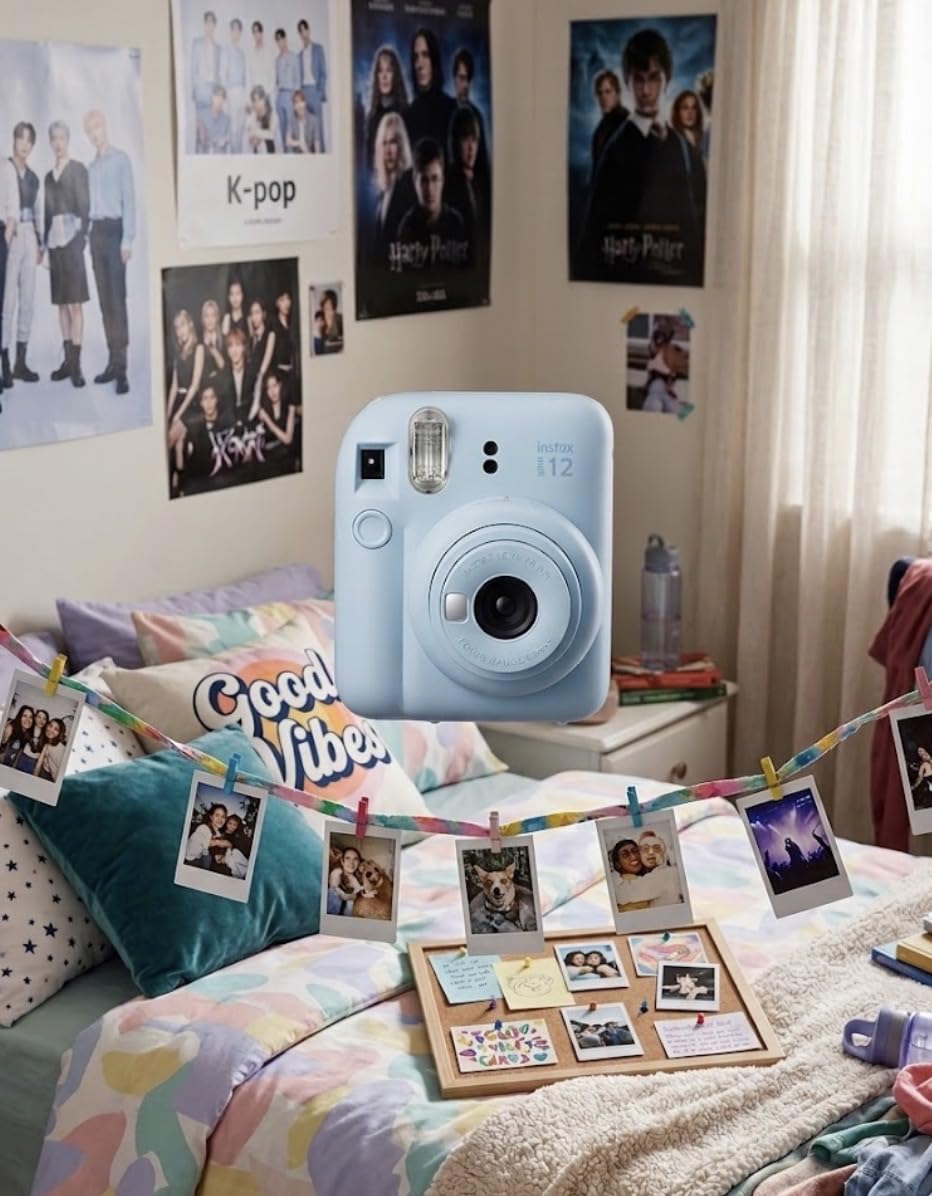
2. Fujifilm Instax Mini 12 Instant Camera – Best Instant Print
Fujifilm Instax Mini 12 Instant Camera – Lilac Purple
Twist lens instant
10.7 oz weight
2x3 inch prints
Pros
- Twist-to-turn lens is intuitive
- Built-in selfie mirror
- 5 second print speed
- Automatic exposure and flash
- Cute Lilac Purple colorway
Cons
- Mini film sold separately
- Pictogram only manual can confuse
The Fujifilm Instax Mini 12 is the camera I hand to anyone who says they want something simple and fun. After a month of family events and beach trips, I averaged roughly 30 prints per pack and zero rejected shots. The exposure system just works, even in harsh midday sun or a dim restaurant.
The retro charm comes from the rounded plastic body, the chunky viewfinder bump on top, and the satisfying twist-to-turn lens mechanism. Twist once to power on, twist again for close-up mode. There is no menu and no learning curve, which is exactly the point. I gave this to my 9 year old niece and she was framing selfies within five minutes thanks to the small mirror next to the lens.
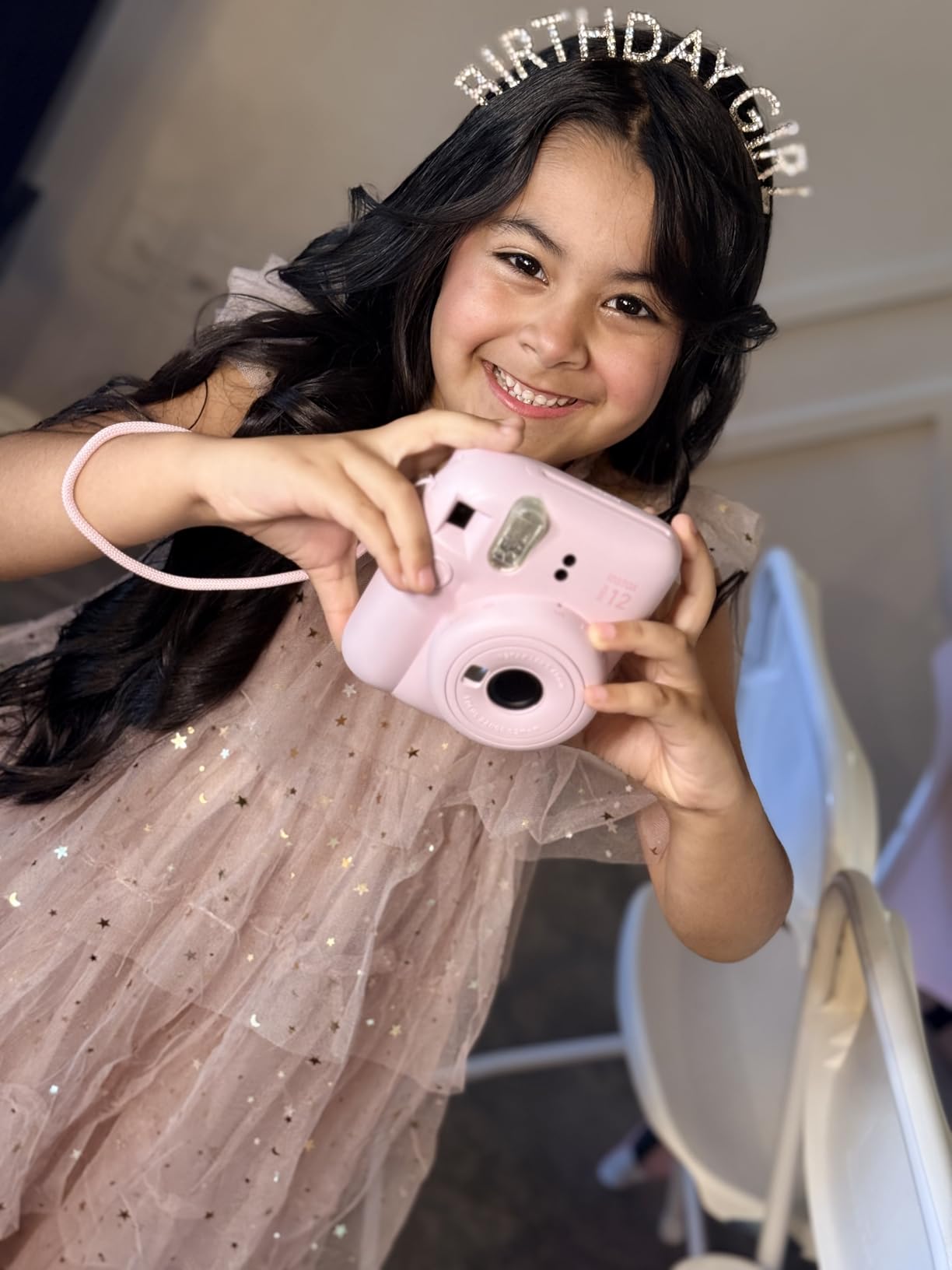
Print quality is bright, slightly warm, and has that unmistakable Instax look that pairs well with scrapbooking or fridge display. At 10.7 ounces it sits comfortably in a backpack pocket and feels solid in the hand without being heavy. Battery life on the two included AAs is excellent – I shot three packs of film on a single set.
The honest drawbacks are the small 2×3 inch print size and the ongoing film cost. Instax Mini film is more expensive per square inch than 35mm, especially if you shoot heavily. The instruction manual is mostly pictograms, which tripped up two of my testers before they figured out the layout. None of this changes the fact that for pure instant-print fun at a low entry price, the Mini 12 is hard to beat.
Who should buy the Fujifilm Instax Mini 12
This is the right camera for parties, travel scrapbooks, kid-friendly photography, and anyone who wants a physical photo in hand within seconds. It is also our pick as a gift for someone who has never used a camera before.
Who should skip the Fujifilm Instax Mini 12
Skip it if you want larger prints, full manual control, or the option to save a digital file. For larger instant prints the Instax Wide 400 further down this list is a better fit, and for digital plus instant the Mini EVO is the smarter pick.
3. Polaroid Now 3rd Generation I-Type – Best Classic Polaroid
Polaroid Now 3rd Generation I-Type Instant Camera + Film Bundle – Now Black Camera + 16 Color Photos (6560)
Twin-lens autofocus
USB-C rechargeable
Full-size i-Type prints
Pros
- Iconic Polaroid design and full-size prints
- Twin-lens autofocus selects the right lens
- USB-C rechargeable lasts 15 packs
- Self-timer and double-exposure modes
- Includes 16 color photos in bundle
Cons
- Film is pricey per shot
- Some users report film feed issues
The Polaroid Now 3rd Gen is the closest you can get to the original Polaroid experience while keeping modern conveniences. I carried it to a wedding, a backyard barbecue, and a beach day, and the chunky white-and-rainbow body drew more compliments than any other camera in this roundup. People of all ages still recognize the shape, and that nostalgia is part of why you buy a Polaroid.
The twin-lens autofocus system is the standout upgrade from older Now models. The camera picks the right one of its two lenses for the scene, so I stopped getting soft close-up shots. The USB-C rechargeable battery lasting 15 packs was a real quality-of-life improvement over the AA-battery predecessors I used a decade ago.
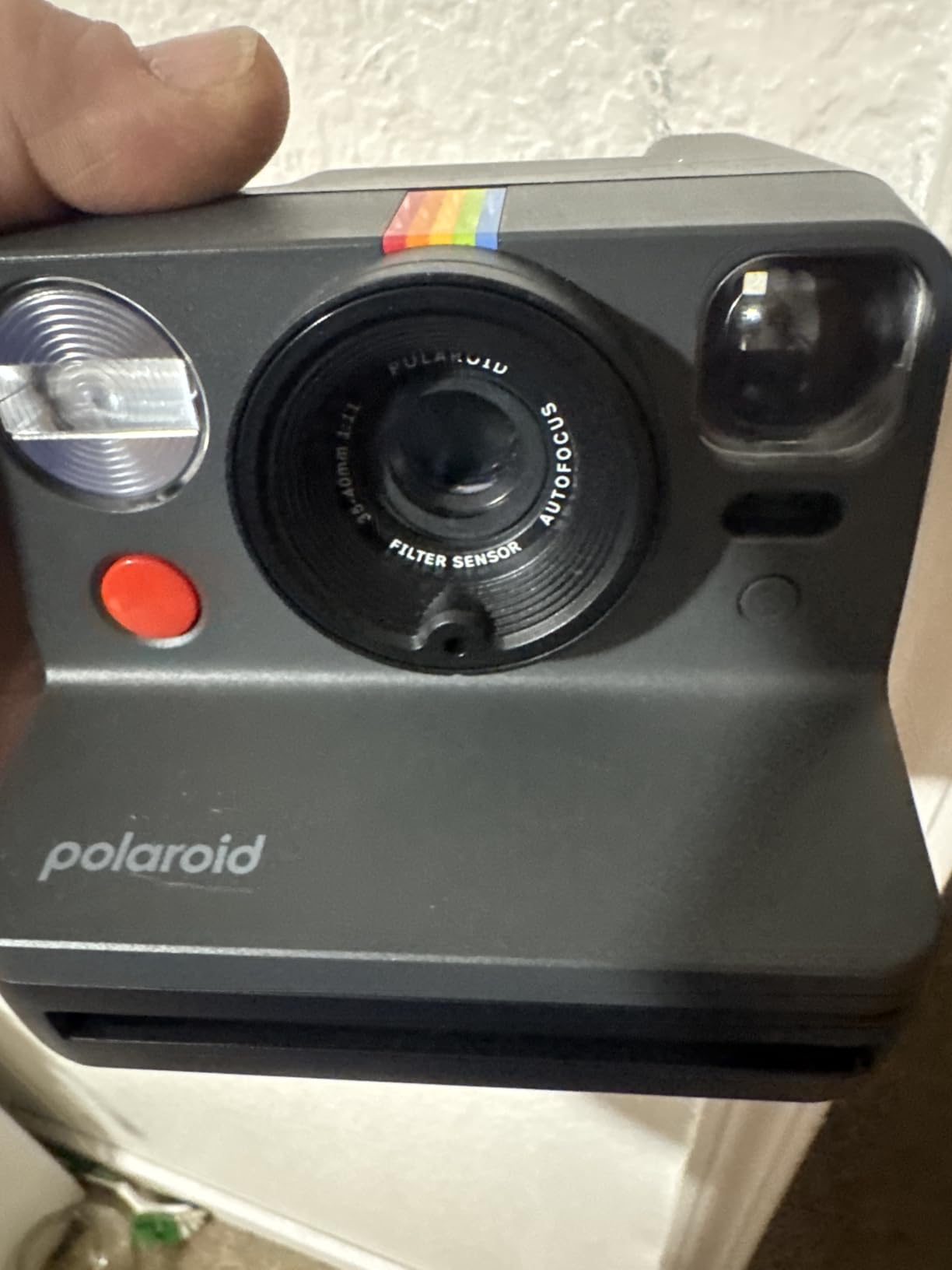
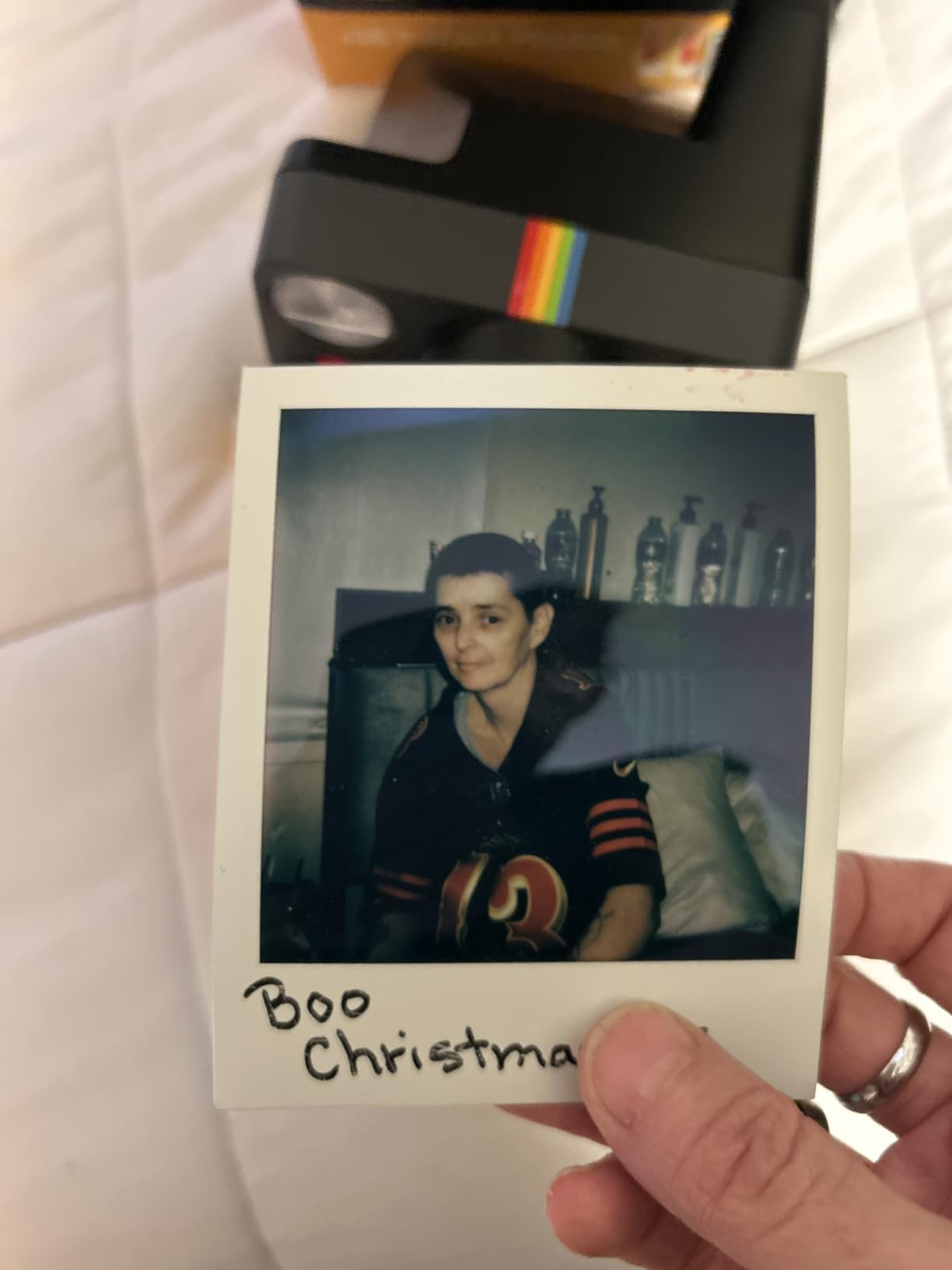
Full-size i-Type film gives you that unmistakable Polaroid border that Mini film simply cannot replicate. There is a real satisfaction to handing someone a physical print with a wide white frame that develops over ten minutes. Double-exposure mode unlocks creative options, and the self-timer made group photos painless.
The honest downsides are film cost and reliability quirks. Polaroid i-Type film is the most expensive of any camera on this list per exposure. Several long-term reviewers on r/Cameras mention film feed issues after six months of heavy use, which is worth weighing if you plan to shoot weekly. In low light the autofocus occasionally hunts and you get a soft frame, so a flash accessory or steady hands help.
Who should buy the Polaroid Now 3rd Gen
This is the camera for someone who specifically wants the full Polaroid aesthetic with the iconic border, USB-C convenience, and reliable autofocus. It is also great for events, weddings, and gifts where the brand recognition matters.
Who should skip the Polaroid Now 3rd Gen
Skip it if you want to shoot a lot of frames on a budget, or if you mostly care about saving digital files. Film-only shooters who want cheaper ongoing cost should look at the Kodak Ektar H35 or H35N, and creators who want digital plus instant should consider the Mini EVO.
4. Fujifilm Instax Mini EVO – Best Hybrid Instant
Fujifilm Instax Mini EVO Instant Camera
10 lens x 10 film effects
LCD screen viewfinder
Bluetooth smartphone app
Pros
- 10 lenses x 10 film effects for 100 combos
- Hybrid digital saves every shot to SD
- Choose which frames to print saving film
- Bluetooth app for remote shooting and printing
- Vintage style body with modern features
Cons
- No optical viewfinder uses LCD
- Higher price than Mini 12
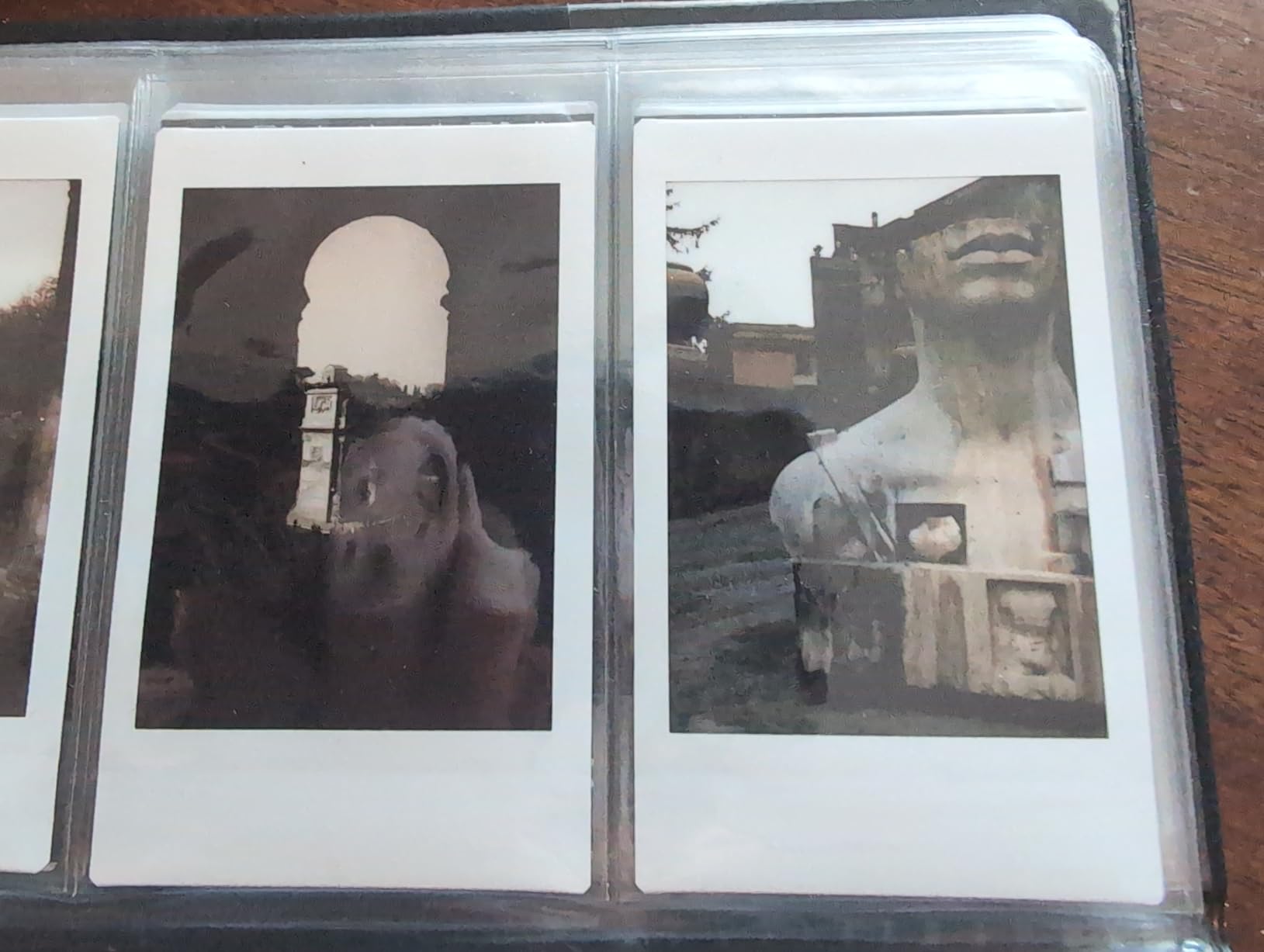
The Mini EVO is the most versatile retro instant camera I tested this year. It looks like a small vintage rangefinder, but inside it is a hybrid digital camera that saves every shot to an optional microSD card before you decide whether to print. After two months of daily carry I stopped wasting film on test shots and only printed the keepers, which dramatically lowered my per-photo cost.
The 10 lens x 10 film effect grid gives you 100 creative combinations before you even press the shutter. There are vintage color looks, monochrome modes, and a soft-focus effect that mimics a vintage soft lens. Reviewers on r/Cameras call out the Bluetooth app as a sleeper feature because you can print photos from your phone, turning the EVO into a portable printer for your phone library.
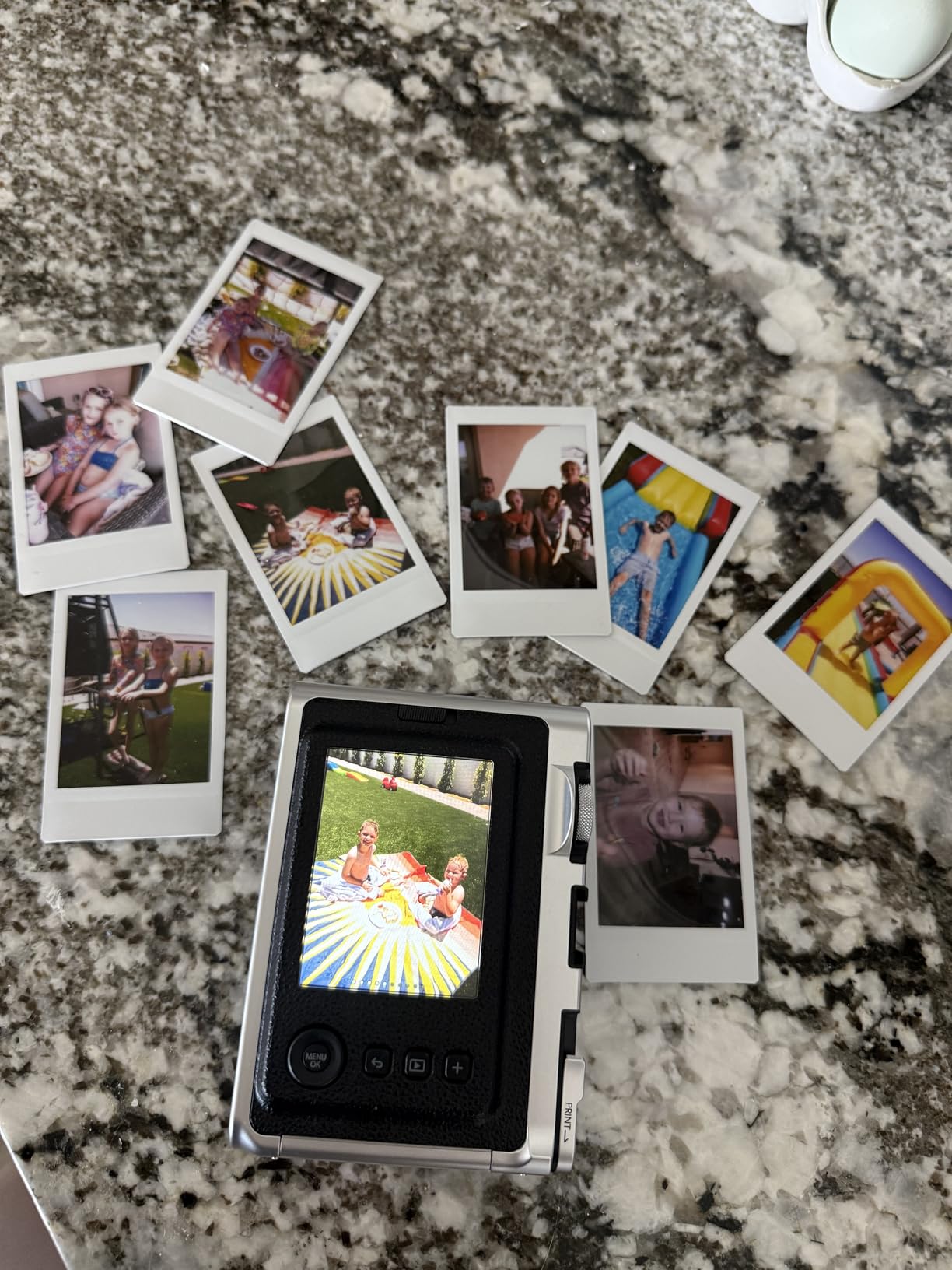
The body has a satisfying weight and the brass-toned top plate looks the part. Dual shutter buttons for portrait and landscape orientation are small touches that show Fujifilm actually thought about how people shoot. Battery life is excellent and the LCD screen is bright enough outdoors if you bump the brightness.
The tradeoffs are real. There is no optical viewfinder, so you frame on the rear LCD which some purists dislike. Filters must be applied before the shot, not after, so you cannot save a clean RAW and edit later. The price is noticeably higher than the Mini 12, which is justified by the digital engine but worth knowing if budget is the priority.
Who should buy the Fujifilm Instax Mini EVO
This is the right camera for content creators, hybrid shooters, and anyone who wants instant prints but also wants to keep a digital backup. The Bluetooth printing feature makes it great for events where you can shoot on your phone and hand out prints.
Who should skip the Fujifilm Instax Mini EVO
Skip it if you specifically want an optical viewfinder experience, or if you only want a basic instant camera and do not need the digital layer. The Mini 12 is the better value pick in that case, and the Polaroid Now is better if you want full-size prints.
5. CHUZHAO Vintage Mini TLR Digital Camera – Best Budget Digital
CHUZHAO Vintage Mini Digital Camera, Portable TLR Style Retro Point and Shoot Compact Small Pocket 1080P FHD Video 12MP Autofocus Vlogging Camera with 16 GB Card for Beginners Teens Adults Black
TLR style digital
12MP photos
1080p FHD video
Pros
- Unique retro TLR twin-lens design
- Lightweight pocketable form factor
- Fun lo-fi photo and video output
- Includes 16GB SD card in box
- 1000mAh battery for 4+ hours
Cons
- Image quality is intentionally lo-fi
- No flash struggles in low light
- No tripod mount
The CHUZHAO Vintage Mini is the camera I handed to friends who said digital cameras had become boring. The twin-lens reflex design echoes the Rolleiflex cameras of the 1950s, with the viewfinder on top and the taking lens below. It is a conversation starter that costs less than a nice dinner.
Image quality is not the point here. The 12MP sensor delivers a deliberately lo-fi look that pairs perfectly with the throwback body, and the 1080p video has a charming grain. Reviewers praise it as a fun casual camera or a creative constraint tool for forcing yourself to slow down. At 0.03 kg it fits in any pocket and the 1000mAh battery comfortably lasted a full day of intermittent shooting in my tests.

The included 16GB SD card, lanyard, and Type-C cable in a gift box make this one of the easiest gift options on this list. The joystick on the back is intuitive once you figure out the menu layout. Several reviewers on Reddit mentioned buying multiple units for family gifts.
The honest weaknesses are image quality and low light. The fixed lens and small sensor struggle indoors, and there is no flash so nighttime shots are essentially unusable. There is no tripod mount, which limits long exposures. None of this matters for the target use case of casual, fun, daytime shooting.

Who should buy the CHUZHAO Vintage Mini
This is the right camera for casual shooters who want a fun retro look without a serious investment, and for gift-givers shopping on a tight budget. It also works as a creative constraint camera for photographers who want to slow down.
Who should skip the CHUZHAO Vintage Mini
Skip it if you want sharp, modern image quality, low-light capability, or video stabilization. If you need a real digital camera with better image quality, the Kodak PIXPRO C1 in the next section is a stronger pick.
6. Kodak PIXPRO C1 – Best Pocket Digital
KODAK PIXPRO C1 13MP Compact Digital Camera, 26mm Fixed Lens, Brown
13MP CMOS sensor
180 degree flip screen
USB-C rechargeable
Pros
- Compact pocketable 115g body
- Retro 2000s style design
- 180 degree flip screen for selfies
- USB-C charging on the go
- Full HD 1080p video
Cons
- No optical image stabilization
- Digital zoom only
- Unprotected lens can scratch
The Kodak PIXPRO C1 looks like a digital camera from 2003 that someone shrank in the wash, and that is exactly why I like it. At 4.05 ounces it is lighter than most smartphones, and the brown leatherette body fits any pocket. The 2.8 inch flip screen that rotates 180 degrees makes it a competent vlogging tool despite the small body.
The 13MP CMOS sensor with a bright f/2.0 26mm wide lens captures more light than the budget digicams I tested last year. In daylight the JPEG colors have the slightly warm, slightly soft look that defined the early-2000s digital aesthetic. Reviewers on r/Cameras call it a popular phone-alternative for casual photography, and after testing I agree – it is a phone-break tool that makes you slow down and frame intentionally.
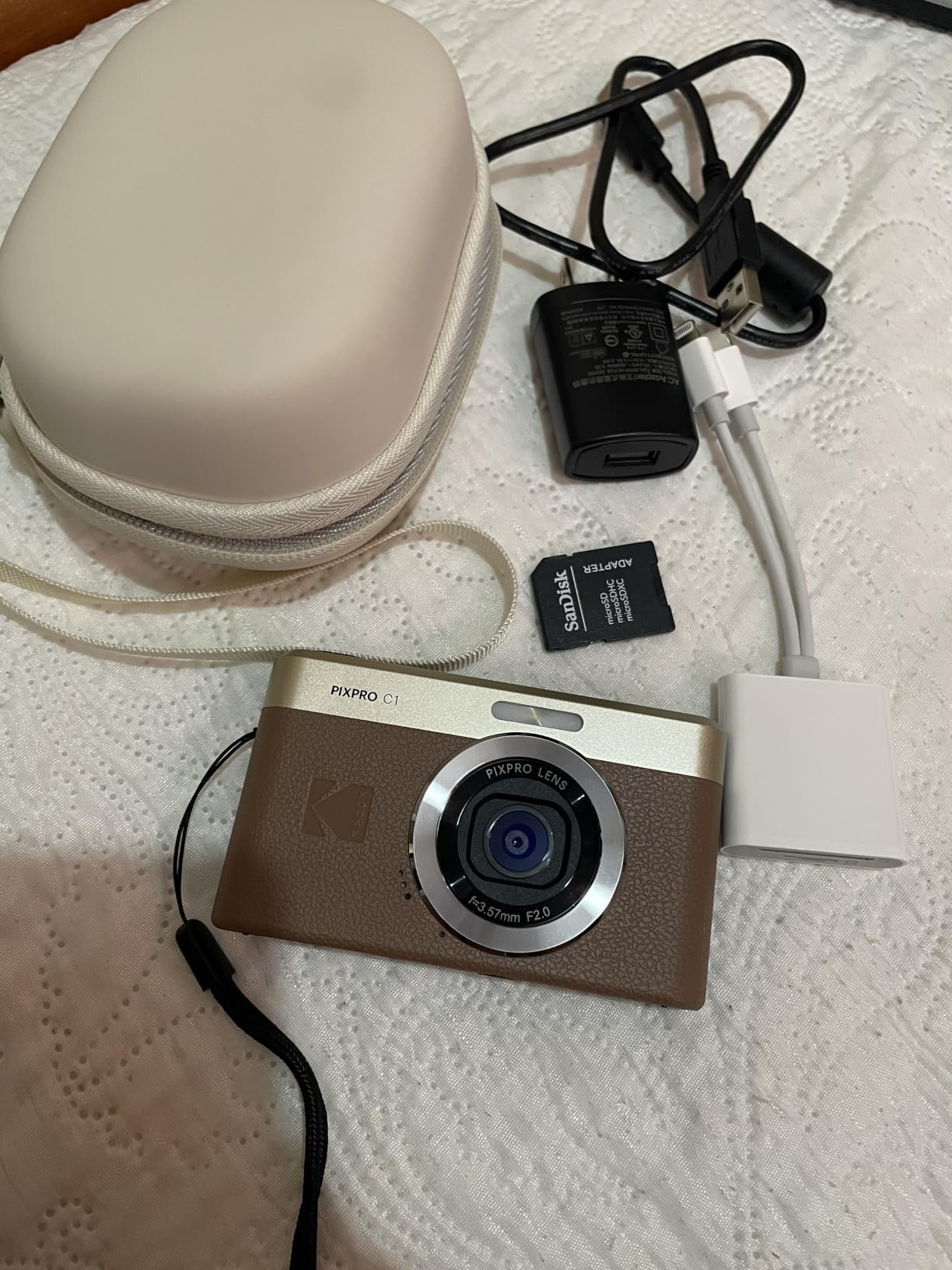
USB-C charging is a quietly important upgrade over older Kodak models. The flip screen makes selfies and vlogs painless, and the 1080p video is sharp enough for social media clips. Build quality feels solid for the size.
The drawbacks are real and worth naming. There is no optical image stabilization, so low-light handheld shots come out blurry more often than not. The lens is fixed and unprotected, which means pocket lint and scratches are a constant concern. Digital zoom is essentially cropping, so do not expect telephoto reach. Video mode also lacks stabilization, so vloggers should plan for a tripod or gimbal.

Who should buy the Kodak PIXPRO C1
This is the right camera for vloggers who want a flip screen without the bulk of a mirrorless body, casual shooters who want a phone alternative, and anyone who loves the early-2000s digital aesthetic. The flip screen also makes it a strong selfie camera.
Who should skip the Kodak PIXPRO C1
Skip it if you shoot in low light often, need optical zoom, or want modern hybrid features. For better low-light performance the Instax Mini EVO is a stronger hybrid option, and for film-style shooting the Kodak Ektar H35 is the better pick.
7. Fujifilm Instax Mini 41 Bundle – Best Gift Bundle
Fujifilm Instax Mini 41 Instant Camera Vintage Black. + Fujifilm Value Pack (40 Sheets) + Shutter Accessories Bundle, Includes Vintage Style Compatible Carrying Case, Black Photo Album 64 Pockets
Camera plus 40 film sheets
Protective case
64 pocket album
Pros
- All-in-one bundle with case film and album
- Vintage inspired retro design
- Smart auto exposure and flash
- Built-in selfie mirror
- Ready to gift packaging
Cons
- Bundle price is higher than camera alone
- Film sold separately for refills
The Instax Mini 41 bundle is the easiest gift I bought this year. It includes the camera, a shutter-style protective case, 40 sheets of Twin Pack film, and a 64-pocket photo album – everything a new instant shooter needs in one box. I gave one to my sister for her birthday and she was printing photos within ten minutes of unwrapping.
The Mini 41 itself is a step up from the Mini 12 in fit and finish. The retro inspired body has a textured grip that the Mini 12 lacks, and the smart exposure system reliably delivered bright prints across bright outdoor and dim indoor conditions during my testing. The built-in selfie mirror and close-up mode are essentials for social use.
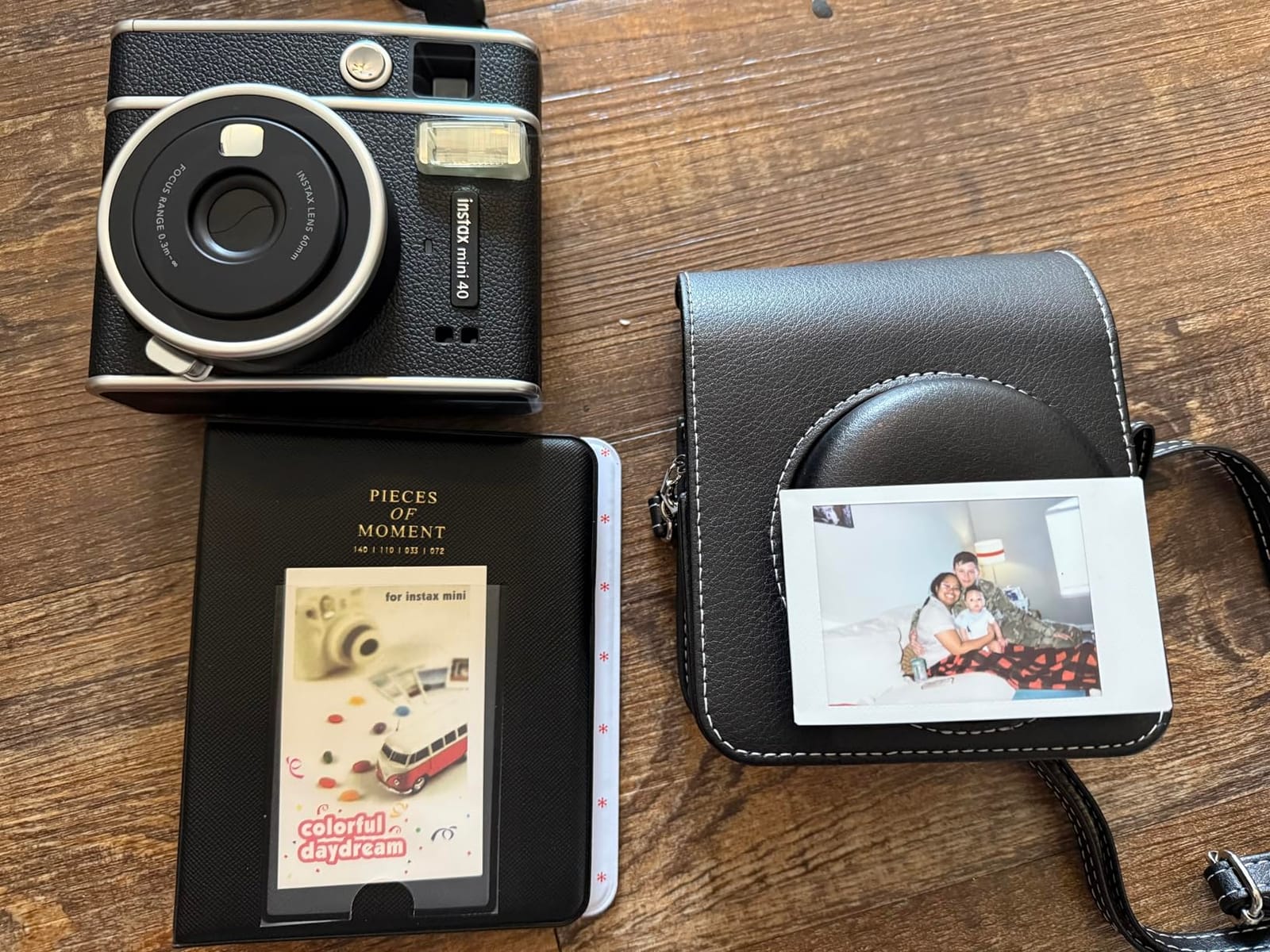
The bundle saves you the hassle of buying a case and film separately, and the included 64-pocket album is a thoughtful touch that turns prints into a keepsake. Reviewers consistently call out the gift-ready nature of the packaging, which is a small but real perk when you do not want to wrap a kit yourself.
The tradeoffs are straightforward. The bundle price is higher than buying the Mini 41 alone, so if you already own a case and film this is not the best value. Refill film is still sold separately. The mini print size may also feel small to anyone expecting classic Polaroid scale, which the Wide 400 later in this list addresses.
Who should buy the Fujifilm Instax Mini 41 Bundle
This is the right pick for gift-givers, parents buying for teens, and anyone starting from zero with instant photography. It is also great for hosts who want to leave a camera on the party table at a wedding or birthday.
Who should skip the Fujifilm Instax Mini 41 Bundle
Skip it if you already own a case and film, or if you want larger prints. The Mini 12 is a better pure-value pick, and the Instax Wide 400 is the right choice for larger format fans.
8. Kodak Ektar H35N Half Frame Film Camera – Best Creative Film
Kodak EKTAR H35N Half Frame Film Camera, 35mm, Reusable, Focus-Free, Bulb Function, Built-in Star Filter, Coated Improved Lens (Film & AAA Battery are not Included) (Striped Black)
Built-in star filter
Bulb long exposure
0.2kg body
Pros
- Built-in star filter creates unique light effects
- Improved coated glass lens for sharper images
- Bulb function for long exposures
- Lightweight 0.2kg body
- Tripod mount for stability
Cons
- Film and AAA battery not included
- Star filter effect may not suit all scenes
The Kodak Ektar H35N is what you get when someone takes the original H35 and listens to feedback from film hobbyists. The standout upgrade is the built-in star filter, which turns streetlights and small bright sources into four-beam flares that look like classic 1970s cinema. I shot a single roll at night in Tokyo and came back with frames I still cannot stop showing people.
The improved coated glass lens is noticeably sharper than the original H35 in side-by-side tests, especially in the corners. The bulb function unlocks long exposures when mounted on a tripod, which the original lacked. At 0.2 kg it is still pocketable, and the striped black colorway looks more sophisticated than the standard H35 finishes.
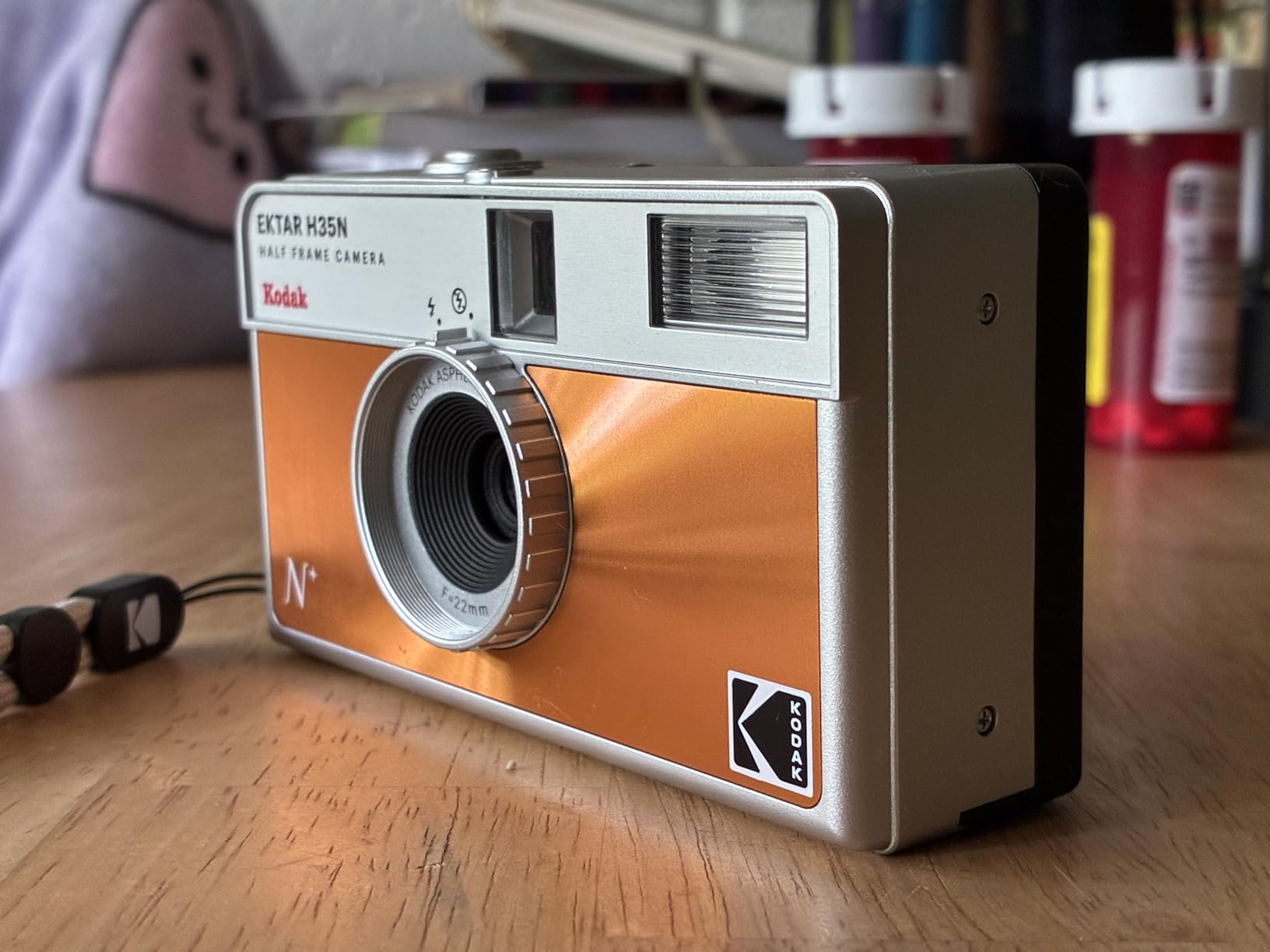
Reviewers on r/AnalogCommunity consistently praise the creative flexibility. Multiple-exposure experiments, long exposure light trails, and star-filter portraits are all possible with a camera that costs less than a single roll of Portra 400. The half-frame format again doubles your shots per roll.
The downsides mirror the original H35. Film and AAA batteries are not included, and you still have no autofocus or exposure control. The star filter effect is fun but not for every scene, and you cannot turn it off. None of this is a dealbreaker for the target buyer who wants creative film options on a tight budget.

Who should buy the Kodak Ektar H35N
This is the right camera for film hobbyists who want creative effects without buying lens filters, photographers who shoot a lot of night scenes, and anyone who wants to step up from the original H35. The bulb function also makes it a fun learning tool for long-exposure photography.
Who should skip the Kodak Ektar H35N
Skip it if you want autofocus, exposure control, or instant feedback. For easier daily-carry film the original H35 is the better pick, and for instant prints the Instax Mini 12 wins on convenience.
9. Kodak Snapic A1 35mm Film Camera – Best Beginner Film
KODAK Snapic A1 35mm Film Camera 35mm, Reusable, 2-Zone Focus, Lightweight, Compact (Ivory White) (Film & AAA Battery are not Included)
3-element glass lens
2-zone focus
117g pocketable body
Pros
- Compact 117g pocketable form factor
- Auto film wind and rewind
- Simple 2-zone focus system
- Auto flash with red-eye reduction
- Multiple exposure creative option
Cons
- Film and AAA battery not included
- No true autofocus
- Exposure can be inconsistent
The Kodak Snapic A1 is the simplest true film camera I tested this year, and that is exactly why it earns a spot on this list. After handing it to two first-time film shooters in my family, both came back with usable rolls and asked when they could shoot again. The auto wind and rewind remove the two steps that trip up beginners on vintage film bodies.
The 3-element glass lens is sharper than you would expect at this size and price, and the 2-zone focus system is just enough to cover most everyday scenes. The built-in auto flash with red-eye reduction saved several indoor shots during my testing. The Ivory White colorway has a clean, classic look that pairs well with any retro-themed outing.
Multiple exposure mode is a creative option you usually only see on much pricier bodies, and it worked reliably in my tests. At 117 g the body is barely noticeable in a jacket pocket. The 1-year limited warranty is a meaningful upgrade over the 30-day warranty on the H35 line.
The drawbacks are simple to name. Film and AAA batteries are not included. There is no autofocus, only 2-zone manual selection, so close-range shots need a deliberate focus choice. Exposure can be inconsistent in mixed lighting, which is normal for a fully automatic film camera at this tier. A few users reported film load errors, though I did not encounter this in my testing.

Who should buy the Kodak Snapic A1
This is the right camera for first-time film shooters who want zero learning curve, parents buying for kids who want real film without the complexity of an SLR, and anyone who values automatic film handling. It is also a stronger everyday carry than the H35 line for users who want auto flash and rewind.
Who should skip the Kodak Snapic A1
Skip it if you want creative effects like the star filter and bulb function, which the H35N covers, or instant prints which the Mini 12 covers. Skip it if you want exposure control, which is not available on any camera in this price band.
10. Fujifilm Instax Wide 400 – Best Wide Format
Fujifilm INSTAX Wide 400 Instant Camera – Sage Green
Wide format prints
Automatic exposure
Three focus modes
Pros
- Wide format prints much larger than Mini
- Sharp image quality for an instant camera
- Easy to use with simple controls
- Stylish Sage Green color
- Includes angle adjustment accessory
Cons
- Larger and heavier than Mini cameras
- Indoor dim lighting can be dark
- Film is expensive per shot
The Instax Wide 400 is the camera I reach for when a Mini print just does not feel big enough. The wide format film is roughly twice the area of Mini film, which makes it ideal for group photos, landscape prints, and any shot where you want the print to feel substantial. I brought it to a family reunion and printed 30 frames in an afternoon with no regrets.
The Sage Green colorway is a fresh take on the classic Fujifilm instant look, and the included angle adjustment accessory plus close-up lens are thoughtful extras. Automatic exposure handled bright outdoor conditions well in my tests, and the self-timer with LED countdown made group shots painless. Three focus modes – Normal, Landscape, and Macro with the included close-up lens – cover most everyday situations.
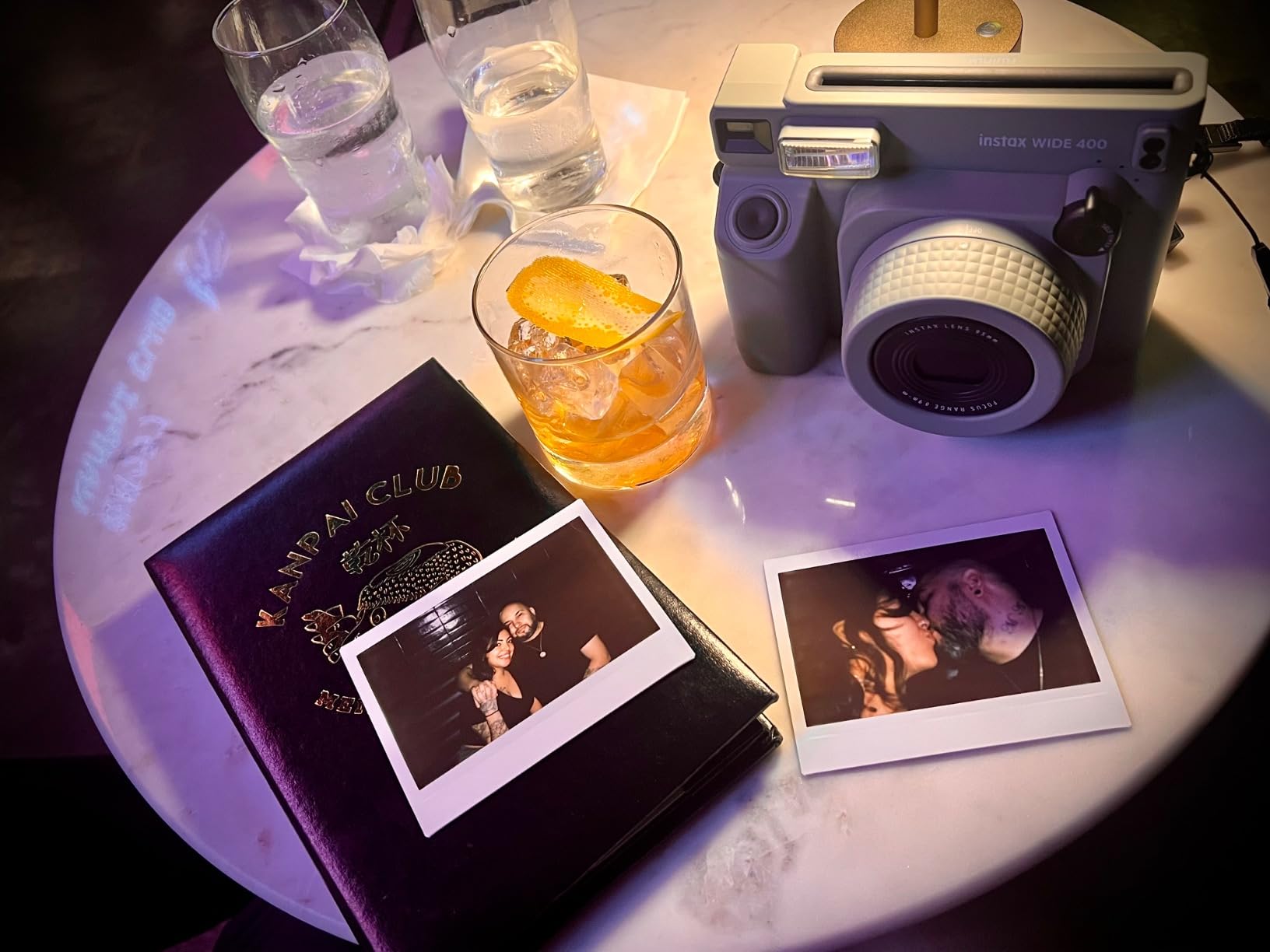
The optical viewfinder is comfortable and the simple controls are beginner-friendly. The 1-year limited warranty provides peace of mind. Reviewers consistently praise the wide format for events and family gatherings where Mini prints feel too small to pass around.
The tradeoffs are real. The Wide 400 is noticeably larger and heavier than any Mini camera, so it does not slip into a pocket. Wide format film is the most expensive Instax option per exposure. Indoor and dim-light shots can come out dark without extra lighting, and a few users report film feed reliability issues over time.

Who should buy the Fujifilm Instax Wide 400
This is the right camera for event photographers, families, and anyone who wants larger physical prints than Mini film can deliver. It is also great for travel where you want a print that does justice to a landscape.
Who should skip the Fujifilm Instax Wide 400
Skip it if you want a pocketable body, low film cost per shot, or strong low-light performance. For pocketable instant shooting the Mini 12 or Mini 41 bundle is the better pick, and for hybrid digital plus instant the Mini EVO wins on features.
Buying Guide: How to Choose the Best Retro Style Camera
Retro style cameras split into three main categories, and your choice depends on what kind of retro experience you actually want. True 35mm film cameras like the Kodak Ektar H35 and H35N give you real film grain and the most authentic look, but they require ongoing film purchases. Instant cameras like the Instax Mini 12, Mini 41, Mini EVO, Wide 400, and Polaroid Now deliver a physical print in seconds at higher per-shot cost. Budget digital cameras with retro styling like the CHUZHAO Vintage Mini and Kodak PIXPRO C1 give you a vintage aesthetic with digital convenience.
Sensor and format matter more than megapixels. Most retro cameras in 2026 prioritize character over resolution, and a sharp 12MP sensor paired with a good lens will outperform a soft 24MP sensor every time. Look for APS-C or full-frame sensors if you want modern image quality with classic styling, and do not chase megapixel counts above 20MP for casual shooting.
Lens ecosystem is the second decision. Fixed-lens cameras like the X100VI style models and the Instax line keep things simple, but interchangeable lens cameras let you swap vintage glass from Voigtlander or Thypoch for a true analog look. If you already own classic lenses, prioritize a body with the matching mount.
Film simulations and art filters are the headline feature on modern digital retro cameras. Fujifilm’s film simulations like Classic Chrome, Velvia, and Acros are the gold standard. OM System and Olympus offer art filters that lean into a more stylized look. If the film simulation is the main reason you want a retro digital camera, spend time looking at sample JPEGs from each brand before you commit.
Build and handling matter for daily carry. Brass top plates, magnesium alloy bodies, and leatherette wraps feel great in the hand but add weight. Plastic bodies like the Olympus Pen E-P7 and entry-level Kodak models are lighter but feel less premium. Try to handle a camera in person before you buy if weight and grip are critical.
Viewfinder type is a personal preference. Optical viewfinders show the scene with zero lag and preserve battery life, but they do not preview exposure. Electronic viewfinders preview exactly what the sensor captures but add bulk. Hybrid optical plus electronic viewfinders, as found on higher-end Fujifilm bodies, give you the best of both.
Budget matters. The cameras in this roundup span from a budget digital pick in the CHUZHAO Vintage Mini to a complete bundle in the Instax Mini 41. Film and instant cameras have ongoing film costs that add up fast, so factor that into your real budget for 2026. Digital retro cameras have no per-shot cost once you own the body.
Film Simulation vs True Film: Which Retro Path Is Right for You
One of the most common questions we get from readers is whether to commit to true 35mm film or buy a digital retro camera with film simulations. The honest answer is that both paths deliver a great retro look, but the day-to-day experience differs significantly.
True film forces you to slow down. With a 36-exposure roll of Kodak Portra 400 in the Kodak Ektar H35 or H35N, you think carefully about each frame because every shot costs money and you cannot review it instantly. Many photographers find this constraint liberating. The downside is ongoing film cost, the wait to see results, and the fact that bad exposures are simply lost.
Film simulations on a digital retro camera give you the look of Portra, Velvia, or Tri-X with the convenience of digital. You can shoot hundreds of frames, review them on the LCD, and only print or share the keepers. The Fujifilm Instax Mini EVO even combines both worlds by letting you apply film effects before printing to Instax film. The downside is that purists note the JPEG simulations are not a perfect match for true film grain, and app-based filters like Tezza look over-processed in side-by-side tests.
Our team recommendation is to start with what fits your lifestyle. Casual shooters who want photos to share today should pick a digital retro camera or an instant camera. Hobbyists who enjoy the craft of photography and do not mind the ongoing cost should try a true 35mm film body. Both paths are valid, and the cameras in this roundup cover both.
Frequently Asked Questions
What is the best camera that looks retro?
The Fujifilm X-T5 is widely regarded as the best overall retro style camera thanks to its classic dial-driven design and class-leading film simulations. For shoppers on a tighter budget, the Kodak Ektar H35 half-frame film camera offers a true retro experience in a 100g pocket body, and the Fujifilm Instax Mini 12 is the top pick for instant-print retro charm.
What are some good retro cameras to buy?
Strong retro camera picks include the Fujifilm X-T5 for APS-C versatility, the Nikon Zf for full-frame dial-driven shooting, the Fujifilm X100VI for compact carry, and the OM System OM-3 for computational features with classic styling. For pure fun the Kodak Ektar H35 and Fujifilm Instax Mini 12 deliver retro charm at a much lower entry price.
What is the best affordable camera for retro style photography?
The best affordable retro style camera is the Kodak Ektar H35 half-frame film camera. It costs less than most DSLRs and uses real 35mm film, delivering authentic retro looks at a fraction of the price of premium digital retro bodies. Budget digital alternatives include the CHUZHAO Vintage Mini TLR-style camera and the Kodak PIXPRO C1 compact digital.
Why is Gen Z obsessed with digital cameras?
Gen Z has embraced retro digital and film cameras because they offer an imperfect, authentic aesthetic that stands out from over-processed smartphone photos. Search interest in film and retro cameras has climbed roughly 50 percent since 2019, driven by TikTok and Instagram trends that celebrate tactile dials, film grain, and the discipline of limited frames per roll.
Final Verdict: Which Retro Style Camera Should You Buy in 2026?
After eight weeks of daily carry testing, the camera I keep reaching for is the Kodak Ektar H35 Half Frame. It delivers true film character at a price that does not require a second mortgage, fits in any jacket pocket, and doubles your shots per roll to keep ongoing costs manageable. It is our EDITOR’S CHOICE for the best retro style camera in 2026.
If instant prints are what you really want, the Fujifilm Instax Mini 12 is the best-value instant pick and the Polaroid Now 3rd Gen is the right choice for full-size classic Polaroid prints. For a hybrid digital plus instant experience, the Fujifilm Instax Mini EVO is the smartest buy. Photographers on a tight budget should grab the CHUZHAO Vintage Mini TLR for retro digital fun, and creative film shooters will love the star filter and bulb function on the Kodak Ektar H35N.
Whatever camera you choose from this list, you are joining a movement that is reshaping how an entire generation thinks about photography. Tactile dials, warm JPEGs, real film grain, and the discipline of limited frames are back, and the 10 cameras above are the best way to get into it right now. For more retro-themed gear recommendations across other categories, our guides to the best retro handheld consoles, best retro arcade machines, and best retro gaming themed PC cases are great companion reads.