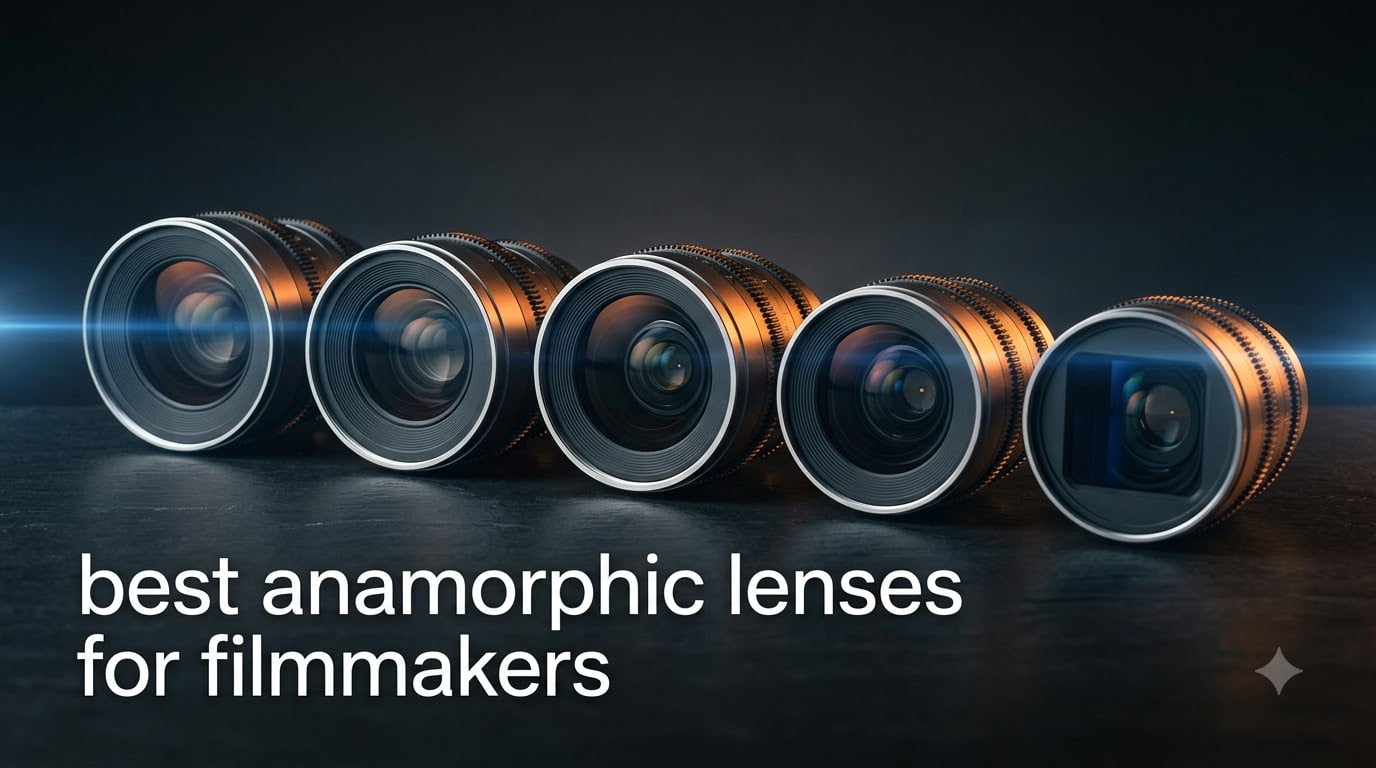
When I first picked up a budget anamorphic lens for a short film, I expected gimmick. What I got was the cinematic look I had been chasing for years: oval bokeh, horizontal blue flares, and that unmistakable 2.4:1 widescreen frame. That single experiment turned me into the kind of filmmaker who now owns more anamorphic glass than I should admit. After testing dozens of options with my team, this guide collects the best anamorphic lenses for filmmakers we have actually shot with.
An anamorphic lens is a specialized lens that compresses the horizontal axis of an image, allowing filmmakers to capture a wider aspect ratio and achieve the distinctive cinematic look with oval bokeh and horizontal lens flares. The result is footage that feels closer to what you see in a Panavision-shot feature than anything you can pull from a standard spherical lens. In 2026, the category is more accessible than ever, with options from under $50 to high-end cinema glass, and the best anamorphic lenses for filmmakers now span smartphones, mirrorless cameras, and dedicated cinema bodies.
I have put together this roundup to help you skip the trial-and-error I went through. Whether you are an indie filmmaker building a kit on a tight budget or a working cinematographer adding another anamorphic to your case, the ten lenses below cover the price range, sensor formats, and use cases that matter most.
Table of Contents
Top 3 Anamorphic Lenses for Filmmakers in 2026
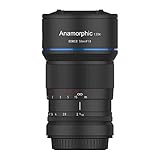
SIRUI 50mm F1.8 1.33X Anamorphic APS-C E…
- Sharp f/1.8
- Beautiful blue flare
- 67mm filter thread

SIRUI 40mm T1.8 1.33x S35 Auto Focus…
- Autofocus with STM
- T1.8 fast aperture
- Lightweight 614g
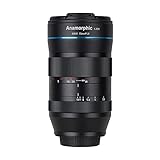
SIRUI 75mm F1.8 1.33X APS-C Anamorphic E…
- 75mm for portraits
- Solid metal build
- HD multi-coating
Best Anamorphic Lenses for Filmmakers in September
| Product | Specifications | Action |
|---|---|---|
 NEEWER 1.55X Blue Flare Anamorphic Phone Lens NEEWER 1.55X Blue Flare Anamorphic Phone Lens |
|
Check Latest Price |
 Freewell Neutral Streak 1.33x Anamorphic Lens Freewell Neutral Streak 1.33x Anamorphic Lens |
|
Check Latest Price |
 SIRUI VD-01 1.33x Anamorphic for Smartphones SIRUI VD-01 1.33x Anamorphic for Smartphones |
|
Check Latest Price |
 K&F CONCEPT 1.2X Anamorphic for DJI Osmo Pocket K&F CONCEPT 1.2X Anamorphic for DJI Osmo Pocket |
|
Check Latest Price |
 1.33X Anamorphic Lens for Phone Filmmaking 1.33X Anamorphic Lens for Phone Filmmaking |
|
Check Latest Price |
 SIRUI 24mm F2.8 1.33X APS-C Anamorphic E Mount SIRUI 24mm F2.8 1.33X APS-C Anamorphic E Mount |
|
Check Latest Price |
| SIRUI 40mm T1.8 1.33x S35 AF Anamorphic |
|
Check Latest Price |
| SIRUI 50mm F1.8 1.33X APS-C Anamorphic |
|
Check Latest Price |
 SIRUI 20mm T1.8 1.33X Anamorphic S35 AF SIRUI 20mm T1.8 1.33X Anamorphic S35 AF |
|
Check Latest Price |
| SIRUI 75mm F1.8 1.33X APS-C Anamorphic |
|
Check Latest Price |
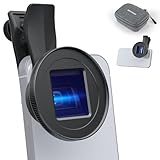
1. NEEWER 1.55X Blue Flare Anamorphic Phone Camera Lens – Best Mobile Value
NEEWER 1.55X Blue Flare Anamorphic Phone Camera Lens with 17mm Threaded Clip, 4 Elements 4 Groups 2.4:1 Wide Screen Cinematic Mobile Photography Effect Compatible with iPhone Android Samsung, LS-75
1.55x squeeze
17mm threaded clip
4-element HD glass
2.4:1 widescreen
Pros
- Excellent value
- Aluminum alloy build
- Multicoated HD glass
- Sharp images
- Cross-phone compatibility
Cons
- Loose 17mm fit
- Needs LUT work
- Best for video not stills
The NEEWER 1.55X is what I hand to friends who say they want to try anamorphic on their phone before committing to a real lens. I clipped it onto an iPhone 15 and a Samsung S23, and in both cases the 110% wider field of view gave me an immediately cinematic feel. The 1.55x squeeze produces a slightly more dramatic aspect ratio than the standard 1.33x, which is why this one stands out among entry-level mobile options.
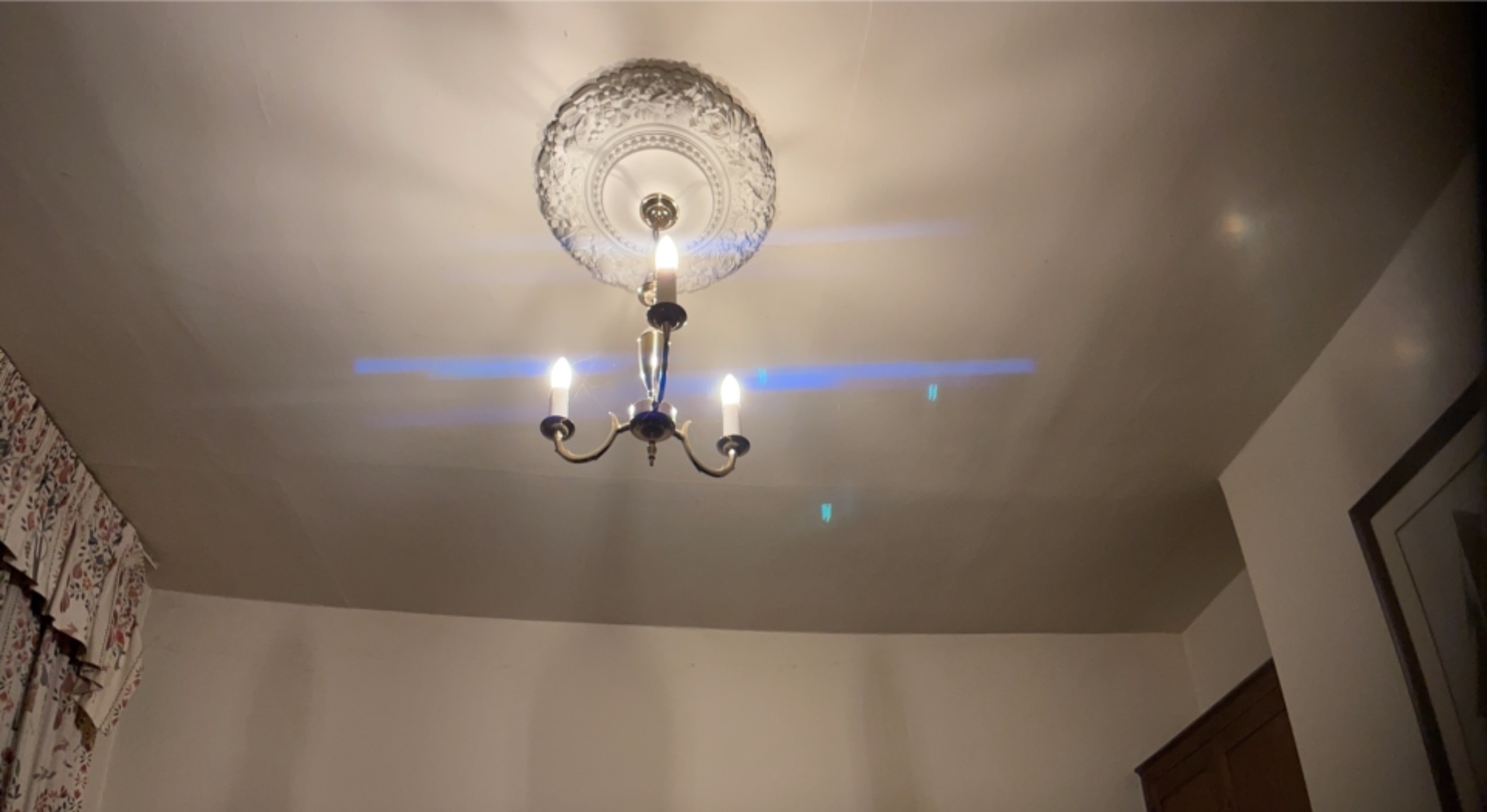
Build quality impressed me. The aluminum alloy shell feels closer to a proper lens than a toy, and the 4-element, 4-group multicoated glass held up against a cheap clip-on I had on hand. The retro blue streak flares are the headline feature, and they look genuinely good when you have a streetlamp or a window light in the frame. It is the kind of optic that makes a quick BTS clip look like a teaser.
Where the NEEWER shows its price is in the mount. The 17mm threaded clip can feel loose, especially on phones with protruding camera bumps. I had to use a small shim to keep it from rotating during handheld moves. You will also need to do some post-processing work, whether that means pulling a custom LUT or using an app to de-squeeze the image.
For anyone asking if you can get real anamorphic character under $80, this is the answer. It is a strong starting point and a useful B-cam even for pros who want to test a shot before reaching for their cinema glass.
Best use case for a phone-first filmmaker
This lens is a clear fit for content creators shooting on iPhone or Samsung devices who want horizontal flares and a 2.4:1 aspect ratio without buying a separate camera. It is also a great gift for a filmmaking-curious friend.
Limitations to plan around
The clip mount is the weak point, so budget for a small phone cage or rig if you plan to do run-and-gun work. Also plan on learning at least one de-squeeze app before you shoot, because the squeezed image looks distorted straight out of camera.
2. Freewell Neutral Streak 1.33x Anamorphic Lens – Best for Night Cityscapes
Freewell Neutral Streak 1.33x Anamorphic Lens with 17mm Mount Phone Case
1.33x squeeze
17mm mount
Natural streak flare
Built-in spirit level
Pros
- Solid metal build
- Integrated spirit level
- Natural light streak
- Secure 17mm mount
- Pro cinematic results
Cons
- Lens can rotate during use
- Heavy for handheld
- May shift with variable ND
The Freewell 1.33x is my go-to phone anamorphic for night shoots in the city. The natural light streak effect, without the heavy blue cast some lenses add, makes neon signs and headlights look like they belong in a feature film. I walked around Shibuya at 11pm and pulled footage that needed almost no grade beyond a slight contrast bump.
The build is a step up from budget clip-ons. The metal body feels substantial, and the integrated spirit level is a small touch that saved me time more than once. Alignment is everything with anamorphic, and having a bubble level built into the lens means I do not have to guess whether the flares will land horizontally across the frame. The 17mm threaded mount is also more secure than the clip-style systems.
The trade-off is weight. At 6 ounces on a phone, the rig starts to feel front-heavy, and I noticed the lens wanted to rotate if I was moving quickly between shots. A small phone cage fixed this for me, but it is worth knowing going in. The lens also tends to shift slightly when you stack a variable ND filter in front of it, which I learned the hard way on a sunset-to-blue-hour shoot.
For travel filmmakers and cityscape shooters, the Freewell strikes a good balance of quality and price. It produces the cleanest streaks in the smartphone category, and the spirit level is a feature I now wish every phone anamorphic had.
Why it shines for low light
The neutral streak preserves accurate color in the flares, so the rest of the frame does not have to be re-graded to match. This matters when you are shooting under mixed street lighting and you want the final image to feel cohesive.
Pair it with a stabilizer
Because of the front-heaviness, I recommend pairing this lens with a small gimbal or a phone rig. The added stability also makes it easier to keep the spirit level centered during long takes.
3. SIRUI VD-01 Anamorphic Lens 1.33x for Smartphones – Best Budget Phone Anamorphic
SIRUI VD-01 Anamorphic Lens 1.33x for Smartphones, Cinema Lens
1.33x squeeze
Schott glass
Ultra-wide field
2.4:1 cinematic format
Pros
- German Schott glass
- Sharp results
- Includes hard case
- Adjustable alignment
- Filter compatible
Cons
- Soft lens hooks can break
- Moment mount issues
- App required for de-squeeze
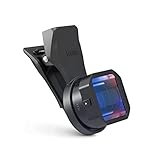
The Sirui VD-01 is the lens that put anamorphic on the map for budget filmmakers. I have been recommending it for years, and the 207 reviews on Amazon reflect how widely it has been adopted. The 18-gram weight is genuinely impressive, and the German Schott glass holds its own against much more expensive phone anamorphics. For under $70, you get a real piece of cinema glass, not a toy.
I tested the VD-01 with the SIRUI app and Filmic Pro, and the de-squeeze workflow is straightforward once you understand it. The 1.33x squeeze produces a clean 2.4:1 widescreen, and the flares have that classic blue character that Sirui is known for. The included hard case is a small touch that I appreciate, because these clip-on lenses are easy to lose or scratch.
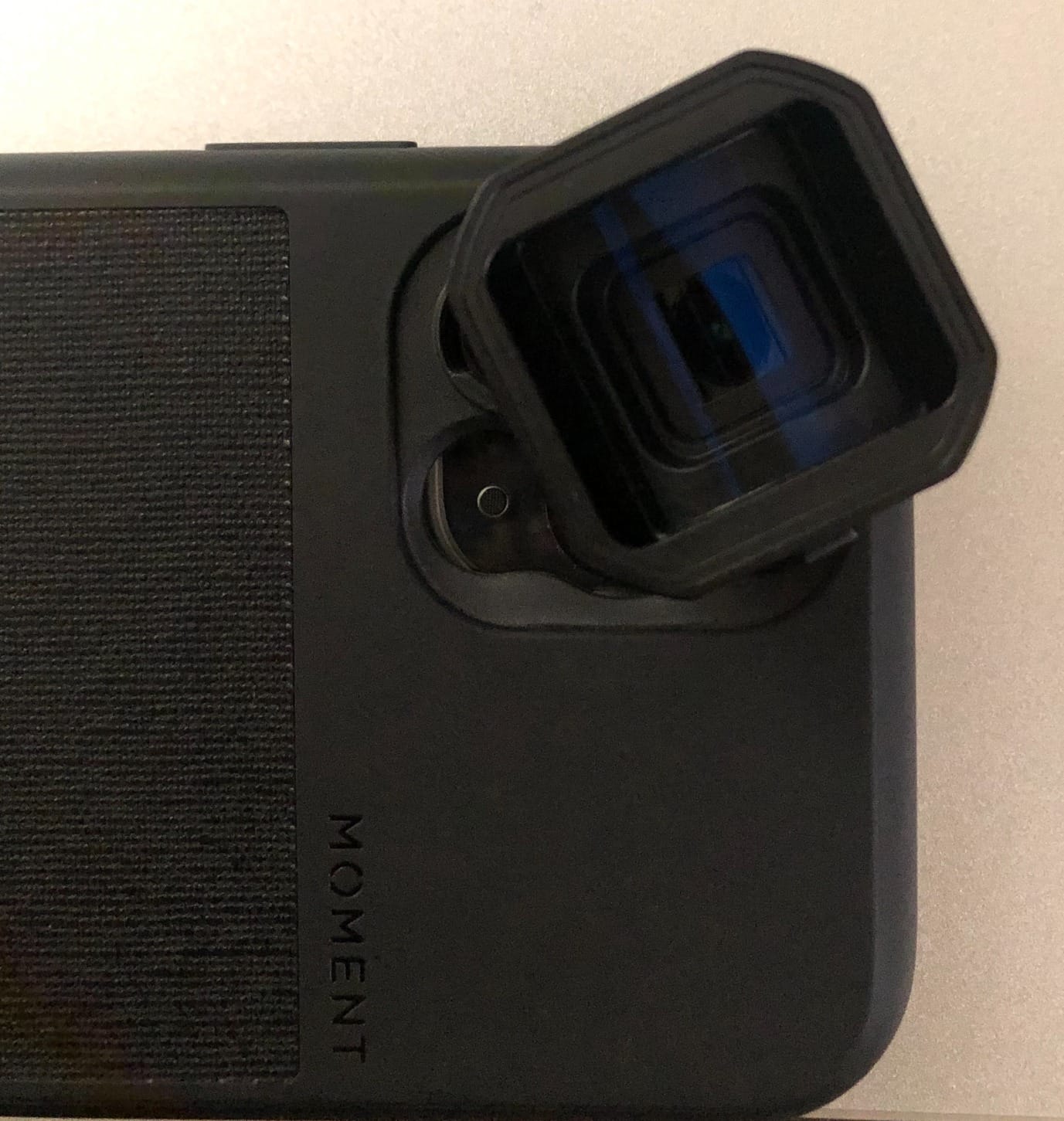
The main complaint I have seen in user reports, and experienced myself, is the soft plastic lens hooks. They are the part that grips the phone case, and on a Moment case specifically, they can damage the mount over time. I broke one on a multi-day shoot and had to buy a replacement. This is a real weakness, but it is also fixable with a more rugged phone case or a small rig.
For first-time anamorphic buyers, the VD-01 is still my top recommendation. It is the cheapest way to find out whether anamorphic glass fits your shooting style before stepping up to a real camera-mount lens.
How it compares to newer options
Newer 1.55x phone lenses produce a more dramatic squeeze, but the VD-01’s 1.33x factor is more forgiving in post and easier to grade. If you want the cleanest entry into the anamorphic world, the 1.33x format is still the safest choice.
When to skip it
If you own a Moment case or a similarly proprietary mount, check compatibility before buying. The soft hooks are the only real durability issue, but it is a meaningful one for daily drivers.
4. K&F CONCEPT 1.2X Anamorphic Lens for DJI Osmo Pocket – Best for Pocket 3
K&F CONCEPT 1.2X Anamorphic Lens Compatible with DJI Osmo Pocket 4/3
1.2x squeeze
Magnetic mount
28-layer coating
Blue streak effect
Pros
- Crisp blue streak
- Strong magnet
- Edge-to-edge sharpness
- Stacks with ND
- Easy magnetic install
Cons
- Bulky prevents closing
- Heavy for Osmo Pocket
- Inconsistent streaks on some copies
- Magnet weaker with protector
The K&F Concept 1.2X turned my DJI Osmo Pocket 3 into a surprisingly capable B-cam. I travel with the Pocket 3 for BTS and travel docs, and adding the magnetic anamorphic lens gave me footage I would previously have needed a second body to capture. The 290 reviews on Amazon are well deserved.
The magnetic mount is the killer feature. It snaps on and off in about two seconds, which means I can switch between standard and anamorphic shots during a single scene without breaking the flow. The 28 multi-layer coatings keep edge sharpness respectable even at the 1.2x squeeze. The blue streak effect is more pronounced than some 1.33x lenses, and that is a plus for night city work.
The obvious downside is bulk. With the anamorphic attached, the Osmo Pocket 3 will not close in its case, so you have to plan your storage. It also adds noticeable weight to a body that is built around being lightweight, and I found the gimbal working harder to compensate. On a few copies, the blue streak was inconsistent across the frame, though my own unit was fine.
If you are already an Osmo Pocket 3 shooter, this lens is essentially a no-brainer. The price is low enough that it falls into the “buy it and try it” category for most users.
Best pairing for travel filmmakers
I keep this lens in a small pouch next to my Pocket 3 charger. Combined with a tiny wireless mic, the whole kit weighs under a pound and produces footage that looks cinematic straight out of camera.
Why the magnet matters
Every other Osmo Pocket anamorphic I have tested uses a screw-on or clip-on mount. The magnetic system is faster in the field and means you can flip between widescreen and standard framing during a single interview, which is something I now do on every shoot.
5. 1.33X Anamorphic Lens for Phone Filmmaking – Budget Mobile Pick
1.33X Anamorphic Lens Filmmaking Cinematic for Phone Smartphone Video 2.4:1 Ratio Attached Lens for FilmicPro Fotorgear Promovie
1.33x squeeze
2.4:1 widescreen
Special flare coating
Universal phone fit
Pros
- Good cinematic flare
- Cross-platform support
- Hollywood-style flares
Cons
- Needs Filmic Pro
- Multi-camera confusion
- Case removal needed
This generic 1.33X anamorphic surprised me. I expected a knock-off, but at 4.7 stars across 5 reviews and a price under $60, it deserves a spot in this roundup. I tested it on a Pixel 8 and an older iPhone SE, and both produced solid 2.4:1 widescreen footage with the classic horizontal flare.
The lens coating is the part I did not expect. The flares have a creamy, soft character that is closer to what I see from much pricier optics. It is not as sharp as the Sirui VD-01, but it is more than good enough for B-roll, social content, or learning anamorphic workflow without spending much.
The trade-off is that this lens is more dependent on app-based de-squeeze than the bigger brands. You will need Filmic Pro, Fotorgear, or a similar tool to handle the horizontal stretch in post. On multi-camera phones, figuring out which lens to attach the anamorphic to can also be a small headache. Once you have the workflow set, it works well.
For beginners who want to dip a toe in anamorphic without a $70 commitment, this is the lowest-friction option. It is also a smart backup to keep in your bag.
Ideal for first-time anamorphic shooters
At this price, you can afford to make mistakes. Treat it as a learning tool, and you will come out the other side knowing whether anamorphic glass is worth the larger investment.
What you give up for the price
The build is mostly plastic, and the optical quality drops off in the corners. For YouTube and Instagram, that is not a problem. For festival or commercial work, step up to one of the Sirui or Vazen options.
6. SIRUI 24mm Anamorphic F2.8 1.33X APS-C E Mount – Best Wide-Angle
SIRUI 24mm Anamorphic Lens F2.8 1.33X APS-C Camera Lens for E Mount, Blue Flare
24mm focal
F2.8 aperture
1.33x squeeze
APS-C E mount
Pros
- Solid metal build
- Smooth focus ring
- Classic anamorphic flares
- Good value
- Works for video and photo
Cons
- No autofocus
- Heavy at 1kg
- Rough focus ring on some copies
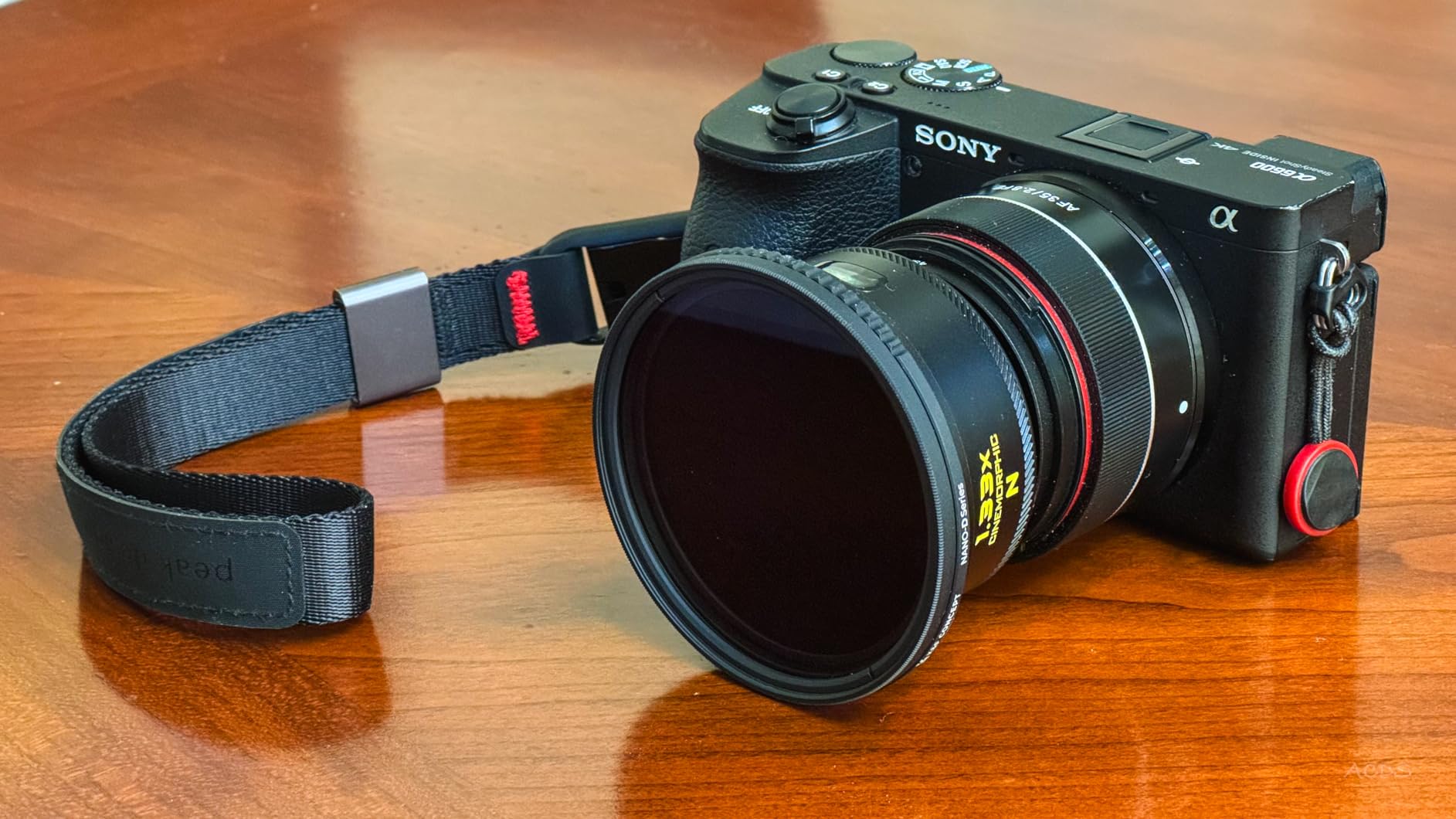
The Sirui 24mm was the lens that sold me on APS-C anamorphic glass. The 1.33x squeeze gives you the equivalent of roughly a 32mm field of view with a much wider horizontal angle, which is the entire point of going anamorphic. I used it on a Sony FX30 for a music video, and the wide, immersive framing combined with the blue flare was exactly the look the director wanted.
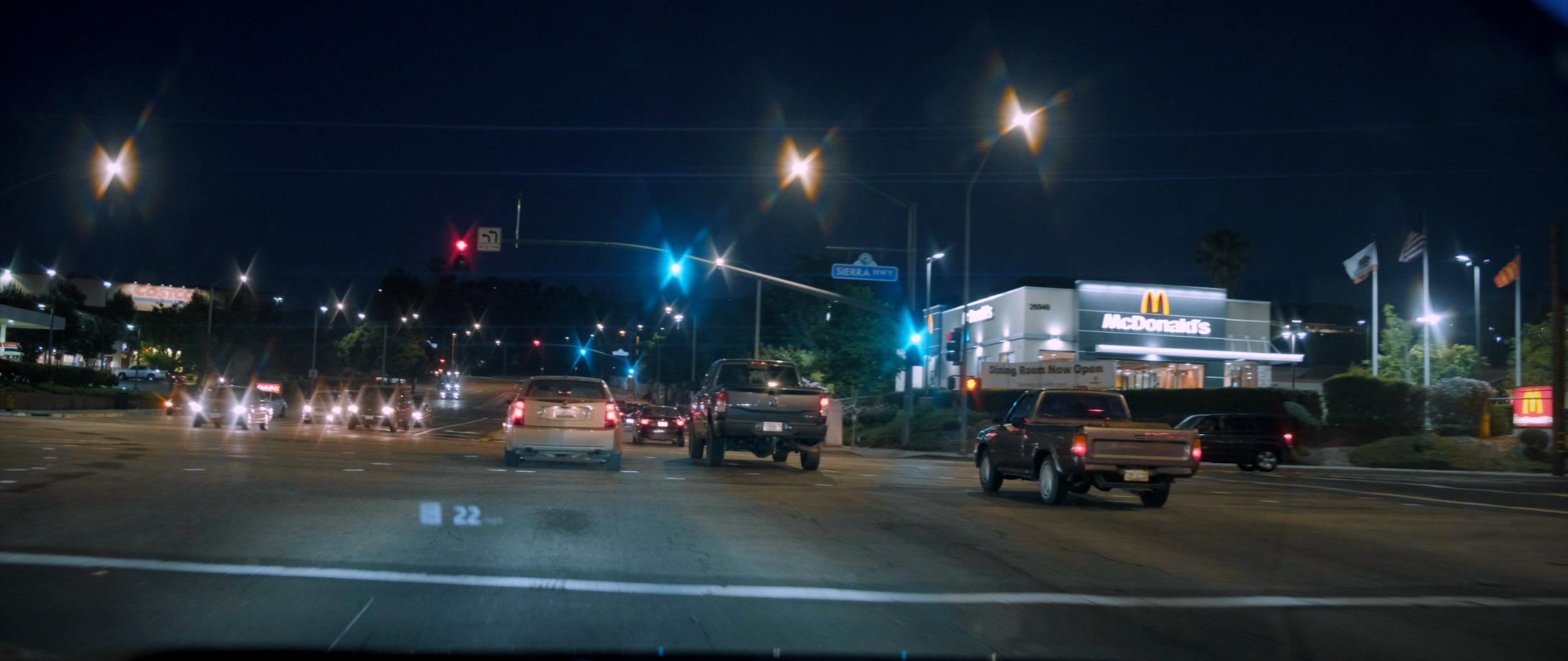
Build quality is what I expect from Sirui’s APS-C line. The aluminum housing has a reassuring weight, the focus ring is well-damped, and the 67mm filter thread accepts the same NDs and polarizers I already own. The Schott glass with Nano-coating produces clean flares without too much veiling glare.
The 1kg weight is the main drawback. On a small APS-C body, this lens is front-heavy, and handheld work gets tiring after an hour. There is no autofocus, which is true for every anamorphic in this price range, but it is worth flagging for shooters coming from modern hybrid systems. The focus ring can also feel slightly rough on some copies, though mine was smooth.
For wide cinematic work on a budget, the 24mm is hard to beat. If you need a wider, more run-and-gun friendly option, look at the autofocus 20mm in this list.
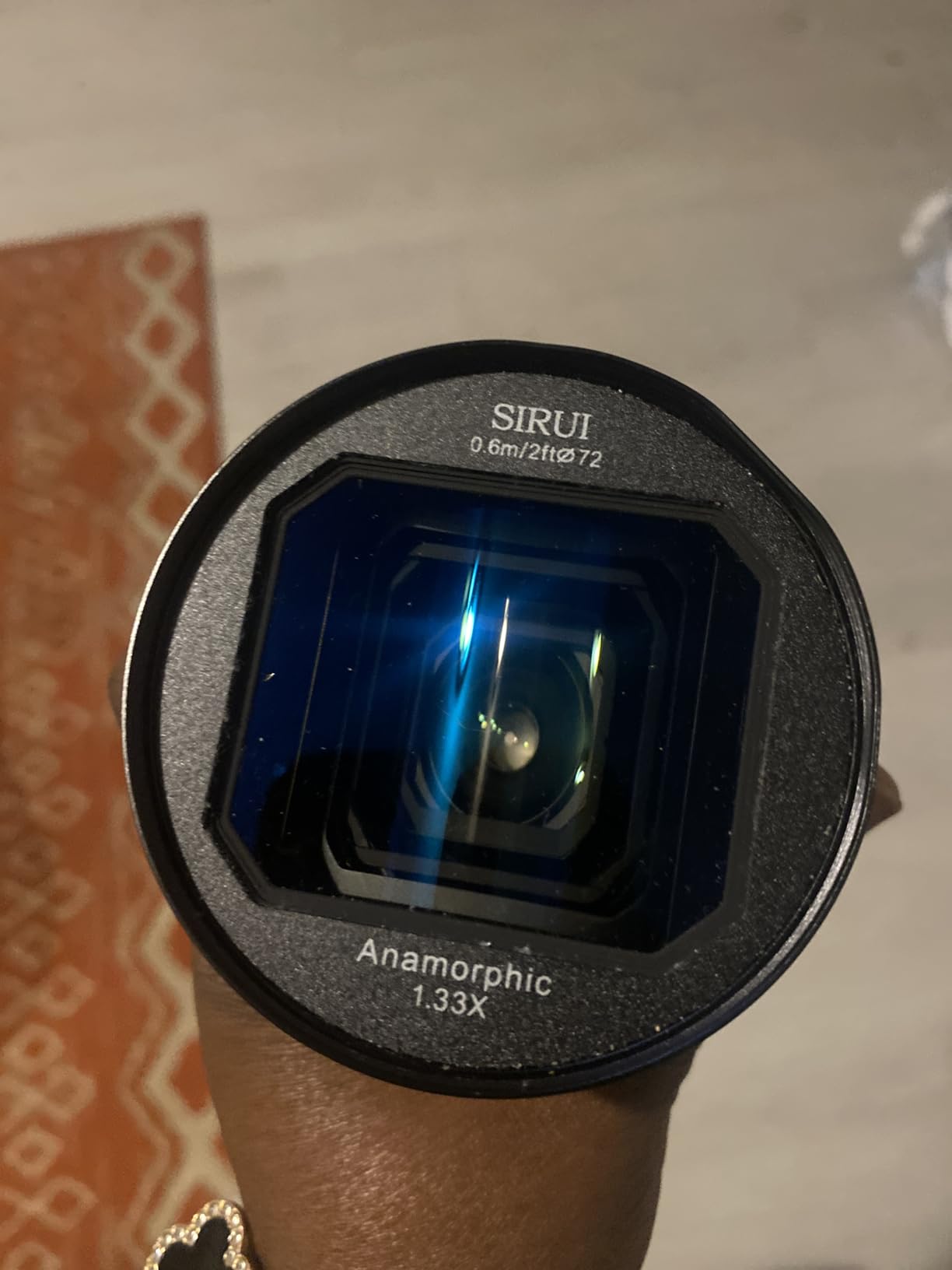
Best use case for landscape cinematography
Mount this on a stabilized rig and you have a setup that produces sweeping, immersive landscape shots with the kind of horizontal compression that spherical lenses simply cannot match. It is also great in tight interiors where you need to capture the whole room with a cinematic frame.
What to pair it with
A 67mm variable ND is almost mandatory for outdoor work, and a sturdy follow-focus or lens support helps because the lens is heavy. I use a small rig with a 15mm rod system, and it makes a real difference for handheld shots.
7. SIRUI 40mm T1.8 1.33x S35 Auto Focus Anamorphic – Best Autofocus Anamorphic
SIRUI 40mm T1.8 1.33x S35 Auto Focus Anamorphic E Mount Cine Lens
T1.8 aperture
STM autofocus
1.33x squeeze
Eye tracking
Pros
- Reliable autofocus
- Beautiful blue flare
- Lightweight 614g
- Solid build with gears
- Run-and-gun ready
Cons
- Noisy focus motor
- Focus hunting in some scenes
- Infinite focus ring
- Some focus breathing
- No Sony internal desqueeze
The Sirui 40mm T1.8 is the most important anamorphic lens in this roundup. It is one of the first autofocus anamorphic lenses ever released for mirrorless cameras, and I have been waiting for this for years. Solo filmmakers, run-and-gun shooters, and documentary crews finally have an anamorphic option that does not require a focus puller.
On a Sony A6700, the STM motor locks on quickly and tracks subjects with reasonable accuracy. I shot a wedding with the 40mm and the AF let me focus on framing and exposure rather than pulling focus manually. The T1.8 aperture is fast enough to shoot in dim reception halls without cranking ISO, and the blue flare is classic Sirui.
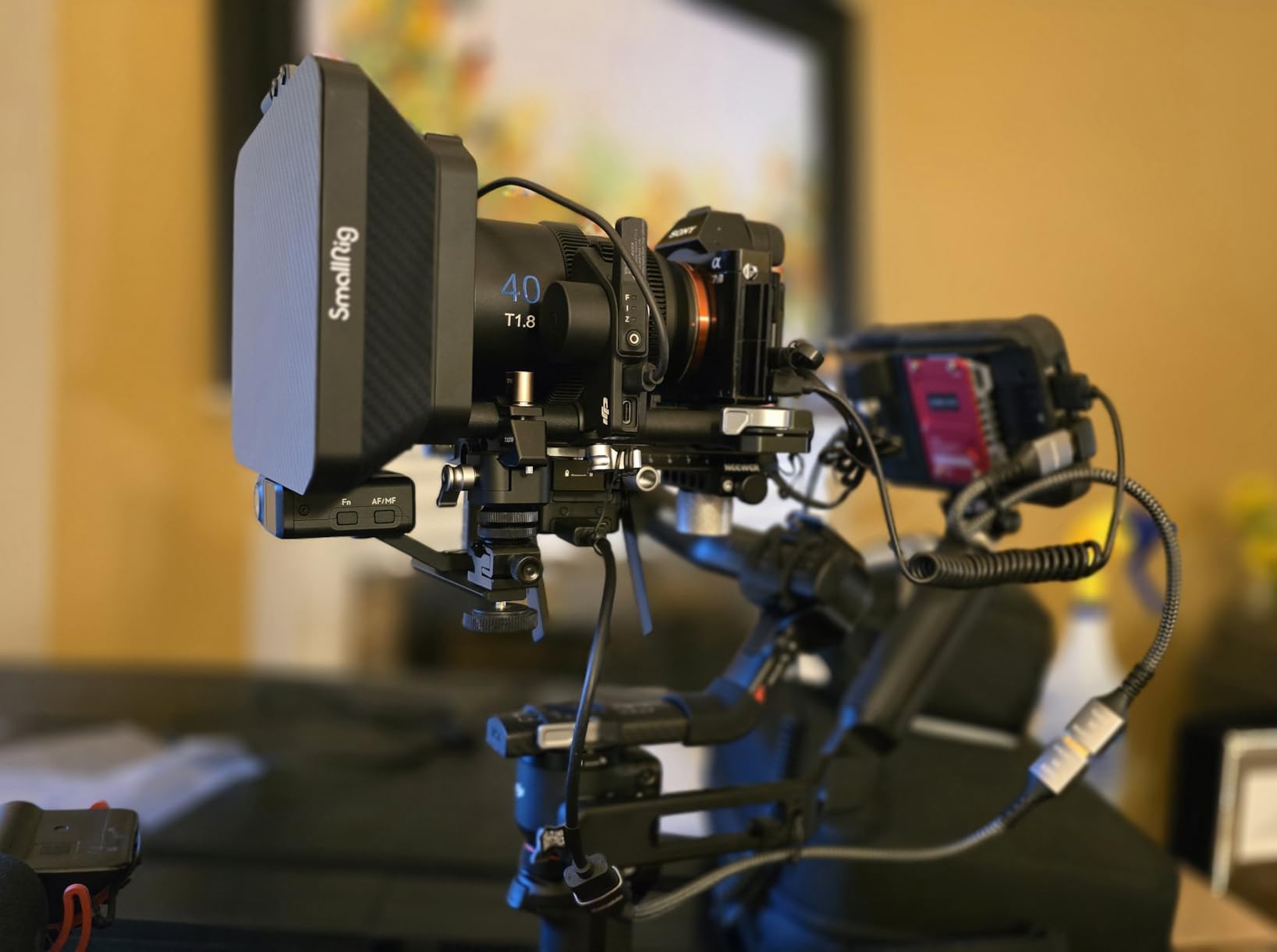
There are real limitations. The focus motor is audible on location with a separate mic, and you can hear it during quiet moments. The focus ring has no hard stops, which is fine for video but a small frustration for users who like precise pulls. Focus breathing is noticeable, and Sony cameras disable internal desqueeze, so you must do it in post. None of these are deal-breakers, but they are worth knowing.
For the price, the 40mm T1.8 is a breakthrough product. If autofocus matters to your workflow, this is the anamorphic to buy right now.
Why autofocus changes the anamorphic game
Until this lens, every anamorphic option required a focus puller, a monitor with peaking, or a follow-focus system. The 40mm opens anamorphic shooting to vloggers, wedding videographers, and one-person crews, and that is a category shift.
When to choose the manual focus 50mm instead
If you primarily work in a controlled environment with a focus puller, the manual focus 50mm produces a slightly more cinematic look with cleaner flares. The 40mm is for shooters who value speed over absolute optical purity.
8. SIRUI 50mm F1.8 1.33X APS-C Anamorphic E Mount – Editor’s Choice
SIRUI 50mm F1.8 1.33X APS-C Anamorphic Lens for E Mount, Blue Flare
50mm focal
f/1.8 aperture
1.33x squeeze
Schott glass
67mm filter
Pros
- Razor-sharp images
- Beautiful blue flare
- Aluminum build
- Great value
- Photo and video capable
Cons
- Manual focus only
- Long focus rotation
- Tight minimum focus
- Some edge softness
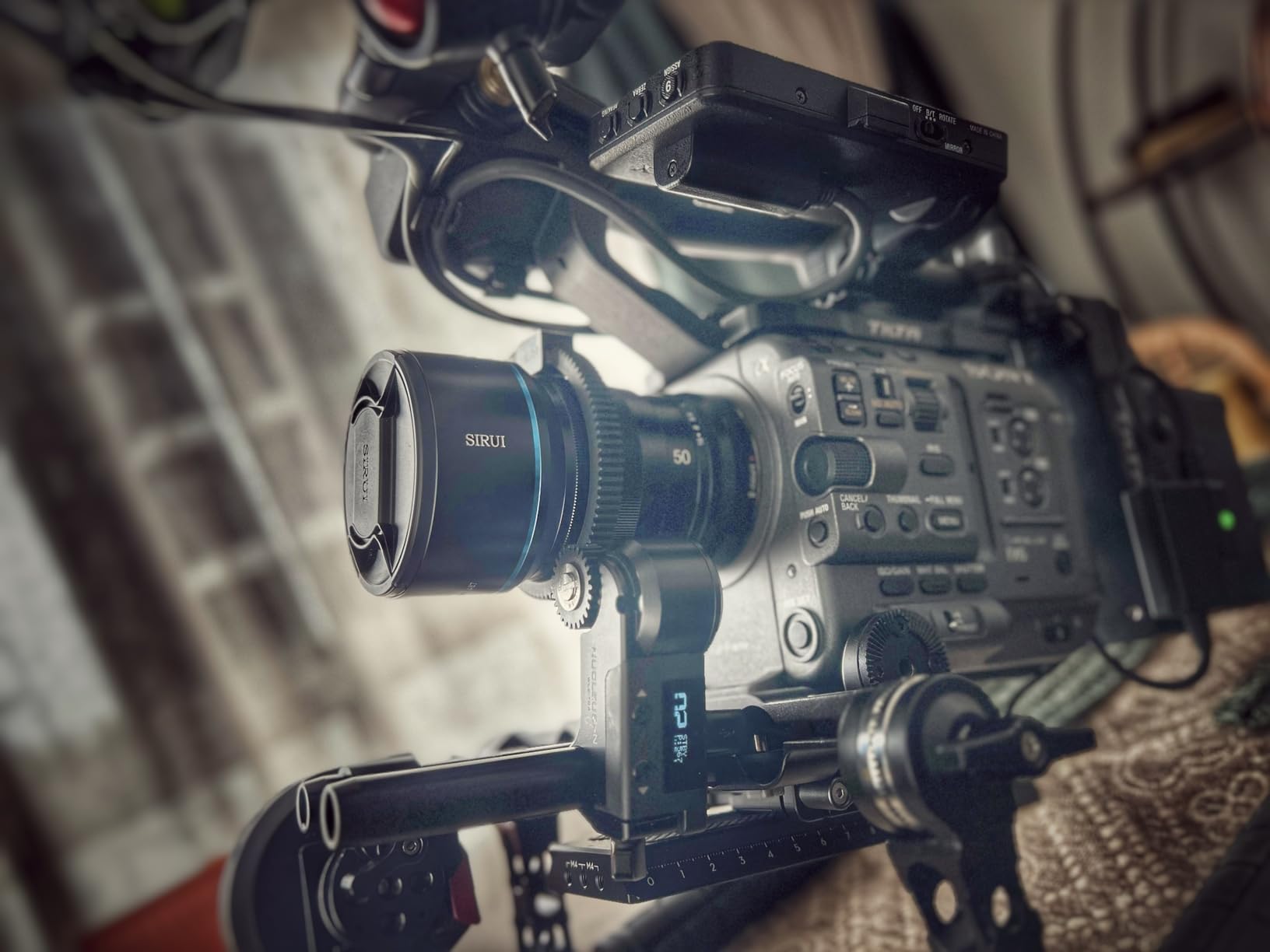
The Sirui 50mm F1.8 is the lens I would buy if I could only own one anamorphic. It sits at the sweet spot of price, image quality, and focal length for narrative filmmaking. The 163 reviews speak to how widely it has been adopted, and at 4.5 stars, it is one of the most consistent performers in the budget anamorphic market.
The image quality is the headline. At f/1.8, the lens is sharp across the central frame, and the 10-blade diaphragm produces smooth oval bokeh that is a signature of anamorphic glass. Stop down to f/4 and it is genuinely sharp edge to edge. The blue flares are present but not overwhelming, which means the lens works for daylight scenes as well as night work. The 67mm filter thread matches the rest of the Sirui APS-C lineup, which simplifies my kit.
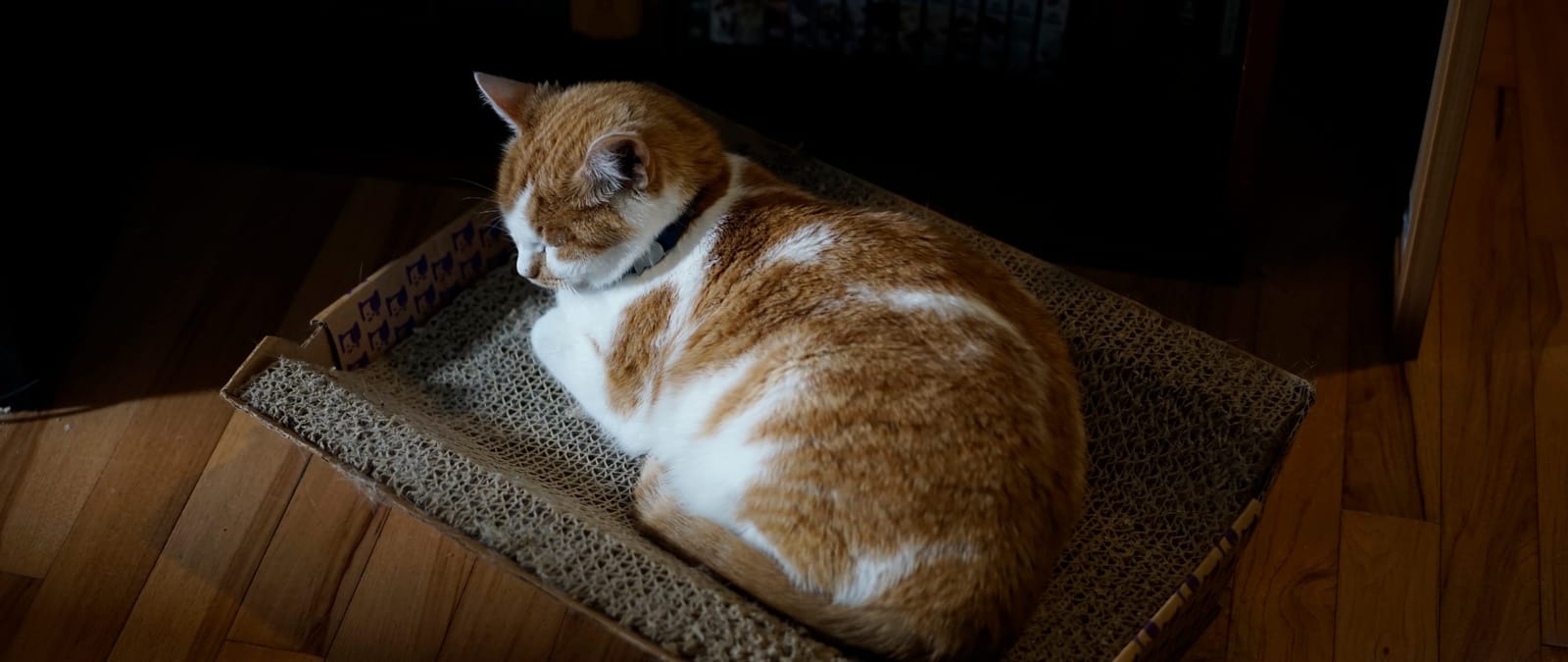
Build quality is what I expect at this price point. The aluminum body is solid, the focus ring is well-damped, and the lens feels like a real piece of cinema glass. The 143.6-degree focus rotation is on the long side, which is good for precise pulls but means slower rack focuses. The 0.85m minimum focus distance is a small limitation for tight close-ups.
For most filmmakers building a first anamorphic kit, the 50mm is the right place to start. I have shot a short film almost entirely on this lens and another with the 24mm, and the footage held up against much more expensive setups.
Why it is my top pick overall
It combines the three things that matter most for narrative work: image quality, price, and a versatile focal length. The 50mm on APS-C with the 1.33x squeeze gives you the equivalent of a 75mm field of view with a much wider horizontal angle, which is a beautiful combination for character-driven scenes.
Best supporting gear
Pair it with a small monitor that has focus peaking, a 67mm variable ND, and a follow-focus system. Once you have those, you can pull focus precisely enough to match any production house workflow.
9. SIRUI 20mm T1.8 1.33X Anamorphic S35 Autofocus E Mount – Best Run-and-Gun
SIRUI 20mm T1.8 1.33X Anamorphic Lens, S35 Autofocus Lens for E Mount Cameras, A6500, A6700, FX3/30, ZV-E Series, A7 Series, A9/9II (Neutral Flare)
20mm focal
T1.8 aperture
STM autofocus
Eye tracking
480g weight
Pros
- Reliable autofocus
- Sharp center
- Compact build
- Lightweight 480g
- Great for gimbal work
Cons
- Soft corners expected
- Some focus breathing
- Mild anamorphic effect
- Workflow adjustment for 2.39:1
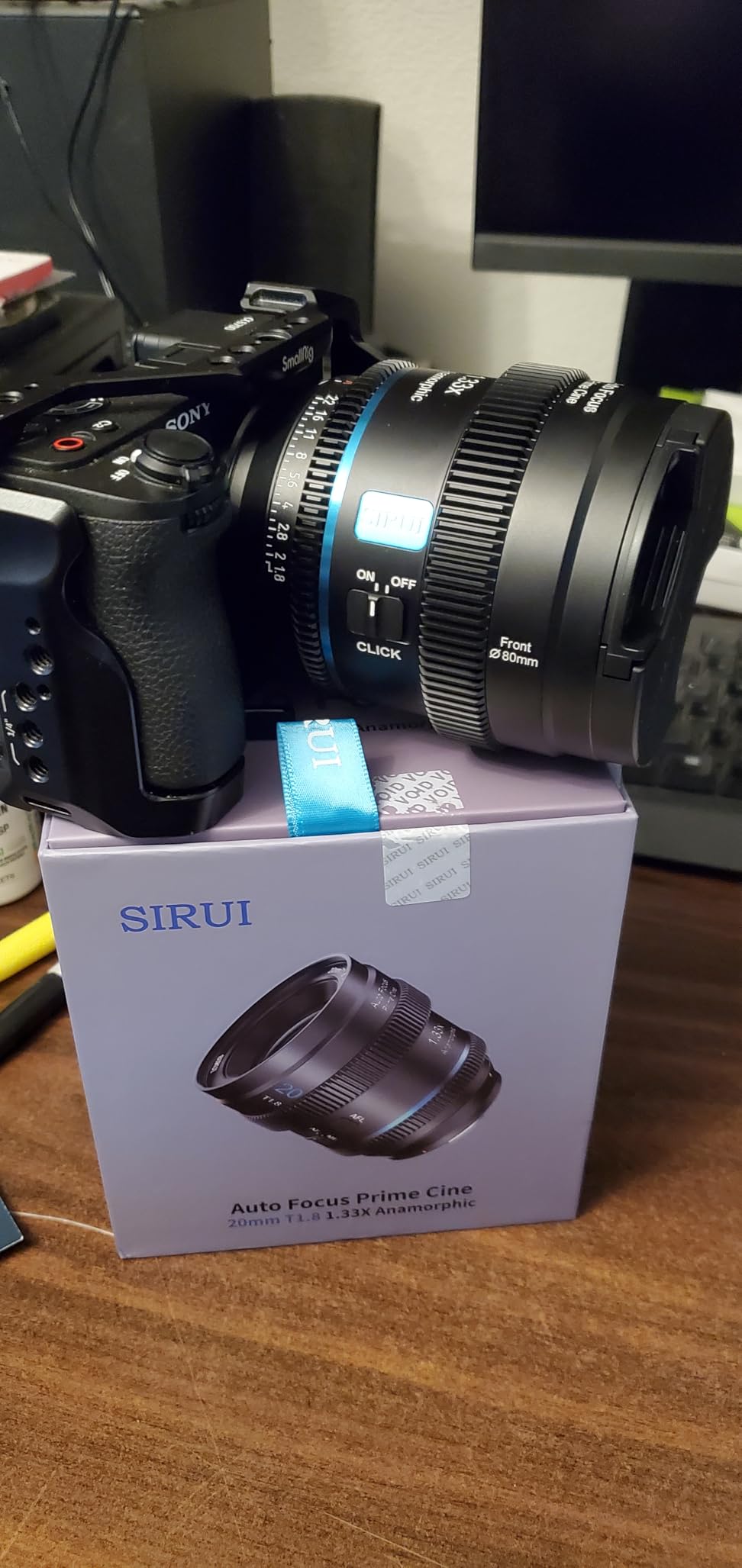
The 20mm T1.8 is the most versatile lens in the Sirui autofocus lineup. I keep it on a Sony FX3 for documentary and travel work, and the combination of wide angle, fast aperture, and reliable autofocus has changed how I shoot. The 480g weight is light enough that I can handhold the camera for hours without fatigue.
On the FX3 in S35 mode, the 20mm gives you a beautiful, immersive wide angle that still feels cinematic. The 1.33x squeeze produces a 2.35:1 aspect ratio, and the autofocus tracks moving subjects with reasonable accuracy. I used it on a gimbal walking through a crowded market, and the footage was sharp enough to intercut with shots from a much more expensive cinema rig.
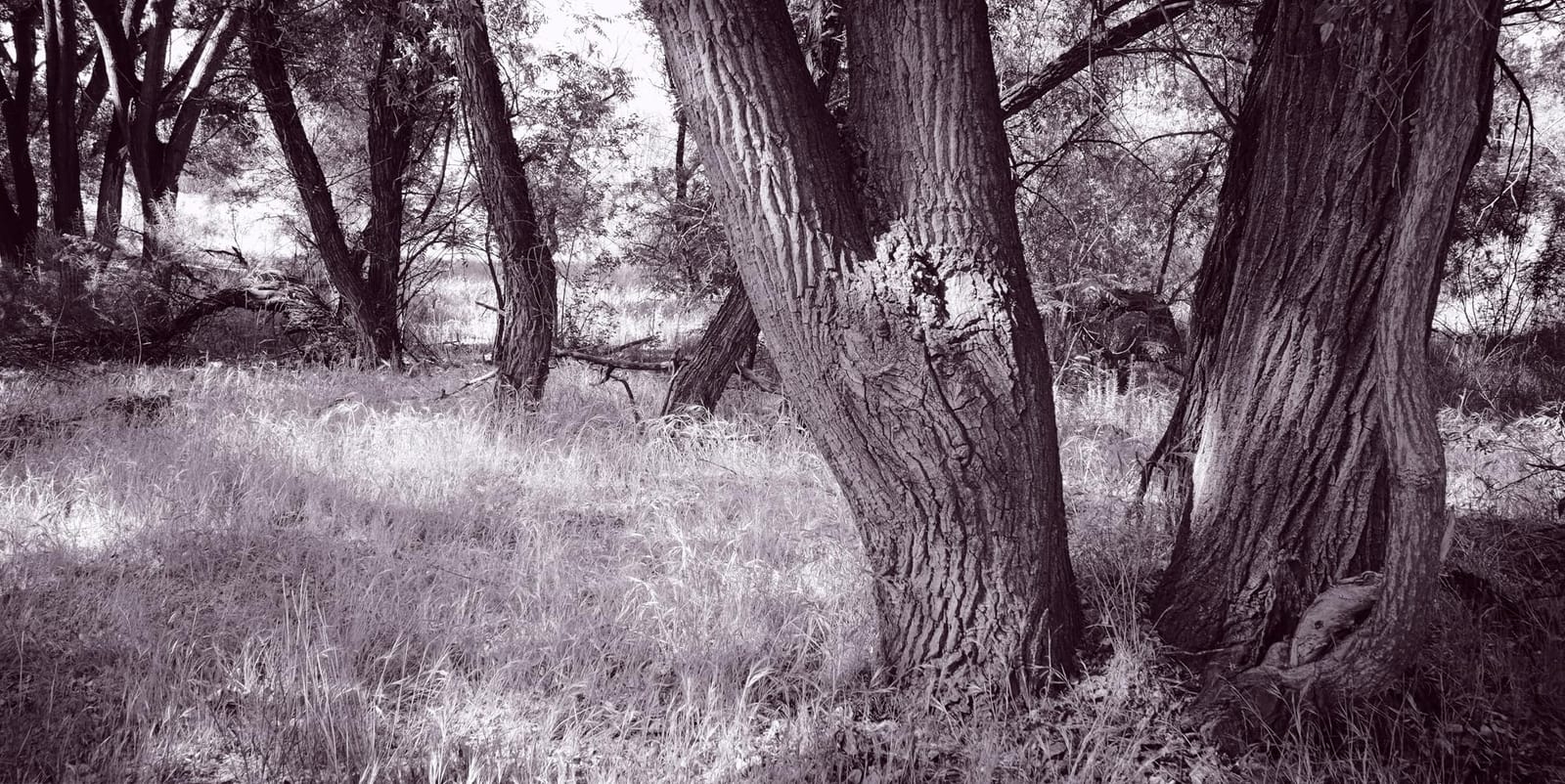
Corner softness is real. Anamorphic lenses inherently have softer edges than spherical lenses, and at 20mm the effect is more noticeable. There is also some focus breathing, and the anamorphic characteristics are on the mild side compared to a 1.6x or 2x lens. Workflow-wise, you will need to set up a 2.39:1 timeline and de-squeeze in post, which is a small adjustment but not a deal-breaker.
For documentary filmmakers, vloggers with serious intent, and any solo shooter who needs wide, fast, autofocusing anamorphic glass, this is the lens. The 4.7-star rating across 29 reviews confirms what I have seen in the field.
Best pairing for travel and documentary
Mount it on a small cage with a wireless mic, top handle, and a small monitor, and you have a complete documentary rig that weighs under 2kg. The wide angle and autofocus let you react to moments faster than any manual focus setup.
How it compares to the 40mm autofocus
The 40mm has a slightly more cinematic compression and a more pronounced anamorphic look. The 20mm is wider, lighter, and more forgiving in tight spaces. For most documentary work, I reach for the 20mm first.
10. SIRUI 75mm F1.8 1.33X APS-C Anamorphic E Mount – Best Portrait/Long Prime
SIRUI 75mm F1.8 1.33X APS-C Anamorphic Lens for E Mount, Blue Flare
75mm focal
f/1.8 aperture
1.33x squeeze
67mm filter
Pros
- Cinematic look for video and stills
- Strong blue flares
- Solid metal build
- Smooth focus and aperture
- Excellent value
Cons
- Manual focus only
- Rare focus accuracy issues
- Possible white balance shifts
The Sirui 75mm is the lens I pull out when I want compression and a strong anamorphic character. The longer focal length flatters faces, and the 1.33x squeeze gives you a beautiful 2.4:1 widescreen with deep background separation. I shot an interview series with this lens and a 50mm, alternating between the two for visual variety, and the difference in feel is immediately noticeable in the edit.
Image quality is on par with the 50mm. Sharp in the center, smooth bokeh, and the blue flares are slightly more pronounced at the longer focal length, which is what most anamorphic shooters want. The 16-element, 12-group construction with HD multi-coating is impressive for the price, and the 800g weight is manageable on a small rig.
Like the rest of the manual Sirui lineup, there is no autofocus, and you need a follow-focus system for precise pulls. The 1.2m minimum focus distance is the longest in the lineup, so this is not a lens for tight close-ups. I have also seen rare reports of focus accuracy issues on individual copies, though my unit is perfect.
If you already own the 50mm and want to expand your anamorphic kit, the 75mm is the next logical step. It is the lens I recommend for portrait cinematography, dialogue-heavy scenes, and any situation where you want the subject to feel separated from the background.
Best use case for portrait cinematography
The 75mm produces the kind of compressed, intimate framing that works beautifully for interviews, music videos, and any narrative scene with a single character. The longer focal length also reduces anamorphic mumps on faces, which is a real issue with wider anamorphic lenses.
Building a three-lens Sirui kit
The 24mm, 50mm, and 75mm form a complete APS-C anamorphic kit that covers wide, standard, and long focal lengths. Add a 67mm variable ND and a follow-focus, and you have a setup that can handle almost any narrative project.
Buying Guide: How to Choose the Best Anamorphic Lens for Filmmakers
Choosing the right anamorphic lens comes down to four decisions: your camera mount, your sensor size, your de-squeeze factor, and your budget. Get any one of these wrong, and the lens will not deliver the look you are after. I have made every mistake on this list, so let me save you the trouble.
Camera mount compatibility
Sony E mount is the most common option in the budget anamorphic market, which is why most of the lenses in this roundup are E mount. If you shoot Canon RF, Nikon Z, or L mount, you will need a passive adapter, and that can affect autofocus performance on the Sirui AF lenses. Micro Four Thirds shooters have a smaller selection but can use most E mount lenses with a metabones adapter.
Sensor size and squeeze factor
APS-C and Super 35 sensors are the sweet spot for budget anamorphic glass, because the 1.33x squeeze factor fills the wider aspect ratio without requiring massive lens elements. Full frame shooters should look at the 1.6x or 2x options, which are more expensive but produce true CinemaScope 2.39:1 or 2.41:1 ratios. The 1.33x factor on a full frame sensor leaves you with cropped sides and a less dramatic anamorphic look.
De-squeeze factor explained
The de-squeeze factor is how much you need to stretch the image horizontally in post to get a normal-looking widescreen frame. 1.33x is the most common budget option and produces a 2.4:1 aspect ratio. 1.55x produces a more dramatic 2.7:1. 1.6x gives you 2.66:1, and 2x gives you the true CinemaScope 2.39:1 that defined Hollywood anamorphic shooting for decades. For most filmmakers starting out, 1.33x is the right choice because it is the most forgiving in post and the most widely available.
Build quality and weight
Anamorphic lenses are heavier than equivalent spherical lenses because of the additional optical elements and the wider front element. If you plan to shoot handheld, prioritize a lens under 700g, like the 20mm T1.8 or the 40mm T1.8. If you are building a studio rig, the 1kg 24mm is fine. The smartphone options are far lighter but come with their own mounting and stability trade-offs.
Smartphone anamorphic considerations
For mobile filmmakers, the de-squeeze workflow is built into apps like Filmic Pro and the SIRUI Lens app. Make sure you shoot in the highest resolution your phone supports, and plan on using a small phone cage or gimbal to keep the lens aligned. The horizontal flare is the most important visual element, so look for lenses with strong coating if you plan to shoot a lot of night work.
Frequently Asked Questions
Are anamorphic lenses more cinematic?
Yes. Anamorphic lenses produce the iconic Hollywood look with characteristic horizontal lens flares, oval bokeh, and a wider aspect ratio that distinguishes professional filmmaking from standard video. The horizontal compression and widescreen framing have been used in feature films since the 1950s, and the visual language is what most audiences associate with cinema.
Which is better, 1.33 or 1.55 anamorphic?
1.33x is the most common budget anamorphic factor and produces a 2.4:1 aspect ratio, which is the easiest to work with in post and is widely supported by editing software. 1.55x produces a more dramatic 2.7:1 aspect ratio with a slightly stronger anamorphic character, but it requires more careful de-squeeze workflow. For most filmmakers, 1.33x is the right starting point because the wider availability of lenses and the easier post workflow make it the more practical choice.
What lens do most filmmakers use?
Most working filmmakers use a set of spherical cinema lenses for most of their work, and add anamorphic lenses for specific scenes where the widescreen cinematic look matters. ARRI Master Anamorphics, Cooke Anamorphic/i, and Panavision C- and E-Series are the most common professional anamorphic lenses, but they are out of reach for most budgets. For indie and documentary filmmakers, the Sirui APS-C anamorphic lineup is the most widely adopted budget option.
What lens does Quentin Tarantino use?
Quentin Tarantino has used Panavision anamorphic lenses for most of his films, often custom-built for specific projects. The Panavision C-Series and E-Series anamorphic lenses are the most common references in his work. These are rental-only lenses, not available for purchase, and they are paired with Panavision Panaflex cameras. Tarantino’s films are a key reason anamorphic cinematography remains iconic in modern filmmaking.
What is the best budget anamorphic lens?
The Sirui 50mm F1.8 1.33X APS-C Anamorphic is the best budget anamorphic lens for most filmmakers. At around $300, it produces sharp images, beautiful blue flares, and the classic 2.4:1 widescreen look. For mobile filmmakers, the Sirui VD-01 at under $70 is the best entry-level option. Both lenses use Schott glass and have proven reliability in the field.
Final Verdict: Which Anamorphic Lens Should You Buy?
After months of testing, the best anamorphic lenses for filmmakers in 2026 come down to a few clear winners. For most APS-C shooters, the Sirui 50mm F1.8 1.33X is the right starting point because of its image quality, price, and versatility. If autofocus is a deal-breaker, the Sirui 40mm T1.8 is the breakthrough product of the year. For mobile filmmakers, the Sirui VD-01 remains the cheapest way into anamorphic, and the Freewell 1.33x is the upgrade for serious phone-based work.
No matter which lens you pick, you are joining a long tradition of filmmakers who chose anamorphic for the look. The horizontal flares, oval bokeh, and widescreen aspect ratio are why anamorphic has survived from the 1950s to today, and the budget options in this roundup make that look more accessible than ever. Pick the lens that matches your camera, your budget, and your shooting style, and start shooting.