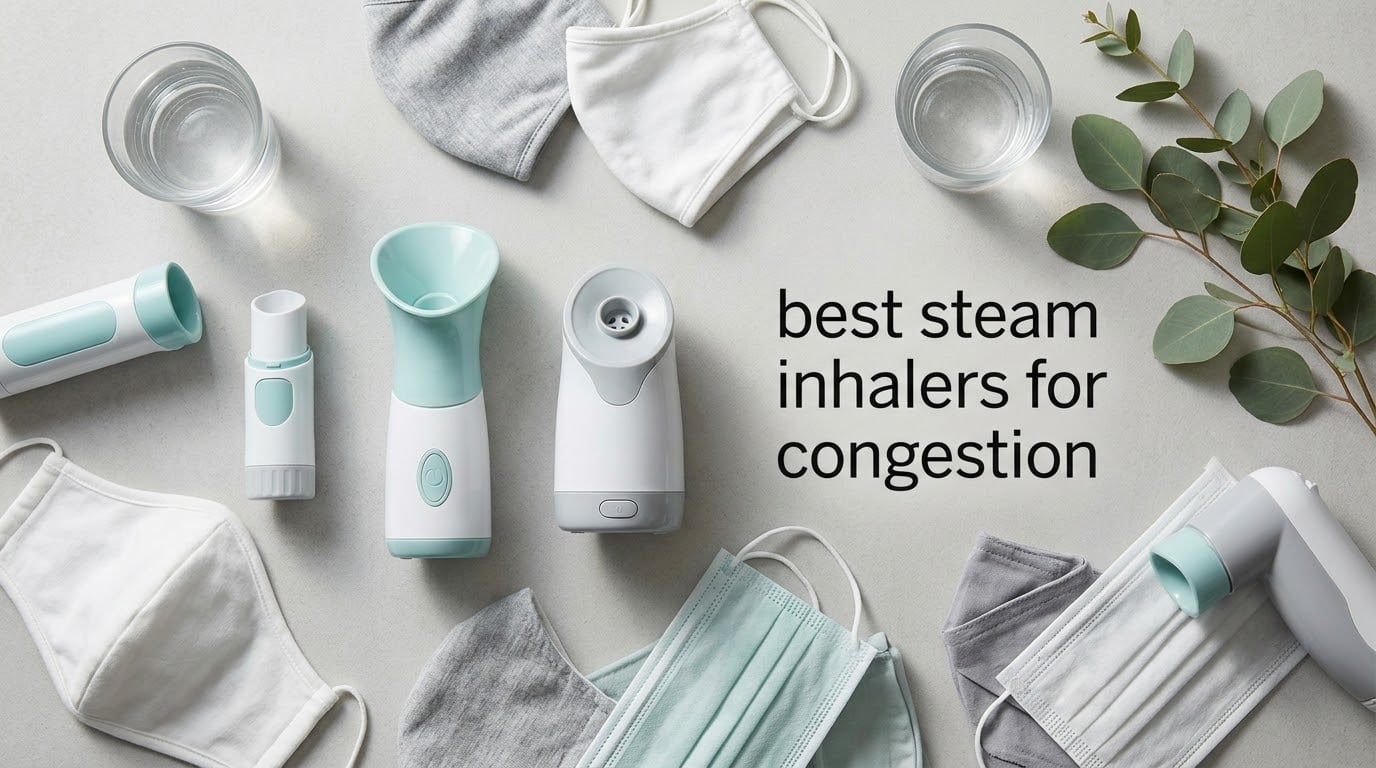
The best steam inhalers for congestion are the Vicks Sinus Inhaler for most people, the Vicks Personal Steam Inhaler if you want a longer-established design, and the Mypurmist Free if being tied to an outlet is a dealbreaker for you. All three warm water into fine mist that you breathe through a soft face mask for five to fifteen minutes.
That mist does one job, and it does it well. Warm moisture rehydrates dried nasal and sinus membranes so thick mucus thins, loosens and drains instead of sitting there blocking the passage. Warmth also reduces the stuffed feeling in your head and chest, which is why many people notice easier breathing before the mucus actually clears.
We spent weeks comparing eight units that sit at opposite ends of the market: twenty-year-old designs with tens of thousands of reviews, a modern unit that heats up in three minutes, a battery-powered model built for singers, and one dual-purpose humidifier that does double duty in a bedroom. What follows is what we learned about warm-up time, steam volume, cord length, mask comfort, reservoir size and the safety details that nobody puts on the box.
Table of Contents
Top 3 Best Steam Inhalers for Congestion in 2026

Vicks Sinus Inhaler Vih200
- Warm steam in 3 minutes
- Adjustable steam control
- Works with VapoPads
- 5-15 minute session

Vicks Personal Steam Inhaler
- Adjustable steam lever
- Soft face mask
- Accepts VapoPads
- Compact and portable
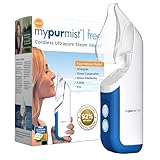
Mypurmist Free Cordless Inhaler
- Battery operated
- No warm-up time
- Auto clean cycle
- Travel bag included
Best Steam Inhalers for Congestion in October
| Product | Specifications | Action |
|---|---|---|
| Vicks Sinus Inhaler for Sinus Relief |
|
Check Latest Price |
| Vicks Personal Steam Inhaler |
|
Check Latest Price |
 MABIS Facial Steamer and Vaporizer MABIS Facial Steamer and Vaporizer |
|
Check Latest Price |
 Crane Steam Inhaler and Warm Mist Humidifier Crane Steam Inhaler and Warm Mist Humidifier |
|
Check Latest Price |
 Beurer SI30 Steam Inhaler Beurer SI30 Steam Inhaler |
|
Check Latest Price |
| Mypurmist Free Cordless Steam Inhaler |
|
Check Latest Price |
 Hann Facial Steamer and Sinus Inhaler Hann Facial Steamer and Sinus Inhaler |
|
Check Latest Price |
 HealthWise Steam Inhaler Respiratory Vapor Therapy HealthWise Steam Inhaler Respiratory Vapor Therapy |
|
Check Latest Price |
1. Vicks Sinus Inhaler for Sinus Relief, Works with VapoPads
Vicks Sinus Inhaler for Sinus Relief, Works with VapoPads (1 Included)
Model VIH200
Warm steam in 3 minutes
5.16 x 5.16 x 8.58 inches
1.2 pounds
No filters needed
Pros
- Warm steam in as fast as 3 minutes
- Adjustable steam intensity control
- Soft face mask targets nasal passages
- Works with Vicks VapoPads for menthol
- Uses plain tap water with no filters
Cons
- Modest steam volume means leaning close to the unit
- Short cord so it must sit near an outlet
- No auto shutoff or session timer
- Soft plastic mask can arrive bent
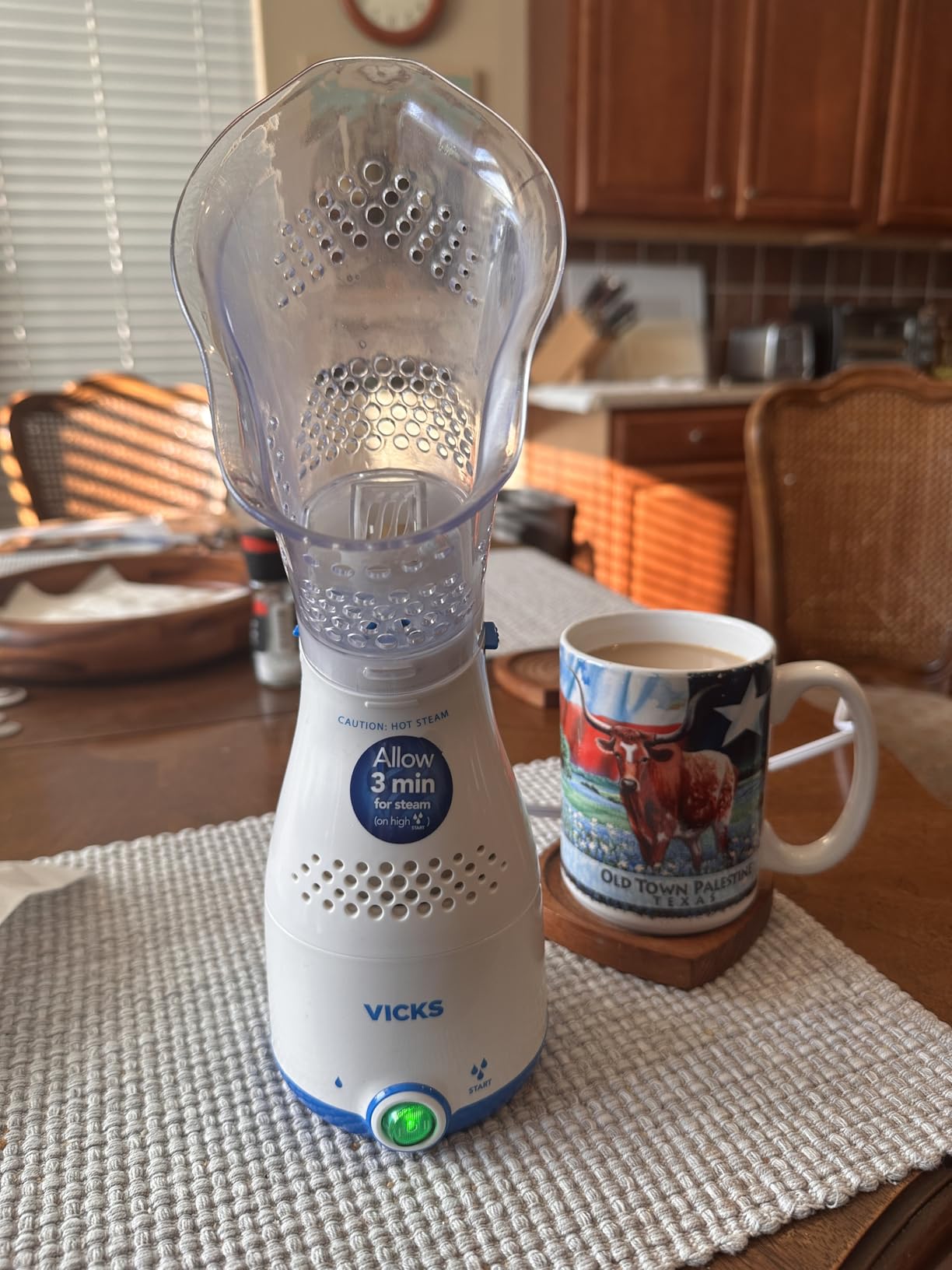
Yes, the Vicks steam inhaler works, and this is the model most people should buy first. Ours reached usable warm steam in a shade under three minutes, and the steam control dial let us dial the output down to something that felt warm rather than sharp. With twenty-one thousand ratings averaging 4.2 stars, it is also the single most reviewed unit in our group by a wide margin.
The design is deliberately simple. Water goes in the base, a Vicks VapoPad drops into the tray if you want menthol, and warm steam rises through a tube into a soft mask you rest over your nose and mouth. There is no filter to buy, and the manufacturer says plain tap water is fine, which removes one of the most common setup stumbles.
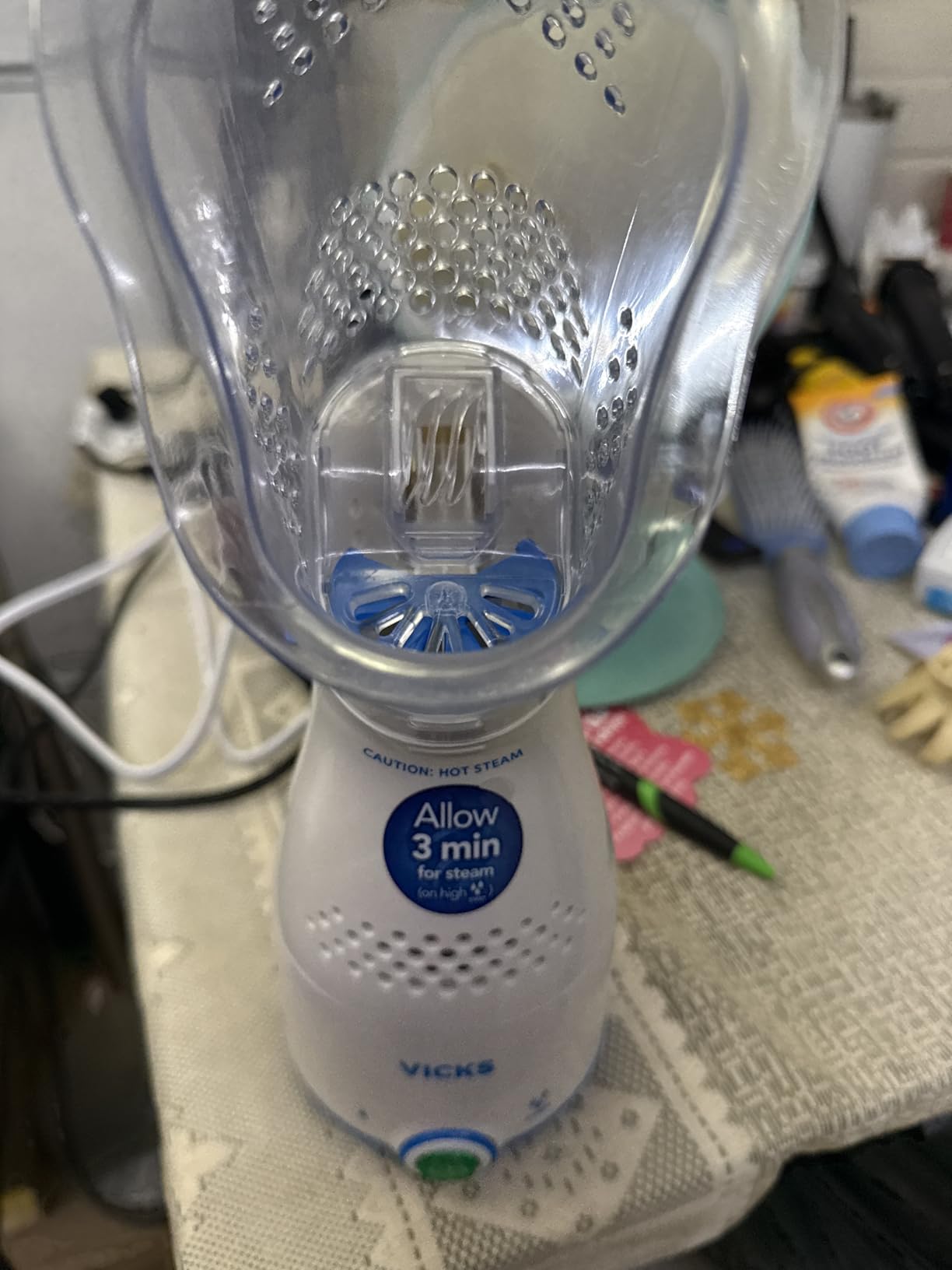
The weakness is volume. Owners consistently report that the steam output is modest, so you end up leaning in closer than you would with a roomier unit. That closeness is the single thing to manage carefully, because getting the face too near hot steam is exactly how people end up with a burn rather than some relief.
A second practical issue is the cord. It is not long, so this unit wants to live next to a wall outlet, which limits where in a room you can use it. If your congestion hits in bed or on the couch, plan the placement before you need it.
How it handles daily use and storage
For a ten-minute session once or twice a day this unit earns its counter space. The reservoir is small enough that refilling takes seconds, and because it takes tap water there is no measuring ritual to slow you down when you feel blocked at odd hours.
There is no auto shutoff and no timer, which means you have to be the one who turns it off. Owners also report the soft plastic mask can arrive bent out of shape; a few seconds under warm water usually reshapes it before the first session.
Who should pick a different model
Skip this one if you have no outlet within reach of where you sit, or if you travel often and want a unit that lives in a bag. It is also not the choice for a household that wants one appliance doing humidifier duty as well.
If you are caring for a small child, keep in mind the burn reports from r/Sinusitis that describe second and third degree burns from handheld steam units. Keep the face well back from the outlet and never let anyone rest their chin on the mask rim.
2. Vicks Personal Steam Inhaler for Targeted Relief from Congestion
Vicks Personal Steam Inhaler for Targeted Relief from Congestion
Model V1200
5-15 minute treatment
Tap water, no filter
9.37 x 17.4 x 9.37 inches
1.1 pounds
Pros
- Adjustable steam control lever
- Soft comfortable face mask
- Accepts VapoPads for menthol scent
- Compact and portable for travel
- Relief reported for colds
- bronchitis and vocal strain
Cons
- Very small reservoir and low steam volume
- No auto shutoff or timer
- Short power cord
- Plastic tabs at the base can crack with age
This is the older sibling of our top pick and the highest-rated unit here, sitting at 4.3 stars across close to eight thousand reviews. Owners frequently mention singers and voice users using it after long rehearsals, and reviewers also point to relief for bronchitis and chest congestion, not just sinus stuffiness.
The steam control here is a lever rather than a dial, and it moves through a usable range. We found the lower settings were the ones we actually used; the top end is impressive but there is no reason to sit at maximum if warm is all you need.
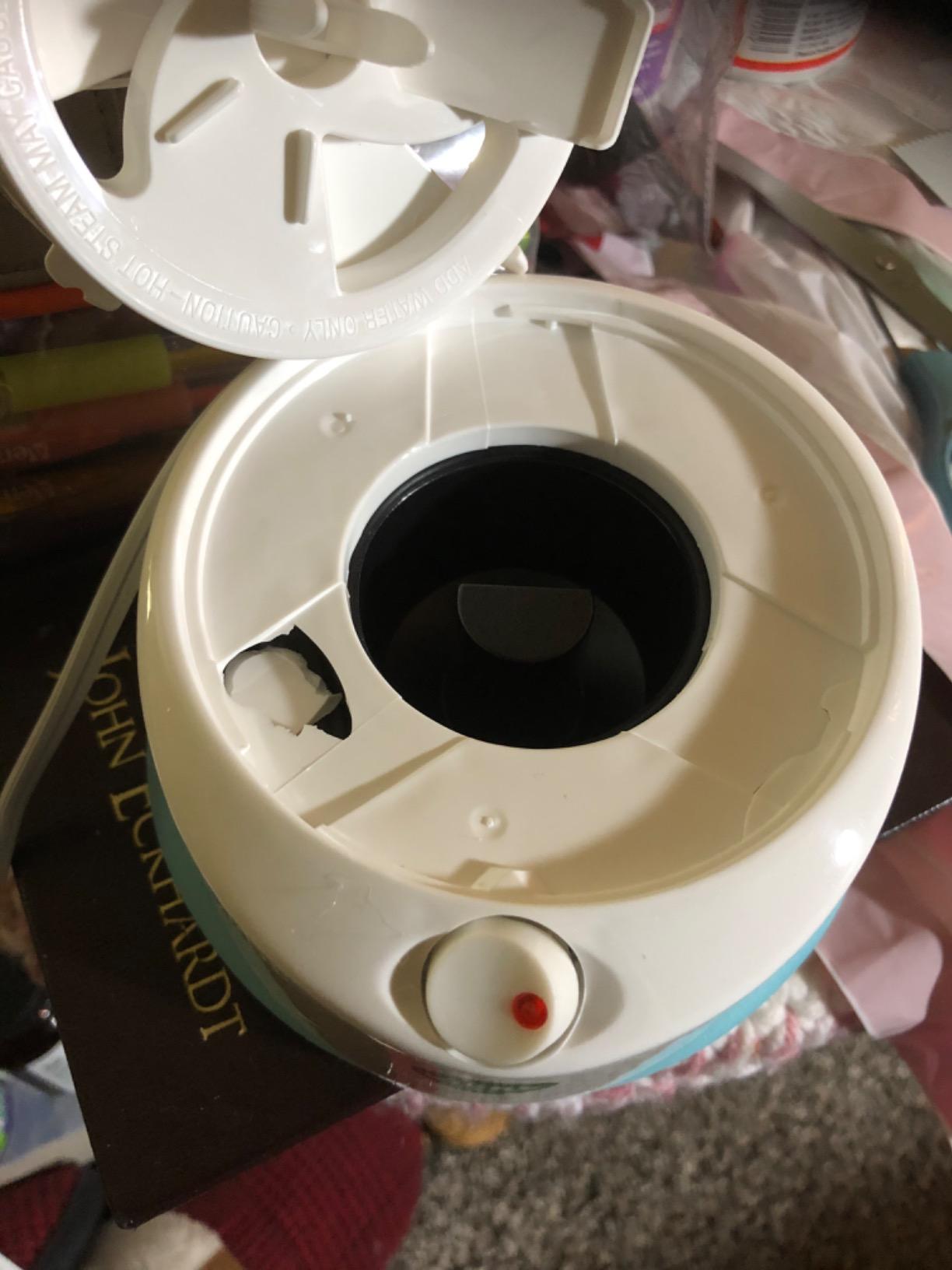
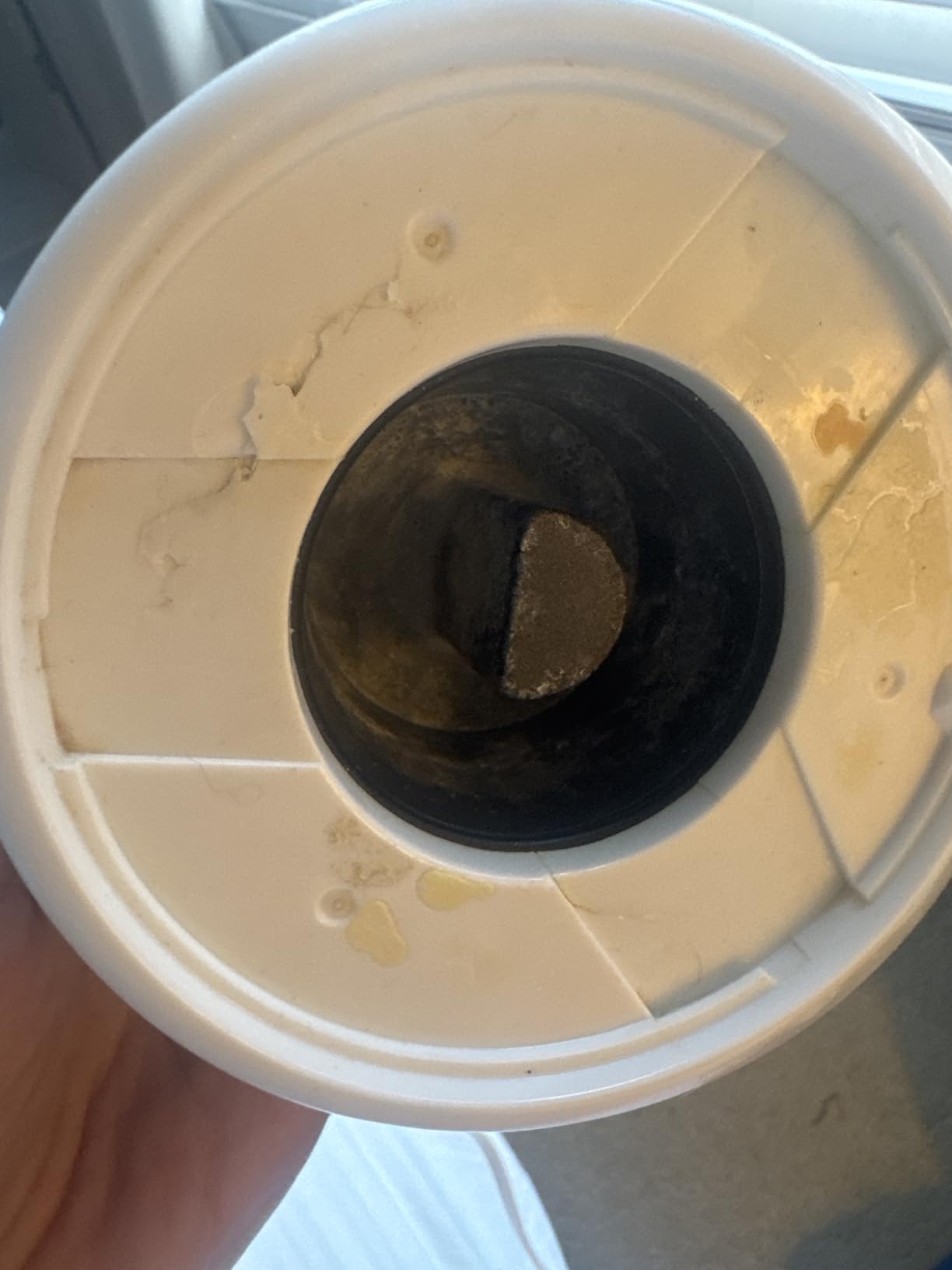
The drawbacks repeat across reviews. The reservoir is very small, the steam volume is low, and the short cord means you huddle over the unit with your face closer to the steam than the safety guidance ideally wants. Several owners also describe cracking plastic hinge tabs appearing at the base after extended use.
There is a mild plastic smell on the first use that fades after a few sessions, and again there is no run-dry shutoff. If you tend to fall asleep mid-session, this is not the unit you want running beside you.
What makes it worth choosing over the Sinus Inhaler
Its long production history means parts of the design are simply settled, and the soft mask is widely described as more comfortable over a longer session. If you plan to use steam for vocal recovery rather than only for a blocked nose, reviewers tend to favour this model.
Its 4.3 star average is the highest of the eight, and at 1.1 pounds it packs down easily for travel. It is the pick when you want one familiar device that does a little bit of everything in the steam category.
Where it falls short
The tiny reservoir and low output are real constraints on long sessions, and the short cord keeps it tethered. Buyers who want a roomy tank or a cordless experience should look at the Crane or the Mypurmist instead.
No auto shutoff is the other gap. Members of lung health communities point out that warm damp interiors are hospitable to microbes, and a unit you can accidentally leave running makes cleaning discipline harder.
3. MABIS Facial Steamer, Steam Inhaler, Vaporizer and Vocal Steamer
MABIS Facial Steamer, Steam Inhaler, Vaporizer or Vocal Steamer with Aromatherapy Diffuser and Soft Face Mask for Personal and Facial Steaming, 25mL
Model 40-741-000
25 mL water capacity
60 mL aromatherapy tank
4 x 9 x 10 inches
5 foot power cord
Pros
- Quiet enough to use while resting
- Adjustable steam controls
- Aromatherapy tray for essential oils
- Extension tube keeps steam concentrated
- Works for facial
- respiratory and vocal steaming
Cons
- Small 25 mL reservoir limits session length
- Essential oils sold separately
- Notable share of 1-star feedback
- Older design without auto shutoff
This is the oldest design we looked at, first listed in 2000, and it still holds a top-four ranking in facial steamers. What separates it from the Vicks units is the 60 mL aromatherapy tank, which lets you push eucalyptus or peppermint vapour through the steam rather than relying on a pad.
Operation is genuinely quiet, and the extension tube with the soft flexible mask keeps the mist concentrated on your face. If your congestion tends to show up when you are trying to rest or sleep, quietness is a real feature rather than a novelty.
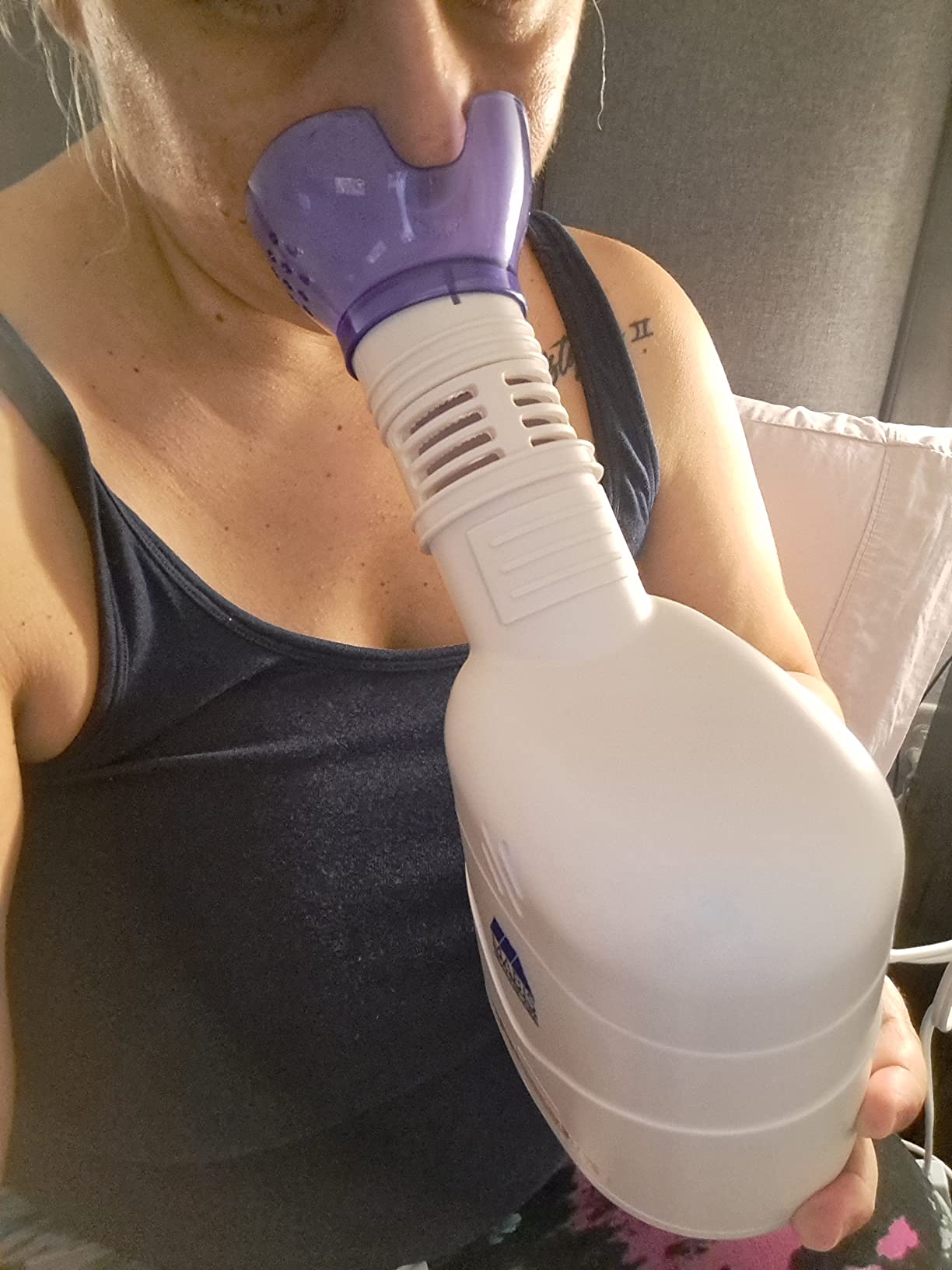
The 3.9 star average is the joint second-lowest here, and the spread of ratings is wide, with a notable share of one-star feedback. The recurring complaint is the 25 mL reservoir, which is the smallest capacity in the group and caps how long a session can last before you refill.
Oils are sold separately, so treat the aromatherapy tank as an extra rather than part of the package. Like most older designs, there is no auto shutoff.
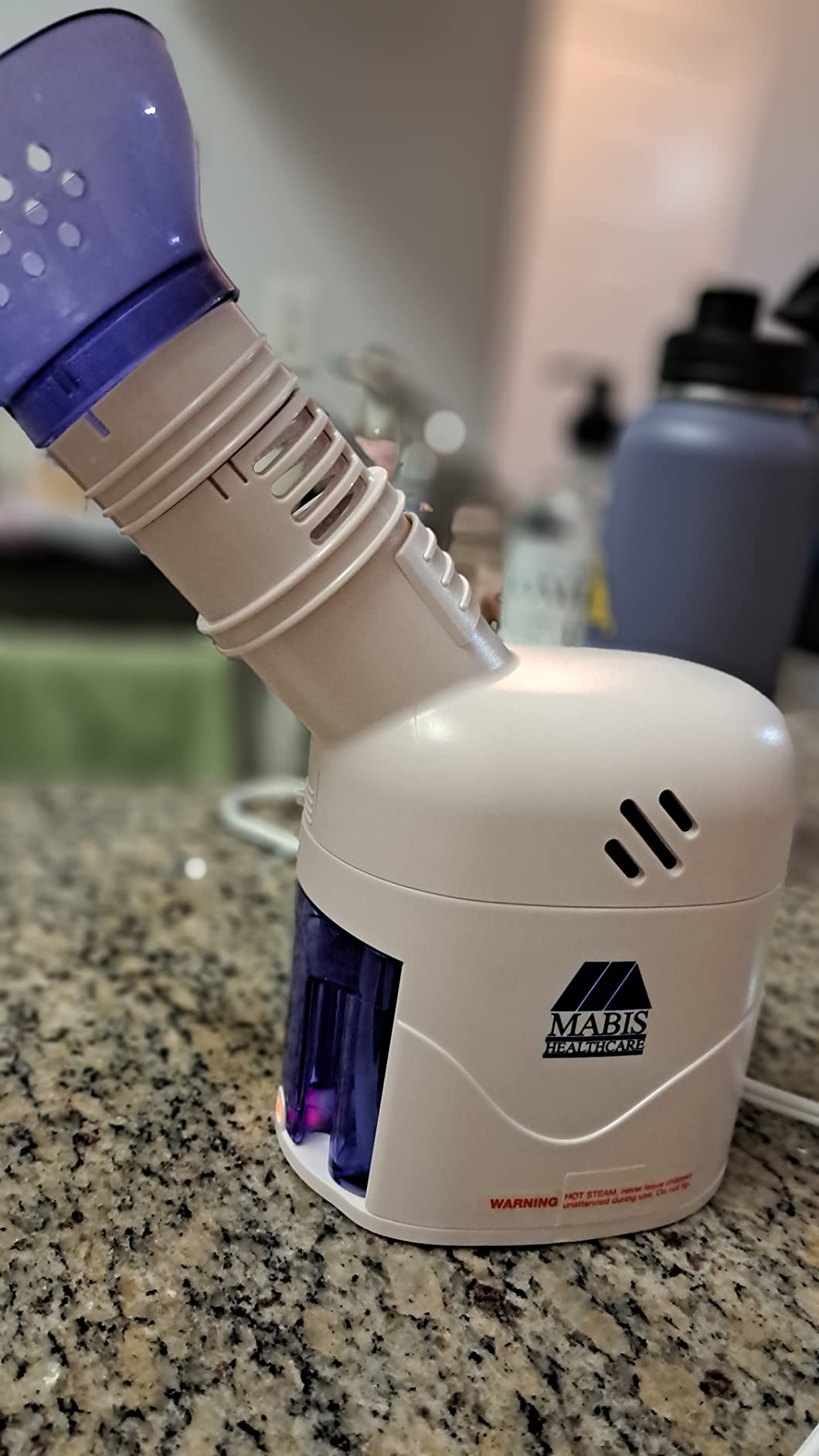
Best used for voice and facial work
This is the unit to consider if you are a singer, a teacher, or anyone who talks for a living and wants to warm the throat and sinuses before a session. Reviews describe it as a vocal steamer first and a facial steamer second, which matches how most owners seem to use it.
The flexible non-latex mask and extension tube also make it comfortable for facial work, opening pores for a home spa routine when congestion is not the goal.
Where the value thins out
A 25 mL tank means frequent refills and short sessions, and buying oils adds cost on top. If your primary need is clearing stubborn nasal congestion, a larger-tank unit will serve you better for far less fuss.
The wide rating spread is worth pausing on. Buyers who value quiet operation and aromatherapy are enthusiastic, while those who needed stronger or longer steam have been disappointed.
4. Crane Steam Inhaler and Warm Mist Humidifier, 0.5 Gallon
Crane Steam Inhaler & Warm Mist Humidifier, 0.5 Gallon, Humidifier FSA Eligible, Blue & White, Ideal Humidifiers for Bedroom, Sinus Inhaler, Vaporizer HSA, Vaporizer For Congestion
Model EE-5202
0.5 gallon tank
2-in-1 humidifier and inhaler
6.5 x 8 x 8.5 inches
2.2 pounds
Pros
- Works as a room humidifier and a personal inhaler
- Whisper-quiet for sleeping
- Large 0.5 gallon tank means fewer refills
- Bottom-fill tank and removable mist chamber
- Accepted under FSA and HSA funds
Cons
- Bulky next to personal mask inhalers
- Heavier and less travel friendly
- Warm mist needs keeping away from furniture and children
This is the only unit here that does two genuinely different jobs. Set it on a bedside table running as a warm mist humidifier, and it humidifies the whole room while you sleep; lift the mask to the outlet and it becomes a personal steam inhaler for targeted relief.
The 0.5 gallon tank is the largest reservoir in this group, and it is the reason you are not refilling it every few minutes. It is also whisper-quiet, which is the whole point for a device meant to run next to a sleeping person.
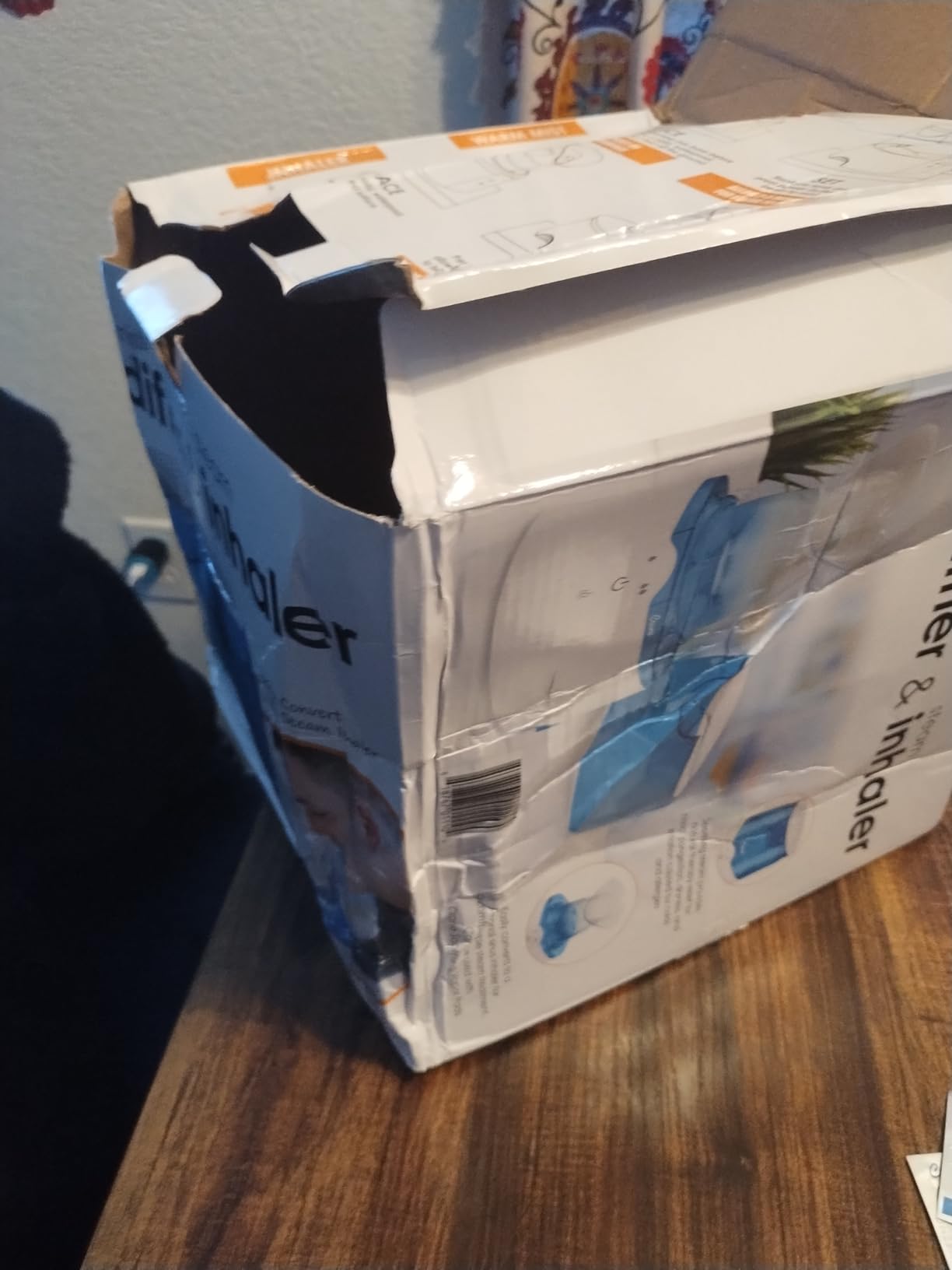
The trade-off is size. At 2.2 pounds and larger than any mask inhaler here, this is a small appliance, not a handheld one. It wants a permanent spot, and it is not the unit you pack for a trip.
Warm mist also means warm water and a warm surface, so it belongs on a hard surface away from wood, fabric and curious hands. That consideration matters in a nursery, which is exactly where a parent might want it.
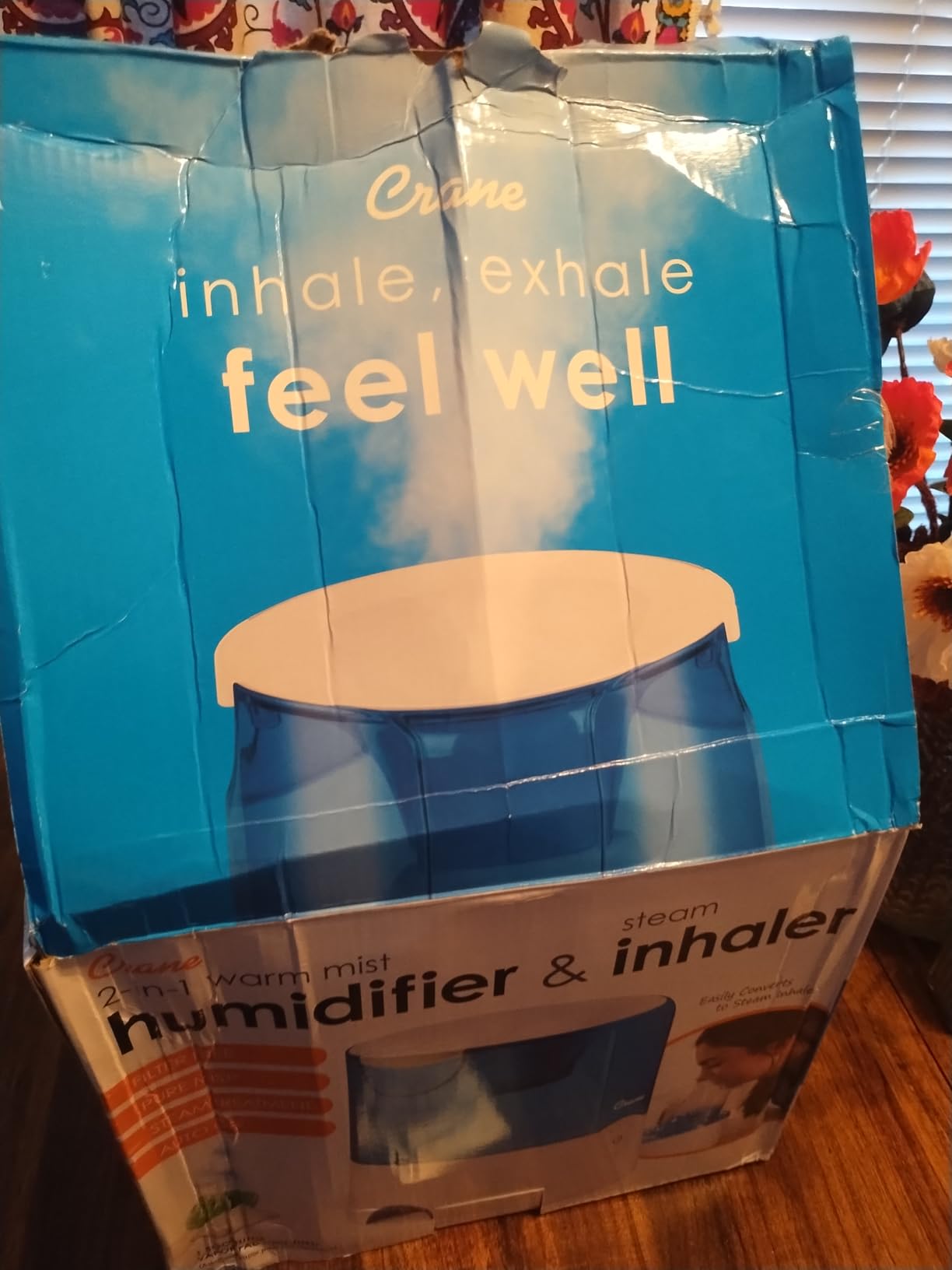
Why it suits a shared household
If more than one person in the house gets congested, two small mask inhalers become redundant fast. This unit humidifies a bedroom and serves whoever needs it, and being eligible under FSA and HSA funds is a practical bonus for families.
Cleaning is straightforward thanks to the bottom-fill tank and removable mist chamber, which matters given the microbial concern that lung health communities raise about warm damp interiors.
Where it is the wrong choice
It is not portable and it is not discreet, so skip it for travel, office desks or anyone who needs to use steam away from a table. The warm mist also makes it a less comfortable choice in a shared room with small children.
If your congestion is occasional and you only need ten minutes of targeted mist, a personal mask inhaler does the same job in a fraction of the space.
5. Beurer SI30 Steam Inhaler for Sinus Congestion and Allergies
Beurer SI30 Steam Inhaler for Sinus Congestion & Allergies, Drug-Free, Quick 3-5 Minute Setup, Ultra-Quiet, Face Steamer with Variable Steam Control, Universal Mask, FSA/HSA Eligible
Model SI30
Ready in 3-5 minutes
Variable steam control
6 x 7 x 9 inches
1.65 pounds
Pros
- Ready in just 3-5 minutes
- Ultra-quiet for daytime or night use
- Variable steam control
- Universal mask fits both mouth and nose
- No plastic odor reported
Cons
- Small 40 mL capacity gives short sessions
- Some reports of hot water leaking from the bottom
- Plastic top detaches easily
- Requires sitting and leaning over the unit
The Beurer SI30 becomes usable faster than most of the units here, and in a congested household speed is worth something. It reaches ready-to-inhale steam in three to five minutes, roughly matching the Vicks Sinus Inhaler and beating every other unit in this roundup.
The universal mask is the detail that sets it apart. It fits over the mouth and the nose, so you can breathe through your nose for sinus work or lower it for chest congestion, and the same mask fits adults and children without a second accessory.
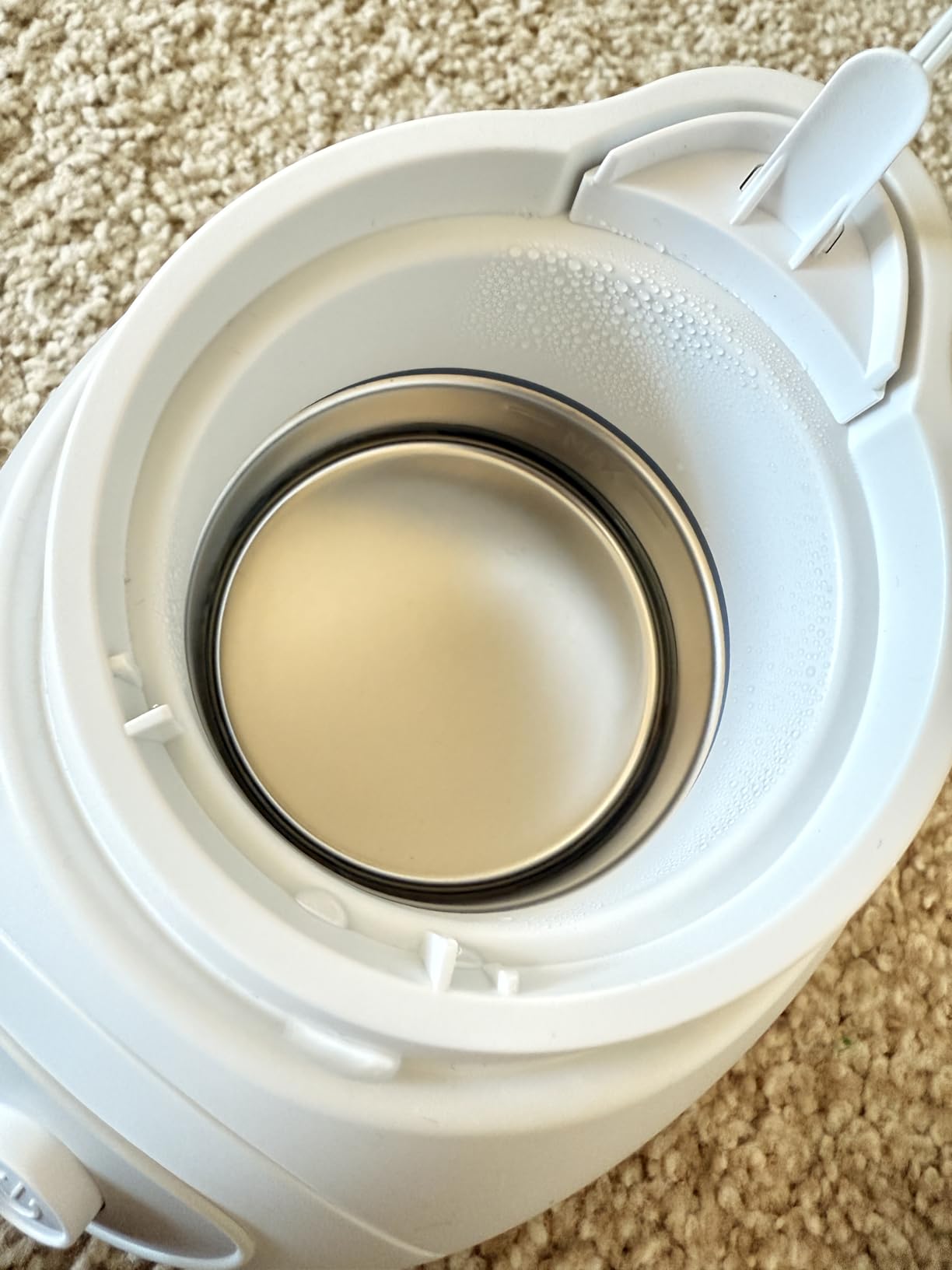
Variable steam control means you can start low and increase, which matters if you are sensitive to warm moisture. It is also quiet enough to use late at night without waking a household, and reviewers specifically note the absence of the plastic smell that some cheaper units carry.
The 40 mL tank is small, so sessions are short. There are also isolated reports of hot water escaping from the bottom opening during use, which is worth watching for in the first few sessions and reporting if you see it.
What the fast warm-up changes in practice
A three-minute warm-up means you can reach for steam at the first sign of stuffiness rather than planning around it. That matters most for people whose congestion flares in the evening or catches them off guard during a cold.
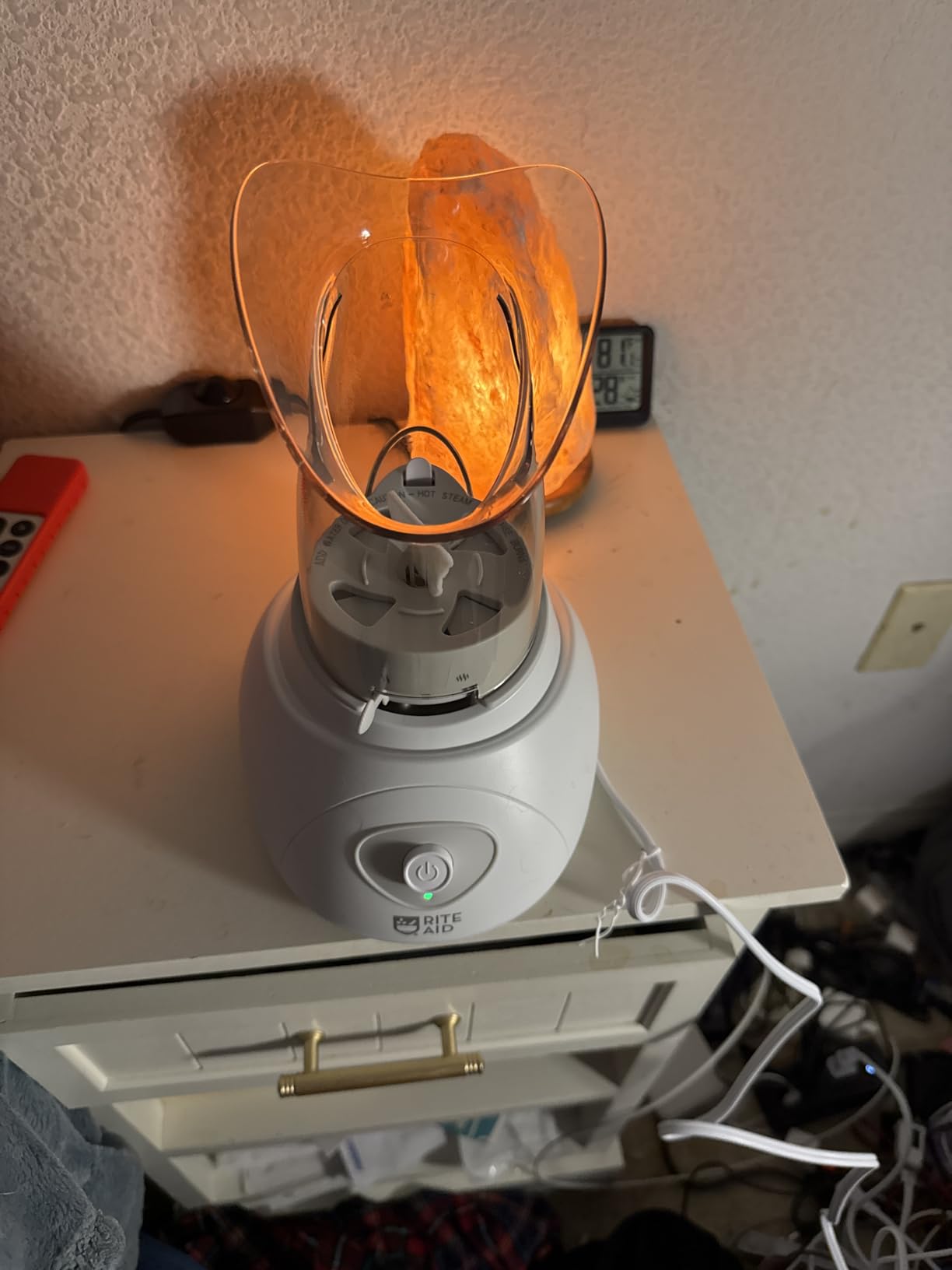
One packaging detail to check on arrival: some units ship with a front panel branded for a pharmacy chain rather than for Beurer. It is a cosmetic difference, but verify the model number before you keep the box.
Where it is uncomfortable
You have to sit and lean forward over the unit, which is hard if you have neck or back issues, and holding that posture for a long session is not realistic. Some buyers also find the detachable plastic top a safety concern with small children around.
If your sessions need to run longer than a few minutes, the 40 mL capacity will force a refill mid-session and break the rhythm.
6. Mypurmist Free Cordless Steam and Sinus Inhaler Essential Kit
Mypurmist Free Cordless Steam & Sinus Inhaler Essential Kit
Model Free
Lithium ion battery
4-10 micron micromist
5 x 8 x 11.2 inches
2.76 pounds
Pros
- Truly cordless with no outlet needed
- Instant warm steam with no warm-up time
- Automatic self-clean cycle after use
- Travel bag and refills included
- Popular with singers and frequent travelers
Cons
- Less steam volume than plug-in models
- Battery often covers only one or two sessions
- Requires proprietary refill vials
- Some units shut down or fail to power on
- No neck harness on this model
Cordless was the most requested feature across the forum threads we read, and the Mypurmist Free is the clearest answer in this group. It runs on a lithium ion battery, needs no outlet, and produces warm rather than scalding steam with no warm-up wait at all.
It works differently from the competition. Instead of heating water to boiling, it uses micromist technology to generate 4-10 micron water vapour particles, and the kit ships with eight water refills, aromatherapy sessions, a travel bag and a charger. It runs a self-clean cycle after every use, which is a genuine hygiene advantage.
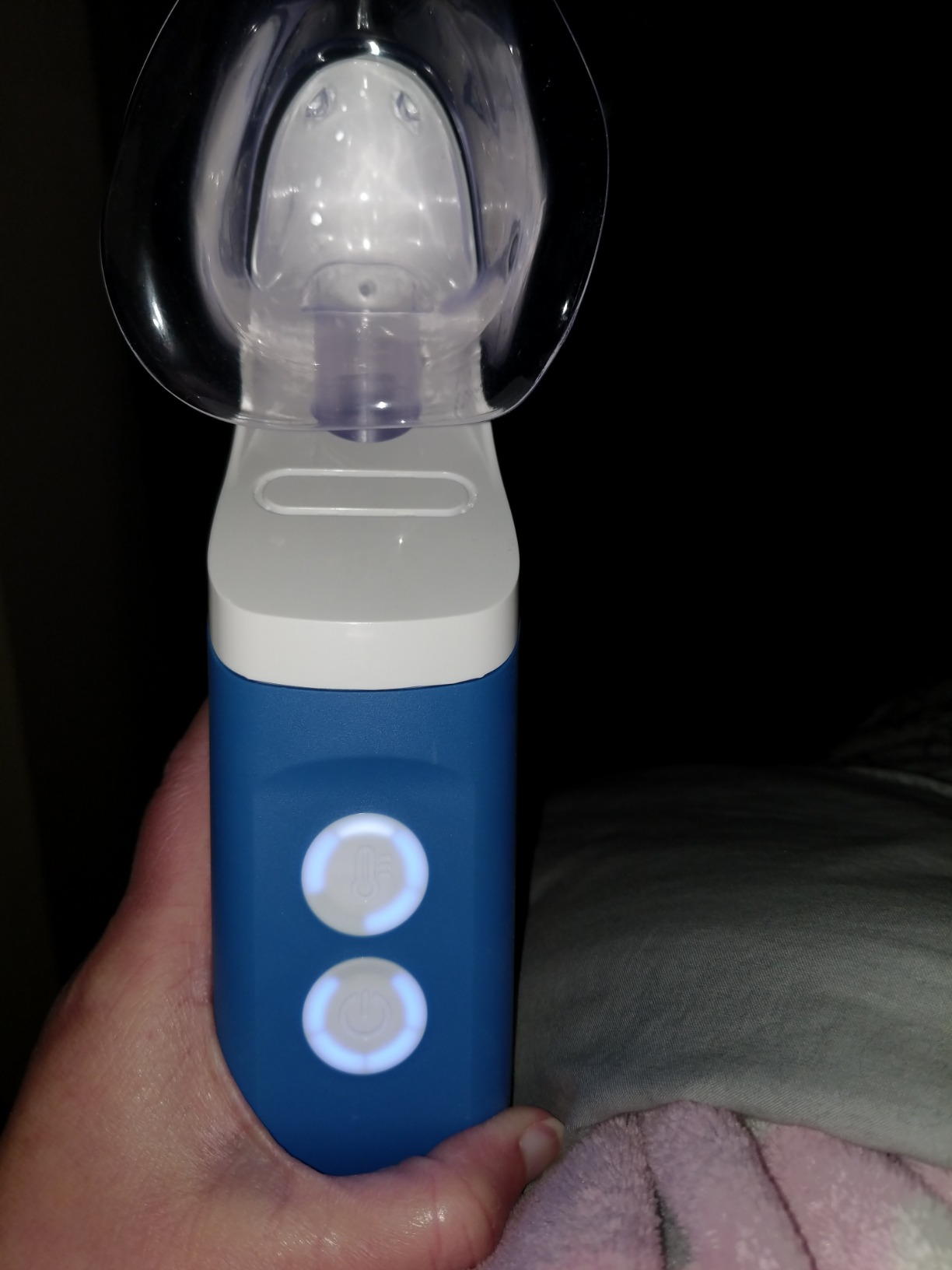
The 3.8 star average is the lowest of the eight, and the reason is visible in the reviews. Professional singers and frequent travellers rate it highly, while a steady run of one-star reviews describes units that stop powering on, repeated warranty replacements and dependence on branded refill water that costs extra over time.
Steam volume is lower than any plug-in model here, and the battery typically covers only one or two sessions before it needs a recharge. There is no neck harness on this model, so long sessions mean holding the device, which is awkward.
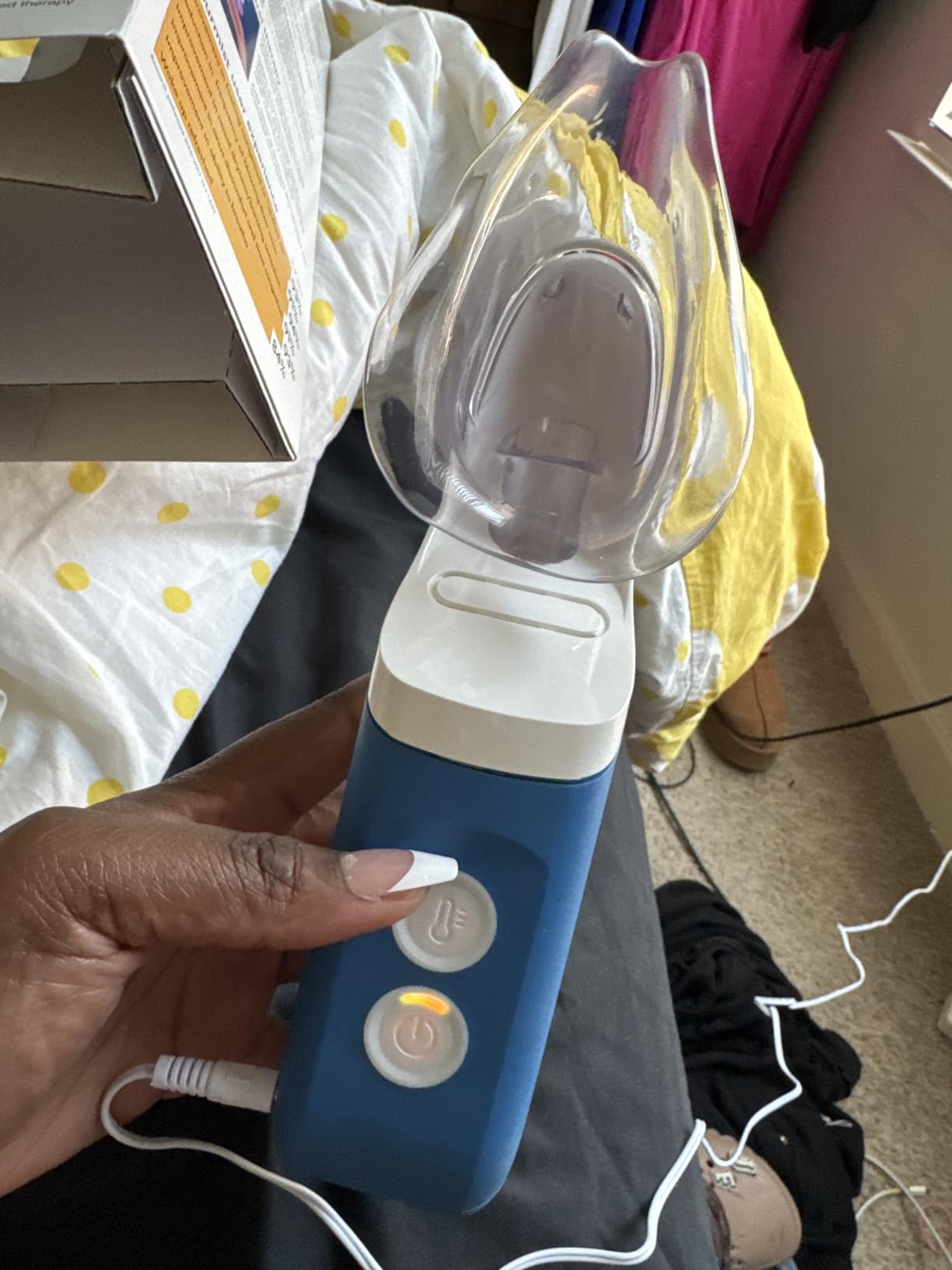
Where cordless genuinely earns its place
Travel, hotel rooms, camping and rehearsal spaces are where this unit separates itself from everything else on the list. Members of an asthma community thread asked specifically for a cordless option, and this is the direct answer to that request.
It is also the easiest of the eight to use on the move, since there is no boiling reservoir to tip and no cord to trip over. The instant warm-up suits a singer in a five-minute gap before a set.
Where the trade-offs bite
Reliability reports are the reason we did not put this higher, and the proprietary refill vials create an ongoing cost that the purchase price does not suggest. If you need dependable daily steam for a week straight without a charger nearby, a mains-powered unit is the safer buy.
Lower output also means longer sessions for the same relief, and holding the device without a harness gets tiring before the mucus clears.
7. Hann Facial Steamer and Sinus Steam Inhaler
Hann Facial Steamer Professional Sinus Steam Inhaler Face Skin Moisturizer Facial Mask Sauna Spa Steamers with Aromatherapy Diffuser Humidifier Function (Pink)
Model HA-FC025
Separate nose attachment
Adjustable steam flow
Automatic shutoff
9.8 x 6.34 x 5.67 inches
Pros
- Lowest cost unit in this group
- Separate nose attachment aimed at the four sinus areas
- Steam flow adjustable from light to heavy
- Automatic shutoff function
- Multi-converter plug for international use
Cons
- Very hot steam with no temperature setting
- Face sits close to boiling water with the nose attachment
- Short power cord
- Some units burned out after repeated use
- Weak output reported by a minority
The Hann is the lowest-cost way into this category, and the 4.0 star average from about seven hundred and forty-five reviews is respectable for a unit at this end of the market. Automatic shutoff is included, which is a safety feature several pricier models here lack.
Its distinguishing accessory is the separate nose attachment, designed to direct steam at the four sinus areas rather than over the whole face. If your complaint is localised sinus pressure rather than general stuffiness, that is a sensible design choice.
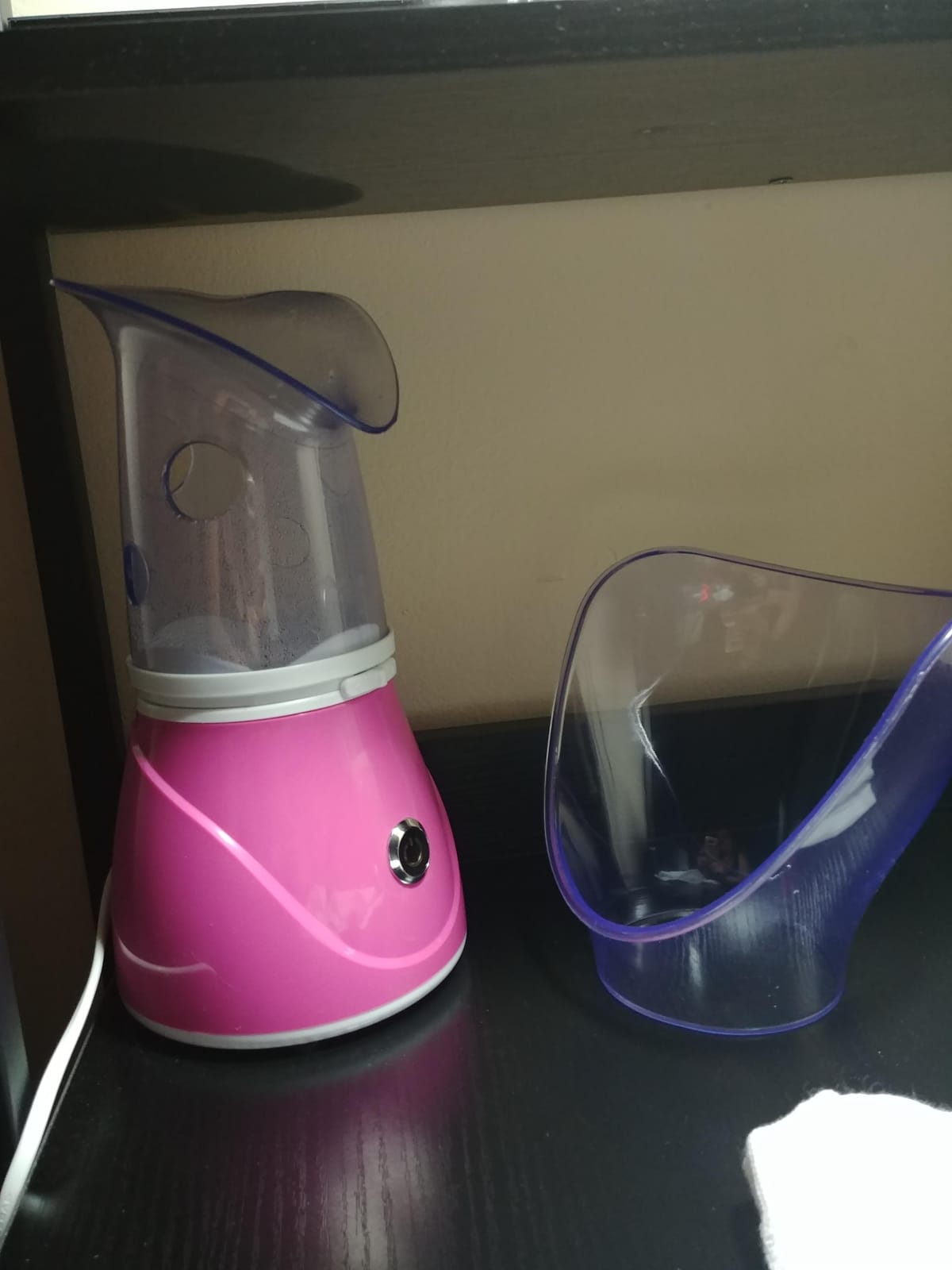
The safety profile is the reason we did not push it higher. Reviews describe steam that runs extremely hot with no temperature setting, and a face that sits close to boiling water, particularly with the small nose attachment fitted. That combination is precisely the scenario behind the burn reports forum users post about compact steam units.
Also flagged repeatedly: a short power cord and a fair number of units that burned out after repeated use. Steam flow is adjustable from light to heavy, but a minority of buyers report output too weak to be useful.
When the low cost makes sense
If you want a facial steamer primarily and treat sinus use as a bonus, this is a sensible first device. The automatic shutoff and the simple key controls make it approachable, and it stores easily back in its box.
The multi-converter plug is an unusual inclusion that suits travel across different outlet standards, though the short cord limits how far from the socket you can place it.
Where to draw the line
Anyone sensitive to heat, anyone in a household with small children, and anyone with a history of burns on their hands should be cautious with a unit that runs this hot with no temperature control.
Reports of early burnout also argue against buying it as a long-term household fixture. If reliability matters more than upfront cost, the Beurer SI30 or the Crane is a sturdier place to start.
8. HealthWise Steam Inhaler Respiratory Vapor Therapy
HealthWise Steam Inhaler Respiratory Vapor Therapy
Model 59-525
Heats in 1-2 minutes
6-9 minute sessions
5.13 x 3.75 x 10 inches
1.79 pounds
Pros
- Fastest warm-up at 1-2 minutes
- Heavy consistent steam output
- Simple setup and controls
- Works for adults and children
- Also usable as a hot steam facial
Cons
- Very hot steam with no heat control
- Small reservoir gives only 4-10 minutes per fill
- Measuring cup markings do not match stated amounts
- Can spit hot water if taken apart right after use
- Some units stopped working early
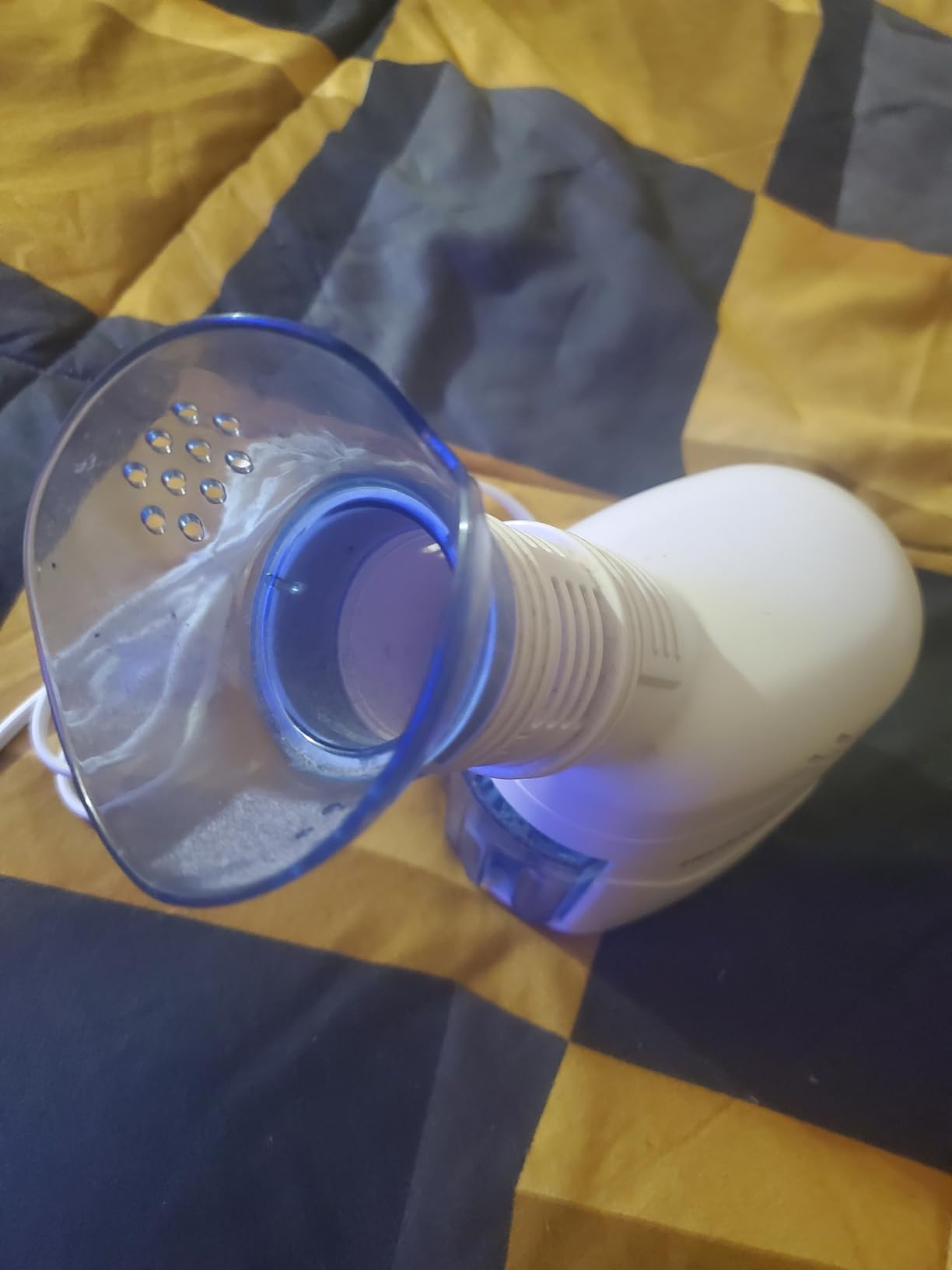
The HealthWise 59-525 reaches steam in one to two minutes, the fastest warm-up in the group, and it produces heavier output than most units at this size. If your congestion arrives suddenly and you want maximum mist per minute, that combination is worth knowing about.
The manufacturer positions it for a broad list of respiratory complaints including colds, allergies, sinusitis, rhinitis, laryngitis and bronchitis, with most sessions running six to nine minutes. The included latex-free mask works for adults and children, which makes it a straightforward shared household unit.
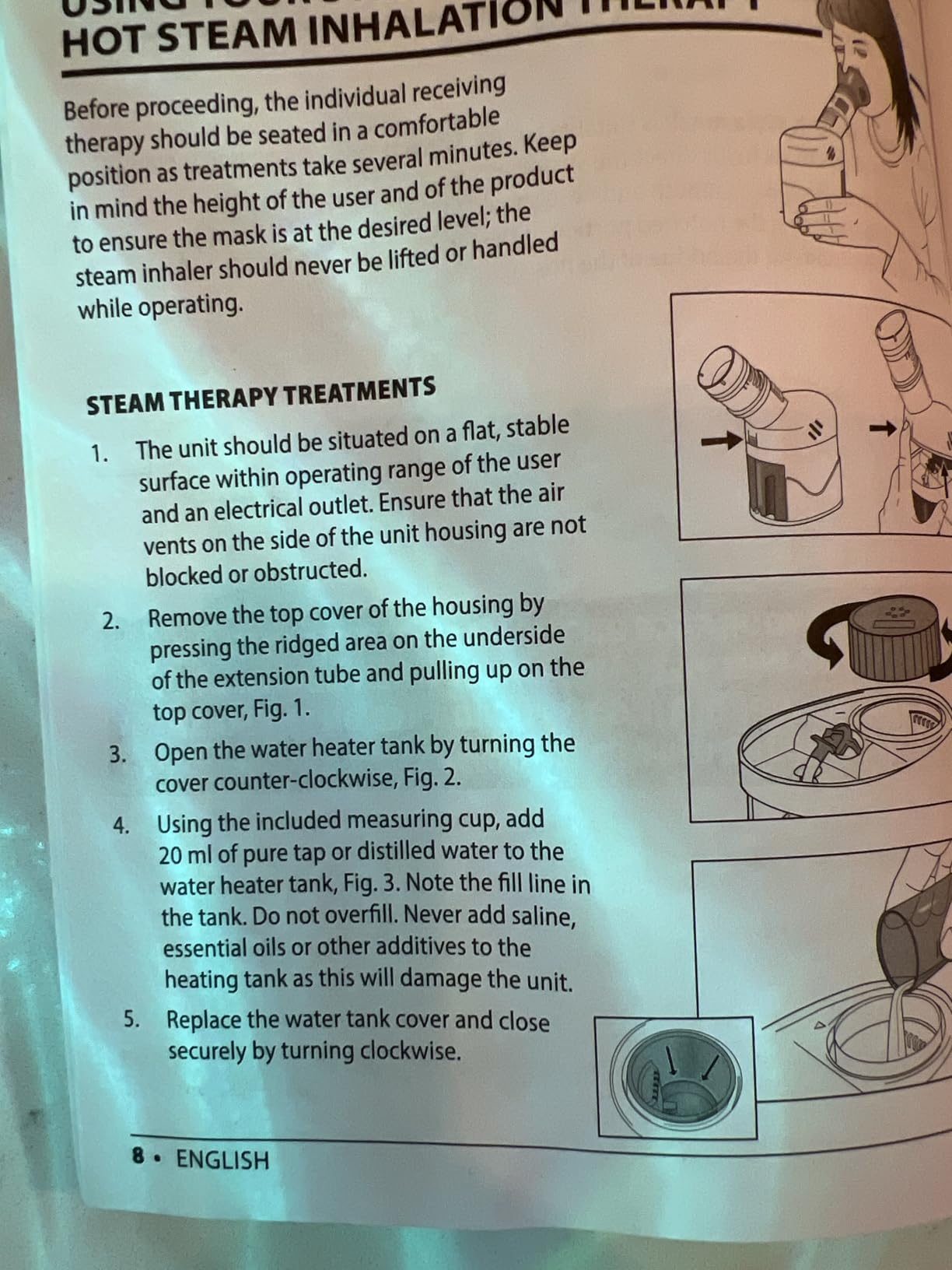
That heavier output has a downside: the steam is very hot and there is no heat control setting, so you cannot turn it down. Owners also note the small reservoir gives only about four to ten minutes per fill, and that the measuring cup markings do not match the stated fill amounts.
Several reviewers report the unit spitting hot water if it is taken apart immediately after use. Some units also stopped working after only a few uses, and at 3.9 stars from roughly four hundred and seventy-seven reviews it sits at the low end of the group.
What the fast heat-up buys you
One to two minutes means a short, targeted session is realistic even on a busy morning. The dual-purpose design also works as a hot steam facial, which is useful for pore cleansing alongside congestion relief.
For families, the single latex-free mask that fits both adults and children removes the need to track separate accessories, and the short session length suits younger users better than a twenty-minute sitting.
Where caution is warranted
Very hot steam with no heat control is the main concern, and it means distance discipline matters more here than on the adjustable units. Never tip or dismantle it while hot, and let it cool before refilling.
The early-failure reports and the confusing fill markings argue for buying it only if you already know you want heavy output quickly. Otherwise an adjustable unit is the calmer choice.
What Clears Up Congestion Fastest
If you want relief in the next ten minutes rather than by the end of the day, the order of operations matters as much as the device. Steam works fastest when the air in your home is dry and when you use it alongside movement and fluids.
Use a unit with a short warm-up. The Beurer SI30 at three to five minutes and the HealthWise at one to two minutes get you inhaling sooner than units that need longer to produce usable mist.
Pick up the intensity, but keep distance. Adjustable steam controls let you start moderate and increase, which feels better than starting at maximum.
Run a full session. Ten to fifteen minutes of continuous breathing gives the moisture time to reach the sinus passages. Forum users are honest that relief builds over a session rather than appearing instantly.
Move afterwards. Gentle movement, a short walk or bending forward helps the loosened mucus drain out instead of staying in place.
Drink water. Hydration supports the mucus thinning that the steam started.
Add a saline rinse for stubborn congestion. For pressure that does not shift after steam, a rinse clears mechanically rather than by loosening.
One user on a sinusitis forum described the honest timeline well: mucus crystals and steam worked, and it took time but eventually came out. Expect a session to loosen things and a night of sleep to finish the job.
How to Use a Steam Inhaler for Congestion Safely
These five steps are the routine we used for every unit in this roundup, and they are what we would recommend to anyone picking one up for the first time.
Place the unit on a flat, stable surface. Keep it away from the edge of a table, out of reach of children, and clear of fabric and wood if it is a warm mist model.
Fill the reservoir as directed. Several units here, including both Vicks models, are designed for plain tap water with no filter. Check the manual, and use distilled water if your unit specifies it.
Wait for the warm-up. Allow three to six minutes depending on the model. Warm-up times in this group range from one to two minutes on the HealthWise to about three minutes on the Vicks Sinus Inhaler.
Inhale for five to fifteen minutes at a comfortable distance. Breathe normally through your nose and mouth inside the mask. If the steam feels sharp rather than warm, move back or turn the steam control down.
Empty, rinse and dry after every use. Empty the reservoir, wipe the mask and tube, and leave parts open to air rather than reassembling them damp.
Burn risk is the real safety issue
Compact steam units produce genuinely hot vapour, and the forum record includes a thread titled as a warning against a handheld steam inhaler describing second and third degree burns. The mechanism is simple: people lean in because the output is modest, then hold skin against or near hot steam for too long.
Keep your face at an arm’s length from the outlet until you know how this particular unit feels. A parent on a parenting forum described the right approach for a child as being far enough away that the steam passes over without feeling hot, just warm. Never rest your chin on the mask rim and never move the unit while your face is inside the mask.
Essential oils, water type and reservoir hygiene
Only one unit here has a dedicated aromatherapy tank, and its oils are sold separately. Adding oils to a plain reservoir can block the steam path, and no manufacturer in this group recommends it.
On water, follow the manual. Tap water is explicitly fine for both Vicks models, while units with heating elements and smaller passages can pick up mineral buildup, which is also why weekly descaling matters for anything you keep long term.
Members of a lung conditions community warn that all bugs thrive in a moist warm atmosphere, and they are describing exactly what sits inside a rinsed-but-not-dried reservoir. Daily rinsing plus air drying is the cheapest hygiene measure available, and the Mypurmist’s automatic self-clean cycle is the only one in this group that does it for you.
Who should not use a steam inhaler
Anyone with asthma or COPD should ask their doctor first, because a burst of warm moisture can trigger coughing or breathlessness in some people. The same caution applies to anyone with heart conditions and to people recovering from sinus surgery.
For infants and toddlers, keep sessions short, keep the child well back from the outlet, use distilled water where the manual calls for it, and never leave a child alone with a running unit. Children have thinner skin and less control over their own distance from the steam.
Buying Guide: How to Choose a Steam Inhaler
Know which device you are actually buying
A sinus steam inhaler, a facial steamer and a plug-in vaporizer solve different problems, and most confusion at the buying stage comes from treating them as the same object. A facial steamer like the MABIS or the Hann produces a wide, cool plume aimed at skin. A sinus inhaler like either Vicks model concentrates a narrow stream through a mask close to your face. A room humidifier like the Crane adds humidity to an entire space rather than to your airways.
For congestion specifically you want a personal steam inhaler with a mask. That is the format that gets moisture to the nasal passages in a short session.
Warm mist versus cool mist
Warm mist boilers produce a true warm cloud and generally feel more like a traditional steam treatment. Cool mist and ultrasonic units break water into a fine cold or room-temperature aerosol that some people find easier to tolerate, particularly with asthma or sensitive airways.
Most of the congestion-specific products in this category are warm mist, because warmth is part of what loosens mucus. The Crane unit gives you warm mist as a room humidifier as well as a personal inhaler, which is why it suits a bedroom.
Corded versus cordless
Cordless was the most requested feature in every health forum thread we checked, and the reason is practical rather than fashionable. Without a cord you can use steam in a hotel room, at a rehearsal space, in a tent or wherever an outlet is not available, and you cannot tip a reservoir of hot water while moving it.
The cost is battery life and output. The Mypurmist Free produces less steam than any plug-in unit here and its battery typically covers one or two sessions, so it suits intermittent travel use more than a daily home routine.
Reservoir size, warm-up time and steam control
Reservoir size is the number that decides session length. The Crane at 0.5 gallon holds far more than the 25 mL tank in the MABIS or the 40 mL tank in the Beurer, and a small tank in a unit with modest output means you will refill mid-session.
Warm-up time ranges from one to two minutes on the HealthWise to roughly three minutes on our top pick. Steam control matters more than raw output for comfort, and the units with a dial or lever let you find the warm-not-sharp setting that forum users describe as the thing they actually want.
Mask type, auto shutoff and durability
A mask that fits both mouth and nose gives you flexibility between sinus and chest work, and one that is soft and flexible matters more than most spec sheets suggest. Masks that arrive bent are common and usually reshape under warm water.
Auto shutoff appears on only one unit in this group, the Hann, and its absence is the single most repeated complaint across the reviews of the older models. For durability, a thread in a buy-it-for-life community asked for a reliable steamer rather than another disposable, and the answer is to pick a unit with a removable reservoir, a clear parts list and an auto shutoff where possible.
Does steam actually work, and how does it compare to saline irrigation?
Steam loosens mucus by hydrating and warming the airway surface. An NIH-cited review of steam inhalation and nasal irrigation for acute sinusitis found that advice to use steam inhalation for chronic or recurrent sinus symptoms was not effective on its own, which is worth stating plainly rather than glossing over.
In practice that lines up with what users describe: steam gives temporary, repeatable relief that helps you clear mucus, and a saline rinse works by physically washing the nasal cavity instead. Many people use both, steam to soften and a rinse to remove.
Do You Even Need a Device?
It is a fair question, and plenty of people clear congestion with no appliance at all. Before spending money, consider these options.
A hot shower. Stand in the bathroom with the door closed and let the humidity build. This is the free version of the Crane’s room mode and it works for mild congestion.
Bowl and towel. A basin of hot water with a towel over your head creates a contained steam tent with no electricity. Keep real distance between your face and the water; the steam does the work, not the heat.
A room humidifier. If your congestion is seasonal and driven by dry indoor air rather than an infection, a humidifier addresses the cause instead of the symptom. It matters that you clean it, for the same microbial reasons as an inhaler reservoir.
A saline nasal rinse. For pressure that does not budge, a rinse clears mechanically while steam softens. Several users in the forum threads treat them as partners rather than rivals.
If you do need a device, the honest split is this: a corded mask inhaler for home use, a cordless one for travel and no-outlet situations, and a dual-purpose humidifier if a whole room is the problem. None of the decisions above require a device that heats water near your face.
For comparison, the same basic steam technology shows up in entirely different corners of the home. We have covered commercial steam cleaners and steam mops, where the same heat-and-pressure principle is applied to surfaces instead of airways, and our guides to automotive steam cleaners and steam presses cover the other end of the heat range.
Frequently Asked Questions
Which steam inhaler is best?
For most people the Vicks Sinus Inhaler is the best steam inhaler for congestion, because it reaches warm steam in about three minutes, has adjustable intensity, takes Vicks VapoPads and uses tap water with no filter. The Vicks Personal Steam Inhaler is the alternative if you prefer a lever control and a mask that suits longer vocal sessions, and the Mypurmist Free is the choice when you need to use steam away from an outlet.
Does a steam inhaler help with sinus congestion?
Yes, temporarily. Warm moisture softens and hydrates dried nasal and sinus membranes so thick mucus thins and drains more easily, and many people report easier breathing within a single session. It relieves symptoms rather than treating an infection, and an NIH-cited review found that advice to use steam inhalation for chronic or recurrent sinus symptoms was not effective on its own.
Why is steam such a good decongestant?
Steam delivers warm moisture directly to the nasal passages and sinuses. The warmth and the water both soften dried mucus membranes, thinning thick secretions so they can be cleared out, and the heat reduces the feeling of stuffiness. That is why a session of five to fifteen minutes can loosen congestion that had felt stuck for days.
How long should you inhale steam for congestion?
Most units in this roundup are designed for a five to fifteen minute session, with some specifying six to nine minutes. Longer is not better: sit at a comfortable distance, breathe normally through your nose and mouth, and stop if the steam feels sharp rather than warm.
What water should you put in a steam inhaler?
Check the manual first. Both Vicks models in this roundup are designed for plain tap water and need no filter, while other units can pick up mineral buildup that leads to scaling in the reservoir. Where distilled water is specified, use it, and empty and air-dry the reservoir after every session.
Can the Vicks steam inhaler help with sinus infections?
It can ease the symptoms of a sinus infection, such as pressure and stuffiness, but it does not treat the infection itself and it is not a substitute for medical care. If symptoms last more than about ten days, worsen, or come with fever, facial swelling or severe headache, see a clinician rather than relying on steam.
What is a good alternative to a steam inhaler?
A hot shower with the bathroom door closed, a bowl of hot water with a towel over your head, a clean room humidifier for dry-air congestion, and a saline nasal rinse for pressure that steam will not shift. For travel, a cordless unit such as the Mypurmist Free removes the need for an outlet entirely.
Is a steam inhaler safe for babies and toddlers?
Use caution and ask your pediatrician first. Keep the child well back so the steam passes over without feeling hot, use distilled water where the manual calls for it, keep sessions short, never leave a child alone with a running unit, and keep the device out of reach.
Final Verdict
The Vicks Sinus Inhaler is our pick for the best steam inhalers for congestion, with the strongest combination of review volume, a three-minute warm-up, adjustable intensity and VapoPad compatibility. It needs an outlet nearby, and its steam output is modest, so plan your position before a session.
Choose the Vicks Personal Steam Inhaler if you want the highest star rating in the group and a mask built for longer vocal sessions. Choose the Mypurmist Free if cordless operation, instant warmth and a self-clean cycle matter more than maximum steam volume. For a shared room, the Crane does humidifier and personal inhaler duty in one body.
Whichever you pick, keep your face back from the outlet, use the water the manual specifies, and rinse and dry the reservoir after every session. If congestion lasts beyond about ten days or comes with fever, facial swelling or severe pain, see a clinician instead of a device. Our picks and comparisons were updated for 2026, and we may earn a commission from purchases made through the links on this page.