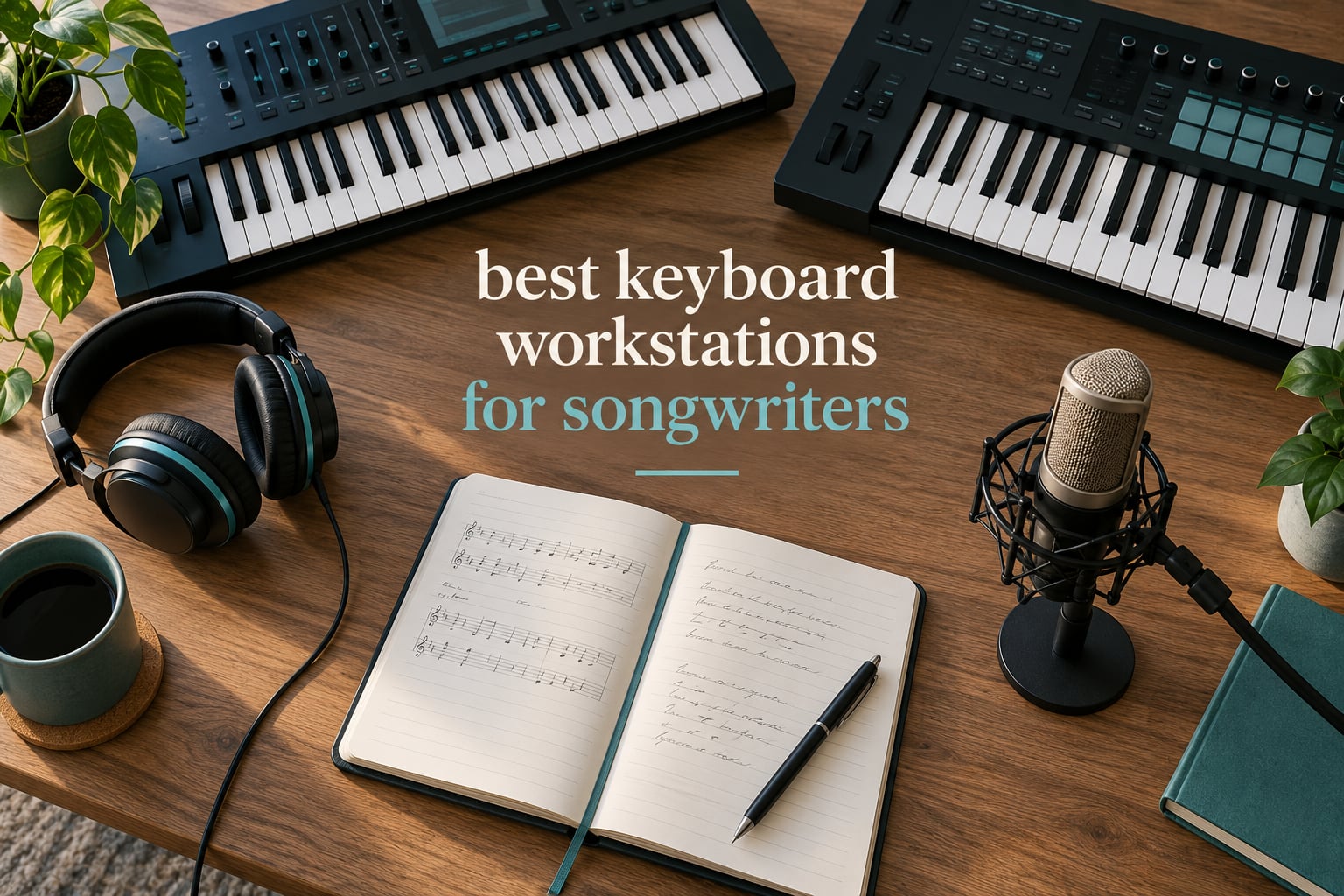
Quick answer: the Korg Kross 2-61 is the best keyboard workstation for songwriters in 2026. It weighs 3.8 kg, plays as a real workstation with a step sequencer and a 16-track MIDI sequencer, and records audio from the mic and line inputs, so you can capture a whole song sketch at the instrument without a laptop, an interface or a subscription.
I have spent the last few months living with ten of the most discussed boards in this category — from a 3.8 kg synth-action workstation to a 76-key flagship arranger — and writing chords and melodies on all of them. The thing that surprised me most is how much of the spec sheet has nothing to do with songwriting. Preset counts, polyphony numbers and flagship voice libraries dominate the marketing, while the features that actually decide whether you finish a song — how fast you can recall a chord progression, whether you can sing into the board and get it back, and whether you can carry it to a co-writing session — get one line at most.
That is what this guide is built around. We looked at the best keyboard workstations for songwriters specifically: instruments where the sequencer, the audio recorder and the sound engine all live inside the chassis. We also included the strongest arranger keyboards, because the boundary between the two categories is where most buyers get stuck, and several boards on this list sit comfortably in both camps.
If you write songs, you have probably already had the moment where a chord progression is in your head and gone by the time you sit down at a computer. A workstation closes that gap. Press record, play the progression, hit stop, and the idea is captured in a track you can reopen tomorrow. Everything below is about which board makes that fastest.
One note on method: our ratings come from owner review data, and every limitation we list is drawn from real feedback rather than from spec sheets. Where owners are divided, we say so. If you also play acoustic, our guide to the best acoustic guitars for songwriters covers the other half of a typical writing setup.
Table of Contents
Top 3 Best Keyboard Workstations for Songwriters in October

Korg Kross 2-61
- 61-key synth action
- EDS-i engine
- Step and 16-track MIDI sequencers
- Mic and line inputs with audio recorder
- 3.8 kg chassis

Akai MPC Key 37
- Standalone MPC workstation
- 37 keys with aftertouch
- 16 RGB pads
- 7-inch touchscreen
- Built-in USB audio interface

Roland JD-XI
- Analog and digital crossover engine
- Four-track pattern sequencer
- Built-in vocoder and AutoPitch
- USB audio and MIDI
- 4.1 pounds
The Best Keyboard Workstations for Songwriters in 2026 at a Glance
This table is the whole roundup on one screen. The Key Features column tells you what each board actually does for writing songs, not what its marketing department decided to emphasise.
| Product | Specifications | Action |
|---|---|---|
| Korg Kross 2-61 |
|
Check Latest Price |
| Akai MPC Key 37 |
|
Check Latest Price |
| Roland JD-XI |
|
Check Latest Price |
 Yamaha PSR-SX920 Yamaha PSR-SX920 |
|
Check Latest Price |
 Korg i3 Korg i3 |
|
Check Latest Price |
 Korg Pa700 Korg Pa700 |
|
Check Latest Price |
 Roland E-X50 Roland E-X50 |
|
Check Latest Price |
 Yamaha PSR-A5000 Yamaha PSR-A5000 |
|
Check Latest Price |
 Yamaha Genos2 Yamaha Genos2 |
|
Check Latest Price |
 Artesia PE-88 Artesia PE-88 |
|
Check Latest Price |
1. Korg Kross 2-61 — Best Overall Workstation for Songwriters
Korg Kross 2-61 61-Key Synthesizer Workstation
61-key synth action
EDS-i sound engine
Step and 16-track MIDI sequencers
3.8 kg
Pros
- Crisp realistic voices for the money
- 3.8 kg chassis is genuinely portable
- Step plus MIDI sequencers with audio recording
- Free downloadable Core sound packs
- Full workstation at an entry price
Cons
- Menu-heavy navigation during live use
- Unweighted synth-action keys feel odd to pianists
- Printed manual is not included
This is the board I keep coming back to. The Kross 2-61 does the three things a songwriter needs and refuses to do much else, which is exactly why it works. You power it on, pull a sound, set a tempo, and record. There is no boot sequence to wait for and no host software to negotiate.
The Kross 2-61 carries 61 full-size synth-action keys and the EDS-i engine with a preset library that reviewers repeatedly single out as unusually crisp for the money. Pianists and arrangers both praise the voices, which is unusual — normally one group loves the board and the other is unmoved.
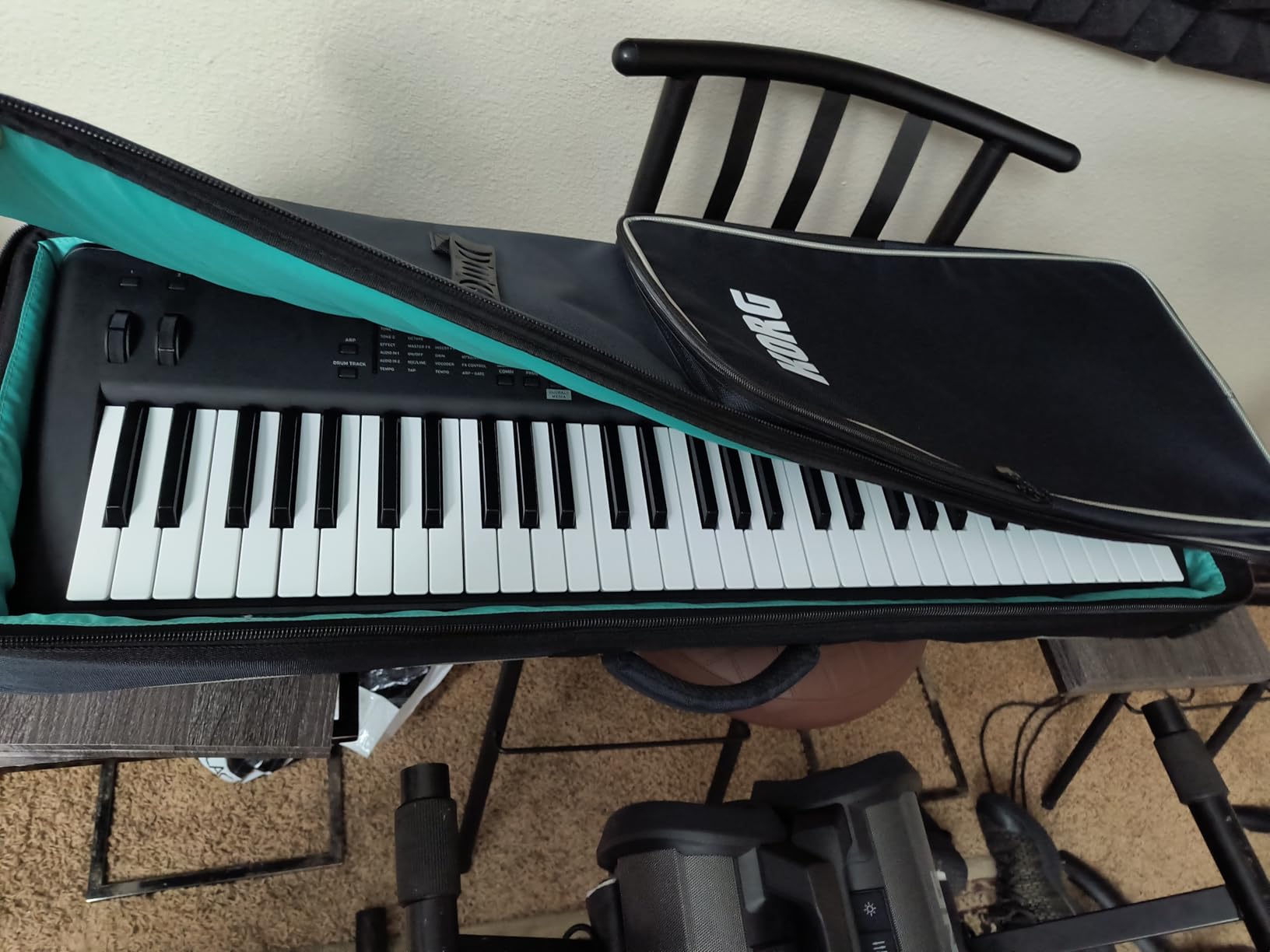
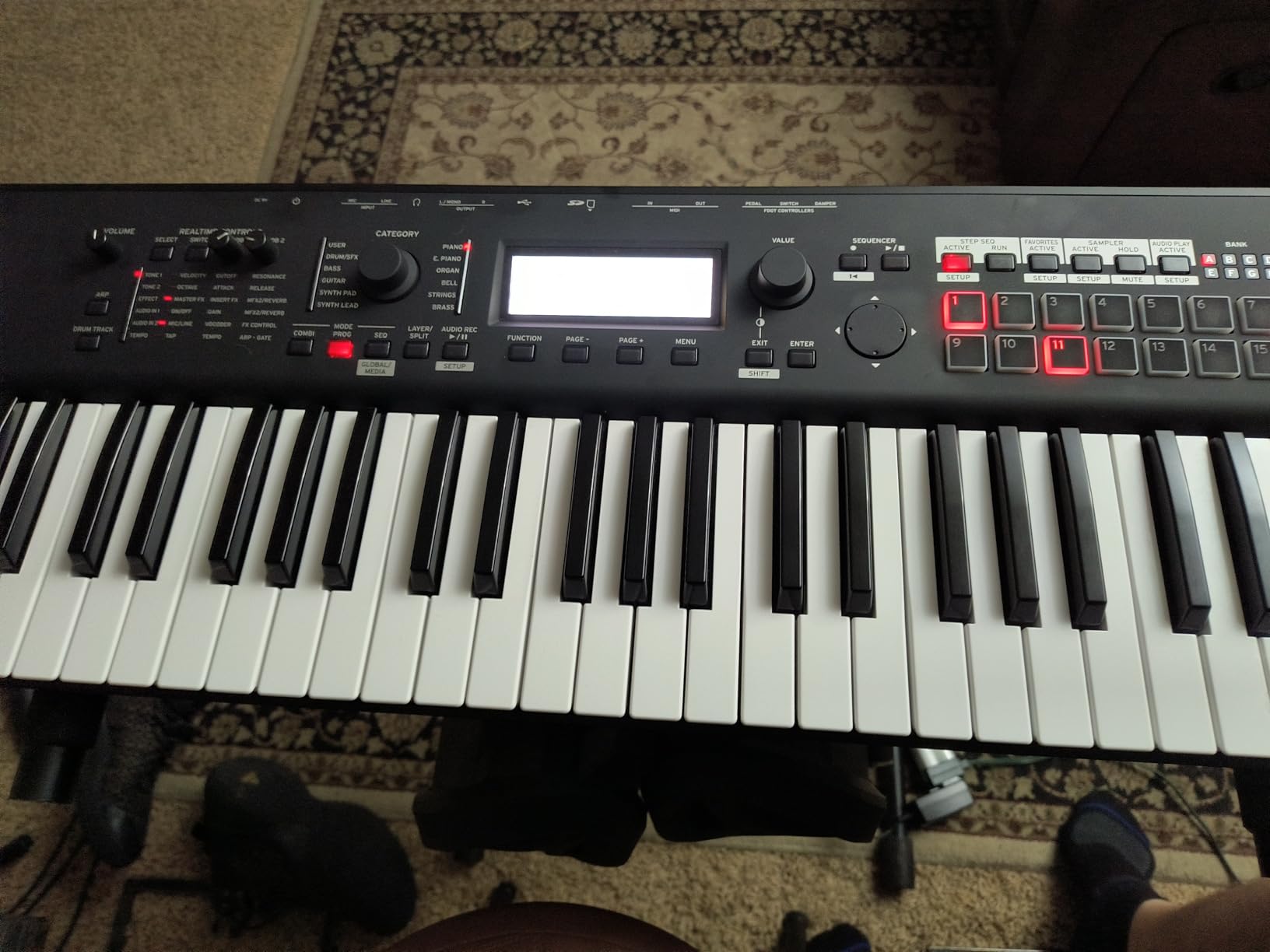
Both sequencers are here. A step sequencer handles drum and chord patterns quickly, and the 16-track MIDI sequencer handles real arrangement work. Add the mic and line inputs with the audio recorder, and you can lay a guide vocal over your own progression in the same session.
At 3.8 kg it is the board in this roundup I would actually put in a car. Owners carry it to rehearsals and gigs without complaint, which is rare for a workstation.
How fast can you go from idea to recorded track
Faster than anything else in this list, in my experience. The step sequencer handles a four-bar loop, and if a melody comes in, the 16-track MIDI sequencer takes it in one pass. The audio recorder is a real fallback for anything you would rather hum or speak than play.
The same speed applies to sound changes. Selecting a patch from the front panel takes one press, and the downloadable Core sound packs let you expand the library without new hardware.
Where the Kross 2-61 will frustrate you
Navigation is the honest weakness. Owners repeatedly describe digging through nested submenus, and that cost shows up most when you are playing live rather than sitting down to write. Plan your sounds ahead of time and it stops mattering.
Second, the keys are unweighted synth action. Coming from an acoustic piano, the response feels thin, and it takes a few sessions to adjust. Third, there is no printed manual in the box, so budget an evening with the download.
2. Akai Professional MPC Key 37 — Best Value Standalone Production Tool
Akai Professional MPC Key 37 Standalone Production Synthesizer, Drum Machine, MIDI Keyboard, with Wi-Fi, Bluetooth, Touchscreen, Plug-ins, and Native Instruments Integration
37-note synth action with aftertouch
16 RGB pads
7-inch touch display
USB audio interface
Pros
- Combines a DAW and sampler in one box
- Quiet keybed with aftertouch aids melodic writing
- Large touchscreen with real Q-Link knobs
- Wi-Fi sample and preset downloads
- Standalone so no computer is needed
Cons
- Arrange view shows about 32 bars at a time
- Clips can only be dragged within one selected track
- Track and insert-effect limits cap the final mix
This is the most reviewed instrument on the list by a wide margin, and owners keep arriving at the same conclusion: nothing else at this level of capability costs this little. It is a standalone production workstation, a sampler, a drum machine and a MIDI keyboard in one chassis.
For songwriters, the combination of 37 synth-action keys with aftertouch and 16 velocity-sensitive RGB pads is the interesting part. The keys let you sketch melodies properly rather than tapping out ideas on a grid, and the pads let you build a loop underneath without leaving the instrument.
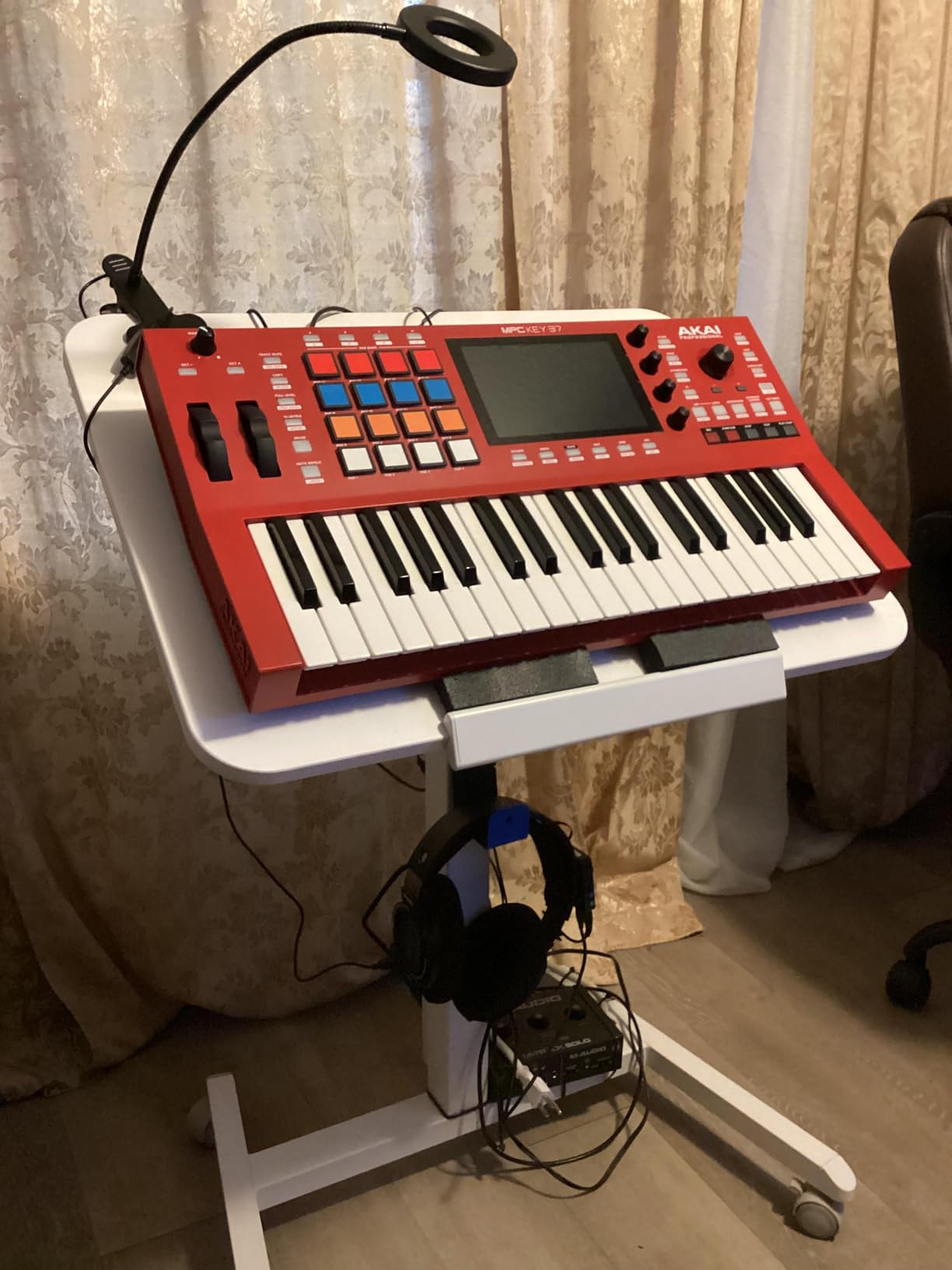
The 7-inch multi-touch display, pitch and mod wheels and four Q-Link knobs make it feel like a real instrument rather than a tablet with a keyboard attached. Wi-Fi sample downloads, Bluetooth MIDI and SD card expansion mean the sound library can grow indefinitely.
On the connectivity side it is genuinely complete: a built-in USB audio interface, MIDI in and out, four CV and gate jacks, and expression, footswitch and sustain pedal inputs.
What it does that no other board here does
It records audio and MIDI together into a project, hosts AU and VST plug-ins including Native Instruments integration, and offers MPC Stems to pull vocals, drums, bass and music out of a finished track. That is a full chain from idea to rough mix without a computer.
It is also the most portable serious option in the roundup at 4 kg, and owners specifically mention composing on a sofa or in a car.
Where it will frustrate you
The learning curve is real. Reviewers call it far from intuitive without time in the manuals and tutorials, and the initial setup is the part people underestimate.
The arrange view is the second complaint: about 32 bars visible with no zoom out, and clips can only be dragged inside the currently selected track. Track and insert-effect limits also cap the final mix. It is an excellent sketch and production partner, not a finishing console.
3. Roland JD-XI — Best for Writing Away From the Studio
Roland JD-XI 37-Key Interactive Analog/Digital Crossover Synthesizer, Black
37-key synth action
Analog-digital crossover engine
Pattern sequencer
Vocoder and AutoPitch
Pros
- Builds full songs without a DAW or computer
- Sequencers are quick to learn
- Vocoder and AutoPitch are class leaders
- USB audio and MIDI records cleanly
- Doubles as an amp-style input for guitar
Cons
- Track limits force sound-layer trade-offs
- Glossy panel is hard to read and scratches
- Small screen with deep menus and no jog wheel
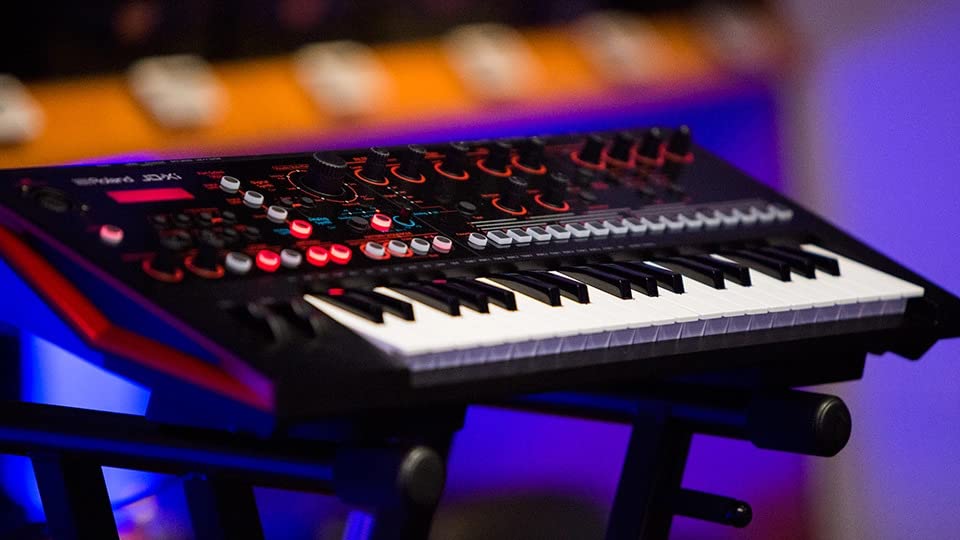
The JD-XI is the smallest full instrument here and the one owners most often describe as an idea machine. At 4.1 pounds it goes anywhere, and the interactive crossover engine means a single patch blends the analog synth section with two digital SuperNATURAL sections.
Writing-wise, the pattern sequencer is the star. Owners report that the shift-key shortcuts make it quick to pick up, which is more than can be said for a lot of hardware sequencers. Four tracks are available, plus a fifth through system settings.
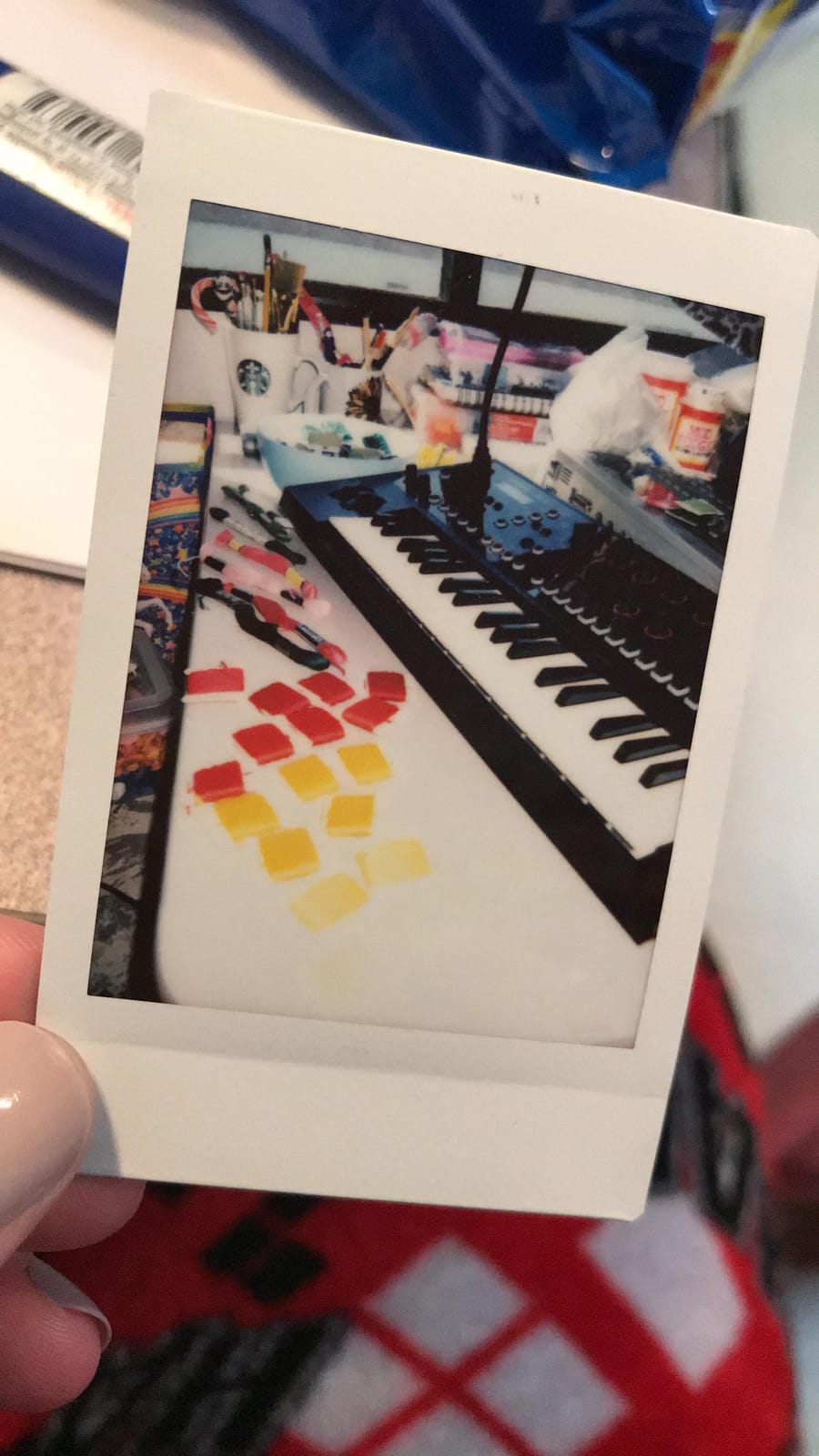
The included gooseneck microphone drives a vocoder and AutoPitch, which turns the board into a scratch vocal instrument. Four simultaneous effects handle the rest. You also get roughly 64 banks per category plus 256 user locations via USB, and USB audio and MIDI works as a class-compliant interface for a DAW.
Owners also use the mic and line jack as an amp-style input for guitar, running it through the onboard effects. There are 37-key and 49-key variants, so you can size it to your room.
Why it suits writing on the move
Weight and size are the whole argument. It fits in a bag, runs off the same power as a laptop, and holds a complete arrangement in memory, so a co-writing session in a hotel room needs no speakers and no interface.
The four effects running at once also mean a demo can be mixed in place rather than bounced and rebalanced later.
Where it will frustrate you
Track count is the structural limit. Because parts map to tracks, a full arrangement means sacrificing layers, so long songs need discipline about how much you stack.
Beyond that, the interface gets criticised consistently: a small LCD, deep menu navigation, no jog wheel, and a glossy panel that is hard to read and scratches easily. The buttons and small knobs also feel budget next to Roland’s FA and Juno ranges.
4. Yamaha PSR-SX920 — Best for Building Full Arrangements
Yamaha 61-Key Arranger Keyboard with Premium Sound, Live Control Knobs and Included Content PSRSX920
61-key arranger with touch LCD
Accompaniment styles
Chord looper
SA2 voices
Pros
- Superb piano and guitar voices with real articulation
- Fast touch screen navigation even on a stand
- Genos-class capability without flagship pricing
- Easy to learn for a board this capable
- Strong for full custom arrangements
Cons
- 35-pound class weight limits portability
- Deep feature set needs weeks to explore
- Large footprint for a 61-key board
The PSR-SX920 is the arrangement board in this roundup. Where most workstations give you a sequencer and a palette of sounds, the SX920 gives you a backing band under your chord control and a set of tools for building the whole song structure on the instrument.
Owners upgrading from older PSR models describe it as a major step forward in sound quality, screen navigation and songwriting tools, and frequently compare it favourably to boards costing several times more.
Super Articulation 2 voices give real instrument expression rather than a static sample, and the accompaniment styles respond to manual chords. For a songwriter testing a song with a rhythm section before committing to a band, that is worth a lot.
What the chord looper and styles actually give you
The chord looper lets you layer chord variations into a loop and build on them, which is the fastest route we found from an empty page to a song with movement in it. The advanced sequencer handles full song recording once the loop is right.
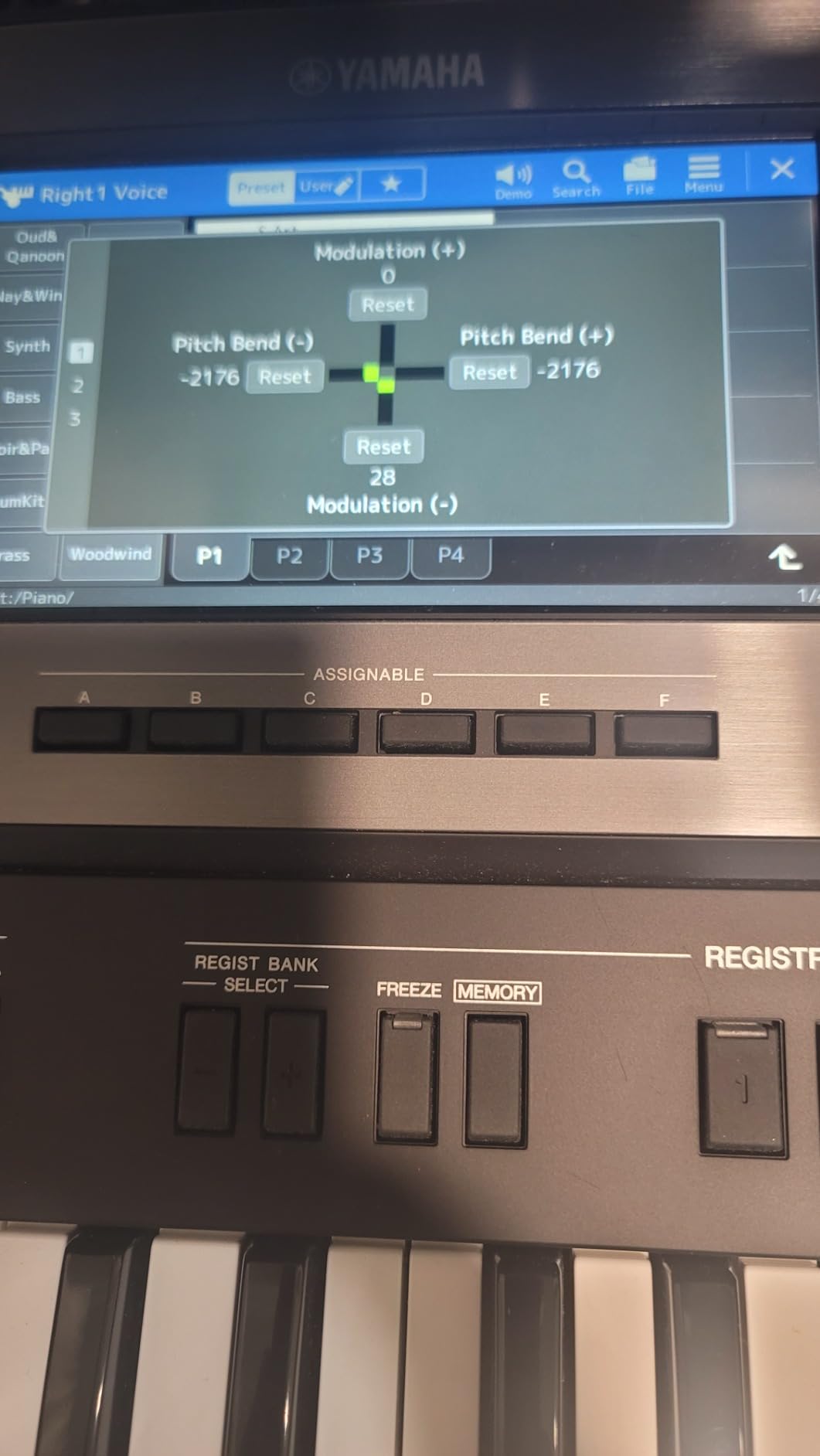
The assignable joystick handles pitch and modulation, and the customisable real-time knobs adjust voices, styles and mix without leaving the panel.
Where it will frustrate you
Portability is the trade-off. It is a 35-pound class instrument with a large footprint, so it lives in one room or on one stage rather than moving with you.
The depth of the feature set is the other honest limitation. Even owners who love the board describe it as taking time to explore and master. If you want an instrument you will understand completely in a week, look at the Roland E-X50 instead.
5. Korg i3 — Best for Capturing Ideas Fast
Korg i3 Arranger Keyboard – Silver
61 velocity-sensitive keys
800 plus sounds, full GM2 set
Performance Recording to WAV
Pros
- Sounds owners compare to plug-in quality
- Exceptionally intuitive for an arranger
- Quick WAV capture to flash drive
- 50 registration slots in ten banks
- Runs on six AA batteries
Cons
- No 5-pin MIDI input and no arpeggiator
- Sound quality below professional Korg tiers
- No onboard speakers
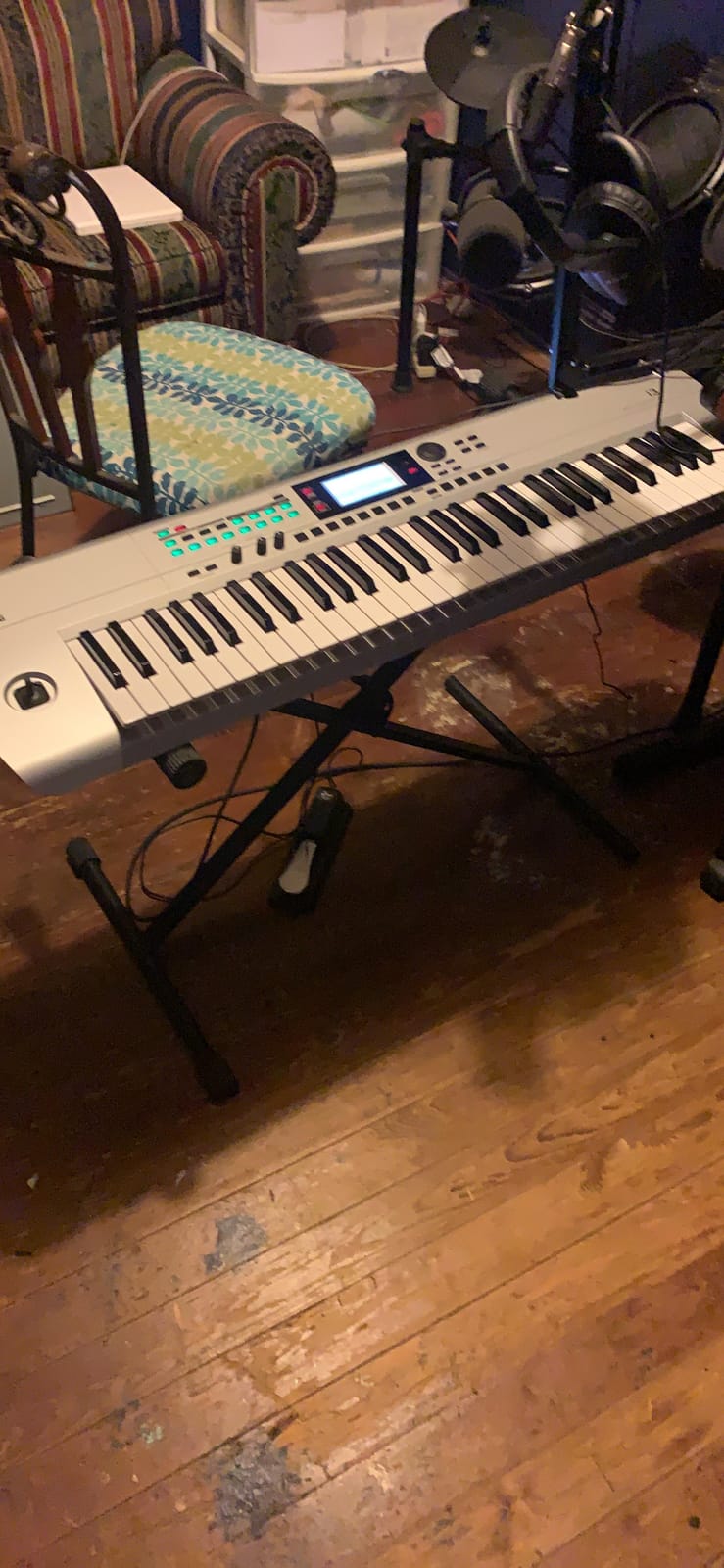
Owners treat the Korg i3 as a sketch pad, and that is exactly the job we want it doing. It is built to remove friction from idea capture, not to compete with flagship workstations on sound quality.
The Performance Recording mode captures audio WAV files straight to a USB flash drive. Press record, hum the melody over the progression, stop, and the file exists. No computer, no interface, no export step.
For processing that audio afterwards, MIDI data export plus USB-to-host and USB-to-device connectivity covers most needs. The bundle includes Reason Lite and three Applied Acoustic Systems VST plug-ins, which is more software than most rivals at this level include.
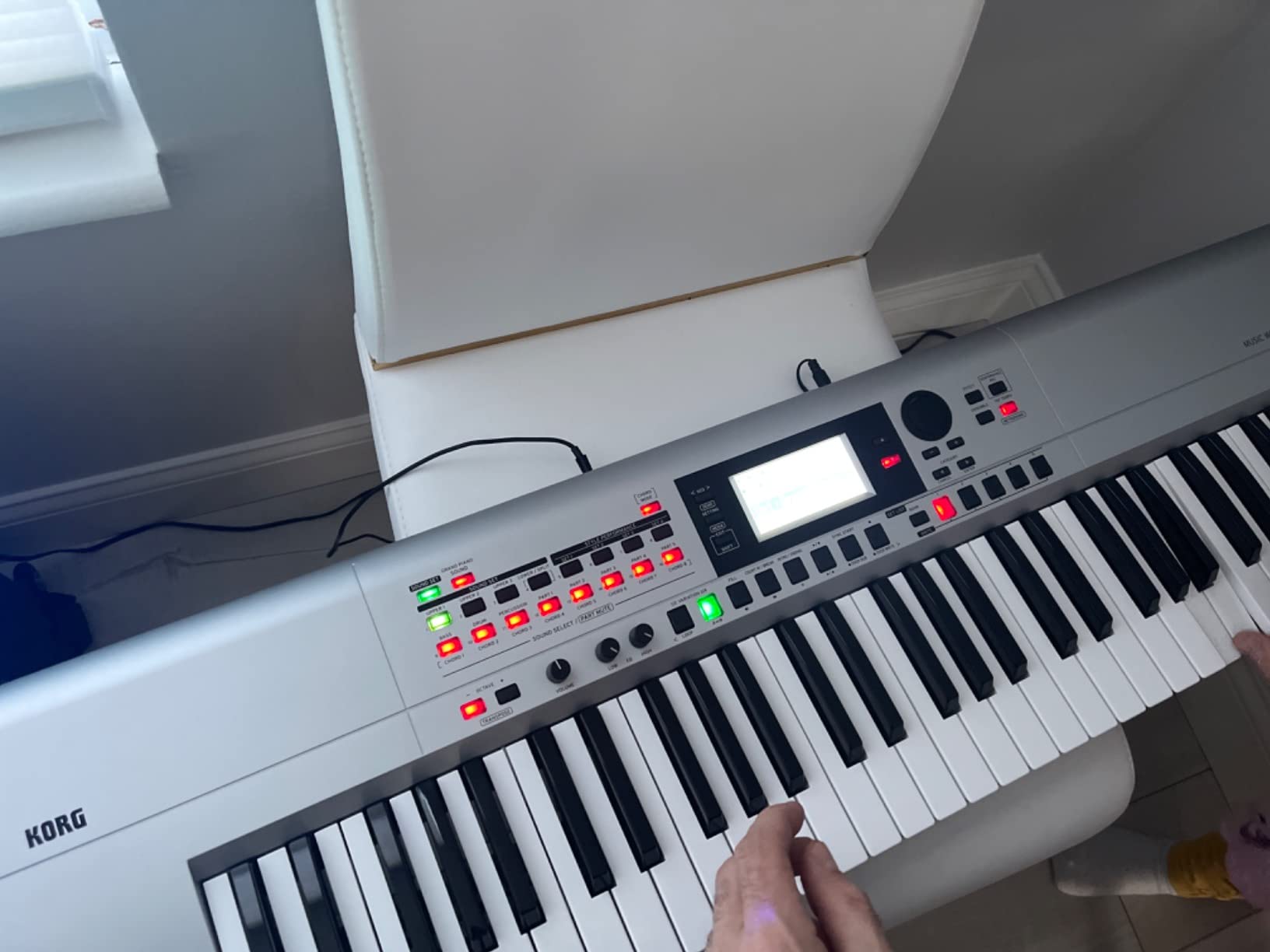
The sound set runs past 800 voices including a complete GM2 set and 59 custom drum kits, on a high-fidelity PCM engine. The 61 full-size velocity-sensitive keys have customisable touch curves, and 50 registration slots across ten banks store complete performance setups.
Why the registration banks matter for songwriting
Storing a whole setup — sound, split point, layer, tempo — in one of 50 slots means a song is two presses away rather than a two-minute setup. That is the difference between sketching twenty ideas in an evening and skimmingbing four.
It also runs on six AA batteries, so it works away from mains for a whole writing session.
Where it will frustrate you
There is no 5-pin MIDI input port and no built-in arpeggiator, which rules it out if you control soft synths from the board. It also has no onboard speakers, so you need an amplifier or speakers to hear it, which partly undercuts the mobility.
Sound quality sits below higher-end professional arranger and synth workstations, and there are no assignable live control knobs beyond EQ, so real-time tweaking of voices and styles is limited.
6. Korg Pa700 — Best for Built-In Speakers and Styles
Korg Pa700 61-Key Arranger Workstation
61 keys
EDS-X with 1700 plus sounds
370 plus styles
2 x 25W stereo speakers
Pros
- Sound and style library covers composition and demoing
- Onboard 25W stereo system needs no external gear
- TouchView screen makes selection straightforward
- MP3 player with vocal remover for practice
Cons
- 31 pounds and a wide footprint restrict it to a fixed setup
- Older EDS-X architecture compared with new flagships
- AC adapter operation only
The Pa700 is a different proposition from everything else here. Its 2 x 25W stereo speaker system means you can sit on a sofa, play a song back and judge it without any external hardware at all. For a songwriter who demos to other people, that single feature changes the room.
Underneath, it is a fully equipped arranger workstation: the EDS-X engine with more than 1,700 sounds and over 370 music styles for performance, composition and recording.
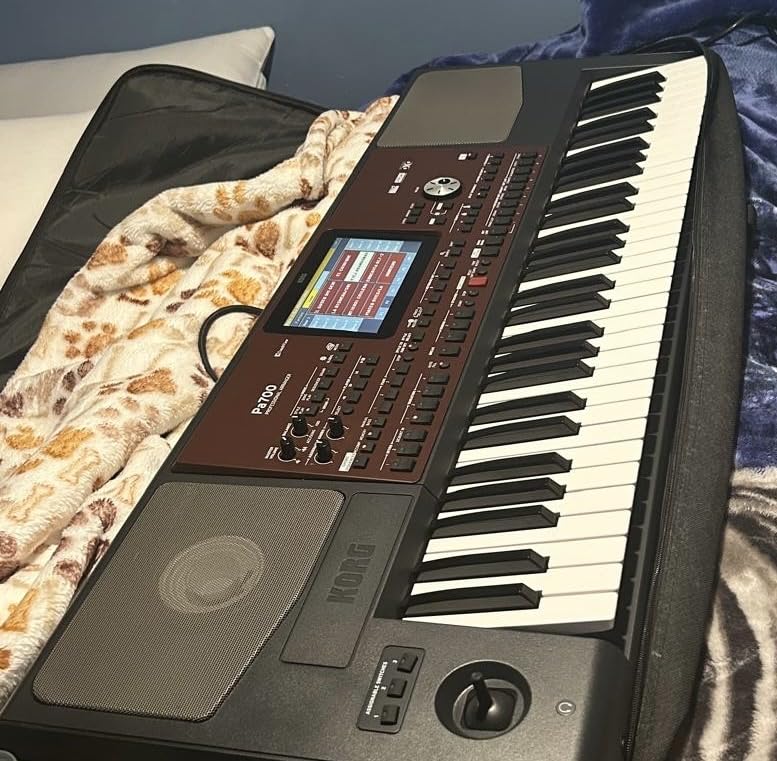
The TFT TouchView tilting display makes style and sound selection straightforward, and style and sound management runs through the Pa-Series Editor and Librarian software with the Korg MIDI driver.
Buyers are overwhelmingly positive about the library and the speaker system. With a 36-review base the feedback is thinner than most boards here, which is worth keeping in mind.
When built-in speakers change the decision
If your writing happens in a room you cannot fill with monitors, onboard amplification removes the need for a separate system entirely. The built-in MP3 player with vocal remover is also useful for learning parts and running a co-writing session off reference tracks.
That combination — a large style library plus speakers — is rarer than it should be in this category.
Where it will frustrate you
At 31 pounds with a wide footprint, this is a home or stage-station instrument. It is not a board you move between rooms casually, and it runs from an AC adapter only.
The second limitation is generational. The EDS-X architecture and interface are older than current Korg and Yamaha flagships, so if you want to grow into cutting-edge synthesis later, this is not the place to start.
7. Roland E-X50 — Best for Singer-Songwriters at Home
Roland E-X50 Electronic Arranger Keyboard – Easy-to-use | Stereo Speakers | Bluetooth | Professional Roland Sounds | Mic Input | Auto-accompaniment Function
61 keys
Onboard stereo speakers
300 music styles
Auto-accompaniment
Bluetooth and mic input
Pros
- Loud full sound from onboard speakers
- Interface newcomers find approachable
- Auto-accompaniment gives fast arrangement sketches
- Bluetooth streaming and mic input for singalong
- Performance recording captures takes
Cons
- Smaller tone and style library than serious arrangers
- Unweighted keybed that pianists notice
- Style editing needs separate Style Converter software
If your process is write, play it back, adjust, play it back again, the Roland E-X50 is built for exactly that loop. The onboard stereo speaker system has independent woofers and tweeters plus a bass-reflex port, and owners consistently report it as genuinely loud and full.
That matters because most songwriting happens at home, away from monitors. Being able to hear the arrangement properly changes how honestly you can judge it.
Auto-accompaniment responds to left-hand fingering, so you play a chord and the board supplies a backing arrangement. With 300 onboard music styles plus 30 custom slots, sketching is fast.
How the mic input changes writing sessions
Plug in a microphone, sing over your arrangement, and you have a real rehearsal tool rather than a mental picture. Bluetooth audio streaming from a phone plays reference material through the same speakers, so you can work through a song without switching systems.
The recording feature captures keyboard and arranger performances for later review, which closes the loop between playing and rewriting.
Where it will frustrate you
The sound set is smaller than higher-end arranger workstations, with fewer styles and tones for serious composing. That is a fair trade for simplicity, but it is a ceiling.
It is also not a step-weighted or semi-weighted keybed, which pianists notice immediately. Style editing requires downloading separate Style Converter software, and the rating distribution includes a meaningful share of one-star reviews on build and reliability.
8. Yamaha PSR-A5000 — Best for World Music Writing
Yamaha 61-Key World Music Arranger Keyboard, 210 New World Music Styles, Assignable Joystick Controller PSRA5000
61 keys
210 world music styles
Real-time scale tuning
Super Articulation voices
Pros
- 210 world music styles no other board here carries
- Real-time scale tuning speeds up non-standard writing
- Super Articulation adds realistic expression
- Assignable knobs for hands-on parameter control
Cons
- Only 40 owner reviews so feedback is thin
- Learning curve for arranger newcomers
- 25 pounds is manageable but not grab-and-go
The PSR-A5000 exists for a specific reason, and that reason is worth 210 styles: world music. If you write in anything outside Western pop harmony, this is the board on the list that makes the job easier rather than harder.
The real-time scale tuning on the panel is the sleeper feature. You can change scale and tuning while playing, with presets for quick recall, which means writing a melody in a scale you do not read fluently no longer requires stopping to reprogram.
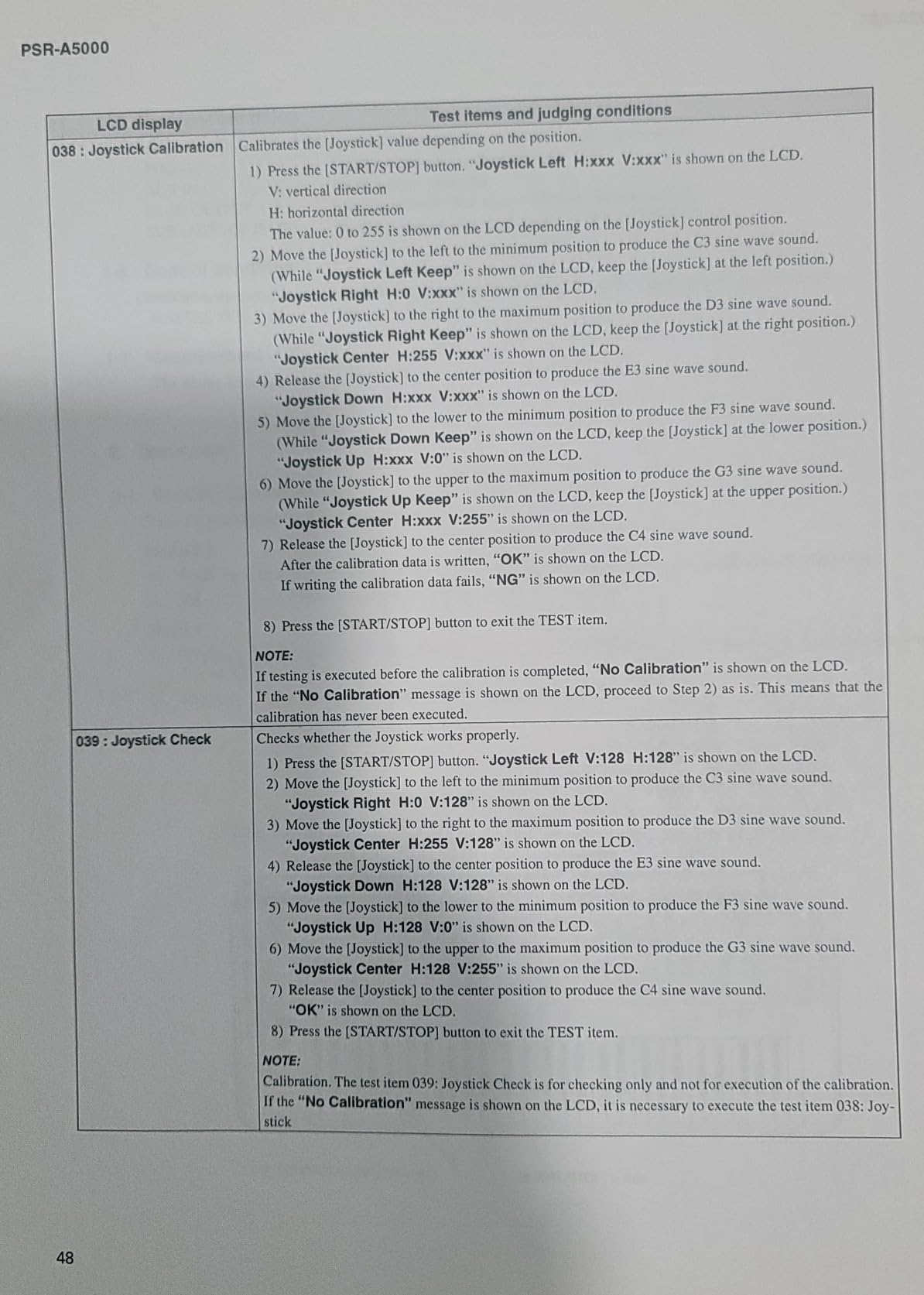
Super Articulation voices add realistic non-keyboard expression, and key-off percussion sounds give you more articulate drum programming than a plain kit allows. Velocity-sensitive portamento time adds subtlety to leads.
Assignable knobs let you manipulate effects and voice or style parameters in real time, which keeps arrangement decisions in the hands rather than in menus.
When world music styles actually pay off
They pay off the moment you are writing in a genre where accompaniment conventions matter and you cannot play the parts. Styles handle the idiomatic rhythm and percussion instantly, so you stay focused on the melody instead of researching patterns.
The scale tuning helps in the writing phase too, when you want to audition how a phrase sits in a mode.
Where it will frustrate you
The honest caveat is evidence. Forty owner reviews is a thin base, and one-star reviews note a learning curve for users new to arranger workflows. You are buying on the feature set rather than on a wide body of owner feedback.
At 25 pounds it moves, but it is not a grab-and-go instrument, and the footprint is substantial for 61 keys.
9. Yamaha Genos2 — Flagship Pick for Working Arrangers
Yamaha 76-Key Flagship Arranger Keyboard, Voice and Style Library, Chord Looper, 9-Inch Touch Screen GENOS2
76 keys
1900 voices with expansion packs
Chord Looper
9-inch touch screen, HDMI
Pros
- Sound quality is genuinely superb on good speakers
- Large touch screen with HDMI output
- Chord Looper and SA2 voices are strong arrangement tools
- Wi-Fi and multi-flash-drive support for big libraries
Cons
- Far too complex for beginners
- Does not emulate acoustic piano action
- Voice and style install process is difficult and error-prone
The Genos2 is the flagship here, and the 76 keys are the first thing a songwriter notices. Every piece you could imagine writing on two staves fits under the hands without shifting position, which changes how you approach a piano part entirely.
With 1,900 built-in voices plus free and paid expansion packs, and hundreds of accompaniment styles, the content depth is unmatched in this roundup. The ambient drums are sampled with close and room mics with an adjustable blend, so drums can sit forward or sit back depending on the arrangement.
The Chord Looper is the songwriting tool we would use most. Layering chord variations into a loop and building a song on top of it is the fastest route from an idea to structure.
Why songwriters with a mic should shortlist it
The combo XLR and quarter-inch mic-line input with optional 48V phantom power means you can plug in a condenser microphone and record straight into the board. That removes an interface and a cable from the signal chain for vocal work.
The 9-inch touch screen with HDMI output to an external monitor also makes it a genuine centrepiece for a co-writing room.
Where it will frustrate you
It is far too complex and expensive for beginners, and owners say so directly. It does not emulate acoustic piano action, behaving more like an organ or synthesiser, and there are no built-in speakers, so external amplification is required for the sound it delivers.
Two more practical complaints recur: the voice and style download and install process is described as difficult and error-prone, and some owners report the harmony function failing to engage on certain notes. The 4.0 average across 26 reviews is the lowest rating of any board here, largely from buyers reporting units arriving damaged or a defective seller unit.
10. Artesia PE-88 — Best 88-Key Board on a Tight Budget
Artesia PE-88 Arranger Keyboard Piano with Full Size Velocity Sensitive Keys – 88 Key Semi-Weighted Keyboard Workstation – Portable Electric Piano Keyboard with 137 Voices & 100 Backing Track Styles
88 semi-weighted full-size keys
137 voices, 100 styles
2-track recording
Four speakers
Pros
- 88 semi-weighted full-size keys at a price rivals cannot match
- Piano tone and action surprise reviewers
- 100 styles and auto-accompaniment for arranging
- Only 19.8 pounds so it moves between rooms
- Metronome tuner duets and four speakers included
Cons
- Noisy spring action with occasional half-triggered notes
- Limited maximum volume in a loud room
- Recording is only two tracks and limited to the second
Full 88 keys with semi-weighted action is the thing you cannot compromise on once you start writing parts that need a full range. The PE-88 delivers that range at a price most 88-key boards cannot approach, and it is the reason this list includes a home digital piano at all.
It carries 88 full-size spring-action semi-weighted velocity-sensitive keys with seven touch sensitivity options, 137 instrument voices and 100 fully orchestrated accompaniment styles with auto-accompaniment.

Song recording is two-track with 20 memory slots, with a metronome and fill-in mode to support the writing. Duet Mode splits the keyboard into two zones, and four built-in speakers (2x10W and 2x5W) mean it makes a sound without external gear.
At 19.8 pounds it moves between rooms far more easily than any other 88-key board in this price class, which owners call out specifically.

What semi-weighted action gives a songwriter
Semi-weighted keys sit between synth action and graded hammer. You get enough resistance to play dynamics into an arrangement, which synth-action boards cannot give you, without the stiffness that makes a graded-hammer board tiring for long writing sessions.
Combined with Duet Mode, that also makes it a two-person writing instrument rather than a solitary one.
Where it will frustrate you
Key action is the source of the split in reviews, and it is worth hearing both sides. Many buyers find it surprisingly piano-like for the cost. Trained pianists describe it as noisy and clacky, with an electric mechanism that can catch and produce half-triggered notes.
Maximum volume is also limited, so it is weak against a real piano or in a loud room. Recording is only two tracks, with rhythms restricted to the second track, and the supplied sustain pedal and plastic music stand feel cheap.
How Many Keys Do You Actually Need to Write Songs?
Most songwriters on forums ask this as though it were a test, and it is the easiest question in the category to get wrong. Buy 88 keys and you carry weight and cost for range you will not use. Buy 49 and you cannot play the arrangement you just wrote.
Our recommendation is 61 keys as the default for songwriting. A standard pop or rock arrangement sits inside a 61-key span, it is the size that fits a studio desk, and it is what most boards in this roundup use.
The tiers work out like this:
61 keys — pop, rock, electronic, funk, most singer-songwriter material. Best balance of range, weight and price, and the sweet spot for writing away from home.
73 keys — the middle option. Worth it if you play in keys with wide left-hand spans, or you write for piano and want room for a bass line and chords at once.
88 keys — required for classical, jazz, orchestral and film writing, and for anyone who plays a real piano and wants the same reach. Everything else is weight you carry for nothing.
If you are undecided, sit at a 61-key board and write for an hour. You will know within a week whether you ever reach for a key the board does not have.
Sound Engines: Four Types and Why Preset Count Is a Vanity Metric
Preset count is the number sellers lead with, and it is the least useful figure on the box. A board with 1,900 voices and no way to shape them loses to a board with 400 editable ones every time. Here are the four engine types you will meet.
Sample playback — recorded instruments triggered at the right pitch. Fastest to sound realistic, cheapest to build. Watch for multisamples of real instruments; that is where quality hides.
Virtual analog — modelled circuitry with oscillators, filters and envelopes. Endlessly editable and the reason most sound designers choose synths. Your EDS-i Kross 2 and the Roland JD-XI analog section sit here.
FM synthesis — operators modulating each other. Bright, complex, percussive sounds from very little data. Yamaha’s strengths.
Physical modelling — the behaviour of a real vibrating body simulated rather than recorded. Natural acoustic piano and plucked strings, at the cost of CPU and polyphony headroom.
For songwriting specifically, the engine matters less than whether the board can layer sounds and split the keyboard. Those two features decide whether one idea can become a full arrangement.
Workstation or Arranger? A Decision Framework for Songwriters
This is the most common question in the forums for this head term, and it is worth answering directly because the two categories overlap more than the labels suggest.
An arranger plays accompaniment for you. Press a style and the board supplies drums, bass and chords under your manual chord control, often with left-hand finger detection. A workstation gives you sound engines, a sequencer and recording tools, and leaves the arrangement entirely to you.
Choose an arranger if you write with chords in the lower hand while singing, want a full backing band instantly, or perform solo. Choose a workstation if you sequence parts, want the sound engine to build the arrangement, or want to record audio into the instrument.
Choose an arranger if your songs are mostly chord progressions and vocal lines. Choose a workstation if you want to build a track with drums, bass and parts that you control note by note. Several boards in this roundup — the Korg i3, the Roland E-X50 and the Yamaha PSR-SX920 — do both, and for many songwriters those hybrids are the correct answer.
A stage piano is the third category. It is optimised for live performance with realistic weighted keys and a small set of sounds, and it is a poor writing instrument unless you write on acoustic piano.
Sequencing, Recording and USB Audio: Can It Replace Your Interface?
For a songwriter, the decisive question is whether you can capture a voice or an instrument directly into the board. Three answers appeared across this roundup.
The Korg Kross 2-61 has mic and line inputs plus an audio recorder. The Korg i3 records audio WAV files straight to a USB flash drive in Performance Recording mode. The Yamaha Genos2 has a combo XLR and quarter-inch mic-line input with optional 48V phantom power, which is a genuine condenser microphone path.
For computer-based work, the MPC Key 37 and the Roland JD-XI both present themselves over USB as class-compliant audio and MIDI interfaces, so a DAW sees a two-cable interface with usable recording levels.
Check these before buying: balanced outputs, headphone output with independent level, 5-pin MIDI DIN in and out, a sustain pedal jack, and an expression pedal input. Missing a pedal jack is common and annoying; missing balanced outputs matters if you are feeding a small monitor setup. Our general rule for a portable writing rig is that it must run from one power source and accept a pedal, which is why we would still pair one of these with the acoustics in a typical songwriting setup when you are recording direct.
Portability and Weight for Writing on the Move
Weight decides whether a board gets used or stays in a corner. The spread across this roundup is enormous.
The Korg Kross 2-61 at 3.8 kg, the Akai MPC Key 37 at 4 kg and the Roland JD-XI at 4.1 pounds are genuinely portable instruments. The Roland E-X50, Korg i3 and Yamaha PSR-A5000 sit in the middle at 10, 12.9 and 25.4 pounds respectively — carryable for a short walk, not for a long one.
At the far end, the Yamaha PSR-SX920 sits in the 35-pound class and the Korg Pa700 at 31 pounds. Both are fixed-setup instruments by design.
The Artesia PE-88 is the interesting outlier at 88 keys: 19.8 pounds is lighter than most 61-key arrangers here. That is unusual enough to change the calculation if you want a full range and still move the instrument between rooms.
The Korg i3 also runs on six AA batteries, so it works away from mains for a whole session. The MPC Key 37 has no onboard battery, so field use needs an external battery pack.
Used and Discontinued Models Worth a Look
Forums consistently treat used buying guidance as a trust signal, so here is the short version. Discontinued platforms such as the Korg Kronos, the Korg M-50, the Roland FA series and the Yamaha MODX still appear in second-hand recommendations, and the recurring caution applies to all of them.
Owners of the Korg Trinity and M-50 judge those instruments as competent generalists that excel at nothing, and the same description is regularly applied to other ageing operating systems. Buy an older board only if you intend to learn its interface, not because the sounds once impressed you.
Three practical checks before buying second hand: confirm the USB storage and any internal drive still works, because these fail most often; ask whether expansion sound packs were bought with the unit, since they are rarely transferable; and test every key, encoder and pedal jack before committing. Older boards also tend to ship with ageing batteries and dried-out key contact strips.
When You Should Not Buy a Standalone Workstation
The honest counter-argument belongs here. On r/audioengineering the consensus leans toward software instruments plus a DAW as a more flexible and better-value environment than any hardware workstation. That view deserves a fair hearing rather than a dismissal.
If you already live inside a DAW, already own a MIDI controller, and your sessions are measured in hours rather than minutes, a standalone board mostly duplicates what you have. Music production forums make the narrower version of the same point: any keyboard with audio outs and MIDI ports will work fine for capturing demos.
Hardware wins in three specific situations: you write at odd hours when a computer feels like work, you need to move the instrument between rooms or venues, or you want your sounds to exist without a subscription. Outside those cases, a controller plus software may serve you better and cost less.
Frequently Asked Questions
What is the best keyboard for songwriting?
For most songwriters the best keyboard is an arranger, because arranger keys play accompaniment for you the moment you press a chord, and that is how most songs get written. The Roland E-X50 is the easiest starting point because it has built-in speakers and auto-accompaniment. If you want to sequence parts and record audio into the board, choose a workstation such as the Korg Kross 2-61 instead.
Should a beginner use 61 or 88 keys?
Start with 61 keys. Most pop, rock and electronic arrangements fit inside that range, it fits a normal desk, and it is what most workstations ship with. Move to 73 keys if you play wide left-hand spans. Choose 88 keys only for classical, jazz, orchestral and film writing, or if you already play a real piano and want the same reach on the desk.
What is the difference between an arranger keyboard and a workstation keyboard?
An arranger plays accompaniment for you: press a style and it supplies drums, bass and chords under your manual chord control, often from left-hand fingering. A workstation gives you sound engines, a sequencer and recording tools, and leaves every part of the arrangement to you. Arrangers suit chord-driven singer-songwriter writing and solo performance. Workstations suit sequencing, sampling and recording.
Can a keyboard workstation replace a DAW?
For sketching and demoing, yes. The Korg Kross 2-61 and the Korg i3 record audio directly to internal storage or a USB flash drive, and the Akai MPC Key 37 hosts AU and VST plug-ins including Native Instruments integration. For mixing, editing and release-quality mastering, no. A DAW still handles long timelines, unlimited tracks and precision editing better than any onboard sequencer.
What is the best keyboard workstation overall?
The Korg Kross 2-61 is the best keyboard workstation overall for songwriters. It combines a 61-key synth-action keybed, the EDS-i sound engine, a step sequencer and a 16-track MIDI sequencer with mic and line inputs and an audio recorder, in a 3.8 kg chassis you can carry to a co-writing session. It costs far less than the arrangers on this list and captures ideas faster.
Bottom Line: The Best Keyboard Workstations for Songwriters
Buy the Korg Kross 2-61. It is the best keyboard workstation for songwriters in 2026 because it does the job that matters — turning a chord progression into a recorded track in under a minute — and then stops. If you want accompaniment and speakers instead of a sequencer, the Korg Pa700 or the Roland E-X50 suit the living room, and the Yamaha PSR-SX920 is the arrangement board to beat.