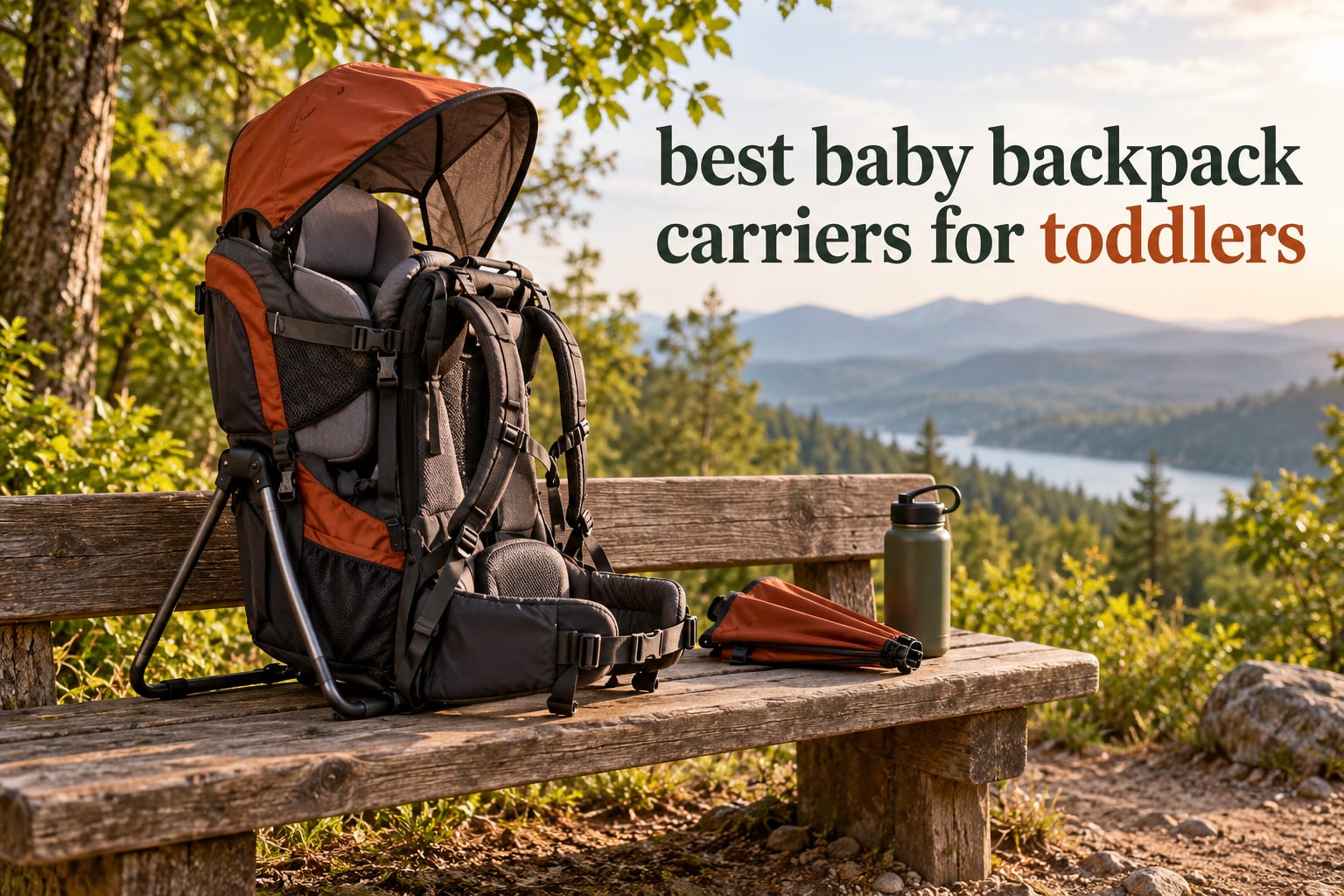
The best baby backpack carriers for toddlers right now is the ClevrPlus Cross Country. It weighs 5.5 pounds, carries children from 9 to 48 months, and its hip belt and lumbar padding keep the load off your shoulders. Every carrier below was checked against the same criteria, so you can match one to the way you actually hike.
A framed child carrier is a small backpack with the main compartment replaced by a padded seat, a five-point strap system and stirrups that hold a toddler upright on your back. An internal frame carries that weight down to a belt sitting on the bony tops of your hips. That last part decides everything, because a carrier that dumps the load onto your shoulders turns a two-hour walk into a recovery day.
We spent weeks reading the review data behind all twelve models here and comparing frame type, empty weight, belt width, seat adjustability, weather cover and storage layout. Nothing in this list is filler: each one earns its place by doing something the others do not, whether that is packing flat for a flight or holding a 45-pound child.
If your toddler is still under six months and has not yet got steady head control, none of these are the right tool yet. Start with a soft-structured carrier instead, and our guide to the best baby carriers for everyday wear covers that stage properly.
Table of Contents
Top 3 Picks for Best Baby Backpack Carriers for Toddlers in 2026
Three models come up again and again when parents talk about framed carriers: one for all-round value, one for sharing between two caregivers, and one for getting a squirming toddler in and out fast.
ClevrPlus Cross Country
- 5.5 lb one-piece frame
- Up to 33 lbs child
- Sun canopy and rain cover

Luvdbaby Hiking Baby Carrier
- Height adjustable to 40 lbs
- Insulated bottle pocket
- Removable sun visor
The ClevrPlus Cross Country takes the top slot because it does the fundamentals well: a genuinely light 5.5-pound frame, a wide belt with lumbar padding, and both a canopy and a rain cover in the box. It is the one we would hand to a parent who wants a first carrier and plans to hike weekly.
The Luvdbaby carrier is the smarter buy if two adults of different sizes will share it, since its height adjustment spans a wide range and the insulated pocket keeps bottles cold on a long walk. The ClevrPlus Deluxe solves a different problem: its removable mini backpack gives a toddler their own pack to carry, which turns a fight into a treat.
All 12 Toddler Backpack Carriers at a Glance in October
Every model below carries a child in the same broad weight band, so the useful comparison is between empty weight, belt design, storage and travel packability. Use this table as the shortlist, then read the full review for the two or three that fit your trips.
| Product | Specifications | Action |
|---|---|---|
| ClevrPlus Cross Country |
|
Check Latest Price |
| Luvdbaby Hiking Baby Carrier |
|
Check Latest Price |
| ClevrPlus Deluxe |
|
Check Latest Price |
 besrey Toddler Hiking Backpack besrey Toddler Hiking Backpack |
|
Check Latest Price |
 OE OUR EXPEDITION Shoulder Carrier OE OUR EXPEDITION Shoulder Carrier |
|
Check Latest Price |
 Kidpprod Baby Backpack Carrier Kidpprod Baby Backpack Carrier |
|
Check Latest Price |
 WIPHA Toddler Hiking Carrier WIPHA Toddler Hiking Carrier |
|
Check Latest Price |
 Deuter Kid Comfort Deuter Kid Comfort |
|
Check Latest Price |
 WIPHA Aluminum Frame Carrier WIPHA Aluminum Frame Carrier |
|
Check Latest Price |
 Osprey Poco LT Osprey Poco LT |
|
Check Latest Price |
 WIPHA Mesh Back Carrier WIPHA Mesh Back Carrier |
|
Check Latest Price |
 Chicco SmartSupport Chicco SmartSupport |
|
Check Latest Price |
How We Picked These Toddler Backpack Carriers
Our approach is specification-led and review-led rather than lab-tested. We compared the published details for all twelve carriers: frame material and weight, child weight rating, belt and lumbar design, seat adjustment, weather cover, storage volume and packed size. Then we read the owner feedback attached to each product to see which weaknesses show up repeatedly and which are one-off complaints.
A carrier only earns a place here if the belt genuinely moves load to the hips, the child restraint holds a squirming toddler, and the thing survives ordinary use. We also flag where we disagree with the marketing copy, such as weight ratings that describe total load rather than child weight alone.
1. ClevrPlus Cross Country – The Best All-Rounder
ClevrPlus Cross Country Baby Backpack Carrier, Grey, Toddler Hiking Backpack with Comfortable Seat, Adjustable Straps & Belt, Foldable Frame Lightweight Large Capacity Child Carrier for Outdoor
5.5 lb frame
One-piece design
9-48 months up to 33 lbs
Sun canopy and rain cover
Pros
- Light 5.5 lb one-piece frame
- Hip belt and lumbar padding lift load off the shoulders
- Straps adjust across a wide range of adult sizes
- Toddlers often fall asleep in the seat
- Roost pocket storage with side bottle holders
Cons
- Weight can creep onto the upper and mid back over long hikes
- Belt may not tighten enough for shorter adults
- Seat runs narrow for larger toddlers
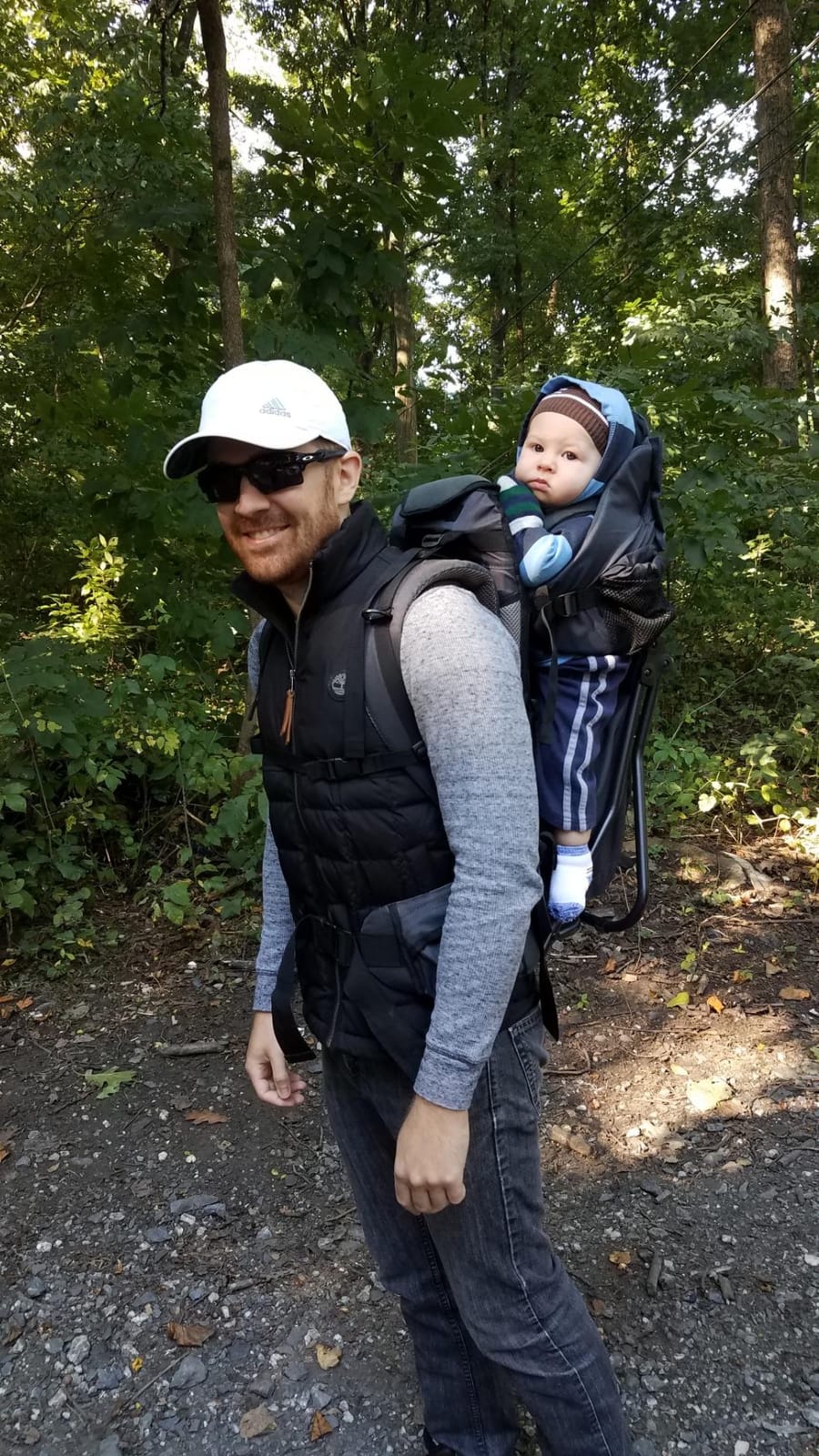
This is the carrier we kept reaching for. At 5.5 pounds it is light enough that lifting it onto your shoulders with a child already strapped in is realistic on uneven ground, which matters more than the spec sheet suggests. The one-piece frame feels sturdier than the folded-tube construction used by cheaper packs.
The adjustable seat is the quiet strength. It grows with your child from 9 to 48 months, so the same carrier covers the toddler years rather than expiring at 18 months. Owners frequently mention naps happening in the seat, which tells you the padding and the recline angle are doing their job.
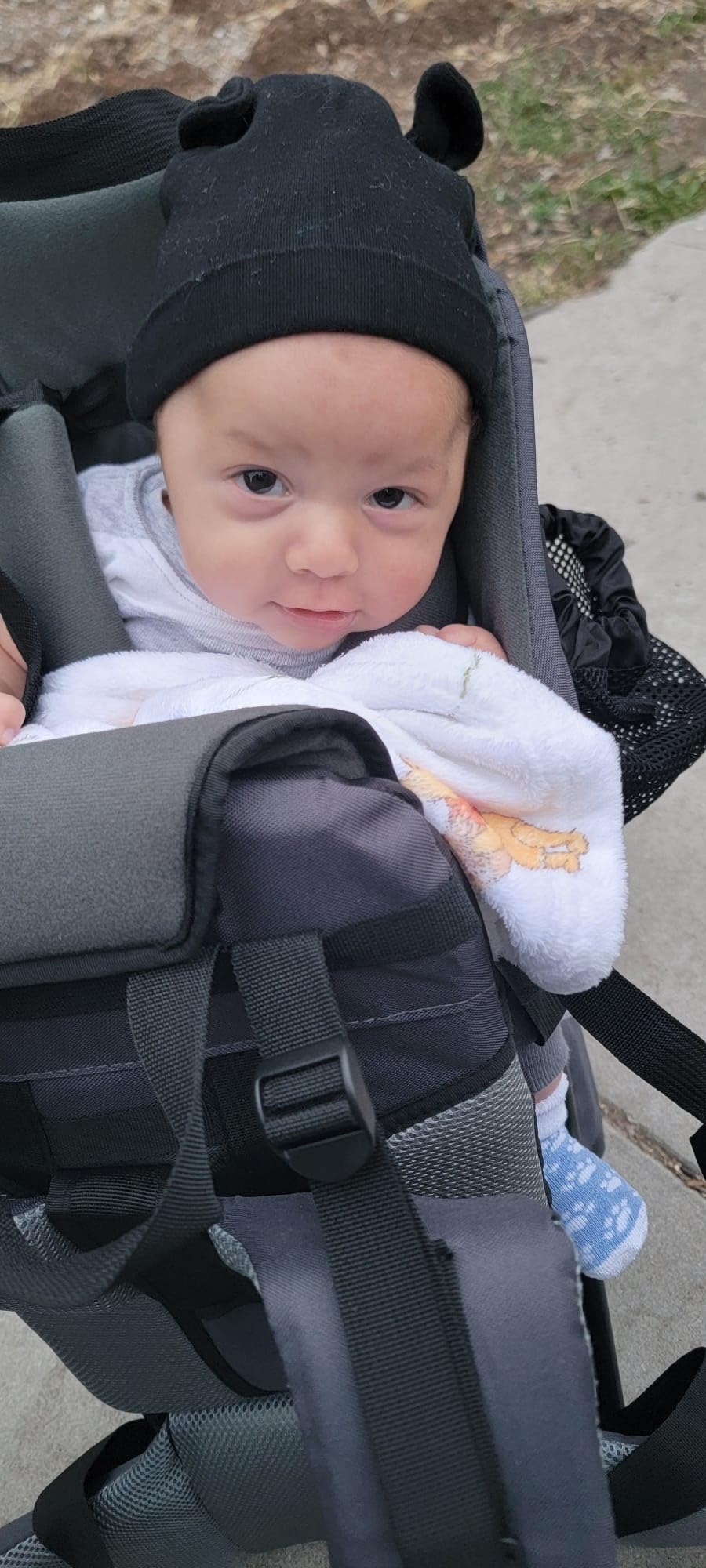
The waist belt extends to roughly 60 inches and the straps take a wide range of adult sizes, so fit problems usually come down to tightening rather than reach. Storage is generous for a carrier at this level: room for a changing pad, bottles, diapers, a spare sweater, phone and keys, with side holders for water.
Weather protection is unusual at this tier. You get both a sun canopy and a rain cover, so a sudden shower on an exposed ridge does not end the walk. The drool pad is washable, which matters more than it sounds with a teething two-year-old.
Who this carrier suits
It suits the parent who hikes one to three times a week with a child between about 15 and 30 pounds and wants one carrier to last the whole toddler stage. It also works well for parents who split carrying duties, since the strap adjustment range is wide.
If your outings are mostly paved paths, zoos and market stalls rather than rough ground, this pack is more than you need. A soft-structured carrier handled those trips with far less bulk.
Who should skip it
Shorter adults should try it on first. Some users report that the belt cannot pull tight enough for a small frame, which pushes the load back onto the upper back. That is the single most common complaint in the review set.
Parents of tall, heavy toddlers should also look elsewhere. The 33-pound limit and the narrower seat mean a big three-year-old is cramped before the weight ceiling is reached.
2. Luvdbaby Hiking Baby Carrier – Best for Two Caregivers
Luvdbaby Hiking Baby Carrier Backpack – Toddler & Child Carrier
Waterproof ripstop
Height adjustable
40 lbs maximum
Insulated bottle pocket
Pros
- Height adjustment suits two caregivers of very different sizes
- Weight sits on the hips when adjusted correctly
- Insulated pocket holds bottles and milk at temperature
- Plenty of pockets plus a foldable changing pad
- Durable waterproof ripstop polyester
Cons
- Kickstand needs two side buttons collapsed before wearing
- Too tall for adults around five foot two
- No printed instructions beyond a tip card
Height adjustment is the headline here, and it is genuinely unusual. When set properly, the load lands on the hips rather than the shoulders, which is the difference between a comfortable carry and a painful one. Parents sharing one carrier between a tall dad and a shorter mum report that both can get a workable fit.
The storage is unusually practical for this category. You get mesh pockets, easy-access pockets and an insulated pocket that keeps milk and bottles cold through a hot walk, plus a foldable diaper changing pad in the box. That is one less thing to pack.
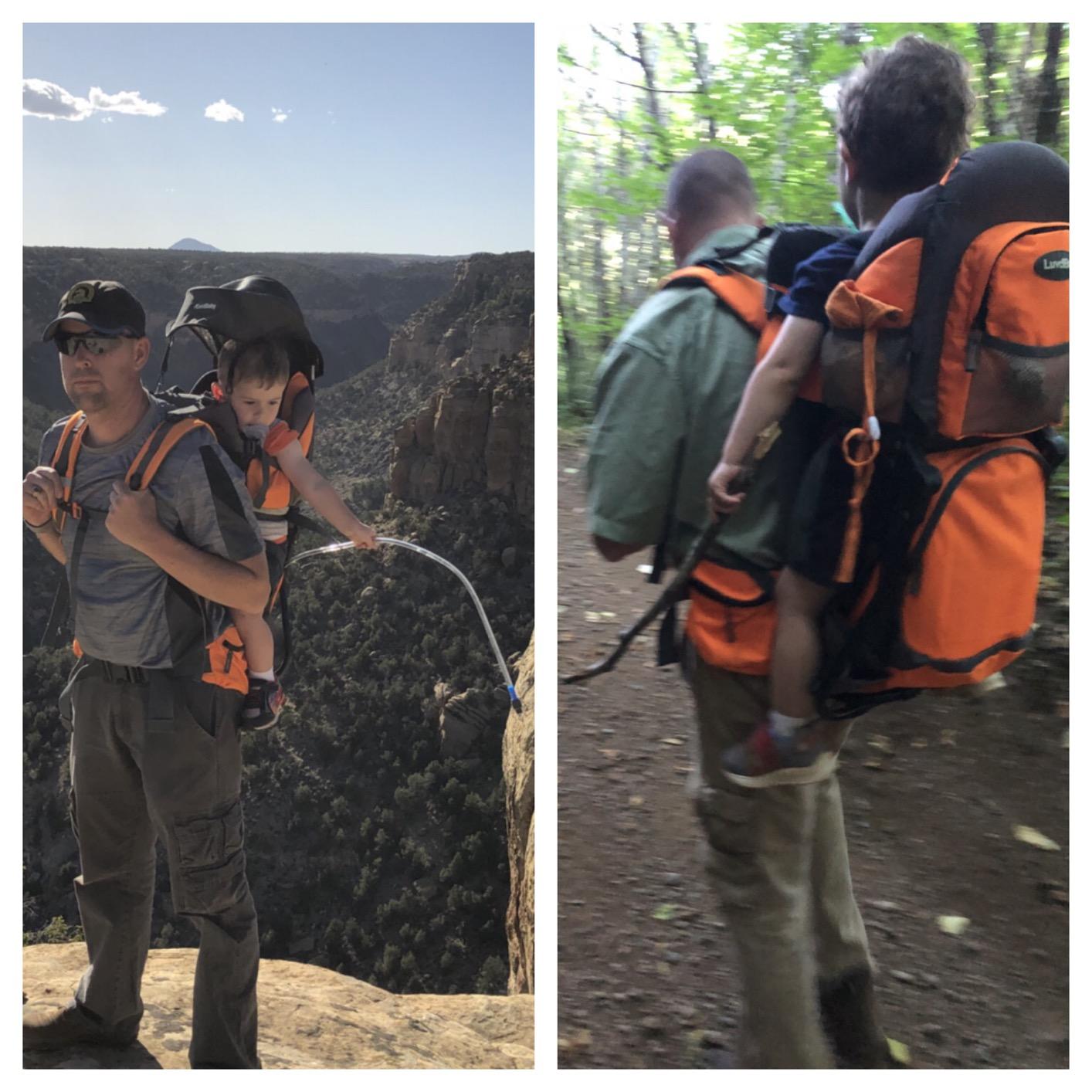
The padded cocoon seat with safety straps and stirrups keeps the child centred, and owners regularly report naps during longer hikes. Material is waterproof ripstop polyester, which has held up well to travel use in the reviews.
The removable visor is the feature desert-hiking parents ask about. It blocks wind and direct sun, and because it comes off you can drop it on cooler days without unpacking anything.

Who this carrier suits
It suits households where the carrier changes hands between two adults, and parents who need to keep food and milk cold on the trail. It is also a solid pick for warm-weather walking where a visor matters more than a canopy.
Budget matters here too. You get most of the storage and weather features of the premium packs at a mid-level price, which is why it takes the value slot in our top three.
Who should skip it
Adults around five foot two or shorter should be cautious. Reviewers report the frame is too tall even on its shortest setting, which leaves the load riding high instead of settling onto the hips.
The kickstand also needs a deliberate two-button collapse before the pack can be worn, a step that catches out new users. Allow yourself a walk in the garden before a trail day.
3. ClevrPlus Deluxe Adjustable – Best for Quick On-and-Off Loading
ClevrPlus Deluxe Adjustable Baby Carrier Outdoor Hiking Child Backpack Camping
5.2 lb one-piece frame
Removable mini backpack
9-48 months up to 33 lbs
Pros
- Removable mini backpack the toddler can wear
- Easy to load using a chair then leaning in
- Light 5.2 lb frame with solid stitching
- Under-seat storage holds a full diaper bag
- Good value against comparable carriers
Cons
- Narrower shoulder straps push more load onto the shoulders
- Child straps can slide down and there is no chest clip
- Advertised 33 lb limit feels conservative
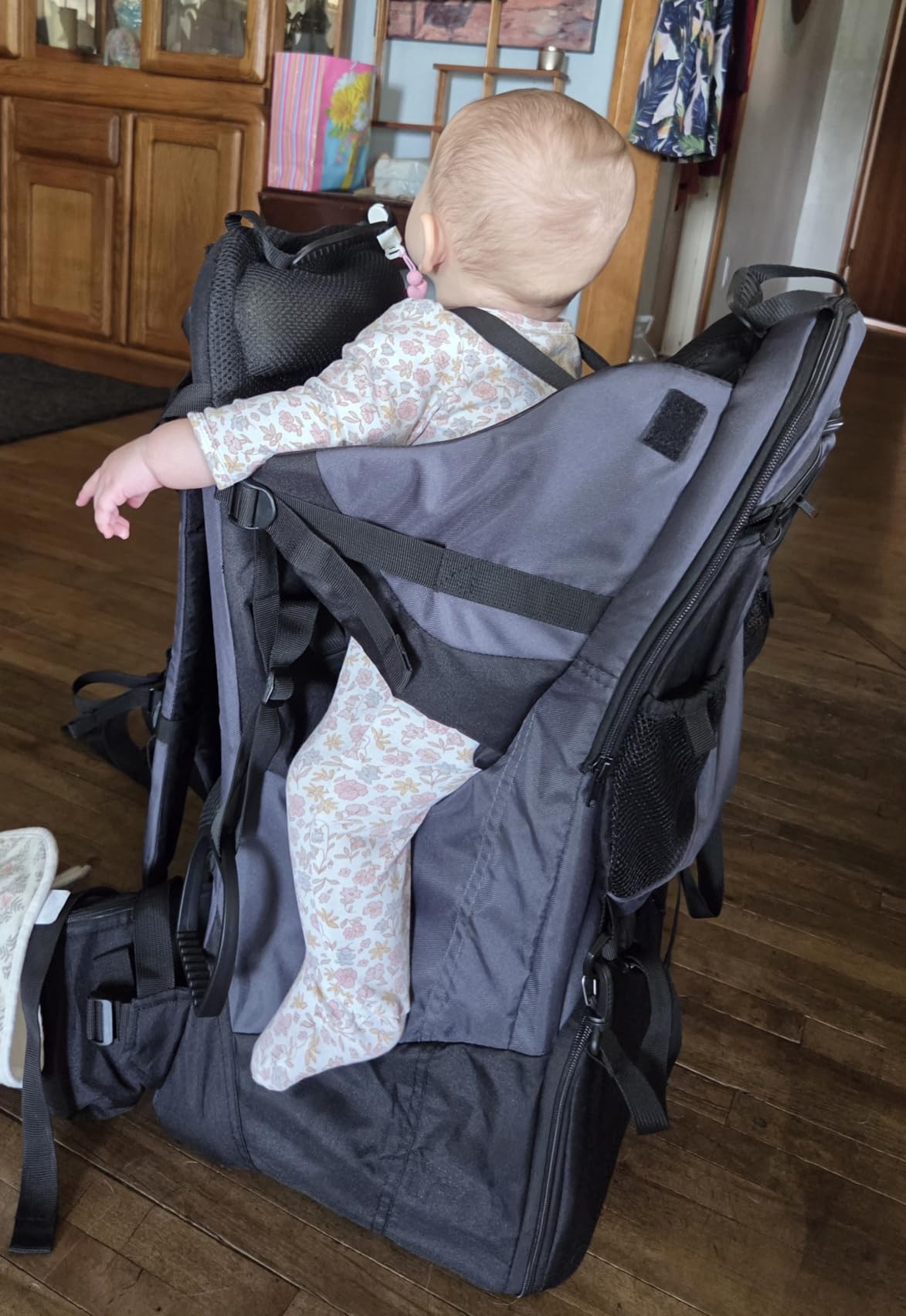
The loading experience is what sets this one apart. You can set the seat on a chair, buckle the child in, then lean back into it, which removes the awkward part of getting a toddler into a pack while standing on a slope. With a three-year-old who has decided to arch their back, that is a genuine advantage.
At 5.2 pounds it is the lightest framed carrier we tested in this set, and the one-piece frame still feels solid under load. The adjustable seat covers 9 to 48 months, and the chest strap adjusts up and down to shift the load.
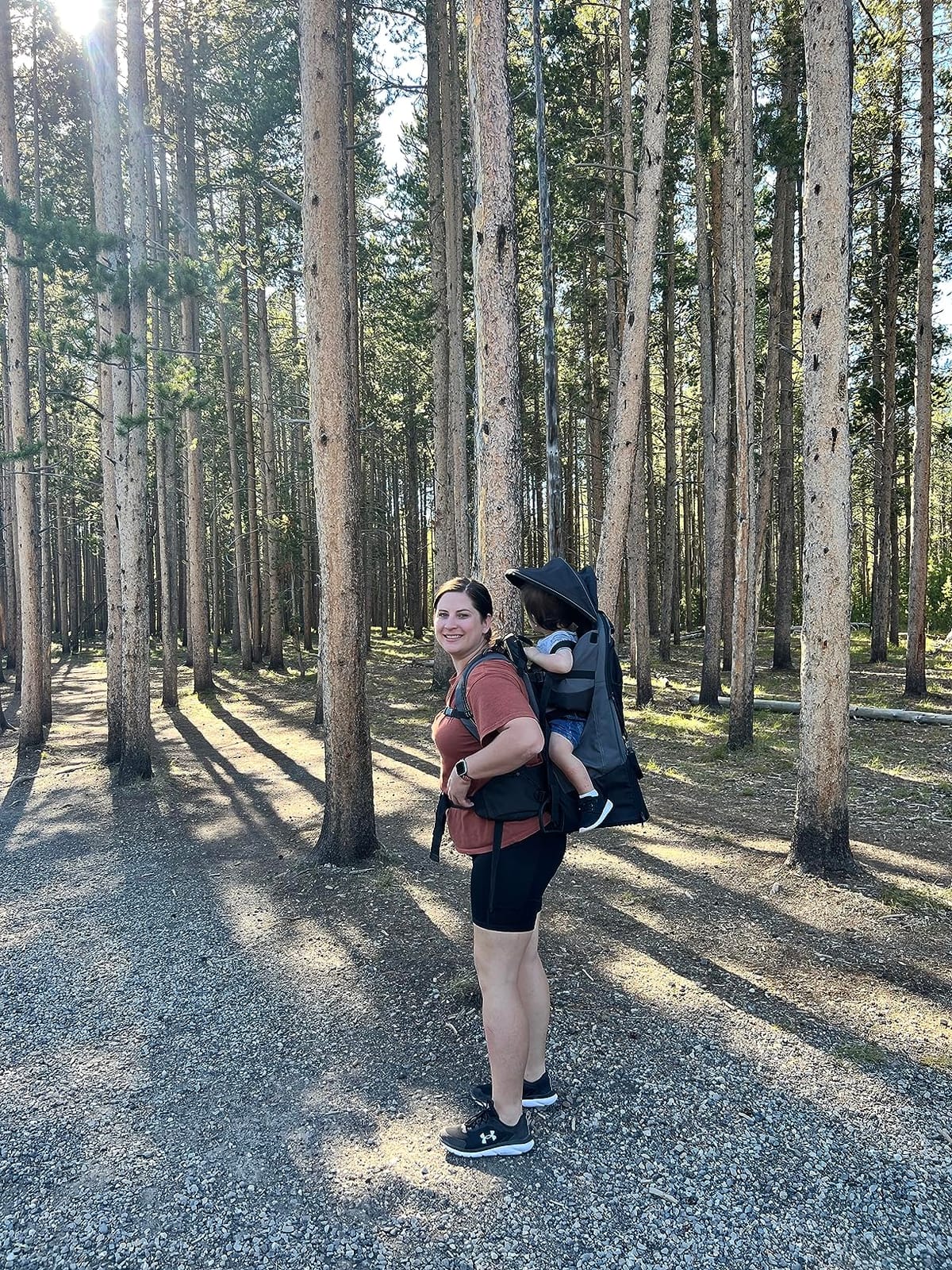
The removable mini backpack is the cleverest storage idea in this roundup. It detaches for the child to wear themselves, and it adds a separate compartment for family gear. The under-seat space is large enough to swallow a full diaper bag on its own.
Weather cover is again better than expected at this tier: sun canopy and rain cover are both included, alongside padded straps, hip belt and lumbar padding.
Who this carrier suits
It suits families with a strong-willed child who resists being strapped in, and parents who want their toddler to carry their own small pack on the walk. It also works well for zoo days and paved trails where frequent stops are the plan.
If you are buying this as your only carrier for long days on rough trail, look at a pack with a wider belt first. The strap geometry here is not built for heavy loads over distance.
Who should skip it
Long-distance hikers should skip it. Reviewers single out the narrower shoulder straps, which put more of the load on the shoulders than a properly suspended belt would. The same feedback names the lack of a chest clip on the child restraint as a fit concern.
Parents expecting to carry a child near 33 pounds should note that owners describe that limit as conservative. It is a comfortable carrier rather than a heavy-duty one.
4. besrey Toddler Hiking Backpack – Best for Changing Weather
besrey Toddler Hiking Backpack Carrier-Adjustable Padded Shoulder Straps
5.5 lb frame
16-44 lb total load
Detachable sunshade
Nine colour options
Pros
- Detachable sunshade doubles as rain and wind shield
- Washable drool pad for teething toddlers
- Storage under the seat plus waist belt pockets and a separate bag
- Buckle design fits a wide range of parent shapes
- Nine colour options to choose from
Cons
- The 16-44 lb rating covers child plus gear together
- Less review detail available on long-term durability
One shade handles three jobs here. The detachable sunshade clips on over the cockpit for sun, then flips to cover the opening against wind and drizzle, and it comes off entirely when the weather turns. For parents who hike in exposed country, that single accessory replaces a canopy and a rain cover.
The buckle design is the quiet feature here. It is shaped to fit a wide range of parent body shapes, which reduces the frustration of a carrier that only works on one torso. Storage runs under the seat, in side pockets on the waist belt, and in an included separate bag.
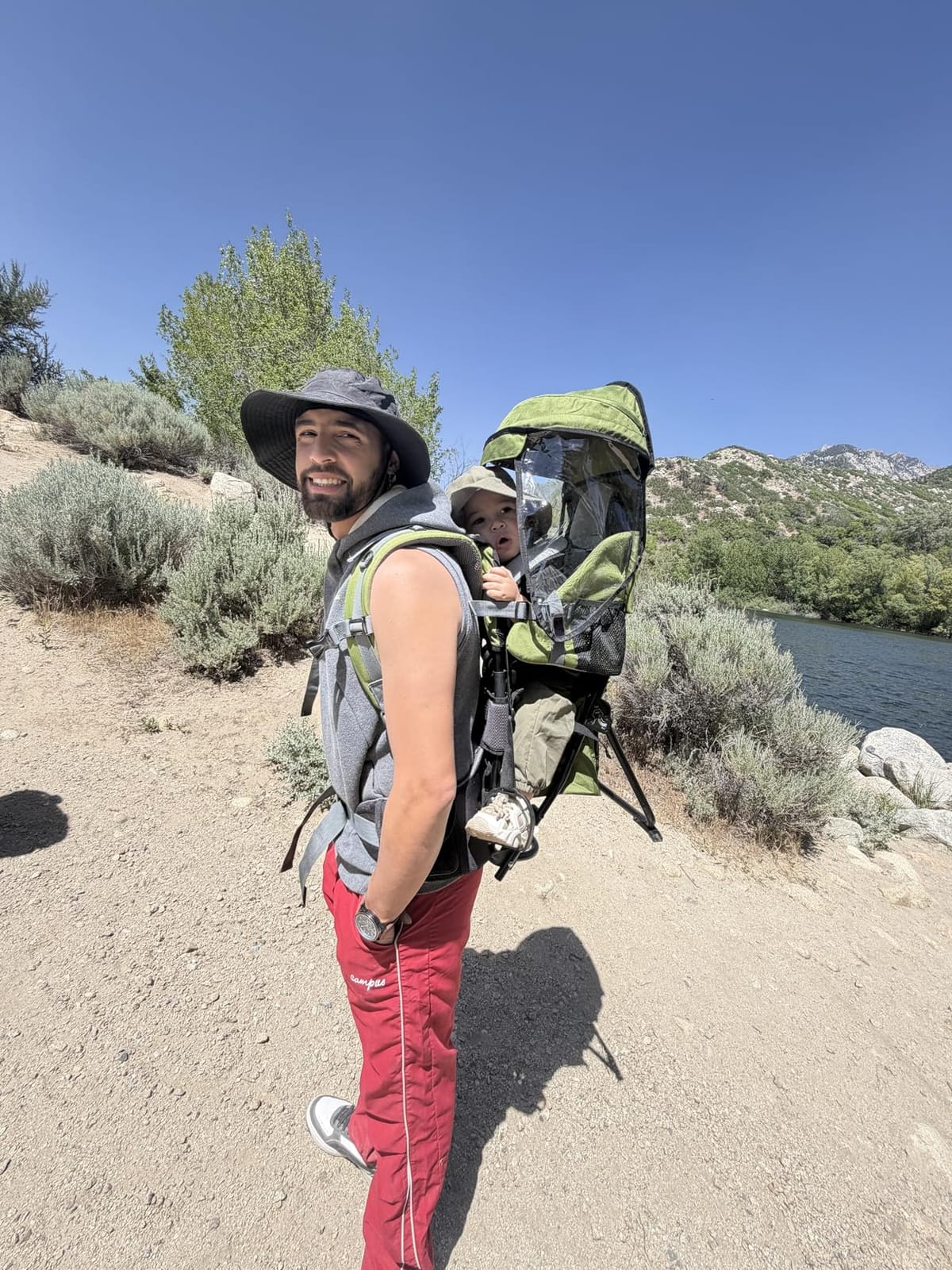
The washable drool pad is a practical touch with a teething toddler, and the frame weighs 5.5 pounds, which keeps the pack manageable when you are climbing a trail with gear in the under-seat compartment.
Nine colour options is more choice than most framed carriers offer, and it matters when the same pack lives in your hallway for years.
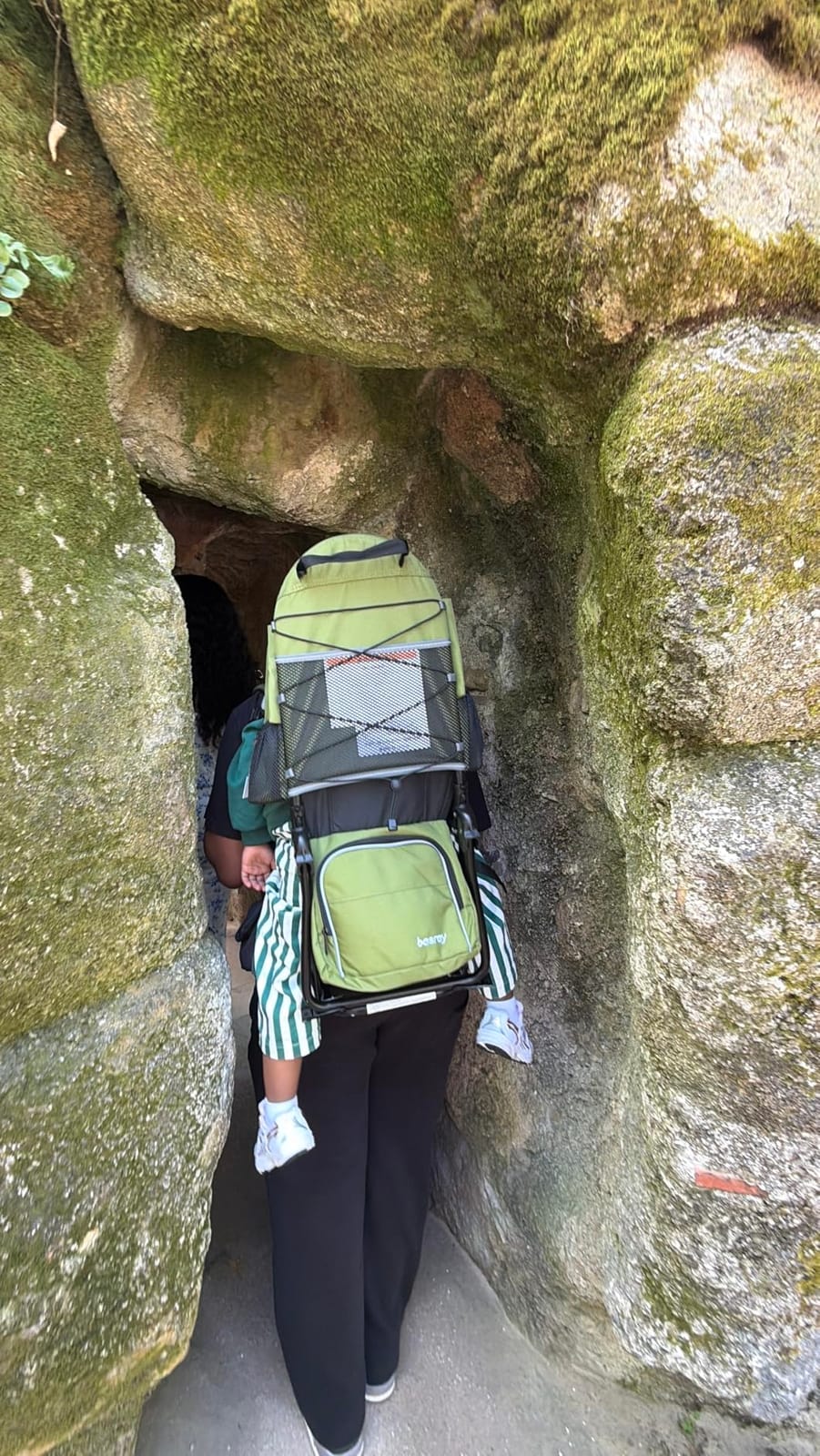
Who this carrier suits
It suits parents who hike in variable conditions and want one piece of weather kit instead of three. It also works for everyday errands on rough ground, where a canopy and a large under-seat area cover most of what a diaper bag holds.
If you are a caregiver who takes the carrier to grandparents or a partner who will use it occasionally, the buckle fit across body shapes makes handover painless.
Who should skip it
Read the load figure carefully. The 16 to 44 pound rating covers the child, the gear and the backpack together, so a 35-pound child plus a day of supplies sits at the upper edge of what the frame is rated for. We would look for a model with a stated child-only ceiling.
Long-term durability is also less well documented here than for the frames with metal tubing, so if you plan to pass the carrier to a second child, weigh that uncertainty.
5. OE OUR EXPEDITION Shoulder Carrier – Best for Air Travel
OE Shoulder Hiking Carrier For Child and Toddler 1- 4 years old with Detachable Backpack and Sunshade, Foldable Frame, Compact, Perfect for Day Hiking
4.4 lb with pack, 3.4 without
Up to 45 lbs child
Folds flat for cabin bags
Pros
- Very light at 4.4 lb including the detachable backpack
- Folds flat for cabin luggage and stroller storage
- Hip support moves weight to the waist
- Detachable backpack adds storage for family gear
- Supports a child up to 45 lbs
Cons
- Shoulder-style frame gives less back structure than a full daypack
- Seat offers less adjustment range for growing children
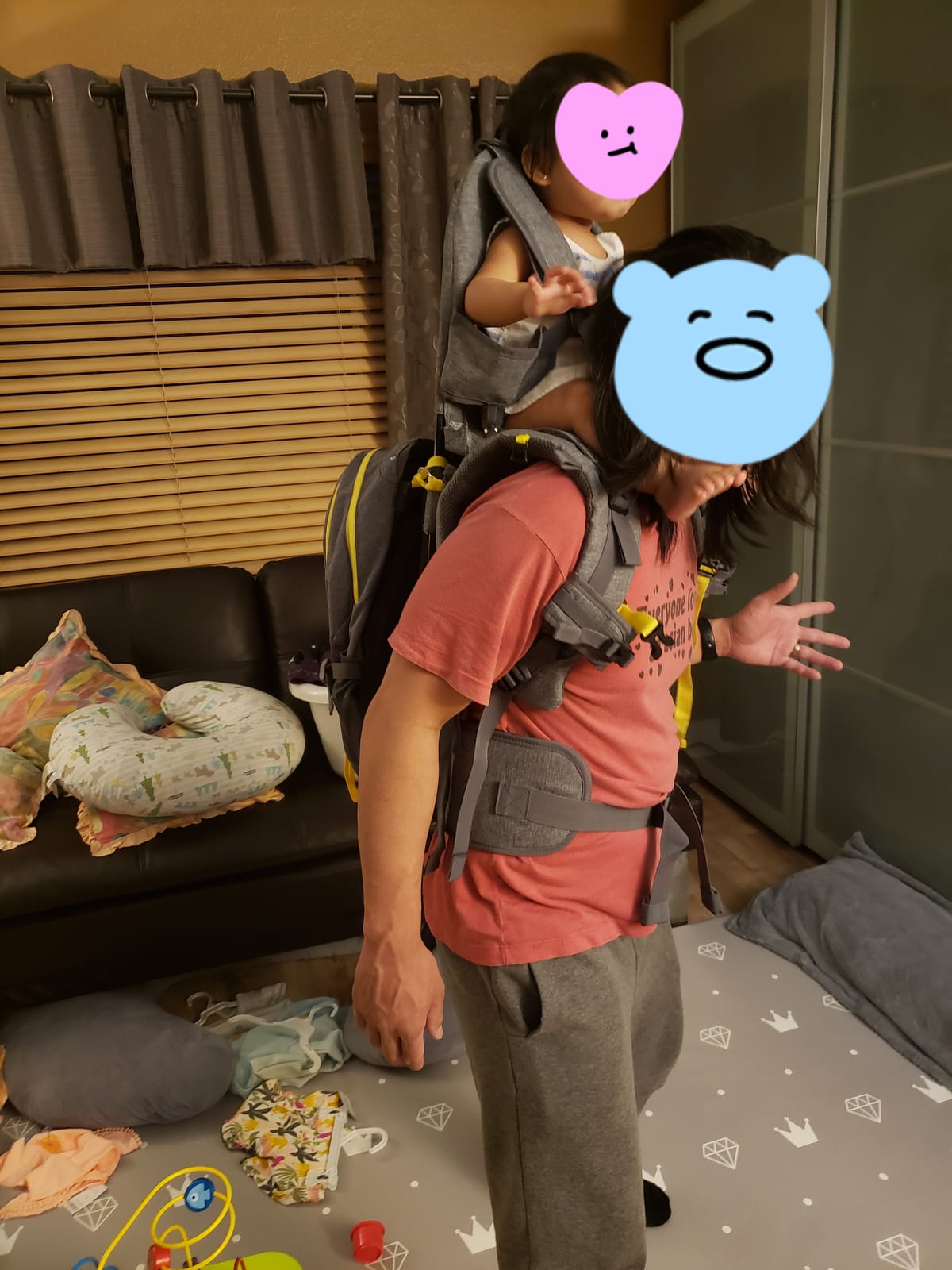
This is the one to look at if you fly. At 4.4 pounds with the detachable backpack attached and 3.4 pounds without it, it folds flat enough to tuck under a seat or drop into a stroller basket, which removes the whole problem of gate-checking a bulky frame. The detachable backpack carries your own gear while your hands stay on the child.
Despite the light weight it handles a child up to 45 pounds, the highest child rating in this group. The hip support design shifts most of the load to the waist, which spares your neck and shoulders on longer walking days.

Measurements come in at 14 by 22 by 6 inches, so it is a genuinely small object when collapsed. Parents who travel with young children and who also travel without a stroller rate it highly for exactly this reason.
Be clear on what it is. The shoulder-style frame is not a mini-meis carrier, so the child sits higher and more upright than in a structured daypack design. Some children prefer that position.
Who this carrier suits
It suits frequent travellers, grandparents who fly in once a year, and anyone who wants a carrier that lives in a cupboard between outings. It also handles heavier children better than most of the lighter options here.
If your main complaint is a full day of walking on rough ground rather than travel, a stiffer framed pack with a proper back panel will serve you better.
Who should skip it
Skip it if you need a large gear compartment or a heavily adjustable seat. The shoulder-style frame gives less back structure, and the seat has a narrower growth range than the adjustable framed packs.
Adults who prefer a wider, more padded belt may find this one minimal. The load transfer is good, but the support surface is smaller.
6. Kidpprod Baby Backpack Carrier – Best for Big Storage
Baby Backpack Carrier, Safe Toddler Hiking Backpack Carrier Camping Child Carriers with Rain Cover Child Kid Sun Shade Large Storage Insulated Pocket, Adjustable Padded Children Seat
Metal frame with 600d oxford
ASTM approved
6 months to 4 years, up to 40 lbs
Pros
- Wide padded waist belt genuinely relieves the shoulders
- Double protection safety jacket keeps the child centred
- Roomy bottom compartment for nappies and snacks
- Folds flat and works as a diaper bag
- Removable machine washable face pad
Cons
- Sunshade is thin and does not fully block direct sun
- Waist strap adjusts only on one side of the buckle
- Frame poles can press into a larger adult's lower back
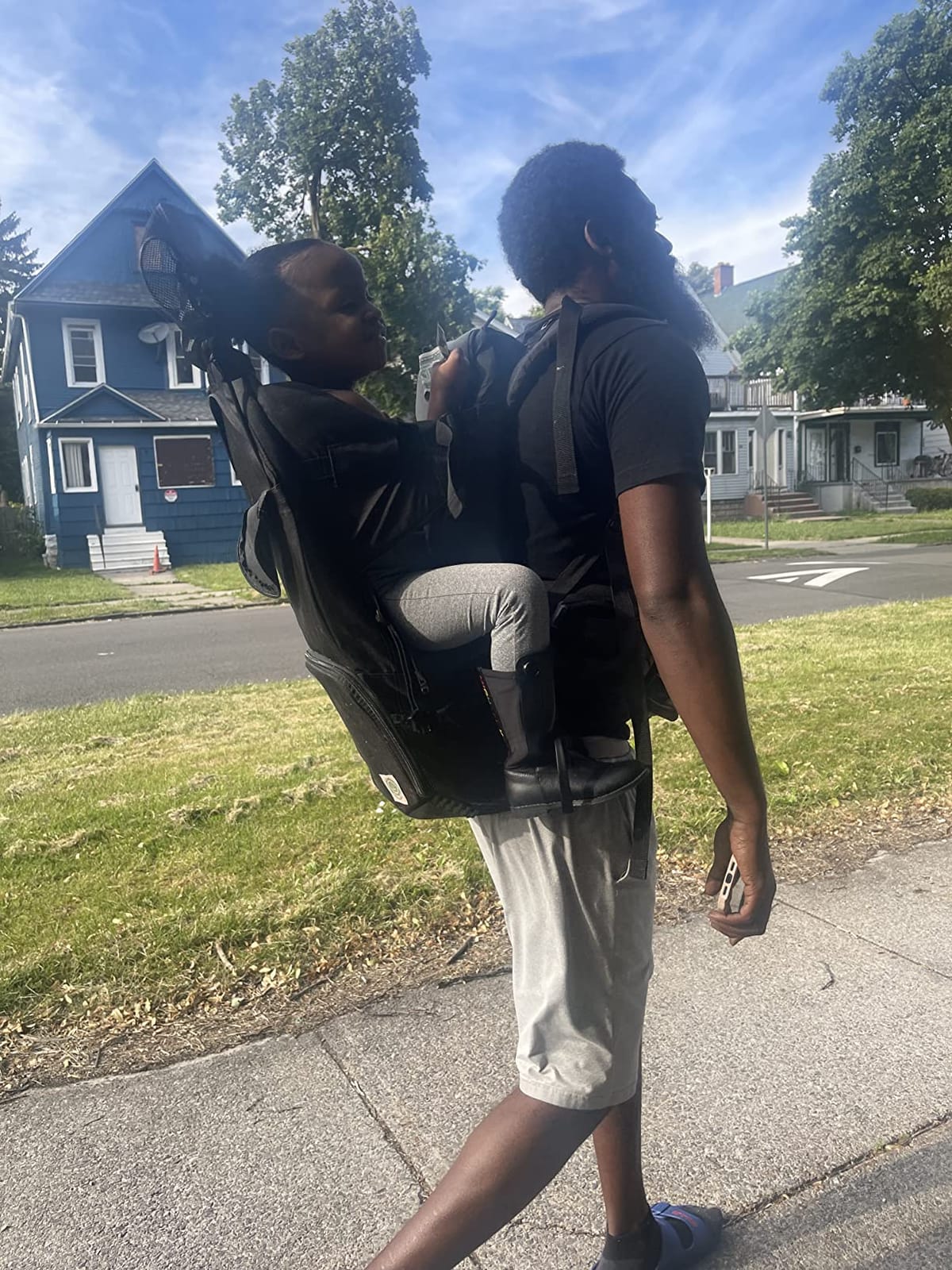
Storage is the reason to buy this one. The bottom compartment holds wipes, diapers, snacks, drinks and jackets, and the pack folds flat to double as a diaper bag, so you can leave the tote at home. Two side water bottle holders and waist belt pockets round out a genuinely usable layout.
The build is respectable for the money: a metal frame under 600d oxford cloth, approved to ASTM, rated for children from six months to four years up to 40 pounds. The adjustable metal stand folds flat for storage and holds the seat upright for loading.
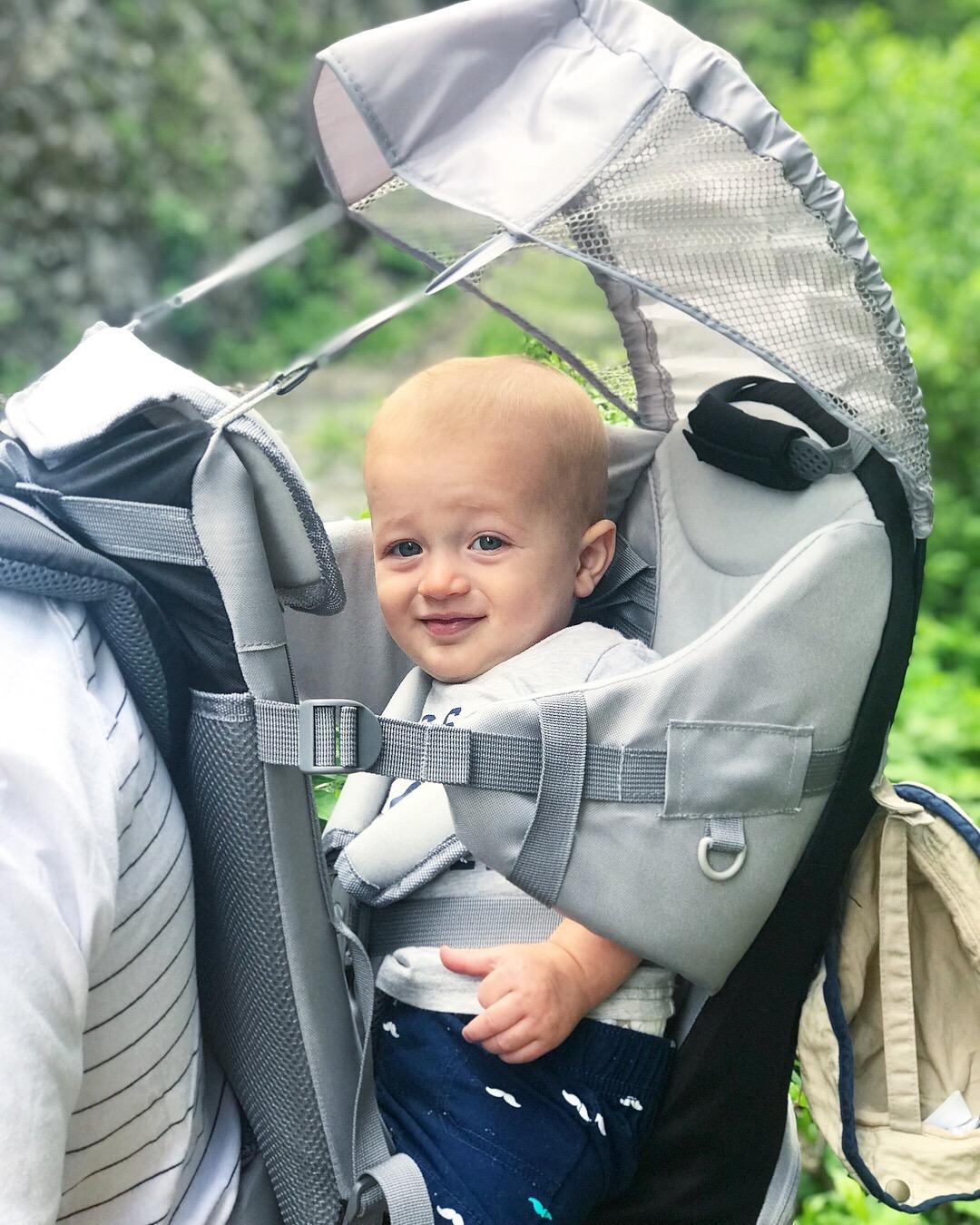
The double shoulder straps adjust up and down for load reduction, which is a simple trick with a real effect. The seat comes with pillows front and back and an adjustable pad height, so the child is not sitting on a hard plate.
A removable machine washable face pad is included, and the safety jacket plus stirrups keep a smaller child centred in the cockpit.
Who this carrier suits
It suits parents doing full days out where snacks, spare clothes and nappies all travel in the carrier. It also works for anyone treating the pack as a diaper bag, since the compartment is large enough to replace one.
Families starting early will like the six-month floor on the child weight range, which is lower than most framed packs in this group.
Who should skip it
Skip it for exposed, high-sun hiking. Owners report the sunshade is weak and does not fully block direct sun, so you would add a hat or a clip-on shade.
Larger adults should try it on. Reviewers note the frame poles can press into the lower back with a heavier toddler, and the waist strap only adjusts on one side of the buckle, which limits how snugly it can be tightened.
7. WIPHA Toddler Hiking Carrier – Best for Long Days Out
WIPHA Toddler Hiking Carrier, Baby Backpack with Sun Canopy & Storage
Collapsible aluminum frame
Up to 39 inches and 40 lbs
Insulated pocket
One-year warranty
Pros
- Wide padded waist belt reduces the felt weight of the child
- Large under-seat bag removes the need for a separate diaper pack
- Insulated pocket keeps milk and bottles at temperature
- Adjustable seat grows with a child up to 39 inches
- Collapsible aluminum frame folds for storage
Cons
- Empty weight is not stated in the listing
- The 90-day money-back window is short for a long-term frame
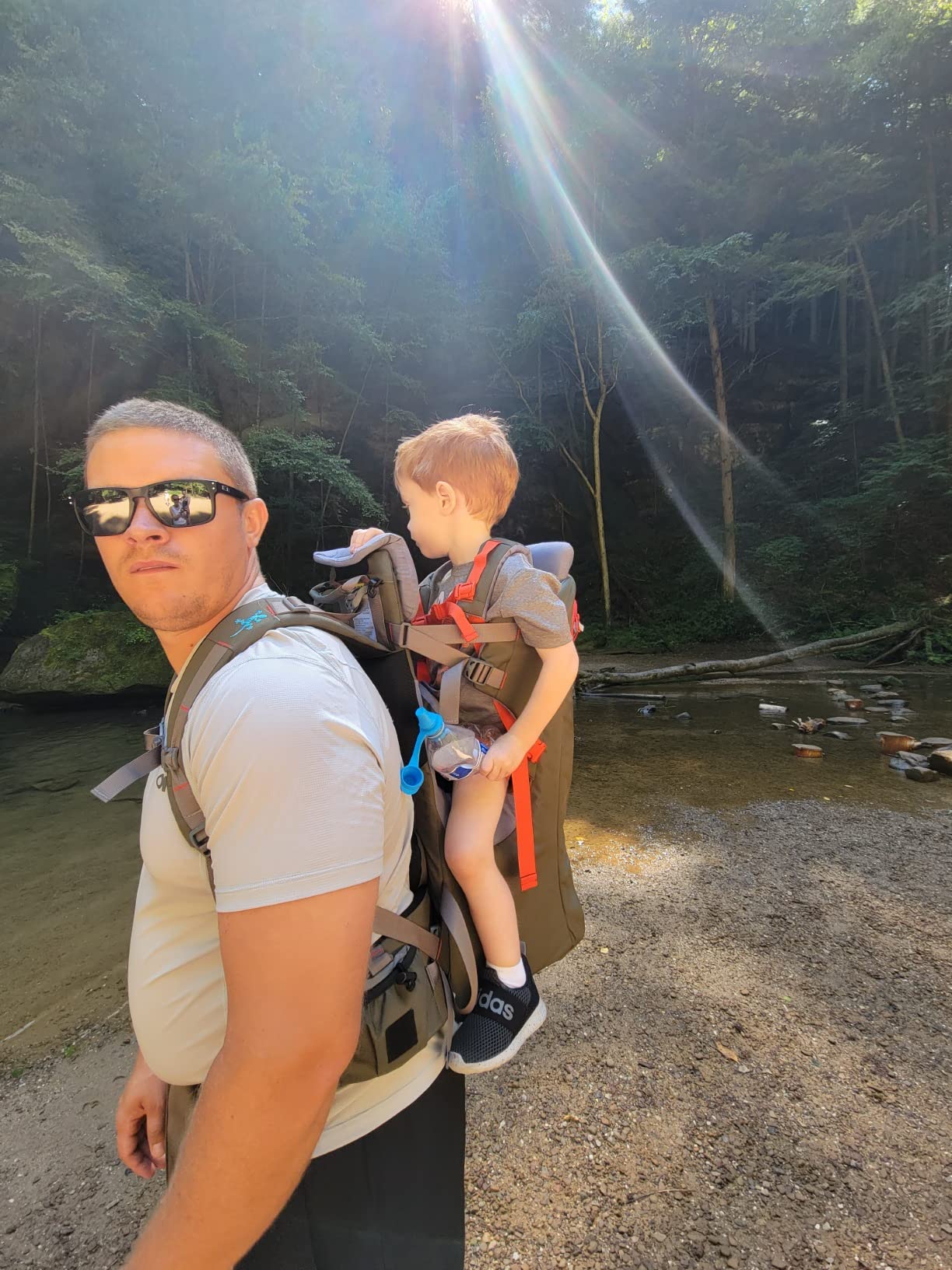
The 39-inch child limit is unusual and worth noting. Most framed carriers quote pounds alone, which leads parents to assume the limit is generous. This one is rated by height as well, so a tall three-year-old is still properly supported rather than folded into a cockpit that has run out of room.
The under-seat storage bag is large enough that most families can drop the separate diaper pack. Two waist strap pouches keep small essentials within reach, and the insulated pocket holds milk and bottles at temperature through a long day.
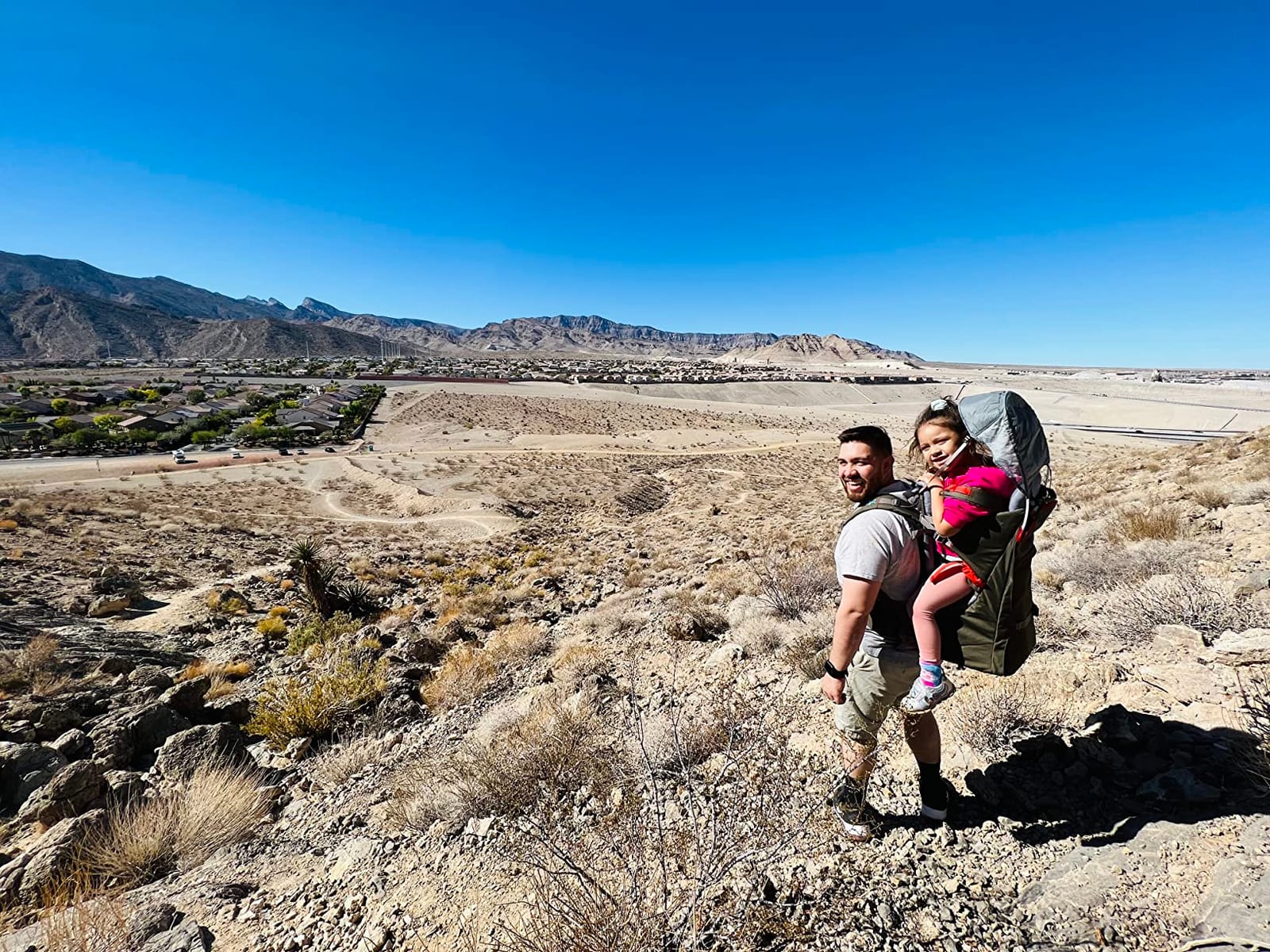
A wide padded waist belt is the main comfort story here, with owners reporting that it reduces the perceived weight of the child. The adjustable straps are designed to fit caregivers of different sizes, so handing the pack between adults is less of a problem.
The collapsible aluminum frame folds for storage and travel, and the seat has removable soft cushions front and back. A 90-day money-back guarantee and one-year warranty come as standard.
Who this carrier suits
It suits parents of tall toddlers who keep hitting the height ceiling on other packs, and anyone planning day hikes where you would otherwise carry a separate nappy bag. The insulated pocket is a real asset on warm-weather days out.
It also suits families who move the carrier between caregivers, since the adjustable straps and wide belt absorb differences in torso length better than a fixed frame.
Who should skip it
Skip it if you care about the empty weight of the pack. The listing does not state it, which makes it harder to compare against models where you know you are carrying five pounds or three.
The 90-day money-back period is also shorter than the one-year warranty that follows it, so you need to be confident in the fit before the trial window closes.
8. Deuter Kid Comfort – Best for Long Hikes
Deuter Kid Comfort Child Carrier and Backpack – Midnight
3.3 lb empty weight
Aircomfort mesh back system
Spring steel frame
Vari Slide fit
Pros
- Aircomfort mesh back keeps the wearer cool on long carries
- Pull-forward hip fins spread child weight onto the hips
- Vari Slide adjustment fits a wide range of caregivers
- Flexible break-proof spring steel frame
- Sun roof plus load straps and sternum belt included
Cons
- Does not include a chin pad
- Costs more than generic framed carriers
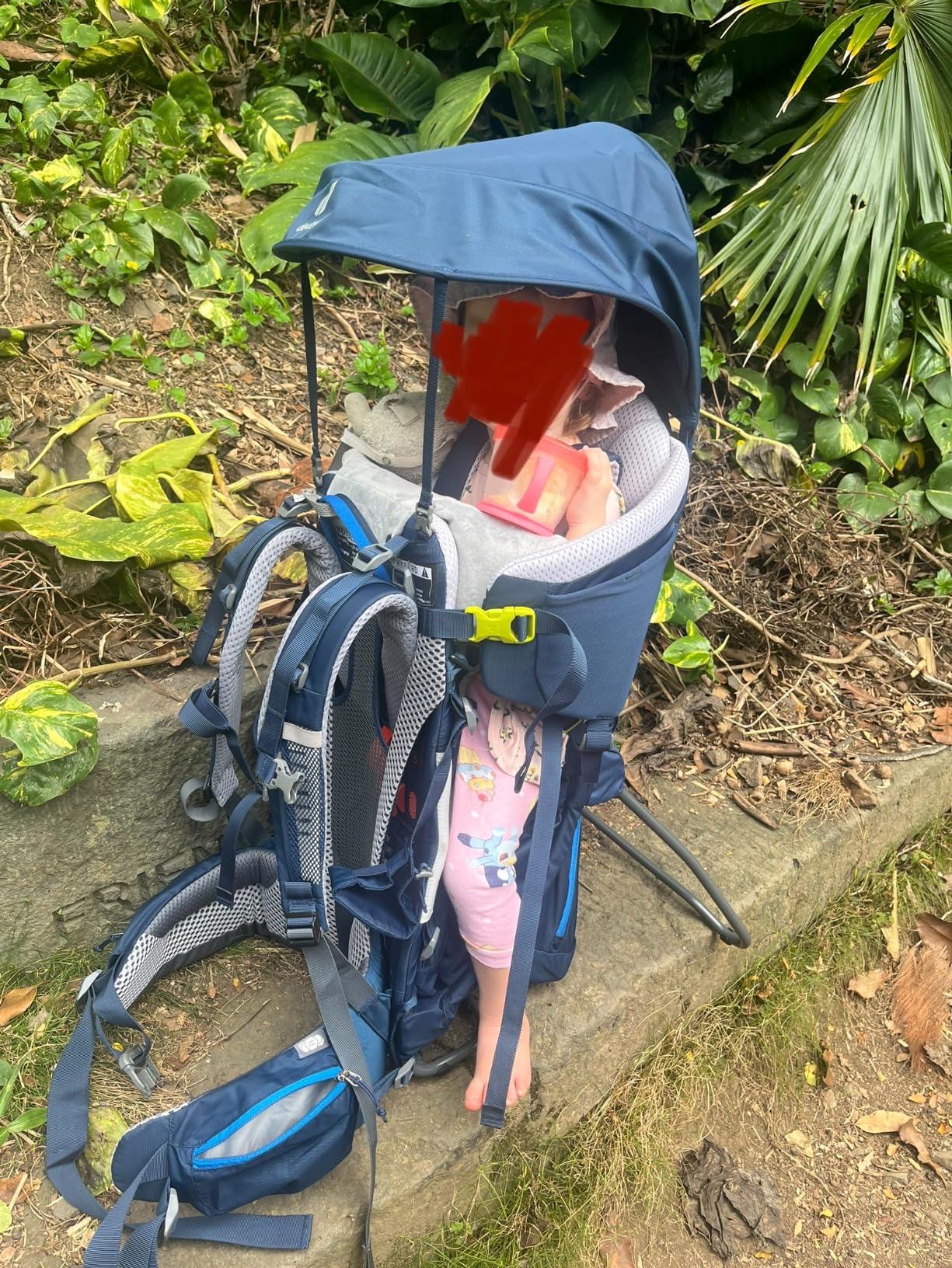
At 3.3 pounds empty, this is the lightest and the highest rated carrier we put through this process. The Aircomfort mesh back system is the standout feature: a continuous tensioned panel that keeps air moving across your back, which is the difference between a comfortable carry and a sweaty one on a summer ascent.
Load transfer is handled properly. Pull-forward hip fins and a padded hip belt spread the child’s weight onto your hips, and the Vari Slide back length adjustment lets you dial the torso length rather than guessing. The sternum belt and load adjustment straps keep everything from shifting as you walk.
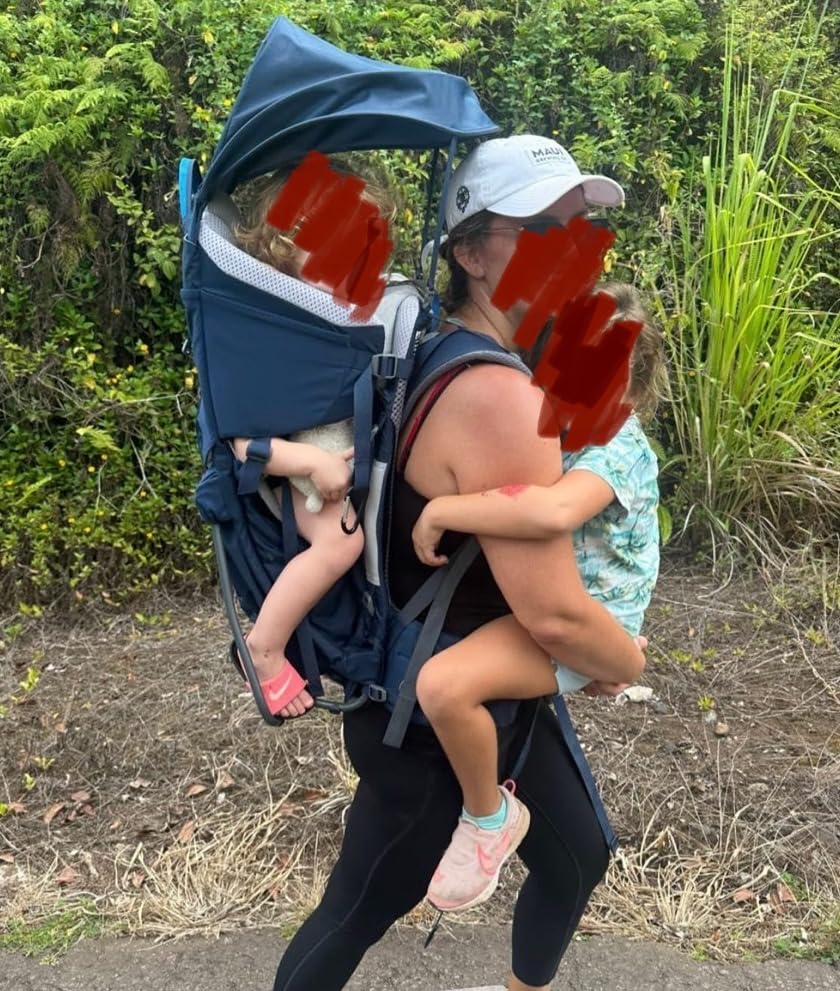
The frame is flexible spring steel, described as break-proof, and the shell is 210 denier polyamide with ripstop threads and a PU coating. Measurements are 36 by 19 by 10 inches, so it is a proper pack rather than a compact day carrier.
A sun roof is included, which covers the cockpit without needing a separate canopy attachment. Parents who have moved between carriers often cite the ventilation and the precise hip support as the reason they stay with this one.
Who this carrier suits
It suits regular hikers carrying a child over several hours, especially on warm days where a solid back panel traps heat. It also suits adults whose hips and shoulders struggle on lighter frames, because the hip fins do more work than a simple webbing belt.
If your family will use one carrier through several children, the spring steel frame and the denier polyamide shell are built for that kind of life.
Who should skip it
Skip it if you need maximum packability. At 36 inches tall this is the largest pack here, so it is not the one to fold into a carry-on.
It also costs more than generic framed carriers, and there is no chin pad included. Parents of children who fall asleep against the shoulder may want to add one.
9. WIPHA Aluminum Frame Carrier – Best for Quick Fitting
Baby Backpack Carrier, Toddler Hiking Backpack Carrier with Sunshade, Green
5.5 lb TUV-certified frame
Up to 40 lbs, 6 months to 3 years
8L compartment
UPF 50+ canopy
Pros
- One-pull suspension system fits fast without guesswork
- Handles rough ground over nine miles
- Folds almost completely flat
- Child-lock buckles stop a toddler climbing out
- UPF 50+ built-in canopy and side air vents
Cons
- Shoulder straps are narrow and can dig in on long carries
- Wide adults may find the fit less forgiving
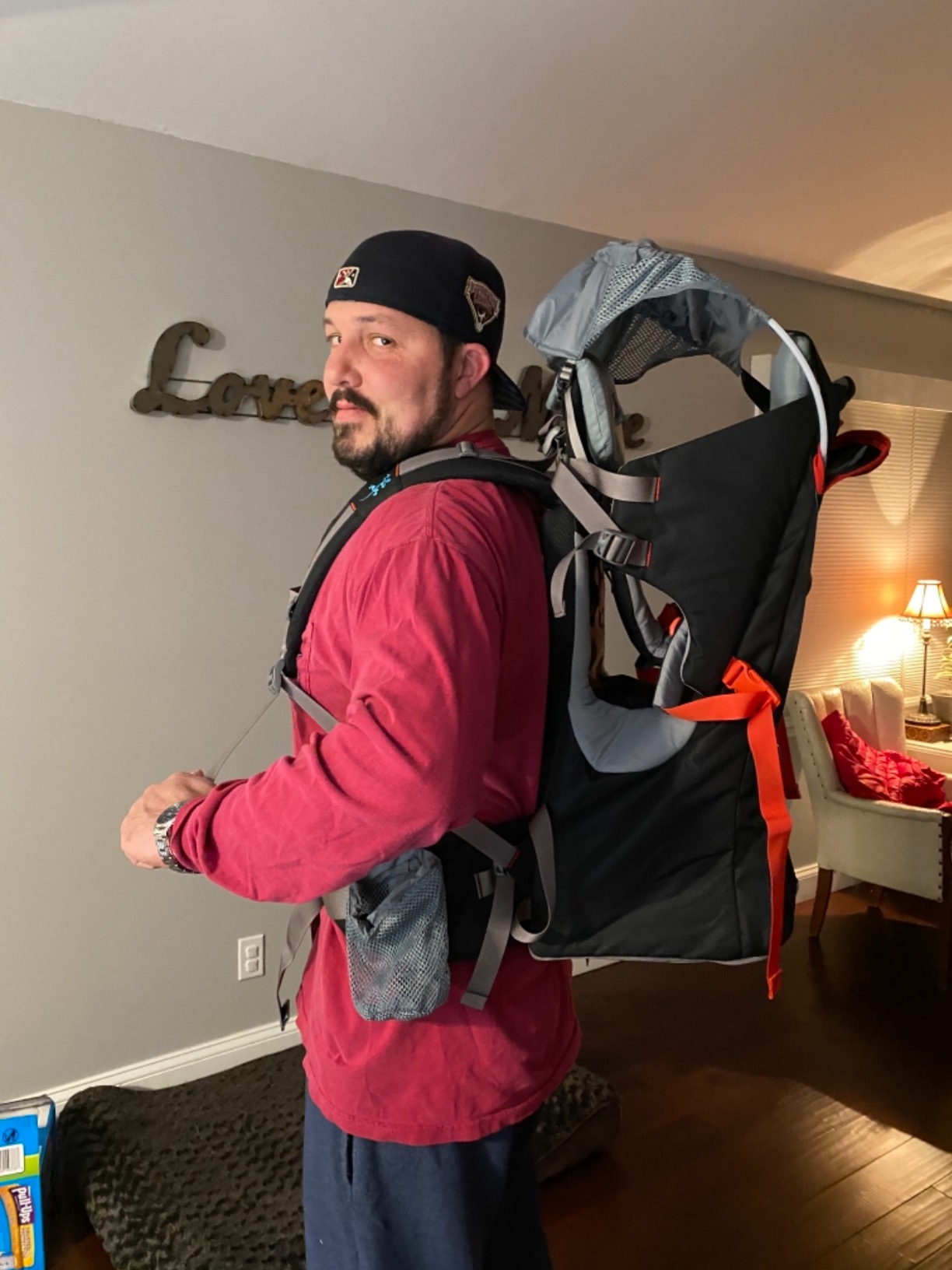
The one-pull suspension system is the feature that changes daily life. Instead of tightening four separate webbing points every time you put the pack on, you pull one strap and the frame settles onto your hips. When a second caregiver takes over at the playground, that difference is obvious.
Child-lock buckles are the detail that impressed us most in the specification. On a carrier where a toddler can reach the side buckles, having them lock is a genuine safety improvement over designs that rely on the child’s inattention.
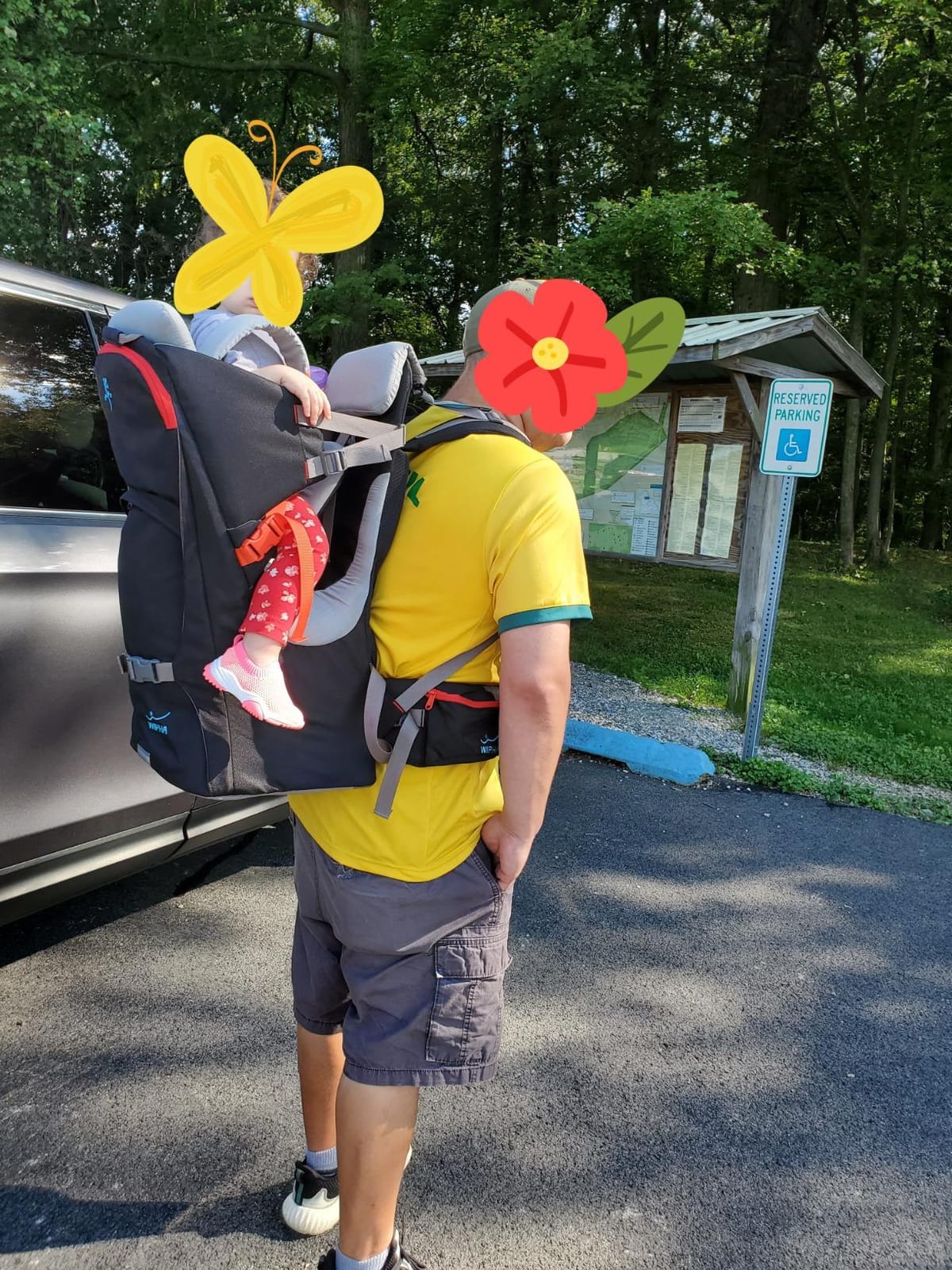
Build quality is a step up from tube-framed budget packs: a TUV-certified high-strength aluminum frame at 5.5 pounds, with a floating mesh back panel and side ventilation ports for airflow around the wearer. One reviewer carried a child nine miles without trouble, which is a useful data point for anyone worried about a lightweight frame.
The seat is detachable and softly padded, with an adjustable footrest, and the main compartment holds 8L. The UPF 50+ canopy is built in rather than clipped on, and there is a removable drool pad underneath.
Who this carrier suits
It suits families who share carrying duties, because the one-pull fit means a second adult can take over quickly and correctly. It also suits parents who want a proper canopy without buying a separate sunshade, and anyone who wants a metal frame that still folds almost completely flat.
The stated range of six months to three years covers most of the window when a child is ready for a framed carrier.
Who should skip it
Long-distance hikers should look elsewhere first. The shoulder straps are narrow, and owners report they can dig in during long carries even when the belt is doing its job.
Wide adults also report a less forgiving fit. If you are broad across the frame, try it on with a weighted pack before committing.
10. Osprey Poco LT – Best for Compact Storage
Osprey Poco LT Lightweight Child Carrier Backpack, Red OS
5.6 lb empty weight
Stainless steel folding frame
6 inch torso adjustment
UPF 50 sunshade
Pros
- Compact footprint suits crowded airports and stores
- Folds flatter than most framed carriers
- 6 inches of torso adjustment shares easily between caregivers
- AirScape panel with ridged foam and mesh reduces sweat
- Integrated UPF 50 sunshade in a zippered pocket
Cons
- Compact dimensions suit travel more than gear-heavy days
- Minimal foam back panel compared with full suspension packs
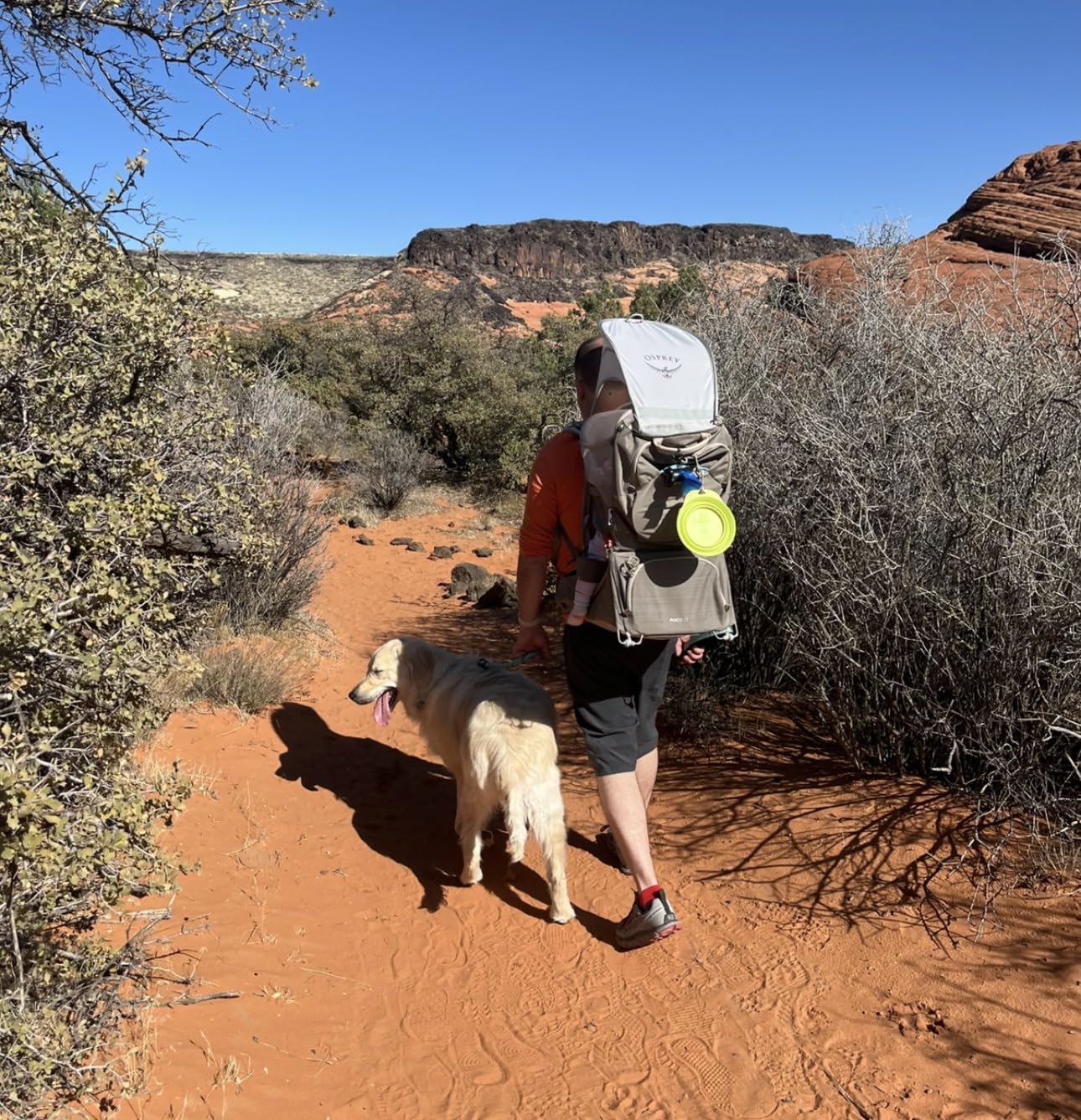
This is the travel-shaped Osprey. At 16.9 by 13.8 by 23.6 inches it is noticeably narrower than a traditional framed carrier, which matters when you are moving through an airport, a store or a crowded sidewalk with a child on your back and a bag in each hand.
The patented stainless steel folding frame packs flatter than most framed designs we looked at, and the whole pack is machine washable, which is a bigger deal for toddler carriers than for adult packs. Six inches of torso adjustment means two caregivers can share it with a real range of fit.
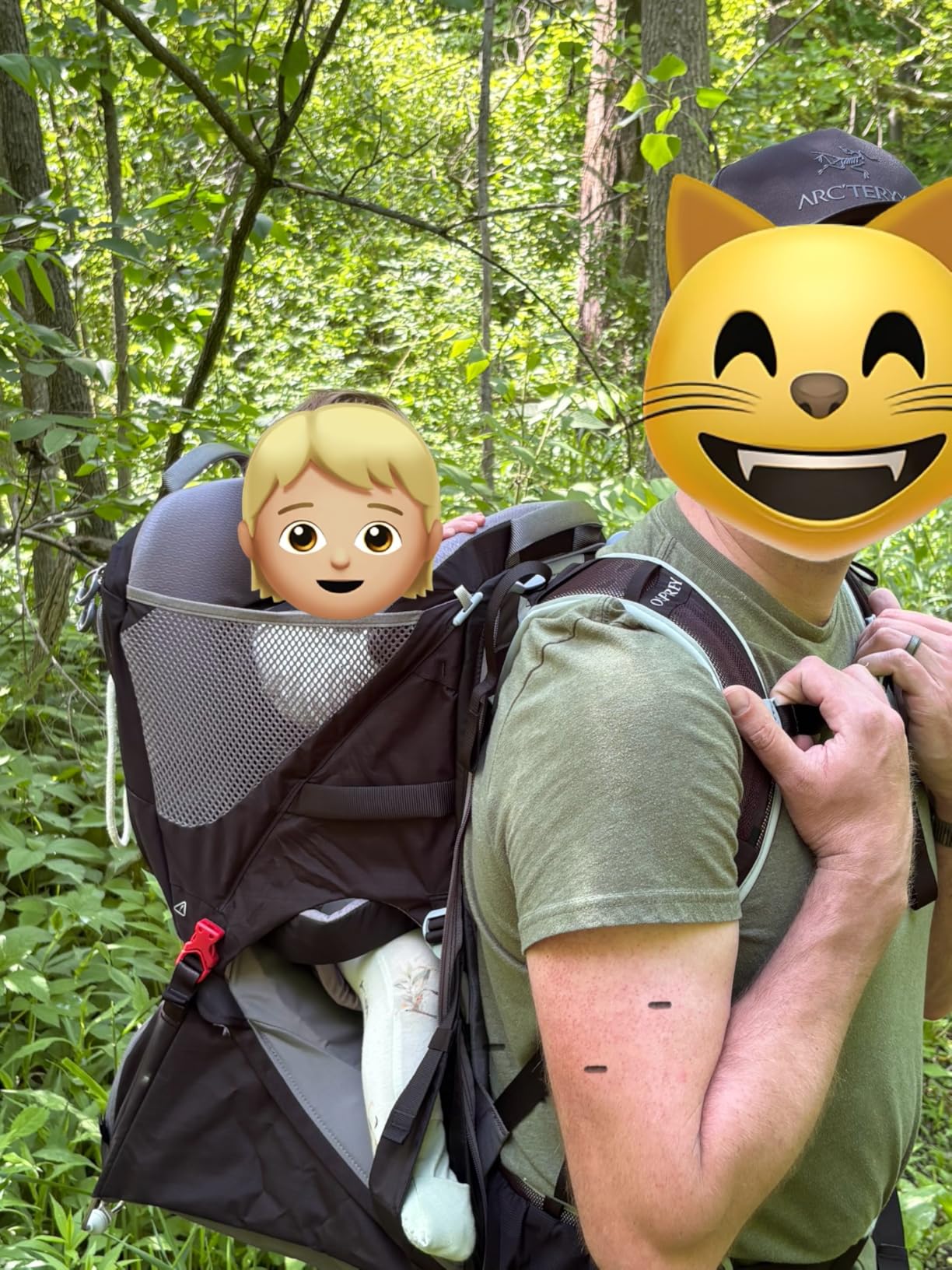
The ventilated AirScape back panel uses deep ridged foam and breathable mesh to reduce sweat, and the UPF 50 sunshade stows in a zippered pocket rather than needing a separate attachment. Empty weight is 5.6 pounds.
The nylon shell and zip closure keep the profile clean and low-drag, which suits quick transitions in and out of buildings more than a trail day would.
Who this carrier suits
It suits city-dwelling parents, frequent flyers and anyone whose outings involve crowded indoor spaces and short walks rather than sustained trail miles. Machine washability also makes it practical for households with more than one child.
Buyers here are generally paying for packability and frame quality rather than maximum cargo space, and they tend to be happy with that trade.
Who should skip it
Skip it if you plan to load it for full days with a lot of gear. The compact dimensions are designed around moving around, not around carrying a day’s supplies.
It also sits at the top of the price range in this group, and the back panel is a minimal foam-and-mesh design rather than a full suspension system, so it will not match a heavily suspended pack on long climbs.
11. WIPHA Mesh Back Carrier – Best for Breathability
WIPHA Hiking Baby Carrier Backpack, Lightweight Child Carrier, Breathable Mesh Toddler Carrier for Outdoor Adventures, Ergonomic Design, Perfect for Travel, Hiking & Daily Use
26L under-seat space
6 months to 4 years, 16-40 lbs
Full mesh back
Folds like a laptop
Pros
- Oversized mesh back panel improves airflow in hot weather
- 26L under-seat compartment is unusually large for the class
- Wide padded waist belt reduces neck and shoulder strain
- Folds flat like a laptop and the canopy stows in the back bag
- Side pockets on both waistband sides
Cons
- 3-point restraint is less secure than five-point systems
- Mesh-only child back offers less cold protection unless zipped
- Ratings trail the rest of this group
Breathability is the whole argument for this model. An oversized mesh panel covers the wearer’s back with a zippered mesh child backrest behind it, and for summer hiking in hot, dry country that combination keeps far more air moving than a solid panel pack.
The 26L under-seat compartment is the largest storage figure in this roundup, and it holds the bulk of a family day out. A storage pocket and mesh bottle bags sit on both sides of the waistband, and the wide padded belt spreads the load evenly.
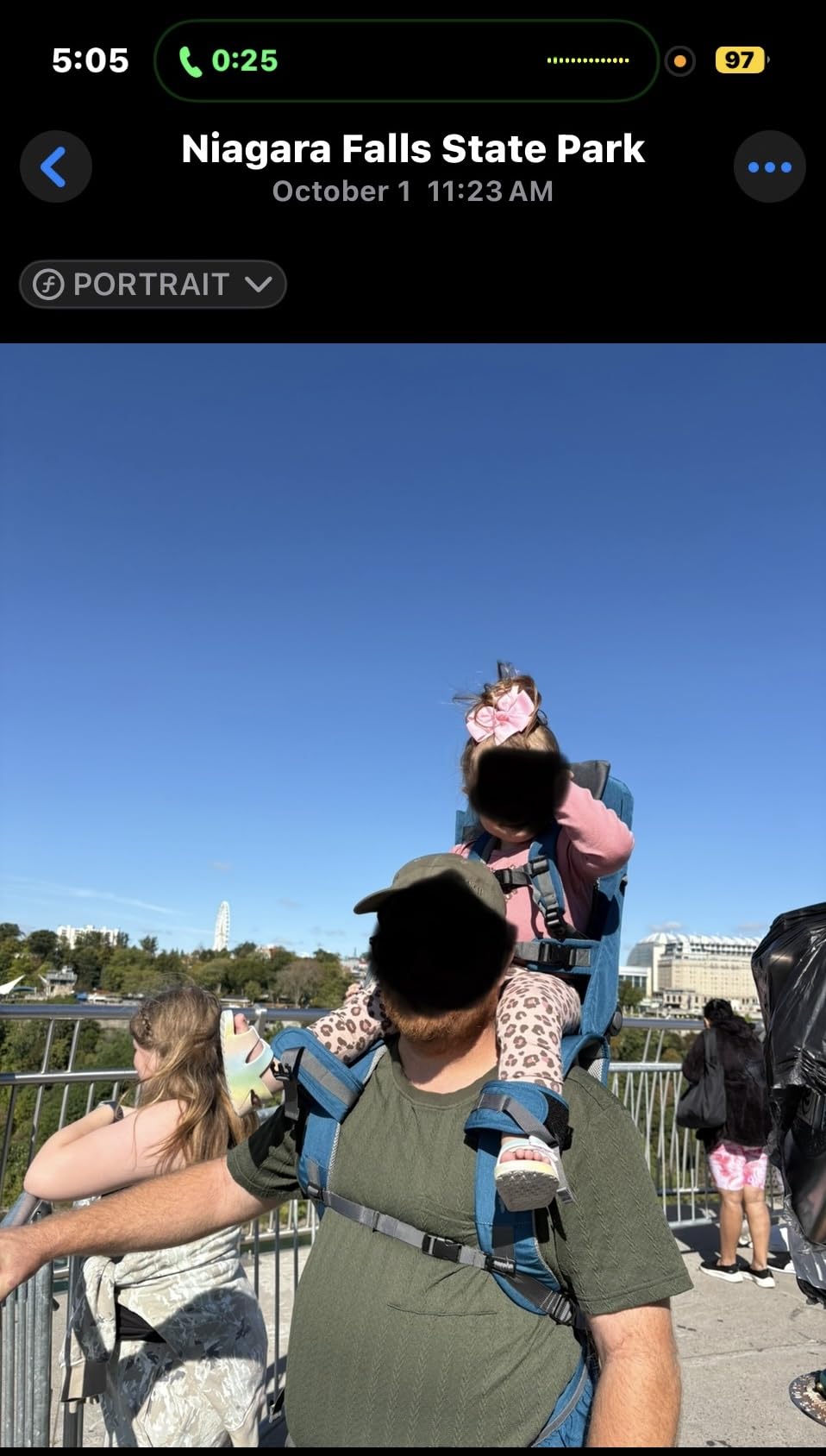
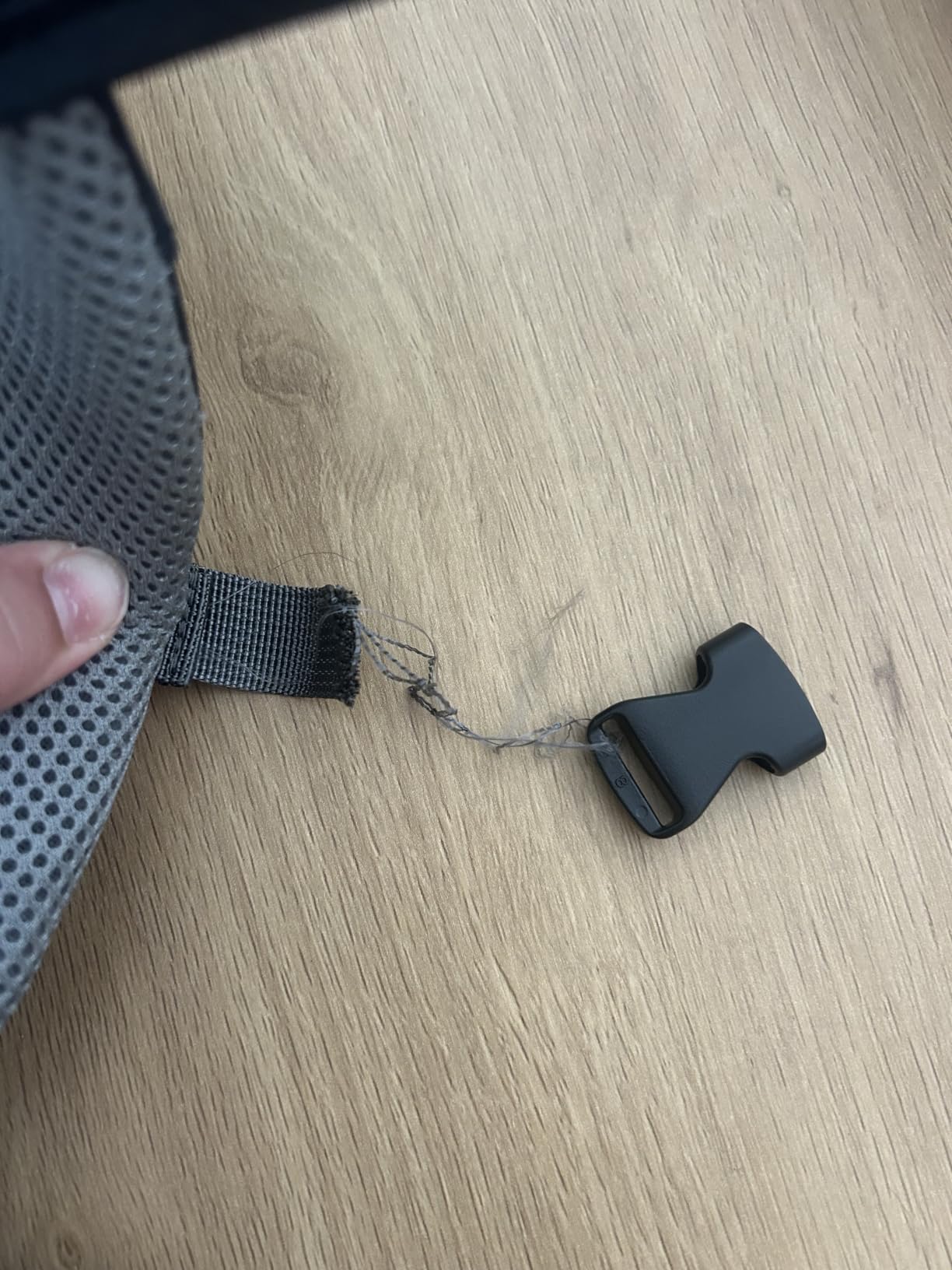
The frame is a sturdy ultra-light aluminum unit with suspension support, and the pack folds like a laptop with the detachable canopy stowing inside the back bag. Side buckles use a secure lock system that is harder for a child to release than a plain side-release buckle.
The stated range is six months to four years, from 16 to 40 pounds, and materials are described as waterproof and tear-resistant. The seat is height adjustable with a foot pedal.
Who this carrier suits
It suits parents who hike in heat, particularly in desert and southern climates where a solid back panel makes the child uncomfortable and the wearer sweaty. It also suits anyone who wants to carry a full day of gear without a separate bag.
The folding design and stowed canopy make it a reasonable travel companion if you are not after an under-seat cabin fit.
Who should skip it
Skip it if cold-weather protection is a priority. The mesh child backrest offers little insulation unless you zip something behind it.
The three-point restraint is also less secure than a five-point system, which matters most with a younger child who can lean forward. Ratings in this group also trail the rest of the set, and a higher share of three-star reviews suggests mixed experiences, so treat the comfort claims as personal rather than universal.
12. Chicco SmartSupport – Best for Stroller-Free Errands
Chicco SmartSupport Lightweight Frame Backpack Baby Carrier
Lightweight aluminum frame
5-point restraint
Two-position seat
50+ rated canopy
Pros
- Light enough to put on solo without help
- Very easy to load and unload the child
- Folds compactly and works as a stroller alternative on rough ground
- Breathable 3D mesh across the back and straps
- One owner used it for two years from newborn to age two
Cons
- Some users find it uncomfortable on the shoulders after short periods
- Child straps are awkward to adjust while seated
- Initial fit takes practice
This is the errand carrier. At a light enough weight to shoulder without help, with a built-in kickstand for loading, it replaces a stroller on gravel paths, park trails and anywhere a wagon would be hopeless. Owners describe folding it compactly and using it exactly that way.
The seat has two height positions with a padded backrest and a five-point restraint, so a child who can sit up can be secured properly. An adjustable 50-plus rated canopy covers sun and drizzle, and two small pockets hold nappies and a bottle.
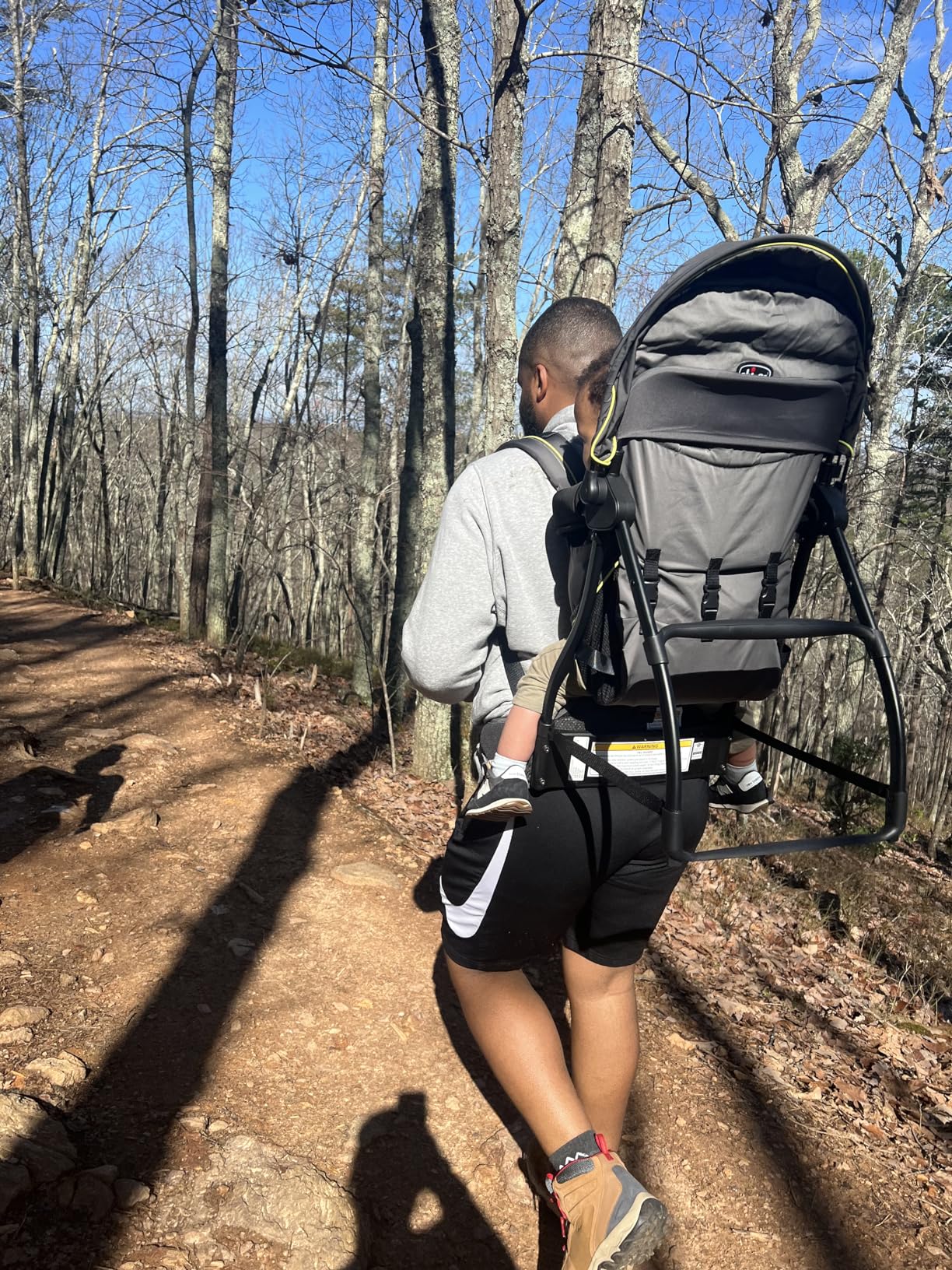
Straps are padded and ergonomic with custom fit adjustment, and 3D breathable mesh runs across the lumbar area, back and straps, which helps in warmer weather. One reviewer used it continuously for two years with a child from newborn to two years old and reports it still looks new.
The kickstand makes loading and unloading the simplest of any framed carrier here, which matters when the child is not cooperating.
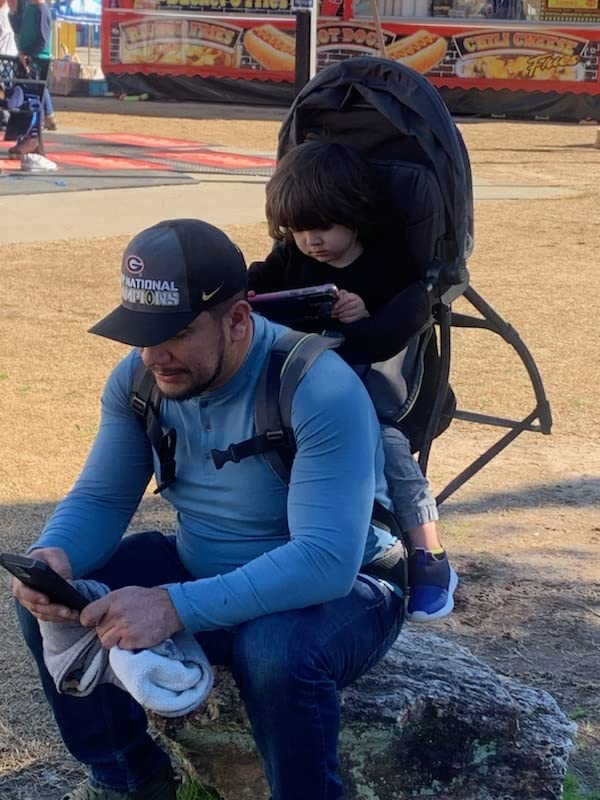
Who this carrier suits
It suits families who need a carrier for short trips around town, park paths and travel days where luggage is already awkward. It also suits a single caregiver who cannot lift a loaded pack onto their shoulders with help.
If your child is under one, this is one of the few framed options rated wide enough in the seat to grow with them across two years of use.
Who should skip it
Skip it for long days on rough trail. Shoulder comfort is the recurring complaint, and the small pocket count will not carry a full day of supplies.
Adjusting the child’s straps while seated is also awkward, and the initial fit takes practice. Spend twenty minutes dialling it in before you need it on a trail.
Toddler Backpack Carrier Buying Guide: Fit, Limits and Safety
Get the belt onto your hip bones, not your waist
Load transfer is the single thing that decides whether a carrier is comfortable. The belt should sit on the bony tops of your hips, level with the base of your spine, not down around your waist or lower back. If it sits lower, the weight climbs onto your shoulders within about twenty minutes, and no amount of strap tightening will fix it.
The second measure is torso length. Measure from the base of your neck to the top of your hip bones, and compare it against the adjustment range of the pack. Models like the Deuter Kid Comfort and the Osprey Poco LT offer six inches or more of adjustment, which is what lets two caregivers share one carrier. Short adjustment ranges are the reason some parents report weight landing on the top of their shoulders.
If you can, try a loaded pack on in a shop. Ten minutes walking with a weight in the cockpit tells you more than any specification.
Separate the child weight limit from the cargo allowance
Two different numbers get quoted and they are not interchangeable. Some manufacturers state a child limit alone, some state a total load covering child, gear and backpack, and some state both. A carrier rated for 44 pounds total is not the same as one rated for a 40-pound child plus gear.
Then do the arithmetic. A 32-pound child, two liters of water, a change of clothes, snacks and a nappy pack add up quickly, and the total can approach the frame limit before you reach the end of a long trail. Carry the heavy items close to your back and use the under-seat compartment rather than hanging bags off the outside.
Tall toddlers are a separate trap. Many parents find their child outgrows the cockpit by height long before they reach the stated weight ceiling, with feet cramped and shoulder straps barely clearing a jacket. Check whether the manufacturer gives a height figure as well as a weight one.
Know when your toddler is actually ready
Head control and the ability to sit unaided matter far more than the month number. Most framed carriers list a floor around six months, and that floor exists for a reason: a child without head control cannot be stabilised in a moving frame, and the load on the wearer’s shoulders increases as they slump.
Parents on baby-wearing forums consistently describe starting with a soft-structured carrier in the first year and moving to a framed pack when the child could sit and hold on. That progression also lets you learn the loading and unloading routine before a trail is waiting for you. If you are still buying for the first stage, our baby carrier roundup covers the soft and stretchy options in detail.
Check the restraint hardware before you buy
Look for a five-point restraint with a chest clip, straps that cannot slide down over time, and foot stirrups that keep legs from dangling. Child-lock side buckles are worth having on any carrier a toddler can reach, because a two-year-old can release a plain side buckle when they decide to.
A sunshade matters more than most roundups admit. Parents in hot, exposed regions call it out as the feature that decides a purchase, and a detachable cover that doubles as a wind and rain shield covers more conditions than a fixed canopy. For cold weather, check whether the child backrest can be covered, because mesh panels offer almost no insulation.
Also check that the carrier has been tested to a recognised standard such as ASTM F2549 for child carriers, and look for a stated frame rating. Most importantly, before buying used, check the lot or model numbers against the current recall list at the US Consumer Product Safety Commission, because frame hinges and leg openings have been subject to recalls in recent years.
Match storage to the length of your outing
For outings under two hours, you need room for a nappy, a bottle, a snack and a layer. Almost every carrier here covers that, and anything above about eight liters is generous. For a half-day, add water, a change of clothes and a small first-aid kit, which is where the larger under-seat compartments start earning their place.
For full days and overnight trips, look for 20 liters or more of storage and a hydration sleeve or insulated pocket, plus waist belt pockets so you are not unloading the whole pack to find a tissue. Pack heavy items close to the back panel and low on the frame to keep the centre of gravity close to your hips.
Finally, plan for the transport between the car and the trail. The packs that fold flat, like the OE OUR EXPEDITION and the Osprey Poco LT, disappear into a boot or a carry-on. The tallest framed designs are fine at the trailhead but awkward everywhere else.
Frequently Asked Questions
What is the best backpack carrier for a toddler?
For most families the ClevrPlus Cross Country is the strongest first buy: a 5.5 lb one-piece frame, a padded hip belt with lumbar support, both a sun canopy and a rain cover, and an adjustable seat rated from 9 to 48 months up to 33 lbs. If you hike long distances in heat, the Deuter Kid Comfort is worth the extra for its ventilated mesh back and hip fins. If you mostly travel, pick the model that folds flat.
Can a 2 year old go in a baby carrier?
Yes, as long as they can sit unaided with good head control, which most two-year-olds manage comfortably. Check two numbers: the child weight limit and the child height limit. A two-year-old sitting in a cockpit sized for a younger child can end up with cramped feet and shoulder straps that do not close over a jacket. If your child is near the weight ceiling, wait or move up a size.
What is the best travel backpack carrier for a toddler?
The OE OUR EXPEDITION Shoulder Carrier is built for travel. It weighs 4.4 lb with the detachable backpack attached and 3.4 lb without it, folds flat enough for cabin luggage or stroller storage, and carries a child up to 45 lbs. The Osprey Poco LT is the alternative if you want a brand-backed steel folding frame, 6 inches of torso adjustment and a machine-washable body for frequent use.
Can you carry a 3 year old in a hiking backpack?
You can, but check height before weight. A three-year-old often outgrows the cockpit by height first, with cramped feet and shoulder straps barely clearing a jacket, even while weighing less than the stated limit. Models that quote a height figure alongside pounds, such as the WIPHA rated to 39 inches and 40 lbs, tend to age better with a tall three-year-old. Expect the load to feel noticeably heavier than at age two.
Are hiking baby carriers worth it?
They are worth it if you would otherwise give up on walking with your child, and they are not worth it if you mostly stay on paved paths where a stroller works. The value comes from carrying your child on terrain a stroller cannot handle while keeping your hands free. If you hike weekly they earn their cost quickly; if you plan two trips a year, renting one or buying used is the sensible route.
What are the disadvantages of using a baby carrier?
The main disadvantages are load on the wearer, heat, and one-sided entry. If the hip belt does not sit on your hip bones, the weight moves onto your shoulders and long days hurt. Framed packs also run warm against your back and the child’s back. Loading and unloading is harder than picking up a soft carrier, and you cannot easily hand the child to someone else mid-walk.
Final Verdict: Which Toddler Backpack Carrier Should You Buy
The best baby backpack carriers for toddlers all share one non-negotiable feature: a belt that sits on your hip bones. Start there, then pick by where you actually go. The ClevrPlus Cross Country covers the most ground for the least fuss, the Deuter Kid Comfort handles long days in heat, and the OE OUR EXPEDITION folds flat when the trip involves a plane.
Whatever you choose, try it loaded before the trailhead, check the recall list if you buy used, and remember that most toddlers outgrow the cockpit by height before they reach the weight limit. Get the fit right once and the same carrier will carry you through several years of walks.