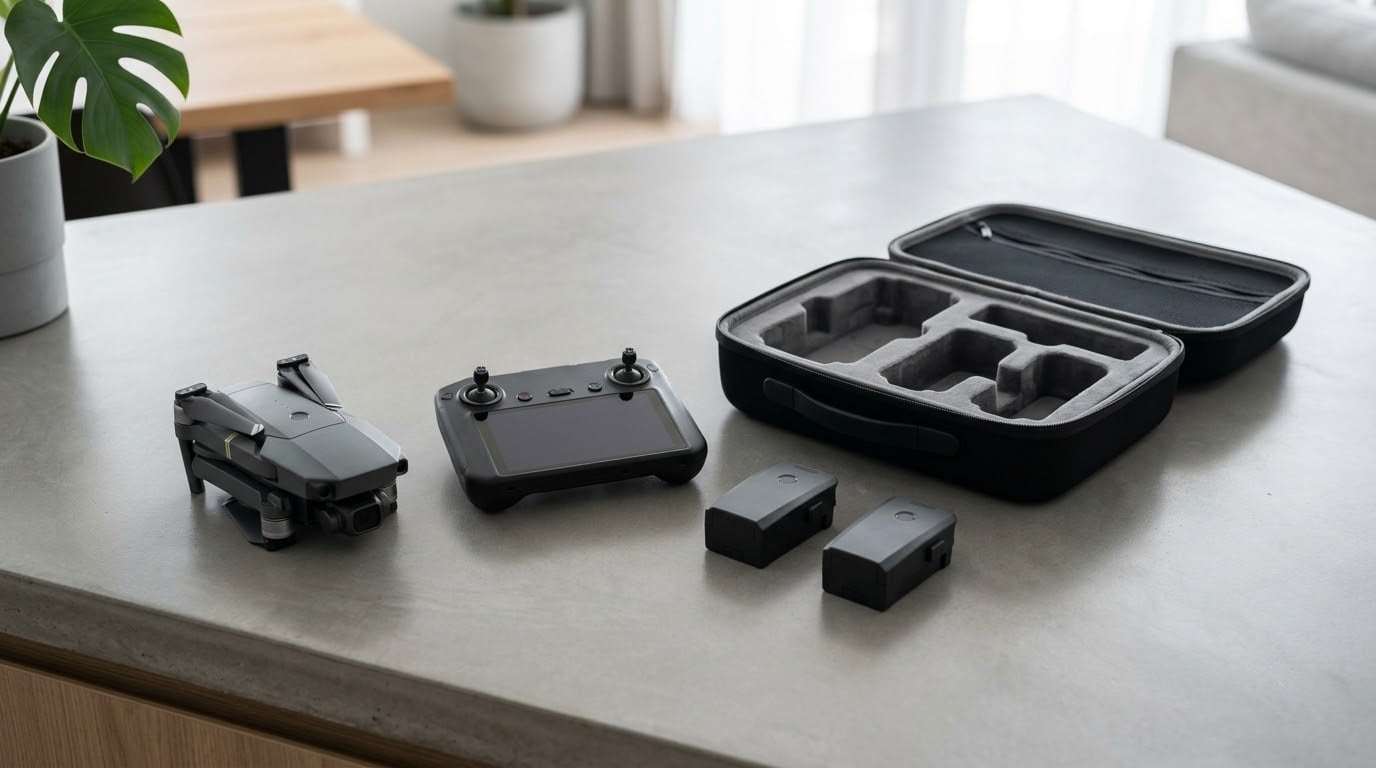
Amazon’s Prime Big Deal Days sale lands October 6-7, 2026, and the Holy Stone HS175D is the drone to watch most closely during it. It weighs 7.58 ounces, needs no FAA registration, returns itself home on a lost signal and flies for up to 46 minutes across two batteries, which makes it the least risky first purchase on this list. The DJI Neo suits anyone who wants something that fits in a pocket, and the DJI Mini 4K is the pick for buyers who care more about smooth footage than flight duration.
Eight drones made the cut, from a 4.06-ounce toy-grade model to a gimbal-stabilized sub-249g flyer with obstacle sensing. None of this is a price list. Every deal changes through the event, so use the buttons to see today’s number.
Table of Contents
Our Top 3 Picks for Best Amazon Prime Big Deal Days Drone Deals

Holy Stone HS175D
- Under 249g so no FAA registration
- 46 minutes across two batteries
- GPS Return-to-Home
- 4K stills on a 110-degree lens

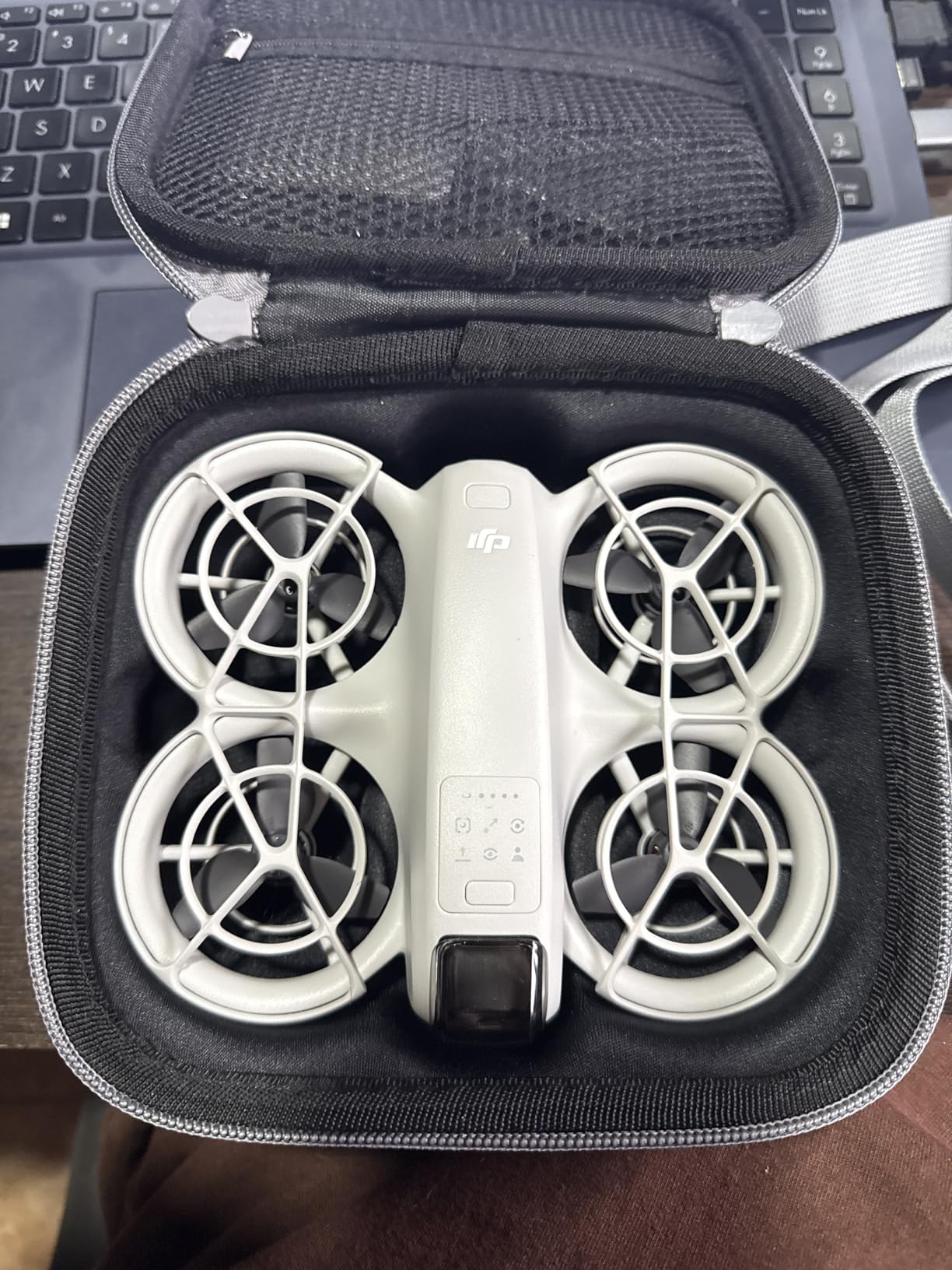
DJI Neo
- 135g with full propeller guards
- Palm takeoff and landing
- Subject tracking and QuickShots
- Controller-free or app control

DJI Mini 4K
- 3-axis mechanical gimbal
- 10 km video transmission
- Level 5 wind resistance
- Under 249g with no registration
Best Amazon Prime Big Deal Days Drone Deals Compared (October 2026)
| Product | Specifications | Action |
|---|---|---|
| Holy Stone HS175D |
|
Check Deal Price |
| DJI Neo |
|
Check Deal Price |
| DJI Mini 4K |
|
Check Deal Price |
 DJI Mini 3 Fly More Combo DJI Mini 3 Fly More Combo |
|
Check Deal Price |
 Ruko U11MINI 4K Ruko U11MINI 4K |
|
Check Deal Price |
 RELIDOL X62 RELIDOL X62 |
|
Check Deal Price |
 Loiley X69 Loiley X69 |
|
Check Deal Price |
 SKYROVER X1 SKYROVER X1 |
|
Check Deal Price |
How We Chose
We compared takeoff weight, flight time per battery, stabilization type, transmission range and how each controller handles a new pilot. Ratings and owner review counts on Amazon were checked on October 2026. Products with a toy-grade sensor or no return-to-home were kept only where they serve a clear buyer, such as a child learning to fly.
1. Holy Stone HS175D: The Editor’s Choice
Holy Stone HS175D GPS Drone with 4K Camera for Adults, Under 249g, Foldable RC Quadcopter with Auto Return, 46 Mins Long Flight, Follow Me, Brushless Motor, Circle Fly, Waypoint Fly, Altitude Hold
Flight: 46 min total
Video: 4K
Stabilization: electronic only
Batteries: 2
Pros
- No FAA registration needed at 7.58 ounces
- Return-to-Home lands within roughly 1-30 feet
- Two batteries give about 20-23 minutes each
- Foldable body with a carrying case included
Cons
- No mechanical gimbal so video shakes
- GPS and controller pairing frustrates some owners
- Real range falls short of the stated 500 meters
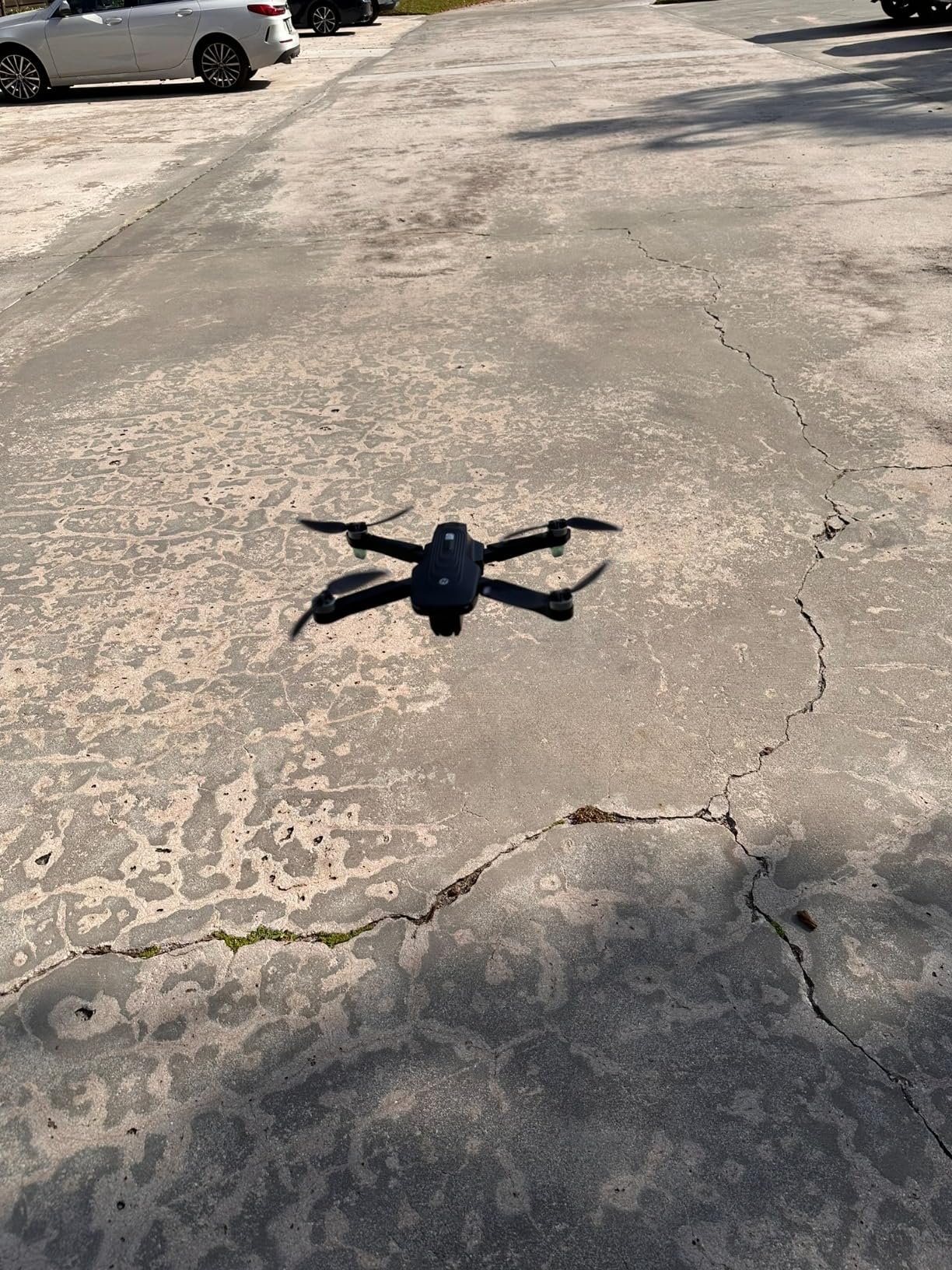
The HS175D has the deepest owner base on this list by a wide margin, and that matters more than the spec sheet when a first drone is going to be crashed into hedges. Reviewers describe a stable hover, a Return-to-Home that lands within roughly 1-30 feet of the launch point, and a set of beginner aids that are switched on by default rather than buried in a menu.
Two batteries is the quietly important detail here. Each pack gives roughly 20-23 minutes, so a single afternoon session does not end because of the battery gauge.
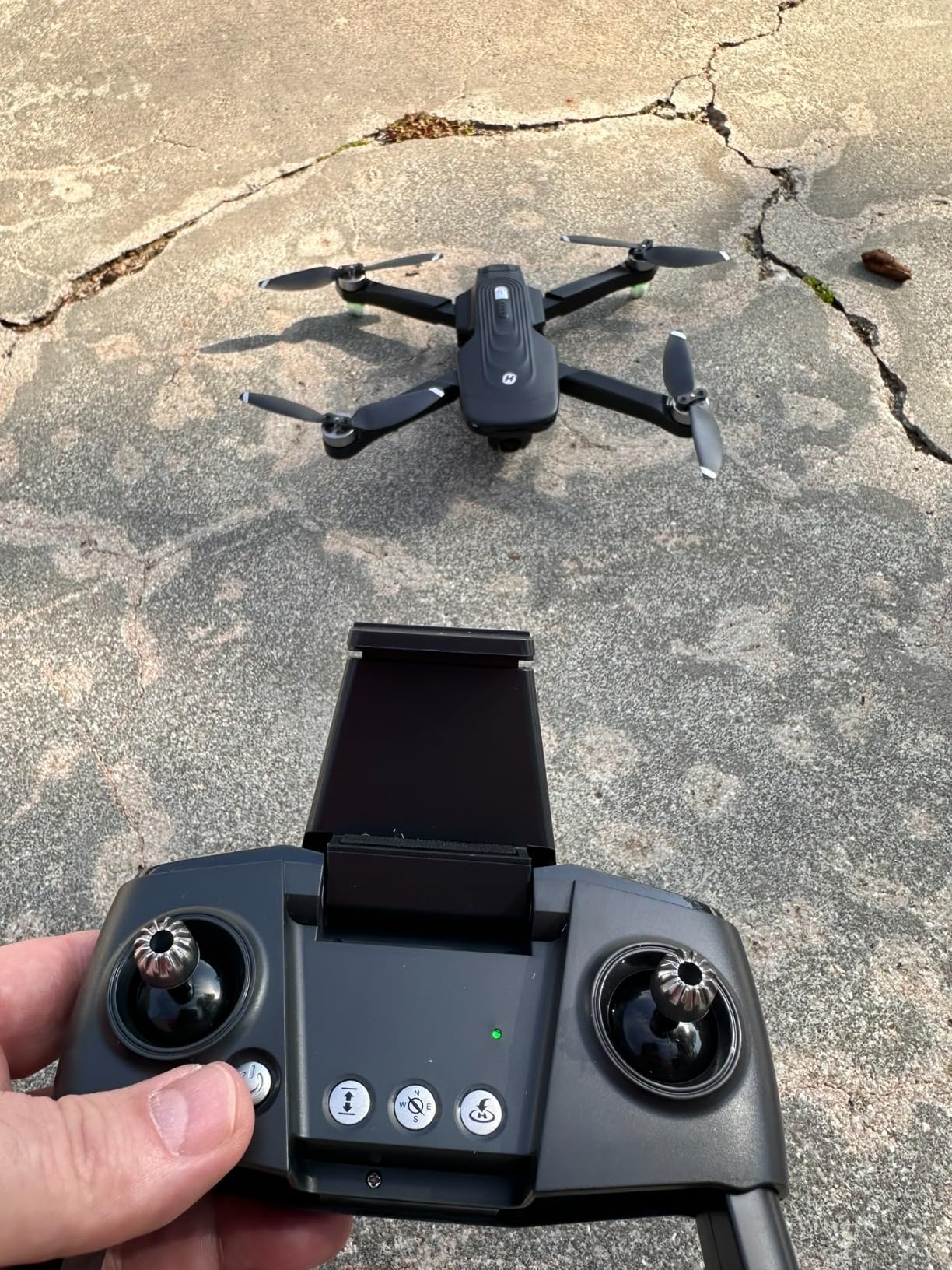
Brushless motors keep the noise down and hold up in moderate wind. Photos come out sharp through a 110-degree wide-angle lens with 90 degrees of tilt adjustment, which is more framing control than most entry drones offer.
Several reviewers who received a faulty unit report that a replacement was arranged, so check the return window when you open the box.
- 7.58 ounces, so no FAA registration or Remote ID for recreational flights
- 4K stills plus 4K video on a 5GHz FPV link
- Altitude hold, optical flow, headless mode and one-key takeoff and landing
- Follow Me, waypoint flight, point of interest and gesture control
- Folds down with a carrying case included
Skip it if smooth video is the goal. There is no mechanical gimbal, so electronic stabilization smears detail when the drone tracks over ground. The DJI Mini 4K is the step up when the footage matters more than the learning curve.
Compared with the DJI Neo, the HS175D is the safer recommendation for an adult beginner: it flies longer per session, uses an ordinary controller rather than a phone, and does not ask you to fly it near people. Owners report the wind limit is the other ceiling, since the light airframe struggles above roughly 20-30 mph.
Good to know: SD cards formatted by the drone itself can read as unreadable on a Mac, so shoot stills to internal storage until you have checked a card on your own computer.
2. DJI Neo: Best for Travel
DJI Neo, Mini Drone with 4K UHD Camera for Adults, 135g Self Flying Drone that Follows You, Palm Takeoff, Subject Tracking, QuickShots, Stabilized Video, Built-In Propeller Guard (Controller-Free)
Flight: 15 min per pack
Video: 4K
Stabilization: electronic only
Batteries: 1
Pros
- 135g so no FAA registration or Remote ID
- Palm takeoff and landing work as advertised
- Fully enclosed propeller guards for indoor flying
- Tracks subjects and runs QuickShots
Cons
- Roughly 14-15 minutes per pack with no card slot
- No vertical video mode for social posts
- Camera is over-sharpened with no zoom
Buy the Neo if the drone has to live in a jacket pocket. At 135 grams it is the lightest aircraft here, and the fully enclosed propeller guards mean it can be flown indoors or near people without the usual anxiety about exposed rotors.
It is also the one drone on this list you can launch from your palm. Reviewers consistently describe the hover as stable indoors and out, which is unusual at this size, and the Follow Me mode tracks better than expected.
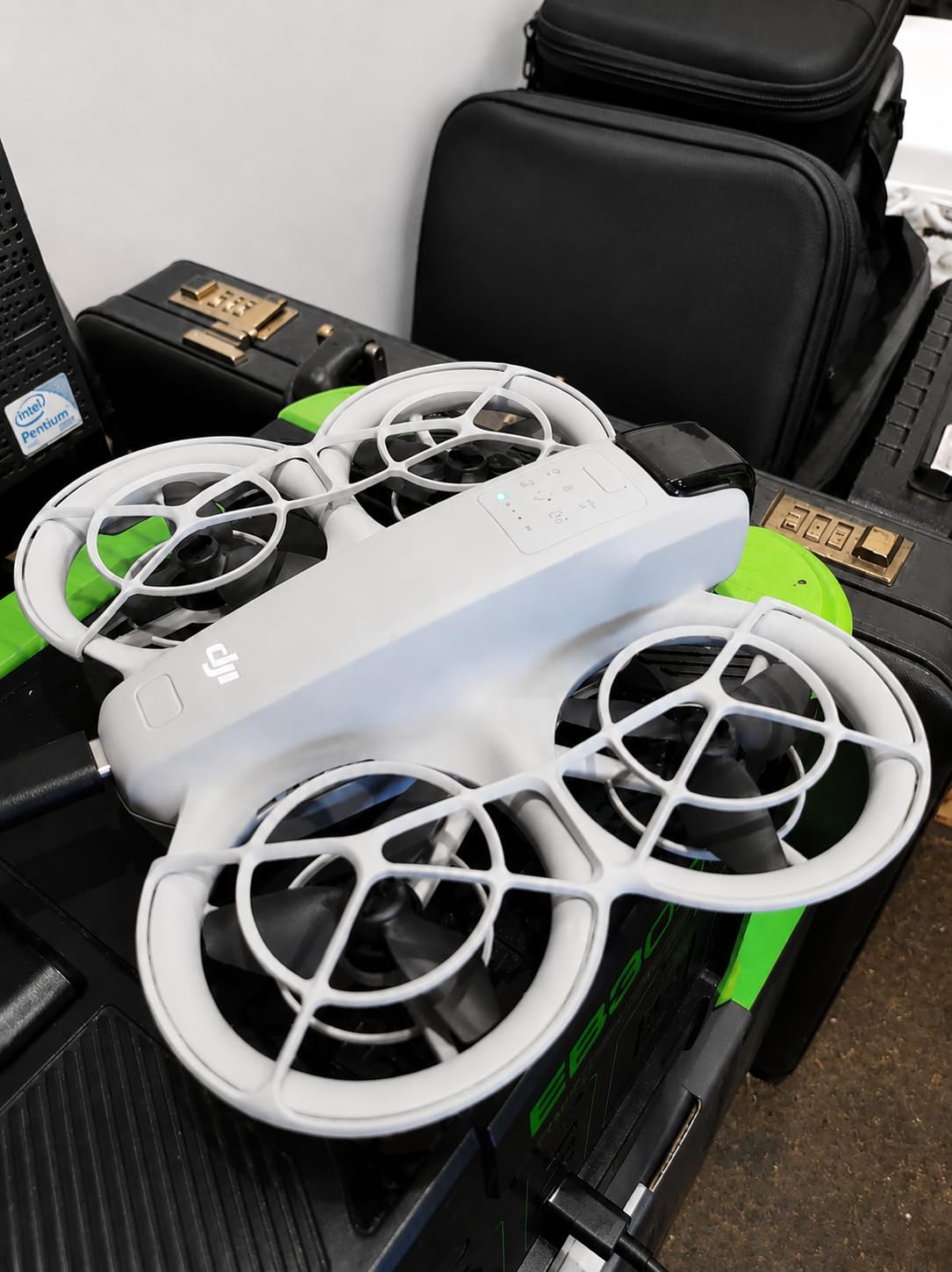
The honest catch is battery life. Owners report roughly 14-15 minutes per pack, and less again when automated modes are doing the flying. There is also no microSD slot, so about 22 GB of internal memory holds everything until you offload it to a phone.
- Controller-free, voice control, app control or an optional RC controller
- 4K ultra-stabilized video with Level 4 wind resistance
- Subject tracking and eight QuickShots modes for hands-free clips
- 4K UHD capture with a 12 MP still sensor
Against the Holy Stone HS175D, the Neo wins on size and app-driven flying and loses on endurance, since you get one pack rather than two.
Against the DJI Mini 4K it is the smaller, lighter option, but also the one with the weaker camera and the shorter flight.
Skip it if you shoot vertical content for social. Reviewers flag the missing vertical video mode as an odd omission on a drone built for quick, shareable clips, and there is no zoom.
The DJI Fly app has been pulled from Google Play, so Android users install it from DJI’s own site. That extra step is the most common source of confusion in first-time setup.
3. DJI Mini 4K: Best for Gimbal Quality
DJI Mini 4K, Drone With 4K UHD Camera, Under 249 g
Flight: 31 min per pack
Video: 4K
Stabilization: 3-axis gimbal
Batteries: 1
Pros
- Real 3-axis mechanical gimbal at an entry price
- 10 km transmission with strong anti-interference
- Holds steady in Level 5 wind at 38 kph
- No registration needed under 249g
Cons
- Single battery limits flights to about 31 minutes
- 12 MP sensor trails larger sensors in low light
- No omnidirectional obstacle avoidance
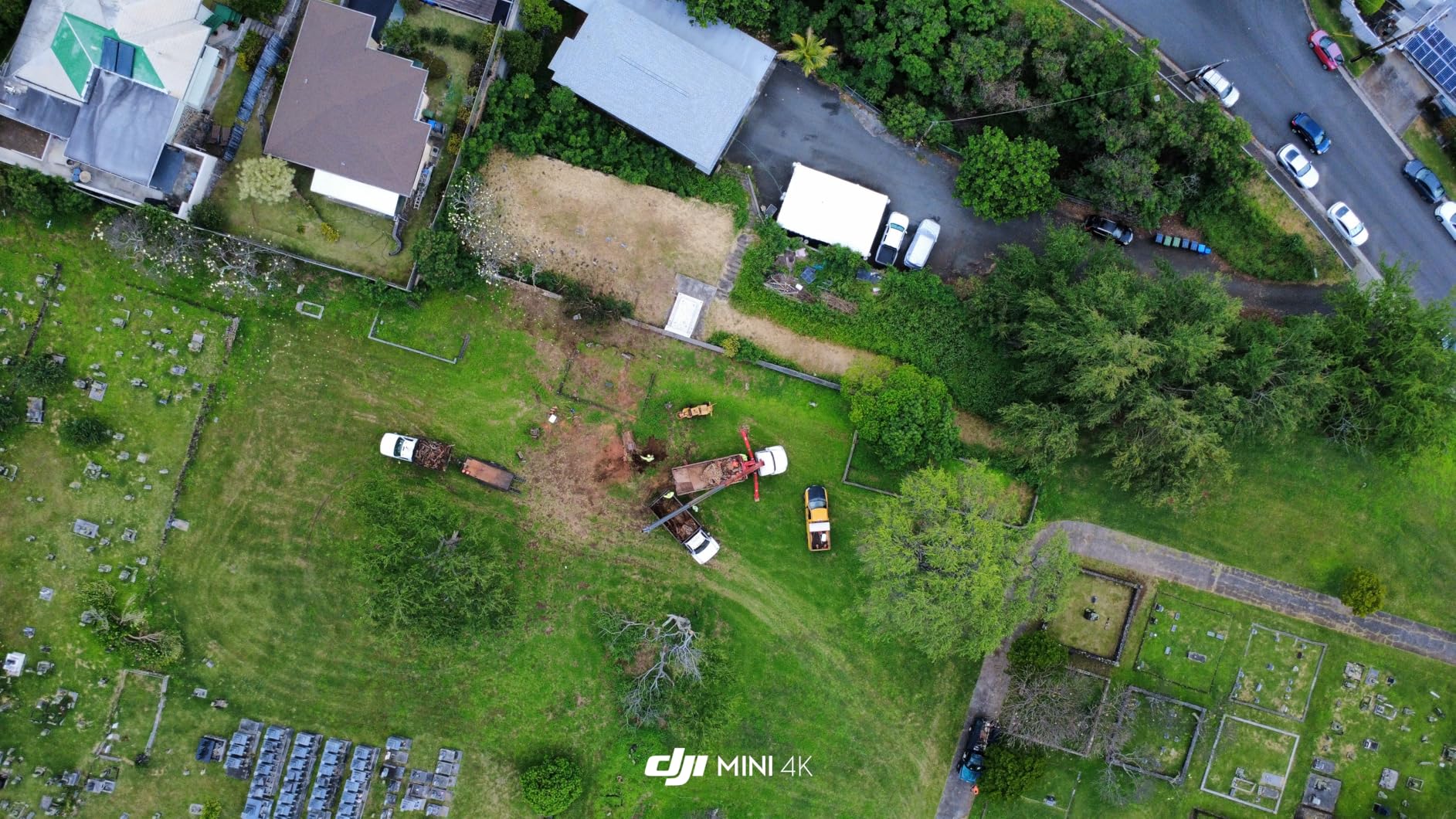
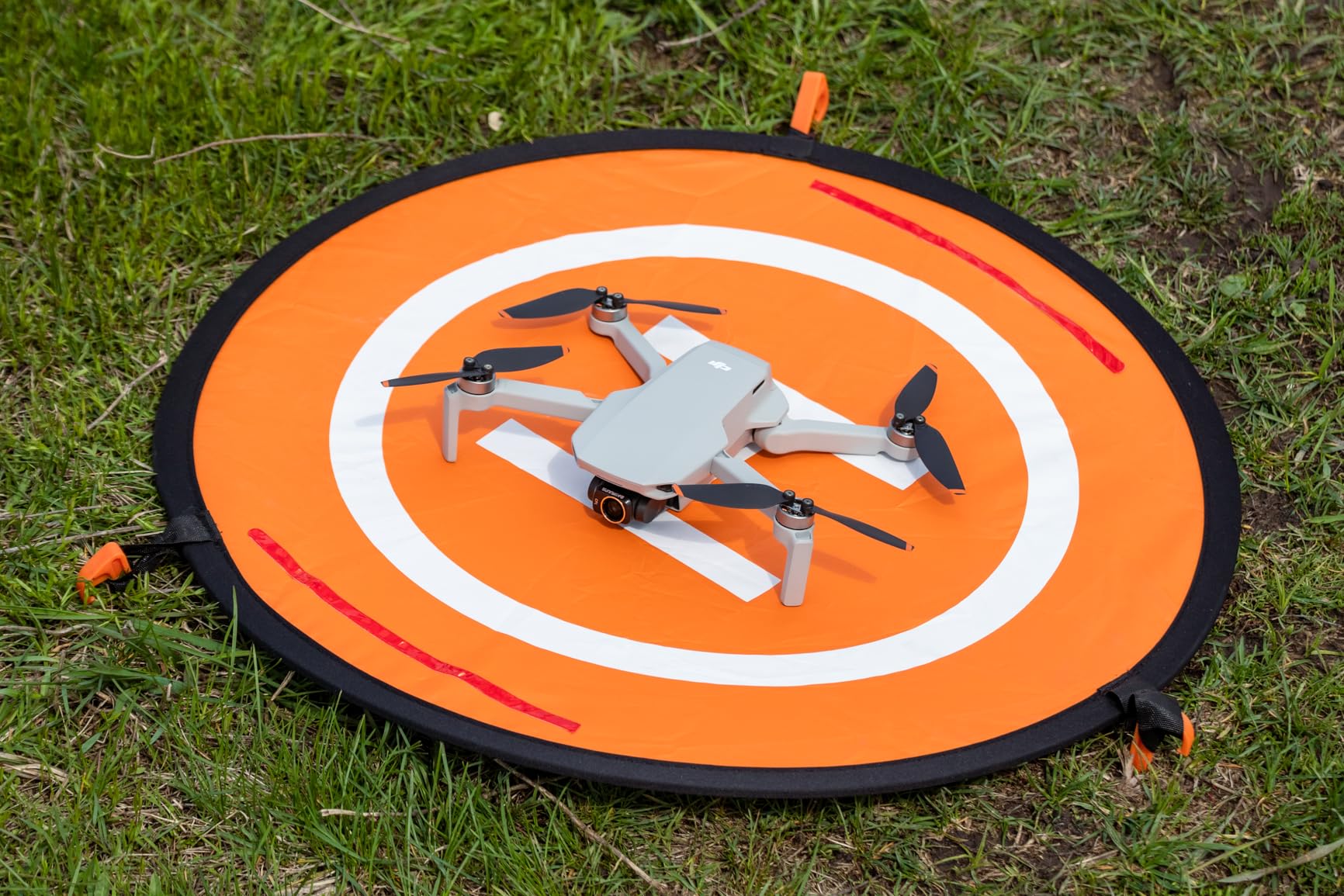
The Mini 4K is where image quality starts to change. The two entry drones ahead of it rely on electronic stabilization, which crops and warps the frame. This one holds a 3-axis mechanical gimbal, and owners consistently describe the footage as visibly smooth in a way the cheaper models cannot match.
It is also rated to hold position in 38 kph wind while staying under the 249 g registration threshold. That combination makes it the sensible pick for coastline and hillside work where a gusty day is likely.
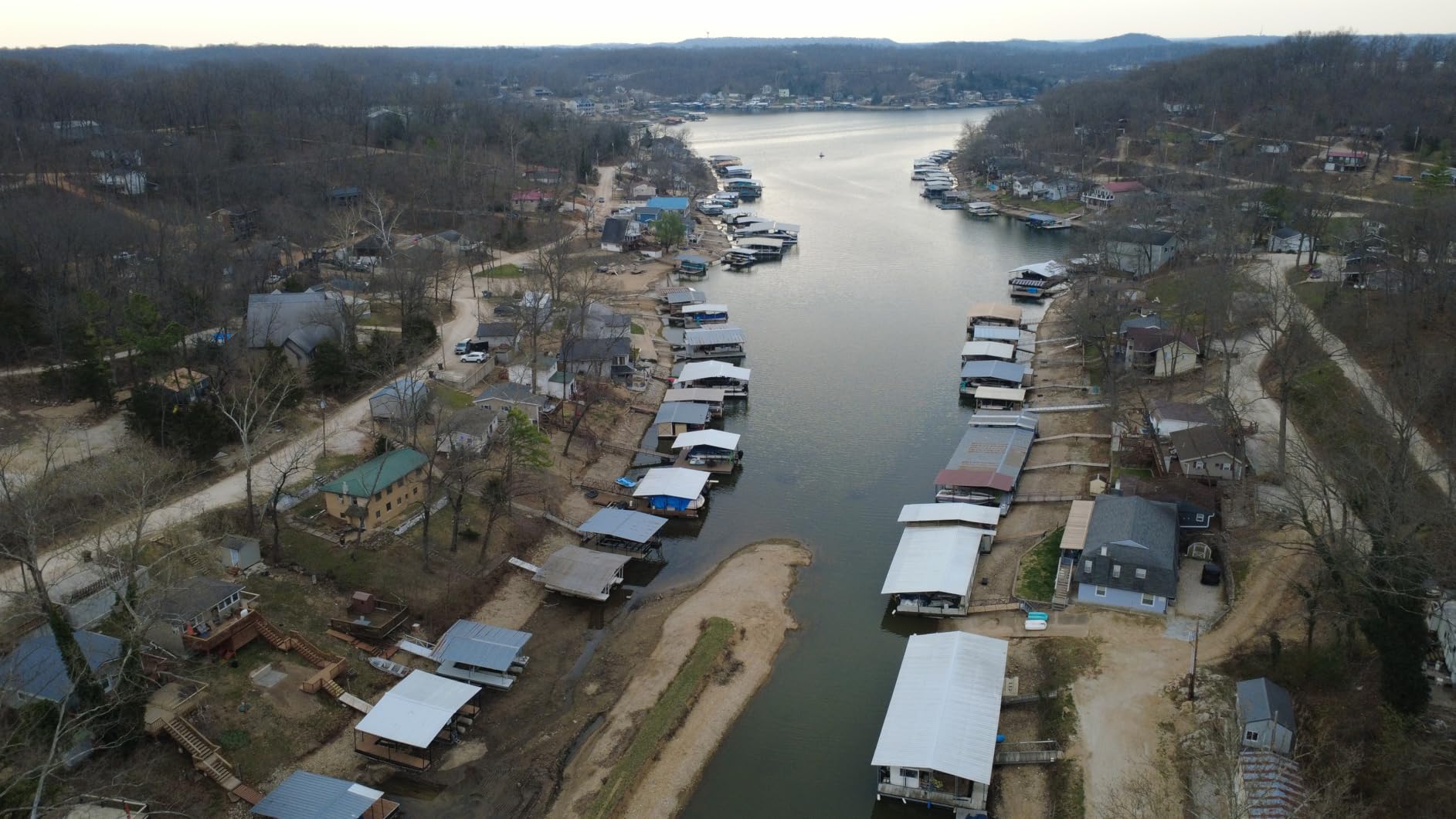
What you give up is airtime. The base box holds one battery for about 31 minutes of flight, and the two- and three-battery versions exist as separate configurations rather than a bundle you can add to. Two- and three-battery packages extend the quoted window to 62 and 93 minutes respectively.
QuickShots covers Helix, Dronie, Rocket, Circle and Boomerang, and one-tap takeoff with GPS Return to Home makes the whole thing feel manageable on a first outing. Frame it as a step up from the DJI Neo rather than a rival: the Neo is smaller and cheaper, this one shoots better and flies longer.
- Under 249 g, so no FAA registration or Remote ID for recreational use
- 4K Ultra HD on a 3-axis gimbal, DNG and JPEG stills
- 10 km max HD video transmission with 1080p live view
- Takeoff from sea level up to 4,000 m altitude
- RC-N1C remote controller included
Look elsewhere if you fly close to trees. Reviewers name the absence of omnidirectional obstacle avoidance as the main gap, and on a drone with a 10 km link the temptation to push further is real. The SKYROVER X1 covers the same weight class and adds 360-degree obstacle sensing.
Good to know: the same removed-from-Play-Store DJI Fly app applies here, and reviewers also note the 12 MP sensor holds up well in daylight but trails larger sensors after sunset.
4. DJI Mini 3 Fly More Combo: Best for Content Creators
DJI Mini 3 Fly More Combo With DJI RC, 3 Batteries
Flight: 114 min total
Video: 4K HDR
Stabilization: 3-axis gimbal
Batteries: 3
Pros
- Three batteries and a two-way hub give about 114 minutes
- 48 MP sensor with 4K HDR and Dual Native ISO Fusion
- True Vertical Shooting for social formats
- RC controller has a bright built-in 5.5-inch screen
Cons
- No omnidirectional obstacle avoidance
- Real flights run 20-30 minutes per pack
- Hub storage drains batteries over time
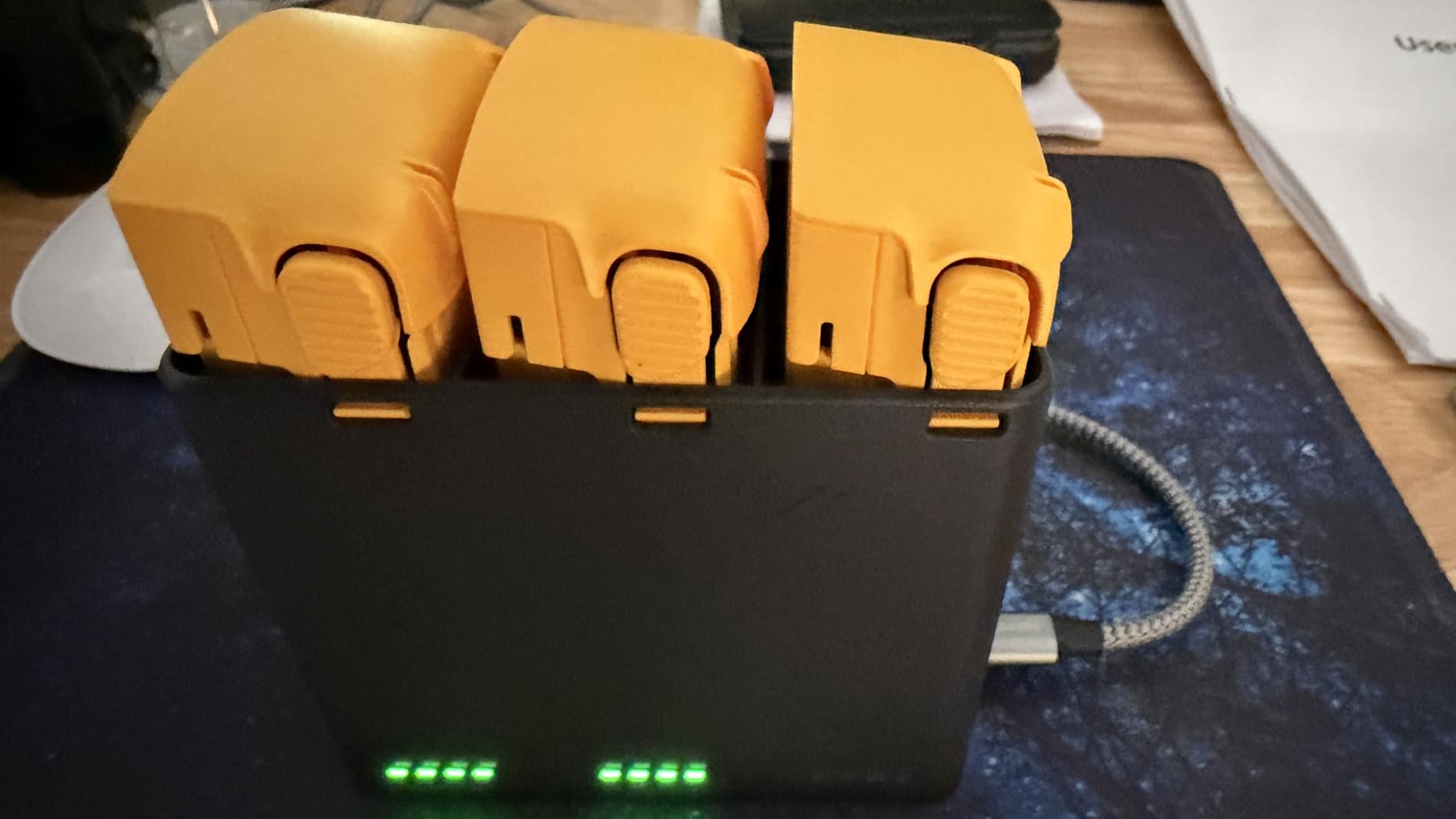
This is the package that removes the single biggest annoyance in drone ownership: waiting for batteries. Three Intelligent Flight Batteries and a two-way charging hub add up to roughly 114 minutes of total flight, which turns a hobby into something you can actually shoot a day of footage on.
The 48 MP sensor is a real jump from the 12 MP on the Mini 4K, and True Vertical Shooting means tall social posts come out framed correctly instead of cropped from a horizontal frame.
Owners rate the RC controller’s 5.5-inch HD display as readable in direct sunlight, and it spares your phone battery on a long session. QuickTransfer pushes files over Wi-Fi at up to 25 MB/s, so card-swapping is optional rather than mandatory.
- Under 249 g, so no registration or Remote ID for recreational flights
- 4K HDR video with Dual Native ISO Fusion and 48 MP photos
- Level 5 wind resistance, 10 km HD transmission, 3-axis gimbal
- Shoulder bag, two-way charging hub and three batteries included
Pick the Mini 4K instead if the budget is tight or you fly once a season. This bundle exists to solve battery logistics, and if you would only charge one pack at a time you are paying for capacity you will not touch.
Two things owners do complain about. The plastic airframe feels thin in the hand because of the weight budget, and batteries left in the charging hub during storage drain noticeably. Return to Home otherwise lands within a couple of feet of the take-off point for most buyers.
Budget real per-battery flight at 20-30 minutes rather than the quoted figure, and learn the return behaviour before you fly far from home: a small number of owners report control link dropouts that trigger an automatic return.
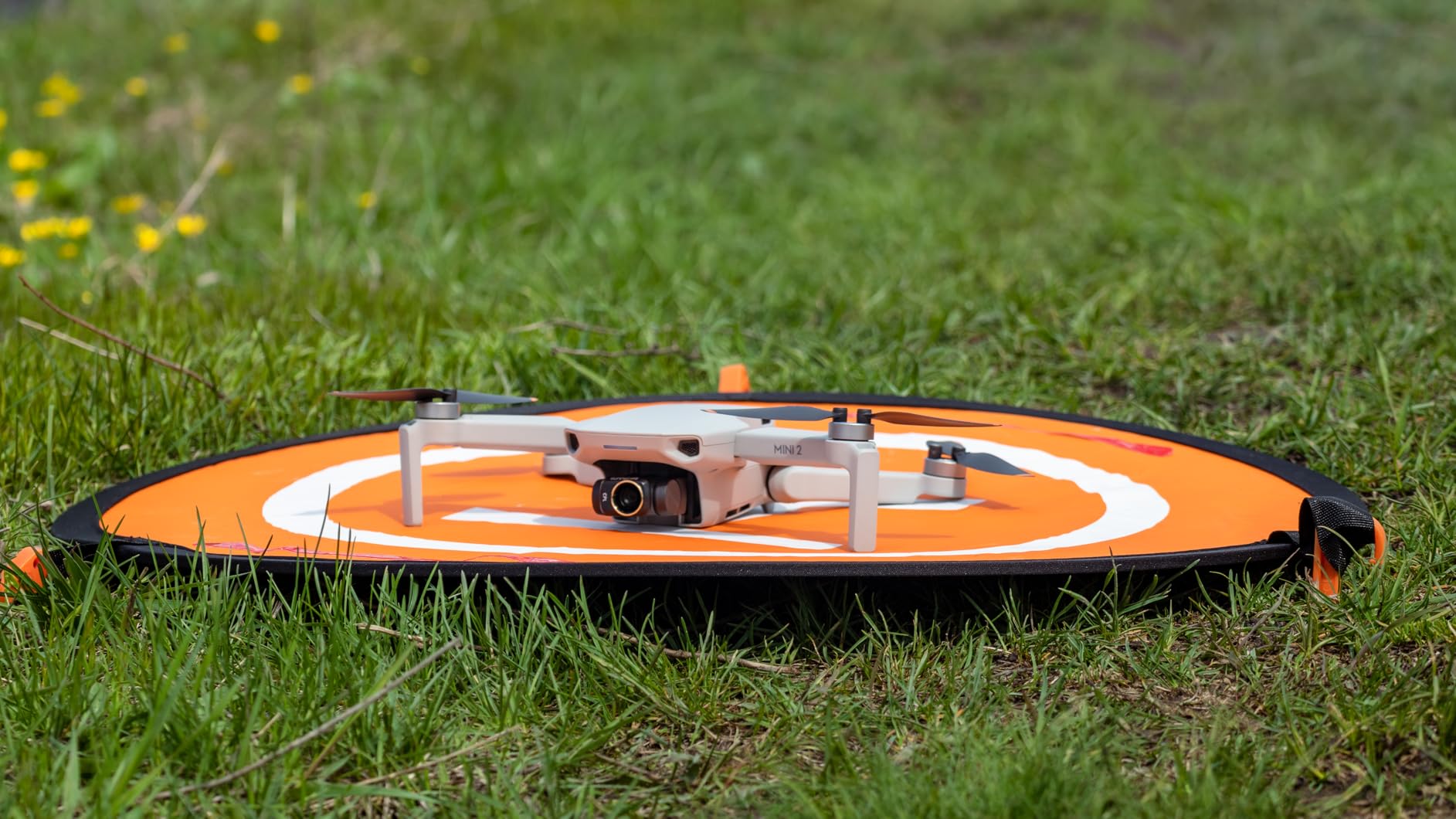
5. Ruko U11MINI 4K: Best for Touchscreen Flying
Ruko U11MINI 4K (RC3) Camera Drone for Adults with 5.5″ Touchscreen Remote
Flight: 64 min total
Video: 4K/30fps
Stabilization: 3-axis gimbal
Batteries: 2
Pros
- Integrated 5.5-inch 1080P touchscreen controller
- 3-axis brushless gimbal on a 1/2-inch CMOS sensor
- Two batteries give about 64 minutes total
- Under 249g with no registration needed
Cons
- Screen brightness is unlisted and can struggle in sun
- Non-DJI app ecosystem means fewer updates
- Ruko recommends its own PD65W charger
The U11MINI is the answer for anyone who has lost a phone cable mid-flight. The controller has a 5.5-inch 1080P touchscreen built in, so there is nothing to tether and no phone battery to drain.
It also punches above its class on the camera. A 1/2-inch CMOS sensor sits behind a 3-axis mechanical brushless gimbal, which is a step up in low light from the 12 MP sensors used elsewhere at similar weights.
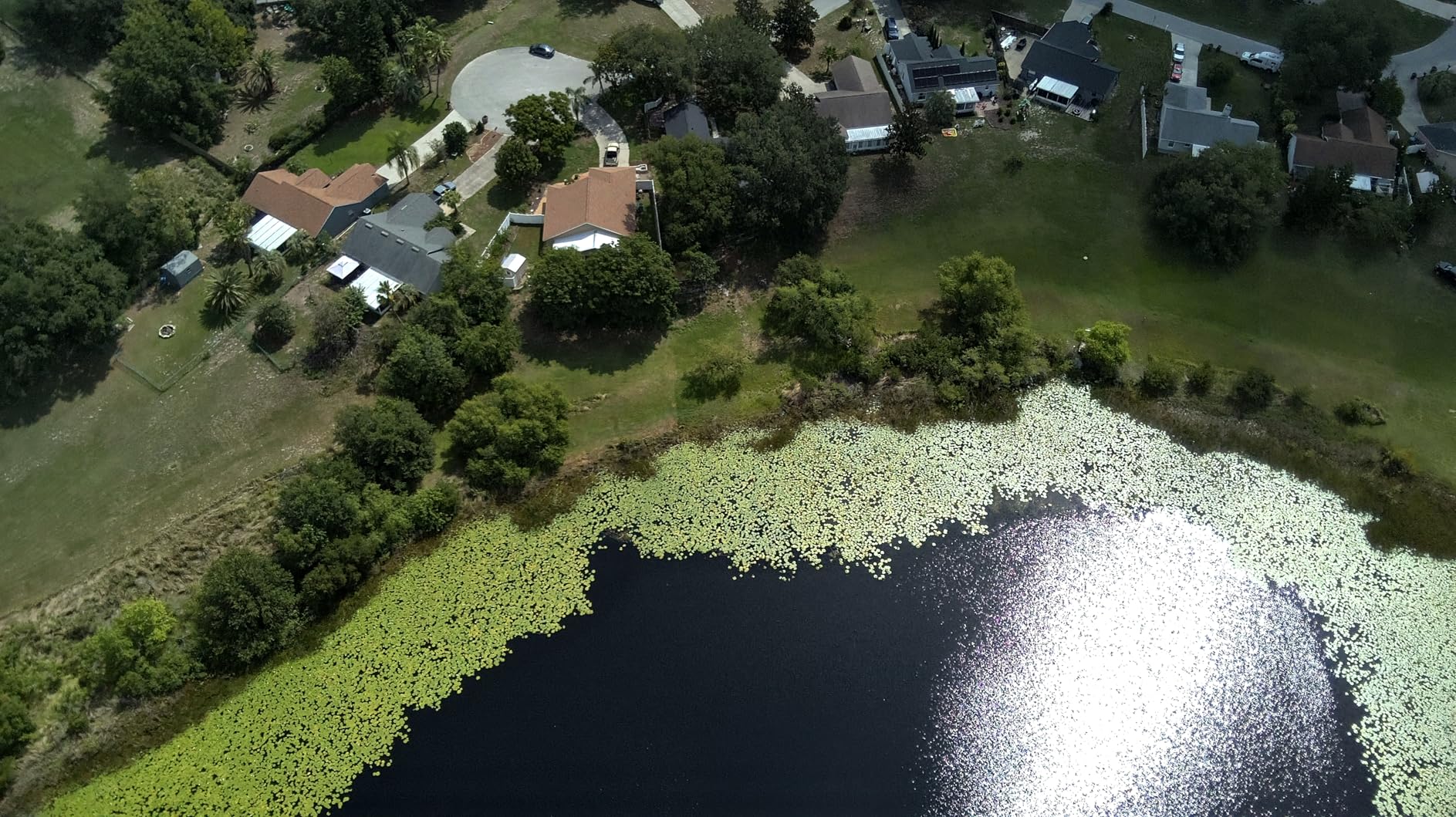
Positioning is thorough: GPS, barometer, time of flight and optical flow all work together, with one-key and failsafe return on low battery or a lost link. A built-in beeper and home-point refresh make finding a downed drone in tall grass far less of a problem.
- 20,000 ft transmission over the R2 digital system, working without Wi-Fi
- Two intelligent batteries with PD 3.0 fast charging
- AI takeoff and landing with one-key and failsafe return
- Carrying case, spare propellers, screwdriver and screws in the box
Compared with the DJI Mini 3 Fly More Combo, this one matches its 5.5-inch touchscreen size but offers 64 minutes of flight against roughly 114. If you already own DJI gear, the DJI ecosystem is the better long-term bet.
Owners report relatively few substantive complaints. The recurring ones are practical: screen brightness in direct sun is not specified, and outside of DJI the app and firmware cadence moves more slowly. The 8K photo mode is a still-image resolution claim rather than 8K video, so do not buy it for that reason.
Charge it with the charger Ruko recommends for the advertised PD 3.0 speed. A generic USB-C brick will charge, just slower than the box suggests.
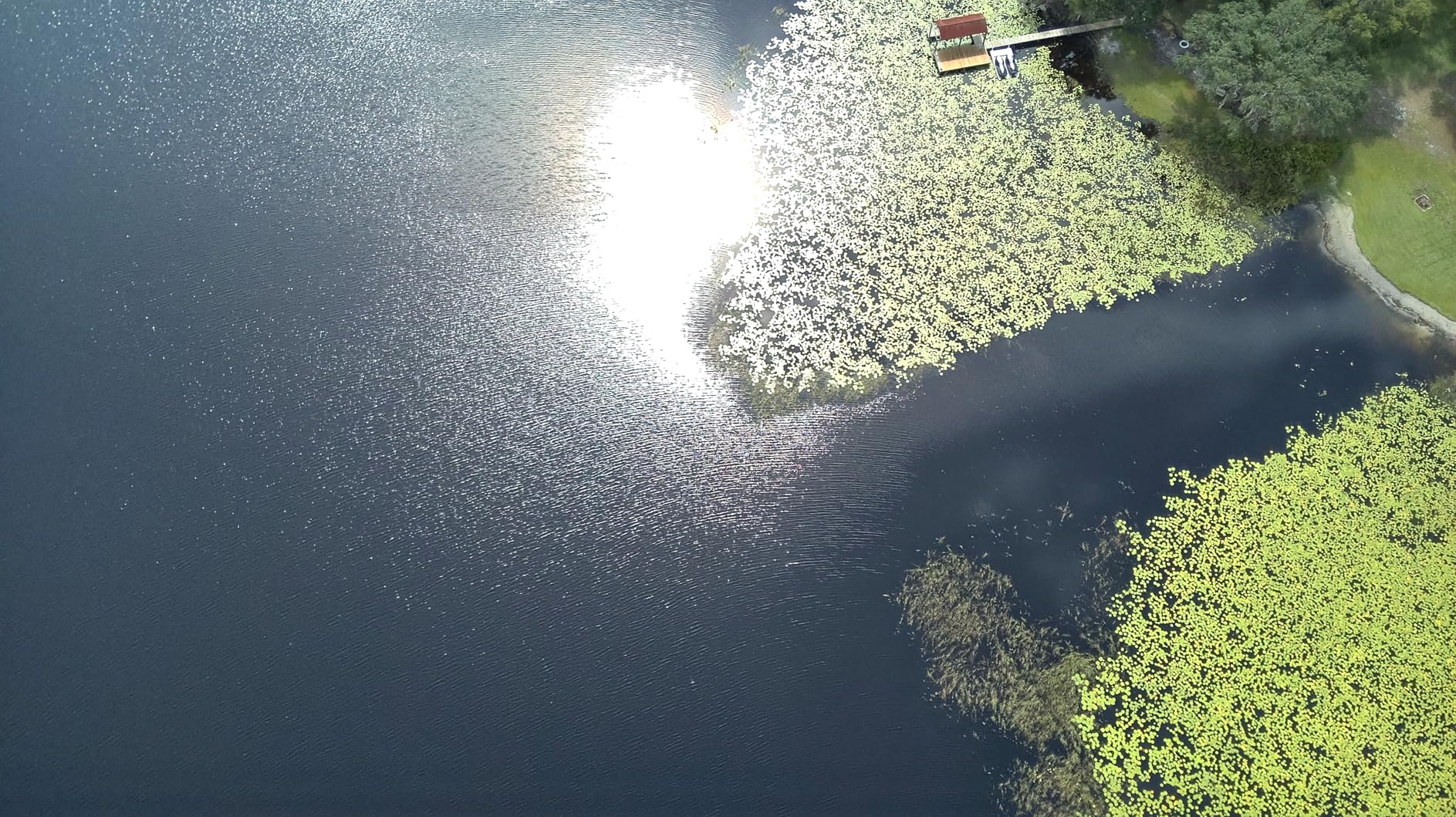
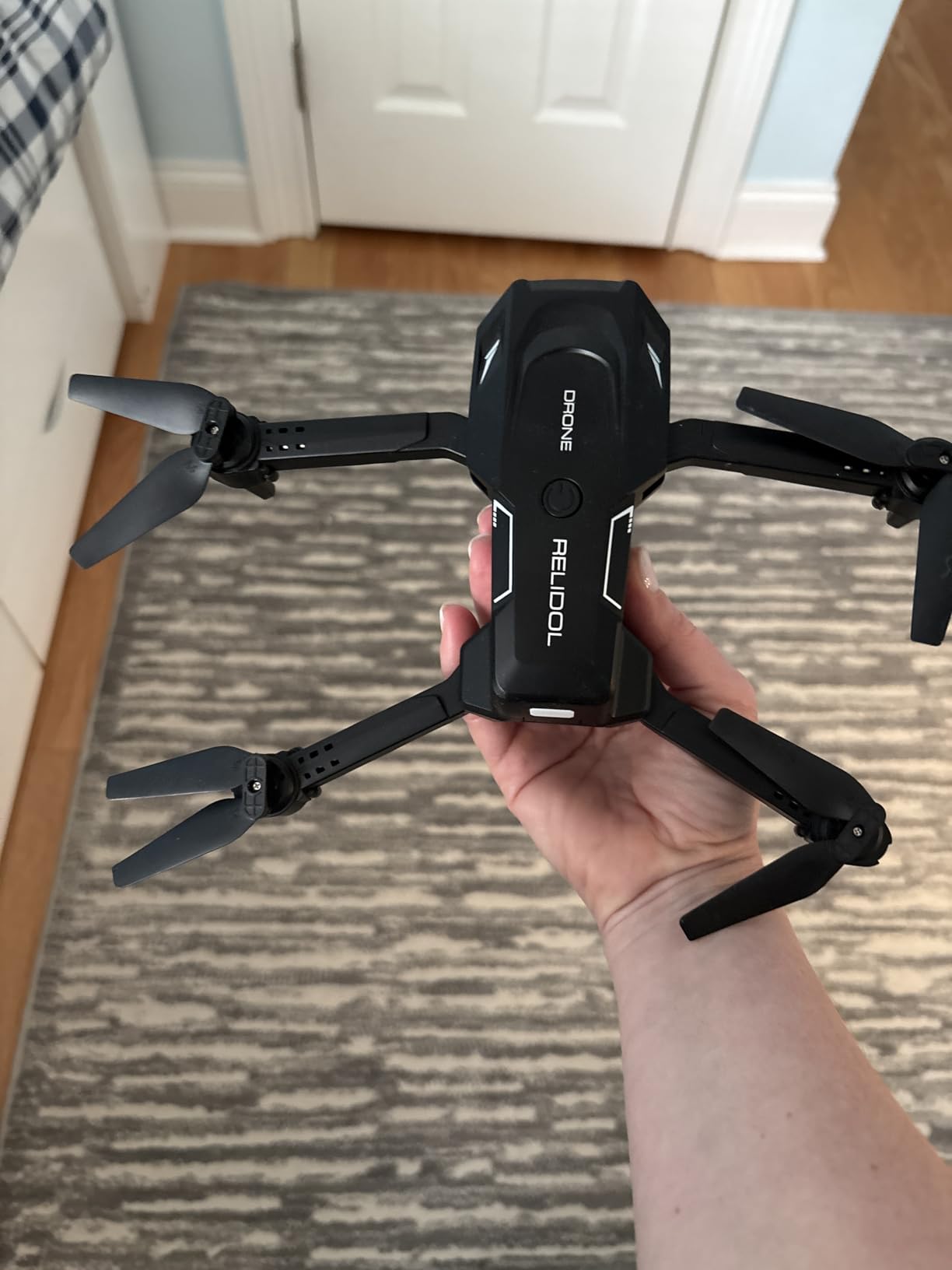
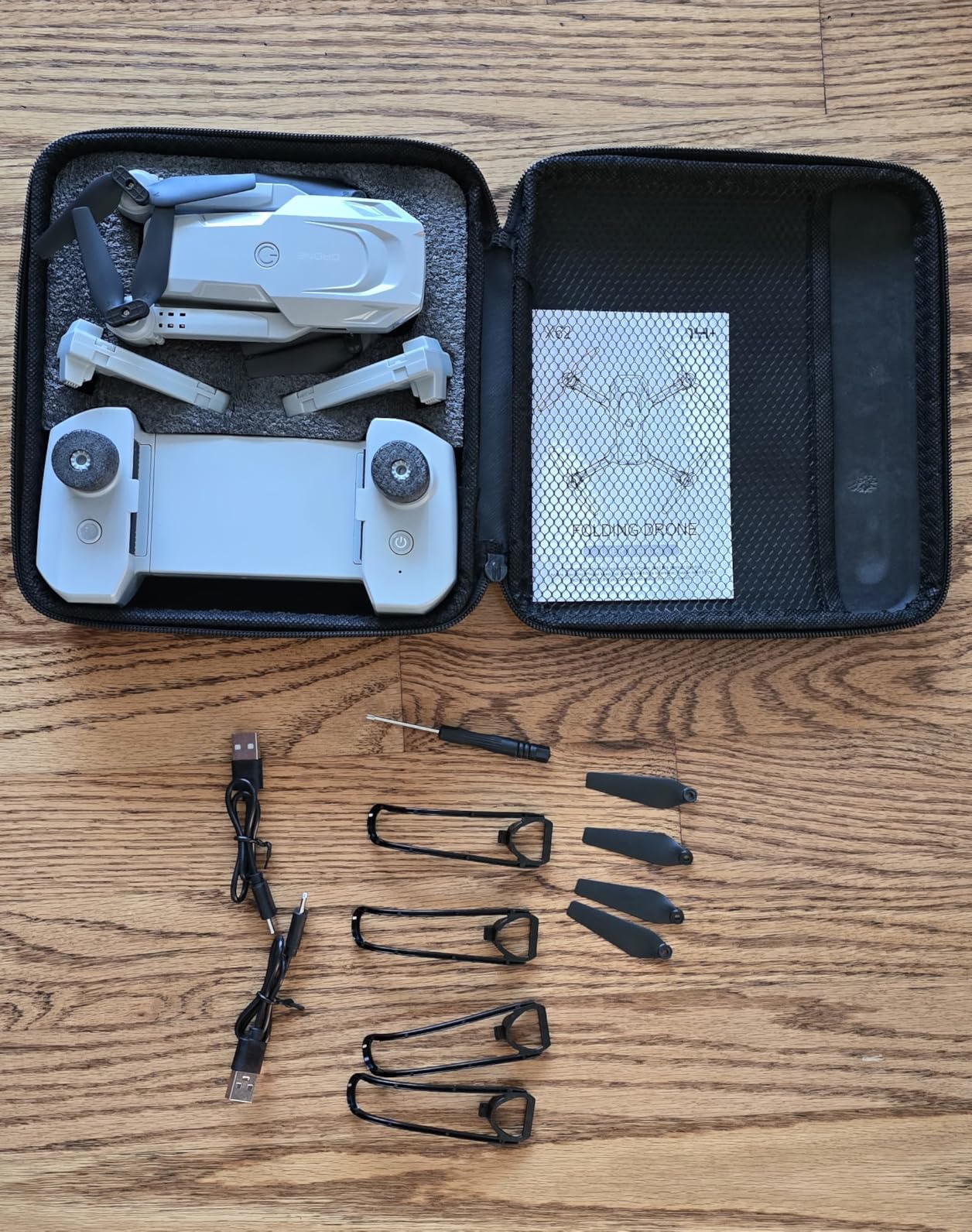
6. RELIDOL X62: The Budget Pick
Drone with 1080P Camera – Foldable Remote Control RC Quadcopter FPV Drone
Flight: 25 min total
Video: 1080P
Stabilization: none
Batteries: 2
Pros
- Survives hard crashes without breaking
- Two batteries give about 25 minutes total
- Propeller guards make it safe around kids
- Folds small enough for a vest pocket
Cons
- No GPS return-to-home at all
- 2 MP stills mean 1080P video is the only real output
- Range and live view cut out around 30 meters
Treat the X62 as a durable toy rather than a camera platform. One owner reported a 15-foot fall into a tree that left the propellers intact, which is roughly the point: it costs little, it is replaceable, and it will not ruin your day.
Two batteries stretch flight to around 25 minutes, and the one-key takeoff and landing stops the panicked slams that ruin cheaper drones in the first ten minutes of ownership.
Reviews describe the learning curve as almost nil. A five-year-old can control it confidently, voice and gesture control are both present, and there are 360-degree flips, waypoint flight, gravity control and three speed gears to explore once the basics settle.
- 4.06 ounces and folds down for a pocket or a small bag
- 1080P camera with an 80-degree adjustable lens and app preview
- Altitude hold, optical flow and air pressure sensing for steady hovering
- Emergency stop, four propeller guards, child lock and low power alarm
Buy the Loiley X69 instead if a phone-based 2K feed matters more than crash survival. Both sit at the same shelf, and the honest difference is sensor quality and the presence of a second battery, not the price.
Know what you are giving up before checkout. There is no GPS return-to-home, so a drone that lands in a tree stays there. Range and the FPV video both cut out around 30 meters, and recordings live on the drone until you connect a phone.
An isolated number of owners received units with a non-functioning remote, so test both sticks and the trim the moment the box is open.
7. Loiley X69: Best for Gift Buyers
Drone with Camera for Adults, 2K HD FPV Drones with Upgrade Altitude Hold, One-Key Take Off/Landing, Speed Adjustment, Headless Mode, 2 Batteries, Toys Gifts for Teen Boys Girls, Beginner
Flight: 26 min total
Video: 2K
Stabilization: none
Batteries: 2
Pros
- Real 2K camera with a 90-degree adjustable angle
- Optical flow positioning holds a steady hover
- Folds to 5 x 3 x 2 inches with a bag included
- Two batteries give about 26 minutes
Cons
- No GPS return-to-home
- 2.2 MP stills are not worth shooting
- Phone required to view and share footage
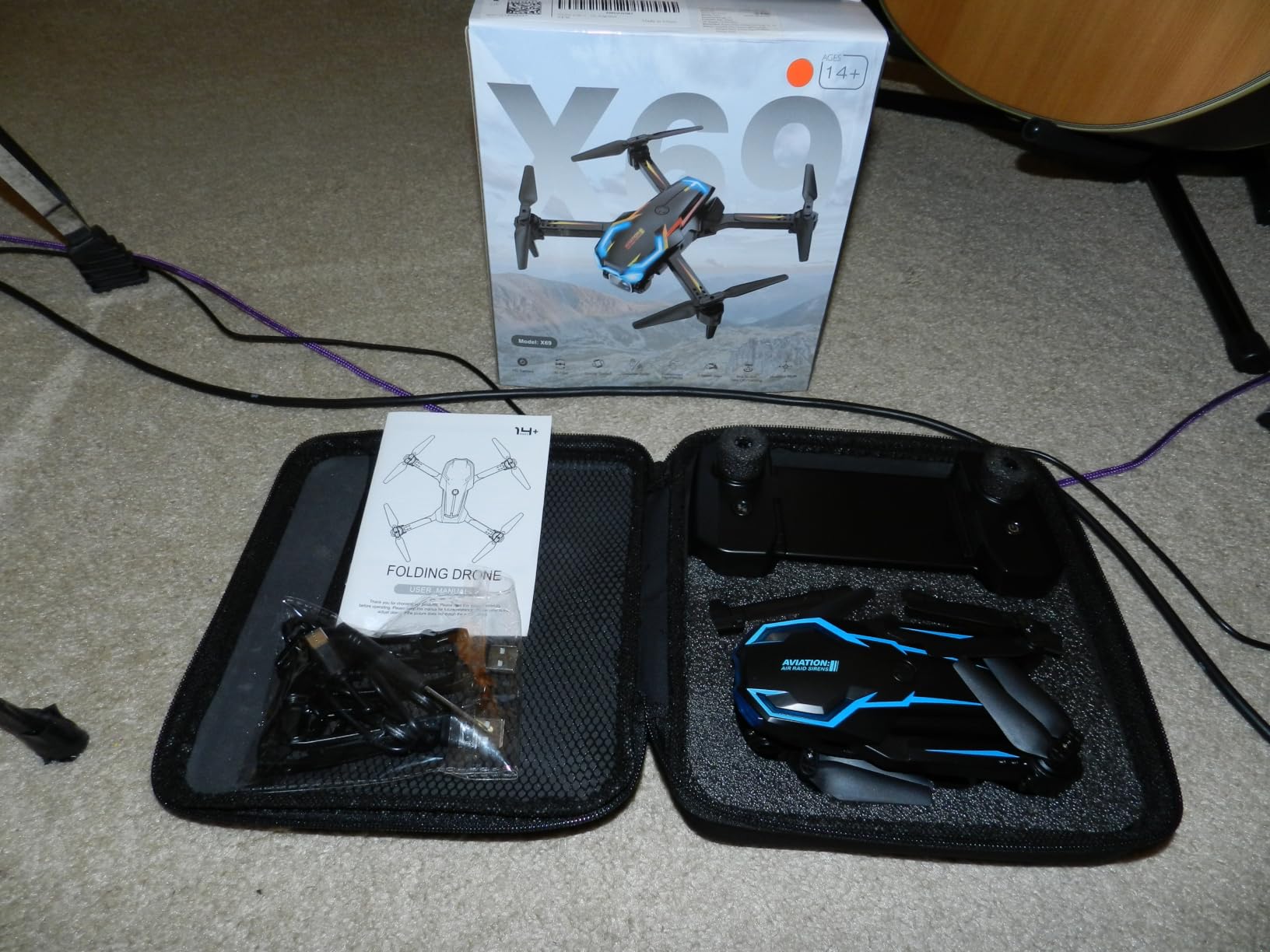
The X69 is the safest gift in this roundup because the failure mode is a small disappointment rather than an expensive lesson. It has a genuine 2K sensor where most of its shelf only reaches 1080P, and upgraded optical flow keeps the hover steady enough for a teenager to frame a shot without fighting it.
It folds to 5 x 3 x 2 inches and the package includes a carrying bag, propeller guards, spare blades and controller batteries, which means it can be handed over ready to fly.
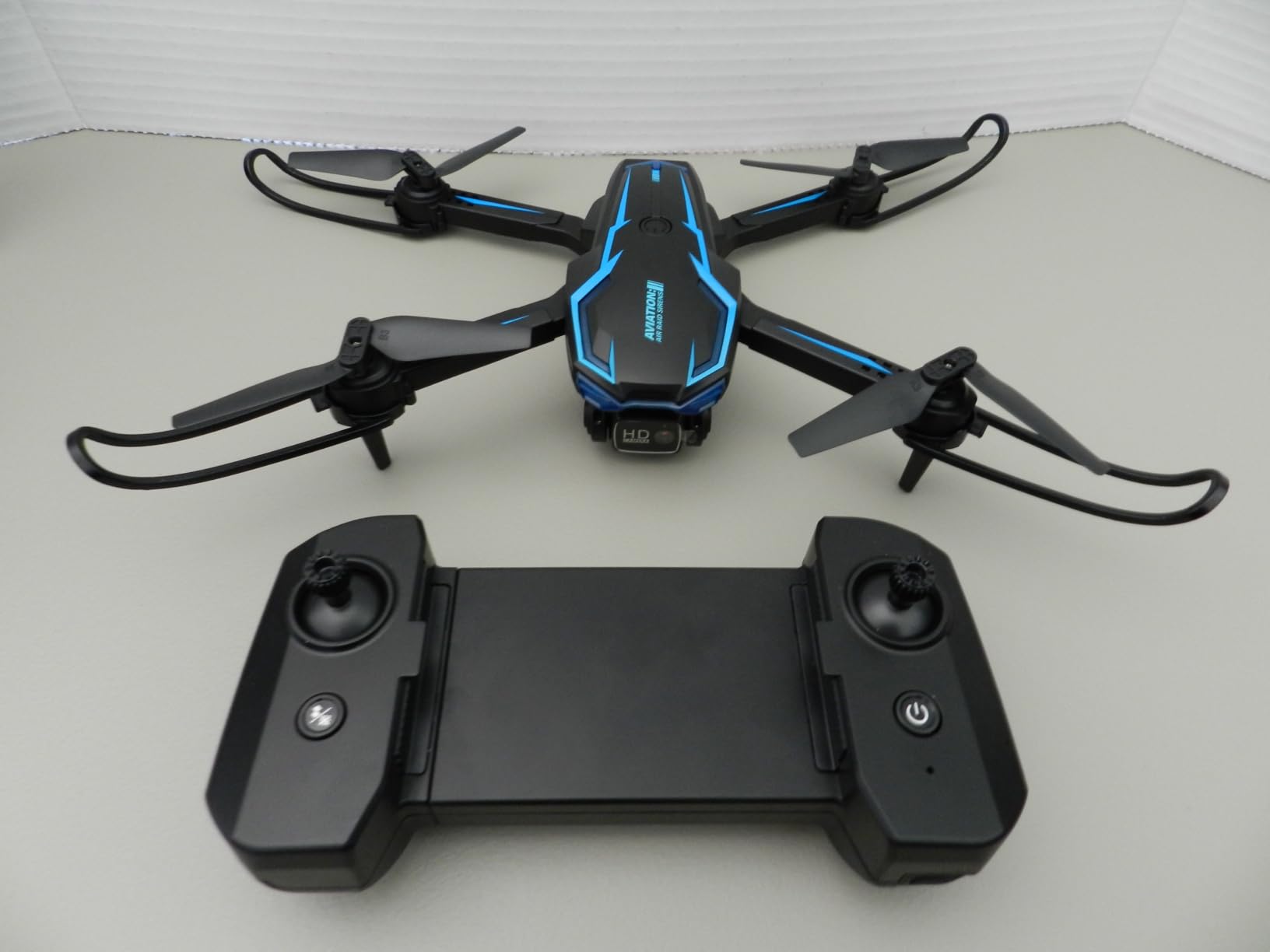
One-touch start and land, headless mode and gravity sensing cover the controls. Two rechargeable batteries give roughly 26 minutes of combined flight, with overvoltage protection and a low battery warning on the remote.
The ratings are the most polarized of the eight drones here, with 15 percent one-star reviews against 66 percent five-star. That spread usually reflects expectations rather than defects: buyers expecting a camera drone tend to be disappointed by the still-image quality, while buyers expecting a flying toy tend to be delighted.
- 2K HD camera with a 90-degree remote-adjustable angle and phone live view
- Altitude hold for repeatable framing on still shots
- 360-degree flip, one-click start and land, headless mode
- 24-hour technical support and a quality warranty included
Set expectations before it is given away. Owners note the 1.1 pound airframe is less stable in wind than heavier drones, and there is no return-to-home, so recovery is manual.
Compared with the RELIDOL X62, this one shoots better video and holds a steadier hover. Compared with the Holy Stone HS175D, it lacks GPS entirely and gives up the registration-free weight advantage the HS175D has in a far sturdier package.
A phone is required to view recordings, so hand this one to someone who has one nearby or they will fly it blind apart from the onboard indicators.
8. SKYROVER X1: Best for Obstacle Avoidance
SKYROVER X1 Drone with Camera Combo with Screen Controller, 4K/60fps Video, 8K Photo, 360° Obstacle Avoidance, Under 249g, 9.32-Mi Transmission, AI Night Shot, 96-Min Flight Time with 3 Batteries
Flight: 96 min total
Video: 4K/60fps
Stabilization: 3-axis gimbal
Batteries: 3
Pros
- 360-degree obstacle sensing with Smart Return to Home
- 1/1.32-inch sensor records 4K/60fps HDR and 48 MP
- Three batteries give up to 96 minutes
- 5.5-inch 700-nit screen remote readable in sun
Cons
- Only 309 ratings so far
- Smaller parts and accessory ecosystem
- 249 g leaves no weight headroom for guards
The X1 is the only drone on this list that can see what is in front of it. Three hundred and sixty degree obstacle sensing with Smart Return to Home covers the gap that owners of the DJI Mini 4K and Mini 3 repeatedly name as their main reservation, and it does so at the same sub-249 g weight class.
The camera is the most capable in the roundup for high-frame-rate capture. A 1/1.32-inch CMOS sensor with an f/1.7 aperture records 4K/60fps HDR video alongside 48 MP stills, with 4K/100fps slow motion and timelapse on top.
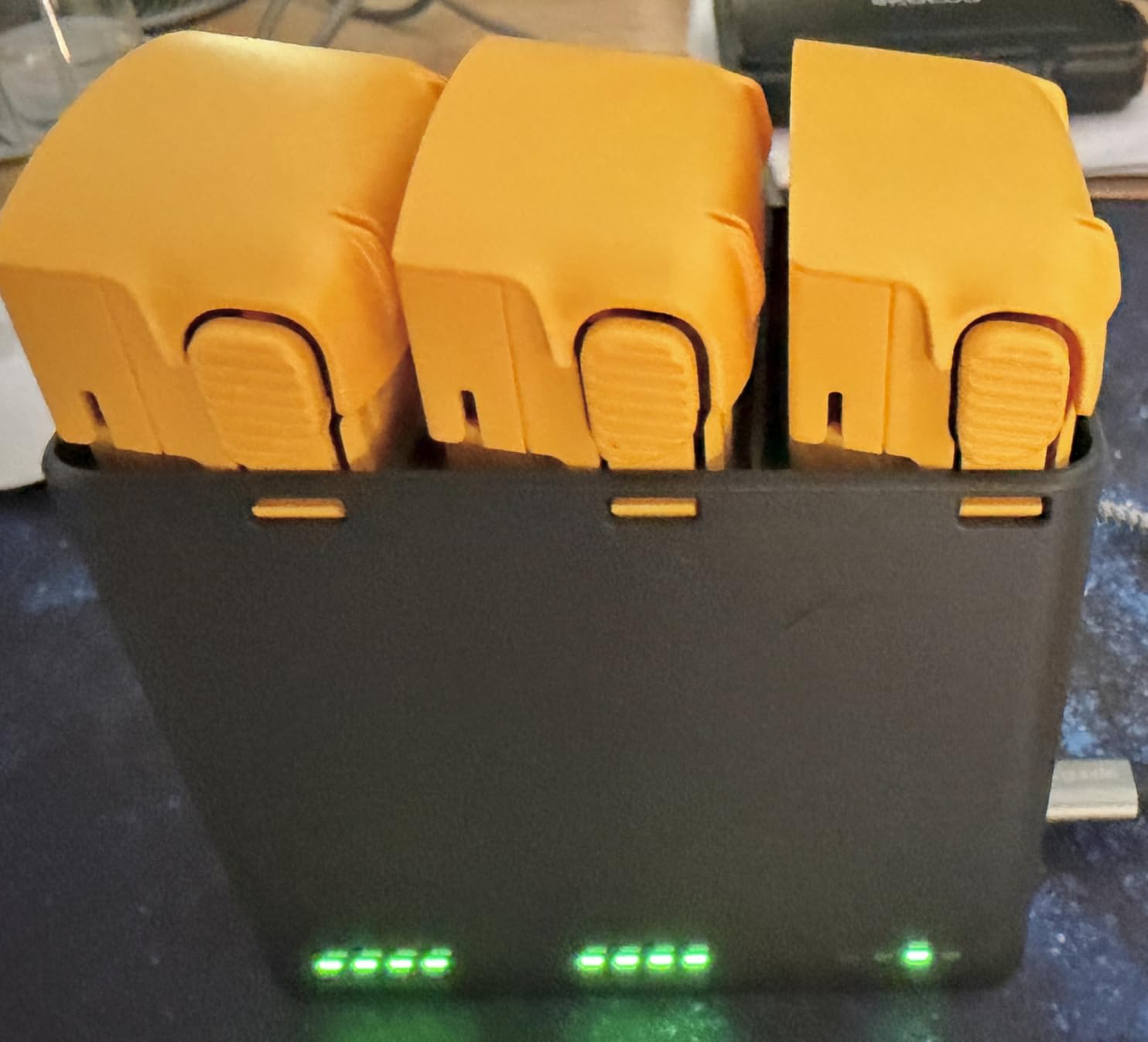
Three batteries deliver up to 96 minutes of total flight, and the bundle includes a charging hub, three spare propellers, a gimbal protector and a shoulder bag. Transmission runs up to 9.32 miles with a 1080p/60fps live view.
- 5.5-inch 700-nit touchscreen remote at 60Hz, no phone required
- AI Auto Track, Smart Spotlight, dual tracking and vertical shooting
- 3-axis gimbal plus AI night mode for low light
- Under 249 g for registration-free recreational flying
The trade-off is evidence. With 309 ratings, the owner history behind this drone is much thinner than the 7,667 reviews behind the Holy Stone HS175D, and a newer brand means a smaller pool of spare parts and accessories when something goes wrong. The 4.6 average rating is encouraging, but a small sample moves more easily.
Pick the DJI Mini 3 Fly More Combo instead if long-term parts support and firmware cadence matter to you more than obstacle sensing. Pick this one if you fly near trees and buildings and would rather the aircraft brake for you.
At 249 g the aircraft sits right at the regulatory ceiling, so adding propeller guards or any accessory can push it over the line where registration applies.
How to Choose Drones During Prime Big Deal Days
Understand Pilot and Flying Requirements
In the US, recreational pilots must register any aircraft over 249 grams, and commercial work requires a Part 107 certificate. Every drone here sits at or under that line as shipped: the Holy Stone HS175D at 7.58 ounces, the DJI Neo at 135 g, the DJI Mini 4K at 240 g, the DJI Mini 3 at 248 g, the Ruko U11MINI at 248 g and the SKYROVER X1 at 249 g, plus the two toy-grade models the listings also put under 249 g. If you want no paperwork at all, start with the HS175D or the Neo.
Prioritize Flight Time and Battery Management
Advertised flight time is the per-battery maximum, not a session length. The HS175D gives 46 minutes across two batteries, the Ruko U11MINI 64 across two, the Mini 3 about 114 across three and the SKYROVER X1 up to 96 across three. The DJI Neo ships with one pack and reviewers report roughly 14-15 minutes. Treat anything over 30 minutes per pack as a session you can actually plan around.
Match Camera Quality to the Intended Shots
Megapixel counts mislead more than any other spec. The RELIDOL X62 lists 1080P video from a 2 MP still sensor, so the video is the only worthwhile output, while the Loiley X69 pairs a real 2K video stream with 2.2 MP stills worth ignoring. A 3-axis mechanical gimbal, found on the DJI Mini 4K, DJI Mini 3, Ruko U11MINI and SKYROVER X1, matters far more for moving footage than any resolution jump.
Assess Stability, GPS, and Flight Controls
GPS return-to-home is what separates a relaxable drone from a paperweight. The HS175D, DJI Mini 4K, DJI Mini 3, Ruko U11MINI and SKYROVER X1 all return automatically on a lost signal or low battery. The RELIDOL X62 and Loiley X69 have none, so if you plan to fly anywhere with trees, skip them. Obstacle sensing appears only on the SKYROVER X1.
Check Size, Weight, and Portability
Travel changes the maths. The DJI Neo folds small enough for a pocket, the Loiley X69 to 5 x 3 x 2 inches and the RELIDOL X62 into a vest pocket. The DJI Mini 3 Fly More Combo carries three batteries and a hub, which is a real pack rather than a hand carry. Light aircraft also fly worse: the HS175D and X69 both struggle above roughly 20-30 mph.
How to Shop Drone Deals During the Sale
Check the model number in the listing rather than the headline. DJI kits differ by battery count and controller, so a “Mini 3” page may be the bare aircraft, the RC-N1C version or the Fly More Combo with three batteries and a hub. Look at whether the package says renewed or new, read what the box actually contains against the included-components list, and note who sells and ships the item rather than assuming Amazon does. Most offers on Prime Big Deal Days need a Prime membership, a free trial counts, and individual offers can change partway through the event.
- Pick your weight class first: under 249 g means no FAA registration for recreational flight
- Confirm the battery count, because that is what sets real session length
- Check for a 3-axis mechanical gimbal rather than trusting the 4K label
- Verify return-to-home exists before flying anywhere near trees
- Read the included-components list to see what the bundle adds over the bare aircraft
Frequently Asked Questions
When does Amazon Prime Big Deal Days run, and do I need Prime to use the drone offers?
Amazon’s Prime Big Deal Days event runs October 6-7, 2026, and most offers on the event require a Prime membership. A free 30-day trial counts, so you can sign up on the day and still qualify. Early drone offers often appear before the official window opens, and individual offers can change or end during the two days.
Are the drone deals during Prime Big Deal Days genuinely lower priced?
Sometimes, and there is a way to check. A strikethrough was-price only means the item sold higher in the previous weeks, so look at the 30-day and 90-day price history rather than the badge. Bundle accessories such as spare batteries, hubs and cases are often left out of the reduction while the bare aircraft is marked down, and coupons at checkout can mean the listed figure is not what you pay.
Which drone on this list is the easiest for a complete beginner to fly?
The Holy Stone HS175D is the easiest, and it leads this roundup for that reason. It weighs 7.58 ounces so no registration is needed, returns itself home within roughly 1-30 feet of the launch point on a lost signal, and includes altitude hold and headless mode by default. Two batteries give 46 minutes of total flight so the first session is not cut short.
Do I need FAA registration for any of these drones?
For recreational flying in the US you do not need registration below 249 grams. The DJI Neo at 135 g, the Holy Stone HS175D, the RELIDOL X62, the Loiley X69, the DJI Mini 4K at 240 g, the DJI Mini 3 at 248 g, the Ruko U11MINI at 248 g and the SKYROVER X1 at 249 g all fall under that line as shipped. Adding propeller guards or any accessory can push a borderline model over it.
Which of these drones shoots the smoothest video without costing the most?
The DJI Mini 4K is the best balance, with a real 3-axis mechanical gimbal, 10 km video transmission and Level 5 wind resistance while staying under 249 g. The DJI Mini 3 Fly More Combo shoots higher resolution with a 48 MP sensor and True Vertical Shooting, and the SKYROVER X1 adds 360-degree obstacle avoidance. Everything below them relies on electronic stabilization only.
Should I buy a bundle or the bare drone during the sale?
Bundles pay off when you will actually use the extra batteries. The DJI Mini 3 Fly More Combo adds three batteries and a two-way hub for roughly 114 minutes of total flight, and the SKYROVER X1 bundles three batteries for up to 96 minutes. Bundle discounts are also the ones most often left out of a sale, so compare the bare aircraft price against the bundle before deciding.
Final Verdict: Best Amazon Prime Big Deal Days Drone Deals
The Holy Stone HS175D is the one to watch during Prime Big Deal Days. It carries real GPS return-to-home, two batteries in the box and 7,667 owner reviews behind it, which makes it the least risky purchase on a sale day.
Buy the DJI Neo if you travel and want something that launches from your palm. Buy the DJI Mini 4K when the footage is the point and you want a mechanical gimbal without leaving the registration-free weight class. Add the DJI Mini 3 Fly More Combo when you shoot all day and the three batteries earn their keep. The Ruko U11MINI 4K is the one for flying without a phone in your pocket.
For a gift, the Loiley X69 has a real 2K sensor where its shelf rivals stop at 1080P, and the RELIDOL X62 is the cheapest durable option with guards already fitted. The SKYROVER X1 is worth watching if you fly near trees and want the aircraft to brake for you.
Check the current figure on each listing before you commit, and compare it against the 30-day price history rather than the was-price.