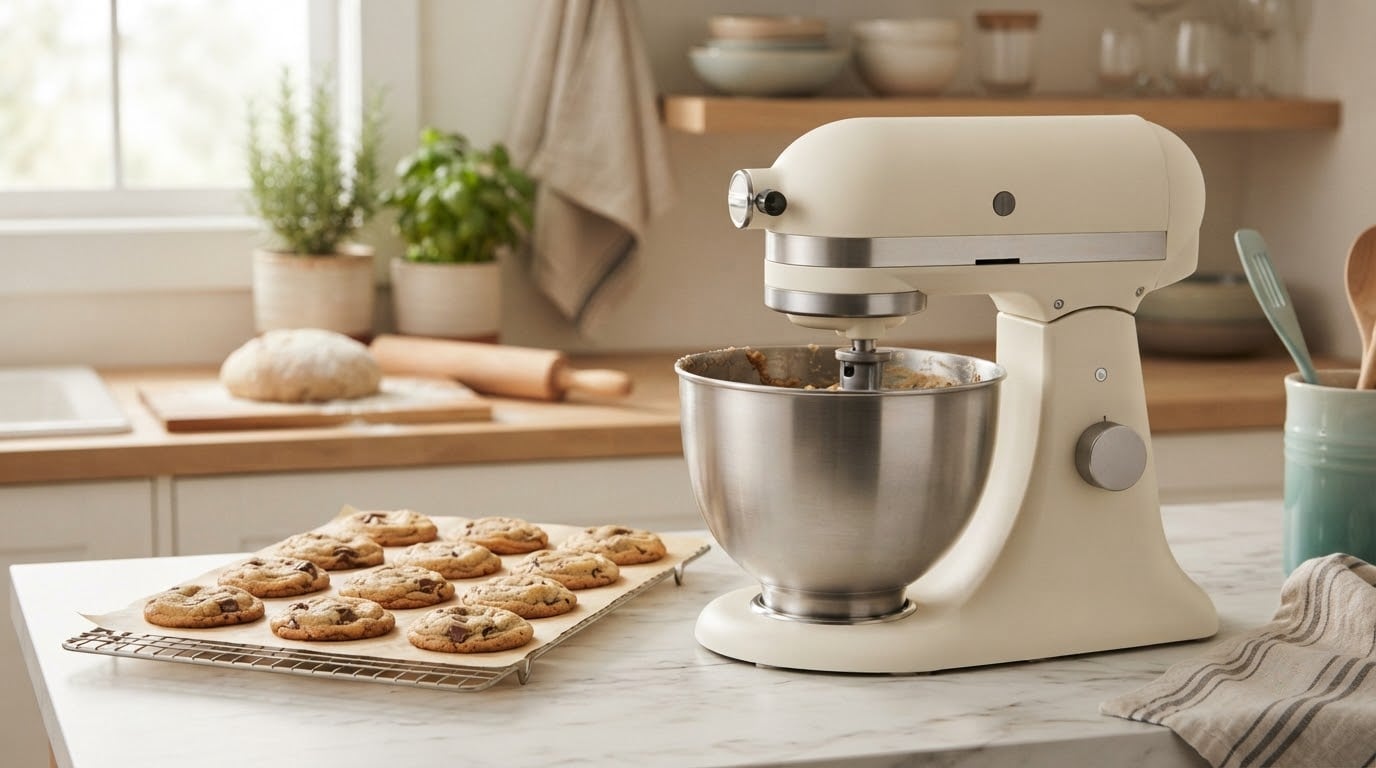
A stand mixer is a once-a-decade purchase, so the model you pick in October is the one you will live with for years. The KitchenAid Artisan 5-Qt is the one to watch first: a 325-watt motor, a 5-quart stainless bowl that takes nine dozen cookies in a batch, and the deepest owner-review history on this list. For a lower-cost way into the same platform, the KitchenAid Classic 4.5-Qt is the alternative; for counters that cannot hold a full-size machine, the Dash Everyday 3-Qt is the small-space answer.
Prime Big Deal Days runs October 6-7, 2026, and most offers in the event need a Prime membership, with a free trial counting. Offers move through the two days, so check the listing before you commit.
Table of Contents
Our Top 3 Picks for Best Amazon Prime Big Deal Days Stand Mixer Deals

KitchenAid Artisan 5-Qt
- 325-watt motor
- 5-quart stainless bowl
- 10 speeds
- Up to 9 dozen cookies per batch
KitchenAid Classic 4.5-Qt
- 275-watt motor
- 4.5-quart bowl
- 10 speeds
- Large attachment ecosystem
Best Amazon Prime Big Deal Days Stand Mixer Deals Compared (October 2026)
| Product | Specifications | Action |
|---|---|---|
| KitchenAid Artisan 5-Qt |
|
Check Deal Price |
| KitchenAid Classic 4.5-Qt |
|
Check Deal Price |
 Dash Everyday 3-Qt Dash Everyday 3-Qt |
|
Check Deal Price |
 Hamilton Beach 4-Qt Hamilton Beach 4-Qt |
|
Check Deal Price |
 Cuisinart SM-50R Cuisinart SM-50R |
|
Check Deal Price |
 Kitchen in the Box 3.2-Qt Kitchen in the Box 3.2-Qt |
|
Check Deal Price |
 VIVOHOME 6-Qt VIVOHOME 6-Qt |
|
Check Deal Price |
 KitchenAid Artisan Mini KitchenAid Artisan Mini |
|
Check Deal Price |
 Kitchen in the Box 6.5-Qt Kitchen in the Box 6.5-Qt |
|
Check Deal Price |
 Hamilton Beach Pro 5-Qt Hamilton Beach Pro 5-Qt |
|
Check Deal Price |
How We Chose
We compared the specs that decide how a stand mixer handles real baking: bowl capacity in quarts, motor wattage, speed count, head and bowl design, weight and which attachments are in the box. Owner ratings and review counts came from the Amazon listings, and every figure was checked on October 2026.
1. KitchenAid Artisan 5-Qt: Editor’s Choice for Everyday Baking
KitchenAid Artisan 5-Qt
Bowl: 5 qt stainless
Motor: 325 watts
Speeds: 10
Weight: 24 lb
Pros
- Metal body stays steady through stiff doughs
- 325-watt motor handles honey and cold butter
- Tilt head locks during mixing and opens for additions
- Bowl takes nine dozen cookies per batch
- Dishwasher-safe stainless bowl and tools
Cons
- Heavy body is hard to move without a mixer slider
- Uncushioned tilt head can slam the hinge
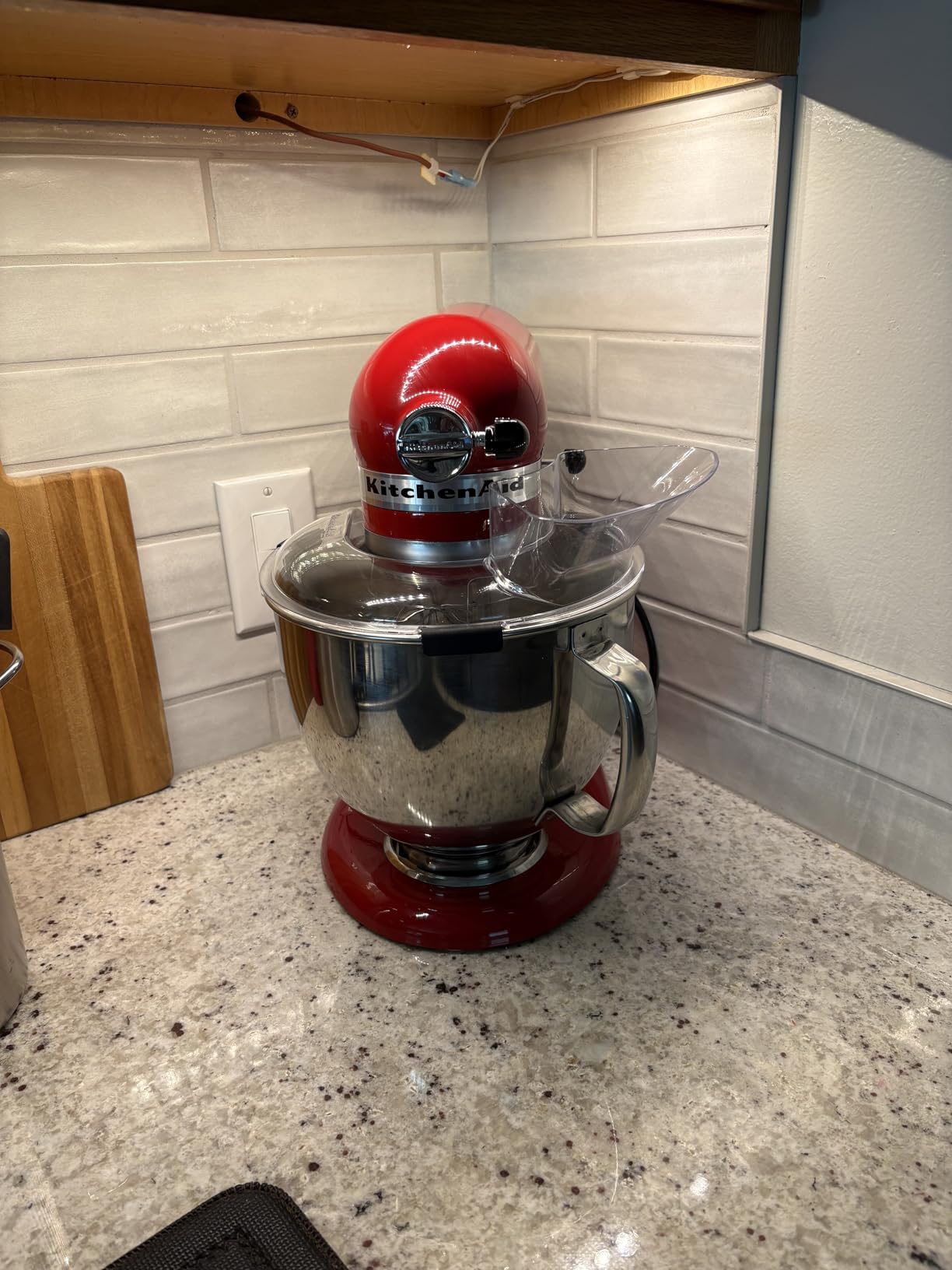
Verdict: the mixer most home bakers should watch first. Nothing else on this list pairs a 5-quart bowl with the same depth of owner history, and that combination is what tells you a machine still works after five years of weekly bread.
The 325-watt motor is the part that matters. It pushes through cold butter, honey and stiff cookie dough without bogging down, which is exactly the point of owning a mixer rather than a whisk. The tilt head locks in place while the beater turns and releases the moment you stop it, so adding flour mid-batch is a two-second job.
Nine dozen cookies in a single batch is the number to anchor your holiday planning on. Cookie dough, one big ball of bread dough and a full sheet-pan of brownies all fit under the same lid without splitting into two rounds, which is where 4-quart machines start to feel small.
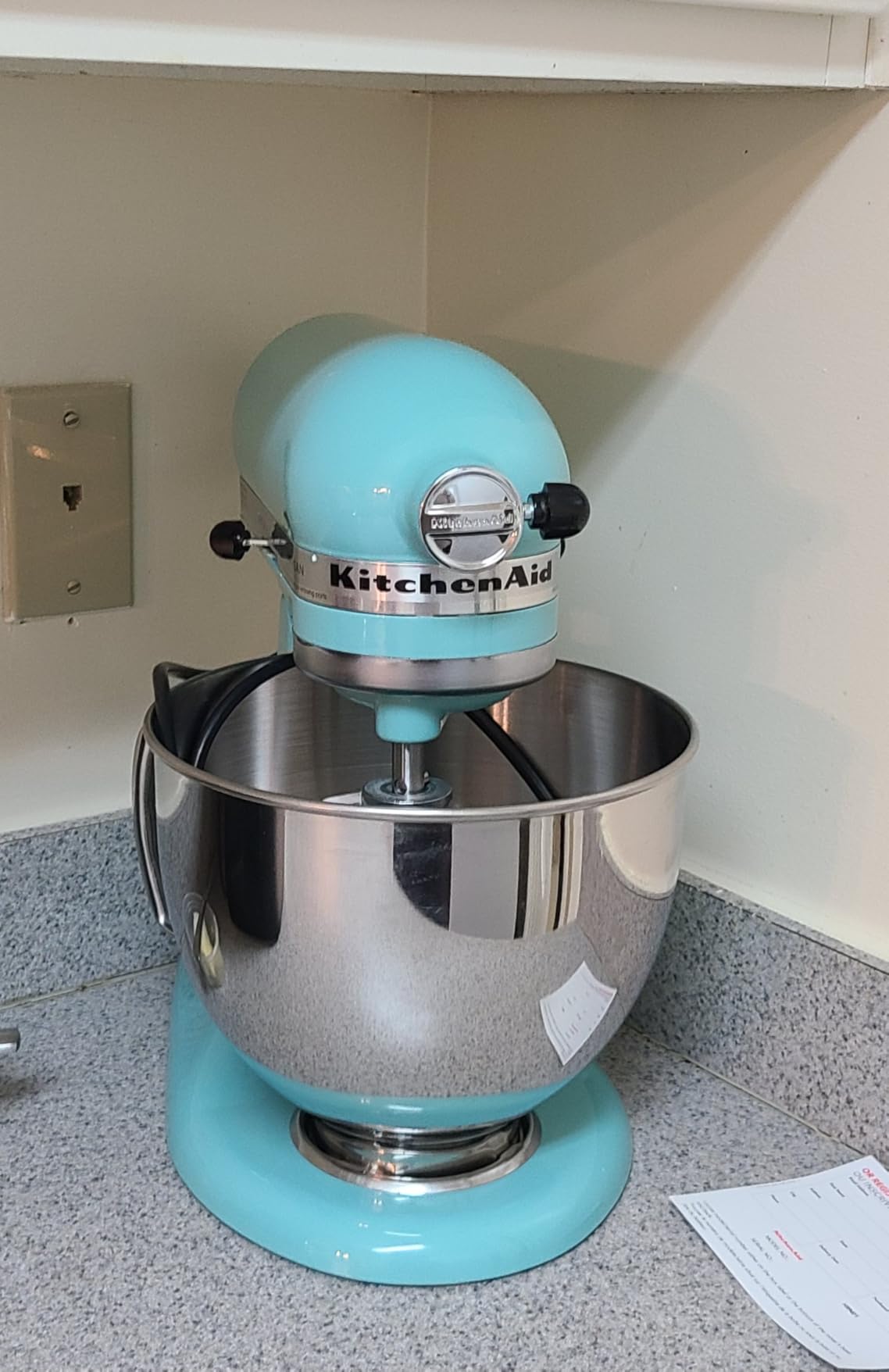
The stainless bowl and all three included tools go in the dishwasher, and the all-metal body is the part that keeps the machine from wandering when dough gets stiff. The construction detail that owners mention most is the ring of 59 touchpoints around the bowl, which is how the drive transfers power to the beater.
Skip this one if lifting 24 pounds off the counter is a problem. Owners also report that the tilt head has no cushion and can slam the hinge when it comes down hard, and on very large batches dough can climb the dough hook toward the head.
2. KitchenAid Classic 4.5-Qt: Premium Pick for Long-Term Durability
KitchenAid Classic 4.5-Qt
Bowl: 4.5 qt stainless
Motor: 275 watts
Speeds: 10
Weight: 22 lb
Pros
- Metal body with 59 touchpoints around the bowl
- Bowl handles up to eight dozen cookies
- Large accessory ecosystem for pasta and grinders
- Tilt head locks during mixing
- Dishwasher-safe stainless bowl
Cons
- Heavy at 22 pounds and difficult to lift for some users
- Flex-edge beater is not included
This is the one to buy if the plan is to keep it for a decade. The Classic is the plainer of the two KitchenAids here, and the metal internals underneath are the same idea: a planetary drive that owners describe as boringly dependable.
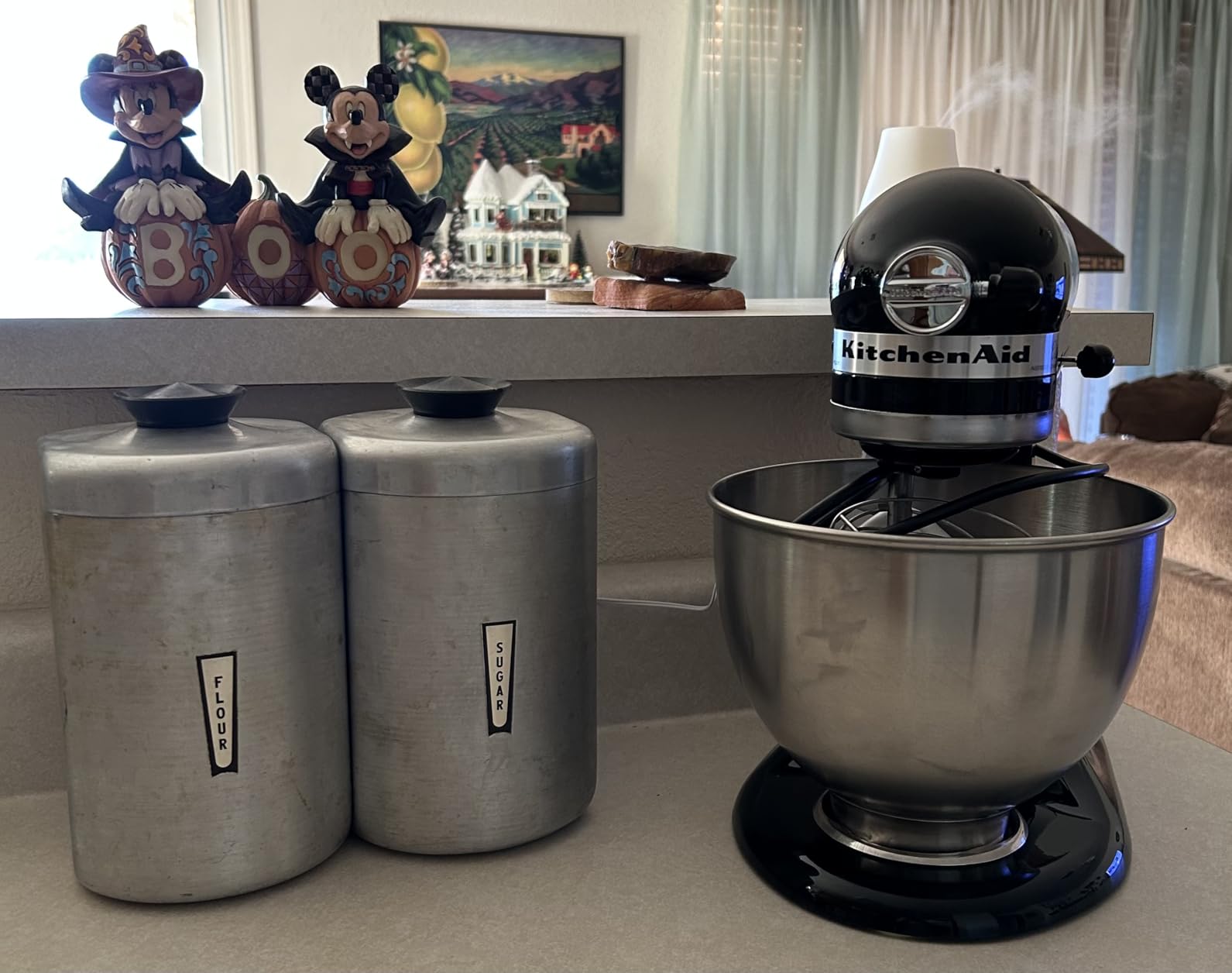
Eight dozen cookies is still a serious batch for two people, and the 4.5-quart bowl handles a full round of bread dough without the head crowding the bowl the way a 3.5-quart model does. Ten speeds cover stirring, creaming, kneading and whipping, and the head locks in place while the beater turns.
Where the Classic earns its place is attachments. It runs the same pasta rollers, food grinders and ice cream makers as the rest of the range, and the aftermarket selection is enormous. If you think you will ever run a mixer with the hub rather than the beater, start here.

Skip it if counter weight matters. At 22 pounds this is a heavy machine to move, and owners with joint problems mention needing a slider or a second pair of hands. Anyone who will lift the mixer one-handed is better served by one of the compact models further down the list.
3. Dash Everyday 3-Qt: Best Value for Small Kitchens
Dash Everyday 3-Qt
Bowl: 3 qt
Motor: 250 watts
Speeds: 6
Weight: under 5 lb
Pros
- Under 5 lbs and only 10.4 inches tall
- Suction cups hold it firmly in place
- Six speeds plus a bowl-positioning lever
- Stores under most kitchen cabinets
- Handles frosting
- meringue and dressings
Cons
- Three-quart bowl turns messy when overfilled
- Whisk grommet is awkward to clean by hand
The machine for a galley kitchen, a rental flat or anyone who does not want to fight a heavy appliance. At under 5 pounds and about 10 inches tall, it lives on the counter or goes straight back in the cabinet after a batch.
The Dash does less than the metal-bodied machines here and says so in the materials: a plastic body driving a 250-watt motor. What that motor does cover is frosting, meringue, dressings and everyday doughs, and the six speeds plus the bowl-positioning lever reach the ingredients that collect on the sides.
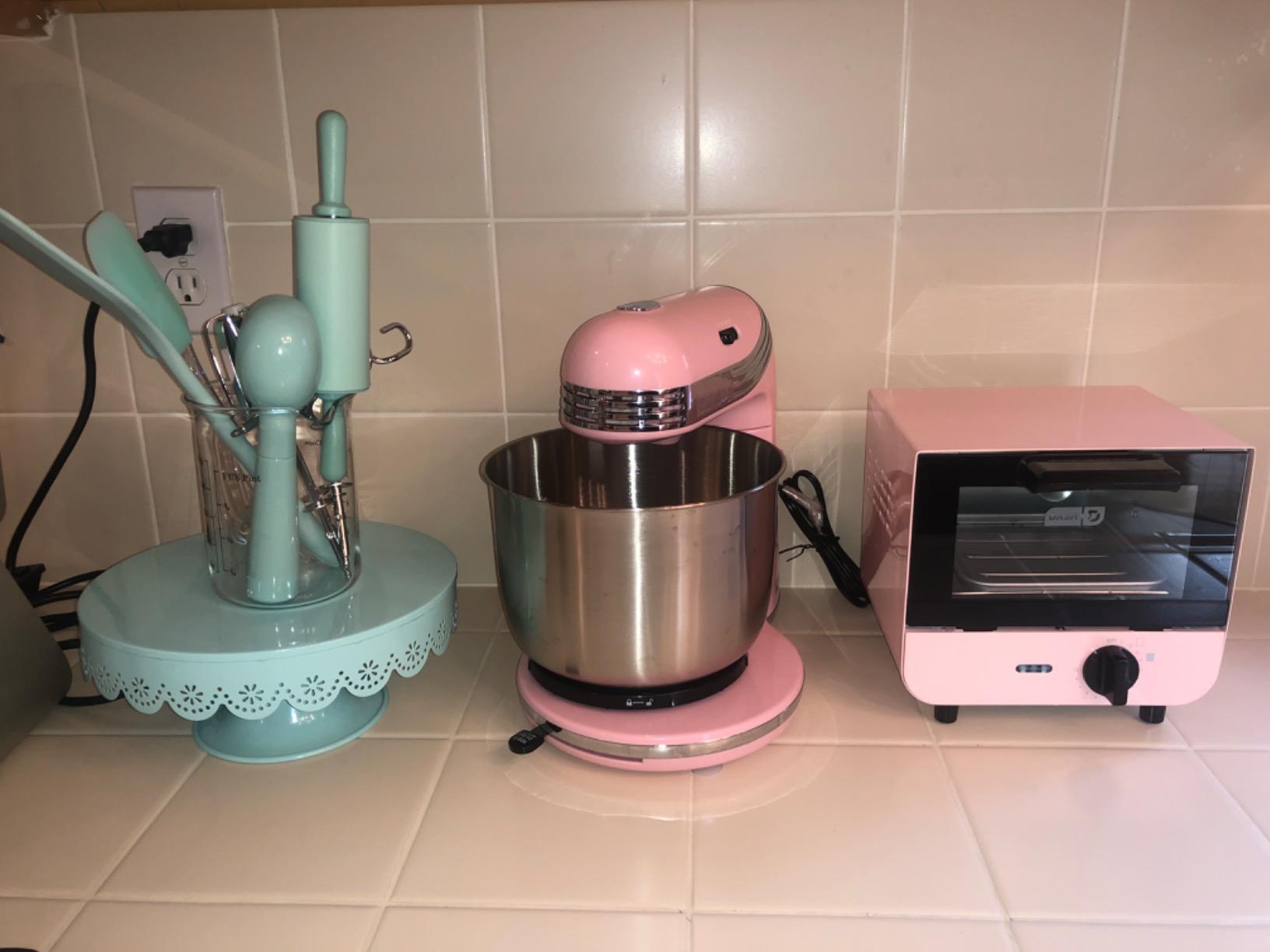
Reviews are split on how it handles years of use. The compact size and the suction feet get consistent praise; a smaller share of owners report shaking during heavy mixing or a bowl drive that stops responding after a few years, which is worth factoring in against a die-cast metal body.
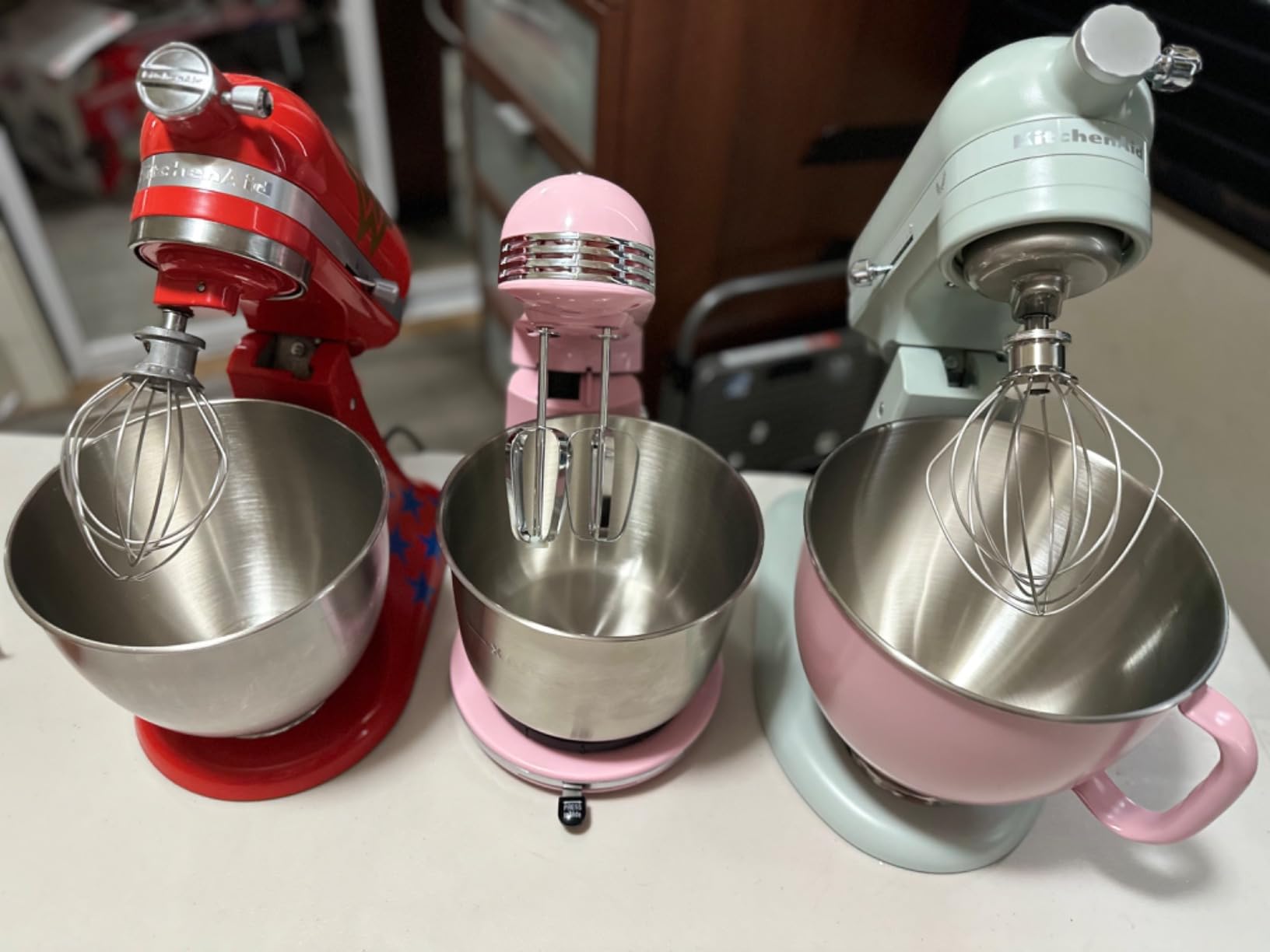
The suction cups are the sleeper feature. They grip the counter hard enough that people who cannot comfortably hold a heavy beater can still mix, which is a genuine safety argument rather than a novelty.
Where it stops being enough: the 3-quart bowl is small. Overfill it and batter climbs the hook, and a full loaf of bread dough is at the limit rather than comfortable. The Hamilton Beach 4-Qt is the comparison worth making, since it pairs a 4-quart stainless bowl with a 300-watt motor at a similar weight, so the Dash only wins when footprint matters more than capacity.
4. Hamilton Beach 4-Qt: Best for Beginner Bakers
Hamilton Beach 4-Qt
Bowl: 4 qt stainless
Motor: 300 watts
Speeds: 7
Weight: 13 lb
Pros
- 300-watt motor handles thick batters and doughs
- Planetary action gives even hands-free mixing
- Bowl and every attachment are dishwasher safe
- Built-in carry handle makes it easy to lift
- Planetary mixing around a 4-quart stainless bowl
Cons
- Plastic housing feels light next to metal mixers
- No power hub for pasta or grinder attachments
- Four-quart bowl is small for large households
A first serious mixer that does not ask you to buy attachments before it is useful. The bowl, splash guard, flat beater, dough hook and whisk all come in the box and all go in the dishwasher, which is the single biggest relief for a beginner who has just learned what a splash guard is for.
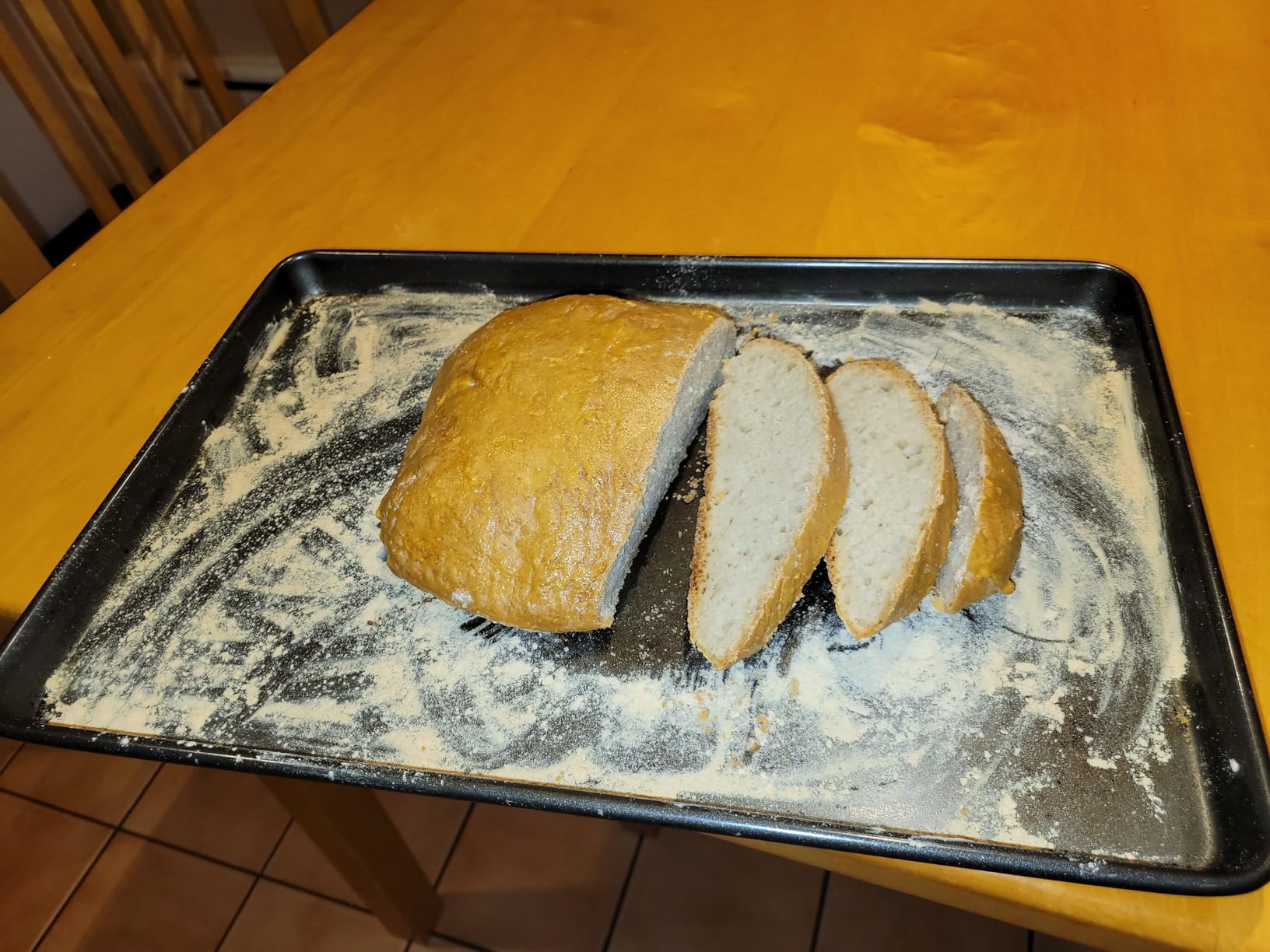
The 300-watt motor is enough for bread dough, cookies and cupcakes rather than just thin batters, and the planetary action means the beater sweeps the whole bowl on its own. The slow first speed is genuinely slow, which reduces splatter when you start a batter.
The handle on top is a small design choice with a big effect on a small kitchen: the head lifts out and the machine moves with one hand instead of being wrestled off the counter.
Seven speeds cover everything from creaming to kneading, which is fewer steps than the 12-speed models here but enough that you are not hunting for a middle setting.
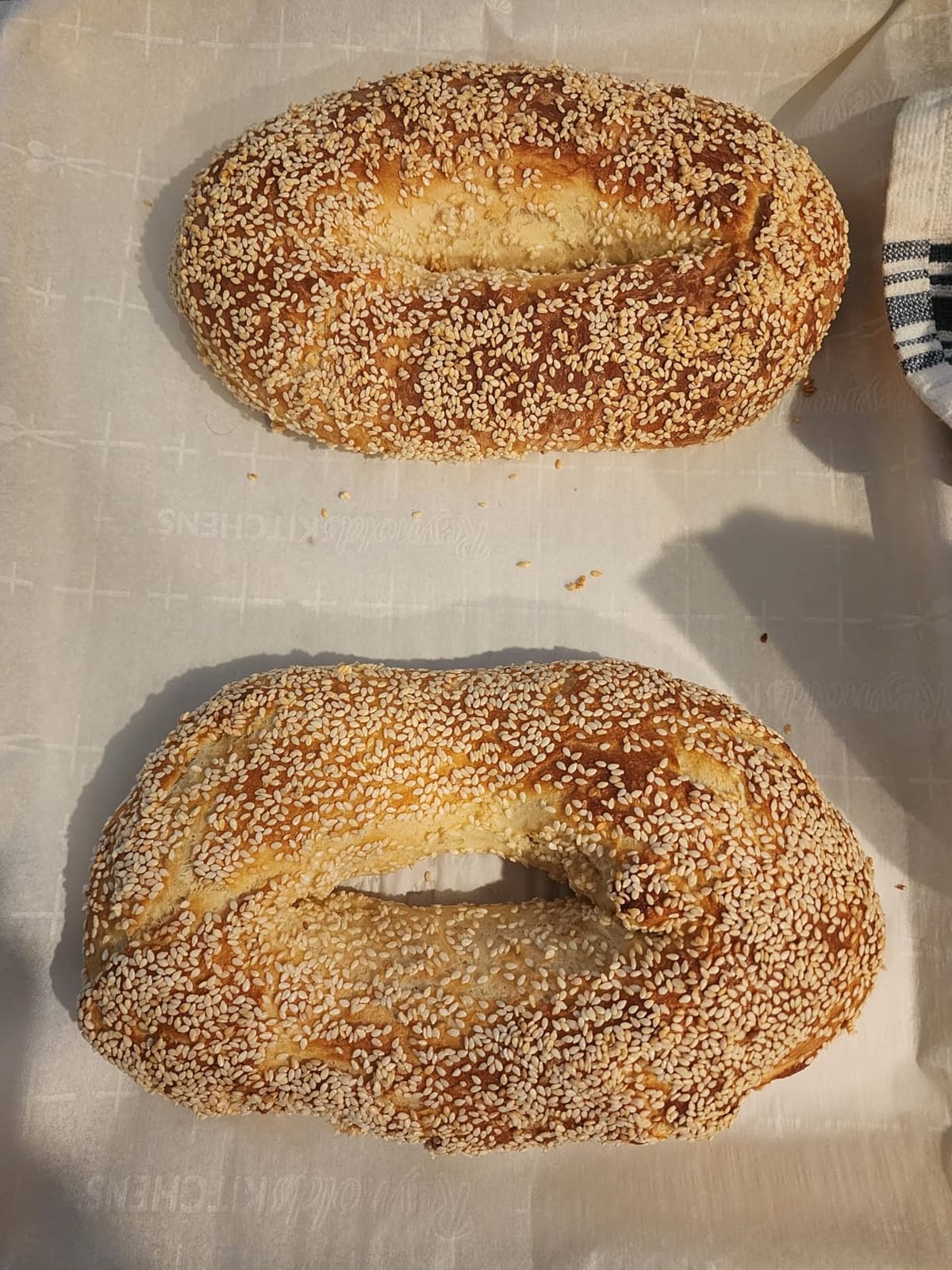
Two limits worth knowing. There is no power hub, so pasta rollers, grinders and shredders are off the table, and the plastic housing flexes a little more than the all-metal machines here. If you already know you want to run attachments, go to the Hamilton Beach Pro 5-Qt instead.
5. Cuisinart SM-50R: Best for Bread and Pizza Dough
Cuisinart SM-50R
Bowl: 5.5 qt stainless
Motor: 500 watts
Speeds: 12
Weight: 17 lb
Pros
- Die-cast metal body with a 500-watt motor
- Twelve speeds from folding to stiff dough
- Five-and-a-half quart bowl for full-size batches
- Splash guard with a pour spout for mid-mix adds
- Power outlet takes pasta and grinder attachments
Cons
- Seventeen pounds and a wide footprint take counter room
- Tilt-back head is awkward while adding ingredients
A strong all-round combination. A 500-watt die-cast motor, a 5.5-quart bowl and twelve speeds cover the range from a delicate fold to a stiff pizza dough without swapping machines, and the polished stainless bowl is the kind that survives a decade of scraping.
That extra wattage is the reason to look here if bread or pizza dough is the main reason you own a mixer. A 5.5-quart bowl holds more dough than the 5-quart models above it, so a Saturday baking session takes fewer rounds.
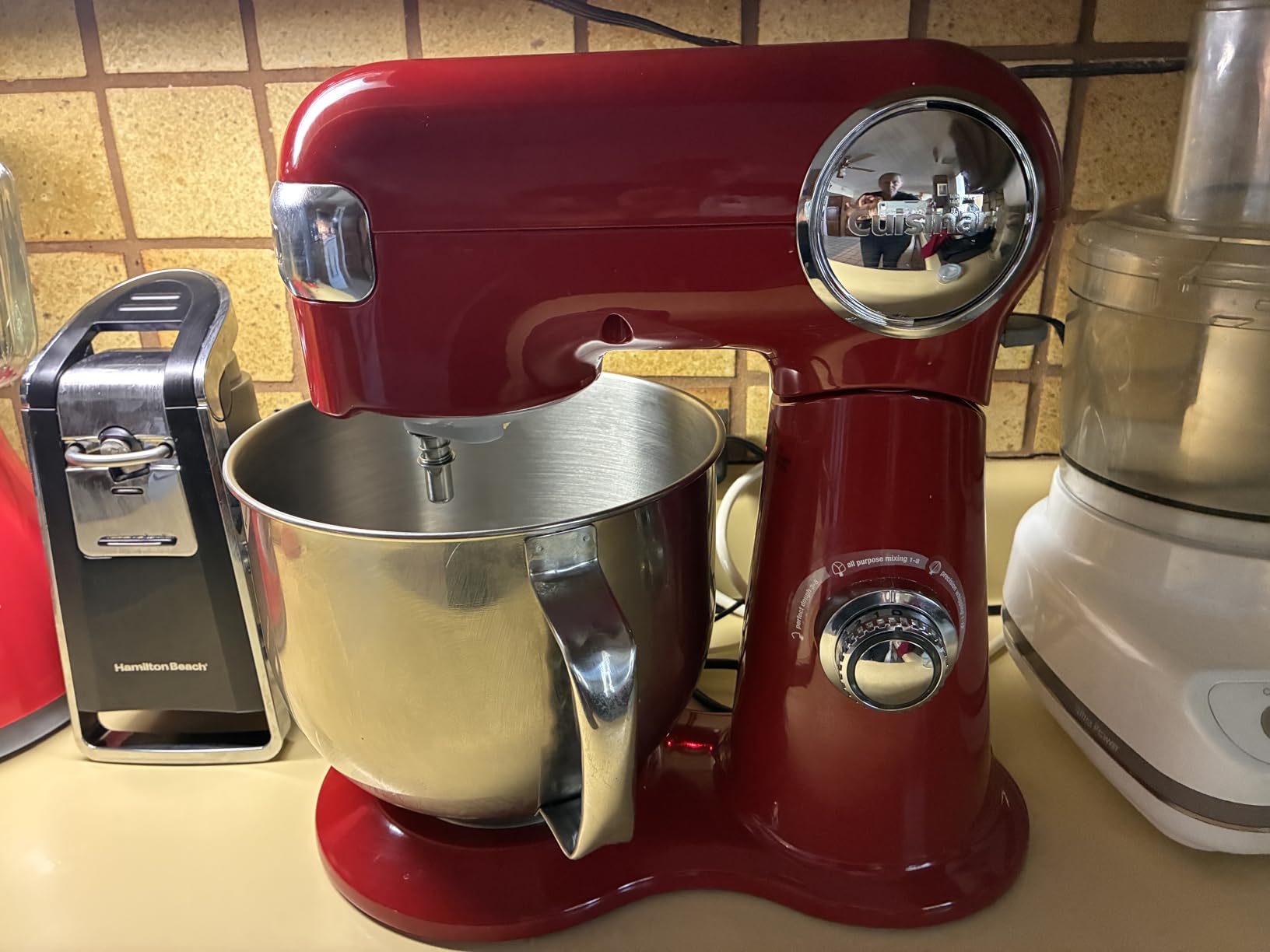
The splash guard has a pour spout, which is a nicer solution than lifting the head and dropping flour in from above. Owners like the included chef’s whisk, flat paddle and dough hook, and the power outlet takes optional pasta, ice cream, grinder and spiralizer attachments.
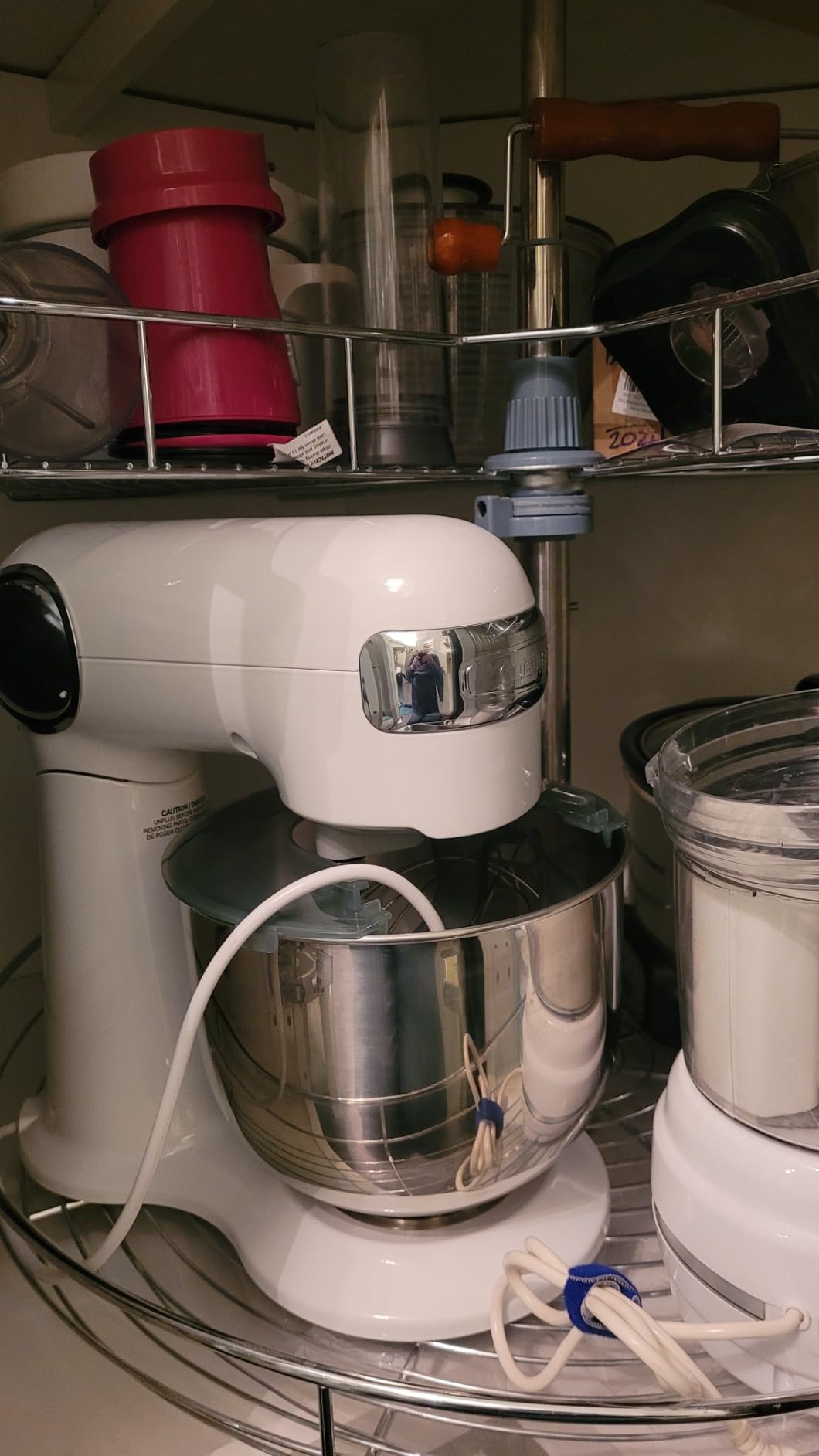
Compared with the KitchenAid Artisan 5-Qt, the Cuisinart pairs more power, more speeds and a bigger bowl with less counter width. The trade is the head: a tilt-back design that owners describe as awkward to manage while adding ingredients, where the Artisan’s tilt-head hinge is the easier habit to learn.
6. Kitchen in the Box 3.2-Qt: Best for Tight Counters
Kitchen in the Box 3.2-Qt
Bowl: 3.2 qt stainless
Motor: 300 watts
Speeds: 6
Weight: 7 lb
Pros
- Under 7 lbs and compact for small kitchens
- Four anti-slip suction cups hold it steady
- Tilt head for easy bowl access
- Ten color options
- Attachments reach the sides of the bowl
Cons
- Usable capacity is well under the stated 3.2 quarts
- Anti-splash lid does not sit flush with the bowl
Narrow by design, and one of the machines people with limited hand strength mention approving. Seven pounds, about 7 inches wide and four anti-slip feet means it stays put and can be moved one-handed.
The 300-watt motor is stronger on paper than the Dash’s 250 watts, and owners report it working well for butter, dressings, meringue and everyday doughs. The attachments reach the sides of the bowl, which is where buttercream work lives or dies, and the tilt head makes bowl changes quick.
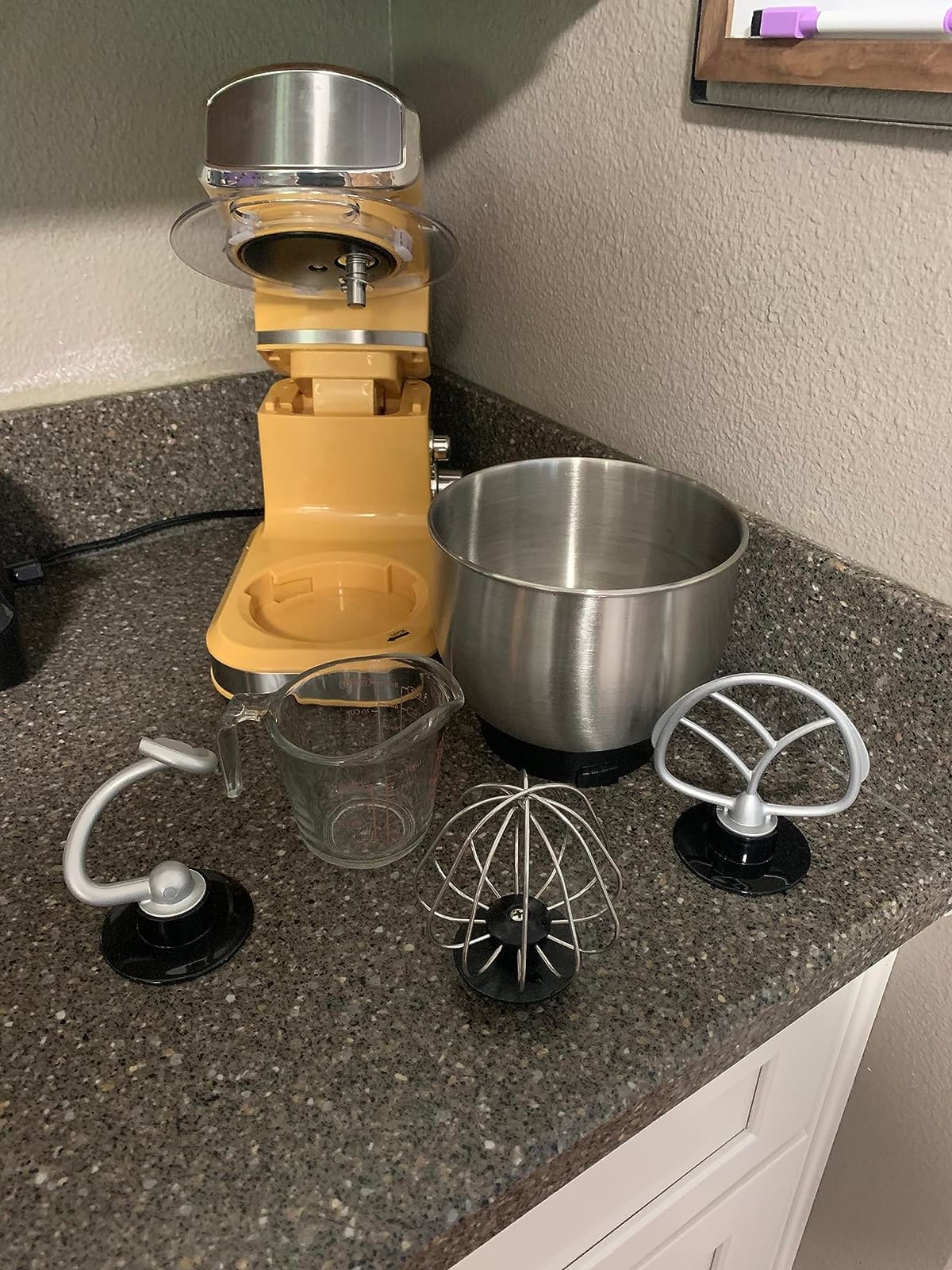
Read the bowl figure carefully. Reviewers consistently report that usable capacity is roughly half the stated 3.2 quarts once you leave the headroom the mixer needs, so treat it as a two-portion machine. The anti-splash lid is a bonus that does not sit flush when the head is tilted, and its opening is small enough that adding dry ingredients is fussy.
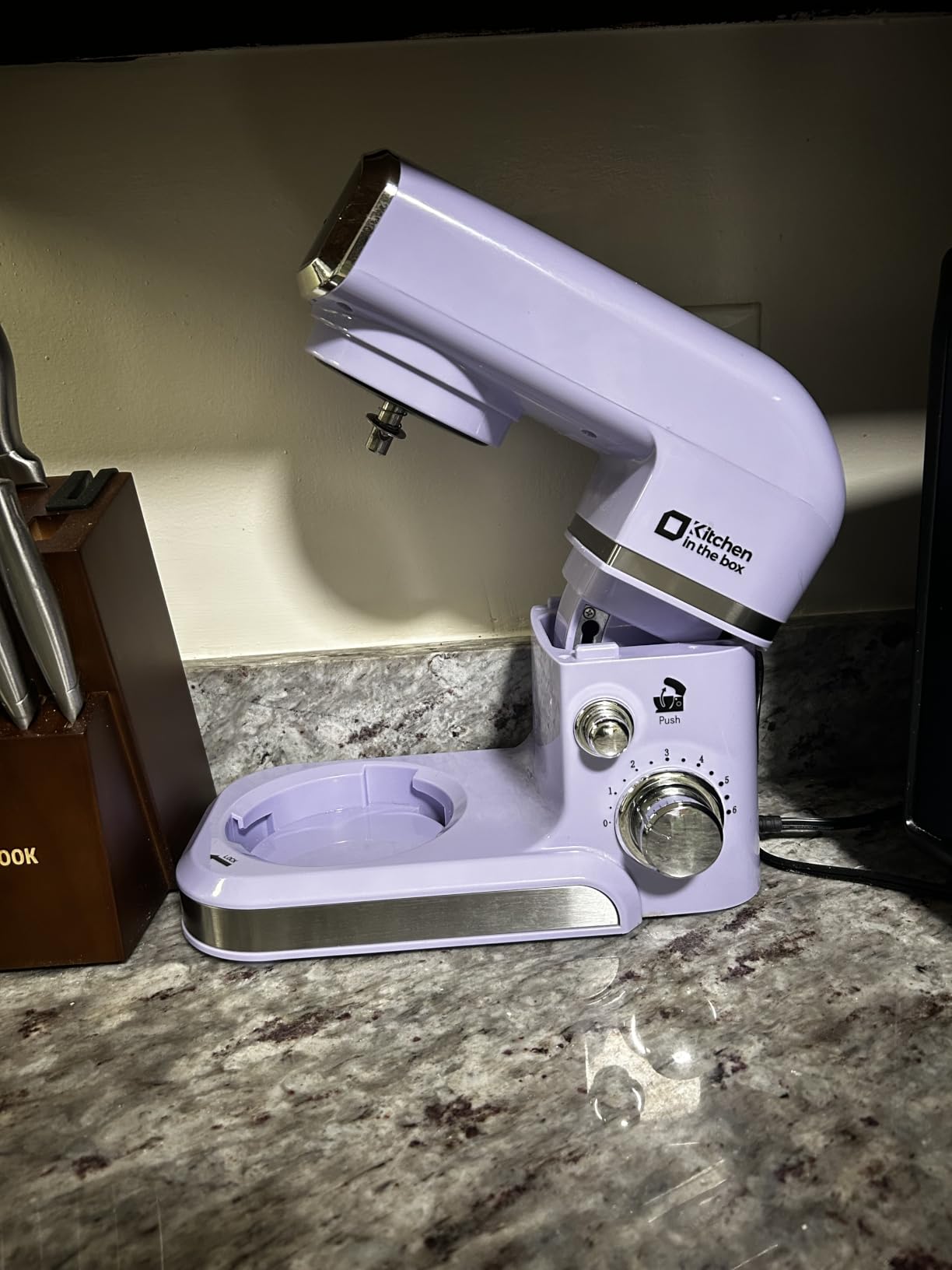
Against the Dash Everyday 3-Qt, this one offers more motor and a smaller bowl; against the VIVOHOME 6-Qt it is the opposite trade. Ten colors is a real advantage for anyone who wants the mixer to look like part of the kitchen rather than a shop.
7. VIVOHOME 6-Qt: Best for Large Batch Baking
VIVOHOME 6-Qt
Bowl: 6 qt steel
Motor: 660 watts
Speeds: 10
Weight: 11 lb
Pros
- 660-watt copper motor with ten speeds and a pulse setting
- Bowl holds three loaves or 2.2 lb of flour
- Whisk and flex-edge beater plus egg separator
- Planetary mixing action at high volume
- Light enough for users with wrist limits
Cons
- Blade removal needs downward pressure and can flick batter
- Bowl lock is tight and hard to release
A big bowl and a high motor wattage in the same machine, which is unusual. The 660-watt copper motor drives ten speeds plus a pulse setting, and owners describe steady performance with doughs that give lesser motors trouble.
A 6-quart bowl that handles three bread loaves or 2.2 pounds of flour is high-volume territory. If you bake for a neighborhood, run a bake club, or make stock and mash for a family, the number of batches matters more than brand.
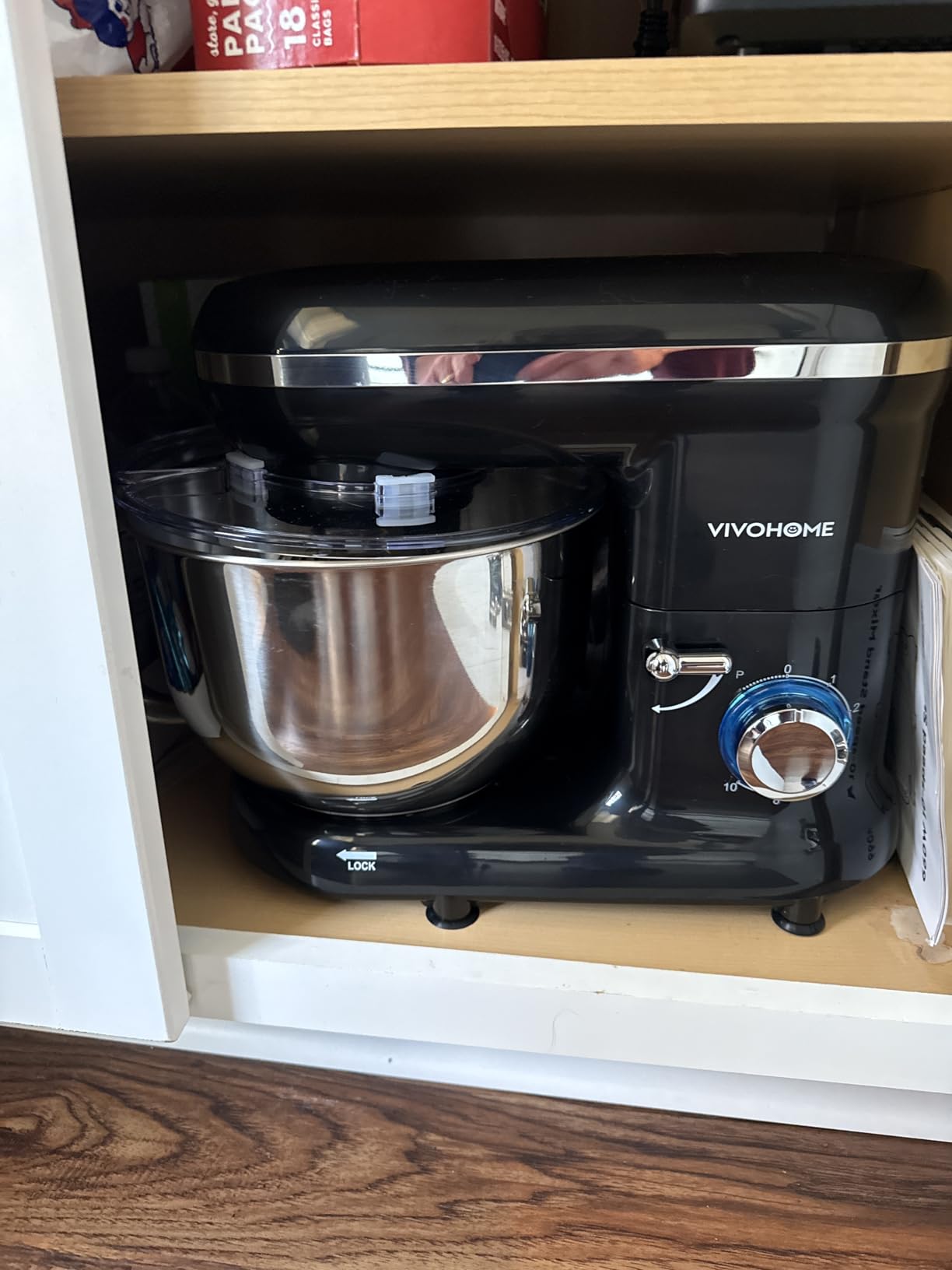
The attachment set is the most complete on this list: a whisk, a dough hook, a flex-edge beater and an egg separator, and the flex-edge beater scrapes the bowl sides rather than letting cream sit against the steel.
Owners with arthritis call it one of the easier machines to move at 11 pounds. Two recurring gripes: pulling the blade out needs downward pressure and can flick batter across the counter, and the bowl lock is tight enough to be annoying on cleanup.
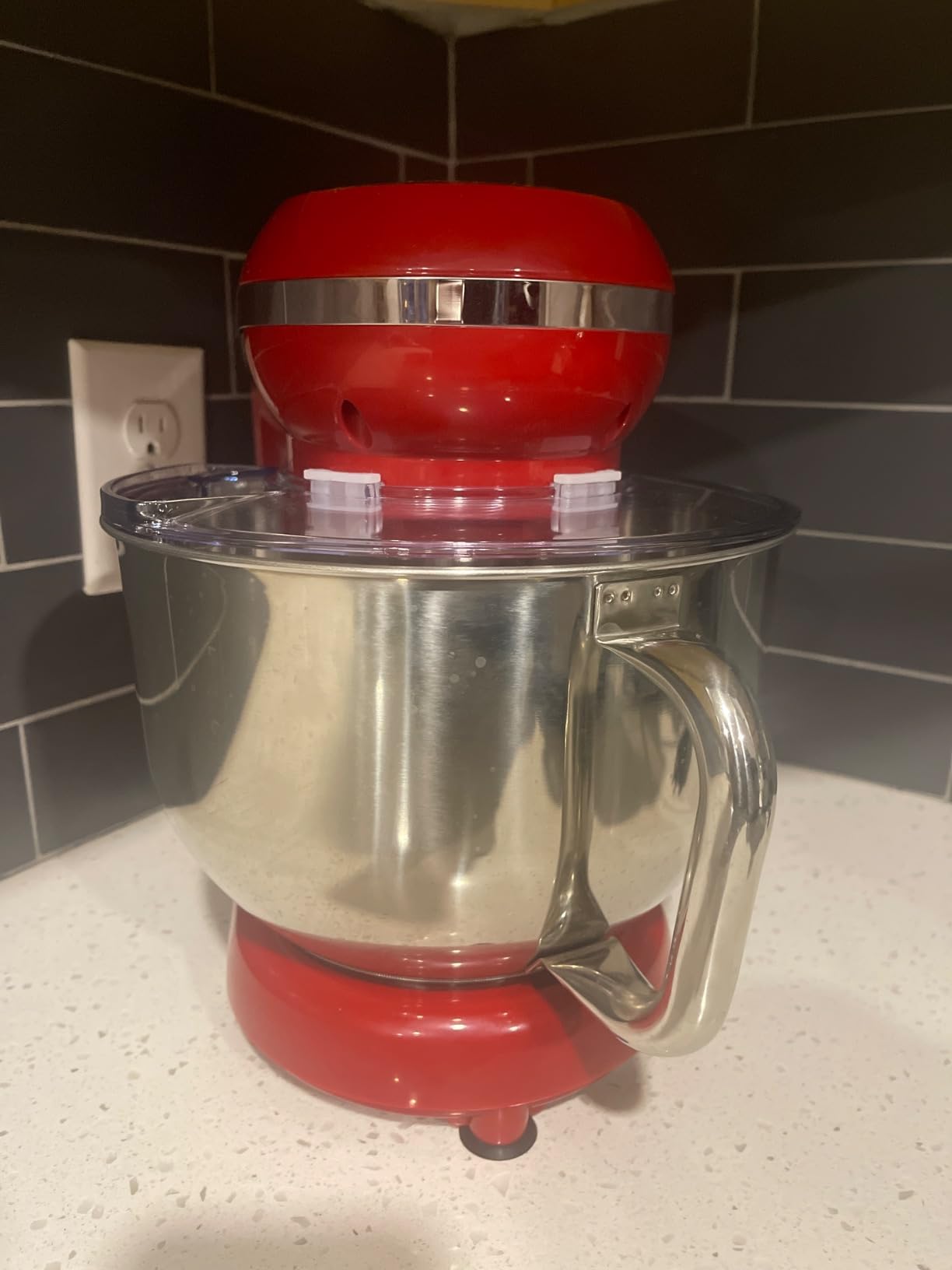
8. KitchenAid Artisan Mini: Best for Compact Baking
KitchenAid Artisan Mini
Bowl: 3.5 qt stainless
Motor: 250 watts
Speeds: 10
Weight: 14.3 lb
Pros
- DC motor with all-metal gears runs quietly
- Flex-edge beater included in the box
- Bowl handles a full cookie batch or one loaf
- Lighter body lifts from low cabinets
- Highest average rating in the group at 4.8 stars
Cons
- Bowl is limiting for double batches and large yeast dough
- Fewer optional bowls and accessories than full-size models
- Only 3,852 owner reviews so far
The highest average owner rating in the whole roundup, at 4.8 stars, and it earns it. The 250-watt DC motor drives all-metal gears, which owners describe as noticeably quieter than the AC-motor machines above it and easier on a counter at 14.3 pounds.
One batch of cookies, one loaf of bread or a 9×9 casserole is what the 3.5-quart bowl is built for. That suits one person or a couple who bake on weekends. The flex-edge beater comes in the box, which is the accessory the full-size Artisan and Classic both leave out.
The catch is the accessory ecosystem. Far fewer optional bowls and attachments exist for the mini platform than for the 4.5-quart and 5-quart bodies, so planning around a pasta roller or a second bowl is harder here.
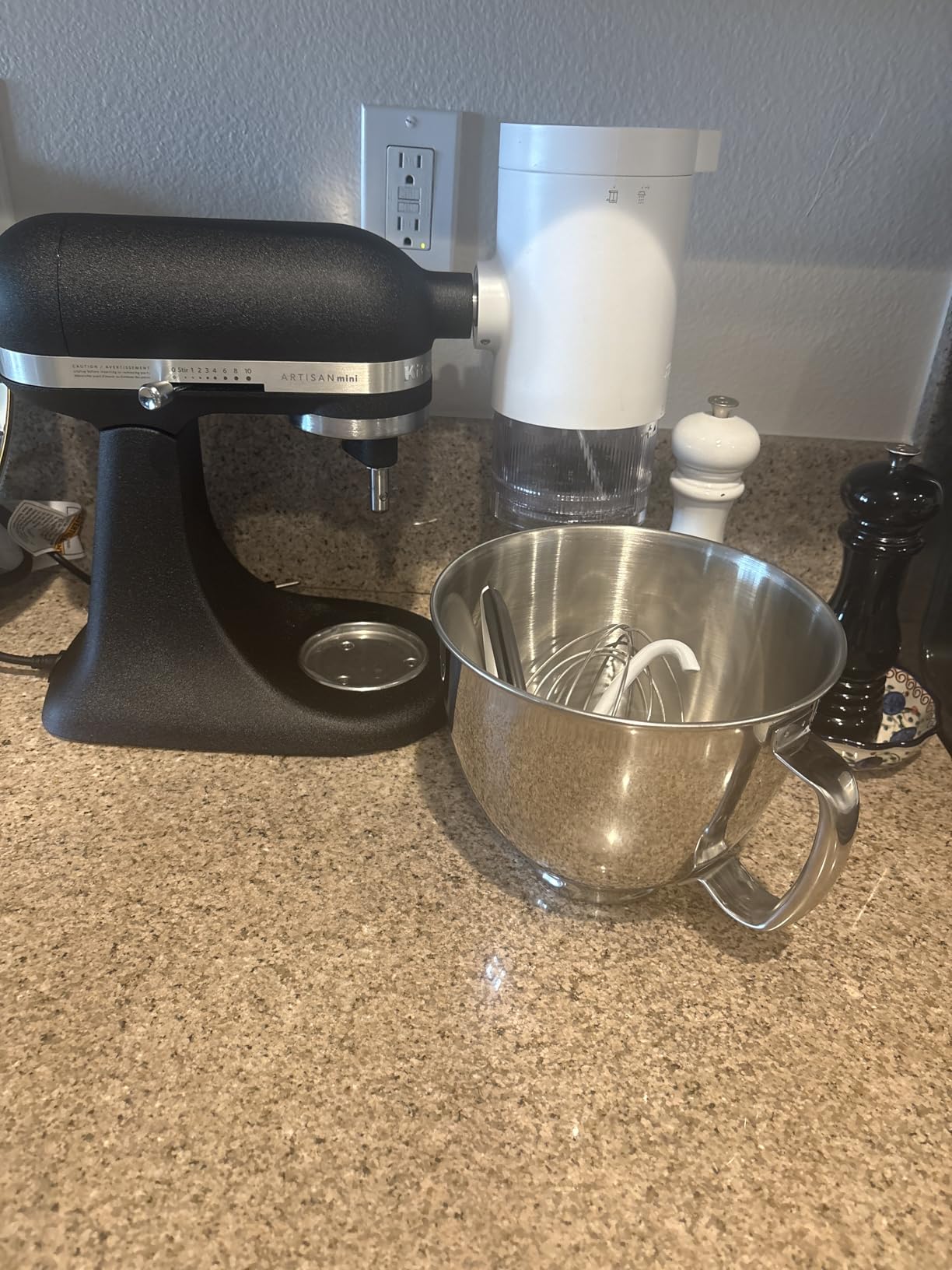
Compare it with the KitchenAid Classic 4.5-Qt, which is a bigger and heavier machine at 22 pounds. The Mini suits a small kitchen and a low cabinet; the Classic is the one that grows with a hobby. Its 4.8-star average also rests on a much smaller review base than the Classic’s, so the two ratings are not directly comparable.
9. Kitchen in the Box 6.5-Qt: Best for High-Capacity Value
Kitchen in the Box 6.5-Qt
Bowl: 6.5 qt stainless
Motor: 450 watts
Speeds: 10
Height: 13 in
Pros
- Six-and-a-half quart bowl with dual handles
- Ten speeds with planetary mixing
- Stainless whisk with aluminum hook and beater
- Large bowl for full-size batches
- Dual handles make lifting and repositioning easier
Cons
- ABS plastic body is lighter duty than die-cast metal
- Aluminum tools wear faster than all-steel versions
- Only 330 owner reviews so far
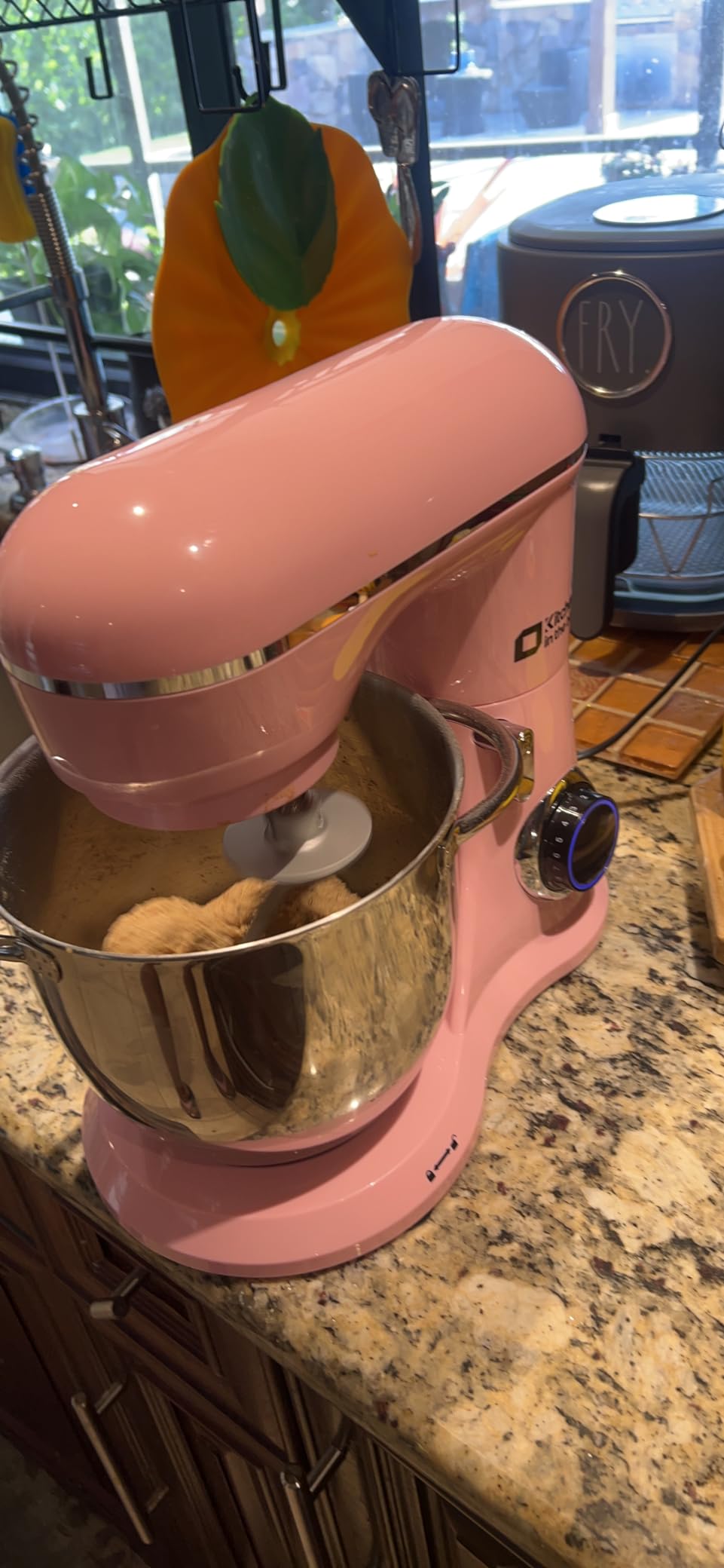
The largest bowl on this list, and the handles matter. A 6.5-quart stainless bowl with two side handles can be carried to the sink or repositioned on the counter without wrestling the machine, which is the whole problem with big bowls in cheap mixers.
Ten speeds with planetary mixing gives even coverage across cakes, cookies and bread dough according to the reviews, and a 450-watt motor is more than the compact models further up the list manage.

Be honest about the trade-offs. The body is ABS plastic, the dough hook and flat beater are aluminum rather than steel, and this is a newer listing with 330 reviews against nearly 10,000 on its 3.2-quart sibling, so there is less long-term owner history to lean on.
Against the VIVOHOME 6-Qt, this is the cleaner-bowl option with handles and a smaller motor. Against the Hamilton Beach Pro 5-Qt, it is more capacity in a lighter, less premium shell. If you have never read a manual and just want a big bowl, it does the job.
10. Hamilton Beach Pro 5-Qt: Best for Attachment Builds
Hamilton Beach Pro 5-Qt
Bowl: 5 qt stainless
Motor: 450 watts
Speeds: 12
Weight: 15.9 lb
Pros
- 450-watt all-metal motor holds speed through heavy dough
- Power hub drives pasta and grinding add-ons
- Metal body and attachments
- Twelve speeds with planetary mixing action
- Five-quart bowl for full-size batches
Cons
- Beater and dough hook are coated rather than stainless
- Optional slicer and shredder parts are plastic
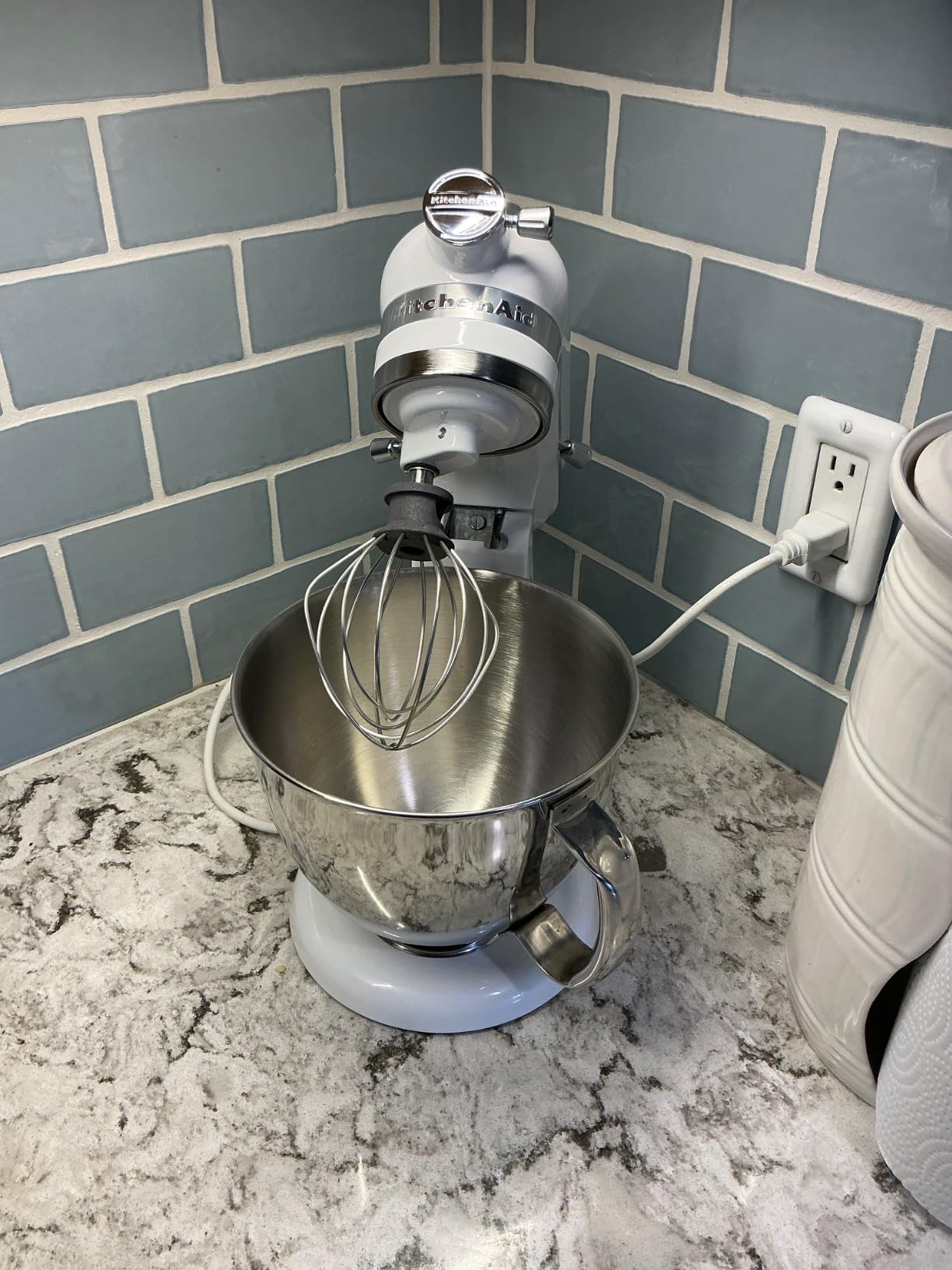
The build-your-own-platform option. It has a front power hub, so pasta rollers, spiralizers, grinders, slicers and shredders all run off the same head, and the 450-watt all-metal motor holds constant speed through thick, heavy dough rather than bogging down.
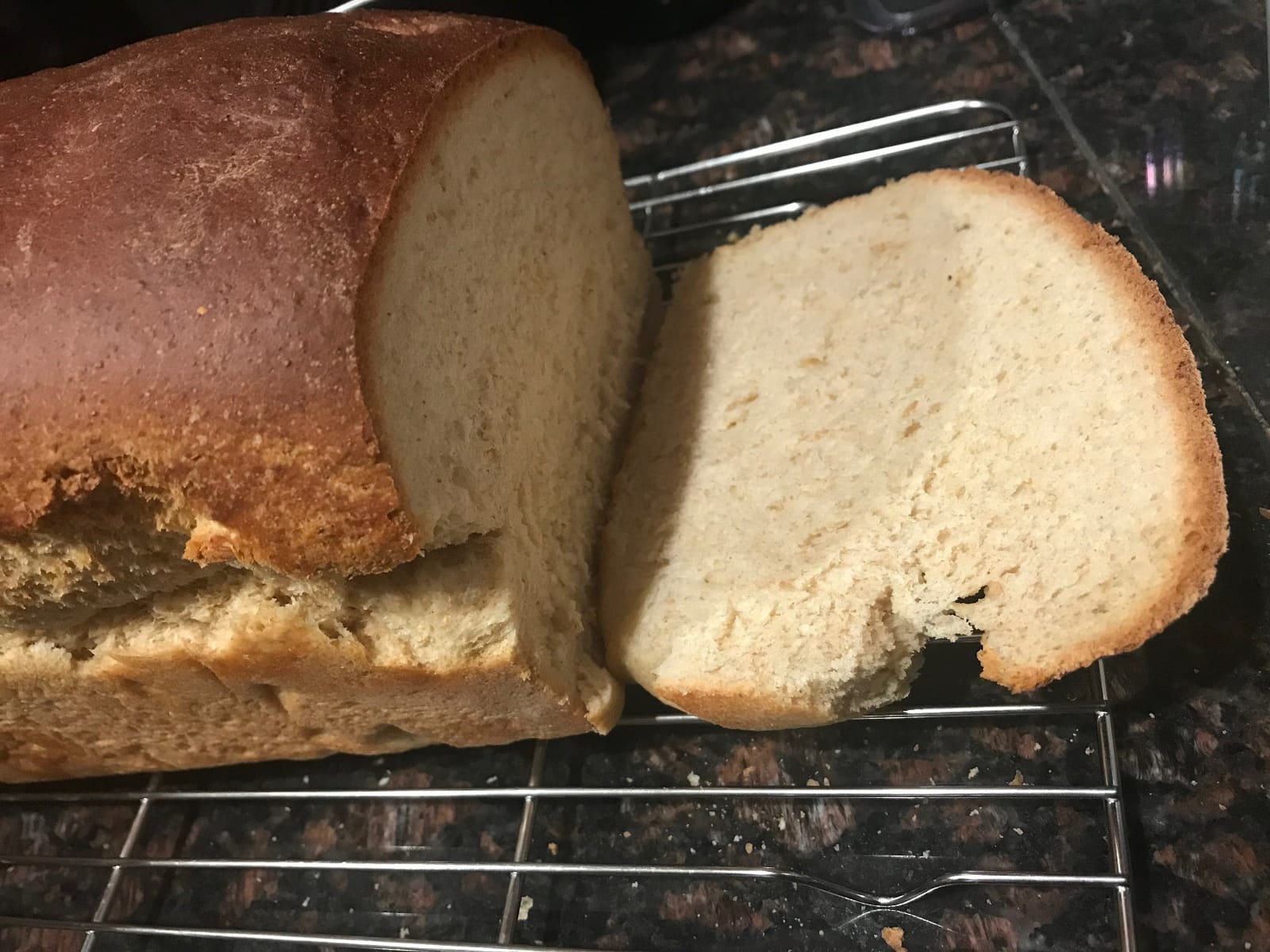
Owners rate the metal body as feeling more durable than plastic-bodied competitors, and the constant-speed motor is the part that shows up in reviews about dough that would stall a weaker machine. Twelve speeds and planetary action cover the range from folding to kneading.
The included beater and spiral dough hook are coated rather than fully stainless, and the optional slicer and shredder attachments contain plastic parts, so treat those as occasional-use tools. Pasta add-ons work mainly with wheat-based egg doughs.
Compared with the Cuisinart SM-50R, both drive attachments and both use a metal motor housing, but the Cuisinart carries a 500-watt motor and a larger 5.5-quart bowl. Compared with the Hamilton Beach 4-Qt, this is the same brand with a real hub and twelve speeds instead of seven.

How to Choose Stand Mixers During Prime Big Deal Days
Choose a Bowl Size That Matches Your Recipes
Bowl capacity decides how many batches you run, so pick it by recipe rather than by number on the box. About 4 quarts suits a couple doing cookies and cakes once a week; 5 quarts and up handles a full holiday cookie batch, and 6 quarts or more is for bread dough in volume. Advertised quart figures also assume headroom, so anything under about 4 quarts is realistically a two-portion machine. If your batches are large enough to fill a 6-quart bowl three times, read our guide to heavy-duty mixers for bakery production before settling.
Check Motor Power and Mixing Performance
Wattage tells you how the machine behaves with dense dough. Around 250 to 300 watts handles batters, cookies and meringue; 400 watts and above is where stiff bread dough and pizza dough stop fighting the motor. Ignore horsepower language, and check the review language instead: the useful signal is whether owners report stalling or complete mixes.
Tilt Head, Lift Head and Removable Bowl Designs
A tilt-head mixer hinges back for ingredient adds and easy bowl removal, which is why most home bakers prefer it. Bowl-lift models raise the bowl into the beater instead and suit very large batches on fixed counters. A removable-bowl design is easier to load and wash. Every mixer in this roundup except the Cuisinart’s tilt-back style uses the familiar hinge, and the head locks while the beater turns.
Measure the Mixer Before Buying
Weight and width decide whether the machine can live on your counter. A 22-pound model needs a mixer slider or two hands to move, while models under 10 pounds can be lifted one-handed. Measure the counter depth against the listed dimensions, including the base, and check cabinet clearance for the models listed near 19 inches tall before you assume they store away.
How to Shop Stand Mixer Deals During the Sale
Check the model number on the listing, not just the color, because KitchenAid bodies share a name across capacities. Confirm the bowl size, the motor wattage and what is actually in the box, since the included tools differ between models in the same range and a splash guard or flex-edge beater is easy to assume rather than check. Most offers in this event need a Prime membership, a free trial counts, and prices and coupons change through the two days.
- Bowl capacity first: 4 quarts for a couple, 5 quarts for a full cookie batch, 6 quarts and up for bread dough in volume
- At least 300 watts for dough work, more if pizza or stiff bread is a weekly task
- Confirm tilt-head versus bowl-lift against how you load and clean
- Check the weight against your counter space and your grip, not just the price
- Verify the model number, bowl size and included tools on the listing before checkout
- Confirm the offer works with your membership and that the coupon applies in cart
Frequently Asked Questions
When do Amazon Prime Big Deal Days stand mixer deals happen?
Prime Big Deal Days runs October 6-7, 2026, on Amazon, and stand mixer offers are among the kitchen deals that run across both days. Most of the offers need a Prime membership, and a free trial counts. Because coupons and prices change through the event, check the listing again on the second day before you buy.
Do you need Prime for the best Amazon Prime Big Deal Days stand mixer deals?
Most offers during Prime Big Deal Days require a Prime membership, though some kitchen deals are open to everyone. A Prime free trial counts as membership and is usually the simplest way to qualify. Check the deal badge on the listing to see whether Prime is required, since the requirement is shown per offer.
Is a stand mixer worth buying during Prime Big Deal Days or at regular prices?
A stand mixer is a durable, low-frequency purchase that holds its value for years, so the event is a reasonable time to buy one. Compare the final total for a given model against what it normally costs, and buy now only if the difference is meaningful to you.
Can a stand mixer handle bread dough without getting strained?
Yes, with the right size and motor. Mixers from about 300 watts up handle ordinary bread dough comfortably, and models above 450 watts deal with high-hydration and stiff dough better. Give the bowl enough room for the dough to double, keep speeds low at first, and remember that bowls under 4 quarts fill up long before the motor struggles.
Is a stand mixer better than a hand mixer for frequent baking?
For frequent baking, yes. A stand mixer holds a steady speed for ten to fifteen minutes without a tiring grip and keeps the beater in the batter, which a hand mixer cannot do. For an occasional cake or a small apartment kitchen with no counter space, a hand mixer is still the sensible choice, and a compact model like the Dash covers the middle ground.
How long does a stand mixer usually last with regular use?
A metal-construction stand mixer used a few times a week typically runs for well over a decade, and many owners pass them down. The parts that wear first are usually the coating on the beater and dough hook, and plastic housings on budget models fail sooner than metal bodies. Washing attachments by hand and storing the bowl with a towel under it extends the life.
Final Verdict: Best Amazon Prime Big Deal Days Stand Mixer Deals
The KitchenAid Artisan 5-Qt is the pick to watch during this event: the 5-quart bowl takes nine dozen cookies, the 325-watt motor handles stiff dough, and the review history on that listing is deeper than anything else here. For the same platform at a lower entry point, the KitchenAid Classic 4.5-Qt gives up half a quart of capacity and little else that matters day to day.
On a budget, the Dash Everyday 3-Qt is the small-counter answer, and the Hamilton Beach 4-Qt is the better beginner buy if the difference in bowl size matters. Bread and pizza dough point to the Cuisinart SM-50R, with its 500-watt motor and 5.5-quart bowl. The Kitchen in the Box 3.2-Qt goes where nothing else fits, the VIVOHOME 6-Qt takes the largest batches, the KitchenAid Artisan Mini is the best machine for one or two people, the Kitchen in the Box 6.5-Qt is the most capacity you can get, and the Hamilton Beach Pro 5-Qt is the one to build an attachment setup around.
Check the current listing for each model before you buy, confirm the bowl size and included tools match what you need, and confirm whether your membership is applied to the offer.