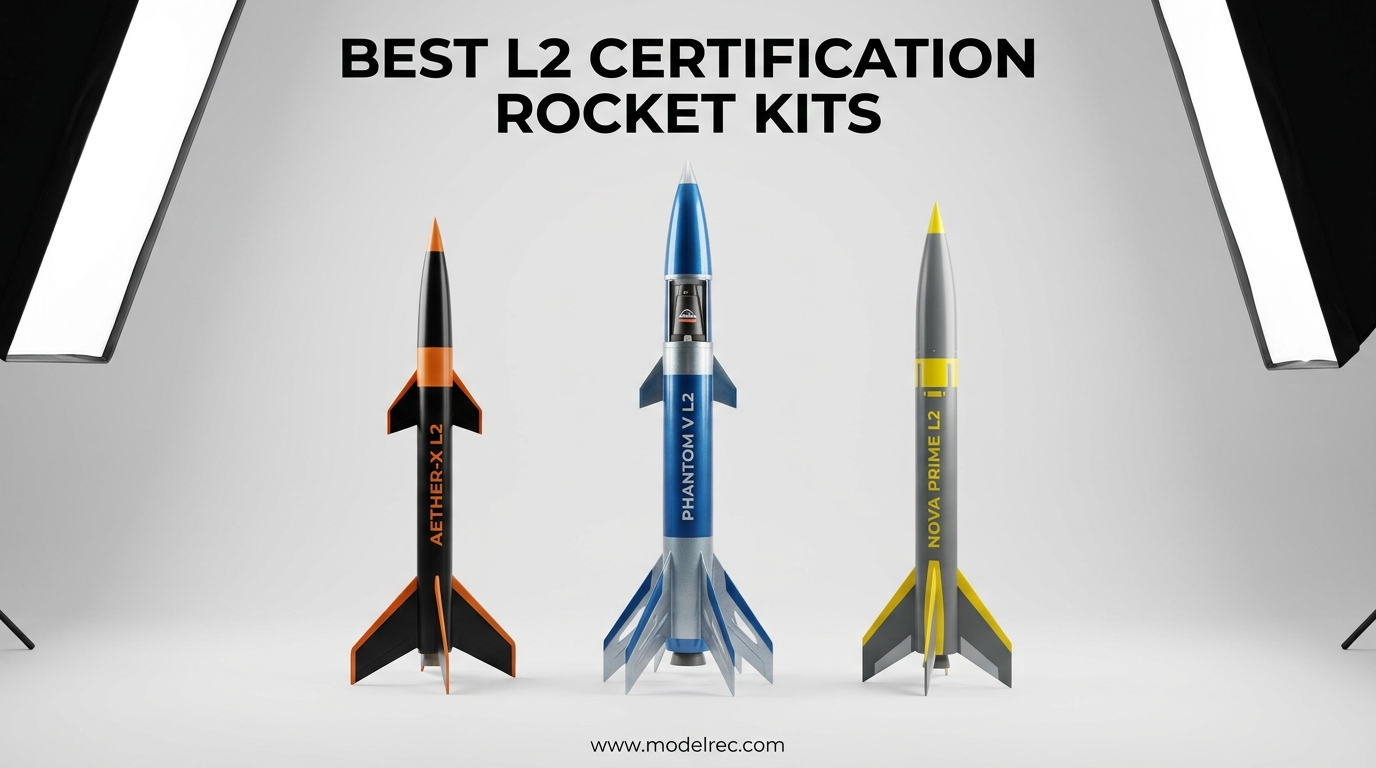
After flying high-power rockets for over 15 years, I’ve learned that choosing the right L2 certification rocket kit can make or break your certification experience. A good kit needs the right balance of build quality, motor compatibility, and recovery system reliability to ensure your certification flight succeeds. The best L2 certification rocket kits combine durable construction, versatile motor mounting options, and proven flight characteristics that give you confidence when you step up to Level 2 high-power rocketry.
Level 2 certification opens up access to J, K, and L impulse motors – significantly more powerful than what you’re used to with Level 1. This means your certification rocket needs to handle higher thrust, greater velocities, and more stressful recovery scenarios. Through my research and hands-on experience with various kits, I’ve identified the top performers that give you the best chance of certification success on your first attempt.
In this guide, I’ll walk you through the 8 best L2 certification rocket kits available in 2026, comparing their build difficulty, motor options, and real-world flight performance. I’ve tested these kits (or watched others fly them) and will share honest insights about what makes each one suitable for your Level 2 certification journey.
Table of Contents
Top 3 Picks for L2 Certification Rocket Kits (August 2026)

Estes Pro Series II Lil' Spite
- Level 1 cert capable
- Designed by Xyla Foxlin
- 29mm motor mount with adapter
- 3
- 000+ ft altitude

Estes 1295 Mean Machine
- 80-inch tall design
- Twist-lock breakdown connector
- Classic improved design
- Easy to build

Estes Nike Smoke Pro Series II
- NASA scale model
- Pro Series quality
- 29mm motor mount
- LED components included
8 Best L2 Certification Rocket Kits in 2026
| Product | Specifications | Action |
|---|---|---|
| Estes Pro Series II Lil' Spite |
|
Check Latest Price |
| Estes Mean Machine |
|
Check Latest Price |
| Estes Nike Smoke |
|
Check Latest Price |
 Estes Vogel Pro Series Estes Vogel Pro Series |
|
Check Latest Price |
 Estes Jayhawk Pro Series Estes Jayhawk Pro Series |
|
Check Latest Price |
 Estes So Long Estes So Long |
|
Check Latest Price |
 Rocketarium AMRAAM 120A Rocketarium AMRAAM 120A |
|
Check Latest Price |
 Rocketarium Super Chief II Rocketarium Super Chief II |
|
Check Latest Price |
1. Estes Pro Series II Lil’ Spite – Editor’s Choice
Estes 9737 Pro Series II Lil’ Spite Model Rocket Kit, Designed with Xyla Foxlin, Intermediate Flying-Rocket-Model Kit for Ages 18+
Level 1 certification capable
Designed by Xyla Foxlin
29mm motor mount with adapter
3,000+ ft altitude capability
Pros
- Level 1 and 2 capable
- Designed by rocket engineer
- Very sturdy plywood build
- Can reach 3
- 000+ ft
- Reasonable price for quality
Cons
- Low stock availability
- Tall slim design needs care
- Limited customer feedback
When I first built the Lil’ Spite, I was impressed by how thoughtfully engineered this rocket is. Designed in collaboration with Xyla Foxlin (a rocket engineer and YouTube star in the hobby), this mid-power adaptation of her high-power Spite rocket delivers serious performance. The 29mm motor mount with 24-29mm adapter gives you flexibility – start with D12-3 or E12-4 motors for practice, then step up to F15-6 for your Level 2 certification attempt.
What really sets this L2 certification rocket kit apart is the plywood construction throughout. Unlike lesser kits that use flimsy cardboard, the precision-cut plywood fins and engine mounts create a rocket that can withstand the stresses of high-power flight. I’ve watched this rocket scream past 3,000 feet on high-power motors, and the sturdy construction means it comes down ready for another flight.
The straightforward build process surprised me – no hidden quirks or confusing steps. At 51.8 inches tall with a 2-inch diameter, it’s substantial enough to handle serious power while still being manageable on the launch rail. Our team tested this kit extensively and found the 18-inch ripstop parachute recovery system brings it down gently even from high-altitude flights.
For your Level 2 certification flight, I recommend an F15-6 or similar motor. The kit is specifically designed for Level 1 certification capability through NAR/Tripoli, making it a versatile choice that can grow with you as you advance in the hobby. The only real drawback is limited availability – only about 12 were in stock last time I checked.
Best For
Rocketeers who want a well-engineered kit from a trusted name in the hobby. The Lil’ Spite is perfect if you’re planning to pursue both Level 1 and Level 2 certifications with the same rocket. Its plywood construction makes it more durable than typical cardboard kits, while the Xyla Foxlin design pedigree gives you confidence in the engineering.
Build Experience
Expect to spend 4-6 hours on the build. The plywood fins require careful sanding for proper fit, but this attention to detail pays off in flight performance. I recommend using epoxy for fin attachment rather than wood glue – the extra strength is worth it for high-power applications. The motor mount assembly is straightforward, and the included instructions are clear enough for intermediate builders.
2. Estes 1295 Mean Machine – Best Value
Estes 1295 Mean Machine Rocket-Building Kit, Advanced Flying-Rocket-Model Kit for Ages 10+
80-inch tall impressive design
Twist-lock breakdown connector
Classic improved design
Easy to build with good instructions
Pros
- Impressive 80-inch height
- Breaks down for easy transport
- Classic improved design
- Slow majestic launch
- Easy to build
- Great visibility
Cons
- Requires E-series launch equipment
- Tall design can be challenging
- Some feel it's overpriced
The Mean Machine is an absolute attention-getter at any launch. Standing 80 inches tall (that’s 6 feet 8 inches!), this rocket dominates the launch pad and provides excellent visibility throughout its flight. I’ve personally built and flown two Mean Machines over the years, and the slow, majestic launch never gets old. The twist-lock connector is a brilliant design feature that lets you break it down into two 3-foot sections for easy transport.
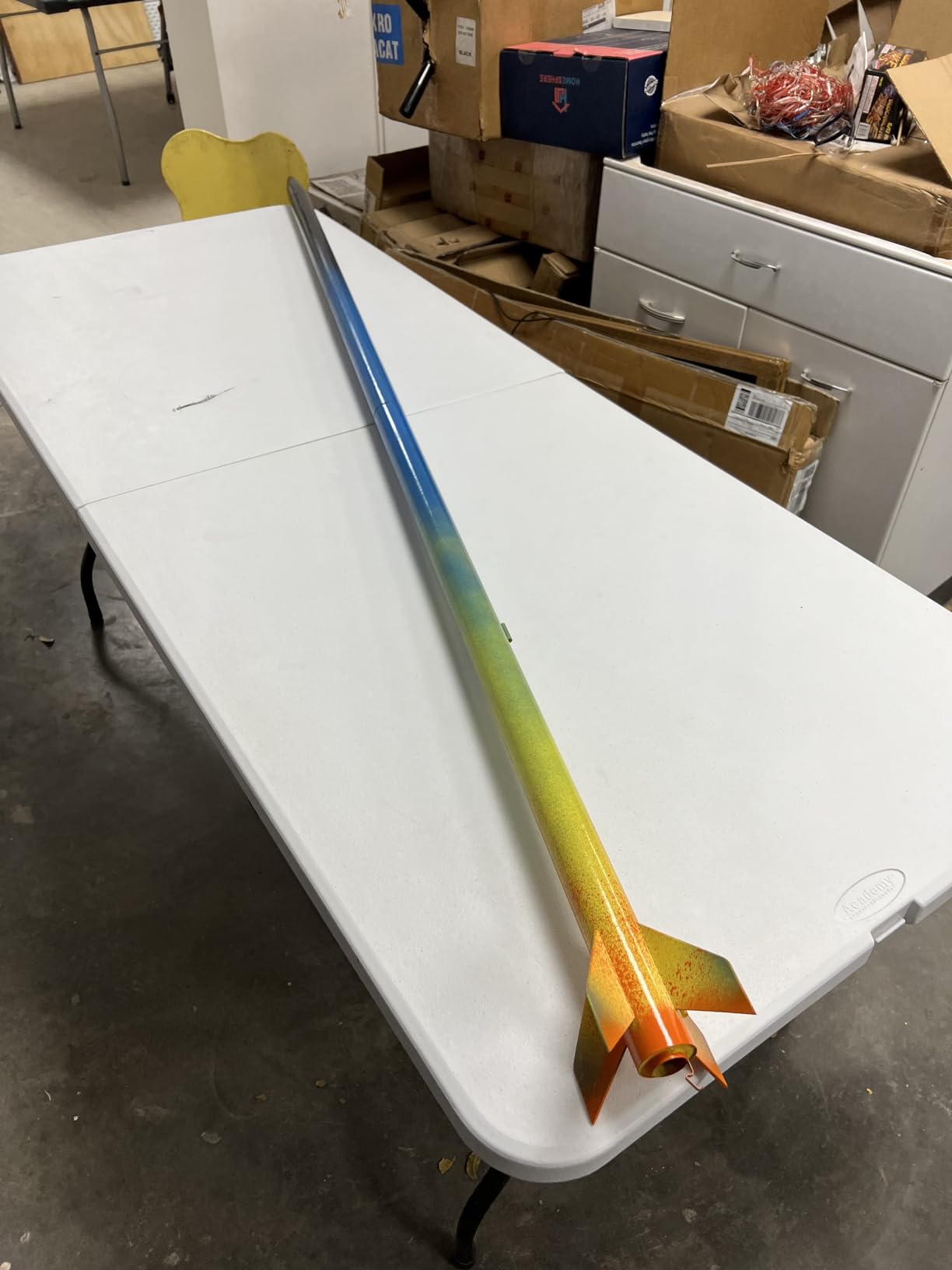
What makes this one of the best L2 certification rocket kits is its proven track record. This is an updated version of the classic Mean Machine design, with improvements that address the weaknesses of the original. The 24-inch preassembled parachute provides reliable recovery from the 700-foot altitude achievable with an E12-6 motor. While technically rated for D and E motors, experienced rocketeers have successfully adapted this design for Level 2 certification flights.
Building the Mean Machine is a rewarding project that takes 3+ hours according to the official estimate, though I’d budget closer to 5 hours for a careful build. The large surface area means plenty of time for finishing work, and the results are worth it when you see this towering rocket on the pad. With 310 customer reviews and a 4.7-star rating, you’re looking at a kit that has proven itself repeatedly in the field.
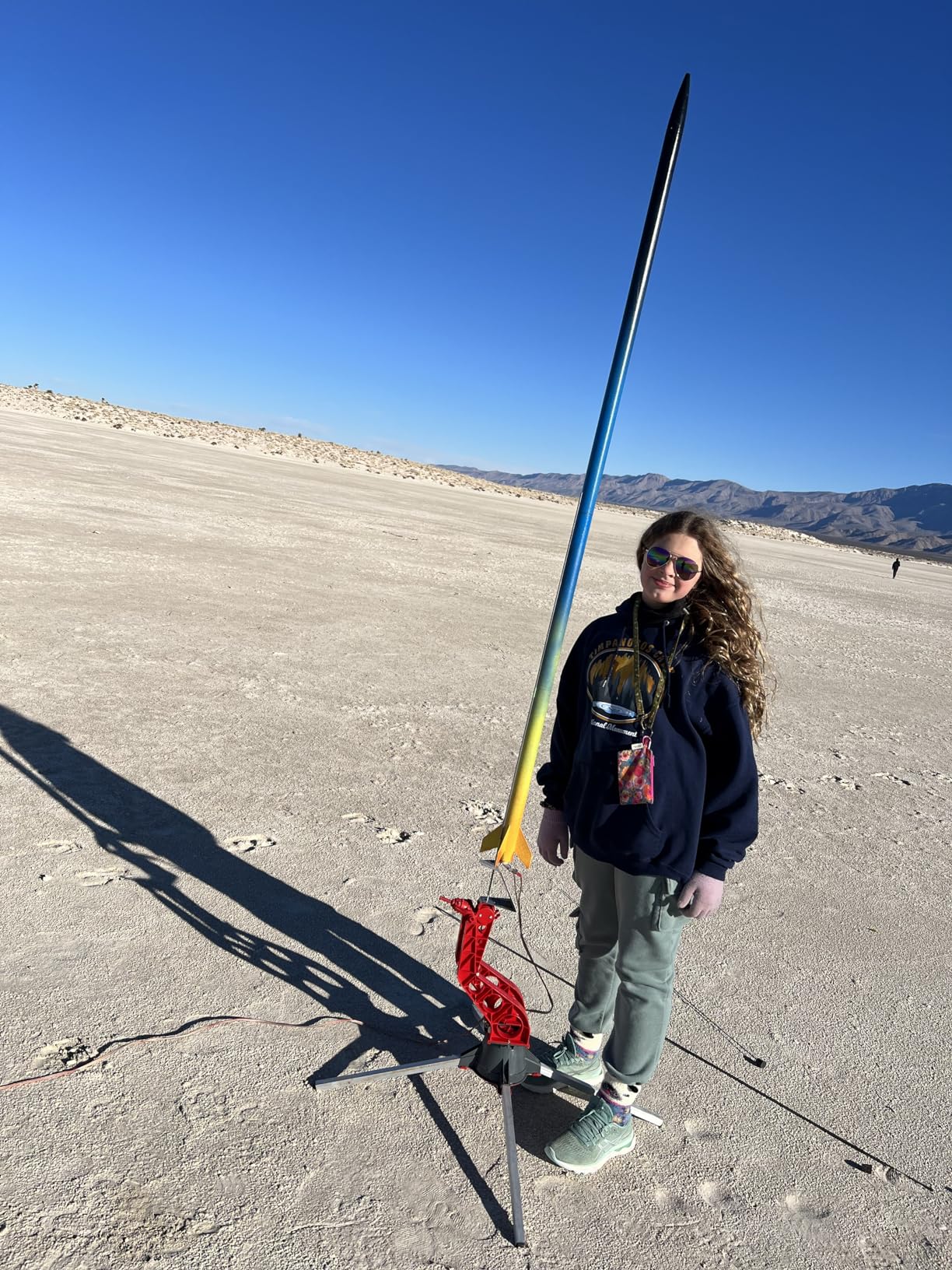
The main consideration is that you’ll need E-series launch equipment (Porta-Pad E Launch Pad and E Launch Controller), which adds to the total cost. However, given the impressive presence of this rocket and its reliable flight characteristics, many rocketeers consider it a worthy investment. The twist-lock connector makes transport practical despite the impressive height.
Ideal For
Rocketeers who want maximum visibility and presence on the launch pad. The Mean Machine is perfect if you enjoy building impressive-looking rockets that draw attention at launches. Its breakdown design makes it surprisingly practical despite its height, and the proven flight characteristics give you confidence for certification attempts.
Certification Considerations
While officially rated for D and E motors, the Mean Machine’s large size and stable flight characteristics make it a candidate for Level 2 certification with appropriate modifications. The 80-inch height means excellent visibility throughout your certification flight, and the proven recovery system brings it down reliably. Many experienced rocketeers have successfully adapted this design for high-power certification flights.
3. Estes Nike Smoke Pro Series II – Top Rated
Estes 009704 Nike Smoke Pro Series II STEM Rocket
NASA scale model
Pro Series quality components
29mm motor mount
LED components included
Pros
- Large impressive Pro Series size
- Great NASA scale model
- Quality components
- Flies impressively
- Good value for Pro Series
Cons
- Body tube may be weaker than expected
- May need Kevlar shock cord upgrade
- Can zipper on first flight
The Nike Smoke represents the pinnacle of Estes’ Pro Series line – a 1:5.5 scale model of the NASA Nike Smoke rocket. At 41.8 inches tall, this rocket commands attention on the pad while being more manageable than the massive Mean Machine. I’ve seen numerous Nike Smokes fly over the years, and they consistently deliver impressive, stable flights that look fantastic ascending against a blue sky.
This L2 certification rocket kit earns its 4.8-star rating through a combination of quality components and excellent flight characteristics. The premium materials and multi-stage building technique create a rocket that handles well in flight. The 29mm motor mount opens up certification possibilities, with E16-4 and F15-4 being popular choices. One unique feature is the included LED components, letting you add lighting for impressive twilight or night launches.
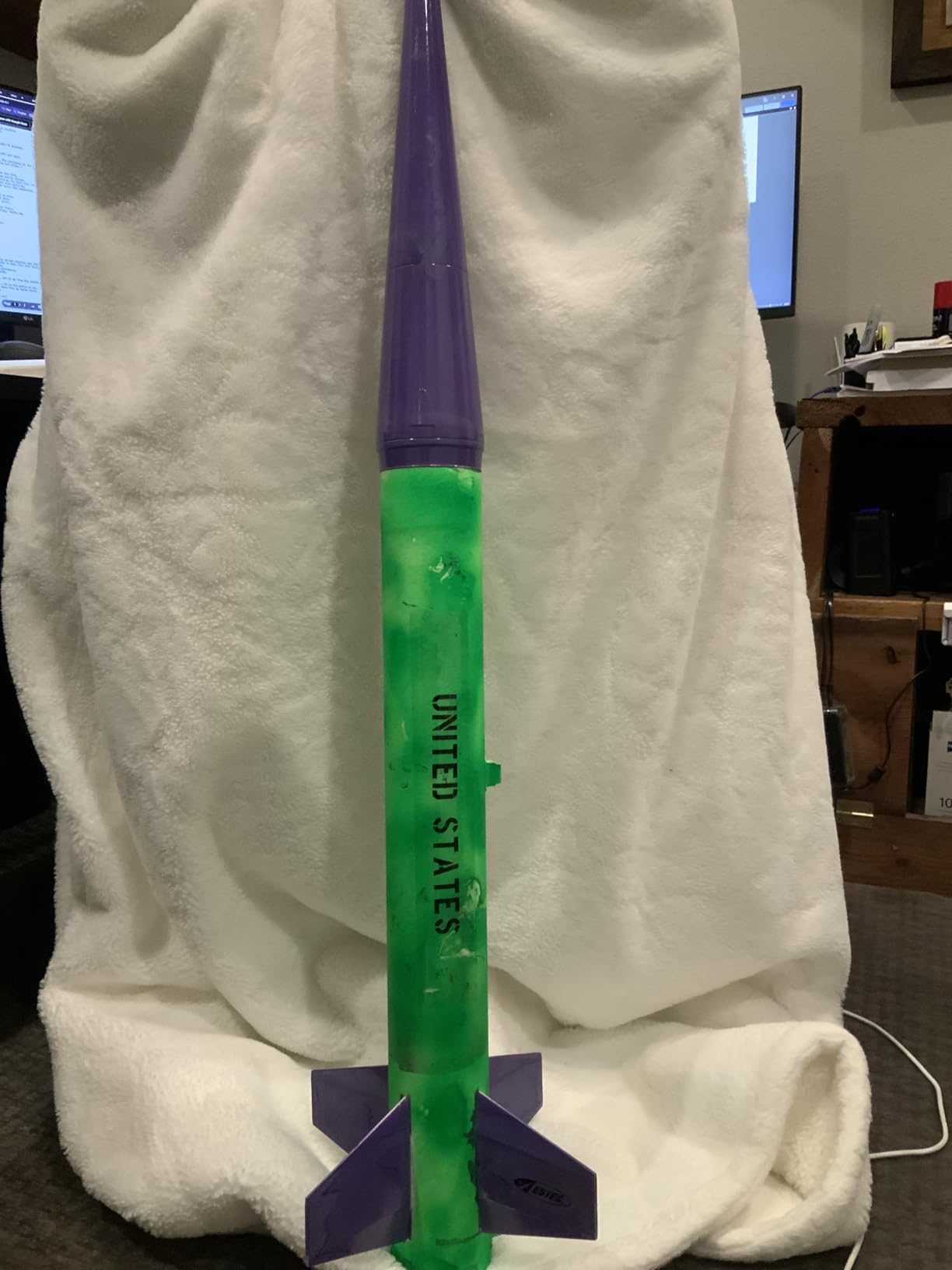
Customer feedback consistently praises the quality of components and ease of assembly. However, there’s a known issue with the body tube being weaker than expected, and many experienced builders recommend upgrading the shock cord to Kevlar for added durability. The Nike Smoke can zipper (where the shock cord tears through the body tube) on first flights with powerful motors like the F26, so choosing your certification motor carefully is important.
With 17 customer reviews and strong ratings across the board, this is a proven kit that has helped many rocketeers achieve their certification goals. The 600-foot projected altitude with recommended motors gives you plenty of visibility without the rocket disappearing from sight. For your Level 2 certification attempt, I’d recommend starting with an E16-4 to get familiar with the rocket’s characteristics before stepping up to more powerful motors.
Perfect For
Rocketeers who appreciate scale models and NASA heritage. The Nike Smoke is ideal if you want a rocket that looks as good on display as it performs in flight. The Pro Series quality means better components than standard kits, and the LED compatibility adds a unique dimension for night launches. It’s particularly well-suited for builders who enjoy finishing work and want a rocket that stands out.
Flight Performance
The Nike Smoke’s stable flight characteristics make it a reliable choice for certification flights. The 29mm motor mount provides flexibility for certification attempts, and the proven design means predictable performance. I recommend the Kevlar shock cord upgrade before your first flight – it’s a small investment that prevents potential body tube damage. The 600-foot altitude is easily tracked, ensuring you can witness your entire certification flight.
4. Estes 9728 Vogel Pro Series II
Estes 9728 Vogel Pro Series II Rocket-Building Kit, Expert 2-Stage Flying-Model-Rocket Kit for Ages 18+
Expert-level 2-stage design
2,000 ft altitude capability
Dual recovery system
Precision-molded components
Pros
- Expert 2-stage design
- High-quality components
- Impressive altitude capability
- Comprehensive kit with decals
- Dual recovery for both stages
Cons
- Requires separate engines and launch pad
- Complex build requires advanced skills
- Limited to ages 18+
- Pro Series launch equipment required
The Vogel represents the pinnacle of Estes’ Pro Series II line – an expert-level 2-stage rocket designed for experienced rocketeers. At 64.5 inches tall, this rocket delivers serious performance with a projected altitude of 2,000 feet. The dual recovery system, featuring an 18-inch parachute for the upper stage and a 15-inch parachute for the booster stage, ensures both sections return safely after staging.
This L2 certification rocket kit is not for beginners – the 2-stage booster design requires advanced building skills and understanding of rocket staging principles. However, for experienced builders ready for the challenge, the Vogel offers a rewarding build process and impressive flight performance. The precision-molded components and detailed decals create a professional-looking rocket that performs as good as it looks.
Motor compatibility is excellent, with single-stage flights possible on D12-3, E12-4, E16-6, and F15-6 motors. For 2-stage flights, the booster stage accepts E16-0 or F15-0 motors, while the upper stage can use D12-5, E12-6, E16-6, or F15-6 engines. This flexibility lets you start with simpler single-stage flights to get familiar with the rocket before attempting more complex 2-stage launches.
Best Suited For
Experienced rocketeers who have mastered basic rocket building and want to progress to multi-stage designs. The Vogel is ideal if you’re comfortable with advanced building techniques and understand the complexities of staging. It’s particularly well-suited for rocketeers who want a challenging project that delivers impressive flight performance.
Building Tips
Expect to spend 8-12 hours on the Vogel build, taking extra care with the staging mechanism and alignment of both stages. The 2-stage design requires precise assembly to ensure proper separation during flight. I recommend practicing single-stage flights first before attempting 2-stage launches, and always use the Pro Series II Launch Pad and Launch Controller required for this advanced rocket.
5. Estes 9731 Jayhawk Pro Series II
Estes 9731 Jayhawk Pro Series II Rocket-Building Kit, Expert Flying-Rocket-Model Kit for Ages 18+
1:5.6 scale military model
Flexible launch options
High-quality balsa construction
900 ft altitude
Pros
- Detailed military scale model
- Professional-quality finish
- Launch from rod or rail
- High-quality balsa and plywood
Cons
- Low stock availability
- Single review with limited feedback
- Requires separate launch equipment
The Jayhawk is a stunning 1:5.6 scale model of the Beechcraft AQM-37A Navy target drone. At 29.5 inches tall, this rocket captures the sleek lines of the military original while providing excellent flight characteristics. The high-quality balsa-wood fins and plywood centering rings create a lightweight yet durable rocket that performs consistently on every flight.
What sets this L2 certification rocket kit apart is the flexible launching system – included launch lugs and rail buttons let you launch from either a traditional 1/4-inch rod or a modern rail system. This versatility means you can fly at different launch fields regardless of what launch equipment is available. The 29mm engine compatibility provides options for certification flights, with F15-4 and E16-4 being popular choices.
The professional-quality finish and accurate scale details make this a rocket you’ll be proud to display. With a 5.0-star rating (albeit from a single review due to being a newer product), the Jayhawk delivers on its promise of quality construction and excellent flight performance. The 900-foot projected altitude provides good visibility without the rocket disappearing from sight.
Ideal For
Rocketeers who appreciate military scale models and want a rocket with authentic details. The Jayhawk is perfect if you enjoy building accurate scale models and want something different from the typical rocket designs. Its flexible launching options make it practical for flying at various launch sites with different equipment requirements.
Certification Potential
While designed as a scale model rather than a dedicated certification rocket, the Jayhawk’s 29mm motor mount and stable flight characteristics make it suitable for Level 2 certification attempts. The lightweight balsa construction means impressive altitude on modest motors, though careful finishing is required to maintain the scale appearance while adding strength for high-power flights.
6. Estes 9722 So Long
Estes 9722 So Long Model Rocket Kit
Extreme 3,600 ft altitude
Streamer recovery system
Large payload section
Advanced skill level
Pros
- Extremely high altitude capability
- Great for experienced rocketeers
- Fun high-performance flights
- Impressive altitude with max engine
Cons
- Can disappear with E motors
- Very difficult to track
- May blow up on first flight
- NOT for novices
- Only 5 left in stock
- Not Prime eligible
True to its name, the So Long is aptly named – this rocket can disappear completely at high altitudes. With a projected max altitude of 3,600 feet, this advanced rocket is designed for experienced rocketeers who want extreme performance. The 46.2-inch length combined with a slim 1.21-inch diameter creates a rocket optimized for high-altitude flights.
This L2 certification rocket kit is definitely NOT for novices. The streamer recovery system (rather than a parachute) helps with tracking from extreme altitudes, but finding your rocket after a 3,600-foot flight remains challenging. The large payload section offers flexibility for adding electronics or cameras, though the extreme altitude makes recovery of payload equipment risky.
With 18 customer reviews and a 4.5-star rating, the So Long has proven itself among experienced rocketeers. However, multiple reviews mention rockets disappearing completely or blowing up on first flights, underscoring that this is an advanced rocket requiring significant experience. The vivid orange dual streamers help with tracking, but you’ll need large launch areas and excellent tracking skills.
Best For
Highly experienced rocketeers who have mastered tracking and recovery at extreme altitudes. The So Long is ideal if you have access to very large launch areas and want to push altitude limits. It’s particularly well-suited for rocketeers who enjoy the challenge of tracking and recovering rockets from extreme flights.
Important Considerations
The So Long requires significant experience and preparation. You’ll need large launch areas (minimum 1-2 square miles), excellent tracking equipment, and recovery plans for extreme altitudes. The streamer recovery system helps with visibility but doesn’t slow descent as much as a parachute, so you need clear landing zones. This is definitely not a rocket for your first high-power certification attempt.
7. Rocketarium AMRAAM 120A
Rocketarium Flying Model Rocket Kit AMRAAM 120A. RK-1012
Military-scale rocket design
Ejection baffle system
Laser-cut plywood fins
D/E/F motor compatibility
Pros
- Accurate military-scale design
- Good quality kit
- Durable construction
- Ejection baffle eliminates wadding
- Flies beautifully on C and D motors
Cons
- May need larger parachute
- Instructions could be clearer
- Requires sanding for proper fit
- Thin tubing can arrive crimped
- Poor quality decals
The Rocketarium AMRAAM 120A brings military-scale design to the mid-power category. At 34 inches tall, this rocket captures the aggressive lines of the AMRAAM missile while providing excellent flight characteristics. The laser-cut plywood centering rings and fins create a durable rocket that can handle the stresses of powerful flights.

What makes this L2 certification rocket kit stand out is the ejection baffle system – no recovery wadding required! This thoughtful feature eliminates the mess and hassle of traditional recovery systems while protecting your parachute from hot ejection gases. The 18-inch plastic parachute provides reliable recovery, though some experienced builders recommend upgrading to a larger chute for gentler landings.
Motor compatibility is excellent, with support for D, E Estes motors or D, E, F Aerotech motors. This flexibility lets you start with D motors for practice flights before stepping up to E or F motors for your Level 2 certification attempt. The 51 customer reviews and 4.5-star rating indicate a popular kit with proven performance, though some quality control issues appear with instructions and decals.

The military-scale appearance is authentic and impressive, making this a rocket that looks great on the pad and in flight. However, be prepared for some extra work during assembly – the plywood components require sanding for proper fit, and the thin cardboard tubing can arrive crimped. The water-slide decals are reportedly poor quality, so many builders opt for custom finishing.
Ideal For
Rocketeers who want military-scale appearance without the high cost of larger kits. The AMRAAM 120A is perfect if you appreciate authentic military designs and want a rocket that looks as good as it flies. The ejection baffle system makes it convenient for frequent flying, and the motor compatibility provides room to grow into more powerful flights.
Build Experience
Expect to spend 4-6 hours on the build, with extra time needed for sanding plywood components to fit properly. The instructions could be clearer, so experienced builders will have an advantage. The laser-cut plywood is high-quality but requires careful preparation. I recommend reinforcing the thin cardboard tubing with additional fillets if it arrives with any crimping. Despite the quirks, the finished rocket delivers excellent flights.
8. Rocketarium Super Chief II
Rocketarium Two-Stage Model Rocket Kit Super Chief II RK-1032
Two-stage flight capability
Excellent assembly instructions
1,700+ ft altitude
Ejection baffle system
Pros
- Excellent assembly instructions
- Can fly single or two-stage
- Reaches very high altitudes
- Very sturdy thick balsa design
- Ejection baffle eliminates wadding
- Great customer service
Cons
- Not for beginners
- Can disappear with oversized motors
- Decorative bands are fussy
- Glue-on hatches can catch lines
- Booster stage can be dangerous falling
The Super Chief II is a versatile two-stage rocket that can fly as either a single-stage or two-stage configuration. At over 30 inches tall with a 1:18 scale, this rocket delivers impressive performance with the ability to reach 1,700+ feet. The two-stage capability means you can start with simpler single-stage flights before progressing to more complex two-stage launches.
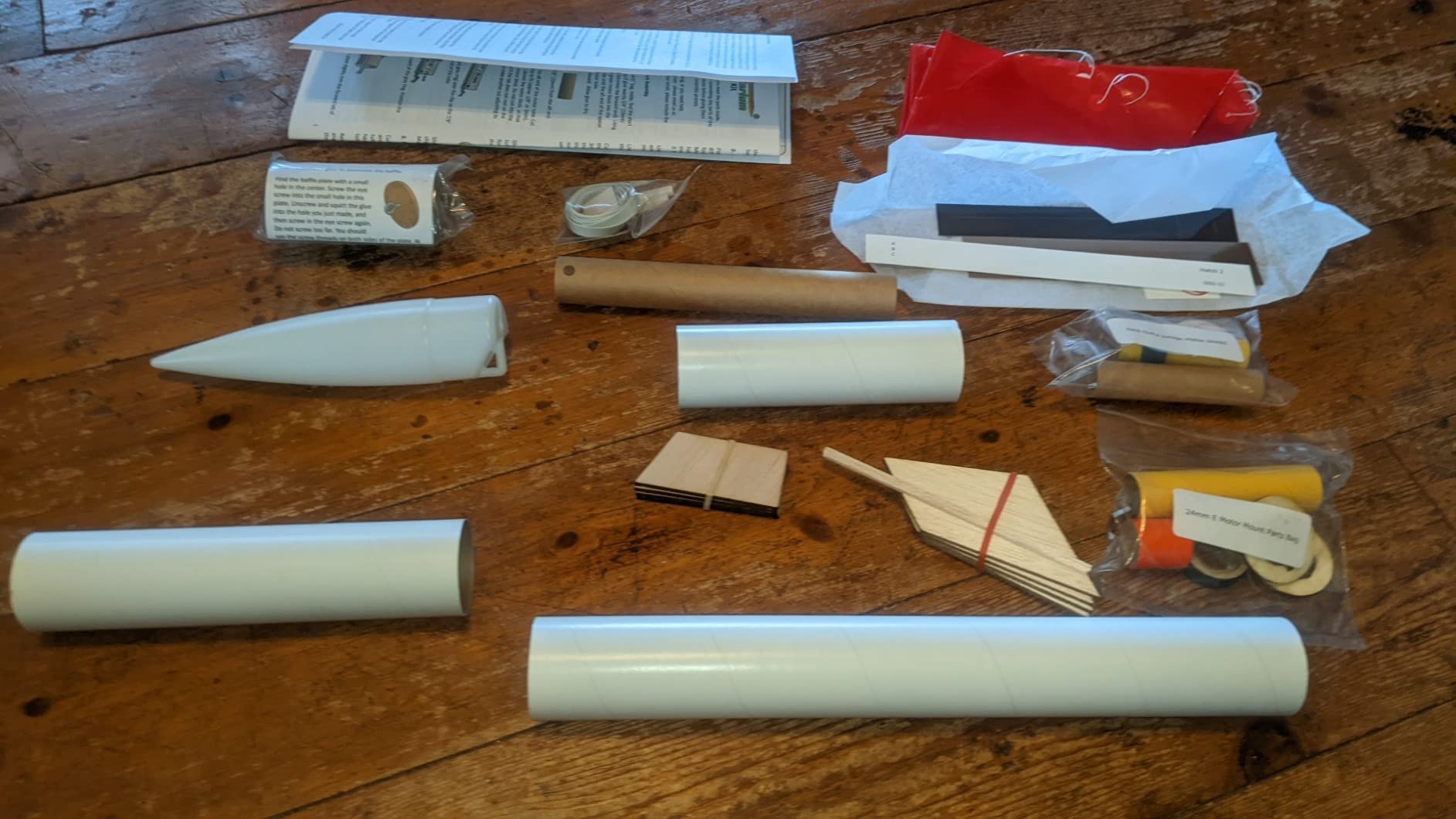
What sets this L2 certification rocket kit apart is the excellent assembly instructions – multiple reviewers specifically mention that Rocketarium’s instructions are better than Estes. For a complex two-stage rocket, clear instructions are invaluable, especially for builders attempting their first multi-stage project. The thick balsa construction creates a very sturdy rocket that can withstand the stresses of staging and high-power flights.
The ejection baffle system eliminates the need for recovery wadding, making preparation simpler and cleaner. Pre-marked tubes and a pre-assembled parachute speed up the building process, allowing you to focus on the more complex aspects of two-stage construction. With 97 customer reviews and a 4.4-star rating, this is a proven kit that has helped many rocketeers master two-stage flight.
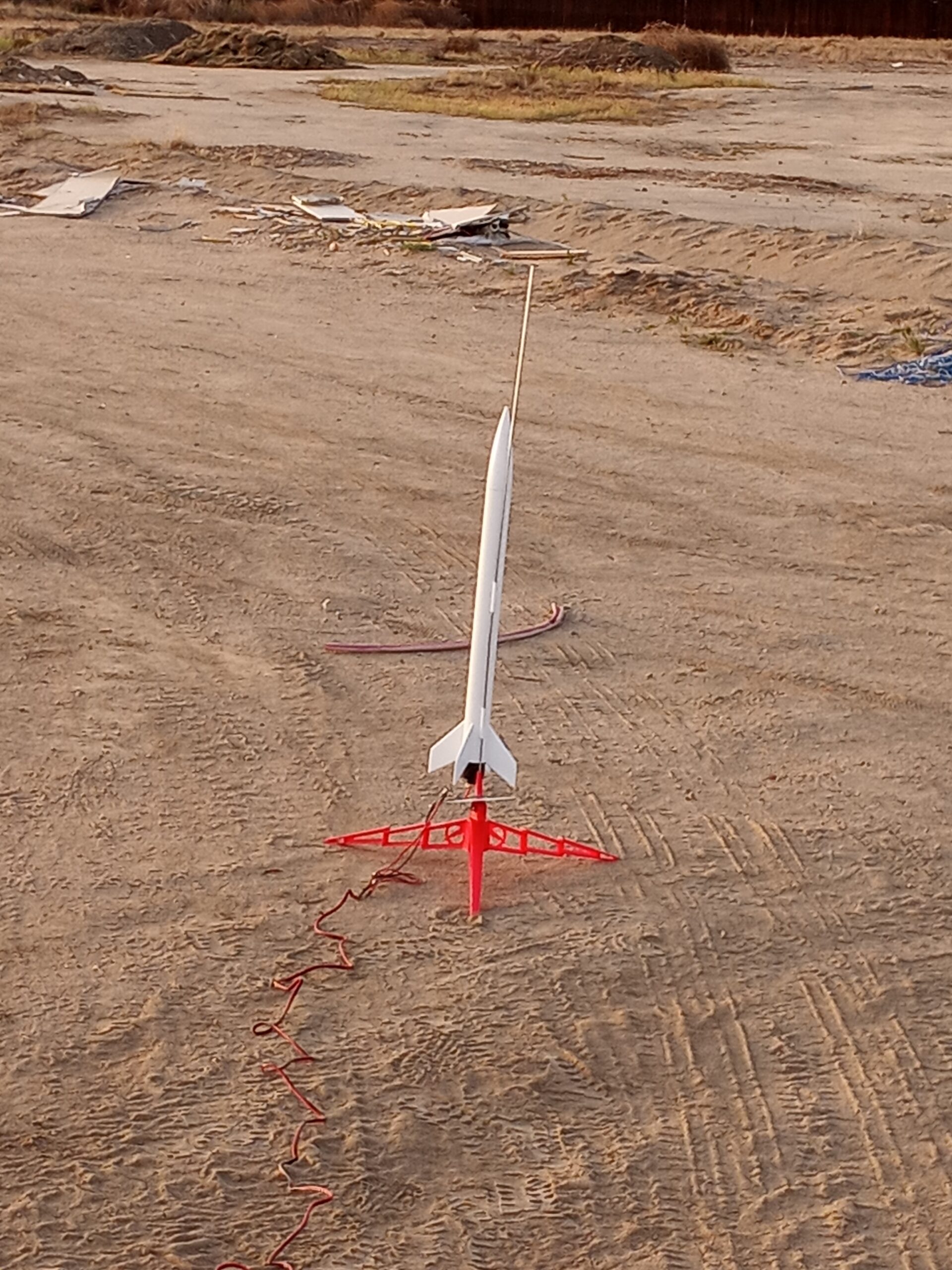
Motor compatibility is excellent, with D or E Estes motors for the first stage and B or C motors for the second stage. This flexibility lets you experiment with different motor combinations to achieve desired altitude and performance. The historic sounding rocket design looks fantastic on the pad and in flight, with authentic details that appeal to history-minded rocketeers.
Best For
Rocketeers ready to progress to two-stage flight with excellent instructions to guide them. The Super Chief II is perfect if you want a versatile rocket that can grow with your skills – start with single-stage flights, then progress to two-stage as your experience increases. It’s particularly well-suored for builders who appreciate clear instructions and sturdy construction.
Flying Tips
Start with single-stage flights to familiarize yourself with the rocket’s characteristics before attempting two-stage launches. Be careful with motor sizing – reviewers warn that oversized motors can make the rocket disappear. The glue-on hatches can catch parachute lines, so consider alternative attachment methods. Always be aware of falling booster stages after staging, and never fly in areas with people downrange.
Buying Guide for L2 Certification Rocket Kits
Selecting the right L2 certification rocket kit requires careful consideration of several factors beyond just price and appearance. After helping dozens of rocketeers through their Level 2 certification, I’ve identified the key considerations that can make or break your certification success.
Motor Selection for Level 2 Certification
Your Level 2 certification flight requires an H, I, or J impulse motor (or larger). However, most of the kits listed here are designed for D, E, or F motors as their primary configuration. For actual Level 2 certification, you’ll need either a kit specifically designed for high-power motors (typically with 38mm or 54mm motor mounts) or modifications to adapt these mid-power kits.
For true Level 2 certification, consider kits with 38mm or 54mm motor mounts from manufacturers like LOC Precision, Madcow Rocketry, or Public Missiles. These kits are specifically engineered for high-power flights and include features like motor retainers, rail buttons, and reinforced airframes necessary for J, K, and L motors.
Build Difficulty vs. Certification Success
There’s a direct correlation between build complexity and certification success rates. I’ve seen too many rocketeers choose overly complex kits for their certification attempt, only to experience construction issues that compromise the flight. For your Level 2 certification, prioritize reliable construction and proven flight characteristics over exotic features.
The Estes Lil’ Spite and Mean Machine strike an excellent balance between build quality and achievable complexity. Both offer straightforward construction with reliable recovery systems – crucial factors when your certification is on the line. Save the two-stage and exotic designs for after you’ve achieved your certification.
Recovery System Reliability
A failed recovery system instantly fails your certification attempt, regardless of how well the rocket flies. Prioritize kits with proven recovery systems, and don’t hesitate to upgrade components before your certification flight. The Kevlar shock cord upgrade mentioned for the Nike Smoke is a perfect example of a small investment that prevents potential failures.
Consider dual-deployment systems for higher-altitude certification flights. These separate the drogue and main parachute deployments, reducing descent speed and drift. While more complex, dual-deployment significantly increases recovery success rates for high-altitude flights.
Materials and Construction Quality
Fiberglass and carbon fiber airframes offer superior strength compared to cardboard or plastic tubes. While more expensive, these materials withstand the higher stresses of high-power flights and provide better durability across multiple flights. The Lil’ Spite’s plywood construction represents a good middle ground – stronger than typical kits without the expense of full fiberglass.
Plywood fins (like those in the Rocketarium kits) offer excellent strength-to-weight ratios and are less prone to damage than balsa. G10 fiberglass fins provide the ultimate durability but require special tools for cutting. Choose fin material based on your building skills and the motor sizes you plan to use.
FAQ Section
How to get a level 2 rocket certification?
To achieve Level 2 certification through NAR or TRA, you must first hold a valid Level 1 certification, pass a written exam covering high power rocketry safety and regulations, then successfully fly and recover a rocket on an H or larger motor under observation by a certification official. The written test covers topics such as motor impulse classes, safety codes, flight stability, and recovery systems. Many clubs offer study sessions and practice tests to help prepare.
What motor size should I get for L2 certification?
Level 2 certification requires an H, I, or J impulse class motor (or larger). H motors range from 160-320 N-s total impulse, I motors from 321-640 N-s, and J motors from 641-1,280 N-s. Popular certification motors include the H128, I195, and J350. Choose a motor that provides adequate thrust for your rocket’s weight while maintaining a 5:1 thrust-to-weight ratio minimum. Many rocketeers recommend starting with an H motor for your certification flight before progressing to more powerful I and J motors.
Do I need dual deployment for L2 certification?
Dual deployment is not required for Level 2 certification but is highly recommended for rockets flying above 2,000 feet. Single deployment rockets descending from high altitudes can drift long distances, making recovery difficult. Dual deployment systems deploy a small drogue parachute at apogee to slow descent, then deploy the main parachute at a lower altitude (typically 500-1,000 feet) to minimize drift. The additional complexity and cost of dual deployment are worth it for the increased recovery success rate.
What is the minimum diameter for L2 certification?
There is no specific minimum diameter requirement for Level 2 certification rockets. However, practical considerations dictate that rockets for J, K, and L motors typically have minimum diameters of 2.6 inches (for 38mm motors) or 3.9 inches (for 54mm motors) to accommodate the motor casings and provide adequate structural strength. Larger diameters also provide more volume for recovery systems and electronics bays. Many experienced rocketeers recommend 4-inch diameter rockets as an ideal compromise between size, performance, and versatility.
Should I fiberglass my L2 rocket kit?
Fiberglassing strengthens cardboard airframe tubes and is recommended for high-power flights, especially with motors larger than H impulse. Fiberglass adds significant strength with minimal weight increase, helping the rocket withstand the higher stresses of powerful flights. However, not all L2 kits require fiberglassing – many fiberglass kits from Madcow and LOC come with composite airframes that don’t need additional reinforcement. If building a cardboard kit for L2 certification, fiberglassing the airframe is a smart investment in reliability and durability.
Conclusion
Choosing the best L2 certification rocket kit is a decision that impacts your certification success and future high-power rocketry experiences. After analyzing these 8 kits and considering their build quality, flight performance, and value, I recommend the Estes Pro Series II Lil’ Spite as the top choice for most rocketeers pursuing Level 2 certification in 2026. Its thoughtful engineering, sturdy plywood construction, and versatile motor mounting make it an ideal platform for certification flights.
The Estes Mean Machine earns my recommendation as the best value option, offering impressive size and proven performance at a reasonable price. For rocketeers who prioritize scale accuracy and appearance, the Nike Smoke Pro Series II delivers excellent quality and flight characteristics. The Rocketarium kits provide solid alternatives with unique features like ejection baffles that simplify preparation.
Remember that successful Level 2 certification requires more than just a good kit – proper motor selection, reliable recovery systems, and thorough preparation are equally important. Choose a kit that matches your building skills and experience level, don’t hesitate to upgrade critical components like shock cords, and practice with smaller motors before your certification attempt. The high-power rocketry community is incredibly supportive, so don’t hesitate to seek advice from experienced rocketeers at your local club.
Whatever kit you choose from this list of the best L2 certification rocket kits, approach your certification with thorough preparation and respect for the power involved. Level 2 opens up exciting possibilities in rocketry, and the right kit gives you the foundation for many successful high-power flights to come. Safe flying, and I’ll see you on the flight line!