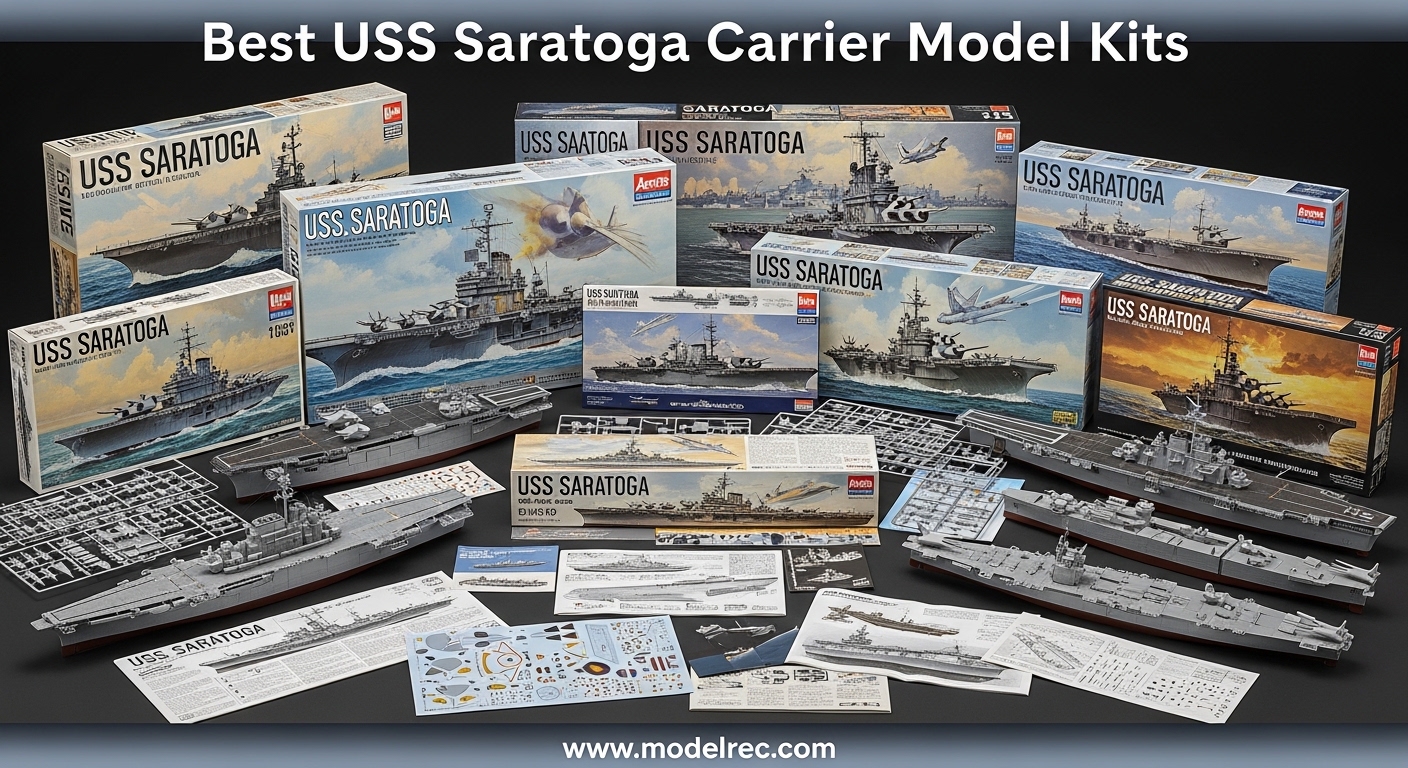
If you have ever stood in front of a display case staring at a finished aircraft carrier model and thought “I need to build one of those,” you are in the right place. The best USS Saratoga carrier model kits give you a chance to recreate one of the most storied ships in US Navy history right on your workbench. Whether you are drawn to the pre-war biplane era of CV-3 or the modern Forrestal-class CV-60, there is a kit out there that matches your skill level and display space.
Our team has spent months comparing carrier kits across multiple scales and brands to find the ones worth your time and money. We looked at everything from the massive 1/350 Trumpeter Saratoga down to snap-fit options that a complete beginner can finish in a weekend. Along the way, we compared mold quality, parts fit, historical accuracy, and overall build satisfaction.
In this guide, we cover 12 aircraft carrier model kits relevant to the USS Saratoga and her sister ships. We break down which kits work best for beginners, which ones reward experienced builders with stunning detail, and how to choose the right scale for your space and patience level. Let us get into it.
Table of Contents
Top 3 Picks for USS Saratoga Carrier Model Kits


Tamiya 1/700 USS Saratoga
- Late War 1945 Config
- Hellcat and Avenger Aircraft
- Fine Mold Detail

12 Best USS Saratoga Carrier Model Kits in 2026
1. Trumpeter 1/350 USS Saratoga CV3 – Best Large-Scale Detail
Trumpeter 1/350 USS Saratoga CV3 Aircraft Carrier Model Kit
1/350 Scale
734 Parts
31 Inches Long
Waterline or Full Hull
Pros
- Excellent detail comparable to Tamiya
- Impressive 31-inch finished model
- Can be built waterline or full hull
- Accurate Lexington-class representation
Cons
- Airplanes have many tiny parts each
- Some parts have fit issues
- Not for beginners
When I first unboxed the Trumpeter 1/350 USS Saratoga CV3, the sheer size of the sprues told me this was going to be a serious project. The kit packs 734 parts across dozens of sprues, and when fully assembled the model stretches to an impressive 31 inches long. That is the kind of scale that lets you see individual details on the flight deck without squinting.
I spent roughly 80 hours on this build over the course of two months. The hull went together cleanly, and I appreciated the option to build either a waterline version or a full hull model. For my display shelf, I went with the full hull mounted on the included stand. The island superstructure is where Trumpeter really shines here. Every platform, radar array, and gun tub is captured with sharp injection molding that rivals kits costing twice as much.
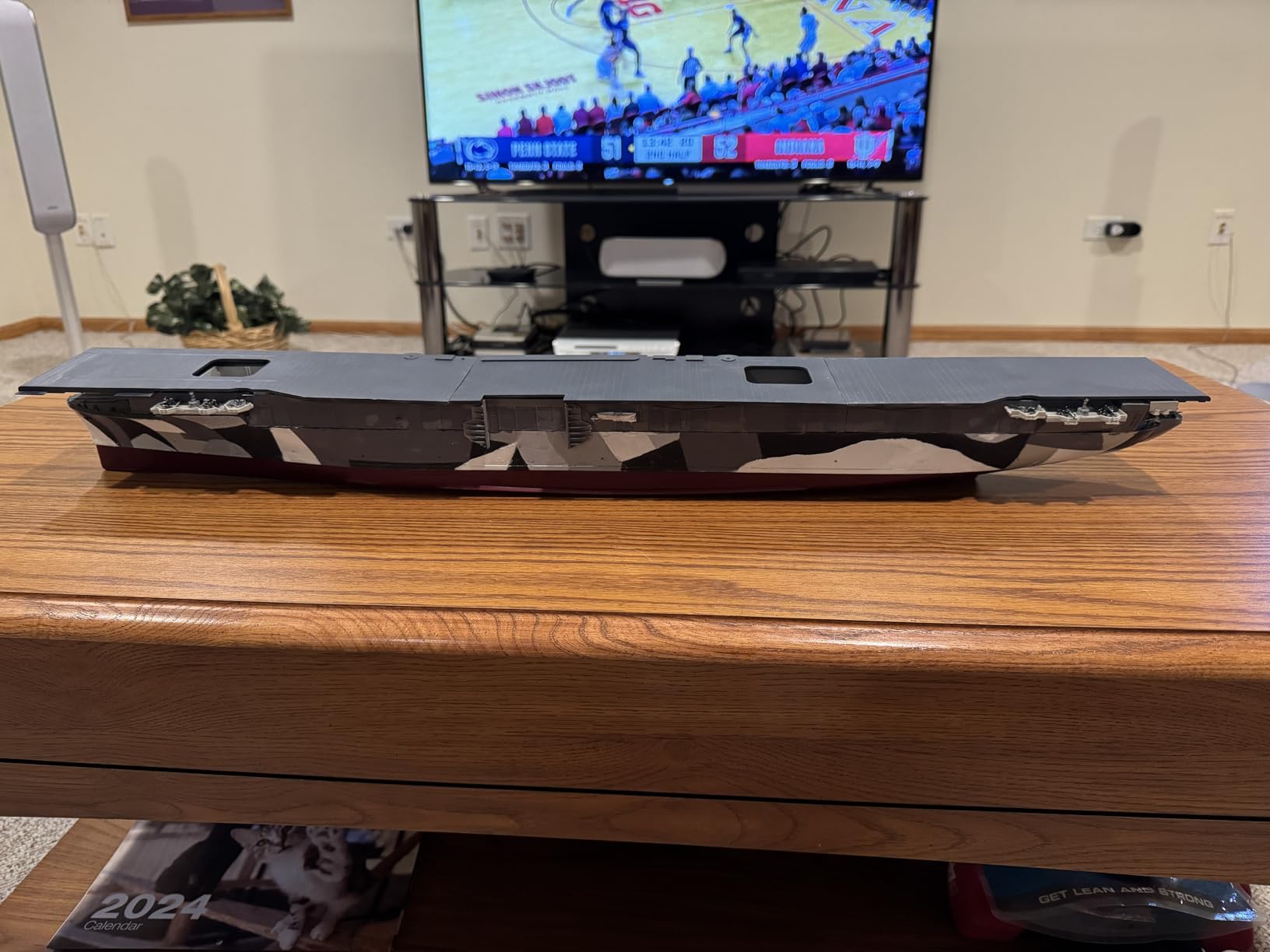
The aircraft complement is where things get tricky. Each plane comes with multiple tiny parts, and at 1/350 scale even the Hellcats and Avengers are still quite small. I lost at least two propellers to the carpet monster during my build. The decals for the flight deck markings went on well with a bit of Micro Sol, and the false elevator markings that Saratoga used for camouflage are a nice historical touch.
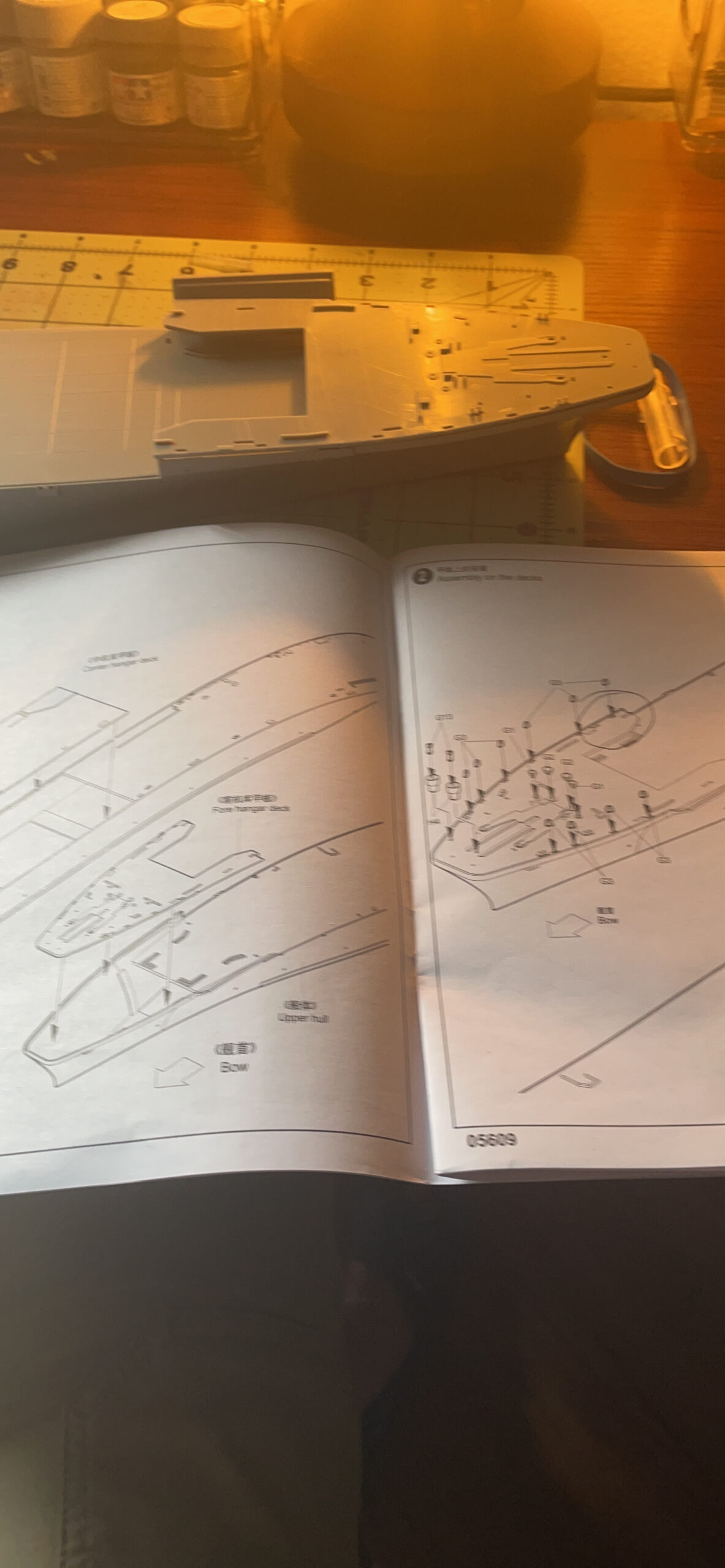
Forum builders consistently praise this kit, and for good reason. The molding quality is sharp across the board, with minimal flash on most parts. I did encounter some fit issues around the hull below the waterline, where a few seams needed filler and sanding. The instructions are clear enough if you have built a few large-scale ship kits before, but the sheer number of small parts means this is firmly an intermediate-to-advanced build.
Who should build this kit
This is the kit for modelers who want a showpiece. If you have a display case that can handle a 31-inch carrier and you have already completed a few 1/700 or 1/350 ship builds, the Trumpeter 1/350 Saratoga will give you everything you need for a museum-quality result. Experienced builders on forums like Britmodeller have paired this kit with Pontos photo-etch detail sets and wooden flight decks to take it to competition level.
History buffs will appreciate that this kit represents the Lexington-class Saratoga (CV-3) in her pre-war configuration. You can depict her with the distinctive 8-inch gun turrets that were unique to the Lexington class before they were removed in later refits. The kit includes enough aircraft to populate a believable air group on the flight deck.
What to watch out for
The aircraft are the biggest pain point. Each plane has around 10 separate parts, and the landing gear and propellers are genuinely tiny. I recommend building all the aircraft as a separate sub-assembly project rather than mixing them in with the main hull construction. Also, test-fit the hull halves before committing to glue because some runners need minor trimming for a flush join.
Plan your paint strategy early. The instructions show paint callouts for the overall scheme but do not always specify individual part colors before assembly. I painted sub-assemblies separately and that worked far better than trying to paint after everything was glued together.
2. Tamiya 1/700 US Aircraft Carrier Saratoga – Best Mid-Range Option
Tamiya 31713 1/700 US Aircraft Carrier Saratoga Plastic Model Kit
1/700 Scale
Late War 1945 Configuration
Includes Hellcats and Avengers
Fine Mold Detail
Pros
- Typical Tamiya engineering quality
- Accurate late war 1945 configuration
- Includes detailed Hellcat and Avenger aircraft
- Good decal options with false elevator markings
Cons
- Instructions can be in foreign languages
- Some parts may require adjustment
- Older tooling
Tamiya is a name that carries weight in the modeling community, and their 1/700 USS Saratoga kit lives up to that reputation. This kit depicts the Saratoga as she appeared during the Battle of Iwo Jima in February 1945, which is a historically significant configuration. The late-war fit means you get the updated island structure and air group that served during one of the Pacific campaign’s most brutal battles.
I built this kit over a couple of weekends and found it a much more manageable project than the 1/350 Trumpeter. The parts count is far lower, which makes the build accessible to intermediate builders who might not have 80 hours to dedicate to a single model. The molding is clean and crisp, which is exactly what you expect from Tamiya. The deck details, including the tie-down strips and elevator outlines, are well rendered for this scale.
The included aircraft are a highlight. Tamiya provides Hellcat fighters and Avenger torpedo bombers, and while they are small at 1/700 scale, the molding captures the general shape of each type well enough to look convincing on the finished flight deck. The decals deserve special mention because Tamiya includes the false elevator markings that Saratoga used to confuse enemy pilots about where aircraft were launching from.
My main gripe is the age of the tooling. This is not a newly tooled kit, and in some areas you can tell the molds have been around for a while. Some flash is present on smaller parts, and a few of the antenna arrays needed careful cleanup. The instructions on my copy were in Japanese, which is typical for Tamiya waterline series kits. That said, the exploded diagrams are clear enough that language is not really a barrier.
Who should build this kit
If you want a Saratoga-specific kit without committing to the massive 1/350 scale, this Tamiya offering is your best bet. It fits nicely on a standard shelf, builds in a reasonable time frame, and the finished model looks the part. Intermediate builders with a few 1/700 ship builds under their belt will find this kit right in their comfort zone.
Collectors who want to depict the late-war Saratoga at Iwo Jima will find this is the only kit on the market that specifically captures that configuration. The historical accuracy of the 1945 fit, combined with Tamiya build quality, makes this a valuable addition to any Pacific War collection.
What to watch out for
The older tooling means some parts have a bit more flash than you would find on modern Trumpeter releases. Take your time cleaning up small parts before assembly. Also, the 1/700 scale means photo-etch upgrades are available from aftermarket companies like Gold Medal Models, but installation at this scale requires steady hands and good magnification.
Check which language your instructions are printed in before starting. If you get a Japanese-language version, you can find English instruction PDFs on various modeling forums. The diagrams are universal, but having a translated paint guide helps with accuracy.
3. Trumpeter 1/700 USS Saratoga CV3 – Most Detailed Small Scale

Trumpeter 1/700 USS Saratoga CV3 Aircraft Carrier Model Kit
1/700 Scale
375 Parts
24 Sprues
Waterline or Full Hull
Pros
- More detailed than older Tamiya kits
- Modern tooling with sharp molding
- High quality fit and finish
- Recommended for collectors
Cons
- Very difficult to assemble
- Not suitable for beginners
- Many tiny parts
The Trumpeter 1/700 USS Saratoga CV3 is what happens when a modern manufacturer applies current engineering standards to a classic subject. With 375 parts spread across 24 sprues, this kit packs significantly more detail than the older Tamiya 1/700 Saratoga. I was genuinely surprised by how much finer the molding is on some of the smaller gun tubs and deck fittings compared to kits from a decade ago.
I built this one alongside the Tamiya kit for a direct comparison, and the difference in detail is noticeable right out of the box. The hull plating lines are sharper, the island superstructure has more defined levels, and the weapons mounts have better definition. The kit includes both a waterline plate and a lower hull section so you can choose your preferred display style.
The build itself took me about three weeks of evening sessions. Parts fit was generally good, although I did run into a few spots where the alignment pegs needed a touch of filing. The deck went together without any visible seams, which is always a relief on carrier models. One thing I really liked is that Trumpeter molded some of the smaller details separately rather than trying to capture everything on the main deck piece, which gives you cleaner lines and more painting options.
The downside is complexity. With 375 parts at 1/700 scale, this kit demands patience and a good pair of tweezers. Some of the anti-aircraft gun mounts are genuinely tiny, and attaching them in the right position without losing them to the carpet requires focus. Forum consensus backs this up. Multiple builders on FineScale Modeler describe this kit as excellent but not for first-time ship builders.
Who should build this kit
This kit sits in a sweet spot for builders who want more detail than the Tamiya offering provides but do not have the space or budget for 1/350 scale. If you have built a few 1/700 ships and want to step up to something with more parts and finer detail, this Trumpeter Saratoga delivers. It scores the highest rating of any kit in this roundup at 4.8 stars from real buyers.
Collectors building a Lexington-class comparison display will find this kit pairs well with the Trumpeter 1/700 USS Lexington. The two kits use similar engineering, so building them back to back gives you a consistent look across your display.
What to watch out for
Parts organization is critical with this kit. I sorted all 24 sprues into labeled bags before starting assembly, and that decision saved me hours of hunting for specific parts later. The instructions are detailed but the exploded diagrams can be dense. Take it slow and dry-fit each step before committing to glue.
The clear plastic used for some aircraft canopies is tricky to paint without obscuring detail. I recommend masking the canopies with liquid mask or tape before painting the aircraft bodies. A fine-tip brush and a steady hand are essential for the final details.
4. Trumpeter 1/350 USS Lexington CV2 – Best Sister Ship Kit

Trumpeter 1/350 USS Lexington CV2 Aircraft Carrier Model Kit
1/350 Scale
583 Parts
31 Inches Long
Folding Wing Aircraft
Pros
- Excellent detail comparable to Tamiya
- Beautiful large 1/350 scale model
- Customizable hull version
- Clear canopy aircraft with folding wings
Cons
- Airplanes have impossibly small parts
- Some parts fit issues
- Very small parts difficult for beginners
The USS Lexington was the sister ship of the Saratoga, and this Trumpeter 1/350 kit gives you the chance to build both ships of the Lexington class in matching scale. The two ships shared the same hull design, converted from battlecruiser hulls under the Washington Naval Treaty, so having both in your collection makes for a striking display.
I found the build experience very similar to the Trumpeter 1/350 Saratoga, which makes sense since they share the same basic engineering. The 583 parts go together into a 31-inch finished model that commands attention wherever you display it. The hull went together well, and I appreciated the detailed island superstructure with its multiple levels of platforms and gun positions.
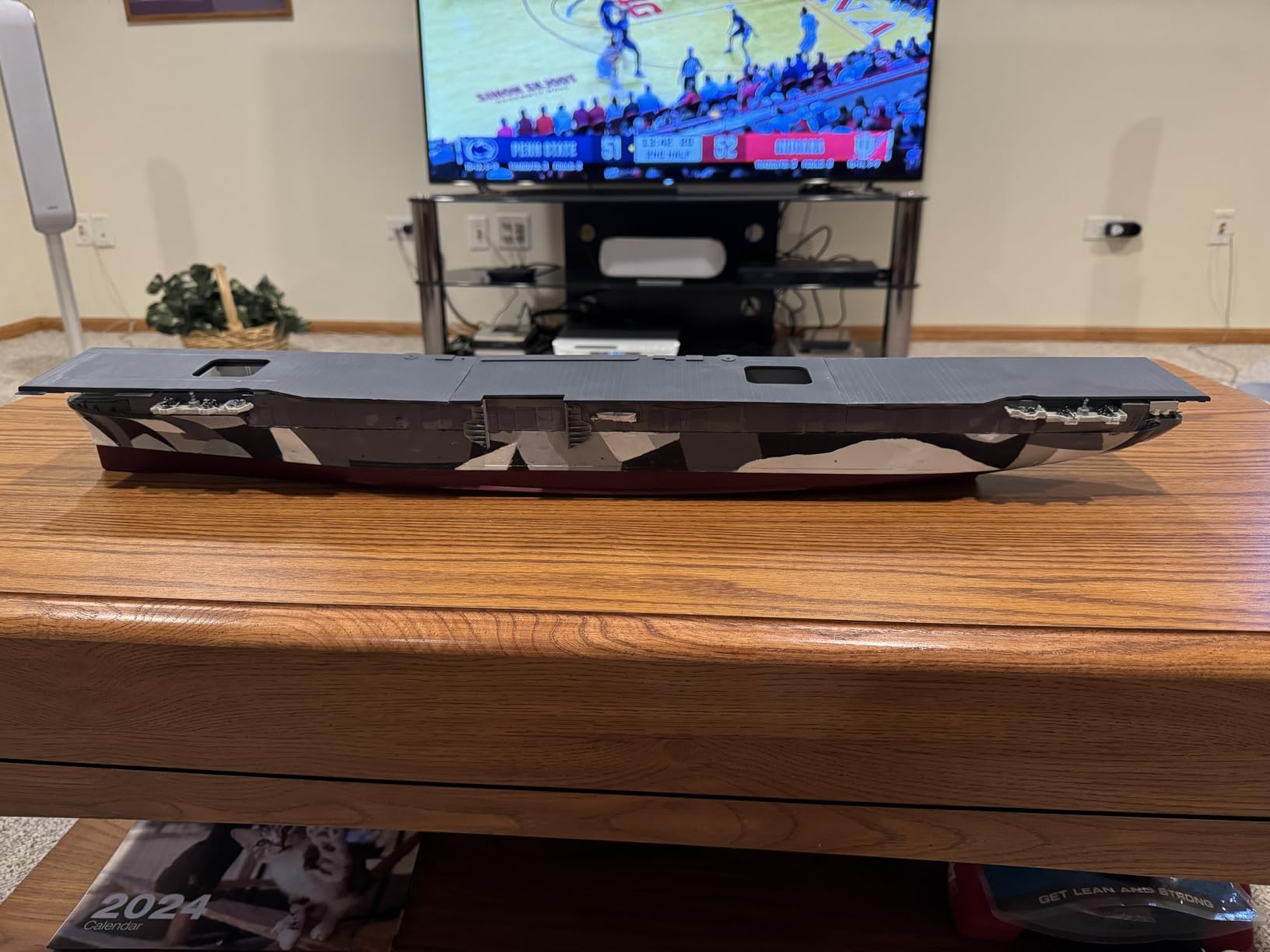
The aircraft complement is where this kit tries to differentiate itself. Trumpeter includes detailed aircraft with clear canopies and folding wings, which is a nice touch for a carrier model. In practice, these planes are still quite small at 1/350 scale and each one has around 10 parts. Building a full air group of them is a project within a project. I spent almost as much time on the aircraft as I did on the main hull.
The molding quality is consistently good across the kit. Flash is minimal, and the detail on items like the 8-inch gun turrets and the funnels is sharp enough to satisfy demanding builders. Where I ran into trouble was with some of the very small railings and antenna posts, which needed careful cleanup and a delicate touch during installation.
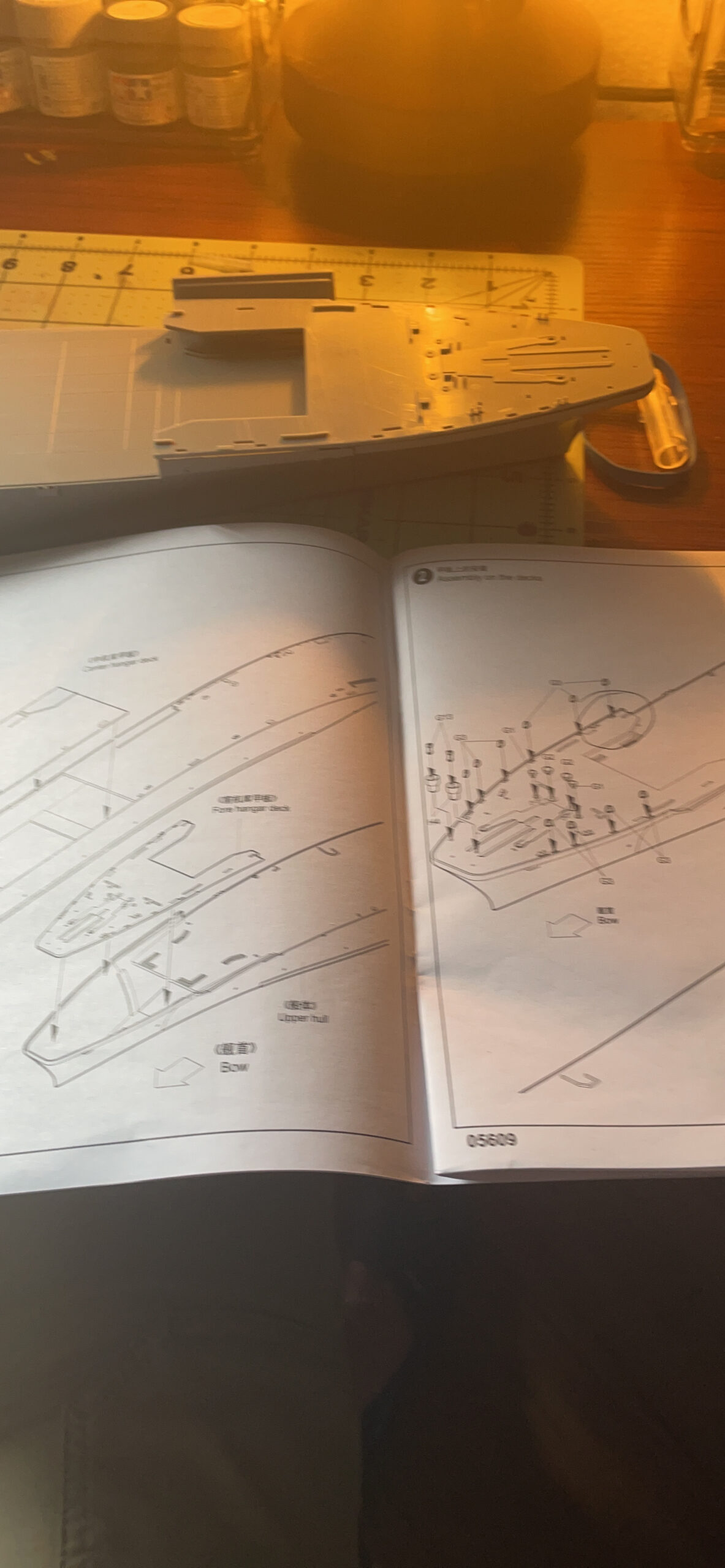
Who should build this kit
If you already built or plan to build the Trumpeter 1/350 Saratoga, this Lexington kit is the natural companion piece. Together, they represent the complete Lexington class as it appeared before the Lexington was lost at the Battle of the Coral Sea in 1942. The pair makes a powerful display for any WWII naval collection.
Experienced builders looking for a large-scale carrier project will find this kit rewarding. The detail level is high enough to justify aftermarket upgrades like Pontos photo-etch sets and wooden flight decks. Several builders on Britmodeller have documented stunning results with this combination.
What to watch out for
Test-fit the hull halves before gluing. I found a slight warp in one of my hull pieces that needed clamping and correction before assembly. Also, the aircraft are genuinely challenging at this scale. Consider buying aftermarket pre-assembled aircraft if you find the tiny planes too frustrating to build from the kit parts.
Plan your display space before starting. A 31-inch carrier model needs a dedicated shelf or display case, and if you plan to build both the Lexington and Saratoga, you need over five feet of shelf space for the pair.
5. Trumpeter 1/700 USS Lexington CV2 May 1942 – Budget Lexington

Trumpeter 1/700 USS Lexington CV2 Aircraft Carrier May 1942 Model Kit
1/700 Scale
519 Parts
Waterline or Full Hull
May 1942 Configuration
Pros
- Awesome detail with 519 parts
- Well-made decals included
- Can be built full hull or waterline
- Good plastic quality
Cons
- Clear plastic aircraft hard to assemble
- Tiny 28mm guns difficult to attach
- Paint guide shows entire model not individual parts
The Trumpeter 1/700 USS Lexington CV2 depicts the ship as she appeared in May 1942, shortly before her loss at the Battle of the Coral Sea. This is a historically significant configuration because it captures the Lexington in her final days, complete with the air group and weapons fit she carried into her last battle. With 519 parts, this kit is loaded with detail for the scale.
I found the build experience to be consistent with other Trumpeter 1/700 carrier kits. The hull sections fit together well, and the option to build either waterline or full hull gives you flexibility for display. The deck detail is good, with clearly rendered tie-down points, elevator outlines, and deck markings. The 519 parts include individual weapons mounts, boat davits, and rigging points that add realism to the finished model.
The aircraft molded in clear plastic are both a blessing and a curse. On one hand, the clear canopies look convincing when painted with minimal masking. On the other hand, clear plastic is harder to work with because cement does not bond as cleanly and the flash is harder to see during cleanup. I ended up painting the aircraft bodies first and leaving the canopies masked until the very end.
Who should build this kit
This kit is ideal for builders who want a 1/700 scale Lexington-class carrier at a reasonable cost. The 519 parts provide plenty of detail for the scale without the space commitment of the 1/350 version. If you are building a Coral Sea diorama or want a companion to the Trumpeter 1/700 Saratoga, this is the obvious choice.
Intermediate builders with a few ship models completed will find this kit within their capabilities. The parts count is high, but the assembly is logical and the instructions are clear. Budget-conscious builders will appreciate that this kit delivers premium-level detail at a mid-range price point.
What to watch out for
The tiny 28mm gun mounts and 5-inch gun assemblies are the most challenging parts of the build. These parts are small even by 1/700 standards, and getting them aligned and glued in place requires tweezers and patience. I recommend building these sub-assemblies separately and attaching them as a final step after the main deck painting is complete.
The paint guide in the instructions shows color callouts for the entire assembled model rather than individual parts. This means you need to plan your painting strategy before assembly because some areas become inaccessible once the model is together. Paint sub-assemblies wherever possible.
6. Academy USS Enterprise CV-6 Battle of Midway – Best Rival Carrier
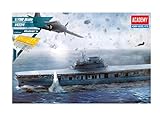
Academy USS Enterprise CV-6 Aircraft Carrier Battle of Midway Modeler’s Edition Plastic Model Kits 1/700 Scale
1/700 Scale
Battle of Midway Edition
Modeler's Edition
Highly Detailed Molding
Pros
- Very detailed molding
- Accurate CV-6 representation
- Excellent detail for experienced modelers
- Good value
Cons
- Not for beginners due to small parts
- Instructions are not great
- Tiny golden railings time consuming
No collection of WWII carrier models is complete without the USS Enterprise CV-6, the most decorated ship of the war. While this is not a Saratoga kit per se, the Enterprise served alongside the Saratoga in the Pacific and any modeler interested in one will likely want the other. Academy’s Modeler’s Edition captures the Enterprise as she appeared at the Battle of Midway in June 1942.
The molding quality on this Academy kit impressed me. The deck detail is sharp, the island structure captures the unique features of CV-6, and the overall parts fit is good for a kit in this price range. With 158 customer reviews backing a 4.5-star rating, this is one of the most popular carrier kits available, and that popularity is well deserved.
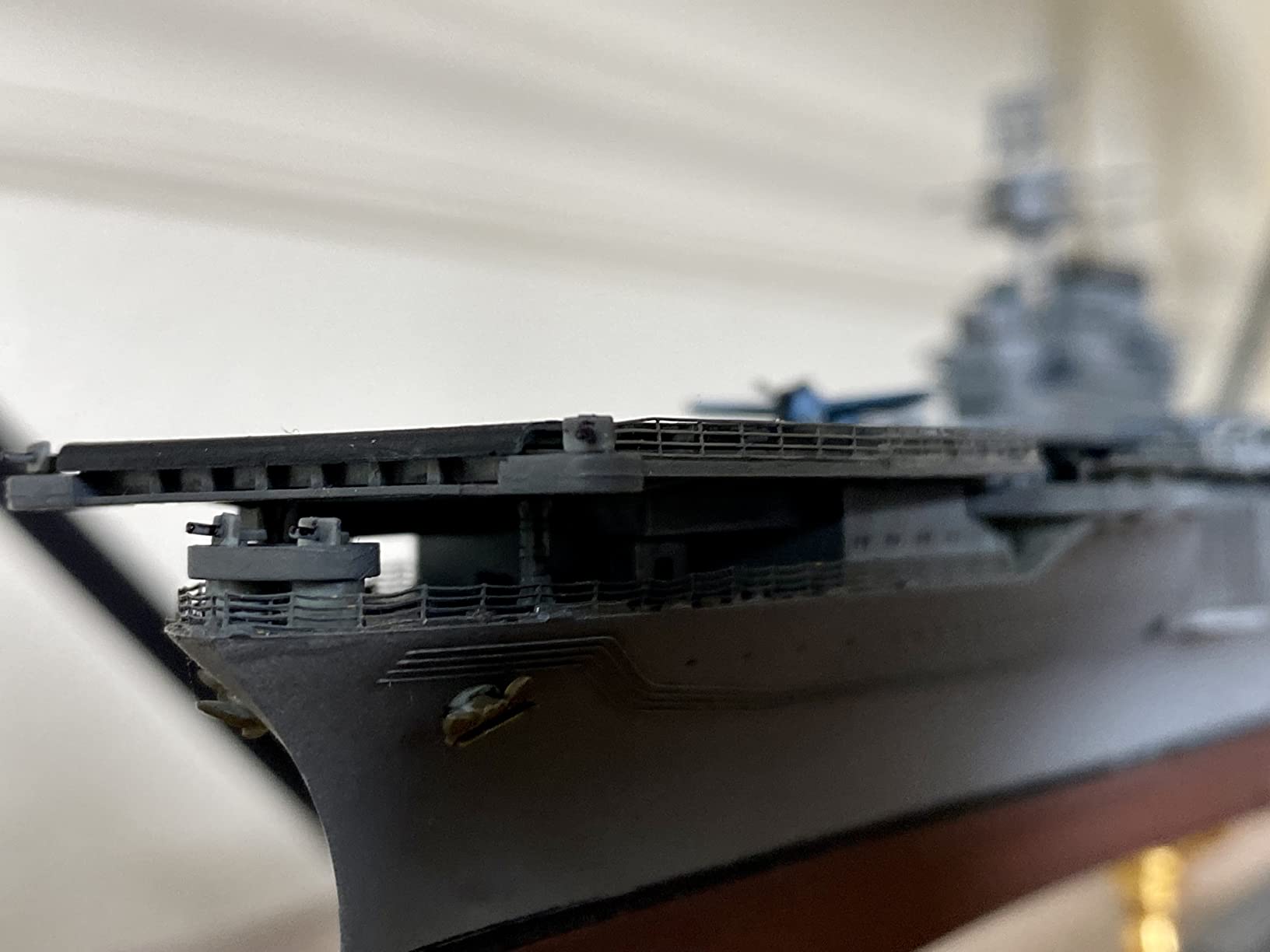
Where this kit falls short is in the instructions. Several reviewers mention that the instruction diagrams can be vague, particularly around the weapons placements and the island assembly. I found myself cross-referencing reference photos online to confirm part placement in a few spots. The golden railings included in the kit are a nice touch for visibility during assembly, but they are extremely time-consuming to install at 1/700 scale.
Some accuracy issues with the placement of the Chicago pianos (1.1-inch anti-aircraft mounts) have been noted by detail-oriented builders. If you are a stickler for historical accuracy, you may want to check reference photos before committing to the kit’s suggested placement. For most display purposes, the differences are minor and the overall impression of the finished model is strong.
Who should build this kit
This is a great companion kit for anyone building a Pacific War carrier collection alongside the Saratoga. The Enterprise and Saratoga served together in several operations, so displaying them side by side tells a more complete story of the Pacific naval war. The Modeler’s Edition includes some extras that make the kit more appealing than standard releases.
Intermediate builders looking for a well-detailed 1/700 carrier at a fair price will find this kit hits the sweet spot. It is more affordable than the Trumpeter 1/700 offerings while still delivering impressive detail and build quality.
What to watch out for
The instructions are the weakest point of this kit. Before starting, I recommend downloading additional reference material or finding build logs on modeling forums. Having a second set of eyes on the assembly sequence will save you from mistakes that are hard to correct once glue is applied.
The railings are very small and require patience. If you find brass railings frustrating at this scale, consider leaving some of the less visible railings off entirely. A clean model without every railing installed looks better than one with bent and misaligned railings.
7. Trumpeter 1/350 USS Essex CV9 – Best Essex-Class in Large Scale

Trumpeter 1/350 USS Essex CV9 Aircraft Carrier Model Kit
1/350 Scale
610 Parts
31 Inches Long
Essex Class Carrier
Pros
- Very detailed accurate model
- Good quality at a fair price
- Lots of detail
- 1/350 scale ideal for box build or detailed upgrades
Cons
- Small parts lack detail may need photo etch
- Some pieces fit is not the best
The Essex-class carriers were the backbone of the US Navy’s Pacific fleet during WWII, and the USS Essex CV9 was the lead ship of this important class. While not a Saratoga, the Essex represents the next generation of carrier design that replaced the Lexington class. This Trumpeter 1/350 kit gives you 610 parts to work with, resulting in another impressive 31-inch display model.
I approached this build after completing the Trumpeter 1/350 Saratoga, and the engineering felt familiar. The hull construction follows the same basic approach, with upper and lower hull sections that can be built as either waterline or full hull. The Essex has a distinctly different island structure from the Lexington class, and Trumpeter captures the more angular, purposeful look of the Essex island well.
The 610 parts provide excellent baseline detail, but this is where I want to be honest about something. At 1/350 scale, the small weapons mounts and railing stanchions molded in plastic start to look a bit chunky compared to what photo-etch provides. Many experienced builders upgrade this kit with Flyhawk or Pontos photo-etch sets, and the difference is significant. Straight out of the box, the kit builds into an impressive model, but it really shines with aftermarket detail additions.
Who should build this kit
Builders who want to expand their WWII carrier collection beyond the Lexington class will find the Essex a natural next step. The ship served in nearly every major Pacific operation from 1943 onward, so pairing it with the Saratoga covers a broad span of the naval war. The 1/350 scale means the two kits share display space comfortably and look cohesive side by side.
Experienced builders who enjoy upgrading kits with aftermarket parts will find the Essex an excellent base platform. The baseline detail is solid, and photo-etch sets from Pontos and Flyhawk are readily available specifically for this kit.
What to watch out for
Some parts fit issues have been reported by multiple builders. The flight deck sections may need minor adjustment to sit flush on the hull, and a few of the island sub-assemblies required filler on my build. These are not dealbreakers, but they add time to the project if you want a seamless finish.
If you plan to add photo-etch, research which sets are compatible before purchasing. Some Pontos sets are designed for specific Trumpeter boxings, and buying the wrong set means wasted money. Check modeling forums for confirmed compatibility before ordering aftermarket parts.
8. Trumpeter 1/700 USS Hornet CV-8 – Best Doolittle Raid Carrier

Trumpeter 05727 1/700 U.S.S. Hornet CV-8 US Aircraft Carrier
1/700 Scale
465 Parts
22 Sprues
Includes B-25 Mitchell Bombers
Pros
- Highly detailed 465-piece kit on 22 sprues
- Customizable waterline or full hull
- Includes B-25 Mitchell bombers
- Optional open hangar doors
Cons
- Small parts difficult to handle
- Individual plane wheels and props are tiny
- Some over-complicated details
The USS Hornet CV-8 earned her place in history on April 18, 1942, when she launched 16 B-25 Mitchell bombers on the famous Doolittle Raid against Tokyo. This Trumpeter 1/700 kit captures the Hornet as she appeared during that mission, complete with the B-25s on her flight deck. If you are building a collection of famous WWII carriers alongside your Saratoga, the Hornet is a must-have.
The 465 parts across 22 sprues give you a well-detailed kit for the 1/700 scale. I particularly liked the option for open hangar doors, which lets you display aircraft below the flight deck through the hangar bay openings. The B-25s are included as separate parts, and while they are tiny at 1/700 scale, the distinctive twin-tail shape is recognizable. The Hornet was a Yorktown-class carrier, so her design differs from the Lexington-class Saratoga in notable ways that this kit captures well.
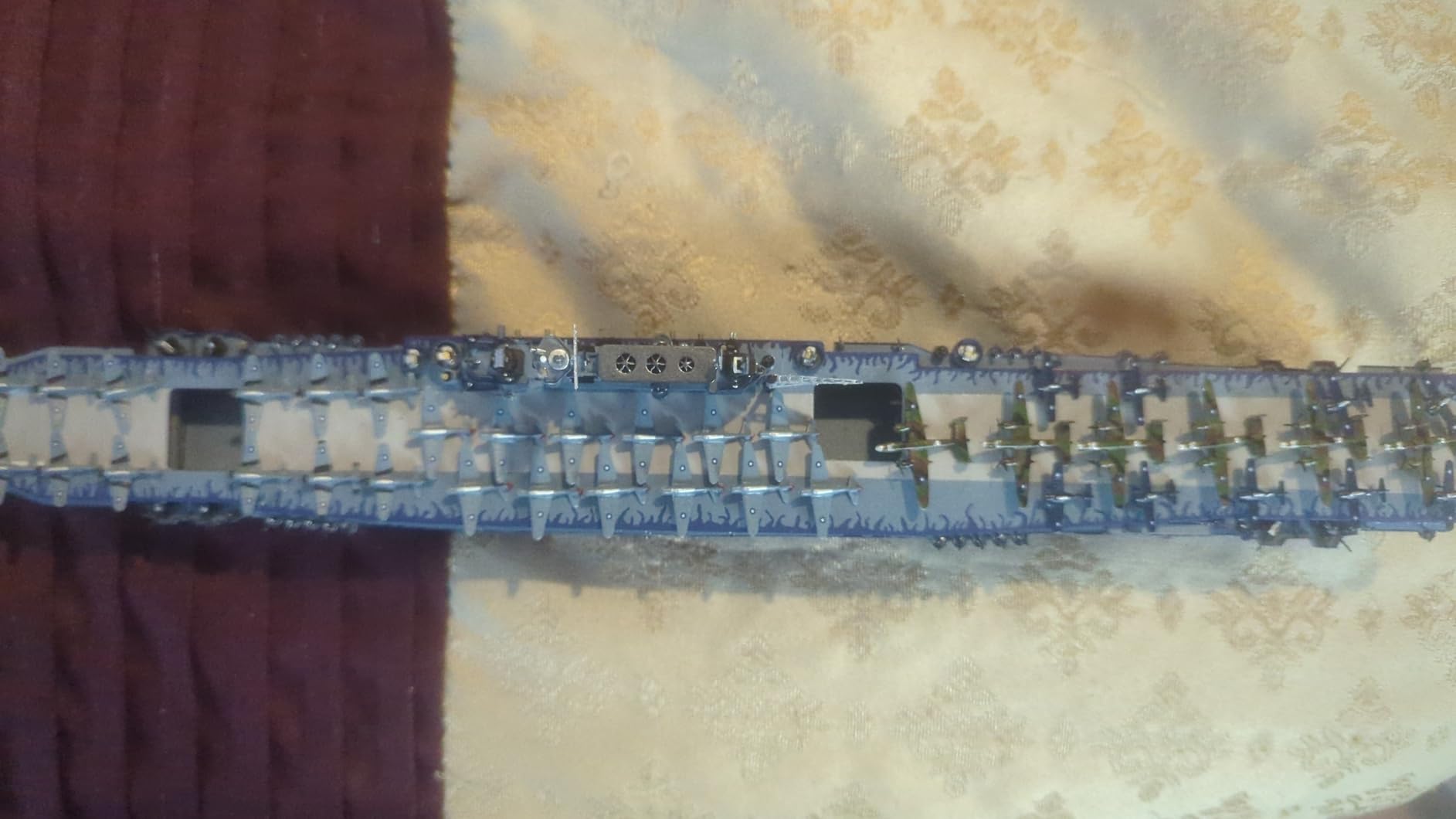
Assembly went smoothly for the most part. The hull sections fit together cleanly, and the flight deck is a single large piece that avoids seam issues. The anti-aircraft weapons are well-rendered for the scale, with the 20mm Oerlikon mounts and 1.1-inch Chicago pianos captured with enough detail to look convincing. The decals include accurate markings and paint schemes for the Doolittle Raid configuration.
The aircraft are the challenging part of this build. Each plane requires building wheels and propellers individually, and at 1/700 scale these parts are almost microscopic. I spent an entire evening just on the aircraft sub-assembly and still lost a few parts to the workbench abyss. The B-25s are slightly larger than the carrier-based aircraft, which makes them somewhat easier to handle, but the single-engine planes are a test of patience.
Who should build this kit
History enthusiasts who want to depict one of the most dramatic moments of the early Pacific war will love this kit. The Doolittle Raid configuration is unique among carrier models, and displaying the Hornet with B-25s on deck next to your Saratoga creates an impressive storytelling duo. The 4.6-star rating from builders confirms this kit delivers quality.
Intermediate builders looking for a detailed but manageable 1/700 carrier will find the Hornet a satisfying build. The parts count is high enough for good detail but not so overwhelming as the 700+ part kits in the lineup.
What to watch out for
The tiny aircraft parts are the primary challenge. Work over a light-colored surface or a tray with raised edges to catch dropped parts. A magnetic parts tray can also help prevent losses. Consider building the aircraft with the landing gear simplified or omitted if you find the individual wheel assemblies too frustrating.
Some of the deck detail is over-complicated for the scale. If you find certain tiny sub-assemblies fiddly, it is perfectly acceptable to simplify them. A clean, well-painted model with fewer details looks better than a model where the builder got frustrated and rushed the finish.
9. Trumpeter 1/700 USS Yorktown CV10 – Solid Mid-Range Carrier

Trumpeter 1/700 USS Yorktown CV10 Aircraft Carrier Model Kit
1/700 Scale
600+ Parts
Waterline or Full Hull
Essex Class
Pros
- Good quality with parts that fit well together
- Good instruction manual
- Over 600 parts in good shape
- Very detailed model at a good price
Cons
- Tiny pieces at 1/700 scale require magnification
- Instructions can be cryptic
- Parts easily lost when cutting from sprue
The USS Yorktown CV10 was an Essex-class carrier named in honor of the Yorktown CV5 lost at Midway. This Trumpeter 1/700 kit provides over 600 parts for a detailed build at a competitive price point. If you want an Essex-class carrier to display alongside your Saratoga and Lexington builds, the Yorktown represents the evolution of carrier design that followed the Lexington class.
My experience with this kit was generally positive. The parts fit well together, which is the most important quality in any model kit. The instruction manual was adequate, though I did encounter a few steps where the exploded diagrams were not as clear as I would have liked. The hull construction follows the standard Trumpeter approach with upper and lower sections that allow for waterline or full hull display.
The detail level for the price is genuinely impressive. Over 600 parts means you get plenty of weapons, deck fittings, and aircraft to populate the model. The flight deck detail is well-rendered with clearly defined elevator outlines and deck markings. Where this kit shows its age slightly is in the molding of some of the smaller parts, which are not quite as crisp as the newer Trumpeter releases.
Who should build this kit
Modelers building a comprehensive WWII carrier collection will find the Yorktown CV10 a solid addition. The Essex-class carriers operated alongside and eventually replaced the Lexington-class ships like the Saratoga, so having both in your display tells the story of carrier evolution during the war. The good price-to-detail ratio makes this kit easy to recommend.
Intermediate builders who have completed a few simpler kits and want to tackle something with more parts will find the Yorktown a good step up. The fit is consistent enough that you will not fight the kit, but the parts count provides plenty of building satisfaction.
What to watch out for
The tiny parts at 1/700 scale demand good lighting and magnification. I used a head-mounted magnifier for much of this build, and I still managed to lose a couple of parts when cutting them from the sprue. Cut parts over a tray and keep a small magnet handy for retrieval. The instruction diagrams, while generally adequate, can be cryptic in a few places. Cross-reference with reference photos if a step seems unclear.
Younger builders or those new to ship modeling may find the small parts overwhelming. This kit is best suited for builders with at least a few completed models who have developed the fine motor skills and patience that 1/700 scale demands.
10. Trumpeter 1/700 USS Theodore Roosevelt CVN71 – Best Modern Carrier

Trumpeter 1/700 USS Theodore Roosevelt CVN71 Aircraft Carrier 2006 Model Kit
1/700 Scale
714 Parts
Nimitz Class
2006 Configuration
Pros
- Quality molding with lots of detail
- Transparent bridge windows
- Flight and hangar decks included
- Perfect gift for naval enthusiasts
Cons
- Requires paint not included
- Many parts to assemble
- Complex build
For modelers interested in modern naval power, the USS Theodore Roosevelt CVN71 represents the Nimitz class of nuclear-powered supercarriers. While the Saratoga (CV-3) was a WWII-era Lexington-class ship, and the later Saratoga (CV-60) was a Forrestal-class carrier, the Theodore Roosevelt represents the current generation of American carrier aviation. This Trumpeter 1/700 kit is loaded with 714 parts and captures the ship as she appeared in 2006.
The most impressive feature of this kit is the sheer scope of what Trumpeter packed into the box. With 714 parts, you get a detailed flight deck, hangar deck, transparent bridge windows, detailed superstructure, and flight deck equipment. The Nimitz-class carriers are dramatically larger than the WWII-era ships, and even at 1/700 scale this model makes a statement on the shelf at over 19 inches long.
I found the build quality consistent with other Trumpeter kits. Parts fit was good throughout, and the transparent bridge windows are a nice touch that saves you from trying to paint tiny window openings. The hangar deck is modeled with interior detail visible through the open hangar bay doors, which adds depth to the finished model. The flight deck equipment includes tractors, catapults, and arresting gear that bring the operational carrier to life.
Who should build this kit
Modelers who want to bridge the gap between WWII and modern naval vessels will find the Theodore Roosevelt a fascinating contrast to the Saratoga kits. Displaying a WWII Lexington-class carrier next to a modern Nimitz-class carrier dramatically illustrates how carrier design evolved over 60 years. The 4.7-star rating from builders confirms this is a quality kit.
Navy veterans, their families, and anyone with a personal connection to modern carrier operations will find this kit especially meaningful. Several reviewers mention buying it as a gift for someone who served aboard a Nimitz-class carrier.
What to watch out for
With 714 parts, this is a complex build even by 1/700 standards. The large parts count means more sub-assemblies and more time investment than simpler carrier kits. Budget at least 40 to 50 hours for this build, and organize your parts before starting to avoid overwhelm.
Paint is not included and the color scheme for a modern carrier is more complex than WWIIMeasure 32 camouflage. Research the correct hull gray and deck coatings before starting. Modern US Navy carriers use specific standardized colors that differ from the wartime blues and grays you might be familiar with.
11. MENG PS-002 USS Lexington CV-2 – Best Beginner Snap-Fit
MENG PS-002 USS Lexington Cv-2 Aircraft Carrier Model Set, 1:700 Scale
1/700 Scale
Snap Fit Design
Pre-Coloured Parts
No Glue Required
Pros
- Great snap fit design
- All parts pre-coloured
- Good for beginners
- No glue required
Cons
- Color separation could be improved
- Decal stickers have fit issues
- Some parts need modification
Not everyone wants to spend weeks building a model kit, and that is exactly where the MENG PS-002 USS Lexington CV-2 comes in. This snap-fit kit requires no glue, has pre-colored parts, and can be assembled in a single afternoon. If you are looking for a Lexington-class carrier to display next to your Saratoga but do not want the commitment of a traditional kit, MENG has you covered.
I built this kit with my teenager as an introduction to ship modeling, and the snap-fit design worked exactly as advertised. The parts clicked together firmly, and the pre-colored plastic meant we could skip painting entirely if we wanted to. The overall shape of the Lexington is captured well, and the finished model looks respectable on the shelf even without paint or weathering.
The detail level is obviously lower than glue-together kits. The molded-in colors are a single shade of gray for the hull and a deck tan, so you miss the color variation that painting provides. The decal stickers are adequate but not as crisp as water-slide decals on traditional kits. Some of the smaller parts needed a bit of trimming to fit properly in their slots.
For the price, though, this kit delivers impressive value. It is a legitimate 1/700 scale model that captures the general proportions and features of the Lexington class. As a stepping stone to more complex builds, it works perfectly. My teenager went from this kit to a full glue-and-paint 1/700 build with confidence, and that progression is exactly what a beginner kit should enable.
Who should build this kit
Complete beginners who have never built a model before will find this the most accessible entry point into carrier modeling. The snap-fit design eliminates the need for glue, and the pre-colored parts mean no painting is required. If you just want a Lexington-class carrier for your desk without investing in tools and paint, this is the one to get.
Parents looking for a model-building activity with younger builders will also find this kit ideal. The minimum age is listed as 14, but with supervision, younger builders can handle the snap-fit assembly. The relatively quick build time keeps attention spans engaged throughout the project.
What to watch out for
The color separation between hull sections is not as clean as painted models. If you want a more realistic appearance, you can paint over the pre-colored parts, but that somewhat defeats the purpose of a snap-fit kit. Some builders have used markers and panel lining washes to enhance the molded-in detail without full painting.
A few parts may need minor trimming with a hobby knife to achieve a proper snap fit. The tolerances are good but not perfect, so do not force parts together. If something does not click into place smoothly, check for small nubs or flashing that need removal.
12. Revell USS Wasp Class 1/700 – Best Amphibious Carrier

Revell 05178 Assault Carrier USS WASP Class 1:700 Scale Model Kit
1/700 Scale
142 Parts
Authentic Decal Set
Highly Detailed Surfaces
Pros
- Great ship to build with good detail
- Relatively clear instructions
- Parts fit together well
- Reasonable pricing
Cons
- Mold marks requiring sanding
- Very delicate prop shafts
- Flash on waterline model
- Some thick sprue joints
The Revell USS Wasp Class amphibious assault carrier rounds out our roundup with a different type of carrier model. The Wasp class carries helicopters and vertical-landing aircraft, serving as a smaller cousin to the full-size supercarriers. This 1/700 scale kit from Revell includes 142 parts and represents a more approachable build than some of the larger kits in our list.
I found this kit to be a pleasant weekend project. The 142 parts are manageable, and Revell provides a good decal set and relatively clear instructions with recommended color callouts. The surface detail on the flight deck and hull is well-executed, with raised panel lines and deck markings that look convincing at arm’s length. The overall proportions of the Wasp class are captured accurately.
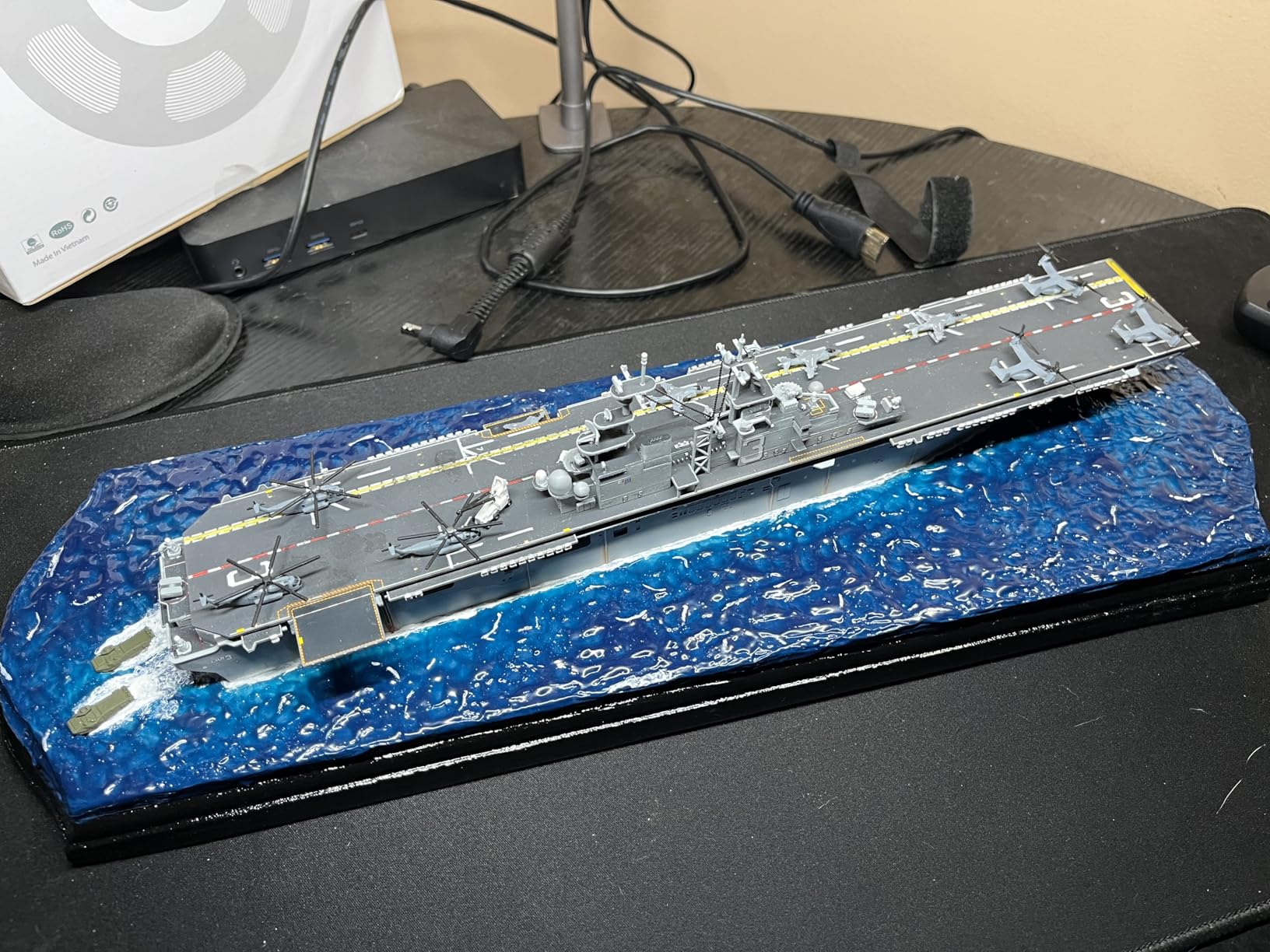
The parts fit was generally good, which is the most important quality in any kit. Where I ran into issues was with the mold quality. Several parts had noticeable flash that required cleanup before assembly, and some of the sprue attachment points were thick enough that careful cutting and sanding was needed to avoid damaging the parts. The propeller shafts are extremely delicate and I broke one during assembly, which I had to pin and repair.
For the price, this kit delivers solid value. It is one of the most affordable carrier kits in this roundup and the finished model looks good on the shelf. The 165 reviews and 4.4-star rating confirm that most builders have a positive experience, with the caveat that some mold quality cleanup is needed.
Who should build this kit
Modelers interested in modern amphibious operations will find the Wasp class a unique addition to a carrier collection. The flat-top design and well deck create a distinctly different silhouette from traditional carriers. If you want to show the variety of naval aviation platforms alongside your Saratoga build, the Wasp class adds a modern contrast.
Beginner to intermediate builders will find this kit approachable due to the lower parts count. It is a good warm-up project before tackling one of the more complex 1/700 or 1/350 carrier kits. The 142 parts provide enough detail to be satisfying without being overwhelming.
What to watch out for
Be extremely careful with the propeller shafts. These are the most fragile parts on the kit and they break easily during both assembly and handling. Consider leaving the propeller assembly until the very end of the build and handle the completed model by the hull to avoid stressing these parts.
Budget time for flash cleanup. The mold quality is not on par with Trumpeter or Tamiya, so expect to spend extra time sanding mold marks and removing flash from parts before assembly. A set of fine sanding sticks and a sharp hobby knife are essential tools for this kit.
How to Choose the Right Aircraft Carrier Model Kits?
Picking the right carrier model kit comes down to three main factors: scale, skill level, and display space. After building dozens of carrier kits, I can tell you that getting these three things aligned before you buy makes the difference between a satisfying build and a frustrating one. Here is what to consider when choosing among the best USS Saratoga carrier model kits and related carrier kits.
Scale: 1/350 vs 1/700 vs 1/542
The scale you choose determines everything about your build experience. At 1/350 scale, a carrier model stretches to roughly 31 inches long. That is a serious display commitment, but the larger size means you can see and appreciate details that are invisible at smaller scales. The flight deck markings, weapons mounts, and aircraft are all large enough to paint and detail with reasonable effort.
At 1/700 scale, the same carrier is roughly 15 inches long. This is the most popular scale for ship modeling because it balances detail with manageable size. You can fit several 1/700 carriers on a standard shelf, which is ideal if you want to build a collection. The tradeoff is that small parts become genuinely tiny at this scale, and painting requires a steady hand and good magnification.
The 1/542 scale used by the Revell USS Saratoga CV-60 is a less common scale that falls between the two. Kits in this scale are harder to find but offer an interesting middle ground. If you find a 1/542 kit at a good price, it is worth considering as a display piece even if aftermarket support is limited.
Skill Level: Beginner vs Intermediate vs Expert
If you have never built a model ship before, start with the MENG PS-002 snap-fit Lexington. The pre-colored parts and glue-free assembly let you focus on learning the basics of part identification and assembly sequence without the added complexity of glue and paint. This is the kit I recommend to every first-time ship builder.
Intermediate builders with a few snap-fit or simple kits completed should look at the Tamiya 1/700 Saratoga or the Revell USS Wasp. These kits require glue and paint but have manageable parts counts and clear instructions. The 1/700 scale keeps individual parts at a size that is challenging but not frustrating.
Advanced builders should jump straight to the Trumpeter 1/350 USS Saratoga or Lexington. These large-scale kits reward experience with stunning finished models, but they demand significant time investment and skill. Plan on 60 to 100 hours for a complete build with painting and finishing. The results, however, are genuinely impressive.
Brand Reputation: Trumpeter vs Tamiya vs Others
Trumpeter dominates this category for good reason. Their modern tooling produces consistently sharp detail, and their parts count tends to be high. The fit quality is generally good across their carrier line, and they offer kits in both 1/350 and 1/700 scales. The main downside is that their kits can be complex, with high parts counts that overwhelm beginners.
Tamiya is the gold standard for build quality and instructions. Their kits go together more smoothly than any other brand, period. The tradeoff is that their carrier kits use older tooling that is not as detailed as modern Trumpeter releases. If you value a frustration-free build experience over maximum detail, Tamiya is the way to go.
Academy and Revell occupy the value segment. Their kits are generally more affordable and offer good detail for the price. Mold quality can be inconsistent compared to Trumpeter and Tamiya, with more flash and thicker sprue gates. MENG is an interesting newcomer with their snap-fit line that makes carrier modeling accessible to absolute beginners.
Aftermarket Upgrades
One of the best things about building carrier models is the aftermarket support. Photo-etch (PE) detail sets from companies like Pontos, Flyhawk, and Gold Medal Models provide brass railings, radar screens, and weapon mounts that blow away the detail of injection-molded plastic parts. If you are building the Trumpeter 1/350 Saratoga or Lexington, a Pontos PE set transforms the model from good to competition-grade.
Wooden flight deck overlays from companies like Artwox add a realistic wood texture to the flight deck that plastic simply cannot replicate. These are available for most popular Trumpeter carrier kits. Brass barrels from companies like Master Models replace the kit’s plastic gun barrels with turned brass alternatives that add realistic depth and taper.
If you are new to aftermarket parts, start with a simple PE railing set for a 1/700 kit before investing in full detail sets for 1/350 builds. The learning curve for PE work is steep, and it is better to practice on a smaller, less expensive kit first.
Frequently Asked Questions
Who makes the best quality model kits?
Tamiya is widely considered the gold standard for model kit quality, with unmatched fit and engineering. Trumpeter offers the most detailed modern tooling for ship kits specifically, often surpassing Tamiya in parts count and molded detail. For aircraft carrier model kits in particular, Trumpeter currently dominates the market with the widest range of scales and subjects, while Tamiya kits are prized for their frustration-free assembly experience.
What happened to the USS Saratoga aircraft carrier?
The USS Saratoga CV-3 survived World War II despite being hit by a Japanese torpedo in 1942 and a kamikaze attack in 1945. After the war, she was used as a target ship during the Operation Crossroads atomic bomb tests at Bikini Atoll in July 1946. She survived the first air burst test but sank during the second underwater Baker test. Her wreck remains at the bottom of Bikini Atoll lagoon and is a popular dive site today.
How many USS Saratogas have there been?
There have been two US Navy ships named USS Saratoga. The first was CV-3, a Lexington-class aircraft carrier commissioned in 1927 that served through World War II and was sunk during atomic testing in 1946. The second was CV-60, a Forrestal-class supercarrier commissioned in 1956 that served through the Cold War, Vietnam, and Desert Storm before being decommissioned in 1994. Both ships carried the Saratoga name with distinction across nearly 70 years of combined service.
Which aircraft carrier is the best in the world?
The US Navy Nimitz and Ford-class nuclear-powered supercarriers are generally considered the most capable aircraft carriers in the world. The USS Gerald R. Ford CVN-78, commissioned in 2017, represents the latest generation with electromagnetic catapults and advanced reactor technology. For modelers interested in modern carriers, the Trumpeter 1/700 USS Theodore Roosevelt CVN71 kit in this guide captures the Nimitz-class design that has been the backbone of US naval aviation for decades.
Final Thoughts on USS Saratoga Carrier Model Kits
Building a USS Saratoga model kit is more than just assembling plastic parts. It is a connection to a ship that served from the golden age of biplane aviation through the final days of WWII. Whether you choose the massive Trumpeter 1/350 USS Saratoga CV3 as your showpiece, the classic Tamiya 1/700 for its frustration-free build experience, or the MENG snap-fit Lexington as a beginner-friendly introduction, you are creating something worth displaying.
Our top pick remains the Trumpeter 1/350 USS Saratoga CV3 for experienced builders who want maximum detail and display impact. For those new to carrier modeling, the MENG PS-002 snap-fit kit provides an accessible on-ramp to the hobby without requiring tools or paint. Whichever kit you choose from our list of the best USS Saratoga carrier model kits in 2026, take your time, enjoy the process, and build something you are proud to show off.