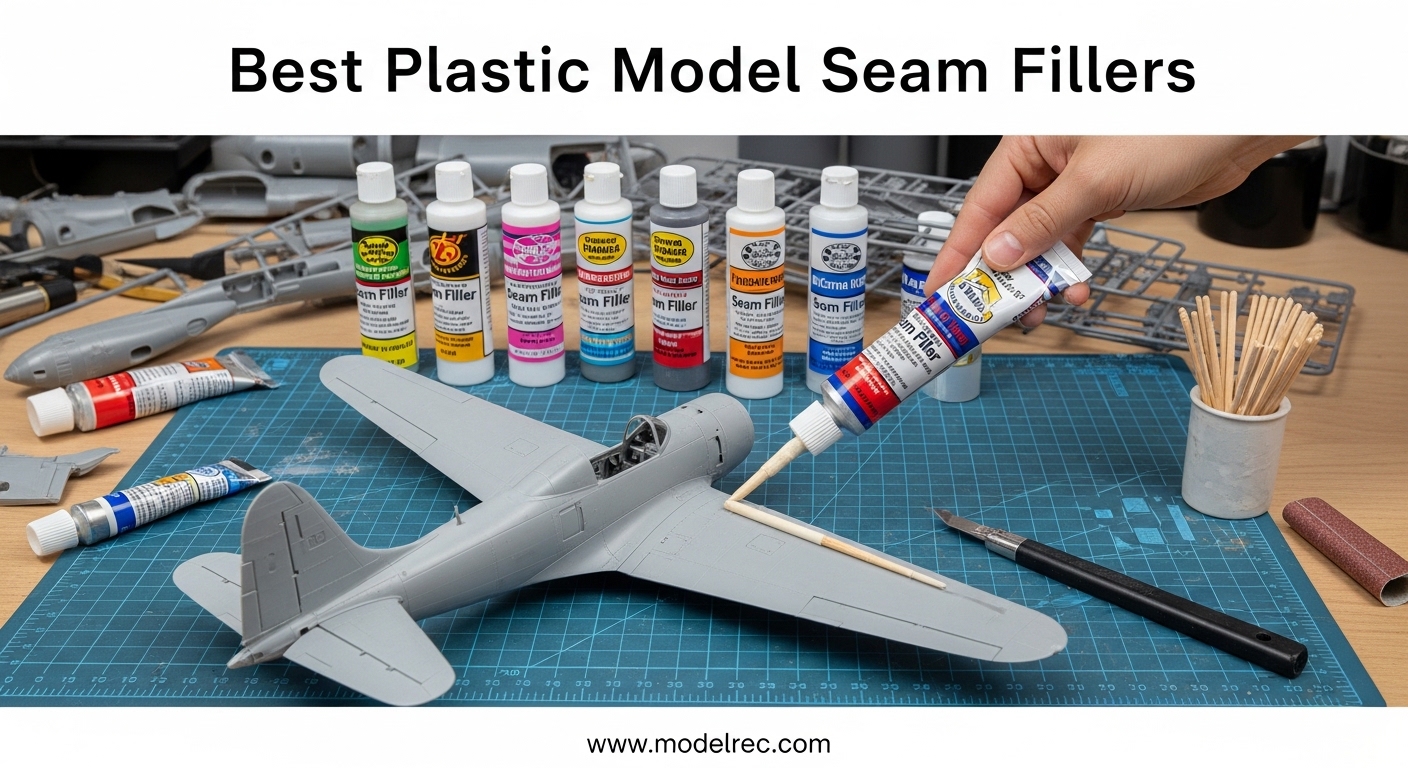
There is nothing more frustrating than spending hours carefully assembling a plastic model kit, only to see visible seam lines running down the fuselage of your aircraft or along the hull of your battleship. Those gaps where two parts meet can ruin an otherwise clean build, and that is exactly why finding the best plastic model seam fillers matters so much for getting a professional-looking result.
Over the past several years, our team has tested dozens of putties, fillers, and gap-filling compounds on everything from 1/72 scale aircraft to large resin miniatures. We have dealt with hairline cracks that barely show, massive gaps from poor-fitting parts, and everything in between. If you have ever struggled with hull seam filling techniques on ship models, you know how critical the right filler can be.
In this guide, we are covering the 10 best plastic model seam fillers available right now. We have included water-based acrylic putties for beginners, solvent-based options for fast results, and two-part epoxy compounds for the toughest gaps. Each product below has been tested and evaluated for adhesion, sandability, shrinkage, and ease of use.
Table of Contents
Top 3 Picks for Plastic Model Seam Fillers


GSI Creos Mr. Surfacer 1000 40ml
- Fine Granules
- Airbrush Ready
- Easy to Sand
- Bonds to All Surfaces

Tamiya Basic Putty 1.13 fl oz
- Minimum Shrinkage
- Quick Drying
- Sands Smooth
- Multi-Material Compatible
10 Best Plastic Model Seam Fillers in 2026
| Product | Specifications | Action |
|---|---|---|
| Milliput Standard Grain 4 oz |
|
Check Latest Price |
| GSI Mr. Surfacer 1000 40ml |
|
Check Latest Price |
| Tamiya Basic Putty 1.13 fl oz |
|
Check Latest Price |
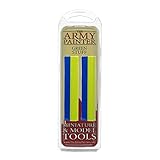 Green Stuff 2-Part Epoxy Clay Green Stuff 2-Part Epoxy Clay |
|
Check Latest Price |
 Mr. Dissolved Putty 40ml Mr. Dissolved Putty 40ml |
|
Check Latest Price |
 Tamiya Epoxy Putty Quick Type Tamiya Epoxy Putty Quick Type |
|
Check Latest Price |
 Vallejo Plastic Putty 20ml Vallejo Plastic Putty 20ml |
|
Check Latest Price |
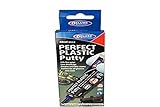 Perfect Plastic Putty 40ml Perfect Plastic Putty 40ml |
|
Check Latest Price |
 Testors Contour Putty 5/8 oz Testors Contour Putty 5/8 oz |
|
Check Latest Price |
 AK Interactive White Putty 20ml AK Interactive White Putty 20ml |
|
Check Latest Price |
1. Milliput Standard Grain – Rock-Hard Epoxy for Large Gaps
Standard Grain Milliput, 4 oz.
2-Part Epoxy Putty
4 oz Total
Cures in 3 Hours
Waterproof When Dry
Pros
- Cures rock hard
- Excellent adhesion
- Sandable and drillable
- A little goes a long way
Cons
- Very sticky during mixing
- Limited 1-hour work time
Milliput Standard Grain has been our go-to epoxy filler for years when dealing with anything beyond a hairline gap. This two-part epoxy putty comes as separate sticks that you mix together in equal parts, and once cured, it becomes genuinely rock solid. I have used it to fill thumb-sized holes in resin terrain pieces and large seam gaps on 1/35 scale armor kits with equally reliable results.
What sets Milliput apart from almost every other filler on this list is its durability after curing. You can sand it, carve it, drill into it, and even tap threads into it. It does not shrink, it does not crumble, and it adheres to plastic, resin, metal, and wood without any primer needed. For modelers who build large ship models with significant hull seams, Milliput handles the heavy lifting that thinner putties simply cannot manage.
The main thing to watch out for is the stickiness during mixing. Milliput will adhere to your fingers, your tools, and anything else it touches during the mixing phase. I always use a bit of water on my fingertips and tools to keep it manageable, and wearing nitrile gloves makes the whole process much cleaner.
You get roughly one hour of work time before it starts setting, and full cure takes about three hours at room temperature. Once hardened, it takes standard sandpaper beautifully and feathers into the surrounding plastic seamlessly. A single 4-ounce package lasts a surprisingly long time because you only mix what you need for each session.
Best Uses for Milliput Standard
Milliput shines when you need structural filling. Large gaps between ill-fitting kit parts, deep air bubble holes in resin casts, and areas where you need to rebuild or reshape missing material are all perfect applications. It is also excellent for creating custom bases or terrain features because of its sculptability before curing.
For hairline seams and tiny cracks, Milliput is overkill. The mixing process and consistency make it better suited for medium to large gap filling rather than precision work. If you need something that flows into thin seams, a liquid putty like Mr. Dissolved Putty would be the better choice.
Who Should Avoid This Product
Complete beginners might find the two-part mixing process and short work time frustrating at first. If you have never used an epoxy putty before, start with small practice amounts to get a feel for the consistency and stickiness before applying it to your actual model. Also, anyone with skin sensitivities should absolutely wear gloves during the mixing phase.
2. GSI Creos Mr. Surfacer 1000 – The Versatile Primer-Filler
SF284 Mr. Surfacer 1000 Bottle 40ml, GSI
Liquid Primer-Filler
40ml Bottle
Solvent-Based
Spray or Brush Application
Pros
- Airbrush ready straight from bottle
- Bonds to everything
- Fine granules for smooth finish
- Easy to sand
Cons
- Slight shrinkage when drying
- Requires solvent cleanup
Mr. Surfacer 1000 occupies a unique space in the modeling world because it functions as both a primer and a filler. This liquid product comes in a 40ml bottle and can be brushed directly onto seam lines, thinned with Mr. Color Leveling Thinner for airbrushing, or used straight from the bottle for surface preparation. I have been using it for years as my first pass on seam lines before deciding if a heavier filler is needed.
The fine granules in Mr. Surfacer 1000 fill small scratches, hairline seams, and sanding marks with minimal buildup. When applied to a seam line with a fine brush, it self-levels and fills tiny gaps that thicker putties would just sit on top of. After drying, it sands back smoothly and leaves a surface that is ready for paint. This dual role as primer and seam filler makes it one of the most versatile products in any modeler’s toolkit.
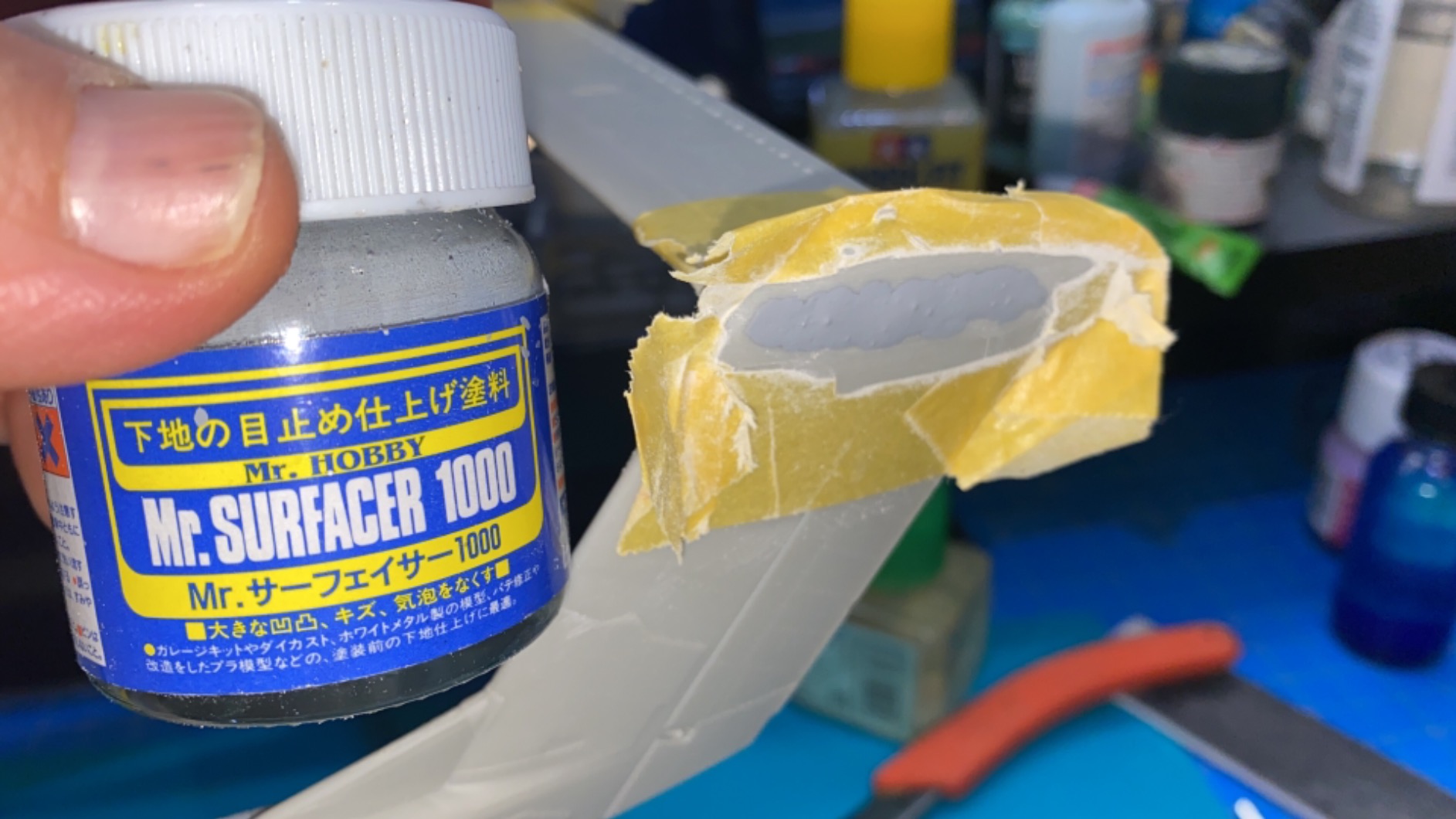
The solvent-based formula means you will need acetone or Mr. Color Leveling Thinner for cleanup, and there is a noticeable chemical odor during application. I always use it in a well-ventilated area. Some users report slight shrinkage as it dries, which means deeper gaps may need a second application, but for surface-level seam filling, one coat is usually enough.
When to Use Mr. Surfacer 1000
This product is ideal for hairline seams, small surface imperfections, and as a pre-paint check layer. After filling larger gaps with a dedicated putty and sanding smooth, a coat of Mr. Surfacer 1000 will reveal any remaining imperfections while simultaneously priming the surface. Many experienced modelers use it exactly this way as their final quality check before painting.
If you own an airbrush, Mr. Surfacer 1000 can be thinned and sprayed as a full-body primer that also handles microscopic surface flaws. This makes it incredibly efficient for preparing an entire model for paint in a single step.
Limitations to Consider
Mr. Surfacer 1000 is not designed for large gaps or deep seam lines. The liquid consistency means it flows rather than builds, so anything wider than a hairline crack will require multiple applications or a different product entirely. The solvent content also means it can damage some types of paint if applied over existing finishes.
3. Tamiya Basic Putty – The Reliable Workhorse
Tamiya USA TAM87053 Putty Basic Type
Solvent-Based Putty
1.13 fl oz Tube
Gray Color
Multi-Material Compatible
Pros
- Minimum shrinkage
- Sands very easily
- Quick drying
- Strong adhesion to plastic
Cons
- Thick consistency hard to spread thinly
- Relatively expensive per ounce
Tamiya Basic Putty is one of those products that has been around for decades, and for good reason. With over 3,300 reviews and a 4.7 rating, it has earned its reputation as a dependable everyday seam filler for plastic models. I always keep a tube on my workbench because it consistently delivers clean results on small to medium gaps without the shrinkage problems that plague many competing products.
The gray putty comes in a squeeze tube and applies directly to seam lines with a toothpick or small spatula. It has a thick consistency that stays where you put it, which is great for filling vertical seams on aircraft fuselages and ship hulls where runnier products would drip. After about 30 minutes, it is dry enough to sand, and it feathers smoothly into the surrounding plastic with minimal effort.
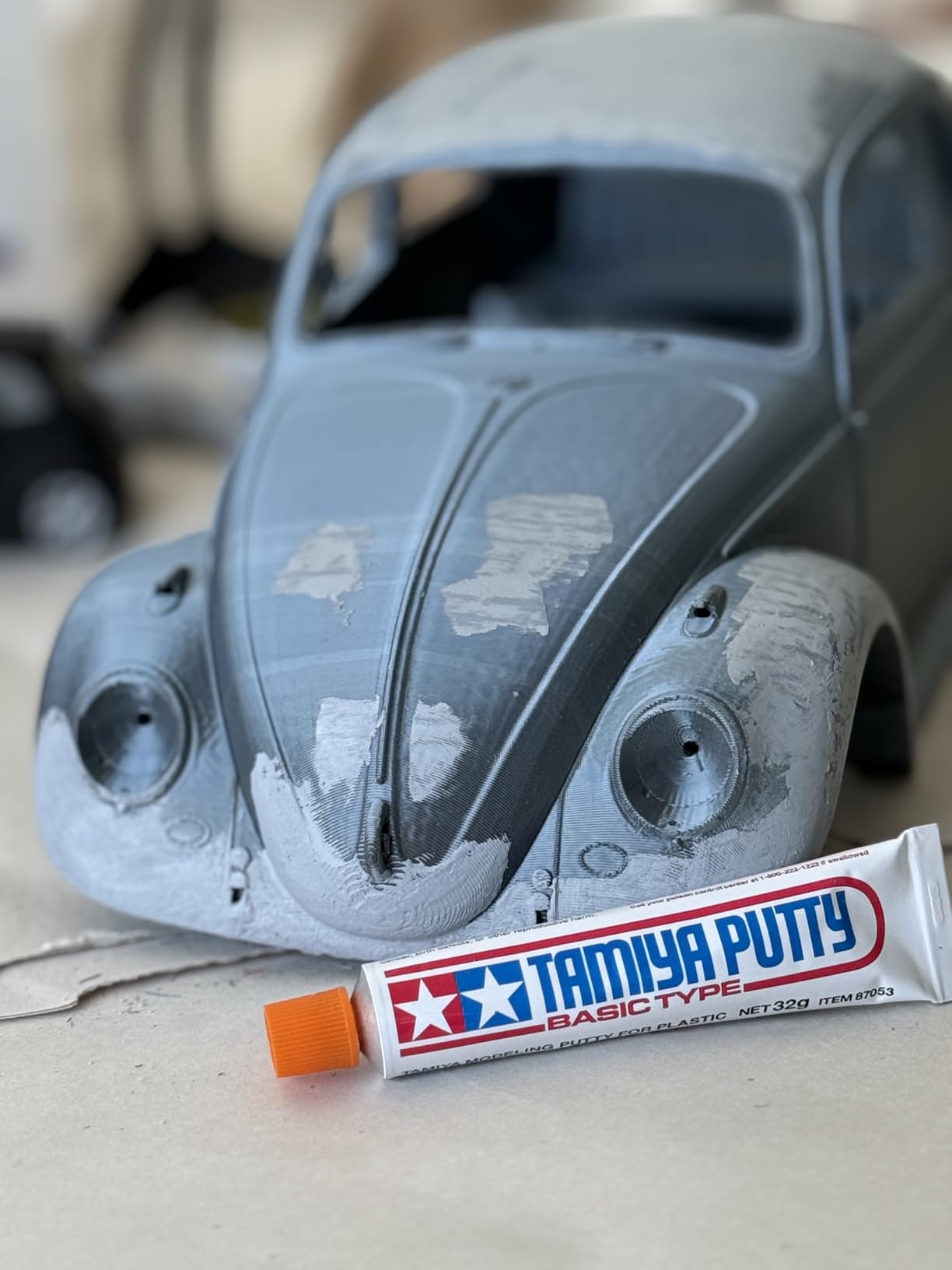
What really separates Tamiya Basic Putty from cheaper alternatives is the minimal shrinkage. Many solvent-based putties shrink significantly as they dry, leaving a shallow dip where the seam line was. Tamiya’s formula maintains its volume well, which means fewer reapplications and a smoother final surface. It also holds paint beautifully once sanded smooth.

Application Tips for Best Results
Apply Tamiya Basic Putty slightly proud of the surface and let it dry completely before sanding. Because the consistency is thick, spreading it into very thin layers takes some patience. I find that using a wet fingertip or a silicone clay shaper tool helps smooth it into the seam without pulling it back out. For really tight seams, a liquid putty might be easier to work with.
Multiple thin passes work better than one thick glob. Even though shrinkage is minimal, building up the filler in two or three thin layers gives you more control over the final shape and reduces the amount of sanding needed.
Who This Product Suits Best
Tamiya Basic Putty is an excellent choice for intermediate modelers who want a reliable, no-surprises filler for routine seam work. It is particularly well-suited for aircraft and armor modelers who deal with fuselage seams and hull joint lines regularly. Beginners will also find it forgiving and easy to learn with, though the thick consistency takes a bit of practice to control precisely.
4. Green Stuff by Army Painter – Best for Sculpting and Organic Shapes
The Army Painter, Green Stuff Kneadatite, 20 cm Modelling Putty
2-Part Epoxy Clay
20cm Strip
20-30 Min Work Time
Cures in 8 Hours
Pros
- Extremely hard and durable when cured
- Sticks to plastic resin and metal
- Good work time
- Perfect for organic sculpting
Cons
- Very sticky leaves fingerprints
- Learning curve for beginners
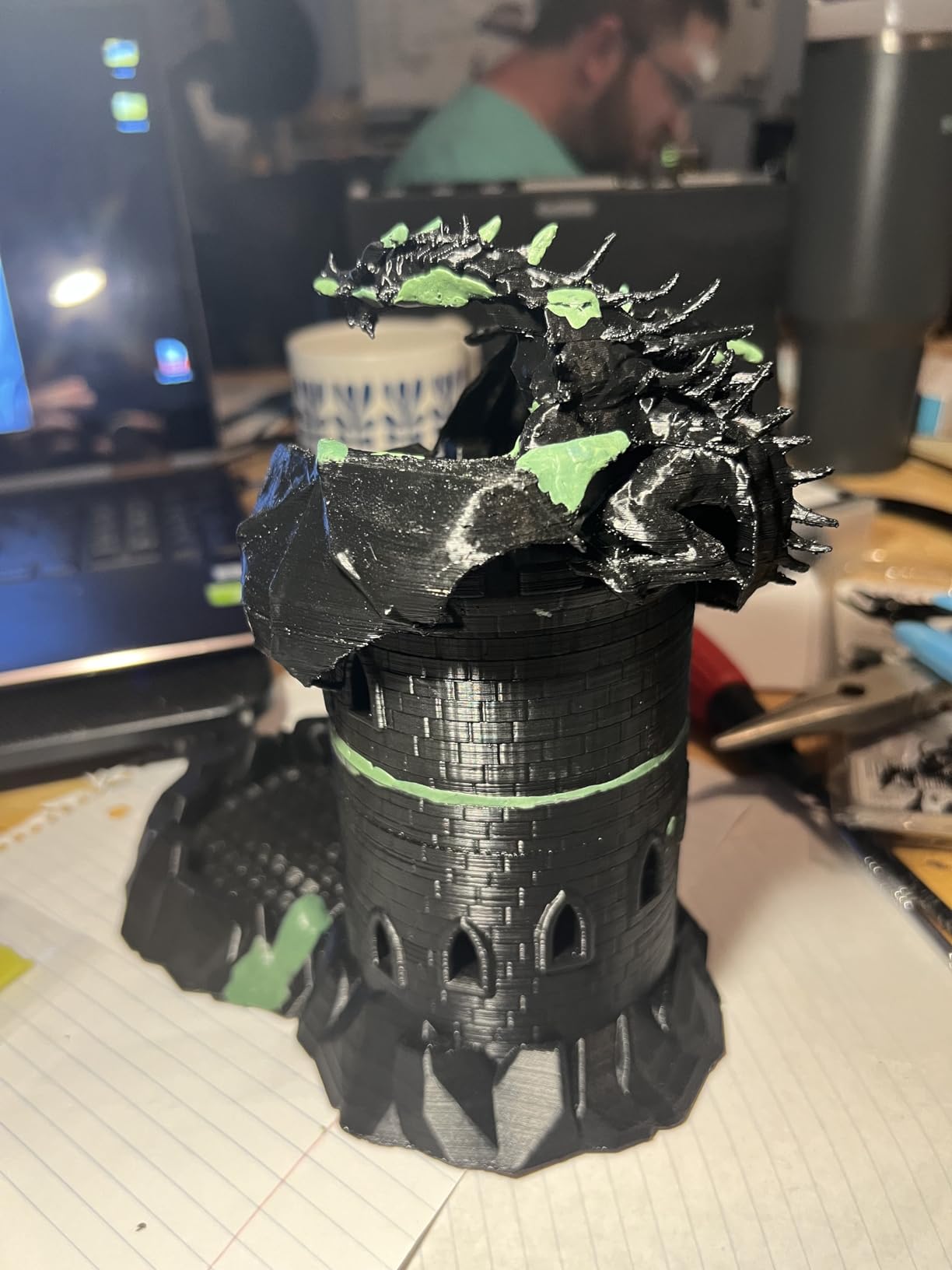
Green Stuff, formally known as Kneadatite, is a two-part epoxy clay that has been the standard in the miniature hobby for decades. The Army Painter version gives you a generous strip of blue and yellow components that you knead together to form a uniform green color. With over 4,600 reviews and a 4.7 rating, it remains one of the most popular gap-filling and sculpting compounds available.
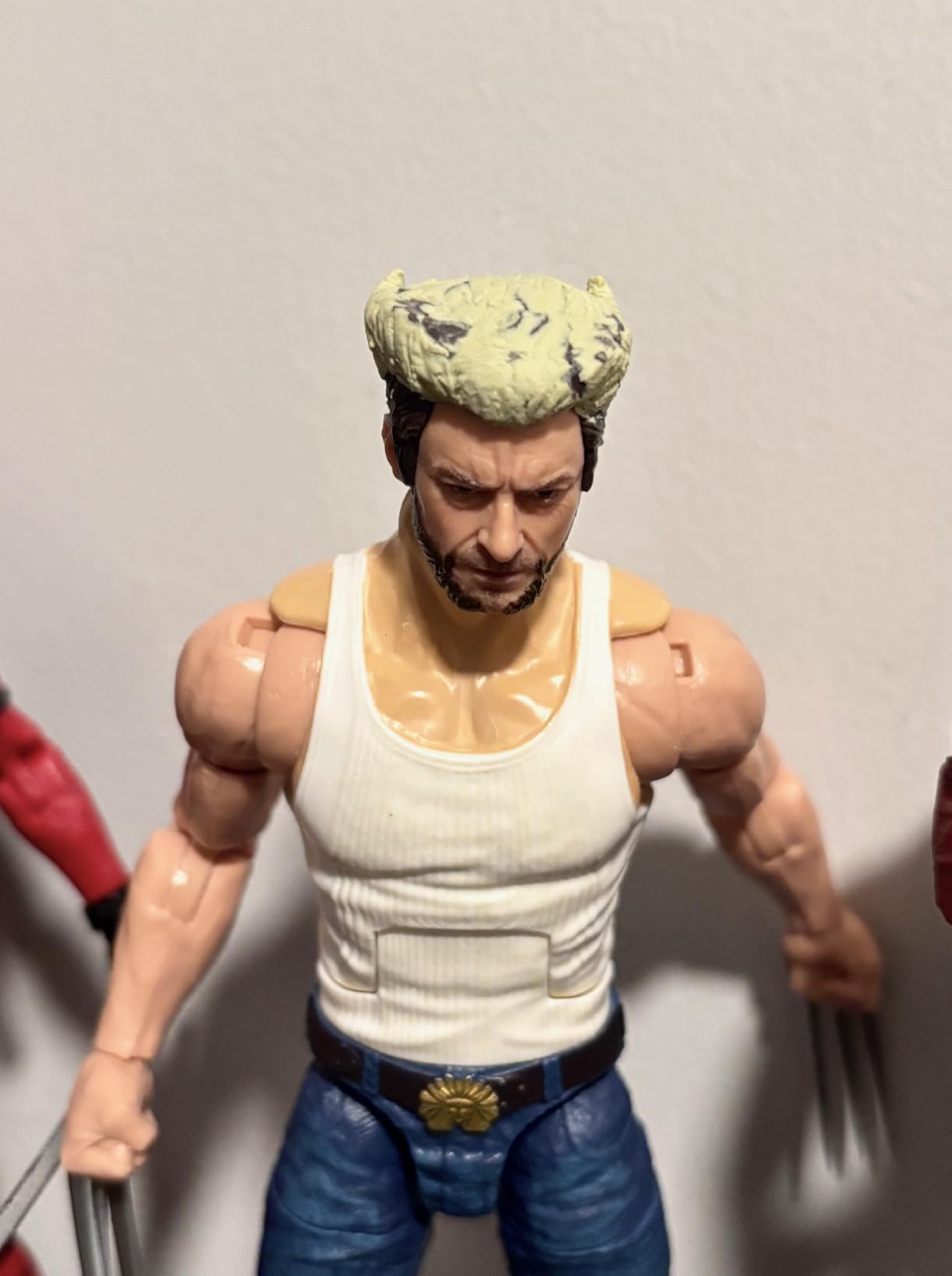
I reach for Green Stuff primarily when I need to fill gaps on organic shapes or when I want to sculpt additional details over a seam. Unlike paste-type fillers, Green Stuff can be shaped and sculpted while it cures, making it perfect for filling gaps on miniature cloaks, fur textures, and other surfaces where you want to blend the filler into existing details rather than just sand it flat.
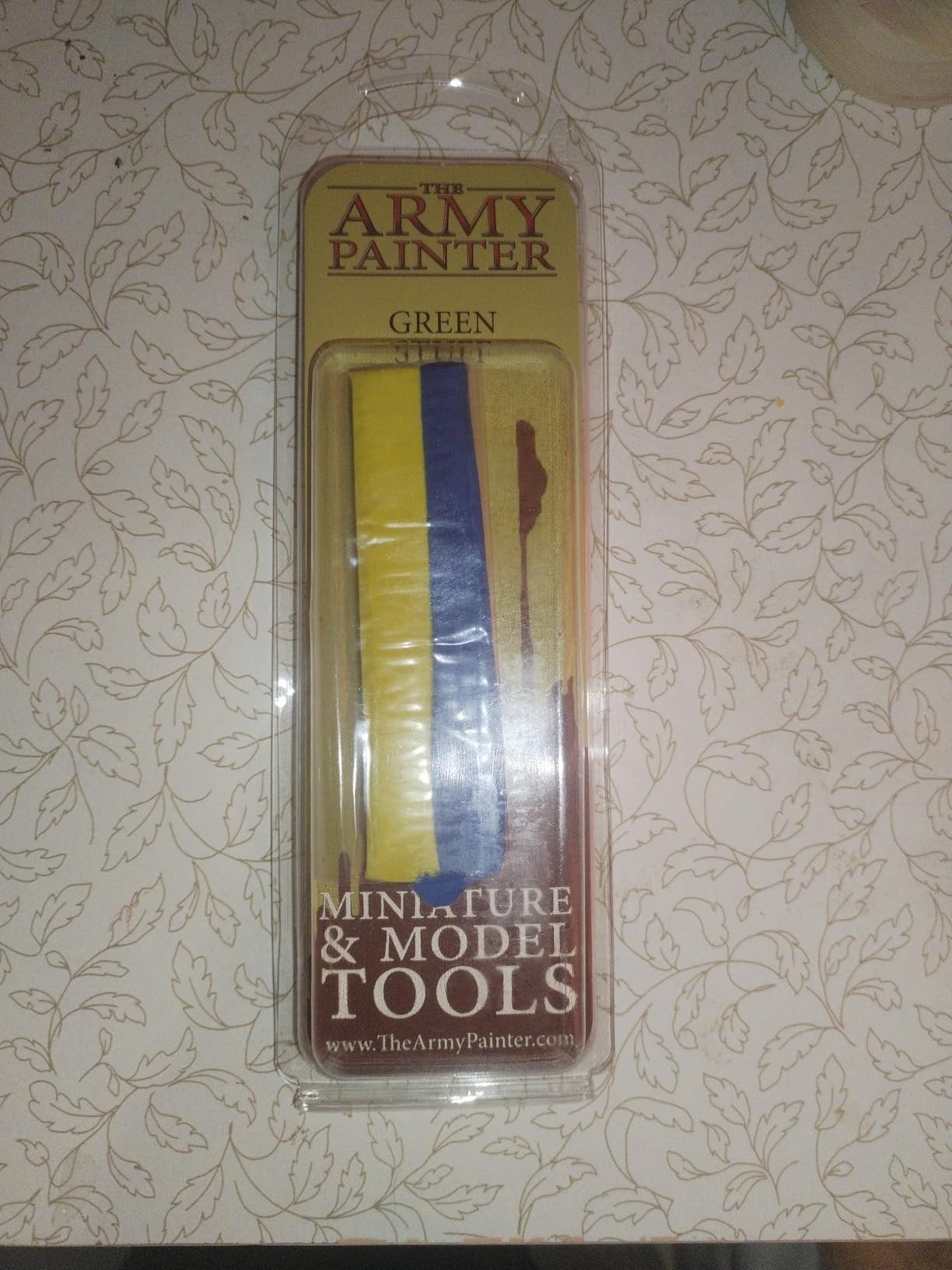
The 20 to 30 minute working time gives you enough room to shape and smooth the putty before it starts firming up. Full cure takes about 8 hours, and when it is fully hardened, it is incredibly durable. It does not shrink, it does not crack, and it holds paint beautifully. For miniature painters and Warhammer builders, this is essentially an essential supply.
The biggest challenge with Green Stuff is the tackiness. It sticks to everything, including your fingers, your tools, and any surface it touches. I keep a small dish of water nearby and dip my tools frequently to prevent sticking. Silicone-tipped clay shapers are practically mandatory for getting smooth results without leaving fingerprints everywhere.
Ideal Applications for Green Stuff
Green Stuff excels at gap filling on miniatures and models with complex organic surfaces. If you are building figures, monsters, or any model with textured surfaces where a flat sanded filler would look wrong, Green Stuff lets you match the surrounding texture. It is also ideal for conversions and kitbashing where you need to fill gaps between modified or repositioned parts.
When to Choose Something Else
For flat surfaces where you just want to fill a seam and sand it flush, Green Stuff is more effort than necessary. A paste-type filler like Tamiya Basic Putty or Perfect Plastic Putty will get the job done faster and with less cleanup. Green Stuff also requires practice to work with cleanly, so beginners may want to start with a simpler product first.
5. Mr. Dissolved Putty – Liquid Formula That Flows Into Seams
Mr.Dissolved Putty Mr.Hobby
Liquid Putty Formula
40ml Bottle
White/Off-White Color
Brush Application
Pros
- Flows into gaps automatically
- No detail loss during sanding
- Fast surface drying
- Easy cleanup
Cons
- Full day cure before sanding
- Chemical smell
- Japanese instructions
Mr. Dissolved Putty from GSI Creos takes a completely different approach to seam filling. Instead of a paste or clay that you have to push into gaps, this is a liquid putty that flows into crevices on its own. With 667 reviews and a solid 4.6 rating, it has built a dedicated following among modelers who appreciate how effortlessly it handles seam lines without destroying nearby detail.
I first tried Mr. Dissolved Putty on a 1/48 aircraft kit with tight fuselage seams, and the difference was immediately obvious. Using a silicone brush, I applied a bead along the seam and watched it wick into the gap by capillary action. No pressing, no squashing, no forcing putty into tight spaces. It simply flows where it needs to go and fills the void from the inside out.
Surface drying happens in seconds, but do not be fooled into sanding right away. The product needs a full day to cure through its entire depth before you can sand it properly. Rushing this step leads to gummy, uneven results. Once fully cured though, it sands beautifully with no loss of panel lines or fine surface details, which is where this product truly earns its keep.
Best Situations for Mr. Dissolved Putty
This is the ideal filler for hairline to medium seams where preserving nearby detail is critical. Panel lines, recessed rivets, and engraved surface details survive the filling process because the liquid does not require mechanical pressure to apply. If you have ever ruined panel lines by pressing thick putty into a seam, you will appreciate how gentle this product is.
It also works well as a second-pass product. Fill larger gaps with a heavier putty first, then run Mr. Dissolved Putty along the sanded joint to catch any remaining hairline imperfections. The liquid finds every tiny gap you might have missed.
Things to Watch Out For
The chemical smell is noticeable during application, so proper ventilation is important. The bottle instructions are primarily in Japanese, but the application method is intuitive enough that this rarely causes problems. Also, the shelf life can be an issue if the bottle sits unused for extended periods, as the liquid can thicken or dry out over time.
6. Tamiya Epoxy Putty Quick Type – Fast-Curing Two-Part Epoxy
Tamiya Epoxy Putty (Quick Type)
2-Part Epoxy Putty
25ml Volume
Rapid 6-Hour Cure
Water Resistant
Pros
- Sets very fast for epoxy
- Easy to shape and mold
- Excellent adhesion
- Sandable when cured
Cons
- Very sticky during mixing
- Limited working time due to fast cure
- Gloves recommended
Tamiya Epoxy Putty Quick Type bridges the gap between slow-curing epoxies like Milliput and fast-drying paste putties. This two-part epoxy cures in about 6 hours, which is significantly faster than standard epoxy putties, making it a great choice when you need the strength and non-shrink properties of epoxy but do not want to wait overnight for a full cure.
I have used this product for filling holes in miniature bases, rebuilding chipped edges on armor models, and creating small custom details. It shapes more easily than Green Stuff and feels less gummy during the working phase. A few drops of water on your tools help with smoothing, and once cured, it sands clean and takes paint without any issues.
The trade-off for the fast cure time is a shorter working window. You need to have your plan ready before mixing because this putty starts firming up quickly. For modelers who like to take their time sculpting and shaping, Tamiya also makes a Standard Type that cures more slowly. But for straightforward gap filling where you just need to pack the putty in and move on, the Quick Type is hard to beat.
Comparing Quick Type vs Standard Type
Tamiya offers two versions of their epoxy putty, and choosing between them depends on your working style. The Quick Type is best for simple gap filling and repairs where you apply the putty, roughly shape it, and let it cure. The Standard Type gives you more sculpting time and is better for projects that require detailed shaping or blending into existing model details.
Both types share the same excellent adhesion and sandability, so the real difference is purely in working time versus cure speed. If you are filling seams on multiple models in a single session, the Quick Type lets you move through them faster.
Who Benefits Most from This Product
Modelers who want epoxy-level durability without the long wait will get the most from Tamiya Epoxy Putty Quick Type. It is especially useful for armor modelers, ship builders, and anyone working on kits that frequently have larger structural gaps. The fast cure also makes it practical for quick repairs during a build session.
7. Vallejo Plastic Putty – Odourless Water-Based Filler
Vallejo – Plastic Putty Acrylic Paste, 0.67 fl oz (20 ml), White
Acrylic Water-Based Paste
20ml Tube
White Color
Marble Powder Formula
Pros
- No solvent odor
- Easy water cleanup
- Fine applicator tip
- Primes and paints well
Cons
- Some shrinkage when drying
- Rubbery when dry not stone hard
- Gummy to sand
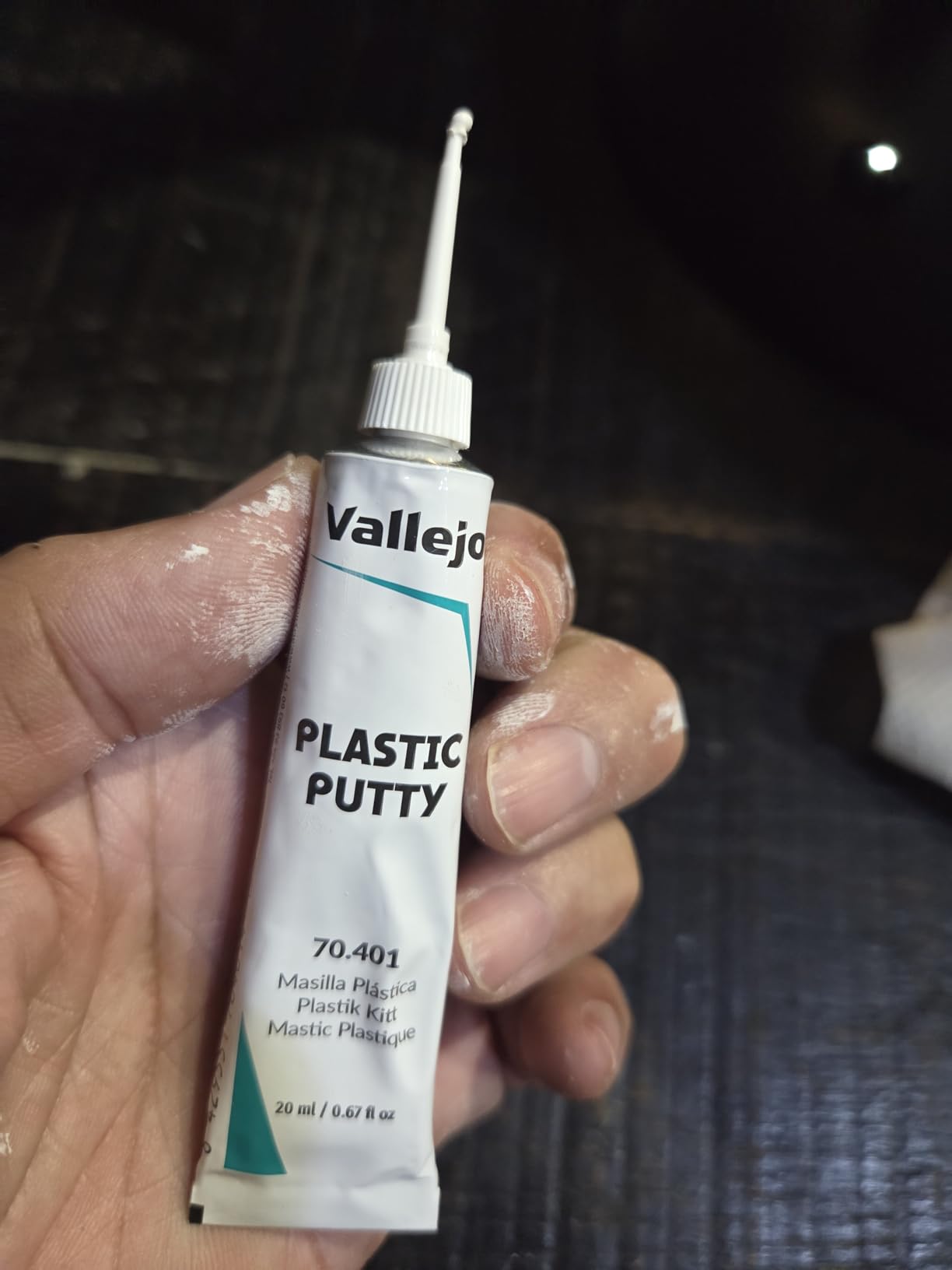
Vallejo Plastic Putty is the most popular water-based seam filler in the modeling world, with over 8,500 reviews backing its 4.5 rating. The acrylic formula uses marble powder as a filler ingredient and is completely odourless, making it one of the few seam fillers you can use at your kitchen table without fumigating the room. For modelers who build in shared living spaces, this alone makes it worth considering.
The tube features a fine applicator nozzle that lets you squeeze putty directly into seam lines with reasonable precision. I have found it works best on small to medium gaps where you apply a thin bead, smooth it with a wet fingertip or damp cotton swab, and let it dry. Cleanup is as simple as rinsing with water, which is a refreshing change from the acetone and thinners needed for solvent-based alternatives.
The main drawback is the shrinkage. Vallejo Plastic Putty shrinks noticeably as the water evaporates, meaning you often need two or three applications for a single seam line. The cured texture is also somewhat rubbery rather than stone-hard, which makes sanding a bit tricky. You need fine-grit sandpaper and a light touch, otherwise the putty can peel or roll rather than sand smooth.
Despite these limitations, Vallejo Plastic Putty remains a staple because of how accessible and user-friendly it is. Beginners can pick it up and start filling seams immediately without worrying about solvents, ventilation, or complicated mixing procedures. It is also widely available at most craft stores and hobby shops, unlike some of the more specialized Japanese products.

Best Practices for Vallejo Plastic Putty
Apply in thin layers and build up gradually rather than trying to fill a gap in one pass. Overfill slightly to account for shrinkage, and wait for each layer to dry completely before adding more. Using a damp cotton swab to smooth the surface while the putty is still wet reduces the amount of sanding needed later and helps the putty blend into the surrounding plastic.
Avoid using Vallejo Plastic Putty in areas that will see significant water exposure during weathering. The water-based formula can soften if it gets wet again after curing, which is a problem for modelers who use washes or water-based weathering techniques.
When Vallejo Plastic Putty Makes Sense
This product is perfect for beginners, for modelers who need an odourless option, and for quick seam-filling tasks on small to medium gaps. It is also a solid choice for miniatures painters who primarily work with acrylic paints and want a filler that integrates naturally into their existing acrylic workflow.
8. Perfect Plastic Putty by Deluxe Materials – Invisible Seam Specialist
Perfect Plastic Putty, 40ml
Water-Based Putty
40ml Tube
White Color When Dry
Water Clean Up
Pros
- Creates truly invisible seams
- Easy water cleanup
- Minimal shrinkage
- Goes on smoothly
Cons
- Tube can clog
- Dries very fast limited work time
- Requires multiple passes for deep gaps
Perfect Plastic Putty lives up to its name by being specifically designed for creating invisible seams in plastic model kits. With over 2,300 reviews and a 4.5 rating, this water-based filler from Deluxe Materials has earned a strong reputation among aircraft and armor modelers who need seams to disappear completely under paint. The product dries white, which makes it easy to see coverage on gray or colored plastic.
What makes Perfect Plastic Putty different from other water-based fillers is how smoothly it applies and how cleanly it sands. The consistency is creamier than Vallejo, and it spreads into seam lines with very little effort. I have had excellent results applying it with the tip of a toothpick and then wiping the excess with a damp cloth, leaving a perfectly filled seam line that needs minimal sanding.
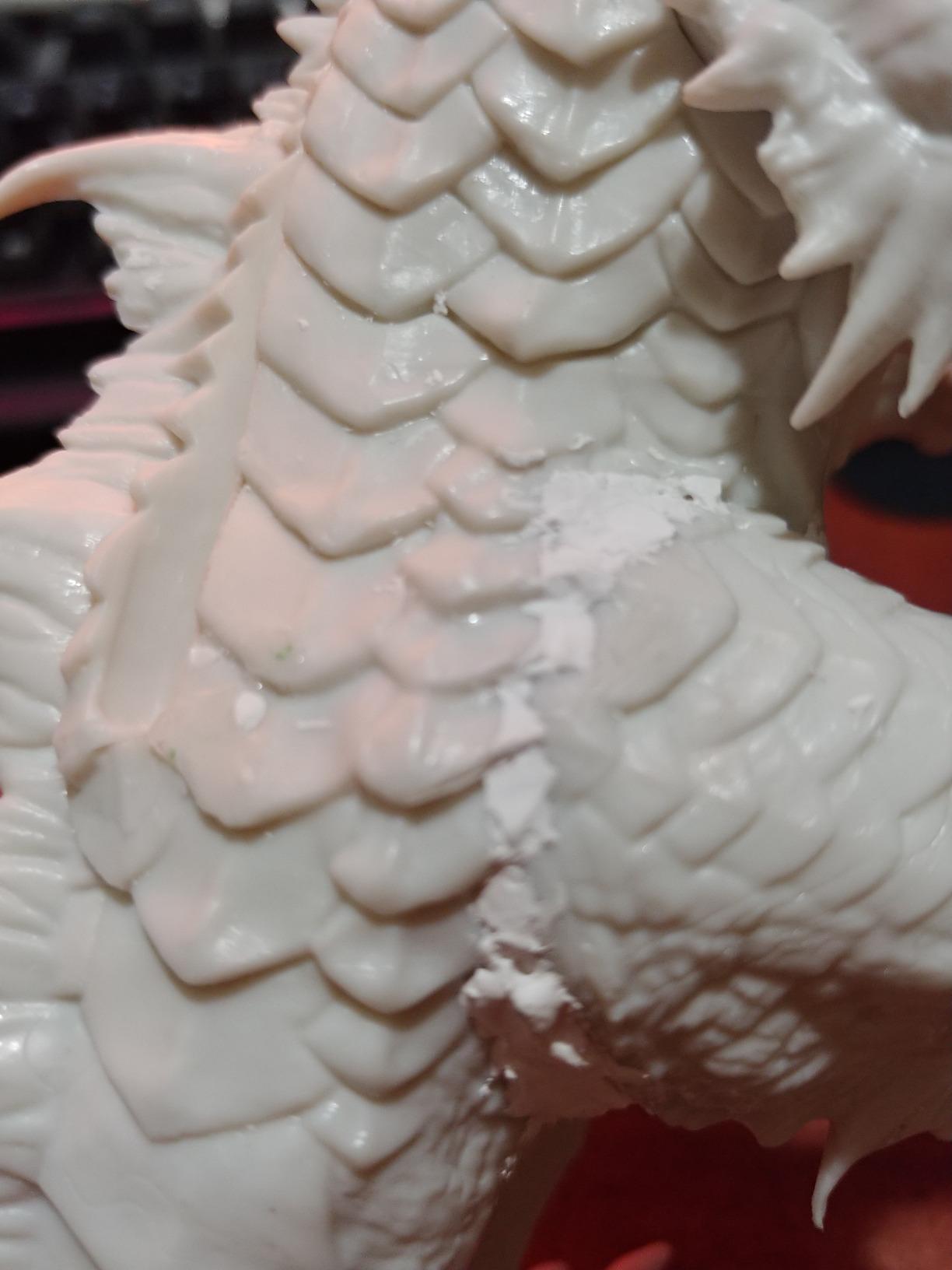
The drying time is quite fast, which is both a pro and a con. On the plus side, you can sand and reapply within a short session. On the downside, you need to work quickly to smooth the surface before it skins over. Multiple thin passes work much better than trying to fill a deep gap all at once. For hairline seams, one pass is usually sufficient.
Tube maintenance is important with this product. The cap needs to be cleaned after each use, and storing the tube tip-down helps prevent the putty from drying in the nozzle. A blocked tube is the most common complaint, but this is easily prevented with basic care. A pin or needle clears any blockage quickly.
Ideal Projects for Perfect Plastic Putty
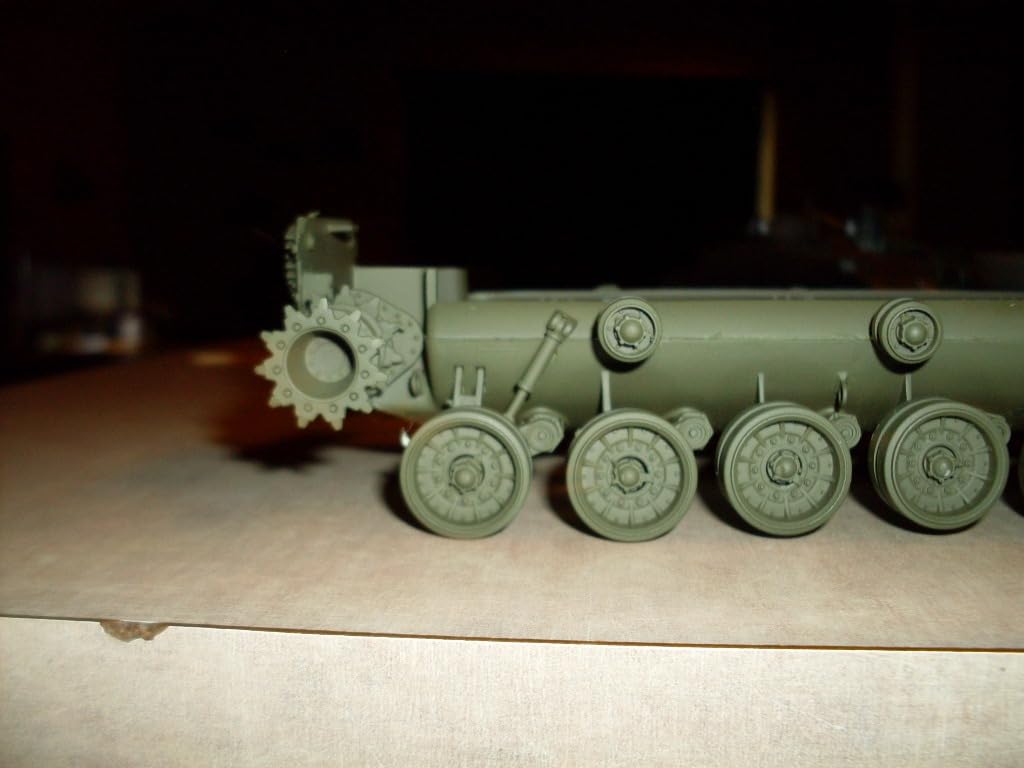
This filler excels at aircraft fuselage seams, tank hull joints, and any plastic model kit where the seam runs along a flat or gently curved surface. It is also well-suited for resin miniatures with casting seams. The white color provides good contrast during application, so you can clearly see where the putty has filled and where it has not.
Limitations to Keep in Mind
Perfect Plastic Putty is not an adhesive and will not hold parts together. It is purely a gap filler. It can also flake off superglue joints, so if you have used CA glue for assembly, make sure the glue has fully cured before applying putty nearby. For very large gaps, you will need either multiple applications or a different product altogether.
9. Testors Contour Putty – Budget-Friendly Classic
Testors Contour Putty, Modeling Putty, 5/8 Oz Tube, Includes 1 Tube, Big Kid, Youth
Solvent-Based Putty
5/8 oz Tube
Plastic Material
Quick 30-Minute Dry
Pros
- Affordable entry price
- Sands easily and smoothly
- Dries in about 30 minutes
- Been trusted for 40+ years
Cons
- Can be watery from tube
- Not ideal for large gaps
- Some batch inconsistency
Testors Contour Putty is one of the oldest modeling putties still on the market, and it has been filling seams on plastic models for over four decades. This solvent-based putty comes in a small 5/8 ounce tube and delivers straightforward gap-filling performance at a very accessible price point. If you are just getting into scale modeling and want to try seam filling without a significant investment, Testors is a reasonable place to start.
The putty squeezes from the tube as a thick paste that you apply directly to gap areas. After about 30 minutes, it dries hard enough for sanding, and it sands down smoothly with standard modeling sandpaper or sanding sticks. It holds paint well once sanded and does not react with most acrylic or enamel paints. For small gaps and routine seam work, it does the job reliably.
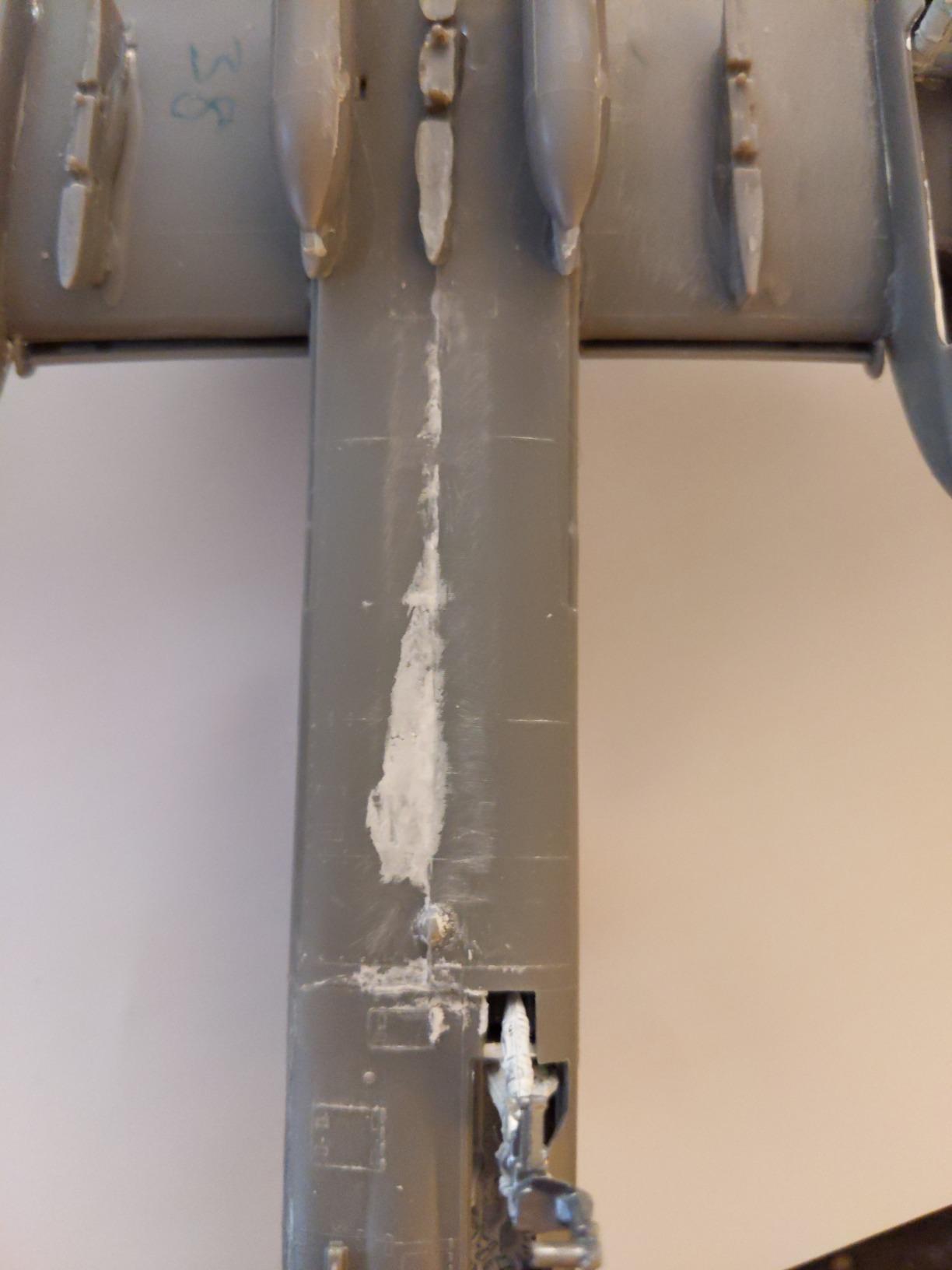
The most common complaint is inconsistency in the tube consistency. Some tubes arrive with putty that is too watery, while others are the right thickness. If you get a watery tube, letting it sit upright for a while often helps the solvents separate so you can pour off the excess liquid. It is an old-school fix for an old-school product, but it works.
Where Testors Contour Putty Works Well
Small to medium gaps on plastic model kits are the sweet spot. The putty fills, dries reasonably fast, and sands clean. It is a good choice for car modelers, beginner aircraft builders, and anyone doing basic seam work where precision is not critical. The small tube size also makes it easy to store and transport.
When to Upgrade to Something Better
If you find yourself filling seams regularly or working with models that have persistent gap issues, investing in a higher-quality filler like Tamiya Basic Putty or Perfect Plastic Putty will save you time and frustration. Testors works, but the inconsistency between tubes and the tendency to require multiple applications for larger gaps mean it is better suited as a starter product rather than a primary filler for serious builders.
10. AK Interactive White Acrylic Putty – Smooth Water-Soluble Formula
AK Interactive White Acrylic Modeling Hard Putty 20ml Tube
Acrylic Putty
20ml Tube
White Color
Water Soluble
Pros
- Water soluble easy cleanup
- Smooth creamy consistency
- Precision application
- Good adhesion on smooth surfaces
Cons
- Adhesion not as strong as Tamiya
- Can fall off when sanding
- Dries very solid
AK Interactive White Acrylic Modeling Putty rounds out our list as another water-based option that emphasizes clean application and easy cleanup. The 20ml tube delivers a smooth, creamy consistency that spreads evenly into seam lines, and the water-soluble formula means you can clean up excess with a damp cotton swab before it dries. For modelers who already use AK Interactive paints and weathering products, this putty fits naturally into an existing acrylic workflow.
I tested this putty on a 1/35 armor kit with moderate seam lines on the turret and hull. The application was smooth and the putty spread easily with a silicone-tipped tool. Cleanup with a wet cotton swab removed excess cleanly without disturbing the filler already in the seam. The white color provides good visibility during application and under paint.
Where AK Interactive falls short compared to top performers like Tamiya Basic Putty is in adhesion and sanding behavior. Some users report that the putty can detach in small chunks during sanding, particularly on smooth plastic surfaces. Prepping the seam area by lightly scoring the surface with fine sandpaper before application improves adhesion significantly and is worth the extra step.
Best Applications for AK Interactive Putty
This putty works well for 3D print defect repair, aircraft wing seams, and car door panel lines where precision matters. The smooth consistency makes it easy to apply in thin, controlled layers. If you primarily work with acrylic paints and prefer water-based products throughout your workflow, AK Interactive is a solid choice that integrates seamlessly.
The putty also performs well on miniatures and smaller scale models where the gap-filling demands are modest. For these applications, the water cleanup and lack of fumes are genuine advantages that make the modeling process more pleasant.
Considerations Before Buying
If you need a filler that bonds aggressively to smooth plastic, solvent-based options will generally outperform this acrylic formula. Pre-sanding the application area helps, but if you frequently fill seams on glossy or very smooth plastic parts, a product like Tamiya Basic Putty or Mr. Surfacer may deliver more reliable results. The AK Interactive putty is best suited for modelers who prioritize easy cleanup and low odor over maximum adhesion strength.
How to Choose the Right Plastic Model Seam Fillers?
Picking the right seam filler depends on three main factors: the size of the gaps you are filling, where you build, and your experience level. Not every filler works for every situation, and having the right product for the job makes a huge difference in both the process and the final result.
Match Your Filler to the Gap Size
Hairline cracks and tiny seam lines are best handled by liquid putties like Mr. Dissolved Putty or Mr. Surfacer 1000. These products flow into tight spaces that thicker pastes cannot penetrate. For medium gaps, paste-type fillers like Tamiya Basic Putty, Vallejo Plastic Putty, or Perfect Plastic Putty give you the control and build-up you need. For large structural gaps, reach for a two-part epoxy like Milliput, Tamiya Epoxy Putty, or Green Stuff. Using the right tool for the gap size saves time and produces better results every time.
Acrylic vs Solvent vs Epoxy Putties
Acrylic putties like Vallejo Plastic Putty, Perfect Plastic Putty, and AK Interactive White Putty are water-based, odourless, and easy to clean up with water. They are beginner-friendly and great for home use. The trade-off is some shrinkage and less aggressive adhesion.
Solvent-based putties like Tamiya Basic Putty and Testors Contour Putty offer stronger adhesion and faster drying but require ventilation and solvent cleanup. They tend to shrink less than acrylic options.
Two-part epoxy putties like Milliput, Green Stuff, and Tamiya Epoxy Putty provide the strongest, most durable fills with zero shrinkage. They require mixing and have limited work times, but the results are worth it for demanding applications.
Beginner vs Expert Recommendations
If you are new to model building, start with Vallejo Plastic Putty or Perfect Plastic Putty. Both are water-based, forgiving, and require no special tools or solvents. Once you are comfortable with basic seam filling, move up to Tamiya Basic Putty for its superior sandability and minimal shrinkage. For advanced modelers tackling complex builds or seam joining methods on aircraft kits, a combination of Mr. Surfacer 1000 for hairline work and Milliput or Green Stuff for structural fills gives you professional-level results.
Sanding and Finishing Tips
Always let your filler dry completely before sanding. Rushing this step is the most common mistake and leads to gummy, uneven surfaces. Start with 400-grit sandpaper and work up to 800 or 1000 grit for a smooth finish. Use wet sanding for the final passes to reduce dust and get a finer surface. After sanding, apply a primer coat to check your work before painting. Any remaining gaps or imperfections will show clearly under primer, and you can address them before committing to your final paint job.
FAQs
What is the best filler for plastic models?
The best filler for plastic models depends on your gap size. For hairline seams, Mr. Surfacer 1000 or Mr. Dissolved Putty flow into tiny cracks effortlessly. For medium gaps, Tamiya Basic Putty delivers minimal shrinkage and excellent sandability. For large structural gaps, Milliput Standard Grain cures rock-hard and can be sanded, carved, or drilled. Most experienced modelers keep at least two types on hand to handle different situations.
How to fill seams in plastic models?
First, identify the gap size. Clean the seam area with fine sandpaper to improve adhesion. Apply your chosen filler slightly proud of the surface. For liquid putties, use a fine brush or silicone tool. For paste putties, use a toothpick or spatula. Let the filler dry completely before sanding. Start with 400-grit sandpaper and progress to finer grits. Apply primer to check your work, then reapply filler to any remaining imperfections before painting.
Is green stuff better than Tamiya putty?
Green Stuff and Tamiya putty serve different purposes. Green Stuff is a two-part epoxy clay best for sculpting organic shapes, filling gaps on textured surfaces, and creating custom details. Tamiya Basic Putty is a solvent-based paste designed for filling flat seam lines and sanding smooth. For straight seam filling on aircraft or armor models, Tamiya putty is faster and easier. For miniature conversions and organic gap filling, Green Stuff is the better choice.
What’s the best filler for plastic?
For general plastic model building, Tamiya Basic Putty is widely considered the best all-around filler due to its minimal shrinkage, strong adhesion, and smooth sanding. For water-based needs, Perfect Plastic Putty creates invisible seams with easy cleanup. For the most durable fills on large gaps, Milliput Standard Grain provides rock-hard, waterproof results that can be sanded and carved like the plastic itself.
Why does my putty shrink after drying?
Putty shrinkage occurs because the carrier liquid (water or solvent) evaporates during the drying process, reducing the volume of the remaining filler material. Acrylic and water-based putties like Vallejo Plastic Putty tend to shrink more because they have higher water content. Solvent-based putties like Tamiya Basic Putty shrink less. Two-part epoxy putties like Milliput and Green Stuff have zero shrinkage because they cure through a chemical reaction rather than evaporation. To manage shrinkage, overfill slightly and apply multiple thin layers rather than one thick application.
Conclusion
Finding the right plastic model seam fillers can transform your builds from obviously assembled kits into professional-quality models with invisible joints. After testing all 10 products on this list across dozens of projects, our top recommendation for most modelers is Milliput Standard Grain for large gaps, Tamiya Basic Putty for everyday seam work, and Mr. Surfacer 1000 for hairline imperfections and priming.
The best approach is to keep two or three different fillers on hand so you can match the product to the problem. A water-based putty for quick odourless work at home, a solvent-based paste for reliable medium-gap filling, and a two-part epoxy for those inevitable large gaps that cheaper products simply cannot handle. Start with the products that match your current needs and experience level, and expand your collection as your modeling skills grow.