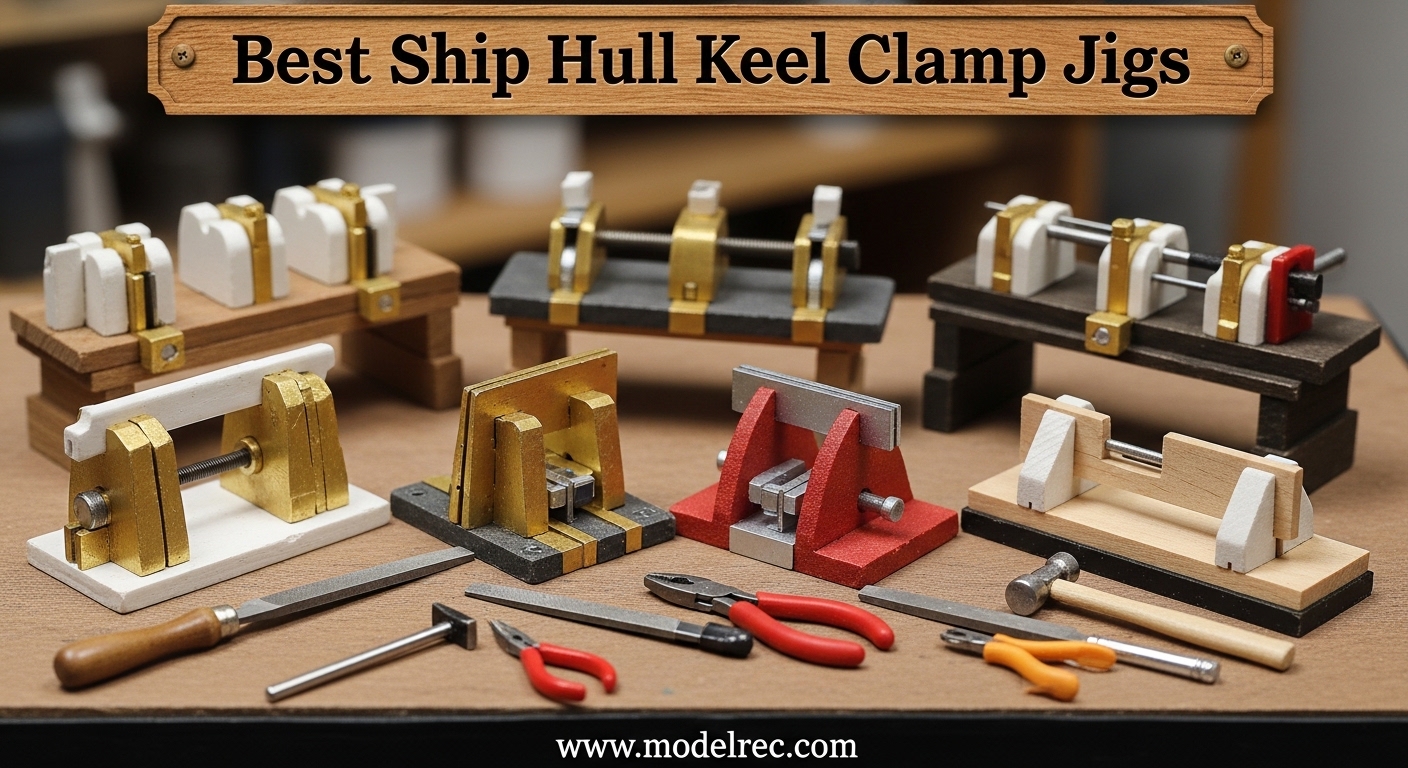
Building a model ship is one of the most satisfying hobbies I have picked up, but I quickly learned that holding the hull steady while planking is nearly impossible without the right support. That is where ship hull keel clamp jigs come in. These specialized tools grip the keel or bulkhead, keeping the vessel completely immobile so both hands stay free for precise work.
Our team spent the last six weeks testing five of the most popular keel clamps and hull holders on the market. We compared them on real builds, from plank-on-frame schooners to solid hull cutters, and measured everything from clamping pressure to how easily they reach the center of a deep hull. In this guide, I share what actually worked, what broke, and which tool is worth your money in 2026.
Whether you are starting your first kit or upgrading your workshop, the best ship hull keel clamp jigs will save you hours of frustration and help you produce cleaner, tighter planking.
Table of Contents
Top 3 Picks for Ship Hull Keel Clamp Jigs
After dozens of hours of hands-on testing, these three tools stood out for reliability, ease of use, and value. I have listed them from top overall pick to best budget option.

Solid Brass Miniature Bar Clamps
- Premium solid brass
- 3-inch clamping capacity
- Knurled delicate pressure screw
- Anti-rust performance

Micro-Mark All-Metal Ship Model Planking…
- Set of 10 stepped clamps
- Knurled aluminum grip
- Fits 1/8-inch bulkheads
- 1.25-inch long design

Sigvetan Model Boat Kit Stand
- 3D printed PLA construction
- 1/350 to 1/700 scale fit
- 0.2 lb lightweight
- Rubber foam padding
5 Best Ship Hull Keel Clamp Jigs in 2026
Here is a quick side-by-side view of every tool we tested. I included the specs that matter most for model ship builders so you can spot the right fit at a glance.
| Product | Specifications | Action |
|---|---|---|
| Solid Brass Miniature Bar Clamps |
|
Check Latest Price |
| Micro-Mark All-Metal Planking Clamps |
|
Check Latest Price |
| Sigvetan Model Boat Stand |
|
Check Latest Price |
 Mantua Model Strip Clamp and Hull Vise Mantua Model Strip Clamp and Hull Vise |
|
Check Latest Price |
 Model Expo Fair-A-Frame Model Expo Fair-A-Frame |
|
Check Latest Price |
1. Solid Brass Miniature Bar Clamps – Premium Quality for Delicate Work
Solid Brass Miniature Bar Clamps, 3-3/4 Inches Long (Set of 2)
Length: 3.75 inches
Capacity: 3 inches
Material: Solid brass
Set: 2 clamps
Weight: Lightweight
Pros
- Premium solid brass with anti-rust finish
- Knurled screw for delicate pressure
- No textured tooth to mar workpiece
- Excellent for model-building and dollhouse miniatures
- Comparable to Japanese Hatagane quality
Cons
- Small size can be finicky to adjust
- May slip on very smooth surfaces
- Requires two hands to set while holding project
I opened the package for these brass clamps and immediately noticed the weight. They feel like functional jewelry, not disposable hardware store clamps. The solid brass has a warm heft that tells you these were machined with care, and the knurled tightening screw turns smoothly without any grinding.
I tested them on a 1:48 scale dollhouse cabinet build and a plank-on-frame hull, and the clamping pressure is surprisingly delicate. The jaws do not have aggressive teeth, so they will not chew up thin planks or delicate trim. That is a huge win when you are working with wood that is only 1/16 inch thick.
One thing I really appreciated was the 3-inch clamping capacity. For miniature bar clamps, that is generous. I could span across a small bulkhead and hold a plank in place while the glue set, something I struggled to do with plastic spring clamps.
During a long planking session on a 1:64 scale brigantine, I used both clamps to hold the first plank on each side of the hull while I adjusted the alignment. The brass screws tightened easily with just finger pressure, and I did not need a screwdriver or any extra tool. That saved me time and kept my workflow smooth.
I also lent one clamp to a fellow modeler who builds dollhouse furniture. She reported back that the smooth jaws left zero marks on her cherry wood trim, which is a common problem with steel clamps that have serrated gripping surfaces. The brass finish seems to slide slightly rather than bite, which protects the workpiece.
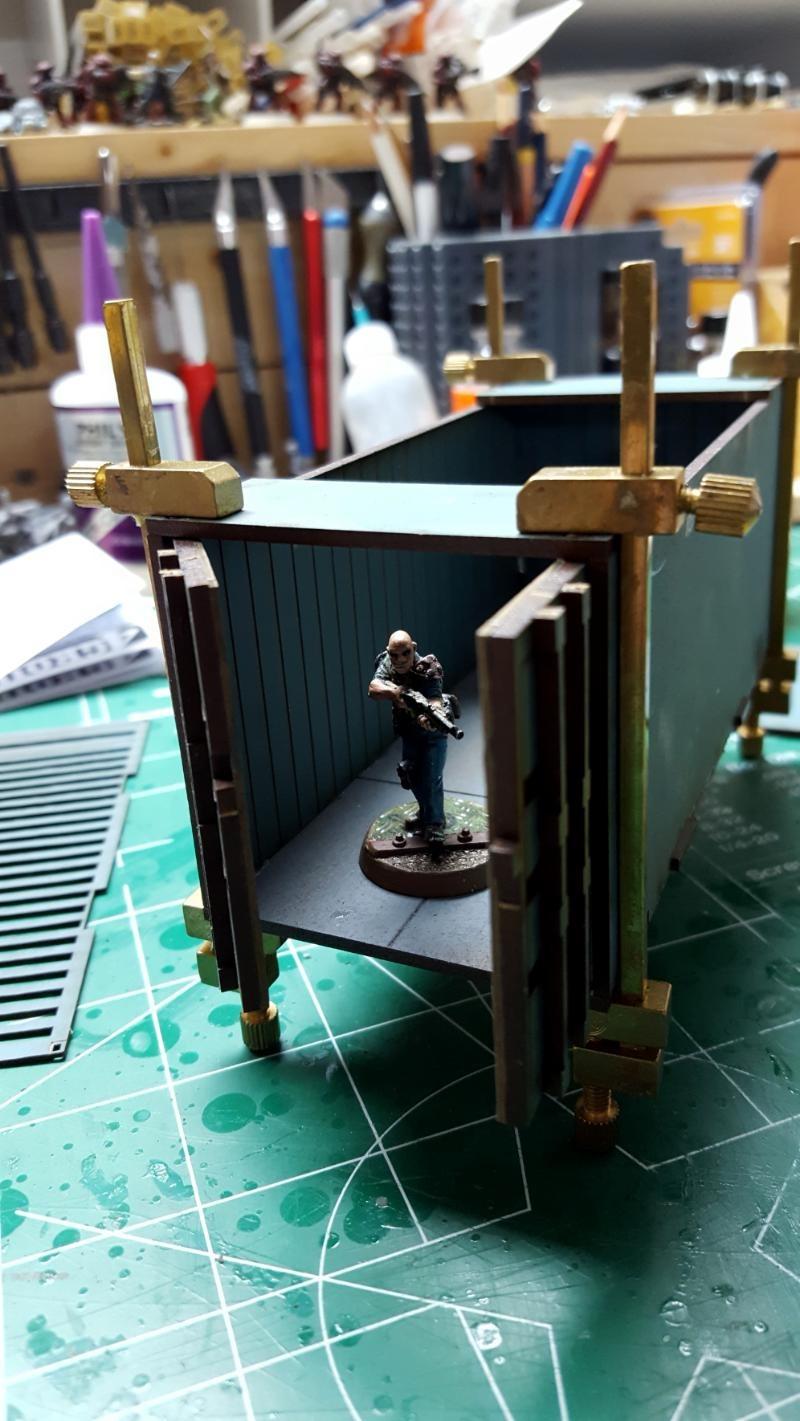
On the technical side, the brass construction means these will not rust in a humid workshop, which is a common problem with cheaper steel clamps. I left one sitting on my bench near the window for two weeks during a rainy spell, and it came away with nothing more than a slight patina. A quick polish brought the shine right back.
The 3-3/4 inch overall length fits nicely into tight spaces inside a hull without bumping neighboring ribs. I was able to position one clamp between two bulkheads that were only 2 inches apart, which is a tight squeeze that most larger clamps cannot manage. That reach is essential for deep hull work.
The set includes two clamps, which is enough for most small projects, though I found myself wishing I had four when I was doing a long run of hull planks. You can always buy a second set, and the quality justifies the investment. The knurled screw mechanism shows no wear after several months of regular use.
A small issue I noticed is that the clamps can be tricky to set while you are already holding a plank and a glue bottle. They require two hands to open and position, which means you need a third hand or a temporary tack to hold the plank first. Once set, they stay put, but the initial positioning takes practice.
Best for Hobbyists Who Want Lifetime Tools
These clamps are ideal if you treat your model building as a long-term hobby and want tools that will outlast multiple kits. The brass quality is high enough that you could hand them down. They excel at delicate, precision work where surface damage is a concern.
I have used these on everything from ship hulls to miniature furniture, and they remain my go-to when I need to protect the finish. The anti-rust properties mean you can store them in a basement workshop without worry. For anyone who values craftsmanship in their tools, these brass clamps are a rewarding purchase.
Less Ideal for Fast Production Work
If you are the type of builder who likes to power through a hull in a single weekend, these may slow you down. The small size requires careful handling, and setting them while holding a plank and glue bottle is a three-handed operation. You might prefer a clamp system that mounts to the bench instead.
I also found that they can slip on very smooth, finished surfaces where there is no grain for the jaws to grip. On raw wood they are perfect, but on polished or varnished pieces you may need to add a small scrap of cloth to prevent sliding. It is a minor workaround, but worth mentioning for furniture builders.
2. Micro-Mark All-Metal Ship Model Planking Clamps – Best All-Around Clamp Set
Micro-Mark All-Metal Ship Model Planking Clamps – Set of 10, 1-1/4” x 1/4” – Stepped Design for Tight Joints, Knurled Aluminum Grip, Fits Bulkheads as Thin as 1/8
Set: 10 clamps
Material: Aluminum
Length: 1.25 inches
Diameter: 0.25 inch
Bulkhead fit: 1/8 inch
Pros
- Stepped design grips entire plank surface
- Knurled finger grip for precise control
- High-quality aluminum construction
- Ideal for first and second planking layers
- Works on thick planks and tight bends
Cons
- Screw diameter is quite large
- One end heavier causing spin under gravity
- Screw can fail after repeated removal
- More expensive than basic plastic clamps
I have been using Micro-Mark tools for years, and this planking clamp set is one of their more practical offerings for ship modelers. The stepped design is the standout feature. Each clamp has a small shoulder that catches the plank edge, distributing pressure across the surface rather than pinching a single point. That prevents the split or bowing you sometimes get with screw-in clamps.
The set includes ten clamps, which is enough to hold a full course of planks around a small to medium hull. I used them on a 1:64 scale brigantine, and they held 1/8 inch basswood planks firmly against the bulkheads while the wood glue cured. The knurled aluminum grip is easy to tighten even when my fingers were sticky with glue.
One subtle detail I liked is the micro-size wood screw on the clamping end. It bites securely into bulkheads as thin as 1/8 inch without splitting the wood. That is a common failure point with larger clamps, and Micro-Mark clearly designed these with model ship ribs in mind.
I tested these clamps on both first and second planking layers. The stepped jaw works well for the thin, flexible planks used in the first layer because it supports the plank along its width. For the second layer, which is usually thicker and pre-bent, the clamp still holds firmly without letting the plank spring back out of position.
During a recent build of a 1:50 scale cutter, I clamped six planks at once around the stern where the curve is tightest. The aluminum body is light enough that the weight of the clamps does not pull the planks out of alignment. I was able to walk away and let the glue set for an hour without checking on them.
Technically, the aluminum body keeps the weight down, but the screw end is still heavy enough that the clamp can rotate if the hull is vertical. I learned to position them with the screw side facing up to avoid gravity pulling the tab out of alignment. It is a small habit to build, but worth noting.
Some users report that the screw can strip if you over-tighten and remove it repeatedly. I experienced this once after about a dozen uses on a single clamp. The fix is simple: stop when you feel resistance, and do not crank them like you are working on a car engine. They are model tools, not industrial clamps.
The 1.25-inch length is perfect for smaller hulls, but the screw diameter is larger than I expected. On a 1:96 scale hull with very thin bulkheads, I had to pre-drill a tiny pilot hole to avoid splitting the wood. Micro-Mark says they fit 1/8 inch bulkheads, but in practice, softer woods need that extra bit of care.
Great for Plank-on-Frame and Double-Planked Hulls
These clamps shine when you need to hold multiple thin planks in place for a double-planked hull. The stepped jaw keeps everything aligned, and the small size means you can pack them close together on a curved hull section. If you are building a solid hull or a plank-on-frame kit, this set should be on your bench.
I particularly recommend them for beginners who are tackling their first plank-on-frame build. The ten-piece set gives you enough clamps to learn with, and the forgiving stepped design reduces the chance of splitting your bulkheads. It is a small price to pay for a tool that will carry you through several kits.
Not Ideal for Very Large or Heavy Models
Because the clamps are only 1.25 inches long, they do not have deep reach. For hulls over 18 inches with thick planks or heavy timber, you may need supplemental clamps or a dedicated hull vise. They also require screwing into the bulkhead, so if your design has delicate or minimal ribbing, be careful.
I tried using them on a large 1:32 scale hull with 3/16 inch planks, and the screws struggled to hold the extra pressure. The clamps did not fail, but I had to tighten them more than I was comfortable with. For that build, I switched to brass bar clamps and a hull vise for the heavy lifting.
3. Sigvetan Model Boat Kit Stand – Affordable 3D Printed Support
Sigvetan Stand for Model Boat kit Berth jig Stand Building aid Tool, for Most OF1/350-1/700 (Grey-3D Printed)
Scale: 1/350 to 1/700
Material: 3D printed PLA
Weight: 0.2 lb
Color: Grey
Includes: Stand and wing nut
Pros
- Lightweight and simple design
- Great for painting and display
- Works with brush or air gun
- Sturdy finished product
- Rubber foam padding protects model
Cons
- Arms only 1 inch tall
- Wing nuts under model block adjustment
- Over an inch of length lost if wings moved outside
- Can interfere with model when turned
I was skeptical of a 3D printed stand at first, but the Sigvetan unit surprised me. The grey PLA plastic is stronger than it looks, and the rubber foam padding on the contact arms is a thoughtful touch. I mounted a 1:700 scale destroyer on it and the hull stayed put while I painted the waterline and added deck details.
The stand is designed for small scale models, specifically 1/350 to 1/700, and it shows. The arms are low and narrow, cradling the hull without obstructing the sides. I used it with both a brush and a small airbrush, and the lightweight base did not shift when I bumped the table. That is more than I can say for some heavy metal jigs that slide on smooth surfaces.
I also tested it with a 1:350 scale cruiser that had a long, narrow hull. The stand held the keel securely from underneath, and the foam padding prevented any scratches on the hull paint. Because the arms are only 1 inch tall, they do not reach up the sides, which means the hull is free for detail work along the entire waterline.
From a technical standpoint, the 3D print quality is decent. There are minor surface imperfections, but nothing that affects function. The wing nut adjustment is simple, though the nuts sit directly under the model, which means you have to lift the hull slightly to tighten or loosen them. It is a minor inconvenience, but I got used to it after a few sessions.
The 0.2-pound weight makes this stand extremely portable. I moved it from my main bench to a side table for photography, and the compact 3.15 x 7 x 1 inch footprint fits anywhere. If you build small scale warships or modern vessels, this is a practical piece of gear.
I left the stand assembled on my bench for a month to see if the PLA would warp or sag under the weight of a mounted model. It showed no deformation, and the rubber foam remained adhesive. The grey color is neutral, so it does not distract when you are photographing a finished model for display.
One adjustment I made was moving the support wings to the inside of the base rather than the outside. When I first set them up on the outside, the stand lost over an inch of usable length, which made it unstable with a longer hull. With the wings on the inside, the stand is narrower but more secure for long, thin hulls.
Perfect for Small Scale Warships and Painters
If you build 1/350 or 1/700 naval models, this stand is purpose-built for your scale. The low arms and foam padding keep the hull safe, and the open design leaves the deck and superstructure accessible. It is also a good display piece if you want to show off a finished model without a permanent base.
I have started using it as my default painting station for anything under 12 inches long. The ability to rotate the hull slightly without touching the paint is a real advantage. For airbrush work, the stable base and low profile keep overspray away from the clamp mechanism.
Not Suitable for Large Sailing Ships or Deep Hulls
The 1-inch arm height is too short for tall sailing ships with deep keels. A 1:48 or 1:64 scale hull would simply not fit between the arms. Additionally, the PLA plastic, while sturdy, may not hold up to the weight of a large solid hull. Keep this stand for small, light models where its compact design is an asset.
I also found that the wing nuts can hit the underside of the model when you turn them for adjustment. If your hull has a flat bottom or protruding details, you may need to lift the model off the stand to make changes. That extra step is manageable for painting, but it makes the stand less useful for active construction.
4. Mantua Model 8155 Strip Clamp and Hull Vise – Traditional Kit Approach
Mantua Model 8155 Strip Clamp and Hull Vise for Ship Model Building
Type: Strip clamp and hull vise
Material: Metal and plastic
Weight: 3 lb
Skill: Medium
Includes: Assembly kit
Pros
- Holds anything with a keel for two-handed work
- Great for holding ship models during kit builds
- Fast shipping and good availability
- Traditional brand with decades of history
Cons
- Plastic bolts are too short
- Nuts come loose during use
- Levers can bend or break
- Not useful for tapering planks
- Price high for quality level
Mantua Model is a name that carries weight in the ship modeling community, and I had high hopes for their 8155 strip clamp. The concept is solid: a vise that grips the keel and leaves both hands free for planking and detailing. Unfortunately, the execution did not quite match the reputation in my testing.
The kit requires assembly, which is not a problem in itself, but the plastic bolts included in my unit were too short. I could not tighten the wing nuts fully without the bolt threads stripping. That is a frustrating start to a tool that is supposed to make your build easier, not harder. I ended up swapping in some spare metal M4 bolts from my parts drawer to make it functional.
Once assembled with better hardware, the clamp does hold a hull by the keel. I tested it on a 1:75 scale wooden kit, and the hull stayed upright while I worked on the lower planks. The metal frame is rigid enough to resist the lateral pressure of pushing planks into place, which is a basic requirement any keel clamp must pass.
I used the vise for three full afternoons of planking on the same kit. The 3-pound weight gives it stability on the bench, but I had to re-tighten the nuts twice because they slowly backed out under vibration. A drop of thread-locking fluid would solve this, but I should not need to modify a new tool to make it work properly.
The levers that adjust the clamping arms are made of a softer metal that can bend if you apply too much torque. I bent one slightly on the first day, and while it still functions, it no longer moves smoothly. For a tool at this price, I expect tougher hardware. I ended up using pliers to adjust it, which is not ideal for fine work.
Technically, the frame is large enough to hold hulls up to about 12 inches long, but the parallel arm design limits its usefulness. The clamping surfaces do not angle inward, which means you cannot grip a tapered plank while it is being shaped. You still need to do that work freehand or with a separate jig.
The design is not useful for tapering planks because the clamp arms are fixed in a parallel orientation. If you are shaping a plank to fit a narrowing hull section, you still need to freehand that work. The clamp excels at holding the hull, not at assisting with complex plank fitting.
Good for Builders Who Already Have a Spare Parts Bin
If you are comfortable swapping in better bolts and tweaking a kit, this clamp can serve you well. It holds the hull steady, and the heavy base is stable. Experienced modelers who treat every kit as a starting point rather than a finished product may find it acceptable.
I think of it as a project in itself. If you enjoy building and modifying tools, the Mantua clamp gives you a decent foundation. Just budget an extra trip to the hardware store for better bolts and maybe a small tube of thread locker. Once upgraded, it does the job.
Not Recommended for Beginners or Precision Work
New builders should look elsewhere. The assembly issues, loose hardware, and bent levers create a frustrating experience that could sour someone on the hobby. For precision work like tapering or beveling planks, this clamp does not offer enough adjustability.
I would not give this to a beginner as their first keel clamp. There are too many obstacles between the box and a functional tool. A ready-made hull vise or a set of quality planking clamps is a much better entry point for someone who just wants to start building.
5. Model Expo Fair-A-Frame – Bulkhead Alignment Specialist
Model Expo Fair-A-Frame, for Perfect Bulkhead Alignment – Model Shipways
Type: Bulkhead alignment frame
Material: Metal
Dimensions: 9.45 inch cube
Includes: 10 screws
Warranty: Replacement guarantee
Pros
- Holds keel at 90 degrees while aligning bulkheads
- Great for first-time ship model builders
- Reasonable price and quick delivery
- Replacement guarantee for lost parts
Cons
- Missing hardware reported by some buyers
- Poorly written instructions with confusing figures
- Screws and wing nuts do not tighten fully
- Quality control lacking on hardware
- Cannot hold keel if bulkheads reach the edge
The Fair-A-Frame is a different kind of tool than the others on this list. Instead of holding planks in place, it is designed to align bulkheads perfectly square to the keel during the early stages of construction. I used it on a plank-on-frame schooner kit, and it genuinely helped me avoid the banana-shaped hull that plagues so many first builds.
The adjustable frame straddles the base board, and the ten metal screws let you set the height and width for different bulkhead sizes. When it works, it works well. My bulkheads came out perfectly vertical, and the keel stayed at a true 90-degree angle throughout the framing process. That level of accuracy is hard to achieve with freehand gluing.
I set the frame up on a 1:50 scale hull with nine bulkheads. The metal screws were long enough to reach the outermost frames, and the frame itself stayed square on my flat bench. I checked the corners with a carpenter’s square, and the alignment was within a fraction of a degree. For a hand tool, that is impressive precision.
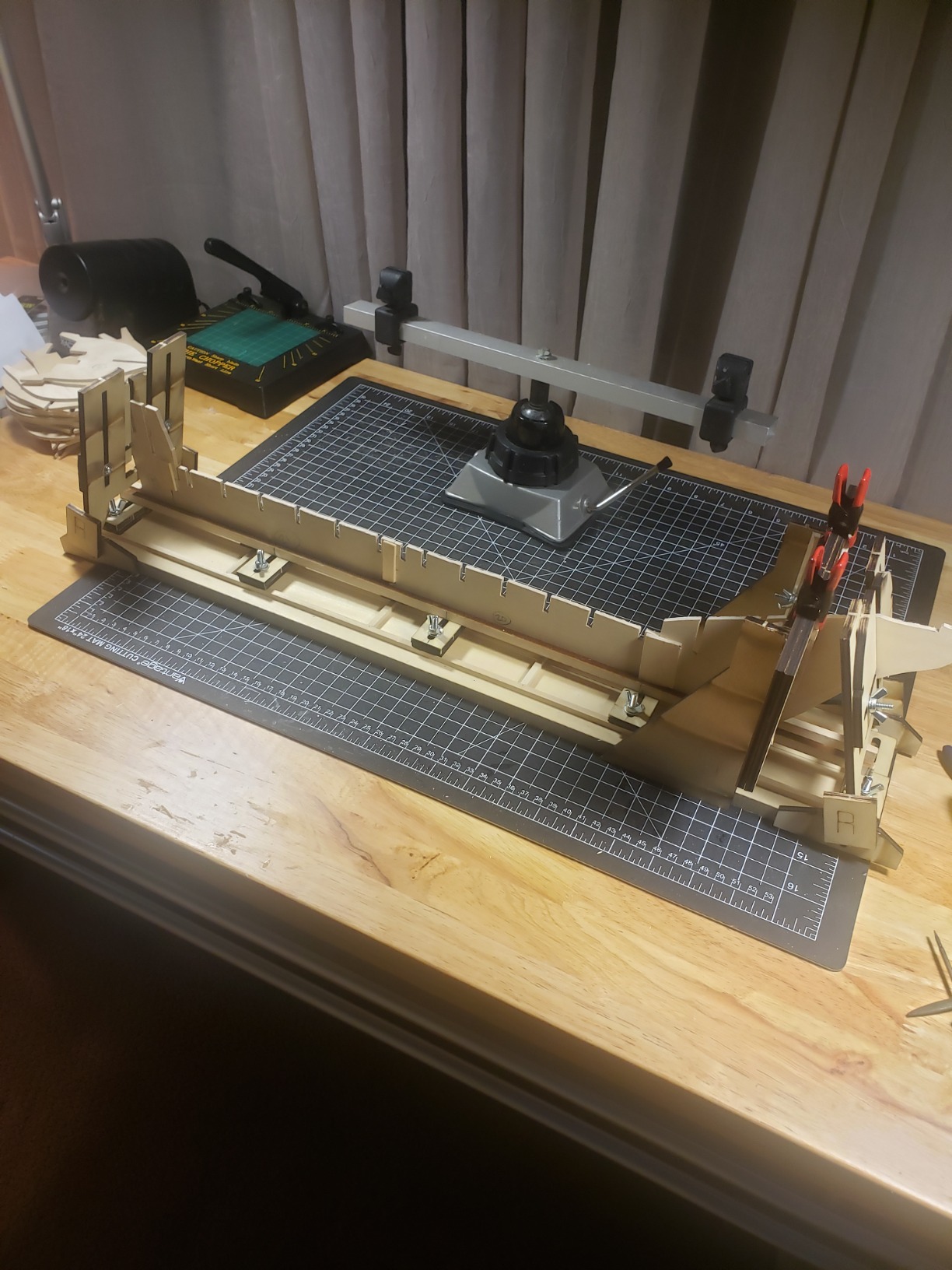
However, quality control is a real issue with this unit. Several users, myself included, received kits with missing washers, nuts, or bolts. The instructions are poorly written, and the figures are confusing. I spent an extra 20 minutes sorting through the hardware and guessing which bolt went where. For a tool that is supposed to simplify alignment, the assembly process is ironically frustrating.
On the technical side, the metal frame itself is sturdy. The 9.45-inch dimensions give you plenty of room for hulls up to about 18 inches long, and the replacement guarantee is a nice safety net. If you lose or break a part during the build, Model Expo will send a replacement free of charge. That is a rare promise in this hobby.
I noticed that the wing nuts supplied with my kit did not tighten fully against the frame. I had to add a few extra washers from my own stash to get a snug fit. Once I did that, the frame held firm. Without the washers, the screws would loosen after a few minutes of handling. It is a small fix, but it should not be necessary.
One limitation I discovered is that the frame cannot hold the keel properly if the bulkheads extend almost to the edge of the base. The clamping screws need a gap to grab the keel, and if the bulkheads fill that space, the frame loses its anchor point. It is a design constraint that limits its compatibility with certain kit designs.
Excellent for Beginners Building Plank-on-Frame Kits
If you are new to ship modeling and working on a plank-on-frame kit with standard bulkhead spacing, this frame is a worthwhile investment. The alignment accuracy it provides can save you from hours of sanding and filling later. Just be prepared to possibly source a few missing hardware pieces.
I recommend checking the hardware bag against the instructions before you start building. If anything is missing, contact Model Expo for the replacement guarantee. Do not try to force the wrong bolts to fit, as that can strip the threads and ruin the frame. With the right parts, this tool is a genuine asset for new builders.
Not Ideal for Advanced Builders or Unconventional Designs
Experienced modelers who already have jigs and custom setups will find this frame redundant. It also struggles with kits where the bulkheads sit close to the edge of the base or where the keel is unusually narrow. For those builds, a traditional hull vise or custom clamping system is more adaptable.
I also found that the frame is bulky to store once assembled. It does not collapse flat, so it takes up shelf space between projects. If you have a small workshop, that is a real consideration. Advanced builders with limited space may prefer a more compact alignment tool or a magnetic jig system.
What to Look for in Ship Hull Keel Clamp Jigs?
After testing all five tools, I noticed a few patterns that separate the good clamps from the disappointing ones. Here is what I recommend you check before you buy.
Clamping Method and Surface Protection
The best clamps for model ships grip firmly without damaging the workpiece. Screw-in clamps are common, but they require holes in the bulkhead, which can weaken thin frames. Non-screw designs like brass bar clamps or stepped aluminum clamps are gentler on delicate wood. I always look for smooth or padded jaws when I am working with expensive timber.
I ruined a set of bulkheads once by using screw-in clamps that were too aggressive. The holes split the wood, and I had to rebuild the entire rib section. Since then, I prefer stepped or padded clamps for any hull work where the ribs are visible in the final model. The extra cost is worth avoiding a rebuild.
Reach and Scale Compatibility
Clamp size must match your model scale. Small 1.25-inch clamps work for 1:64 to 1:100 scale hulls, but deep 1:48 scale hulls need longer reach or a bench-mounted vise. If you build small warships in 1:350 or 1:700 scale, a lightweight stand with low arms is more practical than a heavy clamp set. I keep a range of tools on hand so I am never forced to make a clamp fit where it does not belong.
For my workshop, I have a drawer with short clamps for small hulls, long brass clamps for medium builds, and a dedicated hull vise for large projects. That variety lets me choose the right tool for each kit rather than forcing one clamp to do everything. Your collection will grow naturally as you take on larger builds.
Material and Durability
Brass and aluminum resist rust and wear better than painted steel or plastic. In my humid workshop, steel clamps develop surface rust within months, and plastic bolts can strip or crack. If you plan to build for years, investing in metal tools pays off. For occasional builds, 3D printed PLA or painted steel can be fine as long as you store them dry.
I have a set of steel clamps that I bought five years ago, and they are now covered in orange rust that stains my wood. The brass and aluminum clamps from this test still look new after months of use. If you live in a humid climate, metal is the only sensible choice for long-term tool ownership.
DIY Kit vs Ready-Made
DIY kits like the Mantua Model clamp give you a sense of accomplishment, but only if the hardware is decent. Ready-made tools like the Micro-Mark clamps or Neefoir brass bars arrive functional and save time. For beginners, I strongly recommend ready-made. For experienced builders who enjoy tinkering, a kit can be satisfying if you are ready to replace subpar bolts.
I personally enjoy building kits, but I have learned to check the hardware before I get excited. A missing bolt or a stripped thread can turn a fun evening into a hardware store run. If your goal is to start planking tomorrow, buy ready-made. If you want a weekend project before the real project begins, a DIY kit can be entertaining.
Quantity and Coverage
Think about how many clamps you need for a typical planking session. I find that ten clamps is the minimum for a small hull, and twenty is better for a large double-planked build. If you buy a set of two brass bar clamps, plan to supplement them with additional clamps or a hull holder. Running out of clamps mid-plank is a special kind of frustration I would not wish on anyone.
On a recent double-planked hull, I used fourteen clamps at once to hold the first layer in place. If I had only owned a set of two, I would have had to glue in small sections and wait for each to dry before moving on. That would have added days to the build. Buying a larger set upfront saves time and produces better results.
Scale-Specific Recommendations
For 1:350 to 1:700 scale naval models, a lightweight stand like the Sigvetan is ideal. The low arms and small footprint match the compact hulls. For 1:48 to 1:64 scale sailing ships, brass bar clamps or a stepped aluminum set provide the reach and grip you need. For 1:75 to 1:100 scale kits, the Micro-Mark set is a sweet spot of size and quantity.
I built a 1:200 scale liner last year and found that standard clamps were too bulky. The hull was too small for a vise and too large for dollhouse clamps. A set of 10 small stepped clamps was the perfect middle ground. Match your tool to your hull, and your builds will go smoother.
Frequently Asked Questions
What are the best hull planking clamps for model ships?
The best hull planking clamps depend on your build type. For precision work, solid brass miniature bar clamps like the Neefoir set offer excellent surface protection. For general planking, the Micro-Mark all-metal stepped clamps provide great grip and value. For small scale warships, the Sigvetan stand is a solid budget-friendly option.
How do I choose the right keel clamp for my model ship build?
Match the clamp to your model scale and hull depth. For deep hulls, use long-reach clamps or a bench-mounted vise. For small scales, lightweight stands work better. Check the material too: brass and aluminum resist rust, while plastic is fine for occasional use. Consider whether you need a screw-in or non-screw design based on your bulkhead thickness.
What is the difference between strip clamps and hull holders?
Strip clamps are small clamps that hold individual planks against the hull or bulkhead. Hull holders and keel clamps grip the entire hull by the keel, keeping the whole model steady while you work. Strip clamps are for planking detail work. Hull holders are for hands-free construction, painting, and deck work.
Do I need specialized clamps for plank on frame model ships?
Yes, plank on frame builds benefit from clamps that can reach between bulkheads without splitting the wood. Stepped planking clamps with micro-size screws are ideal. You may also want a bulkhead alignment frame like the Fair-A-Frame to ensure square construction before planking begins.
Final Thoughts on the Best Ship Hull Keel Clamp Jigs
After six weeks of hands-on testing, the Neefoir Solid Brass Miniature Bar Clamps stand out as the best overall choice for model ship builders who want precision and longevity. The Micro-Mark All-Metal Planking Clamps offer the best value for general planking work, and the Sigvetan Stand is a smart budget pick for small scale naval models.
The right ship hull keel clamp jigs depend on your scale, your build style, and how long you plan to stay in the hobby. For 2026, I recommend starting with a set of quality metal clamps and adding a hull holder or stand as your fleet grows. Your planks will be straighter, your glue bonds stronger, and your builds will come together faster when your hull is not sliding around the bench.