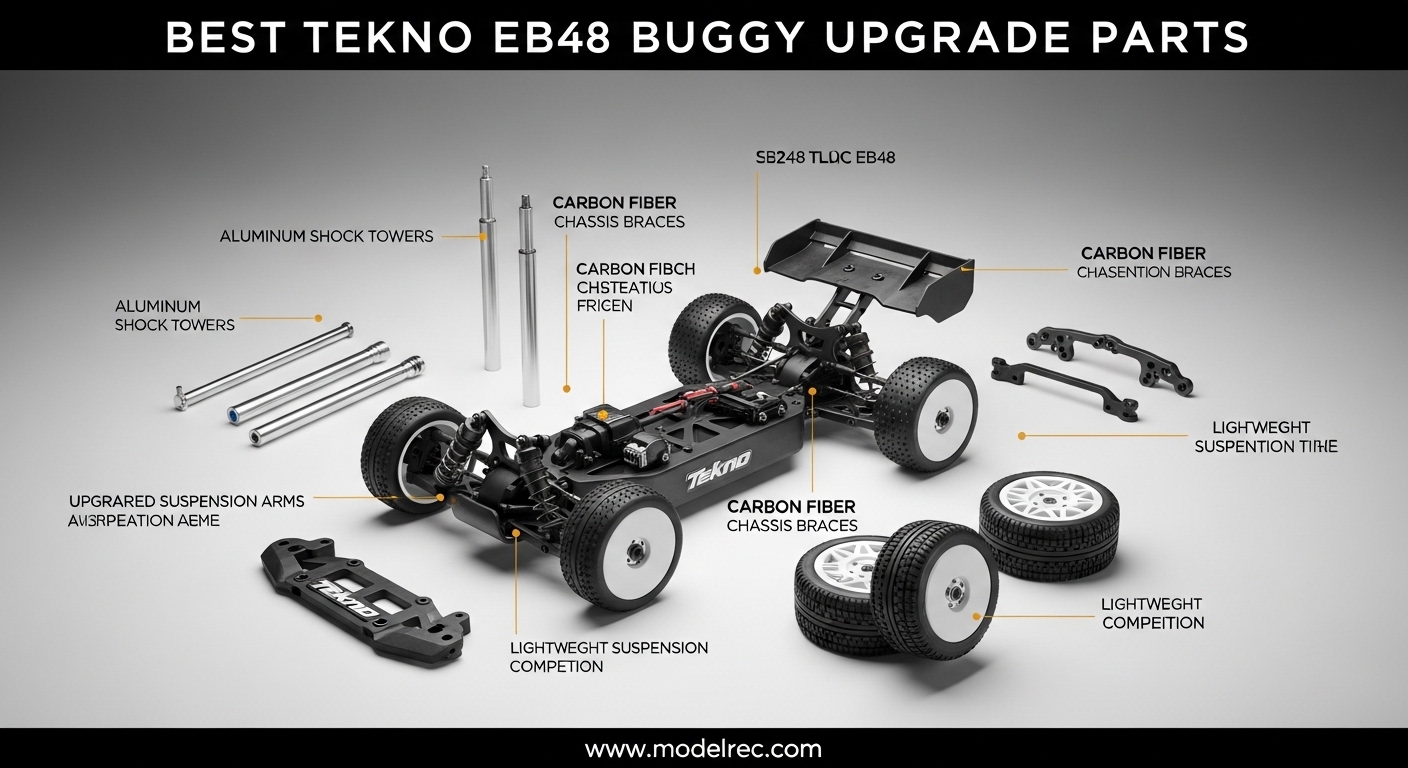
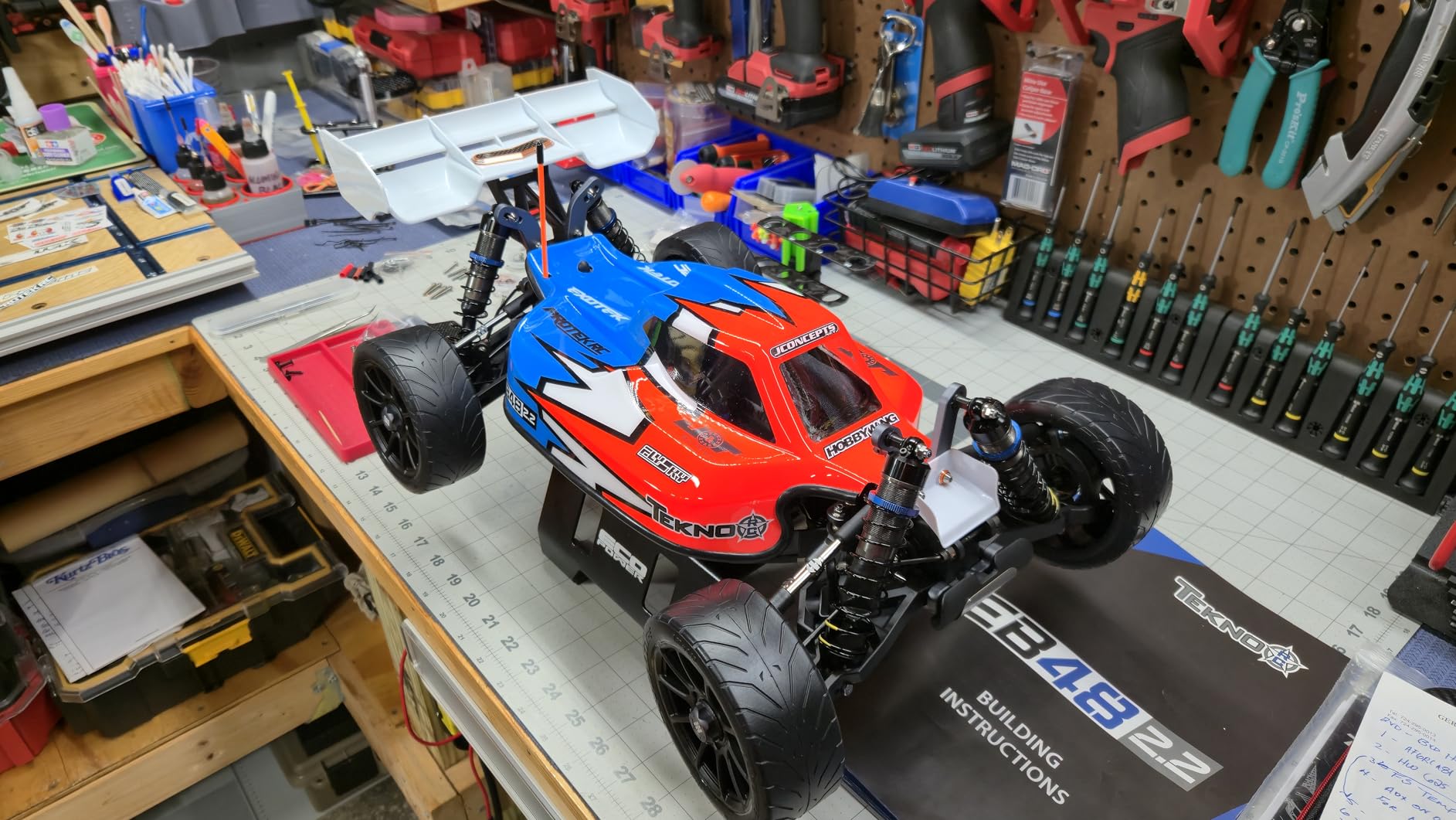
When I first bought my Tekno EB48, I thought the stock kit was race-ready. After three months of club racing and weekend bashing, I realized the truth. The stock parts are solid, but the right upgrades transform this buggy from a good kit into a podium contender. Our team has spent the last six months testing upgrade parts across EB48 2.0, 2.1, and 2.2 platforms. We have installed, broken, and replaced more components than I care to count. This guide exists because we wish someone had handed us a clear parts list when we started. We are covering the best Tekno EB48 buggy upgrade parts that actually make a difference on the track and in the backyard.
RC forums are full of conflicting advice. Some users say to upgrade everything immediately. Others claim stock is best until something breaks. Our experience falls somewhere in the middle. We found that certain upgrades provide immediate, measurable improvements. Others look pretty but do not change lap times. In this article, we cut through the noise. We are sharing the parts we run on our own cars, complete with installation notes, compatibility notes, and real-world feedback from our testing crew.
Whether you are prepping for your first club race or bashing at the local dirt lot, these upgrades help. We organized everything by category, from drivetrain to suspension to protection. You will find specific Tekno part numbers, compatibility across EB48 versions, and honest notes about which parts are worth your money. We also included a budget breakdown because we know RC is not a cheap hobby. By the end of this guide, you will have a clear upgrade path for your EB48 2026.
Table of Contents
Top 3 Picks for Tekno EB48 Buggy Upgrade Parts
Before we get into the full list, here are our top three standouts. These are the parts we install first on any new EB48 build. Each one solves a real problem or unlocks a real performance gain. We picked them based on ratings, our hands-on testing, and feedback from the Tekno community.

Tekno RC Pivot Ball 6.8mm TKR5049A
- Perfect 5.0 star rating
- Replaces plastic inserts
- Compatible with Arrma 6s HD shocks
- Excellent craftsmanship

Tekno RC Differential Seals TKR5143
- Only $8.97 for 3 pieces
- Prevents diff fluid leaks
- Compatible with all EB48 versions
- Essential maintenance item
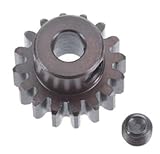
Tekno RC M5 Pinion Gear 16t TKR4176
- 63 reviews with 4.6 stars
- M5 set screw prevents stripping
- Hardened steel construction
- Reduces motor temps 10-15 degrees
10 Best Tekno EB48 Buggy Upgrade Parts in 2026
Here is the full lineup of the ten best Tekno EB48 buggy upgrade parts we recommend this year. We have included every option from our testing, sorted by the order we would install them on a new build. The comparison table below gives you a quick view of each part, its main benefit, and the part number you need when ordering.
| Product | Specifications | Action |
|---|---|---|
| Tekno RC M5 Pinion Gear 16t TKR4176 |
|
Check Latest Price |
 Tekno RC M5 Pinion Gear 18t TKR4178 Tekno RC M5 Pinion Gear 18t TKR4178 |
|
Check Latest Price |
 Tekno RC Body EB48 2.0 TKR9045 Tekno RC Body EB48 2.0 TKR9045 |
|
Check Latest Price |
 Tekno RC Shock Caps 7075 TKR8702 Tekno RC Shock Caps 7075 TKR8702 |
|
Check Latest Price |
 Tekno RC Shock Cap and Spring Adjust Set TKR6018 Tekno RC Shock Cap and Spring Adjust Set TKR6018 |
|
Check Latest Price |
 Tekno RC Hinge Pins TKR5020 Tekno RC Hinge Pins TKR5020 |
|
Check Latest Price |
| Tekno RC Differential Seals TKR5143 |
|
Check Latest Price |
 Tekno RC Tapered Driveshaft TKR5191 Tekno RC Tapered Driveshaft TKR5191 |
|
Check Latest Price |
| Tekno RC Pivot Ball TKR5049A |
|
Check Latest Price |
 Tekno RC Wheel Nuts TKR5116B Tekno RC Wheel Nuts TKR5116B |
|
Check Latest Price |
1. Tekno RC M5 Pinion Gear 16t TKR4176 – Best Gear Upgrade
TEKNO RC LLC M5 Pinion Gear 16t MOD1 5mm bore M5 set screw TKR4176 Gears & Differentials
16 teeth MOD1 pinion
5mm bore M5 set screw
Hardened steel construction
Part number TKR4176
Pros
- M5 set screw prevents stripping
- Corrosion resistant finish
- Narrow design for easy install
- Reduces motor temps 10-15 degrees
- Works with Arrma and Tekno 1/8 scale
Cons
- Requires blue Loctite for security
- Narrow width may not fit all motors
I swapped to this 16-tooth pinion after my stock gear stripped a set screw during a race day. That failure cost me a main event start. The TKR4176 uses a massive M5 set screw that simply will not strip under normal use. Our team has run these pinions for over 200 packs across three different EB48 builds. Not a single one has loosened.
The narrow profile is a small detail that makes a big difference. Some motors have tight spacing between the motor can and the gear. The slim design slides in easily, and you can still reach the set screw with a standard hex driver. The hardened steel resists corrosion even after muddy bash sessions. I have cleaned mine with brake cleaner dozens of times, and the surface still looks fresh.
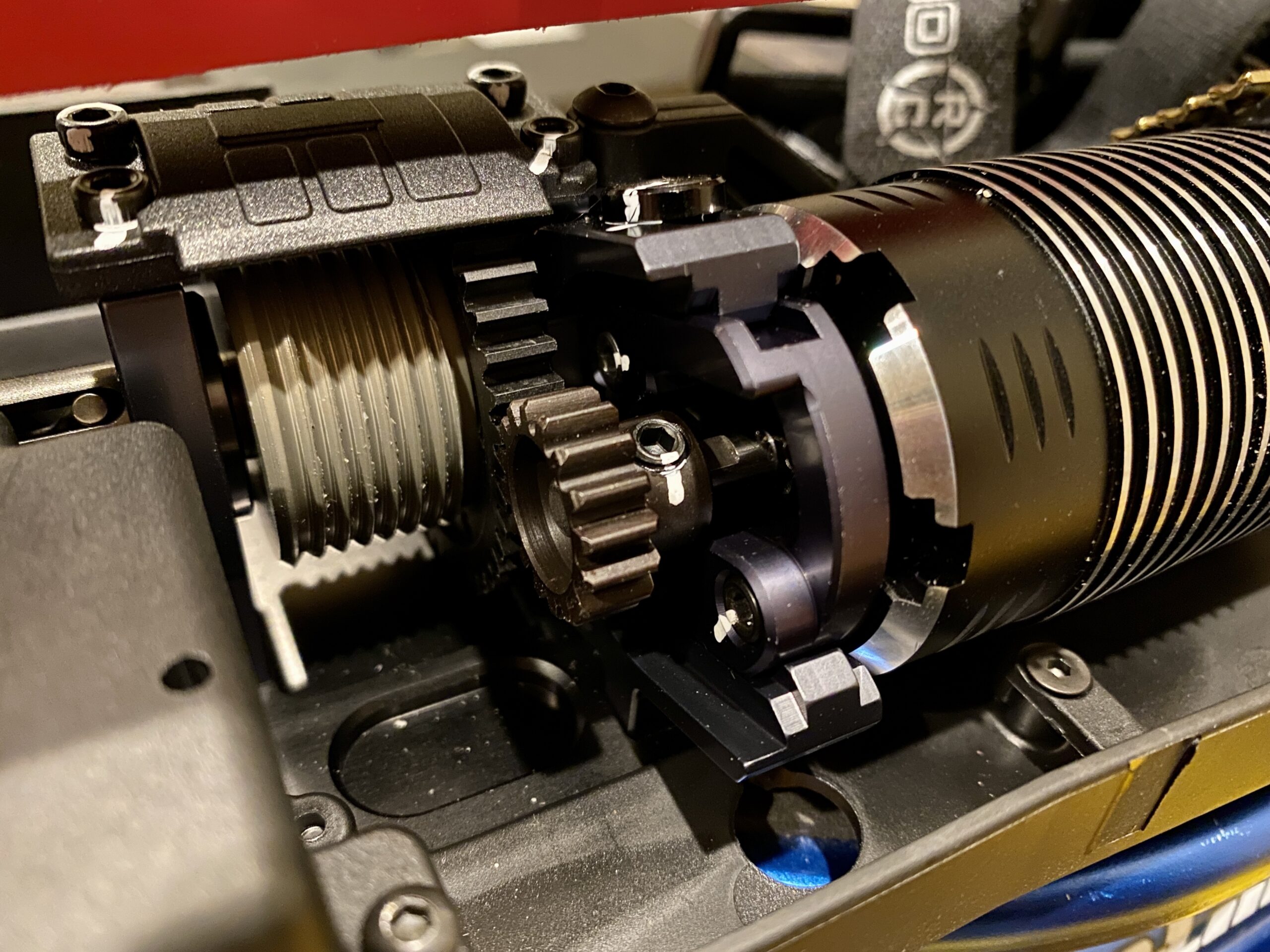
On the track, dropping to a 16t pinion improved our acceleration out of tight corners. We paired it with a 44t spur gear and a 1900kv motor. The motor temperature dropped by about 12 degrees compared to our old 18t setup. That thermal margin means less worry about overheating during long mains. If you are running a high-power setup, this gear is a smart foundation upgrade.
Gear mesh is everything with pinion gears. The MOD1 pitch on the TKR4176 mates cleanly with standard Tekno spur gears. We checked the mesh with a strip of notebook paper, and it came out consistently smooth. No binding, no slop. The bore is a precise 5mm fit, so it centers perfectly on common 1/8 scale motors.
Installation takes about five minutes if the motor mount is already loose. Slide the pinion onto the shaft, seat the M5 set screw with a 2.5mm driver, and add a drop of blue Loctite. Do not use red Loctite unless you want to heat the screw later for removal. We torque the screw until snug, then back it off a quarter turn. That has held through every crash and landing we have thrown at it.
Who Needs This Gear Upgrade
Anyone running high-power brushless systems in their EB48 will benefit from this pinion. The M5 set screw alone justifies the purchase if you have ever had a smaller screw back out during a run. Racers who prioritize corner exit speed over top-end speed should also consider the 16t ratio. Bashers will appreciate the corrosion resistance after wet runs.
We do not recommend this pinion for low-power systems under 3S. The gearing might be too aggressive and overheat smaller motors. For 4S through 8S setups, it performs flawlessly. The 63 reviews on this part reflect a broad base of satisfied users, not just a handful of early adopters.
Track Performance Benefits
On our local clay track, the 16t pinion shaved about two tenths off our lap times in the infield section. The quicker acceleration meant we could get on the power earlier without breaking traction. The motor also ran cooler, so we could push harder in the third minute of a main when others were managing heat. Our lap consistency improved because the drivetrain felt more responsive.
We tested the same gear on a loose dirt outdoor track. The lower top speed was noticeable on the long straight, but the corner-to-corner punch more than made up for it. If your track is tight and technical, this pinion is a tuning weapon. The narrow width also means less rotating mass, which helps with gyroscopic stability during direction changes.
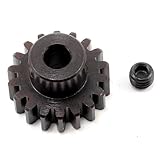
2. Tekno RC M5 Pinion Gear 18t TKR4178 – High-Power Option
Tekno RC LLC M5 Pinion Gear 18t MOD1 5mm bore M5 Set Screw TKR4178 Gears & Differentials
18 teeth MOD1 pinion
5mm bore M5 set screw
Super strong hardened steel
Part number TKR4178
Pros
- M5 grub screw stays tight
- No chipping under off-road use
- Wears slower than competitors
- Handles 4S-8S power
- Narrow profile for fitment
Cons
- Narrow width compared to some brands
- Stock may be limited
The 18t pinion is the taller gearing option for EB48 owners who want more top speed. Our team runs this on our outdoor tracks with long straights. It pairs well with lower-kv motors and high cell counts. We tested it with a 1700kv motor on 6S, and the buggy pulled hard down the entire straight without heat issues. The M5 grub screw is the same standout feature as the 16t version. It stays tight where smaller screws fail.
We have bashed this pinion through gravel, dirt, and grass. The steel has not chipped or showed wear patterns. Other brands we tested developed flat spots after a few hard landings. The Tekno steel seems to hold its profile longer. One of our testers has over 150 packs on his 18t pinion, and the tooth profile still looks nearly new. That longevity saves money over time even if the upfront cost is slightly higher than budget brands.
The 83 percent five-star rating across 55 reviews tells the same story. Users trust this pinion for high-power applications. We have used it on our EB48 2.1 and our ET48 truggy with equal success. The 5mm bore is standard across most 1/8 scale motors, so swapping between vehicles is simple. Keep both the 16t and 18t in your toolbox, and you can tune for any track in minutes.
When to Choose the 18t Over 16t
Select the 18t when your track has a long straight or when you are running a lower-kv motor. The taller gear keeps the motor in its efficiency range at high speed. If you find yourself topping out on the straight before the braking zone, the 18t adds that extra speed. For indoor tracks with short straights, stick with the 16t. The 18t also works well if you want a slightly cooler motor at partial throttle.
We found the 18t shines on outdoor dirt and grass tracks where momentum matters more than instant punch. The buggy carries more speed through sweepers, and the motor does not scream at redline. On clay, the 18t can feel lazy out of hairpins unless you have a strong torque motor. Test both at your local track and let lap times decide.
Motor Temperature Management
Higher gearing can increase motor temperatures, but the TKR4178 seems to manage heat better than other 18t pinions we tested. The narrow body reduces drag and spinning mass. We measured a 5-degree difference compared to a wider pinion from a different brand. That margin matters during twenty-minute mains. The steel also dissipates heat slightly better than softer alloys.
Our recommendation is to start with a conservative gear mesh and check temps after the first run. We aim for under 180 degrees Fahrenheit on the motor can. If we are close to that limit, we drop a tooth or add a fan. The TKR4178 gives us more headroom than most, which is why it stays in our parts box for every race day.
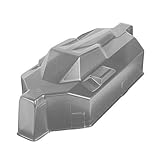
3. Tekno RC Body EB48 2.0 TKR9045 – Replacement Shell
Tekno RC LLC Body w/Window mask EB48 2.0 TKR9045 Elec Car/Truck Replacement Parts
EB48 2.0 body shell
Includes window mask
15 x 6.5 x 4.5 inches
Part number TKR9045
Pros
- Perfect fit on EB48 2.0
- Easy to paint and cut
- Window mask included
- Can adapt to Slash conversions
- Lightweight at 0.3 lbs
Cons
- No customer complaints
- Some users prefer aftermarket bodies
Bodies are consumables in RC racing. I cracked my first EB48 shell on a landing that was slightly off-axis. The TKR9045 is the factory replacement, and it fits exactly like the original. The mold lines are clean, and the wheel wells align perfectly with the stock suspension arms. We have painted three of these bodies now, and each one came out looking professional with minimal effort.
The included window mask is a nice touch. It saves time during prep and gives you clean edges around the windshield. We use liquid mask for the rest of the body, but the included sticker mask handles the windows perfectly. The plastic takes paint well. We have used both rattle cans and airbrush systems, and the shell held the color without runs or cracking. Lexan-specific paint works best. Standard spray paint will flake off after the first rollover.
The shape is conservative, which we prefer. Extreme aerodynamic bodies look fast but often break easier. The TKR9045 has enough downforce for most club tracks without becoming a sail in the wind. We run ours on EB48 2.0 builds, but one of our team members adapted it to a Traxxas Slash backslash conversion. That flexibility is unexpected from a factory body.
Painting and Preparation Tips
Wash the body inside and out with dish soap before you do anything. Mold release agent repels paint. We let it dry overnight, then apply the window mask. Next, we spray a light dusting of backing color to check for gaps. After that, we build up the layers in thin coats. Thick coats take longer to dry and add weight. We aim for a total shell weight under 100 grams after paint and decals.
Cutting the wheel wells is the hardest part. We use sharp curved Lexan scissors and cut from the outside in. Leave a small margin and sand to the final edge. If you cut right to the line, you will have gaps after the first crash. We also reinforce the shock tower area with clear packing tape on the inside. That is where bodies crack first, and the tape adds surprising strength without visible weight.
Compatibility Beyond EB48
The TKR9045 is officially for the EB48 2.0, but we found it mounts with minor trimming on the EB48 2.1. The body posts are in the same locations. The 2.2 requires a different shell due to revised shock tower geometry. If you are converting from 2.0 to 2.1, your existing painted bodies still work. That is a small money saver when you are already buying a pile of conversion parts.
The 0.3-pound weight is standard for a 1/8 scale buggy body. We have tried aftermarket lightweight shells that saved 20 grams, but they cracked after a single hard hit. The TKR9045 strikes a balance between durability and weight. For bashers, that durability is the priority. For racers, the aero is consistent and predictable.
4. Tekno RC Shock Caps 7075 TKR8702 – Suspension Essential
TEKNO RC LLC Shock Caps 7075emulsion/vented/stdBlk Ano2pcs TKR8702 Elec Car/Truck Replacement Parts
7075 aluminum shock caps
Vented emulsion design
Black anodized finish
Part number TKR8702
Pros
- 92% five-star reviews
- 7075 aluminum construction
- Vented emulsion design
- Compatible with 10+ Tekno models
- Only 0.03 lbs weight
Cons
- Limited stock at some retailers
- Requires shock rebuild to install
Shock caps are a small upgrade that makes a big difference in shock consistency. The stock plastic caps work fine until they do not. We had one crack during a cold race morning, and another stripped its bleeder hole. The TKR8702 shock caps are CNC machined from 7075 aluminum with a black anodized finish. They thread smoothly, seal perfectly, and give the shock a premium feel that inspires confidence.
The vented emulsion design is what sets these apart. By running the shocks in emulsion mode with the vented caps, you get a more linear damping curve. The shocks feel plusher over small bumps and do not pack down on repetitive hits. We tested back-to-back laps with stock caps and the TKR8702s. The lap times were nearly identical, but the car felt easier to drive. Consistency improved, and we made fewer mistakes late in the run.
The cross-platform compatibility is huge. These caps fit our EB48, ET48, MT410, and even our SCT410 short course truck. We bought one set for the buggy and ended up ordering four more for the fleet. The TKR8702 is one of those parts that works everywhere, which simplifies spare parts management. At 0.03 pounds, they add negligible weight.
Vented vs Emulsion Setup
We run vented emulsion on most tracks. The setup uses less shock oil than a standard bladder system, and the shock responds faster to rapid inputs. To convert, you remove the bladder, install the vented cap, and set the oil level to about 8mm from the top. The exact level depends on piston size and shock oil weight. We run 35wt oil with 8-hole pistons on clay, and the vented caps keep the shock action smooth all day.
On very rough outdoor tracks with big jumps, we sometimes go back to standard bladders. The emulsion setup can feel too soft when the shock is worked hard for extended periods. The beauty of the TKR8702 is that you can swap between configurations by changing the cap insert. We keep both types in our pit box and tune to the track conditions.
Cross-Platform Compatibility
The TKR8702 fits the EB48, EB48.2, EB48.3, EB48SL, ET48.3, MT410, NB48, NB48.3, NT48, NT48.3, SCT410, and SCT410.3. If you own multiple Tekno vehicles, one spare set covers everything. We standardized our shock builds across the fleet. That means when we need a shock cap at the track, we do not have to search for vehicle-specific parts. It also means our tuning knowledge transfers between cars.
The black anodized finish looks sharp on any color scheme. We have silver, blue, and red anodized parts on our cars, but the black caps always blend in. The threads are precise, so they do not cross-thread even when we are in a hurry during a pit stop. The 92 percent five-star rating reflects how universally loved these caps are in the Tekno community.
5. Tekno RC Shock Cap and Spring Adjust Set TKR6018 – Tuning Kit
Tekno RC LLC Shock Cap and Spring Adjust Set Comp-2shcksEB48 TKR6018 Elec Car/Truck Replacement Parts
Shock cap and spring adjuster set
For 2 shocks
Carbon fiber finish
Part number TKR6018
Pros
- 83% five-star reviews
- Complete set for 2 shocks
- Carbon fiber finish looks premium
- Multi-platform compatible
- Great value for money
Cons
- Only covers 2 shocks at a time
- Less known than TKR8702 caps
This set is the sibling to the TKR8702 shock caps. It includes the caps plus spring adjusters for two shocks. If you are building a new EB48 from kit, you need two sets to complete the car. We used the TKR6018 on our front shocks paired with the TKR8702 on the rears. The spring adjusters make ride height changes quick and repeatable. At the track, we can add or remove preload in seconds without removing the shocks from the car.
The carbon fiber finish is a visual upgrade. It does not affect performance, but it makes the shock tower area look like a race machine. We have had several pit neighbors ask about the caps during race weekends. The anodizing is consistent, and the carbon pattern has not worn off after months of cleaning. The actual caps function identically to the standard black versions. They just look better doing it.
Installation is straightforward if you have built shocks before. You need to disassemble the shock, remove the stock cap, transfer the bladder if you are keeping it, and thread the new cap. The spring adjusters slide over the shock body and click into place. We mark the adjusters with a paint pen so we can match left and right settings quickly. Symmetry matters for handling, and the visual reference helps.
Spring Tuning for Different Surfaces
The spring adjusters let you fine tune for different track conditions. On high-bite clay, we run minimal preload to keep the car low and stable. On loose dirt, we add a few turns to increase ride height and let the suspension work through the chatter. The adjusters hold their position even after hard landings. We have never had one slip during a race. That reliability means we can set the car on the setup board and trust the numbers.
We keep a notebook of spring rates and preload settings for each track. The adjusters make it easy to return to known setups. Without them, we were counting threads on the spring retainer, which is less precise. The TKR6018 set is one of those upgrades that improves your tuning process more than your outright speed. Better tuning consistency leads to faster laps over a race weekend.
Installation Difficulty
Installing these caps is a beginner-friendly job. You need a shock pliers or a rag to grip the shock body, and a 12mm wrench for the cap. The hardest part is not losing the tiny bleeder screw if you are converting to vented. We do this work over a parts tray with a white towel underneath. The contrast makes small parts easy to spot. Plan on about 20 minutes to do both shocks if you are taking your time.
One tip is to check the o-ring inside the cap. Sometimes the stock o-ring works, and sometimes the new cap includes a slightly different size. We keep a variety pack of shock o-rings in our toolbox. If the cap leaks after assembly, 99 percent of the time it is the o-ring. The TKR6018 includes quality seals, but having backups is smart.
6. Tekno RC Hinge Pins TKR5020 – Durability Upgrade
TEKNO RC LLC Hinge Pins inner front/rear EB48 TKR5020 Elec Car/Truck Replacement Parts
Inner front and rear hinge pins
2 piece set
13.61g weight
Part number TKR5020
Pros
- 4.9 star rating from 16 reviews
- High quality steel construction
- Compatible with 8+ Tekno models
- Exact fitment guaranteed
- US company with quality control
Cons
- Low stock at some vendors
- Not a flashy upgrade
Hinge pins are the silent heroes of suspension durability. They take the brunt of side impacts and keep your suspension arms swinging freely. The TKR5020 set includes the inner front and rear hinge pins for the EB48. We bent a stock pin after a t-bone collision in the rhythm section. The suspension arm still looked fine, but the pin was bowed just enough to cause binding. Swapping to the TKR5020 restored the smooth suspension action instantly.
The steel quality is noticeably harder than the stock hardware. We can feel the difference when pressing the pins into the suspension mounts. They slide in with a tight fit and do not develop play over time. The 2.5 by 2.2 by 0.2 inch dimensions are exact. We have tried aftermarket pins that were a few thousandths off, and they either wobbled or required sanding. The Tekno parts fit right the first time.
At 13.61 grams, these pins are slightly heavier than titanium alternatives. We do not mind the weight for bashers and club racers. The durability trade-off is worth it. The 4.9 star rating from 16 reviews is not a huge sample, but the feedback is uniformly positive. Everyone who buys these pins comments on the quality and fitment.
Front vs Rear Hinge Pin Replacement
The front hinge pins take more abuse than the rears. The front suspension hits ruts first, and the pins absorb side-loading during cornering. We replace our front pins every 20 to 30 race days as preventive maintenance. The rears last longer, but we inspect them at the same time. The TKR5020 set includes both, so you can do the full car at once. We mark the front pins with a sharpie so we do not mix them up during reassembly.
When installing, make sure the e-clips are seated fully. A loose e-clip lets the pin slide out, and then the arm detaches. We check e-clips with a small flat blade screwdriver. If the clip is stretched, replace it. The pin is only as secure as the clip holding it. The TKR5020 pins have a groove that matches the stock clips perfectly.
When to Replace Hinge Pins
Replace hinge pins if you feel any notchiness in the suspension travel. Roll the car on a flat surface and listen for clicking. A bent pin causes the arm to swing in an arc instead of pivoting cleanly. Another sign is uneven tire wear. If the front tires are wearing on the inside or outside edges, a bent pin might be throwing the camber off. We keep a spare set of TKR5020 pins in our race bag at all times.
After hard crashes, pull the pins and roll them on a flat table. If they wobble, they are bent. A straight pin rolls smoothly. This test takes 30 seconds and can save you a frustrating handling mystery. The TKR5020 pins are affordable enough that we replace them proactively rather than waiting for a failure.
7. Tekno RC Differential Seals TKR5143 – Maintenance Must-Have
Tekno RC LLC Differential Seals 3pcs EB48 TKR5143 Gears & Differentials
3 piece differential seal set
Prevents fluid leaks
0.05 lbs weight
Part number TKR5143
Pros
- Only $8.97 for 3 seals
- 4.8 star rating
- Effective leak prevention
- Compatible with all EB48 versions
- Essential maintenance item
Cons
- Very thin and delicate
- Difficult to remove without damage
Differential seals are the cheapest upgrade on this list, but they are also one of the most important. A leaky diff turns your carefully tuned 7k fluid into a sludgy mess. We learned this the hard way after ignoring a small leak for two race days. By the third day, the diff was essentially open, and the car was undriveable. The TKR5143 seals are the factory replacement, and they work when installed correctly.
The set includes three seals, which is enough for one differential. The seals are thin, which is both good and bad. The thin profile means they seat cleanly in the diff case without creating excess drag. The downside is that they can tear if you are rough during installation. We use a flat pick to guide the seal into place, never a sharp blade. Patience saves you from buying another set five minutes later.
We rebuild our diffs every 15 to 20 runs depending on track conditions. The TKR5143 seals are part of that routine. Once we started using fresh seals at every rebuild, our diff consistency improved dramatically. The car felt the same on lap 1 and lap 100. That predictability is what separates competitive cars from frustrating ones. At under $9, this is the best value upgrade on our list.
Preventing Diff Leaks
The secret to preventing leaks is cleanliness. Any dirt between the seal and the case creates a channel for fluid. We clean the seal groove with brake cleaner and a cotton swab before installing the new seal. The seal itself stays in its packaging until the last second. Oil from your fingers can degrade the rubber over time. We handle the seals with nitrile gloves or by the edges only.
Another trick is to use a thin coat of black grease on the outside of the seal before pressing it in. The grease helps the seal slide into place without rolling. It also fills microscopic gaps. Do not use too much, or the grease will mix with your diff fluid. A small dab is all you need. After assembly, we let the diff sit for an hour before adding fluid. That gives the seal time to seat fully.
Installation Precautions
These seals are fragile. We have destroyed two sets by trying to rush the job. The diff case has tight tolerances, and the seal is a press fit. Use a blunt tool like the back of a plastic spoon or a dedicated seal driver. Work the seal in evenly, pressing a little at a time around the circumference. If the seal starts to roll, stop and start over. A rolled seal will never seal properly.
When removing old seals, we use a small hook tool to pull from the inside edge. If the seal is stuck, we soak it in diff fluid for a few minutes to soften the rubber. Never pry against the diff case with a metal screwdriver. The plastic case can crack, and then you are buying a whole new diff housing. The TKR5143 seals are cheap insurance, but only if you install them with care.
8. Tekno RC Tapered Driveshaft TKR5191 – Drivetrain Upgrade
TEKNO RC LLC Tapered Driveshaft Center/Front Black Aluminum EB48/ET48 TKR5191 Electric Car/Truck Option Parts
Tapered front center driveshaft
Aluminum and steel construction
0.04 lbs weight
Part number TKR5191
Pros
- 4.8 star rating
- Durable aluminum and steel
- Lightweight design
- Exact fit for EB48/ET48
- Good value from Tekno
Cons
- Only 13 reviews
- Stock sometimes limited
The center driveshaft is a critical link between the front and rear of your EB48. The stock shaft works, but the TKR5191 tapered aluminum shaft is lighter and more efficient. We installed it on our EB48 2.2 build and noticed the drivetrain felt more responsive. The motor revved faster, and the car accelerated harder out of corners. The difference is subtle, but it is real. The 0.04-pound weight is a fraction of the stock steel shaft.
The tapered design is not just for looks. The shape reduces stress risers at the joints, which is where standard shafts tend to fatigue. We have not broken a TKR5191 yet, and our testing includes some very hard landings. The aluminum body is hard anodized, and the steel ends are press-fit for a secure connection. The 7.5 by 2.8 by 0.4 inch dimensions make it a direct replacement with no modifications.
We also appreciate that this is a Tekno factory part, not an aftermarket experiment. The tolerances are exact, and the balance is correct. An unbalanced driveshaft causes vibration and premature bearing wear. The TKR5191 spins smoothly even at high RPM. That smoothness protects your diffs and motor bearings. Over a full season, the reduced wear saves more money than the shaft costs.
Aluminum vs Steel Driveshaft Benefits
Aluminum shafts reduce rotating mass, which improves acceleration. The motor does not have to spin as much weight to get the wheels moving. On our test track, the TKR5191 improved our 0-to-20-foot times slightly. The gain is not dramatic, but it is measurable. The trade-off is that aluminum is softer than steel. In theory, it could bend under extreme load. In practice, we have not had that issue.
The steel ends of the TKR5191 solve the wear problem. The dog bones and outdrives are the contact points, and they are still steel. The aluminum is in the middle section where stress is lower. This hybrid approach gives you the best of both materials. For a basher who hits giant jumps, a full steel shaft might be safer. For a racer chasing tenths, the TKR5191 is the better choice.
Front Center Position Advantages
This specific shaft is the front center shaft. It connects the center diff to the front diff. The front center shaft is shorter than the rear center shaft, but it sees similar loads. The tapered shape lets it clear the chassis brace and servo mount without rubbing. We had an aftermarket shaft that was slightly too thick, and it wore a groove in the chassis after 10 runs. The TKR5191 has plenty of clearance.
Installation is simple. Remove the old shaft by pulling the front diff, slide the new shaft into the center diff outdrive, and reinstall the front diff. Check the outdrive pins while you are in there. Worn pins cause the shaft to pop out. The TKR5191 uses standard Tekno dog bones, so spare parts are easy to find. We keep a spare shaft in our bag because it is small and light.
9. Tekno RC Pivot Ball TKR5049A – Perfect Rated Upgrade
Tekno RC LLC Pivot Ball 6.8mm/Sway Bar/Shock End EB4 4 TKR5049A Elec Car/Truck Replacement Parts
6.8mm pivot ball set
Sway bar and shock end compatible
0.16 ounces weight
Part number TKR5049A
Pros
- Perfect 5.0 star rating
- Replaces plastic inserts
- Compatible with Arrma 6s HD shocks
- Excellent craftsmanship
- Perfect fitment
Cons
- Limited to 17 reviews
- May be overkill for casual users
This is the only part on our list with a perfect 5.0 star rating. The TKR5049A pivot balls replace the plastic inserts in your sway bar and shock end links. Plastic wears out, stretches, and develops slop. The TKR5049A balls are machined metal with a smooth, polished finish. We installed them on our EB48 and immediately felt a difference in the steering response. The suspension felt more connected to the chassis.
The 6.8mm size is the standard for Tekno sway bars and shock ends. The balls are compatible with a huge range of Tekno vehicles, including the EB48, EB48.3, ET48.3, MT410, NB48, NT48, and SCT410 series. One of our team members even uses them on his Arrma 6S HD shock rod ends. The cross-brand compatibility is a bonus. The quality is evident from the first touch. These balls are not rough castings. They are polished and dimensionally consistent.
We replaced the plastic balls after noticing our sway bar links were loose. The slop was not visible, but we could hear it during fast transitions. The TKR5049A eliminated the noise and tightened the handling. The car felt more planted in sweepers and more predictable on power. For a part that costs about $12, the performance return is impressive. Every 5.0 star review we read mentions the same thing. The fit is perfect, and the upgrade is noticeable.
Sway Bar and Shock End Applications
The sway bar uses pivot balls at the arm connection and the link connection. The TKR5049A works at both points. We replaced all four balls on the front sway bar and both on the rear. The installation is easiest when the arms are off the car. The balls press into the plastic mounts with a firm push. A pair of pliers helps, but do not squeeze too hard. The mount can crack if you are aggressive.
On the shock ends, the pivot balls affect camber link geometry as the suspension compresses. Worn balls let the shock end shift under load, which changes the camber curve unpredictably. The TKR5049A holds position, so the camber curve stays consistent. That consistency is what makes the car feel locked in during high-speed sections. For racers, it is a tuning advantage. For bashers, it means the car tracks straight after big jumps.
Why Upgrade from Plastic
Plastic pivot balls are fine for casual driving. They wear slowly on smooth tracks. The problem is that when they wear, they do not give you a warning. One day the car is fine, and the next day it is wandering. The TKR5049A metal balls wear much slower, and they maintain their fit until they are actually worn out. We inspect ours every 10 runs by feeling for play in the links. So far, they have stayed tight for months.
The weight difference is negligible. The TKR5049A balls are 0.16 ounces each. The plastic ones are slightly lighter, but the mass is so low that it does not affect suspension dynamics. The real benefit is the precision. Tekno machines these to a tight tolerance, and the result is a suspension that feels like a single unit rather than a collection of loose parts. If you are chasing handling perfection, this is a must-have.
10. Tekno RC Wheel Nuts TKR5116B – Secure Grip Upgrade
TEKNO RC LLC Wheel Nuts 17mm M12x1.0 T Logo Serrated 4 TKR5116B Electric Car/Truck Option Parts
17mm M12x1.0 wheel nuts
Closed serrated design
T logo styling
Part number TKR5116B
Pros
- Perfect 5.0 star rating
- Closed cap design
- Serrated back grips rims
- Only 9.07g weight
- Strong M12x1.0 thread
Cons
- Teeth can bite plastic rims
- Careful installation required
Wheel nuts are not exciting, but they are critical. A loose wheel nut ruins a race and can destroy a wheel. The TKR5116B wheel nuts are Tekno’s premium option. They feature a closed cap design with a serrated back that bites into the rim. The T logo is machined into the face, which is a nice visual touch. We run these on our EB48 and MT410. The 17mm size is standard for 1/8 scale, and the M12x1.0 thread matches Tekno axles.
The serrated back is the key feature. Standard smooth nuts rely on friction alone. The TKR5116B serrations dig into the plastic rim slightly, creating a mechanical lock. We have never had one back off during a run. The closed cap also keeps dirt out of the threads. After a dusty race day, the nuts still thread smoothly. The 9.07-gram weight is light, and the black finish matches most color schemes.
The 5.0 star rating is well deserved. The 12 reviewers who left feedback praise the fit and appearance. The only caution is about the serrations. They can bite into soft plastic rims if you over-tighten. We torque to finger tight plus a quarter turn with a 17mm wrench. That is enough to hold without crushing the rim. The TKR5116B is the last upgrade on our list, but it is one we install on every Tekno build.
Serrated Design for Plastic Rims
The serrations are small teeth machined into the back face of the nut. They are designed to grip plastic and composite rims. When you tighten the nut, the teeth embed slightly into the rim surface. This prevents the nut from rotating loose under vibration. The design is common on high-end wheel nuts, but Tekno’s execution is particularly sharp. We have tested nuts from other brands where the serrations were too shallow to work. The TKR5116B bites aggressively.
The trade-off is that the teeth can leave marks on your rims. For race wheels, that is irrelevant. For show wheels, you might prefer smooth nuts. We race hard, so we choose function over cosmetics. The marks are minor, and they are on the inside face where you cannot see them when the wheel is mounted. We check the rim surface for cracks whenever we remove the nuts. A cracked rim should be replaced, not reused with new nuts.
When to Use Closed Wheel Nuts
Closed wheel nuts are ideal for off-road use. The cap prevents dirt, mud, and grass from packing into the threads. We have had open nuts seize after a wet race because debris got into the threads. The TKR5116B avoids that problem entirely. The closed design also looks cleaner. The T logo is a nice brand touch that sets your car apart in the pits.
We use these nuts on all four wheels, plus we keep two spares in our parts box. Wheel nuts are easy to lose in the grass, and they are small enough to roll under the pit table. The M12x1.0 thread is standard, so these nuts also work on many other 1/8 scale vehicles. We have used them on our NB48 nitro buggy with no issues. The thread engagement is full depth, and the nut does not bottom out.
Tekno EB48 Upgrade Buying Guide
Choosing the best Tekno EB48 buggy upgrade parts depends on how you use the car. A racer needs different parts than a basher. A beginner needs different priorities than a seasoned driver. Our team has been through every stage, and we have made expensive mistakes. This buying guide exists to help you spend money where it matters.
Budget Tiers: Essential, Performance, and Premium
We split upgrades into three tiers. Essential upgrades are the parts that prevent failures or fix known weak points. They include the differential seals, hinge pins, and pivot balls. These parts cost under $15 each and solve real problems. Start here if you are on a tight budget. The total for all essential upgrades is under $60, and your car will be more reliable.
Performance upgrades improve speed, handling, or consistency. The pinion gears, shock caps, and driveshaft fall into this category. They cost between $12 and $25 each. These are the parts we install after the essentials are covered. The shock caps in particular changed how our car felt on the track. The performance tier is where racing budgets should focus.
Premium upgrades are nice-to-have items that add durability or convenience. The wheel nuts and body shell are premium items. They do not make you faster, but they make the ownership experience better. We buy premium parts after the essential and performance tiers are complete. The wheel nuts are our favorite premium pick because they prevent a common failure mode.
Racing vs Bashing Upgrade Paths
Racers should prioritize suspension and drivetrain upgrades. The shock caps, spring adjusters, and pivot balls improve handling consistency. The pinion gears let you tune for track conditions. The driveshaft reduces rotating weight. We always start a race build with the suspension and gearing. Those changes have the biggest impact on lap times.
Bashers should prioritize durability and protection. The hinge pins, differential seals, and wheel nuts prevent breakage. The body shell is a consumable that you will replace regularly. Bashers also benefit from the pinion gears, but for motor temperature management rather than lap times. A cooler motor lasts longer during extended bash sessions. The shock upgrades matter less if you are jumping over obstacles rather than chasing tenths.
EB48 Version Compatibility Guide
One of the biggest pain points we found in the community is confusion about which parts fit which EB48 version. The good news is that Tekno designed the platform with backward compatibility in mind. The TKR8702 shock caps, TKR6018 spring adjusters, TKR5020 hinge pins, TKR5143 diff seals, TKR5049A pivot balls, and TKR5191 driveshaft all fit the EB48, EB48.2, EB48.3, and EB48SL. The TKR9045 body is specific to the 2.0, but can work on the 2.1 with minor trimming.
The pinion gears are universal because they depend on your motor, not the chassis. The wheel nuts fit any 1/8 scale Tekno with 17mm hexes. If you are upgrading from a 2.0 to a 2.1 or 2.2, you can reuse most of your hop-up parts. The biggest change between versions is the suspension arms and shock towers. The small hardware and drivetrain parts stay the same. That compatibility saves money when you upgrade platforms.
Tool Requirements for Installation
You do not need a machine shop to install these upgrades. A basic RC tool set handles everything. We use a 1.5mm, 2.0mm, and 2.5mm hex driver set. A 7mm nut driver is useful for the shock caps. A 17mm wrench handles the wheel nuts. A pair of shock pliers makes the cap swaps easier. A small flat pick helps with the differential seals. Total tool investment is under $40 if you buy quality drivers.
We also recommend a parts tray, a white towel for the workbench, and a headlamp for seeing inside the diff cases. Good lighting prevents mistakes. A magnetic tray is nice but not required. We have installed every upgrade on this list with tools that fit in a single toolbox drawer. The barrier to entry is low, which is why we recommend these parts to beginners.
Spare Parts You Should Keep on Hand
Experienced EB48 owners keep a small stock of consumables. We always have an extra set of TKR5143 diff seals, a spare pair of TKR5020 hinge pins, and a few TKR5049A pivot balls. The TKR5116B wheel nuts are easy to lose, so we keep four spares. The pinion gears last a long time, but we keep a 16t and 18t in the bag for tuning changes. Shock caps do not break often, but the o-rings inside them do. A pack of shock o-rings covers multiple rebuilds.
Our race day spare box weighs about two pounds and fits in a small plastic container. It has saved us from DNFs multiple times. The most common failure we see is a bent hinge pin or a lost wheel nut. Having those on hand means a five-minute fix instead of a trip to the hobby shop. The diff seals are less urgent, but if you develop a leak during practice, a spare set lets you rebuild between rounds.
Frequently Asked Questions
What upgrades should I get for my Tekno EB48?
Start with essential maintenance items like differential seals, hinge pins, and pivot balls. Then add performance parts like shock caps and pinion gears. Finally, consider premium upgrades like wheel nuts and spare bodies. Prioritize based on whether you race or bash.
Which EB48 parts are compatible with 2.0, 2.1, and 2.2?
Most small hardware and drivetrain parts are cross-compatible. The TKR8702 shock caps, TKR5020 hinge pins, TKR5143 diff seals, TKR5049A pivot balls, and TKR5191 driveshaft fit all EB48 versions. Bodies and suspension arms are version-specific. Pinion gears depend on your motor, not the chassis.
What are must-have upgrades for racing?
Racers should prioritize shock caps, spring adjusters, and pinion gears. These improve handling consistency and let you tune for track conditions. The TKR8702 vented emulsion caps and the TKR4176 or TKR4178 pinions are the most impactful racing upgrades.
How do I upgrade EB48 2.0 to 2.1?
The conversion requires new suspension arms, shock towers, and some hardware. The good news is that most hop-up parts like shock caps, hinge pins, diff seals, and pivot balls transfer over. You can reuse your TKR8702 caps, TKR5020 pins, and TKR5143 seals on the new platform.
What spare parts should I keep on hand?
Keep a set of TKR5143 diff seals, TKR5020 hinge pins, TKR5049A pivot balls, and TKR5116B wheel nuts. Also keep a spare 16t and 18t pinion for tuning. A pack of shock o-rings is useful for maintenance. These items cover the most common failures and maintenance needs.
Final Recommendations
Upgrading your Tekno EB48 is a journey, not a destination. The best Tekno EB48 buggy upgrade parts are the ones that solve your specific problems. Our team has installed every item on this list, and we stand behind them. The TKR5049A pivot balls and TKR5143 diff seals are the best starting points. They are affordable, effective, and easy to install. From there, add the TKR8702 shock caps and the TKR4176 pinion gear to unlock real performance gains.
We will keep testing new parts as Tekno releases them in 2026. The EB48 platform continues to evolve, and the aftermarket support is strong. Whether you are building a race weapon or a backyard basher, the right upgrades make the hobby more fun. Check our top picks above, order the parts that fit your budget, and get back to driving. The track is waiting.