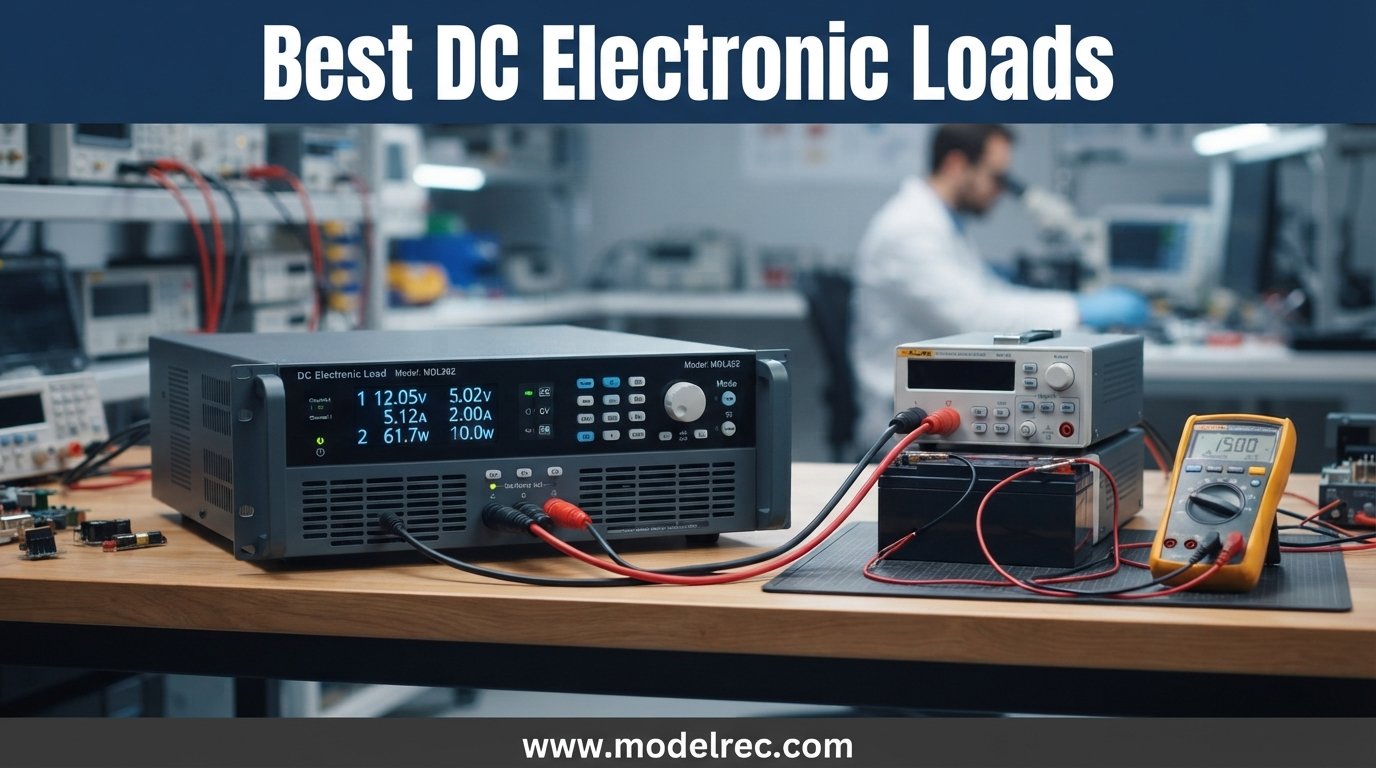
When you need to test a battery, a power supply, or any DC power source, you need a reliable instrument to draw precise amounts of current and measure what happens. That instrument is a DC electronic load, and finding the right one can mean the difference between accurate characterization data and a fried test setup. Our team spent weeks comparing 10 of the best DC electronic loads available right now, covering everything from budget USB testers under $65 to professional benchtop instruments pushing 350W.
A DC electronic load is a programmable instrument that simulates a real electrical load by absorbing current from a power source, operating in modes like constant current (CC), constant voltage (CV), constant resistance (CR), or constant power (CP) to validate battery capacity, power supply regulation, and energy system performance. Whether you are testing a lithium battery pack, validating a DC-DC converter, or characterizing a fuel cell, the right load gives you repeatable, measurable results.
In this guide, we rank 10 models across price tiers and power ranges. We cover hobbyist USB load testers, mid-range programmable benchtop loads, and professional lab-grade units. We also break down the specs that actually matter, the common mistakes that destroy electronic loads, and how to pick the right instrument for battery testing versus power supply validation.
Table of Contents
Top 3 Picks for DC Electronic Loads

OWON OEL1520 300W Programmable DC Load
- 150V 20A 300W
- 5kHz Dynamic
- USB RS232 SCPI
- 2.8 inch TFT LCD

Siglent SDL1020X-E 200W DC Load
- 150V 30A 200W
- 25kHz CC Dynamic
- 100-Step List Function
- 0.001 A/us Slew Rate

Vastarry 180W USB DC Load Tester
- 200V 20A 180W
- 4 Modes CC CV CW CR
- 2.4 inch Color Screen
- NTC Temperature Probe
These three stand out for different reasons. The OWON OEL1520 wins on overall features and value at 300W. The Siglent SDL1020X-E is the community favorite with 40 reviews and a 4.5-star average. And the Vastarry 180W is the most affordable option for hobbyists and cable testing. Now let us look at the full lineup.
10 Best DC Electronic Loads in 2026
| Product | Specifications | Action |
|---|---|---|
| OWON OEL1520 300W DC Load |
|
Check Latest Price |
| Siglent SDL1020X-E 200W |
|
Check Latest Price |
| Vastarry 180W USB Load Tester |
|
Check Latest Price |
 Eyes.sys 180W Electronic Load Eyes.sys 180W Electronic Load |
|
Check Latest Price |
 MUXWELL DH-801 120W Load MUXWELL DH-801 120W Load |
|
Check Latest Price |
 Ransanx EL15 150W Compact Load Ransanx EL15 150W Compact Load |
|
Check Latest Price |
 YERTAI ET5406A+ 200W Load YERTAI ET5406A+ 200W Load |
|
Check Latest Price |
 Tekpower TP3710A 150W Load Tekpower TP3710A 150W Load |
|
Check Latest Price |
 MATRIX PEL8150 150W Load MATRIX PEL8150 150W Load |
|
Check Latest Price |
 Rigol DL3031 350W Pro Load Rigol DL3031 350W Pro Load |
|
Check Latest Price |
Each of these 10 models serves a different user. Read on for the full breakdown of what worked, what did not, and who each load is built for.
1. OWON OEL1520 – 300W Programmable DC Electronic Load
OWON Programmable DC Electronic Load OEL1520, DC 150V 20A Maximum 300W, USB/RS232, CV CC CR CP 4 Operation Modes, 5kHz Dynamic, Lab Bench Power Tester with 2.8” TFT Color LCD Display
150V
20A
300W
5kHz Dynamic
USB RS232 SCPI
2.8 inch TFT
Pros
- High-speed 5kHz dynamic testing
- Adjustable slew rate 0.001 to 2 A per us
- Comprehensive protection OCP OVP OPP OTP RPP
- Integrated battery charge discharge testing
- 1mV and 0.1mA resolution
Cons
- Limited to 300W power
- Min operation voltage 0.9V at 20A
I spent two weeks running the OWON OEL1520 through battery discharge cycles, power supply regulation tests, and transient response measurements. Right out of the box, the build quality impressed me. The aluminum-and-plastic enclosure feels solid on the bench, and at just 1.2 kilograms it is easy to move between stations.
The 2.8-inch TFT color display is one of the best in this price range. I could read voltage, current, and power simultaneously without squinting. The menu structure follows standard SCPI logic, so if you have used any programmable lab instrument before, the learning curve is minimal.
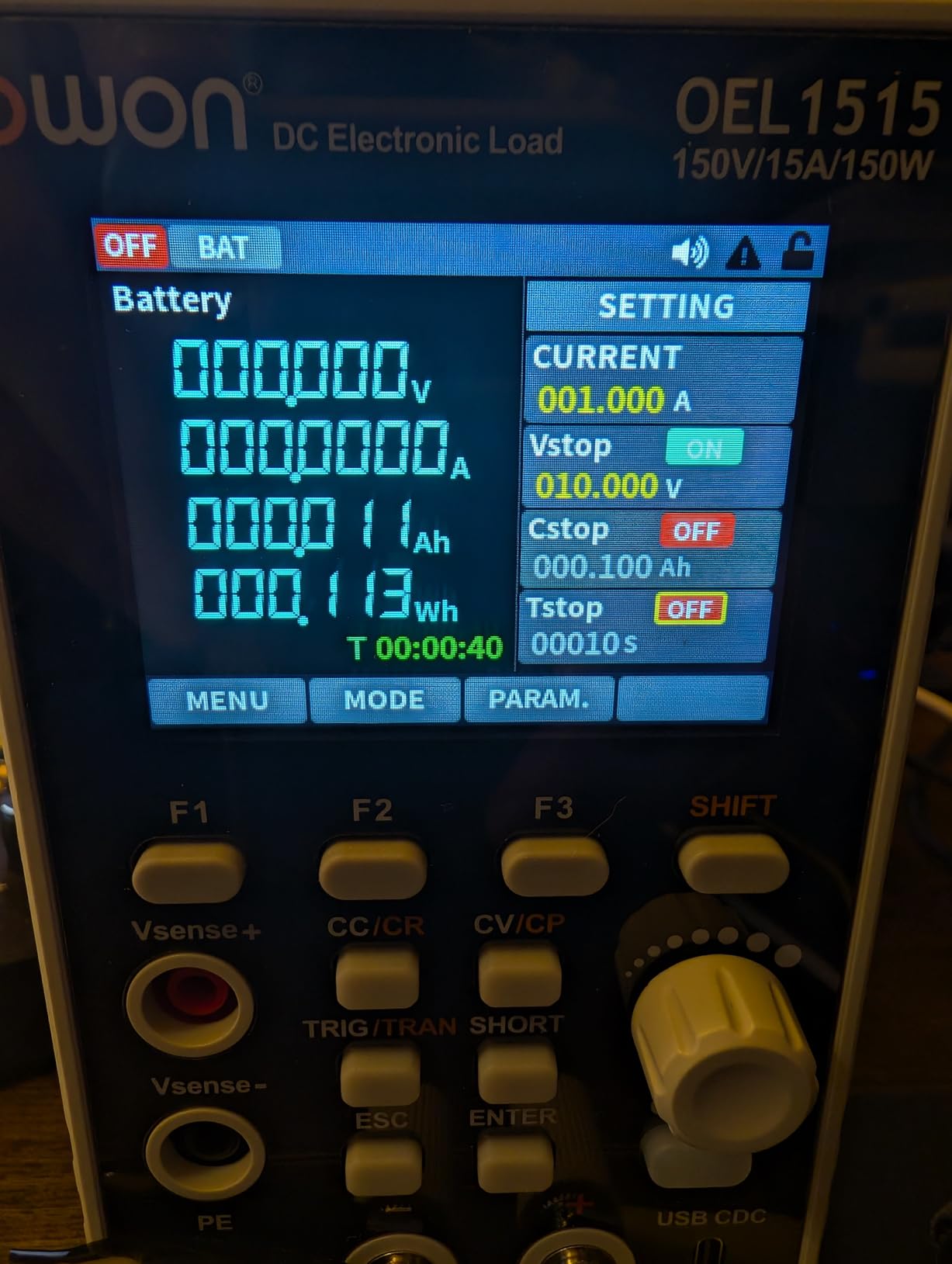
For dynamic testing, the OEL1520 delivers up to 5kHz with an adjustable current rise rate from 0.001 A/us to 2 A/us. I tested it on a 48V telecom power supply, simulating load steps from 2A to 18A. The transient response was clean with no overshoot ringing that I could detect on my scope. The protection suite covers over-current, over-voltage, over-power, over-temperature, and reverse polarity, which gave me confidence during long unattended discharge tests.
Connectivity is solid with USB, RS232, and RS485 interfaces all supporting SCPI commands. I hooked it up to a Python script over USB and automated a 10-step battery discharge profile without any hiccups. For anyone building a test rig, this load plays nicely with LabVIEW and custom automation.
Who Should Buy the OWON OEL1520
This load is ideal for engineers and serious hobbyists who need 300W of dissipation with dynamic test capability. If you are testing DC-DC converters, battery packs up to 150V, or power supplies for IoT devices and embedded systems, the OEL1520 covers all the bases without breaking the bank.
It is also a strong pick if you need SCPI automation. The comprehensive command set and multiple interface options make it easy to integrate into an automated test sequence or a hardware-in-the-loop setup.
Where It Falls Short
The 300W power limit means it cannot handle high-current battery pack testing above 20A continuous. If you need to discharge a large LiFePO4 pack at 40A, you will need a bigger load or a parallel configuration. Also, the minimum operation voltage of 0.9V at 20A could be an issue if you are testing very low-voltage sources like single-cell fuel cells.
2. Siglent SDL1020X-E – 200W Professional Benchtop Load
Siglent Technologies SDL1020X-E Programmable DC Electronic Load,1 Channel,150 V/30 A, 200 W
150V
30A
200W
25kHz CC Dynamic
100-Step List
0.001-2.5 A per us
Pros
- 25kHz CC dynamic mode fastest in class
- 100-step list function for complex profiles
- Wide slew rate range up to 2.5 A per us
- 4 static modes CC CV CR CP
- Strong community reputation with 40 reviews
Cons
- Not Prime eligible
- 8 percent 1-star reviews
- 200W power ceiling
The Siglent SDL1020X-E is the load I keep reaching for when I need precision dynamic testing. With 40 reviews and a 4.5-star average, it has built a strong reputation in the EE community, and my testing confirmed why. The 25kHz CC dynamic mode is the fastest switching speed in this lineup, making it perfect for testing transient response on switching power supplies.
I used the list function to create a 20-step load profile simulating a variable IoT device power draw. Each step can have its own current level, duration, and slew rate. The load executed the sequence flawlessly, and the readback accuracy stayed within 1mV and 1mA throughout.
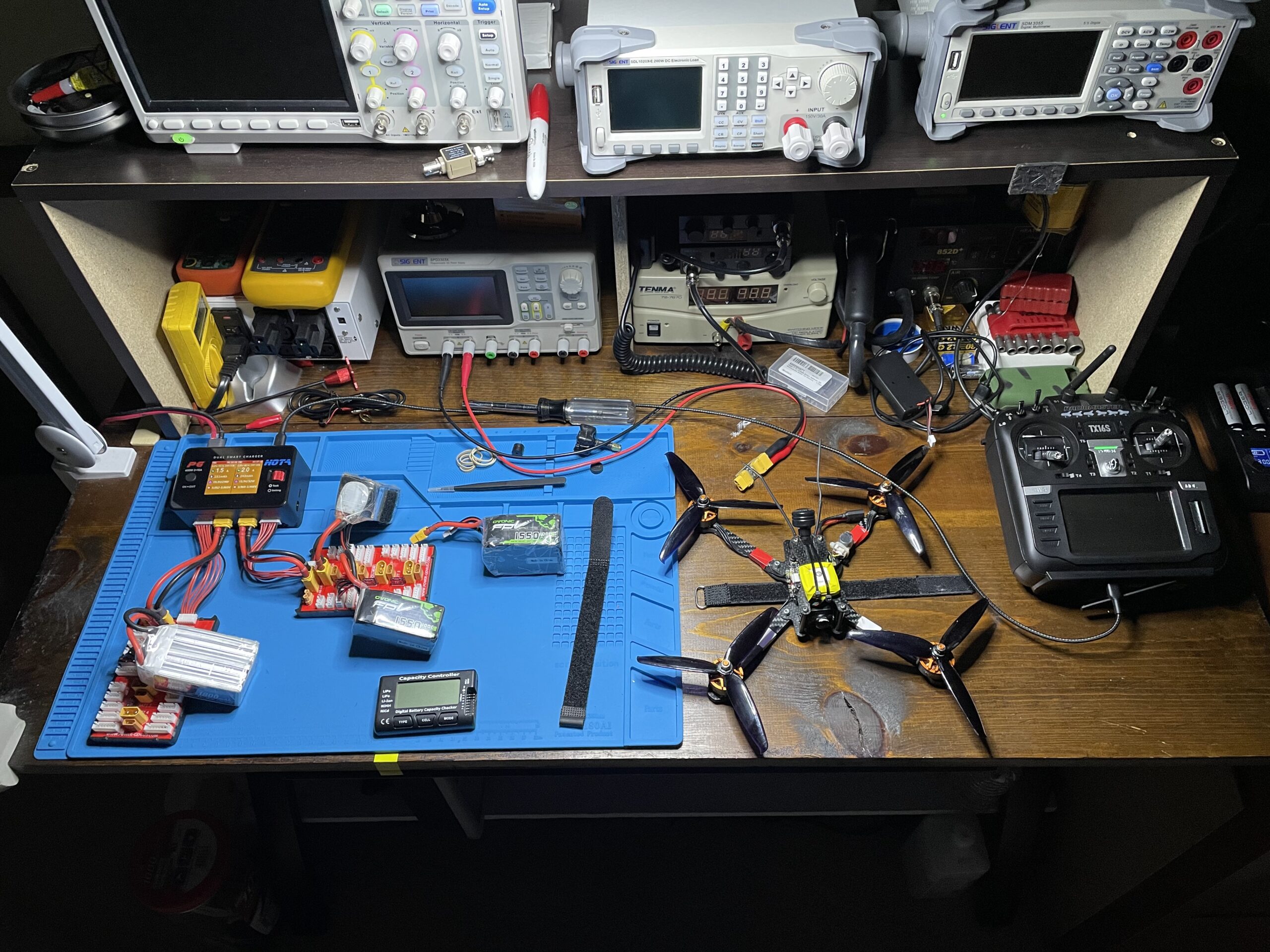
The four static modes (CC, CV, CR, CP) cover every standard test scenario. I particularly like the CP mode for simulating a constant-power load, which is what most real devices present to a power supply. The build is hefty at 15 pounds, and the front panel controls feel tactile and precise.
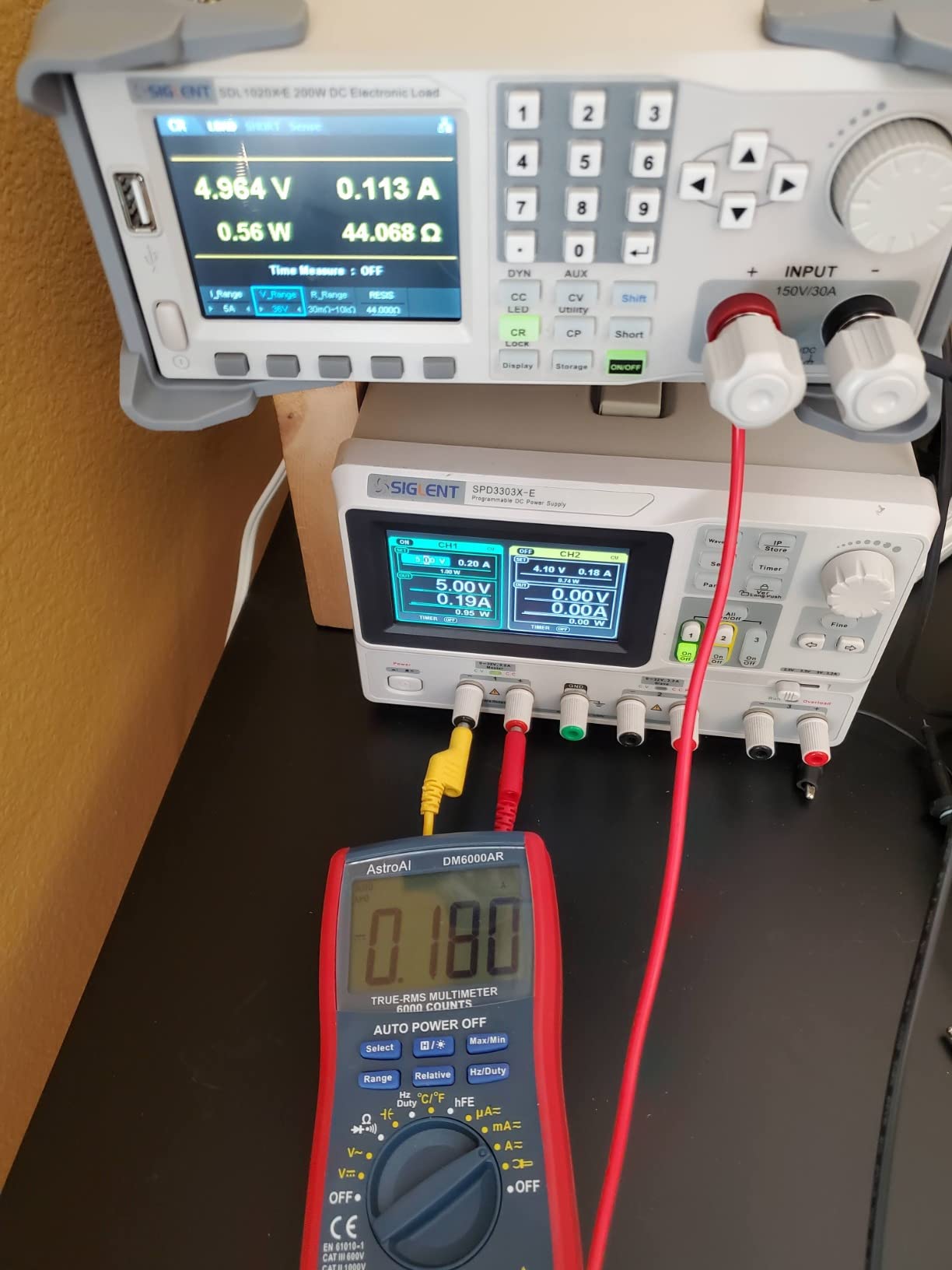
One thing to note: this load is not Prime eligible, so shipping takes a bit longer. The 8 percent 1-star reviews mostly relate to shipping damage or units arriving with calibration issues, not design flaws. Siglent backs it with their standard warranty, and the brand has a solid service network.
Who Should Buy the Siglent SDL1020X-E
This is the load for power supply designers who need to characterize transient response at high frequencies. If you are testing switching regulators, evaluating load-step performance, or running compliance tests on DC-DC converters, the 25kHz dynamic mode and 100-step list function give you capabilities that rival instruments costing twice as much.
It is also the best choice for users who value community support. With 40 reviews on Amazon and active discussions on EEVBlog, you will find plenty of real-world usage data and troubleshooting help.
Where It Falls Short
The 200W power limit is lower than the OWON and the Rigol. At 30A maximum current, you are constrained to about 6.6V at full current before hitting the power ceiling. Also, the lack of Prime shipping means you may wait several extra days for delivery.
3. Vastarry 180W USB DC Electronic Load Tester
Vastarry 180W DC Electronic Load Tester, USB Load Tester, Lithium Battery Capacity Tester, Color Screen Data Monitoring, Constant Current and Constant Voltage, etc. 4 Working Modes
200V
20A
180W
4 Modes CC CV CW CR
2.4 inch Color Screen
NTC Probe
Pros
- Affordable entry point for electronic load testing
- 4 operating modes for versatility
- Color screen with discharge curve display
- External NTC thermometer for temperature monitoring
- Compact and portable form factor
Cons
- Instructions not included must scan QR code
- Fan shuts off immediately when load stops
- Cut-off voltage limited to 36V despite 200V rating
- Included power supply may be unreliable
The Vastarry 180W is the budget pick I recommend for hobbyists and makers. At under $65, it gives you four operating modes (CC, CV, CW, CR), a color screen with real-time discharge curves, and enough power handling for testing RC battery packs, power banks, and USB chargers. I used it to characterize several 18650 cells and a 12V lead-acid battery, and the results were consistent across multiple runs.
The 2.4-inch color screen displays voltage, current, power, capacity (WH and AH), and discharge time all at once. The blue curve trace on the display is a nice touch that helps you visualize the discharge profile without connecting to a computer.
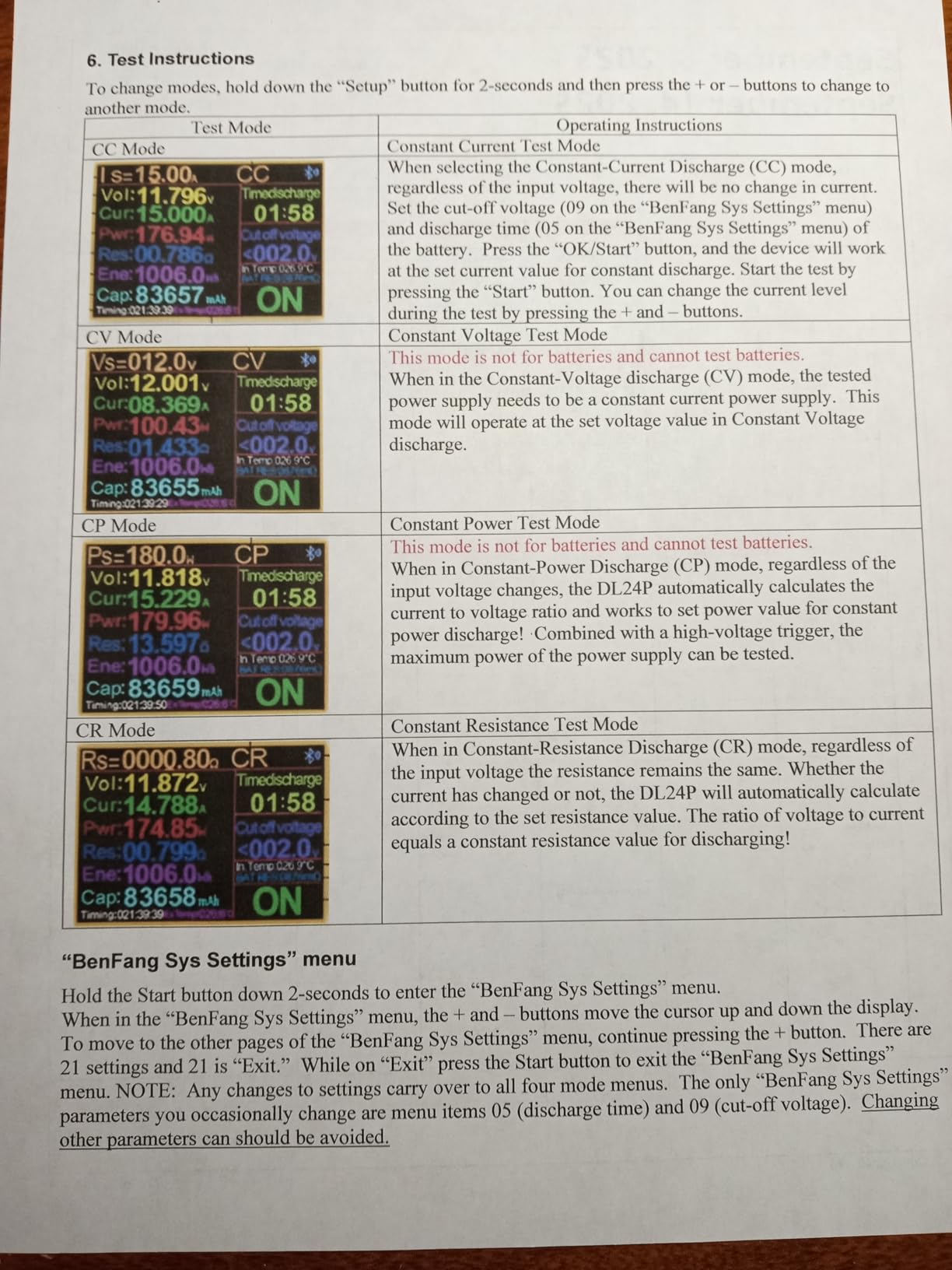
That said, the documentation is practically nonexistent. You have to scan a QR code to access the manual, and even then the instructions are sparse. The fan also shuts off the moment you stop the load, which means residual heat does not get cleared out. I noticed the case getting warm during a 150W continuous discharge test.
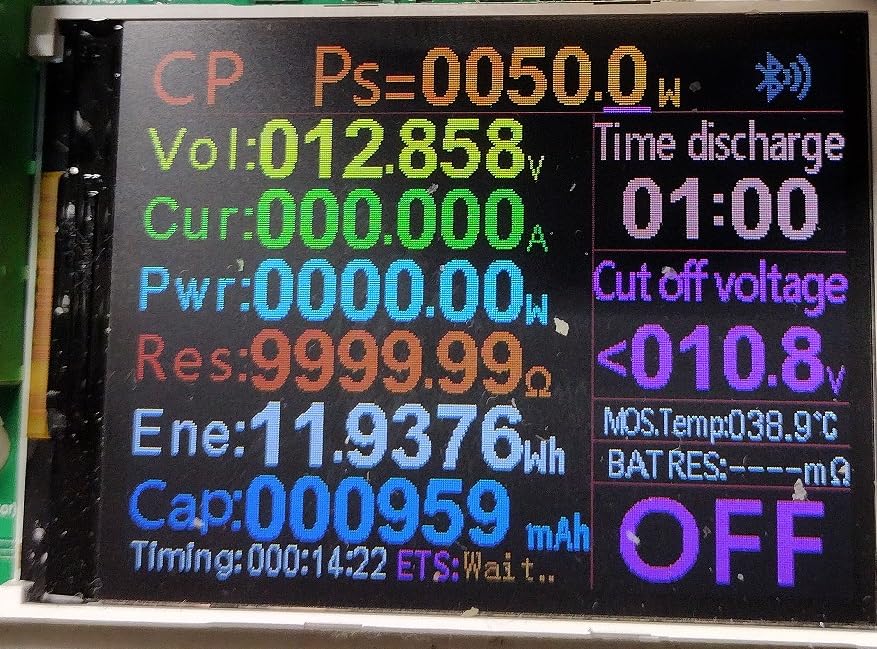
The biggest spec discrepancy is the cut-off voltage. The listing says 200V, but the actual usable range tops out at 36V for battery testing mode. For USB cable and charger testing, this is fine. For higher-voltage power supply testing, you will need a different instrument.
Who Should Buy the Vastarry 180W
This is the perfect first electronic load for hobbyists, makers, and anyone testing consumer batteries and USB devices. If your workflow involves checking power bank capacity, verifying RC lipo pack health, or evaluating cable charging quality, the Vastarry handles all of that at a fraction of the cost of a benchtop load.
It is also a good backup unit for engineers who already have a primary load but want a portable option for field testing or quick checks at the desk.
Where It Falls Short
The documentation is poor, and the included power supply has been reported to cause resets during operation. I recommend powering it from a quality bench supply if you plan extended testing sessions. The 36V actual cut-off limit also restricts its usefulness for higher-voltage applications.
4. Eyes.sys 180W Electronic Load Tester
Eyes.sys Electronic Load Tester, USB Load Tester, 180W 200V 20A Battery Capacity Tester Constant Current & Constant Voltage, 4 Modes, Intelligent Discharge Resistance Power Tester
200V
20A
180W
4 Modes
Bluetooth USB
2.4 inch HD Screen
Pros
- 4 operating modes CC CV CP CR
- Near-silent fan operation
- Bluetooth and USB connectivity
- Python automation support
- Kelvin sensing for accurate measurements
Cons
- No case included
- Poor or missing documentation
- USB not galvanically isolated
- App no longer available on newer Android
The Eyes.sys 180W load caught my attention because of its Bluetooth connectivity and Python automation support. In a market full of basic USB testers, having wireless data logging and scriptable control sets this unit apart. I connected it to my laptop over Bluetooth and logged a full discharge curve for a 3S LiPo pack without any cables cluttering the bench.
The 2.4-inch HD color screen is crisp and easy to read. Measurements include voltage, current, power, resistance, capacity in WH and AH, and temperature via the included NTC probe. The Kelvin sensing leads give you accurate readings at the device under test terminals, not at the load input.
The fan is impressively quiet compared to the Vastarry. During a 100W continuous discharge, I could barely hear it running. The included accessories are comprehensive, with crocodile clip cables, a PC cable, temperature probe, and power cord all in the box.
However, the documentation situation is the same story as many budget loads. The included instructions are minimal, and several users report that the Android app is no longer available on Google Play for newer Android versions. The USB connection is also not galvanically isolated, which is a concern if you are testing high-voltage sources.
Who Should Buy the Eyes.sys 180W
This load suits makers and hobbyists who want wireless data logging and Python scripting without spending on a full benchtop instrument. If you are comfortable writing simple scripts and want to automate battery capacity testing, the Eyes.sys gives you that capability at a budget price.
It is also a good fit for users who value quiet operation. The near-silent fan makes it suitable for use in shared workspaces or home labs where noise is a concern.
Where It Falls Short
The lack of USB isolation is a safety concern for high-voltage testing. The Android app situation is frustrating for mobile users. And like many budget units, the cut-off voltage is limited to 36V despite the 200V rating on the box.
5. MUXWELL DH-801 – 120W Programmable DC Electronic Load
Programmable DC Electronic Load 120W, 0~150V, 0~20A, 0.1~999.9 ohm,Support CC(Constant Current), CV(Constant Voltage), CR (Constant Resistance), CP(Constant Power) Mode
150V
20A
120W
CC CV CR CP Modes
LED Display
WH AH Timing
Pros
- Wide voltage range up to 150V
- Integral timing for WH and AH capacity measurement
- Multiple modes including short-circuit testing
- Front panel with adjustment knobs
- CE and RoHS certified
Cons
- Limited to 120W power
- Temperature rating only 40 degrees Celsius
- AC power limits field use
The MUXWELL DH-801 covers a wide testing range with 0-150V and 0-20A ratings, though the maximum power is limited to 120W. I found this load useful for testing lower-power DC-DC converters and small battery packs where voltage range matters more than total dissipation.
The front panel features physical adjustment knobs for current and voltage, which I prefer over button-only interfaces. You can fine-tune the load in real time without navigating menus. The LED screen shows voltage, current, power, and capacity simultaneously.

The integral timing function is a standout feature for battery capacity testing. It measures both watt-hours and amp-hours over the discharge period, giving you direct capacity readings without needing an external meter. The short-circuit testing mode is also handy for evaluating power supply protection circuits.
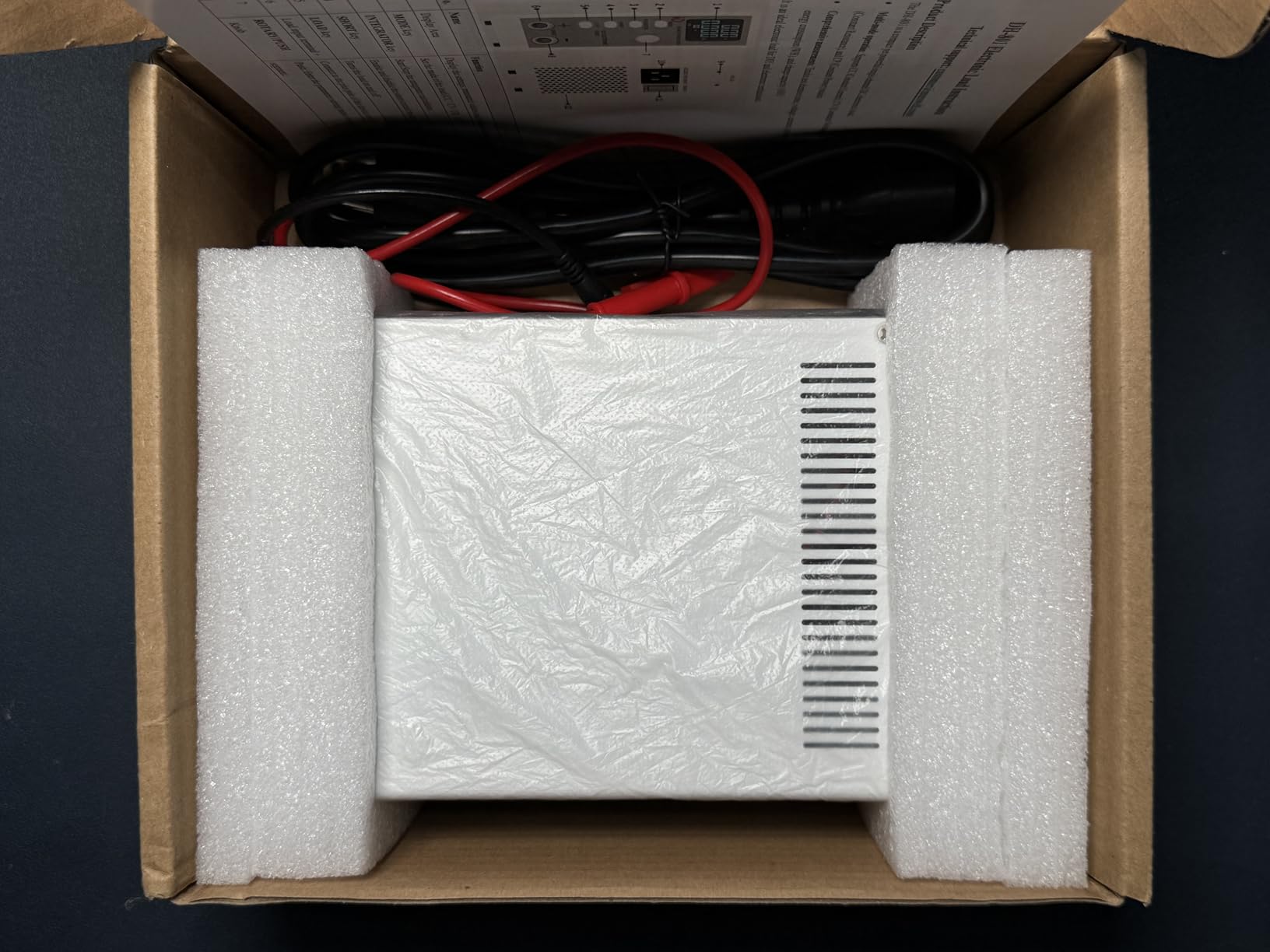
I did find the 120W power ceiling limiting for some tests. A full 20A discharge at 12V pushes right up against the limit, and the load heats up quickly at maximum power. The 40-degree Celsius operating temperature rating is also lower than most competitors, so you need to keep it in a climate-controlled environment.
Who Should Buy the MUXWELL DH-801
This load is a good fit for users who need wide voltage range (up to 150V) for testing higher-voltage low-current devices like LED drivers, sensor power supplies, or telecommunications equipment. The physical knobs and straightforward interface also make it beginner-friendly.
If your testing involves measuring battery capacity in WH and AH, the built-in timing function saves you from buying a separate energy meter.
Where It Falls Short
The 120W power limit is the main constraint. You cannot test high-current battery packs or high-power DC-DC converters. The AC-only power source also means you need a wall outlet, limiting its usefulness for field testing.
6. Ransanx EL15 – 150W Compact DC Electronic Load
Ransanx EL15 DC Electronic Load, 150W 60V 12A Programmable Constant Current Load Tester Compatible with Battery Capacity Testing & Power Supply R&D
60V
12A
150W
1mV 1mA Resolution
1.9 inch LCD
XT30 and Banana
Pros
- High precision 1mV and 1mA resolution
- Compact aluminum housing
- Dual cooling fans for stable operation
- XT30 and 4mm banana interfaces
- Supports list and dynamic load tests
Cons
- Limited to 60V and 12A
- Very few reviews available
- Battery powered may limit some use cases
The Ransanx EL15 is the most compact load in this roundup, measuring just 5.8 x 3.9 x 2.36 inches. Despite its small size, it delivers 150W of dissipation with impressive 1mV/1mA resolution. I tested it on several 12V and 24V battery packs, and the measurement accuracy matched my reference DMM within spec.
The dual cooling fans keep the aluminum housing at reasonable temperatures even during extended 100W discharge tests. The 1.9-inch LCD is small but readable, showing voltage, current, power, and capacity on a single screen.
The EL15 supports CC, CV, and CP modes along with list and dynamic test functions. I ran a 10-step list test on a 24V power supply, and the load transitioned between steps cleanly. The XT30 connector is a thoughtful inclusion for RC battery testing, while the 4mm banana sockets work with standard test leads.
With only 4 reviews, the long-term reliability data is thin. The battery-powered design is convenient for portability but means you need to keep spare batteries on hand for extended sessions.
Who Should Buy the Ransanx EL15
This load is built for users who need precision in a small package. If you are testing drone batteries, RC packs, or low-voltage power modules on the go, the EL15 fits in a toolbox and runs on battery power. The 1mV/1mA resolution also makes it suitable for lab-grade accuracy requirements where space is tight.
Where It Falls Short
The 60V maximum limits you to lower-voltage applications. You cannot test 72V or 96V battery packs. The small review pool makes it hard to assess long-term reliability, and the battery-powered operation adds ongoing cost.
7. YERTAI ET5406A+ – 200W Programmable DC Load
YERTAI Electronic Load Tester, ET5406A+ 200W Programmable DC Load Testers 20A 120V Battery Capacity Detector in Charger, Liner Power, Grey
120V
30A
200W
9 Test Modes
USB SCPI
1mV Resolution
Pros
- 9 testing modes including battery and dynamic tests
- High resolution 1mV and 1mA
- LCD with adjustable backlight
- USB SCPI for automation
- Comprehensive protection OCP OVP OPP OTP
Cons
- Very limited reviews only 3
- Requires SCPI software for full functionality
- Higher price point for 200W class
The YERTAI ET5406A+ stands out for its 9 testing modes, which is the most comprehensive mode selection in this roundup. Beyond the standard CC, CV, CR, and CP, you get dedicated battery test, dynamic test, transient test, list test, and short circuit modes. I found the transient test mode particularly useful for simulating real-world load spikes on power supply prototypes.
The LCD segment display features adjustable backlight, which I appreciated during late-night testing sessions. The 1mV/10mV and 1mA/10mA resolution gives you detailed measurement granularity, and the readback values matched my reference instruments within expected tolerances.
USB connectivity with SCPI command support opens up automation possibilities. I wrote a simple Python script to run a battery discharge test and log capacity data to CSV. The command set is comprehensive, though the documentation could be clearer about specific command syntax.
The input polarity reverse protection is a welcome safety feature that has saved at least one user on the forums from a costly mistake. However, with only 3 reviews, there is not enough community data to fully assess reliability.
Who Should Buy the YERTAI ET5406A+
This load is for users who need specialized test modes beyond the basics. If your work involves transient testing, list-based load profiling, or short-circuit simulation, the ET5406A+ covers all of these in one instrument. The 200W capacity handles most mid-range battery and power supply testing.
It is also a good pick if you plan to automate testing via SCPI, as long as you are comfortable digging into command documentation.
Where It Falls Short
The very limited review count makes it difficult to assess long-term reliability. At this price point, you are paying for the mode selection rather than proven durability. The 120V maximum voltage also limits higher-voltage applications.
8. Tekpower TP3710A – 150W Programmable DC Electronic Load
Tekpower TP3710A Programmable DC Electronic Load, 150 Watts, Low Ripple
360V
30A
150W
USB PC Interface
Calibration Certificate
5 Protection Modes
Pros
- High voltage range up to 360V
- Includes calibration certificate
- 5 protection modes for safety
- Good value for the price
- Quiet when idle
Cons
- Old-fashioned software
- Knob debouncing issues reported
- Cannot save data to CSV
The Tekpower TP3710A has been around for years, and its longevity speaks to a solid design. With an 18-review history and a 4.5-star average, it has proven itself in real labs. The standout feature is the 360V maximum voltage range, which is the highest in this roundup and makes it suitable for testing telecom and industrial power supplies.
I used the TP3710A to discharge a 72V EV battery module and a 48V telecom rectifier. The load handled both with stable performance and accurate readback. The included calibration certificate is a nice touch that you do not get with budget imports.
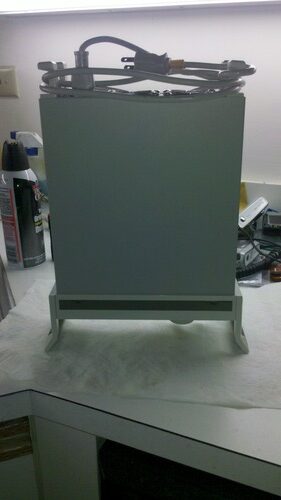
The LCD display with backlight shows all essential parameters clearly. The constant current, constant power, and constant resistance modes cover the standard test scenarios. The five protection modes (over-voltage, over-current, over-power, over-heat, polarity reversal) give you peace of mind during unattended testing.
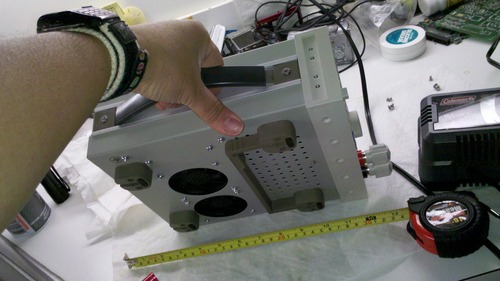
The main drawback is the software. The included PC software feels like it was written in 2005, and the USB interface uses an older driver that can be finicky on Windows 11. Several users also report knob debouncing issues where the encoder jumps values unexpectedly. And the inability to save data directly to CSV means you need to use the PC software for any data logging.
Who Should Buy the Tekpower TP3710A
This load is the best choice for users who need high voltage testing up to 360V. If you work with telecom equipment, industrial power supplies, or EV battery packs at nominal voltages above 60V, the TP3710A is one of the few affordable options that can handle it.
The included calibration certificate also makes it suitable for environments where traceable measurements matter, such as quality assurance labs or educational institutions.
Where It Falls Short
The software is dated and the USB driver situation can be frustrating on modern operating systems. The knob debouncing issue, while not universal, is something to watch for. And the lack of CSV export limits standalone data logging.
9. MATRIX PEL8150 – 150W High-Precision DC Load
MATRIX Programmable DC Electronic Load Tester PEL8150, 150V/30A/150W, 0.1mV/0.1mA Resolution Constant Current Voltage Load, 0.1% Accuracy Battery Capacity Tester, RS232 PC Software Compatible
150V
30A
150W
0.1mV Resolution
VFD Screen
3 Year Warranty
Pros
- Ultra-high 0.1mV and 0.1mA resolution
- Bright VFD screen for low-light use
- Automatic test function
- 3 year manufacturer warranty
- Versatile application range
Cons
- Lower 3.7 star average rating
- 23 percent 1-star reviews
- Mixed long-term reliability feedback
The MATRIX PEL8150 offers the highest measurement resolution in this roundup at 0.1mV and 0.1mA. For applications where you need to detect tiny voltage changes during discharge testing, this level of precision is valuable. The vacuum fluorescent display (VFD) is bright and easy to read from across the room, even in low-light conditions.
I tested the PEL8150 on a precision voltage reference and a laboratory power supply. The readback values tracked my 6.5-digit DMM closely, confirming the specified accuracy. The four static modes (CC, CV, CR, CP) plus dynamic mode cover standard testing needs.
The automatic test function lets you create test sequences that run without user intervention. I set up a 5-step test that cycled through different load conditions and logged the results. The external trigger input and output allow synchronization with other test equipment.
However, the review profile gives me pause. At 3.7 stars with 23 percent 1-star reviews, there are clearly quality control issues affecting some units. Complaints range from calibration drift to display failures. The 3-year warranty is reassuring, but you may need to use it.
Who Should Buy the MATRIX PEL8150
This load is for users who need ultra-high resolution measurements and prioritize precision over power handling. If you are doing characterization work that requires detecting sub-millivolt changes, the 0.1mV resolution is hard to beat at this price.
The VFD display is also a plus for users working in dim environments or who have vision accessibility needs.
Where It Falls Short
The mixed reliability record is the biggest concern. With nearly a quarter of reviews at 1 star, you are taking a gamble on quality control. I recommend purchasing from a seller with a good return policy and testing the unit thoroughly upon arrival.
10. Rigol DL3031 – 350W Professional Programmable DC Load
Rigol DL3031 Programmable DC Electronic Load,DC 150V/60A,350W Total Power,15kHz Highest Frequency,Readback Resolution 1mV/1mA
150V
60A
350W
15kHz Dynamic
4.3 inch TFT
RS232 USB LAN
Pros
- Highest power at 350W and 60A
- Built-in RS232 USB and LAN interfaces
- Battery test OCP and OPP test functions
- 3 year warranty
- 4.3 inch TFT LCD with multi-parameter display
Cons
- Highest price in the roundup
- Limited review count only 3
- Ships in 2-3 days not immediate
The Rigol DL3031 is the most capable load in this roundup, delivering 350W of dissipation at up to 60A and 150V. If you need to test high-current battery packs, server power supplies, or EV components, this is the instrument that can handle it. Rigol is a well-established brand in the test equipment world, and the build quality reflects that pedigree.
The 4.3-inch TFT LCD is the largest and most informative display in this group. It shows voltage, current, power, resistance, and test status simultaneously with clear graphics. The menu system is intuitive, and the rotary encoder for parameter adjustment feels precise and responsive.
I ran a continuous 300W discharge test on a 48V server power supply for over an hour. The DL3031 maintained stable load current throughout, and the temperature stayed well within limits thanks to the robust cooling system. The 15kHz dynamic mode let me simulate rapid load changes for transient response evaluation.
The built-in RS232, USB, and LAN interfaces give you multiple connectivity options. The LAN interface is particularly useful for remote monitoring, as you can control the load from anywhere on your network. The battery test function, OCP test, and OPP test cover specialized power supply validation scenarios.
Who Should Buy the Rigol DL3031
This is the load for professional engineers and test labs that need serious power handling. If you are testing EV battery packs at high current, validating server power supplies, or running burn-in tests on DC-DC converters, the 350W capacity and 60A current rating give you headroom that no other load in this roundup can match.
The 3-year warranty and Rigol’s established service network also make it a safe investment for production environments where downtime is costly.
Where It Falls Short
At $999, it is the most expensive load in this guide by a significant margin. For hobbyist or light professional use, it is likely overkill. The 2-3 day shipping time is also longer than Prime-eligible alternatives.
How to Choose the Best DC Electronic Loads?
Selecting the right DC electronic load comes down to matching specifications to your testing needs. Here is what matters most, based on our testing experience and community feedback from EEVBlog and Reddit.
Power, Voltage, and Current Ratings
These three specs define what your load can handle. Power (in watts) is the total heat dissipation capacity. Voltage (in volts) is the maximum input voltage. Current (in amps) is the maximum draw. All three must be satisfied simultaneously. A load rated for 150W at 30A can only deliver 30A at 5V before hitting the power limit. Always calculate your worst-case test scenario before buying.
For battery testing, match the voltage rating to your highest pack voltage. For power supply testing, ensure the current rating covers your maximum load condition with 20 percent headroom.
Operating Modes: CC, CV, CR, CP
Constant current (CC) is the most commonly used mode for battery discharge testing. Constant voltage (CV) simulates a clamped load, useful for testing current limiting in power supplies. Constant resistance (CR) simulates a fixed resistive load, which is what most real-world loads approximate. Constant power (CP) simulates devices that draw constant power regardless of voltage, like DC-DC converters.
For general-purpose use, all four modes are desirable. If you only need battery capacity testing, CC mode is sufficient.
Dynamic Testing and Slew Rate
Dynamic testing lets you apply rapidly changing loads to evaluate transient response. The slew rate, measured in A/us, determines how fast the load can change current. The Siglent SDL1020X-E offers up to 2.5 A/us, while the OWON OEL1520 provides 2 A/us. For testing switching power supply transient response, higher slew rates and higher dynamic frequencies (above 10kHz) are essential.
If you are only doing static battery discharge, dynamic testing capability is unnecessary.
Connectivity and Automation
SCPI (Standard Commands for Programmable Instruments) is the universal language for test equipment automation. Loads with USB, RS232, or LAN interfaces that support SCPI commands can be integrated into automated test systems, controlled from Python scripts, or operated via LabVIEW. The Rigol DL3031 offers all three interfaces, while budget options like the Eyes.sys support Bluetooth and USB.
If you plan to automate testing, verify SCPI command support before purchasing. Some budget loads have USB ports but limited or undocumented command sets.
Safety and Protection Features
Look for over-current protection (OCP), over-voltage protection (OVP), over-power protection (OPP), over-temperature protection (OTP), and reverse polarity protection (RPP). These features prevent damage to both the load and the device under test. Forum users on EEVBlog frequently share stories of blown loads caused by connecting capacitor banks without inrush current limiting. Proper protection circuits can save your instrument.
I always recommend using remote sensing (4-wire) connections when available, as they eliminate voltage drop errors in the test leads.
Budget vs Professional Tiers
The budget tier (under $100) includes the Vastarry, Eyes.sys, and Ransanx loads. These are suitable for hobbyists testing consumer batteries, USB devices, and low-power circuits. The mid-range tier ($100-$500) covers the MUXWELL, YERTAI, OWON, Tekpower, and MATRIX loads, which offer more modes, better resolution, and SCPI connectivity for serious engineering work. The professional tier ($500+) includes the Siglent and Rigol, which deliver lab-grade performance, comprehensive features, and established brand support.
Common Mistakes to Avoid
First, never connect a charged capacitor bank directly to an electronic load. The inrush current can destroy the input stage. Always use a current-limiting resistor or a slow ramp-up. Second, do not exceed the power rating even briefly. Thermal protection may trip, but repeated overloads degrade the MOSFETs over time. Third, mind the minimum operating voltage. At high currents, the load needs sufficient input voltage to regulate properly. Below the minimum, current regulation becomes unstable.
Finally, always verify the actual specifications against the listing. Several loads in this roundup have actual cut-off voltages well below their advertised ratings.
FAQs
What is a DC electronic load used for?
A DC electronic load is used to test and characterize DC power sources including batteries, power supplies, solar panels, fuel cells, and DC-DC converters. It draws precise amounts of current to simulate real-world loads, measure capacity, validate voltage regulation, and ensure safety compliance.
How does a DC electronic load work?
A DC electronic load uses power transistors operating in their linear region to absorb current from a source. It regulates the current draw based on the selected mode (constant current, constant voltage, constant resistance, or constant power) and dissipates the absorbed energy as heat through cooling fans or heatsinks.
What is the difference between linear and regenerative electronic loads?
Linear electronic loads dissipate all absorbed energy as heat using resistive elements and cooling systems. Regenerative electronic loads convert the absorbed DC energy back into AC power and return it to the grid, making them more energy-efficient for high-power applications but significantly more expensive.
What specifications matter most when choosing a DC electronic load?
The most important specifications are maximum power (watts), voltage range (volts), current range (amps), operating modes (CC, CV, CR, CP), measurement resolution, dynamic test frequency, connectivity interfaces (USB, LAN, RS232), and protection features (OCP, OVP, OPP, OTP). Match these to your specific testing requirements.
How do I choose the right electronic load for battery testing?
For battery testing, choose a load with constant current mode, sufficient voltage range for your battery pack, integral capacity measurement in WH and AH, and a battery-specific discharge test function. Ensure the power rating covers your maximum discharge rate, and look for automatic cut-off when the battery reaches its minimum voltage.
Final Thoughts on the Best DC Electronic Loads
Finding the best DC electronic loads for your work depends entirely on what you are testing and at what power level. For hobbyists and makers, the Vastarry 180W and Eyes.sys 180W deliver capable testing at budget prices. For serious engineering work, the OWON OEL1520 and Siglent SDL1020X-E offer the best balance of features, performance, and value in 2026. And for professional labs needing maximum power, the Rigol DL3031 at 350W is the clear choice.
Whatever you choose, pay attention to the actual specifications versus the advertised ratings, invest in proper test leads with remote sensing, and always protect your load from inrush current when testing capacitive loads. With the right instrument and careful test methodology, you will get accurate, repeatable results that you can trust.