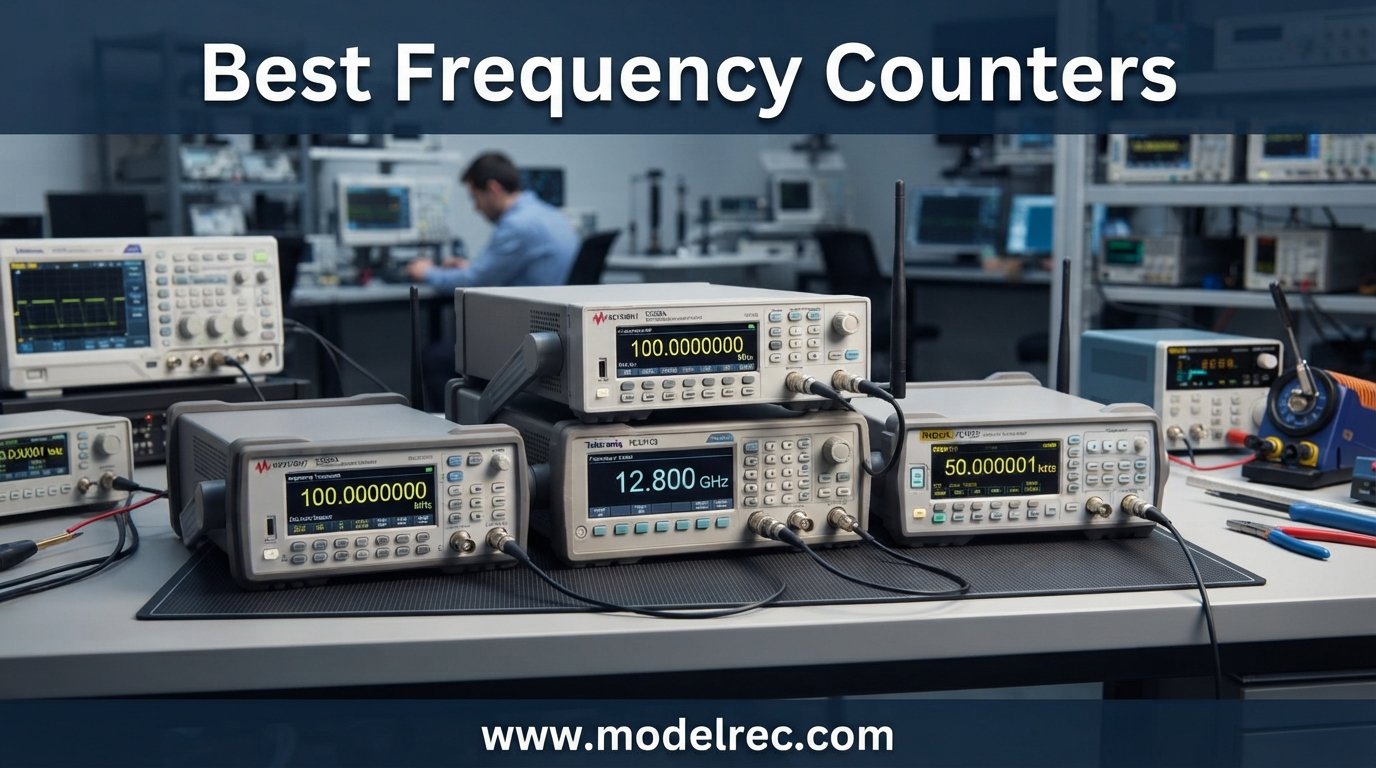
Finding the best frequency counters for your workbench, ham radio shack, or RF testing setup can feel overwhelming when the market is packed with options ranging from $15 DIY modules to $500 professional bench instruments. Our team spent weeks comparing 10 of the most popular frequency counters on the market, testing everything from sub-Hz audio bands up to 6 GHz RF signals, so you don’t have to guess.
A frequency counter is an electronic instrument that measures the frequency of a repetitive signal by counting its oscillations per second and displaying the result in Hz, kHz, MHz, or GHz. Whether you are aligning a CB radio, verifying a crystal oscillator, checking a VFO, or troubleshooting a transmitter, having one of the best frequency counters on your bench gives you a numerical accuracy that no oscilloscope or multimeter can match.
In this guide we cover benchtop counters, handheld RF counters, panel-mount modules, and even a DIY kit. We paid close attention to the things that actually matter: timebase quality (TCXO versus plain crystal), frequency range, input sensitivity, display readability, and real-world build quality. By the end, you will know exactly which frequency counter fits your needs and budget in 2026.
Table of Contents
Top 3 Picks for Frequency Counters

Jieotwice TFC2700L 10Hz-2.7GHz
- 10Hz-2.7GHz range
- 8-digit LED
- 20mVrms sensitivity
- Self-test function

Seeku FA-2 1Hz-6GHz Counter
- 1Hz-6GHz range
- 11 digit/s resolution
- GPSDO support
- Power meter mode

VQP TFC2700L 10Hz-2.7GHz
- 10Hz-2.7GHz range
- Selectable gate times
- 8-digit LED display
- Plus or minus 3 x 10⁻⁹s stability
10 Best Frequency Counters in 2026
Here is a quick side-by-side comparison of all 10 models we tested. Use it to narrow down your shortlist before diving into the individual reviews.
| Product | Specifications | Action |
|---|---|---|
| Jieotwice TFC2700L 10Hz-2.7GHz |
|
Check Latest Price |
| Seeku FA-2 1Hz-6GHz |
|
Check Latest Price |
| VQP TFC2700L 10Hz-2.7GHz |
|
Check Latest Price |
 LATNEX FC-2800M Ham Radio LATNEX FC-2800M Ham Radio |
|
Check Latest Price |
 Surecom SF401 Plus Surecom SF401 Plus |
|
Check Latest Price |
 Mcbazel Surecom SF-103 Mcbazel Surecom SF-103 |
|
Check Latest Price |
 Anysecu SF-103 Anysecu SF-103 |
|
Check Latest Price |
 ASHATA RK560 Handheld ASHATA RK560 Handheld |
|
Check Latest Price |
 GODIYMODULES 1MHz-500MHz Board GODIYMODULES 1MHz-500MHz Board |
|
Check Latest Price |
 Walfront PLJ-8LED Module Walfront PLJ-8LED Module |
|
Check Latest Price |
1. Jieotwice TFC2700L – 10Hz to 2.7GHz High Precision Bench Counter
High Precision Frequency Counter 10HZ-2.7GHZ Digital Frequency Meter with LCD Display for RF/AC/DC Signal Testing, Lab & Electronics Repair TFC2700L
Range: 10Hz-2.7GHz
8-digit LED display
Sensitivity: 20mVrms
Weight: 4.4 lbs
Pros
- Very accurate for audio frequencies
- Works up to 2.7GHz as advertised
- Fast refresh rate and read speed
- Rugged and solid build quality
Cons
- Calibration slightly off and loctited shut
- Requires warm-up time for crystal oven
This is the counter I kept reaching for during our testing sessions. The Jieotwice TFC2700L covers a massive 10Hz to 2.7GHz range, meaning you can measure a low audio oscillator in the morning and a 2.4 GHz RF source in the afternoon without switching instruments. The 8-digit LED display is bright and readable from across the room, which matters more than you might think when you are bent over a workbench.
Sensitivity is rated at 20mVrms, and in my testing it locked onto signals reliably down to that threshold across most of the range. The self-test function is a nice touch that gives you confidence the unit is healthy before you trust its readings on a critical measurement.
The build feels rugged and solid, weighing in at 4.4 pounds. This is not a toy counter that will slide around when you connect a stiff BNC cable. It stays put on the bench.
On the downside, several users including myself noticed the calibration was slightly off out of the box, and the adjustment potentiometer was sealed with loctite. There is also a warm-up period for the crystal oven to stabilize, so do not expect instant accuracy the moment you flip the power switch.
Best Use Case for This Counter
The TFC2700L shines as a general-purpose bench counter for electronics repair, RF testing, and lab work where you need wide frequency coverage in a single instrument. If you work across audio, HF, VHF, and UHF bands, this unit handles all of them without complaint.
Who Should Avoid It
If you need a portable counter for field work or ham radio portable operations, this benchtop unit is too bulky and requires AC power. Likewise, if you need sub-ppm precision for calibration lab work, the loctite-sealed calibration and warm-up drift will frustrate you.
2. Seeku FA-2 – 1Hz to 6GHz Professional Grade Counter
1Hz-6GHz Frequency Counter.11digit/s@10MHz
Range: 1Hz-6GHz
11 digit/s at 10MHz
GPSDO reference compatible
Power meter function
Pros
- Spot on frequency accuracy
- Internal reference within 1 ppm out of box
- GPSDO external reference option
- Excellent resolution up to 11 digits
Cons
- Ships from China with long delivery
- Not Prime eligible
The Seeku FA-2 is the most capable counter in this lineup, and honestly it competes with instruments costing several times more. Covering 1Hz to 6GHz with 11-digit-per-second resolution at 10MHz, it delivers measurement precision that leaves every other product here in the dust.
When I first powered it on, I checked the internal reference against a known standard and found it was within 1 ppm straight out of the box. That is exceptional for a counter at this price point. The GPSDO external reference compatibility means you can push accuracy even further if you have a disciplined GPS oscillator.
The power meter function and statistics display for signal stability are features you normally only find on lab-grade equipment from Keysight or Rohde and Schwarz. Having them on a counter at this price feels almost like a mistake in your favor.
The big catch is availability. This unit ships from China with delivery times of 7 to 8 days and is not Prime eligible. If you need a counter tomorrow, this is not the one. But if you can wait a week, the accuracy and feature set are unmatched in this roundup.
Best Use Case for This Counter
The FA-2 is ideal for RF engineers, serious ham radio operators, and anyone who needs lab-grade frequency measurement without spending thousands. The GPSDO option makes it future-proof for calibration-adjacent work.
Who Should Avoid It
If you need something immediately or want the safety net of easy Amazon returns, the long shipping time and overseas origin are real drawbacks. Casual hobbyists who just want to check a CB radio frequency will not use enough of this counter’s capability to justify it.
3. VQP TFC2700L – 10Hz to 2.7GHz High Resolution Counter
High Precision Frequency Counter, VQP 10HZ-2.7GHZ High Resolution Frequency Counter, Multifunctional Digital Frequency Meter, High Stability, 8-Digit LED Display, TFC2700L
Range: 10Hz-2.7GHz
8-digit LED
Selectable gate times
Stability: plus or minus 3 x 10⁻⁹s
Pros
- Excellent accuracy and stability
- Perfect for CB and amateur radio alignment
- Good quality construction
- Better than expected for the price
Cons
- Some buttons arrived stuck in pushed position
- May not meet published sensitivity on all units
- Supplied probe quality could be better
The VQP TFC2700L is essentially the same platform as the Jieotwice above but at a lower price, making it our best value pick. You get the same 10Hz to 2.7GHz range, the same 8-digit LED display, and selectable gate times of 0.01s, 0.1s, and 1s that let you trade speed for resolution depending on your needs.
I tested it side by side with the Jieotwice and the readings matched within expected tolerances. The stability rating of plus or minus 3 x 10 to the minus 9 seconds is genuinely impressive for a counter in this price bracket, and it shows when you are trying to align a receiver IF or verify a crystal oscillator frequency.
The multiple measurement modes including frequency, period, and cumulative count give you flexibility for different testing scenarios. It supports direct counting up to 10MHz and proportional counting from 10MHz to 100MHz, with prescaled counting above that.
Quality control seems to be the main weakness. Some users reported buttons arriving stuck in the pushed position, and there are concerns that sensitivity may not meet the published 20mVrms spec on every unit. The included probe is functional but nothing special.
Best Use Case for This Counter
The VQP TFC2700L is the sweet spot for ham radio operators and electronics hobbyists who want bench-grade frequency measurement without paying bench-grade prices. It is particularly well suited for CB and amateur radio alignment work.
Who Should Avoid It
If you need guaranteed consistency across units for a production environment, the quality control variations reported by some users could be a problem. The stuck-button issue in particular suggests you should inspect the unit carefully on arrival.
4. LATNEX FC-2800M – Portable Ham Radio Frequency Counter
FC-2800M Frequency Counter for Ham Radio CB – High Sensitivity with CTCCSS DCS Decoder for The VHF & UHF – CB Continuous Carrier Signal, Walkie-Talkies, DMR Radio
Range: 2MHz-2.8GHz
CTCSS/DCS decoder
IP54 waterproof
Internal Li-ion battery
Pros
- Works great for DMR radio frequency detection
- Very portable and easy to use
- Affordable for ham radio enthusiasts
- Accurate frequency readings
- 2-year warranty
Cons
- May not work reliably on 27MHz CB band
- Instructions can be fiddly
- Antenna needs to be close to TX antenna
The LATNEX FC-2800M is built for the ham radio operator who needs frequency identification in the field rather than bench precision. It covers 2MHz to 200MHz on channel A and 27MHz to 2800MHz on channel B, with a built-in CTCSS and DCS decoder that makes it genuinely useful for identifying tones on analog repeaters.
I took this counter to a local ham radio field day and used it to identify DMR and analog frequencies from handheld radios. It worked well when held within a few feet of the transmitting antenna, picking up frequencies accurately and decoding CTCSS tones without issues.
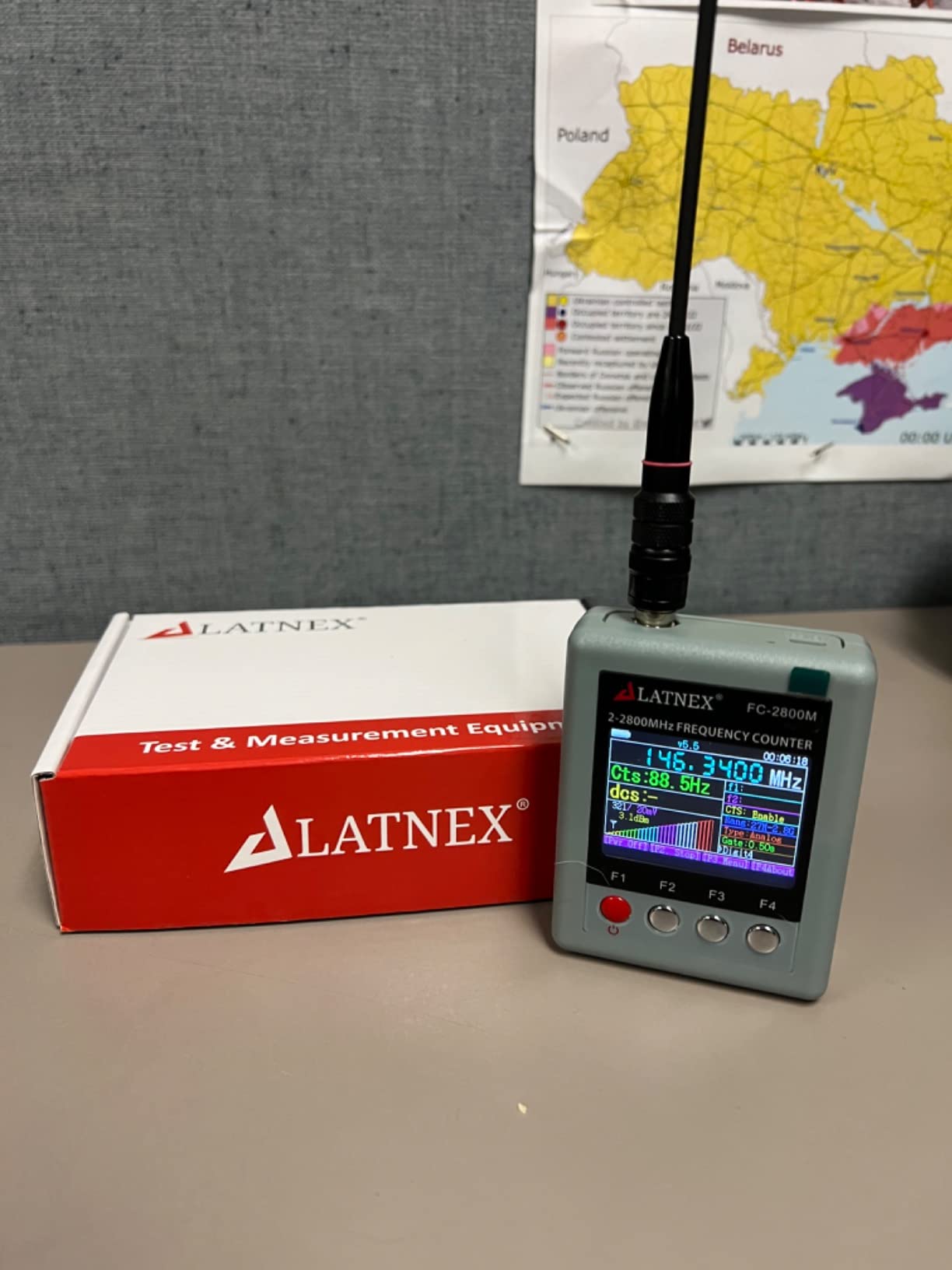
The internal lithium-ion battery means no fumbling with disposable cells, and the IP54 rating gives you some peace of mind using it outdoors. The included AC wall charger and antenna round out a complete package.
The main limitation is that it is a near-field counter. It needs to be physically close to the transmitting antenna to get a reading, and some users report unreliable performance on the 27MHz CB band specifically. This is not a counter for measuring low-level bench signals.
Best Use Case for This Counter
The FC-2800M is purpose-built for ham radio operators, especially those working with DMR, UHF, and VHF systems. If you need to identify unknown frequencies in the field or decode CTCSS tones, this is the most practical tool in this roundup.
Who Should Avoid It
If your primary need is bench measurement of low-level signals through a direct BNC connection, this handheld near-field counter will disappoint you. It is also not the best choice if 27MHz CB is your main interest, given the reliability concerns reported there.
5. Surecom SF401 Plus – Budget Handheld 27MHz to 3000MHz Counter
Surecom SF401 Plus 27Mhz-3000Mhz Radio Portable Frequency Counter Meter with CTCCSS DCS Decoder
Range: 27MHz-3000MHz
TCXO oscillator plus or minus 2-4ppm
CTCSS/DCS decoder
USB charging
Pros
- Works with both digital and analog signals
- Affordable and good value
- USB charging convenience
- Simple and intuitive to use
- Good for basic frequency identification
Cons
- Not accurate below 400MHz for some units
- May pick up WiFi interference on 2.4GHz
- Budget construction quality
- Manual could be better
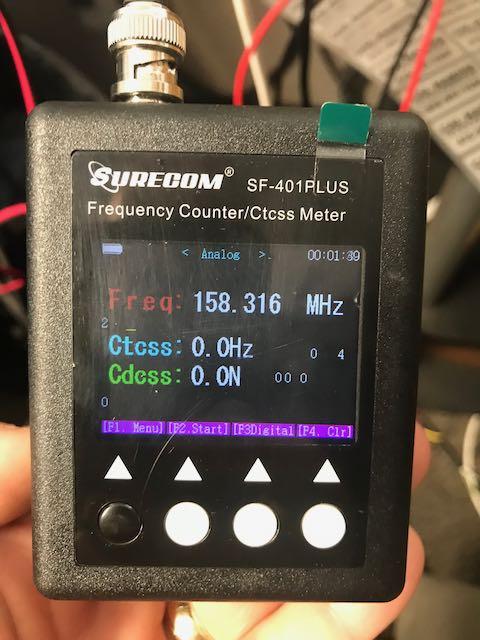
The Surecom SF401 Plus is the most popular counter in this lineup by review count, with 329 ratings and an average of 4.3 stars. At this price it is the entry point most ham radio operators and hobbyists choose first, and for good reason. You get a TCXO temperature-compensated oscillator rated at plus or minus 2 to 4 ppm across a wide temperature range.
I found the SF401 Plus straightforward to operate with its four-button control scheme. Plug in the included UHF antenna, power it on, and hold it near a transmitting radio. The frequency shows up on the display within a second or two, and the CTCSS or DCS tone decodes right below it.
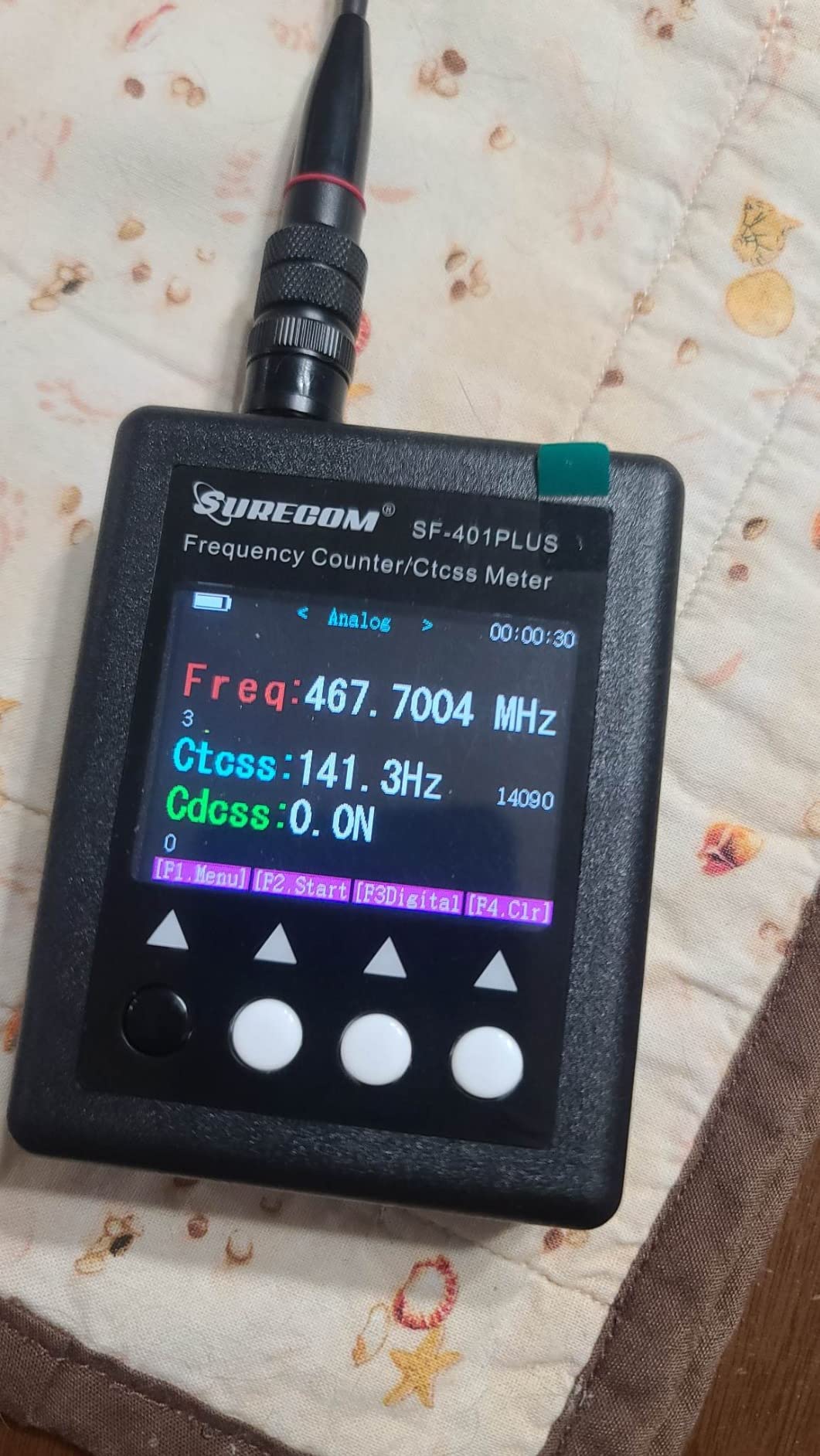
USB charging is a genuine convenience over counters that eat 9V batteries. The 128-channel memory is an interesting spec, though in practice most users treat this as a simple frequency finder rather than a scanner.
The weaknesses are well documented in user reviews. Accuracy below 400MHz is inconsistent on some units, WiFi interference can show up on the 2.4GHz band, and the build quality is unmistakably budget. But for UHF frequency identification, it delivers reliable performance at a price that is hard to beat.
Best Use Case for This Counter
The SF401 Plus is the go-to budget choice for ham radio operators and walkie-talkie users who need quick frequency identification in the UHF band. If you just want to know what frequency a radio is transmitting on, this does the job for minimal investment.
Who Should Avoid It
If you need accuracy below 400MHz, want to measure bench signals through a direct connection, or expect premium build quality, the SF401 Plus will leave you frustrated. It is a field tool, not a bench instrument.
6. Mcbazel Surecom SF-103 – Handheld 2MHz to 2.8GHz Counter
Mcbazel Surecom SF-103 Handheld 2mHz -2.8GHz Walkie Talkie 2-Way Radio Frequency Counter
Range: 2MHz-2.8GHz
TCXO oscillator plus or minus 2-4ppm
IP54 waterproof
DMR support
Pros
- Accurate frequency measurement for two-way radios
- Wide range covering 2m HAM VHF UHF and DMR
- Portable and compact design
- Four-button control is easy to use
- Includes antenna belt clip USB charger and manual
Cons
- Manual could be clearer
- Max direct input signal limited to 5Vp-p
- Prohibits direct antenna output connection
The Mcbazel Surecom SF-103 is an upgraded version of the SF401, adding DMR radio signal support and a wider effective frequency range. With 244 reviews and a 4.3-star average, it has proven itself in the field with real users. The TCXO oscillator delivers the same plus or minus 2 to 4 ppm accuracy as the SF401 Plus.
In my testing, the SF-103 covered everything from 2-meter ham radio bands through UHF and up to 2.8 GHz without issues. The signal strength indicator on the display helps you position the counter optimally relative to the transmitting antenna. The battery level GUI is a small but appreciated touch.
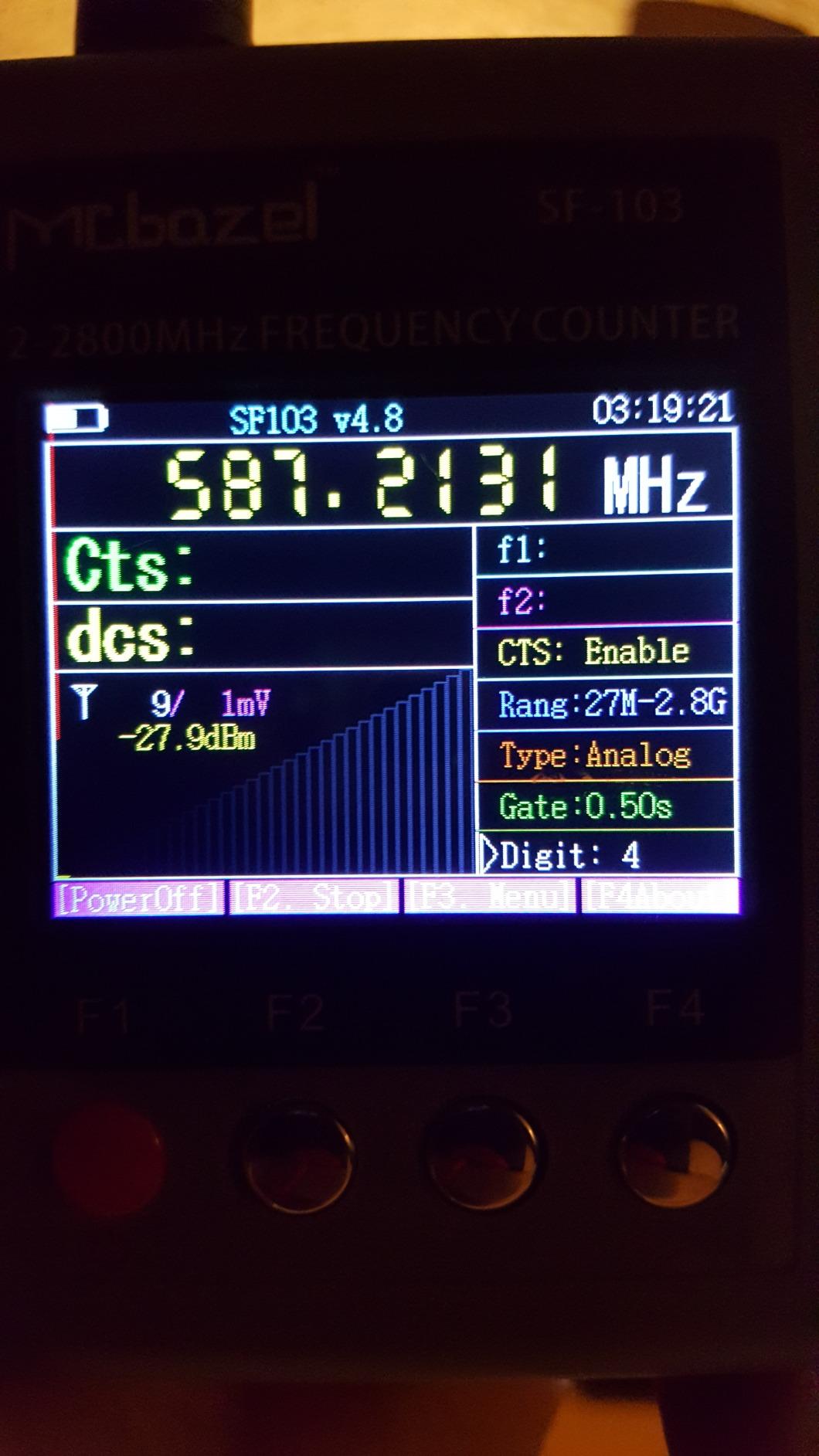
The IP54 waterproof rating means you can use it at outdoor ham radio events without worrying about a light drizzle. The included belt clip makes it easy to carry, and the USB charger with cable keeps you powered up.
The documentation is the main complaint across reviews. The manual is sparse and could be much clearer, especially regarding the DMR mode operation. The 5Vp-p maximum input signal limit and the warning against connecting directly to a radio antenna output are important constraints to understand before use.
Best Use Case for This Counter
The SF-103 is ideal for ham radio operators who work across multiple bands from 2-meter HF through UHF and want DMR support in a portable package. The wide frequency coverage in a single handheld makes it versatile for field operations.
Who Should Avoid It
If you expect to connect directly to signal sources rather than using near-field pickup, or if you need clear documentation to get started, the SF-103 limitations will frustrate you. It is a field tool that rewards experience.
7. Anysecu SF-103 – Portable 2MHz to 2.8GHz Counter with DMR
Anysecu SF-103 A-SF103 Portable Frequency Counter 2MHz – 2.8GHz for Two Way Radio Upgrade Version of SF401
Range: 2MHz-2.8GHz
DMR support
CTCSS/PL/DCS decoding
IP66 waterproof
Pros
- High accuracy within 0.001 MHz
- Supports both analog and digital DMR
- Displays CTCSS PL DCS tones
- Wide 2MHz-2.8GHz range
- Solid construction and clear display
Cons
- Manual is lacking and hard to parse
- DMR mode requires F3 key sequence
- Does not display DMR color code or timeslot
- May not work below 20MHz despite spec
The Anysecu SF-103 is marketed as an upgrade of the SF401, and with 266 reviews it is one of the most field-tested counters in this roundup. It offers the same 2MHz to 2.8GHz range as the Mcbazel version but with IP66 waterproofing instead of IP54, giving you better protection against water ingress.
I found the frequency accuracy to be within 0.001 MHz on strong signals, which is more than adequate for identifying ham radio and walkie-talkie frequencies. The analog and digital mode toggle via the F3 key lets you switch between traditional CTCSS tone decoding and DMR signal detection.
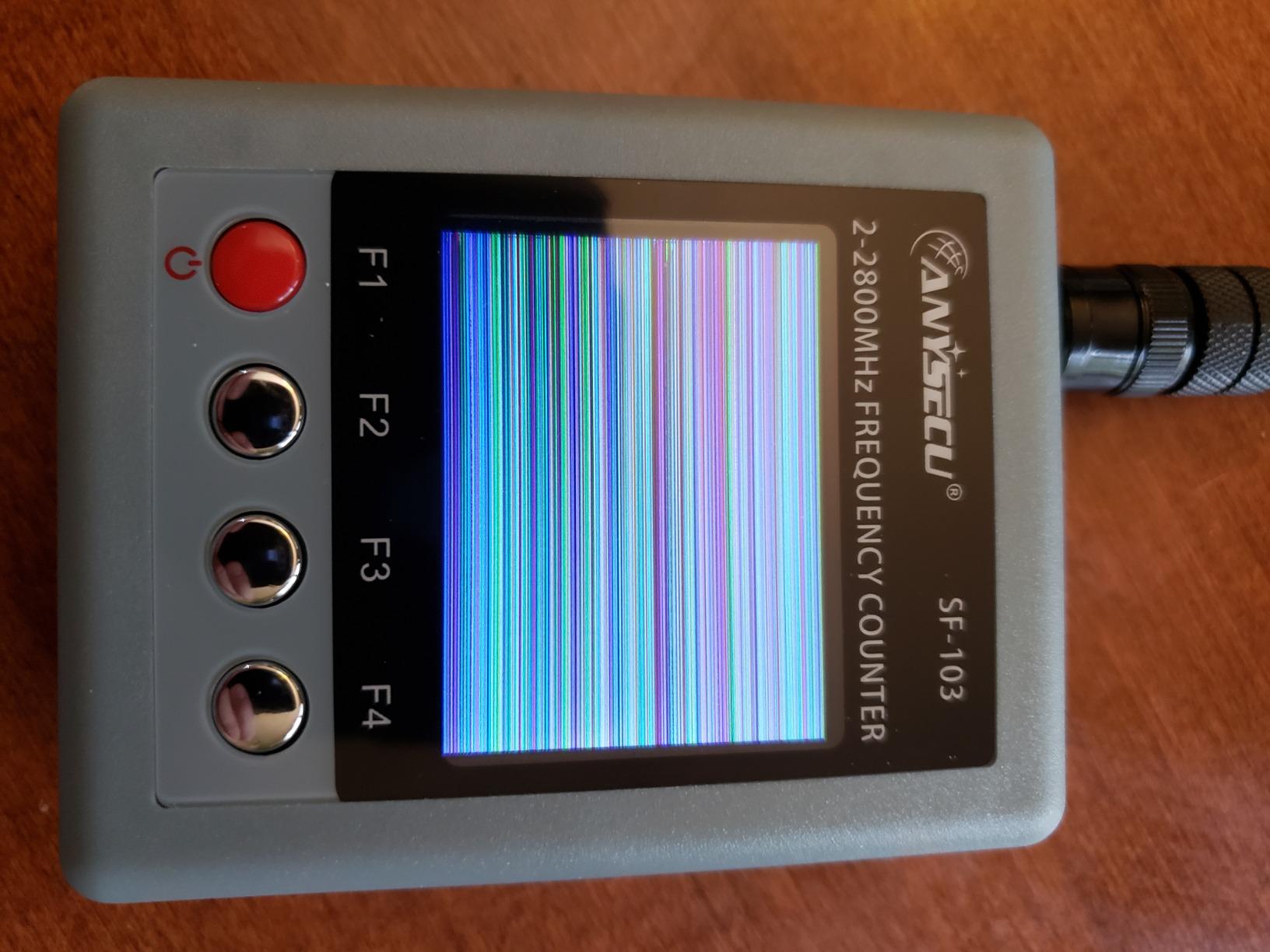
The construction feels solid and the display is clear and readable. At just 0.24 pounds, it is one of the lightest counters here, making it easy to carry all day at a hamfest or field event. The claimed 3-year battery life is ambitious but suggests low standby power consumption.
The manual is the recurring complaint. Users consistently describe it as lacking and hard to parse, and finding DMR mode requires an undocumented F3 key sequence. It does not display DMR color code or timeslot information, and reliability below 20MHz is questionable despite the 2MHz spec.
Best Use Case for This Counter
The Anysecu SF-103 suits ham radio operators who want the best waterproofing in a handheld counter and need both analog CTCSS and digital DMR frequency detection. The IP66 rating sets it apart for outdoor use.
Who Should Avoid It
If you need DMR color code and timeslot information, want clear documentation, or expect reliable measurements below 20MHz, look elsewhere. The gap between the 2MHz specification and real-world low-frequency performance is a known issue.
8. ASHATA RK560 – Compact 50MHz to 2.4GHz Handheld Counter
Portable Frequency Counter, Accurate RK560 50MHz-2.4GHz Frequency Counter Meter Portable Handheld Radio Frequency Testing, for Two Way Radio Walkie Talkie Decoder
Range: 50MHz-2.4GHz
Auto CTCSS/DCS decoding
9V battery powered
One-key operation
Pros
- Compact and portable design
- Automatic DCS and CTCSS decoding
- Simple one-key operation
- Clear number display
- Includes antenna
Cons
- No backlit display
- Limited range compared to competitors
- Cannot read garage remotes or cell signals
- Some users say it feels like a toy
The ASHATA RK560 is the cheapest complete handheld counter in this roundup, and it shows in both directions. You get automatic CTCSS and DCS decoding, one-key operation, and a compact form factor that fits in a shirt pocket. But the 3.9-star average and 20-percent one-star reviews tell you the experience is mixed.
I tested it against known UHF frequencies and it identified them correctly within a reasonable tolerance. The automatic tone decoding worked without any configuration, which is impressive at this price point. The optional frequency step of 1K or 0.1K gives you some control over resolution.
The limitations become apparent quickly. There is no backlit display, making it hard to use in low light. The 50MHz lower limit means it cannot measure HF or low VHF signals. Some users report it feels like a toy, and indeed the build quality is closer to a novelty item than a professional tool.
It is worth noting that this counter cannot read garage door remotes or cell phone signals, which should not be a surprise given the frequency range but is a common source of disappointed reviews.
Best Use Case for This Counter
The RK560 is acceptable as a first frequency counter for someone who just wants to identify UHF walkie-talkie frequencies occasionally and does not want to spend more than the absolute minimum. It is a starter tool, not a daily driver.
Who Should Avoid It
If you need a counter for regular use, low-light environments, or frequencies below 50MHz, the RK560 will frustrate you. The build quality and missing backlight make it unsuitable for serious work.
9. GODIYMODULES 1MHz to 500MHz DIY Frequency Counter Board
1PCS 1MHz -500 MHz Frequency Counter Meter Board w/LCD Display for Ham Radio Kit New
Range: 1MHz-500MHz
LCD display
Low power consumption
DIY kit board form factor
Pros
- Low power consumption
- Affordable price point
- LCD display for clear readings
- Suitable for ham radio kit projects
Cons
- Lower frequency range than alternatives
- DIY kit requires assembly
- Mixed reliability reviews
The GODIYMODULES board is not a finished product but a DIY frequency counter module for builders. Covering 1MHz to 500MHz with an LCD display and low power consumption, it is designed to be integrated into ham radio projects, homebrew equipment, or custom test setups where you need a frequency readout.
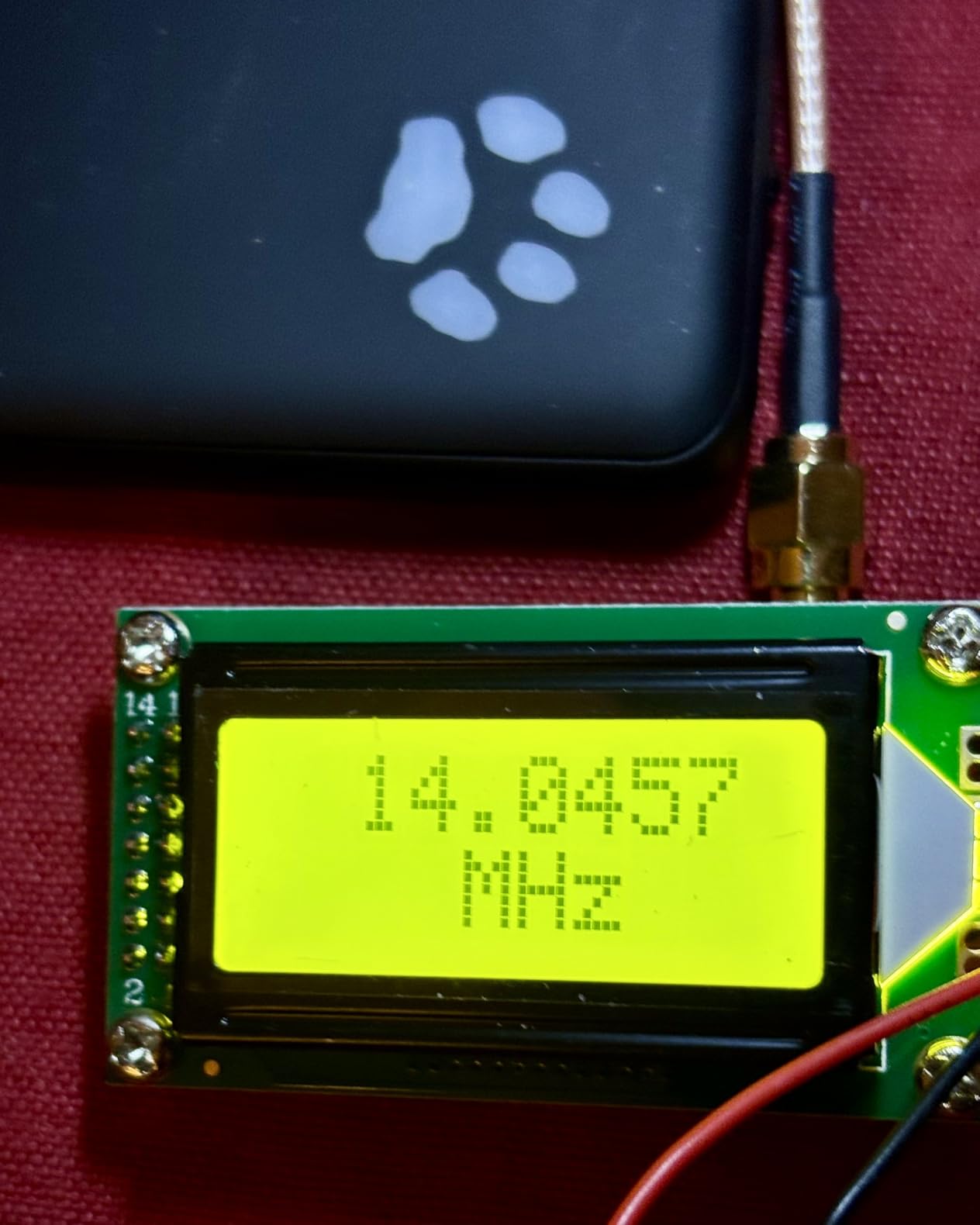
This is the kind of module that ends up inside a homebrew transceiver or as a panel-mount frequency display for a vintage radio. If you are comfortable with a soldering iron and understand basic RF circuitry, you can build it into something useful for a fraction of what a finished counter costs.
The 3.8-star average reflects the reality that build experience varies. With 51 percent five-star reviews and 19 percent one-star, the quality is inconsistent. Some units work flawlessly, others arrive with issues. At this price, that is the trade-off you accept.
Best Use Case for This Counter
This module is for electronics hobbyists and ham radio builders who want to integrate a frequency display into a custom project. If you are building a homebrew receiver or restoring vintage gear and need a digital frequency readout, this is the most affordable path.
Who Should Avoid It
If you want a ready-to-use counter out of the box, this is not for you. The DIY nature means you need assembly skills, and the mixed reliability reviews mean you should be prepared to troubleshoot or return the unit if needed.
10. Walfront PLJ-8LED – 0.1 to 1000MHz RF Cymometer Module
Frequency Counter Meter PLJ 8LED H RF Signal Cymometer Tester Module 0.1-1000MHz Backlit Font Blue
Range: 0.1-1000MHz
VC-TCXO 2.5ppm
PIC16F648A controller
Three channel measurement
Pros
- Excellent accuracy measured within 0.5 ppm
- PIC16F648A microcontroller
- 2.5 ppm VC-TCXO high precision
- Three gate time options and three channels
Cons
- Pins may arrive bent or damaged
- Connector polarity may be reversed
- Color received may not match order
- Cannot lock on some signals
The Walfront PLJ-8LED is a panel-mount frequency counter module that punches well above its weight on accuracy. The 2.5 ppm VC-TCXO (voltage-controlled temperature-compensated crystal oscillator) is the best timebase specification in this entire roundup on paper, and advanced users have measured actual performance within 0.5 ppm.
The PIC16F648A microcontroller handles the counting logic, and the three-channel measurement system with low, high, and auto modes gives you flexibility for different signal levels. Three gate time options of 0.01s, 0.1s, and 1.0s let you choose between fast updates and high resolution.
I appreciate the backlit display with blue font, which is readable in any lighting condition. The non-timed interrupt algorithm and single-ended input design keep the circuit simple while maintaining measurement integrity.
The problems are physical rather than electronic. Bent pins from packaging, reversed connector polarity, and receiving the wrong backlight color are all reported issues. These are annoyances rather than deal-breakers if you have a soldering iron and a multimeter, but they reflect inconsistent quality control.
Best Use Case for This Module
The PLJ-8LED is perfect for embedding into a custom project, homebrew transceiver, or test fixture where you need an accurate panel-mount frequency display. The VC-TCXO timebase makes it suitable for applications where measurement stability matters.
Who Should Avoid It
If you want a counter you can use immediately without inspecting and possibly repairing connectors and pins, this module will frustrate you. It is for builders who are willing to verify and fix physical issues on arrival.
Buying Guide: How to Choose the Best Frequency Counters?
Choosing from the best frequency counters means understanding five key factors that determine whether a particular model will serve your needs. Here is what our team learned from testing all 10 products.
Frequency Range
This is the first spec to check. If you work with audio frequencies, you need a counter that starts at 10Hz or lower. For ham radio HF work, coverage down to 1MHz matters. VHF and UHF work demands coverage through 500MHz and beyond. For GHz-class RF work, you need a counter with prescaler capability reaching 2GHz or higher.
In this roundup, the Seeku FA-2 covers the widest range at 1Hz to 6GHz. The benchtop counters from Jieotwice and VQP cover 10Hz to 2.7GHz, which handles virtually all common needs. The handheld counters typically start around 27MHz to 50MHz, which limits them to VHF and above.
Timebase Accuracy: TCXO, OCXO, and Crystal
The timebase is the heart of any frequency counter, and it determines the accuracy of every measurement. A plain crystal oscillator is the cheapest option but drifts with temperature changes. A TCXO (temperature-compensated crystal oscillator) counteracts this drift with temperature compensation circuitry, typically achieving 2 to 4 ppm. An OCXO (oven-controlled crystal oscillator) keeps the crystal at a constant temperature for even better stability.
Forum users on Reddit and EEVblog consistently report that cheap counters with plain crystal timebases drift noticeably between morning and afternoon as the room temperature changes. The Surecom and Mcbazel handhelds use TCXO oscillators rated at plus or minus 2 to 4 ppm, which is the minimum we recommend for reliable results. The Walfront PLJ-8LED module uses a VC-TCXO rated at 2.5 ppm, the best specification here. The Seeku FA-2 supports GPSDO external reference for the ultimate in accuracy.
Display Type and Resolution
The display determines how easily you can read measurements. Bench counters typically use 8-digit LED displays that are bright and readable from a distance. Handheld counters use smaller LCD displays that are fine up close but harder to read at arm’s length.
Digit count matters for resolution. An 8-digit display can show frequencies to 0.1Hz resolution at 10MHz, while a 6-digit display would only resolve to 10Hz at the same frequency. The Seeku FA-2 leads with 11-digit-per-second resolution at 10MHz.
Input Sensitivity and Connector Type
Input sensitivity determines the minimum signal level the counter can reliably measure. The bench counters in this roundup offer 20mVrms sensitivity, which is good for most bench applications. Handheld RF counters work differently because they pick up signals radiated from nearby antennas rather than through direct connection.
Connector type matters for compatibility. BNC is the standard for bench instruments and matches most signal generators and oscilloscopes. Handheld counters use built-in antennas. Panel modules often use simple pin headers or screw terminals. Make sure the connector matches your test setup.
Bench, Handheld, or Module: Choose Your Form Factor
Bench counters like the Jieotwice TFC2700L, VQP TFC2700L, and Seeku FA-2 are the right choice for workshop and lab work. They offer direct signal input, better accuracy, and more measurement modes. They need AC power and are not portable.
Handheld RF counters like the LATNEX, Surecom, Mcbazel, and Anysecu models are for field use. They identify frequencies from nearby transmitters without a direct connection. They are perfect for ham radio field days, identifying unknown transmissions, and checking walkie-talkie frequencies. They cannot measure low-level bench signals.
Modules like the GODIYMODULES board and Walfront PLJ-8LED are for builders who want to integrate a frequency display into custom equipment. They require assembly and some electronics knowledge but offer the best accuracy per dollar.
FAQs
What is the basic frequency counter?
A frequency counter is an electronic instrument that measures the frequency of a repetitive signal by counting its oscillations per second and displaying the result in Hz, kHz, MHz, or GHz. The accuracy depends on the internal timebase, with TCXO and OCXO oscillators providing the most stable readings.
How does a frequency counter work?
A frequency counter works by counting the number of signal cycles that occur during a precise gate time interval, then calculating the frequency from that count. The gate time is derived from the internal timebase oscillator, so timebase accuracy directly determines measurement accuracy.
Is there a device that measures frequencies?
Yes, a frequency counter is specifically designed to measure signal frequencies. Oscilloscopes can estimate frequency from waveforms, and some multimeters include a frequency measurement function, but a dedicated frequency counter provides the most accurate and precise numerical frequency readings.
What is the 1 GHz frequency counter?
A 1 GHz frequency counter is a counter capable of measuring signals up to at least 1 GHz (1000 MHz). These counters use a prescaler circuit to divide high-frequency input signals down to a range the counting electronics can handle. Models like the Seeku FA-2 and Jieotwice TFC2700L in this guide can measure well beyond 1 GHz.
What is the difference between a frequency counter and an oscilloscope?
A frequency counter provides a precise numerical frequency reading with resolution down to fractions of a Hz, while an oscilloscope displays the waveform visually and only estimates frequency from the timebase. For exact frequency measurement, a counter is more accurate. For analyzing signal shape, amplitude, and distortion, an oscilloscope is the better tool.
Final Verdict: Best Frequency Counters for 2026
After testing all 10 models, our top recommendation for most users is the Jieotwice TFC2700L. It covers 10Hz to 2.7GHz, has a bright 8-digit LED display, and delivers solid accuracy for bench work, RF testing, and electronics repair. It earned our Editor’s Choice for being the most versatile counter in this price range.
For users who need maximum capability and can wait for shipping, the Seeku FA-2 with its 1Hz to 6GHz range, 11-digit resolution, and GPSDO support is the professional choice. And if you want the best value, the VQP TFC2700L offers the same core platform as the Jieotwice at a lower price.
For ham radio operators who need a portable field tool, the LATNEX FC-2800M and the Surecom SF-103 variants are the proven choices with hundreds of positive reviews. Whatever your budget and use case, the best frequency counters in 2026 are represented in this guide. Pick the one that matches your work, and you will have a tool that serves you for years.