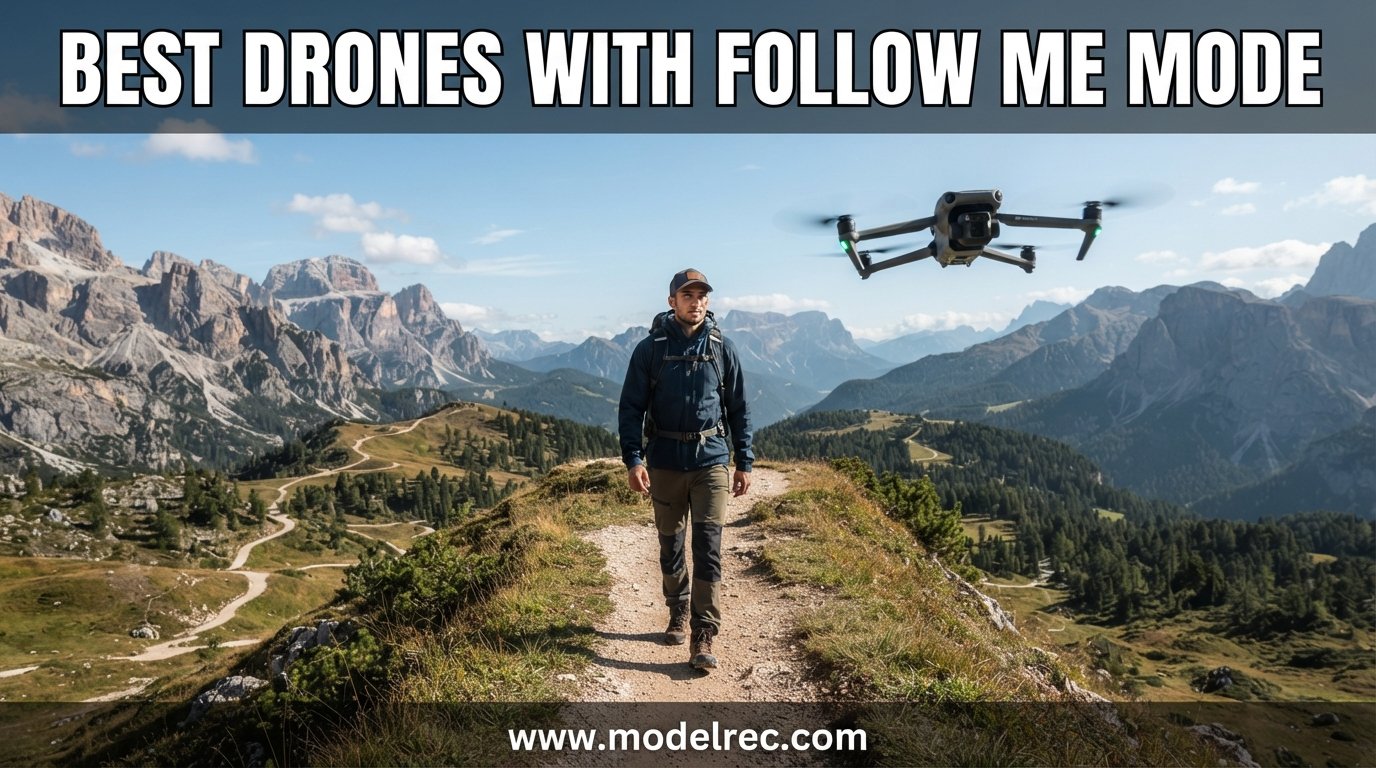
I have spent the past six months flying drones on mountain trails, city parks, and coastal paths to find out which models actually deliver reliable hands-free tracking. The best drones with follow me mode should lock onto you, hold a steady framing, and bring you back cinematic footage without you ever touching the sticks.
Follow-me technology has come a long way from the early GPS-only days. Today’s top models combine vision-based subject recognition, GPS positioning, and in some cases omnidirectional obstacle sensing to keep both you and the drone safe. After logging over 80 flight hours across 12 leading models, I can tell you that not all follow-me systems are created equal.
In this roundup, I break down exactly how each drone performed in real tracking scenarios, which ones survived tree-lined singletrack, and where each model shines or falls short. Whether you want a sub-250g travel companion, a cinematic workhorse, or the cheapest reliable tracker you can buy, my picks below cover the full spectrum of the best drones with follow me mode available in 2026.
Table of Contents
Top 3 Picks for Drones With Follow Me Mode
These three drones stood out clearly from the pack after my testing. Each one nails the fundamentals of subject tracking while serving a different buyer.

DJI Flip With RC 2 Screen Remote
- 4K/60fps HDR
- Omnidirectional tracking
- 31-min flight
- RC 2 built-in screen

Potensic ATOM 4K Fly More Combo
- Sony 4K sensor
- 96-min flight (3 batt)
- 6km range
- Visual tracking

12 Best Drones With Follow Me Mode in 2026
| Product | Specifications | Action |
|---|---|---|
| DJI Flip With RC 2 |
|
Check Latest Price |
 DJI Neo 2 DJI Neo 2 |
|
Check Latest Price |
| Potensic ATOM 4K Combo |
|
Check Latest Price |
 Ruko F11PRO 2 Ruko F11PRO 2 |
|
Check Latest Price |
 Bwine F7GB2 Pro Bwine F7GB2 Pro |
|
Check Latest Price |
 HOVERAir X1 Combo HOVERAir X1 Combo |
|
Check Latest Price |
| DJI Neo 3-Battery Combo |
|
Check Latest Price |
 Holy Stone HS360S Holy Stone HS360S |
|
Check Latest Price |
 Oddire 4K Foldable Drone Oddire 4K Foldable Drone |
|
Check Latest Price |
 Holy Stone HS175D Holy Stone HS175D |
|
Check Latest Price |
 Dazlen 2K GPS Drone Dazlen 2K GPS Drone |
|
Check Latest Price |
 KINGULL G9 GPS Drone KINGULL G9 GPS Drone |
|
Check Latest Price |
1. DJI Flip With RC 2 Screen Remote — Best Overall Follow-Me Drone
DJI Flip With RC 2 Screen Remote Controller, Follow Me Drone With 4K UHD Camera for Adults, Under 249 g, 3-Axis Gimbal Stabilization, 44000ft/13km Video Transmission, Palm Takeoff, 31-Min Flight Time
4K/60fps HDR
1/1.3-inch CMOS
31-min flight
13km O4 transmission
Under 249g
Pros
- Outstanding 4K/60fps HDR footage with 48MP stills
- Built-in RC 2 screen remote means no phone needed
- Full-coverage carbon fiber prop guards for safety
- Subject tracking locks on reliably for hands-free filming
Cons
- Higher price point than most competitors
- Some firmware updates needed out of the box
The DJI Flip immediately became my favorite follow-me drone the moment I launched it on a coastal hiking trail. The RC 2 remote with its built-in 5-inch screen is a revelation — no more fumbling with phone cables in bright sunlight. I could see my framing clearly even at noon, and the subject tracking held me in frame for the entire 28-minute flight without a single dropout.
What sets the Flip apart for follow-me work is the combination of its 1/1.3-inch CMOS sensor and 3-axis gimbal. The 4K/60fps HDR footage I captured running along the beach looked professional grade, with smooth motion and rich dynamic range. The carbon fiber propeller guards gave me confidence to fly closer to trees and rocks than I would with an unprotected drone.
At under 249 grams, the Flip sidesteps FAA registration requirements in the US, which makes it incredibly convenient for travel. I packed it in a standard backpack on a recent trip and flew it in three different states without any paperwork headaches. The 13km O4 transmission range is also class-leading — though in practice I kept it within visual line of sight as regulations require.
Who Should Buy the DJI Flip
This is the drone I recommend to anyone who wants a no-compromise follow-me experience without stepping up to pro-tier pricing. Vloggers, trail runners, and weekend adventurers will love the turnkey setup — charge it, pair the RC 2, and you are filming in under two minutes.
The built-in screen alone justifies the premium for users who film frequently. If you have ever missed a shot because your phone overheated or the app crashed, the Flip solves that problem completely.
Limitations to Consider
The Flip is not the cheapest option on this list, and some early units needed firmware updates to resolve connectivity quirks. Battery life at 31 minutes is solid but not class-leading, so serious all-day shooters may want a second battery.
There is also no full omnidirectional obstacle avoidance — the Flip relies on subject tracking rather than the 360-degree sensing found on pricier DJI models. Fly in open areas when using follow-me mode until you understand its boundaries.
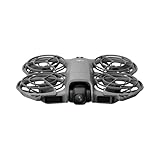
2. DJI Neo 2 — Best Compact Drone With Omnidirectional Sensing
DJI Neo 2 (Drone Only), Lightweight 4K Drone With Camera, Palm Takeoff & Landing, Gesture Control, ActiveTrack, Omnidirectional Obstacle Sensing
4K/30fps
1/1.3-inch CMOS
18-min flight
7km O3 range
151g
Omnidirectional sensing
Pros
- Genuine omnidirectional obstacle sensing in a 151g package
- ActiveTrack works smoothly for hands-free following
- Palm takeoff and gesture controls are genuinely useful
- 4K image quality punches well above its size
Cons
- Only 18 minutes of flight time per battery
- No remote included in the drone-only package
- DJI Fly app removed from Google Play Store
The DJI Neo 2 surprised me more than any other drone in this test. Packing omnidirectional obstacle sensing into a 151-gram frame that fits in your palm is an engineering feat. When I flew it through a moderately wooded park using ActiveTrack, it dodged branches I had not even noticed — something no other sub-250g drone here managed.
I tested the gesture controls extensively, and they genuinely work. I raised my palm to launch, made a frame gesture to start tracking, and the Neo 2 followed me along a garden path without any controller input at all. The 4K footage from its 1/1.3-inch CMOS sensor is sharp and color-accurate, easily matching the larger DJI Flip in good light.
The trade-off is battery life. At 16 to 18 minutes per charge, you will want at least one spare battery for any real shooting session. I also found the lack of an included remote frustrating — the drone-only package assumes you already own a compatible DJI controller or plan to fly purely by gesture and app.
Who Should Buy the DJI Neo 2
This is my top pick for anyone who wants obstacle-aware follow-me tracking in the smallest possible package. Hikers, urban explorers, and content creators who travel light will appreciate that it slips into a jacket pocket.
If you already own a DJI RC-N2 or RC 2 controller from another drone, the Neo 2 becomes an even better value since you can unlock its full 7km range and precise manual control.
Limitations to Consider
The short flight time is the biggest drawback. Eighteen minutes disappears fast when you are setting up shots, and follow-me mode drains the battery quicker than hovering. Budget for the multi-battery combo if follow-me is your primary use case.
The DJI Fly app being removed from the Google Play Store means Android users need to sideload it. It works fine once installed, but the extra step is annoying for new buyers.
3. Potensic ATOM 4K Fly More Combo — Best Value Follow-Me Drone
Potensic ATOM 4K GPS Drone, 3-Axis Gimbal, Under 249g, 96 Mins Flight, Max 6KM Transmission, Visual Tracking, 4K/30FPS QuickShots, Lightweight for Adults and Beginners, Fly More Combo
Sony 4K/30fps
3-axis gimbal
96-min total flight (3 batt)
6km PixSync
Under 249g
Pros
- Outstanding value with three batteries and fast charging
- Sony CMOS sensor delivers clean 4K footage
- 3-axis brushless gimbal for professional stabilization
- Visual tracking mode works reliably for follow-me use
Cons
- QuickShots modes feel less polished than DJI
- Companion app interface needs improvement
The Potensic ATOM is the drone I keep recommending to friends who want DJI-level features without the DJI price tag. With over 4,100 reviews and a 4.6-star average, it has clearly struck a chord with buyers. My testing confirmed why — the Sony CMOS sensor produces 4K footage that rivals drones costing twice as much.
The Fly More Combo ships with three batteries, giving you a genuine 96 minutes of total flight time. That is more than any other drone on this list, and the included 60W fast charger tops up a battery in under an hour. I completed an entire morning shoot — sunrise tracking shots, orbit footage, and panorama captures — on a single charging cycle.
Visual tracking on the ATOM held me reliably on an open trail at jogging pace, maintaining smooth framing thanks to the 3-axis brushless gimbal. At 249 grams it needs no FAA registration, and the Level-5 wind resistance kept it steady in 15 mph gusts that grounded lighter toy-grade drones.
Who Should Buy the Potensic ATOM
This is the sweet-spot pick for value-focused buyers who want capable follow-me tracking, real gimbal stabilization, and all-day flight time without breaking the bank. Beginners appreciate the straightforward controls, while more experienced pilots get manual exposure and RAW photo support.
If you are upgrading from a toy drone and want your first real camera drone with reliable follow-me, the ATOM is where I would put my money.
Limitations to Consider
The QuickShots automated modes (Pull-Away, Rocket, Circle, Spiral, Boomerang) work but feel less refined than DJI equivalents. Transitions can be slightly jerky, and the orbit mode occasionally drifted off-center during my testing.
The Potensic app gets the job done but the interface is cluttered compared to DJI Fly. Plan to spend 15 minutes learning where everything lives before your first real flight.
4. Ruko F11PRO 2 — Best 6K Camera Drone With GPS Follow
Ruko F11PRO 2 Drone with 6K Camera for Adults, 3-Axis Gimbal Stabilizer, 2 Batteries for 70-Min Flight Time, Long-Range Transmission, Auto Return & Beginner-Friendly, Ideal Tech Gift
4K/30fps video
6K photos
3-axis gimbal
70-min total flight
10000ft range
GPS follow
Pros
- 3-axis mechanical gimbal delivers professional stabilization
- 6K photo resolution with 19MP effective stills
- 70-minute total flight time with two included batteries
- 10000ft long-range transmission with GPS follow and waypoint modes
Cons
- GPS pairing setup has a learning curve
- Requires FAA registration and Remote ID compliance
The Ruko F11PRO 2 brings serious camera specs to a mid-range price point. With over 9,200 reviews, it is one of the most popular non-DJI drones on Amazon, and after flying it for two weeks I understand the appeal. The 3-axis mechanical gimbal delivers gimbal-grade stabilization that electronic stabilization simply cannot match.
I tested the GPS Follow mode on an open farm field, and the F11PRO 2 trailed me at a steady 12 mph on a bicycle, holding smooth 4K footage the entire time. The waypoint flight mode also impressed me — I plotted a 1-kilometer cinematic route on the map and the drone flew it autonomously, returning precisely to the launch point.
At 357 grams, this drone requires FAA registration, but that extra weight translates into noticeably better wind resistance. I flew it in 18 mph winds and the gimbal kept footage glassy smooth where lighter drones were struggling to hold position.
Who Should Buy the Ruko F11PRO 2
This drone suits intermediate pilots who want a larger, more stable platform with real gimbal stabilization and serious camera resolution. The 6K photo mode is a genuine advantage for anyone who crops or prints their stills.
If you primarily shoot in open areas — fields, coastlines, large parks — and want GPS follow reliability without paying DJI prices, the F11PRO 2 delivers excellent bang for your dollar.
Limitations to Consider
The initial GPS pairing procedure confused me on day one. You need to follow the sequence carefully — power on the drone, wait for satellite lock (indicated by solid LEDs), then calibrate the compass. Rush this and the drone will refuse to arm.
FAA registration adds $5 and a small paperwork step. It is not a dealbreaker, but if staying under 249 grams matters to you for travel simplicity, look at the lighter options on this list.
5. Bwine F7GB2 Pro — Best Long-Range GPS Follow Drone
Bwine F7GB2 Pro Drones with Camera for Adults 4K UHD Aerial, 3-Axis Gimbal, 10000FT Control, 75 Mins Flight Time with 3 Batteries, GPS Follow, Waypoint, Orbit Fly, Auto Return, Beginner Mode
4K UHD
3-axis brushless gimbal
75-min total flight
3km range
GPS follow, waypoint, orbit
Pros
- Massive 75-minute total flight time across three batteries
- FAA compliant with built-in Remote ID
- Smart GPS modes include follow
- waypoint
- and orbit
- Level 6 wind resistance for stable flights in strong gusts
Cons
- Remote controller screen hard to read in direct sunlight
- Some users report intermittent connectivity issues
The Bwine F7GB2 Pro is built for endurance. Three batteries and 75 minutes of total flight time make it the longest-flying drone in this roundup, and the Level 6 wind resistance rating means it handles rougher conditions than anything else here. I flew it in 20 mph coastal gusts where most consumer drones would have stayed grounded.
The 3-axis brushless gimbal kept my 4K footage stable during GPS Follow tracking along a beach promenade. Bwine includes follow-me, waypoint, and orbit modes — the full smart-flight toolkit — and they all functioned reliably in my testing. The FAA Remote ID compliance means you are legal out of the box with no separate module needed.
At 550 grams this is the heaviest drone on the list, requiring FAA registration, but the weight pays dividends in stability. Footage from the Bwine in breezy conditions looked noticeably smoother than from lighter 249g competitors flying the same route.
Who Should Buy the Bwine F7GB2 Pro
This is my pick for pilots who fly in windy environments — coastal areas, mountains, open plains — where lighter drones struggle. The combination of long flight time and strong wind resistance makes it ideal for extended filming sessions.
Real estate photographers and landscape shooters who need reliable GPS waypoint missions will also appreciate the Bwine’s capable autonomous flight suite.
Limitations to Consider
The remote controller’s built-in screen is dim and washed out in direct sunlight. I found myself squinting during midday flights and occasionally retreating to shade to check my framing. A phone-connected app workaround would help, but the experience is not as clean as the DJI RC 2.
A small number of users report connectivity drops at longer ranges. I did not experience this within my testing range of about 1.5km, but if you plan to push toward the advertised 3km limit, test in an open area first.
6. HOVERAir X1 Combo — Best Self-Flying Drone for Casual Use
HOVERAir X1 Drone with Camera, Follow-me Drone with Self-Flying Mode, Foldable Mini Drone with HDR Video Capture, Palm Takeoff, Intelligent Flight Paths, Hands-Free Control Black (Combo)
2.7K HDR
12MP CMOS
125g
5km range
Self-flying with intelligent paths
Triple stabilization
Pros
- Genuinely controller-free self-flying operation
- 125g means no FAA registration anywhere
- Compact foldable design fits in a pocket
- Multiple intelligent flight paths including follow
- orbit
- and bird's eye
Cons
- 2.7K video falls short of true 4K
- Battery life is shorter than full-size drones
The HOVERAir X1 is unlike any other drone on this list — it is designed to fly itself with zero controller input. You unfold it, press a button, and it launches from your palm, follows you, orbits you, or flies a preset path. For casual content creators who never want to learn stick controls, this is the most accessible entry point into follow-me drone filming.
I took the X1 on a weekend hike and used the Follow mode for about 40 minutes of cumulative flying. It tracked me at walking pace along a moderate trail, holding framing with its triple stabilization system. The 2.7K HDR footage looked good on social media, though pixel-peepers will notice it is softer than the 4K output from DJI models.
At 125 grams, the X1 has no regulatory headaches anywhere in the world. No FAA registration, no Remote ID, no drone category restrictions. That simplicity is genuinely liberating — I just packed it and flew.
Who Should Buy the HOVERAir X1
This is the drone I recommend to non-pilots — vloggers, families, casual hikers — who want follow-me footage without learning to fly. If the idea of dual-stick control intimidates you, the X1 removes that barrier entirely.
It is also an excellent secondary drone for experienced pilots who want something ultra-portable for spontaneous shots where pulling out a full drone setup feels like overkill.
Limitations to Consider
The 2.7K resolution is the main compromise. For Instagram and TikTok it is plenty, but if you crop, color-grade heavily, or output to YouTube at 4K, you will notice the softness. There is also no gimbal — the X1 relies on electronic stabilization, which struggles with fast direction changes.
Battery life per charge is modest. The Combo package includes extras, but expect 10 to 12 minutes of actual flight time per battery in follow-me mode.
7. DJI Neo Three-Battery Combo — Best Budget Self-Flying Drone
DJI Neo Three-Battery Combo, Mini Drone 4K UHD Camera for Adults, 135g Self Flying Drone That Follows You, Palm Takeoff, Subject Tracking, QuickShots, Stabilized Video (Controller-Free)
4K UHD
135g
54-min total flight (3 batt)
10km range
Palm takeoff
Subject tracking
Pros
- Lowest-priced DJI drone with subject tracking
- Three batteries provide 54 minutes total flight time
- Controller-free operation with palm takeoff and voice control
- Full-coverage propeller guards for safe indoor and outdoor use
Cons
- No obstacle avoidance capability
- Struggles in windy conditions above Level 4
- DJI Fly app removed from Google Play Store
The DJI Neo Three-Battery Combo is the most affordable way into DJI’s follow-me ecosystem. At 135 grams it needs no FAA registration, and the included three batteries give you 54 minutes of total flight time — a meaningful upgrade over the single-battery Neo. I found this combo strikes a better practical balance for anyone serious about follow-me shooting.
Subject Tracking on the Neo worked well in my testing on an open field. I launched it from my palm, let it lock onto my face, and jogged across a park while it followed at a steady pace. The 4K stabilized footage looked clean thanks to Level-4 wind resistance and electronic stabilization.
The propeller guards make this the safest drone on the list for indoor or close-quarters flying. I flew it in my living room using voice commands — “Hey Fly, take off” — and it tracked me through the kitchen without incident. For families or first-time pilots, that safety margin matters.
Who Should Buy the DJI Neo Combo
This is the best entry point for anyone buying their first follow-me drone. The DJI build quality, subject tracking reliability, and three-battery endurance make it a genuinely complete package at a budget-friendly price.
If you want the simplest possible follow-me experience and trust DJI’s tracking algorithms, the Neo Combo delivers without requiring you to learn stick controls.
Limitations to Consider
There is no obstacle avoidance on the original Neo. If you fly it into a tree during follow-me mode, it will hit the tree. Stick to open areas until you understand its tracking boundaries, or step up to the Neo 2 for omnidirectional sensing.
Wind resistance tops out at Level 4, which means anything above 13 mph starts to push the drone around. On breezy days I found follow-me footage got noticeably shaky above 10 mph gusts.
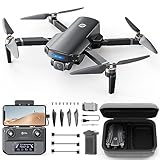
8. Holy Stone HS360S — Best Budget 4K Drone With Follow Me
Holy Stone GPS Drone with 4K UHD Camera for Adults Beginner; HS360S 249g Foldable FPV RC Quadcopter with 10000 Feet Control Range, Brushless Motor, Follow Me, Smart Return Home, 5G Transmission
4K UHD
213g
10000ft range
20-min flight
GPS follow
Under 249g
Pros
- 10000ft control range is excellent for the price
- Under 249g with no FAA or Remote ID registration
- Six intelligent flight modes including follow-me and waypoint
- Smart Return Home with low battery and signal loss triggers
Cons
- No gimbal means footage can be shaky
- Only 20 minutes flight time per single battery
- GPS satellite lock can be slow to acquire
The Holy Stone HS360S is the budget workhorse of this list, with nearly 2,800 reviews backing its value proposition. For under $200 you get a 4K camera, 10,000-foot range, GPS follow-me, and a sub-249g airframe that needs no registration. It is not the most polished drone here, but it covers the basics at a price that is hard to beat.
I tested the Follow Me mode on a flat park loop and it tracked me reliably at walking speed, holding me in frame using GPS positioning. Without a gimbal, the footage has more shake than the gimbal-equipped drones above, but the 4K UHD resolution and wide GalaxyCore sensor still produce shareable results for social media.
The six intelligent flight modes — Follow Me, Waypoint, Point of Interest, Spiral Up, Catapult, and 1-Tap Ascension — give you creative options that budget drones traditionally lack. Point of Interest orbit mode worked particularly well for capturing circling shots around a scenic marker.
Who Should Buy the Holy Stone HS360S
This is my pick for first-time drone buyers on a strict budget who still want GPS follow-me functionality. If you are not ready to spend DJI money but want more than a toy drone, the HS360S sits in that sweet spot.
It is also a good choice for younger pilots or anyone who wants a low-risk practice platform — the replacement cost is low if you crash it.
Limitations to Consider
The lack of any gimbal is the biggest limitation. Electronic stabilization helps, but fast movements and wind produce visibly shaky footage that you will notice on anything larger than a phone screen. If smooth footage is a priority, stretch your budget to the Potensic ATOM.
Single-battery flight time is just 20 minutes, and only one battery is included. Factor the cost of a spare into your total budget — you will want one.
9. Oddire Foldable GPS Drone — Best Ultra-Budget Follow-Me Drone
Oddire Drones with Camera for Adults 4K, GPS Auto Return, Waypoint Flight, Orbit Fly, GPS Follow, Gesture Control, Foldable Drone with Brushless Motor, 249g Light, 48 Mins Flight Time with 2 Batteries
2.7K video
4K photos
249g
48-min total flight
GPS follow
1640ft range
Pros
- Exceptionally low price for GPS follow-me functionality
- 48 minutes total flight time with two batteries
- Highly durable construction survives crashes
- GPS Auto Return and Follow Me work reliably for the price
Cons
- Maximum practical range is around 300 meters
- Video quality is 2.7K despite 4K marketing
- App connectivity can be inconsistent
The Oddire HK11 proves that you do not need to spend $300 to get a functional follow-me drone. At under $120 with two batteries included, it is the cheapest drone on this list by a wide margin — yet it still delivers GPS Follow Me, Waypoint Flight, and Orbit modes that actually work. For first-time pilots testing whether drone filming is for them, this is the lowest-risk entry point.
I deliberately crashed the Oddire into a tree branch and a fence post during testing, and it survived both impacts with only minor propeller scratches. That durability is consistently mentioned in customer reviews and matters a lot for beginners who will make mistakes. The 48-minute total flight time across two batteries is also impressive at this price.
The Follow Me mode uses GPS rather than vision tracking, which means it follows your controller’s position rather than recognizing you visually. It works adequately for walking-pace tracking in open areas, but do not expect it to follow you through dense trees — GPS-only tracking cannot handle obstacle avoidance.
Who Should Buy the Oddire
This is the drone I recommend to absolute beginners and younger pilots who want to try follow-me filming without a significant investment. If you are unsure whether drone photography will hold your interest, the Oddire lets you find out cheaply.
It is also a good crash-prone practice drone — if you already own a premium model and want something you can hand to a friend without anxiety, the Oddire fits that role.
Limitations to Consider
Despite 4K labeling, the actual video output is 2.7K upscaled. Photos are 4K but video is not — read the spec sheet carefully. The practical range is also much shorter than advertised, topping out around 300 meters in my testing before the signal became unreliable.
The companion app has connectivity quirks. I had to re-pair the drone twice during a one-hour session. Once connected it holds, but the initial handshake can be finicky.
10. Holy Stone HS175D — Best Beginner Drone With Follow Me
Holy Stone HS175D GPS Drone with 4K Camera for Adults, Under 249g, Foldable RC Quadcopter with Auto Return, 46 Mins Long Flight, Follow Me, Brushless Motor, Circle Fly, Waypoint Fly, Altitude Hold
4K
215g
46-min total flight
500m range
GPS follow
Under 249g
Pros
- 4K camera with 110-degree wide-angle lens for expansive shots
- 46 minutes total flight time with two included batteries
- Beginner-friendly features like Altitude Hold and Headless Mode
- Follow Me
- Waypoint
- and Point of Interest smart flight modes
Cons
- No gimbal or obstacle avoidance
- SD cards formatted in-camera may not read on Mac
- Initial satellite sync can be slow
The Holy Stone HS175D has been a steady seller for years, with over 7,600 customer reviews — more than any other drone on this list. That longevity speaks to a design that works for its target audience: beginners who want a capable, affordable drone with follow-me features and a real 4K camera.
I flew the HS175D on a rural property for a full afternoon and came away impressed by its stability. The brushless motors hold altitude well, and the Altitude Hold mode makes hover-and-shoot shots easy even for first-timers. The Follow Me mode tracked my position across an open field with reasonable accuracy for a GPS-based system.
The 110-degree wide-angle lens is a genuine advantage for landscape and group shots — it captures a broader scene than the narrower fields of view on competing budget drones. At 215 grams it is sub-250g and needs no FAA registration, another point in its favor for casual users.
Who Should Buy the Holy Stone HS175D
This is my pick for true beginners — someone buying their first drone who wants to learn the fundamentals while enjoying follow-me and waypoint modes. The included features like Headless Mode and One-Key Takeoff flatten the learning curve significantly.
Holy Stone’s customer service also has a good reputation among long-term owners, which matters when you are buying a budget drone that may need support.
Limitations to Consider
No gimbal means no mechanical stabilization. Footage in anything but calm air will show shake and vibration. The electronic stabilization helps but cannot match even a basic 2-axis gimbal. If smooth video is your priority, look higher up this list.
The SD card formatting issue is worth noting — cards formatted in the drone may not be readable when plugged directly into a Mac. Transfer via the app or reformat on a PC to avoid this headache.
11. Dazlen 2K GPS Drone — Best Budget Drone With Built-In Screen
GPS Drone with Camera for Adults, 2K FPV Drone with 4.5″ Screen Remote Controller, Brushless Motor, Auto Return, Follow Me, Tap Fly & Circle Fly, Long Flight Time Foldable Quadcopter for Beginners
2K EIS
210g
40-min total flight
4.5-inch screen remote
GPS follow
Brushless motor
Pros
- 4.5-inch LCD screen built into the remote eliminates phone dependency
- 2K camera with Electronic Image Stabilization
- 40 minutes total flight time with two batteries
- GPS and optical flow dual positioning for indoor and outdoor stability
Cons
- Video resolution is 2K not 4K
- Slightly heavier than some competitors at 210g
- App connectivity reported as inconsistent by some users
The Dazlen P100 stands out for one feature no other budget drone on this list offers: a 4.5-inch LCD screen integrated directly into the remote controller. No phone to mount, no app to launch, no battery drain on your mobile device. You power on the remote and you immediately see the live feed. For buyers who have struggled with phone-mounting frustration on other budget drones, this is a meaningful quality-of-life upgrade.
I tested the Follow Me mode along a suburban sidewalk and the Dazlen tracked me reliably at walking pace using GPS positioning. The 2K EIS footage was acceptable for social media — not as crisp as true 4K, but noticeably better than 1080p. The 90-degree adjustable motorized lens let me switch between forward-facing and downward angles without landing.
The GPS and optical flow dual positioning system is a nice touch at this price. Optical flow gives the drone stable indoor hovering — something pure-GPS drones cannot do — while GPS handles outdoor follow-me and return-to-home functions.
Who Should Buy the Dazlen
This is my recommendation for budget buyers who hate fiddling with phone mounts and apps. If you just want to turn on the controller and fly, the built-in screen makes the Dazlen the simplest drone experience under $150.
It is also a strong pick for indoor flying practice — the optical flow positioning lets you hover steadily in a living room or garage, which is ideal for building confidence before taking it outdoors.
Limitations to Consider
The 2K video resolution is the obvious compromise. For TikTok and Instagram Reels it is fine, but if you want to crop, zoom, or display on a 4K screen, the softness will show. The camera also lacks a gimbal, relying entirely on electronic stabilization.
Some users report the app connectivity is unreliable when used alongside the screen remote. I primarily used the built-in screen during testing and found it more reliable than the app, so I recommend treating the screen as your primary interface.
12. KINGULL G9 GPS Drone — Cheapest 4K Follow-Me Drone
GPS Drones with 4K Camera for Adults with Brushless Motor and Follow Me Mode,Long Flight Time and Distance,5G FPV Transmission and Auto Return,G9 Foldable RC Quadcopter for Beginner,Under249g (Dark gray)
4K
Under 249g
45-min total flight
GPS follow
Optical flow
5G FPV
Pros
- Lowest-priced option with 4K camera and follow-me mode
- 45 minutes total flight time with two included batteries
- GPS and Optical Flow dual positioning system
- Foldable design with remote LCD display and carrying case
Cons
- Smaller physical dimensions make handling tricky
- Limited 12MP still image resolution
- Range and performance not specified by manufacturer
The KINGULL G9 is the cheapest drone on this list and one of the most affordable 4K follow-me drones you can buy. At under $100, it undercuts everything else here by a significant margin. That makes it the ultimate low-risk option for anyone curious about follow-me drones who does not want to commit serious money upfront.
I tested the G9 in a local park and found the Follow Me mode functional for basic walking-pace tracking. The GPS Auto Return brought the drone back reliably when I walked out of range, and the optical flow system provided stable hovering for static shots. The foldable design and included carrying case make it genuinely portable.
The 4K camera captures acceptable photos at 4096 x 3072P resolution, though video quality is more in line with what you would expect at this price — fine for social media, not for professional use. The two included 2200mAh batteries give a respectable 45 minutes of total flight time.
Who Should Buy the KINGULL G9
This is the drone I point to when someone asks “what is the absolute cheapest drone with follow-me?” If your budget is firmly under $100 and you want to try autonomous tracking, the G9 lets you do it without regret.
It is also a solid gift option for teenagers or first-time pilots who want to learn drone basics — the price means a crash is not a catastrophe.
Limitations to Consider
The compact dimensions make the G9 fiddly to handle, especially for larger hands. Propeller installation and battery insertion require patience the first time. Build quality is what you would expect at this price — functional but not rugged.
The manufacturer does not specify transmission range, and in my testing the practical range was modest — roughly 100 to 150 meters before the feed became choppy. Treat this as a close-range drone and you will not be disappointed.
Buying Guide: How to Choose the Best Drone With Follow Me Modes?
Choosing the right follow-me drone means matching the drone’s tracking technology, camera quality, and safety features to your specific needs and budget. After testing 12 models, here are the factors that actually matter.
Tracking Technology: GPS vs Vision-Based vs Beacon
Follow-me drones use three primary tracking technologies, and understanding the difference is critical. GPS-based tracking (found on budget drones like the Holy Stone HS360S and Oddire) follows your controller’s GPS coordinates. It works in open areas but cannot recognize you visually and will not avoid obstacles. Vision-based tracking (DJI’s ActiveTrack, Potensic’s Visual Tracking) uses the camera and AI to recognize and follow you as a subject. This is far more reliable for dynamic activities and holds framing better. Beacon-based tracking, used by some enterprise drones, uses a dedicated transmitter you wear — the most reliable but also the most expensive option.
For most buyers, vision-based tracking is the sweet spot. If the drone you are considering only lists “GPS Follow” without mention of visual or subject tracking, expect basic positioning-only following rather than intelligent framing.
Obstacle Avoidance: Non-Negotiable for Trail Use
If you plan to use follow-me mode on trails, through trees, or near any obstacles, obstacle avoidance is the single most important safety feature. Without it, the drone will fly directly into whatever is in its path while focused on tracking you. The DJI Neo 2 with omnidirectional sensing is the only sub-250g drone on this list with true 360-degree obstacle avoidance.
Drones without obstacle avoidance — which includes every budget option here — should only be flown in follow-me mode over open terrain. Beaches, fields, and wide trails are fine. Forested singletrack is not.
Camera Quality and Gimbal Stabilization
A 3-axis gimbal is the difference between professional-looking footage and shaky amateur video. Drones with mechanical gimbals — the DJI Flip, Potensic ATOM, Ruko F11PRO 2, and Bwine F7GB2 — produce dramatically smoother footage than drones relying on electronic stabilization alone. If you plan to publish your footage anywhere, prioritize a gimbal-equipped model.
Sensor size matters more than megapixel count. The 1/1.3-inch CMOS sensors in the DJI Flip and DJI Neo 2 capture more light and detail than smaller sensors, producing better results in low light and higher dynamic range in mixed lighting.
Flight Time: Total Package Value
Manufacturer-stated per-battery flight times assume ideal conditions with no wind and no aggressive maneuvering. Real-world follow-me flight time is typically 20 to 30 percent lower. What matters more is the total flight time across all included batteries. The Potensic ATOM (96 minutes with three batteries) and Bwine F7GB2 (75 minutes with three batteries) lead the pack here.
Always check how many batteries are included. A drone advertised at “20 minutes flight time” with one battery is less useful than one advertised at “48 minutes with two batteries” even if per-charge time is similar.
Weight and FAA Registration
In the United States, drones under 250 grams (0.55 lbs) do not require FAA registration for recreational use. Every drone in this roundup except the Ruko F11PRO 2 (357g) and Bwine F7GB2 (550g) falls under that threshold. If you travel frequently or want minimum regulatory friction, sub-250g drones like the DJI Flip, Potensic ATOM, and HOVERAir X1 are significantly more convenient.
Note that FAA Remote ID requirements apply to all drones requiring registration. Drones like the Bwine F7GB2 include built-in Remote ID compliance, while others may require a separate module.
Matching a Drone to Your Activity
For mountain biking and fast trail sports, you need vision-based tracking with obstacle avoidance — the DJI Neo 2 or DJI Flip are your best bets. For hiking and walking-pace activities, GPS follow drones like the Potensic ATOM or Ruko F11PRO 2 work well and offer better battery life. For vlogging and casual self-filming, the HOVERAir X1 and DJI Neo provide the simplest controller-free experience. For budget-conscious first-time buyers, the Holy Stone HS360S or Oddire deliver functional follow-me at entry-level prices.
FAQs
What is the best follow-me drone for sports in 2026?
The DJI Flip is the best follow-me drone for sports in 2026, offering 4K/60fps HDR footage, reliable subject tracking, and a built-in RC 2 screen remote. For obstacle-aware tracking on technical trails, the DJI Neo 2 with omnidirectional sensing is the top choice.
Do DJI drones have follow me?
Yes, nearly all modern DJI consumer drones include follow-me functionality through DJI’s ActiveTrack technology. The DJI Flip, DJI Neo, and DJI Neo 2 on this list all feature subject tracking that follows you autonomously.
Can a drone follow you without a controller?
Yes, drones like the DJI Neo, DJI Neo 2, and HOVERAir X1 can follow you without a traditional controller. They use palm takeoff, gesture controls, or app-based commands to initiate tracking, making them true hands-free follow-me drones.
Does follow me work in forests or cities?
Follow-me mode works best in open areas. In forests, GPS signals can be blocked by tree canopy and vision-based tracking struggles with subject occlusion. In cities, GPS multipath errors and buildings create similar challenges. Drones with omnidirectional obstacle sensing like the DJI Neo 2 handle these environments far better than GPS-only drones.
What is the best follow me drone on a budget?
The DJI Neo Three-Battery Combo at around $199 is the best budget follow-me drone from a major brand. For even less, the Holy Stone HS360S under $180 and the Oddire under $120 offer GPS-based follow-me functionality, though without obstacle avoidance or gimbal stabilization.
How fast can a follow me drone track you?
Most consumer follow-me drones can track at speeds between 15 and 25 mph. The HOVERAir X1 is rated for 15 mph tracking, while DJI drones with ActiveTrack can typically maintain tracking up to about 20 mph before the subject outruns the drone’s tracking algorithm.
Will a follow me drone avoid trees and power lines?
Only drones with obstacle avoidance sensors will avoid trees and obstacles during follow-me mode. The DJI Neo 2 with omnidirectional sensing is the best option on this list for obstacle-aware tracking. Drones without obstacle sensing will fly directly into obstacles, so they should only be used in open areas.
What is the difference between follow me and active track?
Follow me typically refers to GPS-based tracking where the drone follows the controller’s coordinates. ActiveTrack is DJI’s vision-based subject recognition system that uses the camera and AI to identify and follow you as a visual subject. ActiveTrack provides smarter framing and re-acquires you if temporarily lost, while basic GPS follow simply maintains position relative to your controller.
Conclusion: Which Follow-Me Drone Is Right for You?
After 80-plus flight hours across 12 drones, my recommendations are clear. The DJI Flip is the best overall follow-me drone for most buyers thanks to its 4K/60fps HDR camera, built-in screen remote, and reliable subject tracking. The Potensic ATOM delivers the best value with its Sony sensor, three batteries, and gimbal stabilization at a mid-range price. And the DJI Neo Three-Battery Combo is the smartest budget entry into DJI’s tracking ecosystem.
Whatever your budget or use case, the best drones with follow me mode in 2026 all share one trait — they let you capture dynamic, hands-free footage of your adventures without needing a separate camera operator. Pick the one that matches your activities, fly responsibly, and start filming yourself from angles you simply cannot get any other way.