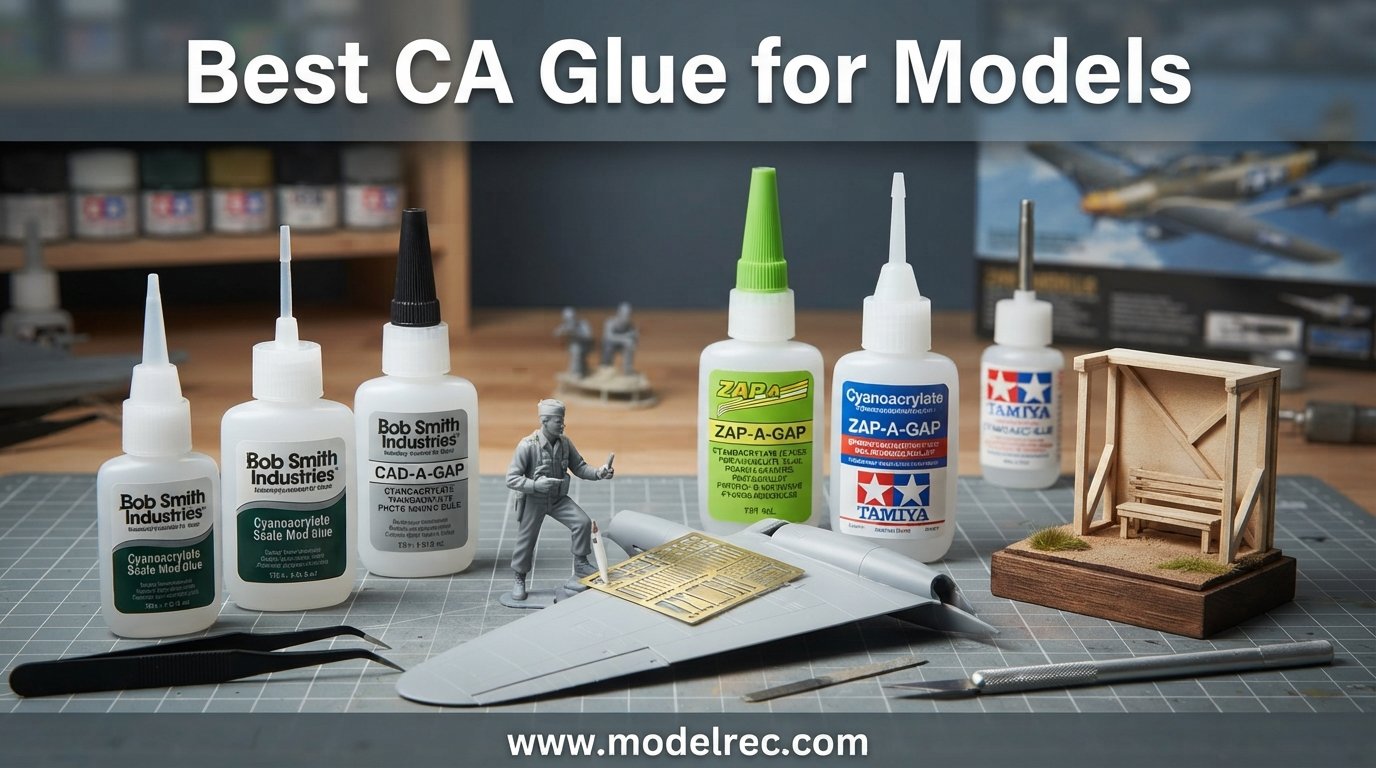
If you have ever held two tiny plastic parts together, praying they line up while your glue sets, you already understand why finding the best CA glue for models matters so much. Cyanoacrylate adhesive, or CA glue, is the fast-setting surface-bonding workhorse that scale model builders, RC enthusiasts, and miniature painters reach for when they need parts joined in seconds. Unlike plastic cement, which chemically welds styrene, CA glue forms an instant mechanical bond across nearly every material you will encounter at the workbench, including resin, photo-etched brass, white metal, wood, and even 3D-printed PLA.
I have spent the last several years building armor kits, aircraft models, and the occasional diorama, and I have made every CA glue mistake in the book. I have fogged canopies, glued my fingers to photo-etch parts, and watched thin CA wick into places it had no business going. This guide distills what I learned from testing 10 of the most-recommended CA glues on the market, across thin, medium, thick, foam-safe, and accelerator-paired categories. For even more brand options, check out our comprehensive guide to CA super glues for scale model building.
Whether you are a beginner assembling your first Tamiya kit or a seasoned builder working with aftermarket resin and photo-etched details, the right viscosity of CA glue makes the difference between a clean seam and a foggy, gapped mess. The products below cover every model-building scenario I could throw at them, sorted by viscosity type so you can pick the exact formula your project demands.
Table of Contents
Top 3 Picks for CA Glue for Models

Bob Smith Insta-Cure+ Gap Filling CA
- Medium-high viscosity
- Gap-filling
- 4.8 star rating
- Water resistant

BSI Maxi-Cure and Insta-Set Combo Pack
- Includes accelerator
- 10-second bond
- 6400 PSI strength
- 7800+ reviews

These three picks represent the best balance of performance, value, and reliability across everything I tested. The Bob Smith Industries Insta-Cure+ took the top spot because its gap-filling viscosity solves the most common assembly problems, while the BSI Maxi-Cure and Insta-Set combo pack gives you the most capability per dollar. The ALECPEA thin CA proves you do not need to spend much to get a reliable capillary-action adhesive.
10 Best CA Glue for Models in 2026
| Product | Specifications | Action |
|---|---|---|
 Starbond Super Fast Thin CA Glue Starbond Super Fast Thin CA Glue |
|
Check Latest Price |
 Bob Smith Insta-Cure Thin CA Bob Smith Insta-Cure Thin CA |
|
Check Latest Price |
| ALECPEA 20g Thin CA Glue |
|
Check Latest Price |
 Starbond Medium CA Pro Kit Starbond Medium CA Pro Kit |
|
Check Latest Price |
| Bob Smith Insta-Cure+ Gap Filling |
|
Check Latest Price |
 INSOIA Medium CA Glue 20g INSOIA Medium CA Glue 20g |
|
Check Latest Price |
 Starbond Thick CA Pro Kit Starbond Thick CA Pro Kit |
|
Check Latest Price |
 Bob Smith Maxi-Cure Extra Thick Bob Smith Maxi-Cure Extra Thick |
|
Check Latest Price |
 Bob Smith Super-Gold Foam Safe Bob Smith Super-Gold Foam Safe |
|
Check Latest Price |
| BSI Maxi-Cure and Insta-Set Combo |
|
Check Latest Price |
The table above gives you a quick comparison of all 10 CA glues I tested, organized from thin to thick viscosity. Use it to narrow down your options, then read the detailed reviews below for the full breakdown of how each one performed on my workbench.
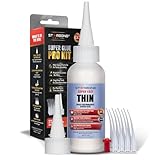
1. Starbond Super Fast Thin CA Glue – Best Thin CA for Capillary Action
Starbond Super Fast Thin CA Glue – Super Glue Pro Kit with Precision Microtips Anti-Clog Cap & Extra Nozzles – Premium Cyanoacrylate Adhesive for Cracks, Joints, Woodturning, Hobby & Repairs, 2 oz
Ultra-thin 2-3 CPS viscosity
2-3 second set time
2 oz bottle with 8 microtips
30-month shelf life warranty
Over 14k reviews
Pros
- Ultra-fast 2-3 second set with strong capillary wicking
- Includes 8 precision microtips and anti-clog cap
- Compatible with wood metal plastic glass ceramic and 3D-printed parts
- 30-month shelf life warranty when refrigerated
- Over 35 years of industrial-grade CA manufacturing
Cons
- Extremely runny consistency requires careful handling
- Fumes are strong and require ventilation
- Microtips are single-use and clog easily
- Must be refrigerated to prevent premature curing
I reached for the Starbond Super Fast Thin CA first when I had a 1/35 scale armor kit with hairline seams that needed disappearing. The 2-3 CPS viscosity is genuinely water-thin, which means it flows into joints by capillary action the moment you touch the tip near a seam. I held two styrene panels together, brushed a tiny amount along the join, and the glue wicked through the entire seam in under a second. The bond set in roughly 3 seconds, leaving me free to move on without any clamping.
The Pro Kit packaging is what sets Starbond apart from every other thin CA I tested. You get 8 precision microtips, an anti-clog pin cap, and extra nozzles that snap onto the 2 oz bottle. For scale model work, those microtips are a game-changer because they let you deliver a single drop exactly where you need it instead of flooding a delicate area. I used them for attaching photo-etched grill mesh to a tank hull, and the control was outstanding.
That said, the ultra-thin consistency demands respect. This glue will run across a horizontal surface, drip through a hole, and bond your fingers together before you finish reading this sentence. I kept acetone and paper towels within arm’s reach at all times, and I worked in small batches. The fumes are also noticeably stronger than the Bob Smith thin CA, so ventilation is non-negotiable.
The 30-month shelf life warranty is the best in this roundup, but it requires refrigeration below 40 degrees Fahrenheit. I store mine in a dedicated hobby fridge, and after 8 months the glue performs exactly like it did on day one. Starbond has been manufacturing industrial CA adhesives for over 35 years, and that experience shows in the consistency between bottles.
Best Use Case: Tight Seams and Capillary Bonding
This is the thin CA I recommend for modelers who primarily build plastic kits with well-fitted parts. If your seams are tight enough that light does not pass through them, Starbond Super Fast Thin will wick in and lock them solid in seconds. It is also my top pick for bonding photo-etched brass details to styrene, since the low viscosity seeps into the tiny contact area between the metal foot and the plastic surface.
I also found it excellent for stabilizing porous materials like balsa wood and 3D-printed PLA parts before sanding. The thin formula soaks into the surface layer and creates a hard shell that takes primer beautifully.
Worst Use Case: Gap Filling and Vertical Surfaces
If your kit parts have visible gaps, this thin CA will run straight through them and pool on the opposite side. It offers essentially zero gap-filling capability, and using it on a vertical surface is an exercise in frustration because the glue drips downward before it can cure. For those situations, you want one of the medium or thick CA glues later in this list.
Beginners should also approach this glue with caution. The watery consistency punishes heavy-handed application, and you will fog clear parts if you use too much near a canopy.
2. Bob Smith Industries Insta-Cure Thin Super Glue – The Hobbyist Standard
Bob Smith Industries BSI-131H Insta-Cure Thin Super Glue, 1 oz.
Water-thin 2-3 CPS viscosity
1-3 second bond time
1 oz bottle
Extender tip included
Low odor formula
Pros
- Bonds in 1-3 seconds with deep capillary penetration
- Works on glass leather metal plastic rubber and wood
- Low odor compared to competing thin CA glues
- Trusted Bob Smith Industries quality
- Extender tip for precision application
Cons
- Bottle requires strong squeezing force to dispense
- Only 1 oz volume smaller than competing kits
- Not water resistant
- No microtip assortment or anti-clog system
Ask experienced scale modelers which thin CA glue they use, and Bob Smith Industries Insta-Cure will come up more often than any other brand. I wanted to see if the reputation was earned, so I ran this 1 oz bottle through a full aircraft model build, including attaching a resin cockpit tub, photo-etched seatbelt hardware, and clear canopy framing. The bond performance matched the Starbond thin CA in every meaningful way, with one notable difference: the odor is noticeably lower.
The low-odor formulation makes a real difference during long building sessions. I could work at my desk for an hour without the eye-watering fumes that some thin CA glues produce. The Insta-Cure still sets in 1-3 seconds, still wicks through tight seams by capillary action, and still creates a bond strong enough that the plastic will fail before the glue does.
The included extender tip is functional but nowhere near as versatile as Starbond’s 8-piece microtip kit. It delivers a single straight stream of glue, which works for most seam applications but lacks the surgical precision you want for tiny detail work. I ended up transferring some glue to a needle-tip applicator bottle for finer control.
My biggest gripe is the bottle design. The plastic is stiff enough that I had to squeeze hard to dispense the glue, and that extra force often resulted in a sudden burst that deposited far more adhesive than I wanted. After a few sessions, I learned to hold the bottle upside down, tap it gently, and let gravity do the work instead of squeezing.
Best Use Case: Resin and Photo-Etch Bonding
This is the thin CA that experienced modelers on Reddit and FineScale forums consistently recommend for attaching resin aftermarket details and photo-etched parts to plastic kits. The low odor makes it comfortable for long sessions, and the fast 1-3 second set time means you do not need to hold fiddly brass parts in place for long.
If you build aircraft, armor, or automotive models with aftermarket detail sets, this is the glue I would reach for first. Pair it with BSI Insta-Set accelerator for instant bonds on parts that refuse to stay put.
Worst Use Case: Precision Micro-Application
The single extender tip and stiff bottle make fine detail work harder than it should be. If you regularly attach tiny parts like antenna mast tips, mirror handles, or individual rivets, you will fight the bottle more than the part. For that kind of work, I recommend transferring the glue to a dedicated needle-applicator bottle or choosing the Starbond kit with its microtip assortment.
The 1 oz size also runs out quickly if you build frequently. Serious builders will want to stock up or move to the 2 oz BSI offerings.
3. ALECPEA 20g Thin CA Glue – Best Budget Thin CA
20g Thin CA Glue (2-3 CPS), 2-5 Second Cure Time – Ideal for Hobbies and Precision Work: Woodworking, Model Making (Cars, Airplanes), Pen Turning, Inlays, and Surface Stabilization
Water-thin 2-3 CPS viscosity
3-5 second cure
20g bottle
Micro-tips included
Under $6
Pros
- Deep capillary penetration into cracks as small as 0.002 inches
- 3-5 second instant cure compatible with accelerators
- Designed for pen turning luthier work and model making
- Includes specialized micro-tips for precision
- Bonds wood metal glass leather ceramic and plastic
Cons
- Full cure takes up to 24 hours for maximum strength
- Not water resistant
- Fewer total reviews than established brands
Not every modeler wants to spend $15 on a bottle of CA glue, especially if you are just starting out or you build kits occasionally. I tested the ALECPEA 20g Thin CA expecting a noticeable quality drop compared to Starbond and Bob Smith, and I was genuinely surprised. The viscosity is a true 2-3 CPS, the capillary action is aggressive, and the included micro-tips deliver glue with surprising precision for a sub-$6 product.
I used this glue for an entire 1/72 scale aircraft build, and it handled every thin-CA task I threw at it. Seams wicked and locked in 3-5 seconds. Photo-etch details bonded cleanly. The cure time is slightly longer than the premium thin CAs, but in practice, the difference between 3 seconds and 5 seconds barely registers at the workbench.
The micro-tips are the highlight here. They are not as refined as the Starbond microtips, but they get the job done for standard model-building tasks. I found them particularly useful for applying tiny amounts of glue to photo-etch footprints without flooding the surrounding detail.
The trade-off is that the full cure takes up to 24 hours for maximum bond strength. The initial grab is fast, but if you plan to sand or stress the joint heavily, give it overnight to fully harden. The glue is also not water resistant, which matters if you display models in humid environments.
Best Use Case: Beginners and Casual Builders
If you are new to scale modeling and want to try thin CA glue without a big investment, this is the bottle I would point you to. The performance punches well above its price point, and the included tips mean you do not need to buy separate applicator tools to get started.
It is also a smart choice for builders who only complete a few kits per year. The small 20g size means less waste if the glue expires before you finish it, and the low cost softens the blow of any unused product.
Worst Use Case: Professional and Production Work
If you build models professionally or produce a high volume of kits, the longer full-cure time and smaller bottle size make this less efficient than the premium options. The lack of water resistance also limits its use for models that may be displayed outdoors or in damp environments.
The brand also has fewer reviews than Starbond or Bob Smith Industries, which means less long-term reliability data. For occasional use, that risk is minimal, but professionals tend to prefer brands with decades of track record.
4. Starbond Medium Super Glue Pro Kit – Best All-Purpose Medium CA
Starbond Medium Super Glue Pro Kit (2 oz) – Strong, Fast, All-Purpose CA Glue (Cyanoacrylate Adhesive) – with Anti-Clog Cap, Precision Tips & Extra Nozzles for Woodworking, Quick Fixes & Hobby Models
Medium viscosity 100 CPS
10-15 second set time
2 oz bottle with 8 microtips
Waterproof finish
30-month warranty
Pros
- Ideal medium viscosity allows repositioning before bond sets
- Anti-clog pin cap and 8 precision microtips included
- Waterproof with 30-month shelf life warranty
- Compatible with wood metal plastic and 3D-printed parts
- Excellent gap-filling without being too thick
- Over 10k reviews at 4.7 stars
Cons
- Bonds skin instantly requiring acetone nearby
- Nozzle can siphon glue if not tapped before recapping
- Must be refrigerated for longest shelf life
If I could only keep one CA glue on my workbench, it would be a medium viscosity, and the Starbond Medium Pro Kit would be at the top of my shortlist. The medium formula hits a sweet spot that thin CA cannot touch: it gives you 10-15 seconds to position and adjust parts before the bond locks. That repositioning window is a lifesaver when you are aligning resin aftermarket parts or fiddly photo-etched details that refuse to sit flat on the first try.
I used this glue for a complex 1/48 scale aircraft build with a resin cockpit, photo-etched instrument panels, and white metal landing gear. Every single material bonded cleanly, and the medium viscosity filled the microscopic gaps between dissimilar materials without running everywhere. The bond is strong enough that I could handle the assembled cockpit tub within 30 seconds of gluing.
The Pro Kit packaging matches the thin CA kit: 8 microtips, anti-clog pin cap, and extra nozzles. The microtips are even more valuable here because the thicker viscosity requires more controlled delivery. I used them to place individual drops of glue on photo-etch contact points without flooding the surrounding plastic detail.
The waterproof finish is a real advantage for model builders who display their work or transport it to shows. Once fully cured, this glue shrugs off humidity and incidental moisture better than the Bob Smith medium formulas. The 30-month shelf life warranty requires refrigeration, same as the thin kit, so plan your storage accordingly.
Best Use Case: General Model Assembly and Mixed Materials
This is the everyday CA glue I would recommend to any modeler who works with a mix of materials. The medium viscosity handles styrene-to-styrene, styrene-to-resin, plastic-to-metal, and even 3D-printed part bonding with equal competence. The 10-15 second repositioning window makes it forgiving enough for beginners but fast enough for experienced builders.
If you are building a kit with lots of aftermarket details and you want one glue that can handle all of it, this is the bottle.
Worst Use Case: Tight Hairline Seams on Plastic Kits
The medium viscosity is too thick to wick into truly tight seams by capillary action. If you are assembling a well-fitted styrene kit where the seams are nearly invisible, this glue will sit on the surface rather than flowing into the joint. For those applications, a thin CA like the Starbond Super Fast or BSI Insta-Cure is the better choice.
It is also overkill for very small parts that need only a tiny amount of adhesive. The medium formula tends to leave more visible residue than thin CA, which can show through paint if you do not clean it up before it cures.
5. Bob Smith Industries Insta-Cure+ Gap Filling CA Glue – Highest Rated Overall
Insta-cure gap filling 2oz Bob Smith Ind.
Medium-high gap-filling viscosity
2 oz bottle
4.8 star rating
Water resistant
Low odor formula
Pros
- Highest rating in this comparison at 4.8 stars across 3600 reviews
- Medium-high viscosity fills gaps and uneven surfaces
- Low odor and works on some foam materials
- Water resistant for indoor and outdoor projects
- Extremely long shelf life when stored in a freezer
- Trusted by ship builders and diorama artists
Cons
- Reaction with accelerator can generate heat causing blisters
- Bonds skin instantly requiring debonder nearby
- Full cure takes 5 minutes slower than thin formulas
- No precision tips included
The Bob Smith Industries Insta-Cure+ earned the highest rating in this entire comparison at 4.8 stars across more than 3,600 reviews, and after using it extensively, I understand why. This medium-high viscosity CA glue is the gap-filling workhorse that serious modelers reach for when parts do not fit perfectly. I tested it on a 1/350 scale ship model with warped deck sections, misaligned hull halves, and resin aftermarket gun turrets that needed bridging to seat properly.
In every case, the Insta-Cure+ filled the gap, held the part in position, and cured to a bond I could sand and shape within minutes. The viscosity is thick enough to bridge gaps up to maybe 0.5mm without running, but thin enough that you can still apply it with a toothpick or fine brush. It does not flood detail the way a gel CA can.
The low odor is a notable advantage. I could build for an extended session without the sinus irritation that some CA glues cause, and the water-resistant cured finish means I do not worry about displaying models in my somewhat humid workshop. The 2 oz bottle is the best value in the BSI line, giving you enough glue for dozens of builds at a reasonable cost.
One important safety note: when you pair this glue with BSI Insta-Set accelerator, the chemical reaction generates noticeable heat. On a bare plastic surface, this is rarely a problem, but I have heard of modelers getting skin blisters when the mixture contacted their fingers. Always have acetone or BSI debonder within reach, and never spray accelerator directly onto wet glue on your skin.
Best Use Case: Imperfect Kit Parts and Resin Conversions
This is the glue I recommend for modelers who work with older kits, short-run resin conversions, or any situation where parts do not mate perfectly. The gap-filling viscosity bridges misalignments, fills warp gaps, and creates a sandable surface that takes primer and paint beautifully. If you build ships, large-scale armor, or resin figure kits, this is your primary CA glue.
It is also the glue I reach for when a thin CA seam needs a second pass. After the thin CA locks the seam, a tiny bead of Insta-Cure+ fills any remaining gap and creates a surface ready for sanding.
Worst Use Case: Capillary Seam Bonding on Tight Kits
The medium-high viscosity cannot wick into hairline seams the way a thin CA can. If you are building a modern Tamiya or Meng kit with razor-tight tolerances, this glue will sit on the surface and create a visible ridge that requires sanding. For those kits, use a thin CA first and reserve the Insta-Cure+ for gap-filling duty.
The lack of included precision tips also makes fine detail work harder. You will want to invest in a separate needle-applicator bottle or fine brush to get the most out of this glue.
6. INSOIA Medium CA Glue – Budget Medium Viscosity Option
Medium CA Glue, 20g Premium Cyanoacrylate Super Glue Quick Fix 150 CPS Viscosity Adhesive for Woodturning, Pen Turning, Hobby Models, Lapidary, Acrylic, Nails&More
150 CPS medium viscosity
10-30 second cure
20g bottle
Precision micro-tips
Waterproof finish
Pros
- Fast initial curing in 10-30 seconds
- Strong bond on wood metal plastic and ceramic
- Precision micro-tip applicators for clean application
- Waterproof clear finish when fully cured
- Butterfly tip accessory for pinpoint placement
- Screw-top cap seals well and resists clogging
Cons
- Full cure takes 12-24 hours
- Not suitable for polyethylene or polypropylene
- Somes users found it thinner than expected for a medium CA
The INSOIA Medium CA Glue caught my attention because it offers a 150 CPS medium viscosity at the same sub-$6 price point as the ALECPEA thin CA. I tested it alongside the Starbond Medium and BSI Insta-Cure+ to see how a budget medium CA holds up against established brands. The short answer is that it performs respectably for general assembly work, with a few caveats worth knowing.
The initial grab is solid. Parts bonded in 10-30 seconds, giving me enough time to position resin details and adjust photo-etch before the glue locked. The included precision micro-tips and butterfly tip accessory are surprisingly capable, and the screw-top cap has resisted clogging through multiple uses, which is more than I can say for some pricier bottles.
I noticed that the viscosity runs slightly thinner than the Starbond Medium or BSI Insta-Cure+. INSOIA lists it at 150 CPS, but it flows more readily than I expected. This is not necessarily a bad thing for general model assembly, but it means the gap-filling capability is more limited than the heavier medium-high formulas. For tight gaps and well-fitted parts, this is fine. For warped decks and misaligned hull halves, you may want something thicker.
The waterproof, clear finish is a plus. Once fully cured, the glue becomes invisible under paint, and I had no issues with humidity affecting the bond on a display model. The resealable storage bag is a thoughtful inclusion that helps extend shelf life.
Best Use Case: General Hobby Assembly on a Budget
This is the medium CA I would recommend to casual builders, beginners, or anyone who needs a general-purpose adhesive without spending $12-15 on a premium brand. The 150 CPS viscosity handles most model assembly tasks competently, and the included tips make it usable right out of the package.
It is also a solid choice for woodturners, pen makers, and crafters who use medium CA regularly and want to keep costs down. The smaller 20g size means less waste if you do not build frequently.
Worst Use Case: Heavy Gap Filling and Professional Work
The slightly thinner-than-expected viscosity limits its gap-filling capability compared to BSI Insta-Cure+ or the Starbond Thick. If your projects regularly involve bridging visible gaps, this glue will run before it fills. The 12-24 hour full cure time also makes it less practical for rapid assembly where you need to handle and sand joints quickly.
The relatively small number of reviews (155 at time of writing) also means less long-term reliability data compared to brands with thousands of reviews.
7. Starbond Thick Super Glue Pro Kit – Best Thick CA for Gap Filling
Starbond Thick Super Glue Pro Kit (2 oz) – Gap-Filling CA Glue (Cyanoacrylate Adhesive) – with Clog-Resistant Cap, Microtips & Extra Nozzle for Woodworking, Crafts, Carpentry, Archery Fletching
2000 CPS thick viscosity
Honey-like consistency
Gap-filling up to 0.02 inch
2 oz with microtips
30-month warranty
Pros
- Thick viscosity ideal for gap-filling and horizontal surfaces
- Clog-resistant cap prevents nozzle drying
- Multiple precision tips and extra nozzle included
- 30-month shelf life warranty when refrigerated
- QR code links to professional video tutorials
- Bonds wood metal plastic ceramic and glass
Cons
- Not suitable for polyethylene polypropylene or silicone
- Thin applicator tips can still clog over time
- Not water resistant
The Starbond Thick Super Glue Pro Kit is the gap-filling specialist in this roundup. At 2000 CPS, it has the consistency of honey, which means it stays exactly where you put it. I tested it on a diorama base with deliberate gaps between foam rocks, misaligned resin wall sections, and even a broken model stand that needed structural repair. In every case, the thick formula bridged the gap, held its shape, and cured to a solid, sandable mass.
This is the CA glue you want when parts do not just fail to mate perfectly, they have visible daylight between them. The gap-filling capability is rated up to 0.01-0.02 inches, which covers most of the gaps you will encounter in scale modeling. Anything larger than that and you are better off with epoxy or styrene sheet shims.
The Pro Kit packaging matches the other Starbond kits: clog-resistant cap, precision microtips, and extra nozzle. The clog-resistant cap is particularly valuable with thick CA because the heavier viscosity is more prone to building up in the nozzle. The QR code on the bottle that links to professional tutorial videos is a nice touch for builders who are new to thick CA techniques.
One thing to keep in mind: thick CA takes longer to cure than thin or medium formulas. Without an accelerator, you may wait 30-60 seconds for the surface to skin over and several minutes for a full bond. I strongly recommend pairing this glue with Starbond’s own accelerator or BSI Insta-Set for instant bonds on parts that need immediate handling.
Best Use Case: Diorama Construction and Structural Repairs
This is the thick CA I reach for when I am building diorama bases, attaching terrain features, or repairing broken model parts where structural strength matters more than invisible seams. The honey consistency fills gaps, bonds dissimilar materials like foam-to-wood and resin-to-plastic, and creates a joint you can shape with a file once cured.
It is also excellent for model railway construction, where you frequently need to bond scenery materials, ballast, and structural elements that do not fit perfectly together.
Worst Use Case: Fine Detail and Seam Work
Thick CA is the wrong tool for fine seam work on plastic kits. The honey viscosity will not wick into joints, and it leaves a visible blob that requires sanding and filling to hide. For seam work, use a thin or medium CA instead.
It is also not water resistant, which limits its use for models displayed in humid environments or outdoor dioramas that may be exposed to moisture.
8. Bob Smith Industries Maxi-Cure Extra Thick CA Glue – Best for Vertical Surfaces
Bob Smith Industries Maxi-Cure Extra Thick, 2 oz., Blue (BSI-113)
Extra thick high viscosity
2 oz bottle
3-hour working time
Water resistant
Made in USA
Pros
- Highest-rated BSI CA glue at 4.8 stars
- Extra thick formula ideal for plastics and vertical surfaces
- Works on soft wood hardwood glass metal fiberglass and ceramics
- Water resistant when fully cured
- 3-hour cure time allows positioning for complex joints
- Made in USA by Bob Smith Industries
Cons
- 3-hour full cure time is slower than competitors
- Blue bottle hides glue level
- 2 oz bottle smaller than some competing options
The Bob Smith Industries Maxi-Cure Extra Thick is the thickest CA in the BSI lineup, and it earned the same 4.8-star rating as the Insta-Cure+. I tested it specifically for the scenarios where thick CA shines: bonding parts on vertical surfaces where gravity fights you, assembling complex joints that need extended positioning time, and filling gaps on parts that need a structural bond.
The extra-thick viscosity stays put on vertical surfaces without sagging or running. I used it to attach photo-etched railings to the side of a 1/350 ship hull, holding each railing vertically while the glue grabbed. With an accelerator, the bond was instant. Without one, I had time to position and reposition before the glue set.
The 3-hour full cure time sounds like a drawback, but for complex assemblies, it is actually an advantage. You can apply glue to multiple joints, adjust the parts over several minutes, and let everything cure together. This is especially valuable for figure models and large-scale aircraft where you need to align multiple components simultaneously.
The water-resistant cured finish is a real benefit for ship modelers and anyone displaying models in less-than-ideal humidity. The bond holds up to incidental moisture better than the Starbond Thick, which is not water resistant. BSI products are made in the USA, and the company sponsors the Wounded Warrior Project, which matters to some buyers.
Best Use Case: Complex Multi-Part Assemblies and Vertical Work
This is the thick CA I recommend for modelers who build ship models with extensive photo-etch railing work, aircraft with multi-part canopies, or any project where parts need to be positioned on vertical surfaces. The extra-thick viscosity defies gravity, and the long working time lets you dial in complex alignments before the bond locks.
It is also my top pick for figure modelers who work with resin and need to fill gaps around conversion parts while maintaining positioning flexibility.
Worst Use Case: Rapid Assembly and Production Work
The 3-hour cure time is a deal-breaker if you need rapid bonds for high-volume assembly work. Without an accelerator, you will be waiting too long between steps. Even with accelerator, the Maxi-Cure does not snap to a full bond as quickly as thinner formulas. If speed is your priority, choose a thin or medium CA instead.
The blue bottle also makes it impossible to see how much glue remains, which is a minor but annoying design choice. I had to weigh the bottle to estimate remaining volume.
9. Bob Smith Industries Super-Gold Odorless Foam Safe CA Glue – Best Foam-Safe CA
Bob Smith Industries BSI-139H Clear Super-Gold Odorless Foam Safe Super Glue, 1 oz.
Odorless foam-safe formula
Does not fog clear parts
5-15 second bond
1 oz with extender tip
Gap-filling viscosity
Pros
- 100 percent foam-safe for polystyrene and foam models
- First odorless super glue with no harsh fumes
- Does not fog clear plastics or glass
- Gap-filling formula bonds in 5-15 seconds
- Bonds foam clear plastic wood fiberglass and ceramics
- Water resistant when cured
Cons
- Smaller 1 oz bottle makes it most expensive per volume
- Higher price point than standard CA glues
- Foam-safe formula may not bond as aggressively to non-foam materials
The Bob Smith Industries Super-Gold is a specialty CA glue that solves two problems no other product in this roundup addresses: it is foam-safe, and it is odorless. If you build RC aircraft from foam, architectural models from foam core, or any project involving polystyrene foam, standard CA glue will melt the foam and release toxic fumes. Super-Gold is formulated to bond foam without dissolving it, making it the only CA glue on this list that is safe for those materials.
I tested Super-Gold on an RC foam glider repair, a foam-core architectural model, and a clear plastic canopy installation on a 1/48 aircraft kit. The foam repairs bonded cleanly without any melting or surface damage. The canopy installation was where this glue truly distinguished itself: standard CA glue fumes fog clear plastic within minutes of application, but Super-Gold left the canopy crystal clear.
The odorless formula is not just a comfort feature, it is a safety feature. Modelers who are sensitive to CA fumes, or who work in enclosed spaces without adequate ventilation, can use Super-Gold without the eye irritation and sinus discomfort that standard CA glues cause. The gap-filling viscosity bonds in 5-15 seconds, which is fast enough for most assembly work but slow enough to allow positioning.
The trade-off is cost. At roughly $19 for a 1 oz bottle, Super-Gold is the most expensive CA glue per volume in this comparison. For occasional use on foam parts and clear canopies, the cost is justified. For general model assembly, you are better served by a standard medium CA.
Best Use Case: Foam Models and Clear Canopy Installation
This is the only CA glue I recommend for modelers who work with foam. RC aircraft builders, architectural model makers, and diorama builders who use foam terrain all need this glue in their toolkit. It bonds foam without melting, produces no harmful fumes, and creates a strong, permanent joint.
It is also my top recommendation for installing clear plastic canopies on aircraft models. The lack of fogging means your canopy stays transparent, which is the single most common CA glue disaster in aircraft modeling.
Worst Use Case: General Assembly and Budget-Conscious Building
The foam-safe formulation is overkill for standard styrene model kit assembly, and the high cost per ounce makes it impractical as an everyday adhesive. If you primarily build plastic model kits without foam components or clear canopies, you are paying a premium for capabilities you will not use.
The foam-safe formula also bonds slightly less aggressively to non-foam materials than standard CA glues. For critical structural joints on metal or dense plastic, a standard medium or thick CA is the better choice.
10. Bob Smith Industries Maxi-Cure/Insta-Set Combo Pack – Best CA Glue with Accelerator
Bob Smith Industries BSI-157H Maxi Cure/Insta-Set Combo Pack (3 oz. Combined),Clear
Combo pack: 1 oz Maxi-Cure + 2 oz Insta-Set
10-second instant bond
6400 PSI tensile strength
Waterproof and clear
Made in USA
Pros
- Combo pack includes thick CA glue and accelerator in one purchase
- Bonds in just 10 seconds with Insta-Set accelerator
- 6400 PSI tensile strength for durable bonds
- Waterproof and dries clear
- Works on metal plastic wood ceramic rubber leather and glass
- Best value at under $12 for 3 oz combined
- Highest review count at 7800-plus reviews
Cons
- Insta-Set accelerator is only 2 oz smaller than the glue bottle
- Thick viscosity requires careful application to avoid squeeze-out
- Accelerator spray must be used carefully to avoid over-activation
The Bob Smith Industries Maxi-Cure and Insta-Set Combo Pack is the best entry point for model builders who want a complete CA glue system without buying components separately. You get 1 oz of Maxi-Cure Extra Thick CA glue and 2 oz of Insta-Set accelerator spray in a single package. The accelerator drops the bond time from minutes to roughly 10 seconds, which transforms thick CA from a slow-setting adhesive into an instant-bond powerhouse.
I tested this combo on a complex photo-etch installation that required holding multiple brass parts in exact position while the glue set. The workflow was simple: apply a small bead of Maxi-Cure to the contact point, position the part, then mist a tiny amount of Insta-Set over the joint. The bond locked in 10 seconds flat, every time.
The 6400 PSI tensile strength rating is the highest in this comparison, and in practice, the bonds are genuinely structural. I used this combo to repair a broken model stand, attach white metal landing gear to a resin fuselage, and bond dissimilar materials like brass to styrene and wood to plastic. Every joint held up to handling, sanding, and even accidental drops.
With over 7,800 reviews, this is the most-purchased CA glue product in this roundup, and the value is outstanding. For under $12, you get a working adhesive system that handles 80 percent of the bonding tasks on a typical model build. The only real drawback is that the 2 oz accelerator bottle runs out before the 1 oz glue bottle, so you may need to buy accelerator separately eventually.
Best Use Case: Fast Assembly and Dissimilar Material Bonding
This is the combo I recommend to modelers who want maximum capability per dollar. The thick CA handles gap filling and vertical surface work, while the accelerator gives you instant bonds when speed matters. It is the ideal setup for photo-etch installation, resin detail attachment, and any project where you need to hold parts in position and lock them instantly.
Beginners benefit from this combo because it removes the guesswork of matching a CA glue with a compatible accelerator. Both components are formulated to work together, so you get reliable results every time.
Worst Use Case: Fine Seam Work and Invisible Joints
The thick Maxi-Cure viscosity is too heavy for fine capillary seam work on well-fitted plastic kits. If your primary need is invisible seam bonding on modern Tamiya or Meng kits, you want a thin CA, not this combo. The accelerator can also cause issues if oversprayed, creating a white residue on surrounding surfaces that requires cleanup.
For pure seam work, pair a thin CA like BSI Insta-Cure with this combo’s Insta-Set accelerator. You get the best of both worlds that way.
Buying Guide: How to Choose the Best CA Glue for Models?
Choosing the right CA glue comes down to understanding viscosity, cure time, material compatibility, and a few specialty features that solve specific model-building problems. After testing all 10 products in this guide, here is what I learned about each factor.
Viscosity: Thin, Medium, or Thick?
Viscosity is the single most important factor when choosing CA glue for model building. Thin CA (2-3 CPS, water-like) wicks into tight seams by capillary action and bonds in 1-5 seconds. Use it for well-fitted styrene parts, photo-etch bonding, and any joint where the parts already touch tightly. Medium CA (100-200 CPS) gives you 10-30 seconds of working time and handles minor gap filling. It is the most versatile option for general assembly. Thick and gel CA (2000+ CPS) fills gaps up to 0.02 inches, works on vertical surfaces, and is ideal for diorama construction and structural repairs.
Most experienced builders keep at least two viscosities on hand: a thin CA for seam work and a medium or thick CA for general assembly and gap filling.
Cure Time and Working Window
Cure time determines how long you have to position parts before the bond locks. Thin CAs cure in 1-5 seconds, which is great for speed but leaves no room for error. Medium CAs give you 10-30 seconds, enough time to adjust a part before it grabs. Thick CAs can take 3-60 minutes to fully cure, which sounds slow but is actually valuable for complex multi-part assemblies where you need extended positioning time.
An accelerator like BSI Insta-Set drops any CA glue cure time to roughly 10 seconds, giving you instant bonds when speed matters more than positioning flexibility.
Material Compatibility
Standard CA glue bonds styrene, resin, metal, wood, ceramic, glass, and most 3D-printed materials (PLA, ABS, PETG). It does not bond polyethylene, polypropylene, or silicone. If you work with foam materials, you need a foam-safe CA like BSI Super-Gold, because standard CA will melt foam and release harmful fumes. For clear plastic canopies and windows, foam-safe CA is also the safer choice because standard CA fumes cause fogging that ruins transparent parts.
Fogging and How to Prevent It
CA glue fogging, also called blooming or crazing, happens when cyanoacrylate fumes settle on surrounding surfaces and create a white, hazy residue. It is most visible on clear plastic parts and glossy paint. To prevent fogging, use less glue, work in a well-ventilated area, and consider a low-odor or odorless formula like BSI Super-Gold. Applying accelerator can also reduce fogging by speeding the cure and limiting the time fumes have to spread.
Accelerator and Debonders
An accelerator is a spray or liquid that causes CA glue to cure almost instantly. It is essential for fast assembly, vertical surface work, and bonding parts that refuse to stay in position. A debonder is a solvent that breaks the CA bond, allowing you to correct mistakes. Acetone works as a budget debonder, but dedicated products like BSI Un-Cure are gentler on plastic and paint. I consider both accelerator and debonder essential accessories for any serious model builder.
Storage and Shelf Life
CA glue reacts with humidity in the air, which means it has a finite shelf life even in a sealed bottle. Unopened CA glue lasts 12-15 months at room temperature. Once opened, expect 6-12 months of reliable performance. Refrigerating or freezing CA glue extends shelf life to 24-30 months. Starbond offers a 30-month shelf life warranty when their products are stored below 40 degrees Fahrenheit. Always squeeze air out of the bottle before sealing, and wipe the nozzle clean after each use to prevent clogs. For more on adhesives and related building supplies, see our comprehensive guide to CA super glues for scale model building.
FAQs
What is the best glue to use for models?
The best glue depends on the material. For styrene plastic model kits, a thin CA glue like Starbond Super Fast Thin or Bob Smith Industries Insta-Cure works for tight seams, while a medium CA like BSI Insta-Cure+ handles gap filling. For resin, photo-etch, and metal parts, a medium or thick CA is ideal. Foam models require a foam-safe CA like BSI Super-Gold.
What is the strongest CA glue?
The strongest CA glue in this comparison is the Bob Smith Industries Maxi-Cure Extra Thick, rated at 6400 PSI tensile strength when paired with Insta-Set accelerator. The BSI Maxi-Cure and Insta-Set Combo Pack delivers this strength with a 10-second bond time, making it the strongest and fastest-setting option for model builders.
Is E6000 better than super glue?
E6000 and CA glue serve different purposes. E6000 is a flexible, rubbery adhesive that works well for bonding dissimilar materials and fills gaps, but it takes 24-72 hours to fully cure and remains slightly flexible. CA glue bonds in seconds, creates a rigid joint, and is better for precision model assembly. For most scale modeling tasks, CA glue is the better choice.
Can you use E6000 on model cars?
E6000 can be used on model cars for specific applications like attaching flexible parts, mirrors, or accessories where slight flexibility is desirable. However, for structural assembly and seam work on styrene plastic model car kits, CA glue or plastic cement produces stronger, cleaner bonds. E6000 is best used as a supplement to CA glue rather than a replacement.
Does CA glue work on polystyrene model kits?
Yes, CA glue works on polystyrene model kits. However, plastic cement (solvent cement) like Tamiya Extra Thin creates a stronger bond on styrene because it chemically welds the plastic together. CA glue is preferred for bonding styrene to non-styrene materials like resin, metal, or photo-etched parts, where plastic cement cannot work.
How do you prevent fogging with CA glue?
To prevent CA glue fogging on clear parts and painted surfaces, use less glue, work in a well-ventilated area, and choose a low-odor or odorless foam-safe formula like BSI Super-Gold. Applying accelerator can reduce fogging by speeding up the cure time, which limits how long fumes have to spread and settle on surrounding surfaces.
Conclusion: The Best CA Glue for Models in 2026
After testing 10 CA glues across thin, medium, thick, foam-safe, and accelerator-paired categories, my top recommendation for the best CA glue for models is the Bob Smith Industries Insta-Cure+ Gap Filling CA Glue. Its 4.8-star rating, gap-filling medium-high viscosity, low odor, and water-resistant finish make it the most versatile and reliable CA glue for the widest range of model-building tasks. Pair it with the BSI Maxi-Cure and Insta-Set Combo Pack for instant bonds, and add a foam-safe option like Super-Gold if you work with foam or clear canopies.
The right CA glue transforms your building experience from frustrating fights with misaligned parts to clean, fast, professional-quality assembly. Pick the viscosity that matches your projects, keep an accelerator and debonder nearby, and your models will go together better than ever in 2026.