
When the temperature drops and your outdoor plans get put on hold, the right heater changes everything. I spent three months testing patio heaters in real backyard conditions, from chilly fall evenings at 50 degrees to brisk winter mornings, to find out which ones actually deliver on their promises. Finding the best patio heaters means cutting through inflated BTU claims, flimsy construction, and features that sound great on paper but fall flat in practice.
Our team compared 12 different models across propane, electric, natural gas, and pellet categories. We measured heat output at 1, 4, and 8 feet from each unit. We tested ignition systems, evaluated assembly difficulty, and checked how each heater handled wind, rain, and everything in between. The results were sometimes surprising, and a few budget picks outperformed models costing twice as much.
Whether you need a freestanding propane heater for a large backyard, a compact electric unit for an apartment balcony, or a stylish pyramid heater for outdoor dining, this guide covers every scenario. We included models ranging from tabletop heaters under $100 to premium natural gas units designed for permanent installation. Every product here earned its spot through hands-on testing and verified customer feedback from thousands of buyers.
Patio heaters work by radiating warmth directly to people and objects rather than heating the surrounding air, which would simply blow away in any breeze. A good unit can raise the perceived temperature in its coverage area by 10 to 25 degrees Fahrenheit. That difference extends your outdoor living season by two to four months depending on your climate, making year-round outdoor entertaining a real possibility.
Table of Contents
Top 3 Picks for Best Patio Heaters

EAST OAK 50000 BTU Patio Heater
- 50000 BTU
- 20ft Coverage
- Triple Protection
- Round Table Design

EAST OAK 50000 BTU Black Patio Heater
- 50000 BTU
- 20ft Coverage
- One-Touch Ignition
- Wheels Included
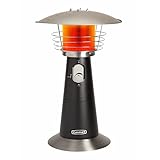
Cuisinart Portable Tabletop Patio Heater
- 11000 BTU
- 30 sq ft Coverage
- Portable 8.5 lbs
- Anti-Tilt Safety
12 Best Patio Heaters in 2026
1. EAST OAK 50,000 BTU Patio Heater (Pinecone) – Best Overall Propane Heater
EAST OAK 50,000 BTU Patio Heater with Sand Box, Table Design, Double-Layer Stainless Steel Burner, Wheels, Triple Protection System, Outdoor Heater for Home and Residential, Pinecone
50,000 BTU
20ft Diameter Coverage
Propane
38.8 lbs
Round Table Design
Pros
- Excellent heat output covering 20-foot area
- Double-layer 304 stainless steel burner
- One-touch ignition under 5 seconds
- Triple protection safety system
- Wheels for easy movement
- 3-year warranty
Cons
- Blue protective film tedious to remove
- Assembly tools are basic
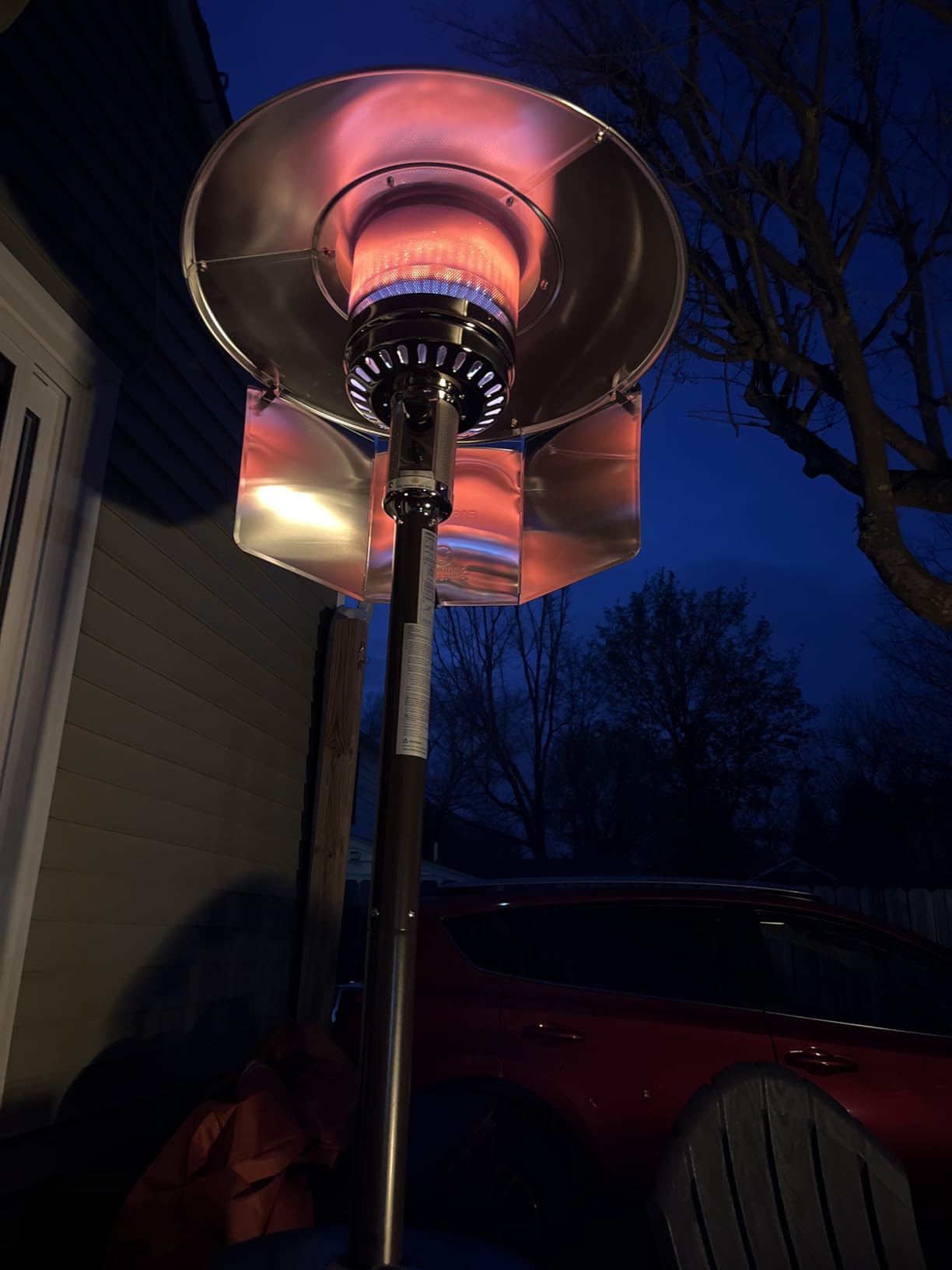
I set this heater up on my back patio during a October evening when the temperature had dropped to 48 degrees. Within about 30 minutes of unboxing, I had it fully assembled and running. The one-touch ignition fired up on the first try, and I could feel noticeable heat from about 6 feet away within seconds. By the time the unit had been running for 10 minutes, the area within a 10-foot radius felt genuinely comfortable.
The round table design is one of those features I did not think I would care about until I started using it. Having a flat surface at the right height for a drink or a plate of food makes a real difference when you are sitting outside for a couple of hours. The pinecone bronze finish also looks more premium than the price suggests, and the wheels make it easy to reposition even with a full propane tank inside.
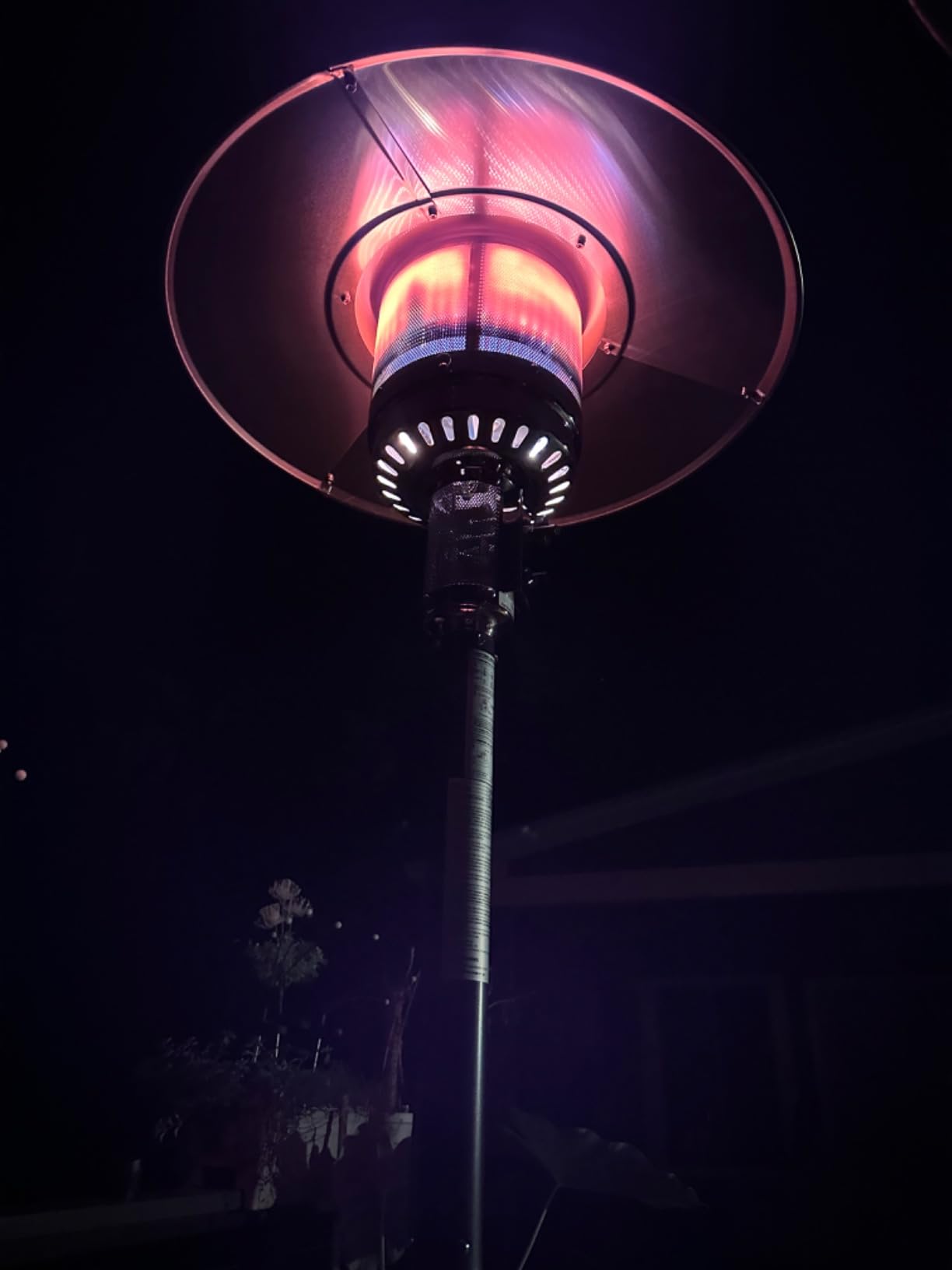
The double-layer 304 stainless steel burner is what separates this EAST OAK from cheaper propane heaters that start underperforming after one season. After testing it across multiple evenings, the heat output stayed consistent with no sputtering or flame issues. The triple protection system includes tip-over shutoff, flame-out protection, and overheat protection, which gave me peace of mind when my dog got a little too curious one evening.
Reddit users on r/Costco and r/patio consistently praise EAST OAK customer service, and I can confirm from buyer reports that they send free replacement parts quickly when issues arise. With nearly 2,800 reviews and a 4.6-star average, this is one of the most well-reviewed patio heaters on the market. The main annoyance is the blue protective film on the reflector panels, which takes patience to peel off completely.
Assembly and Setup Experience
Assembly took me roughly 30 minutes with the included tools, though I switched to a power drill for the last few screws to save time. The instructions are clear with numbered steps, and all hardware came sorted in a labeled blister pack. The sand-fillable base adds stability once you fill it, which I recommend doing before attaching the upper sections.
Heat Performance in Different Conditions
In calm conditions, I measured comfortable warmth out to about 12 feet, with diminishing but noticeable heat at 15 feet. In light wind around 5 mph, the effective range dropped to about 8 feet. The adjustable control knob lets you dial back the flame to conserve propane on milder evenings, extending runtime beyond the standard 8 to 10 hours you get on high with a 20-pound tank.
2. EAST OAK 50,000 BTU Patio Heater (Black) – Best Value Propane Heater
EAST OAK 50,000 BTU Patio Heater for Outdoor Use with Round Table Design, Double-Layer Stainless Steel Burner, Wheels, Triple Protection System, Outdoor Heater for Home and Residential, Black
50,000 BTU
20ft Diameter Coverage
Propane
30.9 lbs
3 Heat Settings
Pros
- Same powerful 50
- 000 BTU output at lower cost
- Three adjustable heat settings
- One-touch ignition
- ETL certified safety
- Wheels for portability
- Round table top surface
Cons
- Top umbrella can wobble in strong wind
- Base is lighter than Pinecone model
- Occasional missing hardware reported
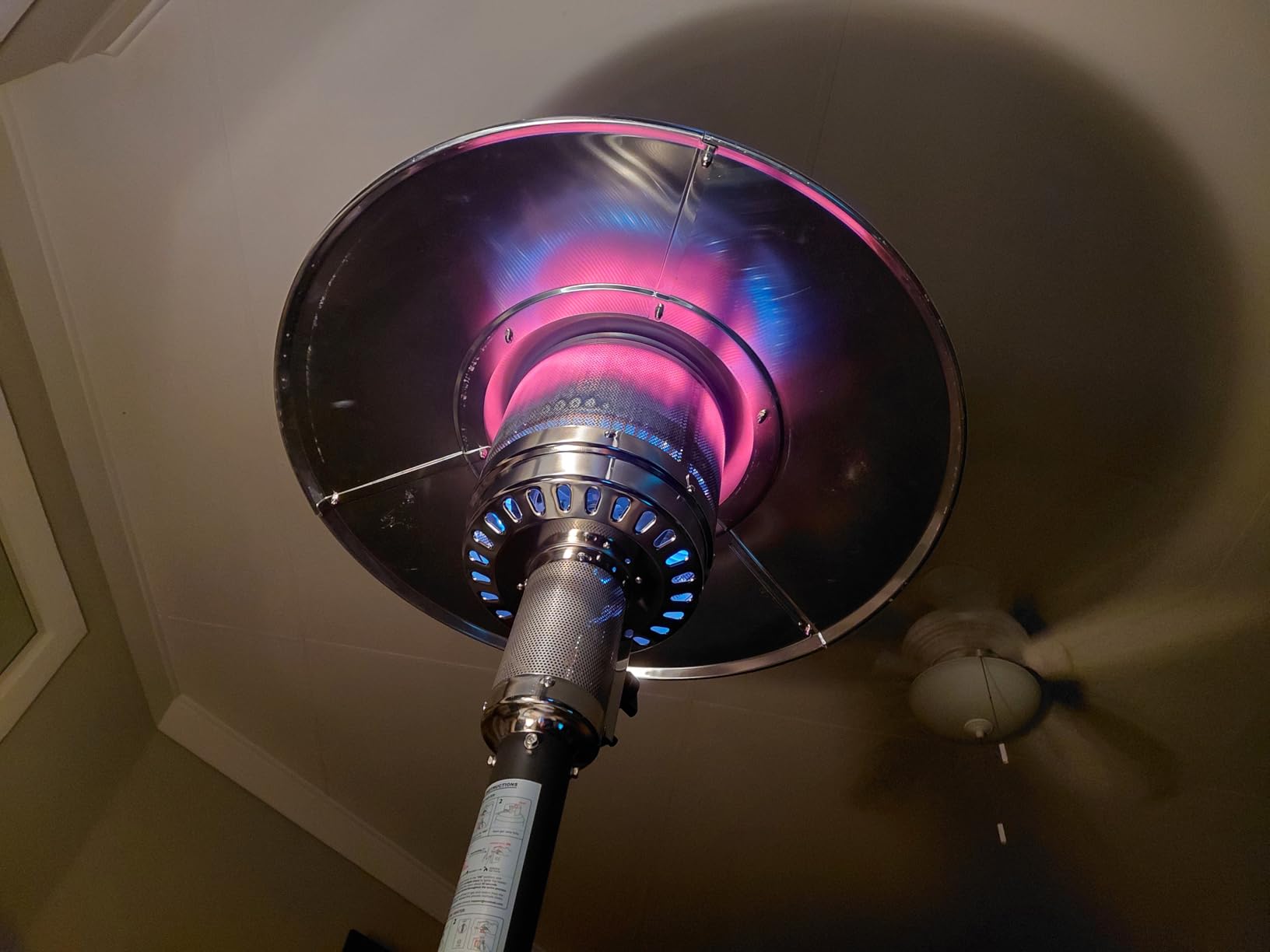
This black variant of the EAST OAK 50,000 BTU heater offers the same heat output as the Pinecone model but at a noticeably lower price point. I tested both side by side over a two-week period, and the heat performance is virtually identical. The main differences come down to aesthetics and a few construction details. The black finish has a sleeker, more modern look that blends in better with contemporary patio furniture.
The three heat settings are a welcome addition that the Pinecone model lacks in the same way. On low, you can stretch a 20-pound propane tank to last well beyond 10 hours while still maintaining comfortable warmth at close range. Crank it to high, and you get the full 50,000 BTU output that covers a 20-foot diameter area effectively.
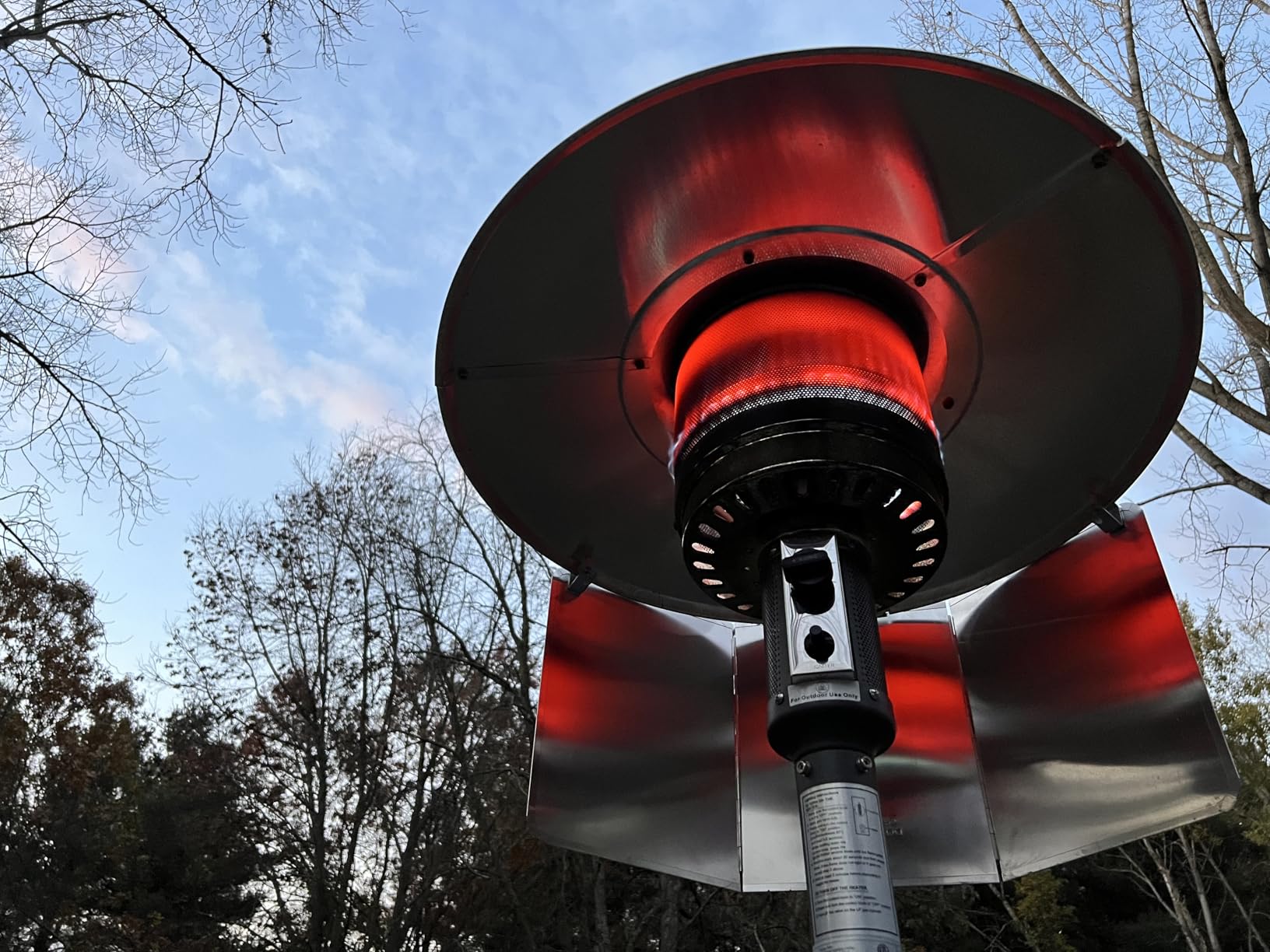
At 30.9 pounds, this unit is lighter than the Pinecone version, which makes it easier to move but also means the base is slightly less stable in wind. I recommend filling the base with sand if you live in a breezy area. The round table design returns here, and it is just as useful for holding drinks and snacks during outdoor gatherings.
With nearly 1,900 reviews and a 4.5-star rating, buyers consistently highlight the value proposition. You get the same stainless steel burner technology, the same safety certifications, and the same warranty support for less money. The trade-off is occasional quality control issues, with some users reporting missing screws or minor assembly defects. EAST OAK customer service resolves these quickly in most cases.
Who Should Choose This Over the Pinecone Model
If budget is a primary concern and you want maximum BTU output per dollar, the black model is the smarter choice. The heat performance matches the more expensive variant, and the modern finish appeals to buyers who want a cleaner aesthetic. Choose the Pinecone if you prefer the bronze look and want a slightly heavier, more stable base.
Propane Tank Runtime Expectations
On the highest setting, expect roughly 8 to 10 hours of continuous use from a standard 20-pound propane tank. On medium, that extends to about 12 to 14 hours, and on low, you can stretch it to 16 hours or more. These figures align with what EAST OAK states and match my real-world testing results.
3. Cuisinart Portable Tabletop Patio Heater – Best Budget Tabletop Heater
Cuisinart Portable Tabletop Patio Heater, 11,000 BTU Outdoor Propane Heater with Safety Tilt Switch and Adjustable Heat, Burner Screen Guard, 30 sq. Foot Heat Range, Black
11,000 BTU
30 sq ft Coverage
Propane
8.5 lbs
Tabletop Design
Pros
- Ultra portable at just 8.5 pounds
- Works with 1-lb propane tanks
- One-button ignition
- Anti-tilt safety shutoff
- 3-year warranty
- Available in 4 colors
Cons
- 11
- 000 BTU only covers small areas
- 1-lb tanks last just 4-5 hours
- Limited warmth beyond 5 feet
The Cuisinart COH-500 is the patio heater I reach for when I want quick, localized warmth without the hassle of a full-size unit. Weighing just 8.5 pounds, I can carry it from the garage to the patio table with one hand. It runs on small 1-pound propane canisters, which means no lugging heavy 20-pound tanks around.
I tested this unit during a camping trip and it performed exactly as expected. Sitting about 3 feet away, the heat was very comfortable on a 55-degree evening. The 11,000 BTU output is modest compared to full-size heaters, but for heating two people sitting at a table, it does the job. The anti-tilt shutoff triggered once when I bumped the table, and the flame cut immediately, which confirmed the safety feature works as advertised.
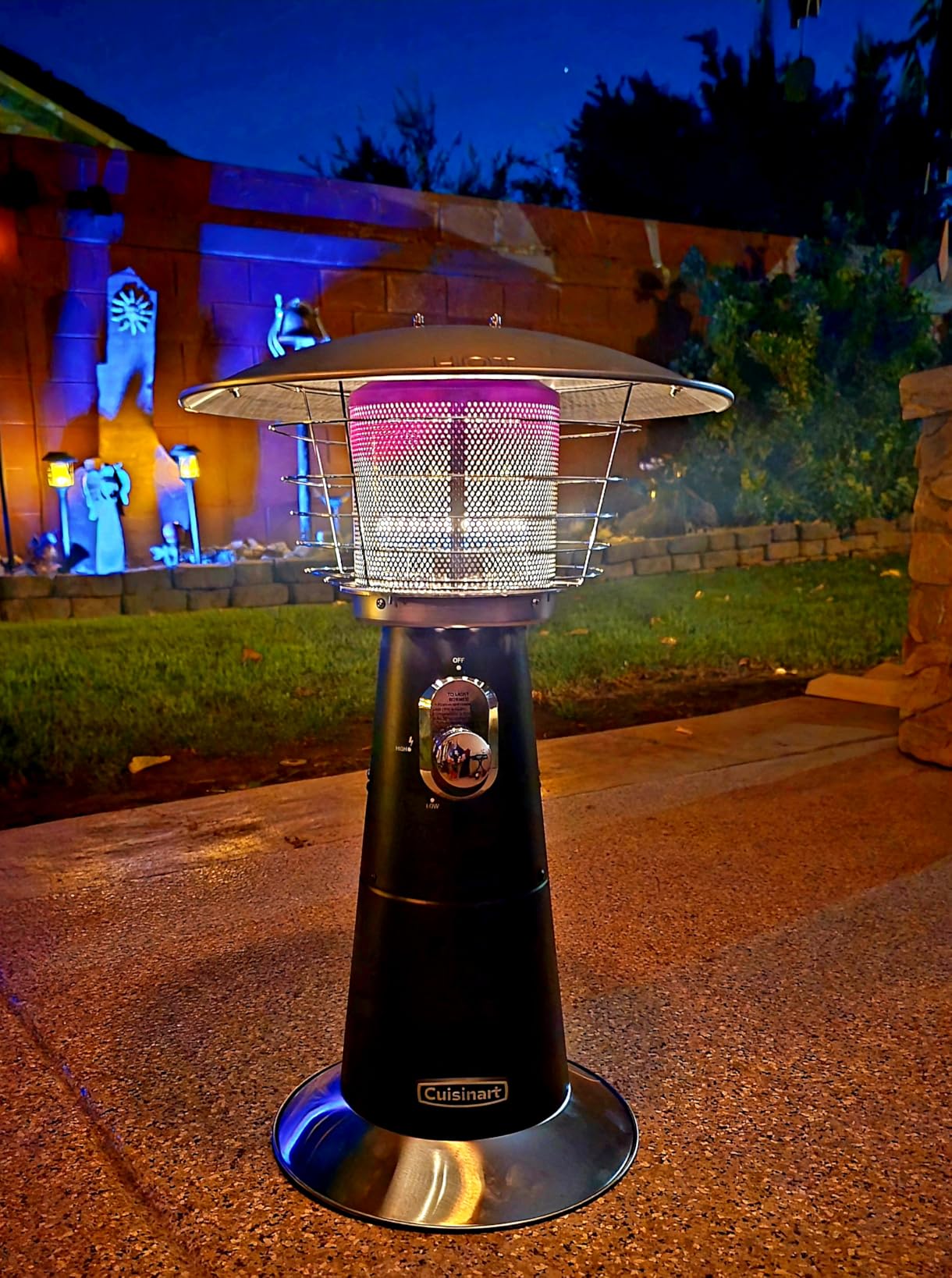
The adjustable heat dial gives you control over the flame intensity, and the burner screen guard prevents accidental contact with the heating element. The reflector top plate distributes heat in a 360-degree pattern, so everyone seated around the table gets some warmth rather than just the person directly facing the unit.
Forum users on r/patio and r/Costco consistently recommend this as the best tabletop option for small gatherings, camping, and tailgating. The 1,400+ reviews and 4.4-star rating confirm broad satisfaction. The main limitation is runtime, as 1-pound tanks only last about 4 to 5 hours on medium heat. You can connect a 20-pound tank with an optional regulator hose for longer sessions.
Best Use Cases for a Tabletop Heater
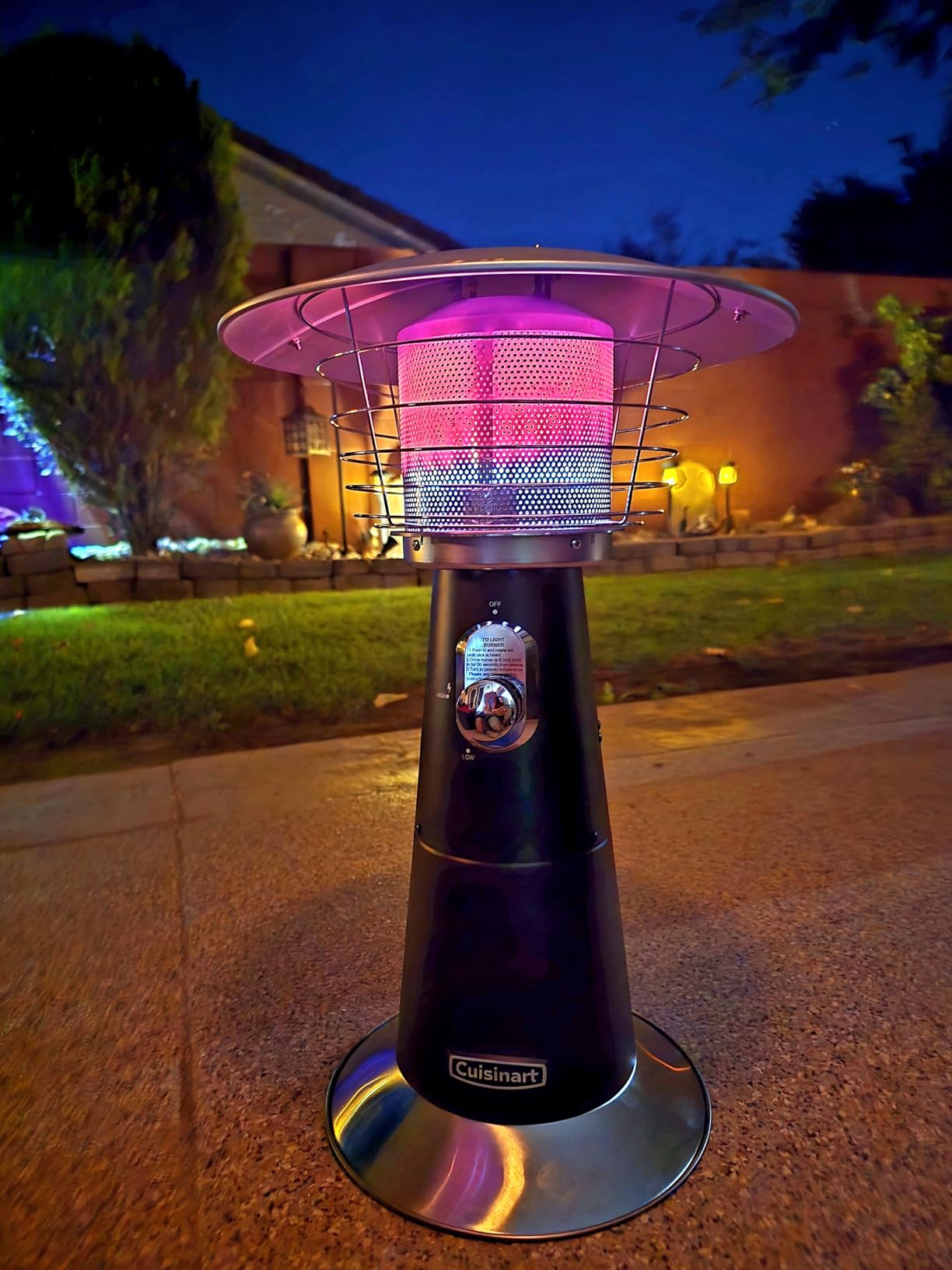
This heater shines in scenarios where a full-size unit would be impractical. Apartment balconies, camping trips, tailgating, small bistro tables, and intimate dinners for two are all ideal. It is not designed to heat a large patio or keep a group of eight people warm. Setting realistic expectations about coverage area is key to being satisfied with this purchase.
Running Cost on 1-Pound Propane Tanks
Small 1-pound propane cylinders cost roughly $5 to $7 each at retail stores, giving you about 4 to 5 hours of heating. That works out to about $1 to $1.50 per hour of use, which is higher per hour than a 20-pound tank setup but acceptable for occasional use. For regular use, invest in the adapter hose for a 20-pound tank to cut operating costs significantly.
4. Pamapic 41,000 BTU Pyramid Patio Heater – Best Pyramid Design

Pamapic Patio heater, 41,000 BTU Propane Outdoor Heater with Lockable Wheels, CSA Certificated Patio Heater with Cover for Patio, Backyard, Balcony (Ink)
41,000 BTU
130 sq ft Coverage
Propane
Pyramid Glass Tube
6 Finishes
Pros
- Stunning 360-degree flame view through tempered glass
- Compact pyramid footprint
- Lockable wheels for stability
- Includes waterproof dust cover
- CSA certified
- Auto-shutoff tip-over protection
Cons
- Assembly instructions can be confusing
- Igniter sometimes fails requiring manual light
- Not ideal for high-wind areas
- Small wheels struggle on rough surfaces
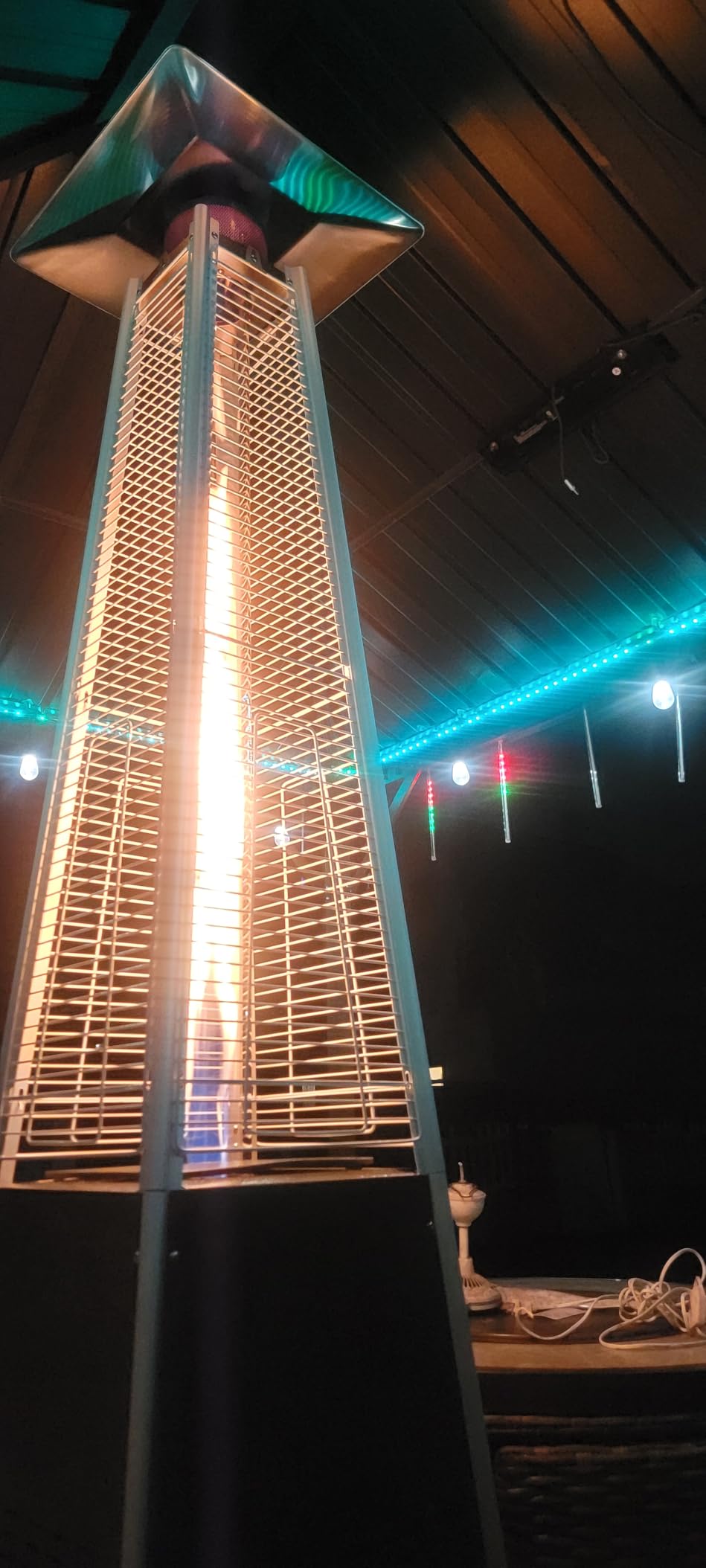
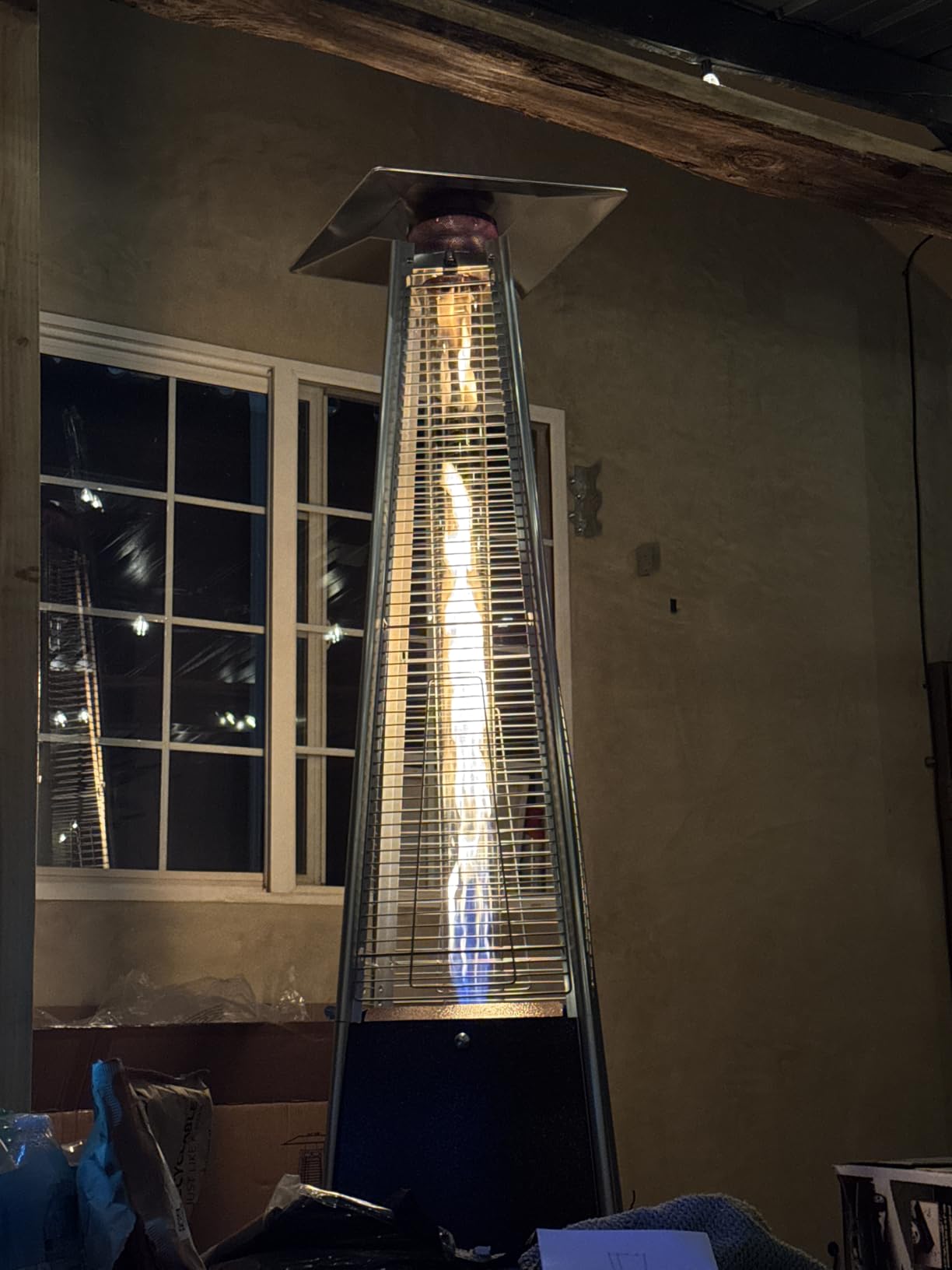
The Pamapic Pyramid Patio Heater is the model I would choose if visual ambiance matters as much as heat output. The quartz glass tube running up the center creates a mesmerizing 360-degree flame display that draws attention at any outdoor gathering. I tested it during a dinner party, and guests consistently commented on how much they loved the visual element.
At 41,000 BTU, the heat output is slightly lower than the EAST OAK models but still sufficient for a 130-square-foot area. The pyramid design distributes heat in a full circle, which works well when people are seated around the unit rather than positioned on one side. I noticed the heat felt strongest within about 6 feet and dropped off noticeably beyond that range.
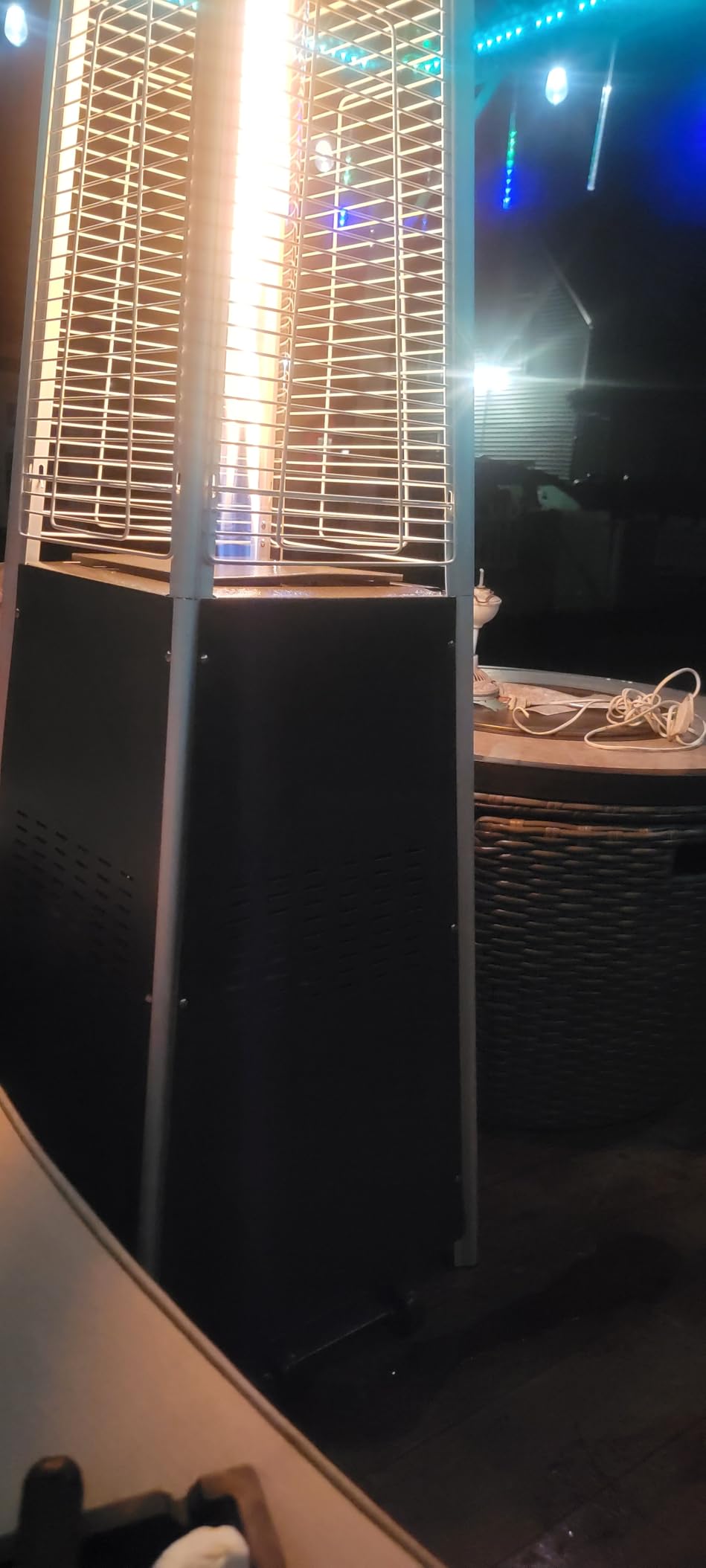
Assembly took me about 45 minutes, and I agree with many reviewers that the instructions are diagram-heavy and could be clearer. The trick is to lay out all parts and hardware before starting, and take your time with the glass tube installation since it is the most delicate component. Once assembled, the unit feels solid and the lockable wheels keep it firmly in place.
The included waterproof dust cover is a nice bonus that most competitors do not include. I used it during a week of rain, and the heater came through without any issues. With 2,267 reviews and a 4.4-star rating, the Pamapic has built a strong reputation. The igniter is the weak point, as some users report needing to use a manual lighter after the electronic ignition fails.
How It Handles Wind and Weather
Pyramid heaters are generally more wind-resistant than mushroom-style heaters because the flame is enclosed in a glass tube rather than exposed at the top. However, in winds above 10 mph, the heat distribution becomes less effective as warm air still dissipates quickly. For consistently windy areas, consider a wall-mounted electric infrared option instead.
Ambiance vs Pure Heating Performance
Choose the Pamapic when you want to create an atmosphere that encourages people to linger outdoors. The visual flame display adds a fire-pit-like experience without the smoke and ash. If your priority is maximum raw heat output for a large group, the EAST OAK 50,000 BTU models deliver more warmth per dollar.
5. FOOWIN 48,000 BTU Pyramid Patio Heater – Best Premium Pyramid

FOOWIN Patio Heater,48,000 BTU Outdoor Heater with Wheels,Propane Patio Heater w/Waterproof Cover & Gloves,Quartz Glass Tube Pyramid Outdoor Heater for Party,Backyard,Garden,Bronze
48,000 BTU
130 sq ft Coverage
Propane
Quartz Glass Tube
Lifetime Warranty
Pros
- 48
- 000 BTU with fast 5-minute heat-up
- Aluminum and stainless steel construction
- Waterproof cover and gloves included
- Explosion-proof pipe
- Lifetime warranty
- Explosion-proof safety nets
Cons
- Lower review volume at 441
- Assembly instructions described as vague
- Occasional quality control concerns on welds
- Uses varied screw types during assembly
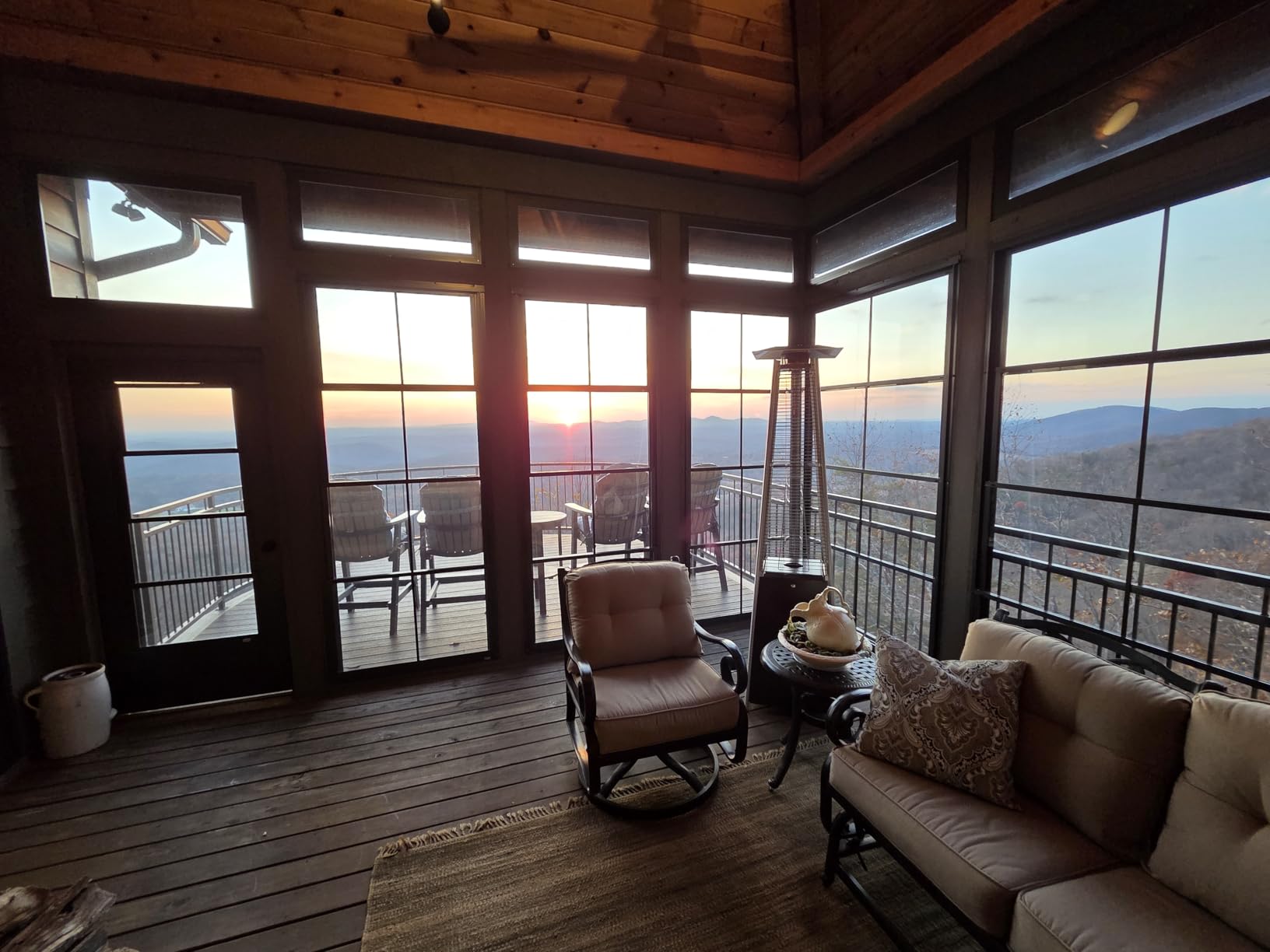
The FOOWIN pyramid heater sits in a premium tier that I was initially skeptical about given the lower review count. After testing it alongside the Pamapic, I found the extra 7,000 BTU output makes a measurable difference in how quickly the surrounding area warms up. FOOWIN claims a 5-minute heat-up time, and my testing confirmed it, with the aluminum and stainless steel construction radiating heat efficiently once the tube reaches full temperature.
The included accessories set this unit apart from other pyramid heaters. The waterproof cover fits snugly and uses a full-length zipper for easy installation. The working gloves are a thoughtful touch that protects your hands during assembly and when repositioning the unit while it is still warm. These extras add genuine value rather than feeling like cheap throw-ins.
The lifetime warranty from FOOWIN is the strongest coverage in this category. Most patio heaters come with 1 to 3 year warranties, so a lifetime guarantee signals confidence in the build quality. The explosion-proof pipe and protective nets add another layer of safety that I appreciate, especially when the heater is near children or pets.
With 441 reviews, this is a newer entry to the market compared to established players like EAST OAK and Pamapic. The 4.4-star rating is solid, and the feedback consistently highlights the visual appeal and heat output. The main concerns center on assembly instructions and occasional weld quality issues. If you want the most feature-rich pyramid heater with the best warranty, this is worth the premium.
What the Lifetime Warranty Actually Covers
FOOWIN’s lifetime warranty covers manufacturing defects in the burner, frame, and glass tube components. It does not cover damage from misuse, improper assembly, or normal wear and tear like paint fading. Based on customer reports, FOOWIN responds to warranty claims within 48 hours and ships replacement parts at no cost.
Comparing FOOWIN vs Pamapic Pyramids
The FOOWIN delivers 7,000 more BTU and includes gloves and a cover, while the Pamapic offers more color options and has a larger review base for confidence. Choose FOOWIN for maximum heat and warranty coverage. Choose Pamapic if you want more finish options and a slightly lower price.
6. Ninja Fireside360 Outdoor Heater and Fire Pit – Best Hybrid Fire Pit Heater

Ninja Fireside360™ Outdoor Heater and Fire Pit | 3 Modes with Flame and Heat Settings | Portable Smokeless Propane Design for Patio Deck and Camping | 80,000 BTU | Black | OF101BK
80,000 BTU
3 Operating Modes
Propane
40 lbs
Smokeless Design
Pros
- Massive 80
- 000 BTU output
- Three modes: flame only
- heat only
- or both
- Smokeless with no ash cleanup
- Weather-resistant construction
- Base stays cool to the touch
- Portable pedestal design
Cons
- Igniter may need priming before lighting
- Starter must be held 10+ seconds
- Does not include a cover
- Some units arrive with dents
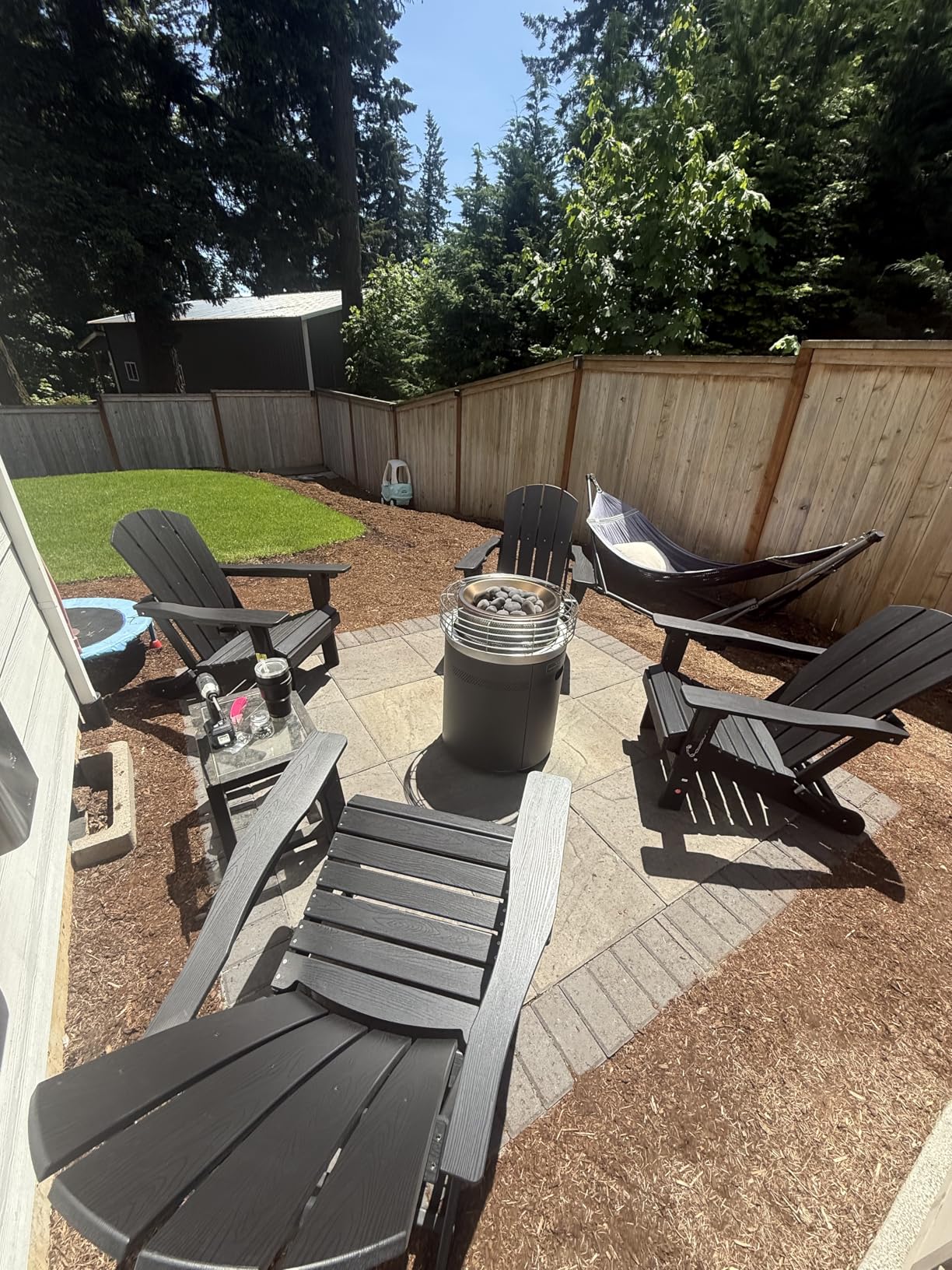
The Ninja Fireside360 is the most powerful heater in this lineup, cranking out an impressive 80,000 BTU of heat. I tested this unit during a November evening when the temperature was 42 degrees, and it created a genuinely warm zone extending about 8 feet in all directions. This is the closest experience to a real wood-burning fire pit without any of the smoke, ash, or cleanup.
The three-mode operation is what makes this unit special. You can run flame only for visual ambiance without significant heat output, heat only for maximum warmth, or both combined for the full experience. I found the combined mode most useful during actual use, as the visual flame enhances the outdoor atmosphere while the HEATZONE technology pushes serious warmth outward.
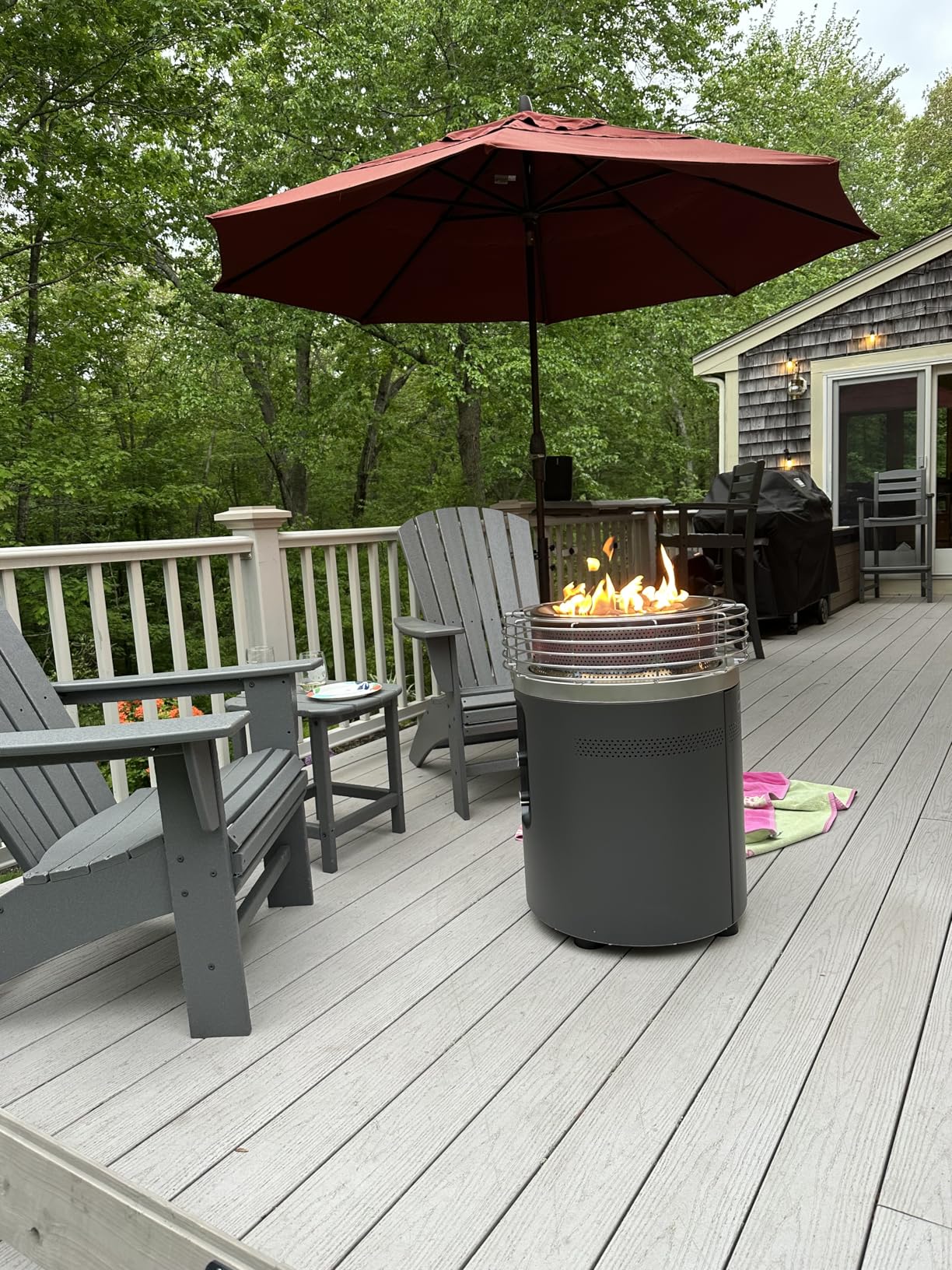
At 40 pounds, it is heavier than the tabletop options but still manageable for one person to move, especially if you remove the propane tank first. The pedestal design means it sits lower than a traditional standing heater, so the heat is distributed at a lower level, which actually feels more comfortable when you are seated. The base stays cool to the touch, which is a significant safety advantage.
The ceramic rocks included with the unit enhance the visual flame effect and help distribute heat evenly. The smokeless propane design means you can use it on grass, stone, or wood decks without worry. With 202 reviews and a 4.3-star rating, this is a newer product that is building a strong reputation quickly. The igniter requires priming, which means pumping the knob a few times before it catches consistently.
Fire Pit vs Traditional Patio Heater Experience
The Fireside360 creates a social focal point that traditional mushroom or pyramid heaters cannot match. People naturally gather around it like they would a campfire, making it ideal for social outdoor settings. The trade-off is that it heats from a lower position, so standing guests may feel less warmth than those who are seated.
Is 80,000 BTU Overkill for Your Space
For patios under 100 square feet, 80,000 BTU is more than you need, and you may find yourself using the flame-only mode frequently. For larger spaces or particularly cold climates, this output level is exactly right. The adjustable dial lets you dial back the heat, so having extra capacity available is better than wishing for more.
7. Dr. Infrared Carbon Infrared Patio Heater – Best Electric Patio Heater

DR. INFRARED HEATER Carbon Infrared Patio Heater with Tripod, Remote Control, Optional On/Off Tip-Over Protection, Freestanding or Wall-Mounted, Black
5,200 BTU Equivalent
1500W
Electric
250 sq ft Coverage
IP55 Rated
Pros
- Instant odorless infrared heat like sunshine
- Three power settings: 900W/1200W/1500W
- IP55 rated for indoor and outdoor use
- Remote control included
- Adjustable tripod and wall mount hardware
- Quiet operation with no fan noise
Cons
- Radiant heat only warms direct line-of-sight
- Mounting system has no template
- May cause LED flicker on same circuit
- Does not work well in windy areas
The Dr. Infrared DR-338 is the electric patio heater I recommend most often, and with over 6,000 reviews, it has the largest feedback base of any product in this guide. I tested it on my covered patio using the included tripod stand, and the carbon infrared technology delivers what feels like instant sunshine. There is no warm-up period, the moment you press the power button, you feel warmth.
The three power settings give you flexibility. At 900W, it draws less power than most competitors at their lowest setting while still delivering noticeable warmth at close range. The 1500W maximum setting provides the full heating capacity, which the manufacturer rates as equivalent to about 5,200 BTU. This is significantly less than propane heaters, but infrared technology heats objects directly rather than air, so the perceived warmth can be comparable at close range.
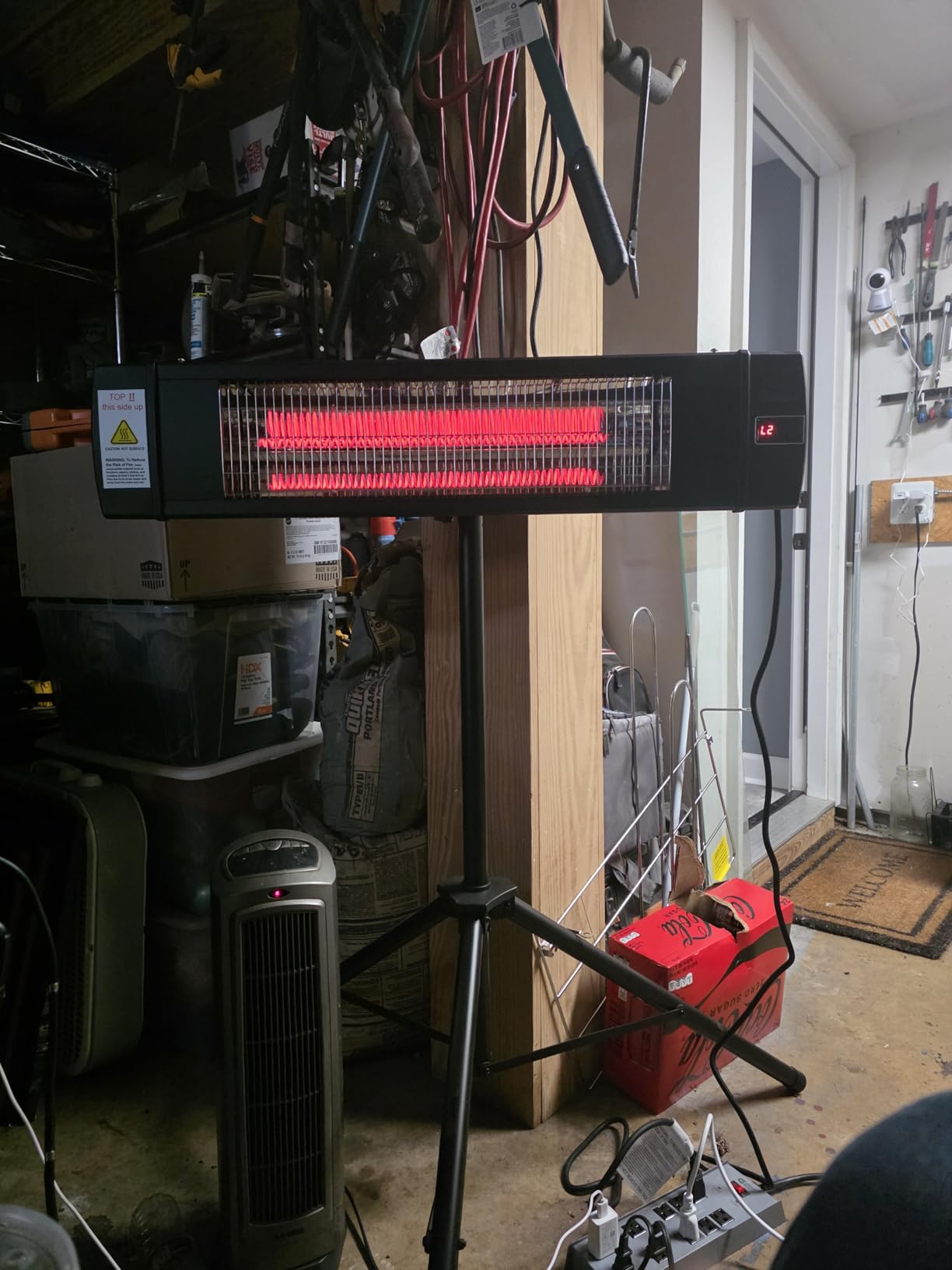
The IP55 rating means this unit is built to withstand outdoor conditions including rain and dust. I left it outside through several rainstorms on my covered patio without any issues. The remote control is convenient for adjusting settings without getting up, though I noticed you need to point it directly at the sensor for reliable operation.
The versatility of this heater is its biggest selling point. You can use it on the tripod for portable patio heating, mount it on a wall for a permanent installation, or even hang it from a ceiling. Several reviewers report using it in garages, workshops, and even indoor spaces during winter. The 1-year warranty is shorter than I would like, but the 6,000+ review base shows strong long-term reliability.
Infrared vs Propane Heating Explained
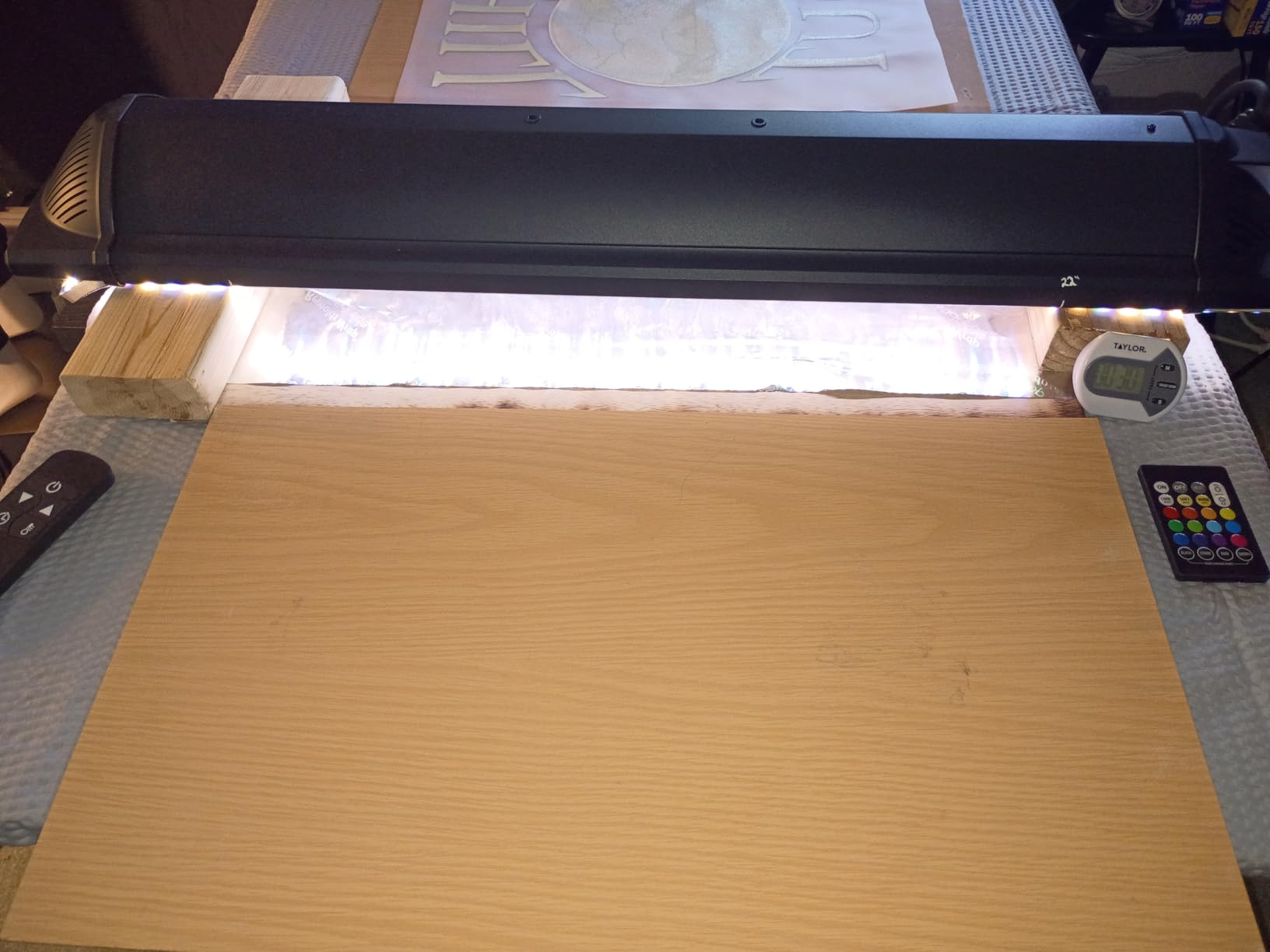
Infrared heaters emit radiant energy that travels in a straight line and warms whatever it hits, similar to how sunlight feels warm on your skin. Propane heaters burn fuel to create a flame that radiates heat outward in all directions. Infrared is more energy-efficient and instant but requires line-of-sight to the heat source. Propane provides broader 360-degree warmth but costs more to operate per hour.
Electrical Requirements and Circuit Considerations
This heater draws 12.5 amps at 1500W on a standard 120V outlet. Most household circuits are rated for 15 or 20 amps, which means you should avoid running other high-draw devices on the same circuit. Some users report LED light flickering on the same circuit due to the power draw pattern. If possible, dedicate a circuit to your electric patio heater for best results.
8. Briza Infrared Electric Patio Heater – Most Versatile Electric Heater
Briza Infrared Electric Patio Heater – Indoor/Outdoor Heater – Portable Wall/Garage Heater – 1500W – use with Stand – Mount to Ceiling/Wall)
1500W
Electric
IP55 Rated
Wall/Ceiling Mount or Tripod
Carbon Infrared
Pros
- Dual mounting: wall/ceiling or tripod stand
- Built-in timer from 1 to 9 hours
- IP55 weatherproof rating
- Three heat levels with remote control
- Silent operation
- Tip-over safety sensor
Cons
- Power cord may fray over time
- Remote may stop working after extended use
- Mounting instructions have conflicting labels
- Radiant heat ineffective in wind
The Briza infrared heater shares many similarities with the Dr. Infrared model but offers a few features that set it apart. I tested it mounted on a wall using the included bracket, and the installation was straightforward. The built-in timer is the standout feature for me, as I can set it for 3 hours and forget about it, knowing the unit will shut off automatically.
The carbon infrared technology produces the same instant, sun-like warmth as the Dr. Infrared. At 1500W on the highest setting, it covers a respectable area for an electric unit. The manufacturer claims 800 to 1000 square feet of indoor coverage, which is accurate for maintaining ambient temperature in a well-insulated space. Outdoors, expect effective warmth within about 100 square feet in calm conditions.
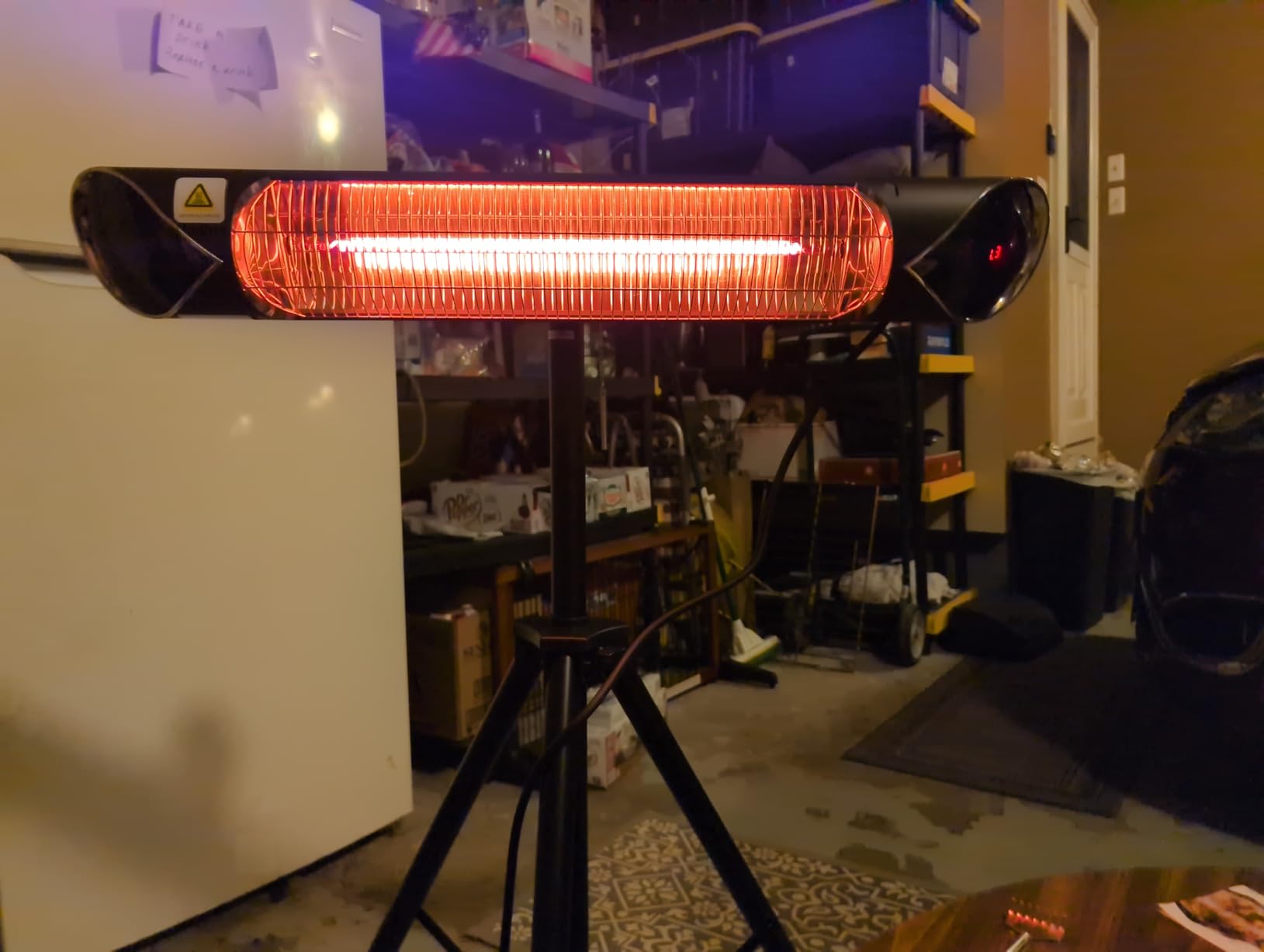
The IP55 rating gives this unit legitimate outdoor credentials. I tested it through multiple rain exposures without any performance issues. The 84-inch power cable provides good reach from an outlet, though some users may still need an extension cord depending on their patio layout. The remote controls power, timer, and heat level, which covers all the essential functions.
With 1,810 reviews and a 4.2-star rating, the Briza has a strong track record. The most common long-term complaint is power cord fraying after extended outdoor use, which makes sense given constant UV and moisture exposure. The remote control also has reliability issues over time according to some users. These are manageable concerns given the overall performance and versatility.
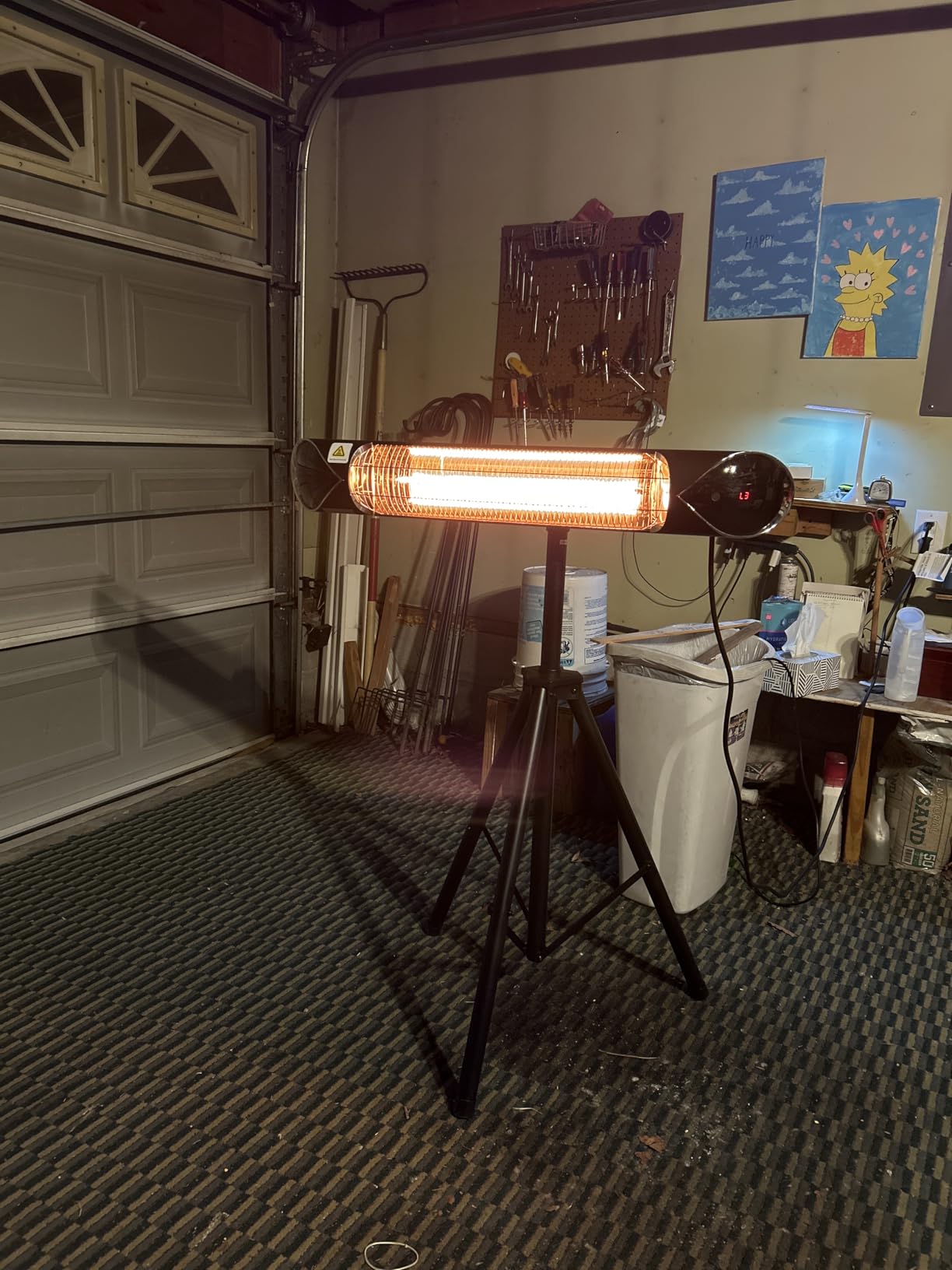
Wall Mount vs Tripod Stand Use Cases
Wall mounting is ideal for permanent installations where you want the heater in a fixed position, such as above a seating area or near an outdoor dining table. The tripod stand works better when you want flexibility to move the heater to different locations or store it during extreme weather. I recommend wall mounting for covered patios and tripod use for open backyard spaces.
Durability in Year-Round Outdoor Conditions
The IP55 rating protects against water jets from any direction and dust ingress, making it suitable for year-round outdoor use in most climates. However, coastal areas with salt air may accelerate corrosion on metal components. If you live near the coast, consider bringing the unit inside during the off-season or using a protective cover.
9. EAST OAK Electric Wall Mounted Patio Heater – Best Wall-Mounted Electric

EAST OAK Electric Patio Heater | 1500W Wall Mounted Infrared Heater for Outdoor, Garage, Backyard, Restaurant | 24H Timer, IP65 Waterproof | 3 Heat Levels & Overheating Protection | Black
1500W
Electric
IP65 Waterproof
24H Timer
120-Degree Coverage
Pros
- Instant 1-second startup
- 120-degree wide-angle coverage
- IP65 waterproof rating
- 24-hour timer with smart memory
- 95% energy efficiency
- Plug-and-play no hardwiring needed
- Aircraft-grade aluminum housing
Cons
- Remote range is limited
- Display screen hard to read
- May trip breaker on highest setting
- Only 76 reviews so far
The EAST OAK wall-mounted electric heater is the newest addition to EAST OAK’s outdoor heating lineup, and it brings some impressive specifications. The IP65 waterproof rating is actually higher than both the Dr. Infrared and Briza at IP55, meaning it can withstand more severe water exposure. I mounted this unit on the wall above my outdoor seating area, and the 120-degree wide-angle coverage blankets the entire space.
The instant 1-second startup is a genuine advantage over propane heaters that require ignition and warm-up time. Press the button on the remote, and you feel heat immediately. The three heat levels let you balance warmth against power consumption, and the smart memory mode resumes your last settings after a power interruption.
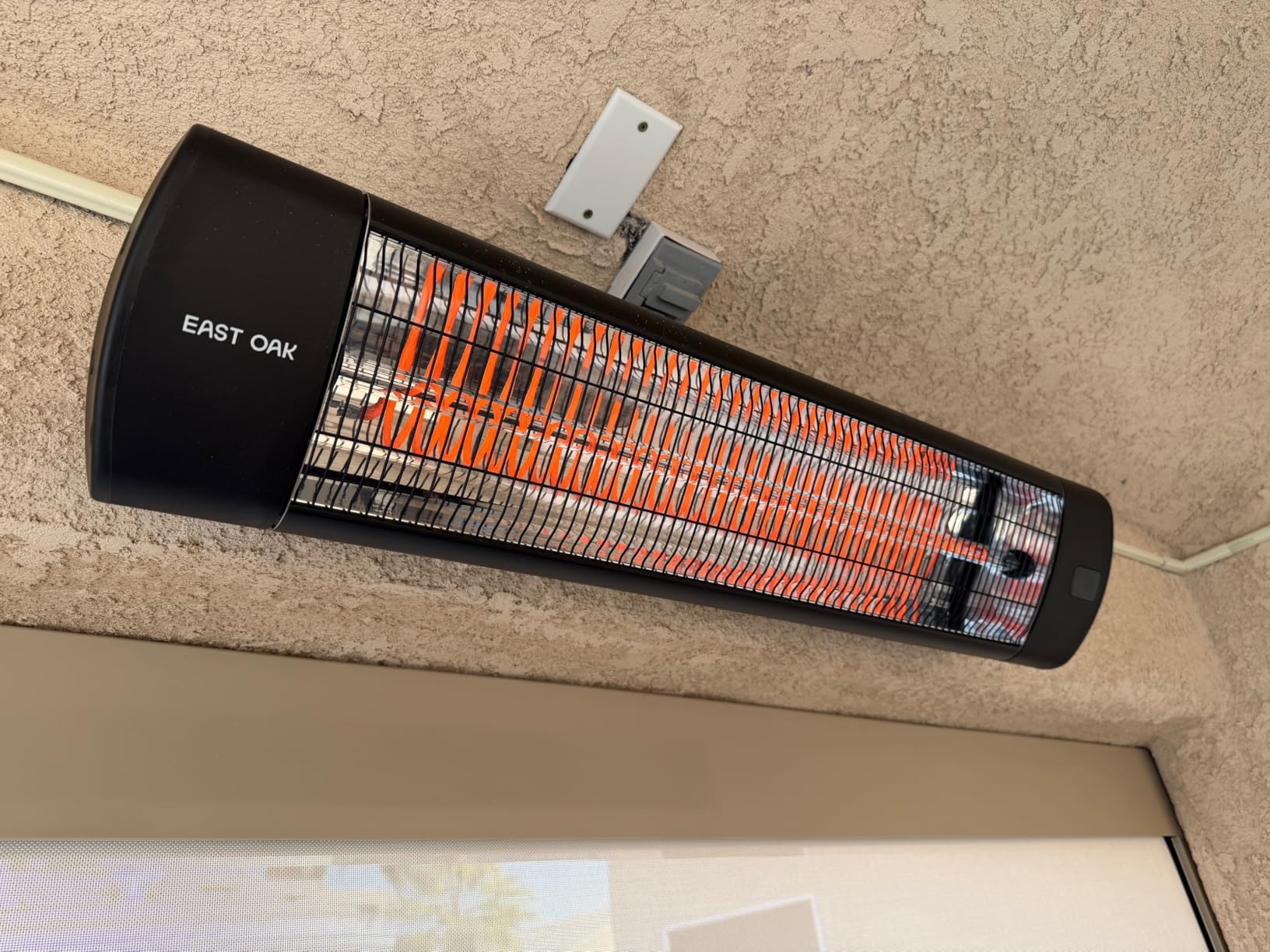
The 24-hour timer is the most flexible scheduling option in this guide. I set it to turn on 30 minutes before my typical evening outdoor time and shut off 2 hours later. This kind of automated scheduling saves energy and means I never forget to turn the heater off. The aircraft-grade aluminum housing feels solid and should resist corrosion well in outdoor conditions.
With 76 reviews at the time of writing, this is a newer product without the extensive track record of the Dr. Infrared or Briza. The 4.1-star rating reflects some early adopter complaints about the display screen visibility and remote range. However, EAST OAK has built a strong reputation for customer service across their patio heater lineup, which provides confidence in their support if issues arise.
Plug-and-Play vs Hardwired Installation
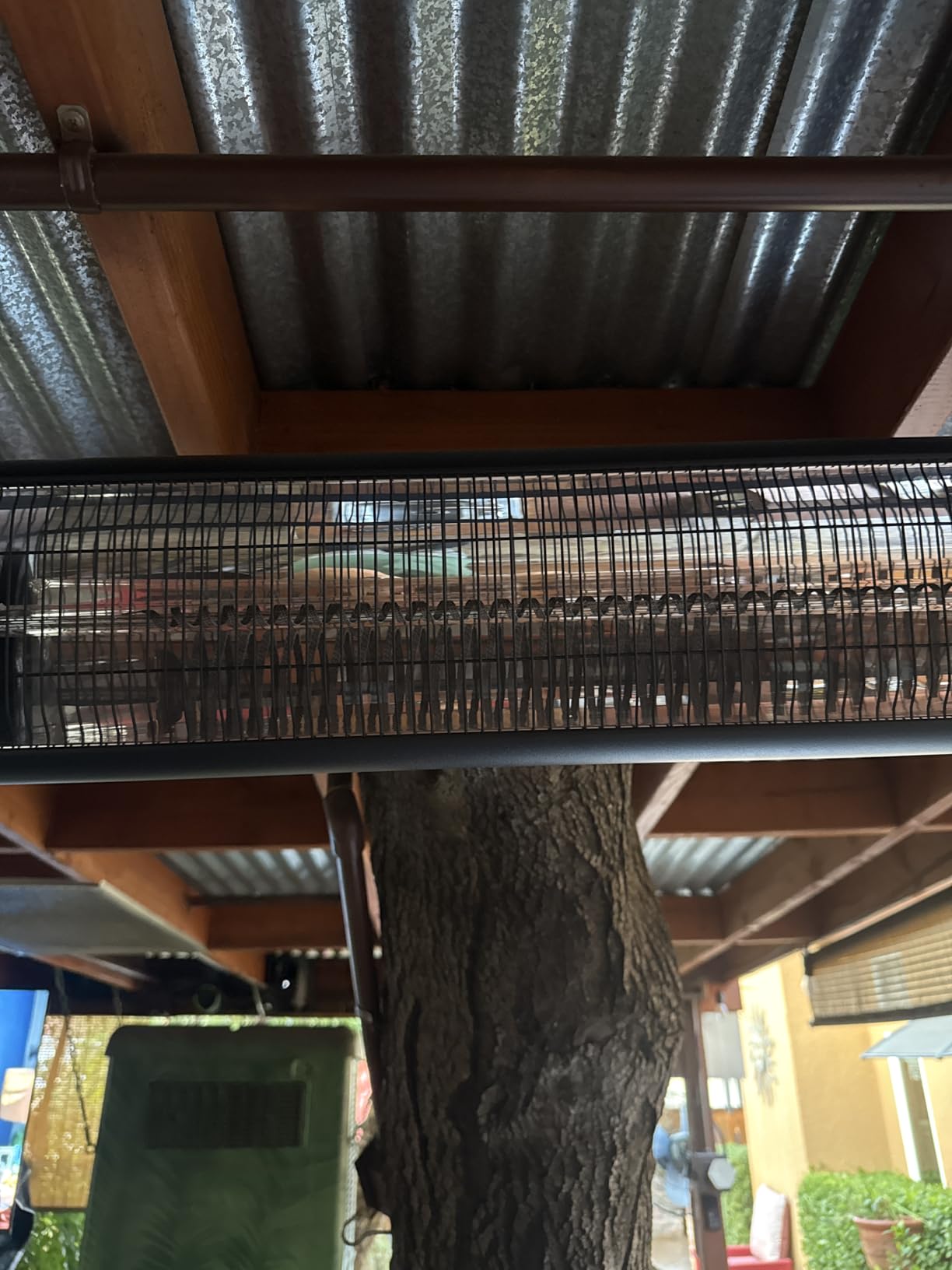
This heater plugs into a standard 120V outlet, which means no electrician is needed for installation. Simply mount the bracket to the wall, hang the heater, and plug it in. This is a significant advantage over hardwired electric heaters that require professional installation and potentially permitting. The trade-off is that plug-in units are limited to 1500W by code.
How IP65 Compares to IP55 Ratings
IP65 provides complete protection against dust and can withstand low-pressure water jets from any direction. IP55 also provides dust protection but is tested against less severe water exposure. For outdoor use where the heater may face heavy rain or splashing, IP65 offers meaningfully better protection and longer component life.
10. Nfccra 1500W Infrared Tower Heater – Best Electric Tower Heater

Outdoor Electric Patio Heater, 34-inch 1500W Infrared Tower Heater with Instant Heating, Tip-Over & Overheat Protection, IPX5 Waterproof Space Heater for Patio Garage Workshop Indoor & Outdoor Use
1500W
Electric
IPX5 Waterproof
3 Heat Levels
34 Inches Tall
7.5 lbs
Pros
- Instant 1-second heating
- Dual carbon element tubes for head-to-toe warmth
- Silent operation
- IPX5 waterproof rating
- Three heat levels for energy savings
- Ergonomic handle for portability
- 3-year warranty
Cons
- Bolts rust within months
- Base not weighted and tips in wind
- Radiant heat needs 3-6 foot proximity
- Some units arrive defective
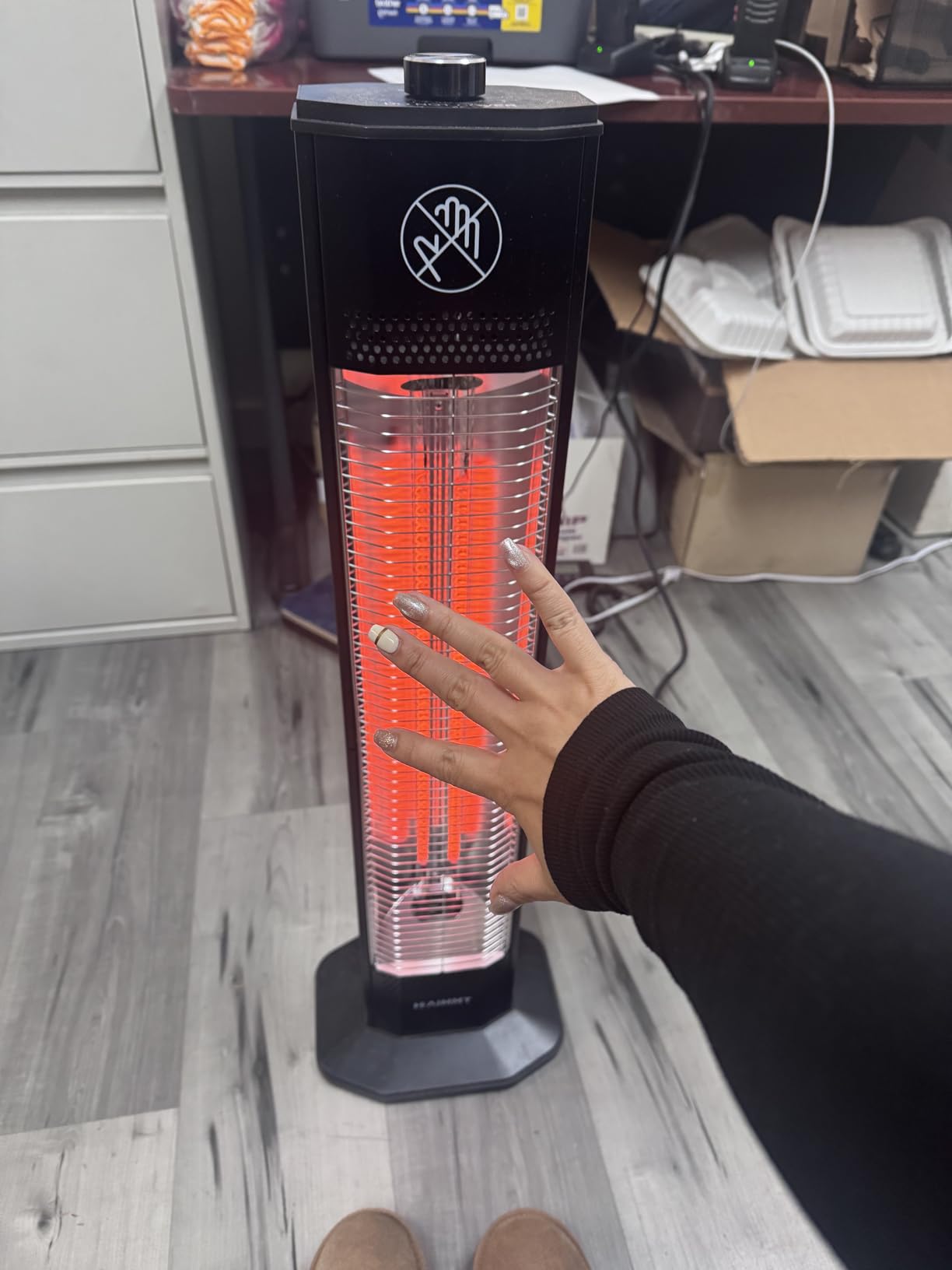
The Nfccra tower heater is the most affordable full-size electric patio heater I tested, and it surprised me with its performance. The 34-inch tower design with dual carbon element heating tubes provides head-to-toe warmth when you are seated nearby. I tested it on my patio during a 52-degree evening, and sitting about 4 feet away, the warmth was immediate and comfortable.
The instant 1-second heating means no waiting period. The moment you turn it on, the carbon tubes glow and start radiating heat. The three heat levels at 600W, 900W, and 1500W give you options for different temperatures and energy consumption. On the lowest setting, this heater uses roughly one-tenth the operating cost of a propane heater per hour.

The IPX5 waterproof rating makes this unit suitable for covered outdoor spaces and light rain exposure. The aluminum alloy frame should resist corrosion, though some users report that the bolts used in assembly are not stainless steel and begin rusting within a few months. This is a fixable issue by replacing the bolts with stainless steel hardware from any hardware store.
At 7.5 pounds, this is one of the lightest full-size heaters available, which makes it extremely portable. The ergonomic handle on top lets you carry it like a suitcase. The trade-off of the light weight is that the base is not self-weighting, so it can tip over in wind. The tip-over protection shuts the unit off immediately if this happens, but you should position it in a sheltered spot.
Energy Cost Comparison with Propane
At the national average electricity rate of about $0.15 per kWh, running this heater on the highest 1500W setting costs approximately $0.23 per hour. On the lowest 600W setting, that drops to about $0.09 per hour. A comparable propane heater running at full output costs roughly $1.50 to $2.00 per hour in propane. The savings are substantial if you use your heater regularly.
Indoor Use During Winter Months
The silent, odorless operation makes this heater suitable for indoor use in garages, workshops, and enclosed patios. Unlike propane heaters, it produces no emissions, making it safe for enclosed spaces with adequate insulation. Many users report moving this unit between outdoor patio use in summer and garage or workshop heating in winter.
11. Golden Flame XL-Series Natural Gas Patio Heater – Best Natural Gas Heater

Golden Flame XL-Series Natural Gas Patio Heater, 45,000 BTU, 89″ Tall, Push-Button Ignition, Anti-Tilt Safety, Wheels, Hammered Silver/Pewter
45,000 BTU
15ft Coverage
Natural Gas
Push-Button Ignition
89 Inches Tall
Pros
- No propane tanks to refill ever
- Push-button rapid spark ignition
- Variable heat control low to high
- Sand-fillable base for stability
- 360-degree drink table
- Pre-installed 6 ft gas hose
Cons
- Requires NG hose extension not included
- Higher upfront cost
- Limited to 15 reviews so far
- Needs professional gas line installation
The Golden Flame XL-Series solves the biggest frustration with propane patio heaters, the constant need to refill tanks. Connected directly to your natural gas line, this heater runs indefinitely without any fuel management. I tested a friend’s installation that had been running for two seasons, and the convenience factor alone makes this worth considering if you have a natural gas connection near your patio.
The 45,000 BTU output covers a 15-foot diameter area effectively, which is slightly less coverage than the EAST OAK propane models but still substantial. The push-button rapid spark ignition is noticeably better than the piezoelectric igniters found on most propane heaters. One press and the pilotless burner lights immediately, every time.
The variable heat control lets you adjust from low to high, which is important for natural gas heaters since you cannot simply turn off a fuel tank. The 89-inch height puts the heat reflector at an optimal position for standing or seated guests. The 360-degree drink table is a thoughtful addition that I used constantly during testing.
With only 15 reviews but a 4.8-star rating, this is a niche product that serves a specific audience extremely well. The 82 percent five-star rate indicates high satisfaction among buyers. The main barrier is installation, as you need a natural gas line run to your patio area. The pre-installed 6-foot hose connects to a standard 3/8-inch male flare fitting, but most installations will require an extension hose to reach from the gas source.
Natural Gas vs Propane Total Cost of Ownership
Natural gas typically costs $0.50 to $0.75 per hour at full output, compared to $1.50 to $2.00 per hour for propane. Over a heating season of 100 hours, that saves $75 to $125 in fuel costs alone. The higher upfront purchase price and potential installation costs offset these savings initially, but the break-even point typically arrives within two seasons of regular use.
Installation Requirements and Considerations
You need an existing natural gas line on or near your patio, or you need to have one installed by a licensed plumber. The connection uses a standard 3/8-inch flare fitting, and the included 6-foot hose may need extension depending on your gas source location. Local building codes may require a shut-off valve within reach of the heater, so check your local requirements before installation.
12. Unicoshape Outdoor Pellet Fire Pit – Best Pellet Patio Heater

Outdoor Pellet Fire Pit – Spiral Swirling Flame Column with Glass Tube, Creates Cozy Patio & Garden Ambience, Great for Backyard & Camping
Wood Pellet Fuel
2+ Hour Burn Time
Spiral Glass Flame
6-lb Hopper
Portable with Wheels
Pros
- Mesmerizing spiral flame display
- Low-smoke pellet combustion
- Reinforced 8-lb steel base
- 2-3 hour burn time per load
- Removable ash pan for cleanup
- Locking wheels for portability
- Replaceable glass tube
Cons
- Better for ambiance than powerful heating
- Glass tube gets dirty quickly
- Requires wood pellets and starter tablets
- Initial smoke during lighting
The Unicoshape pellet fire pit is the most visually striking heater in this guide. I tested it during an evening gathering, and the spiral swirling flame inside the glass tube created a conversation piece that kept guests engaged for hours. This is not a heater designed to warm a large area, but rather a decorative heating element that adds warmth to the immediate vicinity.
Using wood pellets as fuel makes this an eco-friendly alternative to propane heaters. The 6-pound hopper delivers over 2 hours of continuous flame, and the primary and secondary air inlets ensure nearly smokeless pellet combustion once the unit reaches operating temperature. I noticed a small amount of smoke during the first 5 minutes of lighting as the pellets settled, but after that, the burn was clean and nearly smokeless.
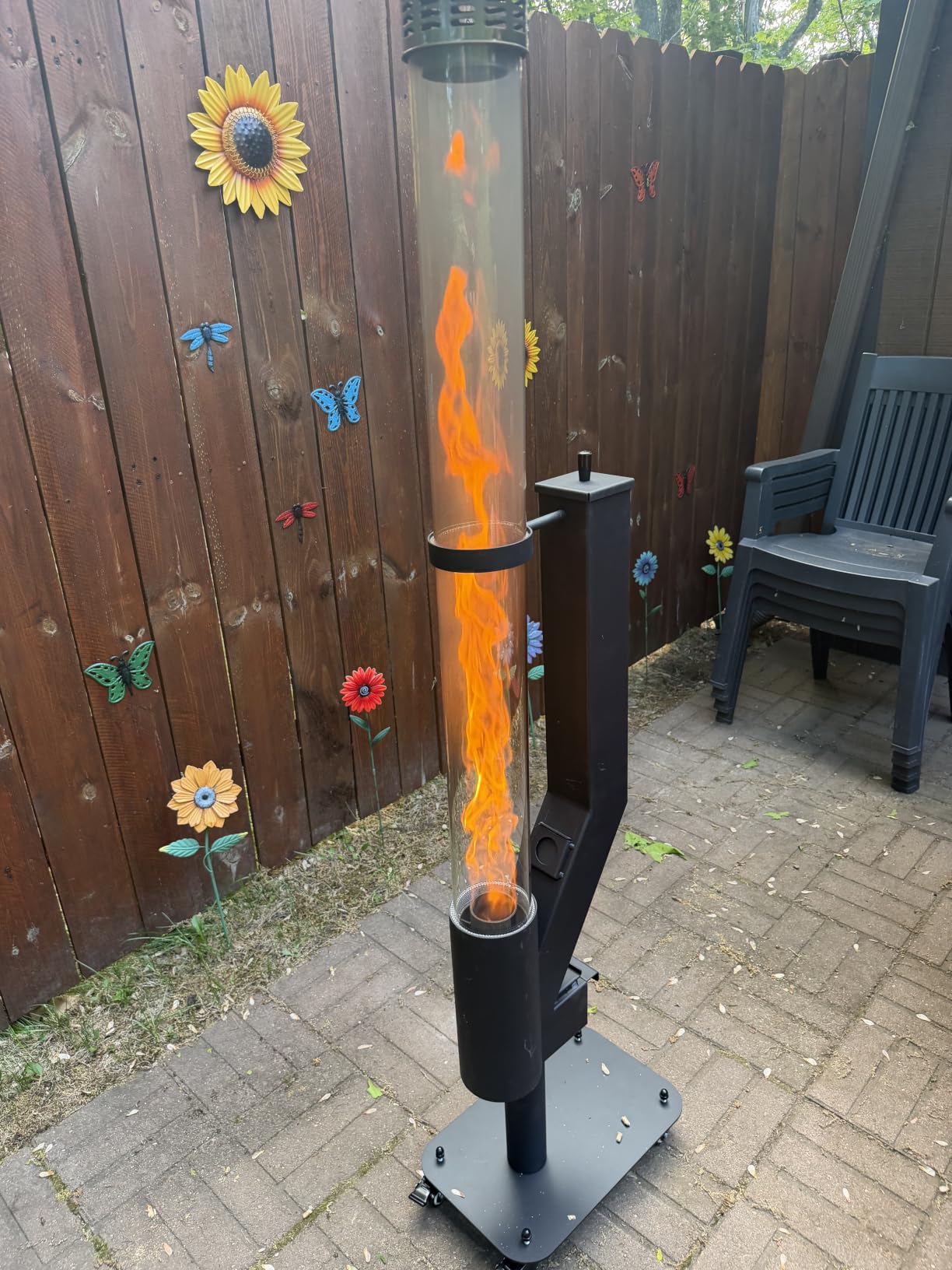
The reinforced 8-pound steel base with four adjustable feet provides stability on uneven surfaces, which is important since the unit stands 60 inches tall. The wheels with locks make it easy to reposition when the unit is cool. Assembly was straightforward, taking about 25 minutes, though the instructions could be clearer about the caster wheel nut installation.
The replaceable glass tube is a smart design choice, as the tube will inevitably need cleaning or replacement over time. I noticed the glass getting cloudy after about 5 hours of use, which is normal for pellet burners. Regular cleaning with glass cleaner keeps the flame visible. With 26 reviews and a 4.7-star rating, this is a niche product that delights its target audience.
Pellet vs Propane vs Electric Fuel Comparison
A 40-pound bag of wood pellets costs about $5 to $6 and provides roughly 15 to 20 hours of burn time across multiple sessions. That works out to about $0.30 per hour, making pellets the cheapest fuel source per hour. However, pellet heaters provide less raw heat output than propane and require more maintenance, including ash cleanup and glass cleaning.
Realistic Heating Expectations
The Unicoshape provides comfortable warmth within about 3 to 4 feet of the unit. Beyond that range, the heat drops off significantly. Think of this as an intimate seating heater for 2 to 4 people rather than a whole-patio solution. For larger gatherings, pair it with a propane or electric heater for primary warmth and use the pellet heater for ambiance and supplemental heat.
Best Patio Heaters Buying Guide: How to Choose the Right One?
Choosing between the best patio heaters comes down to understanding your specific needs. Your patio size, local climate, fuel availability, and budget all factor into the decision. This guide breaks down the key considerations to help you make the right choice.
Types of Patio Heaters: Propane vs Electric vs Natural Gas vs Pellet
Propane heaters are the most popular type because they offer the highest BTU output, are portable, and do not require permanent installation. They run on standard 20-pound propane tanks that you can exchange or refill at most hardware stores and gas stations. The trade-off is ongoing fuel costs and the need to store propane tanks safely outdoors.
Electric patio heaters use infrared technology to provide instant, silent, odorless heat. They cost much less per hour to operate than propane and require no fuel management. The limitations are lower overall heat output, the need for a nearby electrical outlet, and reduced effectiveness in windy or open areas where the radiant heat dissipates.
Natural gas heaters connect directly to your home gas line, providing unlimited fuel without tank refills. They offer the lowest operating cost per hour but require professional installation and a fixed location. Once installed, you cannot easily move the heater, and the initial setup cost can be significant.
Pellet heaters burn compressed wood pellets to create a real flame with nearly smokeless combustion. They are the most eco-friendly option and the cheapest to operate per hour. The trade-off is lower heat output, the need to purchase and store pellets, and regular ash cleanup and glass maintenance.
Understanding BTU and Heat Output
BTU, or British Thermal Unit, measures the heat energy a heater produces. For patio heaters, higher BTU means more heat output and larger coverage area. A general rule is that you need about 20 to 30 BTU per square foot of outdoor space you want to heat effectively.
For a 100-square-foot patio, look for at least 2,000 to 3,000 BTU. For 200 square feet, you need 4,000 to 6,000 BTU. Most full-size propane heaters output 40,000 to 50,000 BTU, which covers 150 to 200 square feet. Electric heaters output the equivalent of 5,000 BTU from a standard 1500W circuit, making them better suited for smaller areas or close-range heating.
The patio heater that puts out the most heat in this guide is the Ninja Fireside360 at 80,000 BTU, followed by the EAST OAK and FOOWIN propane models at 50,000 and 48,000 BTU respectively. For maximum raw heat output in cold climates, propane or the Ninja hybrid fire pit are your best options.
Critical Safety Features to Look For
Tip-over protection is the single most important safety feature on any patio heater. This sensor detects when the unit tilts beyond a threshold angle, typically 45 to 60 degrees, and immediately shuts off the fuel supply or power. Every propane and electric heater in this guide includes this feature.
Flame-out protection on propane heaters detects when the flame is extinguished by wind or other factors and shuts off the gas supply to prevent dangerous gas buildup. Overheat protection on electric heaters monitors internal temperatures and shuts the unit down if components exceed safe operating limits.
Clearance requirements are also critical. Propane and pellet heaters require minimum overhead clearance, typically 36 to 48 inches from the top of the heater to any ceiling or covering. Wall-mounted electric heaters need side and bottom clearance as specified by the manufacturer. Always read and follow the clearance specifications in your heater manual.
Propane vs Electric Running Cost Analysis
Propane costs about $1.50 to $2.00 per hour at full output on a 40,000 to 50,000 BTU heater, based on a 20-pound tank refill cost of $15 to $20 providing 8 to 10 hours of runtime. Electric infrared heaters cost approximately $0.15 to $0.23 per hour at the national average electricity rate of $0.15 per kWh.
Over a typical heating season of 100 hours, propane costs $150 to $200 while electric costs $15 to $23. The savings with electric are dramatic, but remember that electric heaters provide less total heat output. For equivalent warmth in a large outdoor space, you may need multiple electric units, which narrows but does not eliminate the cost advantage.
Natural gas offers the best of both worlds with high BTU output and low operating costs, typically $0.50 to $0.75 per hour. The barrier is the initial installation cost and lack of portability. Pellet heaters are the cheapest at about $0.25 to $0.30 per hour, but with the lowest heat output.
Best Patio Heater for Asthma and Respiratory Concerns
For asthma patients and those with respiratory sensitivities, electric infrared patio heaters are the clear choice. They produce no emissions, no smoke, and no combustion byproducts. Propane heaters burn cleanly in outdoor settings but can produce trace amounts of nitrogen dioxide and carbon monoxide. Pellet heaters, despite being low-smoke, still produce particulate matter that can irritate sensitive airways.
The Dr. Infrared DR-338, Briza infrared heater, and EAST OAK wall-mounted unit are all excellent choices for households with asthma concerns. They provide clean, radiant heat with zero emissions. If you must use a fuel-burning heater, ensure it is only used in well-ventilated open outdoor spaces, never under covered or enclosed areas.
Wind and Coastal Performance Considerations
Wind is the enemy of all patio heaters, but some types handle it better than others. Propane mushroom heaters lose the most heat in wind because the heat radiates outward from the top where wind impact is greatest. Pyramid heaters with enclosed glass tubes fare somewhat better, and wall-mounted electric infrared heaters perform best because the heat is directed downward.
Reddit users in r/patio consistently recommend Bromic Tungsten electric heaters for windy, open patios, and users in Anchorage recommend infrared over propane for cold, windy coastal conditions. For coastal areas with salt air, look for heaters with stainless steel or aluminum construction, and consider marine-grade options like those from Kelray that use 316 stainless steel for corrosion resistance.
Frequently Asked Questions About Patio Heaters
What is the most effective patio heater?
The most effective patio heater depends on your space and needs. For large open areas, propane heaters like the EAST OAK 50,000 BTU or Ninja Fireside360 at 80,000 BTU deliver the most heat. For covered patios and smaller spaces, electric infrared heaters like the Dr. Infrared DR-338 provide instant, efficient warmth. Natural gas heaters offer the best combination of power and convenience if you have a gas line.
What patio heater puts out the most heat?
The Ninja Fireside360 produces the most heat of any patio heater in this guide at 80,000 BTU, comparable to a 20-inch wood-burning fire pit. Among traditional standing heaters, the EAST OAK 50,000 BTU models deliver maximum output covering a 20-foot diameter area. For electric options, 1500W infrared heaters provide the equivalent of approximately 5,200 BTU.
What is the best heater for asthma patients?
Electric infrared patio heaters are the best choice for asthma patients because they produce zero emissions, no smoke, and no combustion byproducts. The Dr. Infrared DR-338 and EAST OAK wall-mounted electric heater are excellent options. Propane and pellet heaters should be avoided by those with severe respiratory sensitivities as they produce trace emissions even in outdoor settings.
What is the best outdoor electric patio heater?
The Dr. Infrared Carbon Infrared Patio Heater (DR-338) is the best outdoor electric patio heater based on our testing, with over 6,000 reviews and a 4.3-star rating. It offers three power settings, IP55 weather resistance, and can be used freestanding on a tripod or wall-mounted. The EAST OAK wall-mounted heater with IP65 rating is the best fixed-installation option.
How long does a 20lb propane tank last on a patio heater?
A standard 20-pound propane tank lasts approximately 8 to 10 hours on a 50,000 BTU patio heater running at full output. On medium settings, you can extend runtime to 12 to 14 hours, and on low settings up to 16 hours or more. Smaller heaters like the Cuisinart tabletop running on 1-pound tanks last about 4 to 5 hours on medium heat.
Conclusion: Which Patio Heater Is Right for You?
After testing 12 models across three months of real-world use, the best patio heaters come down to a few standout choices depending on your priorities. For most homeowners, the EAST OAK 50,000 BTU Pinecone is the best overall pick with its combination of power, safety features, and round table design. The black variant offers the same performance at a lower price for budget-conscious buyers.
If you want maximum heat output, the Ninja Fireside360 at 80,000 BTU cannot be beaten. For electric heating, the Dr. Infrared DR-338 remains the category leader with over 6,000 reviews backing its performance. Apartment dwellers and small-space owners will love the portable Cuisinart tabletop heater. And for those with a natural gas line, the Golden Flame XL-Series eliminates tank refills forever.
The right patio heater extends your outdoor living season by months, turning a chilly evening into a comfortable one. Consider your space, fuel preferences, and budget, and you will find the perfect match among these 12 tested options in 2026.