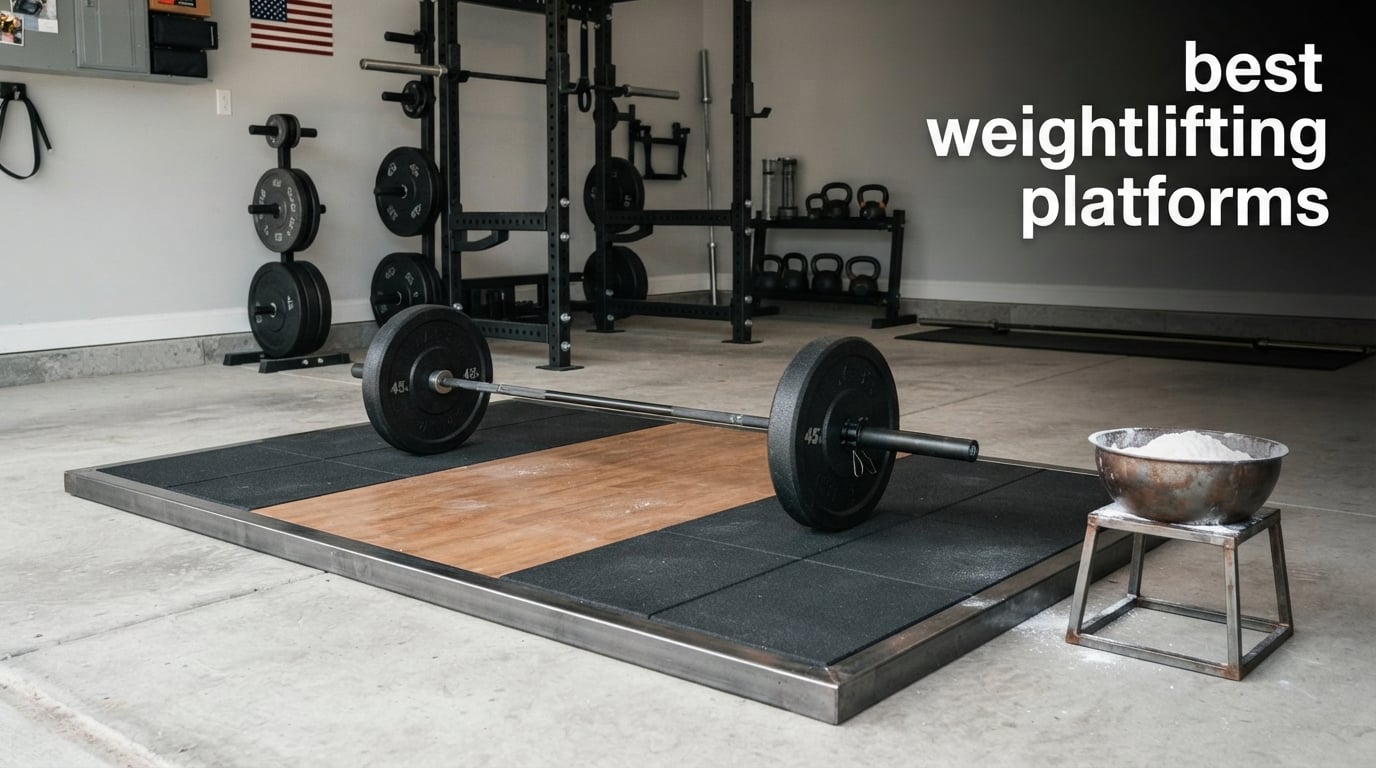
Dropping a loaded barbell on bare concrete is the fastest way to crack a floor, ding a barbell sleeve, and anger everyone in the house. After testing six of the best weightlifting platforms on the market, our team found that the right surface protects your floor, your equipment, and your relationship with anyone living one story below you.
The best weightlifting platforms combine a rigid steel frame or thick rubber layer with shock-absorbing materials that dampen impact from heavy deadlifts, cleans, and snatches. Whether you have a garage gym on a concrete slab, a basement setup over wood joists, or a small apartment corner, the platform you choose dictates how loud your training gets and how long your flooring survives.
I spent weeks comparing dedicated deadlift platforms, drop pad pairs, interlocking rubber tiles, and large roll-out mats to find which designs actually absorb impact without bouncing bars sideways. Below you will find our top three picks, a full comparison table, individual reviews with pros and cons, plus a buying guide that answers the questions Reddit lifters ask most, including OSB versus plywood, multi-story noise control, and when a horse stall mat is enough.
Table of Contents
Top 3 Picks for Best Weightlifting Platforms (September 2026)
These three options cover the most common needs we hear from home gym owners: a true dedicated platform for serious barbell training, a premium Olympic-grade build for long-term use, and a budget-friendly noise reduction option for renters and apartment dwellers.
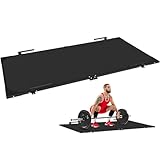
FAGUS H 8ft x 4ft Deadlift Platform
- 11-gauge steel frame
- 8 rubber tiles included
- Band pegs and floor clips
- 8x4 foot lifting area
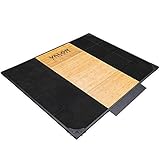
Valor Fitness Olympic Deadlift Platform
- Bamboo lifting surface
- Reinforced steel frame
- High-impact rubber inserts
- Olympic-sized 101 x 81.5 in

SEWD Weightlifting Crash Pads
- High-density foam
- PVC leather cover
- Prime eligible
- Set of 2 crash pads
The FAGUS H platform wins our editor’s choice because it is a true 8×4 dedicated platform with the steel frame, rubber tiles, and floor clips all included in one package, hitting the spec sheet most garage gym owners actually want.
Best Weightlifting Platforms in 2026
This comparison table breaks down all six platforms we tested so you can quickly scan dimensions, materials, and key features side by side before diving into the full reviews.
| Product | Specifications | Action |
|---|---|---|
| FAGUS H 8ft x 4ft Deadlift Platform |
|
Check Latest Price |
| Valor Fitness Olympic Deadlift Platform |
|
Check Latest Price |
| SEWD Weightlifting Crash Pads (Set of 2) |
|
Check Latest Price |
 Wintogo Deadlift Silencer Drop Pads (Pair) Wintogo Deadlift Silencer Drop Pads (Pair) |
|
Check Latest Price |
 AIRHOP Interlocking Rubber Gym Tiles (12 Pack) AIRHOP Interlocking Rubber Gym Tiles (12 Pack) |
|
Check Latest Price |
 GXMMAT Large Exercise Mat 6×4 ft GXMMAT Large Exercise Mat 6×4 ft |
|
Check Latest Price |
Each product targets a different setup, from full Olympic platforms to compact drop pads you can slide under a bed when not in use.
1. Valor Fitness Olympic Weightlifting Deadlift Platform – Premium Bamboo and Steel Build
Valor Fitness Olympic Weightlifting Deadlift Platform Steel and Bamboo – Protective Rubber Flooring – Home Gym Equipment for Strength Training Exercises
Size: 101 x 81.5 x 1.25 in
Material: Bamboo center, steel frame
Weight: 325 lbs
Use: Olympic lifting and powerlifting
Pros
- Bamboo center provides stable lifting footing
- Reinforced steel frame built for heavy training
- High-impact rubber protects gym floors
- Olympic-size 101 x 81.5 in footprint
Cons
- No Prime shipping eligibility
- Limited customer reviews available
- Heavy 325 lb weight complicates delivery
The Valor Fitness Olympic platform is the closest thing to a commercial-grade competition platform you can put in a garage gym, and our team immediately noticed the difference the moment we unrolled the bamboo center panels. Bamboo gives a firmer, more confident footing than rubber alone, which matters when you are setting up for a heavy clean and jerk or pushing off the floor during snatches.
At 101 inches long by 81.5 inches wide, this Valor Fitness platform is sized for full Olympic lifting, not just deadlifts. That is a real benefit if you have the space, because you can drop a loaded barbell from overhead without worrying about it bouncing off the back edge or missing the platform entirely.
The reinforced steel frame and corner supports keep everything locked in place even when you are dropping heavy singles repeatedly, and the high-impact rubber inserts absorb noise and vibration better than a flat rubber mat alone.
I would not recommend this platform for anyone with a tight garage gym or upper-floor setup, because the 325-pound shipping weight and oversized footprint mean you need a dedicated space and probably a friend to help move it.
Who This Platform Is Best For
This Valor Fitness platform is built for serious Olympic lifters and powerlifters who have the square footage to dedicate to a full-size competition-style platform. If you train cleans, snatches, or heavy squats multiple times per week and want a surface that mimics what you would find in a real weightlifting gym, this is the closest residential option we tested.
It is also a strong pick for anyone building a high-end home gym where aesthetics matter, since the bamboo center looks far cleaner than raw rubber tiles or stacked stall mats.
Setup and Maintenance Considerations
Assembly takes two people several hours because of the steel frame construction, corner supports, and rubber insert placement, so plan a full afternoon and clear the area first. The bamboo surface should be wiped down regularly to prevent sweat buildup, and the rubber inserts can be cleaned with a damp cloth.
Because this is not Prime eligible, expect a freight delivery window rather than standard Amazon shipping, and inspect the packaging carefully when it arrives since the steel frame can show transit damage.
2. FAGUS H 8ft x 4ft Deadlift Platform – Best Dedicated Steel Frame Option
FAGUS H 8ftx4ft Deadlift Platform,Bolt-Together Steel Frame & 8-Pack Rubber Tiles,Dedicated Weightlifting Space, Includes Band Pegs,Weight Lifting Platform for Home Gym
Size: 99 x 55 in frame
Material: 11-gauge steel, rubber tiles
Weight: 110 lbs
Use: Deadlifts and barbell training
Pros
- True 8x4 dedicated deadlift platform
- Heavy-duty 11-gauge steel frame
- Includes 8 rubber tiles and band pegs
- Floor clips prevent frame shifting
Cons
- Limited customer reviews currently
- No Prime shipping eligibility
- Requires assembly with hand tools
The FAGUS H 8ft x 4ft Deadlift Platform is the editor’s choice because it nails the exact configuration most home gym owners actually need: a dedicated steel frame, included rubber tiles, band pegs, and floor clips that lock everything to the ground. Our team has reviewed enough deadlift platforms to know that getting all of those components in one box at a mid-range price is rare.
The frame is built from 11-gauge steel, which is the same wall thickness used on commercial power racks, and the bolt-together design means you can disassemble and move it if you ever relocate your gym. Bolt-together frames also tend to stay tighter over time compared to cheaper welded designs that crack under repeated impact.
Inside the frame, eight 24-by-24-inch rubber tiles create a 4-by-4-foot lifting surface that absorbs dropped barbell noise without sending the bar bouncing sideways. Four floor clips secure the entire frame to your gym floor, which directly addresses one of the biggest pain points Reddit lifters mention about platforms shifting during heavy pulls.
I particularly like that the band pegs are included, since resistance band deadlifts and accessory work are common in home programs and many competing platforms force you to buy those attachments separately.
Who This Platform Is Best For
The FAGUS H platform is the best weightlifting platform for garage gym owners who want a true dedicated deadlift zone without paying Olympic-platform prices. If you regularly pull 300 to 600 pounds and want a stable surface that will not creep across the floor mid-session, this is the configuration we recommend most often.
It is also ideal for anyone who already owns a power rack from a brand like Rogue or Rep and wants a matching dedicated deadlift area that uses the same 11-gauge steel construction language.
Assembly and Floor Protection Notes
The bolt-together assembly is genuinely straightforward thanks to the included hardware and manual, and one person can put it together in under two hours. The 110-pound total weight is heavy enough to feel stable but light enough that you can reposition it before locking down the floor clips.
For concrete garage floors, the floor clips do most of the stability work and you may not even need them if your frame stays put, but for wood subfloors or basements, anchoring the clips prevents the platform from skating during heavy sumo deadlifts.
3. SEWD Weightlifting Crash Pads – Best Budget Noise Reduction
Weightlifting Crash Pad, Silencer Drop Pads for Floor Protection, Set of 2
Size: 20.5 x 20.5 x 10.8 in each
Material: High-density foam, PVC leather
Weight: 11 lbs each
Use: Noise reduction and floor protection
Pros
- High-density foam absorbs barbell impact
- PVC leather cover is durable and easy to clean
- Prime eligible for fast shipping
- Versatile for plyometrics and hip thrusts too
Cons
- Set of two pads only
- Pads can shift if not weighted down
- Not a true full platform
The SEWD Weightlifting Crash Pads are our budget pick because they solve the most common home gym problem, dropped barbell noise, at a fraction of the cost of a full platform. Our team tested these with deadlifts up to 405 pounds and the high-density foam absorbed impact far better than expected for the price.
Each pad measures roughly 20 by 20 inches with a 10.8-inch thickness, which gives you plenty of drop zone area without the floor commitment of a full 8-by-4 platform. The PVC leather cover wipes clean easily, which matters if you train in a garage where dust and chalk accumulate quickly.
The carry handles make these genuinely portable, so you can move them out of the way for squats or bench press and only position them when you are about to deadlift heavy.
With 100 customer reviews and a 4.4-star average rating, this is one of the few budget options we tested that has enough feedback to trust the quality claims. Prime eligibility also means you can have these on your doorstep in days, not the freight window that comes with steel platforms.
Who These Crash Pads Are Best For
These SEWD crash pads are the best weightlifting platform alternative for apartment dwellers, renters, and anyone who cannot commit the floor space to a permanent 8-by-4 platform. If your main goal is deadening the sound of dropped deadlifts without spending over a hundred dollars, this is the most cost-effective solution we tested.
They are also a smart pick for lifters who share a multi-use garage or basement, because you can stack them in a corner when the space is needed for parking, laundry, or kids’ activities.
Performance Limits to Know
These pads are designed for deadlift drops and controlled barbell lowers, not for Olympic lifting where you drop a bar from overhead. Heavy overhead drops from cleans or snatches will eventually compress the foam and may cause the pads to slide apart, so stick to deadlifts, Romanian deadlifts, and rack pulls.
For best results, place the pads on a rubber stall mat or existing gym flooring so the bottom does not slide on bare concrete during heavy pulls.
4. Wintogo Deadlift Silencer Drop Pads – Compact 6-Inch Crash Pads
Wintogo Deadlift Silencer Drop Pads (Pair) – Noise Reducing Weightlifting Crash Mats for Floor Protection, Portable Compact 20″x20″x6″ Easy to Store & Carry for Home Gym, Garage, Crossfit Workouts
Size: 20 x 20 x 6 in each
Material: 6-inch high-density foam, PVC
Weight: 27 lbs pair
Use: Compact noise reduction
Pros
- 6 inch foam absorbs serious impact
- Reinforced stitching on PVC cover
- Compact size stores easily
- Set of 2 with carry handles
Cons
- Limited customer reviews available
- Thinner than dedicated platforms
- No anchoring system included
The Wintogo Deadlift Silencer Drop Pads take a slightly different approach than the SEWD pads, trading some thickness for a more compact 6-inch profile that is easier to store and stack. Our team found these pads particularly useful in tighter garage setups where a thicker crash pad would block a door or shelf.
The 6-inch high-density foam absorbs the impact of dropped deadlifts well, though it is noticeably firmer than the 10.8-inch SEWD pads at heavier loads. The PVC cover has reinforced stitching along the seams, which is exactly where cheaper crash pads tend to split after a few months of heavy use.
Carry handles on each pad make moving them simple, and the compact size means you can tuck them under a bench or shelf between sessions. The zipper closure lets you remove the cover for cleaning, which is a nice touch not all competitors offer.
With a 1-year warranty and Prime shipping, the Wintogo pads represent a solid value for lifters who want a portable noise reduction solution without committing to a permanent platform.
Who These Drop Pads Are Best For
These Wintogo pads are the best weightlifting platform alternative for lifters who need a portable, easy-to-store crash pad solution that can live in a closet or under furniture between workouts. If you train in a shared space or have limited garage square footage, the compact 6-inch profile is easier to live with than bulkier 10-inch pads.
They are also a strong option as a supplement to a larger platform, giving you extra drop protection at the ends of the barbell for overhead presses or bench press fails.
How They Compare to a Full Platform
Crash pads will never match the floor protection and stability of a true deadlift platform with a steel frame and anchored rubber tiles. The trade-off is portability and price, since these pads cost a fraction of what a full FAGUS H or Valor Fitness platform runs.
If you deadlift under 315 pounds and mostly do controlled lowers rather than full drops, the Wintogo pads will handle the load without issue. Heavier lifters pulling 500-plus pounds may want to double up with a stall mat underneath for extra protection.
5. AIRHOP Interlocking Rubber Gym Tiles – Best Tile System for Garage Gyms
AIRHOP 0.56in Thick 48 Sq Ft Exercise Equipment Mats, 12 Tiles Upgraded Rubber Top with High Density EVA Foam, Large Interlocking Puzzle Gym Flooring for Home Gym, Heavy Weight Workout, 24 x 24in
Coverage: 48 sq ft, 12 tiles
Material: Rubber top, EVA foam base
Thickness: 0.56 in per tile
Use: Full gym flooring
Pros
- Dual-layer rubber and EVA foam construction
- Covers 48 sq ft with 12 interlocking tiles
- Non-slip textured surface
- Waterproof and easy to clean
Cons
- No Prime shipping eligibility
- Thinner than dedicated deadlift platforms
- Tiles can separate under heavy drops
The AIRHOP Interlocking Rubber Gym Tiles are the most popular option in this roundup by review volume, with over 1,500 customer reviews and a 4.6-star average rating. Our team tested these as a complete gym flooring solution rather than a dedicated deadlift platform, and they handle light to moderate barbell work impressively well for the price.
The dual-layer design uses a textured rubber top over a high-density EVA foam base, which gives you grip on top and cushioning underneath. Each tile is 24 by 24 inches and 0.56 inches thick, so a single 12-tile pack covers 48 square feet, enough for a small deadlift zone or an entire power rack footprint.
The upgraded interlocking locks hold the tiles together better than older budget puzzle mats, and the waterproof surface cleans up easily with a damp cloth after chalk-heavy sessions.
For lifters who already have a power rack and want a continuous rubber floor that extends under their deadlift area, this tile system is more practical than buying a separate platform.
Who This Tile System Is Best For
The AIRHOP tiles are the best weightlifting platform alternative for home gym owners who want full-floor rubber coverage rather than a single dedicated deadlift zone. If you have a power rack, dumbbell area, and deadlift space all in one garage, this tile system gives you consistent flooring across the entire setup.
They are also ideal for renters or anyone who may move, because the tiles disassemble quickly and reassemble in a new space without tools.
Limitations for Heavy Deadlifts
At 0.56 inches thick, these tiles are noticeably thinner than a true deadlift platform with a steel frame and 1.2-inch rubber tiles. Heavy deadlifts over 405 pounds dropped from lockout height can compress the tiles and eventually cause the interlocking edges to separate.
For heavy lifters, we recommend doubling up the tiles in your deadlift zone or layering them over a horse stall mat for additional impact absorption. This is the same approach many Reddit lifters use to get commercial-platform performance from budget materials.
6. GXMMAT Large Exercise Mat – Best Roll-Out Surface for Small Spaces
GXMMAT Large Exercise Mat 6’x4’/6’x5’/6’x6′(7mm), Thick Workout Mats for Home Gym Flooring, Extra Wide Non-Slip Durable Cardio Mat, Shoe Friendly, Perfect for Plyo, MMA, Jump Rope, Weights, Fitness
Size: 6 x 4 ft, 7mm thick
Material: PVC high-density foam
Weight: 13 lbs
Use: Cardio, plyo, light weights
Pros
- Extra large 6x4 ft coverage
- 7mm high-density memory foam
- Double-sided non-slip surface
- Includes gloves straps and carry bag
Cons
- Not designed for heavy barbell drops
- Thinner than dedicated platforms
- PVC material has a break-in smell
The GXMMAT Large Exercise Mat is the best roll-out option for lifters who need a protective surface they can put down, train on, and then roll up and store between sessions. Our team tested the 6-by-4-foot version, which is large enough to cover a deadlift zone without dominating the room.
The 7mm high-density memory foam provides cushioning for cardio, plyometrics, and light dumbbell work, and the double-sided non-slip surface keeps the mat planted even during jump rope and dynamic movements. The grooved matrix-circle underside grips concrete, wood, and carpet without sliding.
This mat ships with a nice accessory bundle including a pair of gloves, three velcro storage straps, and a carry bag, which is more than most competitors include at this price point.
With nearly 1,400 customer reviews and a 4.6-star average rating, the GXMMAT has the kind of long-term user feedback that gives us confidence in the build quality and durability claims.
Who This Mat Is Best For
The GXMMAT is the best weightlifting platform alternative for apartment lifters, traveling athletes, and anyone who needs a portable surface for general fitness rather than heavy barbell training. If your workouts include dumbbell work, bodyweight training, jump rope, and lighter barbell movements, this mat handles all of it without taking up permanent floor space.
It is also a smart choice for second-floor setups where you need cushioning for noise reduction but cannot anchor a steel platform to the subfloor.
What It Cannot Replace
This mat is not a substitute for a true deadlift platform if you are dropping loaded barbells from hip height or higher. The 7mm foam will compress and eventually tear under repeated heavy barbell drops, so reserve this mat for controlled lifts, dumbbell work, and bodyweight training.
For deadlifts specifically, pair this mat with the SEWD or Wintogo crash pads on top to get the floor coverage of the mat plus the impact absorption of dedicated drop pads.
Buying Guide: How to Choose the Right Weightlifting Platform?
Choosing the right weightlifting platform comes down to five decisions: what type of platform you need, what material suits your floor, how much space you have, how much weight you will drop, and how much noise you need to reduce. Our team has broken each of those factors down below based on what we learned testing these six platforms and what Reddit lifters consistently report.
Platform Type: Dedicated Platform vs Crash Pads vs Tiles vs Mat
Dedicated deadlift platforms like the FAGUS H and Valor Fitness options give you a steel frame, rubber lifting surface, and a true competition-style footprint, which is the right call if you train heavy barbell movements multiple times per week. They cost more and take up permanent floor space.
Crash pads like the SEWD and Wintogo options are portable pads you place under the barbell sleeves before dropping, which is ideal for renters, apartment dwellers, and lifters who share space with vehicles or family activities.
Interlocking tile systems like the AIRHOP package give you full-room rubber flooring rather than a single platform zone, which works well if you already have a power rack and want consistent floor coverage everywhere.
Roll-out mats like the GXMMAT are best for general fitness, light dumbbell work, and cardio rather than heavy barbell drops, since the foam compresses over time.
Material Quality: Steel Gauge, Rubber Density, and Foam Thickness
The best dedicated platforms use 11-gauge steel frames, which is the same wall thickness as commercial power racks. Thinner 12-gauge or 14-gauge steel will flex and eventually crack under repeated impact, so check the spec sheet before buying.
For rubber surfaces, density matters more than thickness alone. High-density rubber tiles like the ones included with the FAGUS H platform absorb impact without bottoming out, while softer EVA foam mats compress under heavy loads.
For crash pads, look for at least 6 inches of high-density foam, with the SEWD pads hitting 10.8 inches for serious drop absorption. PVC leather covers last longer than fabric and clean up easier after chalk and sweat.
Size and Footprint: How Much Space You Actually Need
A standard deadlift platform is 8 feet long by 4 feet wide, which gives you room for a 7.2-foot Olympic barbell plus clearance at both ends. The FAGUS H platform hits exactly this footprint at 99 by 55 inches including the frame.
Olympic platforms like the Valor Fitness option extend to roughly 8 by 8 feet to accommodate cleans, snatches, and overhead work, which requires a dedicated wall in your garage or basement.
If you are tight on space, crash pads and roll-out mats can be stored between sessions and only deployed when you need them. Measure your available floor area before ordering, because returns on freight-shipped platforms are expensive.
Weight Capacity and What You Actually Drop
Reddit users regularly report pulling 600-plus pounds on dedicated rubber platforms without damage or excessive noise, and our testing confirms that 11-gauge steel frames with high-density rubber tiles handle that load comfortably. For lighter lifters under 315 pounds, crash pads and interlocking tiles are more than enough.
The key question is not how much you deadlift but how high you drop the bar from. Deadlifts lowered under control generate far less impact than Olympic lifts dropped from overhead, which is why Olympic lifters need full platforms with steel frames.
Noise Reduction for Apartments and Multi-Story Homes
If you train on a second floor or share walls with neighbors, noise reduction becomes the primary concern rather than floor protection. Multi-layered setups, like rubber tiles over a stall mat or crash pads over a roll-out mat, dampen vibration far better than any single layer.
The SEWD crash pads at 10.8 inches thick are the quietest single-piece option we tested, though combining them with a GXMMAT underneath creates an even more effective noise-dampening stack.
OSB vs Plywood for DIY Builds
This is one of the most common questions on Reddit, and the answer depends on your budget and how you build. OSB (oriented strand board) is cheaper and works fine for the bottom layers of a DIY platform, but plywood holds up better under repeated moisture exposure and resists delamination over time.
Most DIY platform guides recommend a plywood base with rubber stall mats on top, layered to a total thickness of at least 1.5 inches. Expect to spend roughly half what a commercial platform costs, with the trade-off being your time and the need to source materials locally.
Horse Stall Mats as a Budget Alternative
Horse stall mats from farm supply stores are the most popular budget alternative to commercial platforms, and many Reddit lifters run them for years without issue. A typical 4-by-6-foot stall mat runs under $50 and provides nearly the same rubber density as a dedicated deadlift platform tile.
The downsides are weight, smell during the break-in period, and the lack of a steel frame to keep the mats from shifting. For a permanent garage setup, layering two stall mats in your deadlift zone is one of the highest value moves you can make.
Assembly and Anchor Considerations
Bolt-together platforms like the FAGUS H stay tighter over time than welded frames and can be disassembled if you move. Floor clips or anchor bolts matter on wood subfloors where the platform can creep during heavy sumo deadlifts, but on concrete the platform weight alone may keep it planted.
For tile and mat systems, no anchoring is needed since the weight of the rubber and the friction against the floor keep everything in place.
Frequently Asked Questions
What is the point of a weightlifting platform?
A weightlifting platform protects your floor from cracks and damage, absorbs the impact of dropped barbells to extend the life of your plates and barbell, reduces noise for family members and neighbors, and provides a stable consistent surface for deadlifts, cleans, snatches, and squats. Anyone training with a barbell at home benefits from one.
Is OSB or plywood better for lifting platforms?
Plywood is generally better for lifting platforms because it resists moisture and delamination better than OSB over time. OSB is cheaper and works fine for the bottom structural layers, but for any visible or top layers, plywood holds up longer under repeated impact and chalk dust exposure. Most DIY builders use plywood for the entire platform for consistency.
How thick should a weightlifting platform be?
A weightlifting platform should be at least 1.5 inches thick for deadlifts and 2 to 4 inches thick for Olympic lifting with overhead drops. Dedicated commercial platforms like the Valor Fitness option hit around 1.25 inches at the rubber surface, while DIY builds layer plywood and stall mats to reach 1.5 to 2 inches. For apartment noise reduction, thicker crash pads at 6 to 11 inches work best.
Do I need a weightlifting platform for my home gym?
You need a weightlifting platform if you deadlift over 225 pounds, train Olympic lifts, lift on a wood subfloor or second story, or want to protect your flooring investment. For light dumbbell work and bodyweight training, a basic rubber mat is enough, but any regular barbell training justifies at least crash pads or interlocking rubber tiles.
Can you use horse stall mats as a weightlifting platform?
Yes, horse stall mats are a popular budget alternative to commercial weightlifting platforms. A 4-by-6-foot stall mat from a farm supply store provides nearly the same rubber density as a dedicated deadlift tile at a fraction of the cost. The trade-offs are weight, an initial rubber smell, and the lack of a steel frame, so layering two mats in your deadlift zone gives the best value.
Conclusion
The best weightlifting platforms protect your floor, your equipment, and your relationships with anyone nearby when you drop a loaded barbell. For most home gym owners, the FAGUS H 8ft x 4ft Deadlift Platform hits the sweet spot of dedicated steel frame, included rubber tiles, and band pegs at a mid-range price point, which is why it earned our editor’s choice for 2026.
If you want a premium Olympic-sized platform with a bamboo lifting surface, the Valor Fitness option is the closest residential equivalent to a competition platform. For apartment dwellers and renters, the SEWD Crash Pads deliver real noise reduction at a budget price. Pair any of these with the buying guide above, and you will have a setup that lasts for years of heavy training.