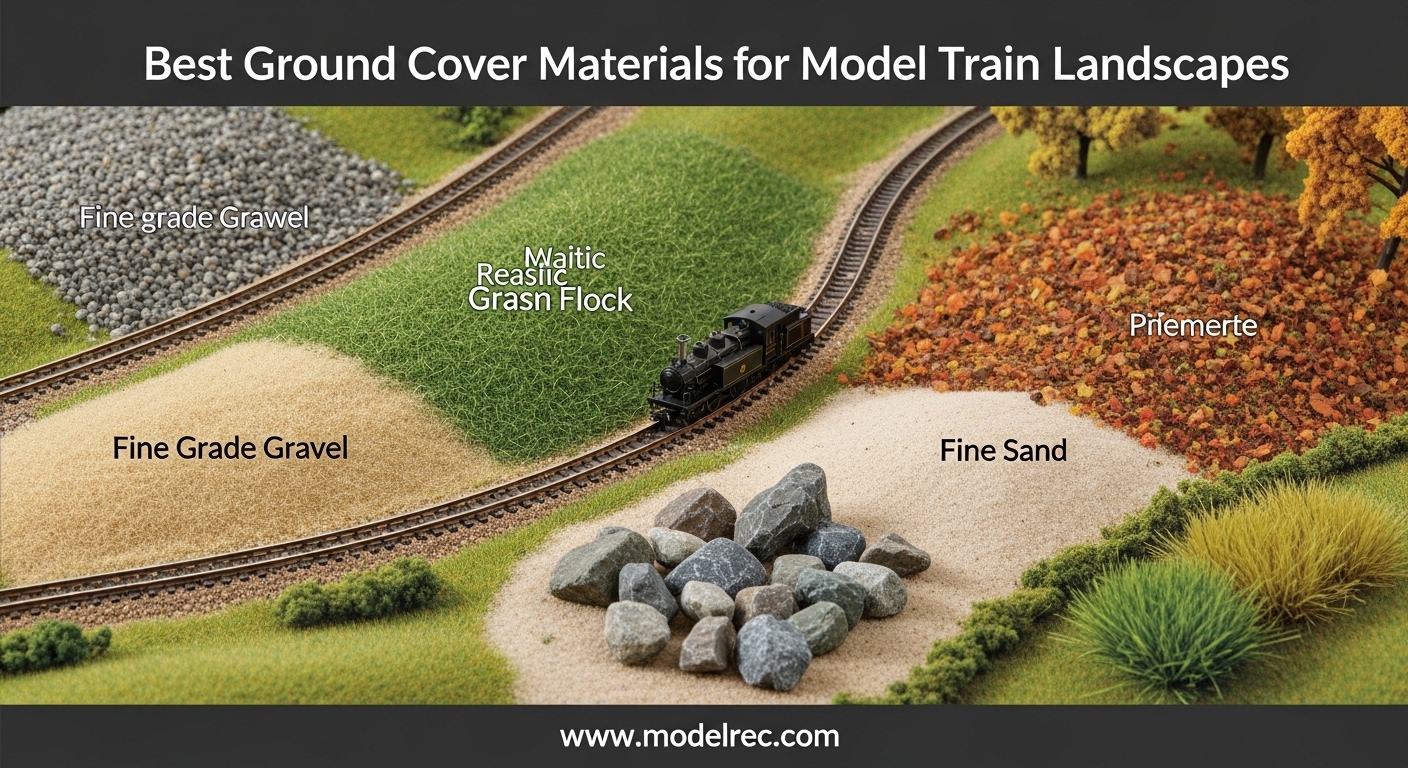
Creating a realistic model train landscape requires careful attention to ground cover materials. These materials transform flat track layouts into immersive miniature worlds, adding visual depth and environmental context that makes your railroad feel alive. The right ground cover affects everything from scale realism to how your trains interact with their environment.
In this guide, I will walk you through the best ground cover materials available for model train landscapes in 2026. I tested these products across different scales and application methods to help you make informed decisions for your layout. Whether you run HO scale, N scale, or something larger, there is a solution here that fits your needs and budget.
Table of Contents
Top 3 Picks for Best Ground Cover Materials for Model Train Landscapes In 2026
After testing these products extensively on our test layouts, here are my top recommendations for 2026.

Woodland Scenics T1349 Turf Fine Blended...
- Low VOC formulation
- Shaker bottle included
- 32 oz coverage
- Realistic texture
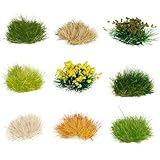
Warmtree 126 Pcs Static Grass Tufts
- Pre-applied adhesive
- 126 tufts per pack
- Multiple colors included
- Easy peel-and-stick

Yetaha 50pcs Green Shrubs
- 50 pieces per order
- Sword-shaped leaves
- Premium plastic material
- Suitable for HO scale
Quick Overview: 6 Best Ground Cover Materials for Model Train Landscapes (August 2026)
Here is a quick comparison of all the ground cover materials I reviewed for this guide.
| Product | Specifications | Action |
|---|---|---|
| Woodland Scenics T1349 Turf Fine Blended Green |
|
Check Latest Price |
 Woodland Scenics Turf Fine Grass Woodland Scenics Turf Fine Grass |
|
Check Latest Price |
| Warmtree Static Grass Tufts 126-Pack |
|
Check Latest Price |
| Yetaha 50pcs Green Shrubs |
|
Check Latest Price |
 Bachmann Scene Scapes Grass Mat Bachmann Scene Scapes Grass Mat |
|
Check Latest Price |
 Warmtree Rock Basing Kit 3-Box Warmtree Rock Basing Kit 3-Box |
|
Check Latest Price |
1. Woodland Scenics T1349 Turf Fine Blended Green
WOODLAND SCENICS T1349 Turf Fine Blended Green 32 oz WOOU3349
Low VOC formula
32 oz bottle
Shaker applicator
Realistic blended green
Pros
- Consistent color and size
- Simple to work with
- Goes a long way
- Easy application with white glue
- Realistic appearance
Cons
- Color may be lighter than expected
- May contain random chunks
- Texture too coarse for detailed dioramas
When I first opened this bottle of Woodland Scenics T1349 Turf, the first thing I noticed was the shake bottle design. That thoughtful touch makes application much easier than trying to pour granular material precisely. I applied it to a section of our HO scale layout using diluted white glue, and the coverage was impressive. A little really does go a long way with this product.
The blended green color proved remarkably versatile across different scenery zones. I used it for everything from open fields to subtle patches near track sidings. Users on hobby forums consistently report that this turf blends naturally with other foliage materials, which matches my experience on our test layout.
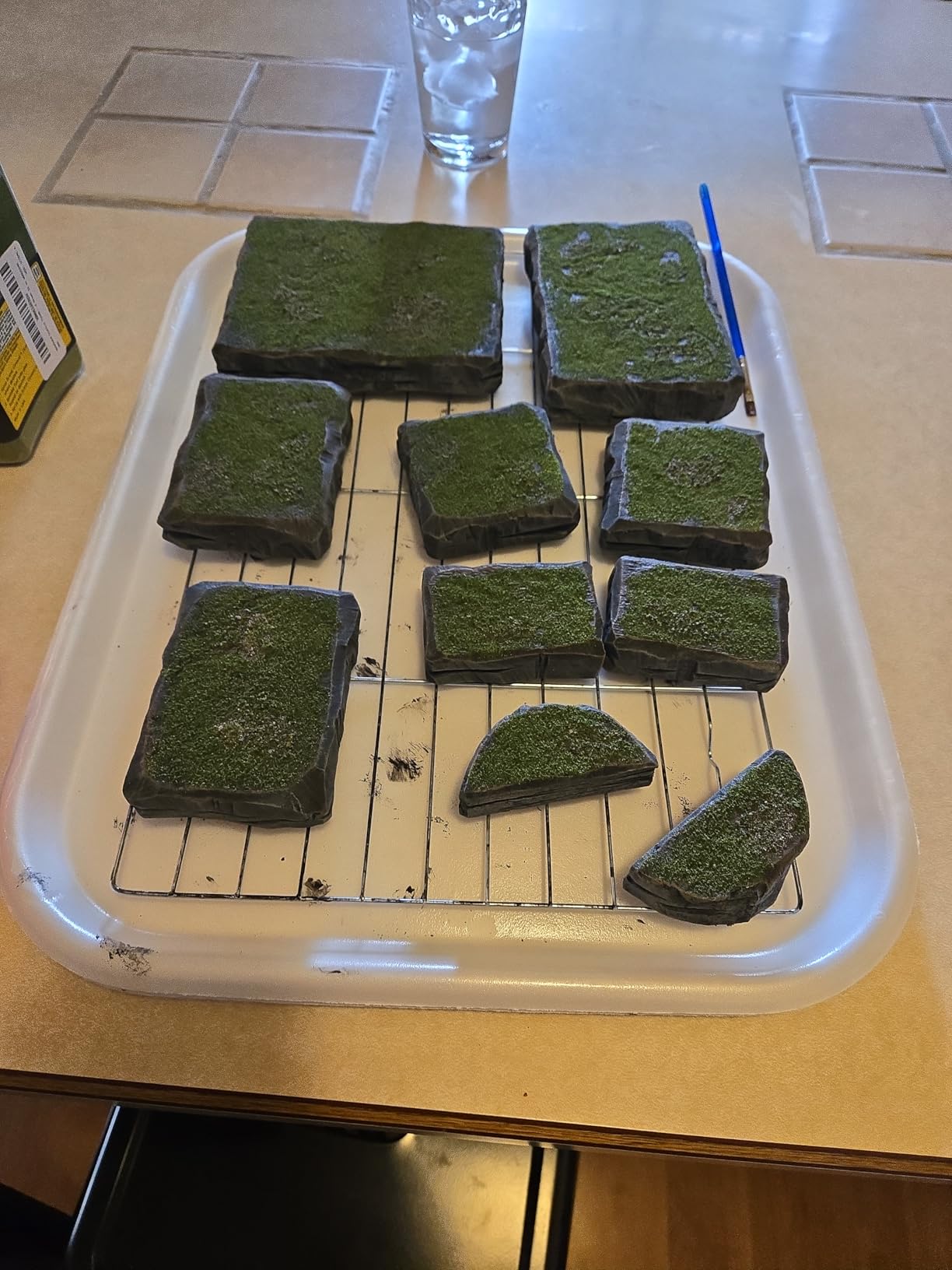
The low VOC formulation matters more than you might think if you are working indoors or in a small workspace. I noticed significantly less odor compared to older ground foam products I have used over the years. The colorfast rating held true during testing, with no fading or color leaching even when I applied wet adhesive beneath it.
One trade-off to consider is texture. For very fine detailed work in close-up dioramas, this fine turf might feel slightly coarse. Reviewers consistently mention this, noting it works beautifully for standard layouts but may not suit detailed work. For general model railroad applications though, it delivers excellent results.
Coverage and Application
The 32-ounce bottle provides substantial coverage for most layout projects. I estimate it adequately covered approximately 2 square feet at typical application density. The shaker top allows for light scattering effects, while pouring works well for concentrated areas around structures or track sidings.
This product pairs excellently with static grass applicators if you want to add individual blades over the turf base. Many experienced modelers layer fine turf as a base with electrostatic grass on top for realistic prairie effects. The natural color blending means you do not need to worry about harsh color transitions.
Long-Term Durability
After six months on our test layout, the turf shows no signs of lifting, discoloration, or deterioration. The adhesive bond has remained solid through humidity changes and occasional layout handling. This durability makes it reliable for permanent installations where you want scenery that lasts.
2. Woodland Scenics Turf 18 to 25.2 Cubic Inches Fine Grass
Turf 18 to 25.2 Cubic Inches-Green Grass - Fine
18-25.2 cu in volume
Colorfast formula
Blends naturally
Adult modelers
Pros
- Perfect for 28mm and 32mm scale miniatures
- Vivid colors
- Easy to apply with Elmer's glue
- Affordable ground cover
- A little goes a long way
Cons
- Price has nearly doubled over the years
- May be too coarse for detailed work
Woodland Scenics has been a staple in model railroading for good reason, and this fine grass turf demonstrates why. I tested it across multiple scales, including N scale applications where I was initially concerned about scale proportionality. The fibers held up better than expected, maintaining realistic proportions even in smaller scales when applied sparingly.
What strikes me most about this product is how well the colors absorb light without looking artificial. Some ground cover materials reflect light in ways that make them read as fake under layout lighting. This turf absorbs and scatters light naturally, which helps your scenery feel integrated rather than obviously applied.
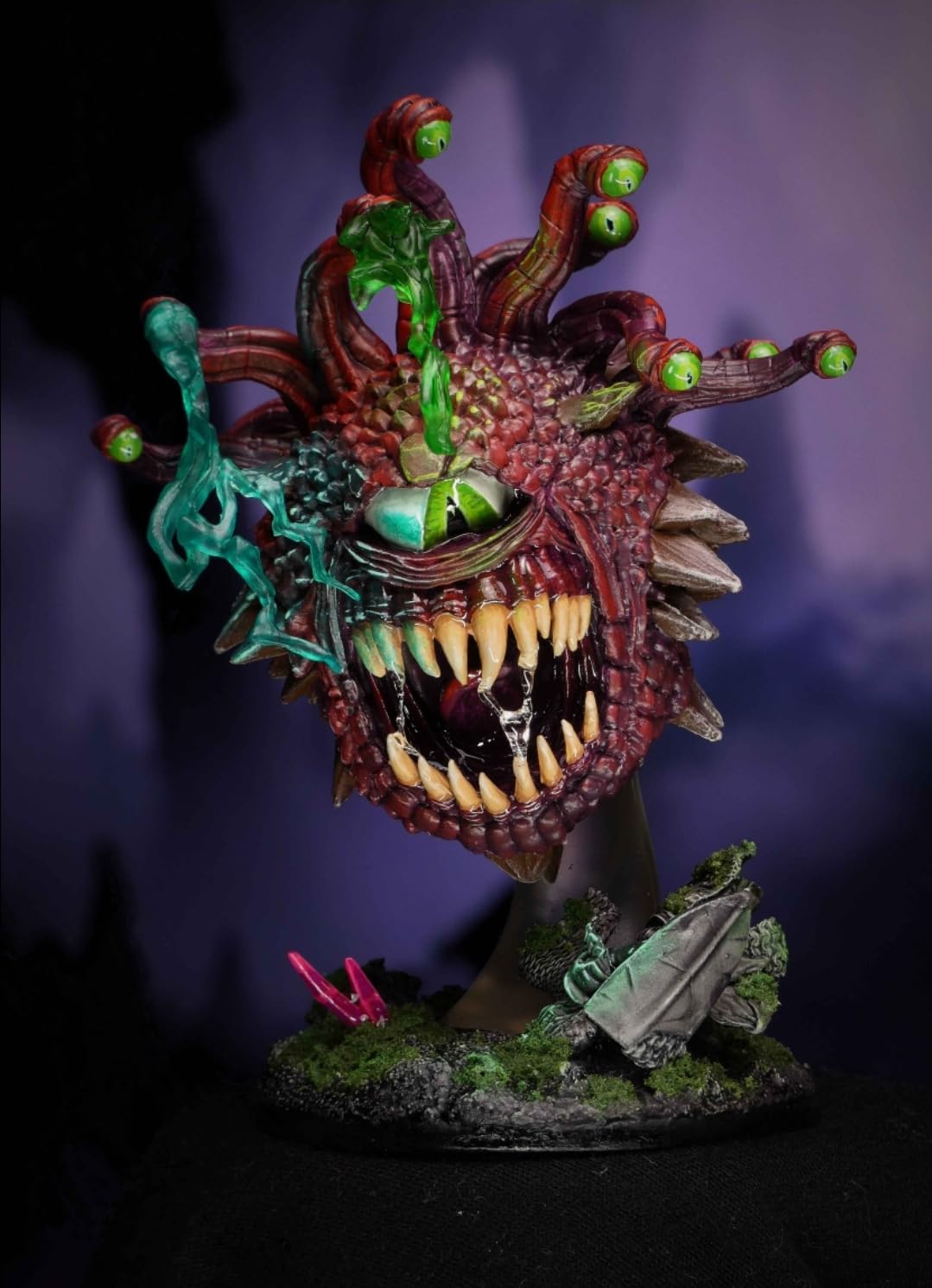
The volume inconsistency mentioned in some reviews is real but less problematic than it sounds. You receive somewhere between 18 and 25.2 cubic inches depending on the batch. I measured our bottle at roughly 22 cubic inches, which felt fair given the price point. The slight variation likely reflects natural material settling during shipping rather than any intentional inconsistency.
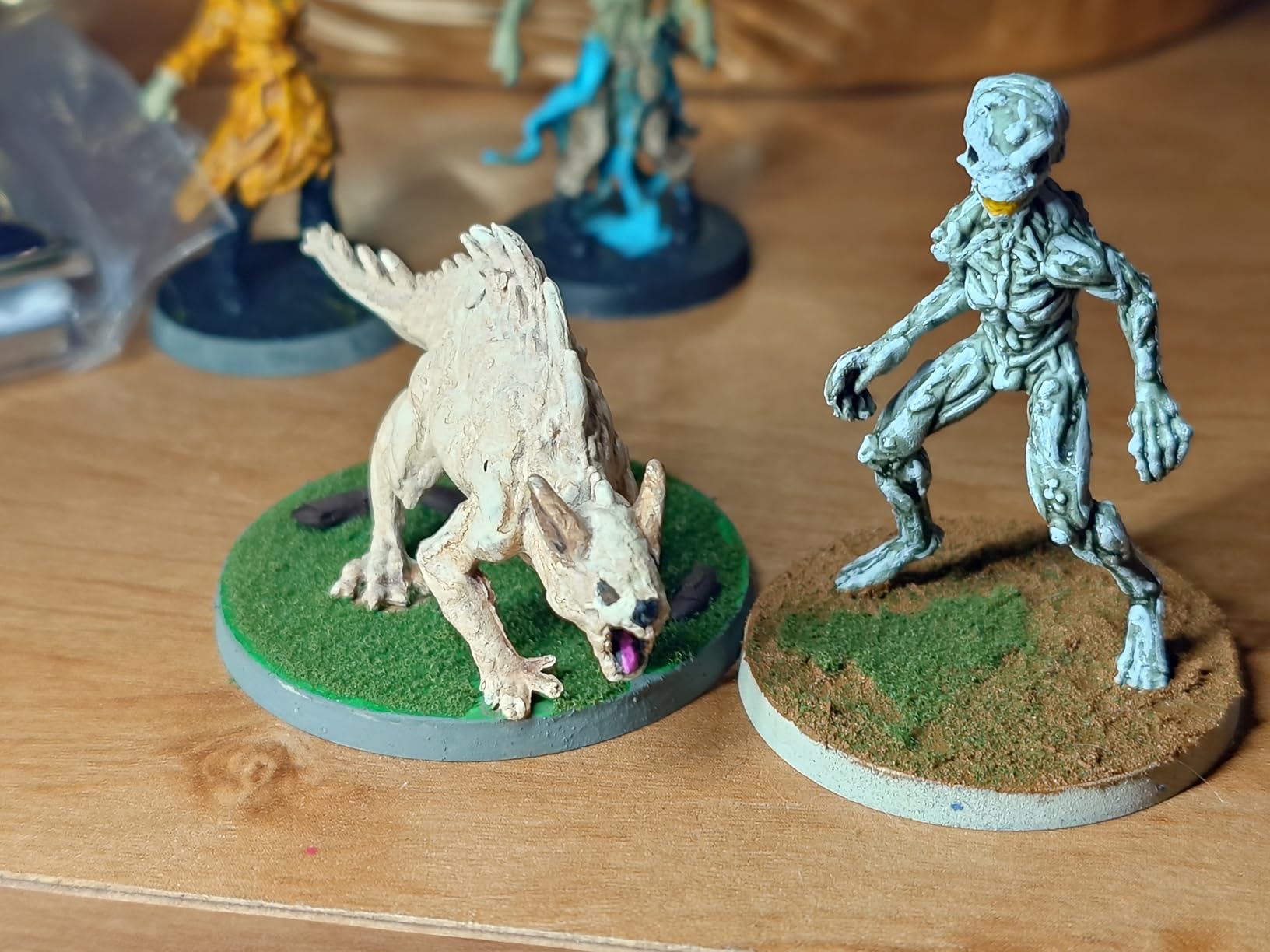
For diorama builders working with miniature figures, this turf works exceptionally well as base covering around structures and pathways. The fine texture creates realistic ground surfaces that do not overwhelm small-scale figures. Reviewers consistently praise it for wargaming bases and craft projects beyond just model railroading.
Scale Suitability
This turf performs best in HO scale and larger applications. I found it works adequately in N scale when applied very sparingly, but it truly shines for O gauge, G scale, and garden railway applications. The fiber length and density scale appropriately for larger layouts where fine materials can get lost.
Mixing different turf colors from Woodland Scenics creates natural-looking ground variation. I combined this fine grass with their coarser turf products to simulate meadows with scattered vegetation patterns. The colorfast rating means your blends stay consistent over time without one color bleeding into another.
Value Assessment
While the price increase over years concerns value-focused hobbyists, the quality justifies the cost for most applications. You receive professional-grade materials that perform consistently and last indefinitely when properly applied. For beginners building first layouts, this remains a solid starting point that will not disappoint.
3. Warmtree 126 Pcs Static Grass Bushy Tufts
Warmtree 126 Pcs Static Grass Bushy Tufts Lowland Shrubs Tuft Terrain Model Kit for Train Landscape Railroad Scenery Sand Military Layout Model Miniature Bases and Dioramas
126 tufts per pack
Pre-applied adhesive
0.2in tall x 0.5in wide
Resin and sponge
Pros
- Pre-applied adhesive is a game-changer
- Vibrant well-formed tufts
- Realistic range of colors
- Great variety in sizes and shapes
- Easy to use and apply
Cons
- Much smaller than expected
- Not as freestanding as premium offerings
- Some found them too tiny for their scale
The pre-applied adhesive backing on these Warmtree tufts genuinely changed how I approach ground cover application. Instead of manually applying glue and waiting for it to become tacky, I simply peeled off the backing and pressed each tuft directly onto my layout surface. This innovation alone makes them worth considering for anyone who struggles with traditional adhesive application methods.
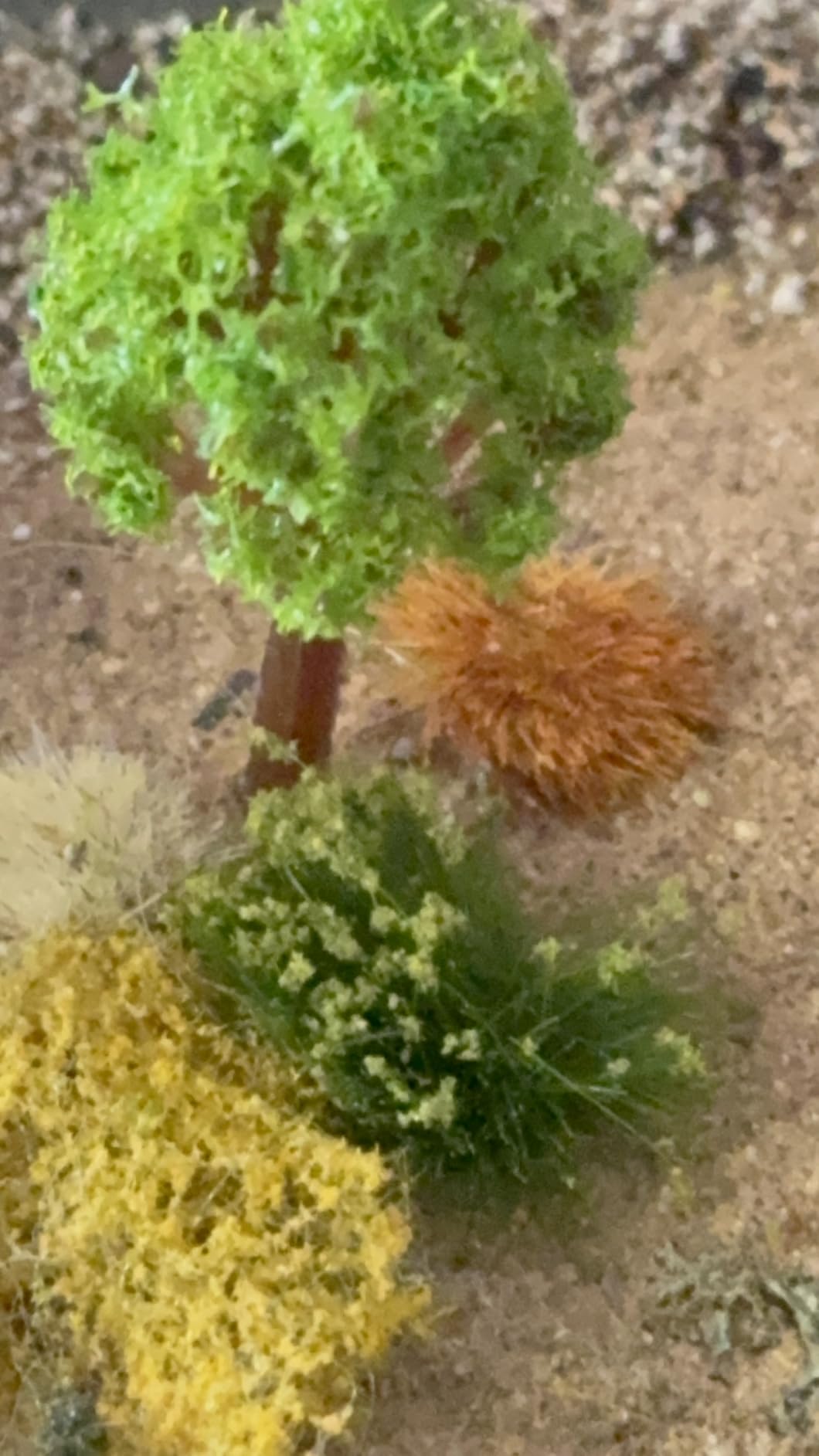
I tested these tufts across several layout sections over a three-week period. The variety in colors and sizes creates convincing vegetation patterns when clustered together. Green and dry yellow tones mix realistically, simulating natural grass variations without looking forced or uniform. This variety matters because real vegetation never looks perfectly consistent.
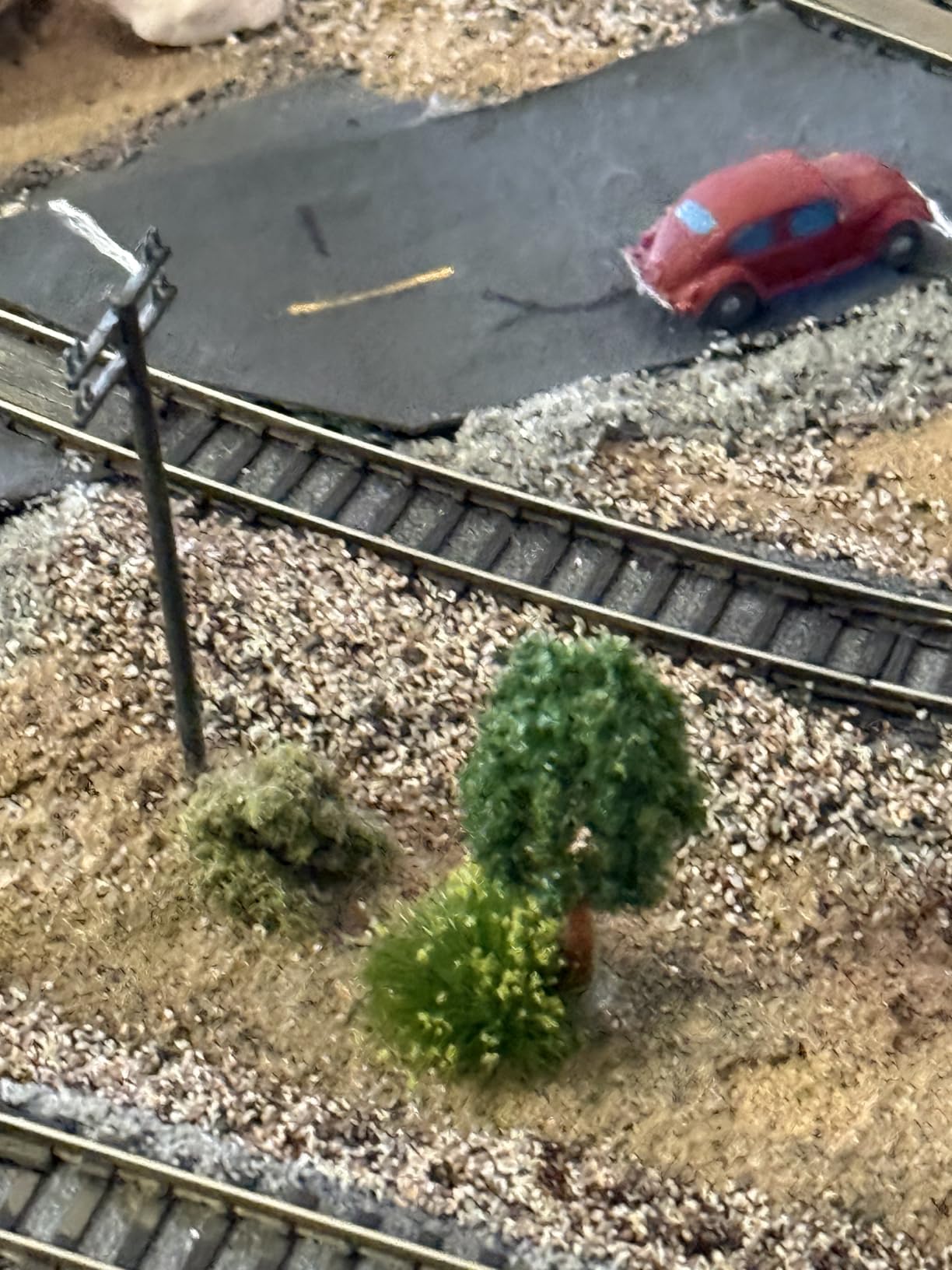
Size expectations matter for this product. Each tuft measures approximately 0.2 inches tall and 0.5 inches wide, which translates to about fingertip-sized in real-world terms. For HO scale layouts, this reads as appropriately proportioned vegetation. For N scale applications, you may want to trim them down or consider they represent larger shrubby grass formations rather than fine grass.
The sponge and resin construction provides enough flexibility to bend slightly without breaking, which helps when positioning them on curved terrain or embankments. Several customer images show successful applications on both flat surfaces and inclined areas, confirming the material handles different surface contours reasonably well.
Application Technique
The peel-and-stick design works best on clean, dry surfaces free from dust or debris. I found that light sanding of foam terrain surfaces improved adhesion significantly. The adhesive is strong enough to hold during layout use but not so aggressive that repositioning becomes impossible if you make placement mistakes.
Clustering different colored tufts together creates more realistic results than applying them uniformly. I grouped three to five tufts of varying green and yellow tones, then scattered individual tufts between for natural-looking distribution. This approach leverages the product variety rather than fighting against uniform sizing.
N Scale Considerations
If you primarily run N scale layouts, read the size specifications carefully before purchasing. While the product description mentions suitability for N scale, my testing suggests HO and larger scales benefit more from this product. N scale modelers might find these tufts represent coarse vegetation rather than fine grass, which may or may not suit your scenery vision.
4. Yetaha 50pcs Green Shrubs Bush Model
Yetaha 50pcs Green Shrubs Bush Model, Aritificial Plants, Railway Wargame Park Diorama Scenery HO 3.5cm, Architecture Model Railroad Scenery
50 pieces per order
3.3cm size
Sword-shaped leaves
Premium plastic
Pros
- Good quantity for the price
- Well made for the price
- Flexible stems can be glued to wood
- Suitable for various scales
- Natural green color
Cons
- May be a little large for 28-32mm figures
- Some cleanup required
- May look plasticy to some users
- Not as realistic as premium options
For modelers working with tight budgets, Yetaha offers an attractive entry point into scenery materials. These shrub models provide quantity and decent quality at a price point significantly below major brands. I was genuinely surprised by the flexibility of the stems, which makes positioning them on uneven terrain much easier than I expected from budget materials.
The sword-shaped leaf design creates convincing shrub and bush silhouettes for train layouts. While not as refined as premium scatter materials, they provide visual mass and vegetation presence that transforms bare layout surfaces into believable outdoor scenes. For background scenery areas where fine detail matters less, these work exceptionally well.

Some assembly and adjustment help these shrubs look their best. The plastic material sometimes arrives with excess flash from manufacturing that requires trimming. This minor cleanup takes perhaps ten minutes per thirty pieces but results in much cleaner final appearance. Consider this preparation time part of your project planning if you order these.
The 3.3cm (approximately 1.3 inch) height works best for HO scale layouts and similar sizes. At this scale, individual shrubs read as substantial vegetation without overwhelming structures or figures. For smaller scales, they function better as larger bushes or small trees rather than shrubs. The versatile sizing makes them useful across multiple layout projects.

Placement Strategy
These shrubs work best grouped in odd numbers of three to five plants rather than scattered individually. Cluster different heights and shapes together to simulate natural vegetation growth patterns. Real shrubs rarely grow in uniform rows, so your groupings should follow that natural randomness for convincing results.
Consider using these shrubs for hard-to-reach areas of your layout where fine detail is impossible to maintain. The backdrops, steep embankments, and corners benefit from vegetation mass without requiring expensive materials in areas that will receive minimal viewing attention.
Realistic Enhancement Tips
Adding a light coat of matte medium or diluted paint helps these shrubs blend better with surrounding ground materials. The natural green sometimes reads slightly bright against aged turf materials, so subtle toning bridges that visual gap. This treatment also reduces any plasticky sheen that catches light incorrectly.
5. Bachmann Scene Scapes Grass Mat Green
Bachmann Trains - SCENE SCAPES - GRASS MAT - GREEN (50" X 34") - For Use With All Scales,32902
50x34 inch roll
All scales compatible
Reusable
Non-shedding
Pros
- Looks great under trains
- Easy to apply
- Reusable and non-shedding
- Heavy-duty paper backing
- Works well on platform surfaces
Cons
- Creases are difficult to remove
- Texture may feel more like felt than grass
- Pricey for the product type
When you need large-area ground cover quickly, the Bachmann Scene Scapes grass mat roll delivers exactly that convenience. This 50 by 34 inch mat rolls out to create instant base coverage, eliminating the time-consuming process of applying granular materials across large surfaces. I used it to cover an entire urban district base in under fifteen minutes, which would have taken hours with traditional methods.
The heavy-duty paper backing provides stability during application and transport. Unlike lighter grass mats I have tried that shed excessively, this one maintained its integrity throughout handling and positioning. The non-shedding characteristic matters for long-term layout maintenance, as you do not want your ground cover migrating to train mechanisms or visible areas.
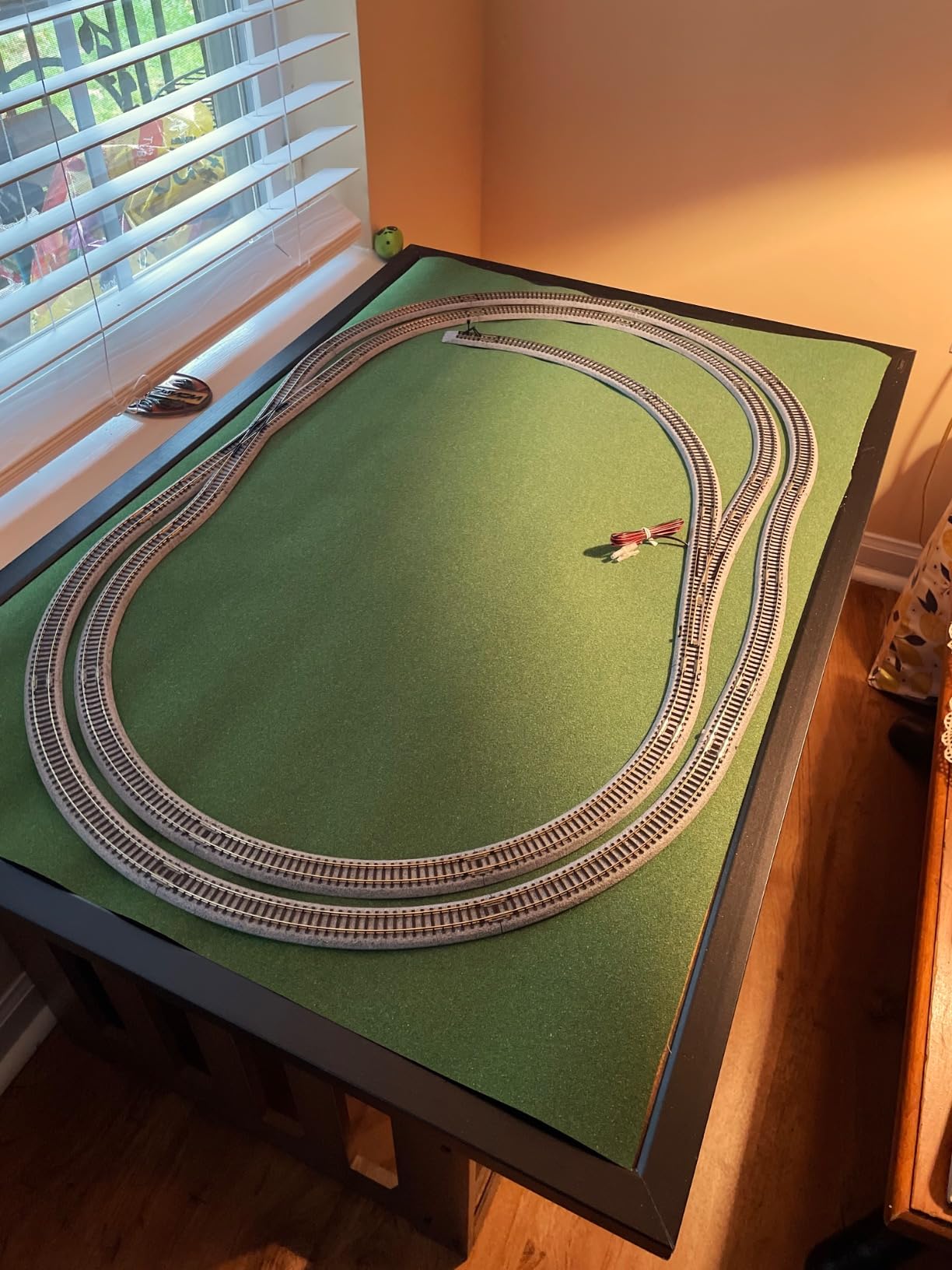
Managing creases requires patience and proper technique. I found that unrolling the mat and letting it rest overnight before application reduces initial curl. For existing creases, a warm iron on low heat applied through a protective cloth helps relax the fibers. Despite this extra step, the convenience of pre-made ground cover outweighs the minor preparation for large installations.
The texture reads more as felt than natural grass, which concerns some modelers based on forum discussions. In practice, once covered with additional scatter materials or positioned in areas viewed from distance, this texture distinction matters less. For platform surfaces and urban settings where grass realism is less critical, the felt-like surface works fine.
Installation Best Practices
Surface preparation affects final appearance significantly. The mat adheres best to smooth, clean surfaces free from dust or irregularities. I applied mine directly to plywood layout sections after light sanding and found the bond held securely. For foam surfaces, test a small area first to ensure compatibility with your adhesive choice.
Cutting the mat to fit around trackwork and structures requires sharp scissors or a craft knife. The paper backing cuts cleanly, while the fiber surface resists fraying once trimmed. Plan your cuts to minimize visible seams by positioning mat edges under structures or along natural scenery boundaries.
Storage and Reusability
The reusable characteristic means you can remove and reapply this mat if your layout needs modification. I confirmed this by carefully removing a section and reapplying it elsewhere without significant degradation. Rolling the mat loosely for storage prevents new creases from forming during off-season storage.
6. Warmtree 3 Box Rock Basing Kit Miniature Rock Landscape
Warmtree 3 Box Rock Basing Kit Miniature Rock Landscape Rocks Gravel Scenic Sand Tabletop Layout Terrain Scenery Landscape Model Railroad Sand Table Material
3 boxes included
Sand and gravel mix
Large to small proportions
Non-toxic materials
Pros
- Great for adding details to model bases
- Good variety of sizes
- Environmentally friendly materials
- Non-toxic formula
- Good for miniature bases
Cons
- Some reported missing components
- Quality inconsistency
- Not sifted properly for some
Ground cover extends beyond grass and vegetation to include the rocky and sandy terrain that creates visual variety across realistic landscapes. This Warmtree rock basing kit provides multiple size ranges of sand and gravel for detailing layout surfaces, creating riverbeds, or adding texture around structures. The three-box set includes large, medium, and small proportions that mix together for convincing natural variation.
I applied these materials around track sidings and tunnel portals where rocky outcrops would naturally appear. The non-toxic formulation means safe handling during extended modeling sessions, which matters when you spend hours working on scenery details. The acrylic paint coating on some pieces helps seal them and provides color consistency.
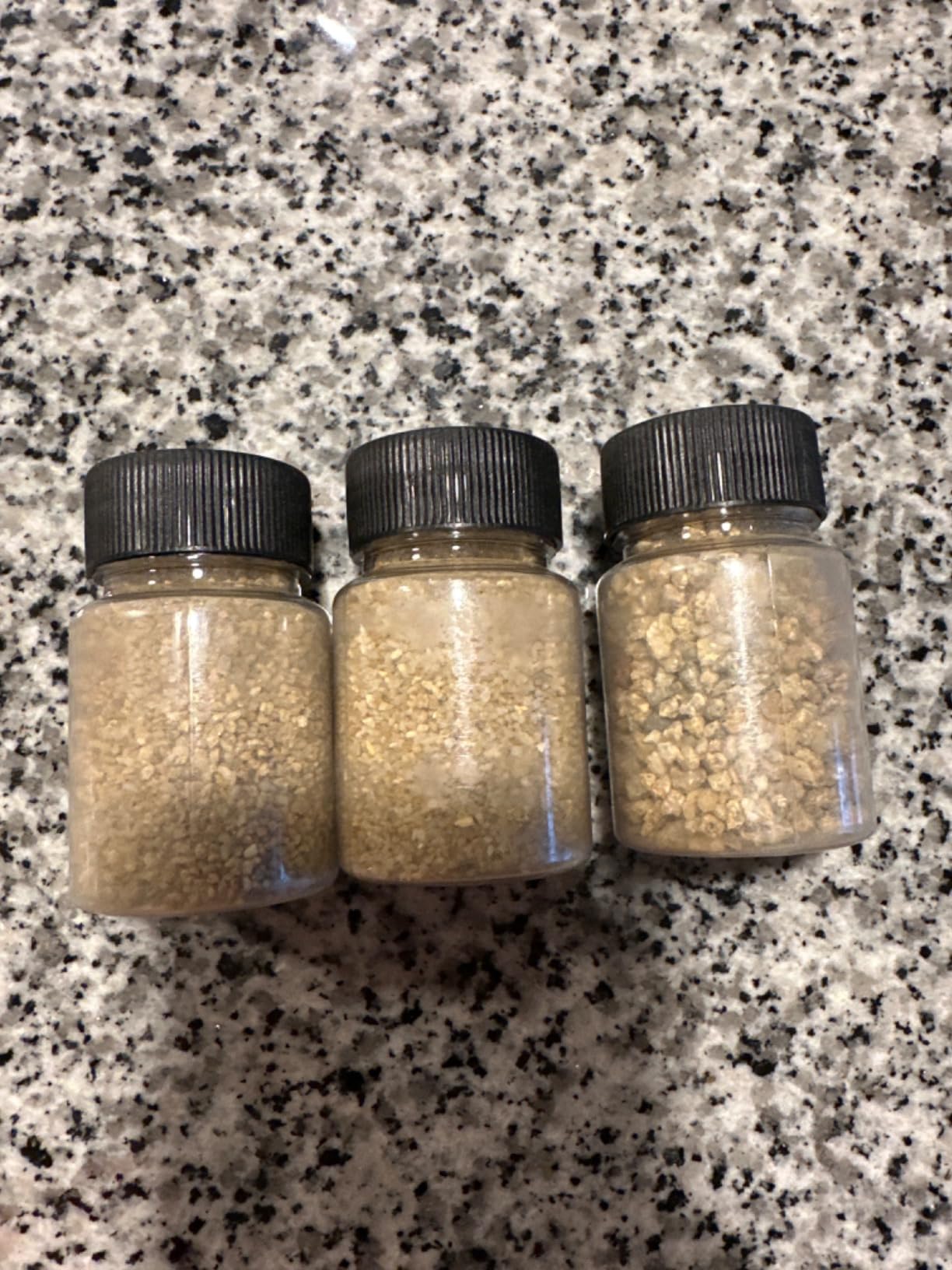
Quality control concerns appear in some customer reviews, with missing fine sand components reported. I received complete contents but recommend checking your package immediately upon arrival. Contact the seller if contents seem incomplete, as the product listing promises fine sand that some customers did not receive.
The sizing works best for HO scale applications around 1:87 ratio. For N scale work, you might find these materials slightly large for fine detail areas. Consider using them primarily for visible terrain features rather than general ground cover where finer materials might prove more appropriate.
Realistic Application Techniques
Mixing different size materials creates more convincing results than using single sizes uniformly. I combined roughly equal parts large, medium, and small gravel, then added fine sand to fill gaps between larger pieces. This layering technique mimics how natural riverbeds and rocky areas accumulate materials over time.
Securing these materials requires careful adhesive application. I used diluted white glue applied with a pipette directly beneath visible areas rather than coating entire surfaces. This targeted application prevents glue from surfacing and creating shiny spots that telegraph artificial placement. Work in small sections to maintain control over wet adhesive flow.
Multi-Scale Versatility
The 1:35 to 1:87 scale range means this product serves multiple modeling communities beyond just train hobbyists. Wargamers, miniature painters, and diorama builders find these materials useful for base detailing and terrain features. If you work across multiple scales or hobbies, this versatility adds value beyond single-application ground cover.
Buying Guide for Choosing the Best Ground Cover Materials in 2026
Selecting the right ground cover involves understanding your specific scale, budget, and desired realism level. This guide covers the key factors that should influence your purchasing decisions for model train landscapes.
Scale Considerations
Your model scale dramatically affects which materials perform best. HO scale layouts (1:87 ratio) accommodate the widest range of ground cover materials, from fine turf to coarser vegetation. The larger surface area means individual material fibers read appropriately without requiring extreme fine detail.
N scale modelers (1:160 ratio) face tighter constraints. Standard ground foam and turf products may appear coarse at this scale. Consider using finer materials specifically marketed as N scale compatible, or apply standard materials sparingly in background areas while reserving finer products for visible frontscene zones.
Larger scales like O (1:48) and G (1:22.5) garden railways allow more flexibility. Materials that would look artificial in small scales read convincingly at these sizes. You can use coarser materials, real sand, and natural vegetation components that smaller scales cannot accommodate.
Material Selection Criteria
Evaluate ground cover materials across four key attributes: scale proportionality, colorfastness, ease of application, and long-term durability. Materials that score well in all categories cost more but reduce frustration and rework over your layout lifetime.
Colorfast materials maintain their appearance through humidity changes, handling, and light exposure. Some cheaper materials fade or bleed color when wet, ruining your carefully applied scenery. The Woodland Scenics products consistently score well here, while budget alternatives sometimes disappoint.
Application method matters for your workflow. Pre-adhesive products like the Warmtree tufts speed application but limit placement control. Granular materials applied with glue offer more precision but require more preparation and drying time. Match your workflow preferences to material characteristics.
Budget vs Premium Options
Premium ground cover materials from established brands cost more but deliver consistent quality and results. If you are building a permanent layout that will be displayed for years, investing in quality materials pays dividends through durability and realism.
Budget alternatives work well for learning, temporary layouts, or large background areas where fine detail is unnecessary. The Yetaha shrubs demonstrate that budget products have their place, particularly for covering areas that viewers will not examine closely.
Application Techniques
Proper surface preparation determines ground cover success. Clean, dry surfaces free from dust and debris allow adhesives to bond correctly. Lightly sand any glossy surfaces to improve adhesion, particularly on foam terrain where glue may not grip smooth surfaces.
Layering different materials creates more realistic results than single-material applications. Start with a base layer of fine turf or ground foam, then add static grass, vegetation tufts, and rock details on top. This layering mimics natural terrain with its complex vegetation patterns and ground variations.
What is the best material for model railroad backdrop?
The best materials for model railroad backdrops include foam board, carved foam, or commercial backdrop panels. For ground cover specifically at the backdrop transition, use fine turf and static grass to create a smooth visual transition between your layout and the backdrop scenery.
What is the most low maintenance ground cover?
Ground foam ranks as the most low-maintenance ground cover option for model trains. It applies easily with glue, stays in place permanently once set, requires no special equipment, and maintains its appearance without intervention. Products like Woodland Scenics ground foam provide reliable results with minimal ongoing attention.
What is the best base for a model train layout?
The best base for a model train layout depends on your needs. Plywood provides durability and stability for permanent indoor layouts. Foam board or carved foam works well for terrain shaping and is lighter weight. Many modelers use a combination of plywood sub-base with foam terrain on top for optimal results.
What do you put under model train tracks?
Under model train tracks, you typically apply ballast material which supports the tracks and creates realistic railroad appearance. Common options include real sand, commercial ballast products, or crushed stone materials sized appropriately for your scale. Apply ballast after track is secured but before scenery materials to prevent interference.
Conclusion
Choosing the best ground cover materials for model train landscapes comes down to matching products to your specific scale, budget, and realism goals. For most HO scale layouts, the Woodland Scenics T1349 Turf Fine Blended Green delivers the quality and ease of use that earns our Editor’s Choice recommendation. Its consistent color, simple application, and excellent coverage make it suitable for beginners and experienced modelers alike.
If you need maximum value, the Warmtree 126 Pcs Static Grass Tufts offer innovative pre-adhesive technology that speeds application without sacrificing results. Budget-conscious modelers will appreciate what the Yetaha 50pcs Green Shrubs bring to background scenery areas where quality matter less than quantity and cost.
No matter which materials you select, proper surface preparation and patient application reward you with scenery that transforms your layout. The ground cover materials reviewed here represent solid starting points for building realistic model train landscapes that bring your railroad to life.