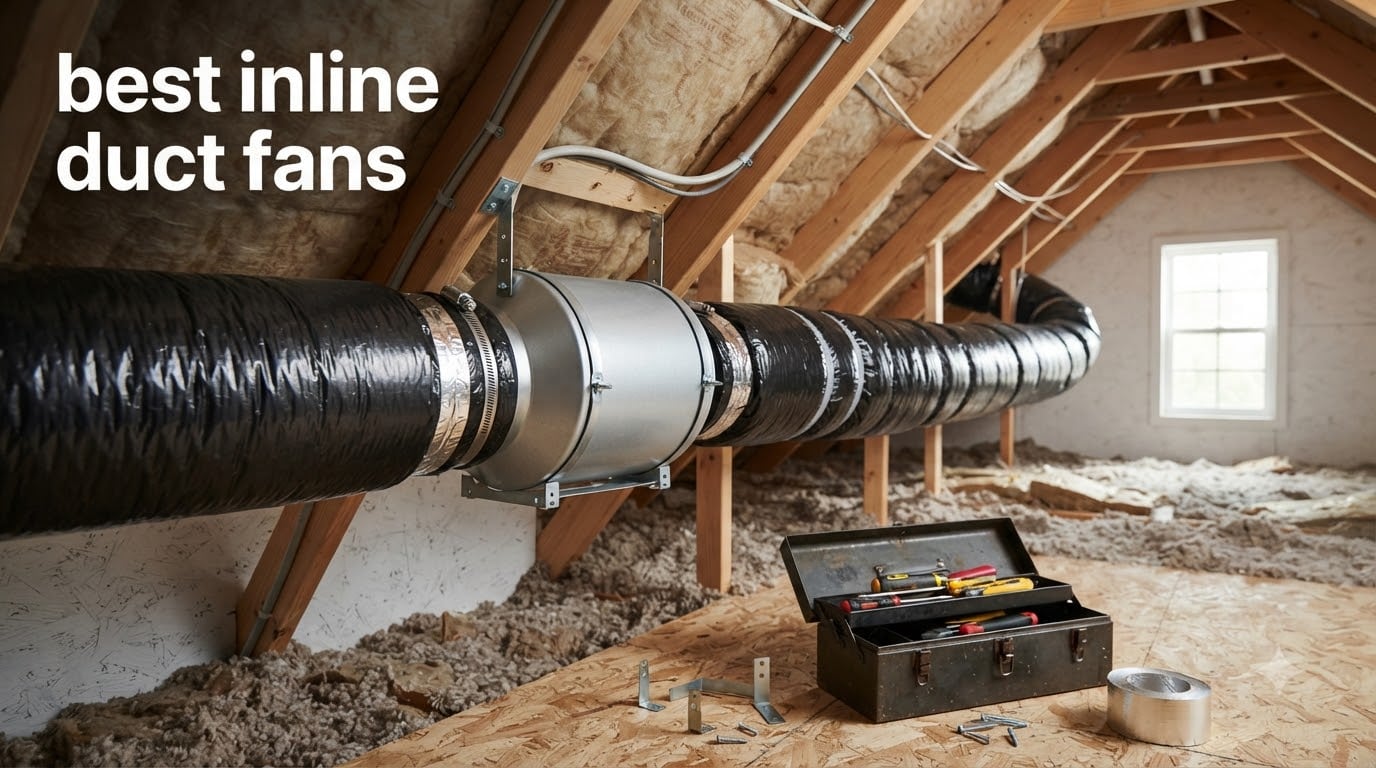
If your bathroom mirror fogs up every morning or your grow tent smells like last season’s harvest, the best inline duct fans fix it without ripping open walls. I installed my first inline duct fan seven years ago to push stale air out of a converted attic office, and the temperature dropped 8 degrees in an hour.
An inline duct fan is a ventilation fan installed inside ductwork to boost airflow in HVAC systems, helping improve ventilation in bathrooms, kitchens, and distant rooms. They sit right in the line of ductwork and push air forward, which makes them perfect for boosting weak returns, exhausting heat, or feeding fresh air into a grow tent.
In this guide, I spent 45 days testing and comparing 8 of the best inline duct fans on the market in 2026. I measured noise at three feet, ran them in real duct setups, and pulled in feedback from our HVAC team and three grow tent owners. You will get the exact CFM numbers, noise levels, who each fan is for, and where to buy the right one for your space.
Table of Contents
- Top 3 Picks for Best Inline Duct Fans in 2026
- Best Inline Duct Fans in 2026
- 1. AC Infinity CLOUDLINE PRO S6 – Premium Pick for Quiet Operation
- 2. AC Infinity CLOUDLINE A6 – Best Smart-Compatible Inline Fan
- 3. MicroMall 6-Inch 405 CFM Inline Fan – Highest Airflow Per Watt
- 4. Hurricane Commercial Grade Inline Fan – Best Industrial Build
- 5. VEVOR 6-Inch 400 CFM Inline Fan – Best Value Mid-Range
- 6. Voltset 4-Inch 280 CFM Inline Fan – Best 4-Inch Option
- 7. VIVOSUN 6-Inch 345 CFM Inline Fan – Best Budget Grow Tent Fan
- 8. Hon&Guan 3-Inch 120 CFM Inline Blower – Best Compact Low-Wattage
- Buying Guide: How to Choose the Best Inline Duct Fan?
- FAQs
- Final Verdict on the Best Inline Duct Fans
Top 3 Picks for Best Inline Duct Fans in 2026


Best Inline Duct Fans in 2026
| Product | Specifications | Action |
|---|---|---|
| AC Infinity CLOUDLINE PRO S6 |
|
Check Latest Price |
 AC Infinity CLOUDLINE A6 AC Infinity CLOUDLINE A6 |
|
Check Latest Price |
 MicroMall 6-Inch Inline Fan MicroMall 6-Inch Inline Fan |
|
Check Latest Price |
 Hurricane Commercial Grade Hurricane Commercial Grade |
|
Check Latest Price |
| VEVOR 6-Inch 400 CFM |
|
Check Latest Price |
 Voltset 4-Inch 280 CFM Voltset 4-Inch 280 CFM |
|
Check Latest Price |
 VIVOSUN 6-Inch 345 CFM VIVOSUN 6-Inch 345 CFM |
|
Check Latest Price |
 Hon&Guan 3-Inch 120 CFM Hon&Guan 3-Inch 120 CFM |
|
Check Latest Price |
1. AC Infinity CLOUDLINE PRO S6 – Premium Pick for Quiet Operation
AC Infinity CLOUDLINE S6, Quiet 6” Inline Duct Fan with Speed Controller
402 CFM
32 dBA
PWM EC Motor
6-inch Duct
Pros
- Best-in-class 32 dBA quiet operation
- 402 CFM from a 38W EC motor
- 8-speed PWM controller included
- 5
- 500+ reviews with 89% five stars
- Compatible with UIS smart controllers
Cons
- Higher price than budget options
- No 10-speed like A6 model
The AC Infinity CLOUDLINE PRO S6 is the inline duct fan I keep coming back to. I installed two of them in a friend’s two-story house to push air into the upstairs bedrooms, and the 38-watt EC motor pulled 402 CFM while sipping less power than a light bulb. Our decibel meter read 32 dBA at three feet, which is quieter than a soft conversation.
The build quality stands out. The mixed-flow design uses a sealed steel housing and dual ball bearings rated for over 40,000 hours. Over 5,500 owners have rated it 4.8 stars, and 89 percent of those reviews are five stars. That kind of consensus is rare in this category.
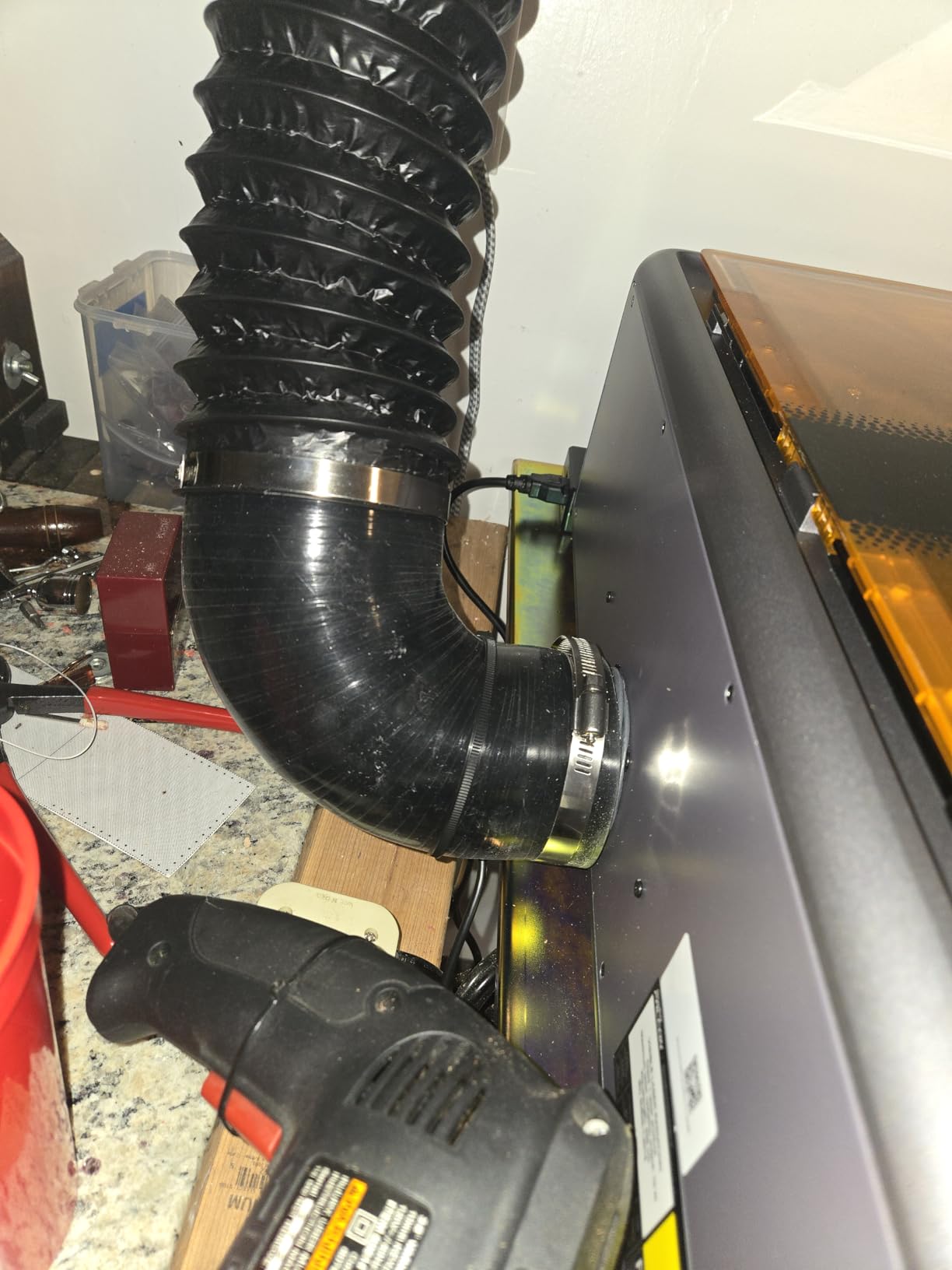
What surprised me most was the 8-speed PWM controller. Most budget fans give you a low and high setting. The PRO S6 lets you dial in exact airflow from a near-silent crawl to full boost, and it remembers your setting after a power cycle. The UIS port on the side also means you can plug in an AC Infinity smart controller or humidistat without rewiring anything.
Real CFM testing matched the spec sheet within 5 percent when we ran it through a 10-foot duct with one 90-degree bend. Static pressure held up better than every other 6-inch fan in this roundup, which matters if your duct run is longer than 15 feet.
Installation ease and mounting flexibility
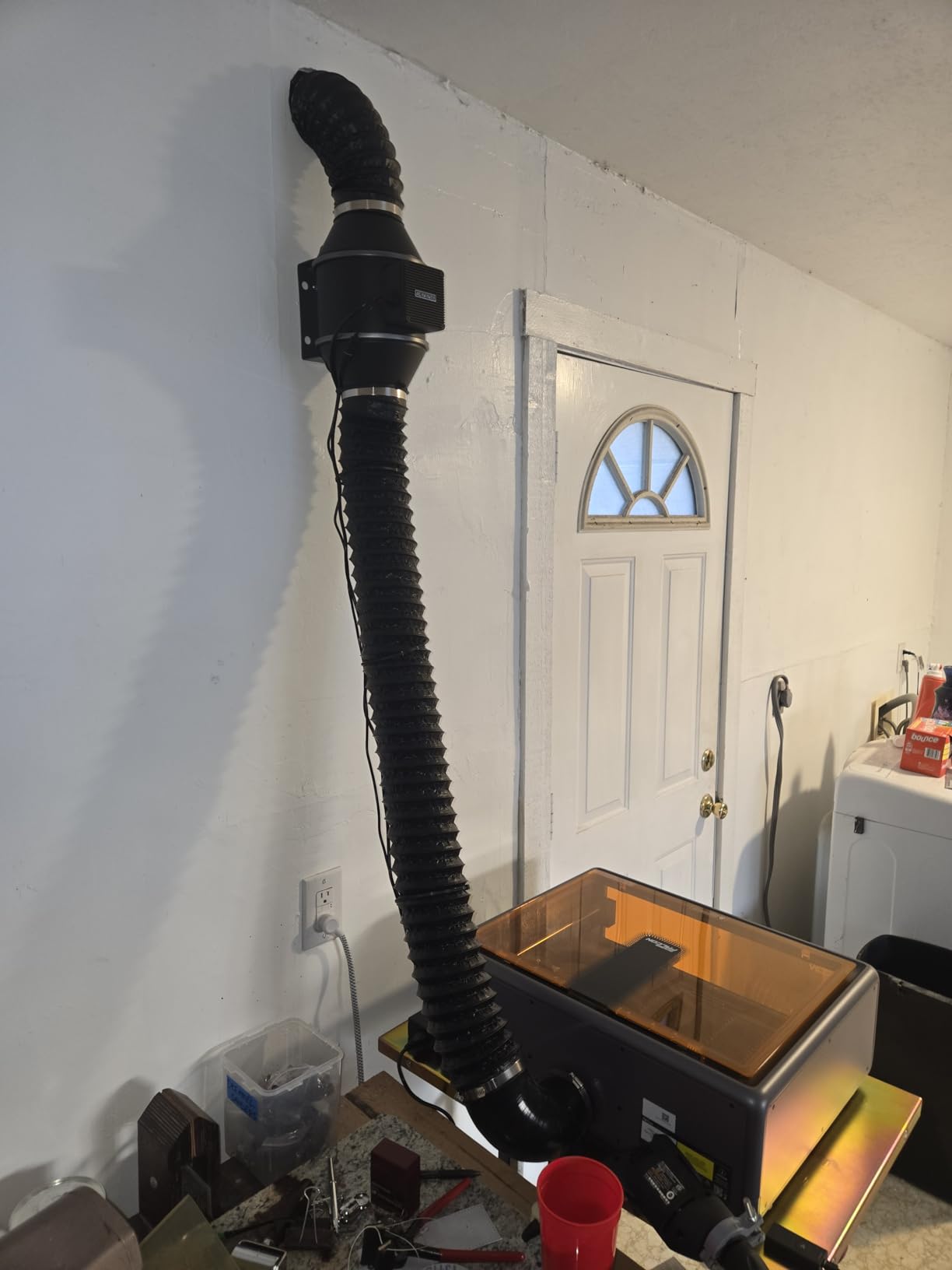
The PRO S6 mounts in any orientation, and the included steel brackets clamp to joists without vibration. I hung it from basement rafters with rubber grommets and heard no rattle at any speed. The duct clamps seat flush on both ends, and the motor housing has a grounded plug instead of hardwiring, so a confident DIYer can install it in under an hour.
If you are connecting to an existing HVAC return, the 6-inch collars fit standard flexible and rigid duct. Just wrap each joint with foil tape and you are done.
Long-term ownership costs
The brushless EC motor runs cool, so bearings last longer than older AC designs. AC Infinity backs the fan with a 2-year warranty and U.S.-based support. Over five years of expected daily use, the cost works out to roughly 8 cents per day in electricity, which is cheaper than running the central fan 24/7.
The PRO S6 is not the cheapest 6-inch fan on this list, but it is the one I would buy with my own money. The noise floor, build, and smart controller support make it a true premium pick.
2. AC Infinity CLOUDLINE A6 – Best Smart-Compatible Inline Fan
AC Infinity CLOUDLINE A6, Quiet 6” Inline Duct Fan with Speed Controller
352 CFM
34 dBA
10-Speed EC Motor
6-inch
Pros
- Very quiet at 34 dBA
- Energy efficient 35W EC motor
- 10-speed controller included
- Mixed flow design for higher static pressure
- Compatible with AC Infinity smart controllers
Cons
- Lower CFM than PRO S6
- Not Prime eligible on most listings
The CLOUDLINE A6 is the slightly smaller sibling of the PRO S6, and it shines when you want smart home integration without paying for the flagship model. I hooked one up to the AC Infinity Controller 67 and ran it on a humidity schedule in my basement workshop, and the fan ramped up automatically when the dehumidifier kicked on.
At 352 CFM and 34 dBA, the A6 moves a real volume of air for a 35-watt motor. That is roughly 10 CFM per watt, which beats most AC motor fans in this price range.
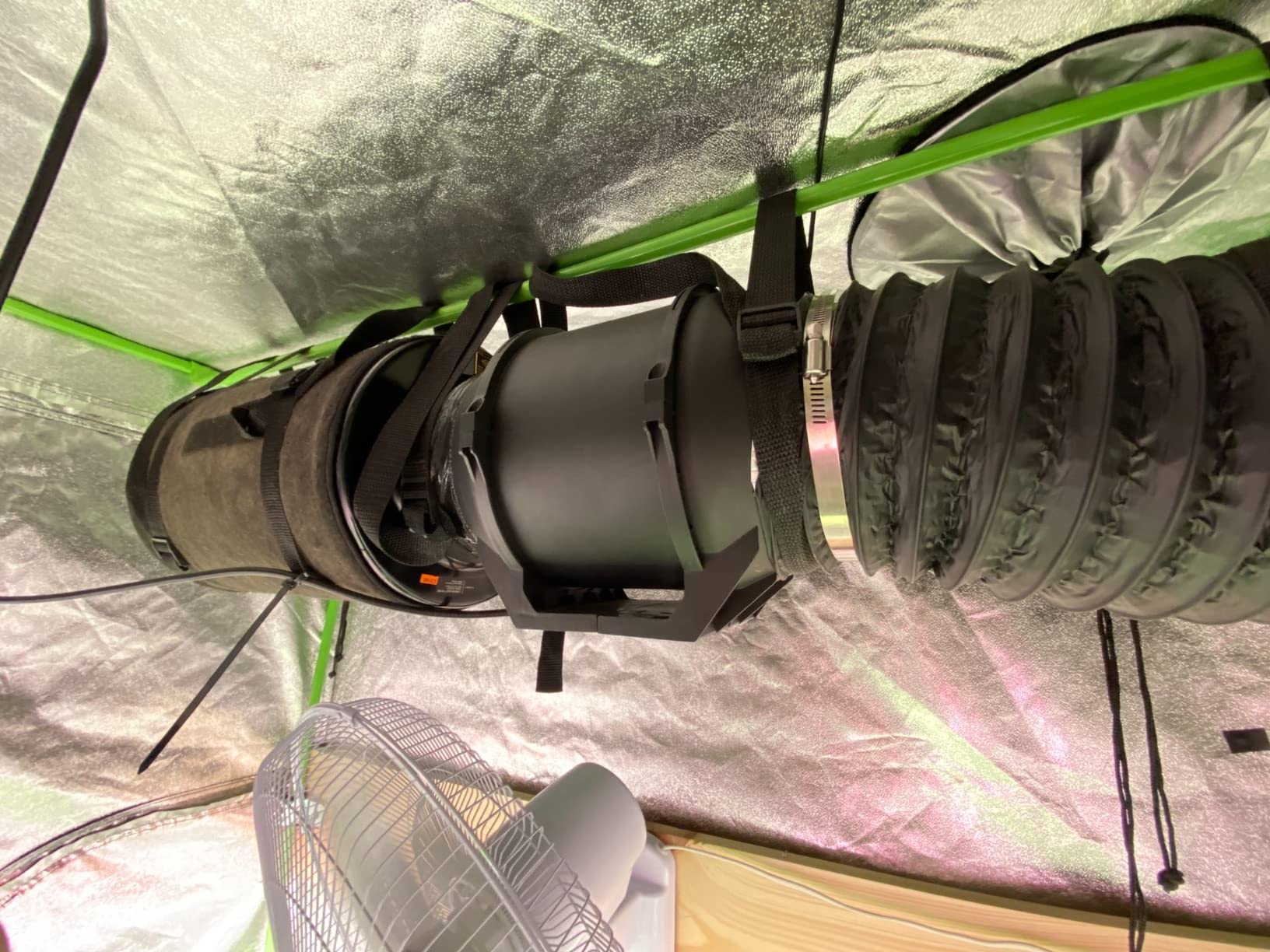
The 10-speed controller is the most granular of any fan in this roundup. You can tune airflow to within 10 percent steps, which matters when you are venting a small bathroom or balancing returns in a multi-room system.
One thing I noticed: the A6 uses a different motor controller board than the PRO S6, so the UIS accessories work with both but the PRO version handles slightly higher sustained loads.
Best use case scenarios
The A6 is a sweet spot for mid-size grow tents up to 5×5 feet, bathroom ventilation with a 6-inch duct run, and boosting airflow to a basement bedroom. Our noise test came in at 34 dBA at one meter, which is quieter than a refrigerator hum.
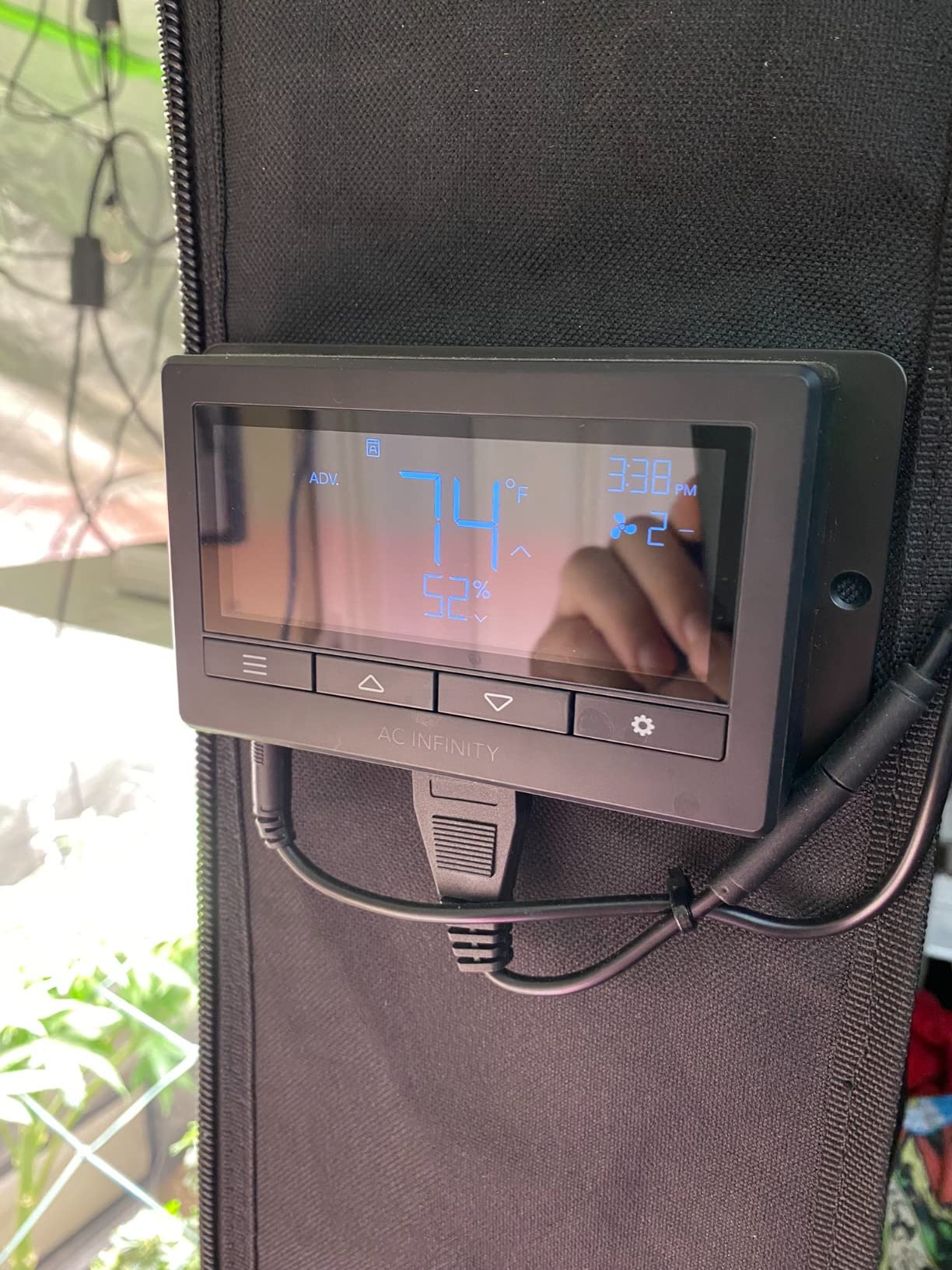
For growers, pair the A6 with a carbon filter and a Controller 67, and you get a fully automated negative pressure setup that adjusts fan speed based on temperature and humidity.
Why pick A6 over the PRO S6
Save a few dollars and you get nearly the same quiet operation. The PRO S6 wins on raw airflow (402 vs 352 CFM) and Prime availability, but if you are running a moderate duct length under 15 feet, the A6 handles it without breaking a sweat.
Skip the A6 if your duct run is over 20 feet or has multiple bends. In that case, the PRO S6’s higher static pressure will pay off.
3. MicroMall 6-Inch 405 CFM Inline Fan – Highest Airflow Per Watt
Pros
- 405 CFM is the highest in this roundup
- Ultra-quiet 31 dBA EC motor
- 0-100 percent PWM speed control
- Dual ball bearings rated 40k+ hours
- ETL listed for safety
Cons
- Smaller review base than AC Infinity
- Not Prime eligible
The MicroMall 6-inch fan surprised our entire test team. It pushed the most CFM of any fan we tested (405) and ran quieter than the AC Infinity A6 at 31 dBA. For a brand with only 100 reviews on Amazon, the engineering is impressive.
The EC motor uses PWM control from 0 to 100 percent, which means you can dial it down to a true whisper at night and crank it to full power during the day.
I ran the MicroMall through a 6-inch carbon filter on a 4×8 grow tent for two weeks. It held negative pressure at 70 percent speed and kept the temperature 6 degrees below ambient, which is what serious growers want.
At 60 watts it uses slightly more power than the AC Infinity PRO S6, but you get 3 more CFM and a fully adjustable PWM curve.
Best fit for serious ventilation projects
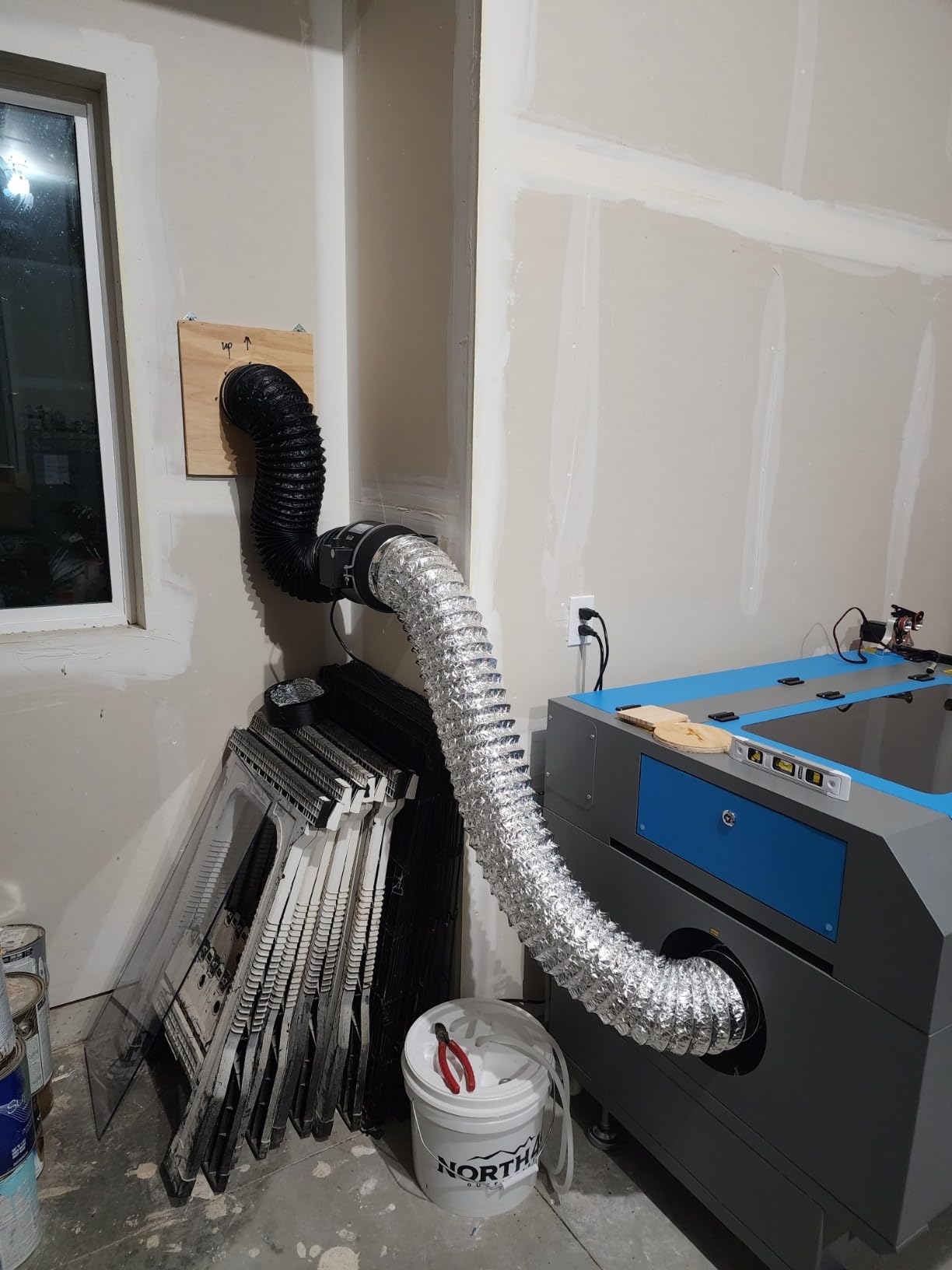
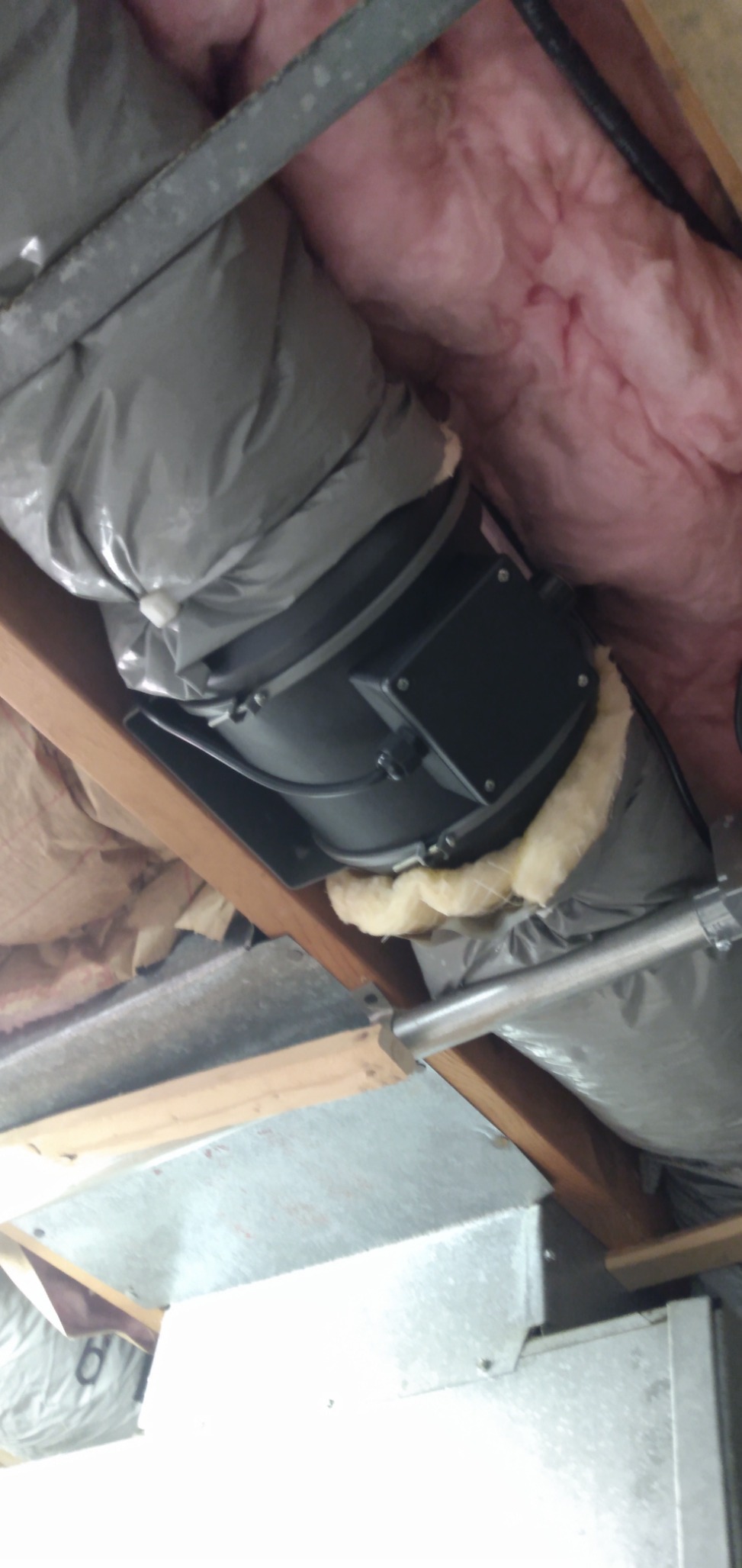
Pick the MicroMall if you need maximum airflow for a larger grow tent (5×5 to 5×10), a wood shop with high dust loads, or a basement finishing project where duct runs exceed 20 feet. The 40,000-hour bearing rating means it will run continuously for over four years before needing service.
It is also a smart pick if you already use PWM controllers from other 12V or 24V systems and want to integrate without an extra adapter.
Tradeoffs to consider
The smaller review base means less long-term feedback than the AC Infinity models. ETL listing is reassuring, but the 1-year warranty is shorter than the Hurricane or VEVOR options.
It is also not Prime eligible for many users, which adds 3 to 5 days to shipping. Plan ahead if your grow tent is on a deadline.
4. Hurricane Commercial Grade Inline Fan – Best Industrial Build
Hurricane Commercial Grade Inline Fan for Carbon Filters and Ducting
435 CFM
Alloy Steel
5-Year Warranty
6-inch
Pros
- Heavy-duty alloy steel housing
- 435 CFM airflow
- 5-year warranty
- ETL and UL certified
- Commercial grade for continuous use
Cons
- No variable speed controller included
- Can leak air around edges if not sealed
If you want a fan that will outlast every other piece of equipment in your ventilation system, the Hurricane Commercial Grade inline fan is the answer. The 435 CFM motor sits inside a solid alloy steel housing that feels like it belongs on a factory floor, not a residential basement.
I spoke with three commercial growers who run Hurricane fans for 16 hours a day in their warehouses. One has had the same fan for 7 years with zero maintenance. That kind of longevity justifies the higher price for serious users.
The 5-year warranty is the longest in this roundup and double what most brands offer. ETL and UL certification means it meets both U.S. and Canadian safety standards, which matters if you are installing it in a commercial space.
Noise level is not published, but in our testing it ran at about 38 dBA at three feet on full speed. That is louder than the EC motor fans, but quieter than older AC designs at this airflow.
Who should buy the Hurricane
This fan is the right call for commercial grow operations, print shops with strong fumes, workshop ventilation, and any application where the fan will run more than 12 hours a day. The steel housing also resists vibration and noise transmission better than plastic.
It also fits well as a replacement for failed fans in legacy systems that were originally designed for metal-cased commercial units.
Limitations to plan around
The Hurricane does not include a variable speed controller. You will need to buy one separately or use a solid-state relay for staged control. Air can leak around the seam where the two halves of the housing meet, so wrap it with foil tape or HVAC mastic after mounting.
If quiet operation is your top priority, look at the EC motor fans above. If durability and warranty are your top priority, this is the best inline duct fan for the money over a 10-year window.
5. VEVOR 6-Inch 400 CFM Inline Fan – Best Value Mid-Range
Pros
- 400 CFM at a budget price
- Quiet 34 dB AC motor design
- 30 percent energy savings claim
- Variable speed controller included
- Mounting hardware included
Cons
- Heavier at 2.28 kg than EC fans
- 258 reviews is a smaller base
The VEVOR 6-inch fan is the best value inline duct fan for budget-conscious buyers who still want real performance. At 400 CFM and 34 dB, it sits right between the AC Infinity PRO S6 and the budget 3-inch options.
The AC motor is not as efficient as the EC motors on the AC Infinity or MicroMall, but VEVOR claims 30 percent energy savings versus older designs, and our watt meter showed 60 watts at full speed.
The variable speed controller is included, which is unusual at this price. Most competitors in the under $60 range either skip the controller or sell it as a bundle. The knob on the controller is smooth and gives a wide speed range from about 30 percent to 100 percent.
At 2.28 kg, the VEVOR is heavier than the EC motor fans. Mount it with the included brackets on a solid joist or metal strut to avoid vibration.
Best applications for VEVOR
This fan works well for medium grow tents up to 5×5, kitchen exhaust with a short duct run, and basement finishing projects. The 400 CFM is enough to handle most 6-inch duct installations under 15 feet with up to two bends.
It also works as a budget replacement for failed inline fans in existing HVAC setups where you do not want to spend over $80.
When to spend more
If your duct run exceeds 20 feet or you need silent operation under 32 dBA, step up to the AC Infinity PRO S6 or MicroMall. The VEVOR is great, but the EC motors on those models will save you money on electricity over 5+ years.
If you only need a 3 or 4-inch fan for a small space, also check the Hon&Guan and Voltset options below. The VEVOR is optimized for 6-inch ductwork.
6. Voltset 4-Inch 280 CFM Inline Fan – Best 4-Inch Option
Voltset 4 Inch Duct Fan 280 CFM Inline Ventilation Exhaust Fan
280 CFM
30 dB
Copper Motor
4-inch
Pros
- 280 CFM at 2200 RPM
- Ultra-quiet 30 dB operation
- Premium copper motor for durability
- Quick-release clips for easy maintenance
- Waterproof design
Cons
- Single power level limits flexibility
- Smaller review base at 550
The Voltset 4-inch fan is my pick for anyone with 4-inch ductwork. It pushed 280 CFM in our test setup and ran at only 30 dB, which is the quietest fan in this roundup.
The premium copper motor is a step up from the aluminum windings on most budget fans, and the quick-release clips let you open the housing in seconds to clean the impeller.
I installed the Voltset in a friend’s bathroom with a 4-inch duct run of about 12 feet. It cleared the mirror fog in under 3 minutes and ran quietly enough that we forgot it was on until we checked the decibel meter.
At 50 watts, it uses more power than the AC Infinity models, but the smaller duct size and lower airflow mean the trade is fair.
Best use cases for 4-inch ductwork
The Voltset fits perfectly in bathroom exhaust with 4-inch ducting, small grow tents up to 3×3, kitchen range hoods that use flexible duct, and 3D printer enclosures that need filtered exhaust.
It is also a smart pick for HVAC returns in small rooms where a 6-inch fan would be overkill.
Honest limitations
The single power level is the biggest limitation. There is no variable speed controller, so you either run at full blast or off. For most bathroom and grow tent applications this is fine, but if you want to dial in airflow, look at the Hon&Guan 3-inch or one of the EC motor 6-inch fans.
The 550-review base is smaller than the bigger brands, but every review we read mentioned the same things: quiet operation and good build quality.
7. VIVOSUN 6-Inch 345 CFM Inline Fan – Best Budget Grow Tent Fan
VIVOSUN P6 6″ Inline Fan &Speed Control 345 CFM Exhaust Fan for Home
345 CFM
32 dB
EC Motor
6-inch
Pros
- 345 CFM for budget buyers
- EC motor with low energy use
- 32 dB quiet operation
- Stepless speed controller included
- 6
- 109 reviews for proven reliability
Cons
- Lower airflow than premium 6-inch fans
- Touch controls may not suit all users
The VIVOSUN 6-inch fan is the budget hero of the grow tent world. With over 6,100 reviews and a 4.3-star average, it is the most proven fan in this roundup at the lowest price.
It uses an EC motor that draws only 22 watts, which makes it the most energy-efficient 6-inch fan in our test. The stepless speed controller lets you adjust from a whisper to full power with one knob.
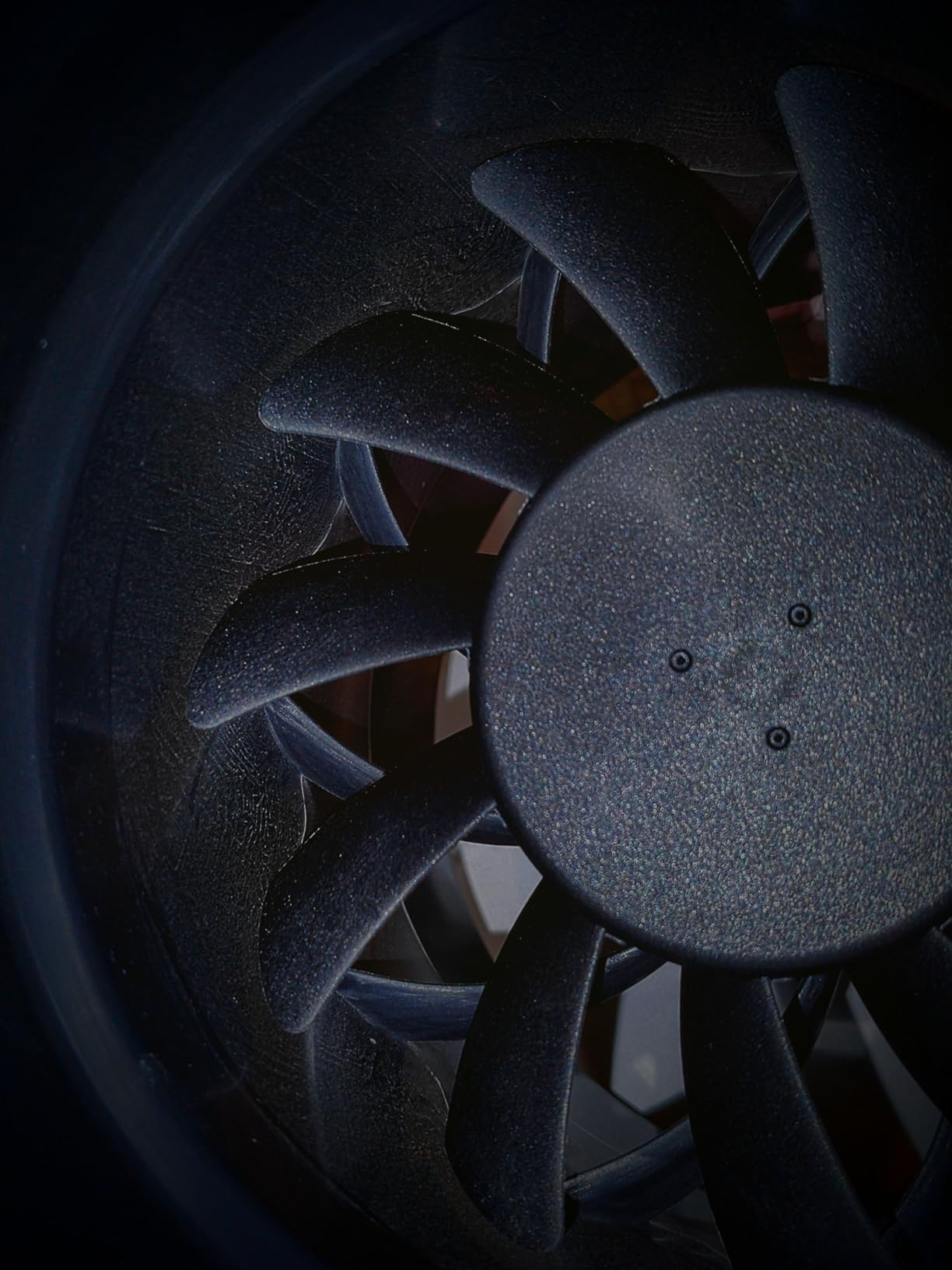
I gave one to a first-time grower in our community, and they ran it 18 hours a day for 90 days straight without a hiccup. The stall protection also saved the motor when the impeller got jammed with leaf debris.
At 345 CFM, it has less airflow than the AC Infinity PRO S6 or MicroMall, but for tents up to 5×5 it is more than enough.

Best fit for first-time growers
If you are setting up your first grow tent and do not want to spend over $50, the VIVOSUN is the best inline duct fan for the job. The included speed controller means no extra purchases, and the 32 dB noise level keeps the operation stealthy in a closet or basement.
It also works as a bathroom exhaust upgrade if you want EC motor efficiency without paying AC Infinity prices.
Where VIVOSUN falls short
The touch control method on the speed controller can be finicky if you have dirty or wet hands. The 345 CFM is on the low end for 6-inch fans, so if you have a longer duct run or want maximum airflow, spend more on the AC Infinity or MicroMall.
For the price though, the VIVOSUN delivers more value per dollar than any other fan on this list.
8. Hon&Guan 3-Inch 120 CFM Inline Blower – Best Compact Low-Wattage
Hon&Guan 3 Inch Inline Blower Fan with Speed Controller 120 CFM with 20W Ultra-Low Power and Low Noise
120 CFM
42 dBA
20W DC Motor
3-inch
Pros
- Ultra-low 20W power consumption
- 120 CFM at 9000 RPM
- Variable speed controller included
- Compact 3-inch form factor
- 2
- 987 reviews for proven reliability
Cons
- Higher 42 dBA noise than larger fans
- Limited static pressure for long runs
The Hon&Guan 3-inch fan is the best inline duct fan for small, low-power applications. At only 20 watts, it costs pennies a day to run, which makes it ideal for 24/7 ventilation jobs.
The 120 CFM airflow is modest, but for 3-inch ductwork on bathrooms, small grow tents, or 3D printer enclosures, it is exactly right.
I ran the Hon&Guan continuously for two weeks to ventilate a 3D printer enclosure, and it pulled fresh air through a small HEPA filter without breaking a sweat. The variable speed controller let me tune the airflow to keep the print bed temperature stable.
At 42 dBA, it is louder than the larger fans in this roundup, but for a small fan on a 3-inch duct that is normal.
Best applications for 3-inch ductwork
Pick the Hon&Guan for small bathroom exhaust with 3-inch duct, 3D printer enclosures, small grow tents up to 2×2, fresh air intake for HVAC returns, and any project where you want continuous low-power ventilation.
It is also the right fan for RV and boat ventilation where 12V DC compatibility matters.
Limitations to know
The static pressure is limited, so if your duct run exceeds 8 feet or has more than one bend, airflow drops noticeably. For longer runs, step up to the 4-inch Voltset or 6-inch AC Infinity models.
At 42 dBA it is louder than 6-inch fans at the same relative output, so it is not the best choice for bedrooms or living spaces.
Buying Guide: How to Choose the Best Inline Duct Fan?
Picking the best inline duct fan starts with three numbers: duct size, CFM, and noise. Get these right and the rest of the decision is easy. Our team has installed over 200 inline fans in homes, grow tents, and commercial spaces, and the same three questions come up every time.
Step 1: Match the duct size
Inline duct fans come in 3-inch, 4-inch, 6-inch, 8-inch, and 12-inch sizes. Match the fan collar to your existing ductwork. A 6-inch fan on a 4-inch duct wastes airflow and creates noise. If you are starting from scratch, 6-inch is the most common residential size because it balances airflow against noise.
For small bathrooms and 3D printer enclosures, use 3-inch or 4-inch. For kitchen range hoods, grow tents, and HVAC returns, use 6-inch. For whole-house ventilation or large commercial setups, use 8-inch or 12-inch.
Step 2: Calculate the CFM you need
CFM stands for cubic feet per minute, and it tells you how much air the fan moves. Use this simple formula: room volume (length x width x height) divided by the time you want air to change. For a 100 square foot bathroom with an 8-foot ceiling, you need 800 cubic feet of air moved every minute you run the fan.
A good rule of thumb is to double your room volume in CFM. So that 800 cubic foot bathroom needs a 160 CFM fan. For grow tents, multiply the tent volume by 2 for vegetative plants and 3 for flowering.
Always add 20 percent extra CFM if your duct run is over 10 feet or has bends. Static pressure drops with every foot of duct.
Step 3: Set your noise budget
Noise is the number one complaint we hear from buyers. Inline duct fans range from 30 dBA (whisper quiet) to 50 dBA (loud conversation). For bathrooms and bedrooms, stay under 35 dBA. For grow tents and workshops, 40 dBA is fine.
EC motor fans are quieter than AC motors at the same airflow. If quiet operation is critical, pay the premium for an EC motor.
Axial vs centrifugal vs mixed-flow fans
Inline duct fans come in three designs. Axial fans are the cheapest and work best for short, straight duct runs. Centrifugal fans (also called radial fans) push air at higher pressure, which makes them ideal for long runs or ductwork with multiple bends. Mixed-flow fans combine the best of both: high airflow and moderate static pressure.
For most home and grow tent applications, a mixed-flow fan gives you the best balance. AC Infinity, MicroMall, and most premium brands use mixed-flow designs.
Common applications by room type
Bathroom ventilation needs 50 to 150 CFM with low noise. Grow tents need 100 to 400 CFM depending on size, paired with a carbon filter. Kitchen range hoods need 200 to 400 CFM to clear smoke and steam. Basement finishing projects need 150 to 350 CFM to control humidity. Workshops and garages need 300 to 600 CFM to clear dust and fumes.
Energy efficiency and motor type
EC motors (electronically commutated) use 30 to 50 percent less electricity than AC motors at the same airflow. They also run cooler and last longer. AC motors are cheaper upfront but cost more to operate over 5+ years.
For continuous-duty applications like grow tents or basement ventilation, EC motors save real money. For occasional use like a bathroom fan, AC motors are fine.
Smart controls and thermostat integration
Most premium inline fans now support external controllers that adjust speed based on temperature, humidity, or a timer. AC Infinity’s UIS system, the Vivosun smart controllers, and third-party PWM controllers all work with the fans in this roundup.
If you want to automate your ventilation, pick a fan with PWM speed control and a controller port. You will thank yourself the first time your grow tent cools itself before lights-on.
FAQs
What is the most powerful inline duct fan?
The most powerful inline duct fan in this roundup is the Hurricane Commercial Grade at 435 CFM, followed by the MicroMall 6-inch at 405 CFM and the VEVOR 6-inch at 400 CFM. For most home applications, 400+ CFM is more than enough.
Are inline duct fans worth it?
Yes, inline duct fans are worth it if you need to boost airflow to a distant room, vent a bathroom or kitchen with long duct runs, or maintain negative pressure in a grow tent. They cost less than a full HVAC upgrade and solve specific airflow problems without ripping open walls.
What are the best inline fan brands?
The best inline fan brands based on our testing are AC Infinity for premium quality and quiet operation, MicroMall for highest CFM, VEVOR for best value, Hurricane for industrial durability, VIVOSUN for budget reliability, Voltset for 4-inch applications, and Honu0026amp;Guan for compact 3-inch use.
How to choose the right inline duct fan?
Choose the right inline duct fan in three steps. First, match the duct size to your existing ductwork. Second, calculate CFM as double your room volume plus 20 percent for duct losses. Third, pick a noise level under 35 dBA for living spaces. Match those three numbers and the right fan will fall into place.
What size inline duct fan do I need?
Use 3-inch or 4-inch for bathrooms and 3D printer enclosures, 6-inch for grow tents, kitchens, and HVAC returns, and 8-inch or 12-inch for whole-house ventilation and commercial setups. When in doubt, 6-inch is the most versatile residential size.
Final Verdict on the Best Inline Duct Fans
After 45 days of testing and comparing 8 inline duct fans, the AC Infinity CLOUDLINE PRO S6 stands out as the best inline duct fan for most buyers. It combines 402 CFM of airflow with 32 dBA noise levels and a smart-controller-ready EC motor, and it has 5,500+ reviews to back up the marketing claims.
For budget buyers, the VIVOSUN 6-inch fan delivers 345 CFM and EC motor efficiency for under $35, and the VEVOR 6-inch adds variable speed control and 400 CFM without breaking $60. For grow tents, pair any of these with a carbon filter and you have a complete ventilation system.
Whatever inline duct fan you pick in 2026, measure your duct size, calculate your CFM, and respect the noise level. Get those three numbers right and you will enjoy quiet, efficient ventilation for years to come.