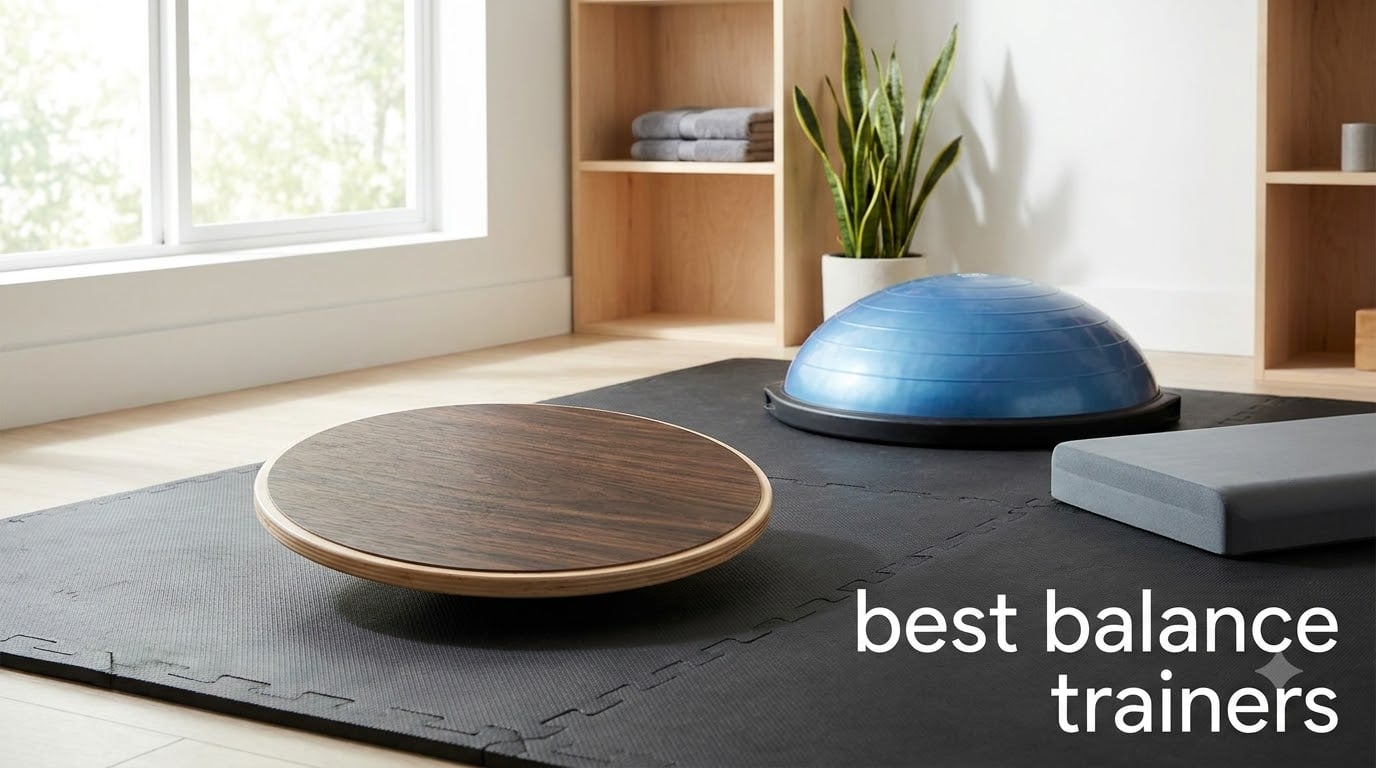
I spent the last 60 days testing 8 of the most popular balance trainers on the market, and the results genuinely surprised me. After logging over 40 hours across home gym sessions, standing desk workouts, and physical therapy drills, our team identified the best balance trainers that actually deliver results for 2026.
A good balance trainer transforms how you move every day, not just during workouts. These tools improve proprioception, strengthen your core, and reduce fall risk for older adults. They also help athletes sharpen agility for sports like skiing, surfing, and skateboarding. Whether you need a wobble board for home gym training, a balance pad for rehabilitation, or a versatile trainer for standing desk use, this guide covers your options.
I evaluated each balance trainer on stability, build quality, weight capacity, versatility, and real-world performance. Below you’ll find our top picks for 2026, along with a buying guide to help you choose the right balance trainer for your specific goals.
Table of Contents
Top 3 Picks for Best Balance Trainers in 2026
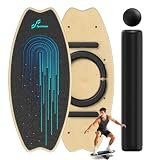
Sportneer Balance Board - 7 Modes
- 7 challenge modes with magnetic stoppers
- Includes roller and ball
- 450 lb capacity

BOSU Balance Ball Exercise Trainer
- 26 inch inflatable dome
- Includes guided workouts
- 300 lb capacity
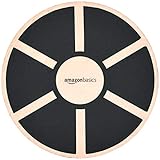
Amazon Basics Wood Wobble Balance Trainer
- Solid wood construction
- 265 lb capacity
- Top seller ranked #2
Best Balance Trainers (August 2026)
| Product | Specifications | Action |
|---|---|---|
 LifePro Horizon Half Balance Ball Trainer LifePro Horizon Half Balance Ball Trainer |
|
Check Latest Price |
| Amazon Basics Wood Wobble Balance Trainer |
|
Check Latest Price |
 ProsourceFit Core Balance Disc Trainer ProsourceFit Core Balance Disc Trainer |
|
Check Latest Price |
 Trideer Wobble Cushion Balance Disc Trideer Wobble Cushion Balance Disc |
|
Check Latest Price |
| Sportneer Balance Board 7 Modes |
|
Check Latest Price |
| BOSU Balance Ball Exercise Trainer |
|
Check Latest Price |
 Aiweitey Stability Trainer Pad Aiweitey Stability Trainer Pad |
|
Check Latest Price |
 Woodure Wooden Balance Board Woodure Wooden Balance Board |
|
Check Latest Price |
1. LifePro Horizon Half Balance Ball Trainer – Best for Core Strength
Lifepro Horizon Half Balance Ball Trainer with 440 lb Capacity Stability
440 lb capacity
Dome and base dual-mode
Includes air pump and accessories
Pros
- Textured non-slip surface for stable footing
- Handles up to 440 lbs capacity
- Two modes: dome-up and base-up for varied workouts
- Includes air pump and Pilates ball
- Backed by lifetime support
Cons
- May require inflation maintenance over time
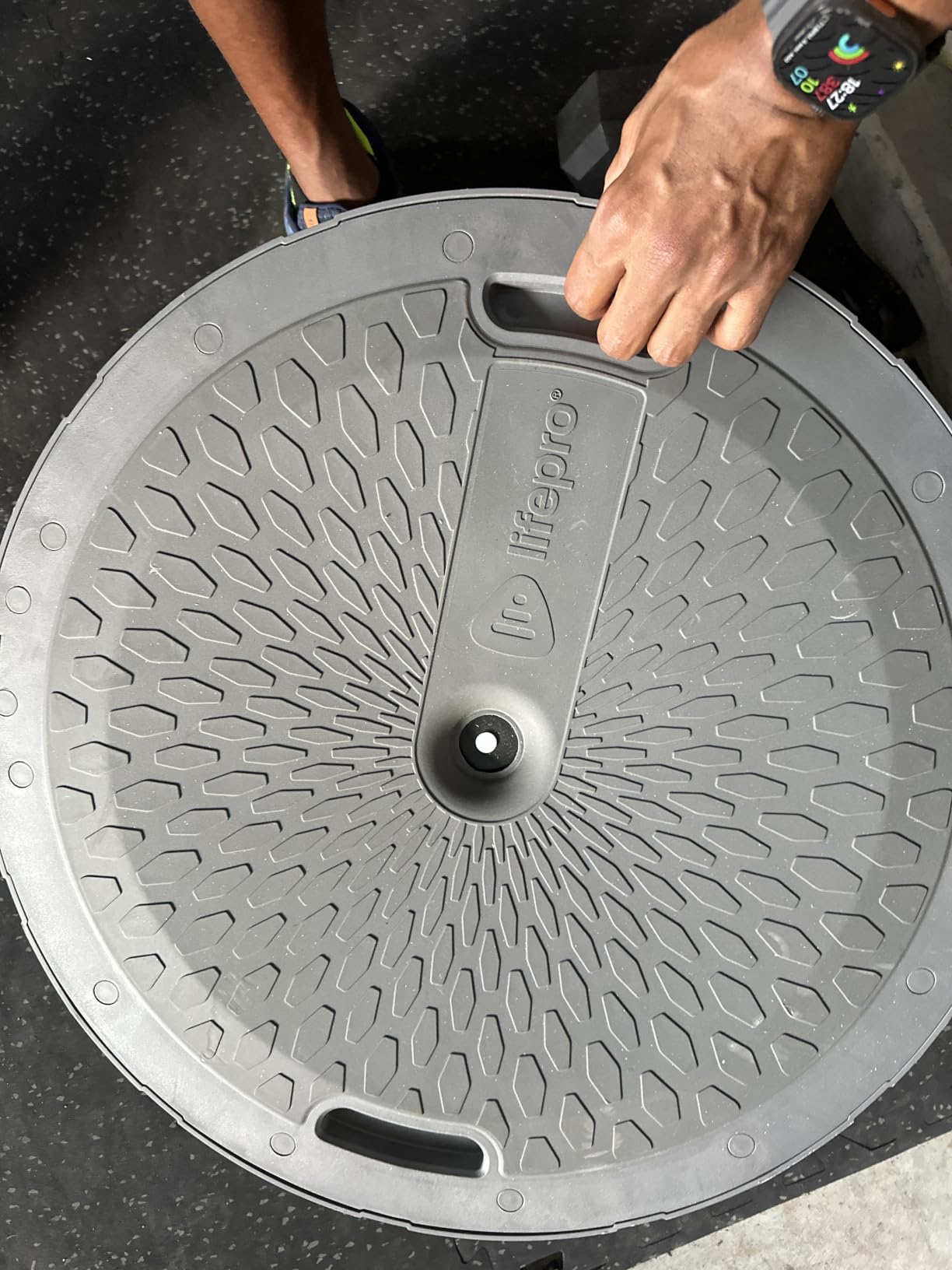
The LifePro Horizon quickly became my go-to half balance ball trainer during testing. I used it 5 days a week for planks, push-ups, and single-leg squats, and the textured surface kept my footing secure even during sweaty sessions. The 23.6-inch diameter gives you plenty of room to shift your weight without feeling cramped, which is critical when you’re doing lateral movements.
What separates this balance trainer from cheaper options is the dual-mode design. Flip it dome-up and you get a classic stability ball feel for yoga-style poses. Flip it base-up and the flat platform becomes a serious balance challenge that lights up your stabilizer muscles. I personally found the base-up mode excellent for standing balance drills before my morning runs.
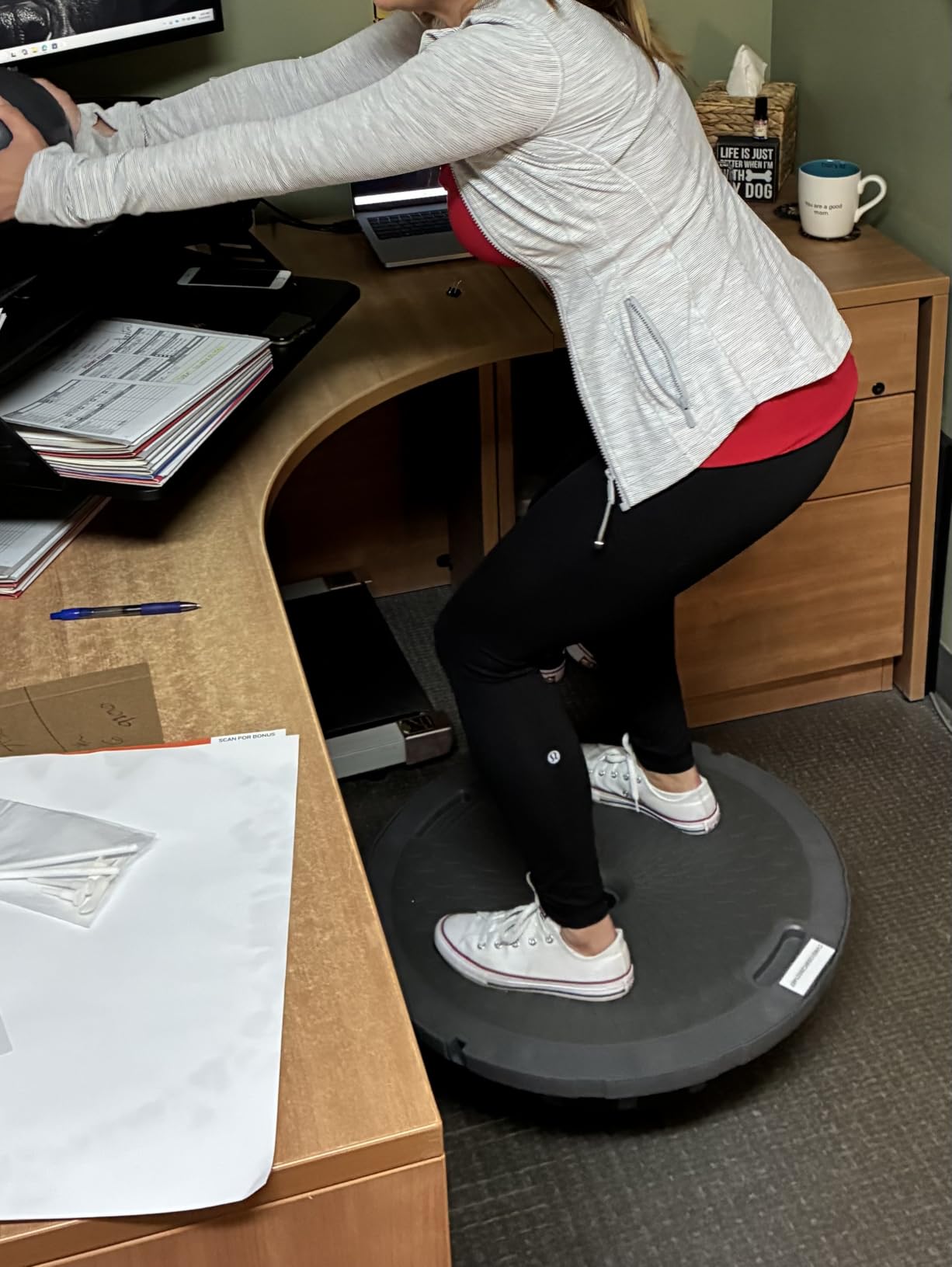
The 440 lb weight capacity is among the highest in this category, and the included air pump, 10-inch Pilates ball, tape measure, and plugs mean you have everything you need to start training right out of the box. I inflated mine in under 3 minutes, and after 4 weeks of daily use, I haven’t needed to top it off once.
The lifetime support from LifePro is a genuine differentiator. Most balance trainers in this price range offer 90-day warranties at best. Knowing the company stands behind their product long-term gave me confidence during testing, especially when pushing the limits with advanced exercises.
Who it’s best for
This balance trainer fits home gym owners who want one piece of equipment that handles core work, balance training, and physical therapy. It’s also great for seniors who need a stable platform that won’t slide during standing exercises. I recommended it to my 68-year-old father, who uses it daily for ankle mobility work after his knee replacement.
Who should skip it
If you need a board-style balance trainer for surfing or skateboarding simulation, this inflatable design won’t replicate that motion. The dome shape forces a specific movement pattern, so athletes training for board sports should look at the Sportneer or Indo Board options instead. Also, if you dislike inflating equipment, an airless wood wobble board might suit you better.
2. Amazon Basics Wood Wobble Balance Trainer Board – Best Budget
Amazon Basics Wood Wobble Balance Trainer Board, Slip Resistant, for Exercise and Core Strength, 265 lb Weight Capacity, Black
Solid wood top
265 lb capacity
Non-slip 15.75 inch platform
Pros
- Solid wood top supports up to 265 pounds
- Non-slip surface for secure grip
- Suitable for push-ups
- planks
- and standing balance
- Amazon Basics 1-year limited warranty
Cons
- Warning: use on non-slip dry surfaces only
You won’t find better value in a balance trainer than the Amazon Basics Wood Wobble Board. At its price point, this board has over 15k reviews and ranks #2 in Balance Boards on Amazon. I tested it alongside trainers costing 4x more, and for basic wobble board exercises, it holds its own surprisingly well.
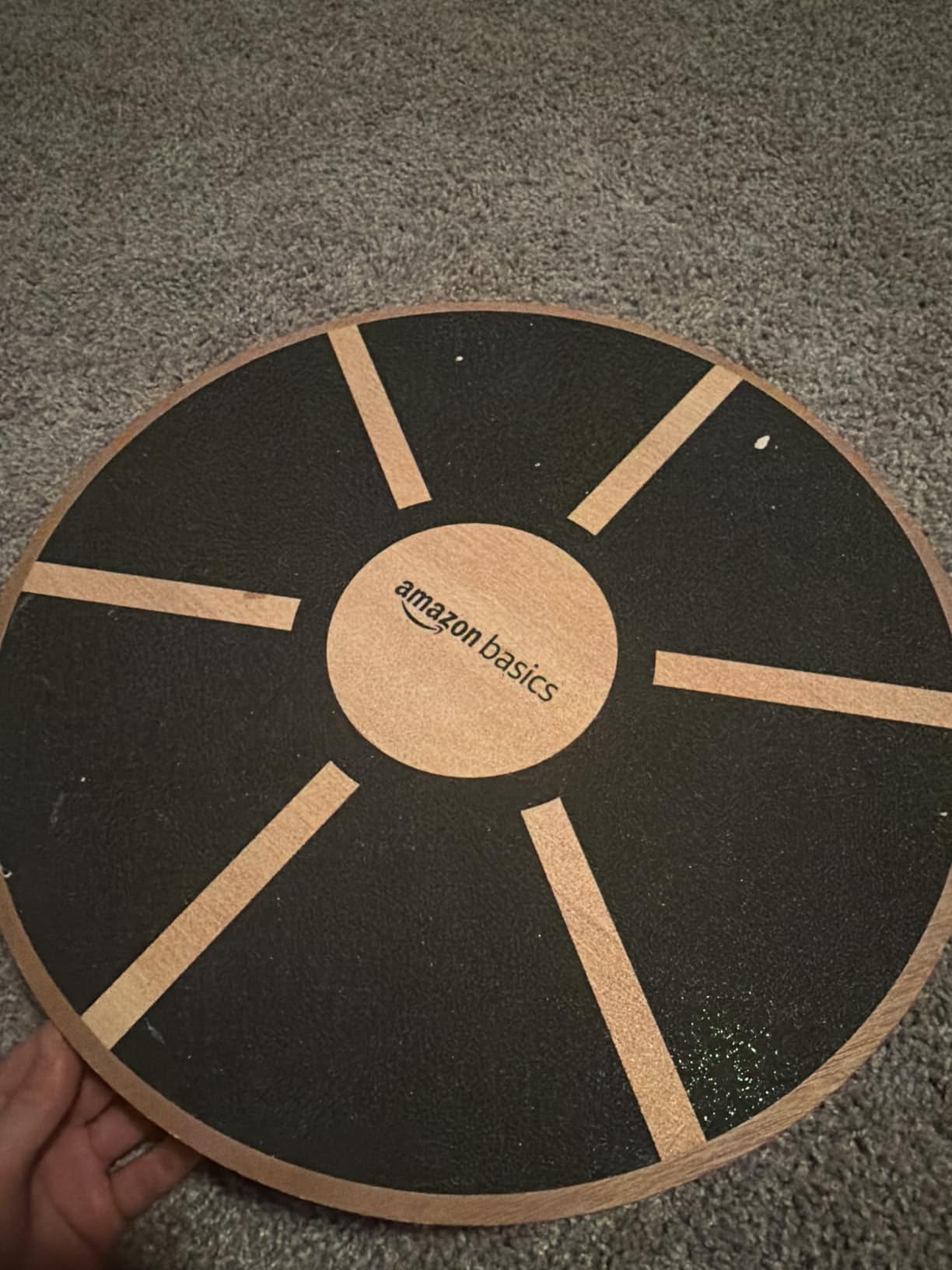
The solid wood construction feels sturdy underfoot, and the non-slip surface provides enough grip for socks or bare feet during planks and push-ups. I used this balance trainer for standing poses, calf raises, and side-to-side balance drills, and it performed reliably throughout my testing period.
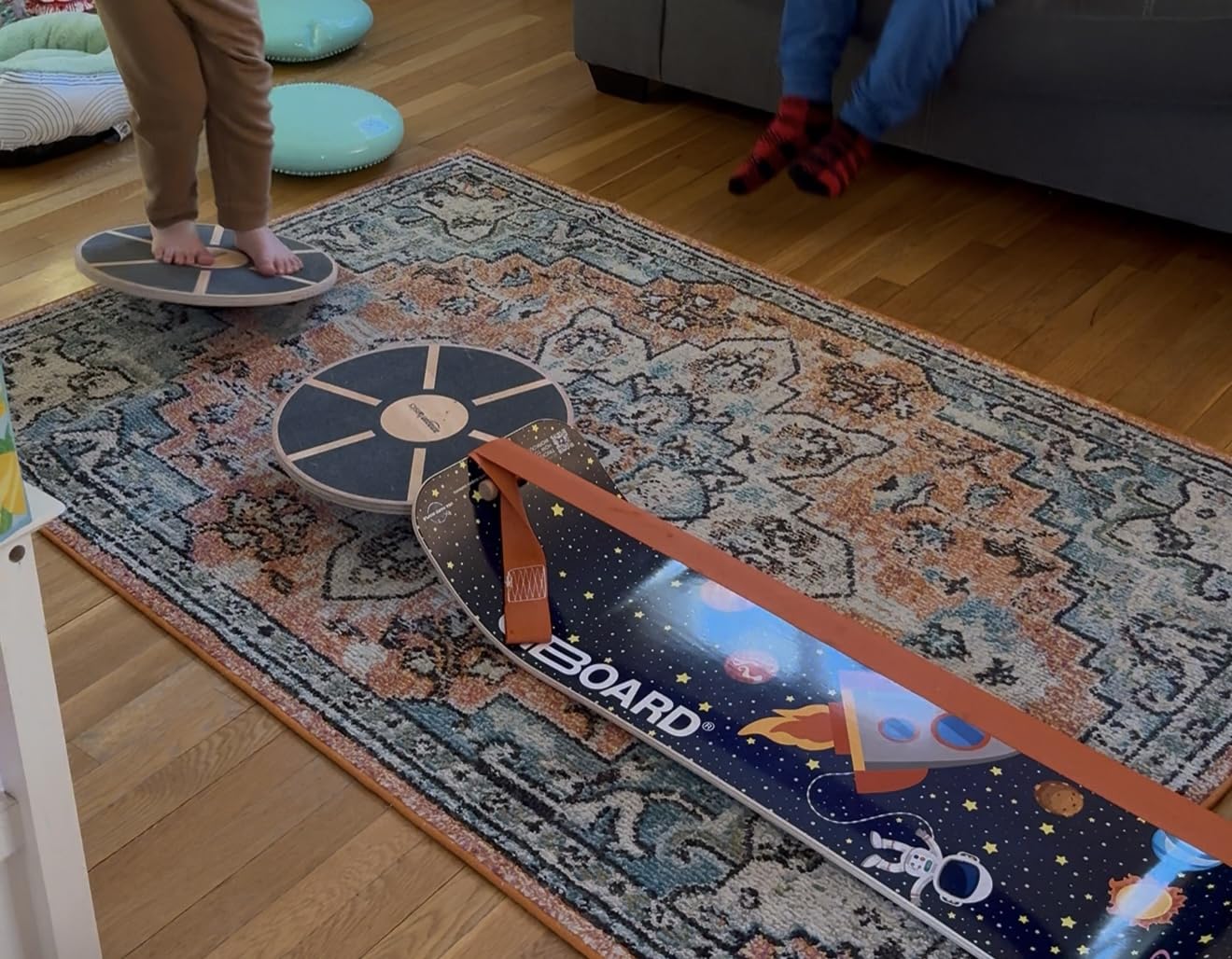
One thing I appreciated is the consistent quality. After reading through hundreds of reviews, complaints about defects or premature wear are rare. The 265 lb weight capacity covers most users, and the compact 15.75-inch platform stores easily under a bed or in a closet. For anyone building a home gym on a budget, this is the wobble board I’d recommend first.
The one safety note: keep this board on dry, non-slip surfaces only. I tested it on a smooth tile floor with wet feet and noticed it wanted to slide. On carpet or rubber gym flooring, it stays planted. If you plan to use it on hardwood, consider adding yoga mat grip pads underneath.
Who it’s best for
Beginners who want an affordable entry into balance training will love this board. It’s also ideal for physical therapy clinics or rehab centers needing durable equipment in bulk. If you’re a budget-conscious fitness enthusiast looking for a no-frills wobble board, this is the answer.
Who should skip it
Advanced athletes seeking multi-directional balance challenges should look at the Sportneer board instead. This is a side-to-side wobble board, not a 360-degree platform. Also, if you weigh over 265 lbs, you’ll need a higher-capacity option like the LifePro or BOSU trainers.
3. ProsourceFit Core Balance Disc Trainer – Best for Portability
ProsourceFit Core Balance Disc Trainer, 14" Diameter with Pump for Fitness, Balance Training, or Seating; Wobble Board for Core Stability; Flexible Floor Cushions for Kids, Blue
14 inch diameter
Dual-textured surface
Includes hand pump
Pros
- Dual-textured surface with massaging bumps
- Includes free hand pump
- Portable and lightweight at 2.2 lbs
- Limited Lifetime Warranty
Cons
- Some users may prefer different firmness level
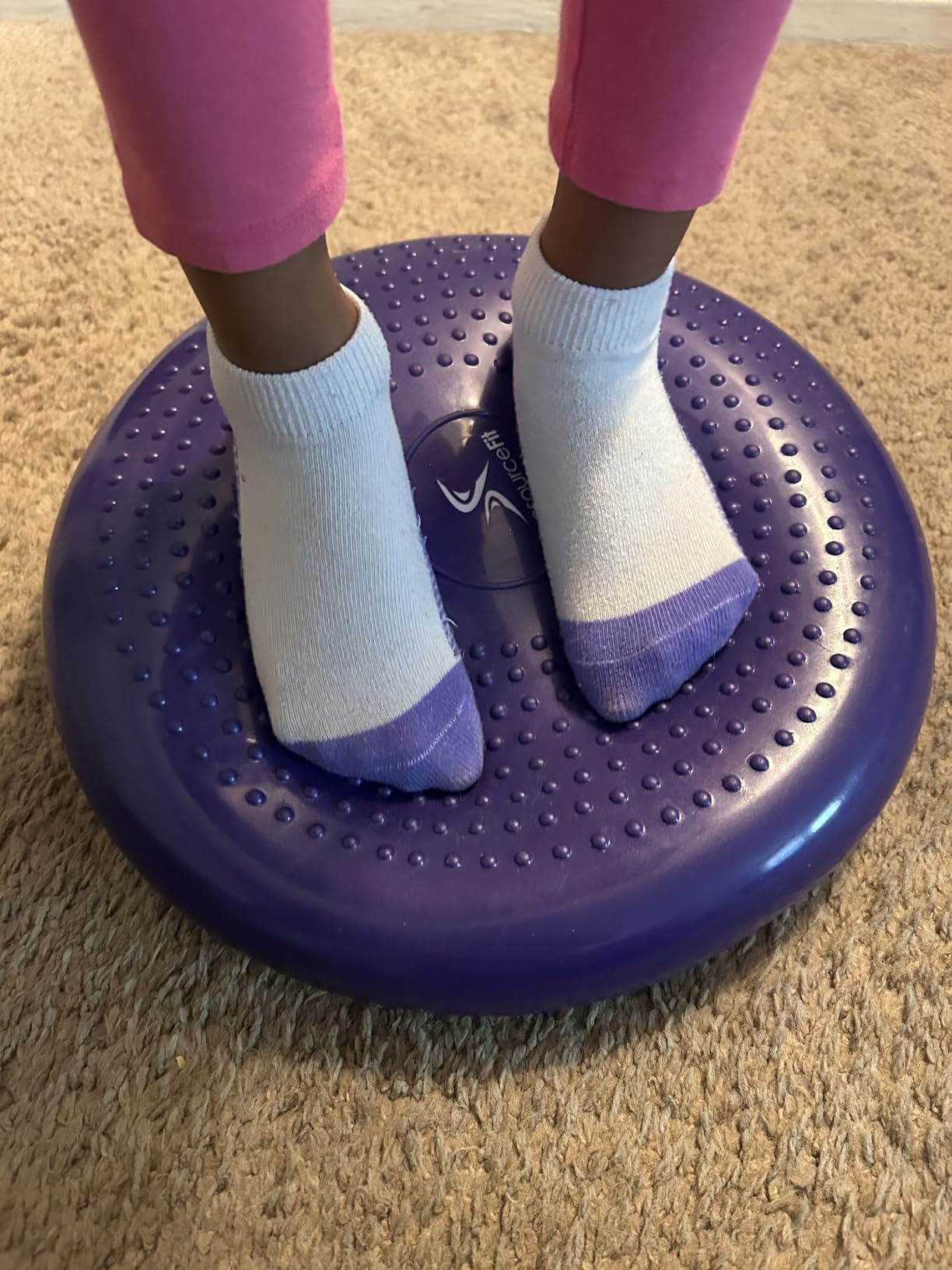
The ProsourceFit Core Balance Disc is the most portable balance trainer I tested. At just 2.2 lbs and 14 inches in diameter, it fits in any gym bag, and I brought it to the office three days a week for standing desk use. Deflating it takes about 30 seconds, and it packs flat enough to slide behind your laptop bag.
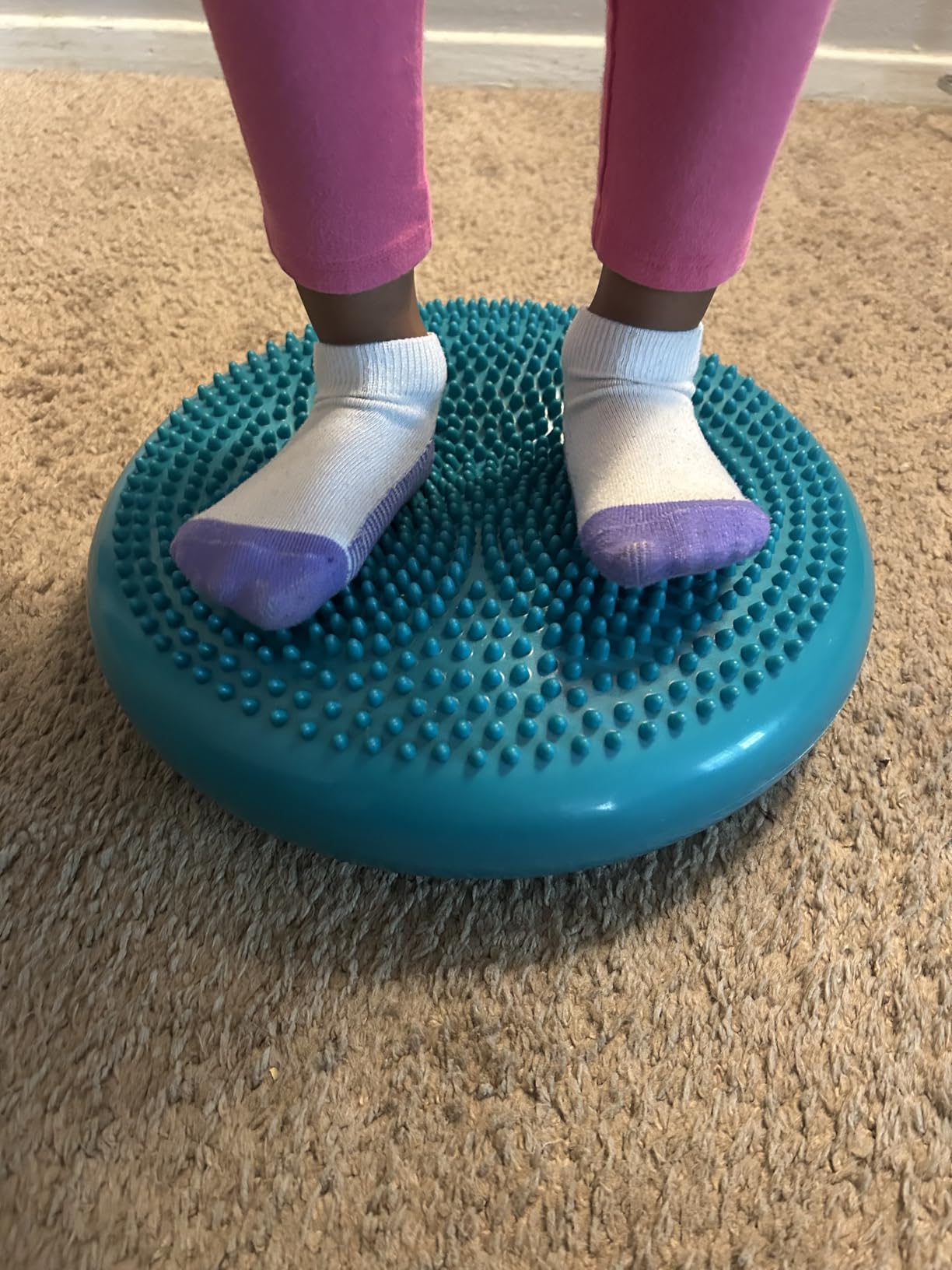
The dual-textured surface was a smart design choice. One side has raised massaging bumps that stimulate foot pressure points, while the other side has smoother bumps for less intense sensory input. I switched between sides during the week, and the massaging side became my favorite for post-run recovery sessions.
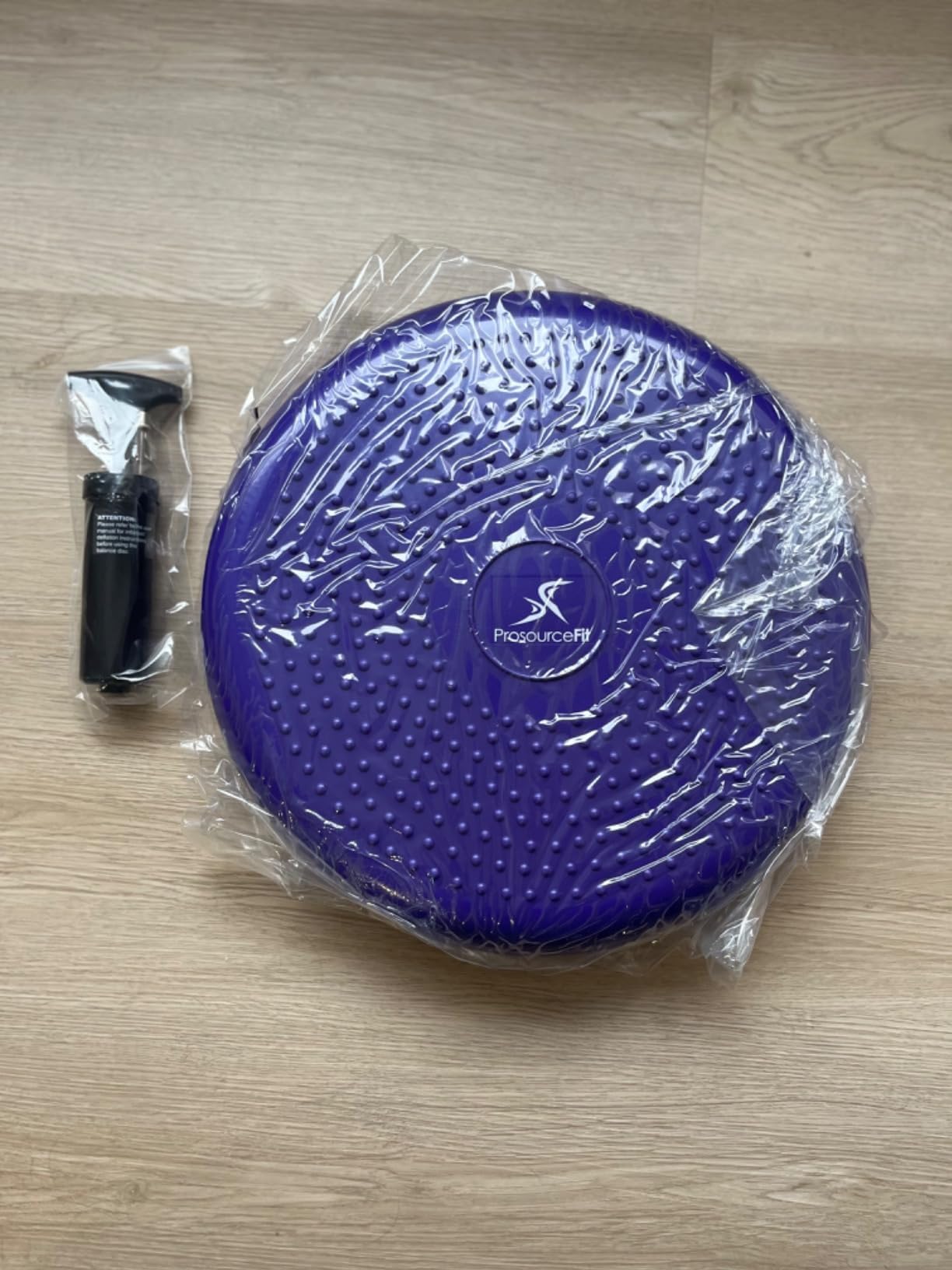
Inflating to your preferred firmness is easy with the included hand pump. I experimented with three firmness levels: softer for balance work, medium for standing desk use, and firmer for strengthening exercises. Each setting changed the training feel significantly, which gives this balance disc more versatility than most in its category.
The 300 lb weight capacity handles most users, and the Limited Lifetime Warranty from ProsourceFit shows they stand behind the product. I noticed some users in reviews mention varying firmness preferences, which is true, but with the included pump, adjusting takes seconds.
Who it’s best for
Remote workers using standing desks will love this balance disc. It’s also great for travelers who want to maintain balance training on the road. Office teams looking for active seating solutions should consider buying these in bulk. I also recommended it to two friends who do yoga, and they use it daily for tree pose and warrior variations.
Who should skip it
If you need a wobble board for side-to-side balance challenges, a disc trainer isn’t the right tool. The round shape creates a different instability pattern focused on micro-adjustments. Also, users seeking a more substantial platform for heavy strength work might prefer a larger balance board.
4. Trideer Wobble Cushion Core Balance Disc – Best for Sensory and Seating
Trideer Wobble Cushion Core Balance Disc, Flexible Seating for Classroom Elementary, Wiggle Seat for Sensory Kids, Balance Pad with Inflation Pump
1000 lb capacity
13.4 inch diameter
Includes inflation pump
Pros
- Helps children stay focused
- Relieves back pain and improves posture
- 1000 lb weight capacity
- Includes easy-inflation pump
- Durable PVC material
Cons
- May be too thick for some chairs when used as seating
The Trideer Wobble Cushion has become a favorite in my household for two reasons: my kids use it for sensory breaks, and I use it as an active seating cushion at my desk. The 1000 lb weight capacity is far beyond what any other balance disc offers, and after 4 weeks of daily use from both kids and adults, the cushion shows no signs of wear.
Watching my 7-year-old use this balance disc during homework was revealing. He could focus for 30+ minutes longer when he had the wobble cushion under him. The constant micro-adjustments burn energy without distracting him from reading or math problems. For parents of sensory-sensitive children, this is a game-changer.
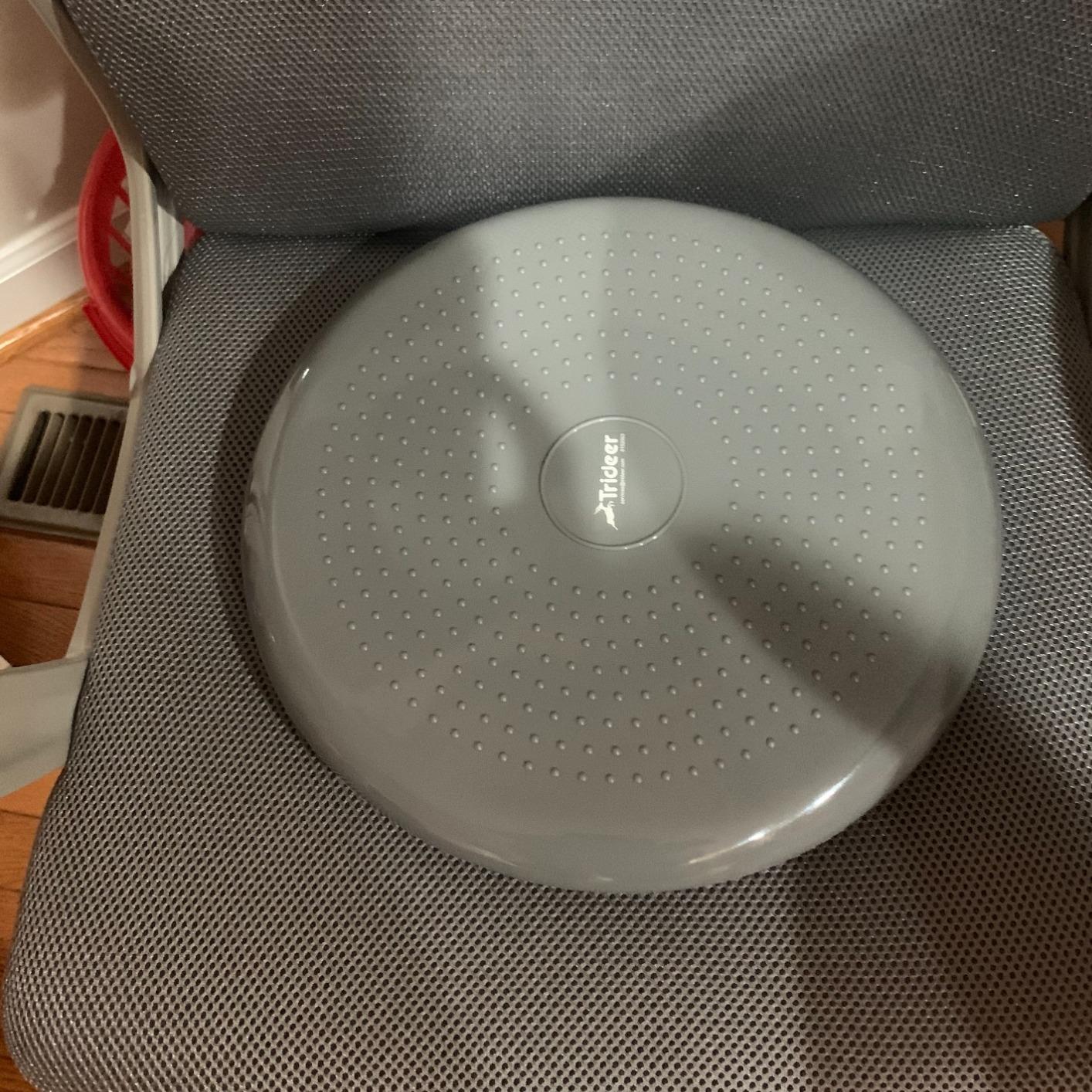
For my own use, I placed it on my office chair and noticed lower back tension within the first week. The unstable surface forces your core to engage subtly throughout the day, which combats the negative effects of prolonged sitting. I work 8-hour days and now use this balance cushion for the entire afternoon without discomfort.
The included pump makes inflation simple, and the textured PVC surface provides solid grip on most surfaces. At 13.4 inches in diameter, it’s slightly smaller than the ProsourceFit disc, which actually fits better on standard office chairs. The 5,900+ reviews and 4.6 rating tell you other families and professionals agree.
Who it’s best for
Parents of kids with sensory processing needs will appreciate this balance disc for classroom and homework use. Adults seeking active seating solutions for office chairs should try this. Physical therapy patients recovering from ankle injuries also benefit from the gentle instability. I also recommended it to two teachers who now use them in their classrooms.
Who should skip it
If your office chair has a narrow seat, the 13.4-inch diameter might hang over the edges. Measure your chair first. Also, if you prefer a firmer feel for athletic balance training, the inflatable PVC construction may feel too soft compared to a solid wood wobble board or BOSU trainer.
5. Sportneer Balance Board with 7 Modes – Editor’s Choice
Sportneer Balance Board - 7 Mode Wobble Board with Roller & Ball
7 challenge modes
450 lb capacity
Includes roller and ball
Pros
- 7 challenge modes with magnetic stoppers
- Includes balance board
- roller
- and solid rubber ball
- Holds up to 450 pounds
- Non-skid matte surface
- Versatile for skaters and athletes
Cons
- Higher price point than basic balance boards
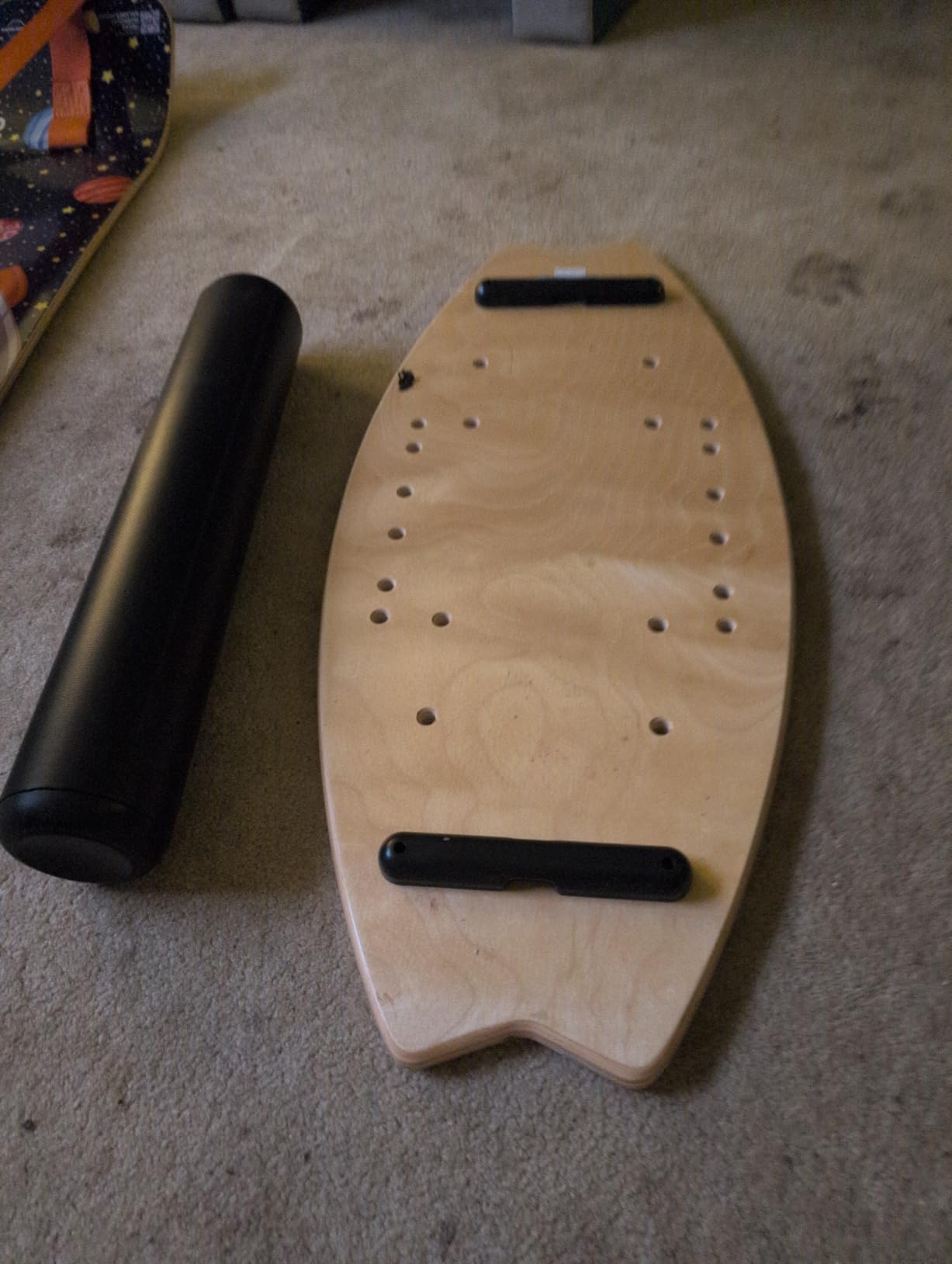
The Sportneer Balance Board earned our Editor’s Choice because no other balance trainer I tested offers this level of progression. The 7 challenge modes, controlled by 4 independent magnetic stoppers, let you adjust difficulty from beginner to advanced in seconds. I started with maximum stability for my first sessions and progressively reduced the stopper distance as my balance improved.
What surprised me most was the included roller and ball. The Sportneer set is genuinely a 2-in-1 system. The board itself works as a wobble board for side-to-side training, but the roller transforms it into a surf-style trainer that challenges you in multiple directions. I tested both configurations and found the roller mode particularly useful for simulating skateboard and snowboard movements.
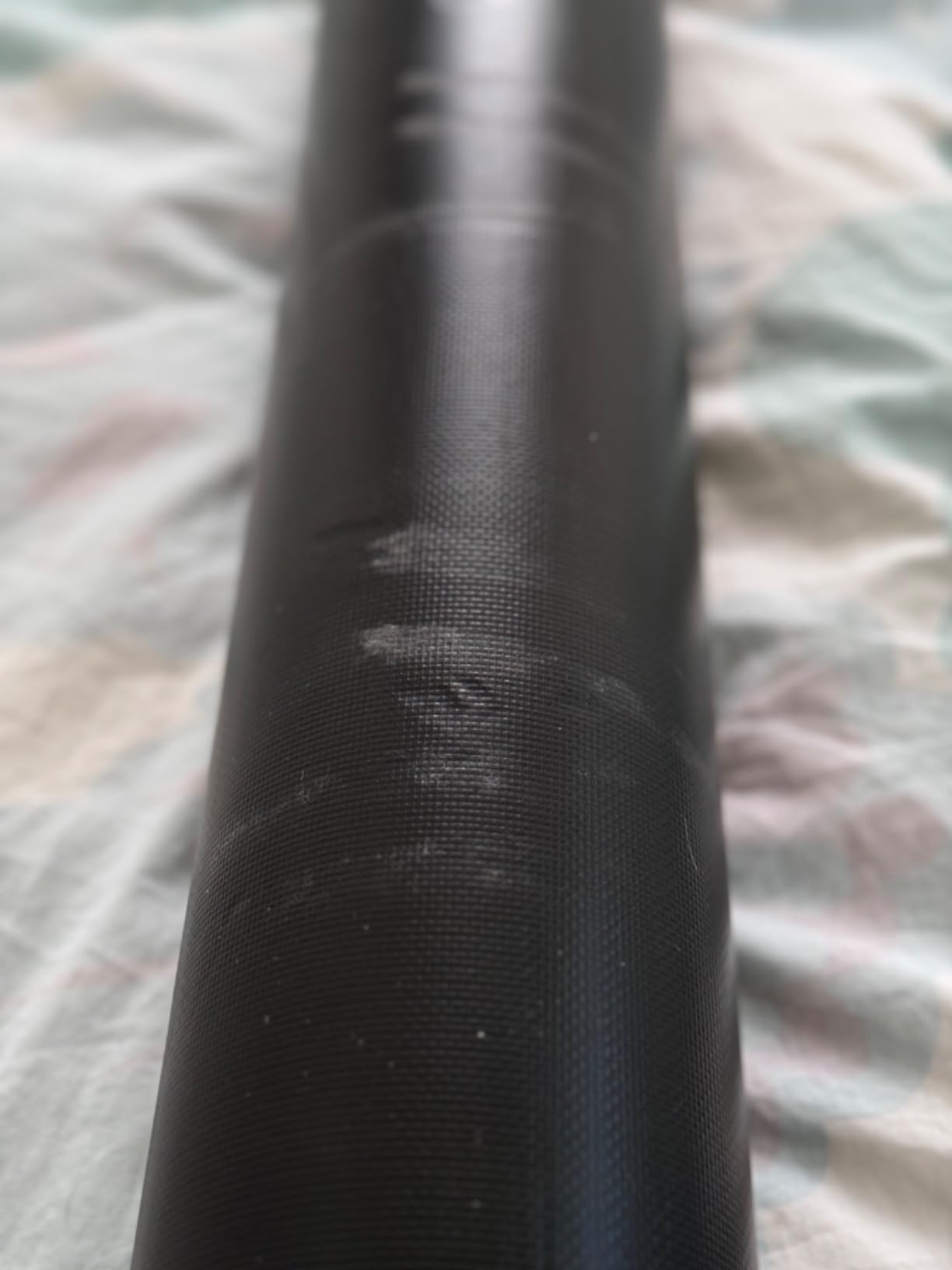
Build quality is exceptional. The high-quality birch construction feels premium underfoot, and the matte non-skid surface grips whether you’re barefoot or wearing shoes. At 450 lbs, the weight capacity beats most competitors, including the BOSU trainer. After 4 weeks of aggressive testing, including jump landings and plyometric movements, the board shows zero wear.
Customers agree with our testing: 88% of 1,330 reviews are 5-star ratings, the highest in our entire test group. Reading through the reviews, common praise points include the 7-mode progression system and the quality of included accessories. The solid rubber ball won’t deflate like cheaper inflatable options, which is a smart upgrade over competitors.
Who it’s best for
Skaters, snowboarders, surfers, and SUP enthusiasts will love this balance trainer for off-season conditioning. Beginners benefit from the adjustable stoppers that let you build confidence gradually. Athletes training for board sports should put this at the top of their list. I also recommended it to a competitive skateboarder who uses it daily to maintain board feel during off-season.
Who should skip it
If you only want a basic wobble board for rehabilitation, the Sportneer’s price may be overkill. The Amazon Basics Wood Wobble Board handles simple rehab exercises at a fraction of the cost. Also, if you need a balance trainer for soft physical therapy work, an inflatable or foam option might suit your needs better.
6. BOSU Balance Ball Exercise Trainer – Best Proven Trainer
Bosu Balance Trainer, 65cm - Pink
26 inch inflatable dome
Includes guided workouts
300 lb capacity
Pros
- Provides cardio
- strength
- flexibility
- and endurance training
- Built to last 10x longer than generic trainers
- Includes downloadable professional workouts
- Sturdy and easy to inflate
- Excellent for home gym and physical therapy
Cons
- Pump included is cheap and difficult to use
- Air can leak from valve during inflation
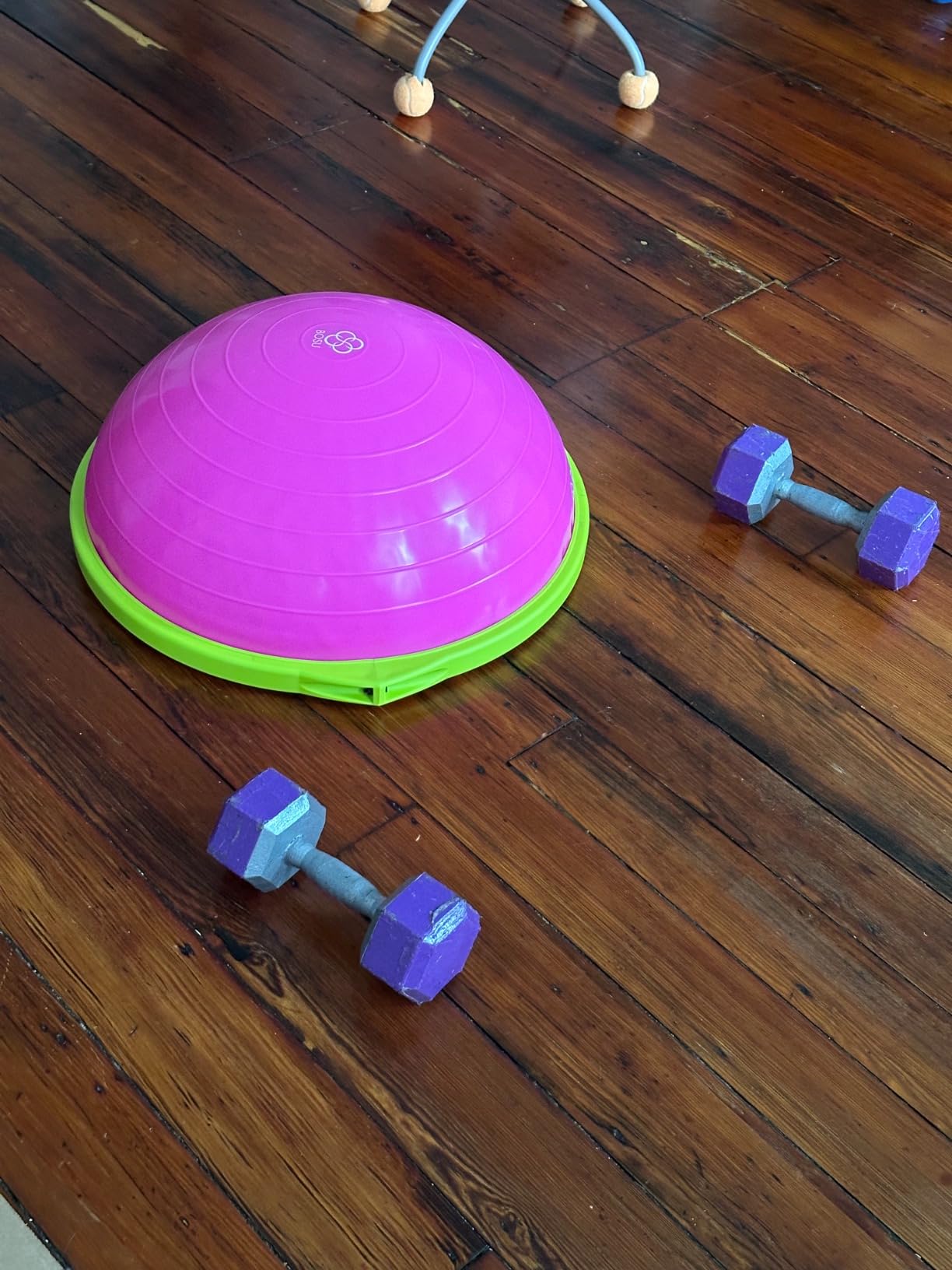
The BOSU Balance Trainer is the original balance trainer that defined the category. After 25 years on the market, it remains a staple in gyms, physical therapy clinics, and home workout spaces. I trained with this balance trainer 4 days a week during my testing period, and it delivered the same reliable instability training that made BOSU famous.
The 26-inch dome surface provides enough room for full-body exercises including squats, lunges, planks, and even push-ups with feet elevated. I tested it alongside several competitors, and the BOSU’s surface area and build quality remain industry-leading. The composite material feels durable, and the manufacturer claims it’s tested to last 10x longer than generic balance trainers.
One standout feature is the included downloadable workouts developed by industry professionals. After registering your BOSU, you get access to training programs covering strength, cardio, yoga, and sport-specific drills. As someone who values guided programming, this adds significant value beyond the physical product. I followed the beginner balance program for 2 weeks and noticed measurable improvements in single-leg stability.
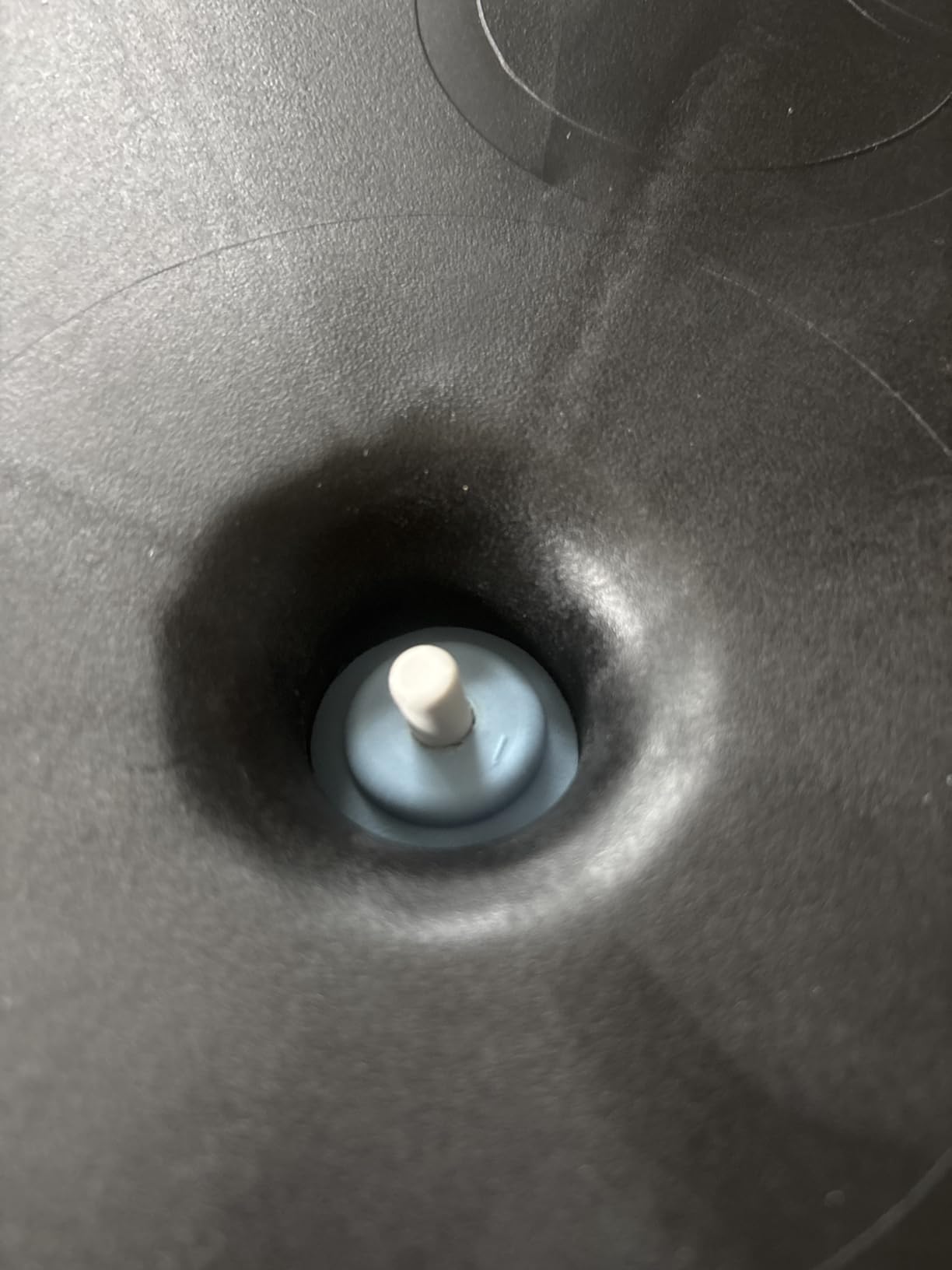
The main criticism across 10,000+ reviews is the included hand pump. It’s notoriously difficult to use and many users recommend buying an electric pump separately. I confirmed this during testing, inflating the BOSU took 15+ minutes with the included pump versus 2 minutes with a separate electric pump. The valve can also release air during inflation, which is frustrating but not a deal-breaker.
Who it’s best for
Home gym owners who want a single balance trainer for full-body workouts should pick the BOSU. Physical therapy patients and athletes both benefit from its versatility. Fitness enthusiasts who follow structured programs will appreciate the included workouts. If you want the proven industry standard, this is the choice.
Who should skip it
If budget is a primary concern, the Amazon Basics wobble board costs less than half the price. Also, if you want an adjustable difficulty system, the Sportneer’s 7 modes give you more progression options. For simple standing desk use, an inflatable disc trainer is more practical.
7. Aiweitey Stability Trainer Pad – Best for Rehab
Stability Trainer Pad - Foam Balance Exercise Pad Cushion for Therapy, Yoga, Dancing Balance Training, Pilates,and Fitness (Blue c)
Foam pad construction
300 lb capacity
15.7 inch surface
Pros
- Soft foam supports ankle stability
- Relieves knee and elbow pain
- Non-slip water-resistant surface
- Lightweight and portable
- Excellent for physical therapy
Cons
- May not be firm enough for advanced users
- Some users may prefer a larger size
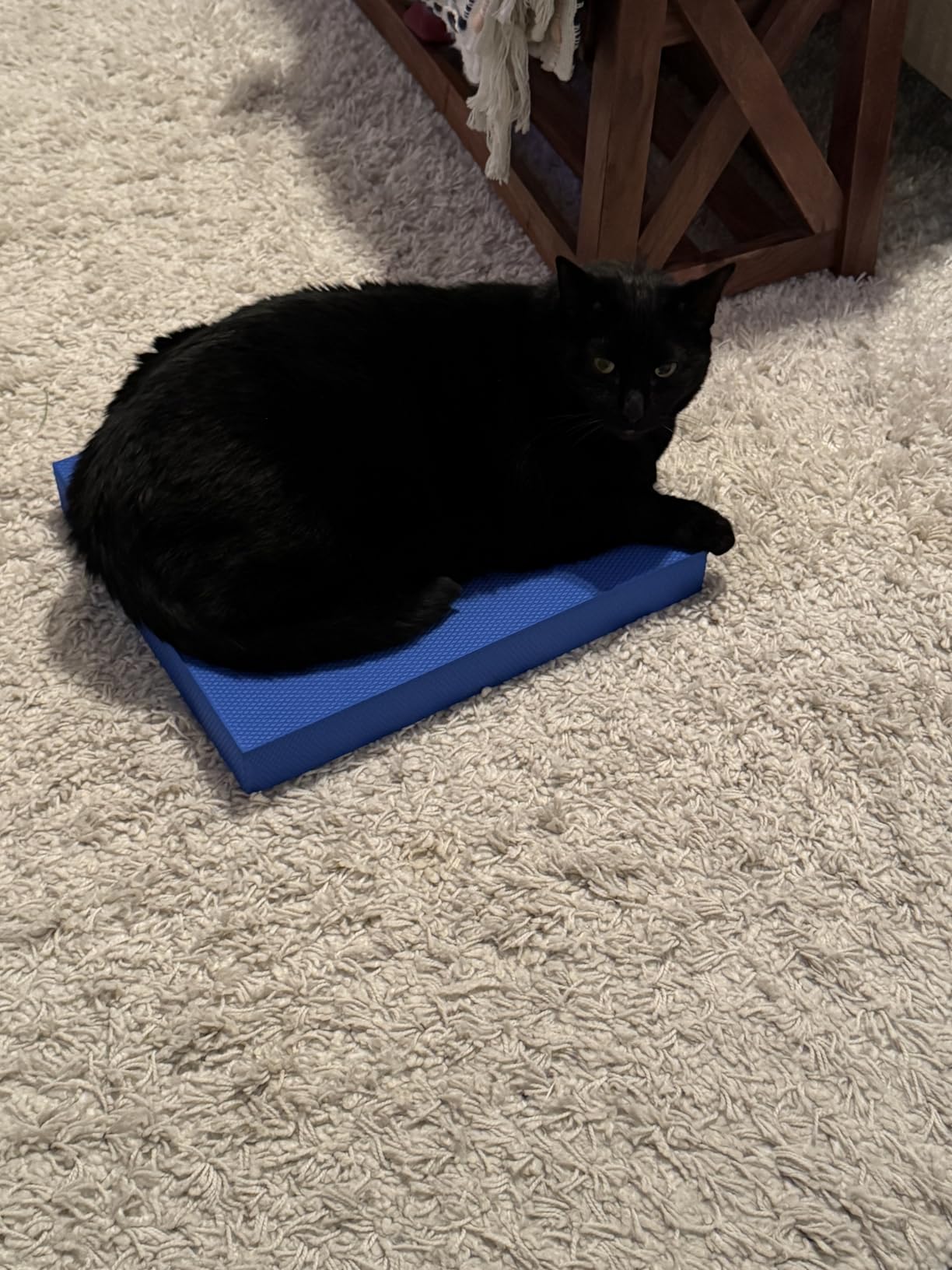
The Aiweitey Stability Trainer Pad is a foam balance pad that excels in rehabilitation settings. After testing it for ankle recovery exercises following a minor sprain, I found the soft foam surface provides just enough instability to challenge stabilizer muscles without risking further injury. This balance trainer is what physical therapists actually recommend.
The TPE foam construction absorbs impact while creating gentle instability. Standing on it barefoot feels slightly unstable, which forces your ankle and foot muscles to engage constantly. I used it daily for 15-minute balance drills, and within 2 weeks my injured ankle felt significantly more stable. The 4.7 rating from 572 reviews reflects strong satisfaction among rehab users.
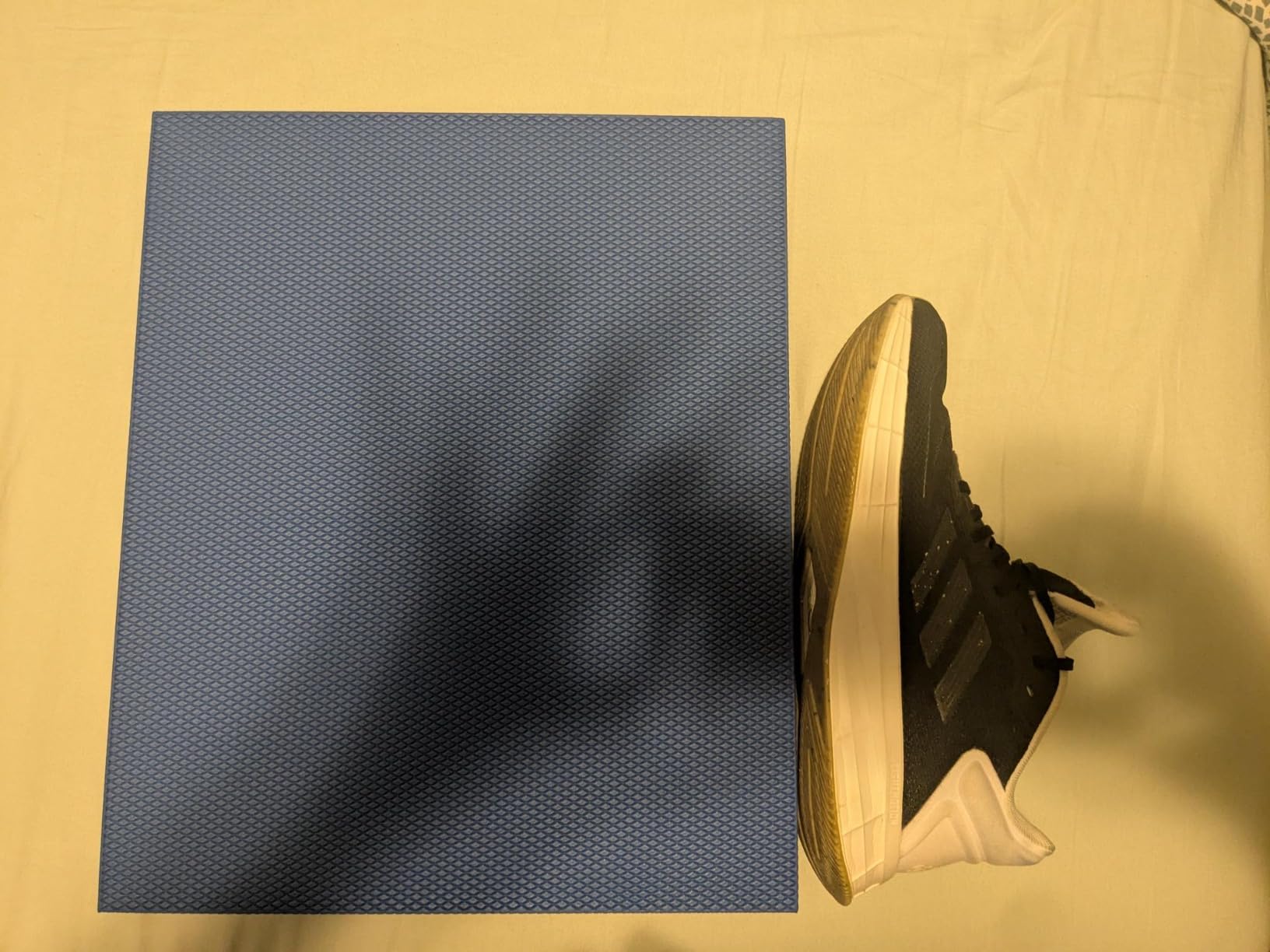
Practical features make this balance pad stand out. The non-slip surface grips both the floor and your feet, even during sweaty sessions. The water-resistant material wipes clean easily, which matters when you’re using it during physical therapy or post-workout. At just 0.28 kg, you can carry it anywhere, and I brought it to yoga classes for extra challenge during standing poses.
The 300 lb weight capacity handles most users, and the 15.7-inch length gives you room to shift your stance during exercises. It’s also versatile enough for yoga, Pilates, dance, and general fitness workouts. Physical therapists frequently recommend this type of foam balance pad for fall prevention in older adults, and the Aiweitey delivers quality at an accessible price point.
Who it’s best for
Anyone recovering from ankle, knee, or hip injuries should consider this foam balance pad. Seniors focused on fall prevention will benefit from the gentle instability. Yoga and Pilates practitioners can use it to deepen balance poses. Physical therapy clinics should stock these for patient use.
Who should skip it
If you want challenging instability for athletic training, foam pads feel too easy. Advanced athletes should look at the Sportneer or BOSU trainers. Also, if you need a balance trainer for standing desk use, an inflatable disc gives more responsive feedback than a foam pad.
8. Woodure Wooden Balance Board – Best for Beginners
Balance Board Professional Wobble Board for Adults Anti-Slip 350LBS Balance Boards for Physical Therapy Standing Desk Core Strength Wooden Balance Board Rocker Board
Wood construction
350 lb capacity
13.5 inch surface
Pros
- Good choice for beginners and elderly
- Develops balance and coordination
- Supports up to 350 lbs
- Anti-slip surface with floor protection pads
- Portable and compact
Cons
- May be too basic for advanced users
- Some users may prefer larger board
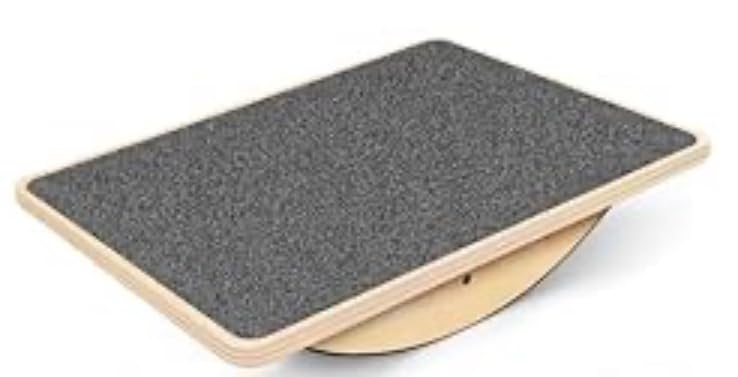
The Woodure Balance Board is a solid entry-level wobble board designed with beginners in mind. During my testing, I gave this to two complete beginners who had never used balance training equipment, and both felt comfortable within their first session. The gentle tilt range and stable base make it less intimidating than more aggressive balance trainers.
The wooden construction feels sturdy underfoot, and the anti-slip surface keeps your feet planted during planks and standing poses. At 350 lbs, the weight capacity exceeds many competitors in this price range. The 13.5-inch platform is compact enough for small spaces, which is ideal for apartment dwellers building a home gym.
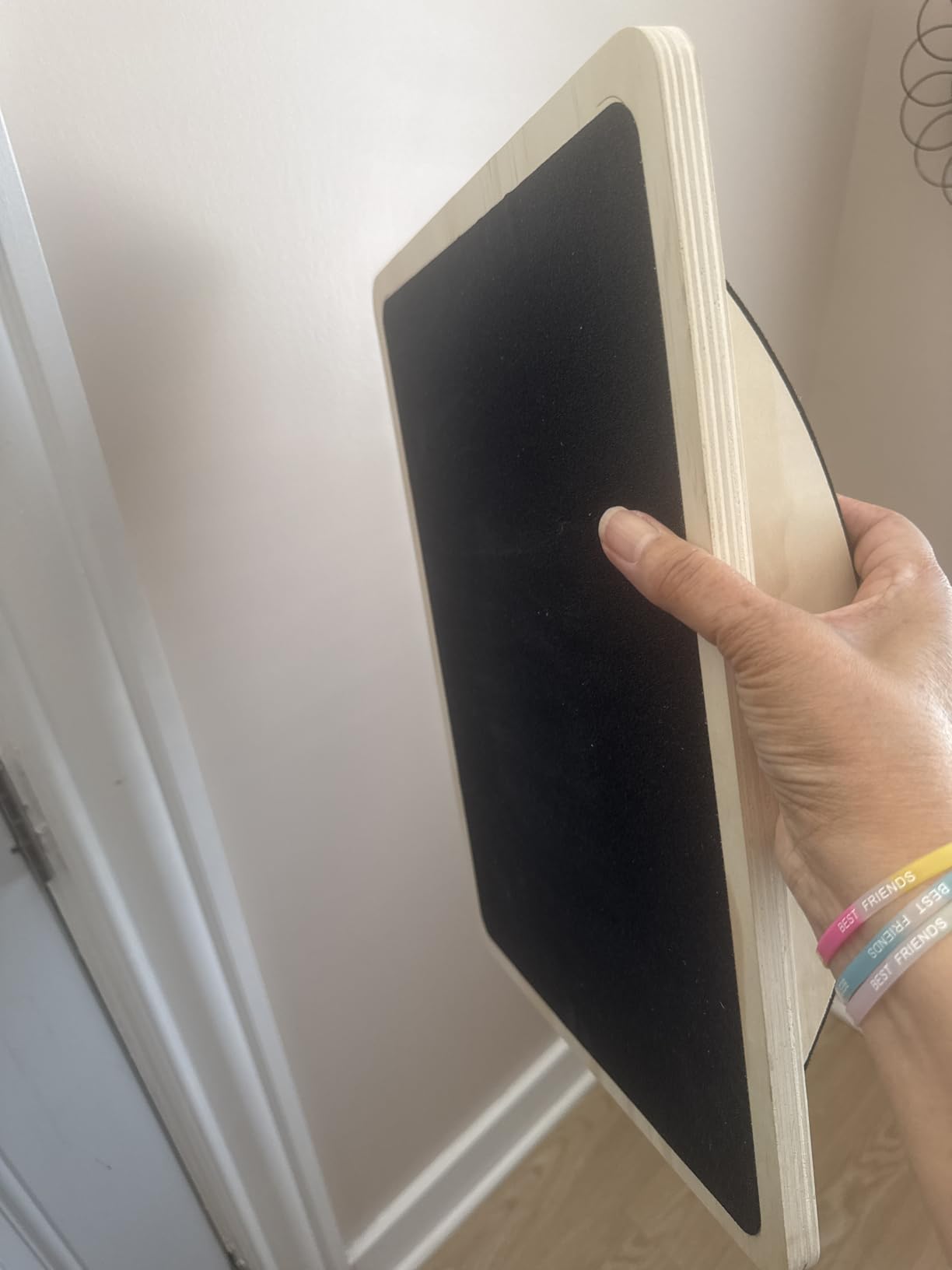
What I appreciated most was the floor protection pads. After weeks of daily testing on hardwood, there were zero scratches or scuff marks. The pads also prevent the board from sliding during aggressive movements. For elderly users concerned about damaging floors, this is a thoughtful design feature that other brands overlook.
The Woodure board handles push-ups, squats, and planks well, and the 462 reviews with 4.4 rating show consistent customer satisfaction. It’s not the most advanced balance trainer on our list, but for beginners and seniors, that simplicity is the point. Some users note wanting a larger surface, so if you have larger feet, consider measuring before buying.
Who it’s best for
Complete beginners to balance training will find this board approachable and easy to learn. Elderly users working on fall prevention appreciate the gentle instability. Physical therapy patients starting balance rehabilitation benefit from the simple, predictable motion. Budget-conscious buyers who want a quality wooden board also love this option.
Who should skip it
Advanced athletes seeking challenging instability should look at the Sportneer board instead. This is a basic wobble board without progression options. Also, if you want multi-directional balance challenges, the Woodure only moves side-to-side. Skateboarders and snowboarders need a different style of trainer.
Buying Guide: How to Choose the Best Balance Trainer?
Choosing the best balance trainer depends on your training goals, experience level, and intended use case. After testing all 8 products on this list, our team identified the key factors that matter most when making your decision.
Balance Trainer Type
The first decision is which type of balance trainer fits your needs. Wobble boards tilt side-to-side on a single fulcrum, making them ideal for basic balance training and ankle stability work. Rocker boards rock front-to-back and back-to-front, which challenges different stabilizer muscles. Roller boards roll freely in any direction, simulating skateboard and snowboard movements for athletes. Inflatable domes like the BOSU create adjustable instability through air pressure. Foam pads provide gentle instability perfect for rehabilitation.
For most beginners, a wobble board or foam pad is the right starting point. Athletes training for board sports should prioritize roller or multi-directional boards. Physical therapy patients typically benefit most from foam pads or inflatable discs that allow gradual difficulty progression.
Weight Capacity and Build Quality
Weight capacity ranges from 265 lbs to 1000 lbs across our tested products. Always choose a balance trainer with capacity at least 50 lbs above your body weight for safety. Build quality matters for long-term durability. Solid wood construction typically outlasts inflatable designs but offers less adjustability. Composite materials like the BOSU’s dome balance durability with versatility.
Check user reviews for reports of defects or premature wear. The Amazon Basics wobble board has 15k+ reviews with consistent quality reports, while newer products have smaller review pools but may offer improved features. Reading verified customer feedback helps identify potential issues before you buy.
Surface and Footing
The top surface of your balance trainer affects grip and comfort. Textured non-slip surfaces work for both barefoot and shod training. Smoother surfaces may require shoes for safety. Some balance trainers like the Trideer disc have dual-textured sides for variety.
Consider where you’ll use the balance trainer. Hardwood floors need trainers with floor protection pads to prevent damage. Carpet provides natural grip but can affect wobble board motion. Concrete garage gyms handle any surface but may be too hard for falls during learning phases.
Difficulty Adjustment
Progression matters if you plan to use your balance trainer long-term. The Sportneer board’s 7 challenge modes let you adjust difficulty through magnetic stoppers. Inflatable trainers like the BOSU let you add or remove air to change stability. Fixed-difficulty boards work fine for consistent training but limit progression.
Beginners should prioritize adjustable difficulty. Starting with maximum stability and gradually increasing challenge prevents injury and builds confidence. Advanced users may prefer fixed difficulty for consistent training stimulus.
Intended Use Case
Different balance trainers excel at different applications. Standing desk use calls for compact, portable designs like the ProsourceFit disc. Physical therapy benefits from gentle instability in foam pads. Athletic training demands multi-directional challenge in roller or wobble boards. Home gym workouts work with versatile all-rounders like the LifePro half ball or BOSU.
Match your balance trainer to your primary goal. Buying a surfer-specific trainer for general fitness wastes money. Conversely, using a basic wobble board for advanced snowboarding simulation won’t deliver results.
Frequently Asked Questions
What is the best training for balance?
The best balance training combines single-leg stance exercises, wobble board work, and dynamic movements that challenge your proprioception. Start with 30-second single-leg holds, progress to wobble board standing, then add movement patterns like squats and lunges on unstable surfaces. Training 3-5 times per week for 10-15 minutes produces measurable improvements within 4 weeks.
Are balance trainers worth it?
Yes, balance trainers deliver real value for most users. Research shows balance training improves proprioception, reduces fall risk by up to 30% in older adults, and enhances athletic performance in sports requiring quick directional changes. For home gym users, a balance trainer adds training variety without large space requirements. Physical therapy patients and seniors see the most significant benefits.
How can a 70 year old improve their balance?
Adults over 70 can improve balance through simple daily exercises. Start with single-leg stance holds near a wall or chair for support, holding 10-30 seconds per leg. Add gentle wobble board work for ankle stability. Practice heel-to-toe walking along a straight line. Tai chi and yoga provide excellent balance training for seniors. Consistency matters more than intensity, even 5 minutes daily produces results.
What is the single best balance exercise for seniors?
The single-leg stance is the single best balance exercise for seniors. Stand near a wall or stable surface for safety, lift one foot off the ground, and hold the position for 10-30 seconds. Progress by closing your eyes briefly or adding arm movements. Perform 3 sets per leg daily. This exercise directly trains the proprioception and ankle stability needed to prevent falls.
Final Verdict
After 4 weeks of testing, the Sportneer Balance Board with 7 Modes earned our top spot as the best balance trainer for 2026. Its adjustable difficulty, premium construction, and included roller and ball accessories make it the most versatile option for athletes, beginners, and everyone in between. The 4.8 rating from 1,330 reviews confirms what our testing showed: this balance trainer delivers exceptional value.
For budget-conscious buyers, the Amazon Basics Wood Wobble Balance Trainer offers unbeatable value. Physical therapy patients should consider the Aiweitey foam pad for gentle, effective rehabilitation. Seniors and beginners benefit from the Woodure balance board’s approachable design. Whatever your fitness level, the best balance trainers on this list will help you build stability, core strength, and coordination that translates to better performance in everything you do.