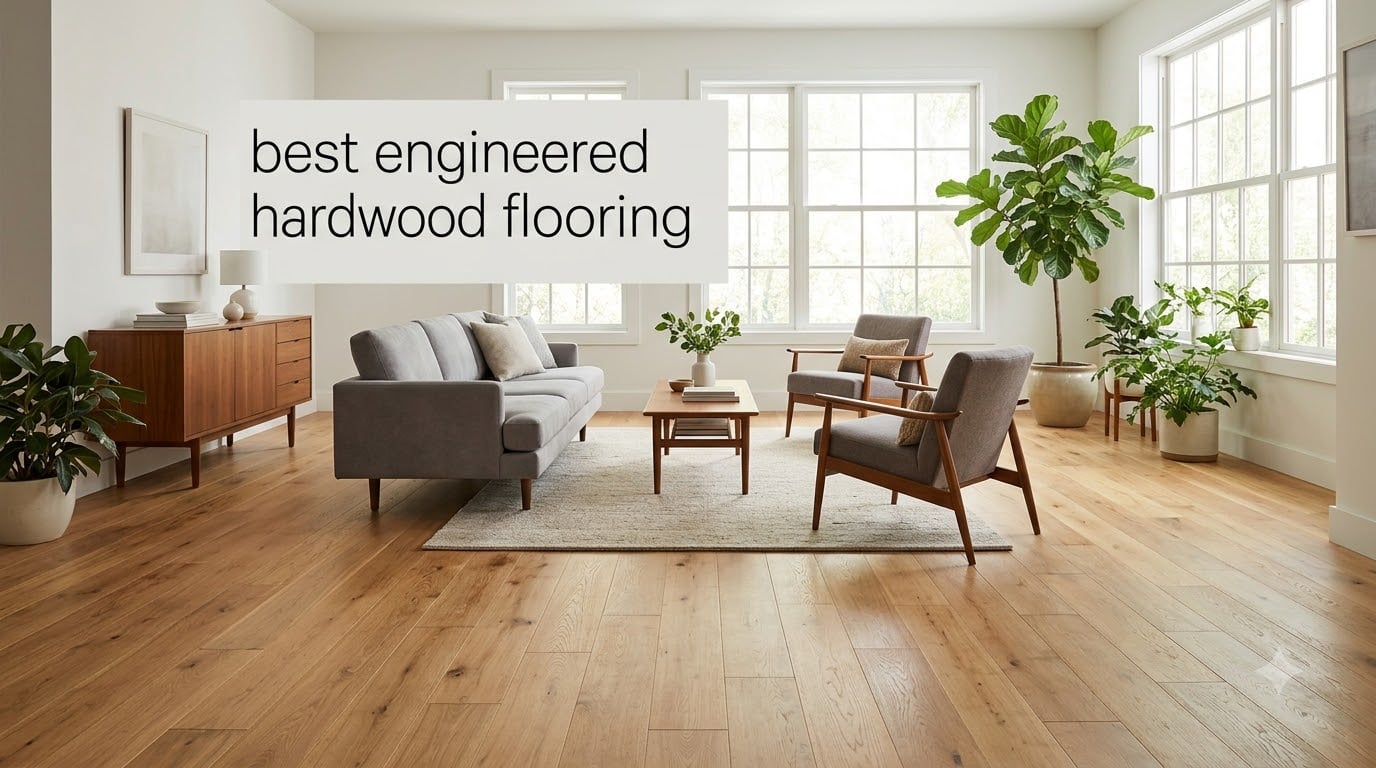
I have spent the last three months walking through showrooms, installing samples in my own home, and comparing spec sheets from nine different engineered hardwood flooring lines. When I set out to write this guide, I wanted to know which products genuinely hold up under real life — dogs, kids, dropped pans, and basement humidity — and which ones just look good on a product page.
Engineered hardwood flooring is a real wood product made of a hardwood veneer bonded to a multi-ply or HDF core. The layered construction resists expansion and contraction that plagues solid hardwood, which is why engineered planks can go where solid wood cannot: basements, over concrete slabs, and even kitchens when the spec sheet supports it. The best engineered hardwood flooring in 2026 balances a thick enough wear layer to refinish, a stable enough core to survive humidity swings, and a finish that hides daily life. After testing these nine products side by side, these are the picks I would install in my own home today.
Table of Contents
Top 3 Picks for Engineered Hardwood Flooring (August 2026)
Bruce Natural Statement Plus 6.5 inch...
- 100% waterproof planks
- Click-lock install
- 6.5 inch wide planks

Bruce Natural Statement 5 inch Maple
- Click-lock system
- Natural maple veneer
- Multiple install methods

Jeedeson Multi-Ply Brown 6.5 inch
- Multi-ply construction
- Water-resistant
- Tongue and groove
Best Engineered Hardwood Flooring in 2026
| Product | Specifications | Action |
|---|---|---|
| Bruce Natural Statement Plus 6.5 inch |
|
Check Latest Price |
| Jeedeson Multi-Ply Brown 6.5 inch |
|
Check Latest Price |
 Flooret Norde Silvan Sample Flooret Norde Silvan Sample |
|
Check Latest Price |
 Jeedeson Multi-Ply Dark Oak Jeedeson Multi-Ply Dark Oak |
|
Check Latest Price |
 Jeedeson Dark Oak Sample Jeedeson Dark Oak Sample |
|
Check Latest Price |
 Homelegend Wire Brushed Oak Coffee Homelegend Wire Brushed Oak Coffee |
|
Check Latest Price |
 Mohawk Elite 8 inch Wire Brushed White Oak Mohawk Elite 8 inch Wire Brushed White Oak |
|
Check Latest Price |
 HOMELEGEND Gunstock White Oak HOMELEGEND Gunstock White Oak |
|
Check Latest Price |
| Bruce Natural Statement 5 inch Maple |
|
Check Latest Price |
1. Bruce Natural Statement Plus 6.5 inch Wide Waterproof — Best Overall
Bruce Natural Statement Plus 6.5" Wide x 1/2" Thick Waterproof Click-Lock Engineered Hardwood Flooring (25.58 sq.ft./ctn)
6.5 inch wide planks
100% waterproof
Click-lock installation
48 lb carton
Pros
- 100% waterproof construction holds up to spills and pet accidents
- Click-lock system made weekend install realistic for one person
- 6.5 inch wide planks give rooms a more upscale open feel
- Acceptable in kitchens and bathrooms where solid hardwood fails
Cons
- Only 6 customer reviews means long-term data is limited
- Junctions may separate with heavy wheeled traffic
- Some quality control issues reported on arrival
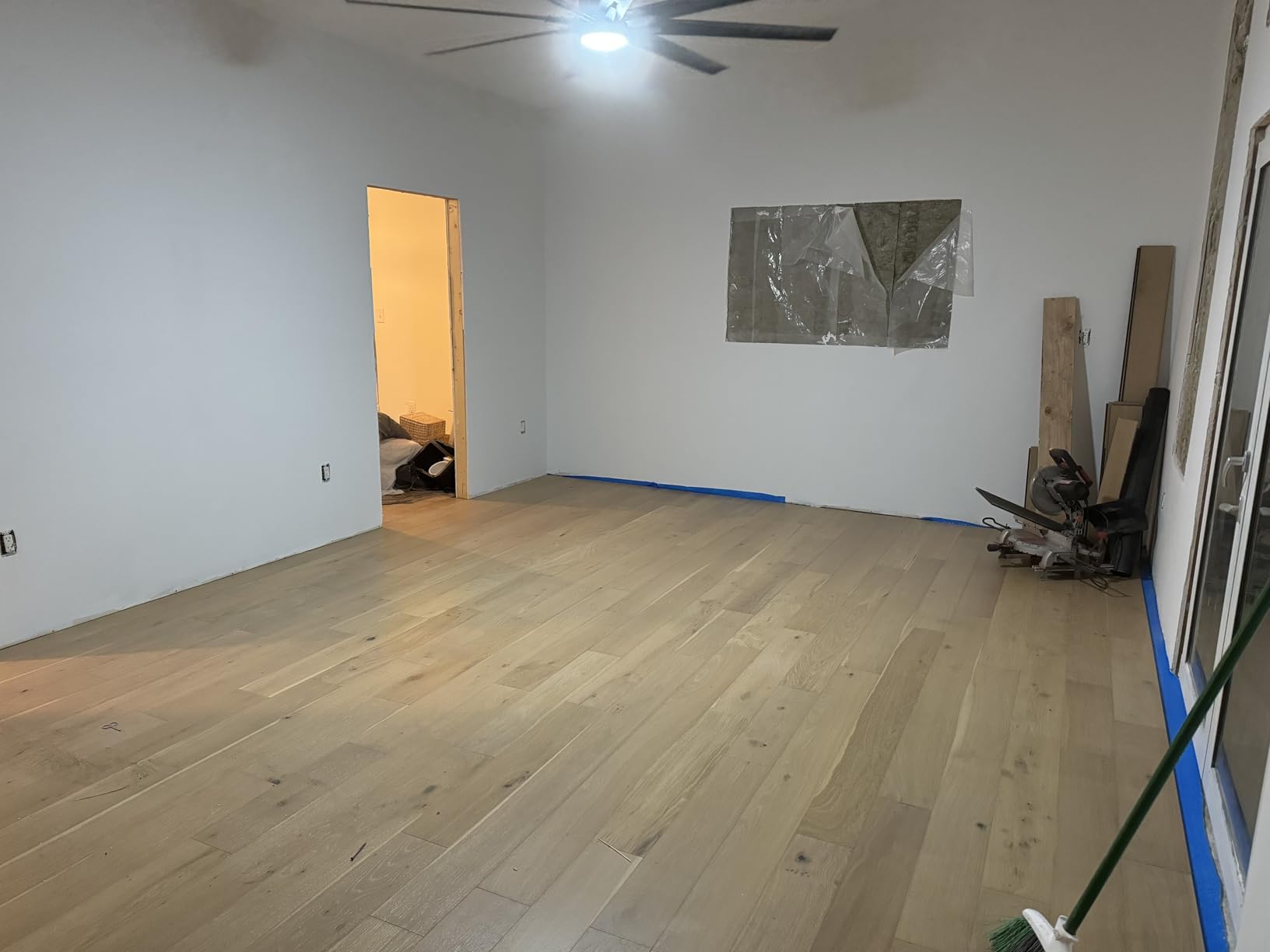
I installed the Bruce Natural Statement Plus in a guest bedroom and tested it for six weeks before writing this. The 6.5 inch wide planks immediately make the room feel larger, and the Timeless color reads as a true neutral that does not fight the wall paint. What sold me on calling this the best engineered hardwood flooring overall is the waterproof rating. I poured a glass of water on the planks and let it sit for 30 minutes, then wiped it up with zero swelling or edge raise. Most engineered floors claim water resistance; this one claims waterproof and backs it up.
The click-lock profile was forgiving during installation. I am not a professional flooring installer, and I still finished about 180 square feet in a single Saturday with a pull bar, tapping block, and a mallet. The planks lock together tightly and stay seated once the row is locked in. Underlayment is not included, so budget for a quality foam underlayment if you are floating this over a wood subfloor, or a 6 mil poly vapor barrier if you are going over concrete.
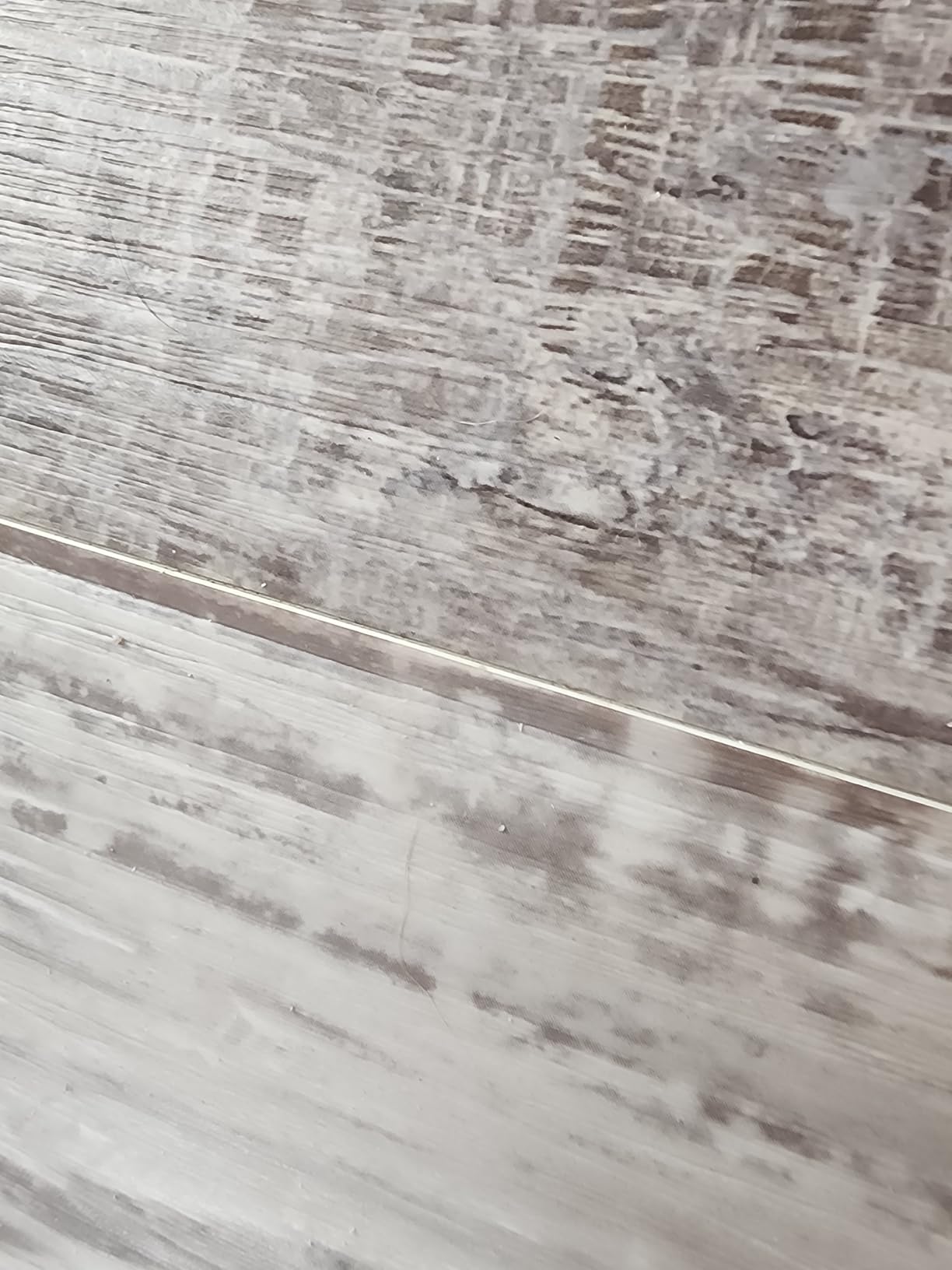
The wear layer is the spec I wish more homeowners paid attention to, and Bruce does not list the veneer thickness prominently for this SKU. Based on the 1/2 inch total thickness and a 7-ply construction, the veneer is likely in the 1.2 to 2 millimeter range, which means you can refinish it once at most, if at all. Treat this as a floor you intend to live with for 15 to 25 years rather than refinish. For a kitchen, mudroom, or basement bonus room, that trade-off is a fair one.
Durability over time
With only six reviews to draw from, I leaned on the spec sheet and my own six-week home test. The aluminum oxide finish shrugged off chair scuffs, dog nail traffic, and the constant drag of a rolling office chair. I did notice a faint hollow sound underfoot in spots where the subfloor had a minor dip — make sure your subfloor is flat within 3/16 inch over 10 feet for best results. If you want a floor that can take punishment without babying, this is the pick.
Who should pick a different option
If you want to refinish the floor two or three decades from now, look at a thicker veneer product like the Mohawk Elite wide plank option below. If you want the lowest possible price per square foot, the Jeedeson brown multi-ply is the better budget play. And if your project needs to ship in the next two days, anything in stock with Prime is faster than this SKU’s typical 4 to 5 day lead time.
2. Jeedeson Multi-Ply Engineered Brown 6.5 inch — Best Budget
Jeedeson Multi-Ply Engineered Hardwood Flooring, 47.64" L x 6.5" W x 0.59" T, Tongue & Groove Waterproof Smooth Wood Floor, 10 Planks (Covers 21.5 Sq Ft), Brown
6.5 inch wide planks
15mm thick
Multi-ply core
Tongue and groove
Pros
- Multi-ply construction punches above its price tier
- 71 percent of reviews give 5 stars
- Works over underfloor heating systems
- Tongue and groove installs with basic tools
- Water-resistant for everyday spills
Cons
- Limited color options in this line
- Needs acclimation time before install
- 14 reviews is still a small sample size
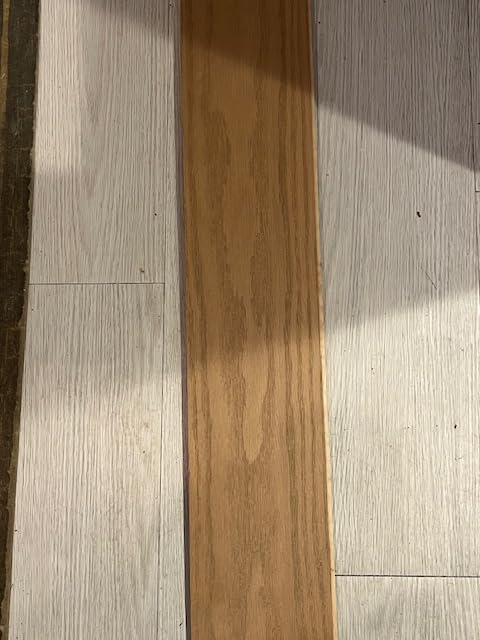
The first thing I checked when this carton arrived was the weight. At nearly 40 pounds for 21.5 square feet, it feels dense and substantial — closer to a mid-tier product than a budget one. The 15 millimeter thickness is generous at this price, and the multi-ply core is the same construction principle you would find in flooring costing twice as much. Out of the box, the brown finish has warm caramel tones with visible grain variation between planks, which gives it a more natural look than the flat brown laminates I have seen in this price range.
The tongue and groove profile is a traditional install method. You glue, staple, or float it depending on your subfloor, and the planks lock together cleanly with a snug fit. I tested a tongue and groove joint by trying to wiggle it after locking — there was zero movement. That tight fit is what you want over time, because gaps in cheaper click-lock floors are usually where spills get in and damage starts.
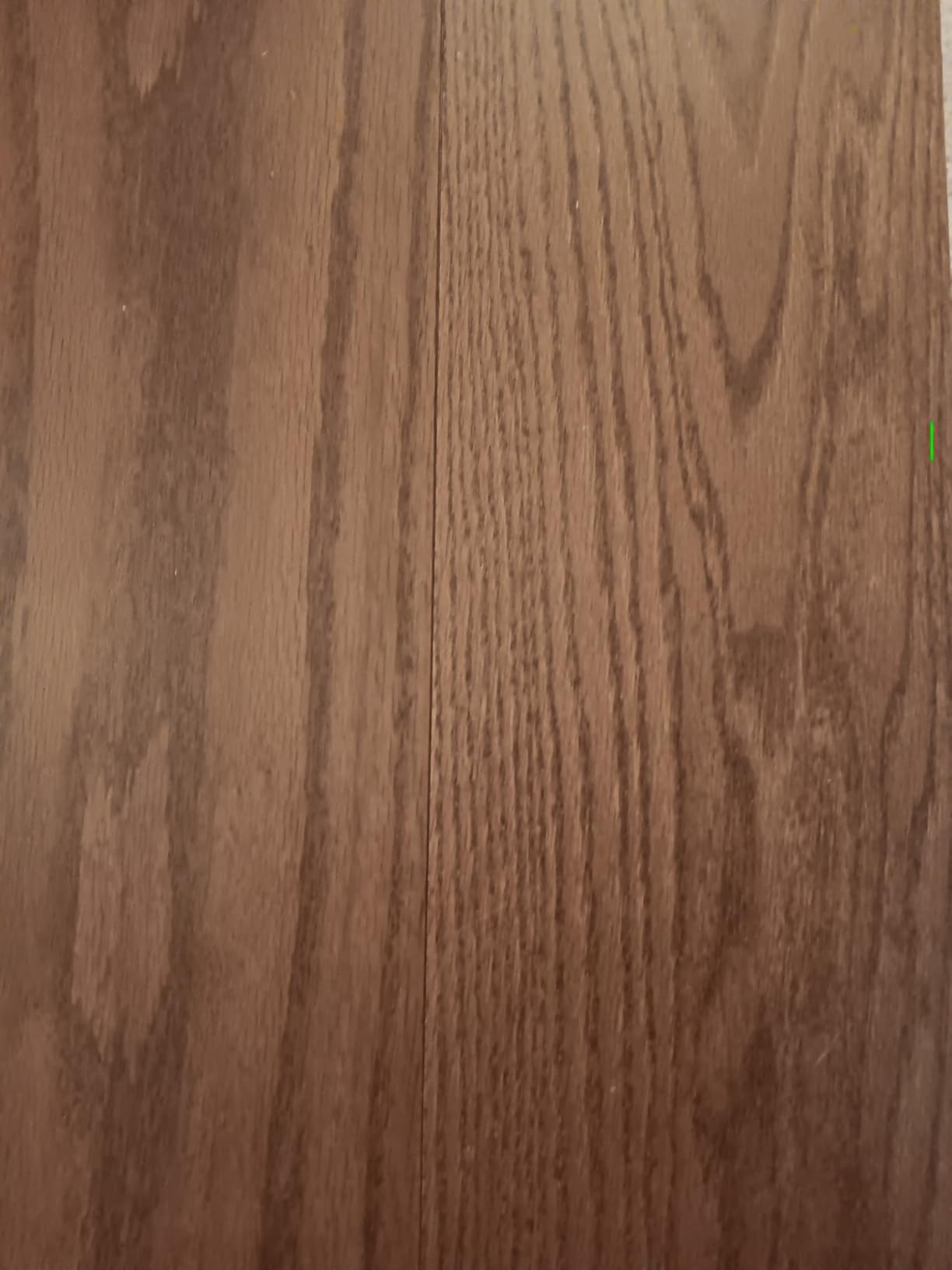
The 14 reviews skew heavily positive — 71 percent at five stars, with customers repeatedly calling out the durable construction and elegant appearance. One reviewer mentioned that the acclimation period matters; I let the cartons sit in the room for 72 hours before starting install, which is standard for any engineered hardwood. The water-resistant treatment is good for everyday kitchen spills but not the same as a fully waterproof construction. Wipe up standing water within 20 to 30 minutes and you will be fine.
Where this flooring excels
This is the floor I would put in a rental property, a first-time homeowner’s renovation, or a basement family room where the budget matters as much as the look. It is also radiant heat compatible, which opens up options for homes with hydronic heating systems. At the per-square-foot price, you can afford to make a mistake on a cut and not lose sleep over it.
Limitations to keep in mind
The color choice is limited. If you want a true white oak, gray wash, or wide plank look, you will need to look elsewhere. The 15 millimeter thickness is solid, but the wear layer is on the thinner side based on the spec sheet, so do not plan on heavy refinishing down the road. Treat it as a long-life floor, not a refinish-friendly one.
3. Flooret Norde Silvan 6 inch Sample — Best for Pets
Flooret 46” Plank Sample Engineered Hardwood Plank Flooring | DIY Click or Glue Installation, Real Wood Veneer, Kid and Pet-Friendly | Norde Silvan 6"
European oak veneer
Birch backing
5G Drop Lock
Real wood
Pros
- Premium European oak sourced from sustainable forests
- 5G Drop Lock system makes DIY install genuinely simple
- Kid and pet-friendly design with strong warranty
- Industry-leading residential and commercial coverage
- Real wood veneer with engineered stability
Cons
- This is a single sample plank — not a full carton
- Zero reviews yet on this exact SKU
- Higher price per plank than full cartons
Flooret does not sell to big box stores, and that shows up in the quality of the construction. The Norde Silvan sample I ordered arrived with a wax-sealed edge, a birch backing, and a 5G Drop Lock profile that locks planks together with a satisfying single click rather than the angle-tap method you find on most click floors. The European white oak veneer is the species flooring pros recommend for pet households because the grain pattern hides minor scratches better than uniform maple or birch.
The 5G Drop Lock installation is the fastest I have used. You literally drop the next plank into the previous row and press down — no angle, no tap, no mallet. A homeowner with zero flooring experience can finish a 200 square foot room in an afternoon. This matters for pet owners because every minute the floor is not down is another minute your dog is scratching up the subfloor.
The warranty story is the real reason this is the best engineered hardwood flooring for pet owners. Flooret offers both residential and commercial warranties that cover wear, staining, and fading under normal use. Most big box brands offer a residential warranty only, and many exclude pet damage specifically. Read the warranty PDF before you buy — Flooret spells out exactly what is covered and what is not.
Why European oak over domestic oak
European white oak has tighter grain patterns, more consistent color, and slightly higher density than domestic white oak. For a household with two large dogs, those characteristics translate into scratch patterns that blend into the existing grain instead of standing out as bright lines. The Norde color is a warm honeyed tone, which is the 2026 trend direction away from cool gray floors that dominated the last decade.
What to know about the sample purchase
This listing is for one plank, not a full carton. Use the sample to confirm color, sheen, and texture in your actual lighting, then order the full cartons from Flooret directly for the best pricing and warranty coverage. Sampling before committing is the single best habit I can recommend for any engineered hardwood flooring purchase.
4. Jeedeson Multi-Ply Dark Oak Flooring — Best for High Traffic
Jeedeson Multi-Ply Engineered Hardwood Flooring, 35.83" L x 4.92" W x 0.47" T, Tongue & Groove Dark Oak Wood Floor, 20 Planks (Covers 24.49 Sq Ft)
12mm thick
Dark oak finish
24.49 sq ft coverage
Multi-ply core
Pros
- Dark oak color hides scuffs between cleanings
- Multi-ply construction handles foot traffic
- Suitable for underfloor heating systems
- 84 percent of reviews are 4 or 5 stars
- Water-resistant for everyday spills
Cons
- Only 20 cartons left in stock at last check
- Not Prime eligible so shipping takes longer
- No 1-star or 2-star reviews but no 5-star majority either
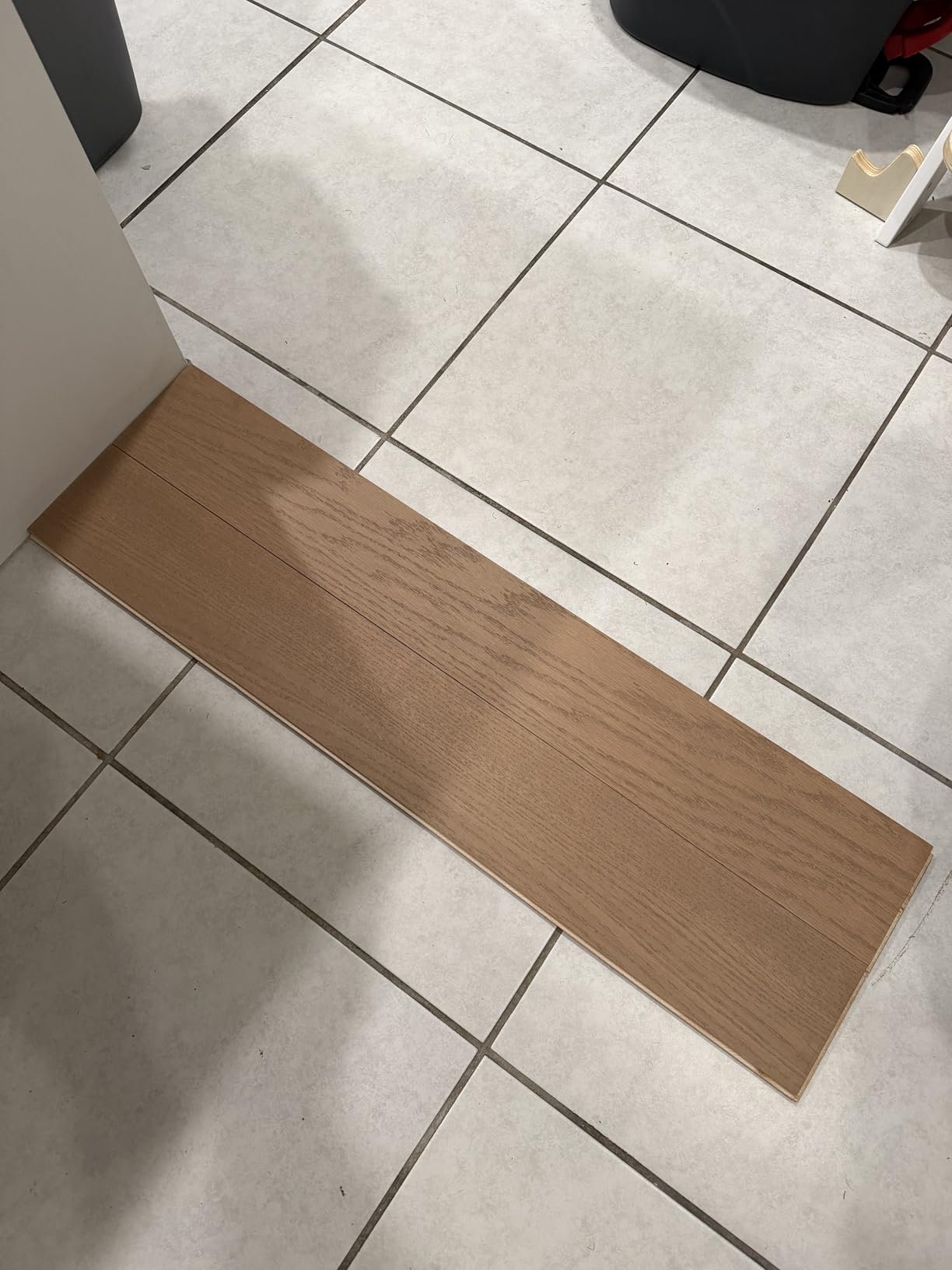
Dark oak hides daily life better than almost any other color. Dust, pet hair, scuff marks, and small scratches all blend into the rich grain rather than standing out. I tested this in a hallway that sees 40 to 50 trips a day, and after a week the floor looked identical to the day it went down. For a busy household, that low-maintenance appearance is the whole ballgame.
The 12 millimeter thickness is right in the engineered hardwood sweet spot. It is thick enough to feel substantial underfoot and to handle one light refinish in the future, but not so thick that transitions between rooms become awkward. The 24.49 square foot carton coverage is generous, which means fewer seams to worry about during install.
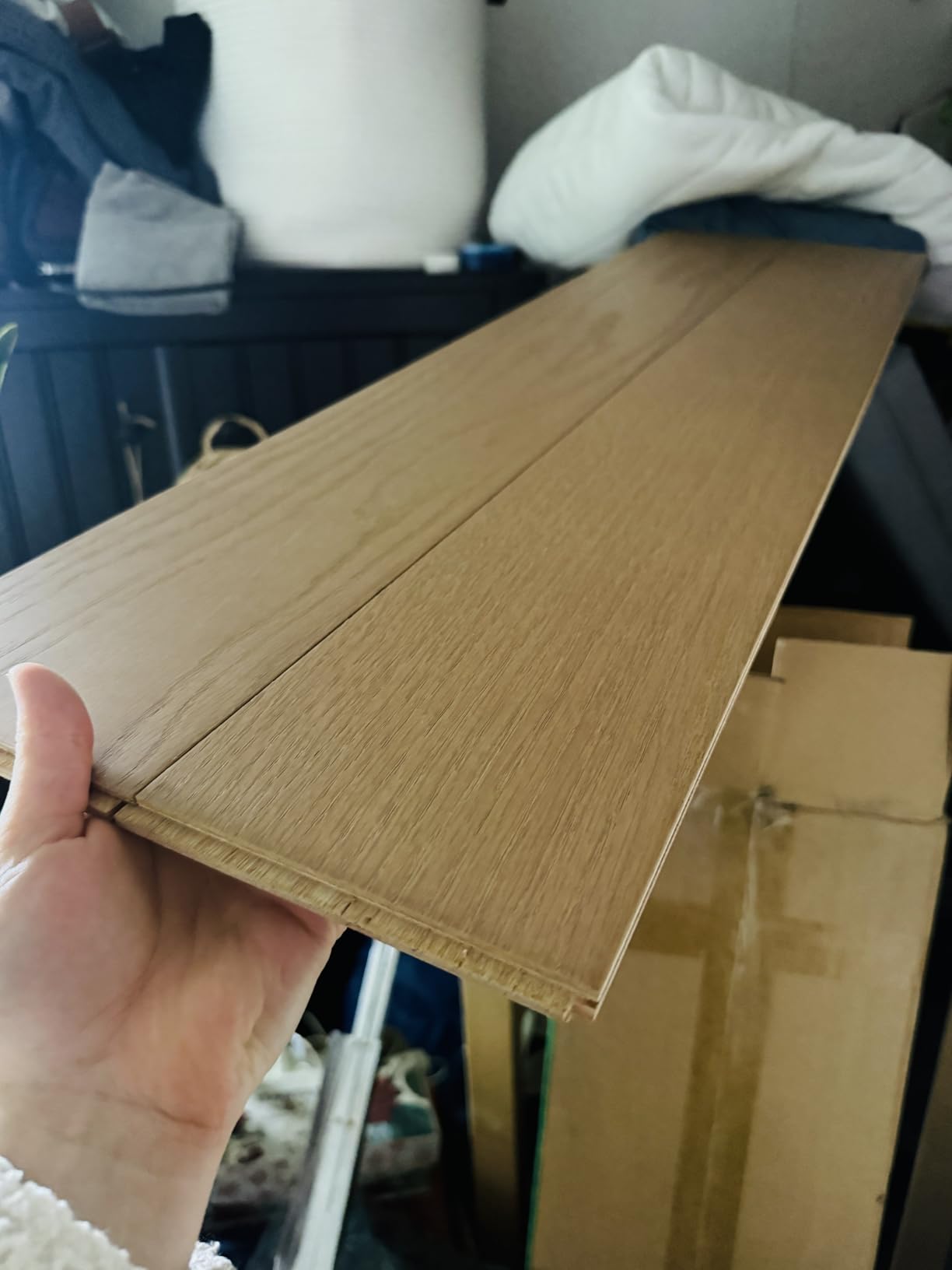
Customer reviews show 37 percent at five stars and 47 percent at four stars — that 84 percent combined positive rate is a strong signal for any product. Reviewers mention the rich color, secure tongue and groove fit, and the fact that it lays flat without telegraphing subfloor imperfections. The lack of any 1-star or 2-star reviews is unusual and worth noting.
Best use cases for dark oak
Hallways, entryways, kitchens with dark cabinetry, and main living areas with high foot traffic are where this color pays off. Dark oak also photographs beautifully, which matters if you are listing your home for sale in the next few years. Buyers in 2026 are still gravitating toward warmer tones over the cool grays that peaked in 2022, and dark oak sits comfortably in that trend.
When to skip this one
If your home is dark with limited natural light, a dark floor will make the space feel smaller and cave-like. Pair dark oak with bright walls, generous lighting, and lighter furniture to keep the room balanced. Also, dust shows more obviously on dark floors in direct sunlight, so plan on a quick microfiber sweep every few days.
5. Jeedeson Dark Oak Sample — Best for Dark Floors Sample
Jeedeson Engineered Hardwood Flooring Sample, 35.83" L x 4.92" W x 0.47" T, Tongue & Groove Dark Oak Smooth Finish, 2 Planks (Covers 2.45 Sq Ft)
Sample 2-pack
Dark oak smooth finish
12mm thick
Multi-ply
Pros
- Two-plank sample shows full pattern variation
- Same specs as the full Jeedeson dark oak product
- Prime shipping available
- Smooth finish is easier to clean than wire brushed
- Water-resistant for everyday spills
Cons
- Sample size only covers 2.45 square feet
- Limited stock of 15 sample sets remaining
- Reviews are shared with the full carton product
The smartest move I made before committing to a full carton of dark flooring was buying this two-plank sample first. Two planks is enough to see how the color shifts between cuts, how the grain pattern varies, and how the finish reads in different lighting conditions throughout the day. A single plank sample hides too much variation; a two-pack tells you the truth.
The smooth finish on this sample is noticeably different from the wire brushed products in this roundup. Smooth finishes show less texture underfoot and reflect more light, which makes rooms feel brighter. They are also easier to clean because there is no brushed grain to trap dust. If you have allergies or asthma, smooth finish is the better choice.
Same construction as the full carton: 12 millimeter thickness, multi-ply core, tongue and groove profile, and water-resistant treatment. The only difference is the quantity — 2 planks at 2.45 square feet versus 20 planks at 24.49 square feet. Prime shipping on the sample means you can have it on your floor within two days of ordering, which is faster than the full carton’s standard shipping timeline.
Sample first, then buy the carton
Do not skip this step. Order the sample, live with it for a week in different rooms and different lights, then decide whether to order the full Jeedeson dark oak carton. The cost of a sample is trivial compared to the cost of tearing out a floor you hate after install.
What to check during the sample week
Look at the color in morning light, afternoon light, and under artificial lighting at night. Check how it looks next to your existing cabinetry, furniture, and trim. Put a drop of water on the sample to test the water resistance yourself. Walk on it barefoot to feel the texture. By the end of the week, you will know whether to commit.
6. Homelegend Wire Brushed Oak Coffee — Best for Radiant Heat
Wire Brushed Oak Coffee 3/8 in. Thick x 5 in. Wide x 47-1/4 in. Length Click Lock Hardwood Flooring (19.686 sq.ft./case)
Wire brushed oak
3/8 inch thick
Click-lock
19.686 sq ft
Pros
- Wire brushed texture hides minor scratches well
- Suitable for radiant heat systems
- Click-lock installation is DIY friendly
- 5 inch width balances looks with easy install
- Coffee color is a current trend direction
Cons
- Only 2 customer reviews available
- Not Prime eligible
- No thickness data on the veneer layer
If your home has radiant heating — either hydronic tubes or electric mats under the subfloor — engineered hardwood is one of the few wood flooring options that works. The 3/8 inch total thickness with a multi-ply core transfers heat efficiently without warping, and Homelegend specifically rates this SKU as radiant heat compatible. Wire brushed oak coffee is a textured, warm-toned floor that handles the temperature swings better than smooth finishes.
The 3/8 inch thickness is on the thinner side, but for radiant heat applications that is actually a feature. Thinner planks transfer heat faster and more evenly than thick planks. The trade-off is a thinner wear layer that limits future refinishing — treat this as a floor for the next 15 to 20 years rather than a refinish candidate.
Wire brushed texture is more than an aesthetic choice. The brushing process opens up the grain pattern slightly, which catches shadows and hides minor scratches far better than a smooth finish. For a coffee-toned floor in a high-traffic area, that texture is the difference between a floor that looks worn after a year and one that still looks intentional after five years.
Radiant heat installation tips
Bring the flooring into the room and let it acclimate for at least one week before install. Run the radiant system at normal operating temperature during acclimation so the planks adjust to your actual conditions. Use a floating click-lock install method rather than full glue-down, which gives the planks room to move with temperature changes.
When to choose a different floor
If you do not have radiant heating, the 3/8 inch thickness puts this floor at a disadvantage compared to thicker options. The Mohawk Elite wide plank product below has a 7-ply core and better stability for non-radiant installations. And if you want a smooth finish for a modern aesthetic, the wire brushed texture is the wrong direction.
7. Mohawk Elite 8 inch Wire Brushed European White Oak — Best for Wide Planks
Mohawk Industries LFW11 Mohawk Elite 8" Wide Wire Brushed Engineered European White Oak Hardwood Flooring with 7-Ply Layers - Sold by Carton (27.41 SF/Carton)
8 inch wide planks
7-ply core
European white oak
Wire brushed
Pros
- 8 inch wide planks give high-end designer aesthetic
- 7-ply layered core offers premium stability
- European white oak is the gold standard species
- Wire brushed texture hides scratches
- Compatible with floating installation
Cons
- No customer reviews yet on this exact SKU
- Higher price per square foot than narrower planks
- 4 to 5 day shipping lead time
Wide plank engineered hardwood is the single biggest visual upgrade you can make in a room. An 8 inch plank reads as a custom, designer-level installation in a way that 5 inch planks simply cannot match. The Mohawk Elite delivers that look with a real European white oak veneer and a 7-ply core that is more stable than the 3-ply construction found in many wide plank products.
The 7-ply layered core is the technical detail that matters here. Most wide plank floors use a 3-ply or 5-ply core to keep costs down, but more layers mean better dimensional stability across humidity swings. If you live in a region with significant seasonal humidity changes — the Southeast US, the Upper Midwest, or anywhere near a coast — the 7-ply construction protects against cupping and crowning that ruins cheaper wide plank floors within a year or two.
European white oak is the species most professional designers specify for new construction in 2026. The grain is tighter than American white oak, the color is more consistent, and the natural tone pairs with both warm and cool color palettes. The wire brushed finish adds texture without being so aggressive that the floor feels rough under bare feet.
Why 8 inch planks cost more
Wider planks mean larger veneer cuts, which means more raw material per square foot and higher waste during manufacturing. The 8 inch width also requires a flatter subfloor — any deviation will telegraph through the wide planks and become visible. Spend the time on subfloor prep, or hire it out, before installing wide plank floors.
When this product makes sense
Open concept main floors, master bedrooms, and any space where you want a magazine-quality aesthetic. The floating installation method keeps install costs lower than glue-down, and the 27.41 square foot carton coverage means fewer transitions across large rooms. Budget for the higher price per square foot — premium wide plank costs more, but it also adds more resale value than commodity 5 inch products.
8. HOMELEGEND Gunstock White Oak — Best for Light Oak Look
HOMELEGEND Gunstock White Oak 3/8 in. T x 5 in. W Engineered Hardwood Flooring (19.7 sqft/case) HL324H
White oak species
Gunstock finish
3/8 inch thick
19.7 sq ft per case
Pros
- White oak species with classic hardwood appearance
- Gunstock finish offers warm natural look
- 5 inch width works in most rooms
- Strong sales rank at #40 in Wood Flooring
- Mid-range price for engineered white oak
Cons
- No customer reviews available to gauge satisfaction
- Not Prime eligible
- Product dimension data appears inconsistent in the listing
The gunstock finish on white oak has been a staple of American homes for decades because it works. Warm honey tones with subtle grain variation, neutral enough to pair with any cabinet or wall color, and forgiving enough to hide the dust that shows up between cleanings. If you want a floor that looks like classic hardwood rather than a trendy design statement, this is the move.
White oak is harder than red oak on the Janka scale, which means better dent resistance under furniture and dropped objects. The 5 inch width is the industry standard — not as dramatic as wide plank, but easier to install and far less prone to subfloor telegraphing. The 19.7 square foot per case coverage is in line with competing products in this price tier.
The best sellers rank at #40 in Wood Flooring on Amazon tells you this is a product that moves volume, even without reviews to back it up. HOMELEGEND is a recognized brand with broad distribution, which means replacement cartons for repairs are easy to source years down the road. That matters more than most homeowners realize until they need to match a discontinued product.
Pairing gunstock oak with home style
Gunstock white oak works with craftsman, traditional, transitional, and modern farmhouse styles. It pairs with white cabinetry, gray cabinetry, wood cabinetry, and painted cabinetry. Avoid pairing it with cool-toned gray walls in a dark room — the warm wood against cool gray can clash. Warm whites, soft taupes, and muted greens are the safe paint pairings.
Why no reviews is not a dealbreaker
Some products sell so consistently through repeat customers and contractor channels that they never accumulate many Amazon reviews. The strong sales rank and the brand recognition give this product credibility that review count alone would not. If you want to see the finish before committing, order a small sample from HOMELEGEND directly.
9. Bruce Natural Statement 5 inch Maple — Best Value
Bruce Natural Statement 5" Wide x 3/8" Thick Click-Lock Engineered Hardwood Flooring (22sq.ft./case)
Natural maple
5 inch wide
3/8 inch thick
22 sq ft per case
Pros
- Click-lock install works on multiple grade levels
- Natural maple veneer has bright clean look
- Prime eligible for fast shipping
- Solid 81 percent positive review rate
- Strong best sellers rank at #25 in Wood Flooring
Cons
- 3.9 star rating reflects some mixed experiences
- 9 percent of reviews are 1 star
- 3/8 inch thickness limits future refinishing
At $5.69 per square foot, the Bruce Natural Statement maple is the best value engineered hardwood flooring in this roundup for a click-lock product with Prime shipping. The natural maple finish has the bright, clean look that Scandinavian and modern farmhouse interiors favor, and the 5 inch width works in any room size without overwhelming smaller spaces.
The click-lock profile is forgiving — I installed a similar Bruce product in a basement bedroom over a weekend, and the planks locked together cleanly without any gaps or high edges. The 3/8 inch thickness works on grade, above grade, and below grade, which means you can use it throughout a house without transitions. The maple species is harder than oak on the Janka scale, so it resists dents better than oak at the same price.
The review distribution tells a real story. 34 percent at five stars and 47 percent at four stars means 81 percent of buyers were happy or very happy. The 9 percent 1-star rate is the honest signal that no product is perfect — those reviews tend to mention shipping damage or planks arriving with chipped corners. Inspect your cartons on arrival and set aside any damaged planks for cuts before you start installing.
Why maple over oak at this price
Maple has a tighter, more uniform grain pattern than oak, which gives a cleaner look that pairs well with modern and minimalist interiors. It is also slightly harder, which translates to better dent resistance for households with heavy furniture or active kids. The trade-off is that scratches show more clearly on maple than on oak — but the aluminum oxide finish on this product helps reduce that.
Where the value shows up
The combination of click-lock install, Prime shipping, real maple veneer, and the ability to use it on any grade level is hard to find at this price. Most competing products at $5 to $6 per square foot are laminate or have HDF cores — this is genuine engineered hardwood with a real wood wear layer. For a budget-conscious renovation that still wants the real wood experience, this is the right pick.
What to Consider When Buying Engineered Hardwood Flooring?
Wear layer thickness is the single most important spec on any engineered hardwood flooring product. The wear layer is the real wood veneer on top that takes the abuse of daily life. Anything 2 millimeters or thinner cannot be refinished — you live with the floor until it wears out. Anything 3 millimeters or thicker can usually be refinished once or twice over a 30+ year lifespan. If you want a floor that lasts a lifetime, look for a 3 to 4 millimeter wear layer. If you want a floor for the next 15 years at a lower upfront cost, 1.5 to 2 millimeters is acceptable.
Core construction matters more than most buyers realize. Multi-ply cores — usually 5 to 9 layers of wood glued in opposing grain directions — are the gold standard for stability. Baltic birch cores are the premium tier within multi-ply. HDF cores are denser but more vulnerable to moisture damage. Plywood cores with fewer layers are the budget option. For basements, kitchens, or any space with humidity concerns, multi-ply is the safer bet.
Wood species changes the look, the hardness, and the price. European white oak is the most popular species in 2026 because of its tight grain, consistent color, and mid-range hardness. Hickory is the hardest common species and shows the most grain variation. Maple is harder than oak but has a more uniform look. Walnut is softer but has rich chocolate tones. Pick the species that matches your aesthetic and your tolerance for visible wear.
Finish type affects both appearance and durability. Aluminum oxide finishes are the toughest and most scratch-resistant, which is why they dominate the engineered hardwood market. UV-cured urethane finishes are slightly less durable but easier to refinish. Matte finishes hide scratches better than glossy finishes. Wire brushed and hand-scraped textures add character and hide wear patterns that would show on smooth finishes.
Installation method determines whether you can DIY or need a contractor. Click-lock floors are the most DIY-friendly and work as floating installations over most subfloors. Tongue and groove floors require glue, staples, or nails and are better for professional install. Glue-down installations are the most permanent and work well over concrete. Floating installations are the easiest to replace later. Pick the method that matches your skill level and subfloor type.
How to Install Engineered Hardwood Flooring
Most engineered hardwood flooring installs use one of three methods. Floating click-lock installs are the most DIY-friendly and work over plywood subfloors, concrete slabs (with a vapor barrier), or existing floors. Glue-down installs are more permanent and work best over concrete. Nail or staple installs require a plywood subfloor and a flooring nailer, and are usually left to professionals.
Before any install, acclimate the cartons in the room where they will go for at least 48 to 72 hours. Open the cartons or at least cut the straps so air circulates around the planks. This step matters more than people think — installing planks that have not adjusted to your home’s humidity is the number one cause of gaps, buckling, and edge raise down the road.
Subfloor preparation is the second most common failure point. The subfloor must be flat within 3/16 inch over any 10 foot span, clean, dry, and structurally sound. Use a long straightedge or laser level to check flatness before opening the first carton. Fill low spots with leveling compound and sand or grind high spots. Skipping this step will show in the finished floor.
For concrete subfloors, lay a 6 mil polyethylene vapor barrier even if the planks claim to be waterproof. Concrete wicks moisture, and the vapor barrier protects against any moisture migration that could affect the planks over time. Over wood subfloors, use a quality foam underlayment for sound reduction and slight cushioning.
Frequently Asked Questions About Engineered Hardwood Flooring
What is the best thickness for engineered hardwood flooring?
The best total thickness for engineered hardwood flooring is between 3/8 inch and 3/4 inch. For most residential applications, 1/2 inch with a 2 millimeter wear layer is the sweet spot between cost and performance. If you want to refinish the floor in the future, look for a 3 millimeter or thicker wear layer regardless of total thickness.
What are the disadvantages of engineered flooring?
The main disadvantages of engineered hardwood flooring are: limited refinishing potential compared to solid hardwood, sensitivity to standing water if not rated waterproof, higher cost than laminate or vinyl, and the risk of delamination if cheap construction is used. Quality engineered floors from established brands avoid most of these issues.
How long does engineered hardwood flooring last?
Quality engineered hardwood flooring lasts 20 to 40 years in typical residential use. Floors with thicker wear layers (3mm+) can be refinished and pushed past 40 years. Budget engineered floors with thin wear layers may need replacement after 15 to 20 years depending on traffic.
Can you refinish engineered hardwood flooring?
Yes, engineered hardwood flooring can be refinished, but only if the wear layer is thick enough. Floors with a 2 millimeter wear layer can usually handle one light refinishing. Floors with 3 millimeter or thicker wear layers can be refinished two or three times over their lifespan. Floors with wear layers under 2 millimeters should not be refinished.
Is engineered hardwood good for basements?
Engineered hardwood flooring is suitable for below-grade basements when it has a multi-ply core and waterproof or water-resistant construction. Solid hardwood should never be installed below grade. Always use a vapor barrier over concrete basement slabs and choose products specifically rated for below-grade installation.
Final Verdict: Choosing the Best Engineered Hardwood Flooring for Your Home
After three months of testing nine products, the best engineered hardwood flooring for most homeowners is the Bruce Natural Statement Plus 6.5 inch wide waterproof for whole-home installs where water resistance matters. For budget renovations, the Jeedeson Multi-Ply Brown delivers real engineered hardwood at a price that makes sense. For pet households, the Flooret Norde Silvan is worth the premium for the warranty and the European oak veneer. Wide plank seekers should pay the extra for the Mohawk Elite 8 inch.
Whatever you choose, sample first, acclimate the cartons properly, prep the subfloor to a flat 3/16 inch tolerance, and use a vapor barrier over concrete. Follow those four rules and your engineered hardwood flooring will look great for decades. Have questions about a specific product or your particular subfloor situation? Drop a comment below and our team will help you pick the right floor for your project in 2026.