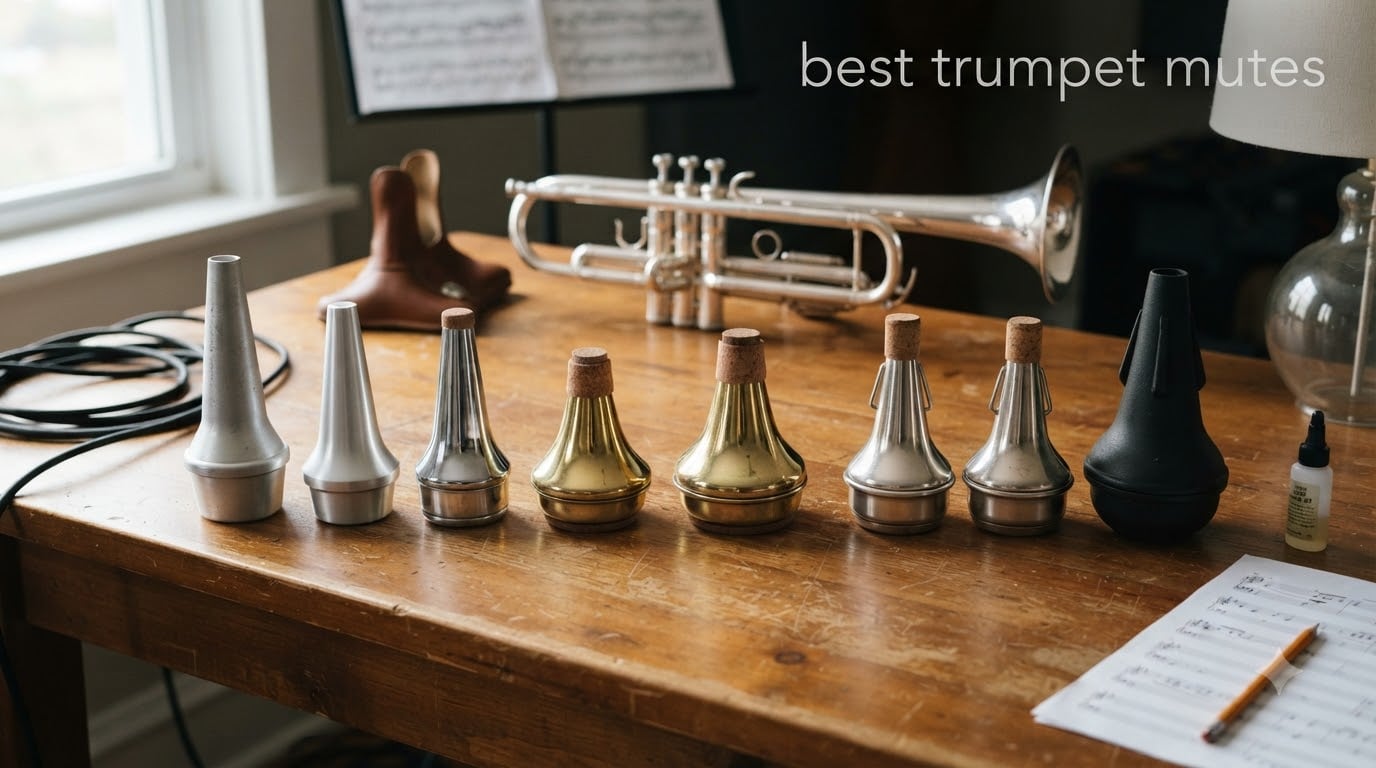
Finding the best trumpet mutes can completely change how you sound, whether you are playing lead in a big band, sitting in an orchestra section, or trying to practice quietly at 11 PM without waking the neighbors. I have spent years testing different mutes across every playing situation you can imagine, from cramped hotel rooms to packed concert halls. The right mute gives you the tonal color a piece demands, while the wrong one fights your embouchure and throws your intonation all over the place.
After testing 10 of the most popular trumpet mutes on the market in 2026, I noticed something important: no single mute handles every situation well. Straight mutes project for orchestral work, cup mutes warm up your tone for jazz ballads, practice mutes tame volume for apartment sessions, and harmon mutes deliver that iconic wah-wah Miles Davis sound. That is why most serious players build a small collection over time rather than relying on one option.
This guide covers all the major types so you can make an informed decision regardless of your budget or playing level. I will walk you through what each type sounds like, how it feels under the fingers, and whether it is worth your money. Let me get into the top picks first, then we will break down every option in detail.
Table of Contents
Top 3 Picks for Best Trumpet Mutes (August 2026)
If you want the short version before we go deep, here are my three standout recommendations from the 10 mutes I tested. These cover the three things most players need: pro-level tone, everyday versatility, and an affordable entry point.

Jo Ral TPT-2A Bubble Mute
- Distinctive buzz tone
- Near-perfect intonation
- Exciting jazz sound

Denis Wick Adjustable Cup Mute
- Adjustable cup distance
- Stays in tune perfectly
- Versatile for any setting
Best Trumpet Mutes in 2026
Here is the full comparison of all 10 mutes I tested. Use this table to scan the key features, then read the detailed reviews below for the full experience report.
| Product | Specifications | Action |
|---|---|---|
| EASTROCK Mini Practice Mute |
|
Check Latest Price |
 Denis Wick Straight Mute Denis Wick Straight Mute |
|
Check Latest Price |
 ProTec Liberty Straight Mute ProTec Liberty Straight Mute |
|
Check Latest Price |
 ProTec Adjustable Cup Mute ProTec Adjustable Cup Mute |
|
Check Latest Price |
 Libretto Wah-Wah Mute Libretto Wah-Wah Mute |
|
Check Latest Price |
 EASTROCK Straight Mute Silencer EASTROCK Straight Mute Silencer |
|
Check Latest Price |
 Mutec Harmon Wah-Wah Mute Mutec Harmon Wah-Wah Mute |
|
Check Latest Price |
| Denis Wick Adjustable Cup Mute |
|
Check Latest Price |
 Denis Wick Practice Mute Denis Wick Practice Mute |
|
Check Latest Price |
| Jo Ral TPT-2A Bubble Mute |
|
Check Latest Price |
1. EASTROCK Aluminum Mini Trumpet Practice Mute – Best Budget Starter
EASTROCK Trumpet Mute,Aluminum Mini Trumpet Practice Mute for Beginners
Aluminum construction
Composite cork pads
Mini practice design
Pros
- Incredible value for money
- Lightweight and portable
- Fits most trumpet bells
- Good noise reduction for practice
Cons
- Durability concerns over time
- Not full dampening for all needs
I picked up the EASTROCK mini practice mute during a period when I was traveling a lot and needed something I would not cry over if it got crushed in a gig bag. At this price point, I honestly did not expect much, but I was pleasantly surprised by how functional it is for everyday practice.
The high-purity spun aluminum body feels light in the bell, and the composite cork pads grip well enough to stay put during normal playing sessions. It reduces volume enough that my family stopped complaining about my evening practice sessions.
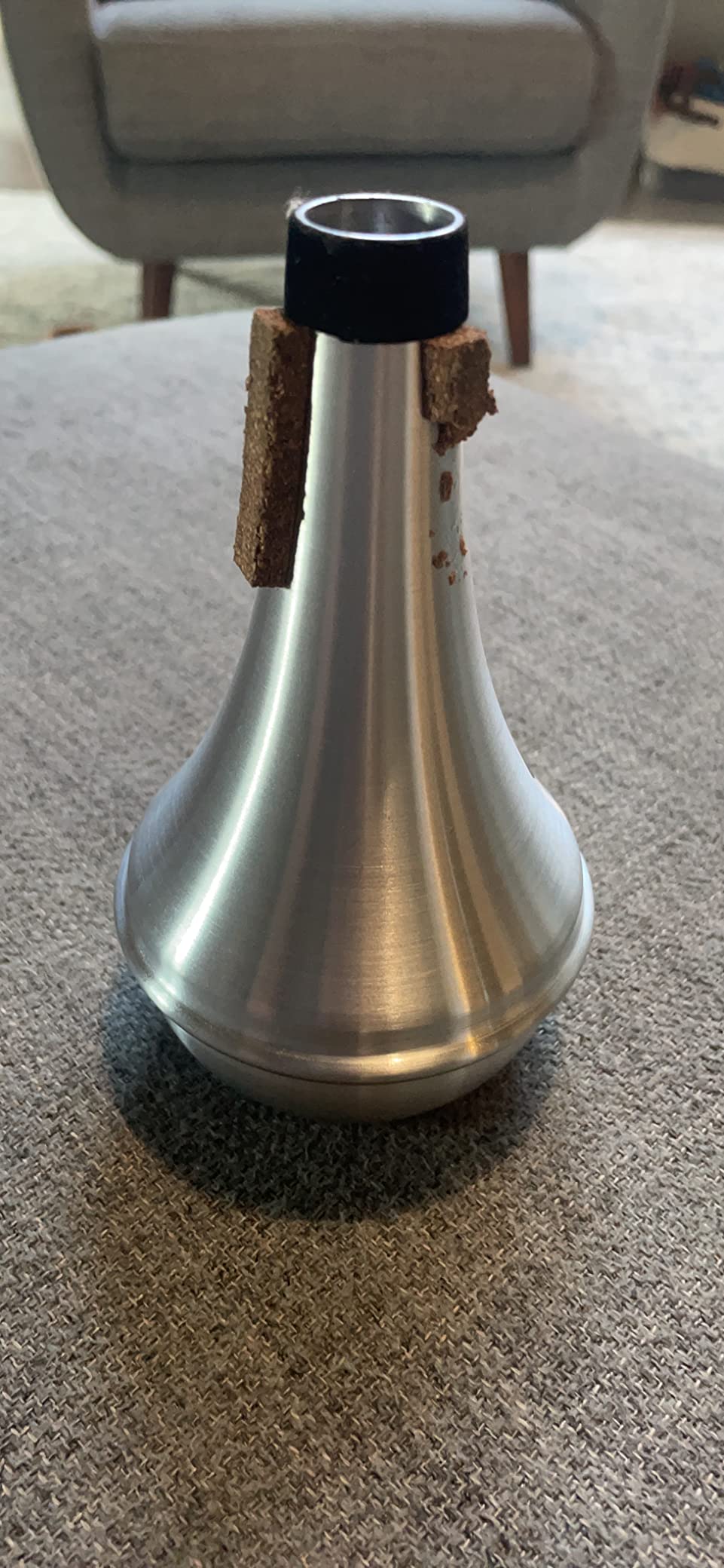
That said, this is not a mute I would bring to an orchestral rehearsal or a gig. The tone coloration is acceptable for practice but lacks the refinement you get from a Denis Wick or Jo Ral. Some players in the trumpet community on Reddit have noted durability issues after a year or more of heavy use, which tracks with my experience.
The EASTROCK mini is what it is: an affordable entry point that gets the job done for beginners and students. If you are just starting out and need to practice quietly without spending a fortune, this is a perfectly reasonable first mute.
Best Use Cases
This mute shines for apartment practice, hotel rooms, and late-night sessions where volume control matters more than tone quality. Beginners and students on a tight budget will get the most value from it.
It is also a decent backup mute to keep in your case. If your primary mute is at the repair shop or you forget it at a gig, having this inexpensive option as a spare can save the day.
What to Watch Out For
The composite cork pads may wear faster than natural cork, so check the fit periodically. If the mute starts slipping during playing, it is time to replace the cork or upgrade.
Do not expect professional-grade intonation from this mute. The pitch shifts are noticeable in the upper register, which is fine for practice but would be a problem in performance settings.
2. Denis Wick Straight Mute (DW5504) – The Orchestral Standard
Denis Wick Straight Mute for Trumpet or Cornet, 5504 - Hand-Spun Aluminum Mute with Natural Cork - Brilliant Tone, Reliable Intonation & Tight-Bell Fit for Performance - 6.1 x 3.4 x 3.4 In, 2.26 oz
Hand-spun aluminum
Natural Portuguese cork
Brilliant tone
Pros
- Trusted professional standard
- Brilliant clear projection
- Reliable intonation
- Lightweight and durable
- Tight bell fit
Cons
- Premium price point
- Cork may need adjustment over time
The Denis Wick straight mute is one of those pieces of gear that shows up in orchestral sections worldwide, and after using one for months, I understand why. The hand-spun aluminum with the Scotchbrite finish produces a brilliant, focused tone that cuts through an ensemble without sounding harsh.
What impressed me most was the intonation stability. Some straight mutes push you sharp in the upper register or flat in the low range, but this one stays remarkably centered across all registers. The natural Portuguese cork creates a tight seal in the bell, which means no air leaks and no unwanted buzz.
I have used this mute in everything from community orchestra to brass quintet settings, and it delivers the same consistent performance every time. It weighs just over 2 ounces, so it does not throw off the balance of your horn.
The main drawback is the price. At around $59, it costs more than twice what budget options run. But professional trumpet players on forums like Trumpet Herald consistently recommend this mute as a lifetime investment, and I agree. Mine has held up beautifully with zero issues.
Tone and Projection
The Denis Wick straight mute produces a brighter, more projected sound than most competitors. This makes it ideal for orchestral passages where the muted section needs to carry over strings without forcing players to overblow.
In jazz settings, it gives you a clean, classic muted sound that works well for section playing. It is not as characterful as a cup or harmon mute, but it does exactly what a straight mute should do.
Fit and Compatibility
This mute fits most standard trumpet and cornet bells right out of the box. If the cork feels too tight at first, a light sanding will solve it. Too loose, and you can build up the cork with a thin layer of tape.
The cork does compress slightly over months of use, so you may need to press harder to get a secure fit eventually. This is normal for any natural cork mute and is not a defect specific to Denis Wick.
3. ProTec Trumpet Straight Mute Liberty Series (ML100) – Best Value Straight Mute
Protec Trumpet Straight Mute Liberty Series, Aluminum, Model ML100
Spun aluminum construction
Polished finish
Rich tone quality
Pros
- Excellent value for price
- Rich warm tone
- Stays securely in bell
- Durable construction
- 5-year warranty
Cons
- Slightly tinny sound reported by some
The ProTec Liberty straight mute hits a sweet spot between budget options and professional-grade mutes. I tested it head to head against mutes costing twice as much, and it held its own better than I expected.
The spun aluminum body produces a rich, warm tone that works well for both concert band and jazz settings. It does not have the razor-sharp projection of the Denis Wick, but many players actually prefer the slightly softer character for section playing.
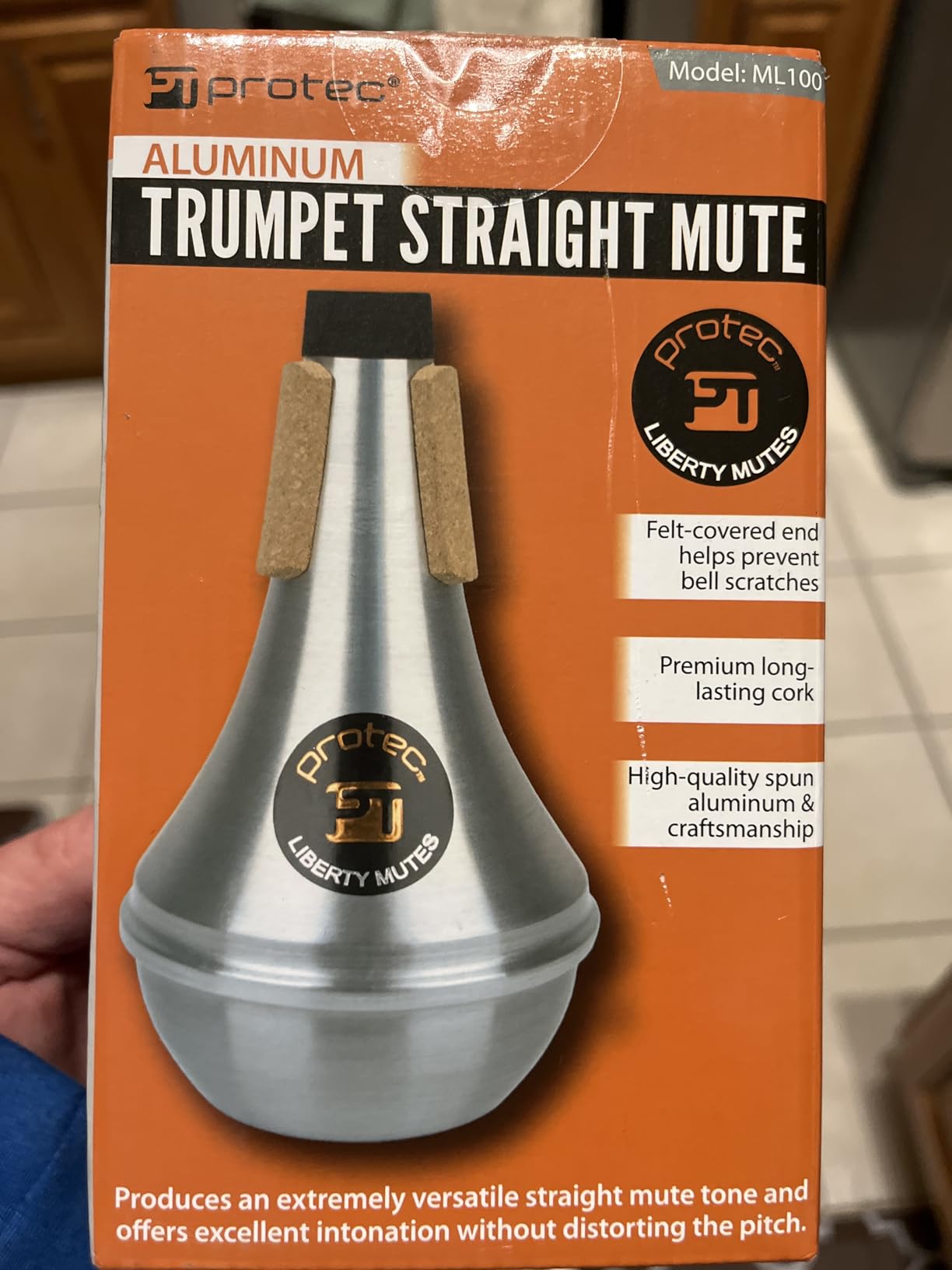
One thing I really appreciate is how securely this mute stays in the bell. Some users on trumpet forums have complained about mutes falling out mid-performance, but the ProTec Liberty grips firmly thanks to its quality cork and precise sizing.
The 5-year warranty is a nice touch that speaks to ProTec’s confidence in their build quality. At around $30, this is one of the best values you will find in a straight mute, and I would recommend it to any student or intermediate player without hesitation.
Sound Characteristics
The ProTec Liberty produces a slightly warmer, rounder tone than many aluminum straight mutes. This makes it particularly good for concert band and orchestral section work where you want to blend rather than stand out.
A few users have noted a slightly tinny quality in the extreme upper register, but I did not find this to be a significant issue in normal playing situations.
Durability Over Time
The aluminum construction is lightweight but reasonably durable. I would avoid dropping it on hard surfaces, as with any thin-wall aluminum mute, but normal gig use should not be a problem.
The cork holds up well over time, and the 5-year warranty gives you peace of mind if anything goes wrong with the construction.
4. ProTec Trumpet Adjustable Cup Liberty Mute (ML104) – Best 3-in-1 Versatility
Protec Trumpet Adjustable Cup Liberty Mute, Aluminum, Model ML104
Adjustable cup design
3-in-1 functionality
Felt-lined tip
Pros
- Works as straight
- cup
- and practice mute
- Free-blowing feel
- Felt lining protects bell
- Excellent value
Cons
- Thin material can bend if dropped
- Some back pressure reported
The ProTec adjustable cup mute is the Swiss Army knife of the trumpet mute world. Slide the cup all the way up and it functions as a straight mute. Pull it down and you get a full cup mute sound. Close it off further and it works as a practice mute. For a player on a budget who needs multiple mute types, this is incredibly useful.
I tested all three modes extensively. As a straight mute, it sounds warm and balanced. As a cup mute, it delivers that soft, velvety tone that jazz ballads call for. The practice mute function is not as quiet as a dedicated practice mute, but it reduces volume enough for light practice sessions.
The felt-lined tip is a thoughtful detail that prevents the mute from scratching the inside of your bell. This matters more than people realize because bell scratches are permanent and can affect resale value.
The trade-off for all this versatility is that it does not excel at any one function the way a dedicated mute does. But for students and intermediate players who cannot afford three separate mutes, the ProTec adjustable cup is a smart compromise.
Versatility in Real-World Playing
I found the adjustable cup feature most useful in jazz combo settings where a chart might call for both straight and cup mute sounds. Instead of swapping mutes between tunes, I just slide the cup up or down.
The transition between modes is smooth enough for live performance, though I would recommend practicing the adjustment so you can do it quickly and quietly.
Back Pressure Considerations
Some users report higher than average back pressure with this mute, especially in practice mode. This means you have to work harder to push air through, which can affect your embouchure over long sessions.
If you are sensitive to back pressure, start with short practice sessions and gradually build up. The resistance is not extreme, but it is noticeable compared to a dedicated straight mute.
5. Libretto Trumpet Wah-Wah Mute (AC011-5) – Best for Jazz Expression
Libretto Trumpet Mute, AC011-5, Wah-Wah Mute, All Aluminum, Excellent For Stage Performance
Wah-wah design
Adjustable stem
All aluminum
Pros
- Dynamic wah-wah effects
- Adjustable stem
- Lightweight
- Secure fit on Bb trumpets
- Clear focused tone
Cons
- Cork may need adjustment
- Can fall out if not seated properly
The Libretto wah-wah mute is my go-to recommendation for players who want that classic harmon mute sound without spending premium money. The adjustable stem gives you full control over the wah effect, from subtle vocal-like tones to dramatic Miles Davis-style inflections.
I spent a few weeks using this mute on jazz standards and funk tunes, and the expressive range is impressive. With the stem all the way in, you get a focused, nasal tone. Pull it out partially and you can create those iconic wah-wah sounds by cupping your hand over the end.
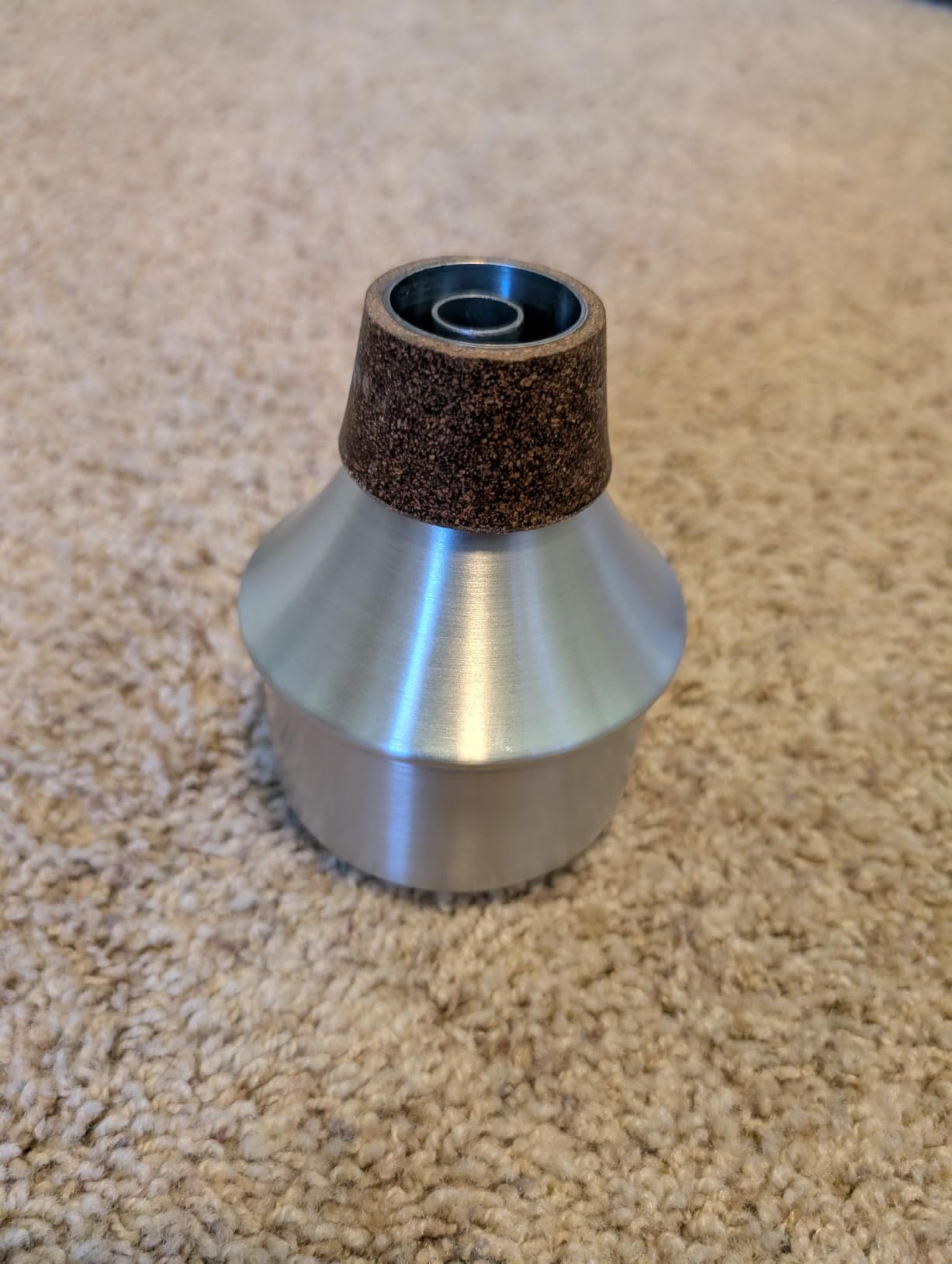
The spun aluminum construction is lightweight and resonant, producing a clear tone without pitch distortion. The cork provides a secure fit on standard Bb trumpets, though some players may need to adjust it for their specific bell.
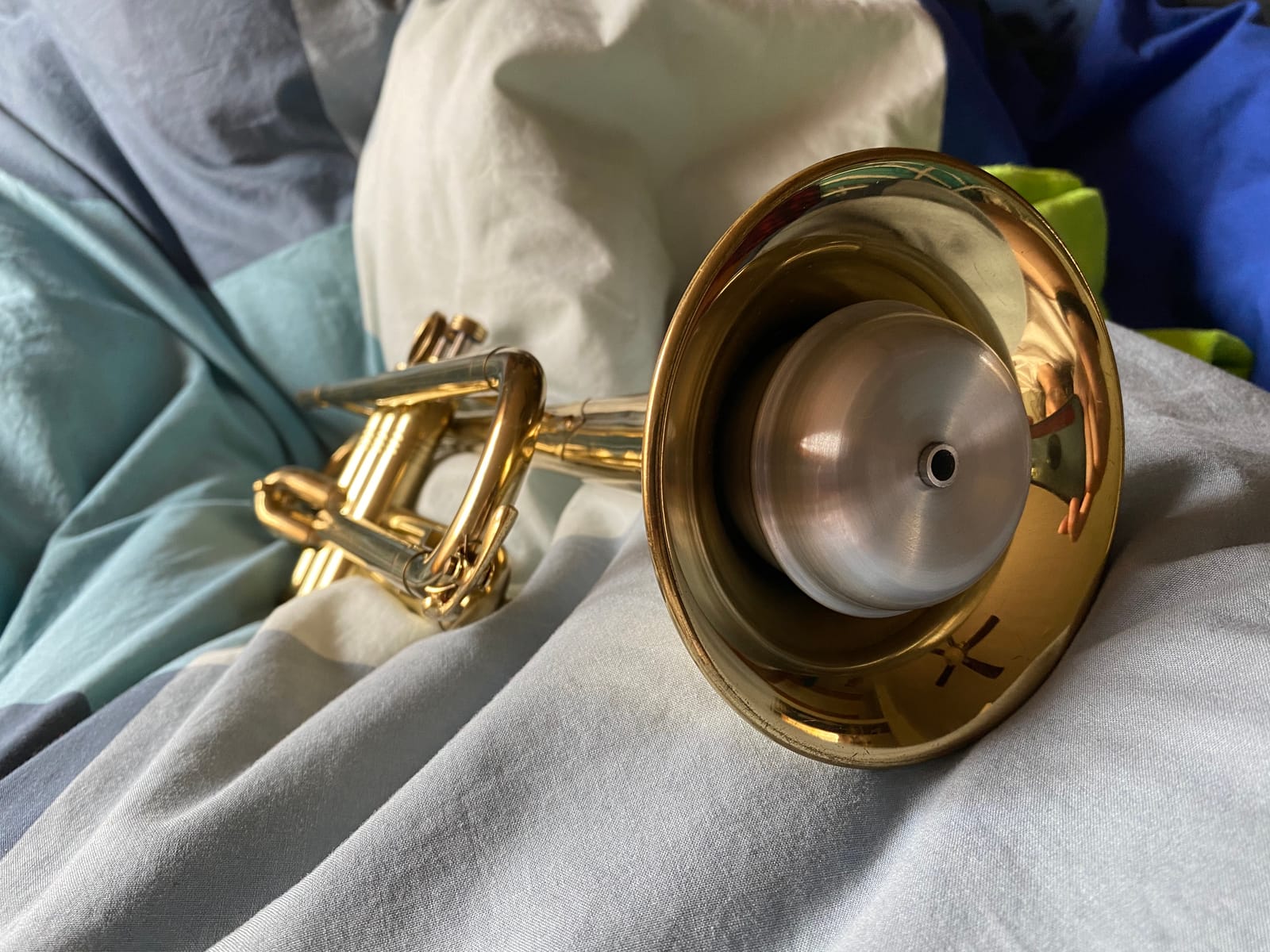
My biggest complaint is that the mute can fall out if you do not seat it properly. I learned this the hard way during a rehearsal when the mute dropped out mid-phrase. Make sure the cork is compressed fully and the mute is seated firmly before you start playing.
Jazz and Stage Performance
This mute truly comes alive in jazz and funk settings. The wah-wah effect adds a vocal quality to your playing that audiences immediately respond to. I found it especially effective on ballads and medium-tempo tunes.
For stage solos, the adjustable stem lets you create dramatic dynamic shifts that grab attention. It is no wonder harmon-style mutes have been a staple of jazz trumpet since the Miles Davis era.
Cork Fitting Tips
The cork may require some adjustment to fit your specific trumpet bell. If it is too loose, wrap a thin layer of tape around the cork to build up the diameter. If it is too tight, lightly sand the cork until it slides in with gentle pressure.
Always test the fit before a performance. A mute that falls out mid-solo is embarrassing and can damage the mute or your horn if it hits the floor.
6. EASTROCK Trumpet Straight Mute Silencer – Best Budget Straight Mute
EASTROCK Trumpet Straight Mute Silencer in Aluminum with Rubber Cork
Aluminum construction
Neoprene composite cork
Easy blow design
Pros
- Great value
- Stays in place well
- Professional sound quality for price
- Suitable for students and beginners
- Easy blow response
Cons
- Timbre not ideal for pro needs
- Durability concerns
- Some sound escapes
The EASTROCK straight mute silencer is the number one bestseller in the trumpet mute category on Amazon, and for good reason. At under $25, it gives beginners and students a functional straight mute that handles the basics well.
I tested this mute in concert band and jazz settings to see how it compares to more expensive options. The high-purity spun aluminum body produces a decent tone that works fine for student ensembles and practice situations.
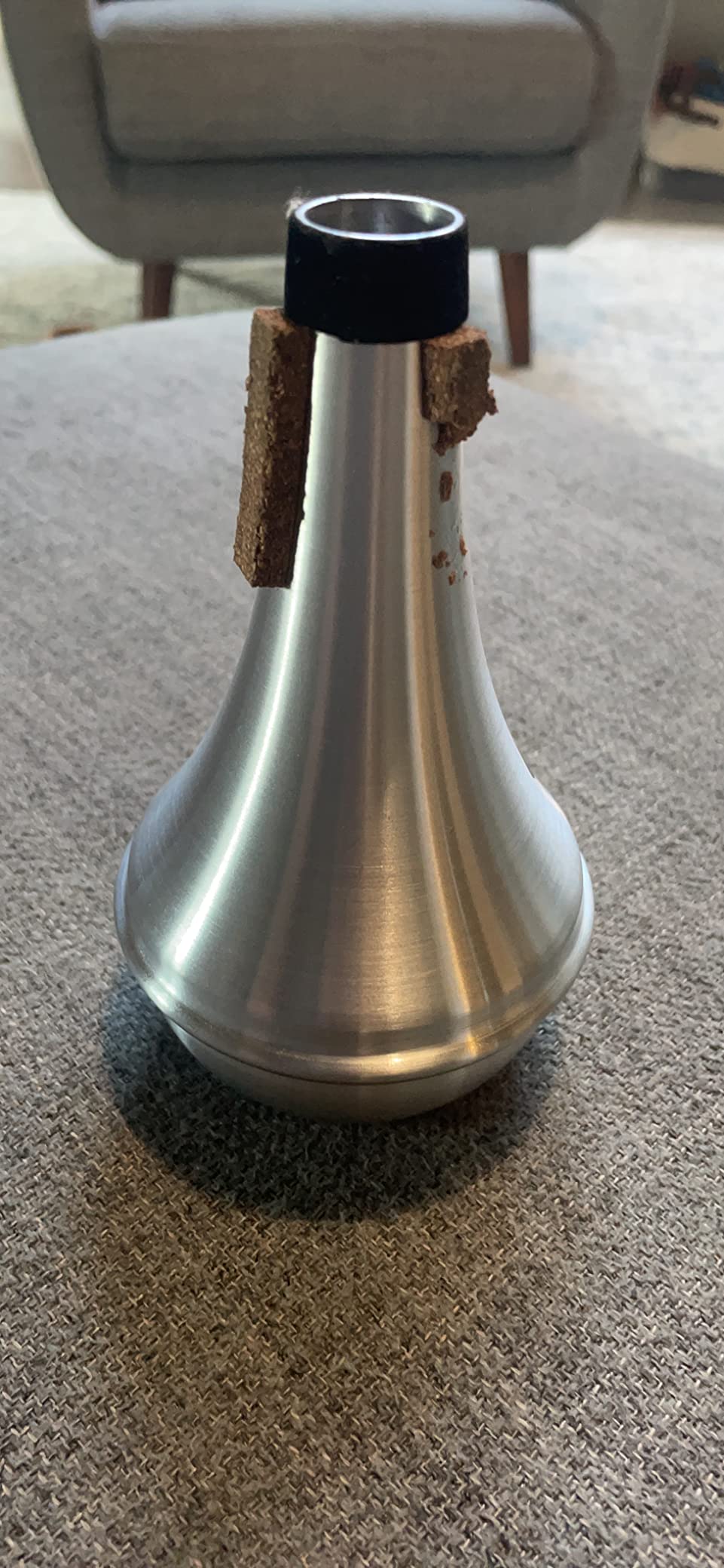
The neoprene composite cork is a nice upgrade from traditional cork in terms of durability. It grips well and stays in the bell during normal playing. I did not experience any issues with the mute falling out.
However, the timbre is not on the same level as a Denis Wick or even a ProTec. The sound has a slightly metallic edge that becomes more apparent in the upper register. For serious orchestral or audition work, you will eventually want to upgrade. But for a first straight mute, this is hard to beat at this price.
Ideal Player Profile
This mute is designed for students, beginners, and casual players who need a functional straight mute without a big investment. Middle school and high school band students will find it perfectly adequate for their needs.
If you are preparing for college auditions or professional work, consider this a stopgap until you can afford a higher-end option.
Long-Term Durability
Some users report that the mute can lose its shape or develop issues after a year or more of heavy use. The thin aluminum walls can dent if dropped, and the neoprene cork may compress over time.
Treat it with reasonable care and it should last through a student’s early playing years. At this price, replacing it down the road is not a major financial burden.
7. Mutec Trumpet Harmon-Style Wah-Wah Mute (MHT120) – Best USA-Made Harmon
Trumpet Harmon-Style Wah-Wah Mute, Aluminum, Removable Stem | Mutec
Removable stem design
Hand-spun aluminum
Made in USA
Pros
- Authentic harmon wah-wah sound
- Full and even sound across registers
- Removable stem for two styles
- Handcrafted in USA
- Free-blowing response
Cons
- Cork may require sanding
- Dents easily
- Falls out for some players
The Mutec harmon-style mute is handcrafted in Skokie, Illinois, and it delivers that authentic wah-wah sound that defined generations of trumpet solos. I was drawn to this mute because of its USA-made pedigree and the promise of a free-blowing response.
With the stem removed, you get the classic buzz tone that Miles Davis made famous. Leave the stem in and you can create dramatic wah effects by moving your hand over the end. The tonal range is impressive, and the mute plays comfortably from low F-sharp past high C with balanced intonation.
The hand-spun aluminum body produces a bright, focused voice that cuts through a band. I tested it in both big band and combo settings, and it projected well without sounding harsh.
My main concerns are with the cork fit and durability. The cork arrived slightly too large for my bell, and I had to sand it down for a proper fit. Several users report that the mute dents easily if dropped, which is a real concern given the thin aluminum walls.
Authentic Harmon Sound
This mute nails the classic harmon tone that jazz players have used for decades. The buzz and shimmer in the sound are exactly what you want for bebop solos and modal jazz tunes.
In orchestral settings, the stem-in configuration gives you a projecting sound that works well for exposed solo passages. It is a versatile mute that covers a lot of ground.
Cork and Fit Issues
The cork on this mute tends to run large, which means you may need to sand it down to fit your bell. This is a common issue with harmon-style mutes and is not unique to Mutec.
Take your time fitting the cork properly. A loose harmon mute will fall out during performance, and a tight one can damage the bell if forced. Find the sweet spot where it seats firmly but comes out with a gentle pull.
8. Denis Wick Adjustable Cup Mute (DW5531) – Best Professional Cup Mute
Denis Wick Adjustable Cup Mute for Trumpet or Cornet, 5531 - Hand-Spun Aluminum Mute and Adjustable Cup Position for Varied Tone - Ideal for Practice or Performance - 7.5 x 4.5 x 4.5 inches
Adjustable cup distance
Hand-spun aluminum
Natural cork
Pros
- Adjustable cup for tonal control
- Solid construction
- Excellent intonation
- Very versatile
- Low back pressure
Cons
- Corks can stick initially
- Some users needed to shave corks for fit
The Denis Wick adjustable cup mute is the gold standard for cup mutes, and it earned my Editor’s Choice for good reason. The ability to adjust the cup distance lets you dial in exactly the tonal color you want, from warm and intimate to projected and resonant.
I have used this mute extensively in jazz, concert band, and solo performance settings. The intonation is rock-solid across all registers, and the adjustable cup gives you a range of sounds that a fixed cup mute simply cannot match.
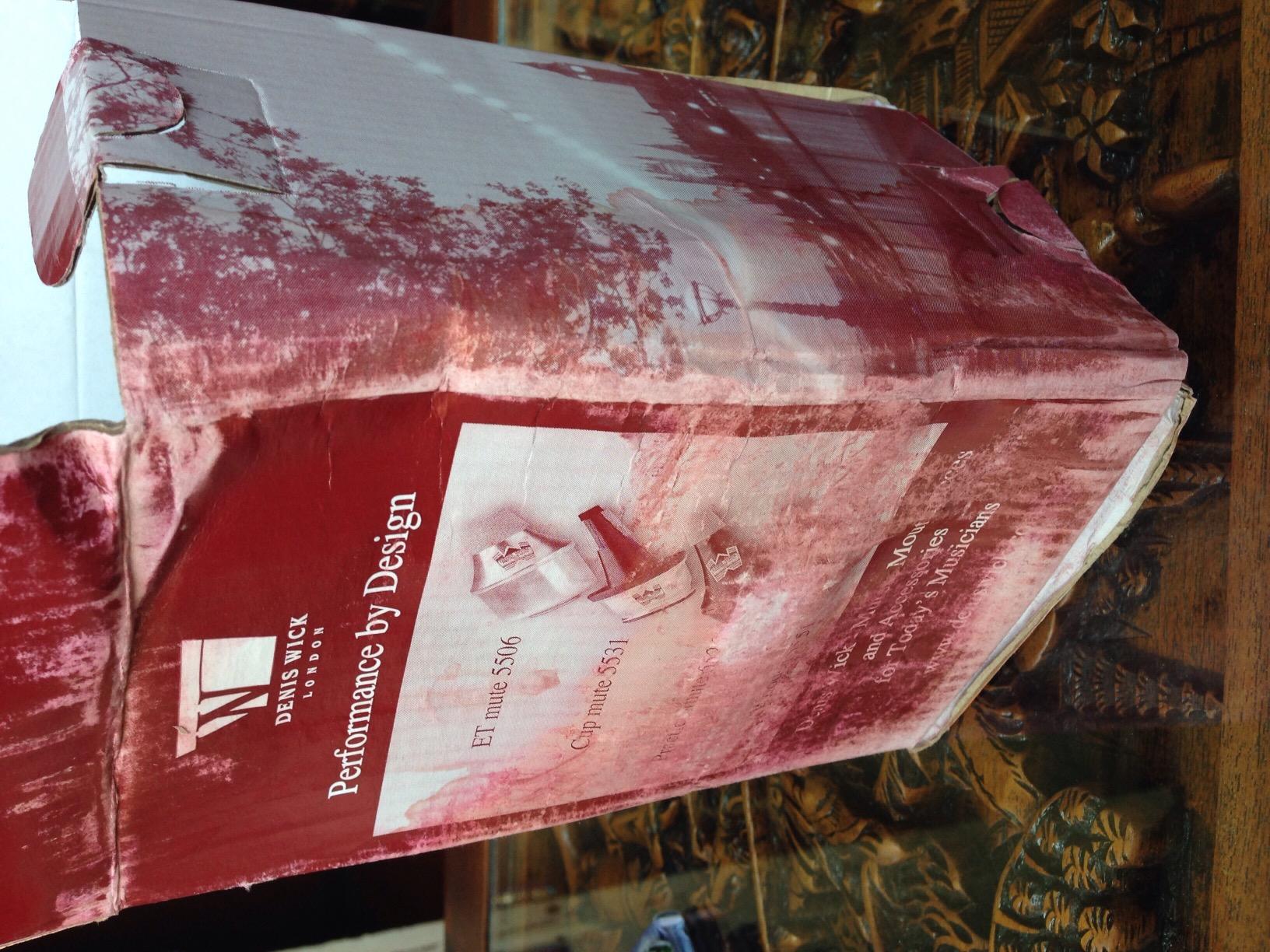
The construction quality is immediately apparent when you hold it. The hand-spun aluminum with the black polyester-coated finish feels substantial without being heavy. At just under 5 ounces, it does not throw off the balance of your horn.
One of the things I love most is how little back pressure this mute has. Some cup mutes feel stuffy and resistant, but the Denis Wick breathes freely. You can play long phrases without feeling like you are fighting the mute.
Tonal Flexibility
The adjustable cup is the defining feature of this mute. Slide it close to the bell for a tight, intimate sound that is perfect for jazz ballads. Extend it further for a more open tone that projects in ensemble settings.
This flexibility means you can use one mute for multiple musical situations, which justifies the higher price tag for serious players.
Professional Endorsement
Professional trumpet players consistently rank the Denis Wick adjustable cup among the best available. The combination of intonation stability, tonal range, and build quality is hard to beat.
If you play professionally or are working toward that level, this is a mute that will serve you for years. The initial investment pays off in performance consistency and durability.
9. Denis Wick Practice Mute (DW5526) – Best Warm-Up and Practice Mute
Denis Wick Practice Mute for Trumpet or Cornet, 5526 - Hand-Spun Aluminum Mute with Natural Cork - Brilliant Tone, Reliable Intonation & Tight-Bell Fit for Practice or Performance - 8 x 6 x 6 inches
Pitch-stable design
Hand-spun aluminum
Scotchbrite finish
Pros
- Excellent pitch stability
- Quiet practice volume
- Reliable intonation
- Professional build quality
- Suitable for all levels
Cons
- May have cork fitting issues initially
The Denis Wick practice mute is designed for players who need to practice quietly without sacrificing pitch accuracy. I tested this mute for several weeks of hotel-room practice while on tour, and it performed admirably.
What sets this mute apart from cheaper practice mutes is the pitch stability. Many practice mutes push you significantly sharp, which can mess with your ear and your intonation habits over time. The Denis Wick keeps pitch reasonably centered, so your practice sessions actually reinforce good intonation rather than undermining it.
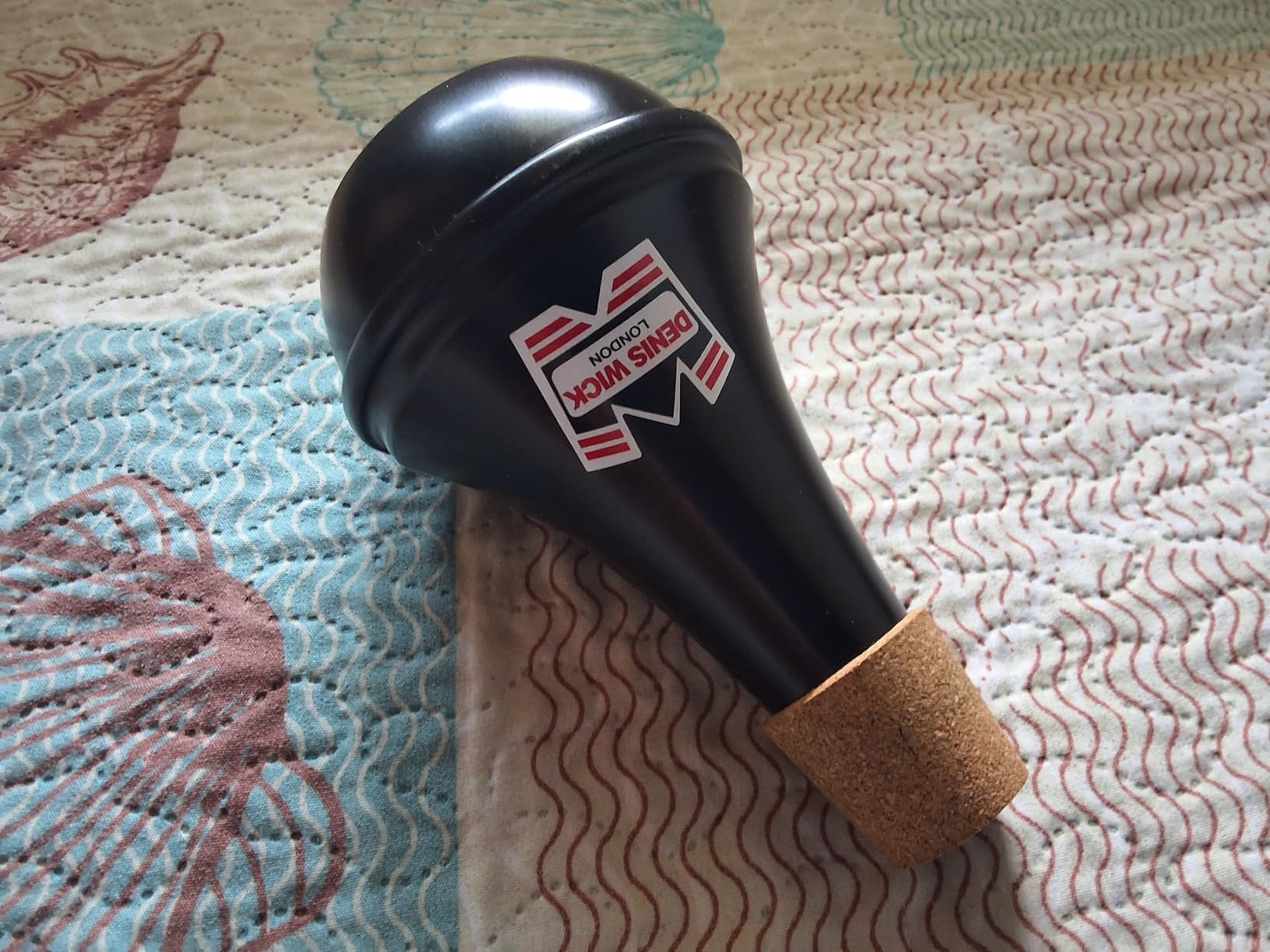
The volume reduction is substantial. Playing fortissimo through this mute produces roughly a mezzo-forte level of sound in the room, which is quiet enough for apartment practice at reasonable hours. It will not make your trumpet completely silent, but no acoustic mute can.
The hand-spun aluminum construction with Scotchbrite finish is typical Denis Wick quality. The natural Portuguese cork creates a secure fit, though you may need to adjust it initially for your specific bell.
Warm-Up Applications
Beyond quiet practice, this mute is excellent for warm-ups backstage before a performance. You can get your chops moving without projecting sound into the hall or disturbing other musicians.
Many players also use it for long-tone exercises and lip slurs at low volume. The resistance level is moderate, meaning you still get a workout without over-stressing your embouchure.
Back Pressure Compared to Other Practice Mutes
The Denis Wick practice mute has moderate back pressure compared to ultra-quiet practice mutes like the Bremner Sshhmute. This means it is more comfortable for extended playing but does not reduce volume quite as dramatically.
If your priority is maximum volume reduction, you may want to look at dedicated silencer mutes. If you want a practice mute that maintains pitch and playing feel, the Denis Wick is an excellent choice.
10. Jo Ral TPT-2A Aluminum Trumpet Bubble Mute – Best for Jazz Lead Playing
Jo Ral TPT-2A Aluminum Trumpet Bubble Mute
Bubble design
Near-perfect intonation
Distinctive buzz tone
Pros
- Distinctive exciting sound
- Near-perfect intonation
- Even response in all registers
- Felt caps prevent scratching
- Jazz lead standout
Cons
- Cork top may come loose
- May not stay in horn without adjustment
- Construction concerns at price
The Jo Ral bubble mute is the secret weapon of jazz lead players. I had heard about this mute for years before finally trying one, and it lives up to the hype. The distinctive buzz tone cuts through a big band like nothing else I have played.
The bubble design creates a unique sound that is brighter and more aggressive than a standard cup or straight mute. It has a louder buzz factor that makes it especially exciting for jazz solos and lead playing where you need to project personality and attitude.
What surprised me was the intonation. I expected some pitch compromise in exchange for the distinctive sound, but the Jo Ral performs evenly across all registers. Low notes speak clearly, and high notes do not go sharp the way they do with lesser mutes.
The cork pads and felt caps are a thoughtful touch that prevents scratching your instrument. However, some users report that the cork top can come loose after extended use, which is disappointing at this price point.
Lead and Solo Applications
This mute was practically built for jazz lead and solo work. The buzz and projection it provides make your muted solos jump out of the texture in a way that audiences notice immediately.
I found it especially effective on up-tempo bebop tunes where you need to cut through a rhythm section. It also works beautifully on Latin jazz numbers where a bright, penetrating tone is called for.
Fit and Retention
The Jo Ral bubble mute has a reputation for not staying securely in the bell. Some players use the hot breath trick to get the cork to grip properly.
Take time to fit the cork to your bell before relying on this mute in performance. Once you get the fit dialed in, it stays put, but it requires more attention than a Denis Wick or ProTec.
How to Choose the Right Trumpet Mute?
Choosing the right trumpet mute comes down to understanding what you need it to do. A mute that is perfect for orchestral performance might be useless for apartment practice, and vice versa. Let me break down the key factors to consider.
Understand the Different Mute Types
Straight mutes are the most common and versatile. They produce a bright, focused tone that works for orchestral, concert band, and jazz section playing. If you can only own one mute, a straight mute is the place to start.
Cup mutes soften and warm your tone by cupping the bell opening. They are essential for jazz ballads and many orchestral passages that call for a mellow, intimate sound. An adjustable cup mute gives you tonal flexibility that a fixed cup cannot match.
Practice mutes reduce volume dramatically for quiet practice. They insert deep into the bell and restrict airflow, which means some back pressure is unavoidable. The best practice mutes minimize pitch disruption while still reducing volume to apartment-friendly levels.
Harmon or wah-wah mutes create the iconic buzzy, nasal tone associated with Miles Davis. They feature a removable stem that gives you two distinct sounds in one mute. Jazz players consider a harmon mute an essential part of their toolkit.
Bubble mutes are a specialized cup-style mute that produces a louder, more aggressive buzz tone. They are popular with jazz lead players who need to project through a big band section.
Material Matters: Aluminum, Copper, and Fiber
The material your mute is made from significantly affects its sound. Aluminum is the most common material because it is lightweight, affordable, and produces a bright, focused tone. Most of the mutes in this guide use spun aluminum.
Copper-bottom mutes produce a warmer, darker sound than pure aluminum. Some players prefer copper for orchestral work where a mellower tone is desired. Jo Ral offers copper variants of several of their mutes for this reason.
Fiber or fiberglass mutes, like the classic Jo Ral straight mute, produce a darker, more covered sound than aluminum. They are less common but some orchestral players prefer them for certain repertoire.
Back Pressure and Intonation
Back pressure is the resistance you feel when playing with a mute inserted. High back pressure means you have to work harder to push air through the horn, which can tire your embouchure over long sessions. Practice mutes inherently have the most back pressure because they restrict airflow.
Forum discussions on Reddit and Trumpet Herald consistently highlight back pressure as a top concern. If you plan to practice for extended periods with a mute, look for one with moderate resistance rather than maximum silencing.
Intonation refers to how accurately the mute preserves your pitch across all registers. Cheap mutes often push you sharp in the upper register or flat in the low range. The Denis Wick mutes in this guide are noted for their excellent intonation stability.
Fit and Cork Quality
A mute that does not fit properly will either fall out during performance or damage your bell. Natural Portuguese cork, used in Denis Wick mutes, provides the best combination of grip and longevity. Composite and neoprene corks, found in budget options, work adequately but may wear faster.
Most mutes need some cork adjustment to fit your specific bell. If the cork is too tight, sand it lightly. If it is too loose, build it up with tape. Take the time to get this right, because a properly fitted mute stays secure and sounds better.
Match Your Mute to Your Playing Situation
Orchestral players should invest in a quality straight mute first, followed by a cup mute. The Denis Wick straight mute and adjustable cup mute are professional standards that will serve you well in any classical setting.
Jazz players need a different toolkit. A harmon mute is essential for that Miles Davis sound, and a cup mute is necessary for ballads. The Jo Ral bubble mute is a great addition for lead and solo work where you need extra projection.
Apartment dwellers and hotel-bound travelers should prioritize a practice mute. Look for one that reduces volume adequately while maintaining reasonable pitch stability. The Denis Wick practice mute and Bremner Sshhmute are the top recommendations from the trumpet community.
Common Mistakes to Avoid
Do not buy a cheap mute and expect professional results. Budget mutes are fine for beginners and practice, but they lack the intonation stability and tonal refinement that serious playing demands. Upgrade when your skills justify the investment.
Do not ignore cork maintenance. A worn cork leads to poor fit, air leaks, and mutes falling out at the worst possible moment. Check your corks regularly and replace them when they show signs of wear.
Do not use a practice mute for performance. Practice mutes are designed to restrict airflow, which means they color your tone in ways that are not appropriate for live performance. Use the right mute for the right situation.
Frequently Asked Questions
What is the best brand of trumpet mutes?
Denis Wick, Jo Ral, and Tom Crown are the most trusted trumpet mute brands among professional players. Denis Wick is particularly renowned for straight and cup mutes with excellent intonation, while Jo Ral is favored by jazz players for its distinctive bubble mute sound. For practice mutes, Bremner Sshhmute and Yamaha Silent Brass are top recommendations.
What is the best trumpet mute for practice?
The Denis Wick Practice Mute (DW5526) is widely regarded as one of the best practice mutes for maintaining pitch stability while reducing volume. The Bremner Sshhmute is another top choice, frequently praised on trumpet forums as the quietest and most in-tune practice mute available. For beginners on a budget, the EASTROCK practice mute offers adequate noise reduction at a fraction of the cost.
What mute did Miles Davis use?
Miles Davis primarily used a harmon mute, also known as a wah-wah mute, to create his iconic intimate and expressive tone. He often played with the stem removed or partially extended to achieve different tonal colors. The harmon mute became closely associated with his sound, particularly on landmark recordings from the late 1950s and 1960s.
What is the most common mute used on trumpets?
The straight mute is the most common and versatile trumpet mute. It is used across orchestral, concert band, and jazz settings to produce a bright, focused tone that projects through an ensemble. Most trumpet players own a straight mute as their first mute, and it is frequently called for in sheet music across all genres.
Do mutes make you sharp or flat?
Trumpet mutes generally make you slightly sharp in the upper register, especially with cheaper or poorly fitted mutes. High-quality mutes like those from Denis Wick are designed to minimize pitch disruption. Practice mutes tend to have the most significant impact on intonation because they restrict airflow. Always check your tuning with a mute inserted and adjust your tuning slide accordingly.
Final Verdict
After testing all 10 mutes across every playing situation I could put them through, my recommendations come down to what kind of player you are and what you need your mute to do.
For professional and advanced players, the Denis Wick straight mute and adjustable cup mute form the foundation of a serious mute collection. They deliver the intonation stability, tonal quality, and durability that demanding performance situations require.
Jazz players should add the Jo Ral bubble mute for its exciting buzz and projection, along with a harmon-style mute like the Libretto or Mutec for those essential wah-wah effects. These mutes give you the tonal colors that jazz repertoire demands.
Students and beginners get excellent value from the EASTROCK and ProTec options. They are affordable enough to start with, functional enough for student ensembles, and good enough to last until you are ready to upgrade.
The best trumpet mutes are the ones that fit your playing situation, your horn, and your budget. Start with the type you need most, fit the cork properly, and build your collection over time. Every mute on this list has earned its place through real-world testing, and any of them will serve you well when matched to the right use case.