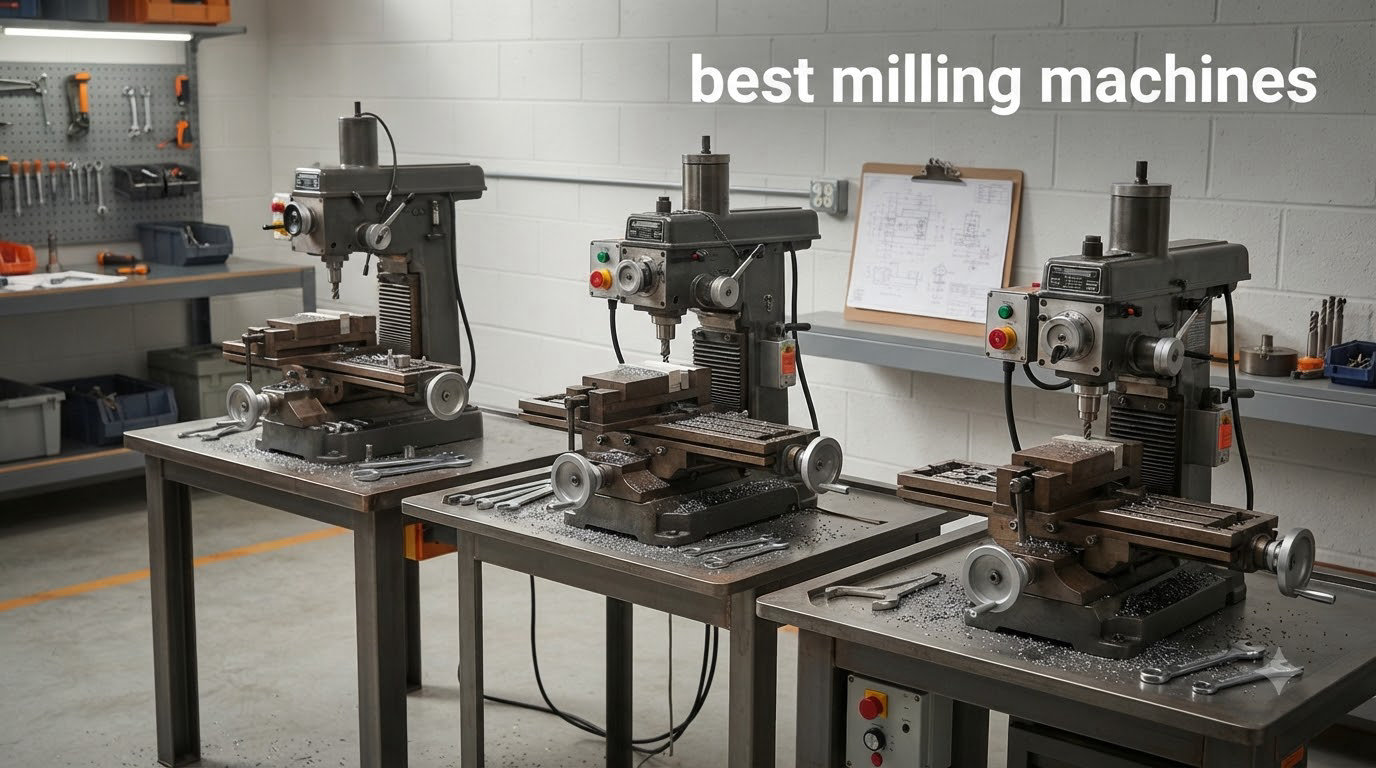
A milling machine removes material with a rotating cutter while the table moves a workpiece along the X, Y, and Z axes. That basic idea covers everything from a small desktop CNC routing plastics to a heavy manual mill drilling steel, which is why the best milling machines are not interchangeable.
I built this guide around verified specifications, ratings, review counts, and recurring owner concerns from the available product data. I also weighed the same issues machinists raise in forum discussions: workshop space, single- or 3-phase power, service access, and whether a used machine has more risk than value.
My shortlist separates true metalworking mills from light-duty CNC routers. You will get the clearest overall choice for heavy manual work, the most compact option for tiny parts, and two strong entry points into hobby CNC without treating them as industrial metal mills.
Table of Contents
Top 3 Picks for Best Milling Machines (August 2026)
Best Milling Machines in 2026
| Product | Specifications | Action |
|---|---|---|
 JET JMD-18 Mill Drill JET JMD-18 Mill Drill |
|
Check Latest Price |
 PROXXON MF 70 PROXXON MF 70 |
|
Check Latest Price |
 INTBUYING RCOG-25V INTBUYING RCOG-25V |
|
Check Latest Price |
 TECHTONGDA 1300W Mill Drill TECHTONGDA 1300W Mill Drill |
|
Check Latest Price |
 INTSUPERMAI 1300W Mill Drill INTSUPERMAI 1300W Mill Drill |
|
Check Latest Price |
 Steel Dragon Tools Mini Mill Steel Dragon Tools Mini Mill |
|
Check Latest Price |
 FoxAlien Masuter Pro FoxAlien Masuter Pro |
|
Check Latest Price |
 Genmitsu 3018-PRO Genmitsu 3018-PRO |
|
Check Latest Price |
1. JET JMD-18 Mill Drill — Best for Heavy Manual Work
JET 18-Inch Mill Drill Machine, 2 HP, 115/230V 1Ph (Model JMD-18)
2 HP motor
660 lb build
12 speeds to 3000 rpm
Pros
- Cast-iron column
- Stable under load
- 360-degree swivel
Cons
- No coolant pump
- 660-pound weight
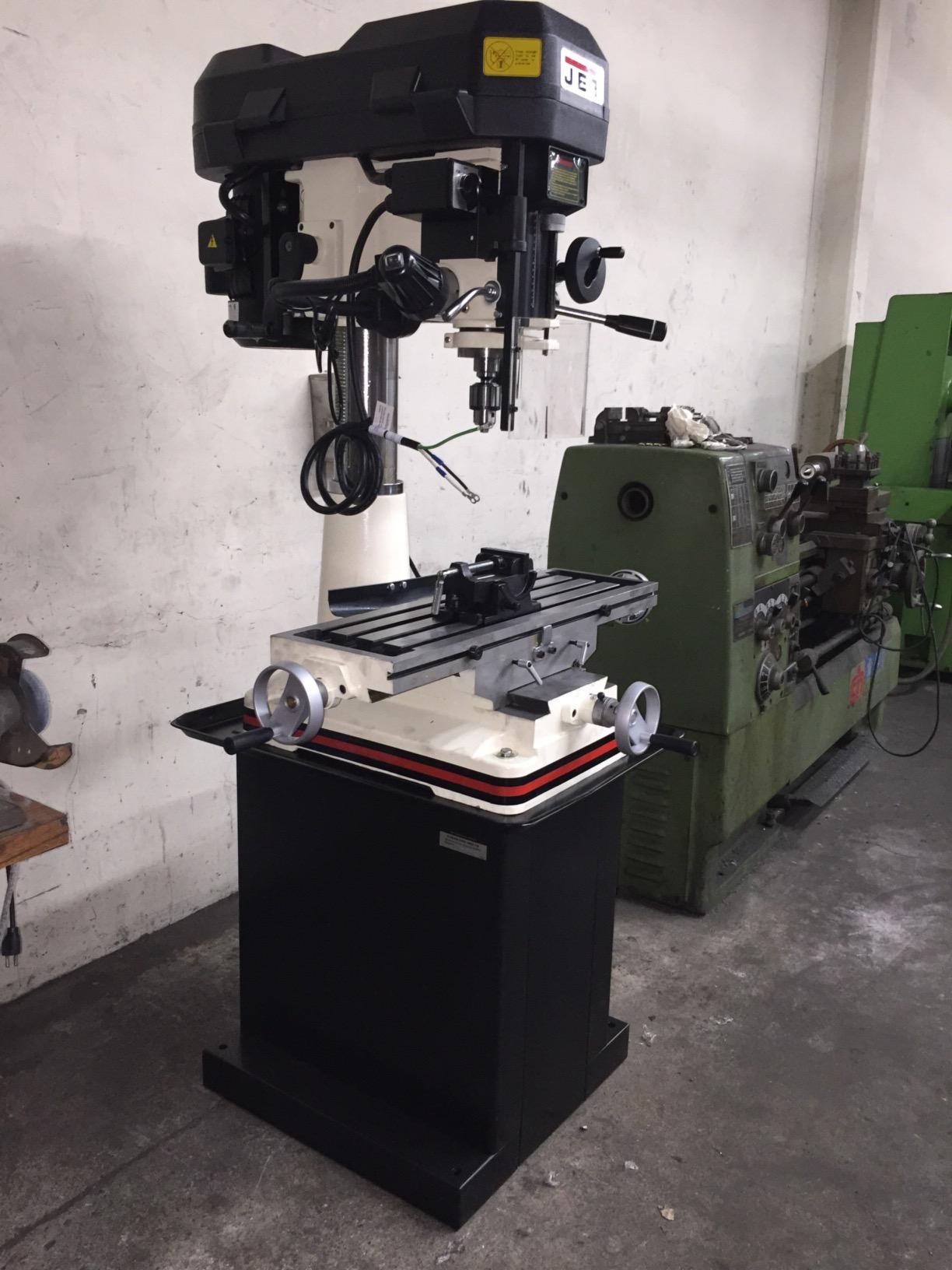
The JMD-18 is the strongest manual candidate in this group, and its 660-pound cast-iron and steel construction explains much of that advantage. I would choose it for a dedicated machine bay where mass, stability, and drilling capacity matter more than saving floor space.
Its 2 HP motor reaches 3000 rpm and offers 12 speeds, while forward and reverse plus a swiveling head add useful flexibility. The one-piece cast-iron column and external depth gauge make it feel more like shop equipment than a light benchtop machine.
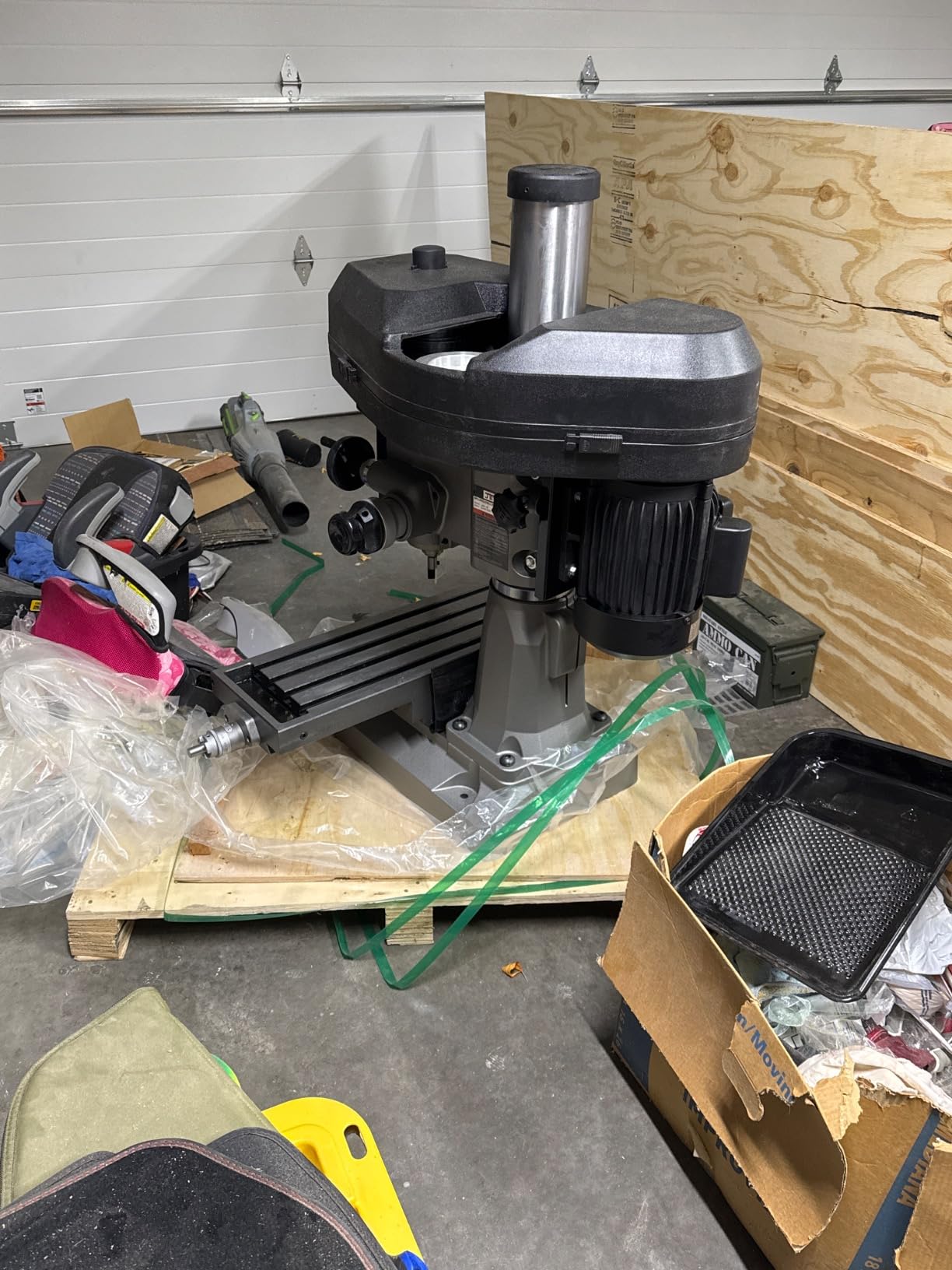
That capability comes with planning work. The machine measures roughly 47 by 40 by 51 inches and needs solid placement, so I would confirm machine-shop delivery, floor loading, and access before ordering.
Full 2 HP operation requires 230V, even though the product data also lists 115/230V support. No coolant pump is included, and I would budget for workholding, cutting fluid, a stand, and proper electrical setup before the first cut.
Who should buy the JET JMD-18
This mill drill suits experienced users who want a substantial manual platform and have room for a 660-pound machine. It is a poor fit for a small apartment workshop or anyone expecting a lightweight, plug-and-play benchtop tool.
Community discussions frequently treat Bridgeport-style machines as a durable standard, but JET brings a more integrated mill-drill package. The value is strongest when you need its capacity and will use accessories instead of buying the cheapest manual alternative.
What to verify before buying
Ask for the final electrical arrangement, drawbar tooling, included table hardware, and service support in your region. A 230V branch circuit and lifting equipment are part of the real setup, not optional details.
I would also run a manual inspection for table play, spindle runout, damaged ways, and evidence of prior heavy cuts. The supplied two-year warranty is useful, but long-term support still depends on parts availability near your shop.
2. PROXXON MF 70 — Best for Very Small Parts
Pros
- Compact footprint
- Useful collet set
- Play-free axis adjustment
Cons
- Tiny work envelope
- Reported X-axis deflection
The MF 70 earns its place when “small” is the central requirement. At 17.6 pounds and under 17 inches long, it fits spaces where a full mill cannot, yet its treated aluminum column and table sit on a stable cast-iron base.
I see it as a precision instrument for electronics, models, jewelry, optics, and small fixtures rather than a general metal mill. Its 100W motor and compact work envelope reward light cuts and careful speed selection.
The machine includes a MICROMOT steel collet set and stepped clamp blocks, which gives a new owner a better starting package than loose accessories alone. Adjustable slides on all three axes also make setup and backlash checks more practical.
The limitations are just as concrete. Owners have reported X-axis table deflection of about plus or minus 0.010 inches, and the motor may run hot during extended use, so I would use conservative feed rates and cooling pauses.
Who should buy the PROXXON MF 70
Buy this if your work stays within a micro-mill envelope and portability matters. It is especially suitable for makers who value repeatable small-part work over the rigidity of a 300-pound machine.
I would not choose it for engine blocks, large brackets, aggressive steel removal, or shared production equipment. Its size is a feature, but it is also a hard boundary on project scale.
What to verify before buying
Check that your end mills, collets, clamps, and fixturing match the supplied system. A rigid mounting surface matters because even a compact mill can deliver better results when the base cannot flex.
Plan a short break-in routine with light work, then inspect the X-axis saddle and Z-axis stop for movement. The two-year limited warranty helps, but the small footprint and service ecosystem should still be considered before setup.
3. INTBUYING RCOG-25V — Best for Flexible Benchtop Milling
Pros
- Wide speed range
- Standard R8 tooling
- Tilting and rotating head
Cons
- Metric drawbar
- DRO and feed fitment uncertainty
The RCOG-25V combines a 1.5 HP brushless motor with 50 to 2250 rpm of variable speed and an R8 spindle. That combination gives home machinists a familiar tooling path without forcing a belt change for every material.
I also like the 7 by 27-1/2 inch table and the head that tilts plus or minus 90 degrees and rotates 360 degrees. Angled holes and awkward fixtures become more approachable than they are on a fixed-head micro mill.
At 320 pounds, this is a substantial benchtop machine rather than a portable mini mill. Its 18.9-inch X stroke and 13.8-inch spindle-to-table distance expand the useful envelope, but the footprint still needs a strong stand and planned service clearance.
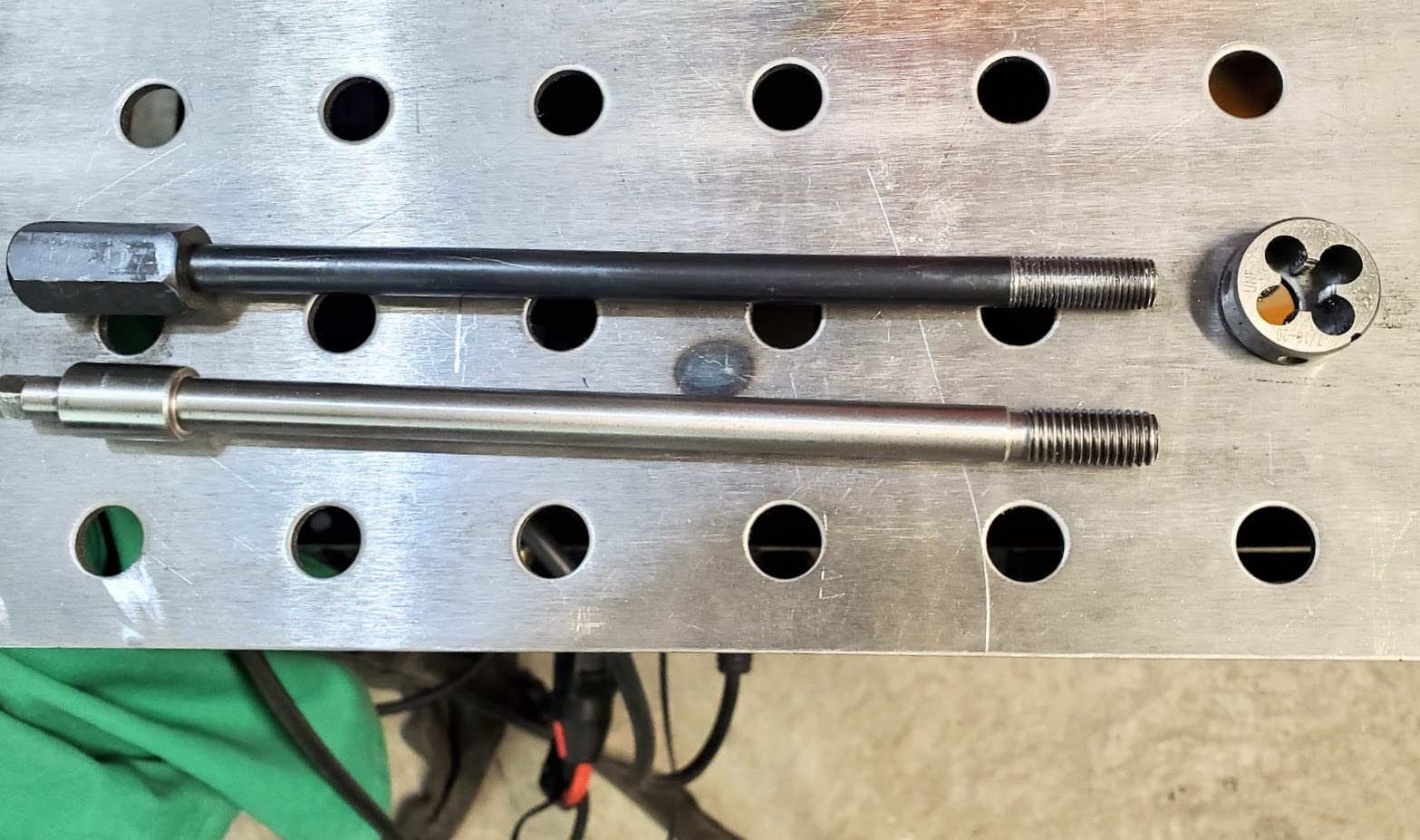
The main caution is compatibility. The drawbar uses an M12-1.75 metric thread rather than the common 7/16-20 UNF pattern, and compatible power feeds and digital readouts can be harder to find.
Who should buy the INTBUYING RCOG-25V
This model fits an intermediate home machinist who wants R8 tooling, a broad speed range, and an adjustable head in one benchtop package. It is less suitable for a first-time buyer who wants a large, established support community.
I would favor it for light-to-moderate steel, aluminum, wood, and plastic work with proper speeds and feeds. It should not be approached as a production mill, and the modest 10-review history makes careful setup inspection especially important.
What to verify before buying
Confirm the drawbar thread, available replacement parts, stand dimensions, and local motor service before purchase. I would also identify the exact power-feed and DRO mounting pattern rather than assuming universal fit.
Inspect spindle runout, axis backlash, gear noise, and the tilt-lock mechanism during acceptance. With only 10 reported reviews, I would give more weight to physical condition and dealer support than to the feature list alone.
4. TECHTONGDA 1300W Mill Drill — Best for Automated Feed
TECHTONGDA 1300W Mill Drill Machine Metal Milling Drilling Machine Combined Floor Stand Digital Readout Brushless Motor Variable Speed with Power Feed
1300W motor
20-2250 rpm
X-axis power feed
Pros
- Included power feed
- LCD speed and depth display
- 90-degree spindle tilt
Cons
- Only 4 reviews
- 388-pound weight
The TECHTONGDA is the only floor-standing option in this shortlist that includes an X-axis power feed and a digital display. Its 1300W brushless motor and 20 to 2250 rpm range make it attractive for a home shop that wants automated table movement without building a control package from scratch.
The head tilts 90 degrees, and the listed uses include drilling, flat milling, groove milling, chamfering, grinding, and cutting. I would treat that versatility as useful shop flexibility, not proof that every operation is equally capable.
At 388 pounds, it occupies about 43.1 by 23.2 by 63 inches, so placement and transport deserve attention. The 110V rating is convenient, but the internal fuse has been identified as a possible failure point in the supplied review analysis.
Who should buy the TECHTONGDA 1300W Mill Drill
Choose it if powered X-axis feed and a digital readout are higher priorities than a long published service history. It makes sense for a user who understands feeds, speeds, and electrical protection and has space for a floor machine.
I would be cautious if you are a complete beginner or need parts quickly. Four reviews provide little evidence about long-term motor, controller, or gearbox reliability, and the one-year warranty is shorter than JET’s two-year coverage.
What to verify before buying
Ask the seller to confirm the included power-feed unit, DRO functions, fuse rating, drawbar specification, and stand contents in writing. The M12-1.75 metric drawbar thread is another compatibility detail worth checking before committing.
After delivery, test the emergency controls, feed direction, tilt lock, and display accuracy under no-load conditions. Run a conservative first project and check for heat, vibration, and unexpected electrical behavior before increasing material removal.
5. INTSUPERMAI 1300W Mill Drill — Best for an Accessory-Rich Setup
INTSUPERMAI Mini Milling Drilling Machine 1300W Benchtop Mini Mill Drill Machine Metalworking Micro Feed Powerful Drill Mill Machine 7″X27″ Table, R8 Spindle Taper Set, 50-2250rpm Variable Speed 110V
1300W motor
50-2250 rpm
R8-ER32 spindle
Pros
- Power feed included
- Collet and chuck accessories
- Metric scales
Cons
- Only 3 reviews
- Newer product
The INTSUPERMAI arrives with an unusually broad accessory set: R8-ER32 and MT3-ER32 options, an X-axis power feed, metric scales, forward and reverse, and an emergency stop. For a buyer building a first benchtop station, that can reduce the number of separate purchases.
The 27.2 by 7.1 inch table, 18.9-inch X stroke, 6.9-inch Y stroke, and 11-inch Z stroke give it a useful middle-size envelope. Its 1300W brushless motor drives from 50 to 2250 rpm, which is flexible for metal, wood, and plastic.
At 260 pounds, it is lighter than the INTBUYING and TECHTONGDA models but still needs a proper stand. The product data lists all-metal gears and construction, while the reported 3 reviews make field history too thin for a confident long-term prediction.
Who should buy the INTSUPERMAI 1300W Mill Drill
I would recommend it to an intermediate user who values included tooling and power feed more than a large owner community. It is a sensible way to create a complete small-shop station if you can verify parts and service locally.
It is not my first choice for someone who wants a proven, long-serving machine with abundant third-party accessories. The limited review base means setup quality and seller responsiveness can matter as much as the specifications.
What to verify before buying
Check the exact collet, chuck, drawbar, power-feed, and scale packages included with the unit. I would also ask whether replacement gears, switches, and motors can be sourced without returning the machine.
Inspect the spindle hardware and apply the specified thread-locking treatment only after confirming the correct bolts and torque. Start with light cuts, then check backlash and repeatability before trusting it for precision parts.
6. Steel Dragon Tools Mini Mill — Best for Light-Duty 3/8-Inch Work
Steel Dragon Tools Variable Speed Mini Milling Machine Benchtop Drilling
150W motor
2000 rpm
3/8-inch tool capacity
Pros
- Compact benchtop form
- Two-speed control
- Six-piece cutter set
Cons
- Only 3 reviews
- Not Prime eligible
This Steel Dragon Tools mini mill is the most narrowly focused machine here. Its listed drilling and end-mill capacity is 3/8 inch, with a 150W motor and a maximum speed of 2000 rpm, so I would use it for small, controlled jobs rather than heavy stock removal.
The package includes a six-piece high-speed-steel four-flute cutter set, drawbar, spindle pin, T-slot nuts, an oil can, and basic wrenches. That is a thoughtful starter bundle for a compact bench, although the 112-pound weight means “benchtop” still means a sturdy base.
Who should buy the Steel Dragon Tools Mini Mill
Buy it for light drilling, face milling, and small end-mill work when 3/8 inch is enough. It may suit a hobbyist who wants a simple two-speed machine and does not need CNC, a DRO, or broad expansion options.
Skip it if you expect to cut deep steel sections, hold tight tolerances on large parts, or rely on fast replacement parts. The three-review history and non-Prime status make it a less certain choice for a beginner without local support.
What to verify before buying
Confirm the cutter-shank sizes, drawbar thread, table T-slot dimensions, and whether the listed oil can and tools are included. I would also ask the seller to demonstrate the variable-speed control and spindle lock before shipment.
Use light radial cuts and avoid forcing the tool into the workpiece. Because the available review base is very small, inspect the drive train, table movement, and motor temperature during the first several jobs.
7. FoxAlien Masuter Pro — Best for Larger Light-Material CNC
FoxAlien Masuter Pro 3-Axis CNC Router Machine, Beginner Hobby Engraving Machine All-Metal Structure for Wood Acrylic MDF Nylon Routing Milling Carving
400 x 400 x 60mm work area
3-axis CNC
All-metal frame
Pros
- Large 400mm work area
- All-metal frame
- Dust-resistant controller
Cons
- 60W spindle is light
- NEMA 17 steppers can lose steps
The Masuter Pro is the better fit when you want a large work area for routing wood, acrylic, MDF, nylon, and similar materials. Its 15.75-inch square by 2.36-inch work area is much roomier than the Genmitsu 3018-PRO, while the all-metal frame and linear-rail Z-axis improve stiffness.
It uses a 60W spindle in the base configuration and supports clamps for 60W and 300W spindles, so I would treat the machine as a light-material router with upgrade potential. The controller includes an emergency stop and home buttons, and the pre-wired layout keeps assembly to a stated 10 to 15 minutes.
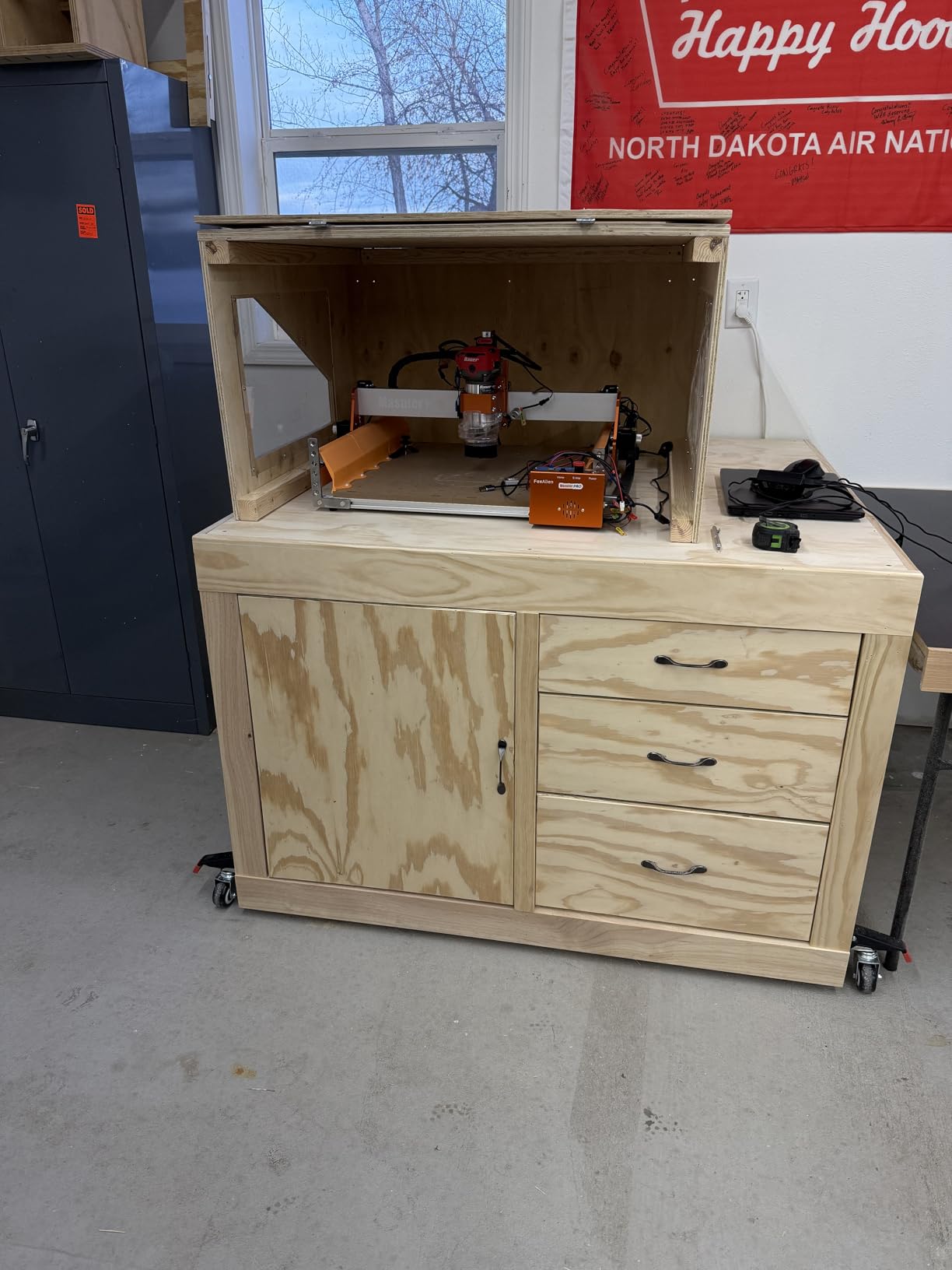
The trade-off is cutting force. NEMA 17 stepper motors can lose steps when resistance rises, and the included spindle may be underpowered for aggressive work or hard metals. A rigid workholding setup and conservative feeds are more important than chasing the maximum 10,000 rpm.
I would also plan for CAM software and controller setup. The machine is beginner-friendly in hardware, but successful results still require learning work origins, tool paths, feeds, speeds, and spoil-board preparation.

Who should buy the FoxAlien Masuter Pro
Choose it if your projects fit a 400 by 400 by 60mm area and you prefer routing, engraving, or light milling over heavy manual machining. It is a good fit for a maker who values a larger envelope and can invest time in learning the software.
Do not choose it as a first machine for hard-steel milling. A manual mill or a more rigid CNC platform is the better tool when material removal, tight tolerances, or continuous production matter more than work area.
What to verify before buying
Check the supplied spindle, collet set, controller firmware, cable routing, and expansion-kit compatibility. I would also measure the final spoil board and add center support if the board sags, because the supplied design is not ideal for every setup.
Before a long run, test homing, stepper direction, spindle speed, and lost-step behavior with a small scrap. The 636-review history is helpful, but it still describes a router-class machine rather than a general-purpose metalworking mill.
8. Genmitsu 3018-PRO — Best Budget CNC Starter
Genmitsu CNC 3018-PRO Router Kit, 3-Axis CNC Machine, Mini Milling Machine
300 x 180 x 45mm work area
GRBL control
Up to 20,000 rpm
Pros
- Low entry cost
- Offline controller
- Large support community
Cons
- Small work area
- Basic included bits
The 3018-PRO is the safest low-cost CNC starting point for a first router project. It combines a 300 by 180 by 45mm work area, GRBL firmware, an offline controller, and a 24V power system in a compact package.
Its 1,694 reviews provide the strongest community signal in the shortlist, and that matters when you are learning a new workflow. Users can find tutorials, troubleshooting advice, and upgrade discussions more easily than with a newer or less common platform.
Do not mistake high spindle speed for high metal-cutting capability. The ER11 system, small work area, and included basic bits make it best for wood, acrylic, PCB, PVC, and careful light jobs; the product data also notes that no limit switches are included.
The frame and coupling hardware need regular checks because set screws can loosen during operation. I would add a spoil board, suitable cutters, a dust collection plan, and a guarding strategy before increasing the spindle or feed rate.
Who should buy the Genmitsu 3018-PRO
This is for beginners who want to learn CNC with a constrained budget and accept a small envelope. It is an excellent classroom or maker machine when the goal is routing and engraving rather than production metalwork.
It is a poor match for large panels, deep pockets, or hard metals. If you need those capabilities, I would save for a larger work area, a more rigid frame, and a stronger spindle or stepper system.
What to verify before buying
Check whether the upgraded power adapter is included, confirm the controller software and offline operation, and inspect the coupling set screws. I would also test the machine at low speed before installing better bits or a larger spindle.
Plan for enclosure or dust management and verify that your computer workflow supports GRBL. The broad community is a real advantage, but safe operation still depends on secure workholding and conservative feeds.
How to Choose the Best Milling Machine?
Start by defining the material, part size, tolerance, and production volume you expect. A router that makes a beautiful acrylic plate may be a poor choice for a steel bracket, while a heavy manual mill is excessive for electronics work.
Manual mill or mill drill: Choose a manual knee mill or mill drill when you want direct control, straightforward setup, and the ability to work with metal without learning CNC first. JET’s JMD-18 is the strongest example here, while the INTBUYING and INTSUPERMAI offer more compact benchtop formats.
CNC router or CNC mill: Choose a desktop CNC router for repeated routing, engraving, and light materials. The FoxAlien Masuter Pro offers a larger work area, and the Genmitsu 3018-PRO offers the most established entry-level community and a much smaller envelope.
Size and workshop space: Measure the machine, stand, doorways, lifting path, and service clearance before choosing. Add room for a vise, chip tray, coolant or dust collection, and material storage; a 660-pound JET is a different planning problem from a 17.6-pound PROXXON.
Power and speed: Check voltage, amperage, motor power, and the actual spindle-speed range at the machine. A 110V machine is easier to place, while some heavier machines need a 230V circuit; a VFD or phase converter changes installation cost and complexity and should be planned before delivery.
Rigidity and spindle: Look for a rigid frame, usable table travel, dependable spindle taper, and repeatable axis locks. R8 tooling is a practical advantage for benchtop metal mills, while the Genmitsu ER11 system is designed around a much lighter routing role.
DRO, power feed, and tooling: A digital readout reduces positional guesswork, while power feed helps with long, consistent cuts. Confirm that the machine’s mounting pattern and electrical requirements support the accessories you want; the supplied product data shows this is not universal across brands.
New versus used: New machines offer a clearer warranty and a known setup history, while a used knee mill can provide more capacity for the money. Before buying used, inspect ways, table play, spindle runout, feed screws, motor condition, electrical safety, and the availability of replacement parts.
Maintenance and calibration: Keep the ways clean, lubricate according to the maker’s instructions, check backlash, and verify power-off spindle stop and axis repeatability. Recalibrate or address play before it becomes a tolerance problem, and keep cutters, collets, drawbars, and workholding matched to the machine.
Support and safety: Favor a seller or manufacturer that can provide parts, documentation, warranty help, and technical answers. Use eye protection, secure clamping, correct speeds and feeds, and an emergency-stop plan; a mill’s weight does not make a poor setup safe.
For most readers choosing their first machine, I would start with the smallest platform that can complete a representative project, not the largest machine that fits the floor. If your work is mostly small electronics, begin with the PROXXON; if you need a serious manual foundation, give the JET the space and electrical setup it deserves; if you want to learn CNC, choose between the Genmitsu 3018-PRO and FoxAlien Masuter Pro based on work area and material rather than spindle speed alone.
Frequently Asked Questions
Who makes the best milling machine?
There is no single best maker for every shop. JET, Proxxon, Grizzly, and Precision Matthews are among the names frequently discussed by machinists, but the right choice depends on whether you need manual metal cutting, compact small-part work, CNC routing, service, and parts support.
Is milling harder than lathe?
Milling is not automatically harder, but it introduces more simultaneous concerns: feed direction, tool geometry, axis movement, workholding, and chip evacuation. A beginner can learn either process, but milling often feels less predictable until those fundamentals are practiced.
What is the best home CNC milling machine?
For most beginners, the Genmitsu 3018-PRO is the easiest budget entry because of its GRBL workflow, offline controller, and large support community. The FoxAlien Masuter Pro is better when a larger 400 by 400 by 60mm work area matters and you will mainly route wood, acrylic, MDF, nylon, or similar materials.
Which milling machine is best for beginners?
A compact manual machine is often the best first choice for learning feeds, speeds, workholding, and tool control. The PROXXON MF 70 is approachable for very small parts, while the Genmitsu 3018-PRO is better for learning CNC routing; a full manual mill is better only when the beginner has the space and supervision to use it safely.
Final Recommendation
The best milling machines for 2026 are the ones matched to real work and a real floor plan. Choose the JET JMD-18 for heavy manual capacity, the PROXXON MF 70 for tiny precision parts, and the Genmitsu 3018-PRO for a low-cost first CNC workflow.
For a larger light-material envelope, choose the FoxAlien Masuter Pro; for an R8 benchtop platform, compare the INTBUYING RCOG-25V with the INTSUPERMAI and verify parts fit before ordering. I would also treat the TECHTONGDA and Steel Dragon Tools as conditional purchases because their available review histories are thin.
Before you buy, measure the space, confirm electrical needs, inspect the support network, and test the machine’s setup with a safe first project. That short checklist is more valuable than chasing the largest spindle speed or the most features on a box.