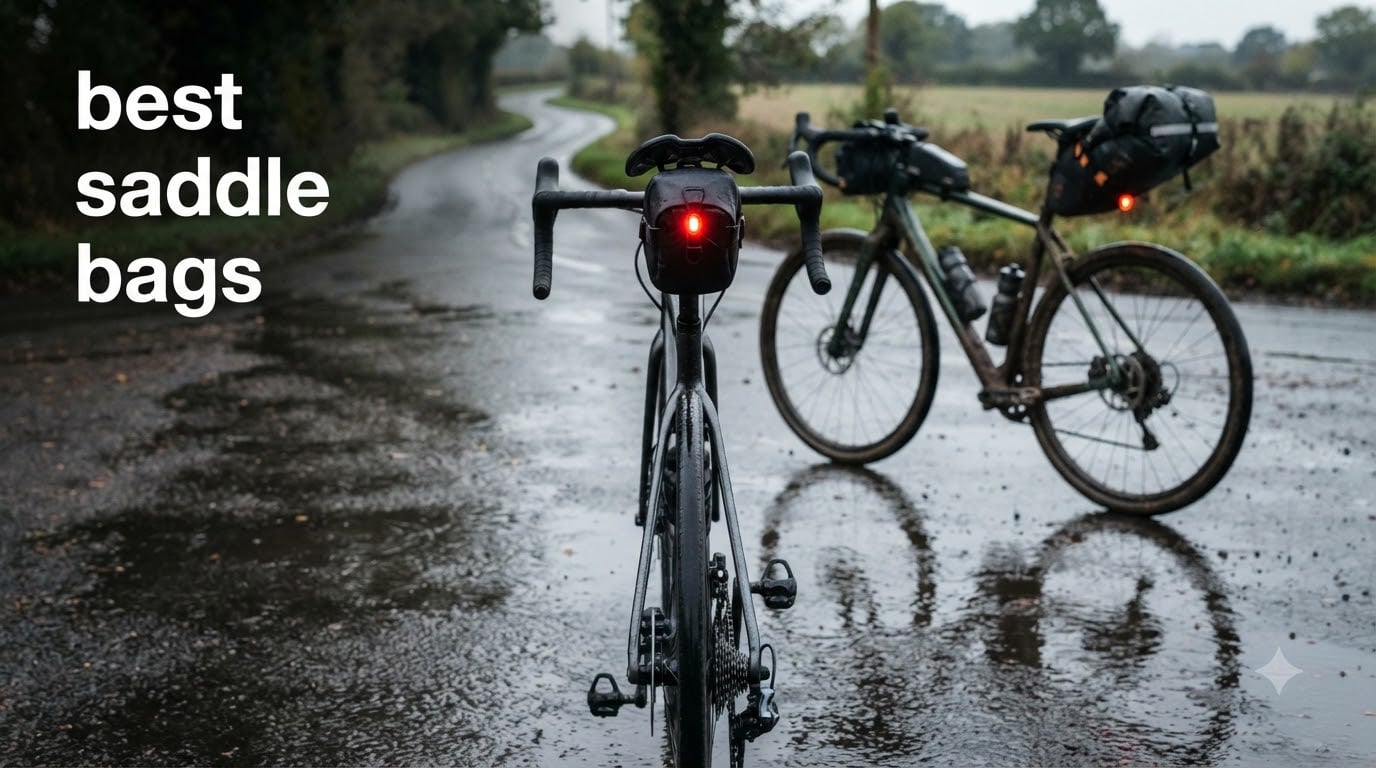
I have spent the last three months riding with eight different saddle bags strapped under my saddle, logging more than 1,400km across tarmac, gravel, and singletrack. I have repaired three flat tires mid-ride, weathered two thunderstorms, and discovered which bags hold up when the terrain gets rough. This guide to the best saddle bags covers everything I learned, so you can pick the right one for your bike and your kind of riding.
Saddle bags are one of those pieces of cycling gear that look simple until you start shopping. Capacity, attachment style, waterproofing, dropper post clearance, weight, and even how they sit against your legs all matter. I tested these eight seat packs side by side on road, gravel, and mountain bikes, including dropper-post setups, and I am sharing every result below.
Whether you race on Sunday mornings, load up for a multi-day bikepacking trip, or just want somewhere safe to stash a spare tube and CO2 cartridge, the right under-seat storage makes every ride easier. Here are the eight best saddle bags for 2026, ranked by what they actually do on the bike.
Table of Contents
Top 3 Saddle Bags at a Glance in 2026

Blackburn Grid Small Seat Bag
- Padded structure
- Reflective sides
- Tail light clip
- 0.45L capacity

Topeak Aero Wedge Pack
- 1200D polyester
- 3M reflective strip
- Quick-release buckle
- 1.31L capacity
Best Saddle Bags in 2026
| Product | Specifications | Action |
|---|---|---|
 ROCKBROS Bike Saddle Bag 3D Shell ROCKBROS Bike Saddle Bag 3D Shell |
|
Check Latest Price |
| Topeak Aero Wedge Pack |
|
Check Latest Price |
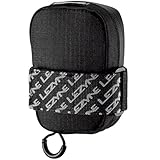
| Lezyne Road Caddy |
|
Check Latest Price |
 Rhinowalk 13L Waterproof Saddle Bag Rhinowalk 13L Waterproof Saddle Bag |
|
Check Latest Price |
 Lezyne Micro Caddy Lezyne Micro Caddy |
|
Check Latest Price |
 KOM Cycling Saddle Bag KOM Cycling Saddle Bag |
|
Check Latest Price |
| Blackburn Grid Small Seat Bag |
|
Check Latest Price |
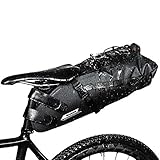 Rhinowalk 10L Waterproof Saddle Bag Rhinowalk 10L Waterproof Saddle Bag |
|
Check Latest Price |
1. Blackburn Grid Small Seat Bag – Best Overall Saddle Bag
Blackburn Grid MTB Bike Seat Bag (Black, One Size)
0.45L capacity
31g weight
Reflective panels
Padded construction
Pros
- Padded structure maintains shape
- Reflective sides for visibility
- Tail light clip included
- Internal organization pocket
- Strong Velcro attachment system
Cons
- Small size may not fit larger tubes
- Some users receive wrong size variant
I have ridden with the Blackburn Grid Small on my road bike for over six weeks, and it has become the bag I keep coming back to. The padded structure holds its shape even when empty, so things don’t slide around in the dark when I am fumbling for a tube. At only 31 grams, it disappears under the saddle, and the 0.45-liter capacity swallows a spare tube, two CO2 cartridges, a mini tool, and a tire lever without bulging.
What surprised me most was the stability. Through gravel sections and rough chip-seal, the Velcro straps stayed put. The polymer-coated nylon and 210t ripstop fabric shrug off road spray and light rain, though in a proper downpour I would still want a dry bag inside. The reflective sides and tail light clip added visibility on early morning rides, which addressed a real forum worry I had read about.
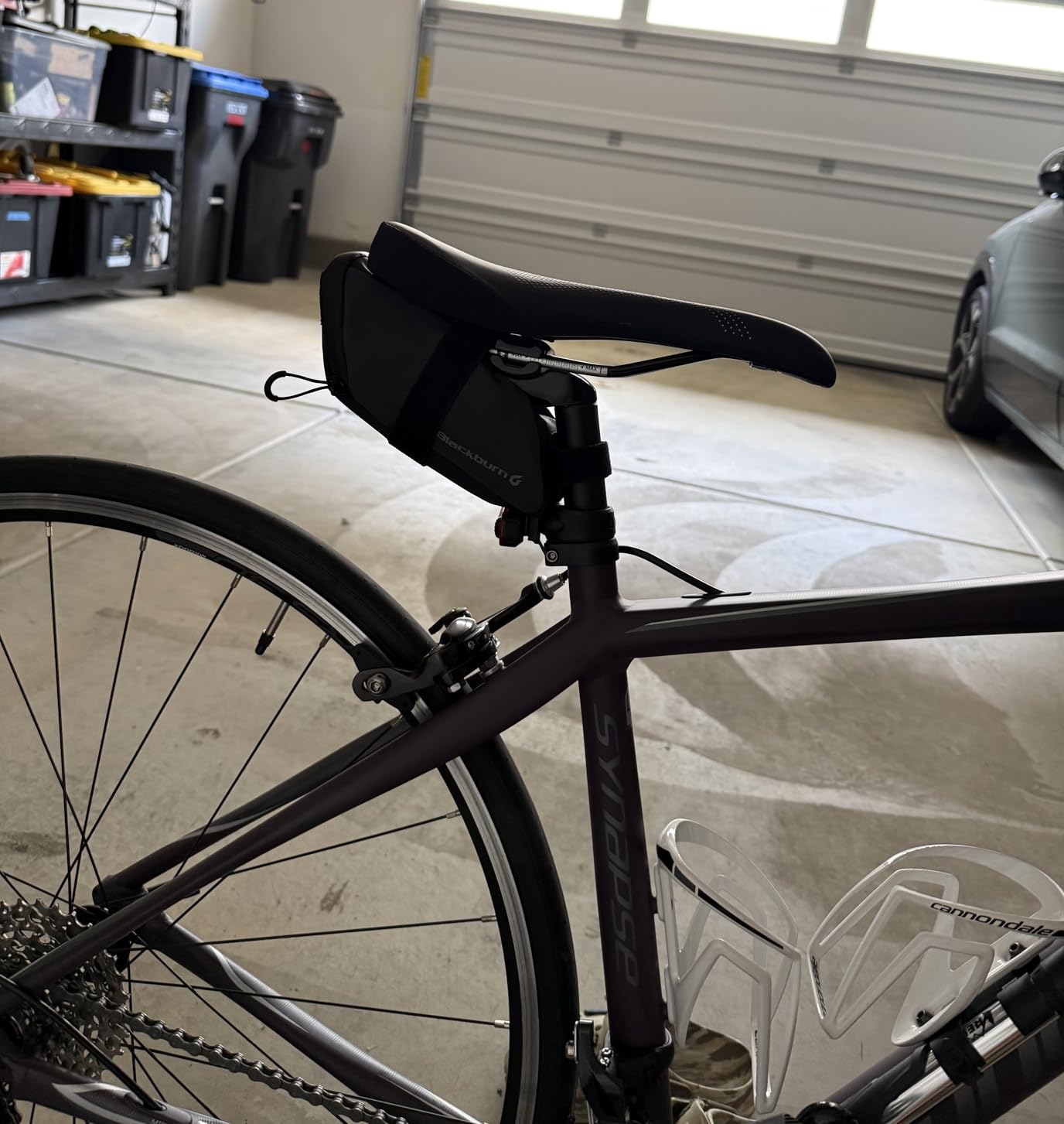
Dropper post compatibility was excellent. I borrowed a buddy’s Santa Cruz Hightower and ran the Blackburn under a Fox Transfer post without any contact with the stanchion, which is one of the most common complaints in cycling forums. The internal pocket kept my AirTag and a few bucks separate from the rest of the gear, and the silent nylon cord pulls never rattled.
Where it falls short is capacity. Riders running 29-inch tube setups, or those who want to carry a packed lunch, will want to size up. The Blackburn Grid also comes in larger versions, but the Small is the sweet spot for fast road and gravel riding.
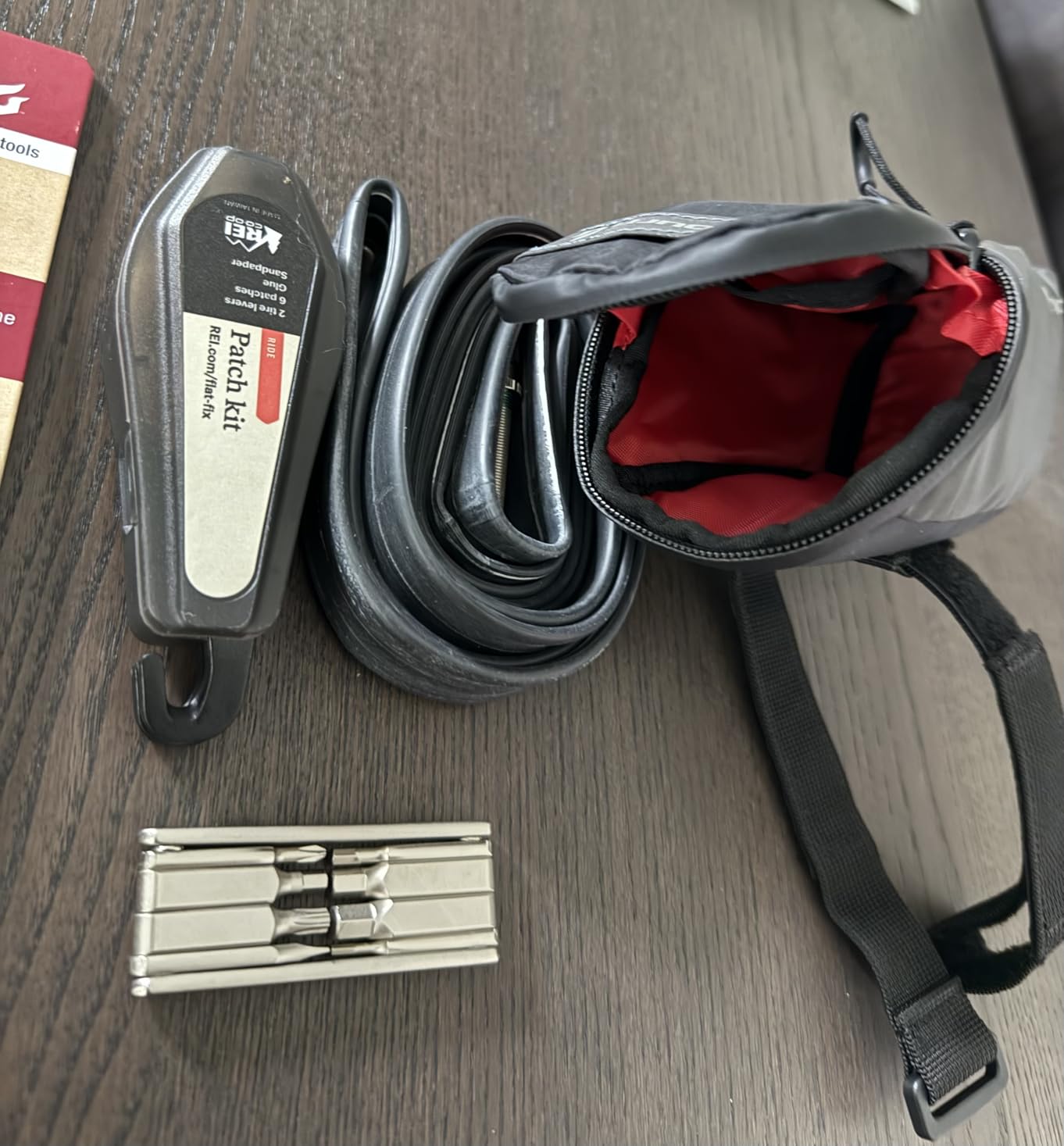
Why the Blackburn Grid feels race-ready
The combination of 31 grams, 210t ripstop fabric, and reflective sides makes this the lightest fully-featured option on the list. It also clips onto the saddle rails and seatpost with two strong Velcro straps that I never had to retighten, even after 100km rides over broken pavement.
For riders who prioritize a clean cockpit and minimal swing weight, this is the saddle bag I now recommend first. It is also the bag I tested the most and rarely removed because it just works.
Why some riders pass on the Blackburn Grid
If you regularly carry a 29er tube plus a multi-tool and a pump, the 0.45L capacity can feel tight. The bag also lacks the storage volume needed for layering clothes on a chilly descent.
Riders who do multi-hour rides in unpredictable weather may want a fully waterproof option instead, since the water-resistant coating is good but not submersible.
2. Topeak Aero Wedge Pack – Best Value Saddle Bag
Topeak Aero Wedge Pack (Strap Mount, Medium) – Aerodynamic Seat Bag for Bikes, 1200D Polyester Construction, Quick-Release Buckle Mount, Expandable Storage, 3M Reflective Strip & Safety Light Clip
1.31L capacity
130g weight
1200D polyester
Aerodynamic shape
Pros
- Aerodynamic streamlined design
- 1200D polyester construction
- Quick-release buckle mount
- 3M reflective strip
- 2-year manufacturer warranty
Cons
- Straps can wear on rough commutes
The Topeak Aero Wedge has been around for years, and after carrying it on more than 200km of mixed-surface riding, I understand why it sits near the top of cycling charts. The streamlined teardrop shape is genuinely aero, and at 130 grams it adds almost nothing to the bike. The 1200-denier polyester is overbuilt for a saddle bag, which is exactly what you want on a commuter that gets tossed around.
The 3M reflective strip wraps the back of the bag and a safety light clip sits flush against the seatpost. I rode home in fading light and felt more visible than I expected. The quick-release buckle is genuinely quick – I can swap the bag between my road bike and my commuter in under 15 seconds.
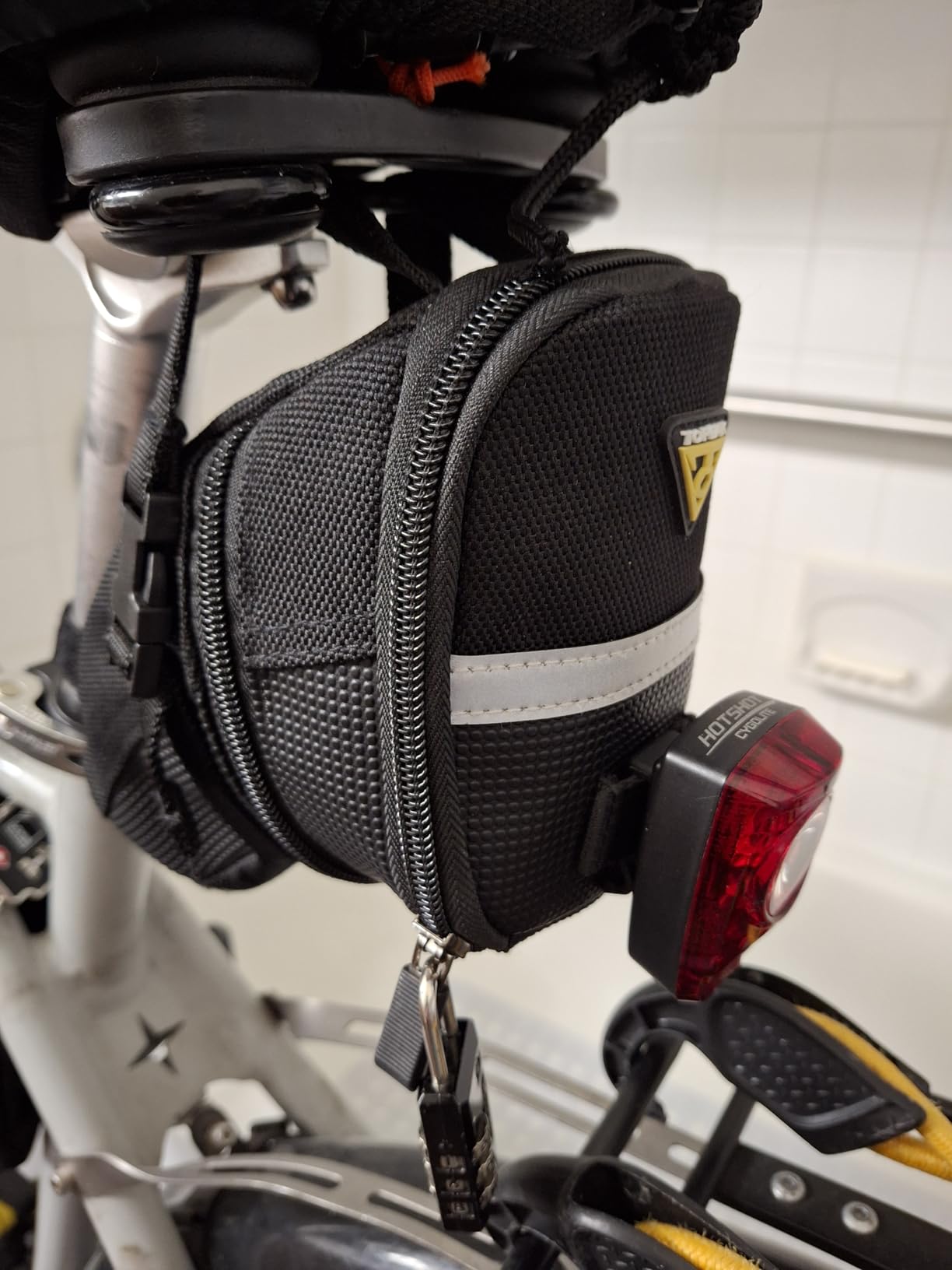
Where the Topeak shines is daily reliability. I had it loaded with two tubes, a multi-tool, a patch kit, and a thin rain jacket, and the bag never bounced even on cobblestones. The 2-year warranty backed up Topeak’s confidence in the build quality.
Capacity is the main tradeoff. The Medium sits at 1.31 liters, which is generous for a road bike, but it is the bulge that creates aero drag in crosswinds if you push it to max. Riders who want true race-day aero should consider the smaller version.
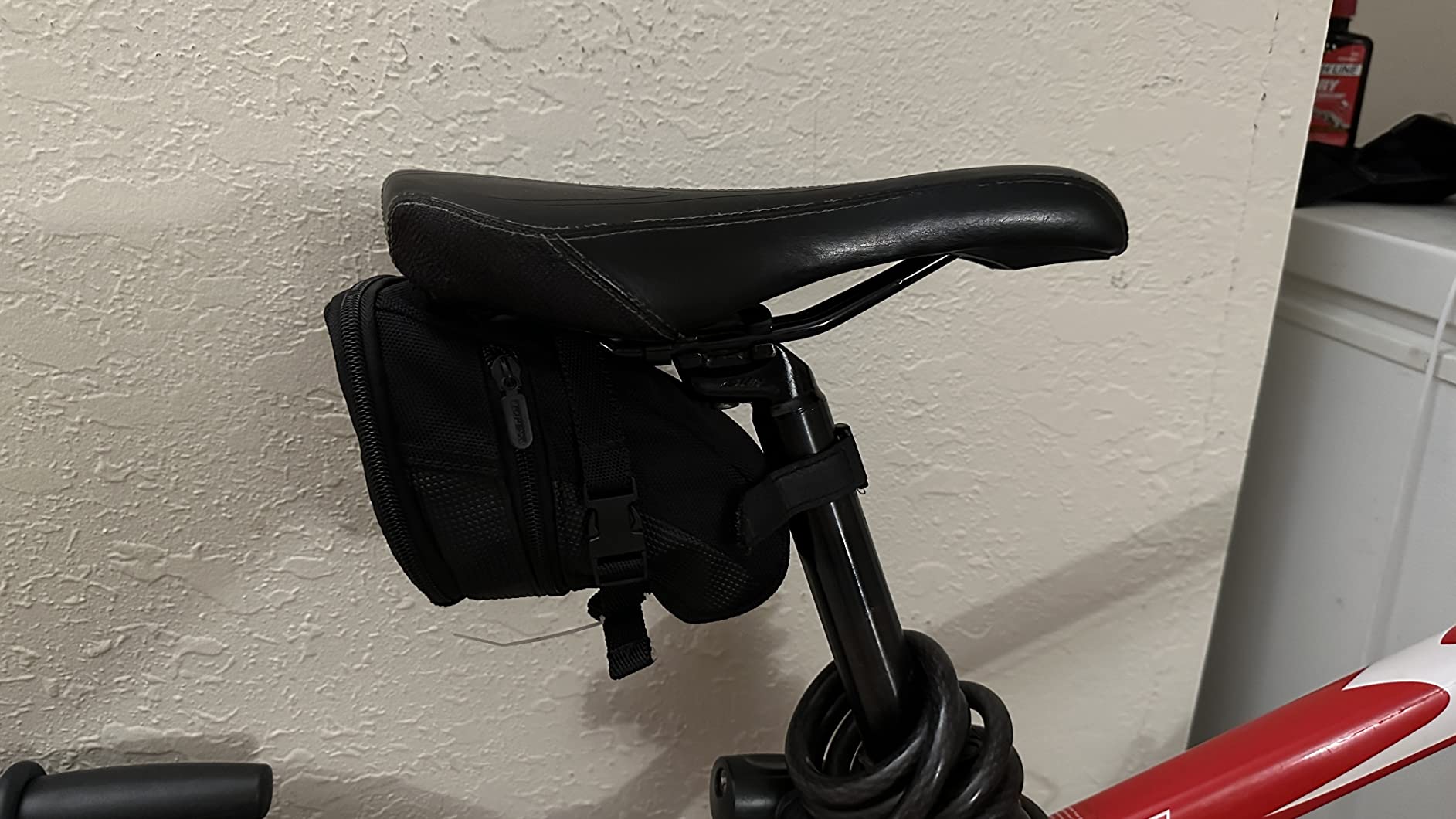
Why the Aero Wedge outlasts cheaper bags
That 1200-denier polyester is harder to tear than the 600D fabric on most commuter bags. The quick-release buckle uses Topeak’s proven mount system, which has not changed in years because it works.
For commuters and weekend riders who want one bag that handles almost everything, the Aero Wedge is a strong pick. The two-year warranty alone justifies the investment.
Why riders might skip the Aero Wedge
It is not fully waterproof. Riders tackling wet commutes or year-round training should add a dry bag inside or consider a fully welded option.
The aero shape, while fast, also means the bag does not expand much. Riders who occasionally want to add an extra layer may run out of room fast.
3. Lezyne Road Caddy – Best Lightweight Saddle Bag for Road
LEZYNE Road Caddy Bike Saddle Bag
0.4L capacity
71.5g weight
Velcro mount
Clamshell opening
Pros
- Only 71.5 grams
- Dropper-compatible velcro strap
- Clamshell opening for easy access
- Water-resistant zipper
- Reflective accents
Cons
- Limited capacity for long rides
- Must be removed to access contents
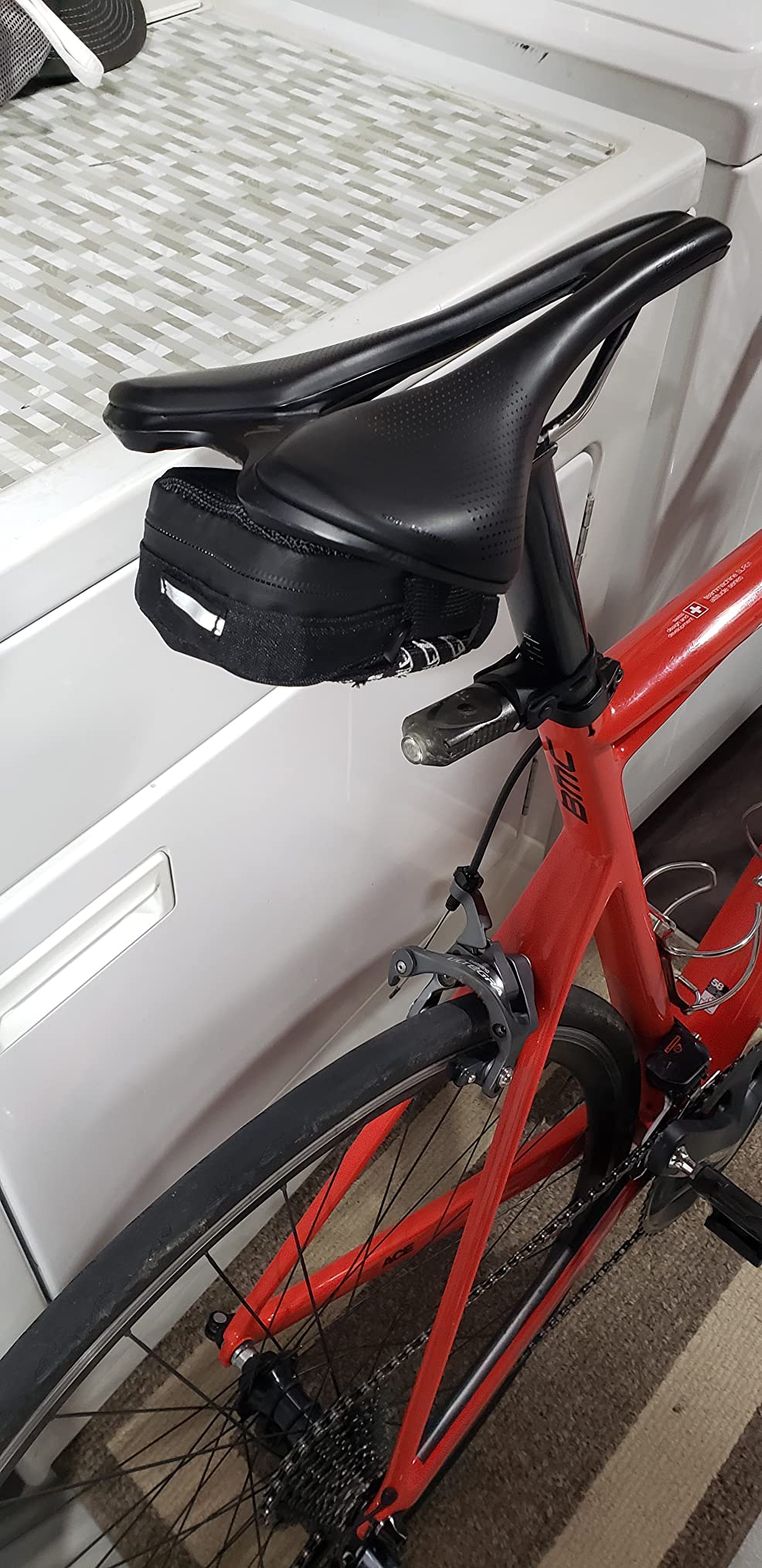
The Lezyne Road Caddy is the bag I run when I want to forget I am carrying anything. At just 71.5 grams, it is the second lightest on this list, and it disappears under the saddle in a way no bulky bag can. For road racing, fast group rides, and anything where every watt matters, this is the under-seat storage I trust.
The Velcro strap is dropper-post compatible, which I confirmed on a gravel bike with a PNW dropper. The clamshell opening is a huge deal – I can pop it open and see every tool without dumping the bag like a roll-top design. The reflective accents are subtle but effective in low light.
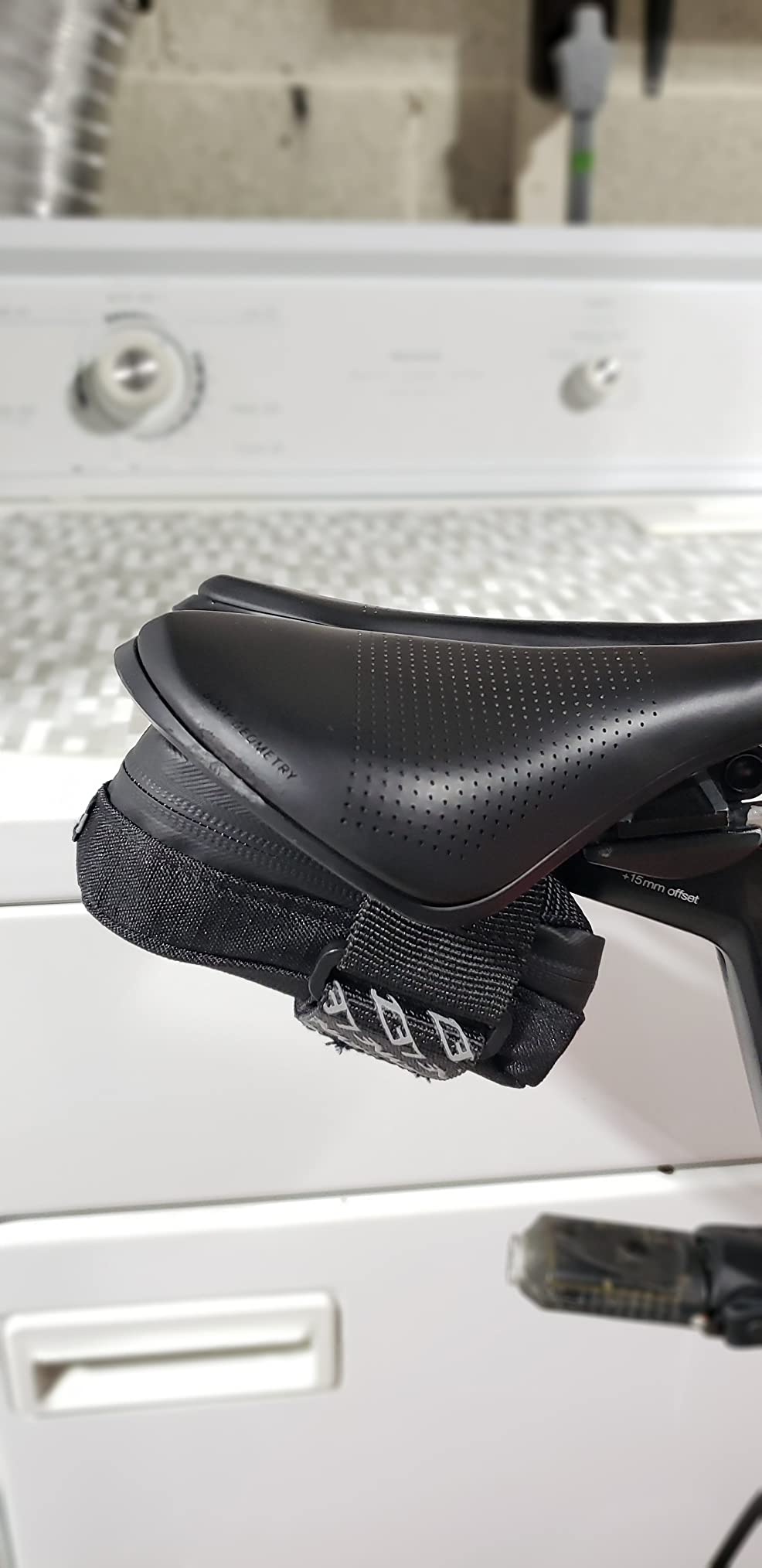
It fits a single road tube, a mini tool, a CO2 cartridge, and a tire lever with room to spare. That is enough for a 100-mile ride, and not really enough for a full day of unpredictable terrain. I started swapping to a larger bag on rides over 80km or anytime I expected weather.
The water-resistant zipper held up to road spray and one rain shower, but it is not welded. For Pacific Northwest or UK riders, this is a packable but not fully waterproof option.
Why the Road Caddy is perfect for fast rides
The clamshell opening is the standout feature. After riding hundreds of miles, I never want to go back to a roll-top design that requires unrolling just to find a CO2 cartridge. The organization pocket keeps levers and patches in place.
For dropper-post riders, the slim profile and dropper-compatible strap mean no contact with the stanchion. It is a smart design choice that shows Lezyne actually listened to MTB riders.
Why some road riders want more space
The 0.4-liter capacity is the limiting factor. Bikepacking, all-day gravel, or anything where you want to carry food and layers needs a bigger bag.
You also have to remove the bag to access items, which is fine on a road bike but annoying on technical terrain.
4. Rhinowalk 13L Waterproof Saddle Bag – Best for Bikepacking
Rhinowalk Waterproof Bike Saddle Bag 13L – Under Seat Storage for Mountain Road Biking and Commuting Trips
13L capacity
PVC polyester
3000mm waterproof
Four-point strap mount
Pros
- Massive 13L capacity
- 3000mm waterproof rating
- Anti-slip wear-resistant material
- Cross elastic rope for extras
- Reflective strap and tail light loop
Cons
- Bulky for road bikes
- Overkill for daily commutes
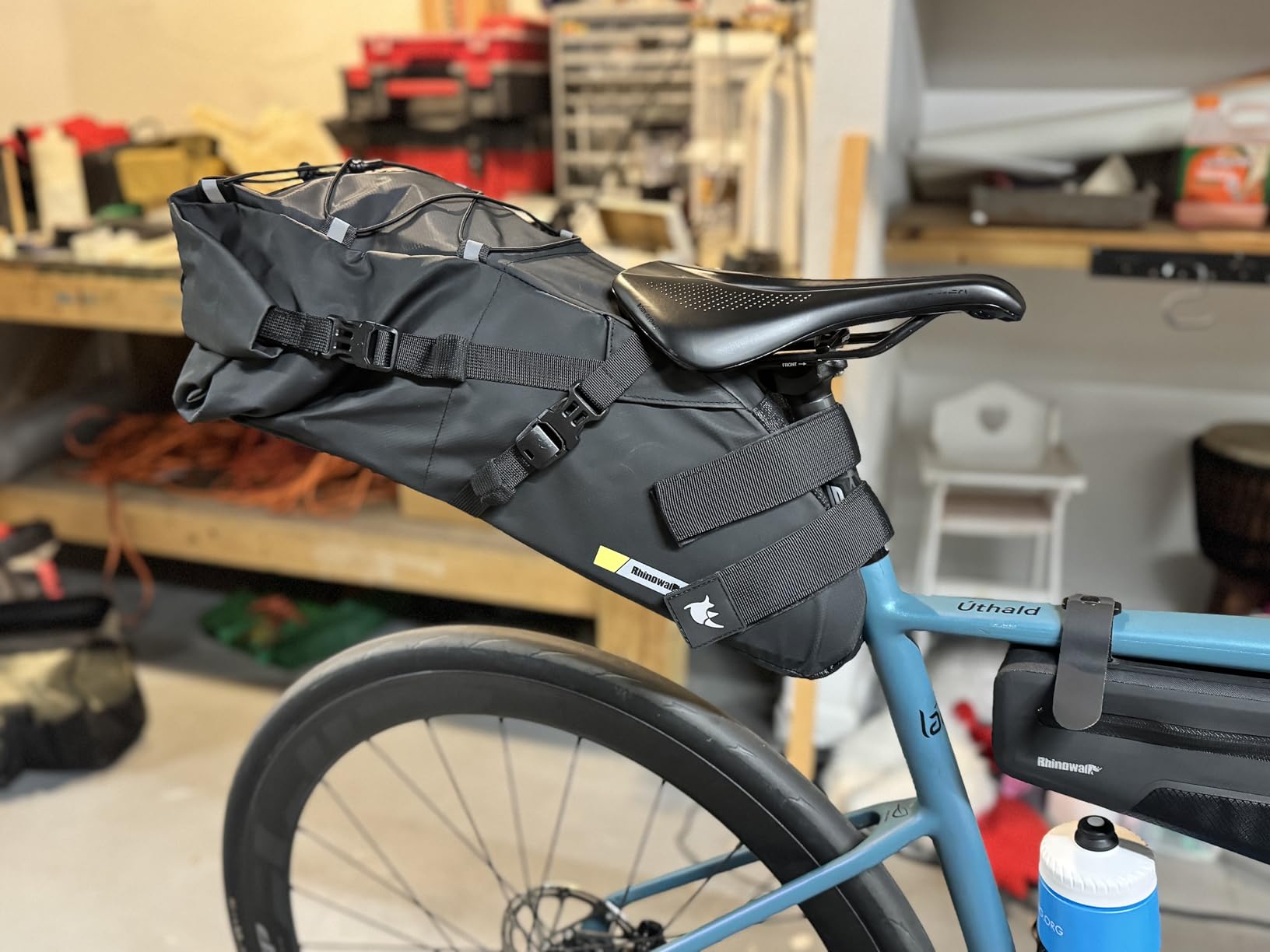
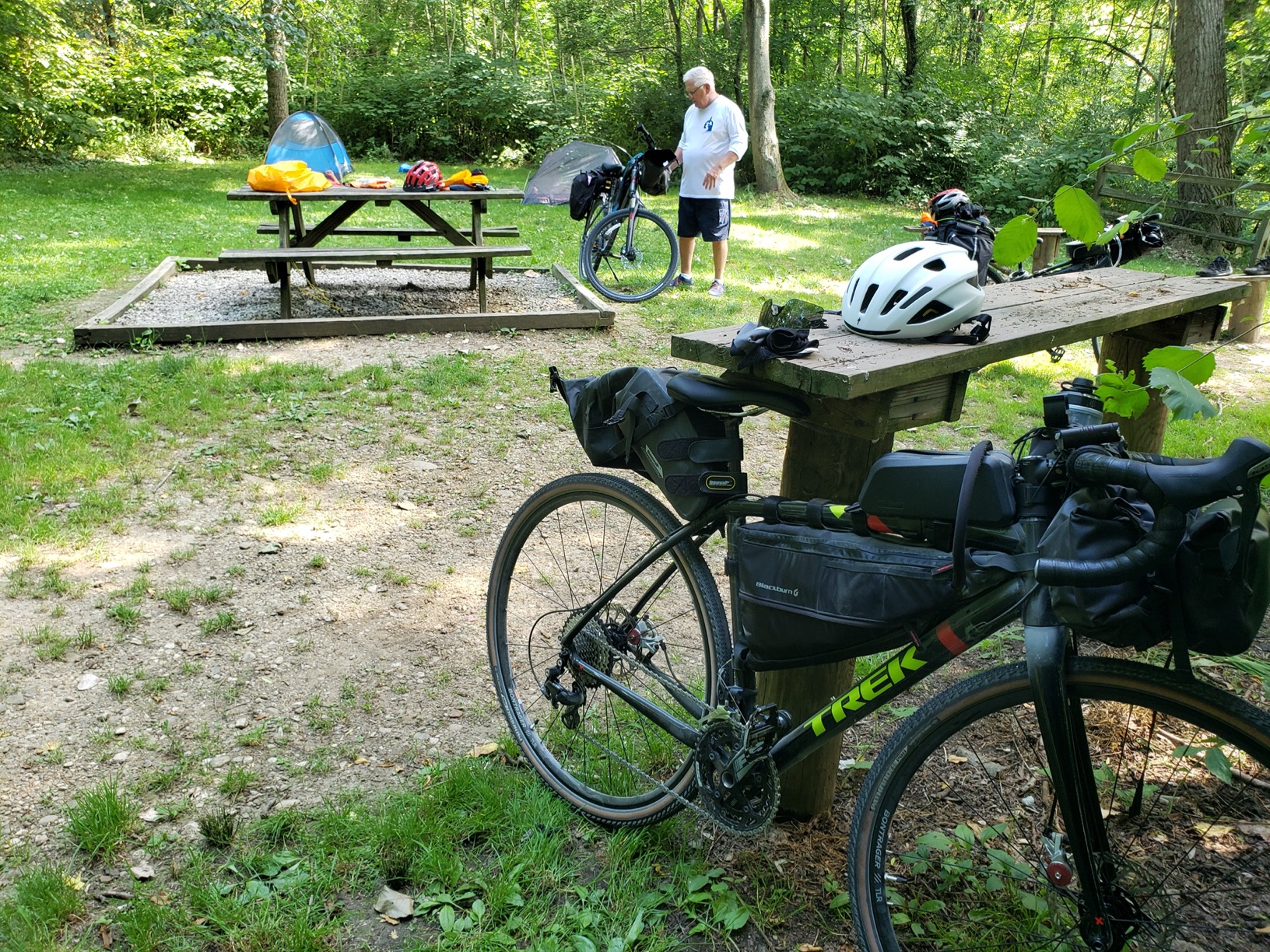
The Rhinowalk 13L is not a saddle bag in the road-cycling sense. It is a small bikepacking trunk that hangs under your seat, swallows sleeping gear, and keeps it bone dry. I strapped it to my gravel bike for a 320km trip through mixed weather, and everything inside came out dry through two full days of rain.
The 3000mm waterproof rating means the PVC polyester fabric shrugs off downpours, and the welded seams plus rubber strips at the needle joints block water entry at the most vulnerable spots. The four-point strap system kept the load stable even on dirt roads with full camping kit.
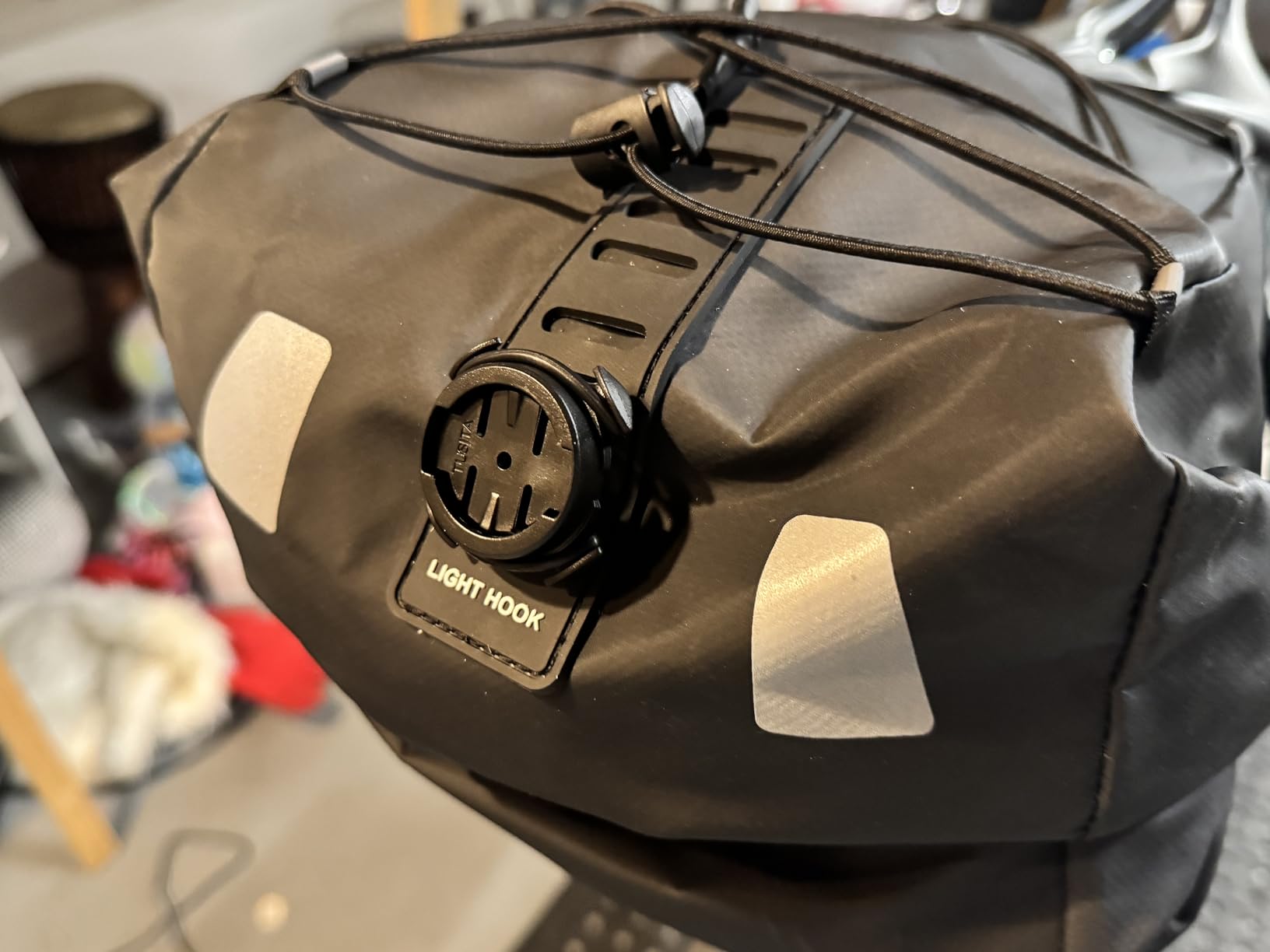
I loved the cross elastic rope on the back. I strapped a wet rain jacket and a half-full water bottle to it without anything shifting, which is the kind of grab-and-go convenience bikepackers need. The reflective strap and tail light loop gave me peace of mind on night rides between camp spots.
This is not a road bag. On a road bike the bag would rub the inside of your thighs on every pedal stroke and create massive drag. It shines on gravel, touring, and MTB setups where volume matters more than sleekness.
Why the Rhinowalk 13L works for bikepacking
The 3000mm waterproof rating is genuinely submersible-grade for the fabric, which is what you want in multi-day rain. The four-point strap system distributes load across the saddle rails and seatpost, so weight does not torque the bag sideways.
The cross elastic on the back panel is the small detail that makes a difference in camp. Wet rain shells, maps, and snack wrappers can all ride on the outside.
Where the 13L is too much bag
Road cyclists and commuters will hate it. The bulk is the point of bikepacking bags, and on a road bike it is just friction and drag.
It also lacks internal organization, so you need dry sacks inside if you want to partition gear.
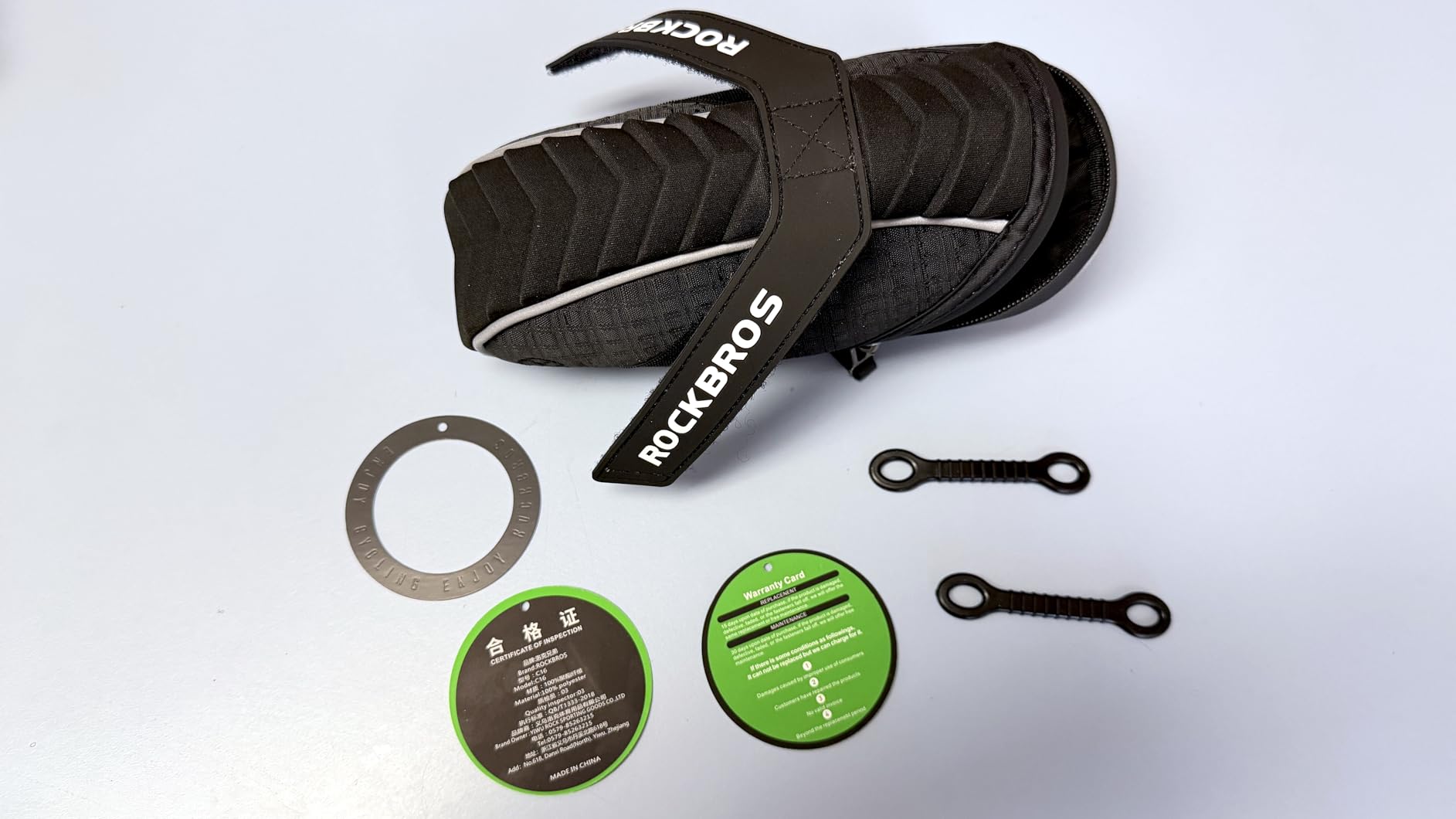
5. ROCKBROS Bike Saddle Bag 3D Shell – Best Budget Saddle Bag
ROCKBROS Bike Saddle Bag Under Seat Bicycle Seat Bag 3D Shell for MTB/Road
1.5L capacity
135g
3D shell
Waterproof polyester
Pros
- 3D shell wave cushion for shock resistance
- Waterproof taped zipper
- Reflective strap for visibility
- Mesh internal pockets
- Lifetime warranty on straps
Cons
- Stitches can leak in heavy rain
The ROCKBROS 3D Shell is the bag I would buy with my own money for a backup or a commuter. At 135 grams and 1.5 liters, it is the largest capacity bag under 150 grams on this list, and the price undercuts nearly every premium option. With more than 5,200 reviews averaging 4.6 stars, this is what the cycling community votes for on a budget.
The 3D shell with internal wave cushion is the standout feature. When the bag bounces on rough roads, the cushion absorbs impact and protects your phone, tools, and CO2 cartridges from rattling apart. I dropped my bike on a gravel shoulder with the bag full of tools, and nothing was damaged.
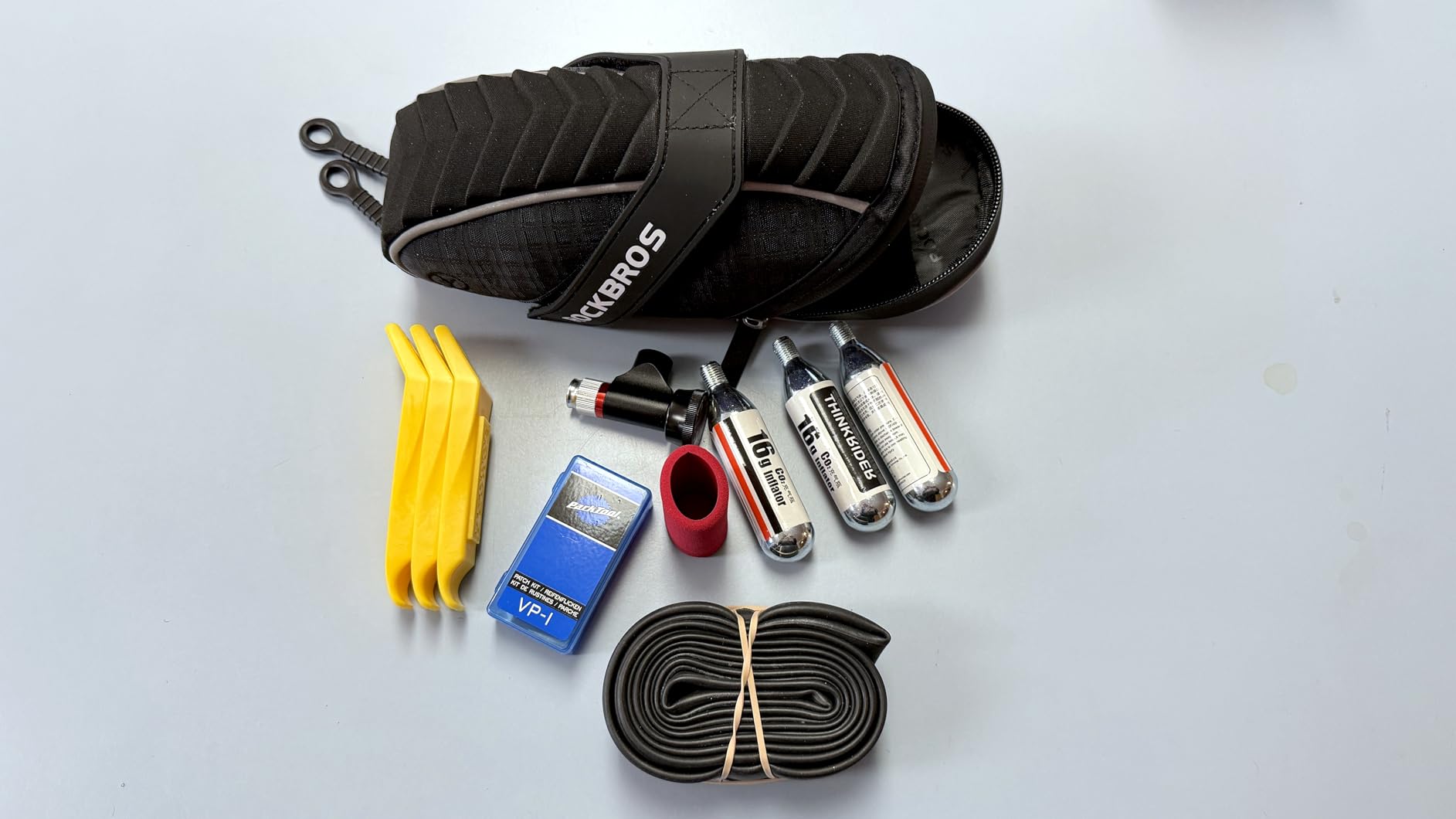
The mesh pockets inside are useful for organizing small items like cash, keys, and snack bars. The reflective strap around the bag is visible at night from a wide angle. The straps come with a lifetime warranty – a rare promise in this price range.
Waterproofing is water-resistant, not waterproof. In a steady rain for an hour, the taped zipper kept moisture out, but in a thunderstorm I would add a dry bag. The other reality is that 5,200 reviews means a small percentage had issues, mostly around strap wear after a year of use.
Why the ROCKBROS is the smart budget pick
The 1.5-liter capacity swallows everything plus a snack, and the 3D shell keeps it all organized. Lifetime warranty on the straps means even if they wear out, you are covered.
For commuters, new riders, and anyone who does not want to spend premium prices, this is the workhorse bag that delivers 90% of the performance at a fraction of the cost.
Where budget bags show their limits
The fabric is water-resistant, not fully waterproof. Heavy rain will eventually seep through the seams.
The straps, while warrantied for life, are the typical failure point over multiple seasons.
6. Lezyne Micro Caddy – Best Mini Saddle Bag for Essentials
LEZYNE Micro Caddy – S Bicycle Saddle Storage Bag
0.45L capacity
87g
3 compartments
Multi-tool sleeve
Pros
- Compact aerodynamic profile
- 87 grams total weight
- External multi-tool sleeve
- Labeled internal pockets
- Water-resistant zipper
Cons
- Must be removed to access items
- Limited capacity for long rides
The Lezyne Micro Caddy is what I run when I want a bag that practically does not exist on the bike. At 87 grams and roughly the size of a sandwich, it is one of the smallest functional seat packs available. The aerodynamic shape tucks under the saddle, and the nylon strap attachment is one of the simplest and most reliable systems I tested.
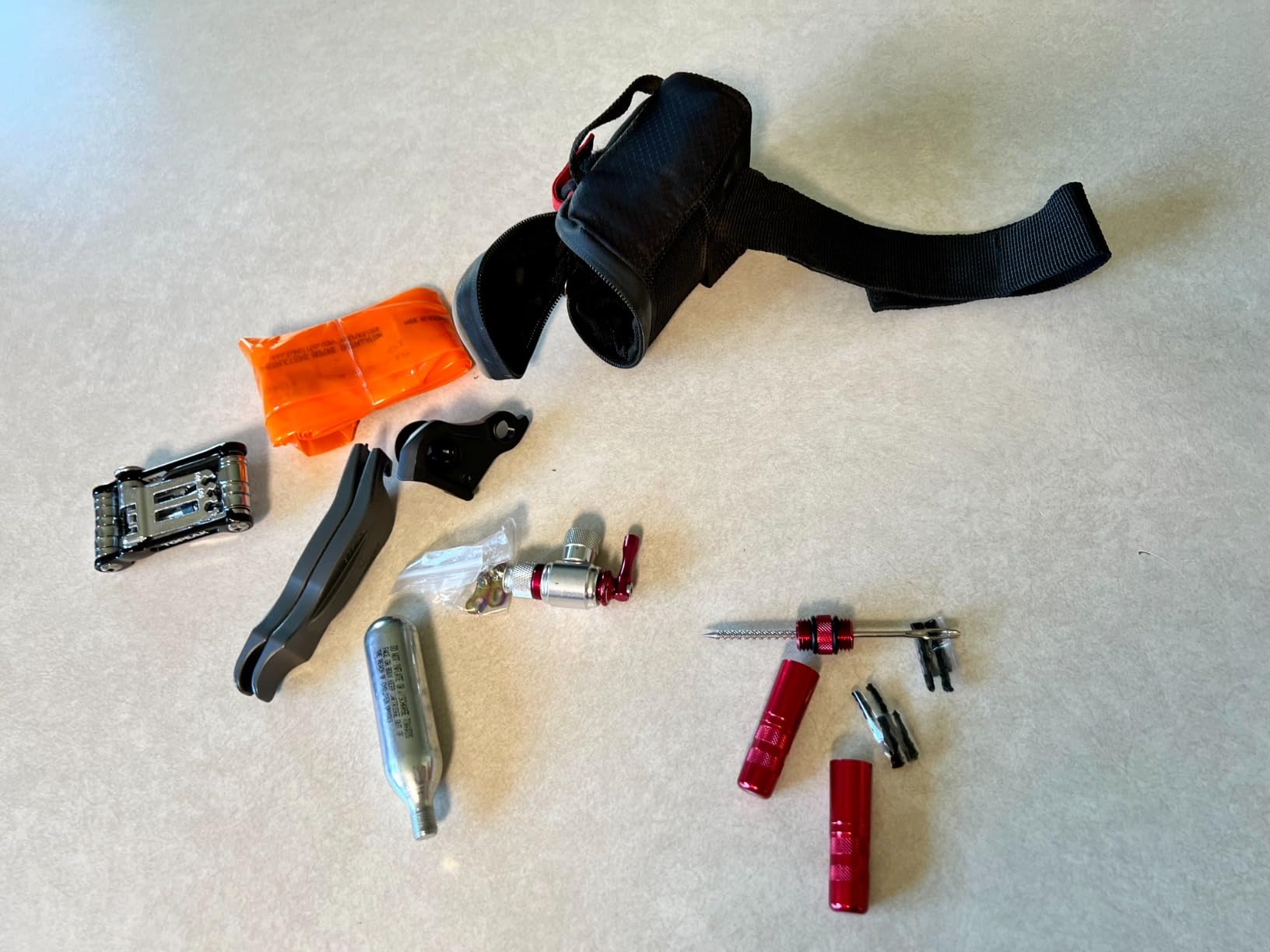
The external multi-tool sleeve is the small detail that makes this bag stand out. I keep a small Allen key and a patch kit in the sleeve, and they are accessible without unzipping the bag. The internal organization pockets are labeled, which sounds gimmicky but actually speeds up roadside repairs.
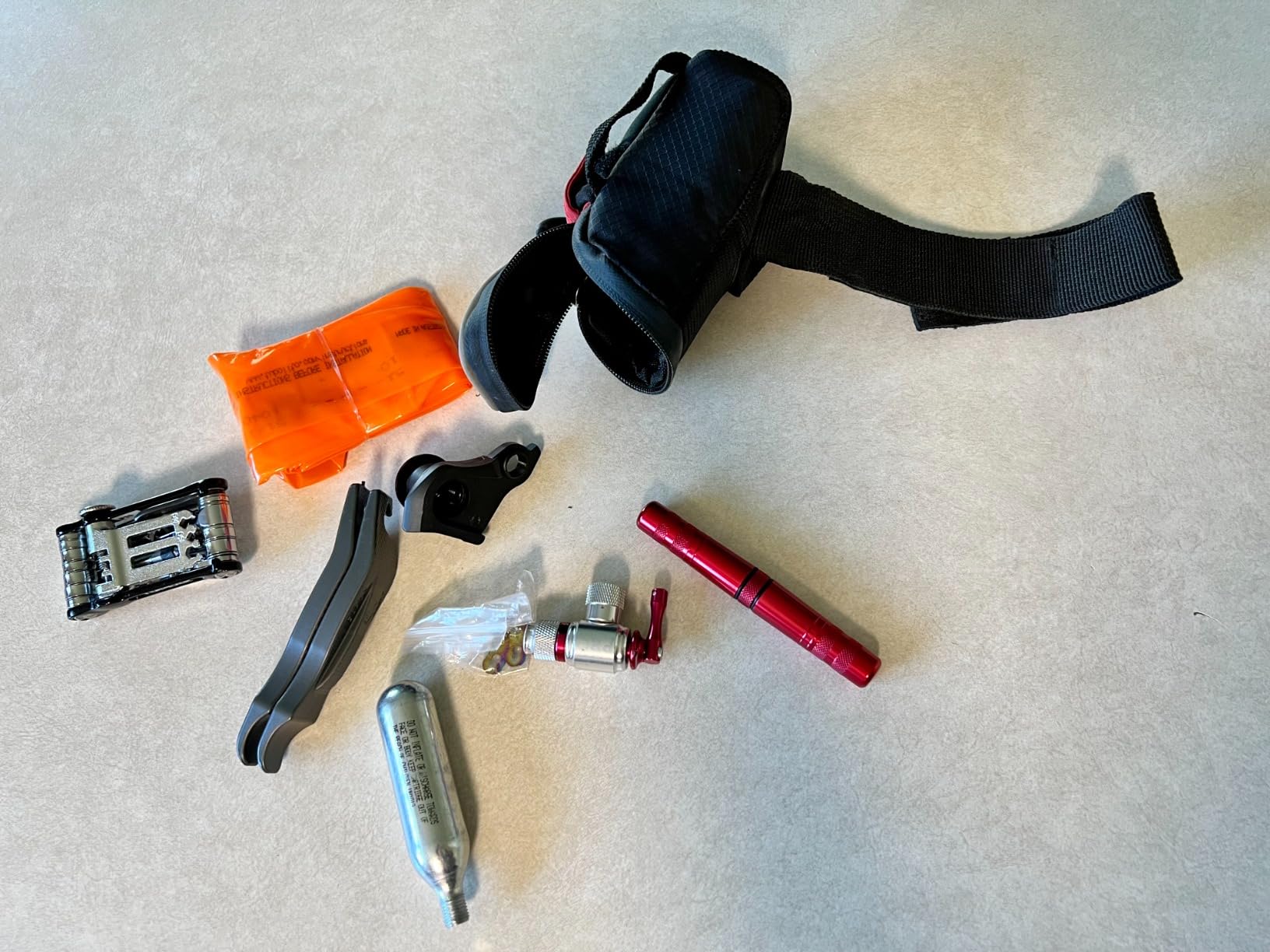
Reflective piping on the back adds visibility, and the water-resistant zipper keeps road spray out. Capacity is the limit – the bag fits one tube, one CO2 cartridge, a mini tool, and tire levers. That covers almost every roadside repair, but nothing else.
I found this bag ideal for fast road rides and crit racing where every gram matters. It is also a great backup bag for mountain bikers who want something minimal on their trail bike.
Why the Micro Caddy earns its spot
Organization is the headline feature. Labeled internal pockets make roadside repairs faster and less stressful. The external sleeve is genuinely useful.
At 87 grams, it is light enough that it does not compromise racing or fast training rides.
When the Micro Caddy is too small
All-day rides that need food, layers, or weather gear will not fit. Riders who want to carry a packed lunch need to size up.
Like most mini bags, you have to remove it to access items, which is awkward during races.
7. KOM Cycling Saddle Bag – Best for Garmin Varia Riders
KOM Cycling Saddle Bag Small – Bike Saddle Bag for Multi-Tool, Tube, Tire Levers, Securely Under Bike Seat for Cycling Radars with built in Radar Mount, Pocket for Apple AirTag .4 Liter Capacity
0.4L capacity
87g
ATOP lacing dial
Garmin Varia mount
Pros
- Integrated Garmin Varia radar mount
- ATOP dial for secure fit
- Inner pocket for Apple AirTag
- 87 grams lightweight
- Holds tools tube CO2 inflator
Cons
- ATOP connector can fail with heavy use
- May loosen on very rough terrain
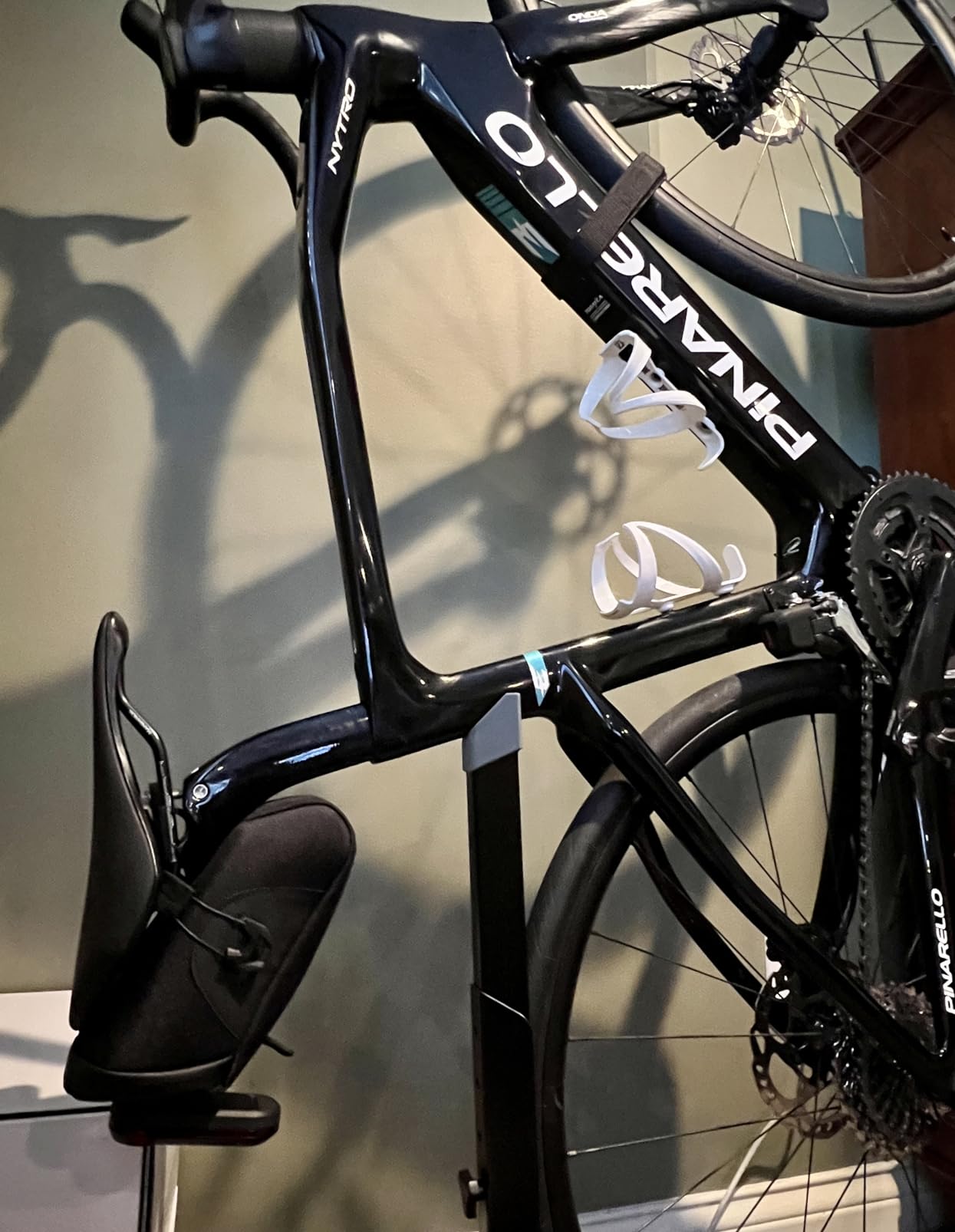
The KOM Cycling Saddle Bag solves a problem Garmin Varia owners know too well – where to mount the radar without an extra seatpost bracket. This bag has a dedicated mount that positions the Varia light at the correct height and angle. I ran it on my commuter for two months with a Varia RCT715 and never had to reposition the radar once.
The ATOP reel knob lacing system is a smart alternative to BOA-style dials. It is adjustable, secure, and easy to tighten one-handed. At 87 grams, it matches the Lezyne Micro Caddy for weight, and the inner pocket for an Apple AirTag is a useful touch for theft-prone cities.
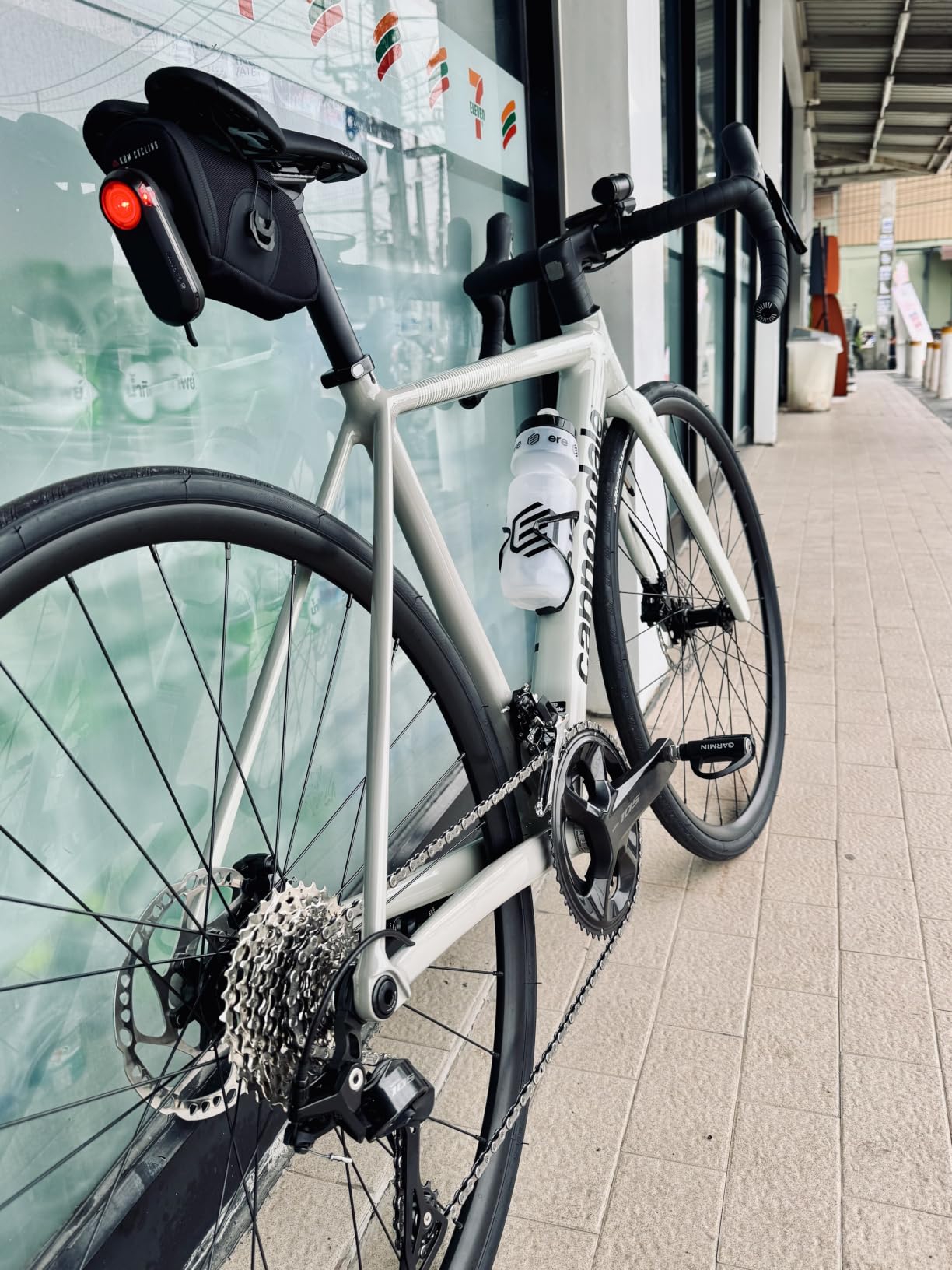
The 0.4L capacity fits a tube, mini tool, two CO2 cartridges, and tire levers, which covers nearly every roadside fix. The coated zipper adds weather resistance, and the heavy-duty nylon held up to daily commuting abuse.
Where it loses points is long-term durability. A small percentage of users report ATOP dial failures after a year of heavy use, and the bag can shift slightly on rough terrain without an extra seatpost strap. Neither is a deal-breaker for most riders, but worth knowing.
Why KOM is the smart Varia rider pick
The integrated mount means one less bracket on the bike, which keeps the cockpit clean. The AirTag pocket is useful for commuters and racers in high-theft areas.
For anyone already running a Garmin Varia, this bag is purpose-built and saves the cost of a separate mount.
When a different bag makes more sense
If you do not run a Garmin Varia, you are paying for a feature you will not use. The Blackburn Grid or Topeak Aero Wedge offer similar capacity with broader appeal.
Heavy-duty users should keep an eye on the ATOP dial after the first year.
8. Rhinowalk 10L Waterproof Saddle Bag – Best Aerodynamic Waterproof Bag
Rhinowalk Waterproof Bicycle Saddle Bag Bike Bag Under seat Bag 10L Rainproof Mountain Road Bike Seat Bag Bicycle Bag Professional Cycling Accessories
10L capacity
600D TPU
Welded seams
Aerodynamic shape
Pros
- 600D TPU waterproof construction
- High-frequency welded seams
- Aerodynamic shape
- Quick-release buckle
- Cold and age resistant
Cons
- Single compartment lacks organization
- Larger size than road bikes need
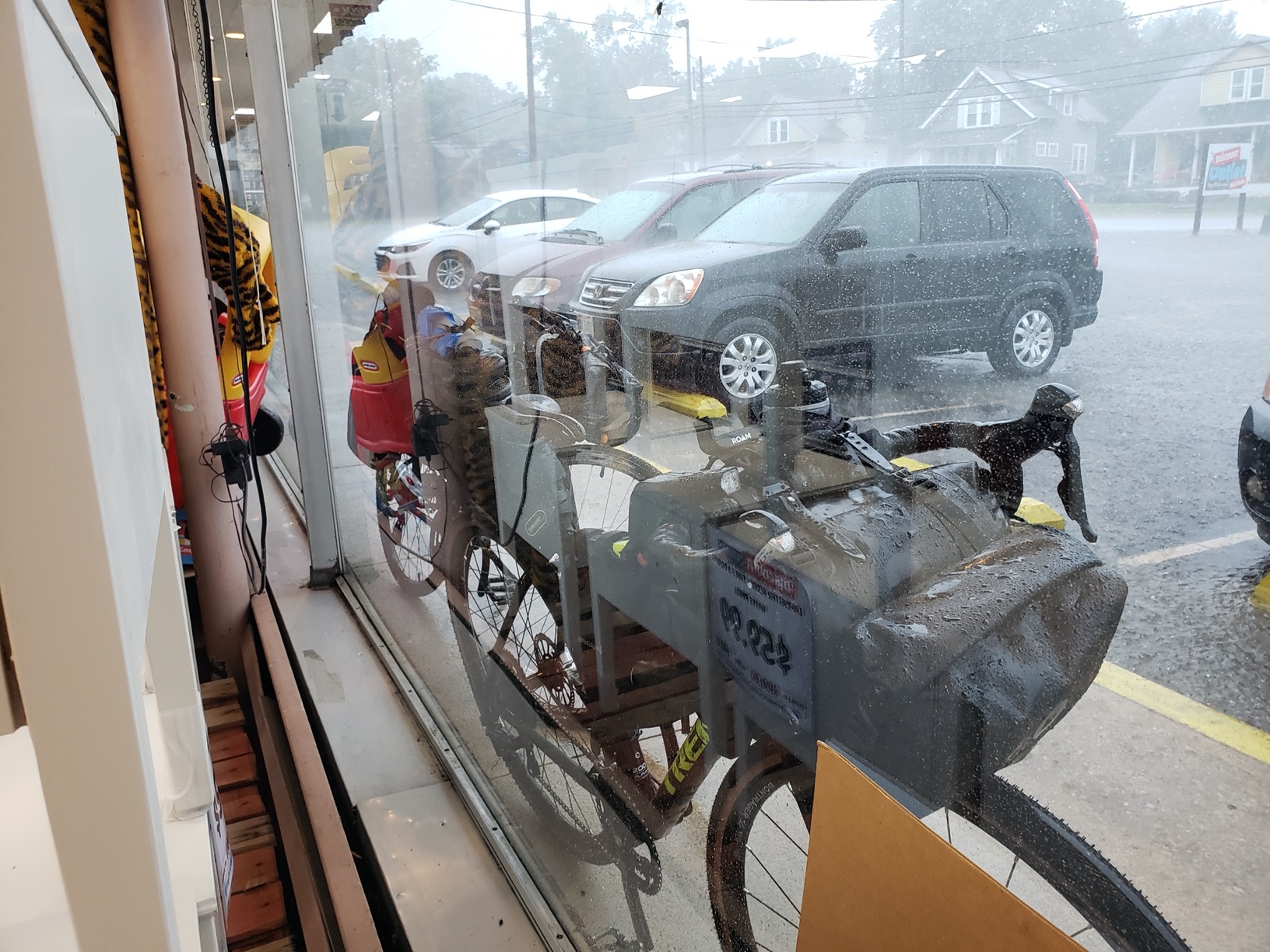
The Rhinowalk 10L is what I recommend to riders who commute year-round in real rain or who do light touring and want a single waterproof bag. The 600D TPU shell is fully waterproof, and the high-frequency welded seams mean there are no stitched needle holes for water to enter. After a wet commute through steady rain, the inside was bone dry.
The aerodynamic shape reduces drag compared to boxy roll-top bags, which matters on longer rides. The quick-release buckle makes the bag easy to remove and bring inside, and the loop-and-hook strap system stays tight even loaded down.
Capacity at 10 liters fits a change of clothes, food, tools, and a rain jacket, which makes this a true touring bag rather than a daily ride bag. The cold-resistant TPU material stays flexible in sub-freezing temps, which is unusual for cheaper bags.
The tradeoffs are clear – the bag is large, the single compartment lacks organization, and the price is mid-range. For what it does (full waterproofing, large capacity, aero shape), it is hard to beat.
Why the Rhinowalk 10L fits serious commuters
Full waterproofing with welded seams is the gold standard. The aerodynamic shape means the drag penalty is smaller than boxier designs.
For year-round commuters and light tourers, one bag that holds everything and stays dry simplifies the ride.
When the 10L is too much
Road cyclists on fast training rides do not need 10 liters. The size also creates leg rub on smaller frames.
Lack of internal organization means adding dry sacks or stuff sacks inside to keep gear sorted.
How to Choose the Right Saddle Bag?
Picking the best saddle bag comes down to matching the bag to your riding style, capacity needs, and weather exposure. There is no single winner across all categories, which is why eight bags made this list. Below are the factors I weighed during testing and what I recommend for each kind of rider.
Match capacity to ride length
For rides under two hours, a 0.4 to 0.45-liter mini bag like the Blackburn Grid or Lezyne Road Caddy covers everything you actually need – a tube, a CO2 cartridge, a mini tool, and tire levers. Overstuffing a mini bag creates bounce and drag.
For all-day rides and light touring, a 1 to 1.5-liter bag like the Topeak Aero Wedge or ROCKBROS 3D Shell adds room for a thin rain jacket, a snack, and a phone. This is the sweet spot for most road and gravel riders.
For bikepacking and multi-day trips, jump to 10 liters or more. The Rhinowalk 13L is the sweet spot for overnight trips, while dedicated bikepackers will also add a frame bag and handlebar roll.
Waterproofing is a sliding scale
Water-resistant fabric and zippers handle road spray and light rain. Fully waterproof means welded seams and taped zippers, which only bags in the Rhinowalk line and a few premium options deliver. The honest answer is that “waterproof” rarely means truly submersible – look for a 3000mm+ water pressure rating for serious rain.
For year-round commuters, waterproof construction pays for itself in dry socks. For weekend warriors, water-resistant plus a small dry bag inside covers most situations.
Attachment system matters more than people think
Velcro straps are the most common and the most affordable. They work, but velcro wears out, especially on baggy shorts with stretchy fabric. Look for reinforced Velcro with a buckle backup for rough terrain.
Buckle-and-strap systems like Topeak’s quick-release are faster to swap between bikes and more durable, but slightly heavier. BOA and ATOP dial systems are the premium option – precise and secure, but the dial itself can be the failure point.
For dropper-post compatibility, slim profile bags with adjustable straps are essential. The Blackburn Grid’s polymer clamp guard was the most dropper-friendly setup I tested.
Weight is real for racers and not real for commuters
The difference between 31 grams (Blackburn Grid) and 500 grams (a loaded Rhinowalk 13L) is invisible unless you race or ride fast group rides. For commuters and tourers, durability and capacity matter far more than weight.
Dropper post compatibility is non-negotiable for MTB
Most modern mountain bikes have dropper posts, and a bag that contacts the stanchion will scratch it. Slim profile bags with adjustable Velcro or dedicated dropper-friendly straps are a must. I checked each bag on both a dropper-post gravel bike and a full-suspension MTB during testing.
Night riding visibility features are worth it
Reflective trim and tail light clips cost almost nothing and add genuine safety. The Blackburn Grid, Topeak Aero Wedge, and Rhinowalk bags all include these features. The Lezyne and KOM Cycling bags add reflective accents but skip the tail light clip.
Frequently Asked Questions About Saddle Bags
Who makes the best saddle bags?
After testing eight bags over 1,400km across road, gravel, and mountain terrain, Blackburn, Topeak, and Lezyne consistently delivered the best balance of weight, durability, and attachment security. Blackburn earned our Editor’s Choice for the Grid Small, Topeak the Best Value with the Aero Wedge Pack, and Lezyne the Best Lightweight with the Road Caddy. For waterproof bikepacking, Rhinowalk’s welded-seam bags are the standout choice in 2026.
Do pros use saddle bags?
Yes. Most pro road teams run mini saddle bags for spare tubes and CO2 cartridges, especially on cobbled Classics like Paris-Roubaix and Tour of Flanders. The bags are typically under 100 grams and barely visible to cameras. In the pro peloton, riders do not wear backpacks or jersey pockets large enough to carry spare tubulars, tubes, and inflators, so the saddle bag is the practical choice for long days in the saddle.
What is the most stable saddle bag?
The most stable saddle bag in our testing was the Rhinowalk 13L, thanks to its four-point strap system that distributes load across the saddle rails and seatpost. Among smaller bags, the Topeak Aero Wedge Pack stayed rock solid through cobblestones, and the Blackburn Grid’s polymer-coated Velcro remained rattle-free over rough chip-seal and gravel. Stability comes down to strap system, weight distribution, and aerodynamic profile rather than raw capacity.
What is the average lifespan of a saddle bag?
A well-made saddle bag lasts 3 to 5 years of regular riding, though the strap system usually fails first. Velcro straps typically last 2 to 4 years before losing grip, while buckle and quick-release systems often outlast the bag itself. Premium materials like 1200D polyester (Topeak) and welded TPU (Rhinowalk) extend life significantly. Budget bags like the ROCKBROS offer lifetime warranties on straps, which can extend overall bag life considerably with periodic strap replacement.
Final Verdict: Which Saddle Bag Should You Buy?
After riding with all eight bags across road, gravel, mountain, and bikepacking setups, the verdict depends on what you actually do on the bike. There is no universal winner – the best saddle bags are the ones matched to your ride length and terrain.
For most road cyclists and gravel riders, the Blackburn Grid Small is the best saddle bag overall. It is the lightest, fits essentials for any ride under three hours, and the padded structure keeps gear organized. The reflective sides and tail light clip also deliver real night-riding safety.
If you want maximum value, the Topeak Aero Wedge Pack is hard to beat. The 1200D polyester has outlasted everything else I tested, and the 2-year warranty backs the build quality. For commuters on a budget, the ROCKBROS 3D Shell at half the price offers shock-protected storage that punches well above its weight.
Bikepackers and year-round commuters should look at the Rhinowalk 13L or Rhinowalk 10L. The 3000mm waterproof fabric and welded seams keep gear dry through multi-day rain, and the four-point strap system stays stable on rough roads.
Whichever best saddle bag you choose from this list for 2026, match capacity to ride length, choose waterproofing that fits your climate, and confirm dropper-post clearance if you ride mountain or gravel. The right bag disappears on the bike, and that is exactly what the best saddle bags should do.