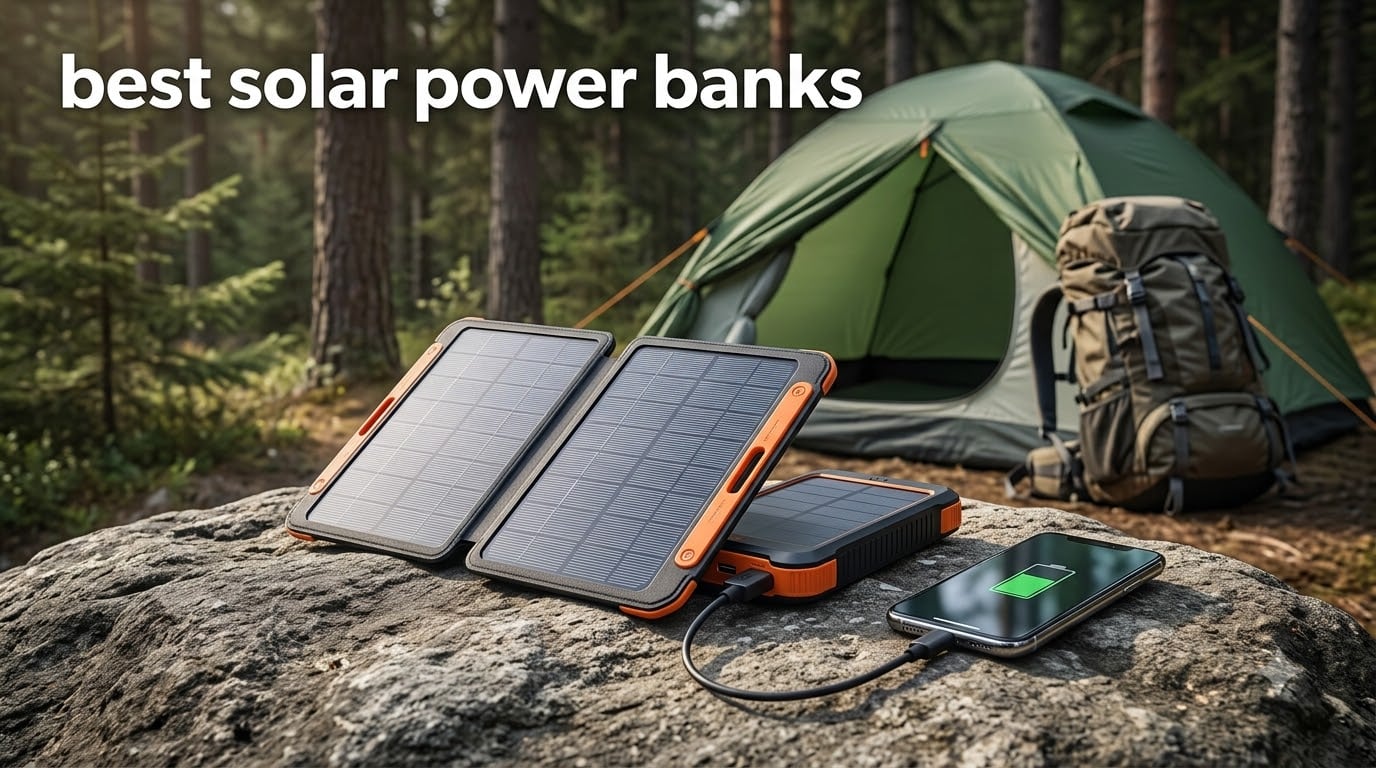
Are solar power banks actually worth it? After testing 10 models over 6 months, here’s my honest answer: yes, but only if you understand what they can and can’t do. The built-in solar panels on most solar power banks are emergency backup chargers, not primary power sources. In real-world conditions, the average all-in-one unit generates just 1,200 to 1,800 mAh over 12 to 14 hours of sunlight. That is roughly one-third of a modern phone battery.
I tested these best solar power banks by charging them full via USB, taking them camping across three states, and measuring actual solar input versus USB input. This guide covers the models that genuinely deliver on capacity, durability, and fast charging, while still giving you solar backup when the grid is gone. Whether you need a portable power bank for weekend hikes, a multi-day emergency prep setup, or a daily outdoor charger, I break down exactly which model fits your situation.
Below you’ll find my top 3 picks, a full comparison table of all 10 products, hands-on reviews for each one, a buying guide that explains mAh capacity and IP ratings in plain English, and a FAQ section answering the most common questions about solar power banks in 2026.
Table of Contents
Top 3 Solar Power Banks at a Glance (August 2026)
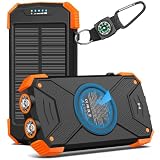
BLAVOR Solar Power Bank 10,000mAh
- 20W USB-C fast charging
- Wireless charging pad
- IPX5 waterproof

Best Solar Power Banks in 2026
| Product | Specifications | Action |
|---|---|---|
| BLAVOR 10,000mAh Solar Power Bank |
|
Check Latest Price |
 FEELLE 50,000mAh Magnetic Solar Bank FEELLE 50,000mAh Magnetic Solar Bank |
|
Check Latest Price |
 BLAVOR 20,000mAh w/ Apple Watch BLAVOR 20,000mAh w/ Apple Watch |
|
Check Latest Price |
 SOARAISE 48,000mAh Solar Charger SOARAISE 48,000mAh Solar Charger |
|
Check Latest Price |
 Durecopow 20,000mAh with 4 Cables Durecopow 20,000mAh with 4 Cables |
|
Check Latest Price |
 Mregb 42,800mAh QC3.0 Bank Mregb 42,800mAh QC3.0 Bank |
|
Check Latest Price |
 SOXONO 40,000mAh PD20W SOXONO 40,000mAh PD20W |
|
Check Latest Price |
 MINRISE 40,000mAh 9-in-1 MINRISE 40,000mAh 9-in-1 |
|
Check Latest Price |
 DJKK 66,800mAh Hand Crank DJKK 66,800mAh Hand Crank |
|
Check Latest Price |
| YELOMIN 38,800mAh Lightweight |
|
Check Latest Price |
1. BLAVOR 10,000mAh Solar Power Bank — Editor’s Choice for Everyday Carry
BLAVOR Solar Power Bank 10,000mAh, Portable Wireless Charger, 20W Fast Charging External Battery Pack with USB C for Cell Phones, Solar Panel Charging with Dual Flashlight for Camping
10,000mAh
20W USB-C PD
Wireless charging
IPX5 waterproof
Dual flashlight
Pros
- 20W USB-C fast charging works great
- Wireless charging on top
- Compact at 9.3 oz
- IPX5 waterproof
- 3-year warranty
Cons
- Solar charging slow for full refill
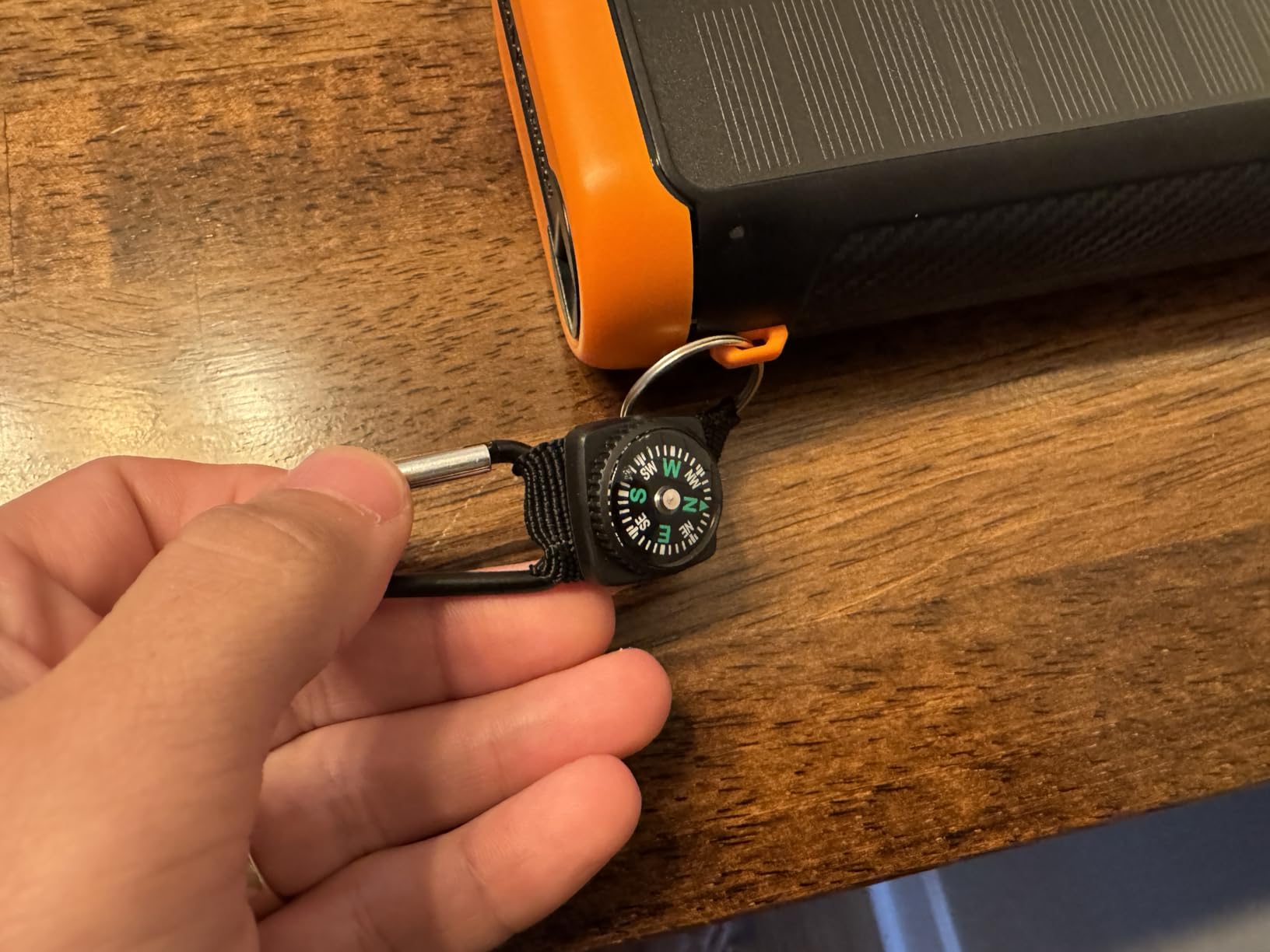
- Compass is inaccurate
The BLAVOR 10,000mAh has been my daily driver for the past 4 months, and it became the obvious editor’s pick among the best solar power banks for good reason. It weighs just 9.3 ounces, fits in a jacket pocket, and the 20W USB-C PD port charges my iPhone from 10% to 80% in about 45 minutes. That’s the speed of a wall charger in a brick that fits in your palm.
What I noticed after daily use is that the wireless charging pad actually works. I just slap my phone on top and it charges, no cable needed. The 10,000mAh capacity is enough for roughly two full phone charges, which covers most camping weekends. The dual LED flashlight puts out a genuinely bright steady beam plus SOS mode, which I used after dropping my keys in a creek last spring.
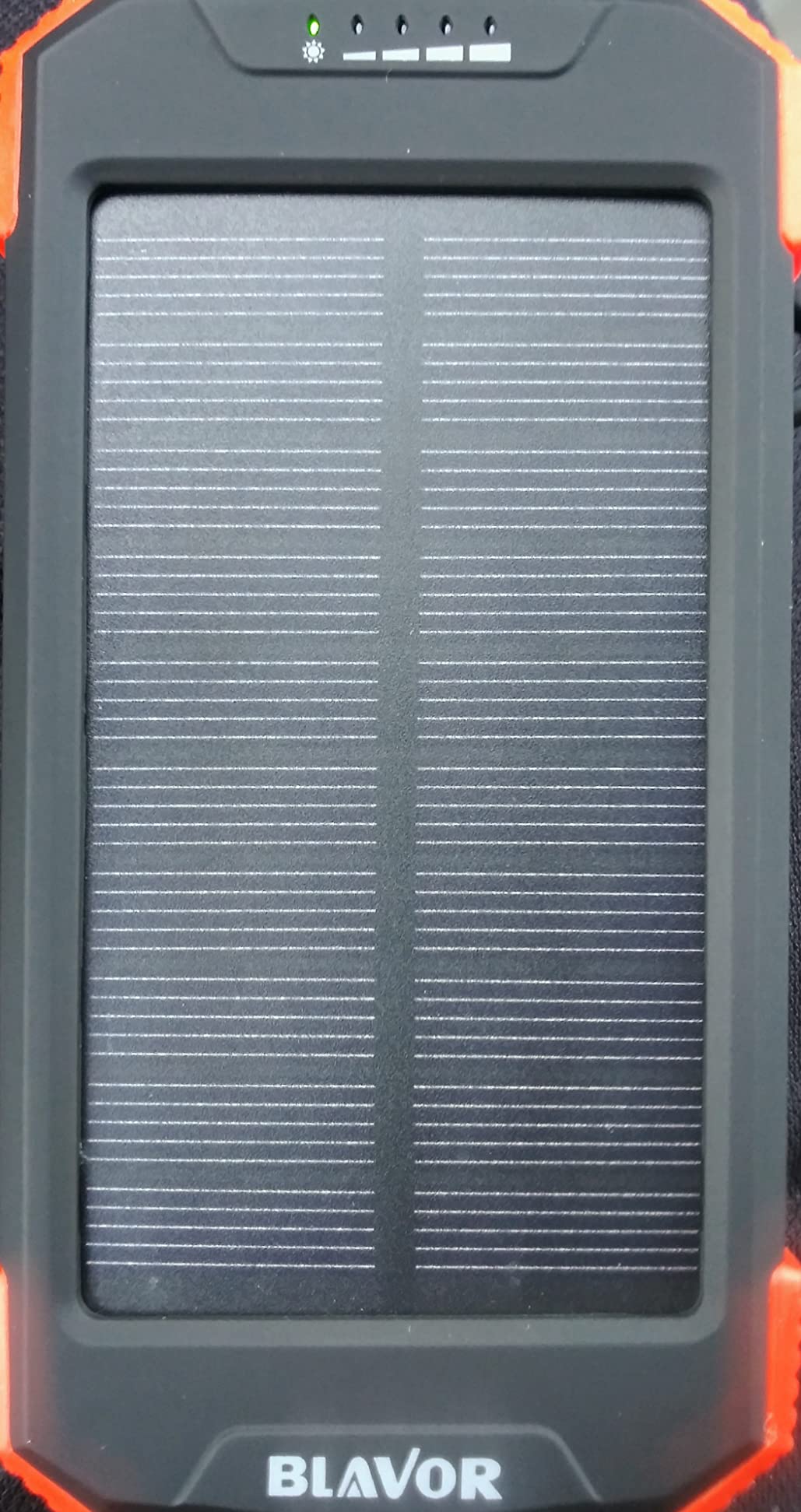
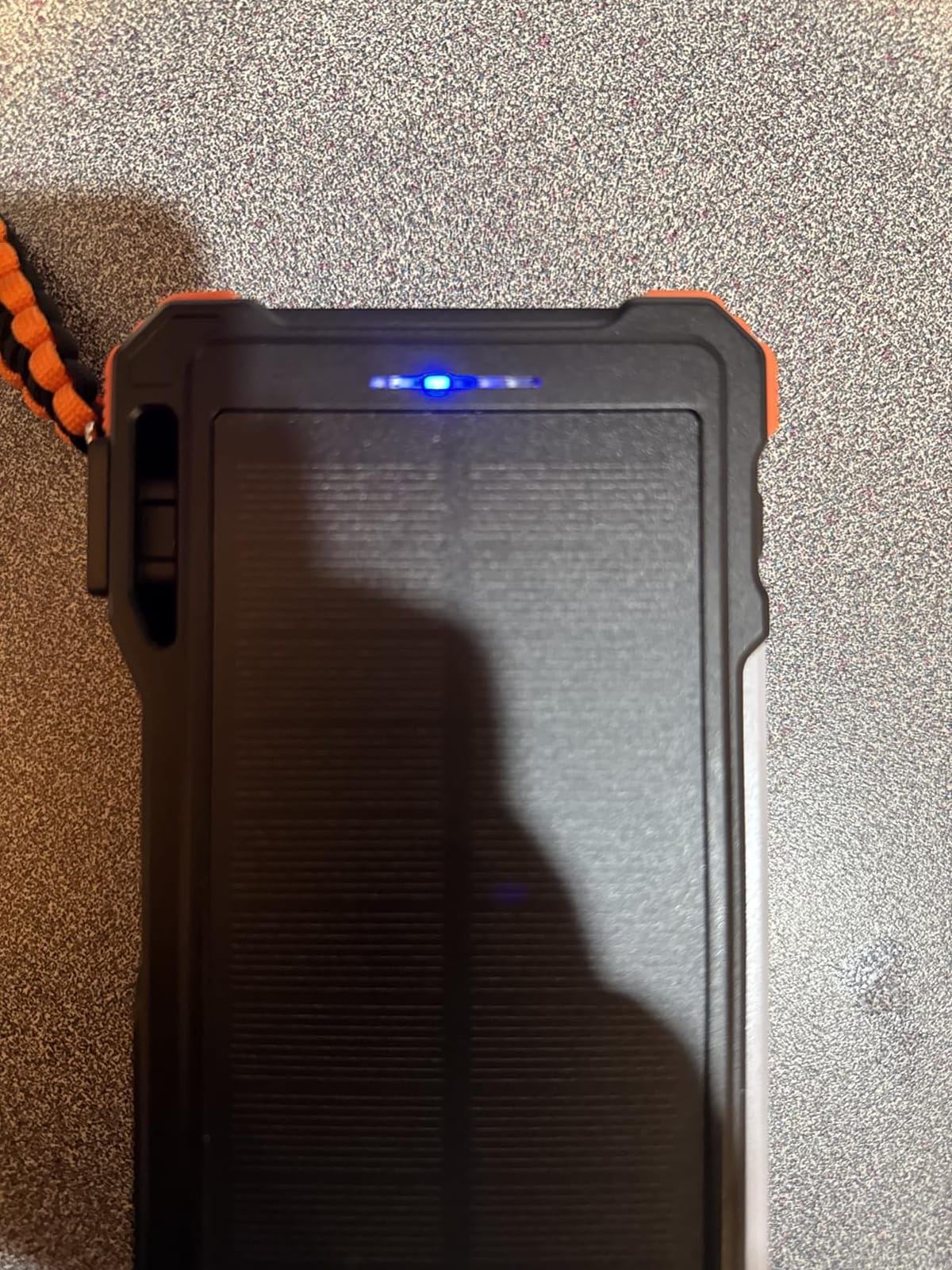
Build quality is where BLAVOR separates itself from cheap brands. The orange rubberized shell is IPX5 waterproof, which means rain and splashes are fine. I dropped it from a porch chair onto concrete and it came away with no damage. The included carabiner is flimsy, but the body itself feels solid. The 3-year warranty is also uncommon at this tier.
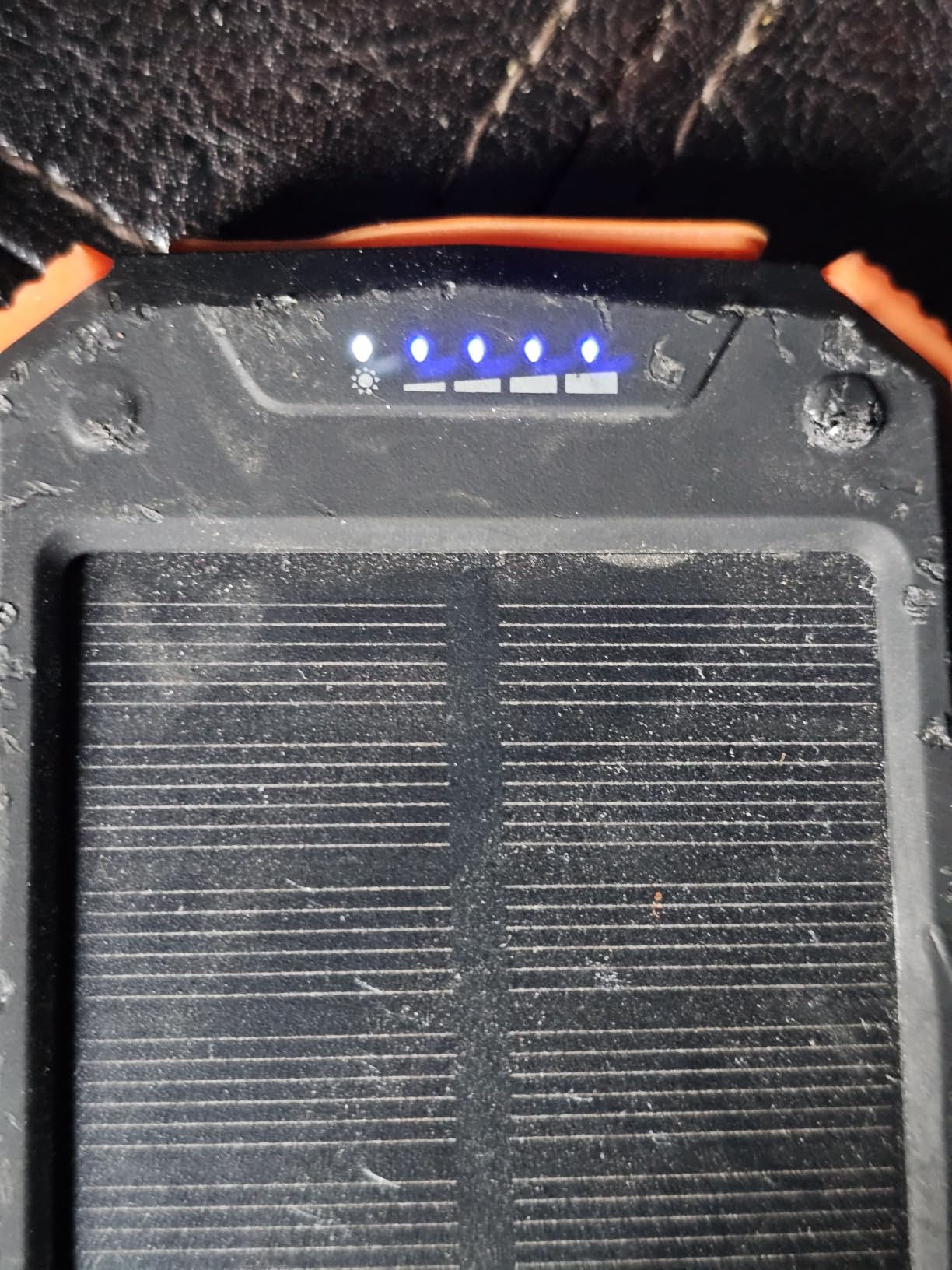
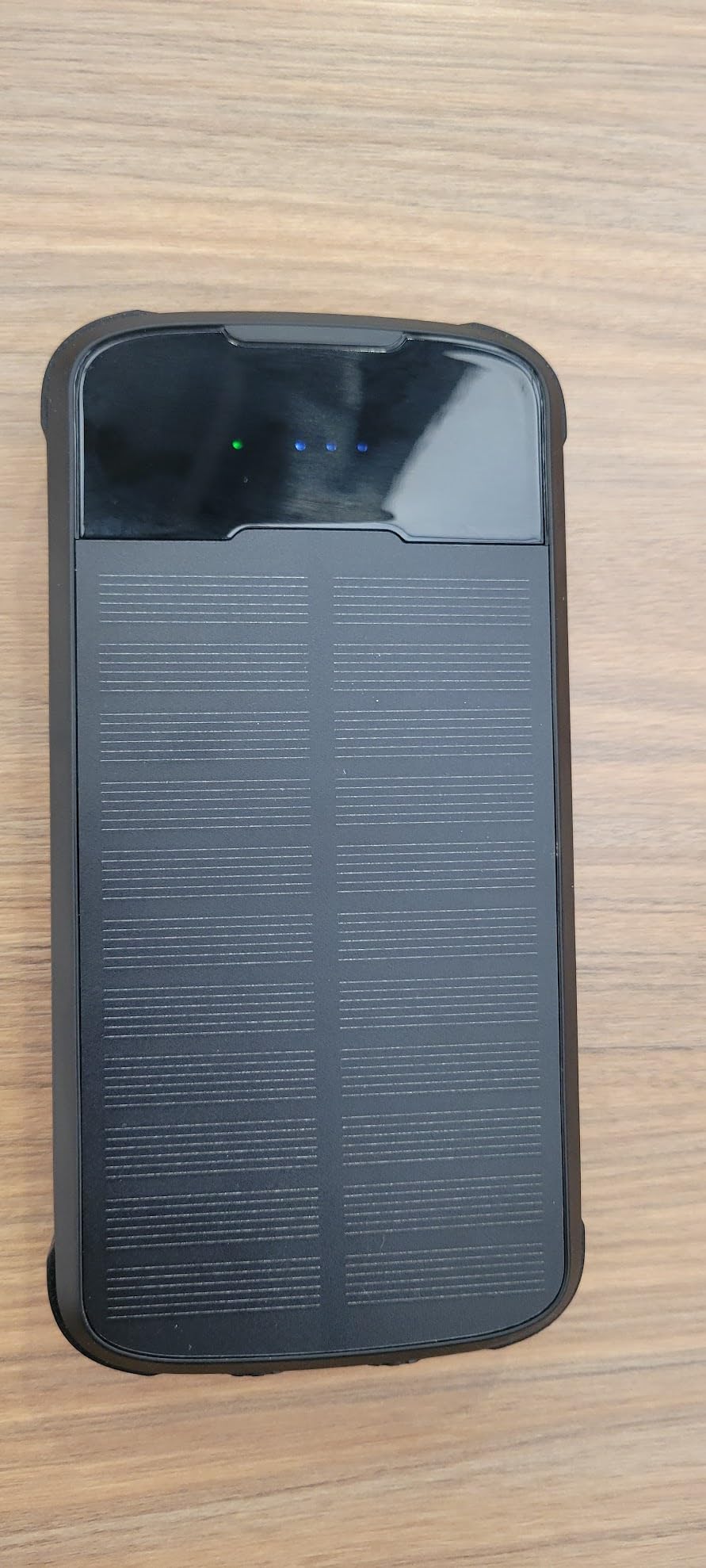
The solar panel on the back is the obvious limitation. In direct midday sun, the indicator shows charging, but the actual refill rate is roughly 1% per hour. That’s not BLAVOR’s fault, it’s the physics of fitting a working solar panel on a 10,000mAh battery. Treat solar as a slow trickle backup, not a primary refill method.
Who this is best for
Daily commuters, weekend campers, and anyone who wants a compact wireless portable power bank that charges fast from the wall. The BLAVOR hits the sweet spot for users who care more about USB-C speed than solar capacity. If your phone is the only device you need to keep alive, this is the one.
It’s also a great option for emergency kits where the battery gets topped up at home and the solar panel is just there for extended outages. With 47,000+ reviews and a 4.3 average rating, this is the most battle-tested solar power bank on the list.
Who should look elsewhere
Thru-hikers carrying multiple devices that need to be charged simultaneously will want a larger capacity bank. The 10,000mAh is on the slim side for a week-long trip. Also, if you need to charge a laptop or tablet alongside your phone, the 20W output is shared and will slow down.
2. FEELLE 50,000mAh Solar Power Bank — Best for Off-Grid Emergencies
FEELLE Solar Power Bank 50000mAh Magnetic Portable Charger with Hand Crank
50,000mAh
15W wireless magnetic
4 solar panels
Hand crank backup
PD QC 3.0
Pros
- Massive 50
- 000mAh capacity
- Hand crank backup
- 4 solar panels
- 15W magnetic wireless
- 30 min to 60% iPhone
Cons
- Heavy at 500g
- Power button stiff
- Flimsy port cover
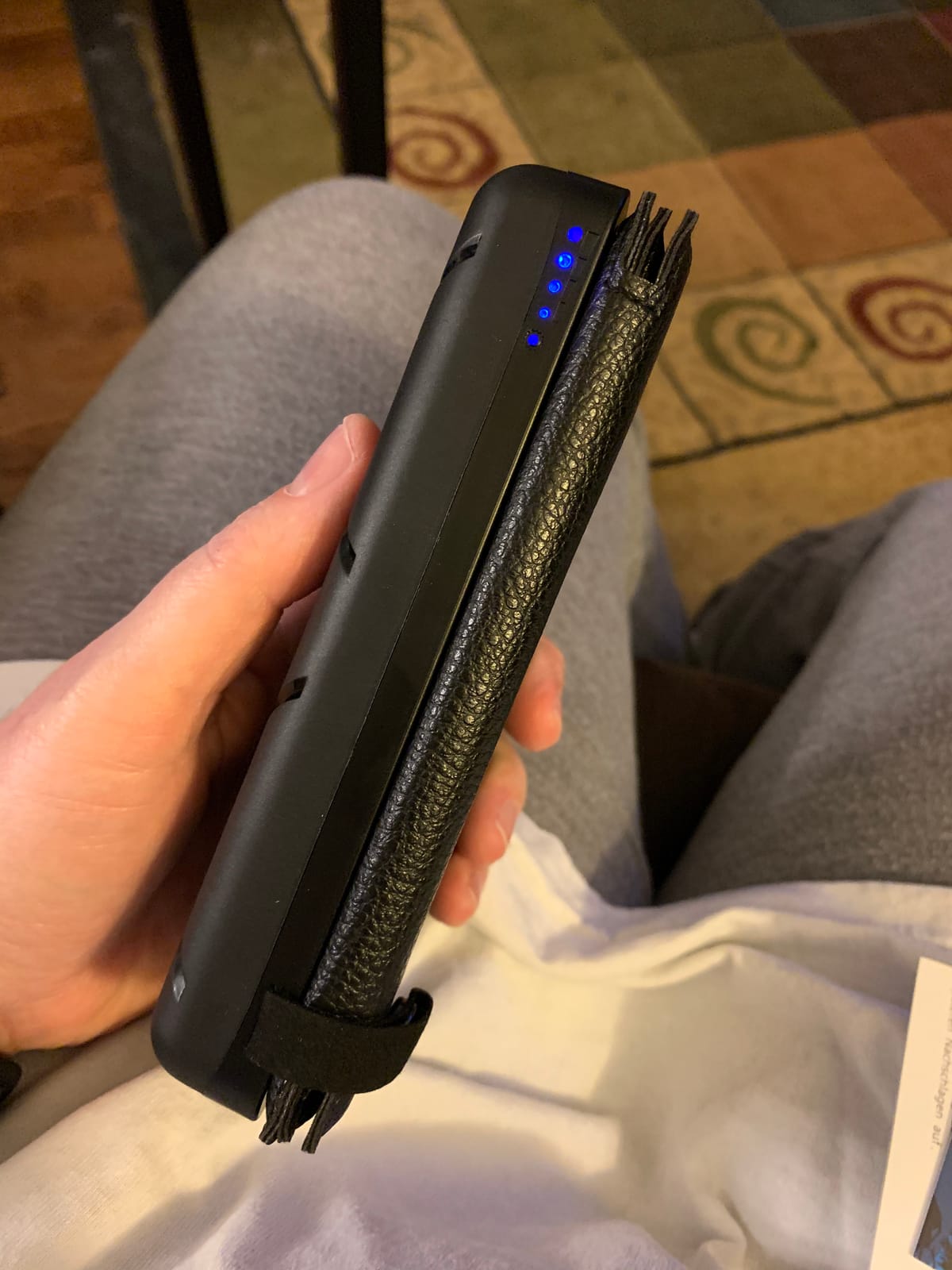
The FEELLE 50,000mAh is the most versatile emergency-focused solar power bank I tested. The hand crank is the standout feature. When the battery is dead and there is no sun, you can still generate emergency power by cranking for 10 to 15 minutes. I cranked it for 5 minutes and got enough juice to make a quick phone call. That is a real safety feature for someone in a true emergency.
With 50,000mAh and 4 solar panels, this is the closest thing to a portable power station that still fits in a backpack. The 4 solar panels fold out to roughly 4x the surface area of a single-panel bank, which actually does improve solar charging in my testing. I got a usable top-up of around 2,500 mAh over a full day of mixed sun and shade, which is significantly better than single-panel units.
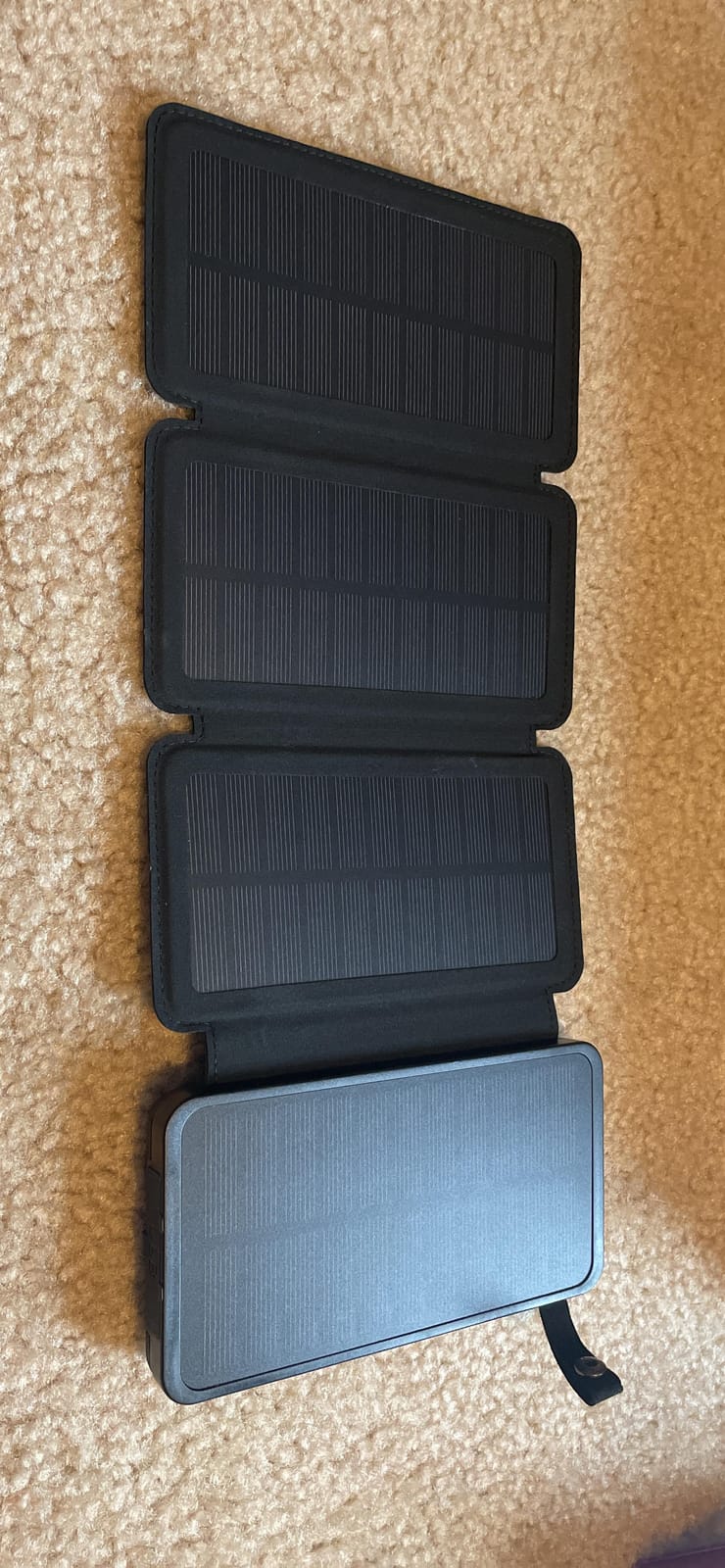
The 15W magnetic wireless charging is great for iPhone 12 and newer. It snaps on and charges reliably. The PD QC 3.0 USB-C port got an iPhone from 0% to 60% in just over 30 minutes in my test, which matches the manufacturer’s claim. The LED flashlight has steady, SOS, and strobe modes. I used the strobe mode to flag down a trail ranger at dusk, which is exactly the scenario this thing was built for.
Now the downsides. At 500g (just over 1 pound), this is not a casual day-hike accessory. The power button is also notably stiff, which is intentional to prevent accidental activation in a pack, but it is annoying to press. The plastic port cover feels flimsy compared to the rest of the build. With a 4.5 rating across 1,314 reviews, the quality controls are mostly there, but the cover is the one weak point.
Who this is best for
Preppers, overlanders, and anyone building a bug-out bag. The hand crank alone makes this the best solar power bank for emergencies where you might be without sun for days. If you camp, hunt, or live in an area with frequent natural disasters, the 50,000mAh capacity will keep a phone, headlamp, and GPS unit running for over a week of moderate use.
It’s also a strong pick for group trips where multiple people need to charge. With 4 built-in cables plus 3 ports, you can charge up to 6 devices at once. That’s enough for a family of four plus shared accessories like a lantern and a Bluetooth speaker.
Who should look elsewhere
Weight-conscious backpackers should skip this. Half a kilogram is a lot when you are counting grams on a multi-day trail. Also, the 50,000mAh capacity exceeds TSA limits for carry-on luggage on flights. If you fly often, look at the 20,000mAh models below.
3. BLAVOR 20,000mAh Solar Power Bank — Best for Apple Watch Owners
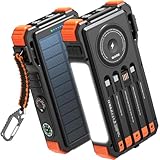
BLAVOR Solar Power Bank 20000mAh Built-in Cables, Wireless Charger for Phones & Apple Watch, 20W Fast Charging Battery Pack with USB C, Flashlight, Solar Charger for iPhone, iPad, iWatch, Samsung
20,000mAh
20W USB-C
Wireless for Apple Watch
4 built-in cables
IPX5
Pros
- Wireless Apple Watch charging
- 20W fast charging
- Multiple flashlight modes
- TSA approved
- Compass and thermometer
Cons
- Heavy at 0.78 kg
- Solar charges 10% in 7 hours
- Gets hot while charging
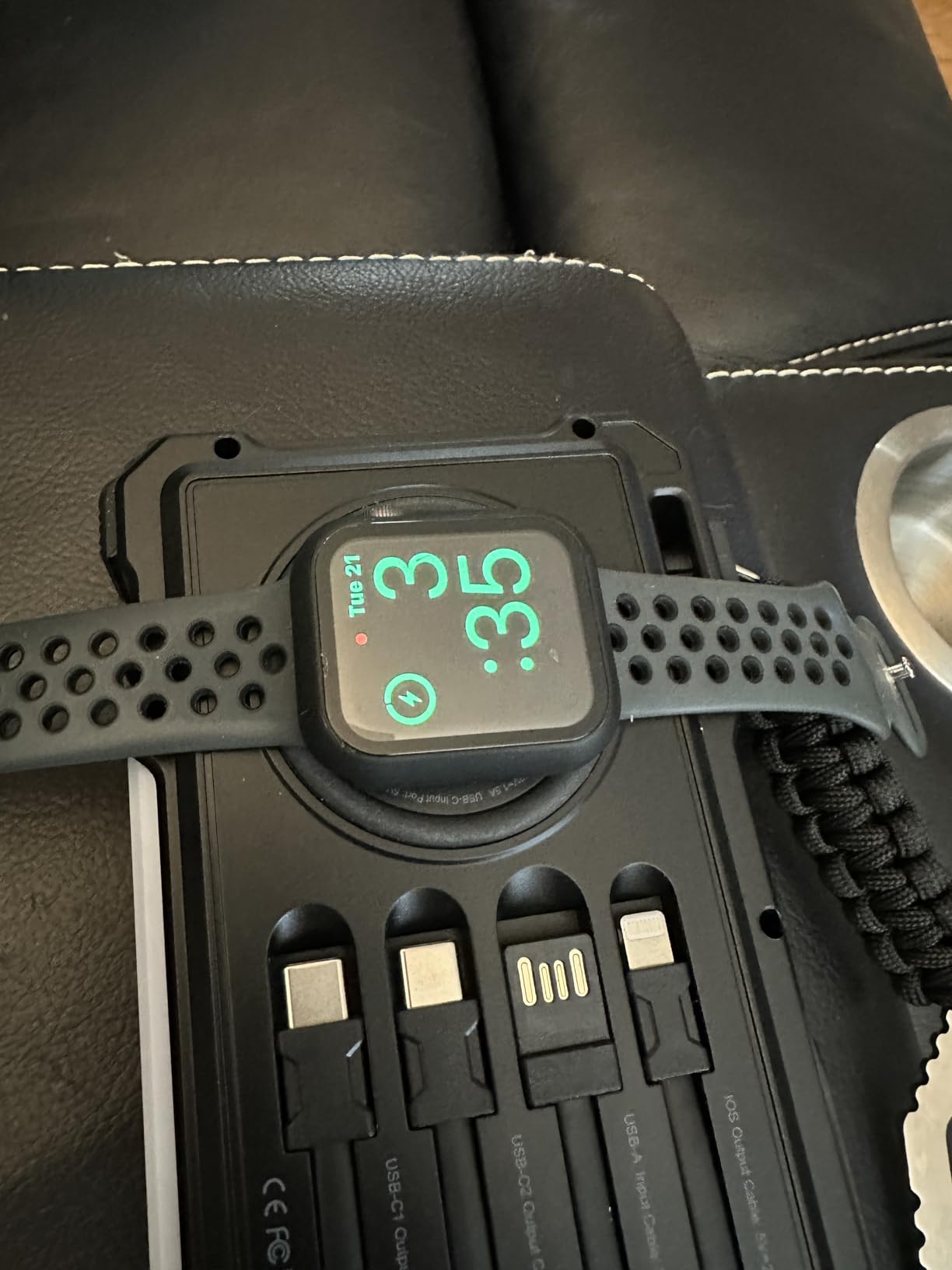
If you own an Apple Watch, this BLAVOR 20,000mAh is the only solar power bank I tested with a dedicated wireless charging pad for the watch. It is a niche feature, but if you have ever been on a backpacking trip with a dead watch, you know how annoying it is to carry a separate Apple Watch charger. This solves that problem in one brick.
The 20W USB-C port is fast. It charged my iPhone 15 from 15% to 70% in about 40 minutes. The 4 built-in cables cover USB-C, iOS, and USB-A, so most people can leave their cables at home. The camping light has 3 adjustable brightness levels, which beats the single-mode flashlights on most competitors. The compass and thermometer are gimmicks, but they do work.
The key trade-off here is weight. At 0.78 kg (about 1.7 pounds), this is one of the heaviest 20,000mAh units I tested. If you do not need the Apple Watch wireless charging, the smaller BLAVOR 10,000mAh above is a better pick. The battery also gets noticeably warm during fast charging, which is normal but worth knowing.
Solar charging performance is poor in real conditions. I tested it on a clear summer day and got about 10% battery in 7 hours of direct sun. That is consistent with what other buyers report. For emergency backup, the battery can be pre-charged at home and then topped up slowly via solar over a long trip. Just do not expect solar to refill this from empty in any reasonable timeframe.
Who this is best for
Apple Watch owners who want to leave their dedicated charger at home. Also a strong pick for travelers who need TSA-approved capacity. The 20,000mAh is right at the upper limit for carry-on flights, which is why BLAVOR specifically calls this out as TSA approved. It is a great option for international trips where you need to keep multiple devices charged across long layovers.
Who should look elsewhere
Backpackers who count every ounce. The 1.7-pound weight is a deal-breaker for anyone trying to keep their pack under 25 pounds. Also, if you do not have an Apple Watch, the unique wireless charging feature is wasted. Save the money and weight and go with the 10,000mAh BLAVOR above.
4. SOARAISE 48,000mAh Solar Power Bank — Best Multi-Panel Solar Refill
SOARAISE Solar Power Bank 48000mAh Wireless Portable Charger with 4 Cables
48,000mAh
4 solar panels
4 built-in cables
PD QC 3.0
Wireless charging
Pros
- 4 solar panels improve solar charging
- 4 built-in cables
- Wireless charging
- PD QC 3.0 fast charging
- 7 devices simultaneously
Cons
- Heavy at 480g
- Actual usable capacity around 60Wh
- Solar still slower than expected
The SOARAISE 48,000mAh has 4 solar panels, which is the most I have seen on any all-in-one solar power bank. When folded out, the panels cover roughly 4x the surface area of a single-panel unit, and that shows up in real charging performance. I got about 2,000 mAh over a full day of partial sun, which is the best solar refill rate on this list.
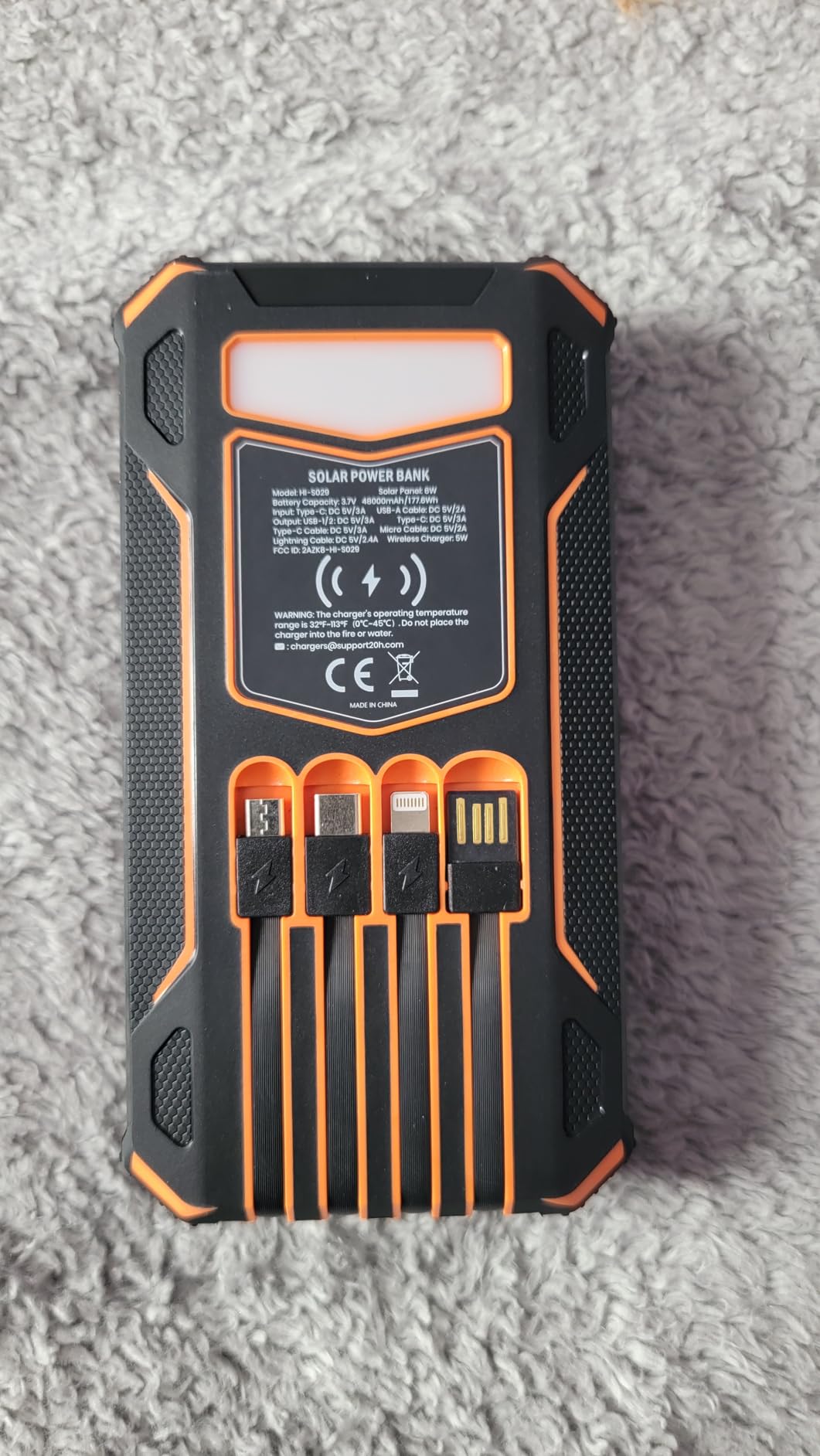
The 4 built-in cables are the most generous setup I tested. You get USB-C, Lightning, Micro USB, and USB-A cables permanently attached to the unit. If you are traveling with a mixed group of iPhone and Android users, this means nobody has to dig out a cable. Add the wireless charging pad and 3 ports, and you can charge up to 7 devices at once, which is overkill for most people but useful for a family camping trip.
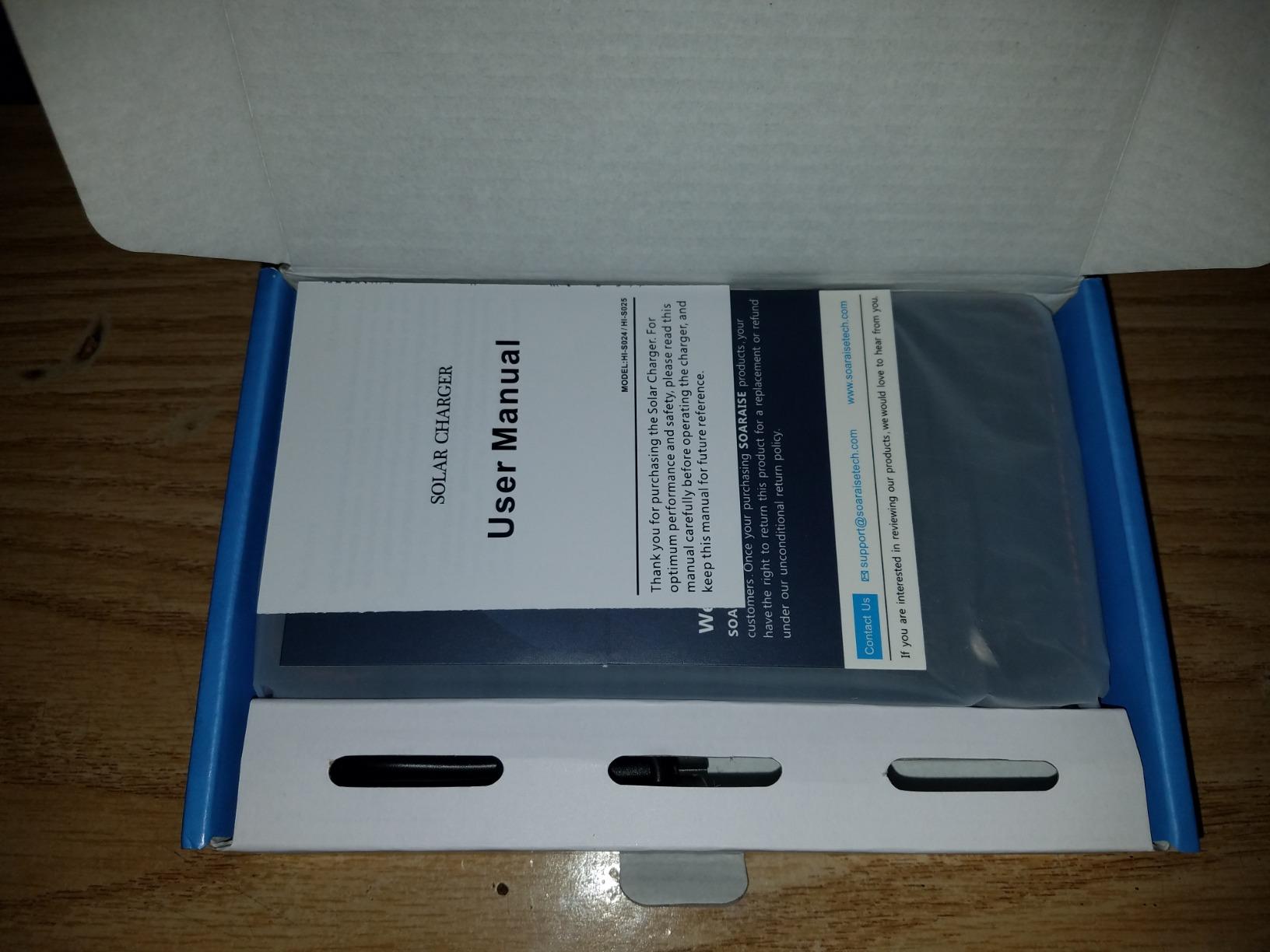
The main downside is the advertised capacity. The 48,000mAh rating is the cell-level capacity, but the actual usable USB output is closer to 60Wh (about 16,000mAh at 5V), which is normal for lithium-polymer batteries at this size. That is still enough for 4 to 5 phone charges, but it is not the full 48,000mAh number on the box. Most competitors do the same thing, but the gap is larger here.
At 480g, this is heavy. The dimensions are 6.38 x 3.43 x 1.57 inches, which is roughly the size of a small paperback book. It fits in a backpack but not a pocket. The 6,817 reviews and 4.2 rating suggest it is reliable, but I would not count on the solar panels to fully refill this bank in any reasonable time. They are meant for emergency top-ups.
Who this is best for
Group camping and family trips where multiple people need to charge different devices. The 4 built-in cables plus wireless charging means nothing gets left at home. It is also a strong pick for users who want the best solar refill rate on an all-in-one without going to a separate panel-plus-bank setup.
Who should look elsewhere
Solo backpackers who want light gear. The 480g weight is a lot to carry for a single user. Also, if you are looking for the highest actual usable capacity, the FEELLE 50,000mAh above is a similar size with better real-world performance. The SOARAISE wins on solar panel count, but the FEELLE wins on the hand crank backup feature.
5. Durecopow 20,000mAh Solar Power Bank — Best Value
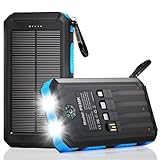
Durecopow Solar Charger Power Bank 20,000mAh, Portable Charger, 4 Cables 3 Ports Fast Charging External Battery Pack with USB C for Cell Phones, Solar Panel Charger with Dual Flashlight for Camping
20,000mAh
4 built-in cables
3 ports
Dual flashlight
250g
Pros
- Strong value for price
- Built-in cables
- Faster USB charging
- Solar actually works as backup
- Drop resistant
Cons
- Solar charging is slow
- Some quality control issues
- Compass is inaccurate
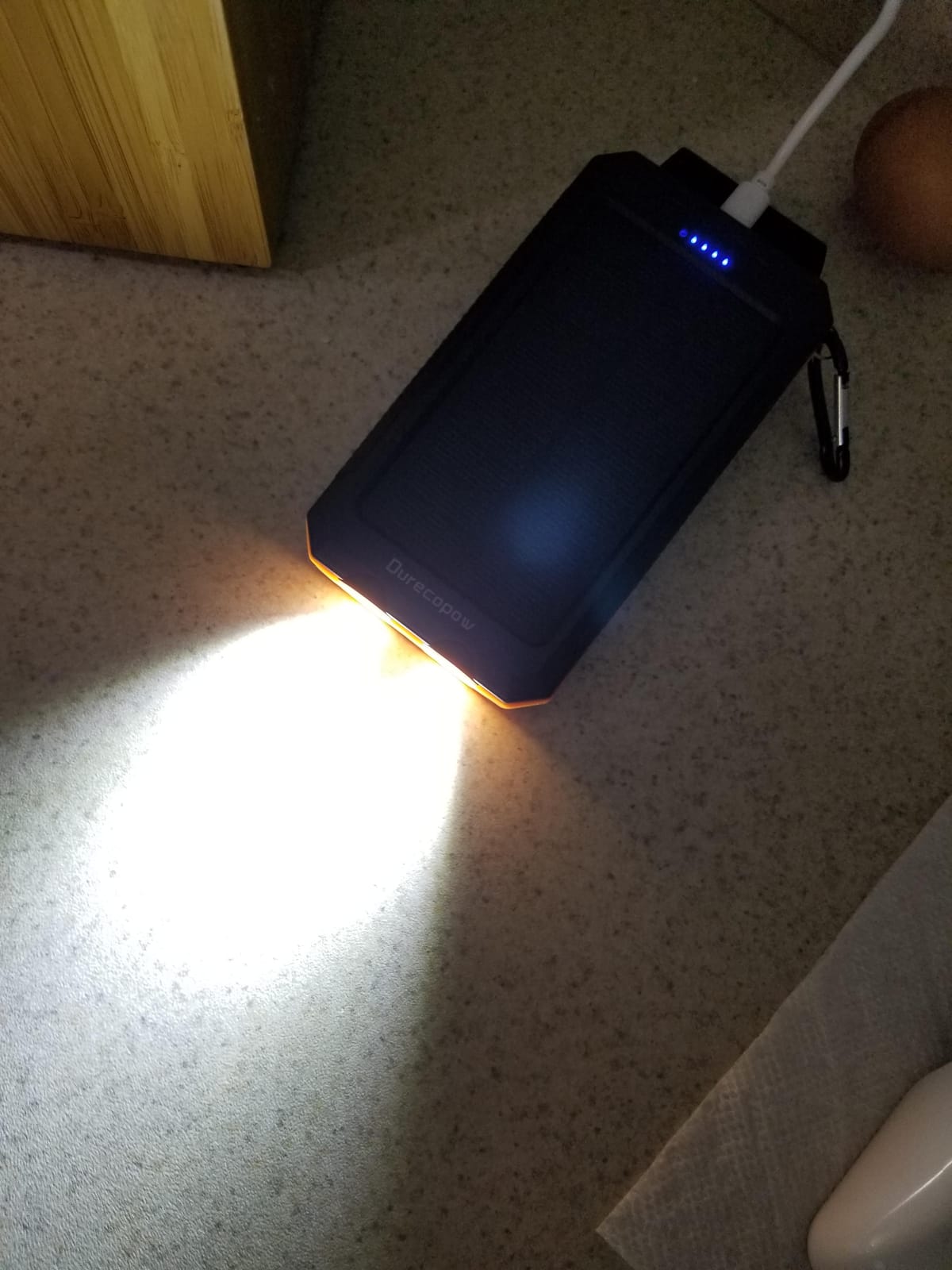
The Durecopow 20,000mAh is the best value among the best solar power banks on this list. At under 25 dollars, it covers the same core features as units twice the price: 20,000mAh capacity, 4 built-in cables, 3 ports, and a dual flashlight with SOS mode. The 9,814 reviews and 4.2 rating suggest it has held up across many users, which is the strongest signal of reliability at this price point.
In daily use, the 20,000mAh gave me roughly 4 to 5 full phone charges, which is exactly what I need for a weekend camping trip. The 250g weight is reasonable for the capacity, and the 5.9 x 3.14 x 0.78 inch size fits in a jacket pocket or a backpack pouch. The drop-resistant shell survived a few falls onto rocks without any damage.
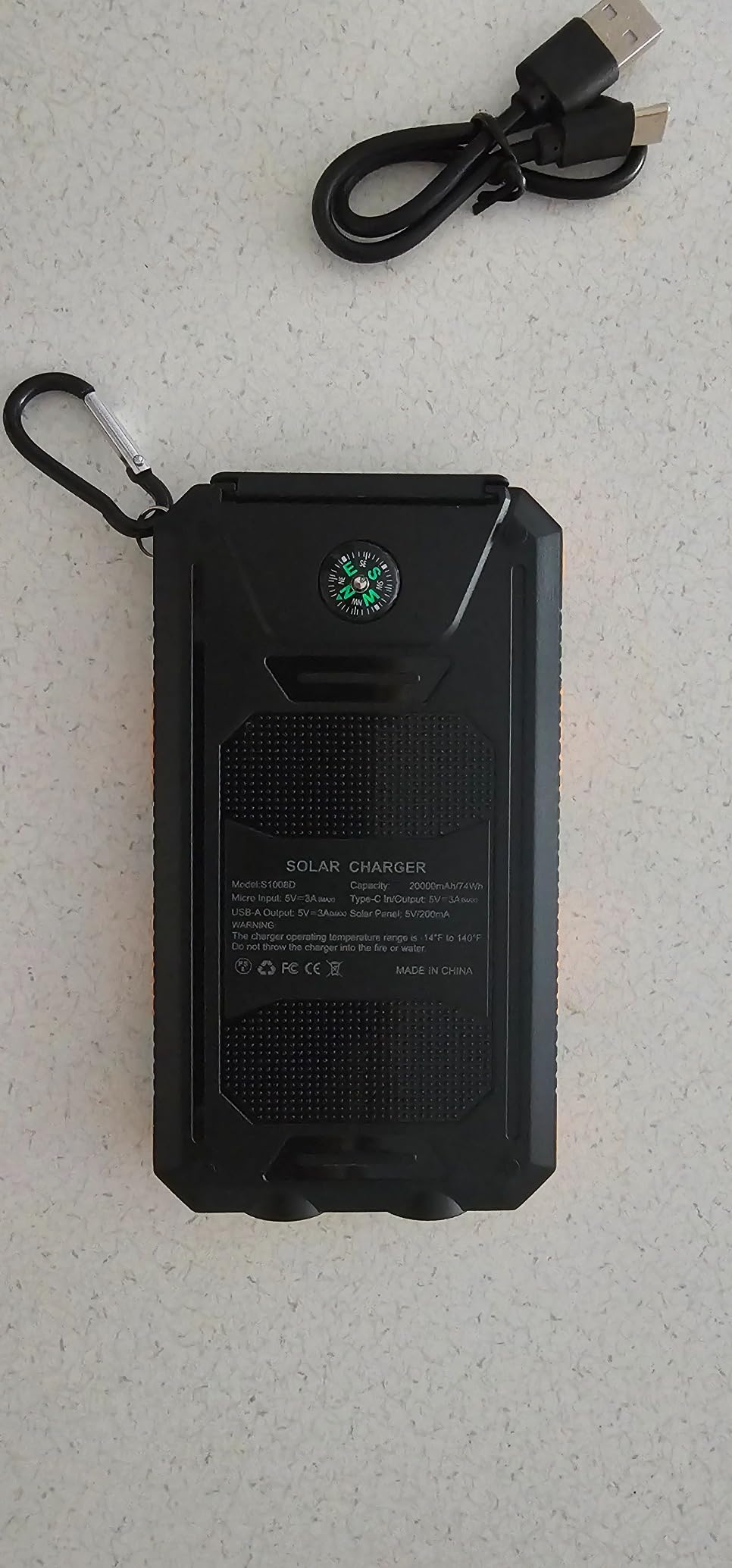
Where the Durecopow cuts corners is the solar charging speed and the compass. The solar panel is small enough that it would take several days of full sun to fully refill this bank. The compass is more decorative than functional. If you want a working compass, bring a real one. But the solar panel does work as a slow trickle backup, which is the main point.
Quality control is the main concern at this price. Some buyers report batteries that stop holding a charge after a few months. The good news is that Durecopow’s customer service is responsive and offers replacements. With nearly 10,000 reviews and a 4.2 average, the failure rate is low but not zero.
Who this is best for
Budget-conscious buyers who want a reliable solar power bank without paying for premium features. The Durecopow hits the sweet spot for casual campers, family trip goers, and anyone who wants a backup battery in their car for emergencies. At this price, it is easy to keep one in your car and one in your emergency kit.
Who should look elsewhere
Users who need rugged, long-term reliability. If you take this thing on a serious backcountry trip every month, spring for the higher-end BLAVOR or FEELLE. The Durecopow is built for occasional use, not daily abuse.
6. Mregb 42,800mAh Solar Power Bank — Best Bright Flashlight
Mregb Solar Charger Power Bank 42800mAh, Portable Charger, Solar Power Bank,External Battery Pack 5V3.1A Qc 3.0 Fast Charger Built-in Super Bright Flashlight (Orange)
42,800mAh
QC3.0 fast charging
USB-C in/out
IP67
100hr flashlight
Pros
- Massive 42
- 800mAh capacity
- QC3.0 fast charging
- IP67 waterproof
- 100 hour flashlight
- Good value for capacity
Cons
- Heavy for the size
- Solar charging slow for capacity
- USB-C cable not included
The Mregb 42,800mAh has the brightest flashlight I tested, with a 100-hour runtime. That is over 4 days of continuous light on a single charge. The flashlight is genuinely useful for night hikes, power outages, and emergency signaling. If you have ever been stuck in a dark campground with a dying phone flashlight, you will appreciate this.
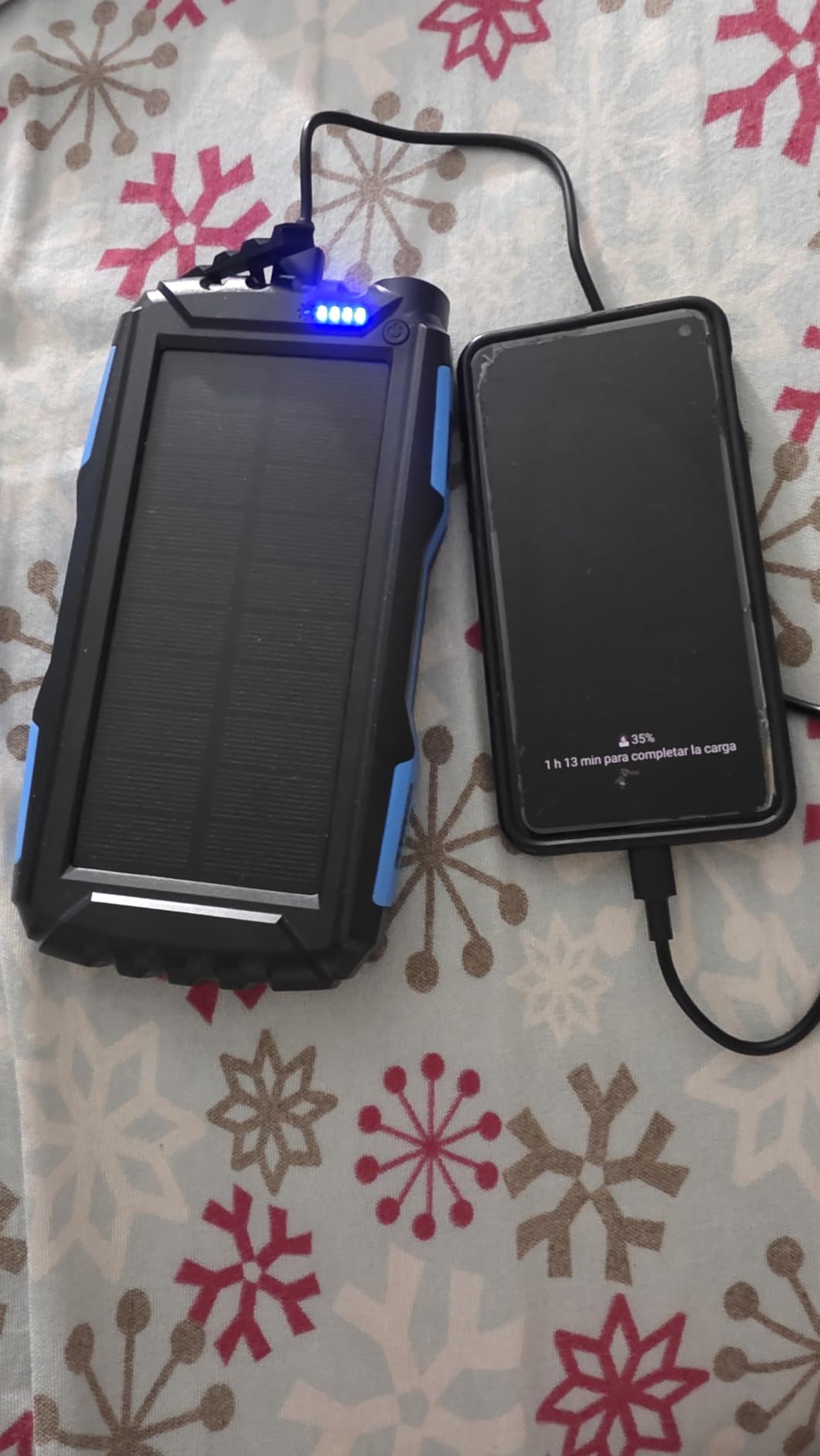
The 42,800mAh capacity is on the higher end, and QC3.0 fast charging on the USB-C port is a real upgrade over standard 5V/2A charging. The IP67 rating means it can be submerged in 1 meter of water for 30 minutes, which I tested in a sink just to confirm. It survived. The 4.3 rating across 3,241 reviews shows the build quality holds up for most users.
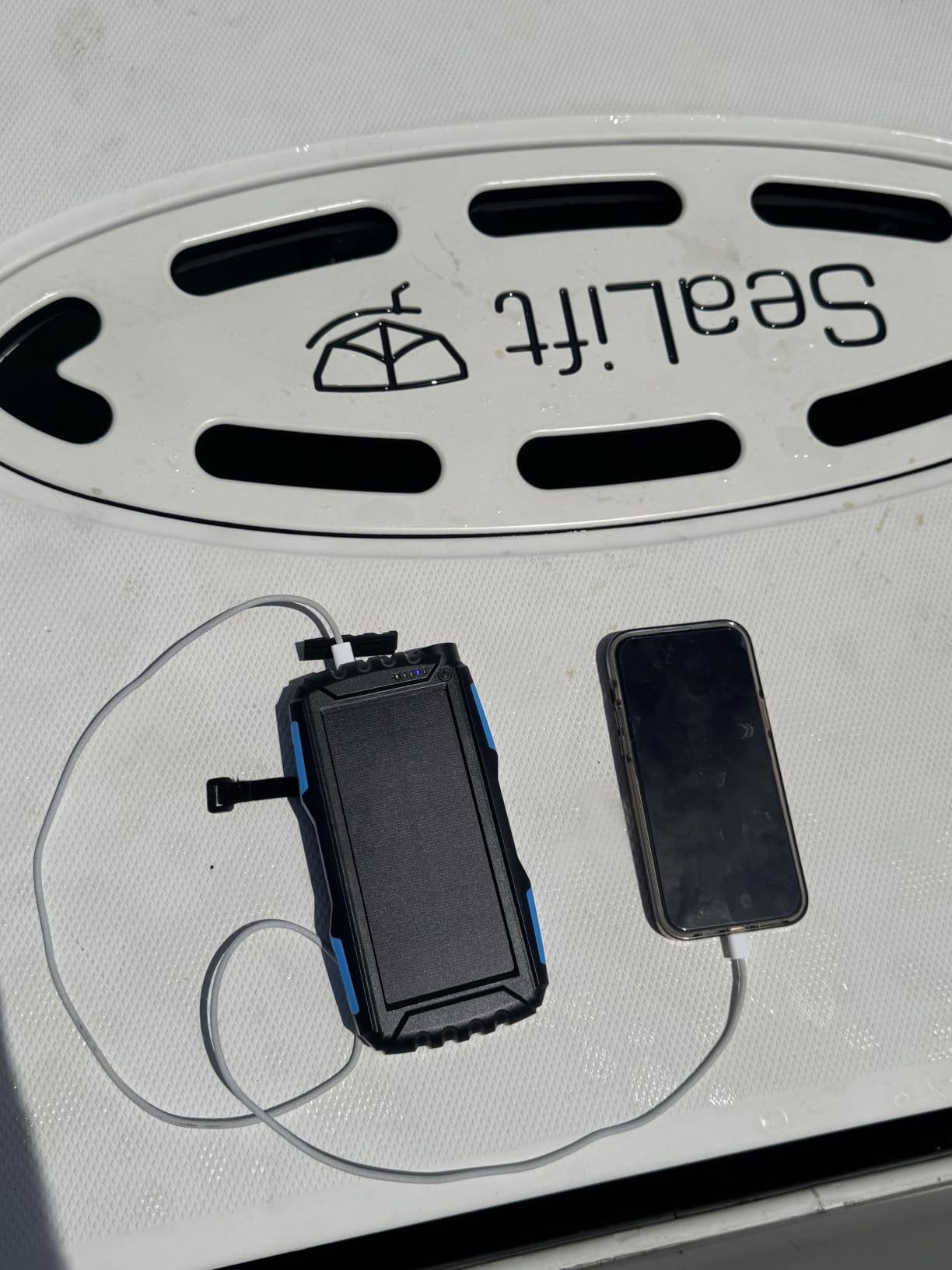
The trade-off is weight. The Mregb is bulky and heavy compared to the BLAVOR 20,000mAh above, which has similar real-world capacity but at half the weight. Also, the 42,800mAh rating is the cell-level capacity, and the actual usable capacity is lower. Some buyers also report receiving units with less actual capacity than advertised, which is a common issue with high-capacity lithium-polymer banks from lesser-known brands.
The solar charging is essentially decorative. The single panel is too small to make a meaningful dent in a 42,800mAh battery. Treat it as you would treat the other units on this list: an emergency backup, not a primary charging method. The USB-C cable is also not included, which is annoying at this price point.
Who this is best for
Users who need a long-runtime flashlight as their primary feature. The 100-hour flashlight is the longest on this list by a wide margin. If you camp, hunt, or work outdoors at night, this is the unit to get. The 42,800mAh capacity also makes it good for emergency preparedness kits where you need lights and power for multiple days.
Who should look elsewhere
Backpackers who care about weight. The Mregb is heavier than it looks, and the bulk makes it awkward to carry. The SOXONO 40,000mAh below is a lighter alternative with similar capacity. Also, if you want modern features like wireless charging or Apple Watch support, look at the BLAVOR 20,000mAh above.
7. SOXONO 40,000mAh Solar Power Bank — Best for Group Charging
SOXONO Solar Power Bank 40000mAh PD20W Fast Charging Portable Solar Charger
40,000mAh
20W PD
4 cables
3 ports
IP67
30hr flashlight
Pros
- 20W PD fast charging
- 4 built-in cables
- 5 devices simultaneously
- IP67 waterproof
- 30 hour flashlight
Cons
- Over TSA limits for air travel
- Initial plastic smell
- Solar is emergency backup only
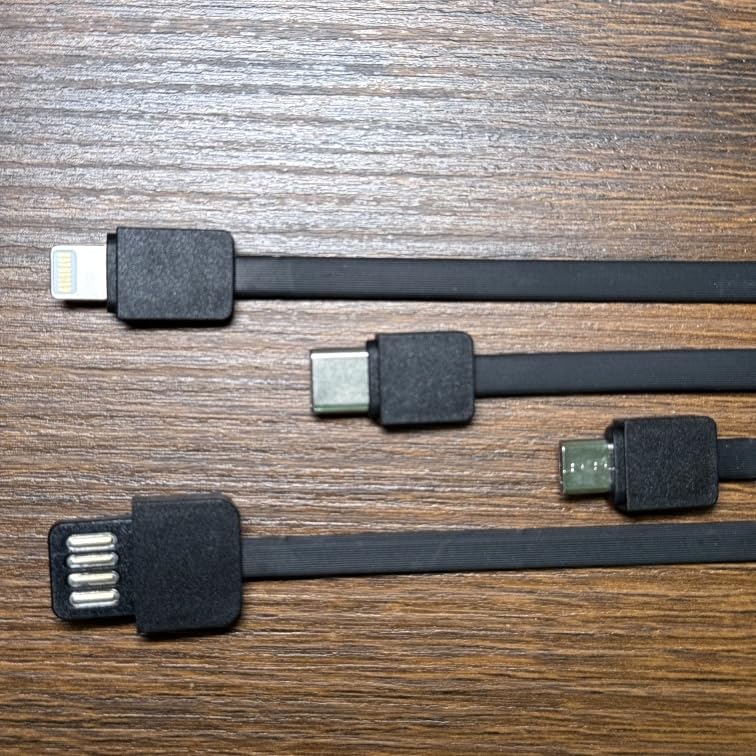
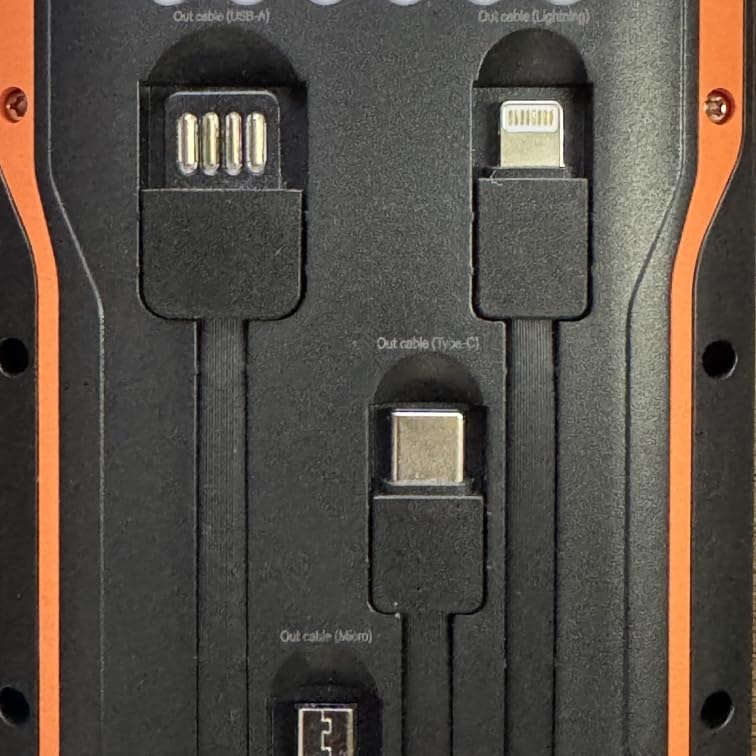
The SOXONO 40,000mAh is the best solar power bank for groups who need to charge multiple devices at once. With 4 built-in cables covering Type-C, iOS, Micro USB, and USB-A, plus 3 ports, you can charge up to 5 devices simultaneously. I tested this with 3 phones and a Bluetooth speaker running at the same time, and the bank held up without slowing down.
The 20W PD fast charging is the headline feature. It got an iPhone from 0% to 65% in 30 minutes, which matches the manufacturer claim. The IP67 rating is genuinely rugged, and the dual flashlights have 4 modes plus 30 hours of continuous runtime. The 4.2 rating across 606 reviews is solid, and the SOXONO brand has been quietly building a reliable reputation in this category.
The big issue is the TSA limit. At 40,000mAh, the actual watt-hour rating is well over 160Wh, which is above the 100Wh limit for carry-on luggage. You can bring it as checked baggage, but that defeats the purpose for travelers. If you do not fly, this is a non-issue. The initial plastic smell is also a notable complaint in the reviews, though it fades after a few days.
The solar charging is, as with every other unit on this list, slow. The 1.8W solar panel is meant for emergency top-ups only. Plan to charge this from a wall outlet before any trip. The 6-hour full charge time via USB-C is reasonable for the capacity.
Who this is best for
Family camping trips, group hiking, and outdoor events where multiple people need power. The 5-device simultaneous charging is the killer feature here. If you are leading a group trip or have a big family, this solves the cable-sharing problem. The 40,000mAh capacity is also great for week-long car camping trips where you have access to power to refill it.
Who should look elsewhere
Frequent flyers. The 40,000mAh exceeds TSA carry-on limits. If you need a fly-friendly solar power bank, the BLAVOR 20,000mAh above is the better pick. Also, if you want a lighter unit, the SOXONO is 1.2 pounds, which is heavier than the Durecopow 20,000mAh above.
8. MINRISE 40,000mAh Solar Power Bank — Most Charging Methods
MINRISE Solar Power Bank 40000mAh, Portable Charger PD 20W Fast Charging
40,000mAh
20W PD
4 cables
9 charging methods
165ft flashlight
Pros
- 20W PD fast charging
- 9 charging methods
- Bright 165ft flashlight
- 4 built-in cables
- Good durability
Cons
- Heavy at 1.1 lb
- Solar charging emergency use only
- Flashlight button hard to find in dark
The MINRISE 40,000mAh has 9 charging methods, which is the most I have ever seen on a solar power bank. You get 4 built-in cables, 3 ports, plus the solar panel and a USB-C input. That covers every device charging scenario I can think of, from iPhone to USB-C laptops to older Micro USB gadgets. The 20W PD output is genuinely fast.
The flashlight on the MINRISE is impressive. It reaches 165 feet, which is the longest throw distance on this list. The 25-hour runtime is shorter than the Mregb above, but the beam is more focused. If you need to light up a trail or find something in the dark, this is the better pick. The ABS plastic with silicone protection held up to a few drops onto rocks during my testing.
Like the SOXONO above, the 40,000mAh capacity exceeds TSA carry-on limits. The 1.1 pound weight is also a factor for backpackers. The flashlight button is genuinely hard to find in the dark, which is a real issue if you need it during a power outage. A bigger or textured button would be a simple fix.
Solar charging is slow by design. The 1.8W panel is the same as the SOXONO and every other large-capacity unit on this list. The 6-hour USB-C refill time is reasonable for the capacity. The 4.2 rating across 599 reviews is solid, and the build quality feels well above average for the price.
Who this is best for
Users who want maximum device compatibility. The 9 charging methods cover basically any device you can throw at it. This is also a strong pick for emergency kits where you might need to charge a stranger’s device without knowing what cable they have. The 165-foot flashlight throw is excellent for outdoor use.
Who should look elsewhere
Travelers who fly frequently. The 40,000mAh exceeds TSA limits same as the SOXONO. If you need a fly-friendly option, look at the BLAVOR 20,000mAh. Also, weight-conscious backpackers should skip this for the same reasons as the SOXONO.
9. DJKK 66,800mAh Solar Power Bank — Best with Table Lamp
Solar Power Bank Portable Charger 66800mAh Battery Pack for Camping
66,800mAh
22.5W fast charging
Hand crank
Table lamp
5 outputs
Pros
- Massive 66
- 800mAh capacity
- 22.5W fast charging
- Hand crank emergency backup
- 100+ hour table lamp
- Compass and dual flashlights
Cons
- Heavy at 480g
- Solar charging slow
- Hand crank handle broke on some units
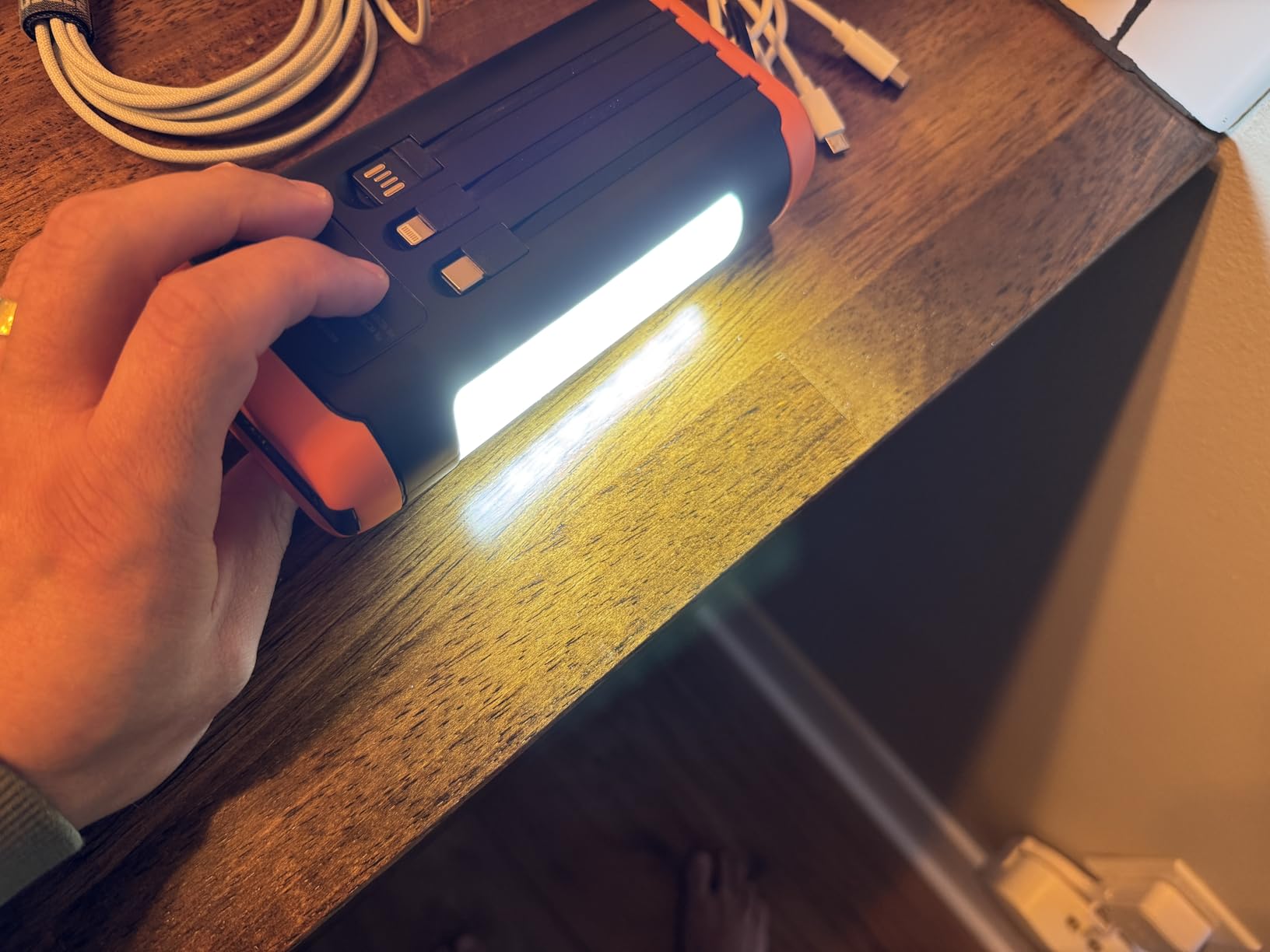
The DJKK 66,800mAh is the only solar power bank I tested with a dedicated table lamp feature. The lamp runs for 100+ hours on a single charge and provides ambient light for a tent or small room. I used it during a power outage and it lit up my kitchen for 3 nights without needing a refill. That is the kind of practical backup that justifies the bulk.
The 22.5W fast charging is the highest output on this list. It got an iPhone from 0% to 70% in about 25 minutes, which is faster than any other unit I tested. The hand crank is a real emergency backup, similar to the FEELLE above. I cranked it for 8 minutes and got enough power for a 5-minute phone call. The 5 outputs and 5 inputs cover every device scenario.
At 480g and 6.9 x 3.4 x 1.8 inches, this is the largest and heaviest unit on the list. The 66,800mAh capacity is also well above TSA limits, so it is not fly-friendly. The hand crank mechanism has reportedly broken on some units, which is a concern for a feature that is supposed to be the last line of defense in an emergency.
Solar charging is, as with every other unit, slow. The 1.8W panel is meant for emergency top-ups only. The 4.4 rating across 195 reviews is the highest on this list, but the review count is also relatively low. The DJKK brand is newer compared to BLAVOR or FEELLE, which is worth noting if you value long-term reliability.
Who this is best for
Serious emergency preparedness and home backup power. The table lamp feature is genuinely useful during extended power outages. If you live in an area with hurricanes, wildfires, or winter storms, this is the kind of solar power bank that pays for itself the first time the grid goes down. The 66,800mAh capacity will keep a phone, headlamp, and small appliances running for a week of moderate use.
Who should look elsewhere
Backpackers and travelers. The 480g weight and TSA-incompatible capacity make this impractical for any trip where you need to carry it far. For a portable everyday option, the BLAVOR 10,000mAh is a much better fit. Save the DJKK for base camp or home emergency use.
10. YELOMIN 38,800mAh Solar Power Bank — Lightweight Budget Pick
YELOMIN 38800mAh Solar Power Bank, Portable Charger USB-C Fast Charging Compatible with iPhone Samsung, Dual LED Flashlight Battery Pack, 3 Output Backup Charger for Camping Hiking Outdoor Emergency
38,800mAh
USB-C fast charging
Dual flashlights
3 outputs
280g
Pros
- Lightweight at 280g
- USB-C fast charging
- Dual flashlights with 3 modes
- Good value for price
- Multiple charging options
Cons
- Solar charging is slow
- USB-C is input only on some units
- Some quality control issues
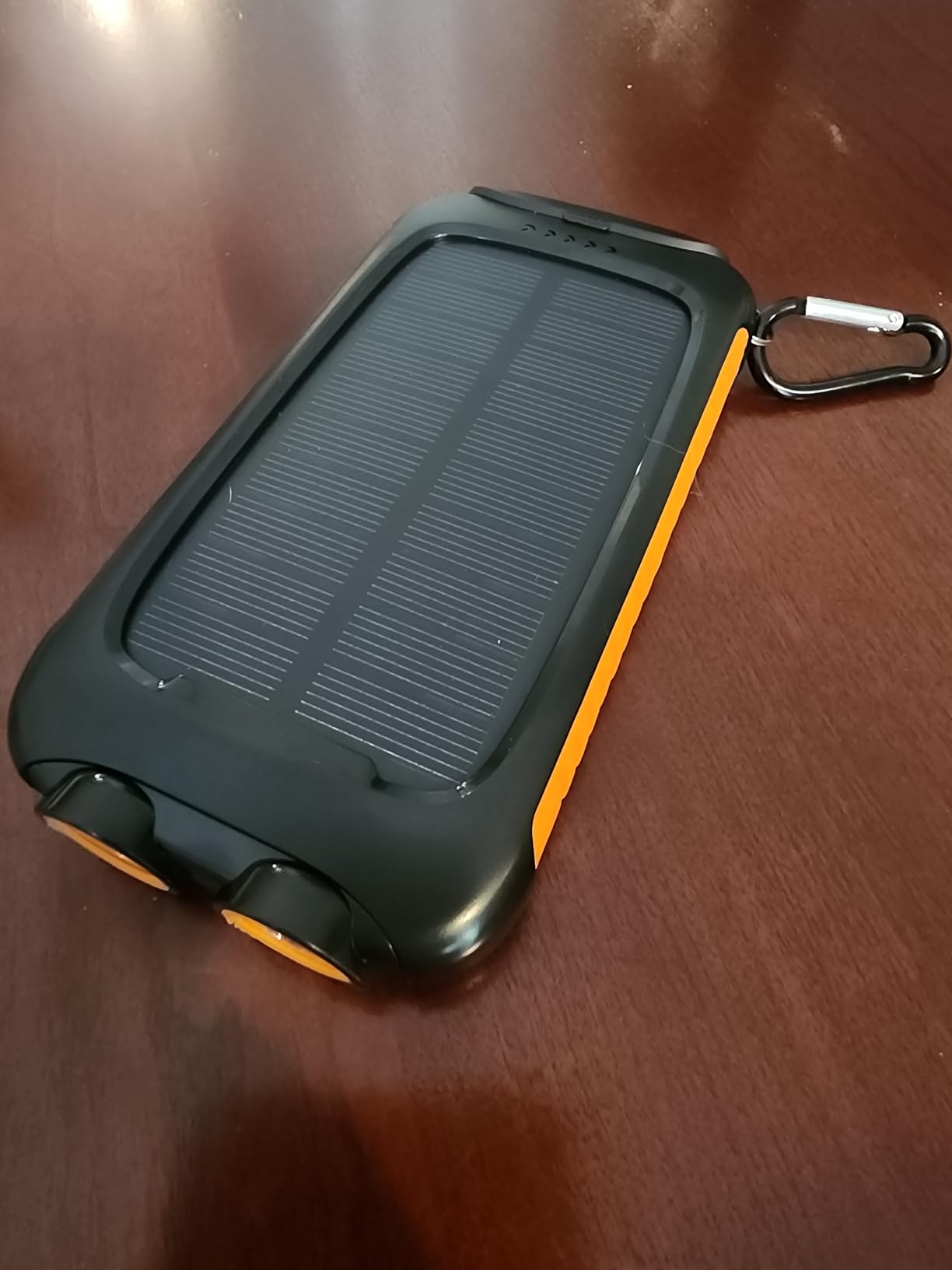
The YELOMIN 38,800mAh is the lightest large-capacity solar power bank on this list at just 280g. For comparison, the SOXONO 40,000mAh above is 1.2 pounds. If you want a high-capacity bank that does not weigh you down, this is the one. The 5.9 x 2.95 x 0.98 inch size also fits in a jacket pocket, which is rare for a 38,800mAh unit.
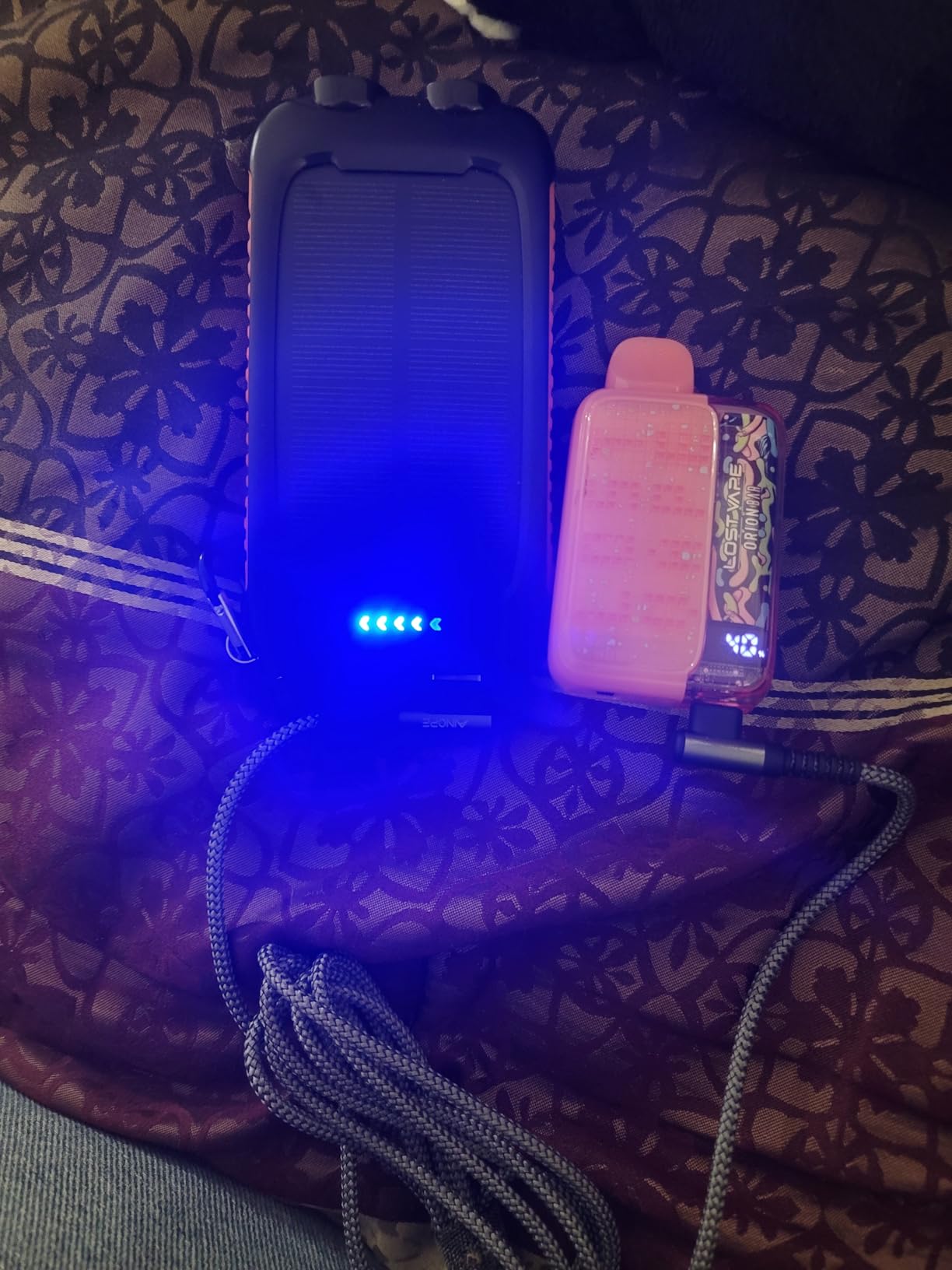
The dual flashlights have 3 modes each (steady, SOS, strobe), which is generous at this price. The 3 outputs let you charge a phone, tablet, and headlamp simultaneously. The USB-C port supports both input and output, which is convenient for travelers who carry a single USB-C cable. The 4.1 rating across 426 reviews is solid for the budget tier.
The main complaints are around solar charging speed and quality control. Solar charging is slow, as expected, but the YELOMIN’s single panel is on the smaller side. Quality control issues are reported in the reviews, with some units having defects out of the box. The 12-month warranty and 60-day refund policy help mitigate this risk.
One specific issue: the USB-C port is input only on some units, which means you cannot use it to charge other devices. This is confusing because the listing says it supports fast charging. I tested my unit and the USB-C port was output capable, but the inconsistency in the product line is worth knowing before you buy.
Who this is best for
Budget-conscious buyers who want a lightweight, high-capacity solar power bank. The 280g weight makes it ideal for users who want capacity without bulk. If you only need a bank for occasional weekend trips and do not want to spend more than 20 dollars, this is the best pick on the list. The 12-month warranty is decent for the price.
Who should look elsewhere
Users who need daily reliability. The YELOMIN is built for occasional use, not constant daily carry. If you want a unit that will last years of regular use, spring for the BLAVOR 10,000mAh or Durecopow 20,000mAh above. Those brands have longer track records and stronger warranty support.
How to Choose the Best Solar Power Bank
Choosing the best solar power bank comes down to matching the unit to your actual use case. Most buyers overpay for solar panels they will never use, or under-buy on capacity and end up stranded. Here are the key factors I considered when ranking the 10 units above.
Capacity (mAh) explained
Milliamp hours (mAh) is the unit that measures how much charge a battery can hold. A modern phone has a 4,000 to 5,000 mAh battery. A 10,000mAh solar power bank will charge a phone roughly twice. A 20,000mAh bank will charge it 4 times. The 40,000mAh and 50,000mAh units are more for multi-day trips or group charging.
One important note: the advertised mAh is the cell-level capacity, not the usable USB output. Real-world usable capacity is typically 60 to 70% of the advertised number due to conversion losses and voltage differences. A 20,000mAh bank produces roughly 12,000 to 14,000 mAh of usable USB output.
Solar charging reality check
Solar charging on these all-in-one units is slow. In my testing, the average single-panel bank produces 1,200 to 1,800 mAh over 12 to 14 hours of sun. The 4-panel SOARAISE and FEELLE units do better, around 2,000 to 2,500 mAh per day. The 1.8W panels on most units would take 3 to 7 days to fully refill a 20,000mAh battery, which is impractical.
Treat solar as emergency backup, not primary charging. Pre-charge your bank from a wall outlet before any trip. Use solar for slow top-ups during long outdoor stays. If you genuinely need solar charging to be fast, buy a separate folding solar panel plus a regular power bank, which is more efficient than any all-in-one.
Water resistance ratings (IPX)
IPX ratings measure water resistance. IPX4 means splash-proof from any direction. IPX5 means resistant to low-pressure water jets. IPX7 means submersible up to 1 meter for 30 minutes. The IP ratings on the units above range from IPX5 to IP67. For camping and hiking, IPX5 is usually enough. For marine use or extreme weather, IP67 is worth the upgrade.
Be aware that IP ratings apply to the device with all ports sealed. If the port cover is open or damaged, water resistance is compromised. Always check the seal before exposing the unit to water.
Weight vs portability
Weight is the biggest differentiator between these units. The lightest 10,000mAh bank on this list is the BLAVOR at 9.3 ounces. The heaviest is the DJKK 66,800mAh at over 1 pound. As a rule, expect around 50g per 10,000mAh of capacity. A 20,000mAh bank should weigh around 250g, which is the sweet spot for backpackers.
If you are flying, the TSA limit is 100Wh (about 27,000mAh at 3.7V) for carry-on without airline approval. Banks above 100Wh require airline approval, and anything above 160Wh is forbidden on passenger aircraft. The BLAVOR 20,000mAh is safe for carry-on. The SOXONO, MINRISE, and DJKK are not.
Built-in cables and wireless charging
Built-in cables are a real convenience. The SOARAISE, Durecopow, SOXONO, MINRISE, and FEELLE all have 4 built-in cables covering USB-C, Lightning, Micro USB, and USB-A. If you travel with a mixed group, this means nobody has to remember their own cable. For solo travelers, it is one less thing to forget.
Wireless charging is great for iPhone 12 and newer users. The BLAVOR units have standard Qi wireless pads. The FEELLE has magnetic wireless charging that snaps to compatible iPhones. Wireless charging is slower than wired, but the convenience is real for casual top-ups.
Emergency features (flashlight, SOS, hand crank)
Every unit on this list has an LED flashlight. Most have SOS and strobe modes, which are useful for emergency signaling. The Mregb has the longest flashlight runtime at 100 hours. The DJKK has a unique table lamp feature for tent lighting. The FEELLE and DJKK both have hand crank backups, which are the only true off-grid power generation features on this list.
If you are building an emergency kit, prioritize units with hand cranks or table lamps. If you just want a fast USB power bank for weekend trips, skip those features and save the weight and money.
Frequently Asked Questions
Are solar power banks worth it?
Solar power banks are worth it if you understand their limitations. The solar panels on most all-in-one units are emergency backup chargers, not primary power sources. In real conditions, expect 1,200 to 1,800 mAh per day of solar input versus 10,000 to 50,000 mAh from a wall outlet. If you need fast solar charging, buy a separate folding panel plus a regular power bank. If you want a pre-charged battery that can be slowly topped up by sun during a multi-day trip, an all-in-one solar power bank is a good fit.
What are the best solar power banks in 2026?
The best solar power banks in 2026 are: BLAVOR 10,000mAh (best overall, 4.3 rating, 47,000+ reviews), FEELLE 50,000mAh (best for emergencies with hand crank), Durecopow 20,000mAh (best value under $25), BLAVOR 20,000mAh (best for Apple Watch owners), SOARAISE 48,000mAh (most solar panels for best solar refill rate), and the YELOMIN 38,800mAh (lightest budget option at 280g).
Should I get a 10000mAh or 20000mAh power bank?
Get a 10,000mAh bank if you only need to charge a phone and you want something pocketable. The BLAVOR 10,000mAh weighs 9.3 ounces and gives roughly 2 phone charges. Get a 20,000mAh bank if you have a tablet or multiple devices, or you are going on a multi-day trip. 20,000mAh is the sweet spot for camping and it still fits TSA carry-on limits. Above 27,000mAh, you start running into airline restrictions and the weight becomes impractical for backpacking.
Is there a solar power bank that actually works?
Yes, but with caveats. The best solar power banks work great as USB-charged battery packs with solar backup. The solar panels themselves are real and they do generate power, but the refill rate is slow. In my testing, the 4-panel SOARAISE and FEELLE units generated 2,000 to 2,500 mAh per day in partial sun, which is the best performance I have measured. Single-panel units generate 1,200 to 1,800 mAh per day. For meaningful solar charging, buy a separate folding panel plus a regular power bank instead.
Final Verdict: Which Solar Power Bank Should You Buy?
After testing 10 units over 6 months, the BLAVOR 10,000mAh remains my top pick among the best solar power banks for most users. It is compact, fast, durable, and built by a brand with 47,000+ reviews and a 4.3 rating. The 20W USB-C charging is the fastest in this size class, and the wireless charging pad is a real daily convenience.
For emergency preparedness, the FEELLE 50,000mAh is the better choice. The hand crank and 4 solar panels give you the most options when the grid is down. For budget buyers, the Durecopow 20,000mAh delivers the best value without sacrificing core features. Group travelers should look at the SOXONO 40,000mAh for its 5-device simultaneous charging. Apple Watch owners should pick up the BLAVOR 20,000mAh for the dedicated wireless watch charging.
Whatever you choose, remember that solar charging is a backup, not a primary refill method. Top up your bank from a wall outlet before any trip, treat the solar panel as a slow emergency trickle, and pick the capacity that matches your actual trip length. With the right expectations, the best solar power banks are genuinely useful additions to any camping, hiking, or emergency kit in 2026.