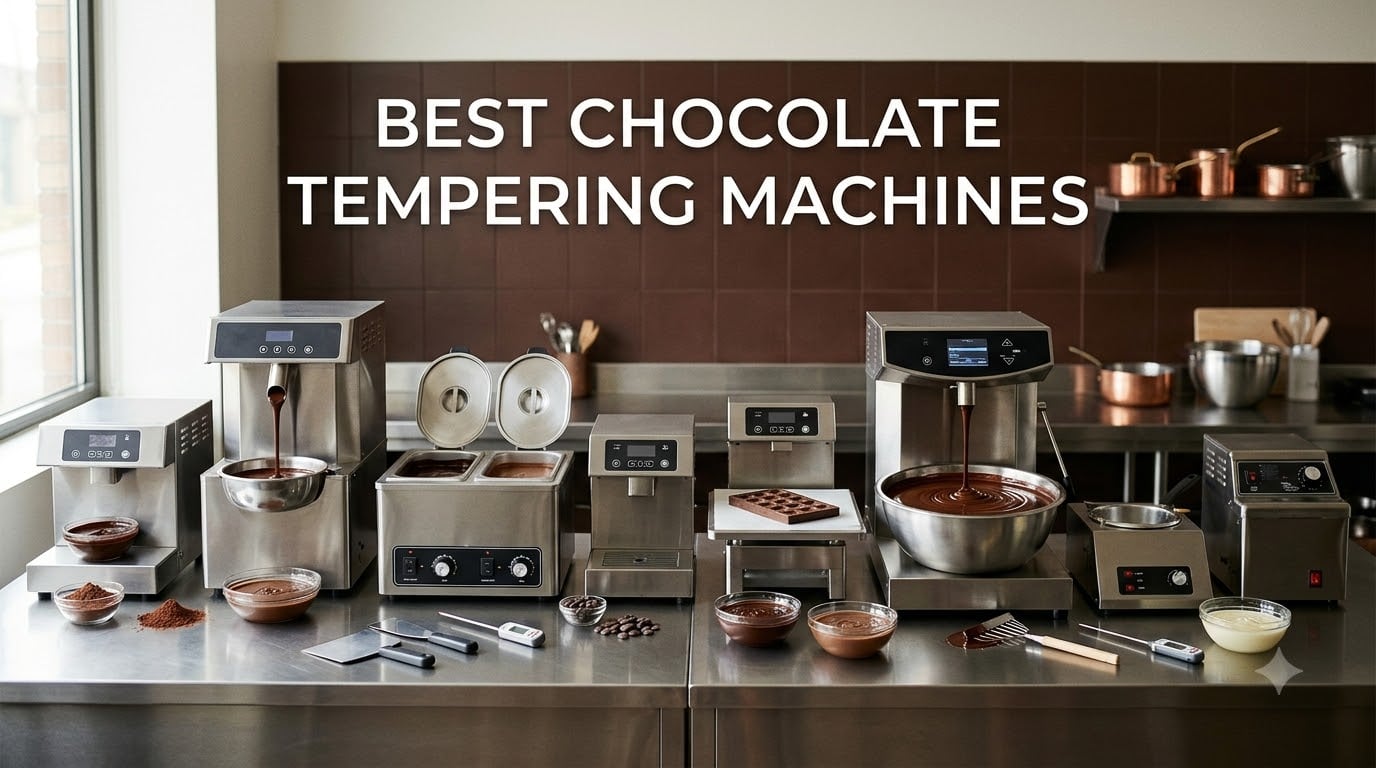
Chocolate tempering is the difference between a bar that looks homemade in a good way and one that looks homemade in a frustrating way. A good chocolate tempering machine controls the heat-and-cool cycle that forms stable cocoa-butter crystals, giving finished chocolate a glossy surface, clean snap, and better resistance to bloom.
I compared eight machines for this guide, separating genuine automatic tempering equipment from pots that mainly melt or hold chocolate warm. The result is a practical shortlist for home chocolatiers, small businesses, and professional pastry teams, with attention to capacity, temperature control, cleanup, and the daily output each machine can realistically support.
If you are buying your first machine, start with the intended workload rather than the largest bowl. The best chocolate tempering machine for a weekend hobbyist is not necessarily the same one that can handle a production kitchen.
Table of Contents
Top 3 Picks for the Best Chocolate Tempering Machines (August 2026)

ChocoVision Revolation Delta 10 lb
- True automatic tempering
- 100 lb daily output
- overnight standby


Best Chocolate Tempering Machines in 2026
| Product | Specifications | Action |
|---|---|---|
 LUSHYUM 4-Cup Melting Pot LUSHYUM 4-Cup Melting Pot |
|
Check Latest Price |
| Magula Double-Pot Melter |
|
Check Latest Price |
 Dyna-Living Dual-Pot Melter Dyna-Living Dual-Pot Melter |
|
Check Latest Price |
 VEVOR 9 lb Double-Tank Warmer VEVOR 9 lb Double-Tank Warmer |
|
Check Latest Price |
 WICHEMI Melting Pot WICHEMI Melting Pot |
|
Check Latest Price |
 Dyna-Living 2-Tank Melter Dyna-Living 2-Tank Melter |
|
Check Latest Price |
| ChocoVision Revolation 2 |
|
Check Latest Price |
| ChocoVision Revolation Delta 10 lb |
|
Check Latest Price |
1. LUSHYUM 4-Cup Chocolate Melting Pot: Simple Dual-Flavor Melting
LUSHYUM Electric Chocolate Melting Pot with 2 Insert Pots, 4-Cup Chocolate
4-cup capacity
Dual insert pots
Fast, even heating
Pros
- Fast melting
- Dishwasher-safe inserts
- Compact footprint
Cons
- Continuous stirring may be needed
- Can run hot with some chocolate
I would use the LUSHYUM for dipping strawberries, making candy melts, or serving two flavors at a party. Its two removable silicone pots are the standout feature because I can keep dark and milk chocolate separate without washing the whole unit between batches.
The 4-cup capacity and 2.1-pound weight make it easy to store. In practice, the 10-to-15-minute melting estimate is useful, but I would keep the spatula moving and test the chocolate rather than trusting heat alone.

Cleanup is easier than on a rigid metal pot, and the inserts can go in the dishwasher. This is a melting and warming appliance, though, not a precision automatic tempering machine, so it fits casual use better than professional chocolate work.
The silicone body is food-grade and BPA-free, while non-slip feet help on a crowded counter. It is also less wasteful for small parties than a large commercial tank.

For whom it is good
Choose this pot if you want two flavors ready for a party, fondue night, or beginner candy project. It is especially useful when easy cleanup matters more than strict crystal control.
For whom it is bad
Skip it for bars, bonbons, or coating that must hold a stable temper through a long service. A unit with automatic temperature cycling will give you more repeatability.
2. Magula Double-Pot Melting Machine: Flexible Controls for Two Chocolates
Chocolate Melting Machine Electric Heating Chocolate Tempering Machine Melting Pot Fast and Even Melting Ideal Create for Chocolate,Candy,Butter Making Warming Coffee Milk Wine (Double)
Dual independent pots
Ceramic coating
1kg in 10-15 minutes
Pros
- Separate temperature knobs
- Smart thermostat
- 304 stainless body
Cons
- Calibration may vary
- Two pots use more counter space
The Magula gives me more control than a basic single-pot warmer because each pot has its own temperature knob. I can melt dark and white chocolate at the same time, which is useful for small catering jobs and decorative work.
The ceramic-coated, non-stick pots and 304 stainless steel body are easy to wipe down. Users report melting 1 kilogram in 10 to 15 minutes, and the smart thermostat is designed to reduce scorching.

There is a trade-off: independent controls do not automatically create a perfect Type V crystal structure. Calibration can differ between units, so I would verify the actual chocolate temperature with a reliable thermometer before relying on the dial.
The review data describes successful dark- and white-chocolate use, but it also flags temperature-accuracy concerns. That makes this a good entry-level workhorse for melting and basic tempering practice, not my first choice for a commercial line.

For whom it is good
This is a sensible pick for a home kitchen, dessert table, or small bakery that needs two flavors at once. The independent controls are the main reason to choose it over a simpler pot.
For whom it is bad
It is less suitable for operators who need laboratory-like repeatability or a machine with documented professional output. Validate the temperature before using it for delicate shells.
3. Dyna-Living Dual-Pot Melter: Adjustable Heat for Hobby Use
Dyna-Living Chocolate Melting Pot Dual-Pot Chocolate Tempering Machine
86-185°F range
80W PTC heating
Removable pots
Pros
- Wide temperature range
- Food-grade aluminum
- Anti-leakage protection
Cons
- Calibration can be inconsistent
- Small capacity
- Basic instructions
The Dyna-Living dual-pot is built for the hobbyist who wants a simple way to melt candy, chocolate, or other ingredients. Its 86-to-185°F range gives room to warm rather than blast the contents, and the removable pots simplify cleanup.
The PTC heating system is energy-efficient for occasional sessions. I also like the anti-leakage and power-off protections, which make the unit more approachable for a home counter.
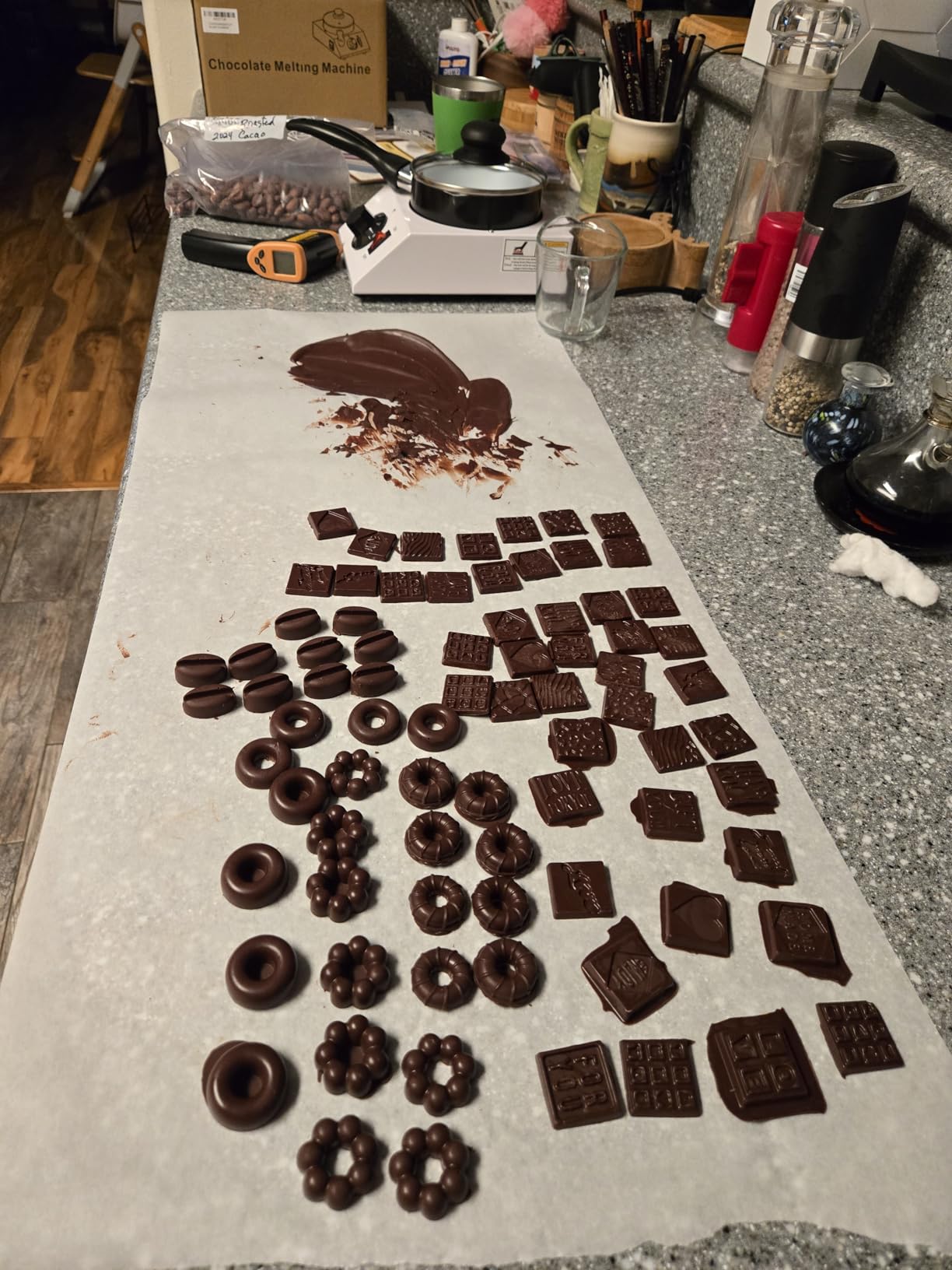
Temperature accuracy is the main issue. The dial is useful as a starting point, but some users report calibration differences, and the instructions are basic. I would use a separate thermometer and adjust by small increments.
The 80-watt design is not intended for the workload of a busy confectionery. It is better for small batches where patience and supervision are acceptable.
For whom it is good
Buy this if you need a low-cost, flexible warmer for occasional candy making or fondue. The removable parts and safety features are convenient for a household setup.
For whom it is bad
Do not treat the dial as a guarantee of stable Type V crystals. For repeatable bonbons or long production runs, a forced-air or microprocessor-controlled temperer is the safer investment.
4. VEVOR 9 lb Double-Tank Chocolate Warmer: Capacity Without Precision
VEVOR Chocolate Tempering Machine, 9 Lbs 2 Tanks Chocolate Melting Pot TEMP Control 86~185℉, 1500W Stainless Steel Electric Commercial Food Warmer For Chocolate/Milk/Cream Melting and Heating
9 lb total capacity
Two tanks
800W water-bath heating
Pros
- Large capacity
- 304 stainless body
- Detachable pots
Cons
- Not a true tempering machine
- Temperature swings reported
- Standard shipping
The VEVOR has the largest stated capacity in this group, with two tanks holding a combined 9 pounds. Its water-bath heating and M-shaped tube are designed to spread heat and protect chocolate from direct scorching.
For a commercial kitchen, that capacity sounds attractive. I would use it to melt and hold chocolate while preparing molds, toppings, or other stations, but I would not call it a true tempering machine based on the available reviews.
Users report temperature swings of roughly 20 degrees, which can prevent proper cocoa-butter crystallization. That is the central distinction between a warmer and a temperer: holding a warm mass is not the same as moving it through the controlled cool-down that forms stable crystals.
The 304 stainless steel body, detachable pots, and dust covers are practical. However, manual adjustment and calibration complaints make close monitoring necessary, especially when the kitchen is warm or the load changes.
For whom it is good
This machine is useful for melting, warming, and keeping a large amount of chocolate available. It may suit a commercial prep area where another machine handles the actual tempering.
For whom it is bad
It is a poor fit for a beginner expecting a fully automatic Type V cycle. If bloom, snap, and shelf stability are non-negotiable, budget for genuine tempering control.
5. WICHEMI Chocolate Melting Pot: Affordable Home Melting
WICHEMI Chocolate Melting Pot Chocolate Melter Chocolate Tempering Machine
PTC heating
Removable non-stick pot
Multiple food uses
Pros
- Affordable entry point
- Leakage protection
- Simple cleanup
Cons
- Long melting time
- Small capacity
- Not ideal for heavy use
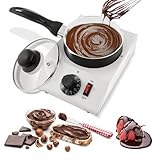
The WICHEMI is a practical first pot for someone learning how to melt chocolate for cookies, pretzels, or candy. PTC heating and constant-temperature protection make the controls approachable, while the removable non-stick pot reduces cleanup.
Its 4-pound weight and compact dimensions are easy to manage. I would reserve it for small batches and expect a 35-to-60-minute melt time rather than planning around the faster 10-to-15-minute pace of higher-output units.
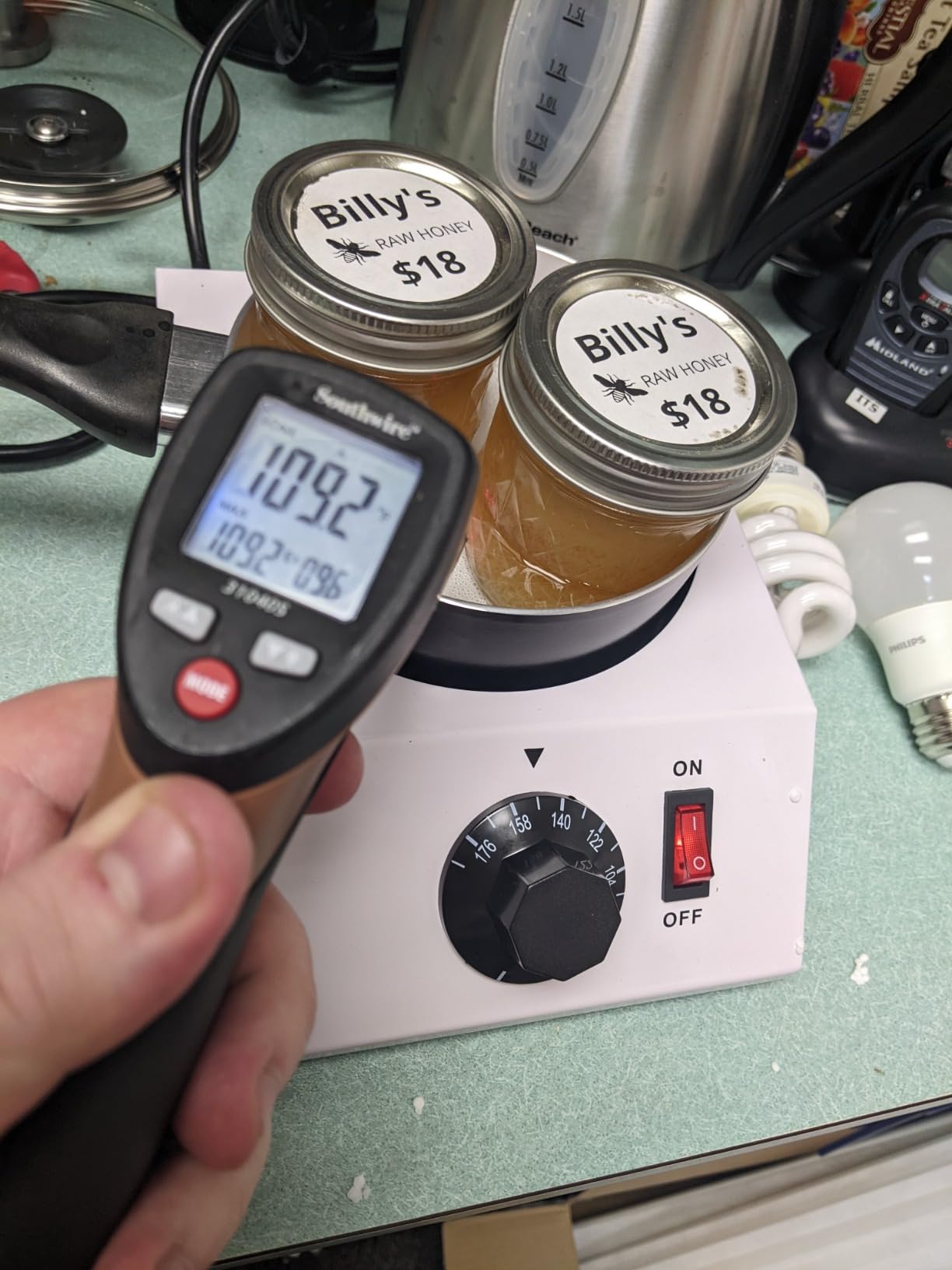
The wide temperature range is helpful when switching from chocolate to other foods, but that versatility does not equal precise tempering. Reviews mention display inaccuracies and a build that may not tolerate demanding commercial use.
For a beginner, that is a reasonable compromise. I would use an independent thermometer and keep the batches small, then move to a controlled temperer when consistency becomes the priority.
For whom it is good
Choose the WICHEMI for occasional home use and simple coatings. It is a sensible way to learn heat handling without paying for a professional machine.
For whom it is bad
It is not the right tool for large batches, fast service, or delicate shells. The long melt time and calibration concerns will frustrate a production schedule.
6. Dyna-Living 2-Tank 1000W Melter: More Power for Home or Prep
Dyna-Living Chocolate Melting Pot 2-Tanks Chocolate Tempering Machine
1000W heating
Two independent tanks
304 stainless steel
Pros
- Fast heating
- Two independent tanks
- Water-level indicators
Cons
- Difficult-to-read dial
- Overheating risk
- Mixed durability reports
The second Dyna-Living model steps up to 1000 watts and uses two independent tanks. I would consider it for home production or prep work where melting two ingredients at once saves time.
The 304 stainless steel body and clear water-level indicators are useful details. The U-shaped heating tube is designed for even heat transfer, and users say it can maintain chocolate for dipping and molding.
The downside is consistency. The dial is upside down, the reservoirs can float if they are not seated correctly, and overheating has been reported. Those small operating details matter when chocolate needs to stay in a workable range.
Like the other Dyna-Living entry, this is principally a melter. It can support a home dessert setup, but the mixed durability feedback and lack of true tempering control keep it out of my professional recommendation list.
For whom it is good
This is a reasonable option for someone who wants two heated tanks and has room for a 7.98-pound appliance. It works well for prep, dipping, and melting rather than continuous production.
For whom it is bad
Skip it if you need dependable overnight operation or repeatable crystal structure. A tempering-specific machine is worth the added control for those tasks.
7. ChocoVision Revolation 2: Compact Automatic Tempering
ChocoVision Revolation 2 Chocolate Tempering Machine (White)
1.5 lb batch
10 lb daily output
Forced hot air
Pros
- Automatic microprocessor control
- LED display
- Compact design
Cons
- Noisy motor
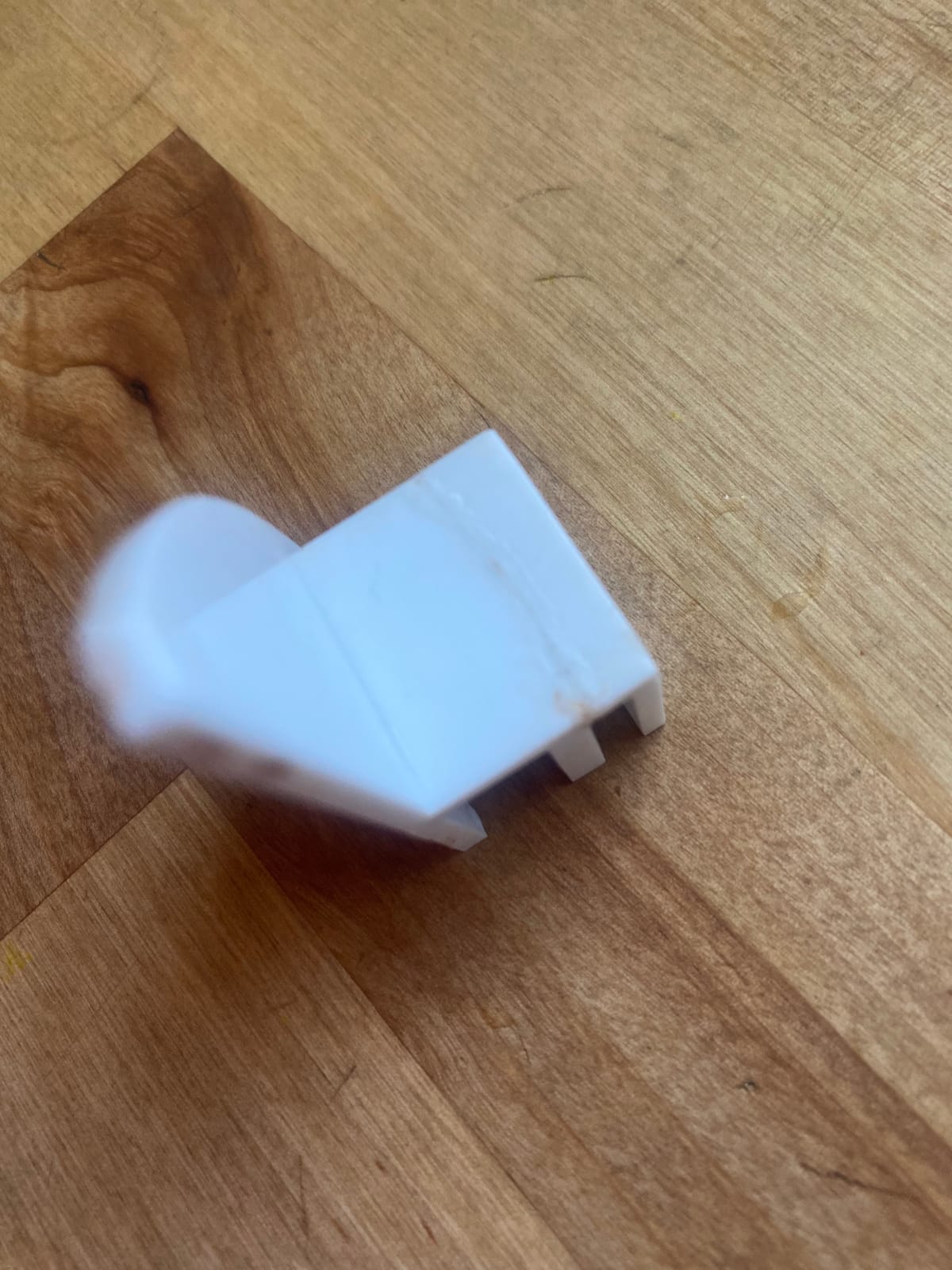
- Plastic baffle concerns
- Small batch size
The Revolation 2 is the first machine in this comparison that I would confidently describe as a true chocolate tempering machine. It melts, tempers, sets, and holds up to 1.5 pounds, with forced-hot-air heating and automatic microprocessor control.
The stated daily output is 10 pounds, which suits a home-based business or a small pastry kitchen. Its 12.5-by-10.5-inch footprint is much easier to place than a large tank, and the removable bowl and baffle help with cleaning.
Temperature precision is listed to two-tenths of a degree Fahrenheit, and the LED display makes the process easier to follow. That is a meaningful step up from a simple warmer when you are trying to produce consistent shells and coatings.
The trade-offs are noise, limited capacity, and durability complaints. The plastic baffle can crack, some units reportedly fail after limited use, and the 3.7 rating reflects a mixed service history rather than a universally smooth experience.
For whom it is good
Choose the Revolation 2 when you need real automatic tempering in a compact footprint. It is a good fit for a home chocolatier or a small business making modest batches.
For whom it is bad
It is not ideal for high-volume work, quiet environments, or buyers who cannot tolerate reliability risk. Check replacement parts and support before committing.
8. ChocoVision Revolation Delta 10 lb: Professional Workhorse
ChocoVision Revolation Delta 10 lb Chocolate Tempering Machine
3-10 lb batches
100 lb daily output
Overnight standby
Pros
- High output
- Automatic software control
- Reliable commercial reports
Cons
- High cost
- Heavy 36-pound build
- Probe issues reported
The Revolation Delta is my professional pick. It uses forced hot air, advanced software, and a 20-by-4-character display to support batches from 3 to 10 pounds, with a stated daily output of 100 pounds.
Overnight standby can hold temper for more than 15 hours, which is useful for a pastry team starting before service or finishing a decorated batch the next morning. Manual mode is available when a recipe needs adjustment.
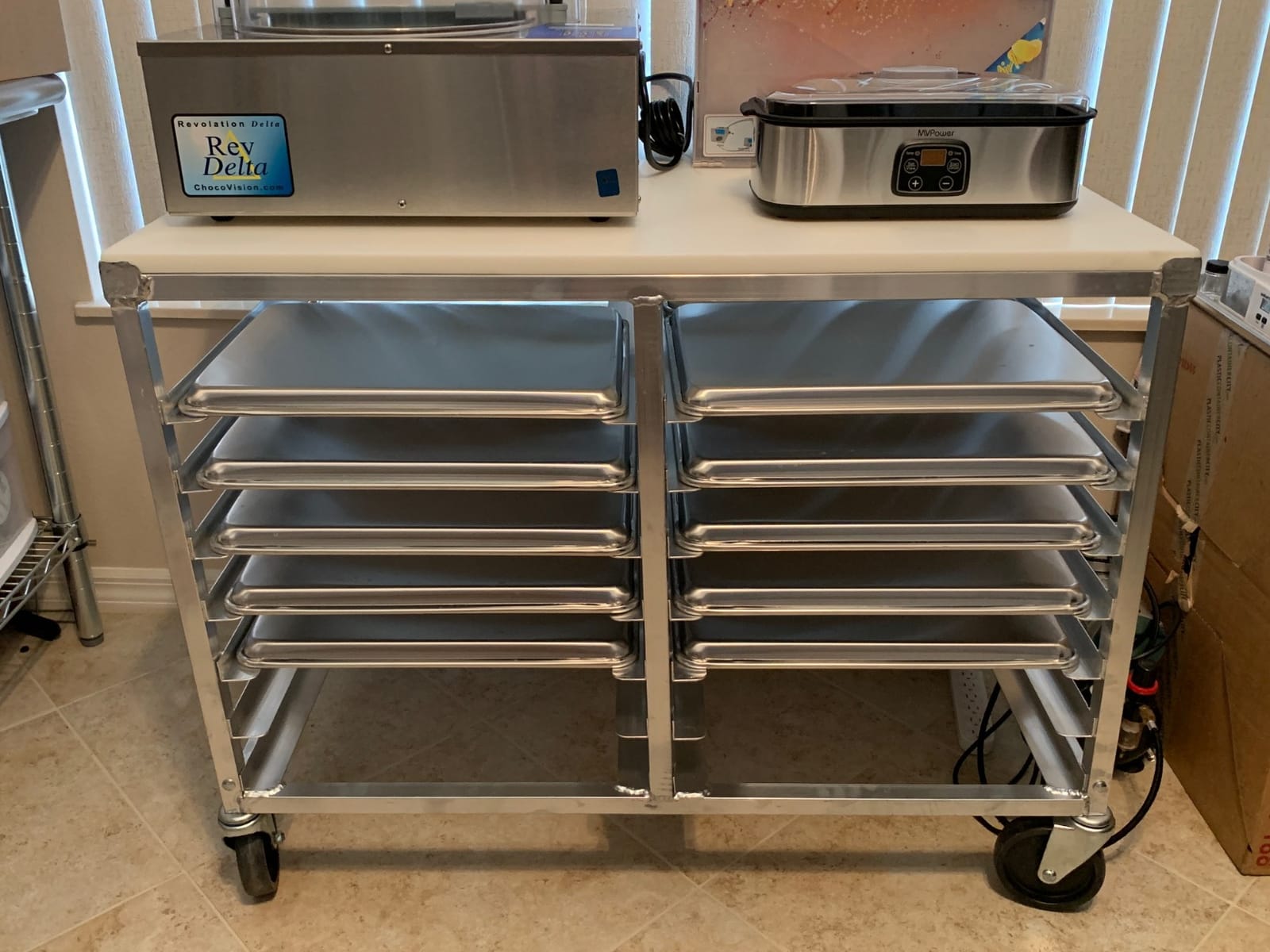
The 36-pound weight and 18.25-inch width make it a permanent workstation rather than a stovetop accessory. That is a fair trade for commercial capacity, durable construction, and the ability to temper substantial batches.
Reviews praise long-term performance, but they also mention occasional temperature-probe issues and presets that may need adjustment for different chocolate types. I would establish a recipe log and verify the first batches with a thermometer.
For whom it is good
This is the strongest choice for a serious pastry kitchen, confectionery, or production team. Its 100-pound daily output and overnight mode can replace repeated small-batch handling.
For whom it is bad
It is excessive for a beginner and difficult to justify for occasional use. The high cost and dedicated counter space are justified only when the workload is real.
How to Choose a Chocolate Tempering Machine
Choose a true temperer when crystal control is the goal
A melter heats and holds chocolate, but a temperer controls the heat-and-cool sequence that encourages stable Type V cocoa-butter crystals. If you are making bars, bonbons, or glossy coatings, that sequence affects appearance, snap, mouthfeel, and bloom resistance.
The automatic ChocoVision models make the distinction clearest because they list forced-hot-air heating, microprocessor or software control, and a tempering function. The VEVOR and Dyna-Living products are better understood as warming or melting equipment despite the word tempering in some listings.
Match capacity to the real workday
Measure a typical batch and your expected daily volume before choosing. A 1.5-pound machine may be enough for a home business, while a team aiming toward hundreds of bars per day needs much more throughput and should plan for industrial equipment rather than a countertop shortcut.
Do not confuse tank capacity with daily output. A large reservoir can hold a lot of chocolate while still varying in temperature, while a true temperer may process smaller batches with more repeatability.
Look for temperature precision and clear controls
Digital controls and a visible temperature display make it easier to repeat a successful cycle. Review data shows that calibration concerns appear in several budget products, so a separate thermometer is a useful companion even when a machine has an automatic program.
For dark, milk, and white chocolate, expect different working temperatures. The machine should let you adjust or program those recipes rather than forcing every batch through one setting.
Consider cleanup, parts, and working conditions
Removable bowls, pots, and baffles are easier to wash than fixed reservoirs. Warm rooms, high humidity, and changes in batch size can also affect temper, so I would keep a small notebook with chocolate type, program, temperature, and finished result.
For alternative chocolates, dairy-free or sugar-free recipes can behave differently because their fat and solids are not identical to a standard couverture. Begin with the manufacturer’s guidance, make small test batches, and use a tempering curve or thermometer suited to that formulation.
Plan for maintenance before buying
Empty and clean the bowl, baffle, and contact parts promptly after use, and dry everything before reassembly. Inspect probes, seals, and removable parts for residue or damage, because a small sensor or baffle problem can undermine an otherwise good cycle.
If the appliance will run overnight, confirm the standby behavior and food-safety requirements for your kitchen. NSF certification is worth prioritizing in a commercial setting when the machine is used for paid food production.
Frequently Asked Questions
What is the best machine for tempering chocolate?
The best machine depends on volume: the ChocoVision Revolation 2 suits compact automatic work, while the ChocoVision Revolation Delta suits professional batches up to 10 pounds and a stated 100-pound daily output.
Are chocolate tempering machines worth it?
They are worth it when you need repeatable gloss, snap, and bloom resistance. A basic melter can be enough for occasional dipping, but a true temperer is more useful for bars, bonbons, and paid production.
What is the best chocolate tempering machine for home use?
The ChocoVision Revolation 2 is the strongest compact home-oriented option because it is a true automatic temperer with a 1.5-pound batch capacity. Budget melting pots are better only for casual coatings and small projects.
What size tempering machine do I need?
Choose capacity from your typical batch and daily workload, not just the tank size. A 1.5-pound machine can serve a home-based business, while commercial teams should consider 3-to-10-pound batches and much higher daily output.
What is the difference between a chocolate melter and a temperer?
A melter heats or holds chocolate at a warm temperature; a temperer controls heating and cooling to form stable cocoa-butter crystals. The difference matters when you need a glossy finish, clean snap, and resistance to bloom.
Conclusion: The Right Machine Depends on Your Batch Size
The LUSHYUM, Magula, Dyna-Living, VEVOR, and WICHEMI products are useful melting and warming tools for small jobs, but they should not be mistaken for precision chocolate tempering machines. The ChocoVision Revolation 2 is the better choice for compact automatic tempering, while the Revolation Delta is the professional workhorse for high-volume production.
For the best chocolate tempering machines, I would buy the smallest machine that comfortably handles your real batch size. Start with a thermometer, keep detailed recipe notes, and move up only when your output or consistency demands it.