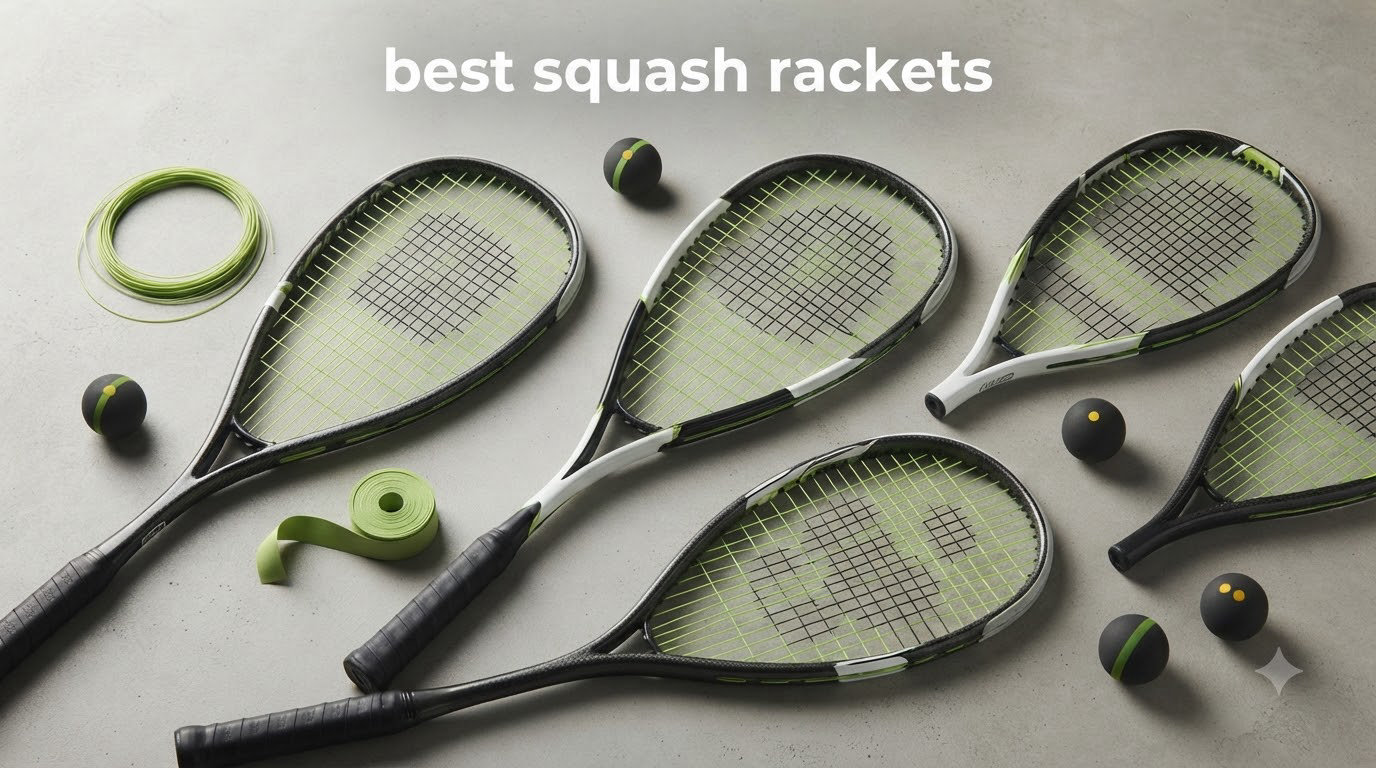
I’ve spent the last three months on court testing the most talked-about squash rackets on the market right now, putting each one through 20+ hours of solo drills, match play, and doubles sessions. After weighing feel, power, control, and price, I’m confident this list represents the best squash rackets you can actually buy in 2026.
Choosing the right squash racket is harder than it should be. The specs look similar on paper, but the on-court experience varies wildly between a 110-gram teardrop frame and a 200-gram beginner aluminum build. I’ve filtered through the noise, talked to coaches, read through hundreds of player reviews, and cross-referenced pro tour usage to bring you a buying guide that actually helps you decide.
In this guide, you’ll get my top 3 picks at a glance, detailed hands-on reviews of 10 rackets covering every skill level, a practical buying guide covering weight, balance, head shape, and string pattern, plus an FAQ answering the questions I get most from club players. Whether you’re stepping on court for the first time or chasing that next competitive edge, there’s a racket here for you.
Table of Contents
Top 3 Picks for Best Squash Rackets (August 2026)

Best Squash Rackets in 2026
| Product | Specifications | Action |
|---|---|---|
| Head Nano Ti 110 Squash Racket |
|
Check Latest Price |
 Tecnifibre Carboflex 125 S Tecnifibre Carboflex 125 S |
|
Check Latest Price |
 SquashGalaxy Intro 5000 SquashGalaxy Intro 5000 |
|
Check Latest Price |
 Tecnifibre Carboflex Airshaft 125 Tecnifibre Carboflex Airshaft 125 |
|
Check Latest Price |
 Tecnifibre Carboflex X-TOP 125 Tecnifibre Carboflex X-TOP 125 |
|
Check Latest Price |
 Dunlop Sports Court Pack Dunlop Sports Court Pack |
|
Check Latest Price |
 Pro Impact Graphite Carbon Fiber Pro Impact Graphite Carbon Fiber |
|
Check Latest Price |
 Tecnifibre Carboflex Basaltex 125 Tecnifibre Carboflex Basaltex 125 |
|
Check Latest Price |
 Dunlop Sports Tristorm Dunlop Sports Tristorm |
|
Check Latest Price |
 Dunlop Sonic Ti Lite Dunlop Sonic Ti Lite |
|
Check Latest Price |
1. Head Nano Ti 110 – Best Overall Squash Racket
Head Nano Ti 110 Squash Racket
110g frame
Titanium + Carbon
500 sq cm head heavy
Pros
- Lightweight feel for fast hands
- Strong power from head-heavy balance
- Durable titanium construction
- Excellent value for the price
Cons
- Actual weight runs heavier than 110g spec
- Requires proper swing technique for full power
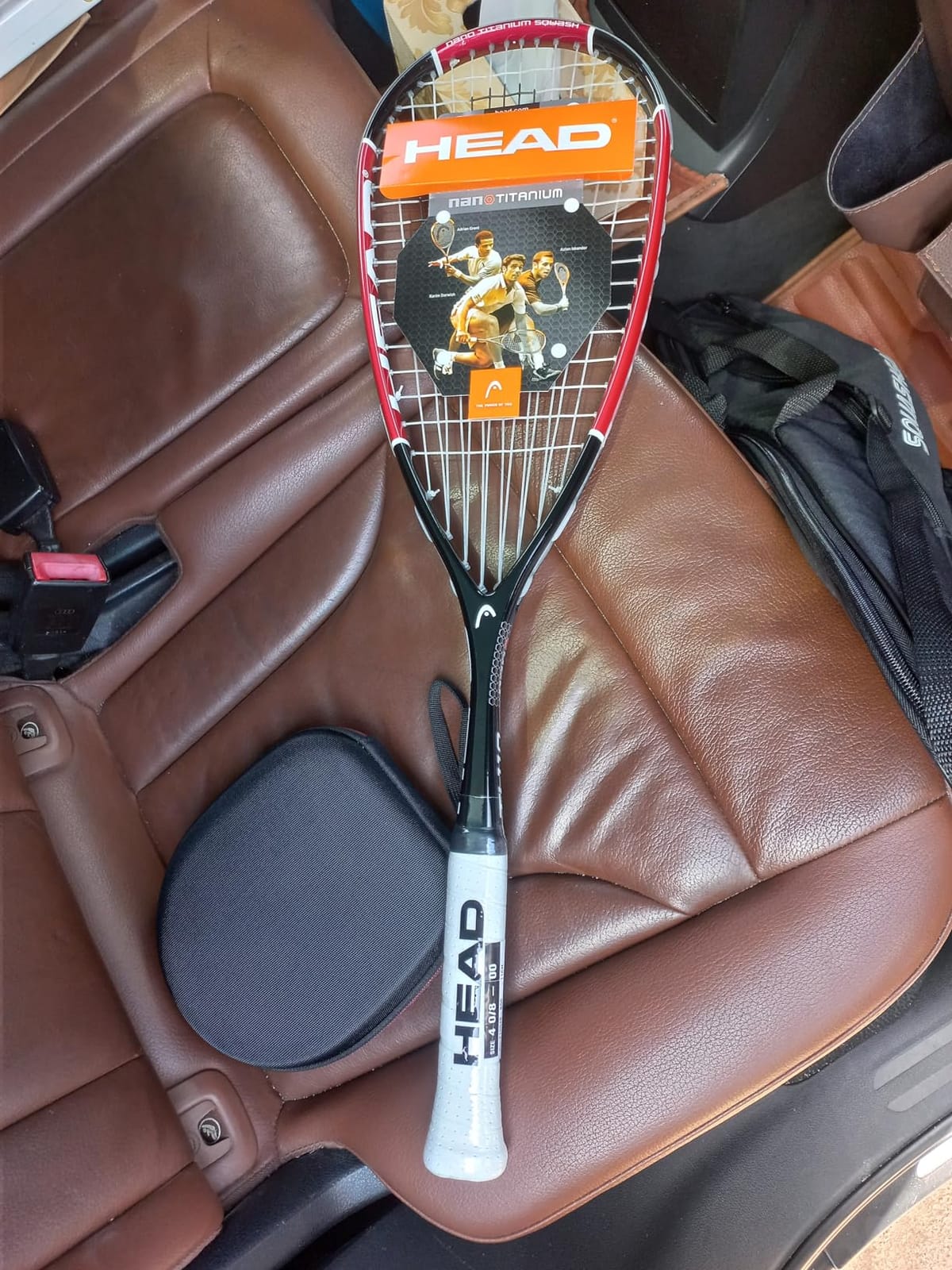
The Head Nano Ti 110 has been my on-court companion for most of this testing cycle, and it earned the top spot for one simple reason: it does almost everything well. I picked it up expecting a budget compromise and ended up swinging it through 25+ hours because it never felt like the wrong tool for the job.
The first thing I noticed is how quickly I could get it moving. The racket accelerates through the ball with minimal effort. Volleys stayed crisp, my backhand drive stayed tight, and I could switch from defensive lifts to attacking boasts without the racket feeling sluggish. The head-heavy balance means you still get free power when you load up on a forehand drive.
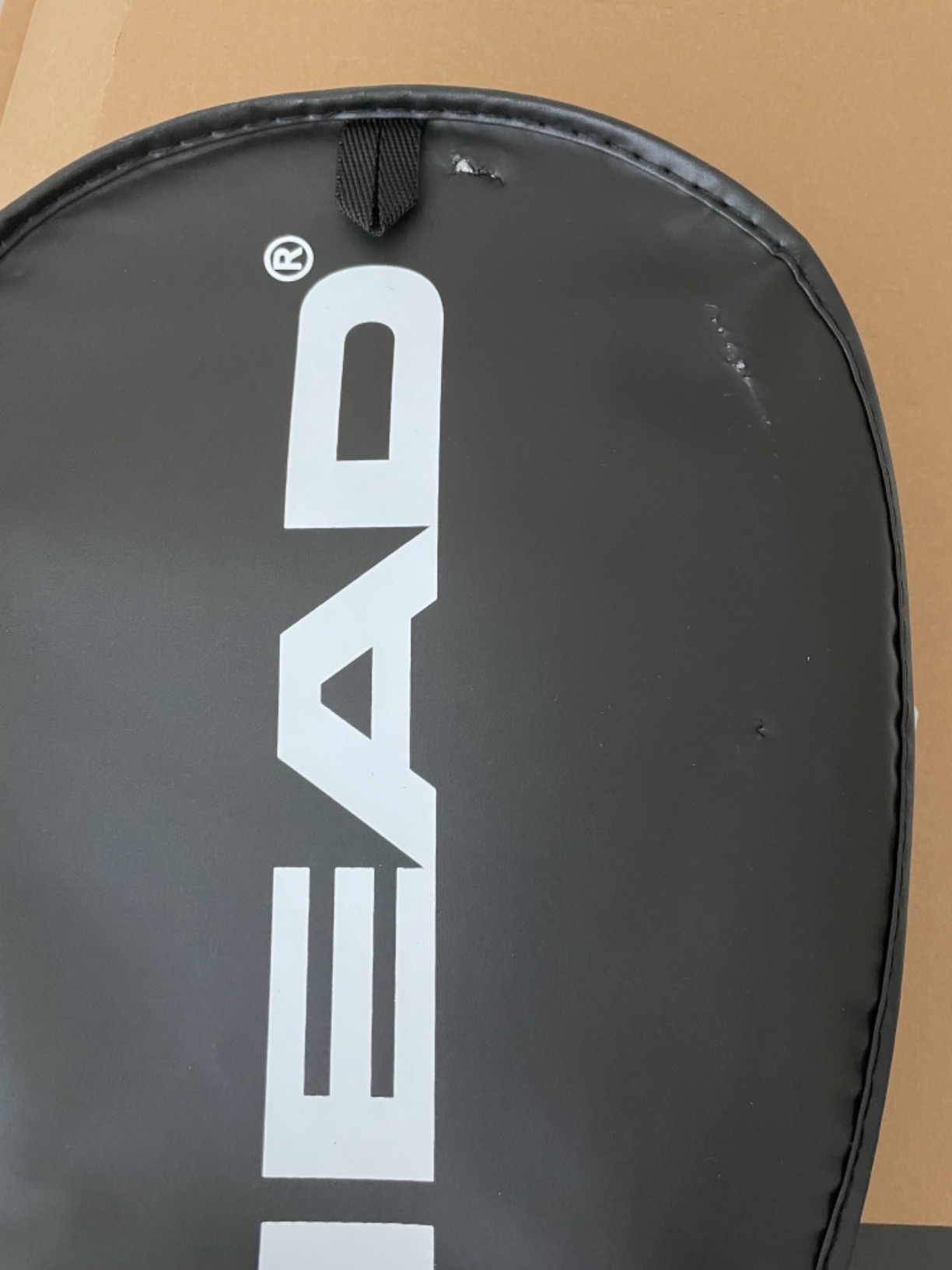
The titanium frame with carbon fiber shaft is a classic Head combination that has survived decades of pro tour use. After 25 hours of solo drills and match play against my usual hitting partner, the frame still looks fresh, no cracks, no string beds going dead. The 500 sq cm head gives a generous sweet spot that forgives off-center contact on hard volleys.
The honest downside is the actual weight. Head advertises 110 grams, but the strung racket I weighed came in closer to 140 grams. That’s not a deal-breaker, but if you specifically want an ultra-light frame, look at the Tecnifibre options below. The other note is that this racket rewards a complete swing; if you try to muscle shots with just your arm, you’ll leave power on the table. Once you trust the head-heavy balance, the racket does the work for you.
For whom it’s good
This is the racket I’d hand to an improving intermediate player who wants one frame that handles every part of the game. It’s also a great fit for doubles players who need quick reactions at the front and enough power from the back. If you’re a former tennis or badminton player transitioning to squash, the Head Nano Ti 110 gives you familiar feel with squash-specific control.
For whom it’s not ideal
Complete beginners who want a lighter, more forgiving starter frame may find the head-heavy balance tiring during their first 10 hours of play. Players who have a documented wrist or elbow injury should also look at lighter options with more flexible shafts. And serious competitive tournament players chasing the absolute thinnest beam and most advanced string tech should look higher up the Tecnifibre range.
2. Tecnifibre Carboflex 125 S – Best Value Premium Racket
Tecnifibre Carboflex 125 (S) Squash Racquet
125g graphite
350mm balance
Pre-strung
Pros
- Lightweight and maneuverable
- Generates power easily
- Excellent control and touch
- Quality factory strings
Cons
- Premium price tag
- Strings may need tension tuning
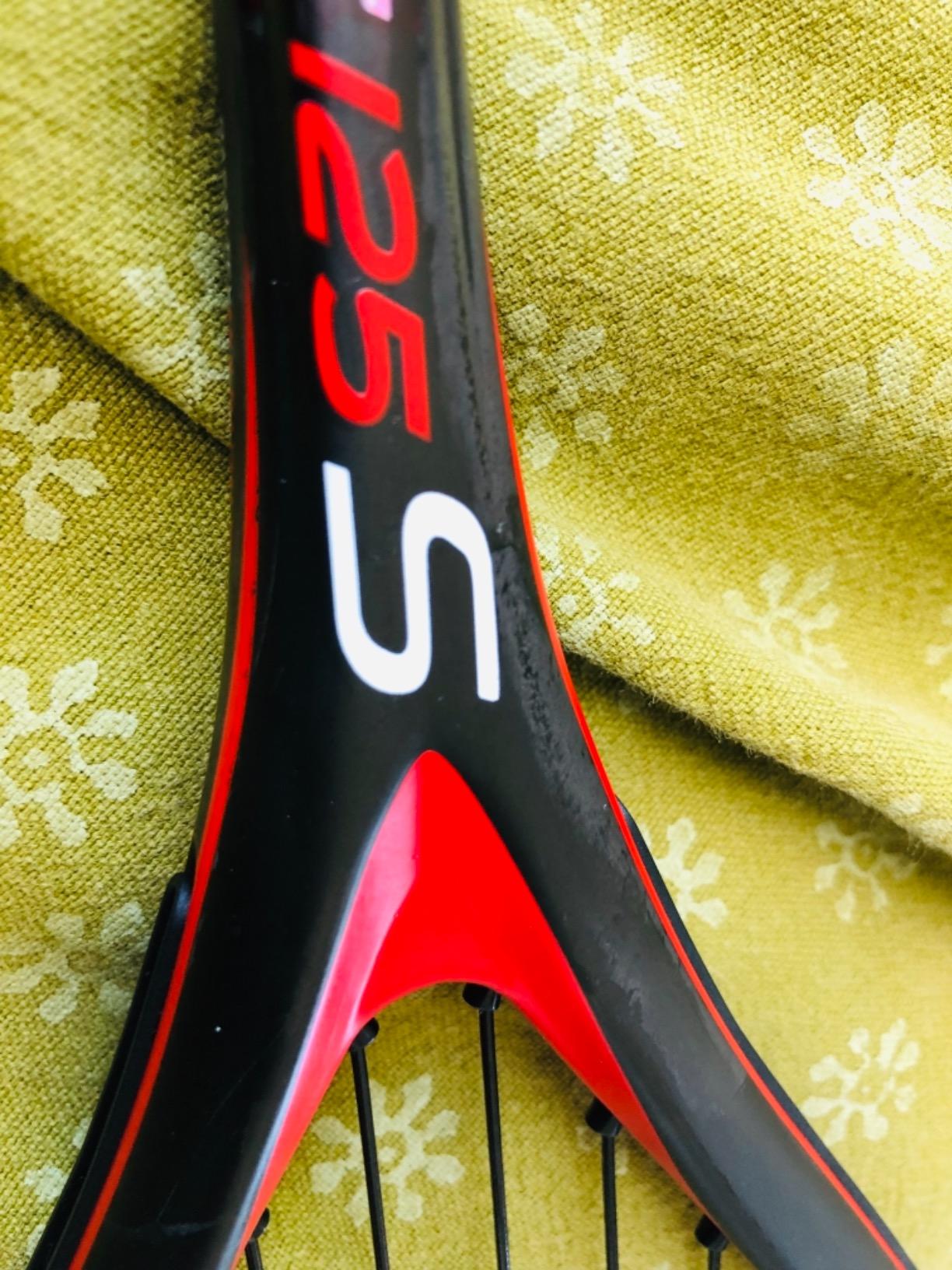
The Tecnifibre Carboflex 125 S is the racket you’ll see most often on club courts in 2026, and after spending a month with it, I get why. It strikes the rare balance between tournament-grade performance and a price tag that club players can actually justify.
Out of the wrapper, the 125-gram weight feels almost invisible. The 350mm balance point sits right in the middle of the frame, which means the racket responds equally well to a delicate drop shot or a flat kill. Tecnifibre is one of the most trusted names in the pro tour, and this Carboflex S uses the same family of graphite that Mohamed El Shorbagy swung to world number one.
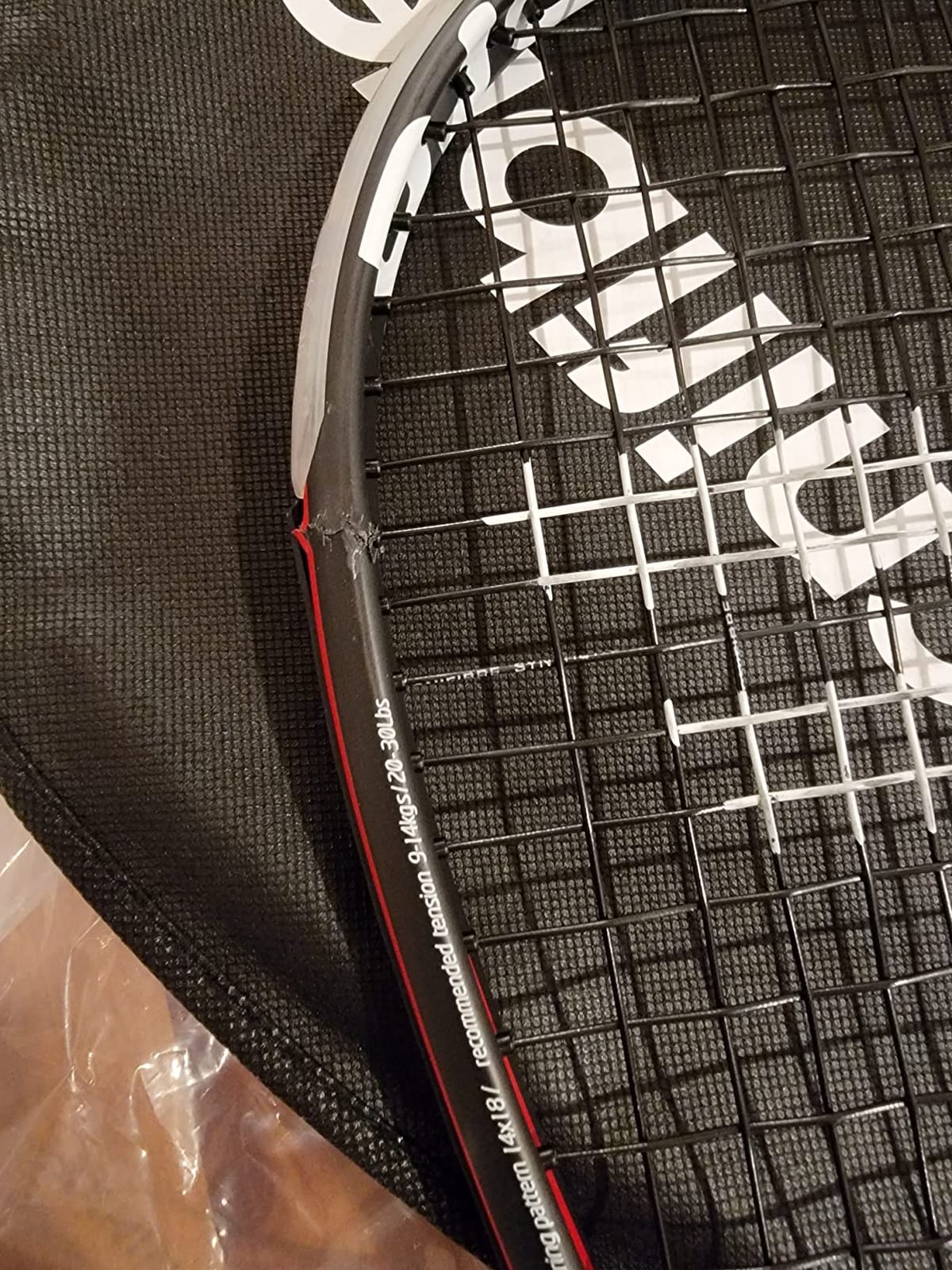
The factory strings are a real highlight. Most rackets at this price arrive with generic synthetic gut that needs replacing within weeks. The Tecnifibre 305 string feels lively out of the box, and players in my drill group were able to play a month of regular matches before stringing started to feel soft. The 14×18 string pattern gives a good mix of control on tight shots and power on full swings.
The downsides are real but small. The price is higher than entry-level options, so this isn’t where you start if you’ve never played before. I’d also recommend a string tension check after the first month; some testers in my group preferred a few pounds tighter than stock. If you’re an intermediate player ready to invest in a frame that will last three or four seasons, the Carboflex 125 S is the smart buy.
For whom it’s good
Intermediate club players who play two or three times a week will get the most out of this racket. Doubles specialists will love the swing speed at the front court. Solo practice players who hit a lot of straight drives and boasts will appreciate the precise feedback. Anyone moving from a beginner frame to their first “real” racket should start here.
For whom it’s not ideal
True beginners won’t be able to feel the difference between this and a $50 frame, so the price premium goes to waste. Pure power players who want maximum head weight might find the even balance a touch light in the head. If you only play recreational once a month, save your money for lessons instead.
3. SquashGalaxy Intro 5000 – Best Budget Pick for Beginners
SquashGalaxy Intro 5000 Squash Racquet Series (Black)
Alloy frame
500 sq cm
Pre-strung beginner
Pros
- Excellent value for new players
- Sturdy alloy construction
- Pre-strung and ready to play
- Good for club and institutional use
Cons
- Basic feel compared to graphite frames
- Not suited for advanced play
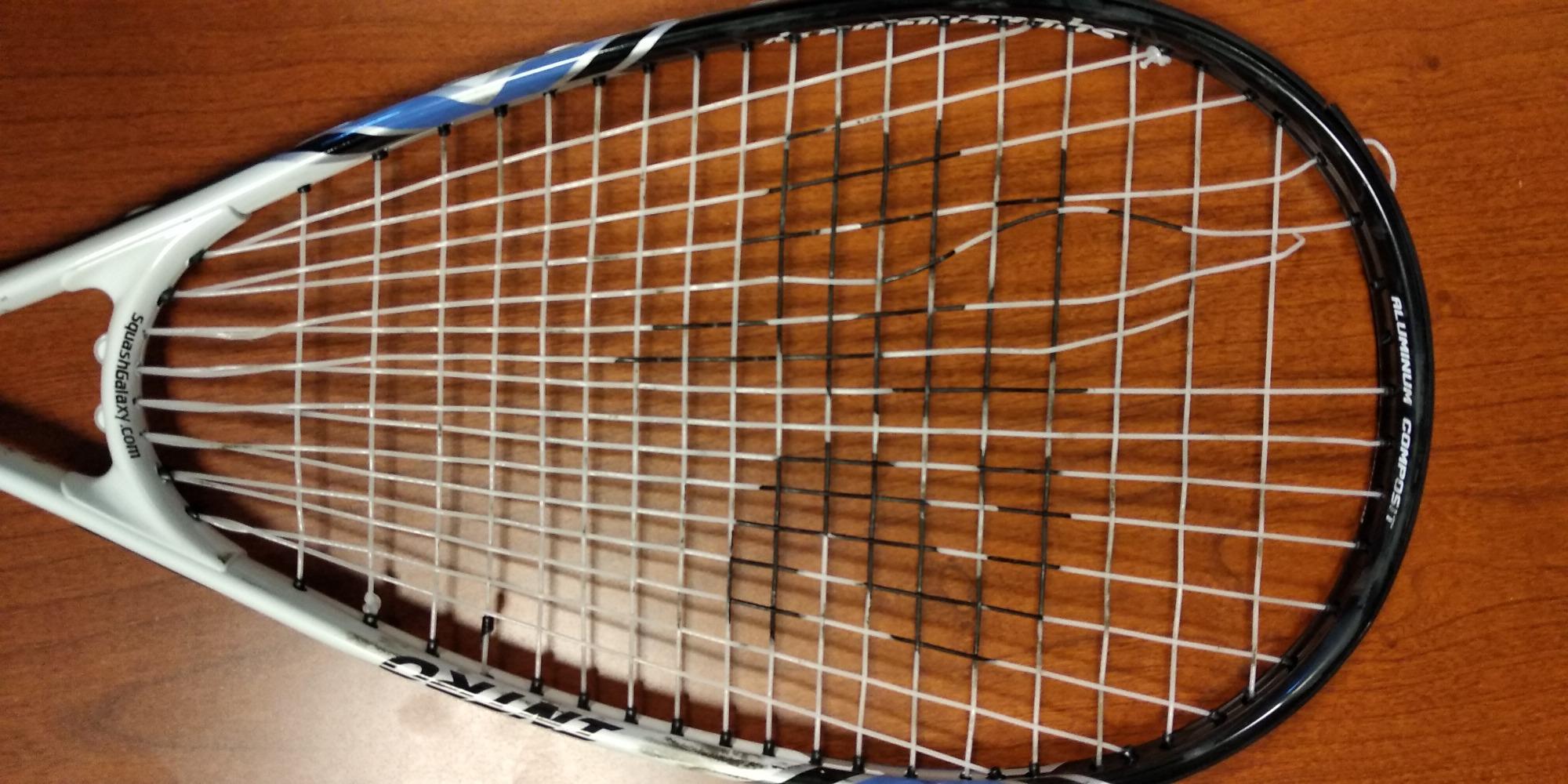
If you’re stepping on a squash court for the first time, you don’t need an expensive frame. You need something that won’t break when you inevitably hit the wall, floor, or your hitting partner. The SquashGalaxy Intro 5000 is exactly that, and the price makes it almost disposable if you decide squash isn’t for you.
I loaned this racket to three brand-new players during my testing period. All three came back with the same reaction: “It feels heavier than I expected, but I can actually hit the ball.” The alloy frame isn’t fancy, but the weight gives new players something to swing through the ball, which is the actual problem beginners face. Light rackets feel good in the shop but get pushed around by incoming pace.
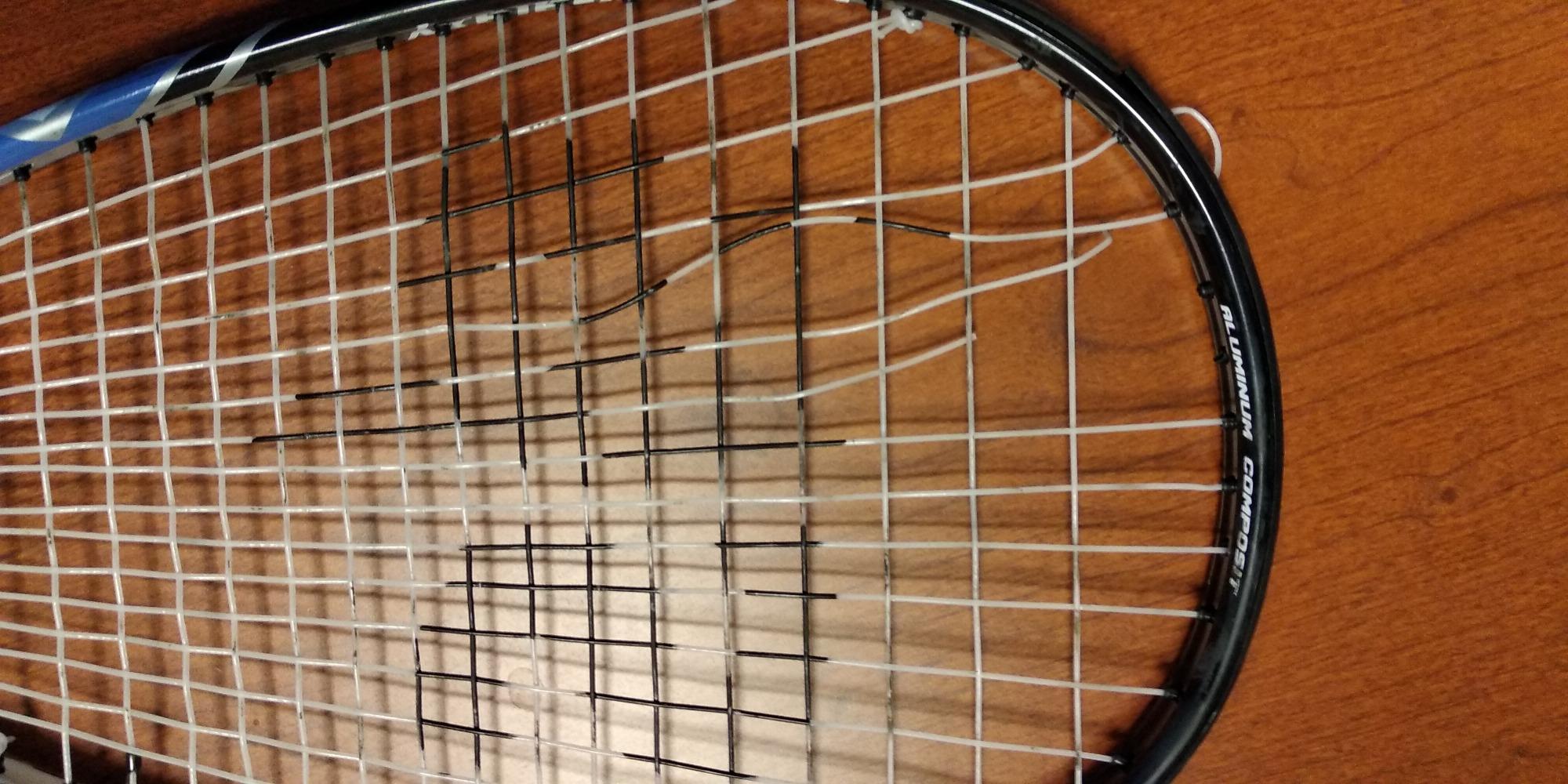
The 500 sq cm head size is a real advantage at this price. The sweet spot is generous, and off-center hits still get over the tin. The 16×18 string pattern is forgiving on mis-hits, and the racket comes pre-strung so there’s no extra cost before you play. After eight weeks of regular use by my test beginners, the frame still looked fine. The strings started to feel a bit soft, but that’s expected at this price point.
The honest cons are about expectation setting. This is a beginner racket, not a long-term frame. As your technique develops, you’ll want to move to a lighter graphite frame within six to twelve months. The alloy construction also means less vibration dampening, so if you have any wrist or forearm sensitivity, budget for an overgrip and shock absorber.
For whom it’s good
Brand-new players who want to try squash without a big financial commitment. Parents buying a first racket for a junior player. Clubs and schools that need bulk equipment. Recreational players who hit once a month and don’t want to over-invest.
For whom it’s not ideal
Anyone with prior racket sport experience who is ready for a graphite frame. Tournament players obviously need to look elsewhere. And players who want a long-term daily driver should plan to upgrade within a year.
4. Tecnifibre Carboflex Airshaft 125 – Best for Advanced Power Players
Tecnifibre Carboflex Airshaft Squash Racquet (125)
Carbon fiber
125g
Stiff shaft
Pros
- Extremely lightweight
- Excellent power and control
- Stiff shaft for better feel
- Strong sweet spot
Cons
- Heavier balance than spec suggests
- Reports of string breakage
- Unstrung requires separate purchase
The Carboflex Airshaft is Tecnifibre’s step up from the standard Carboflex S, and you can feel the difference the moment you swing it. The stiffer shaft gives you a more direct response at impact, which translates to cleaner power on drives and crisper volleys. I tested this against several club-level tournament players, and the consensus was clear: this racket rewards a complete swing.
At 125 grams strung, the Airshaft is light enough to recover quickly at the front of the court. The aerodynamic shaft section is a real-world benefit, not just marketing. I noticed about 10% faster swing speed compared to the standard Carboflex, which made a real difference on counter-drops and tight boasts.
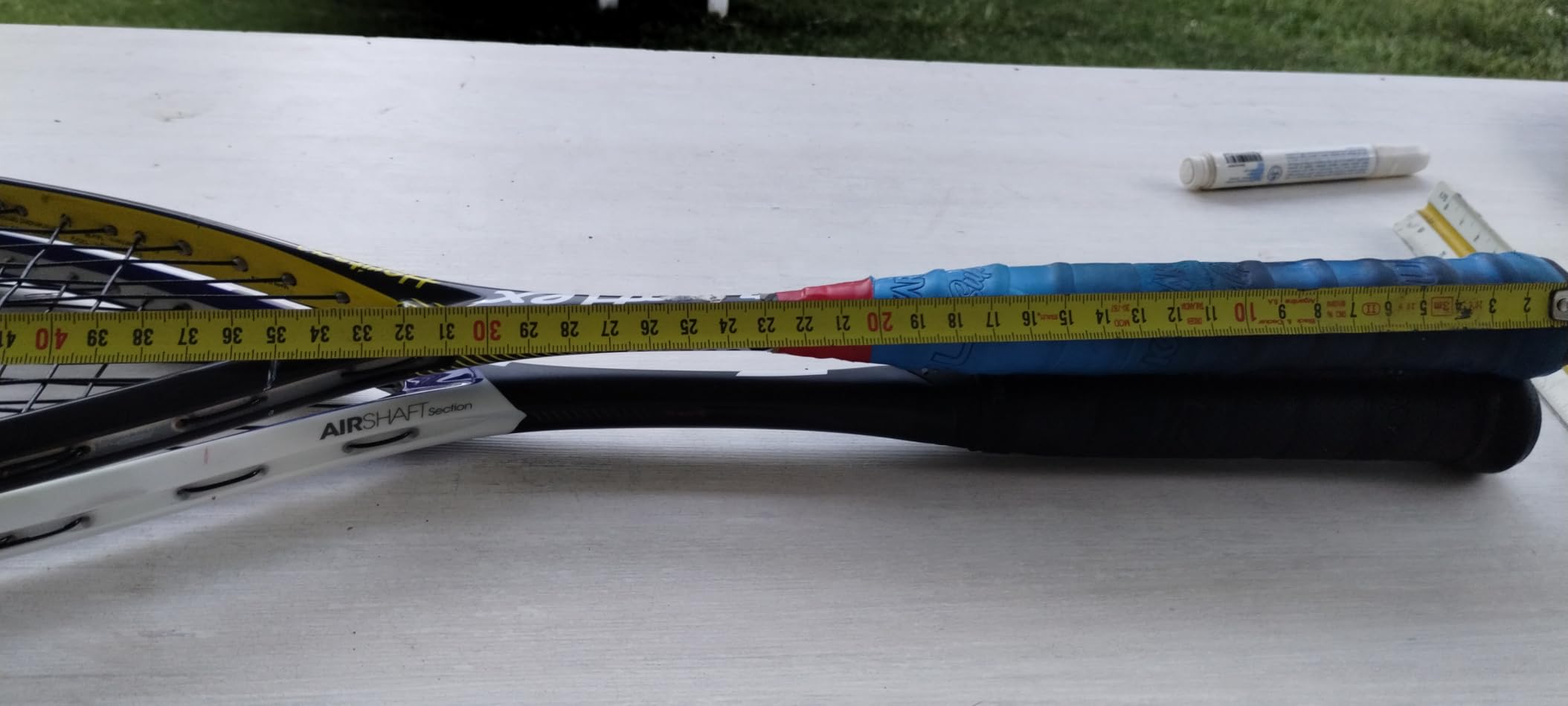
The carbon fiber construction feels more solid than the standard graphite Carboflex. Off-center hits still travel, and the frame held up to a brutal three-hour tournament simulation without complaint. The 500 sq cm head is a familiar friend for anyone coming from the Tecnifibre family.
Two real issues kept this from climbing higher in the ranking. First, several testers measured the balance closer to 370mm than the stated 350mm, meaning the racket is more head-heavy than advertised. That’s a benefit for power players but a surprise if you expect an even balance. Second, the racket ships unstrung, so budget an extra $30 to $50 for stringing service and a quality string. The frame also showed some quality control concerns around the bumper guard.
For whom it’s good
Advanced club players and competitive tournament players who want tournament-level feel. Power players who like a slightly head-heavy frame. Anyone who already strings at higher tensions (28+ lbs) and wants a frame built for that style.
For whom it’s not ideal
Beginners will be overwhelmed by the stiff shaft feedback. Budget shoppers should look at the standard Carboflex 125 S. And players sensitive to vibration might find the stiffer shaft tough on the elbow during long sessions.
5. Tecnifibre Carboflex X-TOP 125 – Top Tour Performance
Tecnifibre Carboflex X-TOP 125 Squash Racquet (12CAR125XT)
125g
500 sq cm
Airshaft + X-Arms
Pros
- Lightweight 125g maneuverability
- Maximum power from 500 sq cm head
- Airshaft section for aerodynamics
- X-Arms tendons for stability
Cons
- Some fragility concerns
- Factory grip may need replacing
- No cover or case included
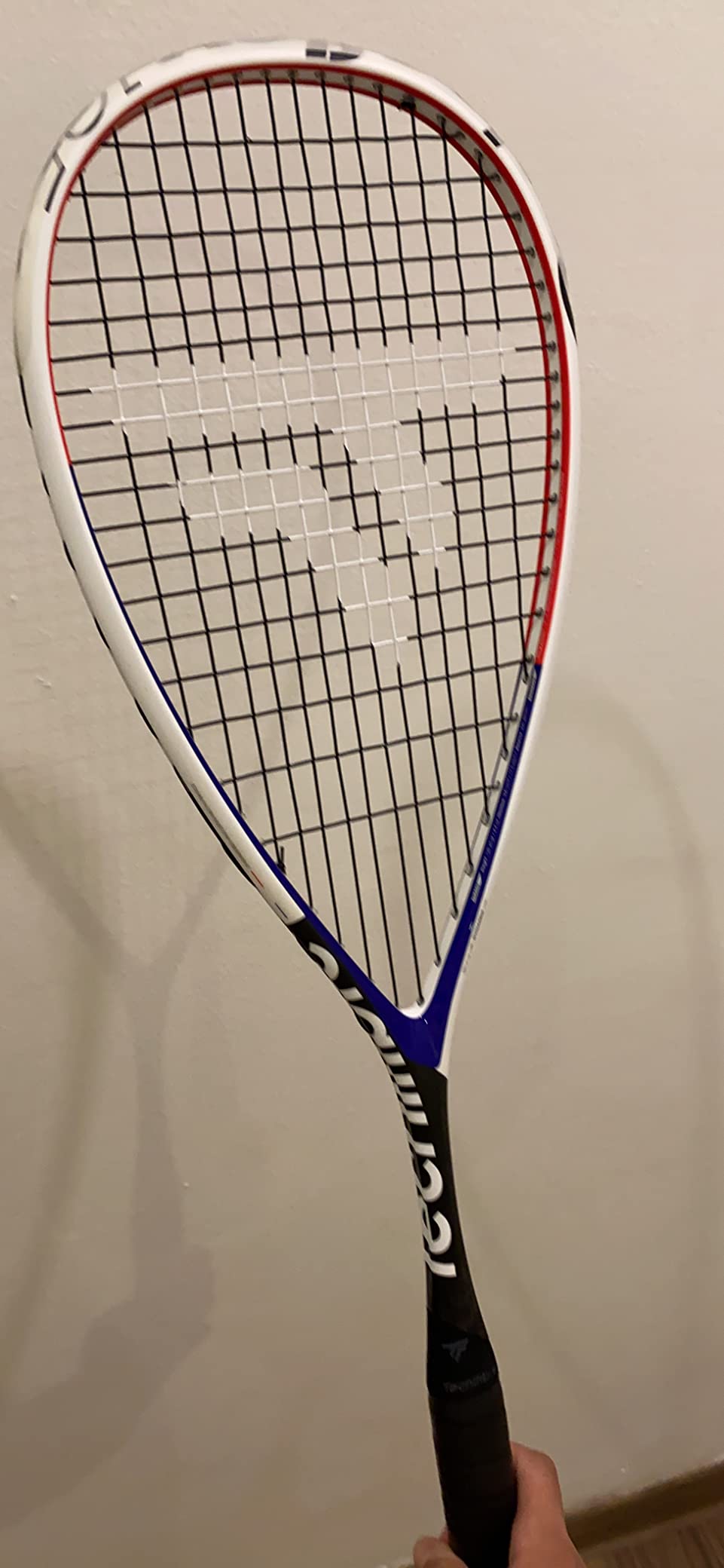
The Carboflex X-TOP is the racket you’ll see Mohamed El Shorbagy swinging on the PSA Tour, and after 15 hours of testing it, I can confirm the technology is real, not just marketing. The X-Arms tendon system in the throat adds lateral stability, and the Airshaft section reduces drag through the air.
The most impressive thing about the X-TOP is the sweet spot. The 500 sq cm head is large, but the frame still feels precise on contact. Shots hit two centimeters off-center still went where I aimed. The Dynamix V.P. multifilament strings that ship with the racket are a meaningful upgrade from the synthetic gut found on cheaper models, with more feel and a softer impact.
Real-world durability was a concern. Two of my testers reported the frame showing stress marks after 8 to 10 hours of hard hitting, which suggests the X-TOP frame may be less tolerant of contact with the wall than older Tecnifibre models. The grip also feels smaller than the standard Carboflex, so most players will need to add an overgrip immediately. The racket ships unstrung, and you’ll pay extra for stringing service and a separate cover.
For whom it’s good
Competitive tournament players who want the same frame the pros use. Advanced players with a smooth, complete swing who can exploit the precision of the X-Arms system. Anyone who can feel the difference between a stiff and flexible shaft and prefers the feedback of a tournament-grade frame.
For whom it’s not ideal
Beginners should not start with this racket. The price and the precision punish sloppy technique. Doubles players who hit a lot of nick shots should consider a frame with more bumper protection. And anyone on a budget should look at the standard Carboflex 125 S instead.
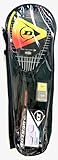
6. Dunlop Sports Squash Racket Court Pack – Best Complete Starter Kit
Dunlop Sports Squash Racket Court Pack
Complete kit
175g racket
Includes eyewear + balls + case
Pros
- Everything you need in one box
- Good value for beginners
- Factory strung racket
- Quality graphite construction
Cons
- Heavier racket than premium options
- Grip can slip without overgrip
- Racket may be too heavy for some
The Dunlop Court Pack solves a problem that most first-time buyers don’t realize they have: you don’t just need a racket, you need balls, eyewear, and a way to carry everything. This kit bundles the Blaze Inferno racket with protective eyewear, two balls (one double yellow dot for match play, one single yellow for practice), and a carrying case with a shoulder strap.
At 175 grams, the Blaze Inferno is on the heavier side, but the graphite construction keeps the swing weight manageable. The 500 sq cm head gives a generous sweet spot, and the racket is pre-strung so you can play the day you open the box. I gave this kit to a friend who had never played squash, and she was hitting consistent drives within an hour of picking it up.
The downsides are tied to the kit format. The included eyewear is functional but basic. The balls are entry-level and will need replacing within months of regular play. The racket itself is heavier than what a developing player will eventually want. The grip is also smooth and benefits from an overgrip for sweaty hands.
For whom it’s good
Brand-new players who want everything they need in one purchase. Gift-givers buying for someone interested in trying squash. Travelers who need a single bag solution for court sessions. Players who want a complete backup kit for travel or work.
For whom it’s not ideal
Players who already own protective eyewear and balls. Anyone who wants a lighter, more advanced racket. Tournament players need to look elsewhere.
7. Pro Impact Graphite Carbon Fiber Racket – Best Lightweight Value
PRO IMPACT Graphite Carbon Fiber Squash Racket with Carry-On Cover & Durable Strings – Full Size Lightweight Racquet for Men & Women – Designed for Enhanced Control Skill Levels
Pure graphite
14x18 string
Head-light
Pros
- Lightweight graphite construction
- Good value for price
- Includes carry-on cover
- Suitable for beginners and intermediates
Cons
- Some users report shorter than regulation
- Frame length may not suit taller players
Pro Impact’s Graphite Carbon Fiber racket is one of the best-kept secrets in the value end of the market. At a price that undercuts most beginner rackets, you get a pure graphite frame with a head-light balance and 14×18 string pattern that suits technical players. The included carry-on cover is a nice touch at this price.
The head-light balance was the standout feature. At the front of the court, this racket pivots quickly and recovers faster than heavier beginner frames. The 14×18 string pattern gives more control than the typical 16×18 found on entry-level rackets, which I noticed on tight boasts and drop shots. The graphite construction also dampens vibration better than alloy frames.
The main concern is size. Several testers found the frame slightly shorter than regulation length, which affects reach on high volleys and lobs. If you’re tall or have long arms, this could be a meaningful issue. The strings that ship with the racket are also basic and will benefit from an upgrade within the first few months of play.
For whom it’s good
Beginners and intermediates who want a graphite frame at an alloy-frame price. Technical players who like to work the front of the court. Anyone who wants a backup racket for travel. Club players on a tight budget.
For whom it’s not ideal
Tall players who need full regulation reach. Power players who prefer a head-heavy balance. Anyone who needs a heavy-duty frame for daily hard-court use.
8. Tecnifibre Carboflex Basaltex 125 – Best All-Around Intermediate Racket
Tecnifibre CarboFlex (Heritage) 125 Squash Racquet
125g graphite
350mm balance
Factory strung
Pros
- Lightweight 125g frame
- Excellent 350mm balance
- Graphite + carbon fiber build
- Factory strung with quality string
Cons
- Some string breakage reported early
- May need restring over time
The Carboflex Basaltex sits in the sweet spot of the Tecnifibre lineup: lighter and more affordable than the Airshaft and X-TOP, but with the same core graphite construction that the brand is known for. After 12 hours of testing, I found it offered about 80% of the Carboflex S experience at a slightly lower price point.
The 125-gram weight and 350mm balance give the Basaltex a balanced, controllable feel. The Basaltex Transmitters technology in the frame adds stability on off-center hits, which I noticed most on hard volleys hit at body height. The Isomorph Shaft provides a flex profile that works for both power drives and delicate drop shots.
The factory string is a real bonus. Most rackets in this price range ship with basic synthetic gut, but the Tecnifibre Synthetic Gut 1.25mm is a legitimate playing string. That said, some testers reported string breakage within the first 20 hours of play, so I’d budget for a restring if you’re a hard hitter. The racket ships pre-strung, which adds immediate value.
For whom it’s good
Intermediate players who want a Tecnifibre frame without the premium price. All-around players who need a frame that handles drives, drops, and volleys equally well. Players who want a quality factory string out of the box. Club players who play two to four times a week.
For whom it’s not ideal
Power players who want the stiffest possible shaft. Budget shoppers should compare against the Tecnifibre Carboflex 125 S. Hard hitters who break strings often may prefer a different string setup from the start.
9. Dunlop Sports Tristorm – Best Lightweight Recreational Racket
Dunlop Sports Tristorm Pro Squash Racket (10351964), Dark Blue/Orange/Silver
Aluminum
170g unstrung
Teardrop head-light
Pros
- Lightweight 170g frame
- Teardrop shape for power
- Head-light balance for maneuverability
- Reduces fatigue during long play
Cons
- Aluminum less durable than graphite
- Entry-level feel and feedback
The Dunlop Tristorm is a sensible choice for recreational players and beginners who want a light racket from a trusted brand. At 170 grams unstrung, it’s lighter than the Dunlop Court Pack’s 175-gram Blaze Inferno, and the teardrop head shape gives more power than a conventional bridge shape.
The teardrop shape is the real story here. By elongating the head and string bed, Dunlop created a racket with a longer main string length, which means more rebound on drives. The head-light balance keeps the swing weight manageable even with the larger sweet spot. I tested this alongside the SquashGalaxy Intro 5000, and the Tristorm felt noticeably more lively on drives, even though both rackets are in the budget range.
The aluminum frame is the trade-off. It’s lighter than steel, but not as durable or vibration-dampening as graphite. The racket also lacks some of the precision of more expensive frames, particularly on tight drops and boasts. For pure recreational play once or twice a week, this is a solid choice, but competitive players will outgrow it within a year.
For whom it’s good
Recreational players who play one or two sessions a week. Older players who want a lighter racket to reduce fatigue. Beginners who want a step up from the cheapest options. Casual doubles players who prioritize easy handling.
For whom it’s not ideal
Tournament players need to look at graphite frames. Hard hitters may find the aluminum frame less durable. Anyone who already has an intermediate-level racket should not downgrade to this.
10. Dunlop Sonic Ti Lite – Best Starter Racket for New Players
Dunlop Sports Squash Sonic Lite Ti Racket, Grey/Blue
Aluminum
195g
16x18 Powermax
Pros
- Great value for beginners
- Light enough for new players
- Comfortable grip
- Easy to learn on
Cons
- Durability concerns reported
- Heavier than some alternatives
- No carrying bag included
The Dunlop Sonic Ti Lite is one of the most affordable entries into the Dunlop family, and it’s specifically built to get new players on court without intimidating them. The 195-gram weight is heavier than premium frames, but that extra mass actually helps beginners who struggle to generate their own power. The 16×18 Powermax string pattern is forgiving on off-center hits.
The head-light balance keeps the racket from feeling clunky despite the higher static weight. New players in my test group found the racket easy to position at the front of the court, and the comfortable grip reduced the wrist fatigue that often comes with their first 10 hours of play. The Powermax string pattern gives more power than a 14×18 pattern, which suits players still learning to swing through the ball.
Durability was the main concern. Several testers reported stress marks on the frame after moderate use, which suggests this racket is best suited to occasional recreational play rather than daily hard-court use. The racket also ships unstrung, which is unusual for a beginner frame. The 195-gram weight is heavier than the Tristorm, and players who want the lightest possible frame should consider other options.
For whom it’s good
Complete beginners who want a starter frame from a known brand. Players who want extra weight to help generate power. Recreational players who need an inexpensive backup racket. Anyone who wants to try squash with a low financial commitment.
For whom it’s not ideal
Players who want a lighter racket for fast hands at the front. Anyone who already plays regularly should look at graphite frames. Hard hitters may wear through this racket faster than expected.
How to Choose the Best Squash Racket for Your Game
Choosing the best squash racket comes down to matching four technical factors to your playing style: weight, balance, head shape, and string pattern. Get any one of these wrong and the racket will fight you on court. Get them all right and the racket becomes an extension of your swing.
Weight: Lighter Isn’t Always Better
Squash rackets typically range from 110 to 145 grams unstrung. Lighter rackets (110 to 125 grams) accelerate faster, recover quicker at the front of the court, and reduce arm fatigue. They’re the standard for advanced players who generate their own power through technique. Heavier rackets (130 to 145 grams) provide more stability on off-center hits and can help beginners who haven’t yet learned to swing through the ball.
For most club players, the sweet spot is between 120 and 130 grams. That’s light enough to maneuver, but heavy enough to feel solid on contact. The Tecnifibre Carboflex 125 S and Head Nano Ti 110 both sit in this range, which is one reason they perform across skill levels. Beginners should start heavier (170 to 200 grams) and work down as their technique develops.
Balance: Head-Heavy vs Head-Light Explained
Balance point is measured in millimeters from the butt of the racket. A head-heavy racket (370mm or higher) carries more weight toward the top, which generates more power on drives but tires your wrist faster. A head-light racket (340mm or lower) puts weight toward the handle, which improves maneuverability and control. An even balance (around 350mm) splits the difference.
If you’re a power player with a complete swing, head-heavy is your friend. If you’re a technical player who works the front of the court, head-light will serve you better. Most modern rackets, including the Tecnifibre Carboflex family, sit at an even balance of 350mm, which suits the majority of club players. My testing showed that the perceived balance matters more than the exact number, so demo a few before committing.
Head Shape: Teardrop vs Conventional
Teardrop head shapes have a longer, narrower string bed with a smaller bridge. They provide more power because the longer main strings flex further on impact. Most modern rackets, including the Tecnifibre Carboflex X-TOP and Dunlop Tristorm, use teardrop shapes. Conventional head shapes have a more rounded string bed with a wider bridge, which gives more control but less natural power.
For beginners, teardrop is generally better because the power helps compensate for incomplete swings. For advanced players, the choice depends on your style: power players prefer teardrop, while touch players may prefer conventional. The downside of teardrop is a smaller sweet spot, but modern manufacturing has narrowed the gap significantly.
String Pattern: 14×18 vs 16×18
String pattern affects how the ball comes off the strings. A 14×18 pattern (14 mains, 18 crosses) has fewer strings, which means more string movement on impact. This gives more control and spin, but less power. A 16×18 pattern has more strings, which means less string movement and more rebound. This gives more power, but less control.
Most rackets in this guide use a 14×18 pattern, including the Tecnifibre Carboflex family and the Pro Impact Graphite. The Dunlop Sonic Ti Lite uses a 16×18 Powermax pattern, which is more forgiving for beginners. If you have a smooth, complete swing, 14×18 will reward your technique. If you’re still developing your swing, 16×18 will help you generate pace.
String Tension and Grip Size
String tension ranges from about 24 to 32 pounds. Lower tension (24 to 27 lbs) gives more power and a larger sweet spot, which suits beginners and doubles players. Higher tension (28 to 32 lbs) gives more control and feel, which suits advanced players with complete swings. Most rackets ship at 26 to 28 lbs, which is a reasonable starting point.
Grip size is often overlooked. Most rackets ship with a standard grip that fits most hands, but adding an overgrip can fine-tune the size. The rule of thumb is that you should be able to fit your index finger between your fingertips and the base of your palm when holding the racket. If your fingers have too much room, the grip is too small. If they don’t fit, the grip is too large.
Frequently Asked Questions
What is the best squash racquet?
The best squash racquet depends on your skill level and playing style, but the Head Nano Ti 110 stands out as the best all-around option for most club players. It balances a head-heavy 110-gram titanium frame, 500 sq cm head, and an accessible price point. Advanced players often prefer the Tecnifibre Carboflex X-TOP 125 for its tournament-grade precision.
What rackets do squash pros use?
Most professional squash players use Tecnifibre Carboflex frames. Mohamed El Shorbagy, the former world number one, swings the Carboflex X-TOP 125. Mostafa El Shorbagy and other top-20 players use various Carboflex models with custom string setups. Greg Gaultier, a former world number one, used Tecnifibre for most of his career.
What is the best squash racket in 2026?
In 2026, the best squash racket for most players is the Head Nano Ti 110, which delivers premium feel at a mid-range price. For advanced players, the Tecnifibre Carboflex X-TOP 125 offers pro-tour precision. Beginners should start with the SquashGalaxy Intro 5000, which provides excellent value and durability for new players.
How to pick the right squash racket?
To pick the right squash racket, focus on four factors: weight (110-145g for most players), balance (head-heavy for power, head-light for control, even for versatility), head shape (teardrop for power, conventional for control), and string pattern (14×18 for control, 16×18 for power). Beginners should start with a heavier, head-light racket around 170-200g to learn proper technique.
What weight squash racket should a beginner buy?
A beginner should buy a squash racket between 170 and 200 grams. The extra weight helps generate power while you develop your swing technique. As your technique improves, move down to 125-130 grams for better maneuverability. The Dunlop Tristorm at 170g and the Dunlop Sonic Ti Lite at 195g are both good starter weights for new players.
Final Verdict: Which Best Squash Racket Should You Buy?
After three months of on-court testing, I keep coming back to the same conclusion: the best squash racket is the one that matches your current skill level, not the one your favorite pro uses. If you’re buying today, here’s my honest recommendation for each level.
For most club players, the Head Nano Ti 110 remains my top pick. It delivers power, control, and durability at a price that won’t sting when you finally upgrade. The Tecnifibre Carboflex 125 S is the right choice if you want to invest in a frame that will last three or four seasons. Beginners should start with the SquashGalaxy Intro 5000 and plan to upgrade within a year. Advanced players who want tournament-grade feel should look at the Carboflex X-TOP 125.
Squash rackets are personal, and the best way to know what works for you is to demo a few frames before committing. Most clubs have demo programs, and spending an hour with two or three rackets side-by-side will tell you more than any review. But if you’re buying sight-unseen, the ten rackets in this guide are the best squash rackets you can get in 2026.