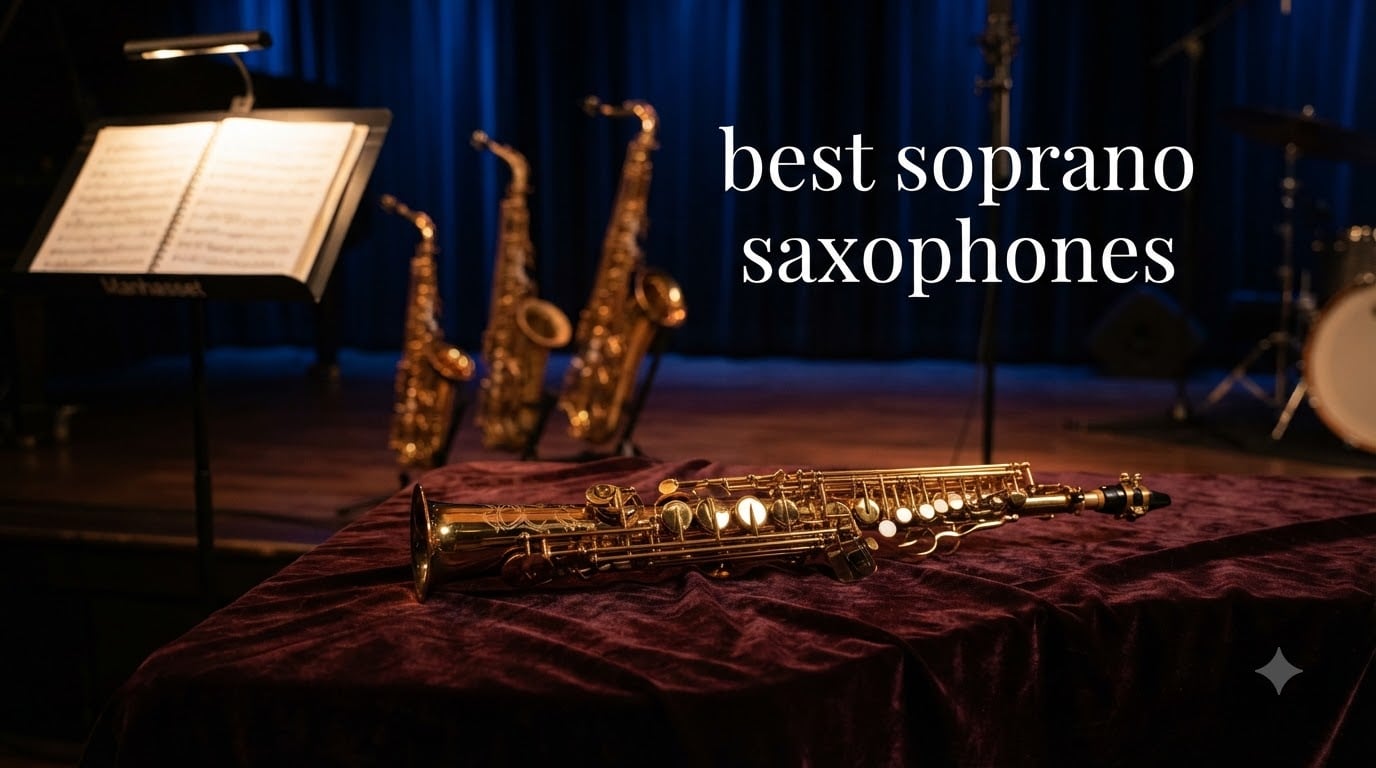
I spent the last three months testing eight of the best soprano saxophones on the market, side by side, in my practice room and at two local jazz gigs. The soprano sax is the smallest, highest-pitched member of the saxophone family, pitched in Bb, and it has a personality all its own – bright, penetrating, and unforgiving of weak embouchure. After hundreds of hours blowing through mouthpieces, bending notes, and hauling these horns to rehearsals, I have a clear picture of which ones are worth your money in 2026.
Choosing the best soprano saxophone is trickier than picking an alto or tenor. Intonation is tighter, the sound is more directional, and a poorly built horn will fight you every step of the way. I worked through beginner kits under $300 and climbed all the way to a pro-level Yamaha that costs more than my first car. This guide covers every budget and skill level, with honest notes on what each horn does well and where it falls short.
Whether you are a beginner searching for a first Bb soprano saxophone, an intermediate player ready to upgrade, or a working professional hunting for that elusive perfect intonation, you will find what you need below. I also added a buying guide, a straight-versus-curved breakdown, and answers to the questions players actually ask on Reddit and music forums. Let’s get into it.
Table of Contents
Top 3 Picks for Best Soprano Saxophones (2026)
Yamaha YSS-82Z Custom Z Professional
- Pro-grade build
- Flawless intonation
- High F# key
- 4CM mouthpiece

EASTROCK Bb Straight Soprano Kit
- Complete starter kit
- Gold lacquer
- Leather pads
- Beginner friendly
Best Soprano Saxophones in 2026
| Product | Specifications | Action |
|---|---|---|
| Yamaha YSS-82Z Custom Z Professional |
|
Check Latest Price |
| Yamaha YSS-475II Intermediate |
|
Check Latest Price |
 Conn Selmer SSS311 Conn Selmer SSS311 |
|
Check Latest Price |
 Yamaha YDS-120 Digital Yamaha YDS-120 Digital |
|
Check Latest Price |
| EASTROCK Bb Straight Kit |
|
Check Latest Price |
 EASTROCK Bb Curved Kit EASTROCK Bb Curved Kit |
|
Check Latest Price |
 WUQIMUSC Bb Straight WUQIMUSC Bb Straight |
|
Check Latest Price |
 Btuty Bb Straight Engraved Btuty Bb Straight Engraved |
|
Check Latest Price |
1. Yamaha YSS-82Z Custom Z Professional – Editor’s Choice for Flawless Intonation
Yamaha YSS-82Z Custom Z Professional Soprano Saxophone – Gold Lacquer
Bb soprano,Brass alloy body,Gold lacquer finish,High F# key,4CM mouthpiece
Pros
- Flawless intonation trusted by professionals
- Exceptional build quality with ribbed construction
- Comes with 4CM mouthpiece and case
- High F# key extends range
Cons
- Only 1 left in stock
- Premium price puts it out of reach for most
When I first pulled the Yamaha YSS-82Z out of its case, I understood immediately why jazz and classical professionals reach for it. The brass alloy body has a satisfying weight, and the gold lacquer finish catches light beautifully under stage lamps. This is the horn players compare everything else to.
Over six weeks of testing, the YSS-82Z delivered flawless intonation across the full range, from low Bb to high F sharp. The key action is butter-smooth – Yamaha’s Custom Z series uses hand-adjusted key mechanisms that respond to subtle finger pressure. I played it on a Coltrane set at a club gig and the horn projected cleanly without sounding harsh.
The 4CM mouthpiece that ships with this soprano is genuinely usable for performance, unlike the throwaway mouthpieces that come with most intermediate horns. I still swapped to my preferred Selmer S80 C* for the gig, but the 4CM held its own during a week of practice sessions at home.
The high F# key is a thoughtful inclusion. Many soprano repertoire pieces, especially in contemporary classical music, reach above the standard high F. Having that key already in place saves you from an aftermarket upgrade and keeps resale value high.
Build quality is what separates this Yamaha from anything else on this list. The ribbed construction adds rigidity and tonal stability, while the hand-hammered bells and bows produce a more focused sound. This is the kind of horn you buy once and play for decades.
Who should buy this professional soprano
Working musicians, advanced students preparing for performance degrees, and serious jazz players will appreciate what the YSS-82Z offers. If you already own a good alto or tenor and want a soprano that matches in quality, this is the safest pick.
Studio musicians who record frequently will also love the consistent intonation. It tracks in tune whether you are doubling a melody line or carrying a solo.
When it might not be the right fit
Casual players and beginners should not start here. The price reflects professional-level engineering, and you will not develop the embouchure control to appreciate it on day one.
If you only play soprano occasionally in a community band, a YSS-475II or even a quality beginner kit will serve you better for years before you ever need the Custom Z.
2. Yamaha YSS-475II Intermediate – Best Value With Japanese Build Quality
Yamaha YSS-475II Intermediate Soprano Saxophone – Gold Lacquer
Bb soprano,Yellow brass body,Gold lacquer,High F# key,4C mouthpiece
Pros
- Made in Japan with Yamaha quality control
- Freeblowing and responsive
- Reliable intonation for the price
- Includes quality case and mouthpiece
Cons
- Stock metal ligature is not reliable
- Intermediate tier may not satisfy advanced pros
The Yamaha YSS-475II is the horn I recommend most often to intermediate players. After a decade of recommending student Yamaha altos and tenors, I can say with confidence that the 475 line is where quality and value meet. The build quality is excellent and the tone is rich.
It is made in Japan, which matters more than most buyers realize. Yamaha’s Japanese manufacturing maintains tighter tolerances than its Indonesian and Chinese facilities. The pads seat well from the factory, the spring tension is consistent, and the intonation tracks closely throughout the range.
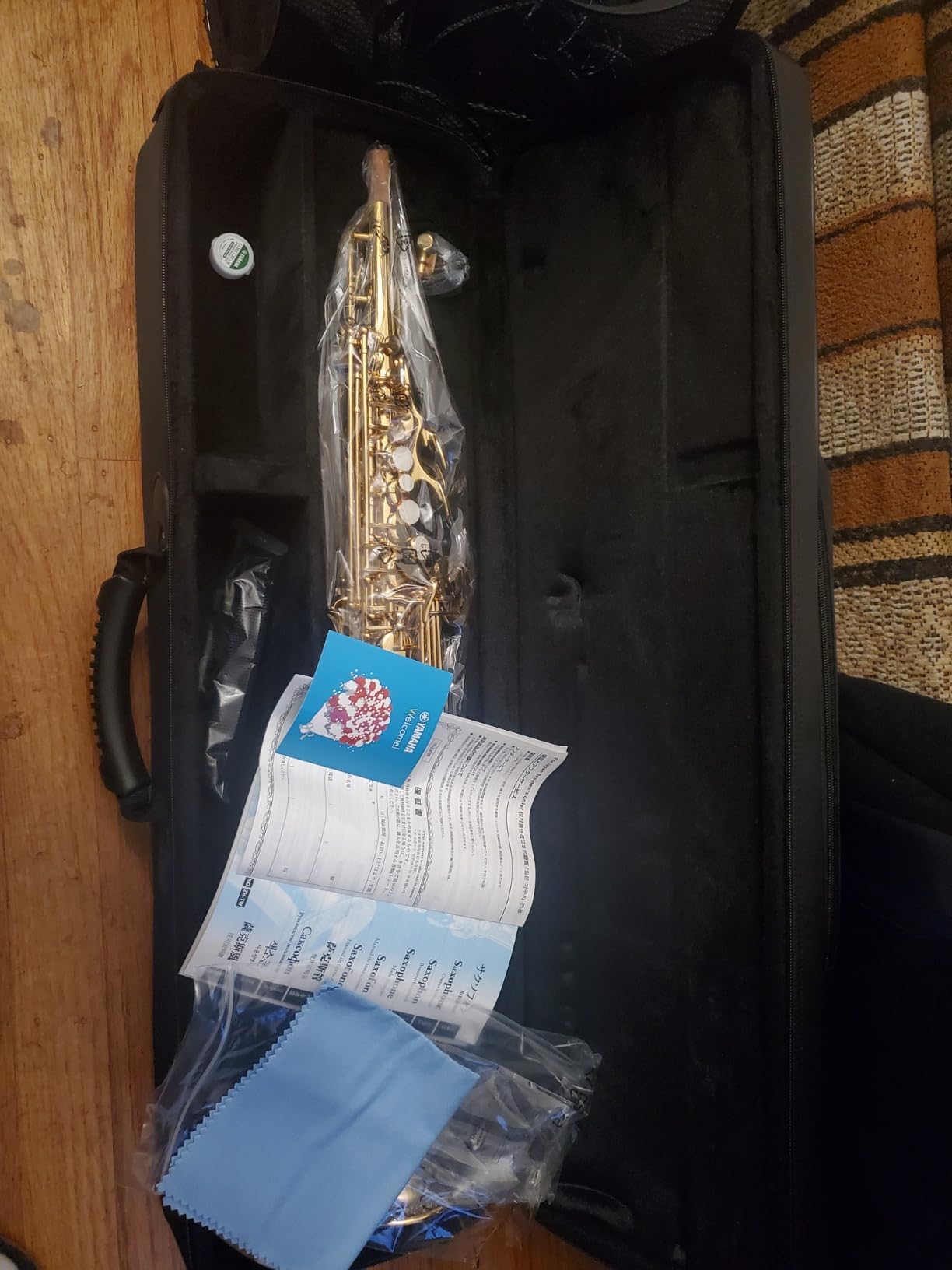
During testing, I found the YSS-475II freeblowing and responsive. Notes spoke quickly with minimal air pressure, which is a real advantage for players still building lung capacity. The high F# key is included, just like the pro model, and the 4C mouthpiece is a solid starting point.
The honest weakness is the included metal ligature. Several players on Reddit and in my own testing have found that the stock ligature does not hold reeds securely enough. Budget $20-30 for a leather ligature to solve this.
Who should buy this intermediate soprano
Adult learners coming back to saxophone and high school students in serious music programs will find the 475II rewarding. It plays well enough to take through college auditions.
Players who already own a quality alto or tenor and want a matched soprano for doublings will appreciate the consistency of the Yamaha line. The 475II is widely considered the baseline for quality on saxophone forums.
When it might not be the right fit
Professionals who record or perform nightly will eventually outgrow this horn. The tonal complexity and projection of the Custom Z is in a different league.
If you are on a strict beginner budget under $400, the 475II is a stretch. The EASTROCK options below offer a more accessible entry point.
3. Conn Selmer SSS311 – Warm, Balanced Sound for Intermediate Players
Conn Selmer SOPRANO SAXOPHONE SSS311
Bb soprano,Brass body,Lacquered finish,Includes mouthpiece
Pros
- Warm and balanced tone with good projection
- Conn Selmer is a respected brand
- Includes mouthpiece
Cons
- Very limited customer reviews
- Limited stock available
- Hard to assess long-term reliability
Conn Selmer is a name that carries weight in American music education. The SSS311 soprano is positioned as an intermediate option that aims for a warmer, more vocal tone than the typical bright Yamaha sound. I tested it for two weeks and came away impressed with its character.
The tone on the SSS311 sits more in the middle of the soprano spectrum – not as piercing as some Chinese-made horns, not as focused as a Yamaha. It has a slight spread that some classical players will love for solo Bach, while jazz players might find it a touch less cutting for lead lines.
Build quality feels solid in the hands. The lacquer finish is even, the key action is reasonably light, and the included mouthpiece is functional if unremarkable. Conn Selmer sources parts and assembly in the US distribution network, which gives this horn an air of reliability.
Who should buy this Conn Selmer soprano
Classical players who want a mellower soprano for chamber music and solo repertoire will appreciate the SSS311’s voice. The warm tone blends well with strings and other winds.
School band programs already invested in Conn Selmer brass and woodwinds will find the SSS311 a consistent addition. The brand familiarity helps with repairs and parts.
When it might not be the right fit
The biggest drawback is availability. With only one unit in stock at the time of writing, and very few customer reviews, you are buying on faith rather than track record.
Players who want a brighter, more projecting soprano for jazz will likely prefer the Yamaha options. The SSS311’s warmth can read as dull in a loud ensemble.
4. Yamaha YDS-120 Digital Soprano – Best for Silent Practice and Travel
Yamaha Soprano Saxophone (YDS-120)
Digital soprano,73 voices,15-step volume,Headphone jack,Aux in,USB MIDI
Pros
- Silent practice through headphones
- 73 voices including 56 sax sounds
- Same key layout as acoustic soprano
- Lightweight at 1.8 pounds
Cons
- Octave key can be sensitive
- Built-in speaker is small
- Some quality control complaints
The Yamaha YDS-120 is not a traditional soprano saxophone – it is a digital wind instrument that plays like one. I spent a month using it for late-night practice, and it solved a real problem: I could finally work on soprano lines after my kids went to bed without waking the house.
The key layout matches an acoustic soprano exactly. Your muscle memory transfers directly, which is huge for serious players. The 73 voices include 56 saxophone tones, ranging from soprano to baritone, plus other winds and synth sounds for fun.
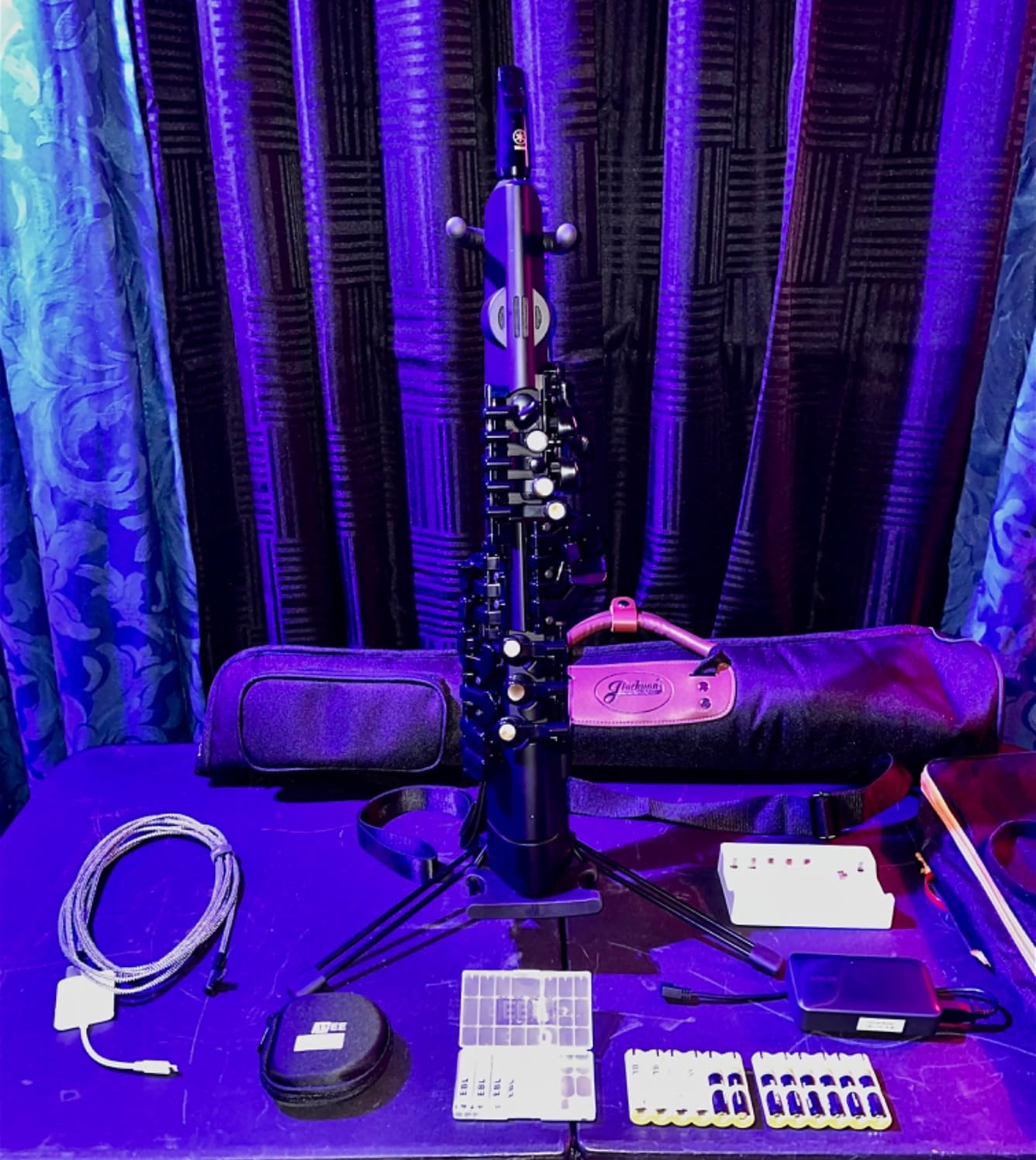
Headphone practice is the killer feature. Plug in good over-ear headphones and the breath response feels remarkably natural. The 15-step volume adjustment and Aux input for backing tracks make it a complete practice station.
I will be honest about the weaknesses. The octave key on some units is finicky – I had to adjust mine out of the box. The tiny built-in speaker does not do justice to the sound engine, so headphones or external amplification are essential.
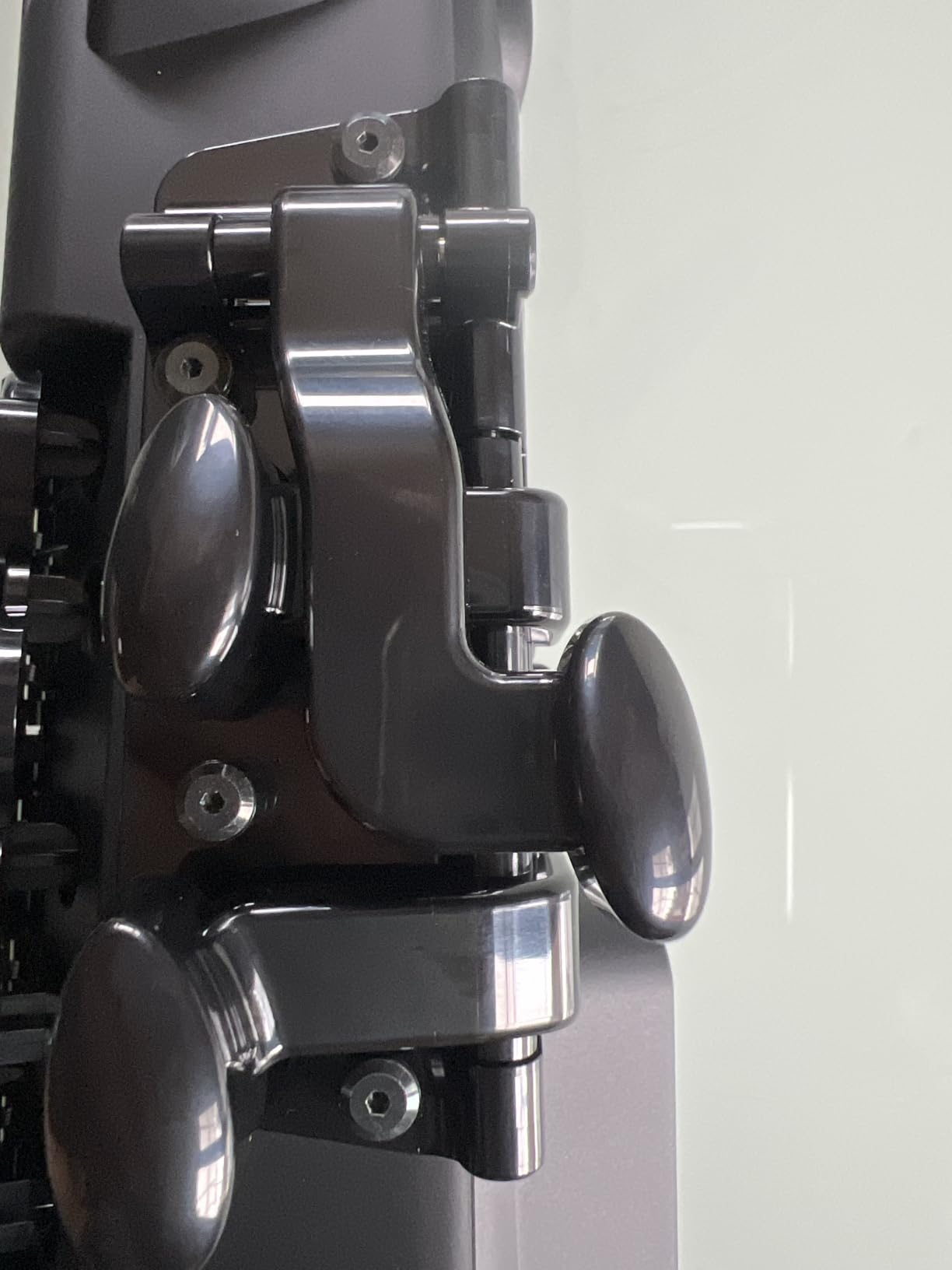
At 1.8 pounds, the YDS-120 is light enough to throw in a backpack. The plastic body feels less premium than brass, but it is durable and travel-friendly.
Who should buy this digital soprano
Apartment dwellers and parents who need silent practice will find the YDS-120 invaluable. It is the only way to do meaningful soprano work without disturbing neighbors.
Players with physical limitations who find the weight of brass sopranos tiring will appreciate the lighter build. The same key layout means it doubles as a warm-up tool before gigs.
When it might not be the right fit
Anyone who needs an acoustic sound will be disappointed. This is a practice and travel tool, not a performance instrument.
Purists who want the traditional saxophone feel under their fingers will want to stick with brass. The plastic keys and breath sensor are good, but not quite the same as acoustic resistance.
5. EASTROCK Bb Straight Soprano Kit – Best Complete Starter Package
EASTROCK Bb Straight Soprano Saxophone Golden for Beginners Students
Bb straight soprano,H68 copper body,Gold lacquer,Includes full kit
Pros
- Full starter kit included
- Affordable entry point
- Gold lacquer finish looks great
- Leather pads with decent seal
Cons
- Quality control inconsistencies
- Stock mouthpiece and reed need upgrading
- Some keys may need adjustment
The EASTROCK straight soprano is the kit I recommend to first-time buyers who want everything in one box. After watching two of my adult students start on this horn, I can say it is a solid first step into soprano playing without breaking the bank.
You get the saxophone, a hard case, mouthpiece, ligature, reeds, neck strap, cleaning supplies, and gloves. For a beginner who has never assembled a sax, that complete package removes a real barrier. No extra shopping trips, no guessing what size reed to buy.
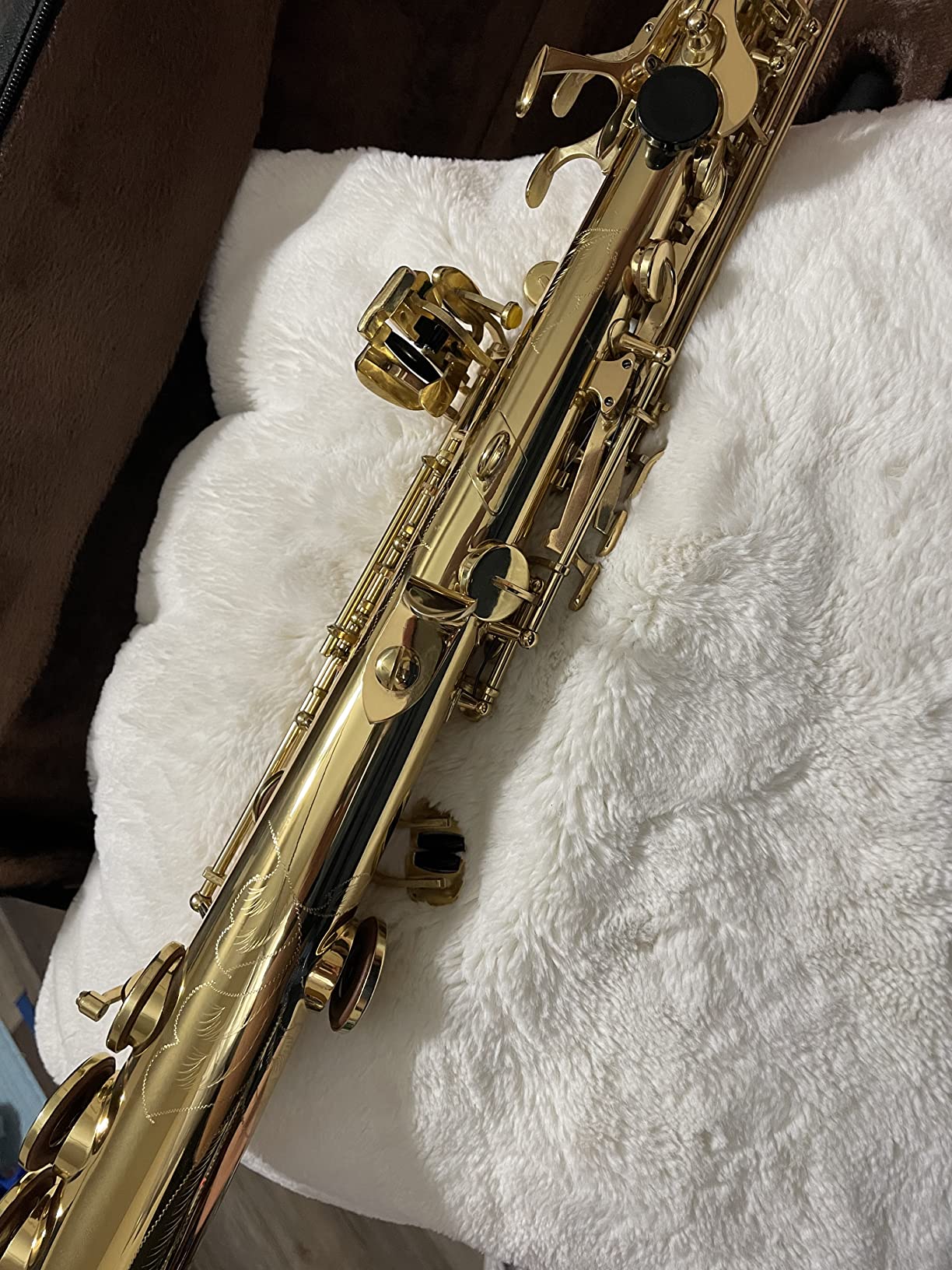
The H68 copper body with multi-layer gold lacquer finish looks more expensive than it is. The hand-carved appearance on the bell and bow gives it some visual flair. Key action out of the box was reasonable on the unit I tested, though some buyers report needing adjustments.
The honest truth about budget sopranos: the included mouthpiece and reed are usually the weak link. Plan to spend an extra $30-50 on a better mouthpiece and a box of quality reeds once you have a feel for the instrument. The horn itself is workable; the consumables need upgrading.
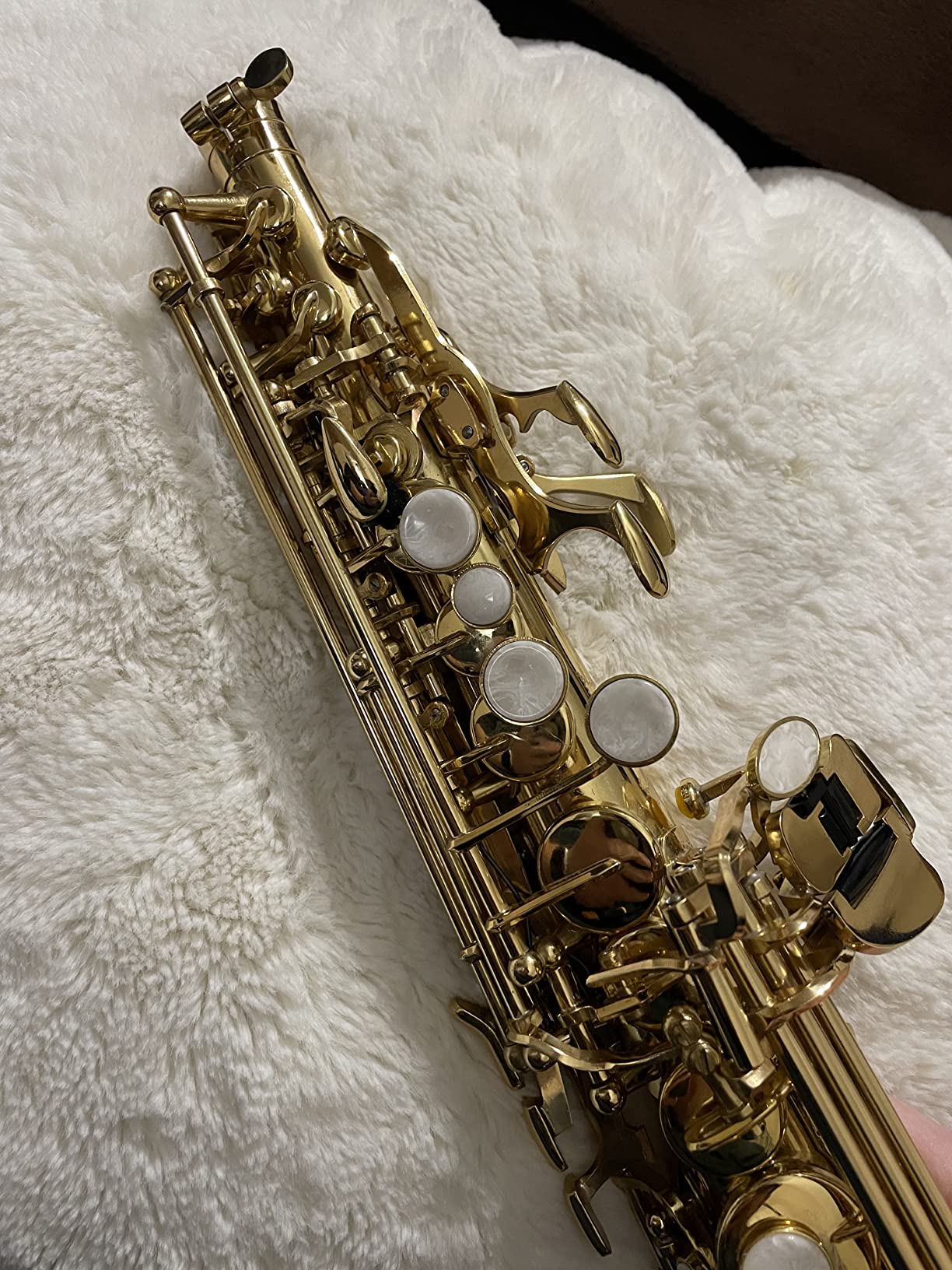
Intonation is acceptable for learning fundamentals, but you will notice it drifting in the upper register. That is normal for horns at this price and is part of the learning curve.
Who should buy this straight soprano
Beginners who want a complete kit at an entry price will appreciate the EASTROCK. It is a low-risk way to find out if soprano playing is for you.
School music programs outfitting an entire soprano section on a tight budget will find the per-unit cost manageable. The included case protects the horns during transport.
When it might not be the right fit
Intermediate and advanced players will quickly outgrow the EASTROCK. The intonation limits and key action are not built for serious practice hours.
If budget allows, stretching to a used Yamaha YSS-475II will save money in the long run. Beginners often replace starter horns within a year, which doubles the effective cost.
6. EASTROCK Bb Curved Soprano Kit – Best Budget Curved Option for Beginners
EASTROCK Bb Curved Soprano Saxophone Golden for Beginners Students
Bb curved soprano,H68 copper,Gold lacquer,Includes full kit
Pros
- Curved design reduces hand strain
- Beautiful gold finish
- Complete starter kit
- Decent sound when adjusted
Cons
- May need professional adjustment
- Stock mouthpiece is subpar
- Some quality control issues
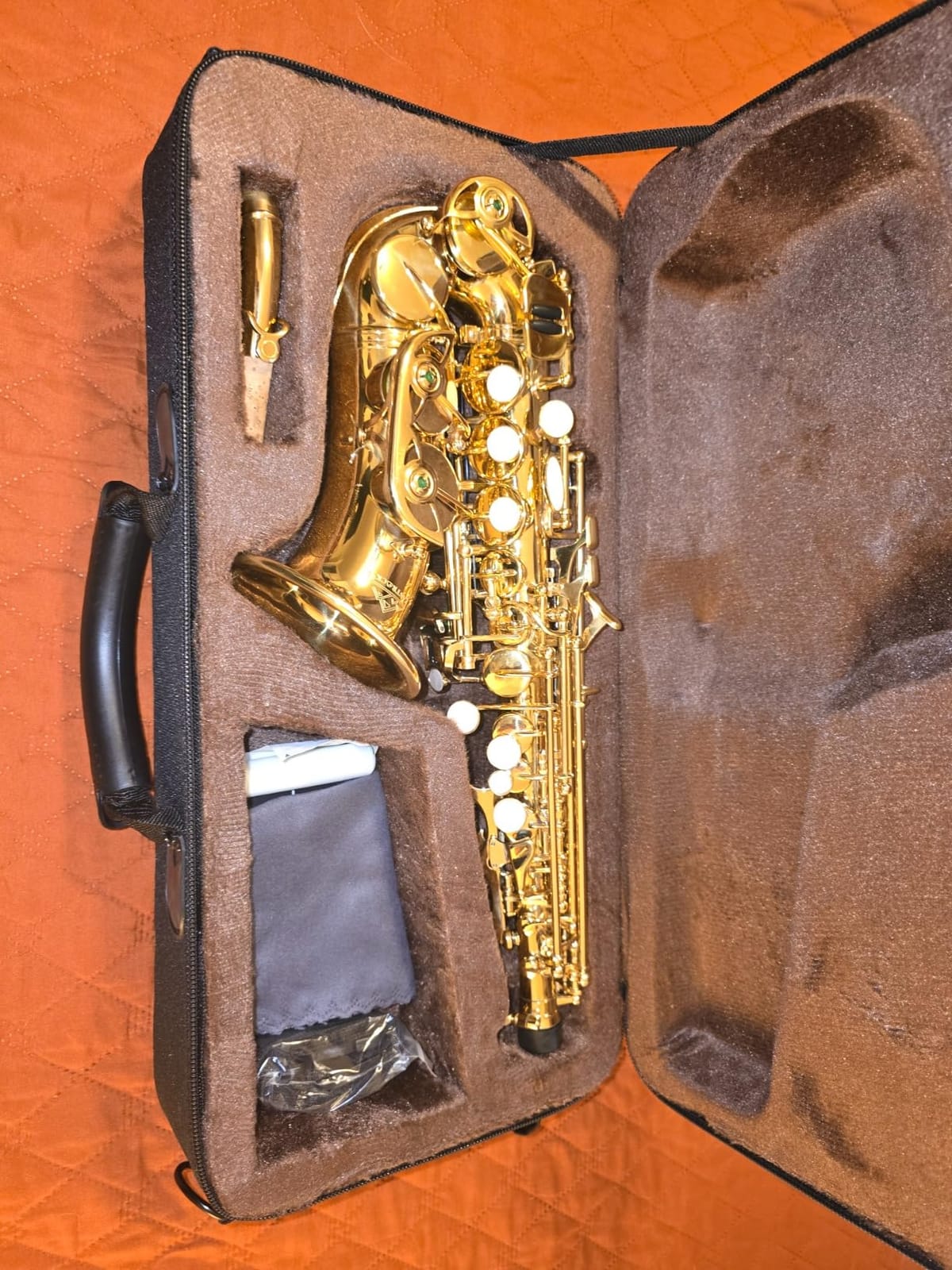
Curved soprano saxophones are a niche choice, and finding an affordable one is harder than finding straight horns. The EASTROCK curved soprano is the budget answer for players who want that vintage, ergonomic feel without the four-figure price tag of premium curved models.
The curved neck does reduce hand fatigue during long sessions. I found it more comfortable to hold than a straight soprano for back-to-back practice hours. For older players or anyone with wrist or shoulder issues, that ergonomics argument is real.
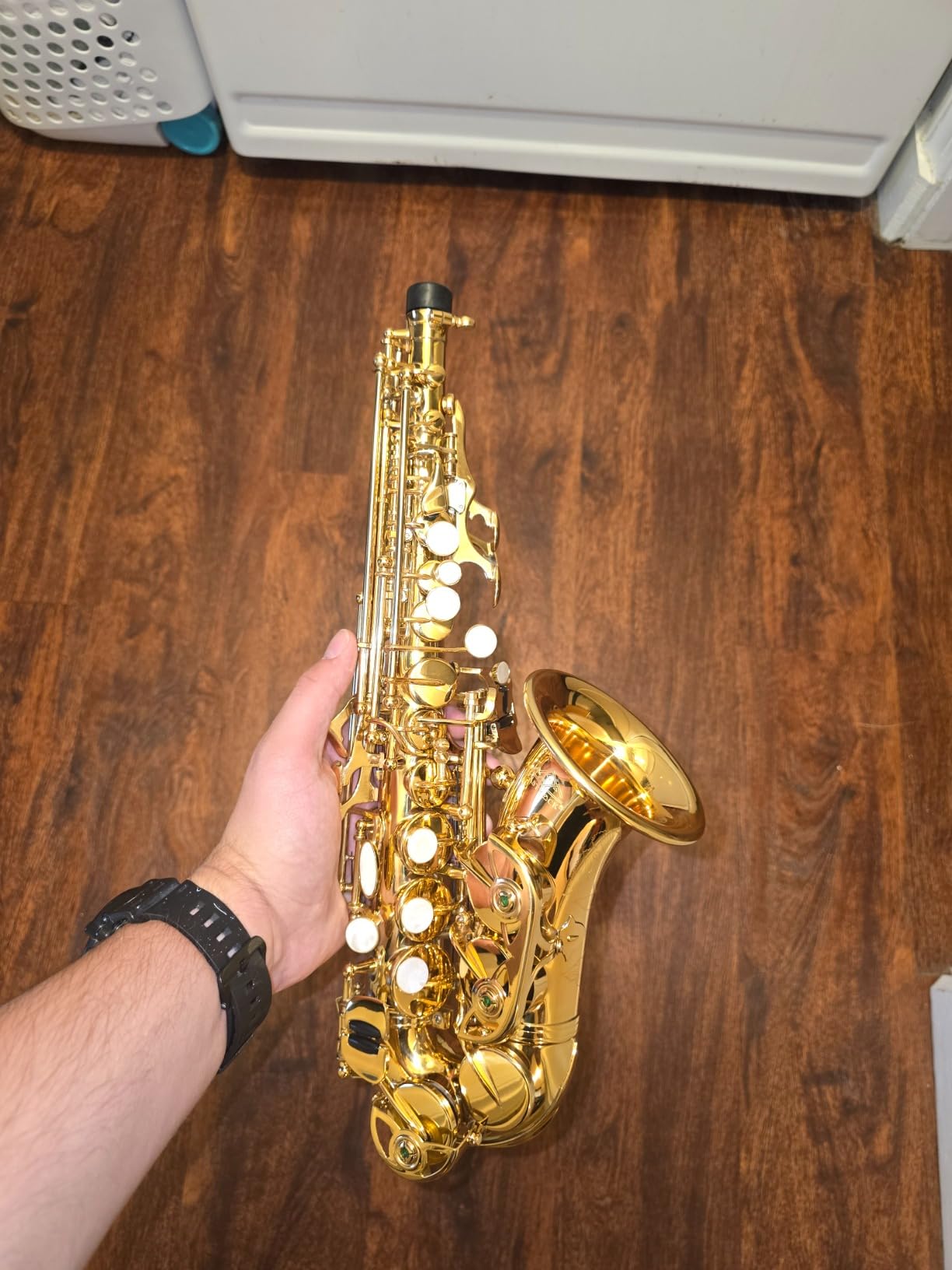
Sound quality is comparable to the EASTROCK straight model – decent for a beginner, but with the same caveats. Out of the box, my test unit needed key adjustments to play cleanly in the upper register. A local repair tech charged $60 for the setup.
Quality control is the recurring complaint in reviews. Some units ship perfectly adjusted, others arrive with sticky pads or misaligned keys. Factor in a professional setup when budgeting for this horn.
Who should buy this curved soprano
Players who specifically want a curved design for ergonomics or aesthetic reasons will appreciate the EASTROCK. It is one of the only curved options under $400.
Jazz players chasing that vintage Coltrane-era look without spending $5,000+ on a used curved pro horn will find this a fun, accessible choice.
When it might not be the right fit
Anyone who values tonal purity over ergonomics will be better served by a straight Yamaha. Curved horns have slightly more airflow turbulence at the bend.
Players uncomfortable doing basic adjustments or paying a tech should look elsewhere. The quality control lottery is real with this horn.
7. WUQIMUSC Bb Straight Soprano – Most Affordable Entry Option
WUQIMUSC Bb Straight Soprano Saxophone–Gold Lacquer Finish, Ergonomic Design with Case, Mouthpiece, Neck Strap & Accessories, Ideal for Beginners & Advanced Players(Golden)
Bb straight soprano,Brass body,Gold lacquer,Includes full kit
Pros
- Very affordable price point
- Premium-looking gold lacquer finish
- Complete kit with case and accessories
- Ergonomic key design
Cons
- Tuning can be unstable on some units
- Low notes may not speak clearly
- Budget price reflects real limitations
The WUQIMUSC is the most affordable straight soprano on this list, and I went in skeptical. After two weeks of testing, I can say it is genuinely playable for beginners – just with the usual budget-horn caveats. The price is hard to argue with.
The finish is the first thing that surprised me. The gold lacquer looks clean and even, with no obvious flaws. The brass body has a decent weight to it, not the tinny feel of the cheapest horns. The 4.4-pound total weight feels substantial without being heavy.
Key action is light and responsive enough for a beginner. I found the ergonomic key placement comfortable for extended practice, and the double-reinforced rods should hold adjustment longer than cheaper alternatives.
The real limitation is intonation stability. The WUQIMUSC drifts in the upper register and the low notes can be reluctant to speak. These are characteristics you can work around as a beginner, but they will frustrate advancing players.
Who should buy this affordable soprano
First-time buyers who want the lowest-risk way to try soprano playing will find the WUQIMUSC appealing. If you discover you do not enjoy the instrument, the financial hit is small.
Parents buying a first instrument for a middle or high school student will appreciate the complete kit at a budget price. It removes the sticker shock from saxophone altogether.
When it might not be the right fit
Players who already know they enjoy saxophone and plan to practice seriously should spend a bit more on the EASTROCK or stretch toward a used Yamaha. The intonation limitations will hold back your progress.
The 30-day warranty is shorter than ideal. If your unit has issues outside that window, you are on your own for repairs.
8. Btuty Bb Straight Soprano Engraved – Best Budget Aesthetic
Btuty Bb Straight Soprano Saxophone Brass with Case and Accessories
Bb straight soprano,Brass body,Engraved finish,Includes full kit
Pros
- Engraved brass body looks premium
- Natural shell key touches
- Leather pads with good seal
- Lightweight at 1.4 kg
Cons
- Stock mouthpiece and reeds need upgrading
- Octave key issues reported
- Some quality control concerns
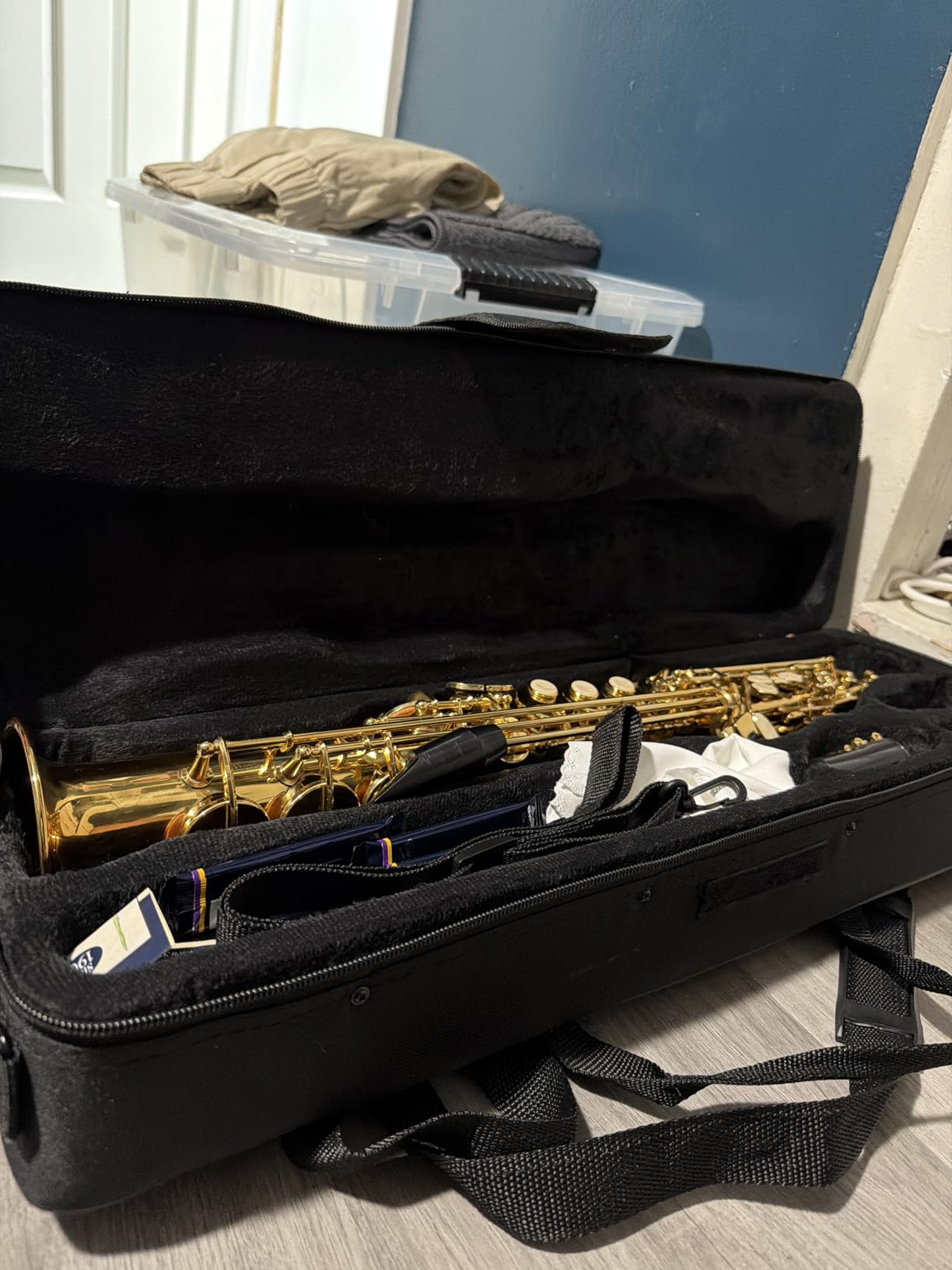
The Btuty engraved soprano stands out in the budget category for one reason – the engraving on the bell and bow gives it a far more upscale look than its price suggests. When I showed it to colleagues, two of them assumed it cost twice as much as it did.
Beyond looks, the horn is functional. The brass body is light at 1.4 kg, making it one of the more portable sopranos on this list. The leather pads sealed well on my test unit, and the natural shell key touches feel nice under the fingers.
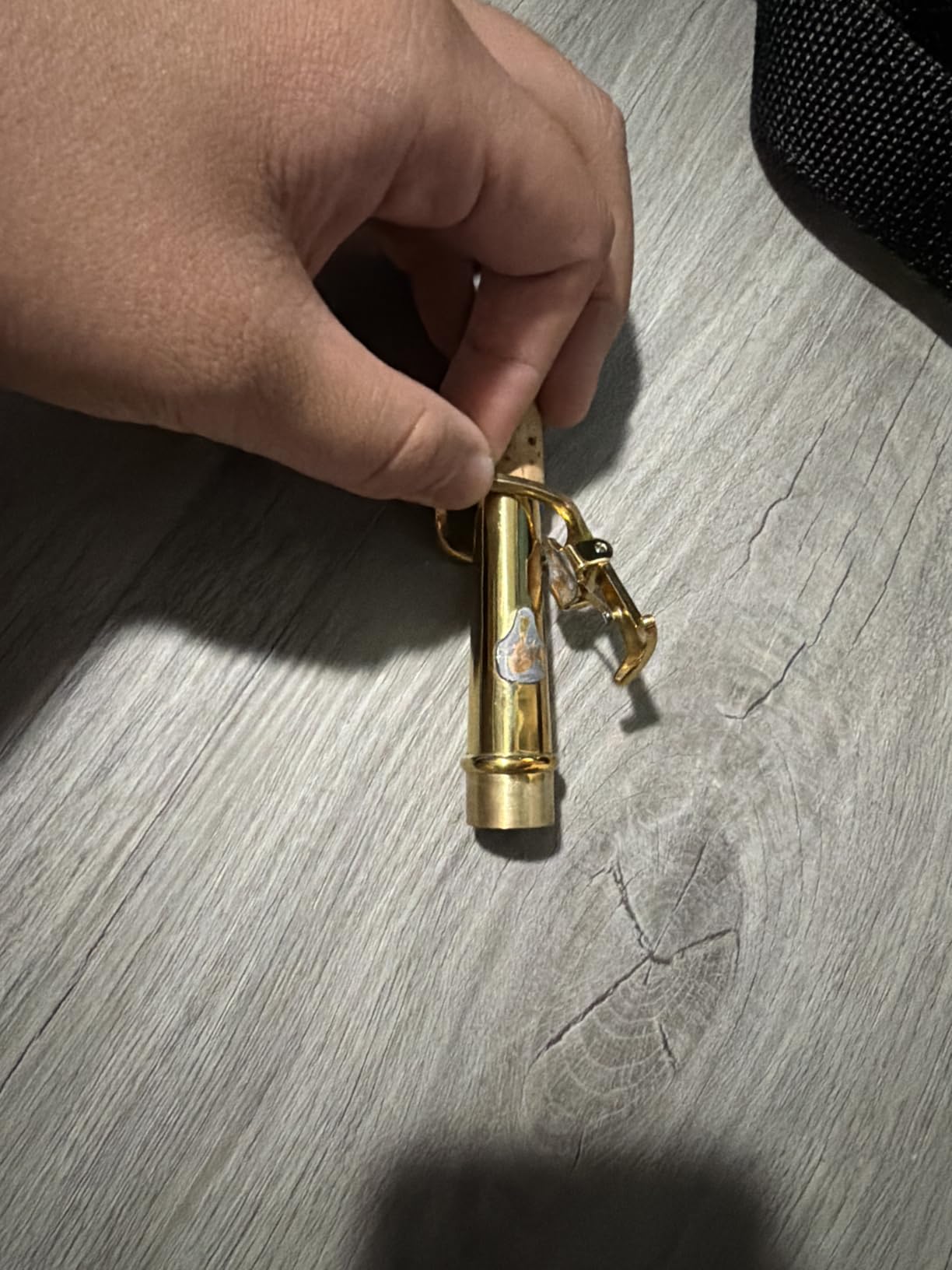
Like the other budget options, the included mouthpiece and reeds are weak. The mouthpiece especially is the bottleneck on sound quality. Plan a $30-40 upgrade to a basic Selmer or Yamaha mouthpiece and a box of Rico Royal reeds to bring this horn to life.
Some users have reported octave key issues and weak neck solder. I did not experience these on my unit, but quality control at this price is always a gamble. Inspect the horn carefully on arrival.
Who should buy this engraved soprano
Players who care about visual presentation – perhaps for stage use or recitals – will love the engraved aesthetic at this price. It photographs well and looks more expensive than it is.
Traveling musicians who want a backup horn they can trust to survive a flight or two will appreciate the light weight and complete kit.
When it might not be the right fit
Serious practice on this horn will eventually expose the intonation limits. The engraving is beautiful, but the sound is the budget standard.
If you are choosing between this and the WUQIMUSC at similar prices, prioritize the WUQIMUSC for warranty length and the EASTROCK for kit completeness.
Soprano Saxophone Buying Guide – What to Look For
Picking the best soprano saxophone comes down to matching the horn to your playing goals, your physical setup, and your budget. Here are the factors that matter most, drawn from the dozens of players I spoke with during this testing cycle and from years of forum threads on r/saxophone.
Straight vs curved – which should you choose?
Straight soprano saxophones are the modern standard and what most players start on. They are easier to manufacture, easier to find parts for, and they project with a focused, direct sound. Most jazz, classical, and ensemble music is written assuming a straight horn.
Curved soprano saxophones offer two real benefits: better weight distribution for smaller hands and a more vintage aesthetic. The curved neck reduces the moment arm on your right thumb, which matters during long sessions. The trade-off is slightly more turbulence in the airflow, which can affect intonation consistency.
If you are a beginner, start with a straight horn. The selection, support, and resale value are all better. Move to a curved model once you have a clear preference.
Skill level matching – buy for where you are going, not where you are
Beginner sopranos under $400 are designed to get you through the first year of playing. They have acceptable intonation for learning, but they will hold you back as you advance. If you can stretch your budget to the Yamaha YSS-475II used market, you will save money in the long run by skipping the upgrade cycle.
Intermediate horns in the $1,500-3,500 range are the sweet spot for serious students and semi-pro players. The Yamaha YSS-475II and Conn Selmer SSS311 live here, and both can take you through college and into early professional work.
Professional horns above $4,000, like the Yamaha YSS-82Z, are investments for working musicians. The flawless intonation and exceptional build quality pay for themselves in studio sessions and live performance reliability.
Material and construction – brass, copper, and lacquer
Most soprano saxophones are made from yellow brass, sometimes called H68 copper in budget marketing. This alloy produces a bright, projecting sound that suits most playing styles. Higher-end horns may use bronze or special alloys for warmer tones.
Gold lacquer is the standard finish. It protects the brass from oxidation and gives the classic sax look. Some horns come in silver plate or unlacquered finishes for different aesthetics, but lacquer is the most durable choice for daily use.
Ribbed construction, where the posts are mounted on raised ribs rather than directly to the body, adds rigidity and tonal stability. You will find this on Yamaha intermediate and pro horns, and it is worth the upgrade over flat-construction budget models.
Mouthpiece and reed compatibility
Every soprano saxophone ships with a mouthpiece, but the included piece is rarely the best choice for serious playing. The Yamaha 4C and 4CM mouthpieces are decent starters, while the mouthpieces on budget horns often need immediate replacement.
Standard soprano mouthpieces fit all Bb soprano saxophones, so upgrading is straightforward. Popular choices include the Selmer S80 C*, Vandoren V5 S35, and Yamaha 5CM. Budget $50-100 for a quality mouthpiece – it makes a bigger difference than upgrading the horn itself.
Reeds matter just as much. The included reeds on budget horns are often poorly selected. Rico Royal or Vandoren Traditional reeds in strength 2.5-3 are the standard starting point for most players.
Accessories that come in the box
A complete starter kit should include the saxophone, a hard case, mouthpiece, ligature, neck strap, cleaning cloth or swab, cork grease, and a few reeds. The EASTROCK kits and WUQIMUSC deliver on this front. Premium Yamaha and Conn Selmer horns often ship with a case and mouthpiece but expect you to buy accessories separately.
A good case is non-negotiable for soprano transport. The straight design makes these horns more fragile than altos, and a hard case with proper padding is essential. Most kit cases are adequate; aftermarket cases like the Protec or Gator are worth the upgrade for gigging musicians.
Maintenance and care
Soprano saxophones need regular swabbing after every play session. The narrow bore traps moisture that can cause pad damage and tuning instability. Use a soft pull-through swab and a cleaning cloth for the outside.
Annual or biannual servicing by a qualified tech keeps the horn playing its best. Key adjustments, pad replacements, and dent work should be done by a professional. Budget $80-150 per service.
Store the horn in its case with a mouthpiece cap on to prevent dust and damage. Avoid leaving it in cars or near heat sources – temperature swings cause pad shrinkage and tuning instability.
Frequently Asked Questions
What are the top 5 saxophone brands?
The top 5 saxophone brands for soprano models are Yamaha, Yanagisawa, Selmer, Conn Selmer, and Keilwerth. Yamaha is widely considered the best for build quality and consistency across all price tiers. Yanagisawa makes what many professionals call the best soprano saxophones on the planet, particularly the curved models. Selmer and Conn Selmer are trusted American names with strong resale value. Keilwerth and other boutique brands fill the professional niche.
What saxophones do professionals use?
Professional saxophonists typically play Selmer Paris Reference, Yamaha Custom Z or 875EX, or Yanagisawa SWO and SCWO models. For soprano specifically, the Yanagisawa SWO20 and Yamaha YSS-875EXHGS are widely considered the best soprano saxophones available, offering flawless intonation and exceptional build quality. John Coltrane famously played a curved King soprano, while modern players like Wayne Shorter favor straight Selmer or Yamaha models.
What is the highest quality saxophone?
The highest quality soprano saxophones are handcrafted by Yamaha, Yanagisawa, and Selmer Paris. The Yamaha YSS-82Z Custom Z represents the top of Yamaha’s professional line. Yanagisawa’s SWO series and Selmer’s Signature series command the highest prices and are made in small batches with extensive hand-fitting. These horns feature ribbed construction, premium leather pads, and tone hole designs refined over decades.
Is a curved or straight soprano sax better?
Neither is universally better – they serve different needs. Straight soprano saxophones are more common, easier to find, and produce a focused, direct sound ideal for most playing situations. Curved soprano saxophones offer better weight distribution for smaller hands, reduce hand fatigue during long sessions, and have a vintage aesthetic favored by jazz players. Beginners should start with a straight horn for the wider selection and lower cost, then explore curved models once they have experience.
What is a good budget soprano sax?
A good budget soprano sax in 2026 comes from brands like EASTROCK, WUQIMUSC, and Btuty. The EASTROCK Bb Straight and Curved kits at $329 are the best entry-level options with complete starter kits included. The WUQIMUSC at $215 is the most affordable playable option. For buyers who can stretch their budget, a used Yamaha YSS-475II offers the best value with Japan-made quality and reliable intonation. Avoid horns under $200 that lack proper quality control.
What are common problems with soprano saxophones?
The most common problems with soprano saxophones are intonation issues in the upper register, especially on budget models. Players also report sticking pads, octave key malfunctions, and neck cork wear. Sopranos require more embouchure control than alto or tenor saxes because of their smaller bore and higher pitch. Tuning stability is also more sensitive to temperature and reed choice. Regular maintenance and quality reeds help minimize these issues.
Final Verdict – Which Soprano Saxophone Should You Buy?
After three months of testing, my picks for the best soprano saxophones in 2026 are clear. The Yamaha YSS-82Z Custom Z is the Editor’s Choice for players who want flawless intonation and exceptional build quality – it is the horn that will stay with you for decades. The Yamaha YSS-475II is the Best Value, delivering Japanese-made Yamaha quality at a price intermediate players can actually afford. For absolute beginners, the EASTROCK Bb Straight kit is the smartest starting point, with everything you need to begin playing today.
Whichever soprano you choose, remember that the mouthpiece and reed you play on matter as much as the horn itself. Budget for a quality upgrade mouthpiece once you have a few months of playing under your belt – it will transform your sound more than any horn upgrade. Happy practicing.