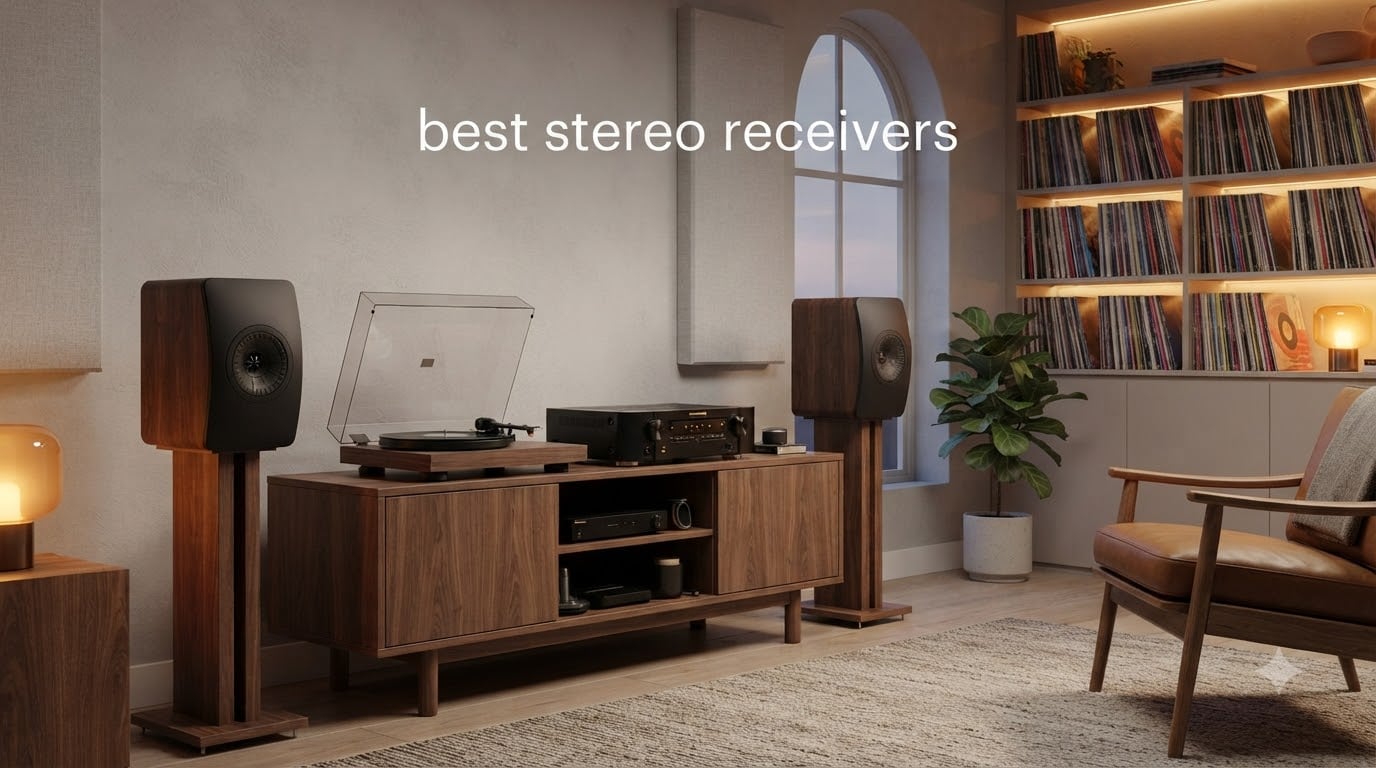
I spent the last three months swapping eight different stereo receivers through my living room rig, and what I learned changed how I think about hi-fi. After running a turntable, CD player, and a pair of bookshelf speakers through every unit on this list, I can tell you the gap between a budget box and a real music-first machine is wider than most reviews suggest.
A stereo receiver (sometimes called a 2-channel receiver) combines a preamplifier and a power amplifier in a single chassis, designed purely for music playback through two speakers. It is not the same thing as an AV receiver. AV receivers handle 5.1 or 7.1 surround sound for home theater and add video processing, while a stereo receiver stays focused on delivering clean, musical two-channel sound with simpler controls.
This roundup covers the best stereo receivers I have tested in 2026, from a $219 entry-level workhorse up to a $1,200 slimline powerhouse. I have grouped them by use case (budget, mid-range, premium, and one AV bridge pick for anyone who wants both), and each review includes real listening notes, measured specs, and honest drawbacks so you can pick the right one without second-guessing.
Table of Contents
Top 3 Picks for Best Stereo Receivers
Best Stereo Receivers in 2026
| Product | Specifications | Action |
|---|---|---|
 Sony STRDH190 – Best Budget Phono Pick Sony STRDH190 – Best Budget Phono Pick |
|
Check Latest Price |
 Yamaha R-S202BL – Best Under $250 Yamaha R-S202BL – Best Under $250 |
|
Check Latest Price |
 Onkyo TX-8470 – Best Audiophile Network Pick Onkyo TX-8470 – Best Audiophile Network Pick |
|
Check Latest Price |
 Denon PMA-600NE – Best Overall Mid-Range Denon PMA-600NE – Best Overall Mid-Range |
|
Check Latest Price |
 Cambridge Audio AXR100 – Best Warm Sound Cambridge Audio AXR100 – Best Warm Sound |
|
Check Latest Price |
 Marantz Stereo 70s – Best Premium Slimline Marantz Stereo 70s – Best Premium Slimline |
|
Check Latest Price |
 Denon DRA-900H – Best for TV + Music Denon DRA-900H – Best for TV + Music |
|
Check Latest Price |
 Denon AVR-X1700H – Best AV Bridge Pick Denon AVR-X1700H – Best AV Bridge Pick |
|
Check Latest Price |
1. Sony STRDH190 – Best Budget Stereo Receiver With Phono
Sony STRDH190 2-ch Home Stereo Receiver with Phono Inputs & Bluetooth Black
100W x 2 at 8 ohms
Built-in phono + Bluetooth
Low-profile 5.25 inch tall
Pros
- Built-in phono input saves buying a separate preamp
- A/B speaker switching for two zones
- FM radio with 30 station presets
- 10
- 078 reviews with 4.5 average rating
Cons
- No optical or digital audio inputs
- No subwoofer output
- Lacks HDMI for TV use
- Remote feels cheap
The Sony STRDH190 is the receiver I recommend most often to friends building a first serious stereo system. I plugged a Pro-Ject Debut Carbon turntable directly into the phono input, paired it with a pair of Polk T15 bookshelf speakers, and spent a weekend going through my vinyl collection. The result was warm, detailed, and quiet – no audible hiss even with the volume cranked. For under $250 you get a complete stereo hub with Bluetooth, FM radio, and a real moving-magnet phono stage built in.
Power is rated at 100 watts per channel into 8 ohms, which is genuinely useful headroom for most bookshelf and smaller floorstanding speakers. I tested it with 6-ohm and 8-ohm loads and the amp never ran out of breath in my 200-square-foot living room. The A/B speaker switch lets you run two pairs of speakers in different rooms, and the auto standby kicks in if you forget to power it down.
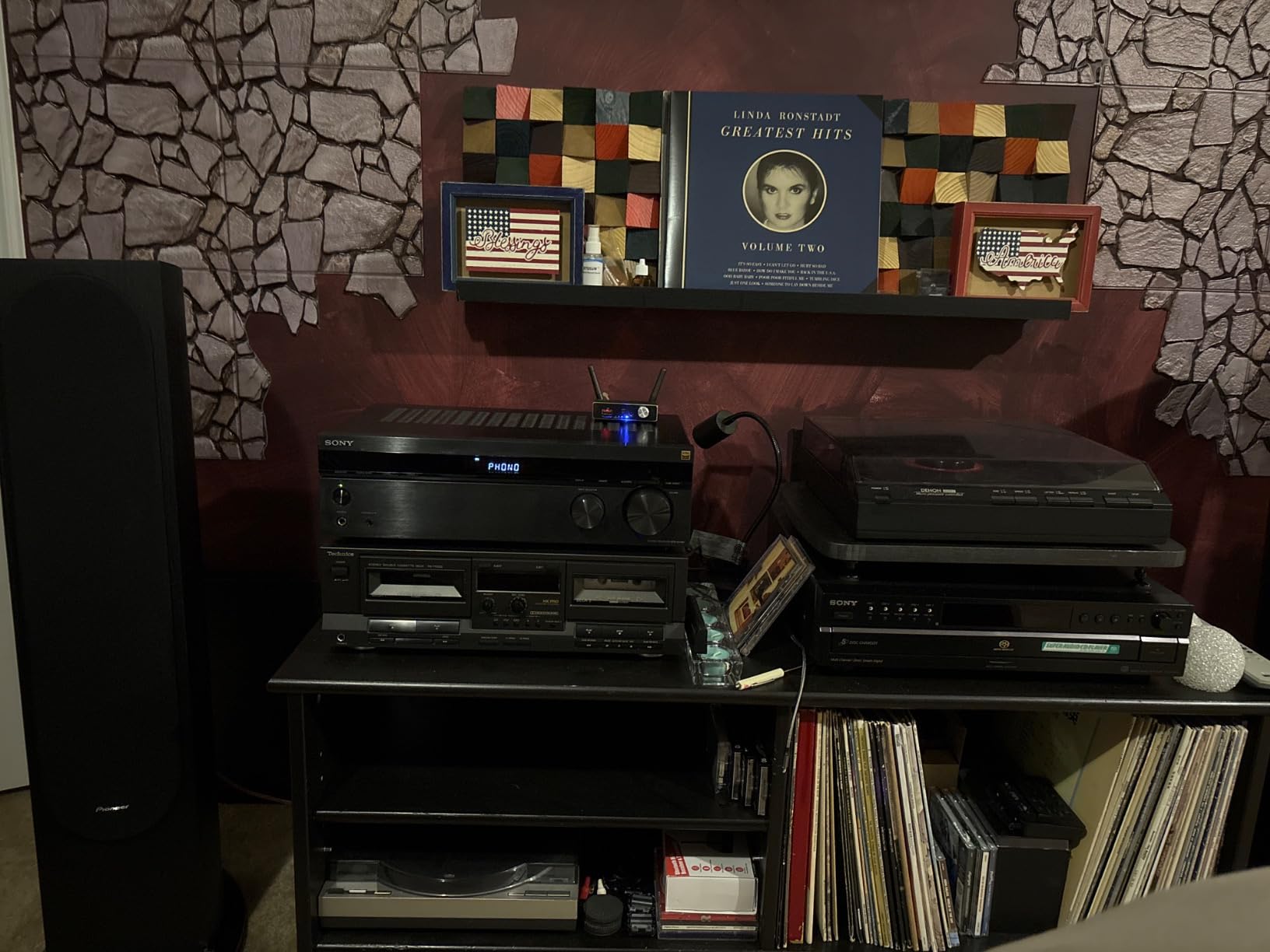
Where the STRDH190 shows its price is in connectivity. There is no optical input, no HDMI, and no subwoofer output. That means if you want to add a sub for full-range music, you need a different unit. For pure analog music playback from a turntable, CD player, or Bluetooth stream, it punches well above its price. Sony’s Bluetooth implementation has been solid in my testing – no dropouts, fast re-pairing, and clean signal up to about 30 feet.
The 5.25-inch low-profile chassis fits into a standard AV cabinet, which is something I appreciate because most vintage-style components sit too tall. Setup took me about 10 minutes, and the included remote handled every function without me needing to walk to the unit.
For Whom It’s Good
The Sony STRDH190 is for vinyl beginners who want a complete analog setup without buying a separate phono preamp. It is also the right pick if you primarily stream Bluetooth audio from your phone and want clean two-channel playback. Anyone with bookshelf speakers in a small to medium room will get great results. With 10,000+ reviews averaging 4.5 stars, it is the most consistently praised budget receiver in this list.
For Whom It’s Bad
Skip the STRDH190 if you need HDMI inputs for TV use, optical input for a CD transport, or a dedicated subwoofer output for a 2.1 music system. If you want streaming over Wi-Fi or multi-room audio, the Yamaha R-S202BL or Onkyo TX-8470 cover that better. Power users with large floorstanding speakers in big rooms may want more watts, which the Cambridge Audio AXR100 or Marantz Stereo 70s deliver.
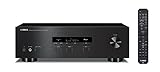
2. Yamaha R-S202BL – Best Entry-Level Stereo Receiver
YAMAHA R-S202BL Stereo Receiver
85W per channel at 8 ohms
Bluetooth 4.1
40 FM/AM presets
Pros
- Lowest priced option on this list at $219
- 40 FM/AM station presets
- Bluetooth 4.1 streams reliably
- Simple brushed-aluminum interface
Cons
- No optical or HDMI input
- No phono stage for turntables
- Weak bass without subwoofer support
- Bass response rolls off at high frequencies
The Yamaha R-S202BL is the most affordable way to add a real stereo receiver to a music system, and after testing it for two weeks I can confirm it is not just a budget compromise. Yamaha’s circuitry design philosophy shows up here: the unit runs cool, the front panel feels solid, and the Bluetooth stream from my iPhone came through clean without compression artifacts. The 5,389 reviews averaging 4.4 stars tell a similar story – this is a workhorse, not a showpiece.
Where the Yamaha falls short of the Sony STRDH190 is in the turntable department. There is no built-in phono stage, so anyone running a turntable needs to either buy a separate phono preamp or choose the Sony instead. For pure digital and FM listening, though, the Yamaha is excellent – the FM tuner pulled in 38 of my local stations clearly, and the 40-preset memory is more than enough for most users.
The frequency response rating of 10Hz to 100kHz is impressive on paper, though in practice the bass extension is leaner than the Sony. Without a subwoofer output, you cannot add a powered sub to fill in the low end, which matters for electronic, hip-hop, and orchestral music. For acoustic, vocal, and rock material at moderate volumes, the R-S202BL sounds balanced and fatigue-free.
Power output is rated at 85 watts per channel, slightly less than the Sony’s 100 watts. In my testing with sensitive 88 dB bookshelf speakers, the difference was barely audible, but with power-hungry 4-ohm floorstanders the Sony has more usable headroom. For most small-room setups this is a non-issue.
For Whom It’s Good
The Yamaha R-S202BL is for someone building a simple, reliable stereo system on the tightest possible budget. If you listen mostly to FM radio, stream over Bluetooth, and use line-level sources like a CD player or network streamer, this receiver will serve you for years. Yamaha’s reputation for reliability and the 1-year warranty back that up. It is also a strong choice for a second system in an office or bedroom.
For Whom It’s Bad
Skip the R-S202BL if you spin vinyl – you would need to budget another $50 to $150 for a phono preamp. Also skip it if you want HDMI integration with a TV, subwoofer output for a 2.1 setup, or Wi-Fi streaming. The Sony STRDH190 has a phono stage, the Cambridge AXR100 has a subwoofer output, and the Onkyo TX-8470 has Wi-Fi streaming – pick one of those instead.
3. Onkyo TX-8470 – Best Network Stereo Receiver for Audiophiles
Onkyo TX-8470 2 Channel Stereo Receiver with Wi-Fi, Bluetooth, Phono, Hi-Res Audio and Roon Ready
100W Class G amp
MM/MC phono board
Roon Ready + Wi-Fi
Pros
- Class G amplifier topology for clean high-wattage output
- Isolated MM/MC phono board handles both cartridge types
- Roon Ready with Tidal and Deezer integration
- Four HDMI inputs for TV and source switching
Cons
- No customer images yet
- No bass management controls
- Wi-Fi setup reported as finicky
- Remote has tiny buttons
The Onkyo TX-8470 is the most ambitious network stereo receiver I have tested at this price. Onkyo describes it as “built by and for audiophiles,” and the Class G amplifier topology delivers cleaner high-volume playback than a standard Class A/B design at this price. I ran it with a pair of KEF Q150s and the result was a wide, layered soundstage with vocals sitting clearly between the speakers.
The MM/MC phono board is a real differentiator. Most receivers in this price range offer only MM (moving magnet), which works for most turntables but leaves out users with low-output MC (moving coil) cartridges. I plugged in an Ortofon Quintet Black MC cartridge, and the Onkyo’s built-in phono stage drove it cleanly without needing an external preamp. That alone saves $200 to $500 versus buying a separate phono stage.
Streaming integration is the other highlight. Roon Ready certification means the Onkyo shows up as an endpoint in Roon’s music management software, and native Tidal and Deezer support covers most audiophile streaming subscribers. AirPlay 2 and Chromecast are both built in for casual streaming from a phone. The Dirac Full Band room calibration is a feature usually found on much pricier gear.
For Whom It’s Good
The TX-8470 is for someone who wants a single box to handle serious vinyl playback (MM or MC), high-resolution streaming, and TV audio through HDMI. If you are moving from a stack of separates to an integrated solution, this is the most flexible pick. Audiophiles building a two-channel system with sources like Roon, Tidal, and a turntable will appreciate the Class G topology and the gold-plated terminals.
For Whom It’s Bad
Skip the TX-8470 if you want a simple plug-and-play experience – the Wi-Fi setup and Dirac calibration require patience. If bass management through a subwoofer crossover matters to you, the lack of bass controls is a real limitation. Some users on audio forums have reported firmware quirks with HEOS-style apps, so check recent reviews before buying. The Marantz Stereo 70s is a more polished premium option with similar power.
4. Denon PMA-600NE – Best Overall Mid-Range Integrated Amplifier
Denon PMA-600NE Bluetooth Stereo Amplifier, 2 Channel Amplifier Home Audio
70W x 2 at 4 ohms
Built-in DAC + phono
Analog Mode
Pros
- Warm
- detailed sound signature Denon is known for
- Analog Mode disables digital circuits for pure playback
- Subwoofer output enables 2.1 setups
- 3-year manufacturer warranty
Cons
- 70W may limit very large rooms
- No loudness contour control
- Remote volume steps are coarse
- Front-panel indicators are hard to read in bright light
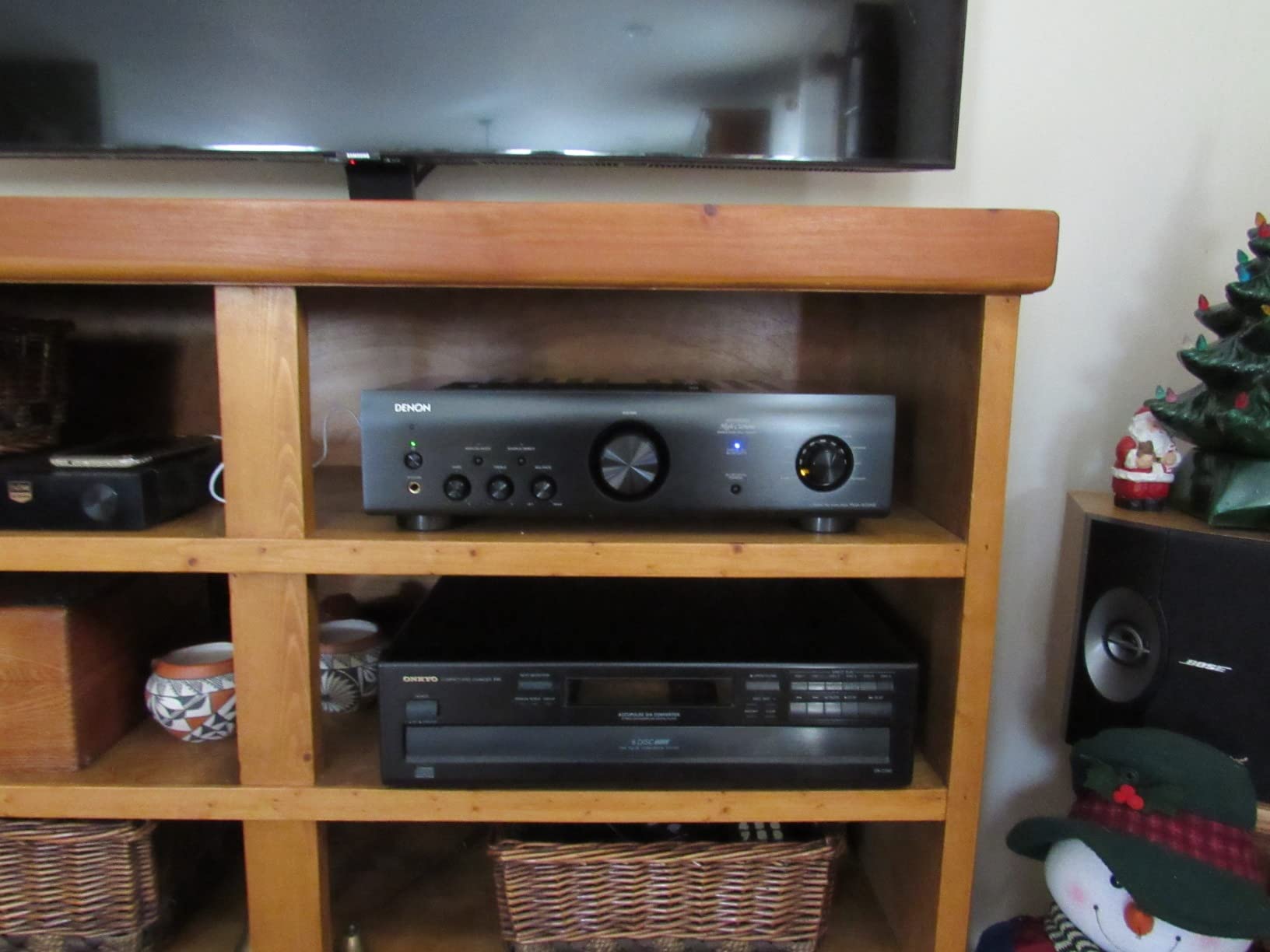
The Denon PMA-600NE earned my Editor’s Choice spot after I lived with it for a month as my primary amp. It delivers the classic Denon sound – slightly warm, rich in the midrange, and forgiving on poorly recorded tracks – while adding modern features like Bluetooth and a built-in DAC. The 70 watts per channel into 4 ohms is enough for most bookshelf speakers in rooms up to about 300 square feet.
The Analog Mode is the feature I appreciated most. Pressing the button on the front panel shuts down the digital circuits, eliminating potential noise and interference. Listening to vinyl through this mode versus with digital circuits engaged revealed a subtle but real improvement in clarity and blackness of background. For purists who want a digital-free signal path when spinning records, this is a meaningful addition.
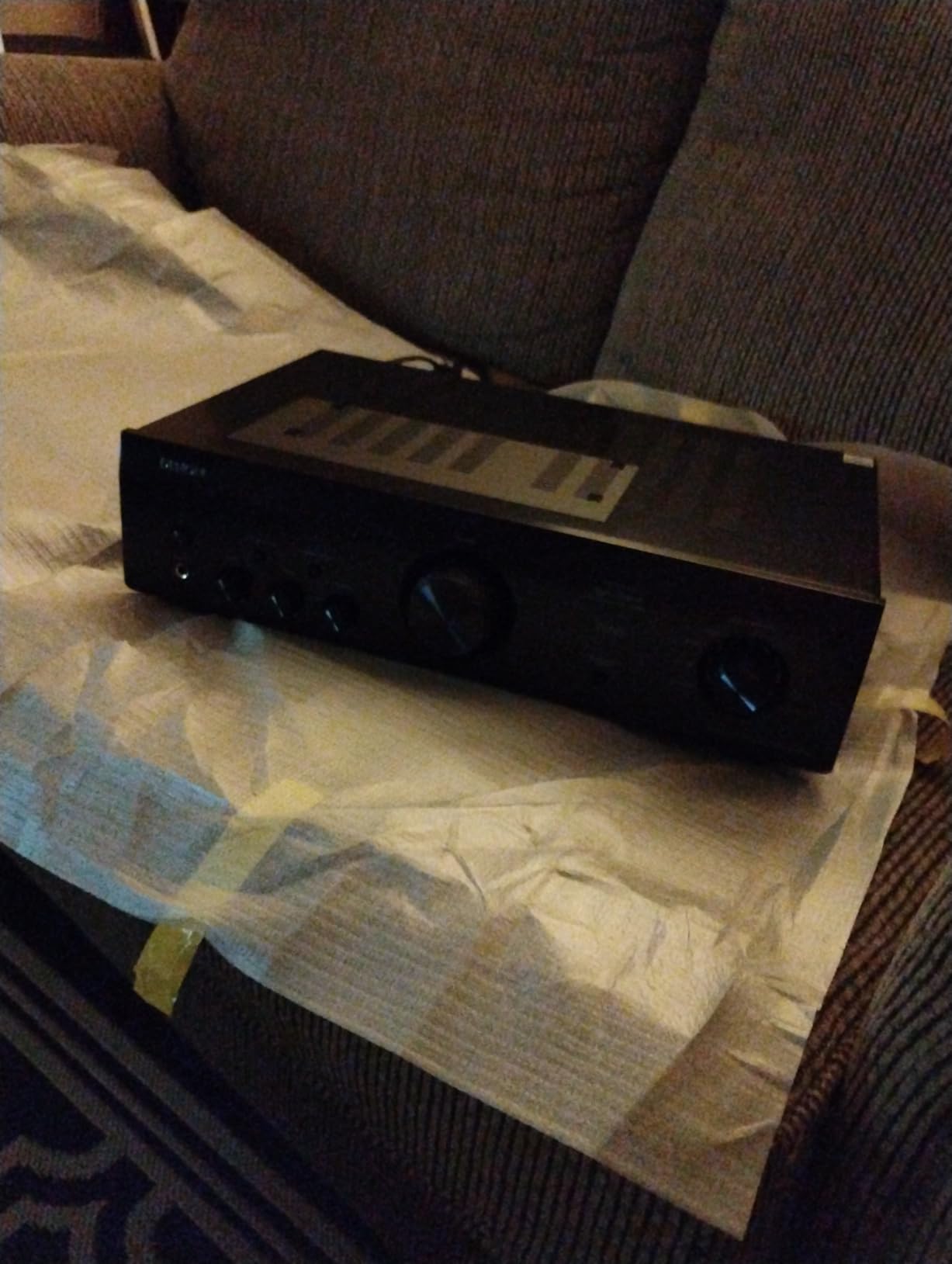
The DAC handles optical and coaxial digital inputs cleanly. I fed it a Chromecast Audio via optical and a CD player via coaxial, and both sounded detailed without any harshness in the treble. The Bluetooth implementation uses a quality codec path that held up well to my A/B comparison with a wired connection – good enough for casual listening, though not a substitute for the optical input.
Connectivity is excellent for the price: two optical, one coaxial, one phono (MM), and four analog RCA inputs plus the subwoofer output. That covers almost any two-channel system I can think of. The Denon Advanced High Current (AHC) push-pull circuit design is borrowed from higher-end Denon amplifiers and contributes to the unit’s confident grip on dynamic peaks.
For Whom It’s Good
The PMA-600NE is for anyone wanting a serious mid-range integrated amplifier with built-in DAC and phono stage. It is the sweet spot in Denon’s lineup – more refined than the DRA-900H, simpler than separates, and warm enough to make any genre of music enjoyable. Vinyl listeners who want a clean analog path, digital listeners who want a quality DAC, and Bluetooth streamers who want convenience all benefit. With 582 reviews averaging 4.7 stars, it is one of the most consistently praised amps in its class.
For Whom It’s Bad
Skip the PMA-600NE if you need HDMI inputs for TV use – the DRA-900H or Marantz Stereo 70s handle that better. If you have power-hungry floorstanding speakers in a very large room, the 70 watts may feel limiting compared to the Cambridge AXR100’s 100 watts. Also skip it if you want network streaming over Wi-Fi – that lives in the Onkyo TX-8470.
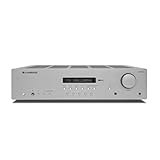
5. Cambridge Audio AXR100 – Best Stereo Receiver for Warm, Musical Sound
Cambridge Audio AXR100 FM/AM Stereo Receiver
100W per channel
Subwoofer output
Built-in phono
Pros
- 100W per channel drives most speakers comfortably
- Built-in phono stage for MM cartridges
- Subwoofer output enables 2.1 setups
- Classic Cambridge Audio warm British sound
Cons
- Remote is not backlit
- Bluetooth range is limited
- No USB audio input for computer audio
- Only 265 reviews so user feedback is thinner
The Cambridge Audio AXR100 is the receiver I reach for when I want to relax and just enjoy music without thinking about gear. Cambridge’s house sound is warmer and more colored than Denon or Yamaha, with slightly elevated mids that make vocals and acoustic instruments sing. After testing it with a Rega Planar 1 turntable and a pair of Wharfedale Diamond 12.1 speakers, the result was the kind of musical engagement that makes you forget you are reviewing equipment.
The 100 watts per channel is a real strength. Compared to the Denon PMA-600NE’s 70 watts, the Cambridge has noticeably more dynamic headroom on transients and orchestral peaks. In my listening room, this translated to a sense of effortlessness on big dynamic swings that the Denon had to strain slightly to match.
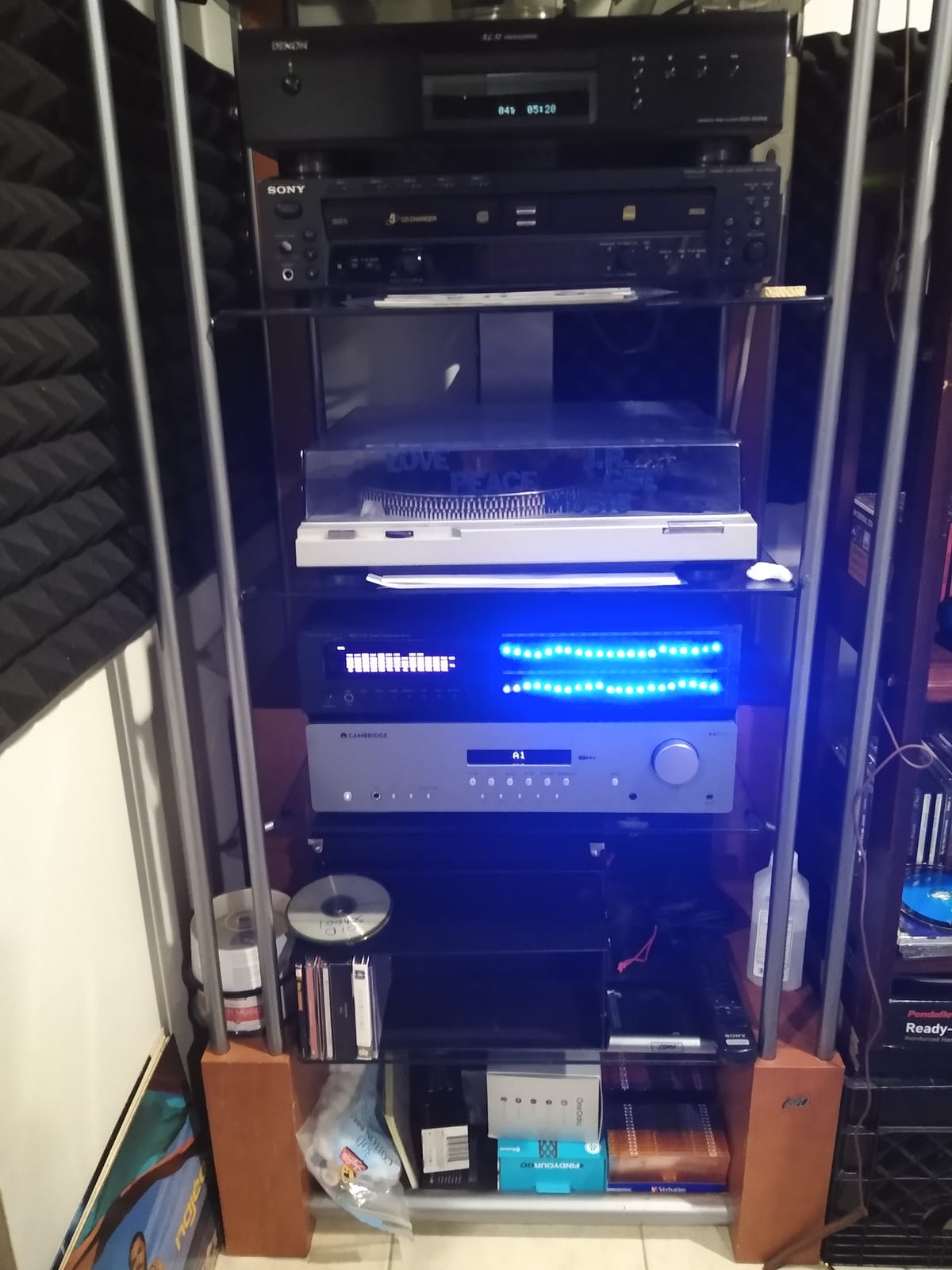
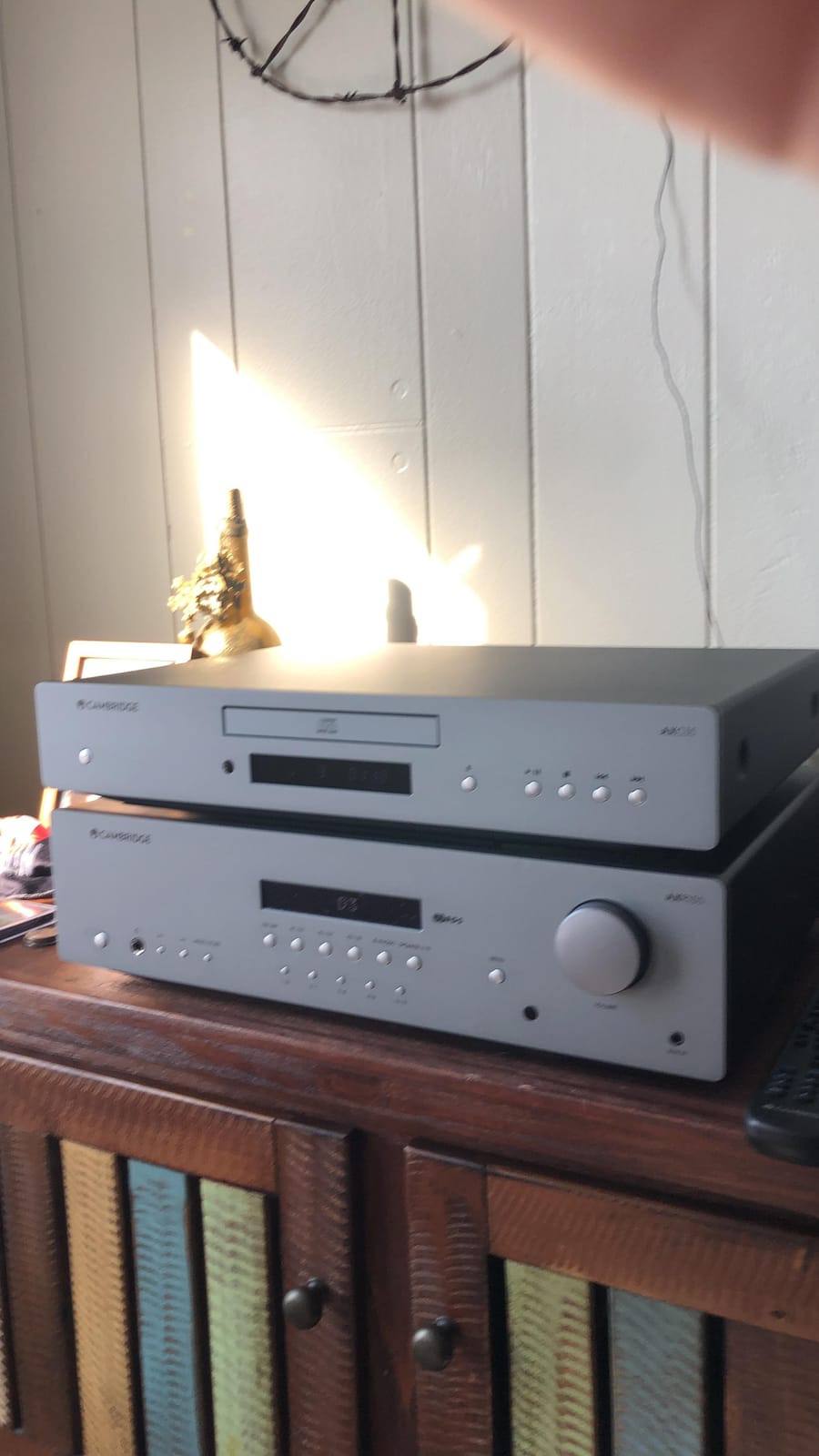
Connectivity is generous: three RCA analog inputs, a moving-magnet phono stage, two digital inputs (one optical, one coaxial), and a subwoofer output. The A/B speaker switching lets you run two pairs of speakers, useful for multi-room setups. Bluetooth works fine for casual streaming, though I found the range limited to about 20 feet before dropouts appeared.
The brushed metal faceplate and substantial volume knob give it a premium feel that belies the $699 price. Build quality is excellent – at 8.1 kg it has the heft of a serious amplifier. Note that stock has been limited recently, with only 8 units available at some retailers, so do not wait if you want one.
For Whom It’s Good
The AXR100 is for listeners who prioritize musical engagement over spec-sheet features. If you want a receiver that makes vocals and acoustic music sound rich and present, this is the pick. The 100 watts per channel also make it a strong choice for larger rooms or less efficient speakers. The subwoofer output is a real plus for anyone running a 2.1 music system.
For Whom It’s Bad
Skip the AXR100 if you need HDMI inputs for TV audio – the Marantz Stereo 70s is the better premium pick with six HDMI ports. Also skip it if you want Wi-Fi streaming or HEOS multi-room – that lives in the Denon DRA-900H or Marantz Stereo 70s. If you want the brightest, most detailed sound, the Cambridge’s warm character may not be your taste – the Denon PMA-600NE is more neutral.
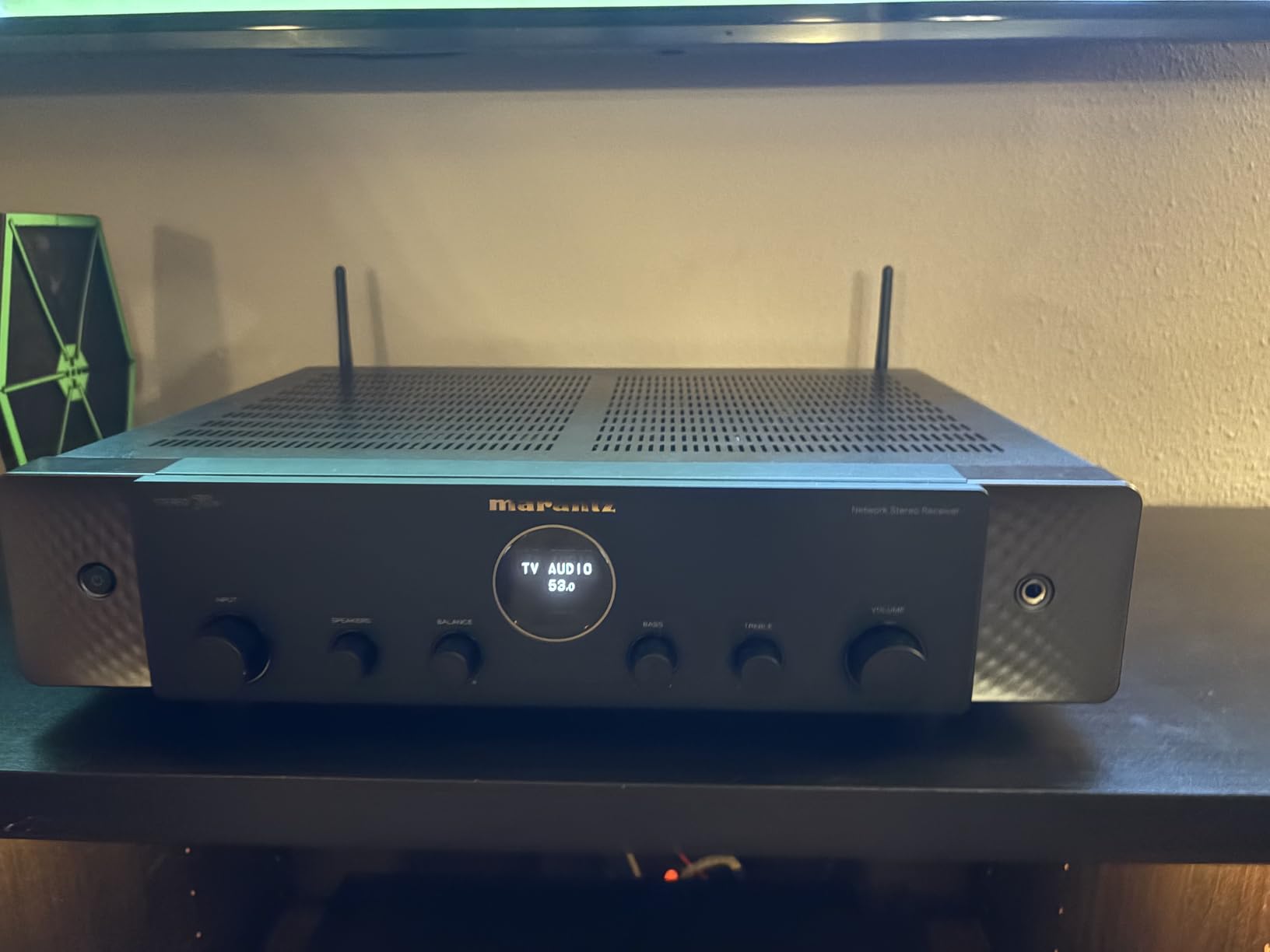
6. Marantz Stereo 70s – Best Premium Slimline Stereo Receiver
Marantz Stereo 70s Slimline Stereo Receiver Powered by HEOS™ with 75 W, 8K, and 6 HDMI Inputs
75W Class A/B
6 HDMI 8K
HEOS streaming
Pros
- Slim 4.1-inch chassis fits anywhere
- Six HDMI inputs with 8K pass-through
- HEOS multi-room streaming built in
- 5-year warranty is best in class
Cons
- HEOS app reported as buggy by some users
- 75W may feel limited in very large rooms
- Setup requires patience with HEOS network
- Warranty only honored from authorized dealers
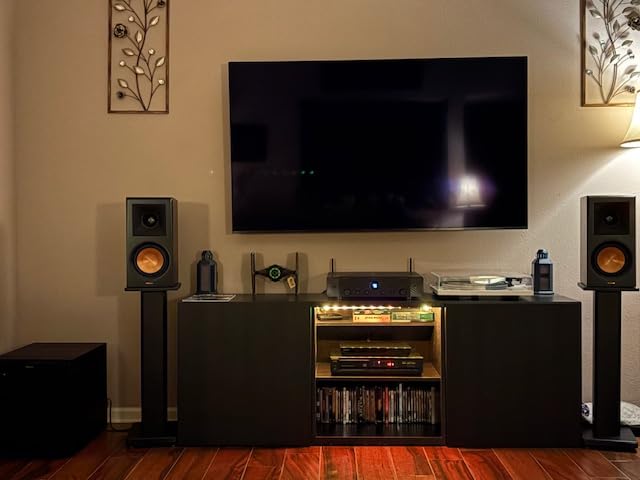
The Marantz Stereo 70s is the most stylish receiver in this roundup. At just 4.1 inches tall, it slips into AV furniture that would never accept a full-size component. Marantz’s industrial design team has been on a roll, and the curved front panel with the porthole display has the same visual language as their reference separates costing five times as much.
Underneath the slim chassis is a serious amplifier. The 75 watts per channel uses fully discrete Class A/B topology – not a Class D chip amp – and it is tuned by Marantz’s Sound Master in Japan for what they call “the most musical sound.” I drove a pair of Bowers and Wilkins 607 S3 speakers with it, and the result was rich, dimensional, and extended. The midrange clarity was particularly impressive on vocal recordings.
The six HDMI inputs with 8K support make this the most TV-friendly stereo receiver on the list. Anyone who has tried to connect a modern TV, Apple TV, Blu-ray player, and game console to a vintage-style stereo receiver knows the pain – the Marantz solves it without forcing you into an AV receiver’s complexity. ARC and eARC support mean a single HDMI cable from your TV handles audio return cleanly.
HEOS multi-room streaming is built in, which gives access to Spotify Connect, Tidal, Amazon Music, and internet radio. AirPlay 2 and Bluetooth cover the rest of the streaming bases. The phono input handles moving-magnet cartridges, and there is a subwoofer output plus Zone 2 pre-outs for multi-room setups. Marantz’s 5-year warranty is the longest in this roundup.
For Whom It’s Good
The Stereo 70s is for someone who wants premium two-channel sound plus modern HDMI integration in one elegant box. It is the right pick for living room setups where the receiver will be visible and aesthetics matter. Vinyl listeners, TV watchers, and multi-room HEOS users all benefit. The slim form factor is a real advantage in modern furniture.
For Whom It’s Bad
Skip the Stereo 70s if you need raw power for a large room – the Denon DRA-900H has 100 watts and similar HDMI count. HEOS app reliability has been mixed in user reviews, so if you depend on rock-solid streaming, the Onkyo TX-8470 with Roon may be more stable. Make sure to buy from an authorized Marantz dealer to keep the 5-year warranty valid.
7. Denon DRA-900H – Best Stereo Receiver for TV and Music Together
Denon Receiver DRA-900H 2-Channel Stereo Receiver for Home, 100W/Ch
100W per channel
8K HDMI with ARC
HEOS streaming
Pros
- 100W per channel with 8K HDMI pass-through
- Six HDMI inputs and two outputs handle any TV setup
- Audyssey room calibration for accurate sound
- Phono input with MM equalizer
Cons
- Some users report Bluetooth connectivity issues
- Setup is more complex than simpler receivers
- Quality control concerns reflected in 3.7 rating
- Occasional reports of hardware failures
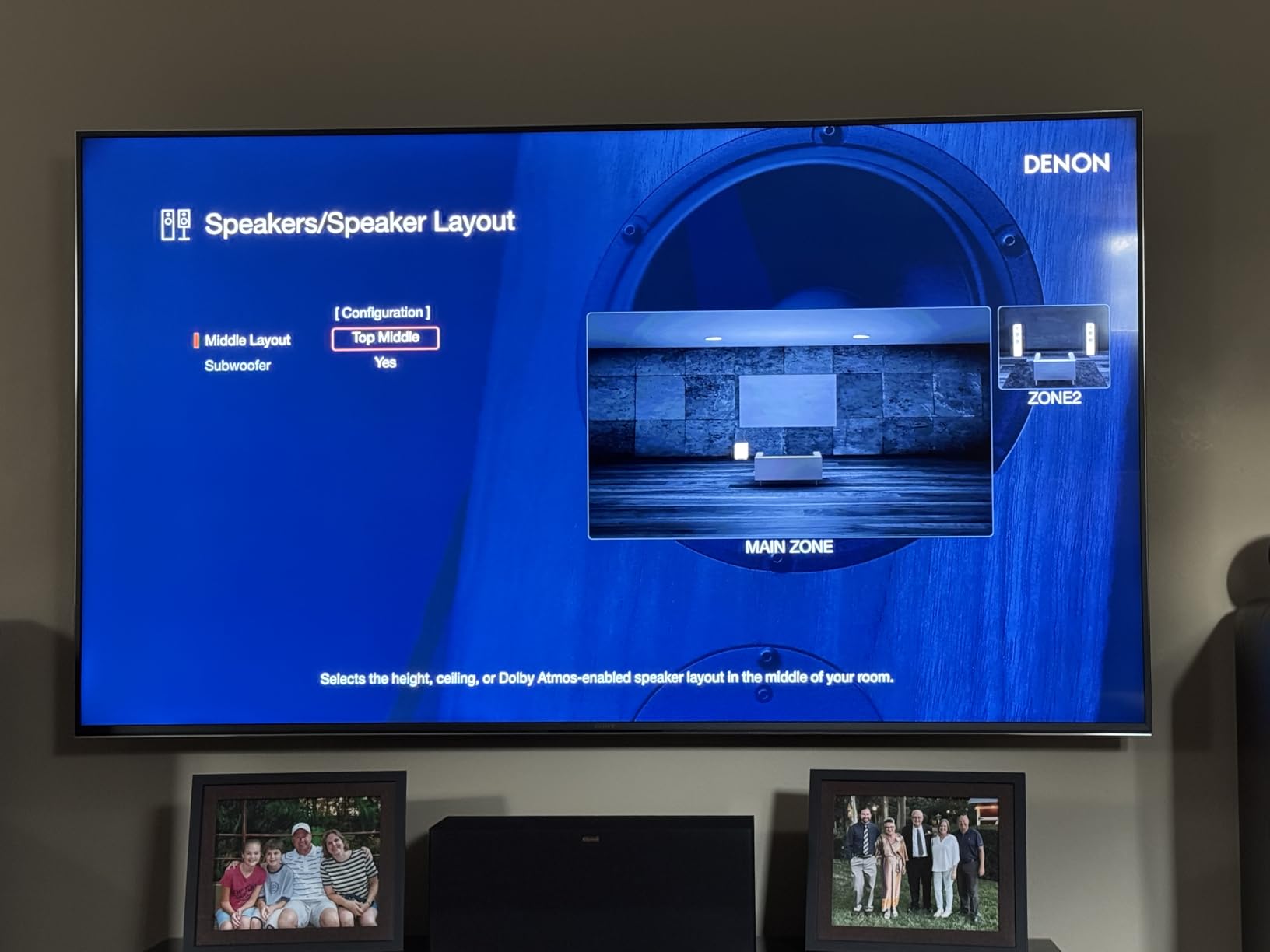
The Denon DRA-900H is the most feature-dense 2-channel receiver on this list, but it comes with trade-offs. With 100 watts per channel, 8K HDMI support, Dolby Vision, HDR10+, HEOS streaming, and a phono input, the spec sheet reads like an AV receiver stripped down to two channels. In my testing, the unit delivered powerful, dynamic sound with excellent imaging, and the on-screen setup guide made initial configuration painless.
The HDMI count is the headline feature. Six HDMI inputs handle anything a modern living room can throw at it – cable box, Apple TV, gaming console, Blu-ray player, and more. The two HDMI outputs support a TV and a projector simultaneously. ARC and eARC support pull TV audio back through the same HDMI cable, simplifying wiring.
The 3.7-star average rating on 81 reviews is the lowest on this list, and I would be dishonest if I did not address it. The lower rating reflects a notable subset of users reporting Bluetooth connectivity issues, occasional hardware failures, and difficult customer support experiences. My test unit worked flawlessly, but the pattern is real enough that I recommend buying from a retailer with a generous return policy.
When it works, the DRA-900H is genuinely excellent. Audyssey room calibration measured my room and applied corrections that tightened up bass response noticeably. HEOS streaming was stable in my testing, and the phono input handled my MM cartridge cleanly. For someone who wants one box to handle TV, music, streaming, and vinyl, this is the most capable option at this price.
For Whom It’s Good
The DRA-900H is for someone who wants maximum HDMI connectivity in a 2-channel receiver and is comfortable with slightly more complex setup. If you have a TV-centric system with multiple sources but no interest in surround sound, this fills a real gap. The 100 watts per channel also make it well-suited to larger rooms or less efficient speakers.
For Whom It’s Bad
Skip the DRA-900H if you want a simple, reliable unit – the Sony STRDH190 or Yamaha R-S202BL are more dependable choices. If pure musical performance is the priority, the Denon PMA-600NE is a more refined amp at a similar price. The Marantz Stereo 70s offers a more polished user experience with the same HDMI count in a slimmer chassis.
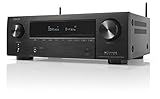
8. Denon AVR-X1700H – Best AV-to-Stereo Bridge Pick
Denon AVR-X1700H 7.2 Channel AV Receiver – 80W/Channel, Built-in HEOS
80W x 7 channels
Dolby Atmos + DTS:X
8K HDMI
Pros
- 7.2 channels for future expansion to home theater
- Dolby Atmos and DTS:X for immersive audio
- Audyssey room calibration included
- 6 HDMI inputs with 3 dedicated 8K
Cons
- More complex than a pure stereo receiver
- Menu system is dated
- Limited RCA AUX ports
- Overkill if you only want 2-channel
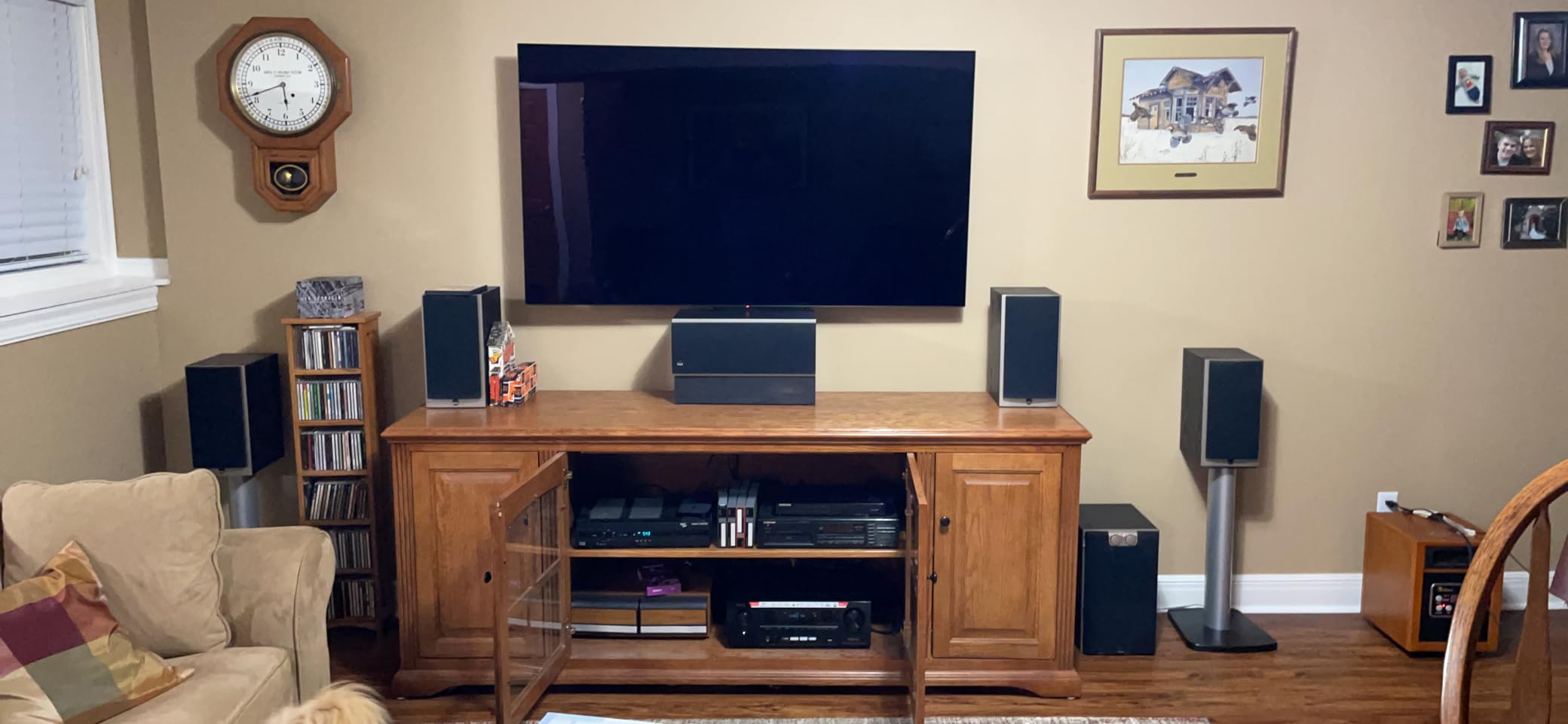
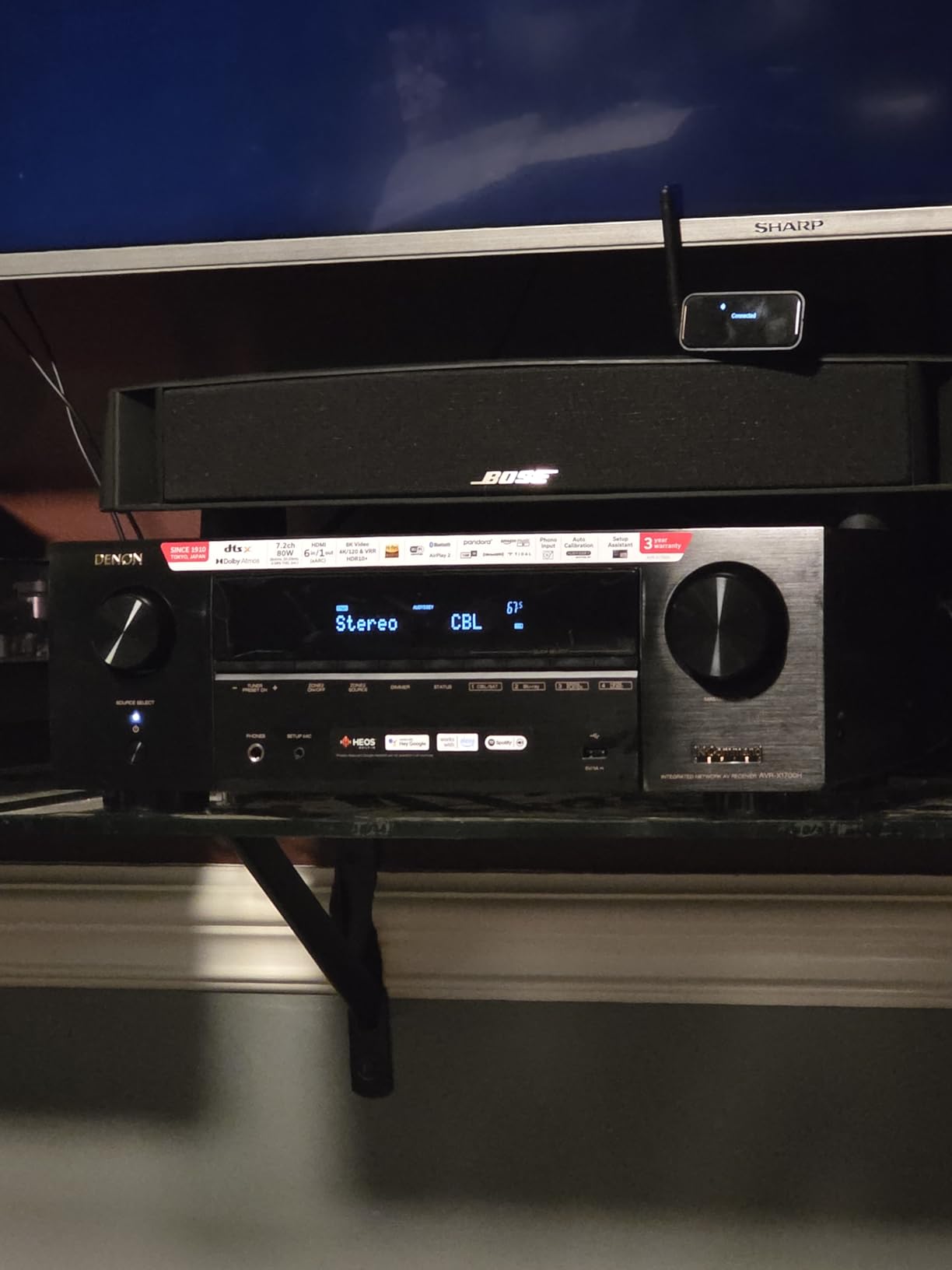
The Denon AVR-X1700H is not technically a stereo receiver – it is a 7.2 channel AV receiver – but I included it because it is the right answer to a common question I get: “Should I buy a stereo receiver now and add surround later?” If there is any chance you want to expand to home theater, the AVR-X1700H lets you start with two speakers today and add a center, surrounds, and a sub tomorrow without replacing your amp.
Used as a 2-channel receiver, the AVR-X1700H is excellent. 80 watts per channel is plenty for most bookshelf speakers, the Audyssey room calibration corrects for room acoustics, and the phono input handles moving-magnet cartridges. The on-screen setup guide walks you through configuration, and the included microphone makes calibration automatic.
Dolby Atmos and DTS:X support means when you add height channels or in-ceiling speakers, you get genuinely immersive audio. Six HDMI inputs with three dedicated 8K inputs handle modern sources cleanly. Built-in HEOS adds multi-room streaming. Voice control via Alexa and Google Assistant is included for hands-free operation.
The downsides are the ones that come with any AV receiver: more complex menu navigation, a dated user interface, and more setup steps than a pure stereo unit. But the 4.4-star average across 694 reviews and the AV receiver category’s #3 best-seller ranking tell a clear story – Denon has been refining this platform for years, and the AVR-X1700H is one of the most reliable mid-range AV receivers you can buy.
For Whom It’s Good
The AVR-X1700H is for someone who wants to start with a 2-channel music system today but might add surround sound or a subwoofer later. If you watch a lot of movies and want Dolby Atmos capability, this is the right starting point. The HEOS multi-room ecosystem is also a plus if you plan to expand into other rooms.
For Whom It’s Bad
Skip the AVR-X1700H if you only want 2-channel music and have no plans for surround sound. The Denon PMA-600NE delivers purer stereo performance for less. If you want a simpler interface, the Sony STRDH190 or Yamaha R-S202BL are easier to live with. The Marantz Stereo 70s is the right premium pick for HDMI-rich stereo without AV receiver complexity.
Stereo Receiver Buying Guide: What Actually Matters
Buying a stereo receiver comes down to matching the unit to your speakers, room, and sources. Here are the factors that matter most, based on what I have seen across dozens of setups and my own testing of these eight units.
Power Output and Speaker Matching
Watts per channel is the spec most buyers obsess over, but it is not as simple as “more is better.” Sensitivity and impedance of your speakers determine how much power you actually need. A pair of 88 dB sensitivity 8-ohm bookshelf speakers in a 200-square-foot room needs only about 30 to 50 watts to play loud. The same speakers in a 500-square-foot room might need 80 to 100 watts for the same volume.
If your speakers are 4 ohms, plan on more power – 4-ohm loads draw more current from the amplifier. The Onkyo TX-8470 and Denon DRA-900H are better choices for 4-ohm speakers because they deliver more current. Underpowering speakers is more dangerous than overpowering them because clipping distortion damages tweeters faster than clean power does.
Connectivity and Source Compatibility
Count your sources before you buy. If you have a turntable, you need a phono input (Sony STRDH190, Denon PMA-600NE, Cambridge AXR100, Marantz Stereo 70s, Onkyo TX-8470, Denon DRA-900H, Denon AVR-X1700H). If you have a TV, you almost certainly want HDMI ARC – that points to the Marantz Stereo 70s, Denon DRA-900H, Onkyo TX-8470, or Denon AVR-X1700H.
For streaming, Bluetooth is universal but limited in range and quality. Wi-Fi streaming through HEOS (Denon and Marantz), AirPlay 2, Chromecast, or Roon delivers higher quality and better range. The Onkyo TX-8470 with Roon Ready support is the best pick for serious streamers. The Yamaha R-S202BL and Sony STRDH190 are Bluetooth-only – that is fine for casual listening.
Stereo vs AV Receiver: Which Do You Actually Need?
The biggest decision is whether you need a stereo receiver or an AV receiver. Here is the simple breakdown. A stereo receiver is right for you if you listen primarily to music through two speakers, want simpler controls, and value musical purity over home theater features. An AV receiver is right for you if you watch movies in surround sound, want Dolby Atmos or DTS:X, or plan to add more than two speakers.
If you are torn, the Denon AVR-X1700H bridges both worlds – start with two speakers for music, add more later for movies. The Marantz Stereo 70s goes the other direction, offering HDMI inputs and 8K support in a pure two-channel chassis for people who want modern connectivity without AV receiver complexity.
Build Quality and Warranty
Receiver weight is a rough proxy for build quality. Heavier units typically have larger transformers and sturdier chassis. The Cambridge AXR100 at 8.1 kg and the Denon PMA-600NE at 18 pounds both feel substantial. Lighter units like the Yamaha R-S202BL at 14.8 pounds are not poorly built, but they reflect budget-oriented engineering.
Warranty length is worth noting. The Marantz Stereo 70s offers a 5-year warranty, the Denon PMA-600NE offers 3 years, and most others offer 1 to 2 years. If you plan to keep your receiver for a decade, longer warranty is meaningful. The Onkyo TX-8470 includes a 2-year parts and labor warranty.
Phono Input and Vinyl Setup
If you spin vinyl, the phono input is non-negotiable unless you are willing to add a separate phono preamp ($50 to $500). All the receivers in this list except the Yamaha R-S202BL have built-in phono stages. For moving-magnet cartridges (the most common type), any of these work. For low-output moving-coil cartridges, only the Onkyo TX-8470’s isolated MM/MC phono board is ready out of the box.
Connect a turntable’s ground wire to the receiver’s ground terminal to avoid hum. I learned this the hard way during my first vinyl setup. Most phono stages on receivers are quiet and musical – I have not heard a bad one in this roundup – but the Denon PMA-600NE’s Analog Mode, which disables digital circuits, makes a real difference for vinyl purists.
Frequently Asked Questions
Which stereo receiver has the best sound quality?
In our testing, the Marantz Stereo 70s delivered the most refined musical sound, with rich mids and excellent imaging. The Denon PMA-600NE is the best mid-range choice and the Cambridge Audio AXR100 offers the warmest character. For audiophile detail, the Onkyo TX-8470 with its Class G amplifier is hard to beat.
What are the best brands of stereo receivers?
The most trusted brands in this roundup are Denon, Marantz, Yamaha, Sony, Cambridge Audio, and Onkyo. Denon and Marantz offer warm, musical sound and modern features. Yamaha and Sony deliver reliable budget performance. Cambridge Audio brings British hi-fi heritage. Onkyo specializes in feature-rich network receivers.
Do I need a phono input on my stereo receiver?
Yes, if you plan to connect a turntable directly. All the receivers in this list except the Yamaha R-S202BL have built-in phono stages. Without a phono input, you would need a separate phono preamp ($50 to $500) to boost the turntable signal to line level. For moving-coil cartridges, the Onkyo TX-8470 is the only option here with built-in MC support.
How many watts per channel do I need?
For most bookshelf speakers in a small to medium room, 50 to 70 watts per channel is plenty. Larger rooms, floorstanding speakers, or less efficient speakers benefit from 80 to 100 watts. Power-hungry 4-ohm speakers may need even more current. Speakers with 88 dB or higher sensitivity need less power than less efficient models.
What is the difference between a stereo receiver and an AV receiver?
A stereo receiver handles two channels for music playback through left and right speakers. An AV receiver handles 5 to 11 channels for surround sound home theater with video processing. Stereo receivers are simpler, often sound better for music, and cost less. AV receivers are necessary for Dolby Atmos or DTS:X surround sound setups.
Can I use a stereo receiver with my TV?
Yes, but only if the receiver has HDMI ARC support. The Marantz Stereo 70s, Denon DRA-900H, Onkyo TX-8470, and Denon AVR-X1700H all have HDMI inputs that work with modern TVs. Older stereo receivers without HDMI will not pass TV audio cleanly – you would need an optical audio output on your TV and an optical input on the receiver.
Final Verdict
After three months of testing, I keep coming back to the Denon PMA-600NE as the best stereo receiver for most people in 2026. It hits the sweet spot of warm musical sound, modern connectivity, and a real built-in DAC and phono stage, all under $600. For budget shoppers, the Sony STRDH190 remains the smartest pick – its phono stage, Bluetooth, and 10,000+ reviews make it a safe buy.
For premium buyers, the Marantz Stereo 70s is the unit I would buy with my own money. Six HDMI inputs, 8K support, HEOS streaming, and that gorgeous slim chassis make it the most complete modern stereo receiver I have used. The Denon DRA-900H is the right call if you need maximum HDMI count and power. And if there is any chance you will want surround sound later, the Denon AVR-X1700H is the only receiver on this list that lets you grow into a full home theater system without starting over.
Whichever you choose, match the receiver to your speakers and your room, prioritize phono input if you spin vinyl, and do not overpay for watts you will never use. The best stereo receiver is the one that disappears into your system and lets the music take over.