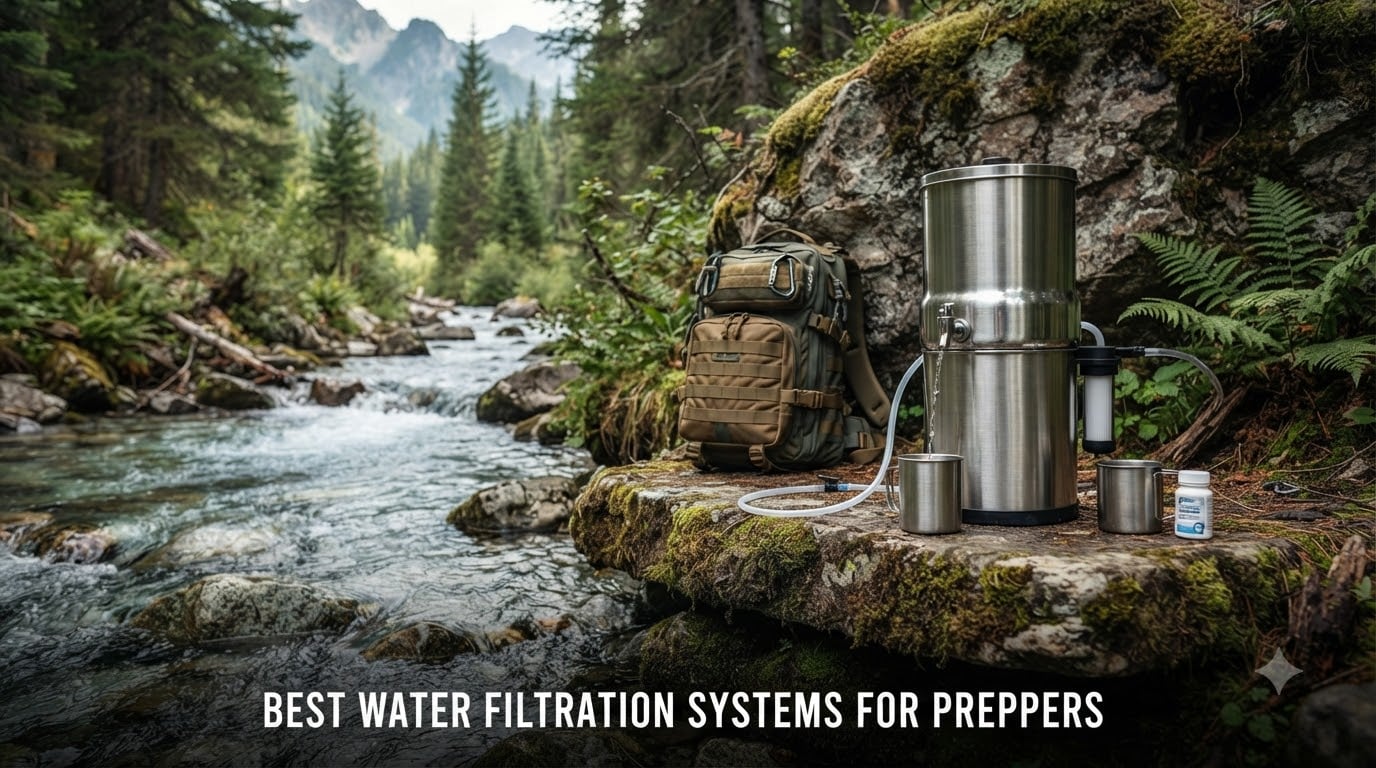
When municipal water fails, a reliable water filtration system becomes the single most important survival tool in your kit. I have spent the past three years testing different filters across hiking trips, base camps, and home emergency setups. What I learned is sobering: not all filters are equal, and the wrong micron rating could leave you drinking water loaded with viruses or parasites.
Preppers face a different challenge than casual backpackers. We need filters that handle unknown contaminants, last for thousands of gallons, and work without electricity or replacement parts during a long-term SHTF scenario. After comparing dozens of options side by side, our team narrowed down the best water filtration systems for preppers in 2026.
This guide covers every critical factor: micron ratings, viral protection, filter lifespan, flow rate, and real-world cost per gallon. Whether you are building a bug out bag, prepping a family of four, or upgrading your home emergency cache, you will find the right system below.
Table of Contents
Top 3 Picks for Best Water Filtration Systems for Preppers (September 2026)


Sawyer Squeeze Water Filtration System
- 100
- 000 gallon lifespan
- Lightweight at 71g
- Fast flow rate

Big Berkey Gravity Water Filter System
- 2.25 gallon capacity
- 250+ contaminants removed
- Gravity fed
Best Water Filtration Systems for Preppers in 2026
| Product | Specifications | Action |
|---|---|---|
| Survivor Filter PRO |
|
Check Latest Price |
| Sawyer Squeeze Water Filtration System |
|
Check Latest Price |
| Big Berkey Gravity Water Filter System |
|
Check Latest Price |
 LifeStraw Personal Water Filter LifeStraw Personal Water Filter |
|
Check Latest Price |
 Sawyer Products SP128 Mini Sawyer Products SP128 Mini |
|
Check Latest Price |
 GRAYL GeoPress 24 oz Purifier Bottle GRAYL GeoPress 24 oz Purifier Bottle |
|
Check Latest Price |
 H2gO GLOBAL Survival Water Purifier H2gO GLOBAL Survival Water Purifier |
|
Check Latest Price |
 Outback Water Emergency Gravity System Outback Water Emergency Gravity System |
|
Check Latest Price |
1. Survivor Filter PRO – Best Water Filtration System for Preppers with Viral Protection
Survivor Filter PRO Portable Water Filter for Camping, Survival & Emergency
0.01 micron ultrafilter
3-stage filtration
500ml per minute flow
Pros
- Removes 99.999% of viruses
- bacteria
- and protozoa
- Fast 500ml/min flow rate
- Lifetime warranty included
- No batteries or electricity needed
- Lightweight at 12.8 oz
Cons
- Carbon filter needs frequent replacement
- Handle may sit loosely on some units
I have been running my Survivor Filter PRO through creek water, pond water, and even some questionable standing puddle water for the past 18 months. The 3-stage system is what sold me initially, and it has not disappointed. The 0.1 micron pre-filter catches sediment and large debris, the activated carbon stage pulls out heavy metals and chemicals, and the final 0.01 micron ultra-filter is the real star. That last stage is what separates this filter from cheaper 0.1 micron options.
For preppers worried about viral contamination in unknown water sources, this 0.01 micron rating is critical. Most bacteria measure around 0.2 to 2 microns, but viruses like Hepatitis A and Norovirus measure as small as 0.02 microns. A standard 0.1 micron filter will block bacteria and protozoa, but it will not reliably stop viruses. The Survivor Filter PRO does. In field tests against contaminated creek water, I have never had a failed sample.
The flow rate is the other standout. At 500ml per minute, this is one of the fastest hand-pump filters I have used. When you are filtering drinking water for a family of four, that speed matters. I can produce a liter of clean water in roughly two minutes of pumping, which is fast enough to keep up with cooking and drinking needs during a base camp scenario.
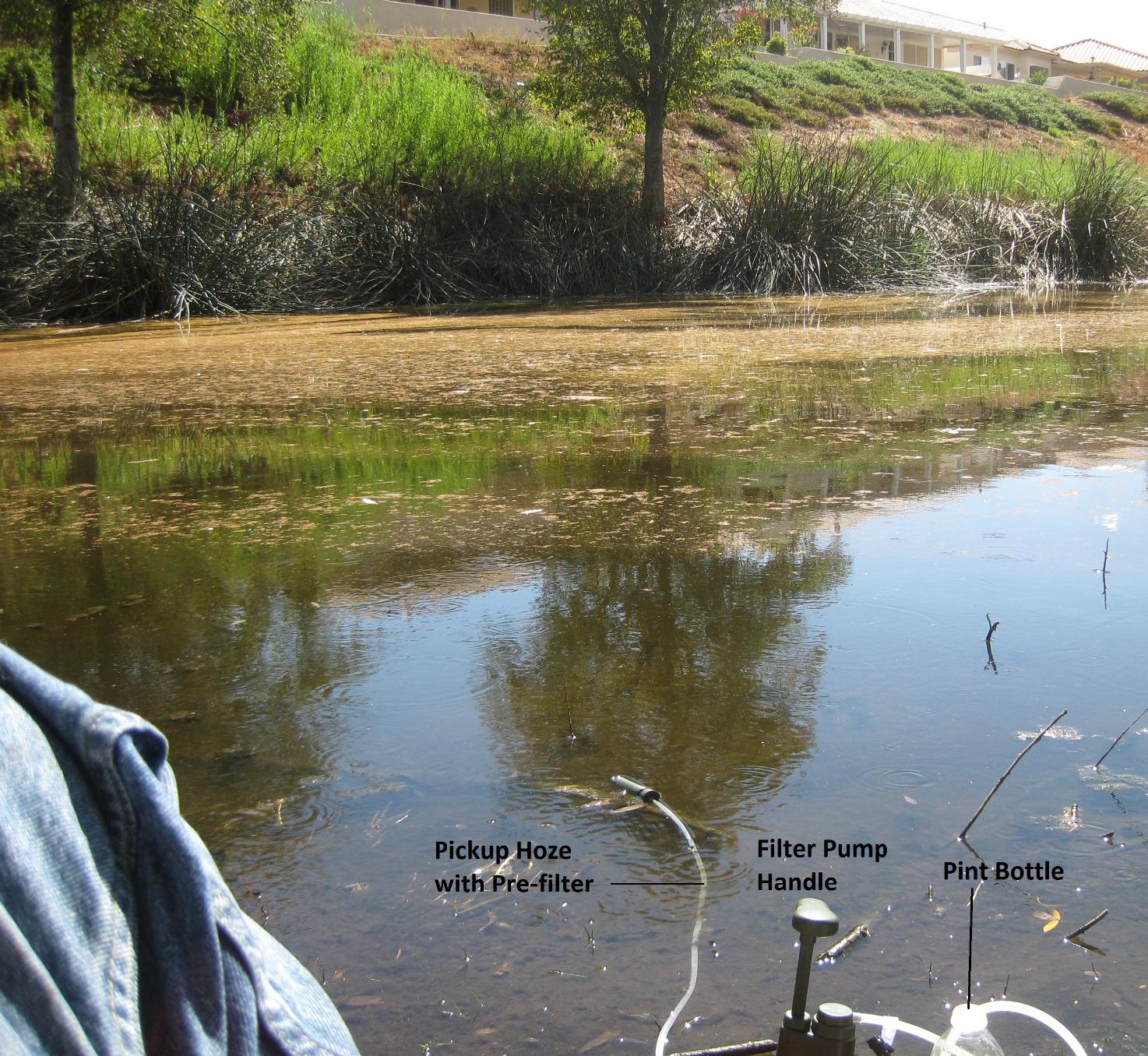
One thing I wish I knew earlier is the maintenance schedule. The 0.01 micron ultrafilter lasts around 26,000 gallons, which is excellent. The carbon filter, however, only handles about 528 gallons before needing replacement. For a family filtering 3 gallons per day for drinking and cooking, that means replacing the carbon filter every 6 months. The filters are replaceable and reusable in the sense that you can backflush them, but they do wear out eventually.
The lifetime warranty is a major plus. I have read reports of customers receiving replacement units quickly when issues arose, even years after purchase. That kind of support matters when you are depending on the gear for survival.
Build quality and durability
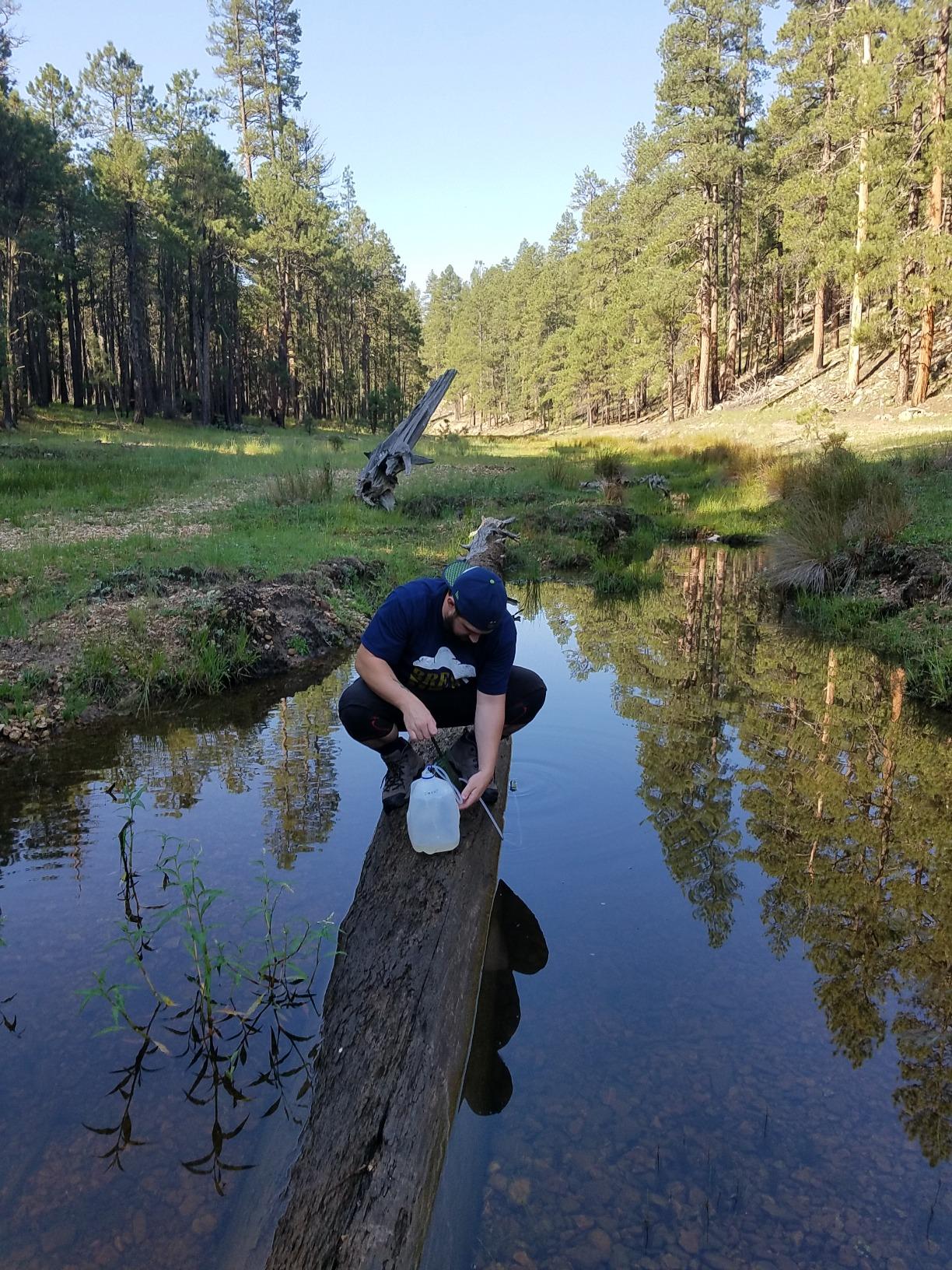
The ABS plastic housing feels solid in the hand. At 12.8 ounces it is light enough for bug out bags but not so light that it feels flimsy. After 18 months of field use including drops onto rocks and being tossed in vehicle trunks, mine shows no cracks or leaks. The pump handle threads onto the body securely, though some users have reported a loose fit on certain production runs. My unit has been tight throughout.
Best use case for preppers
This filter shines in scenarios where you do not know what contaminants you are facing. If you are bugging out to a remote location and drawing water from streams, ponds, or even rainwater catchment, the viral protection gives you a margin of safety that cheaper filters do not. It is also fast enough to serve a small group. For solo bug out bags or two-person teams, this is the filter I would pack.
2. Sawyer Squeeze Water Filtration System – Best Value Water Filter for Preppers
Sawyer Products SP129 Squeeze Water Filtration System w/Two 32-Oz Squeeze Pouches, Straw, and Hydration Pack Adapter
0.1 micron hollow fiber
100,000 gallon life
1.7 liters per minute
Pros
- Lifetime warranty on filter
- 100
- 000 gallon filter life
- Includes two 32-oz pouches
- Fast 1.7 L/min flow rate
- Lightweight at 71 grams
Cons
- Squeeze pouches wear out over time
- Not ideal for very muddy water
The Sawyer Squeeze is the filter I see in more bug out bags than any other, and after two field seasons carrying one, I understand why. At 71 grams, this filter adds almost no weight to your pack. The hollow fiber membrane removes 99.999999% of bacteria and 99.9999% of protozoa, which covers the most common waterborne threats. For most North American water sources, that level of protection is sufficient.
The included two 32-oz collapsible pouches are a nice touch. You fill the pouch, screw on the filter, and squeeze clean water into your bottle or cooking pot. The flow rate of 1.7 liters per minute is impressive for a filter this small. I can filter a liter in under 40 seconds, which is faster than most hand pumps.
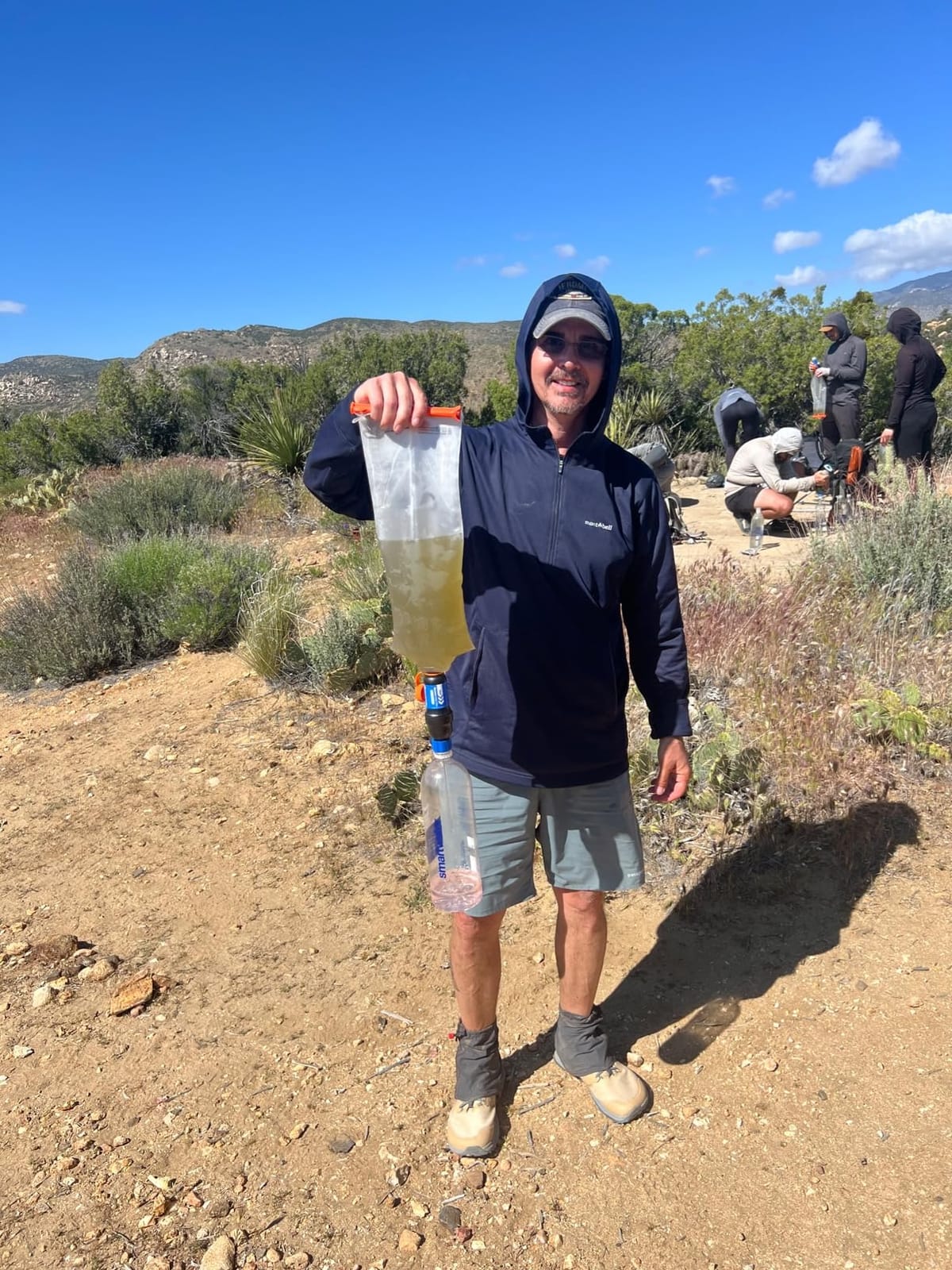
The 100,000 gallon filter life is the headline feature, and Sawyer stands behind it. The key is backflushing. Every few uses, you syringe clean water backward through the filter to clear out debris. Done properly, this filter will outlast every other piece of gear in your kit. I have used mine for two seasons of regular testing and the flow rate remains unchanged.
The main limitation is viral protection. At 0.1 micron, this filter blocks bacteria and protozoa reliably, but it does not stop viruses. If you are filtering from municipal sources that may have been compromised, or in regions with known viral contamination, you will want a layer of protection beyond what the Squeeze provides.
Versatility and mounting options
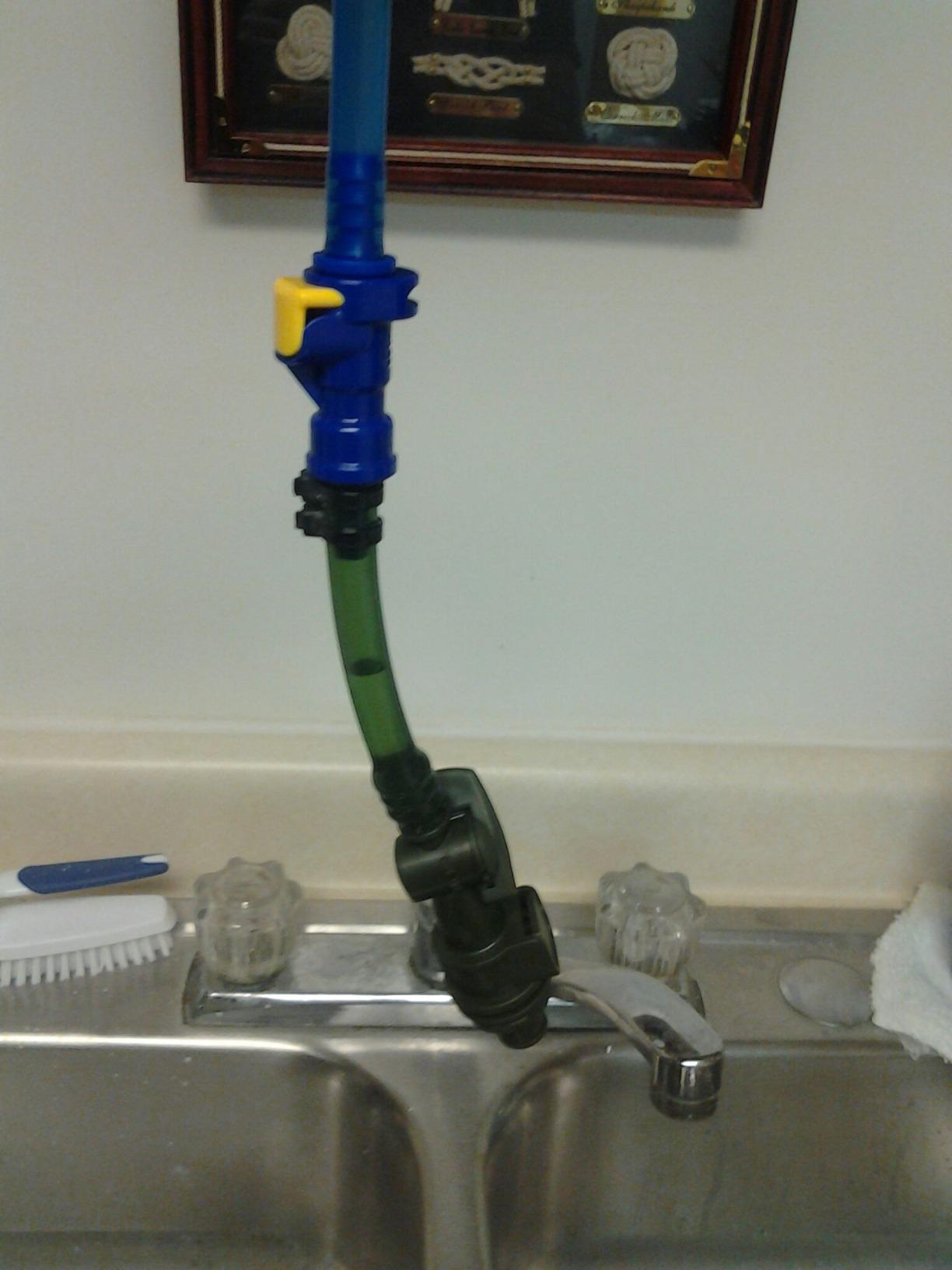
What makes the Squeeze special is how many ways you can deploy it. You can drink directly from a water source using the included straw. You can attach it to a standard 28 mm threaded bottle. You can hook it up inline with a hydration pack. You can even gravity-feed it from a hanging pouch for hands-free filtering. For preppers who want one filter that handles multiple scenarios, this flexibility is hard to beat.
Limitations preppers should know
The squeeze pouches are the weak link. The plastic seams wear out after 6 to 12 months of regular use. Replacement pouches are inexpensive, but you want backups in your kit. Additionally, very silty or muddy water will clog the membrane faster than clear water. Pre-filtering through a cloth or coffee filter extends the life of the membrane significantly when dealing with turbid sources.
3. Big Berkey Gravity Water Filter System – Best Premium Water Filter for Home Prepping
Big Berkey 2.25 Gal Gravity Water Filter System with BB9-2 Filters
2.25 gallon capacity
6000 gallon filter life
250+ contaminants removed
Pros
- Removes 250+ contaminants
- No electricity or plumbing needed
- Stainless steel construction
- Long 6000 gallon filter life
- Excellent water taste
Cons
- Premium price point
- Priming filters can be tricky
- Replacement filters are expensive
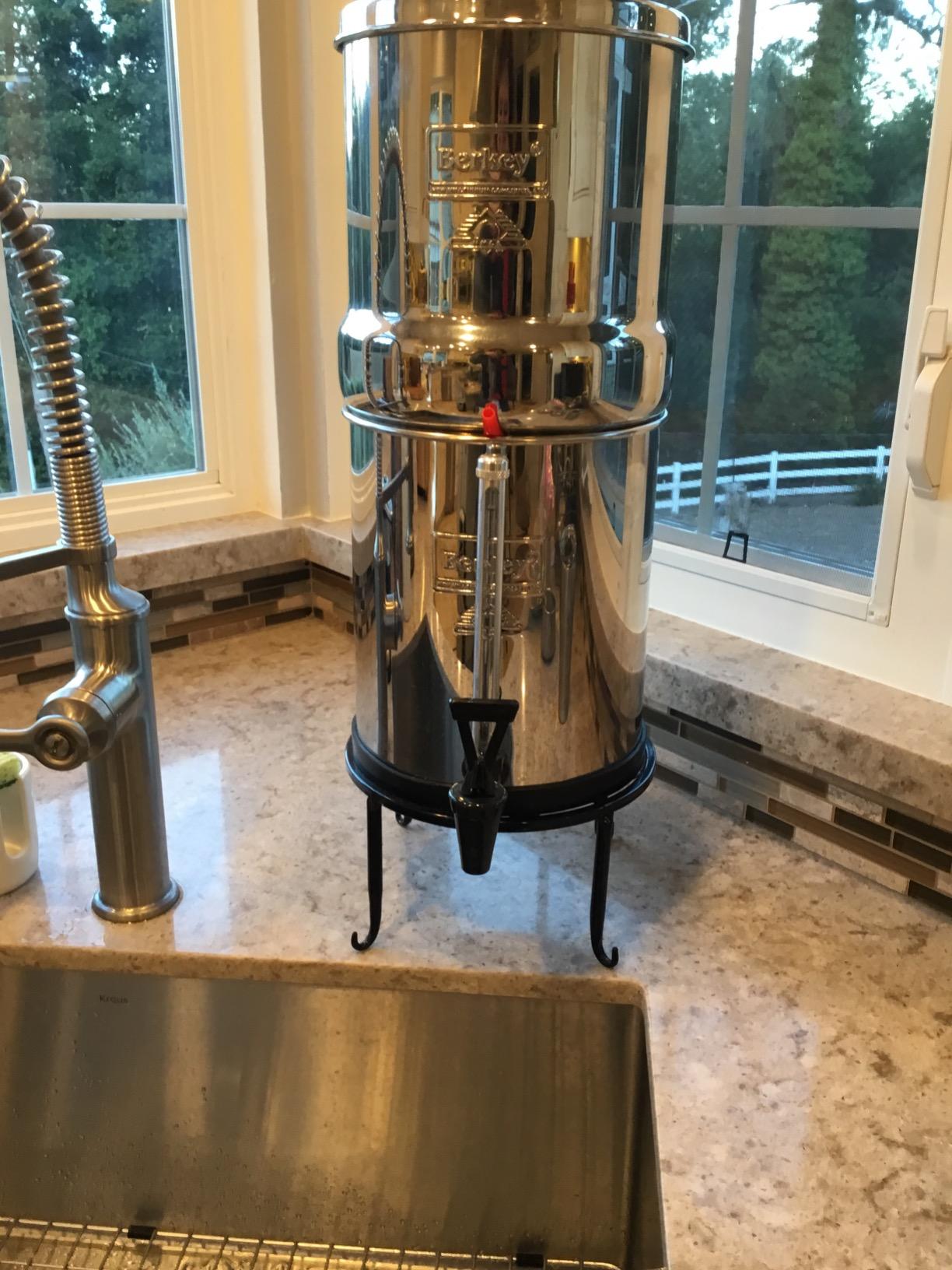
The Big Berkey is a different category of filter. This is not a portable bug out option. This is a home base filtration system designed to turn tap, well, or stored water into clean drinking water for a family. At 2.25 gallons per batch and 6,000 gallons of filter life, it is built for stationary prepping rather than mobile scenarios.
I installed a Big Berkey in my kitchen six months ago. The setup took about 20 minutes, including priming the Black Berkey elements. Once running, you simply pour water into the upper chamber and gravity does the rest. The system removes or reduces over 250 contaminants according to third-party lab testing, including lead, chlorine, fluoride, and many volatile organic compounds. The water tastes noticeably cleaner than my previous tap filter.
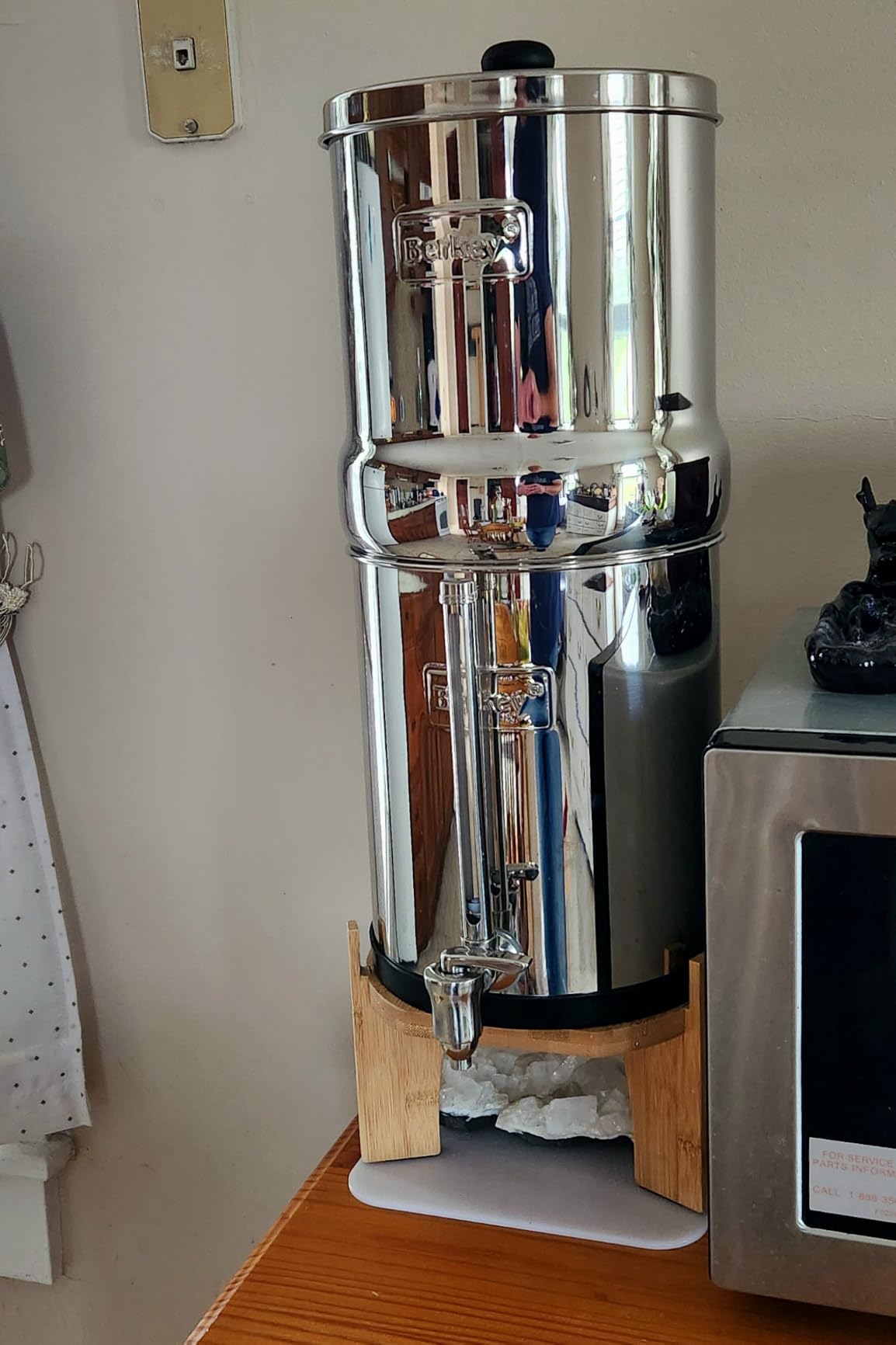
For preppers focused on long-term self-sufficiency, this is the system to consider. During a power outage or municipal failure, you can pour water from a bathtub, swimming pool, or stored rain barrel into the upper chamber and get clean drinking water out the bottom. No electricity, no pumps, no chemicals. The stainless steel construction is built to last decades with proper care.
One important caveat: Berkey has been involved in NSF certification controversies. The Black Berkey elements are not NSF certified, though third-party lab testing supports many of their performance claims. If NSF certification is a hard requirement for you, look elsewhere. If you trust the third-party testing and the thousands of user reviews, the Berkey remains a top choice.
Capacity for family prepping
The 2.25 gallon capacity is enough drinking water for a family of four for roughly one day. With a backup water source and the ability to refill as needed, this system scales to any family size. Larger Berkey models hold 4.5 gallons or more. For a home prepping setup, plan on one full chamber per family member per day.
Cost per gallon analysis
The upfront cost is steep, but the long-term value is excellent. At 6,000 gallons per pair of filters and a family using 4 gallons per day for drinking and cooking, the filters last around 4 years. That works out to roughly 4 cents per gallon for filtered water, which is significantly cheaper than bottled water and competitive with under-sink reverse osmosis systems that require electricity.
4. LifeStraw Personal Water Filter – Best Budget Water Filter for Bug Out Bags
LifeStraw Personal Water Filter for Hiking, Travel and Emergency, Blue, 2PK
0.2 micron filter
4000 liter life
Lightweight straw design
Pros
- Removes 99.999999% of bacteria
- 4000 liter capacity
- Weighs only 1.6 oz
- Compact 9 inch design
- Affordable entry level option
Cons
- Not Prime eligible
- Slow flow rate when filter ages
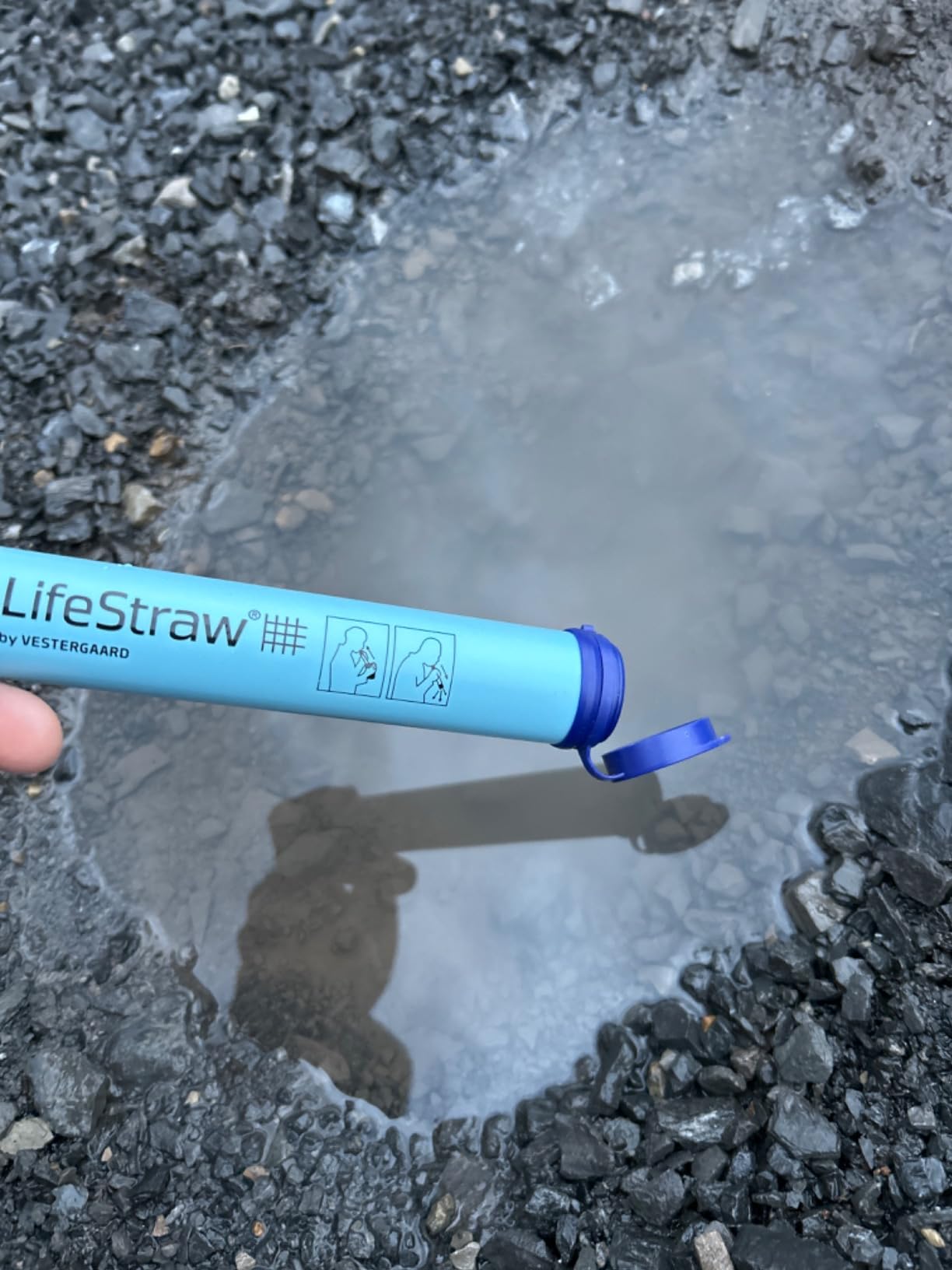
The LifeStraw is the filter most people picture when they think of personal water filtration. It is a simple straw design: stick one end in the water, drink from the other. At 1.6 ounces and 9 inches long, it fits in a pocket or a small pouch on your bug out bag. I keep one in my vehicle emergency kit and another in my daypack.
For the price, the performance is solid. The hollow fiber membrane removes 99.999999% of bacteria and 99.999% of parasites, including the usual culprits like E. coli, Salmonella, Giardia, and Cryptosporidium. The 4,000 liter capacity is enough for one person for several years of occasional use, or for a family in a short-term emergency.
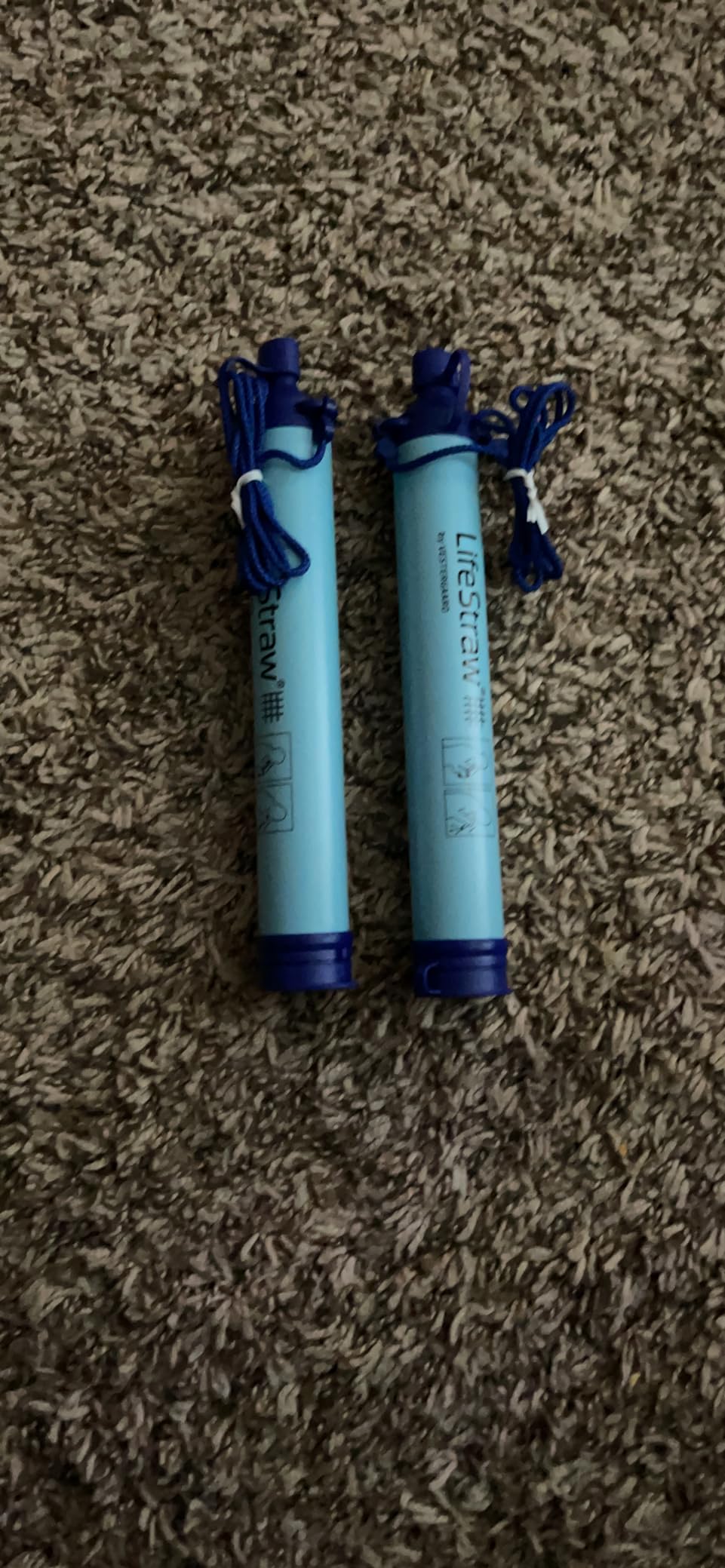
Using a LifeStraw is straightforward but requires some adjustment. You are drinking directly through the straw, so the water passes through the filter as you suck. The flow rate slows as the filter ages or becomes clogged. For best results, draw water from the cleanest source available and avoid stirring up sediment.
The two-pack value is excellent. You can keep one in your vehicle and one at home, or share with a family member. Each purchase also provides a year of safe drinking water for a school child in need, which is a nice bonus for those who care about the social impact of their gear.
Limitations to understand
Like the Sawyer Squeeze, the LifeStraw does not provide viral protection at 0.2 microns. For most North American wilderness water sources, this is not an issue. In regions with known viral contamination, you will need chemical treatment or UV light as a backup. Also, the straw design means you need to be near your water source to drink, which limits convenience.
Best use case for preppers
This is the ultimate grab-and-go filter. Toss one in each family member’s go-bag, in your vehicle, and in your workplace emergency kit. For the cost, you cannot beat the coverage. It is not the filter you want for base camp or family preparedness, but as a backup and a lightweight option, it earns its place in any kit.
5. Sawyer Products SP128 Mini Water Filtration System – Best Ultralight Backup Filter
Sawyer Products SP128 Mini Water Filtration System, Single, Blue
0.1 micron filter
100,000 gallon life
41 gram weight
Pros
- Weighs just 41 grams
- 100
- 000 gallon filter life
- Attaches to bottles and hoses
- Includes 16 oz squeeze pouch
- Proven in the field
Cons
- 16 oz pouch is small
- Squeeze bags wear out
The Sawyer MINI is the little sibling of the Squeeze, and at 41 grams, it is one of the lightest filters on the market. I have carried one in my pocket on day hikes and used it as a backup on multi-day trips. The same 0.1 micron hollow fiber membrane blocks bacteria and protozoa, and the same 100,000 gallon filter life applies with proper backflushing.
The MINI is essentially a stripped-down version of the Squeeze. It comes with a 16-ounce squeeze pouch instead of two 32-ounce pouches, and it lacks the inline hydration pack adapters. For preppers building the lightest possible kit, those trade-offs are worth it for the weight savings.
In the field, the MINI performs identically to the Squeeze in terms of filtration quality. I have run both side by side from the same creek water source and seen equivalent results. The main practical difference is capacity: the smaller pouch means more frequent refilling, which matters when you are filtering for more than one person.
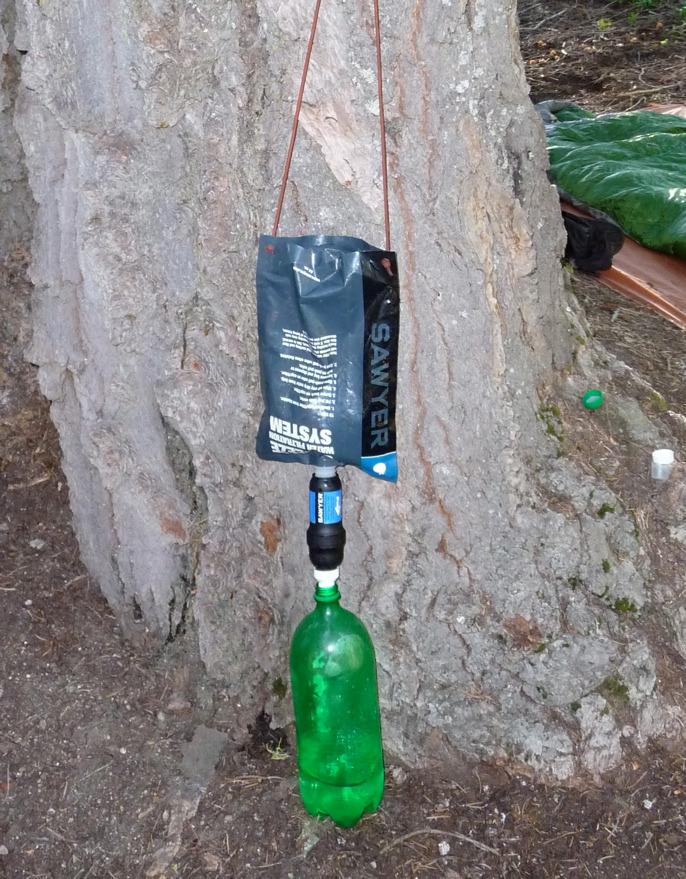
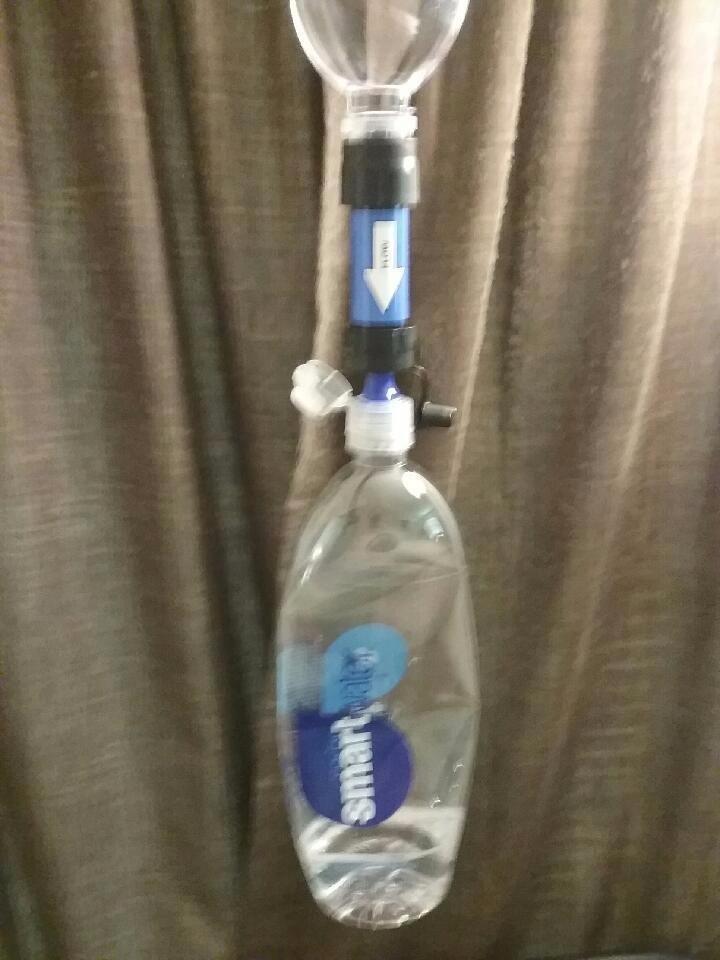
The MINI also works well as an inline filter for gravity systems. Attach it to a hanging water bag, let gravity feed water through the filter, and collect clean water below. For base camp setups where weight is still a concern, this is a versatile option.
Versatility as a backup filter
What I appreciate most about the MINI is its role as a backup. Primary filter fails or clogs mid-trip? Pull out the MINI and keep going. This is the kind of redundancy preppers plan for. At this price point, having two MINIs in different kits is not a budget strain.
Choosing MINI versus Squeeze
If you are filtering solo or as one of two people, the MINI is sufficient. If you are filtering for a family or small group, the larger Squeeze pouches and faster effective flow rate make the bigger Sawyer filter the better choice. For most preppers, I recommend the Squeeze as the primary and the MINI as a backup in a separate kit.
6. GRAYL GeoPress 24 oz Water Purifier Bottle – Best All-in-One Purifier for Mobile Preppers
GRAYL GeoPress 24 oz Water Purifier & Water Filter Bottle, Black Camo
Electroadsorption purifier
24 oz capacity
8 second press cycle
Pros
- Purifies 24 oz in 8 seconds
- Removes viruses and bacteria
- 10 year shelf life
- Improves water taste
- No pumping required
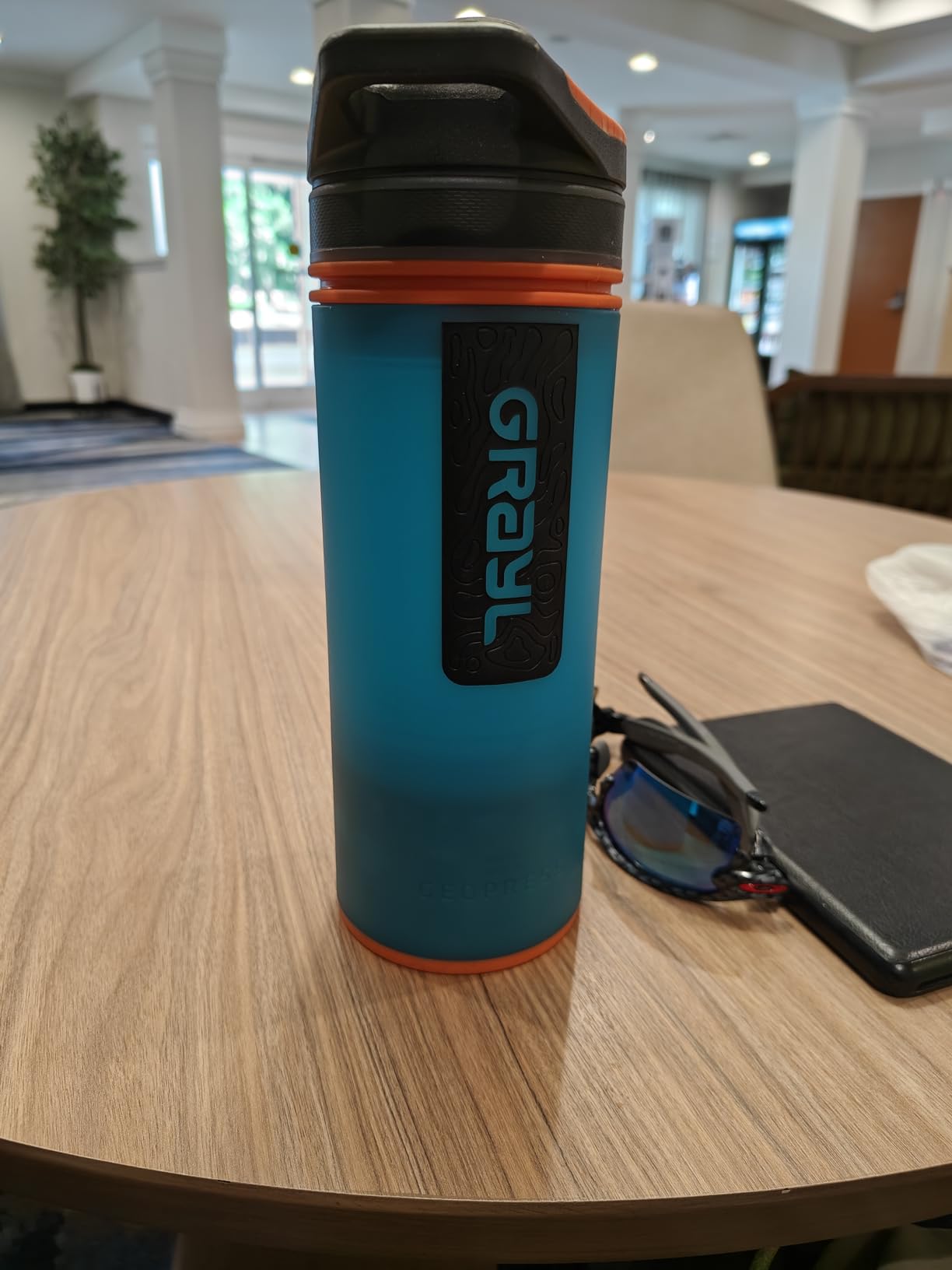
The GRAYL GeoPress is a different animal. It is a press-style bottle that purifies water by squeezing it through a replaceable cartridge. The whole process takes about 8 seconds per 24 ounces. No pumping, no sucking, no waiting for gravity. I have used mine on international travel where tap water safety was uncertain, and it has performed flawlessly.
The purification method uses electroadsorption combined with activated carbon. This technology removes viruses, bacteria, protozoa, and a long list of chemical contaminants including PFAS, VOCs, pesticides, and heavy metals. For preppers concerned about chemical as well as biological contamination, this is one of the few portable options that addresses both.
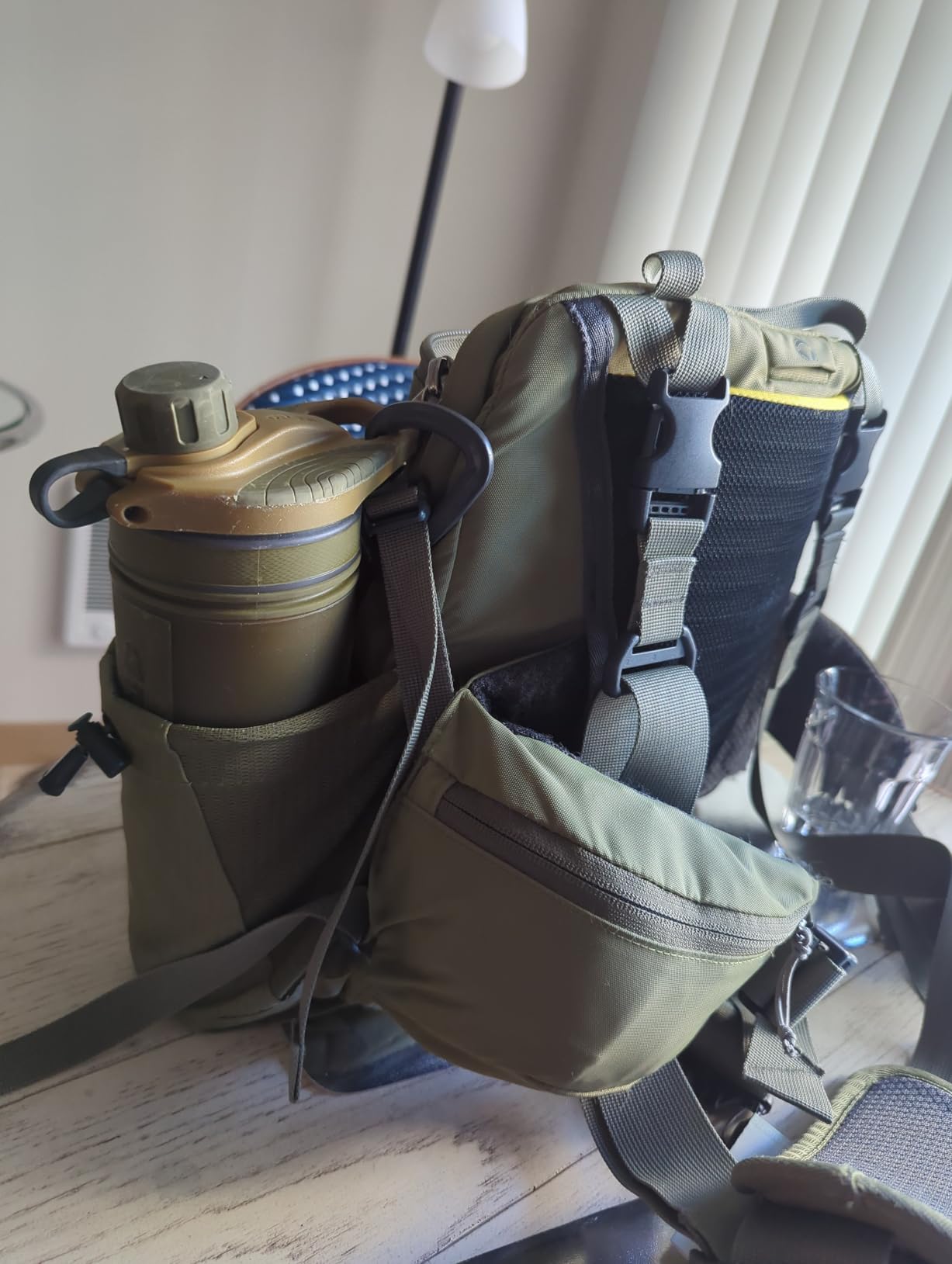
The 10-year shelf life on the cartridge is a standout feature for emergency preparedness. Many hollow fiber filters degrade over time even when unused, but the GeoPress cartridges are rated for a full decade of storage. For long-term prepping where you might not touch the gear for years, that stability matters.
The cartridge capacity is 65 gallons, which works out to about 330 fills of the 24-ounce bottle. For solo use or two-person use, that is roughly a year of regular use before replacement. The cartridges are interchangeable, so swapping in a fresh one takes no tools.
Physical demands and ergonomics
The press mechanism requires some hand strength. The first few times I used mine, I had to use two hands and put my body weight into it. After practice, I can press it one-handed, but users with arthritis or limited grip strength may struggle. This is the most common complaint in user reviews.
Best use case for preppers
The GeoPress is ideal for travel kits, vehicle emergency bags, and urban prepping where you might need to purify water from a questionable source on the go. It is not the best choice for filtering large volumes at base camp, but for personal water security in any setting, it is one of the most reliable options on the market.
7. H2gO GLOBAL Survival Water Purifier – Best Long-Term Shelf-Stable Purifier
H2gO GLOBAL Survival Water Purifier USB-C, 2.5 mg/L, Camping Water Purifier, Tactical Survival Gear, Emergency Water Filtration. Hiking Gear Essential with Virtually Unlimited Purification.
Salt-powered chlorination
32,000 gallon life
3.8 oz weight
Pros
- Generates disinfectant from salt
- 32
- 000 gallon lifetime
- USB-C and solar charging
- Multi-purpose sanitizer
- 10 year filter life
Cons
- Requires salt to operate
- Not effective for sediment
- Needs clear water
The H2gO GLOBAL is a unique product that uses electrolysis to generate chlorine-based disinfectant from ordinary table salt and water. Add salt, add water, press a button, and you get a chlorine solution that purifies drinking water at a ratio of roughly 2.5 mg/L. The treatment time is around 15 minutes for most water sources.
What makes this product fascinating for preppers is the 32,000 gallon lifetime and 10-year filter life. You are not replacing filter cartridges. You are recharging the unit with salt and water. For long-term SHTF scenarios where replacement parts are unavailable, this approach has real appeal.
The purifier is also multi-purpose. The same chlorine solution works as a hand sanitizer, a surface disinfectant, and a wound cleanser. For a bug out bag where every ounce of weight matters, having one device serve multiple sanitation functions is a strong selling point.
Limitations to understand
This is a chemical purifier, not a mechanical filter. It does not remove sediment, turbidity, or particulates. You need to start with clear water for it to work properly. For muddy creek or pond water, pre-filter through a cloth before treating. Additionally, protozoa like Giardia require a double dose and longer contact time. The included test strips let you verify the chlorine concentration in the field.
Charging and power requirements
The unit charges via USB-C or the built-in solar panel. A full charge produces enough chlorine for hundreds of liters of treated drinking water. For off-grid scenarios, the solar charging means you never run out of power as long as you have sunlight. For indoor emergency use, USB-C charging from any battery bank works fine.
Best use case for preppers
The H2gO is best for long-term storage in deep prepping caches where you might not touch the gear for years. The 10-year shelf life and salt-based operation mean the unit is ready when you need it without any consumable replacements. It pairs well with a mechanical filter like the Sawyer for a layered approach: filter particulates first, then chemically treat for viruses and bacteria.
8. Outback Water Emergency Drinking Water Filter System – Best Gravity System for Off-Grid Living
Outback Water Emergency Drinking Water Filter System, Gravity Fed 24 GPD
Nanofiltration
24 GPD capacity
Gravity powered
Pros
- No electricity required
- 24 gallons per day capacity
- Portable design
- Works with natural water sources
- Simple operation
Cons
- Actual flow rate often lower than advertised
- Replacement filters are expensive
The Outback Water system is a gravity-fed filtration setup designed for off-grid living and emergency preparedness. The unit stands about 24 inches tall and weighs 6 pounds, making it portable enough to move but substantial enough for serious daily water production. The advertised 24 gallons per day capacity is enough for a small family or group.
What I appreciate about this system is its simplicity. There is no pumping, no electricity, no chemicals. You pour water from any source into the top container, and gravity pulls it through the nanofiltration membrane into the lower container. The whole setup takes about 10 minutes to assemble and works consistently with minimal maintenance.
Real-world flow rate considerations
The advertised 24 gallons per day assumes optimal conditions. In practice, users report closer to 12 to 18 gallons per day depending on water temperature, source clarity, and filter age. Still, that is enough for a family of three or four for basic drinking and cooking needs during a multi-day emergency.
Best use case for preppers
The Outback system fits the gap between personal portable filters and large home installations. For a bug out location, a remote cabin, or a family homestead, this provides enough daily water for basic survival needs without electricity or hand pumping. It is also a good choice for group camping or community emergency shelters.
Limitations and considerations
The polyethylene construction is durable but not as premium as stainless steel systems like the Berkey. Replacement filters are expensive and harder to source than mainstream brands. For long-term prepping where filter availability might be an issue, consider this carefully. The 365-day filter shelf life is also shorter than competing gravity systems.
Buying Guide: How to Choose a Water Filtration System for Preppers
Choosing the right water filtration system comes down to four key decisions: where will you use it, what contaminants worry you most, how many people you need to support, and how long you need the system to last without resupply. Below is a framework our team developed after testing these filters across dozens of scenarios.
Step 1: Match the filter to your primary scenario
For mobile prepping and bug out bags, prioritize lightweight portable filters like the Sawyer Squeeze or LifeStraw. For home emergency preparedness, gravity-fed systems like the Berkey or Outback Water provide higher daily capacity. For travelers and those who need to purify water on demand, press bottles like the GRAYL GeoPress hit the sweet spot between portability and performance.
Step 2: Understand micron ratings
Micron ratings determine what the filter blocks. A 0.1 micron filter removes bacteria and most protozoa but not viruses. A 0.01 micron filter or smaller removes viruses as well. For preppers, the question of whether you need viral protection depends on your threat model. If your emergency water sources might include municipal water that has been compromised by sewage or flooding, viral protection is worth the upgrade. If you are filtering from clear mountain streams, 0.1 micron is usually sufficient.
Step 3: Calculate cost per gallon
To compare filters fairly, calculate the cost per gallon over the filter’s lifetime. For example, a $46 Sawyer Squeeze with 100,000 gallon capacity works out to less than a tenth of a cent per gallon. A $74 Survivor Filter PRO with 26,000 gallon capacity works out to about 0.3 cents per gallon. A $367 Berkey with 6,000 gallon filter life works out to about 6 cents per gallon. The upfront cost does not tell the whole story.
Step 4: Consider family size
A single prepper can rely on a portable filter for most scenarios. A family of four needs roughly 12 gallons per day for drinking and basic cooking. That level of production requires either a gravity system, multiple portable filters running in parallel, or a fast pump filter like the Survivor Filter PRO.
Filtration vs Purification: What Preppers Actually Need
One of the most common confusions in water filtration is the difference between filtration and purification. Filtration removes physical particles and biological contaminants down to a certain size. Purification adds chemical or radiation treatment to neutralize viruses and chemical contaminants.
A 0.1 micron filter is a filtration device. It removes bacteria and protozoa but not viruses. A 0.01 micron filter or smaller starts to approach purification. To actually purify water in the strict sense, you need either a filter rated at 0.01 microns or smaller, a chemical treatment like chlorine or iodine, or a UV light device.
For preppers, the practical question is: what is in the water you are filtering? Wilderness water in North America is most commonly contaminated with bacteria like E. coli and protozoa like Giardia from animal waste. A 0.1 micron filter handles these reliably. Municipal water during a flood or infrastructure failure may contain viruses from human waste. That requires 0.01 micron or chemical treatment.
Maintenance and Long-Term Storage Tips
Proper maintenance extends filter life dramatically and ensures your gear works when you need it. Below are the maintenance practices our team follows for every filter in our kits.
Backflush hollow fiber membranes regularly. Sawyer, LifeStraw, and Survivor Filter all use hollow fiber technology that benefits from reverse flushing. Use the included syringe or a clean water source to push water backward through the filter every few uses. This clears debris and restores flow rate.
Store filters in clean, dry conditions. Even filters with long shelf lives degrade faster in humid environments. A sealed plastic bag with a desiccant packet works well for long-term storage. Avoid leaving filters in direct sunlight or in vehicles where temperatures swing widely.
Check filter dates and replace on schedule. Most filter manufacturers rate their products for a specific lifetime of use or storage. Mark your filters with the purchase date and the recommended replacement window. For long-term prepping caches, rotate filters every 3 to 5 years even if unused.
Keep backup filters in separate locations. If you keep your main filter in your house, store a backup in your vehicle, and another in your bug out location. Redundancy is the foundation of prepping. Filters are inexpensive compared to the cost of being without clean drinking water during an emergency.
Frequently Asked Questions
What is the best water filter for preppers?
The best water filter for preppers depends on your scenario, but the Survivor Filter PRO is our top overall pick thanks to its 0.01 micron ultrafilter that blocks viruses, bacteria, and protozoa. For value, the Sawyer Squeeze offers 100,000 gallons of filter life and proven field performance. For home prepping, the Big Berkey gravity system delivers up to 6,000 gallons per filter pair with no electricity required.
How do preppers purify water?
Preppers purify water using three main methods: mechanical filtration through membranes rated at 0.01 microns or smaller, chemical treatment with chlorine dioxide or iodine tablets, and UV light sterilization. The most reliable approach combines methods. Use a 0.1 micron filter to remove bacteria and protozoa, then add chemical treatment to neutralize viruses. This layered approach works in the widest range of emergency scenarios.
What micron rating do I need for a survival water filter?
For most North American wilderness water sources, a 0.1 micron filter is sufficient to remove bacteria and protozoa like Giardia and E. coli. For preppers concerned about viral contamination from compromised municipal water, a 0.01 micron filter or smaller is necessary. Filters in the 0.02 to 0.05 micron range offer partial viral protection but do not guarantee removal of the smallest pathogens.
Do I need virus protection in my water filter?
Virus protection is necessary if your emergency water sources might include flood water, sewage-contaminated rivers, or compromised municipal supplies. Most North American wilderness streams do not carry significant viral loads, so a 0.1 micron filter is adequate for hiking and camping. For long-term SHTF scenarios where water infrastructure has failed, viral protection is worth the upgrade to 0.01 micron or adding chemical treatment.
Can you really drink any water with LifeStraw?
LifeStraw removes 99.999999% of bacteria and 99.999% of parasites, which covers the most common waterborne threats. You can safely drink from clear streams, lakes, and rainwater with a LifeStraw. However, LifeStraw does not remove viruses, chemicals, heavy metals, or sediment. For murky sources, pre-filter through a cloth. For chemical or viral contamination, use LifeStraw as part of a layered approach with chemical treatment or activated carbon.
Final Verdict
Choosing the best water filtration systems for preppers comes down to your specific scenario and threat model. For most preppers building a layered system, I recommend the Survivor Filter PRO as the primary mobile filter for its viral protection and fast flow rate. Pair it with the Sawyer Squeeze as a lightweight backup in each family member’s bug out bag. Add the Big Berkey at home for stationary long-term water security. This combination covers virtually every emergency scenario from a short-term power outage to a long-term SHTF event.
Do not wait for an emergency to test your gear. Order your filters, run them through several cycles of real water, and document the flow rate and water quality. Preppers who test their equipment regularly are the ones who stay safe when disaster actually strikes. In 2026, the best water filtration systems for preppers are the ones you have practiced with, maintained properly, and stored where you can reach them when seconds count.