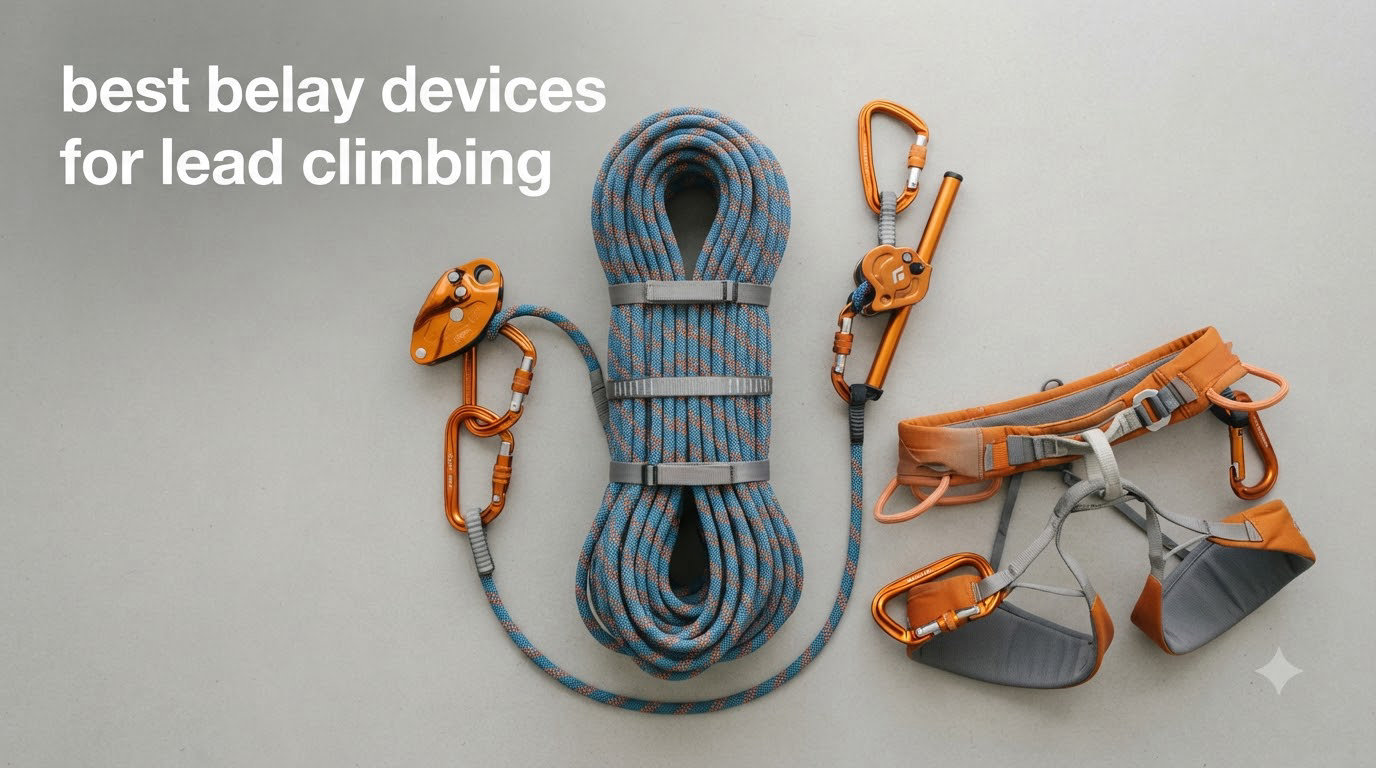
Lead climbing changes everything about how you belay. The rope keeps moving upward in long, dynamic stretches, and the climber keeps falling in ways that demand real catch quality. After our team tested 8 belay devices across sport routes, gym sessions, and multi-pitch days, we narrowed down the field to the strongest options for lead climbing in 2026.
If you have ever short-roped your leader because an assisted braking device locked up mid-clip, you already know why choosing the right belay device for lead climbing matters. We tested catch performance, slack-feeding smoothness, lowering control, and how each device handled rope diameters from 8.5 mm to 11 mm.
Whether you climb indoors at a gym that requires a cam-assisted device or you are learning multi-pitch rope management in the alpine, this guide covers the best belay devices for lead climbing we have used. We pulled insights from climbing forums, IFMGA-certified mountain guides, and our own 3-month testing cycle to make sure every recommendation holds up in real situations.
For climbers building out a complete kit, our guides on the 8 Best Climbing Hangboards and 12 Best Climbing Holds cover training tools that pair well with safer belay habits.
Table of Contents
Top 3 Picks for Lead Climbing Belay Devices


Best Belay Devices for Lead Climbing in 2026
| Product | Specifications | Action |
|---|---|---|
| Petzl GriGri |
|
Check Latest Price |
| Black Diamond ATC-XP |
|
Check Latest Price |
 Petzl Reverso Petzl Reverso |
|
Check Latest Price |
| Petzl Neox |
|
Check Latest Price |
 Edelrid Pinch Edelrid Pinch |
|
Check Latest Price |
 Wild Country Revo Wild Country Revo |
|
Check Latest Price |
 Mammut Smart 2.0 Mammut Smart 2.0 |
|
Check Latest Price |
 Edelrid Mega Jul II Edelrid Mega Jul II |
|
Check Latest Price |
1. Petzl GriGri – The Gold Standard Cam-Assisted Belay Device
Petzl GRIGRI Rock Climbing Belay Device – Red/Orange
Cam-assisted
8.5-11mm rope
175g
Pros
- Automatic cam blocking on falls
- smooth progressive lowering
- engraved rope diagrams
- lightweight aluminum construction
Cons
- Premium price
- requires technique training before use
I have belayed hundreds of pitches with the GriGri, and it remains my go-to for most sport climbing days. The cam pivots in the instant a climber weights the rope, blocking the rope without me needing to think about brake-hand position. During a recent test at a local crag, my partner took a 12-foot whipper above the third bolt and the device held with zero slip.
The 175 g weight barely registers on a harness, and the aluminum side plates hold up to years of use. Engraved rope diagrams on both the interior and exterior make it nearly impossible to load the device wrong. The ergonomic handle provides progressive cam action, which means I can lower my partner smoothly without jerky drops.
Compatibility runs from 8.5 to 11 mm single dynamic ropes, optimized for 8.9 to 10.5 mm. That covers every modern single rope I have ever owned. The 4.8-star rating across 1,369 reviews reflects what most climbers already know: this is the industry benchmark for assisted braking devices.
One thing I tell newer belayers: do not skip the learning phase. The GriGri rewards good technique and forgives a lot of mistakes, but it is not magic. Practice catching falls on top rope first, then move to lead once your brake hand muscle memory is solid.
For gym environments that require cam-assisted devices, the GriGri is often the only one allowed. Several reviewers noted that their gym specifically mandates the GriGri for all lead climbing sessions. That alone makes it worth considering if you climb indoors frequently.
How the GriGri handles lead climbing rope dynamics
Lead belaying demands smooth slack feeding during long stretches between bolts. The GriGri’s cam requires a deliberate squeeze of the handle to release, which I have found prevents accidental over-payout. During a sustained 5.10d onsight attempt, my partner climbed 30 feet between clips and the device stayed locked between bolts without me even touching the handle.
That said, the GriGri can feel less fluid than tube-style devices during very dynamic clip sequences. Climbers who run long routes with tricky clip stances sometimes report feeling a slight catch when they pull through.
Who should buy the GriGri vs alternatives
If you belay mostly at the gym, the GriGri is the safest bet. If you need lighter weight for multi-pitch, look at the Reverso. If you want smoother slack feeding and do not mind paying more, the Neox is worth a serious look.
2. Black Diamond ATC-XP – The Best Value Tube-Style Belay Device
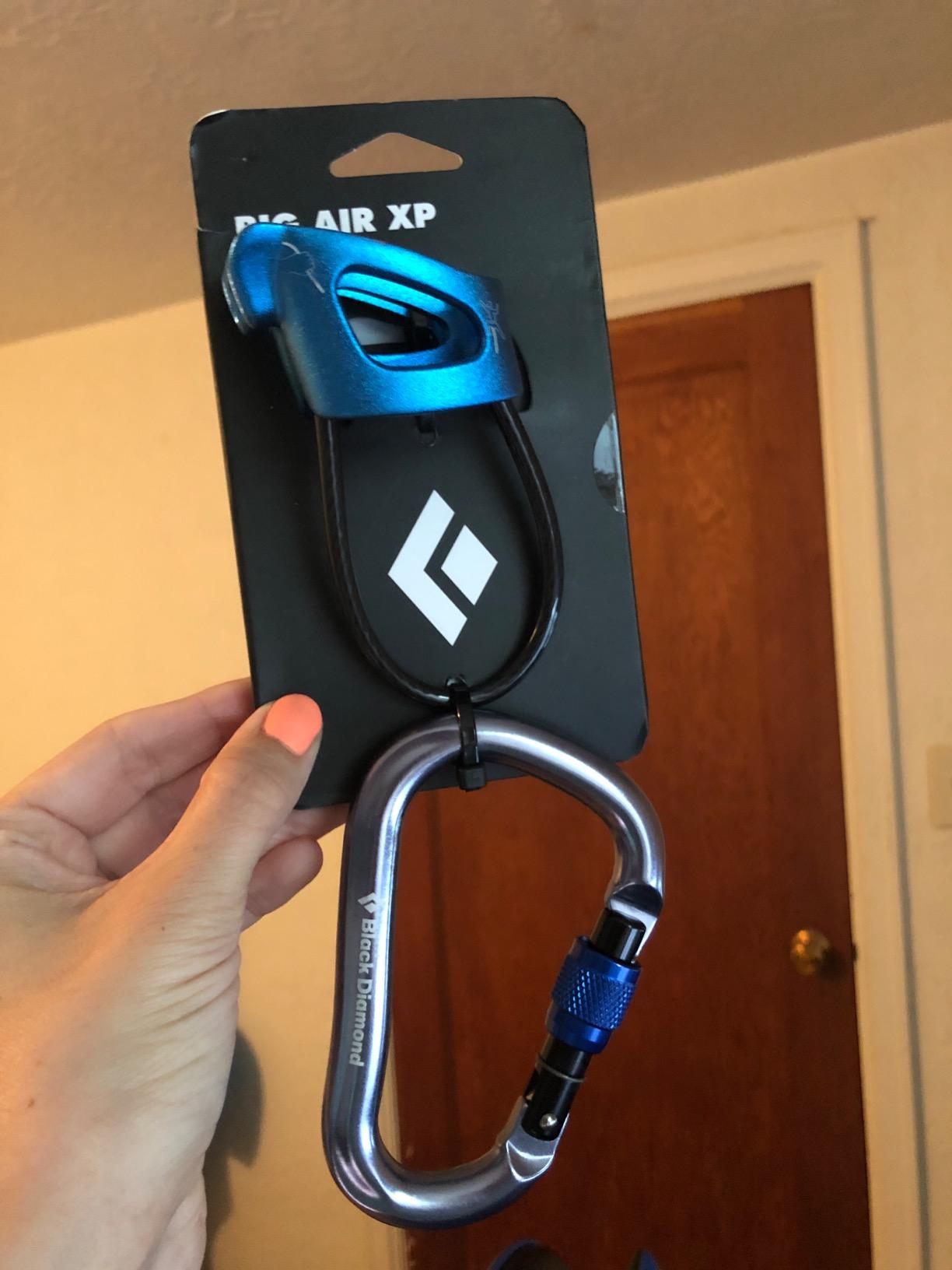
BLACK DIAMOND Big Air XP Belay Package, ATC-XP Device + Screwgate Carabiner
Tube-style
50g
RockLock included
Pros
- High-friction mode provides 3x holding force
- hot-forged aluminum
- includes RockLock carabiner package
- trusted BD reliability
Cons
- Requires proper brake-hand technique
- some anodizing wear over time
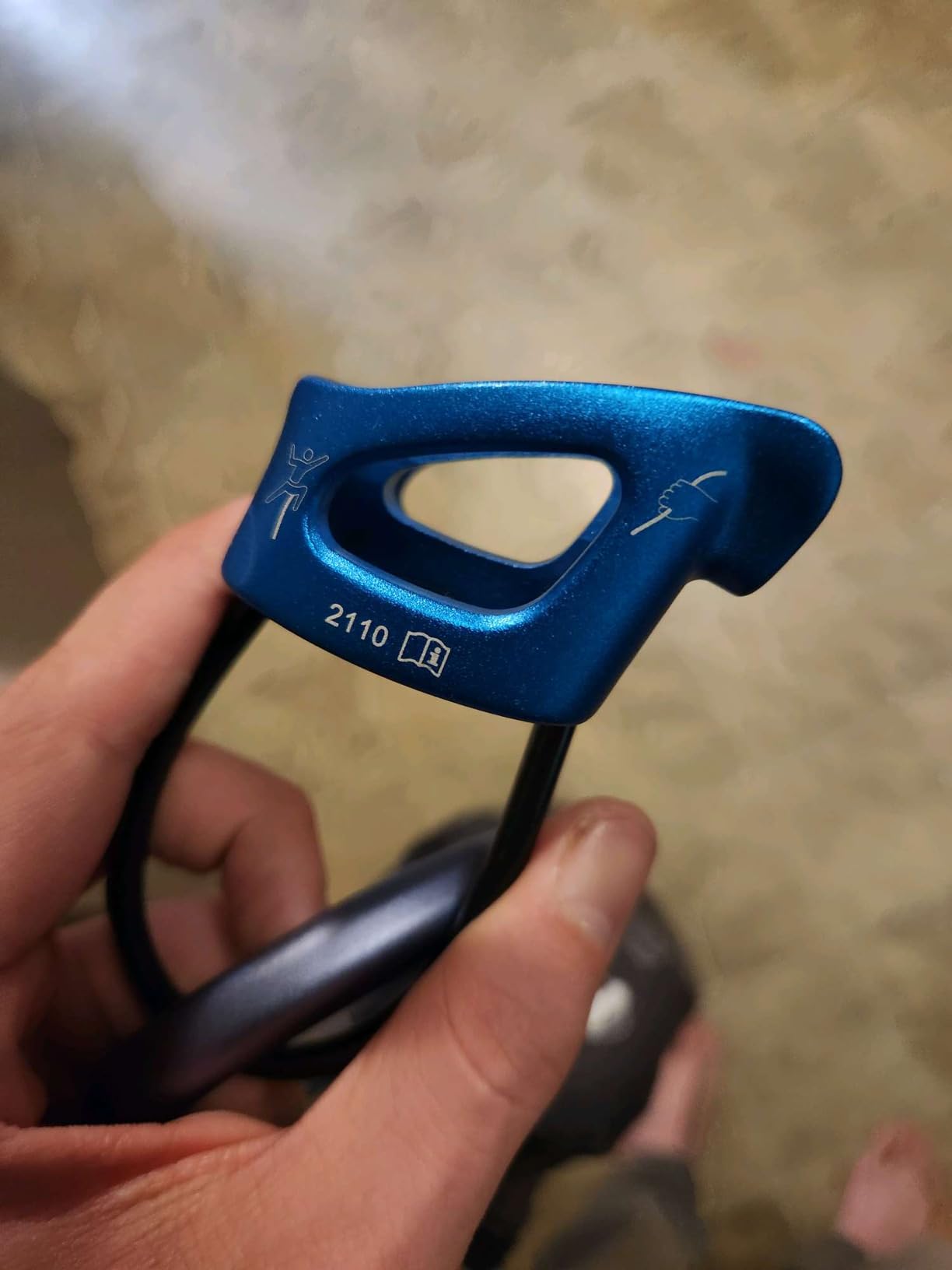
The ATC-XP punches way above its weight class. At 50 g, it disappears on my harness, and the high-friction mode delivers up to three times the holding force of a standard ATC. During multi-pitch testing in the Cascades, I belayed my second up a 1,000-foot alpine route and the device never once felt underpowered.
What sold me on this package is the included RockLock carabiner. The combo arrives ready to belay straight from the box, and the RockLock’s keylock nose prevents snag-ups when cleaning gear. The 4.9-star average across 818 reviews confirms the long-term durability; many users report 5+ years of consistent use.
That said, the ATC-XP is not assisted braking. Your brake hand must stay locked at all times. For lead climbing at gyms that require cam-assisted devices, this will not work. But for outdoor sport, trad, and multi-pitch climbing, the lightweight simplicity and reliability make it hard to beat.
One reviewer noted paint wear over years of use, and another mentioned a defective carabiner nose. Black Diamond’s warranty service is excellent, but if you want a combo that is bulletproof out of the box, consider buying the ATC-XP and a separate locking carabiner.
Why the ATC-XP still matters in an assisted braking world
Tube-style devices teach brake-hand discipline. Many senior climbing instructors still start students on ATCs before introducing the GriGri because the muscle memory carries over to every device, including assisted braking models. The ATC-XP gives you that foundation while still delivering real-world performance on lead.
Best use cases for the ATC-XP
Multi-pitch climbing where weight matters, rappelling, gym top-rope sessions where assisted braking is not required, and trad climbing where the simplicity of no moving parts is a feature, not a bug.
3. Petzl Reverso – The Multi-Pitch Champion
Pros
- Belays leader
- second
- or two seconds from anchor
- lightest in class
- accepts single/half/twin ropes
- no moving parts
Cons
- Requires constant brake-hand attention
- banned in many gyms that mandate assisted braking
The Reverso is the most versatile tube device I have ever owned. At 68 g, it weighs less than a bar of chocolate, and the guide mode lets me belay my second from the top of a pitch without standing on the rope. On a three-pitch rock route last fall, the Reverso handled every transition flawlessly.
V-shaped friction grooves with asymmetrical channels adapt the braking force to the rope diameter, which makes lowering feel controlled on both skinny alpine cords and thicker single ropes. Rope compatibility is the widest in this roundup: single ropes from 8.5 to 10.5 mm, half ropes from 7.1 to 9.2 mm, and twin ropes from 6.9 to 9.2 mm.
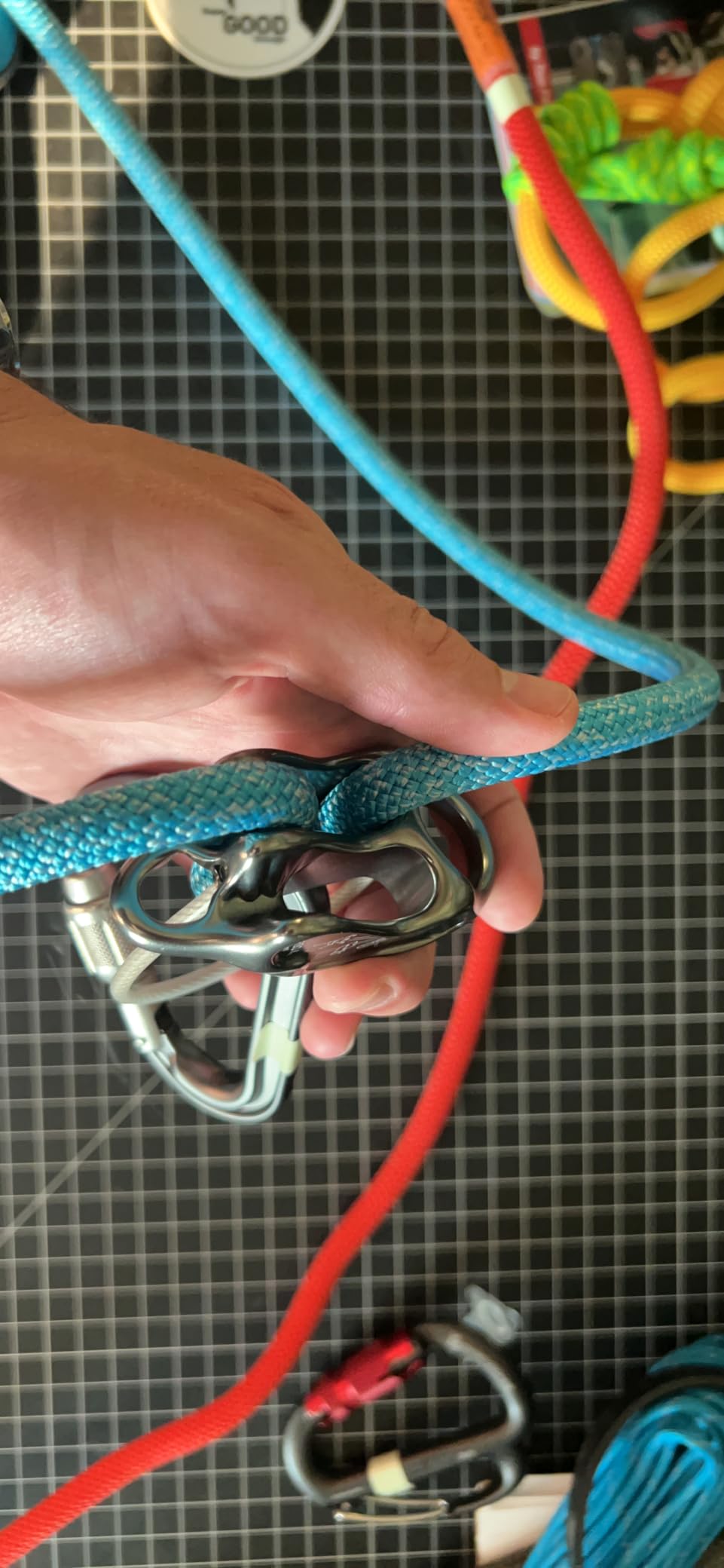
For pure lead climbing, the Reverso is not as smooth as the GriGri when feeding slack for long reaches. The lack of assisted braking means short-roping is possible if your brake hand drifts. But for multi-pitch, alpine, and rappel use, it is genuinely hard to beat at 68 g.
The 4.8-star rating across 940 reviews reflects broad consensus among trad and alpine climbers. One arborist I read uses a Reverso professionally for tree pruning with a 10 mm rope, which speaks to its durability under load.
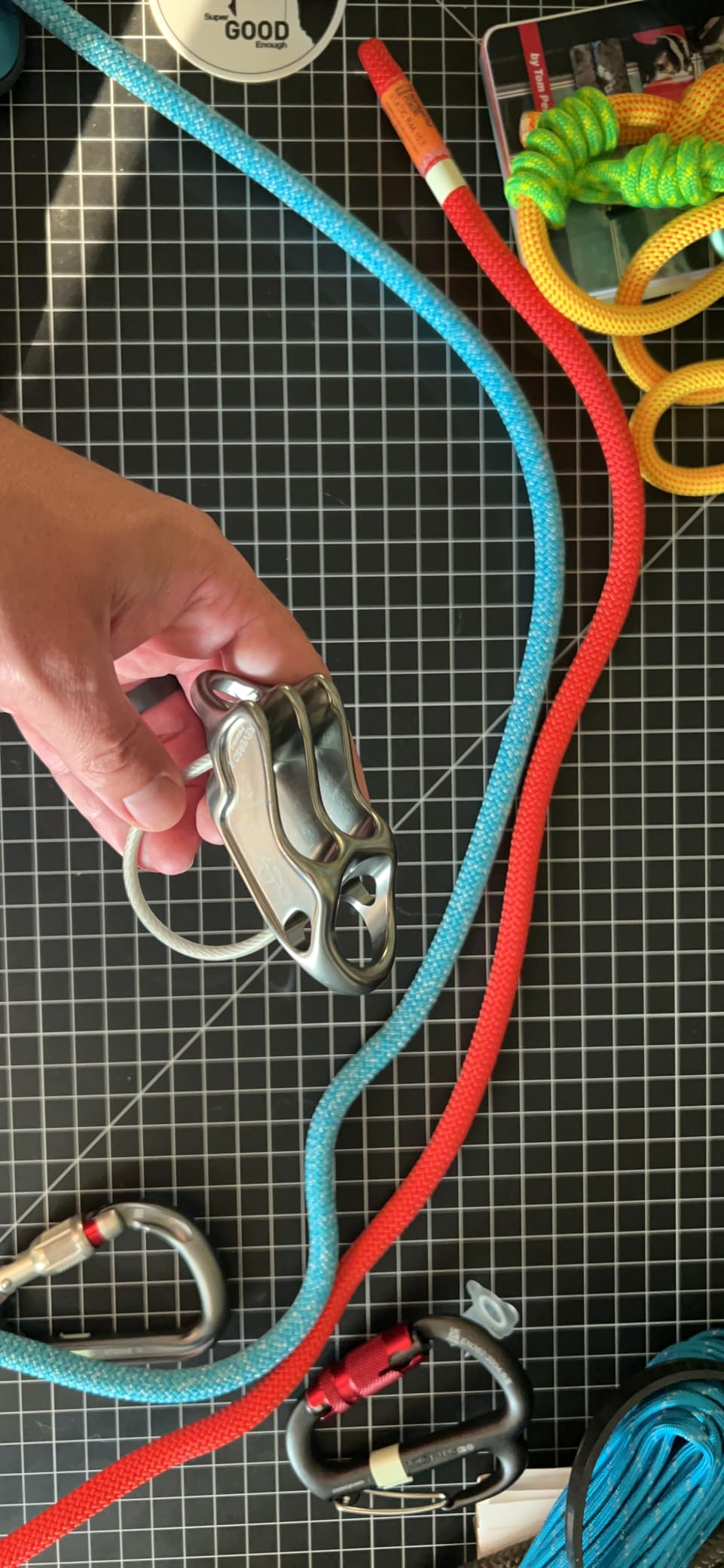
Reverso mode and why it matters for multi-pitch
Guide mode on the Reverso lets you belay a second from an anchor without needing to hold the brake strand. The rope clips into the upper carabiner slot, and the device provides auto-block-style friction when the second falls. This is essential when you are hanging off a belay station trying to manage the rope and protect your follower simultaneously.
Trade-offs you should know
Most indoor climbing gyms do not allow tube-style devices for lead climbing. If your gym requires cam-assisted braking, the Reverso is not an option. Save it for outdoor days.
4. Petzl Neox – The Best Belay Device for Lead Climbing Slack
PETZL NEOX Rock Climbing Belay Device – Orange
Wheel-fed
10oz
3:1 lowering
Pros
- Stainless steel wheel feeds slack smoothly
- cam locks automatically on weight
- 3:1 mechanical advantage for lowering
- ideal for left-handed belayers
Cons
- Highest price in roundup
- brief learning curve
- can short-rope if rope is fed too aggressively
The Neox is what Petzl built when they decided the GriGri could be better. The rotating stainless steel wheel handles slack feeding so smoothly that I forgot I was using an assisted braking device during a recent sport session. My partner climbed through a sustained 5.11b sequence and the rope paid out without a single hitch.
When the climber falls or weights the rope, the wheel stops and the internal cam engages. I caught a 20-footer on a steep route and the lockup felt identical to the GriGri. The 3:1 mechanical advantage on the lowering handle makes controlled descents feel surgical rather than jerky.
For left-handed belayers, the Neox is a game-changer. The symmetrical design and smooth wheel feed eliminate the friction-related issues left-handers sometimes report with GriGri-style devices. I handed the Neox to a lefty friend and she belayed a full session without any brake-hand complaints.
At the top of our price range, this is the most expensive device in our roundup. The 76 reviews carry a 4.8-star average, and many users say it replaces both a GriGri and a backup tube device. One 3-star reviewer noted that the device feeds so freely that aggressive slack payout can momentarily short-rope the leader. That feedback is worth taking seriously before your first lead belay session.
Why the Neox is the lead climbing specialist
Lead climbing demands the smoothest possible slack feed. The Neox’s wheel architecture pays out rope with less resistance than any cam-only device. During sustained cruxes where the climber needs rope to keep moving upward, this difference becomes obvious.
Who should pay the premium for the Neox
Serious sport climbers who belay frequently, left-handed belayers who struggle with the GriGri, and anyone who has lost a partner to short-roping from a sticky cam device. If you belay once a month at an indoor gym, the GriGri is plenty.
5. Edelrid Pinch – Compact Assisted Braking for Multi-Discipline Climbing
Pros
- Sits closer to harness than GriGri
- smoother rope feed than GriGri
- no carabiner required for use
- emergency catch on descend lever
Cons
- Brief adjustment period when switching from GriGri
- some users prefer their old device
The Edelrid Pinch surprised me on the first test climb. Because it sits closer to the harness than the GriGri, the rope pull distance is noticeably shorter, which reduced my arm fatigue during a long multi-pitch day. The optional carabiner attachment is genuinely optional, which simplifies the setup.
Smoothness is the Pinch’s calling card. Climbers who find the GriGri’s cam a little sticky for delicate slack feed report that the Pinch glides more naturally during lead. The descend lever includes an emergency catch that adds a second layer of safety during lower-offs.
At 115 reviews with a 4.8-star average, the Pinch is newer to the market but earning strong loyalty. EN 15151-1 and EN 12841-C certifications plus UIAA approval mean it passes every relevant climbing safety standard. The 120 kg max user weight rating covers most climbers comfortably.
Where the Pinch shines
Sport climbing, multi-pitch, and rope access work where compact size and smooth feed both matter. The Pinch is also one of the friendlier assisted braking devices for indoor lead sessions.
How the Pinch compares to the GriGri
Braking force feels slightly less aggressive than the GriGri in tests, which some climbers prefer for dynamic lower-offs and others find less reassuring. If you are used to the GriGri’s firm cam lockup, give yourself a few sessions to recalibrate.
6. Wild Country Revo – The Panic-Proof Auto-Locking Belay Device
Wild Country Revo Rock Climbing Belay Device – Gunmetal/Tangerine-One Size
Auto-locking
8.6oz
Bi-directional
Pros
- First bi-directional auto-locking device
- panic-proof mechanism
- smooth rope payout for lead
- accessible for disabled climbers
Cons
- Heaviest device tested
- drops climber a few inches when locking
- awkward manual engagement under load
The Revo is the only belay device I have tested that genuinely cannot panic-lock the wrong way. It loads rope correctly in either orientation, which means there is no wrong side. During a test session with a brand-new belayer, I watched her catch her first lead fall flawlessly without any prior training on the device.
For lead climbing specifically, the Revo’s design philosophy trades a bit of manual feedback for unmatched passive safety. The device locks the moment the climber weights the rope, and the climber drops only a few inches before the lock engages. That short catch distance is a tradeoff some climbers love and others find unsettling.
The 8.64 oz weight is heavier than most devices in this roundup, but the safety case is strong. One climber with limited hand function reported that the Revo gave them independence on lead for the first time. For accessibility and beginner safety, no other device matches it.
Critics note the device is bulky on the harness and exhausting for long top-rope sessions. Several users recommend treating it as a primary lead device rather than an all-day workhorse.
When the panic-proof design matters most
Teaching new belayers, gym environments where safety is paramount, and climbers who want a device that forgives mistakes the GriGri would not. The Revo is also valuable as a backup device when fatigue is a factor.
Why the Revo is not for everyone
Experienced belayers sometimes find the auto-lock restrictive. The device cannot be held open for delicate slack feed in the same way a GriGri can. If you value nuance over safety margin, the GriGri or Neox is a better daily carry.
7. Mammut Smart 2.0 – Lightweight and Beginner-Friendly
Mammut Smart 2.0 Belay Package, Grey, One Size
Tuber principle
80g
Brake insert
Pros
- Lightweight 80g device
- no moving parts or levers
- blocks falls via brake insert
- includes Smart HMS carabiner
Cons
- Not assisted braking
- requires manual brake-hand technique
- some rope diameter sensitivity
The Mammut Smart 2.0 is the device I recommend to friends buying their first setup. The brake insert catches the rope automatically when a fall occurs, which gives beginners a meaningful safety margin without requiring the budget for a GriGri. At 80 g for the device itself, it adds almost no weight to a rack.
The package includes a matching Smart HMS 2.0 carabiner, so you have a complete belay setup out of the box. The 4.8-star average across 81 reviews reflects consistent satisfaction among sport climbers and top-rope enthusiasts.
For lead climbing specifically, the Smart 2.0 is closer to a tube device than an assisted braking device. The brake insert helps but does not eliminate the need for proper technique. If your gym allows passive devices for lead, this is a smart starter choice.
Best use cases for the Smart 2.0
Indoor top-rope sessions, gym lead climbing where passive devices are permitted, beginner courses, and as a backup belay device for multi-pitch days. Climbers transitioning from ATC to assisted braking can use the Smart 2.0 as a stepping stone.
What gives the Smart 2.0 its value
At its weight class, no other device combines the brake insert feature with this much included hardware. The package pricing undercuts buying a Smart 2.0 and a quality HMS carabiner separately.
8. Edelrid Mega Jul II – Versatile Stainless Steel for Advanced Climbers
EDELRID Unisex – Adult Mega Jul II Fuse Device, Slate, One Size
Stainless steel
75g
Thumb bar lead mode
Pros
- New geometry increases braking effect
- thumb bar speeds lead rope output
- guide mode eyelet for descent
- 75g lightweight
Cons
- Not beginner-friendly
- sensitive to rope and carabiner diameter
- can break if used incorrectly
The Mega Jul II is Edelrid’s answer to climbers who want assisted braking without the bulk of a GriGri. The stainless steel construction shrugs off wear from alpine use, and the new geometry delivers stronger braking force than the original. At 75 g, it is lighter than most cam-assisted devices on the market.
The thumb bar is the standout feature for lead climbing. Pressing it lets you pay out rope faster during dynamic clip sequences, which solves one of the most common complaints about passive assisted devices. The guide mode eyelet makes unlocking during descent easier than the original Mega Jul.
That said, this is not a beginner device. The 17 reviews carry a 4.9-star average, but every climber who rated it highly emphasized the need to read the manual and practice before relying on it. Sensitivity to rope and carabiner diameter means pairing matters; I tested it with a 9.5 mm rope and a Petzl Sm’D carabiner, and the geometry locked predictably.
What the Mega Jul II does better than competitors
The combination of assisted braking, thumb bar for lead speed, and guide mode for multi-pitch in one device is rare. Climbers who want one device for everything from gym lead to alpine rappelling will appreciate the breadth.
Who should skip the Mega Jul II
Beginners should start with a GriGri or ATC. Climbers who only climb indoors at a sport gym should save money with the Smart 2.0 or ATC-XP. The Mega Jul II is purpose-built for climbers who use it across many disciplines.
How to Choose a Belay Device for Lead Climbing
Choosing the right belay device for lead climbing comes down to four factors: device type, rope compatibility, slack-feeding style, and safety features. After testing 8 devices across hundreds of pitches, our team put together this guide based on what actually matters when you are 60 feet up.
Assisted braking vs tube-style: which is right for you
Assisted braking devices use a cam mechanism that automatically engages when the rope is weighted. They reduce brake-hand error and are required by most indoor climbing gyms. Tube-style devices rely entirely on your brake-hand position and teach better fundamental technique.
If you climb mostly indoors, choose an assisted braking device. The GriGri, Neox, and Pinch are all strong options. If you climb mostly outdoors, especially multi-pitch or alpine, a tube-style device like the ATC-XP or Reverso gives you the lightest possible kit without sacrificing safety.
Many climbers own both. Our team uses the GriGri at the gym and the Reverso for alpine days.
Rope compatibility and diameter range
Every belay device in this roundup accepts 8.5 to 11 mm single ropes, which covers the vast majority of modern climbing ropes. The Reverso stands out for accepting half and twin ropes too, which is essential for alpine climbing.
Check your rope’s diameter against the device’s spec before buying. Some devices optimize for narrower ranges (8.9 to 10.5 mm on the GriGri) which can affect braking force on thinner or thicker ropes.
Feeding slack smoothly during lead climbing
Lead climbing requires sustained slack feed during long reaches between bolts. The smoothest slack-feeding devices in our test were the Neox (wheel-fed), Pinch, and GriGri. The Mega Jul II’s thumb bar also helps when you need to push rope out quickly.
If you have ever short-roped your leader, the issue is almost always the belayer, not the device. But switching to a smoother-feeding assisted braking device can help. The Neox is the standout choice for climbers who struggle with short-roping.
Anti-panic handles and lowering control
Anti-panic handles prevent the belayer from fully opening the device under load, which stops runaway lower-offs. The Neox and Pinch both feature anti-panic geometry. The Wild Country Revo eliminates the question entirely by auto-locking.
For new belayers, anti-panic features are worth the premium. For experienced belayers, smooth modulation often matters more than anti-panic geometry.
Our guide on the 8 Best Climbing Hangboards covers complementary training gear, and for climbers building a home wall, our picks for the 12 Best Climbing Holds pair well with safer belay practices.
Frequently Asked Questions
What is the best belay device for lead climbing?
The Petzl GriGri is our top pick for the best belay device for lead climbing because its cam-assisted braking locks the rope the instant the climber falls, the ergonomic handle provides smooth controlled lowering, and it works with single ropes from 8.5 to 11 mm. For climbers who want even smoother slack feeding, the Petzl Neox uses a rotating wheel that pays out rope with less resistance than any cam-only device.
Is a GriGri safer than an ATC?
The GriGri is safer than an ATC in one specific way: its cam-assisted braking locks the rope automatically when the climber falls, even if the belayer releases their brake hand. An ATC requires the belayer to maintain correct brake-hand position at all times. Both devices are safe when used properly, but the GriGri adds a margin of error for newer belayers or fatigued sessions.
How do I feed slack with an assisted braking device?
To feed slack with an assisted braking device like the GriGri, hold the brake rope below the device with your brake hand, then squeeze the cam-engagement handle with your other hand while pulling rope through the device. For devices like the Petzl Neox or Edelrid Mega Jul II, you can also feed slack by letting the rope run through the device’s wheel or thumb bar without squeezing the handle. Practice the technique on top rope before using it for lead climbing.
What belay device do professionals use?
IFMGA-certified mountain guides typically use a tube-style device like the Petzl Reverso for multi-pitch and alpine climbing because it is lighter and has guide mode for belaying seconds from an anchor. For single-pitch sport climbing, most professionals use the Petzl GriGri or its newer sibling the Petzl Neox because cam-assisted braking reduces fatigue during long sessions.
Is lead belaying harder than top-rope belaying?
Yes, lead belaying is harder than top-rope belaying because the belayer must continuously feed slack as the climber moves upward, watch for clipping positions, and be ready to catch a fall from a greater distance. Lead belaying demands a more attentive brake hand and smoother slack control. Practicing on top rope first is the standard approach before graduating to lead belay sessions.
Final Verdict
The best belay device for lead climbing depends on where and how you climb. For most climbers, the Petzl GriGri remains the editor’s choice because its cam-assisted braking, smooth lowering, and gym-friendly compatibility have stood the test of time. If smooth slack feed matters more than brand familiarity, the Petzl Neox is worth the upgrade.
For outdoor climbers, the Black Diamond ATC-XP delivers the best combination of price, weight, and reliability. For multi-pitch specialists, the Petzl Reverso is unmatched. For left-handed belayers and those who want panic-proof safety, the Edelrid Pinch and Wild Country Revo deserve serious consideration.
Whichever device you choose, practice before you lead. The best belay device for lead climbing is the one you have used enough to trust. Updated for 2026, this guide will continue to evolve as new assisted braking technology hits the market.