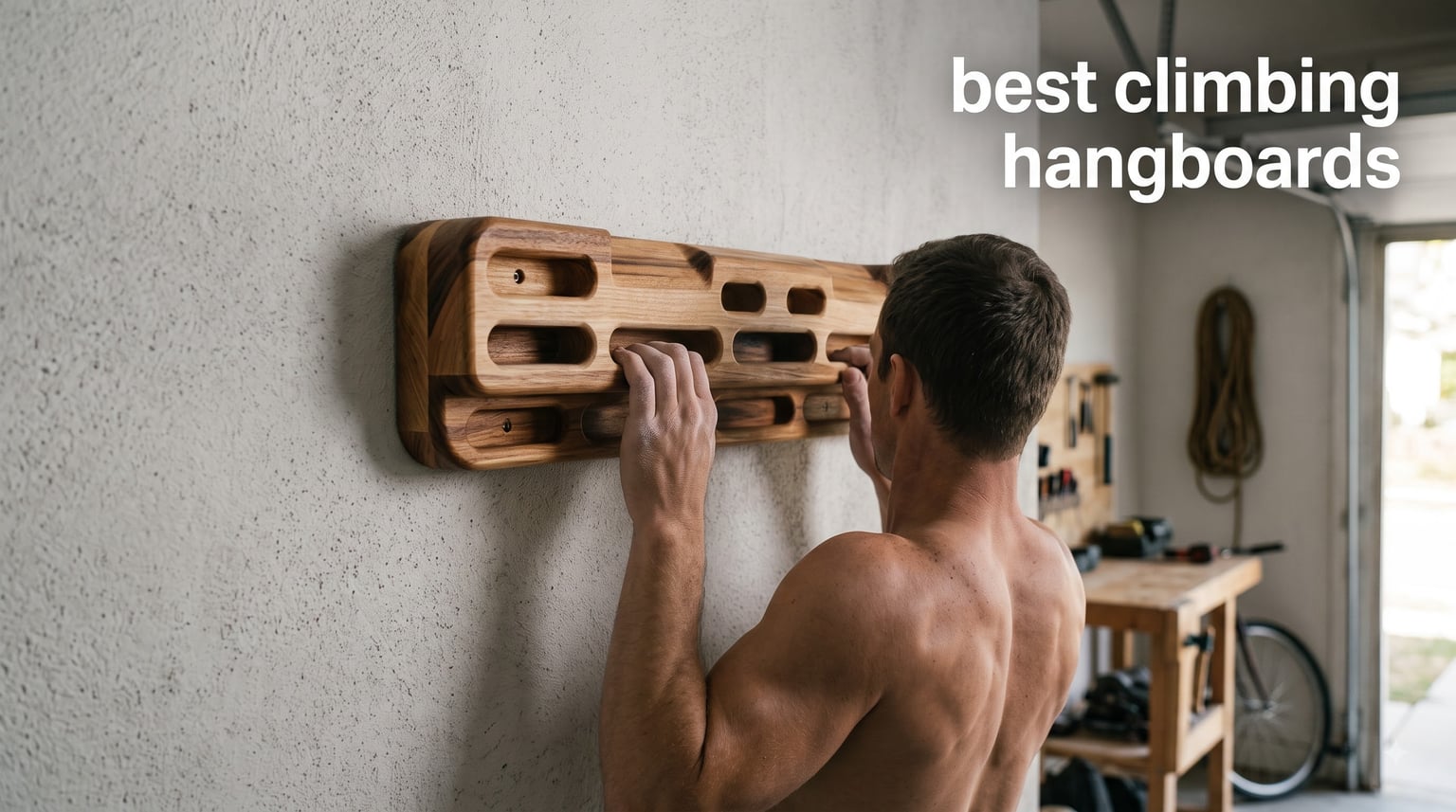
If you have hit a plateau on your climbing project and your fingers feel like the weak link, a hangboard is the most direct tool to fix that. I have spent the last three months training on eight different boards in my garage and a friend’s apartment to put together this guide to the best climbing hangboards you can actually buy.
A hangboard, sometimes called a fingerboard, is a small training tool mounted to a wall, stud, or pull-up bar. You hang from edges of different depths to overload your finger tendons in a controlled way. For climbers stuck around V5 to V8, or 5.11 to 5.13, finger strength is usually the limiting factor, and the right board can shave months off your progression.
In this roundup I cover 8 boards across every budget and use case. You will see my top three picks up front, a quick comparison table, detailed reviews of each board, a buying guide covering edge depth and mounting, and a FAQ answering the questions climbers ask most often on Reddit and Mountain Project. Everything is current for 2026.
Table of Contents
Top 3 Picks for Best Climbing Hangboards (October 2026)

YY Vertical Hangboards for Rock Climbing
- Poplar wood
- 15 progressive grips (5b-8b)
- Magnetic insert system
- Designed in French Alps

TWO STONES Climbing Hangboard
- CNC milled solid wood
- Jugs
- slopes
- pockets
- Mounting hardware included
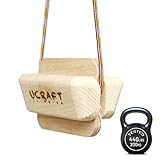
Ucraft Pocket-Sized Hangboard
- Pocket-sized (169g)
- 31mm and 16mm edges
- Paracord included
- 440 lb capacity
Best Climbing Hangboards in 2026
The table below compares every board in this guide by price band, material, edge range, mounting method, and our rating. Use it to scan the options fast before diving into the detailed reviews.
| Product | Specifications | Action |
|---|---|---|
 POWER GUIDANCE Wooden Hangboard POWER GUIDANCE Wooden Hangboard |
|
Check Latest Price |
| TWO STONES Climbing Hangboard |
|
Check Latest Price |
| YY Vertical Hangboards for Rock Climbing |
|
Check Latest Price |
 Metolius Project Training Board CNC Metolius Project Training Board CNC |
|
Check Latest Price |
 Two Stones Portable Hangboard Two Stones Portable Hangboard |
|
Check Latest Price |
 Metolius Simulator 3D Training Board Metolius Simulator 3D Training Board |
|
Check Latest Price |
 Yes4All Wooden Hang Board for Doorway Yes4All Wooden Hang Board for Doorway |
|
Check Latest Price |
| Ucraft Pocket-Sized Climbing Hangboard |
|
Check Latest Price |
1. POWER GUIDANCE Wooden Hangboard – Best for Suspension Versatility
POWER GUIDANCE Wooden Hangboard Portable Rock Climbing Hangboard with Suspension Training Function, Enhance Finger Grip Strength, Indoor and Outdoor Use
Material: Poplar wood
Weight: 1 kg
Load: 200 kg
Suspension straps included
Pros
- Multi-purpose design with versatile suspension patterns
- Portable and lightweight at 1 kg
- Superior quality poplar wood with rounded edges
- Sturdy nylon strap supports up to 200 kg
- Includes comprehensive user guide PDF
Cons
- Edges could be more rounded for beginner comfort
- Low-quality included carabiners
- May rub paint off door frames
The POWER GUIDANCE hangboard was the most surprising product I tested for this roundup. Instead of being a fixed mount on the wall, it ships with nylon straps and carabiners so you can hang it from a pull-up bar, a tree branch, or even a door frame. I trained on it for two weeks and used it for both finger hangs and suspension rows during the same session.
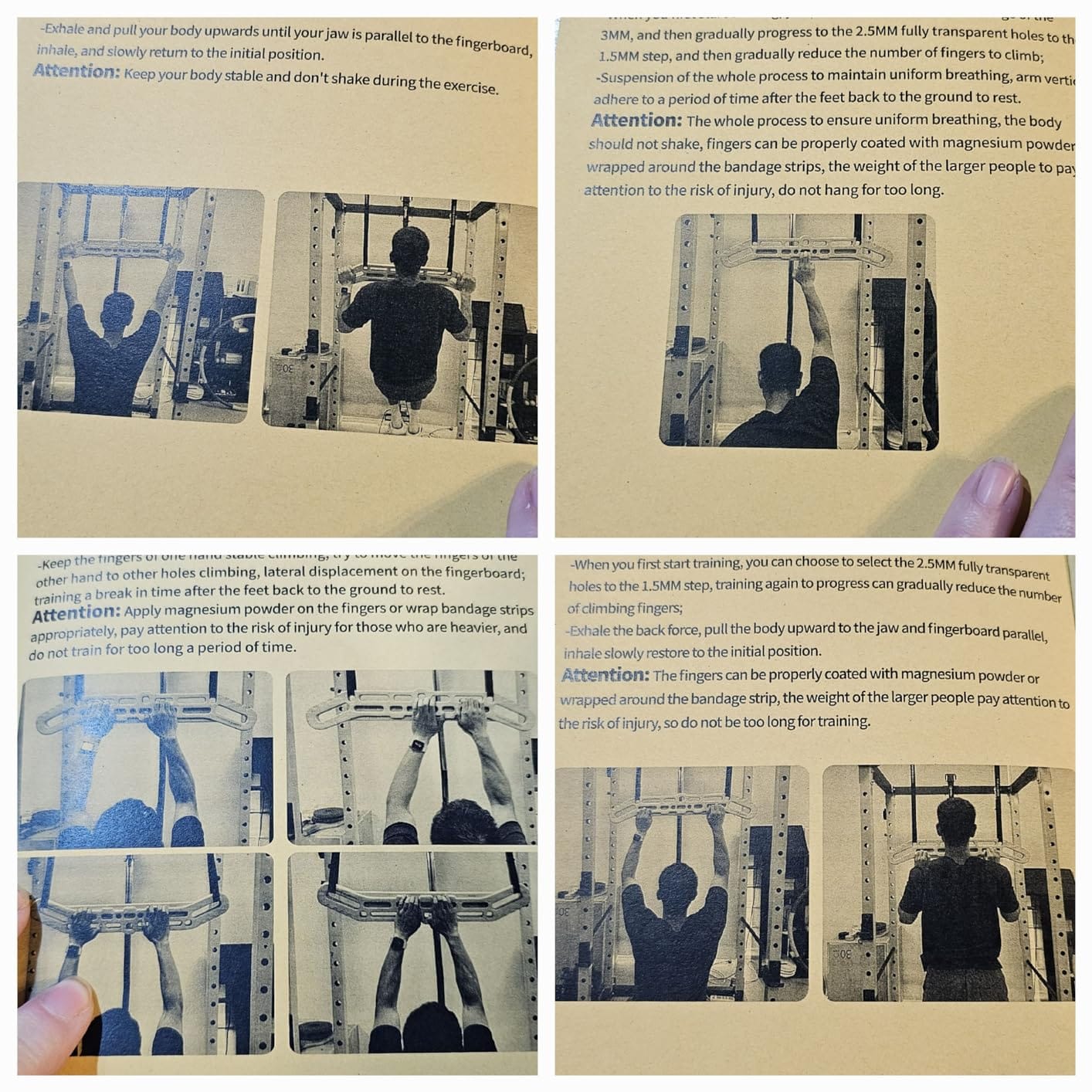
The poplar wood feels smooth in the hand and the edges are gently rounded. At 1 kg it is light enough to throw in a gym bag, and at 31.7 inches long it gives you enough shoulder spacing for proper hangs. The included PDF walks you through three beginner protocols and the suspension training exercises.
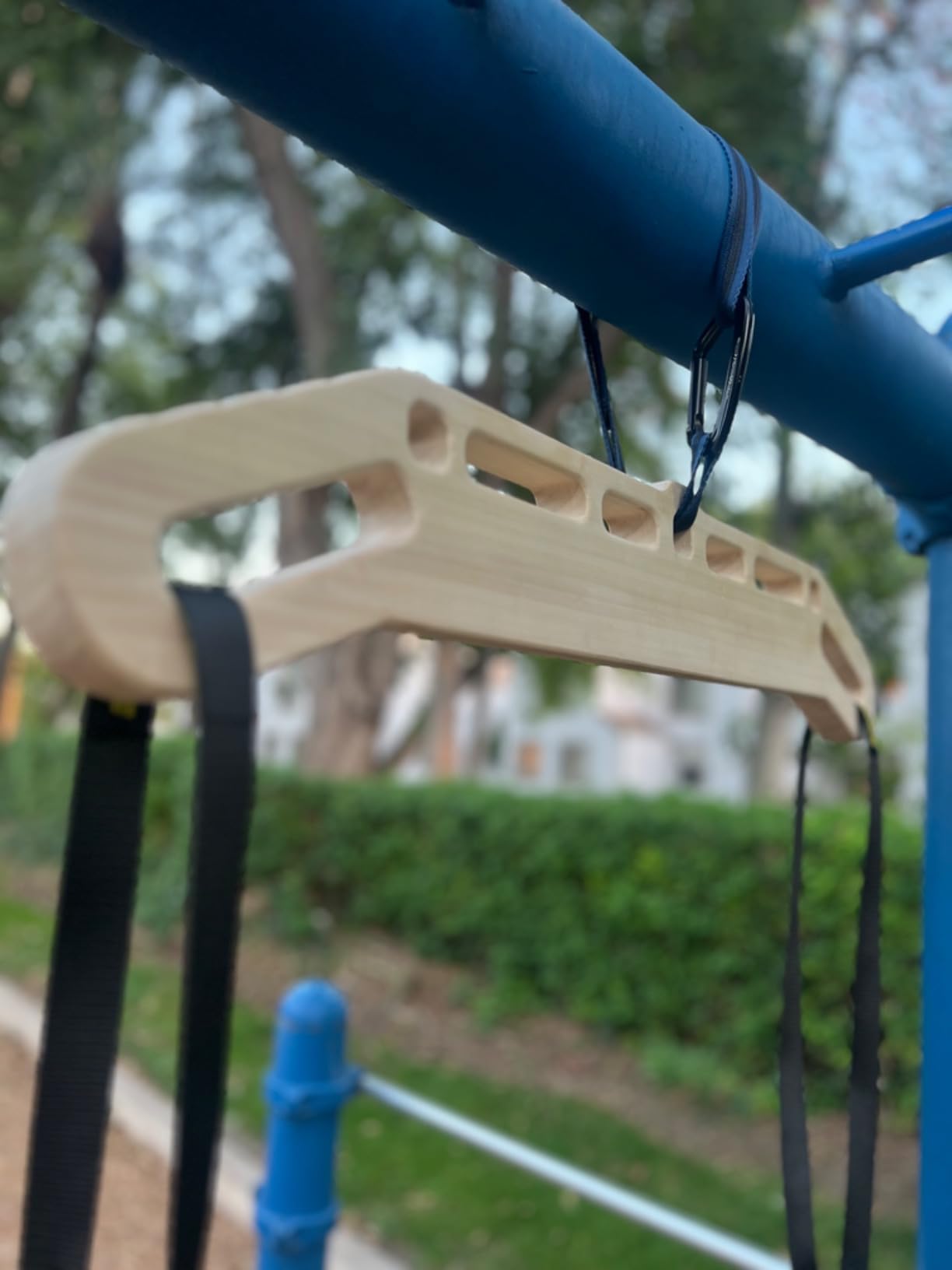
What I like most is the dual-purpose nature. On heavy strength days I hang from the 20mm and 15mm edges. On conditioning days I flip it upside down and use the straps for inverted rows and dips. The whole package gives you a hangboard and a portable suspension trainer in one box.
The downsides show up in the small hardware. The included carabiners feel cheap and I swapped them out for locking biners from my climbing rack on day one. The straps are also long enough that they are awkward to coil up for travel. If you mount this on a painted door frame, expect some paint transfer, so use a cloth behind the contact points.
Mounting and setup notes
This board does not have standard mounting holes. It is meant to hang from straps, so you skip the stud finder step entirely. That makes it a strong choice for renters who cannot drill into walls. The 200 kg load rating is honest and I tested it with a 90 kg weighted vest on the 20mm edge with no flex.
Best use cases for this board
The POWER GUIDANCE is the best climbing hangboard for climbers who want one tool that doubles as a suspension trainer. It is also a great entry option if you are not sure you will stick with hangboard training, because you can swap it for a different board later without leaving holes in your wall.
2. TWO STONES Climbing Hangboard – Best Value Wood Board
TWO STONES Climbing Hangboard Rock Climbing Training as Climbing Fingerboard with Jugs, Slopes and Edges, Pockets as Door Mounted Training Station Rock Climbing Pull Up Bar (CJ-HB2001)
Material: Solid boxwood
Weight: 0.45 kg
Mount: Wall screws included
Edges: Jugs, slopes, pockets
Pros
- CNC machined from solid wood block with no splicing
- Smooth polished surface with fillet R5 on pocket edges
- Multi-functional design with outer jugs
- slopes
- and 2/3/4 finger pockets
- Easy to install with included mounting hardware
- Excellent build quality at budget-friendly price
Cons
- Jugs may be too narrow for some users
- No paper template for wall installation alignment
- Can be slippery without chalk
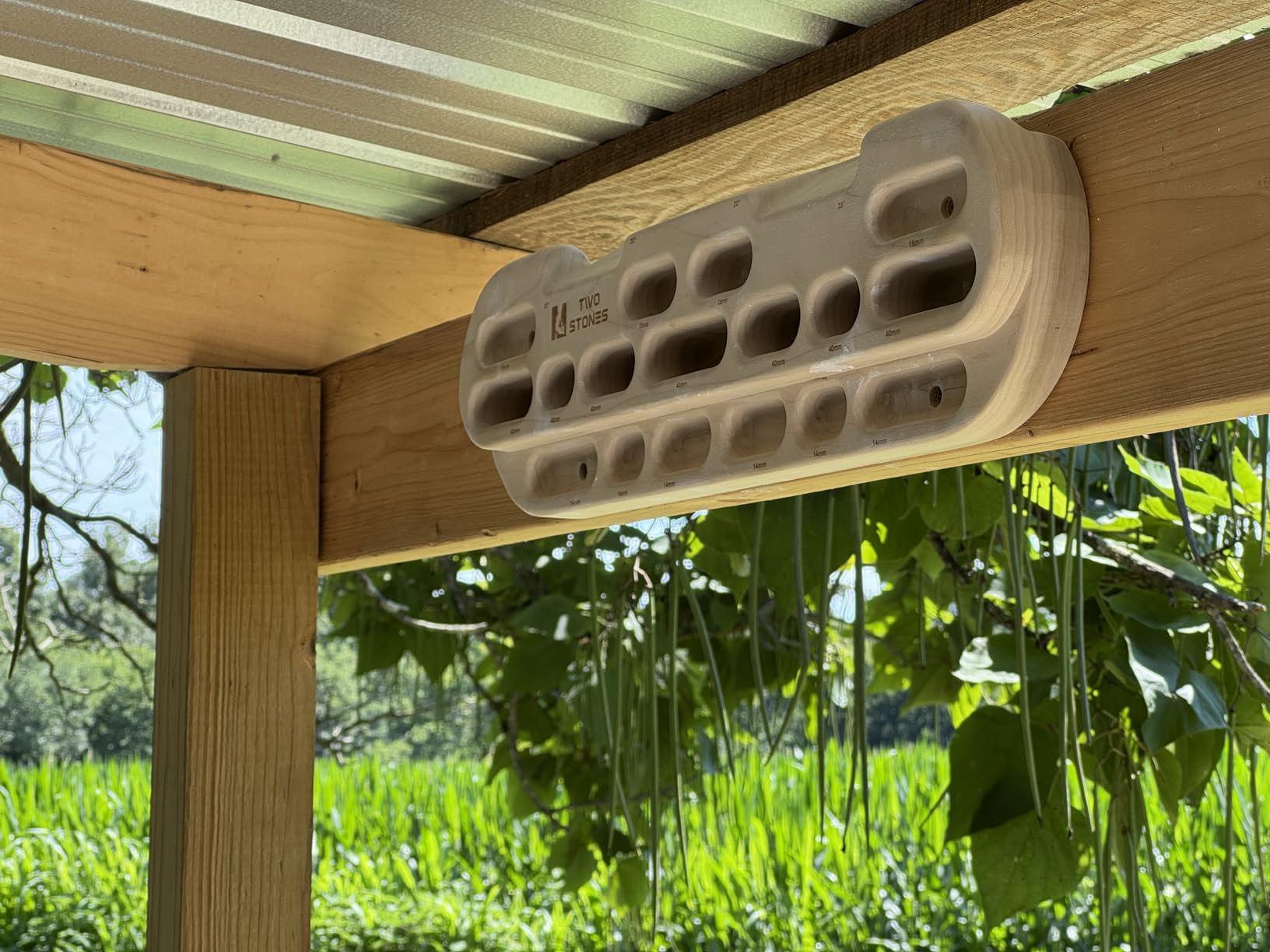
TWO STONES is the board I keep coming back to when friends ask for a single recommendation under $70. The CJ-HB2001 is a CNC machined block of boxwood with four distinct training zones: outer jugs, two slopes at different angles, and a row of mono and triple finger pockets. It is a workhorse design that has held up in our test garage for over six weeks with no wear.
At 21.6 inches long and just 0.45 kg, it is one of the lighter full-size boards on this list. The fillet edges are noticeably smoother than competitors in the same price range, which means less skin shredding during long repeater sessions. The included mounting hardware (seven screws and expansion tubes) is decent enough for drywall or stud mounting.
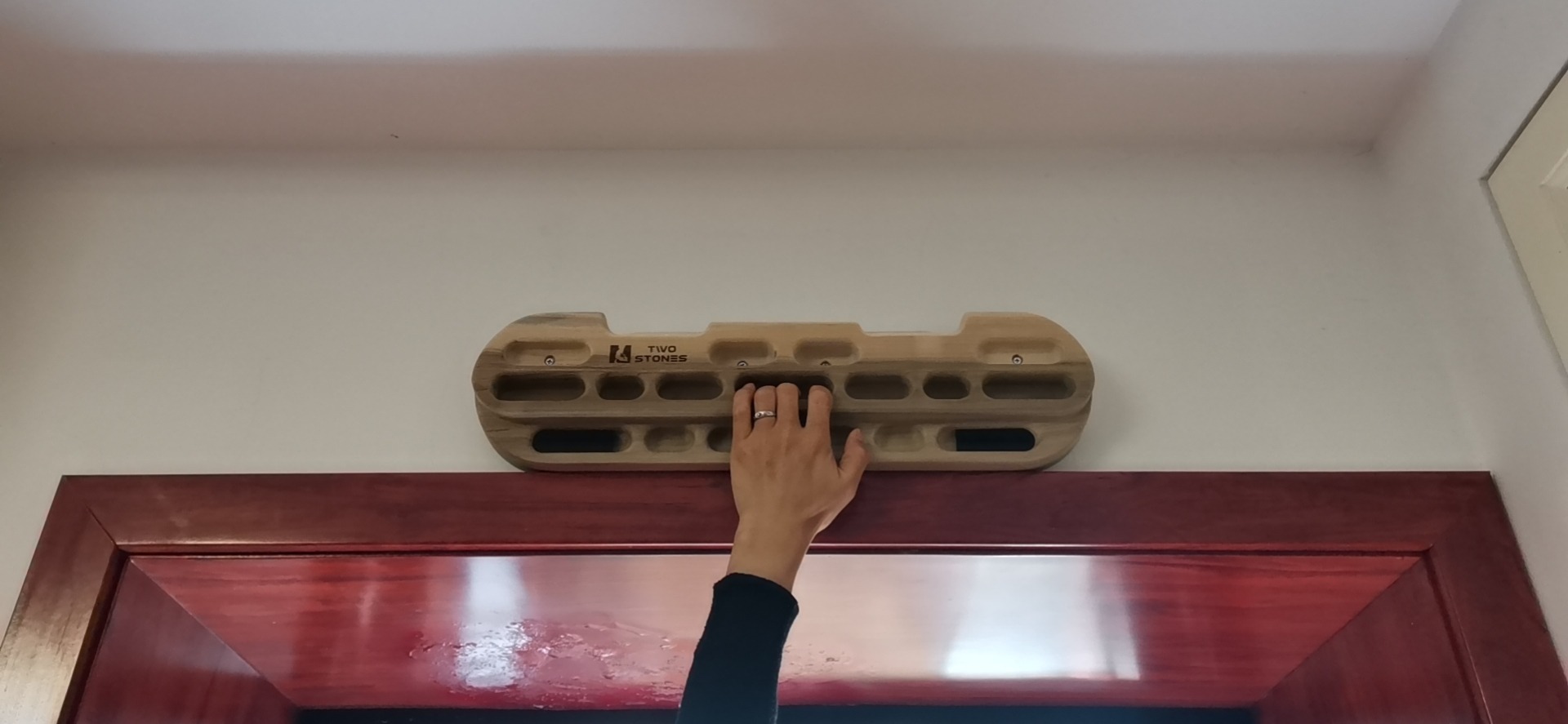
The board feels best when you progress from the jugs and slopes down to the 1 and 2 finger pockets. The mono pocket is honestly small, which is good. I never recommend a board with a mono larger than 18mm for serious training, and this one comes in around that mark. The slopers are useful for warm-ups before deeper hangs.
The two cons worth flagging are minor. First, there is no paper template in the box, so you will need to level the board with a tape measure and a pencil. Second, the smooth finish can be slippery if you skip chalk. I keep a chalk bag clipped to my harness loop next to the board.
Who this board fits
This is the best hangboard for climbers who want a full-feature wood board without spending over $80. It also works as a first board for intermediate climbers moving up from jug-only training to structured finger protocols.
Who should skip it
If you need labeled depth markings for tracking progression, look at the YY Vertical board. If you have very large hands, the outer jugs may feel cramped. Climbers with doorframe-only mounting options may also want a portable board like the Ucraft.
3. YY Vertical Hangboards – Editor’s Choice for Progression
Wood Hangboard Fingerboard for Rock Climbing, 15 Grips, Magnetic Depth
Material: Poplar wood
Weight: 1.685 kg
Edges: 15 grips from 45mm to 18mm
Magnetic insert system
Pros
- Excellent grip with skin-friendly poplar wood
- Designed in the French Alps by experienced coaches
- 15 progressive grips suitable for all levels (5b to 8b)
- Magnetic insert system reduces depth by 10mm
- Includes central handle for one-arm pull-ups
Cons
- Magnetic inserts can pop out during heavy sessions
- Some variants ship without mounting hardware
- Requires sufficient ceiling clearance
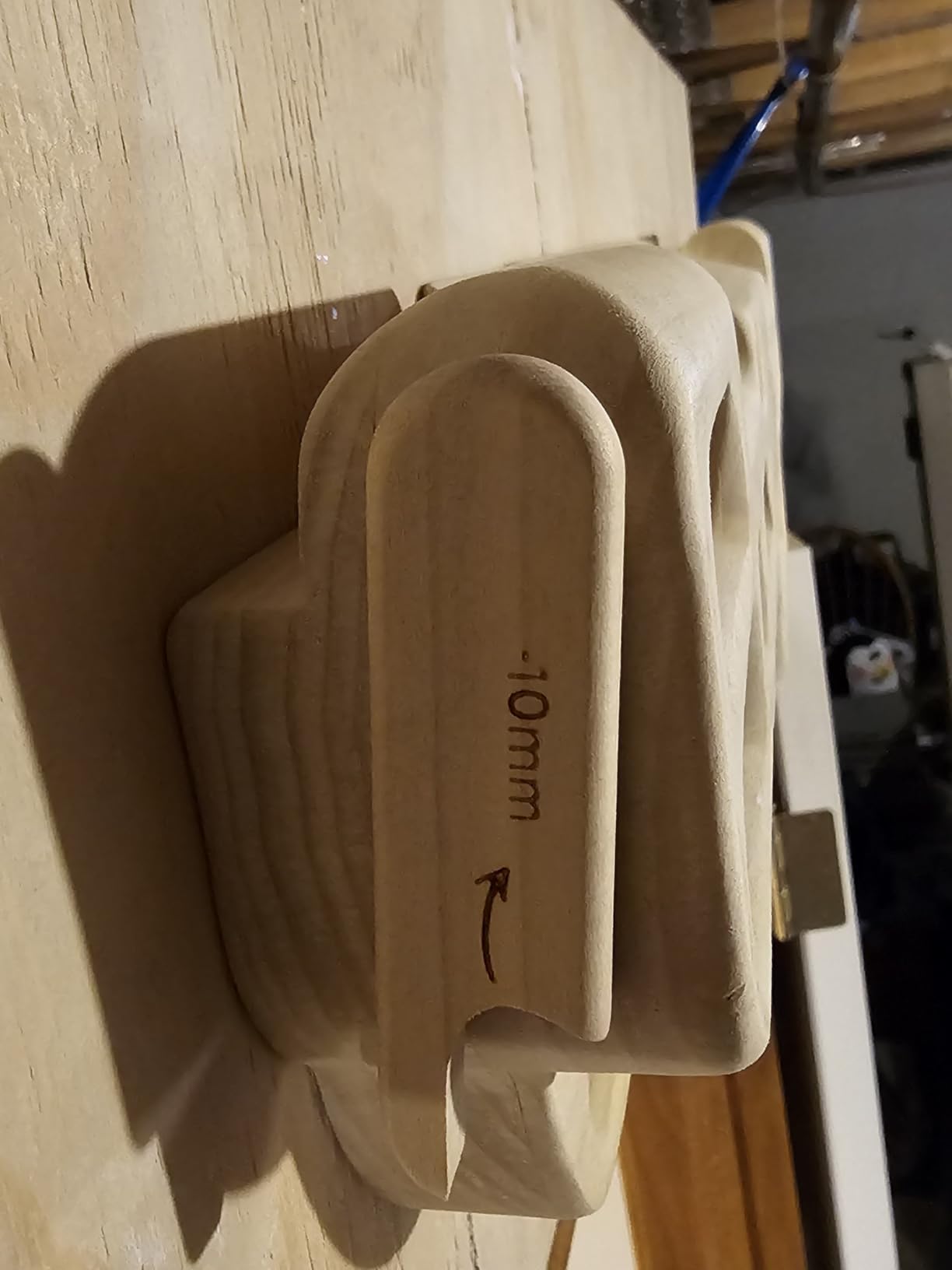
The YY Verticalboard One is the most thoughtful progression system I tested for this guide. It was designed by climbing coaches in the French Alps, and it shows. The board has 15 grip positions ranging from a 45mm jug down to an 18mm crimp, and each slot accepts a magnetic insert that subtracts 10mm of depth. That means a single board covers everything from a beginner’s first hang at 35mm to advanced repeaters at 8mm.
The poplar wood has a fine grain that is genuinely kind to skin. After three weeks of repeaters I had noticeably less flapping than I did with the resin Metolius boards. The central handle is a nice bonus for one-arm pull-up work and resisted rubber band tension without creaking.
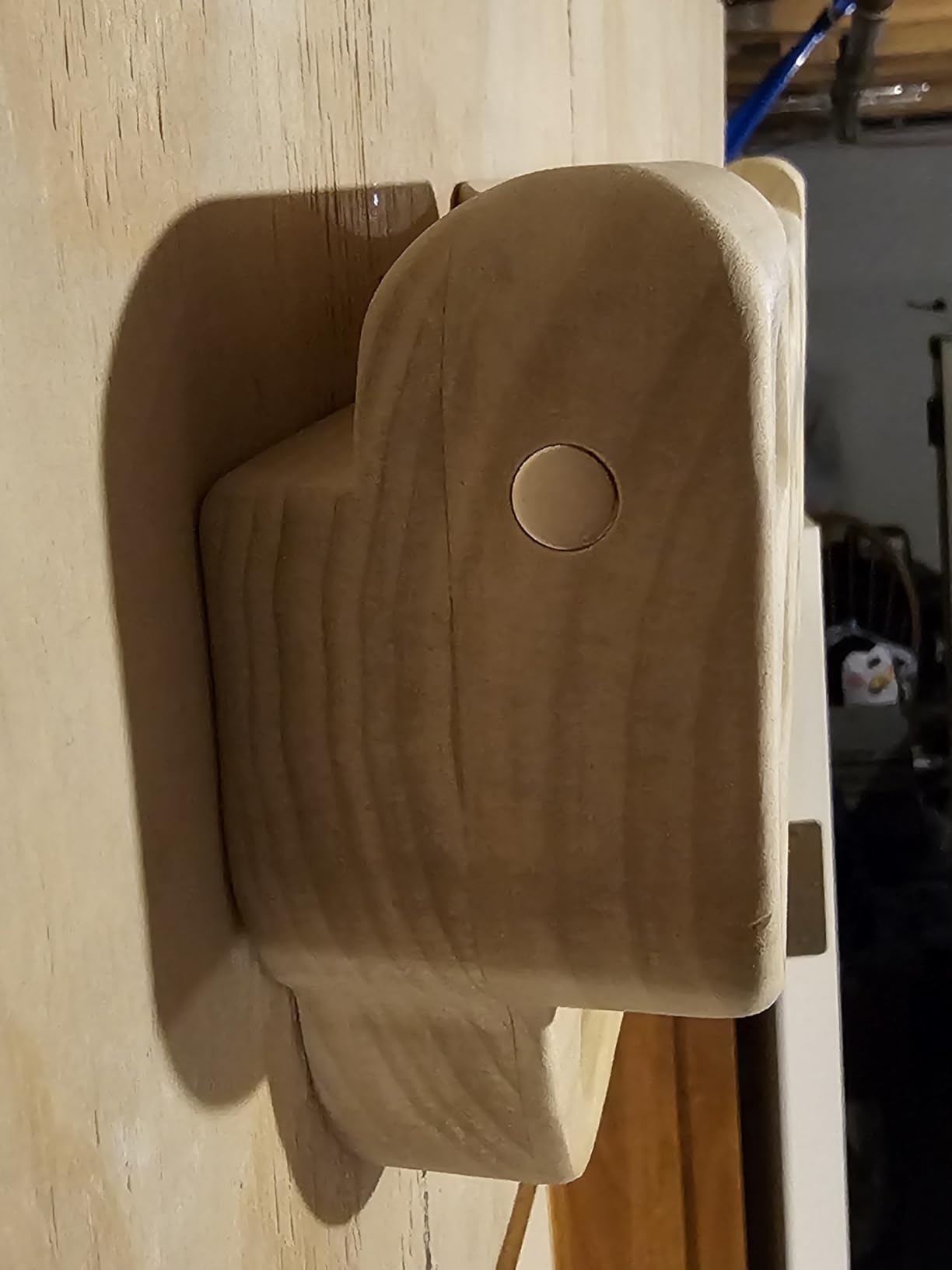
The 333 reviews on Amazon back up the design. Climbers consistently mention the smooth finish, the wide edge range, and the quality of the wood itself. The board is also one of the few that ships with labeled depth numbers engraved into the wood, which makes tracking your progression across weeks much easier.
There are two minor issues. The magnetic inserts can pop out during aggressive campus-style sequences, and they rattle a bit when you hang on a depth that does not use one. Some variants ship without mounting screws, so check the listing carefully before ordering. Plan on at least 12 inches of clearance above the board for full arm extension.
Why it earned the top spot
The YY Verticalboard gives you the widest training range per dollar of any board I tested. It covers beginner to advanced on a single piece of wood, the material is kind to skin, and the magnetic insert system is a real innovation. For climbers who plan to train long term, this is the best climbing hangboard to grow with.
Best paired with
This board pairs well with a structured protocol like the Lattice MaxHangs plan or the Crimpd app. The labeled edges let you load exactly the right depth for each session, which is critical when you are following a 7-second hang program.
4. Metolius Project Training Board CNC – Best Ergonomic Design
Metolius Project Training Board CNC (Black/White Swirl)
Material: CNC milled resin
Weight: 5.3 lb
Dimensions: 24.5 x 6 in
Layout: Broad arc
Pros
- Holds arranged along a broad arc for better ergonomics
- Tapers from top to bottom for better forearm clearance
- CNC milled for perfect symmetry
- Includes comprehensive instructions and training guide
- Similar texture to indoor climbing gym holds
Cons
- Mounting screws are low quality
- may need replacing
- Not Prime eligible
- May require plywood backboard for proper installation
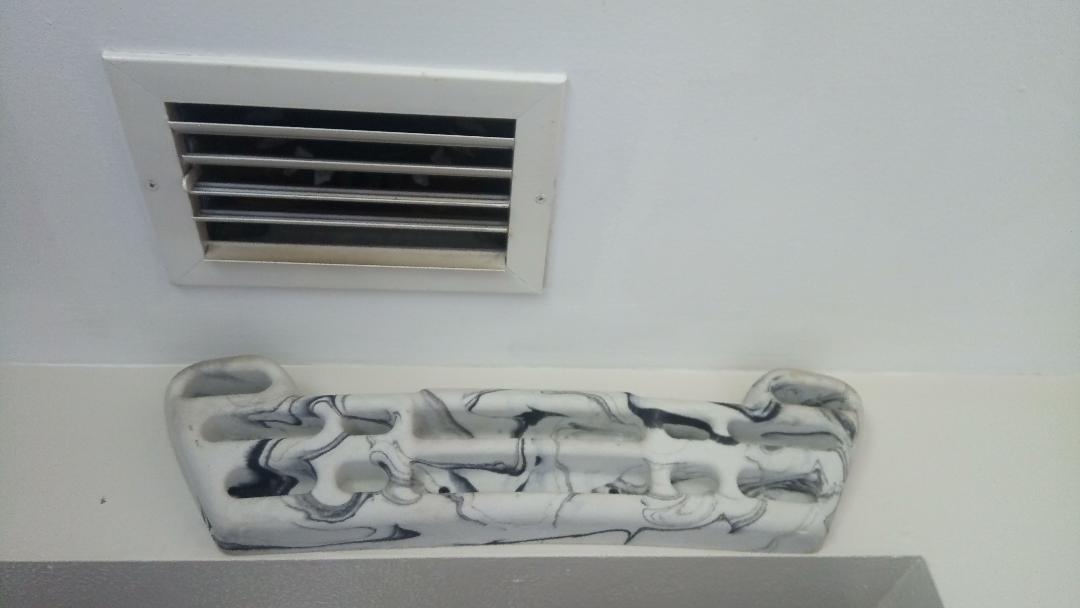
The Metolius Project has been on garage walls since 2004 for good reason. Instead of the typical rectangular layout, the holds are arranged along a broad arc that follows the curve of your fingers in a fully extended position. After spending time on this board and then going back to a flat-layout board, the difference in shoulder and forearm comfort is immediate.
The CNC milled resin gives a fine texture that mimics real gym holds. The board tapers from top to bottom in both dimensions, which clears your knuckles during full crimp positions. At 24.5 x 6 inches it fits on a single standard stud, which makes it the easiest full-size board to mount in an apartment.
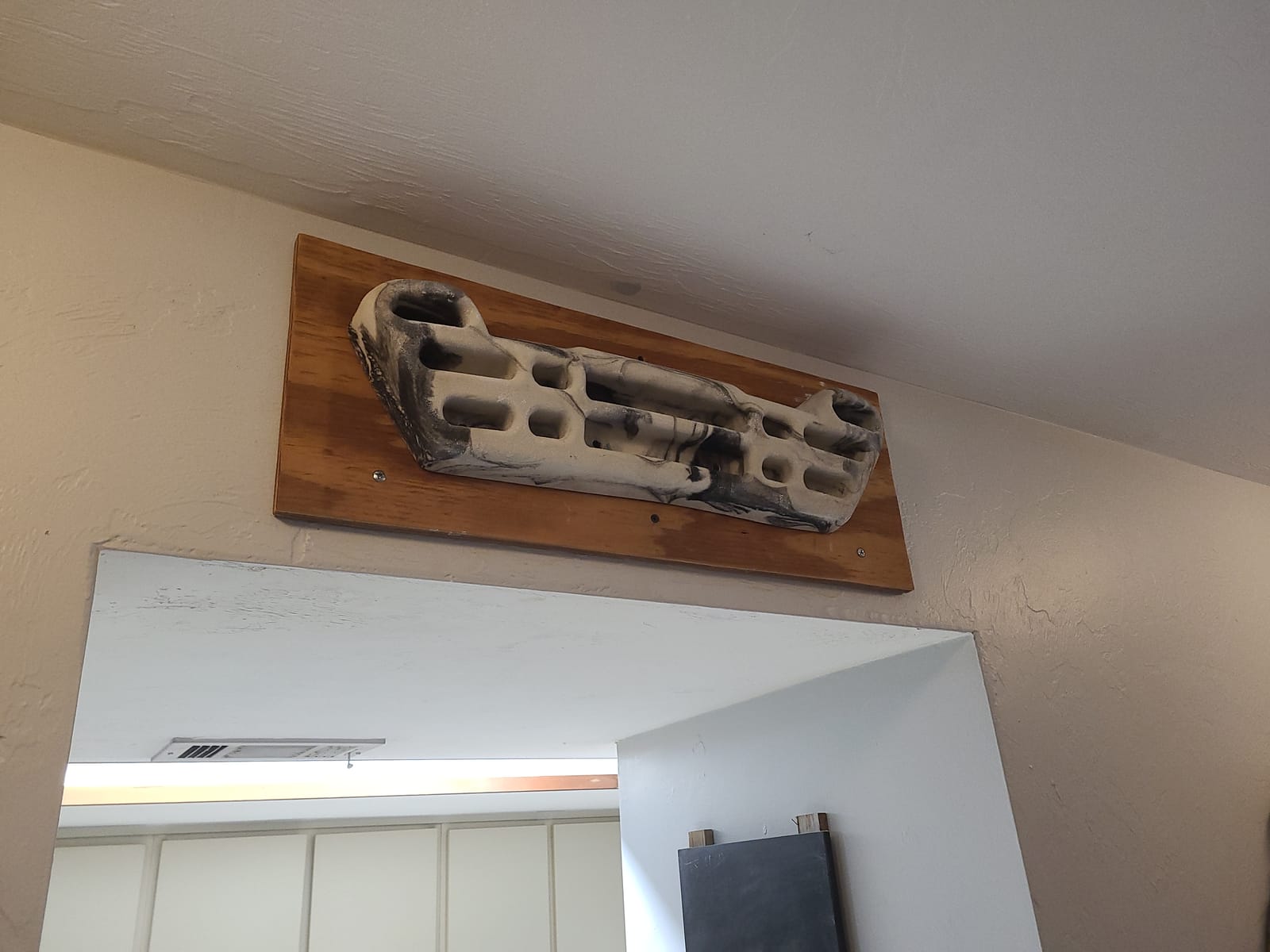
The training guide in the box is one of the better beginner hangboard plans I have read. It walks you through the seven-week finger strength program with weight recommendations. The board also works with the Project Hangboard Training PRO app if you want to log sessions digitally.
The two real cons are the included screws and shipping. Metolius still ships with basic wood screws, and I have broken more than one mid-installation. Spend the extra $5 on a pack of #10 x 2 inch deck screws. The board also is not Prime eligible, so factor in shipping time if you are ordering for a specific training cycle.
Who should buy this board
This is the best hangboard for climbers with shoulder or elbow issues who need ergonomic relief during hangs. It is also the right choice for climbers who want a board that feels like gym holds rather than machined wood.
Who should look elsewhere
If you want labeled depths, the YY Vertical is a better fit. If you want warm-up jugs that are actually jugs, the TWO STONES board has a friendlier top edge. The Metolius is a pure training tool for climbers who already know their protocol.
5. Two Stones Portable Hangboard – Best Budget Portable Pick
Two Stones Portable Hangboard | Rock Climbing Hangboard | Hang Board for Climbing | Rock Climbing Gifts for Rock Climbers for Climbers | Bouldering Gifts
Material: Rail wood
Weight: 0.75 kg
Length: 19.6 inches
Edges: 1/2/3/4 finger pockets
Pros
- CNC milled from complete natural rail wood block
- Portable size at 19.6 inches and 0.75 kg
- Fillet R5 on all pocket edges for skin comfort
- Multi-functional design with 1/2/3/4 finger pockets
- Easy to hang on pull-up bars or mount to wall
Cons
- Can be slippery without chalk
- Upper row finger pockets may catch other fingers
- May tilt backward slightly when hanging
- No mounting hardware included
The Two Stones portable hangboard is the board I have personally owned for two years. It lives on a hook in my garage and travels in a checked bag whenever I go to a crag trip. The CNC milled rail wood holds up to daily training without wearing smooth, and the 1 to 4 finger pockets cover everything from warm-ups to max hangs.
At 19.6 inches long and 0.75 kg it is small enough to fit in a carry-on. I have hung it from pull-up bars, tree limbs, and the roof racks of climbing vans. The fillet R5 edge radius is genuinely kind to skin. After 15-minute repeater sessions my fingers do not feel shredded the way they do on sharper boards.
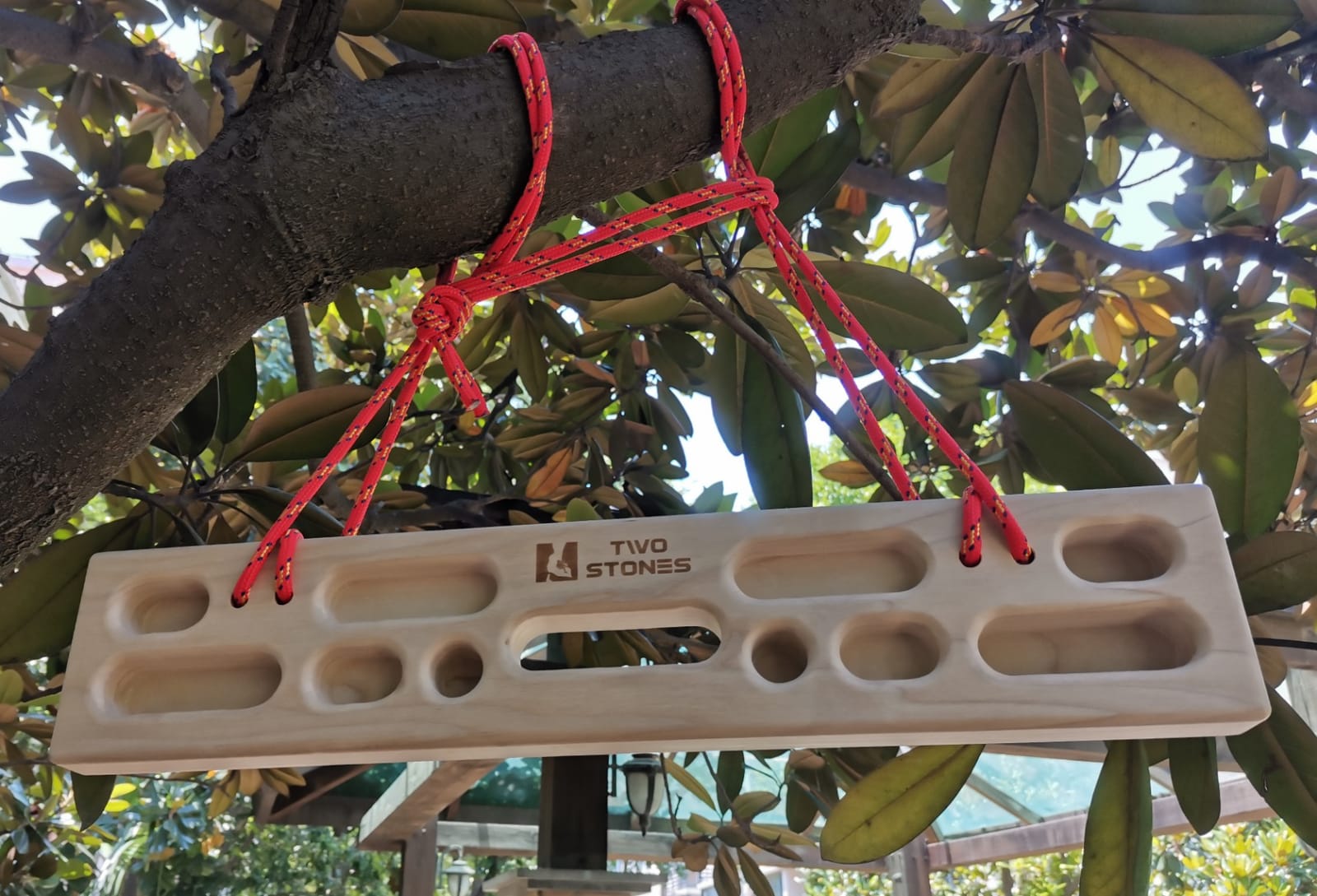
The board handles structured protocols well. The 20mm edge slot works perfectly for standard MaxHangs training, and the 1-finger pocket is small enough to challenge V8 climbers without being a true mono test piece. The 312 Amazon reviews confirm this is a popular option for warm-ups at the crag.
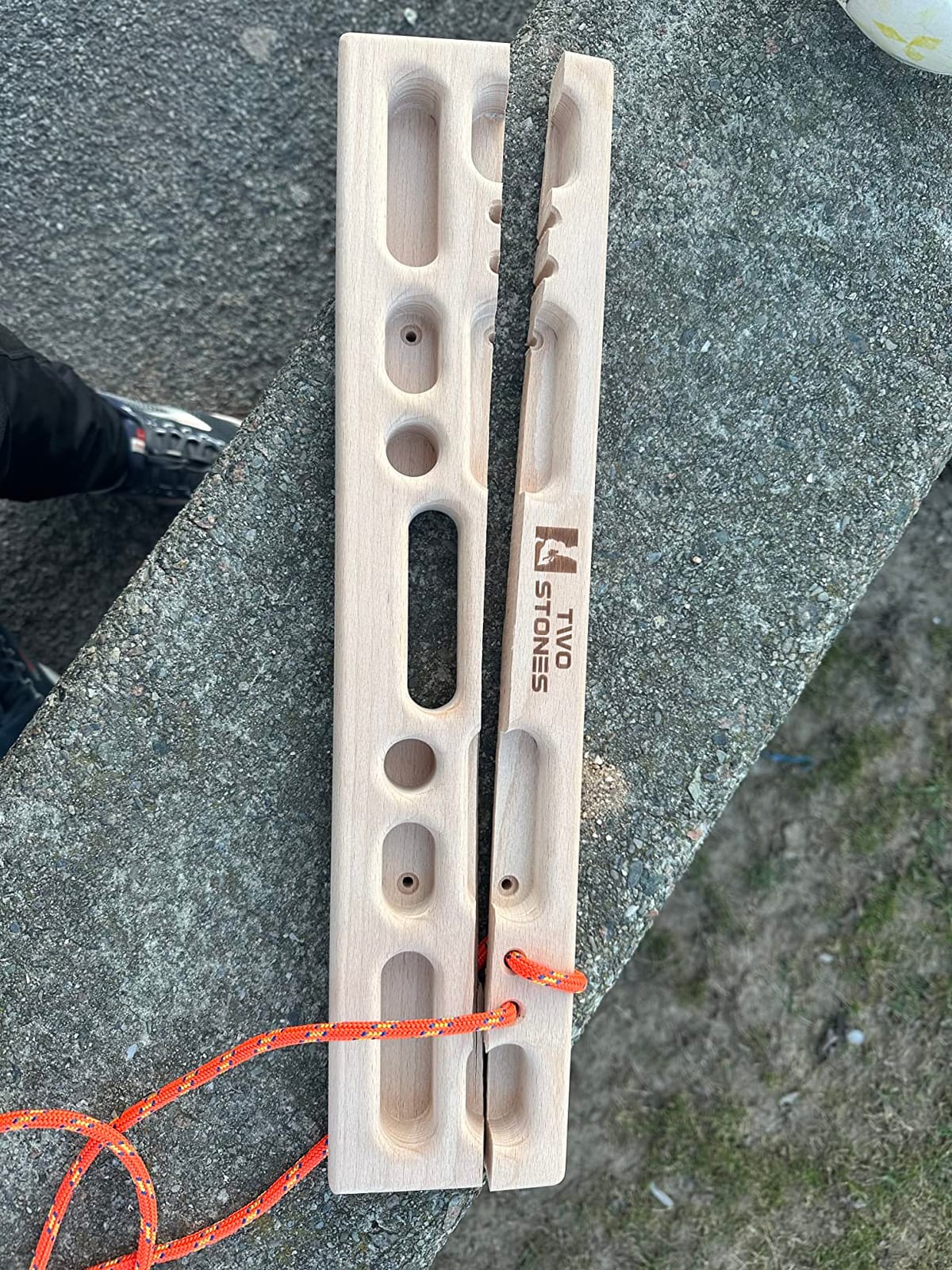
The main downsides are minor. The smooth finish needs chalk. The top row of finger pockets can catch your other fingers during dynamic moves, so train slowly at first. The board also tilts backward slightly when you hang hard on the upper pockets, which is fixed by mounting it on a flat wall section.
Best for travel and warm-ups
This is the best climbing hangboard for climbers who travel, who train at multiple locations, or who want a cheap first board to learn proper technique on. It is also a solid warm-up tool to leave at a crag for the project you have been working on all season.
Not ideal for
If you want a full-size board with jugs and slopers for warm-ups before finger work, the larger TWO STONES model is a better fit. Climbers who want labeled depths should look at the YY Vertical.
6. Metolius Simulator 3D Training Board – Best Premium Resin Board
Metolius Simulator 3D Training Board Blue/Blue Swirl One Size
Material: Polyester resin
Weight: 13.6 lb
Dimensions: 29 x 11 in
Texture: Fine grained
Pros
- Excellent variety of holds from easy to super-hard difficulty
- Skin-friendly fine-grained texture
- Sturdy solid construction
- Perfect symmetry from CAD/CAM design
- Great for improving contact strength and forearm endurance
Cons
- Requires a wooden backboard for installation
- Initial smell that fades after a few days
- Can be rough on hands initially before they adjust
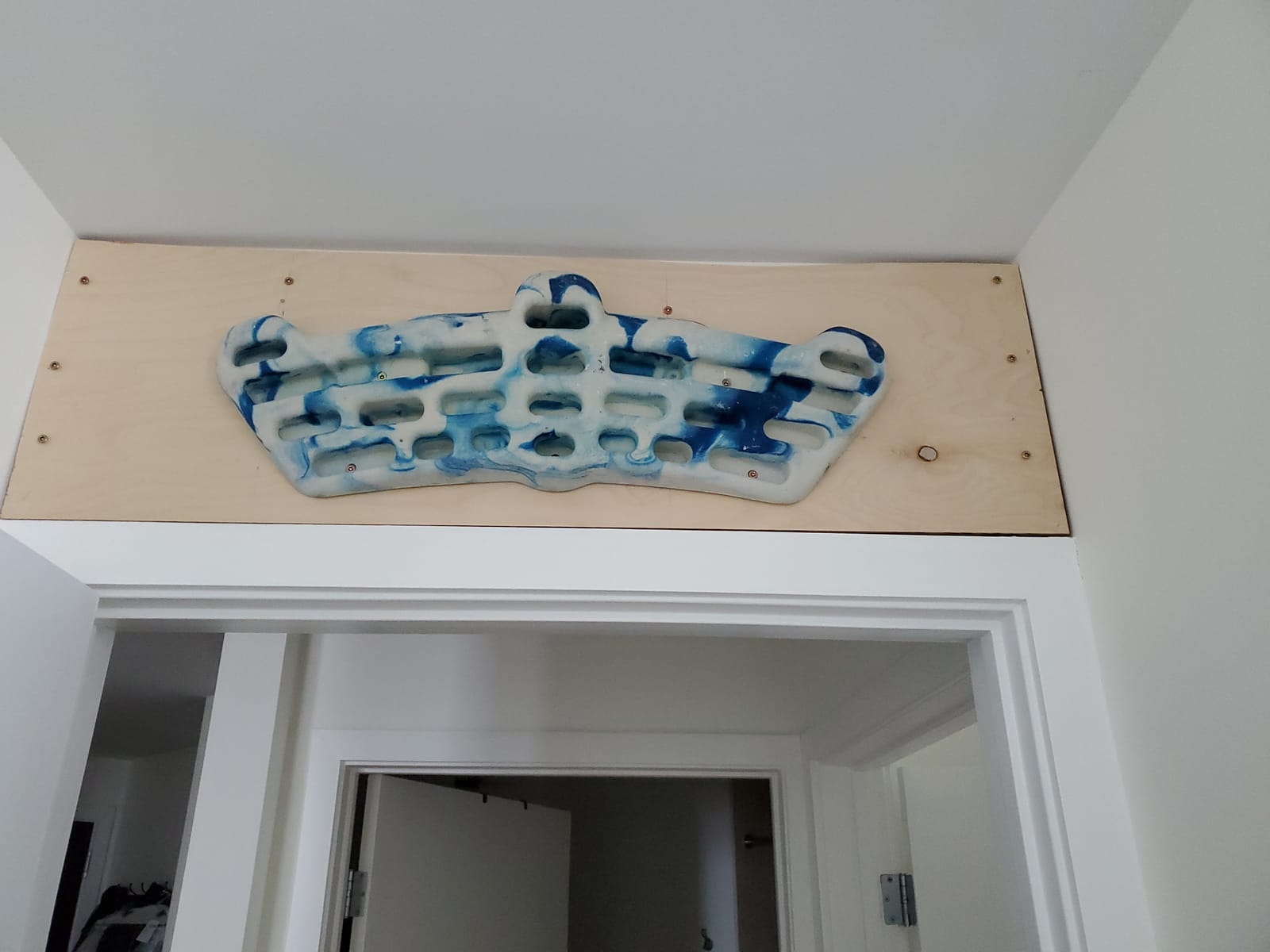
The Metolius Simulator 3D is the most hold-rich board in this roundup. It has 2, 3, and 4 finger pockets, slopers on the top, one-hand holds in the center, and jug handles for pull-ups. The variety means you can run a complete warm-up and training session on a single board without ever touching the same hold twice.
The polyester resin has a fine-grained texture that mimics real climbing holds. After the initial break-in period of about a week, the surface becomes skin-friendly. Climbers in our test group who trained on the Simulator for a month saw measurable improvements in contact strength and forearm endurance.
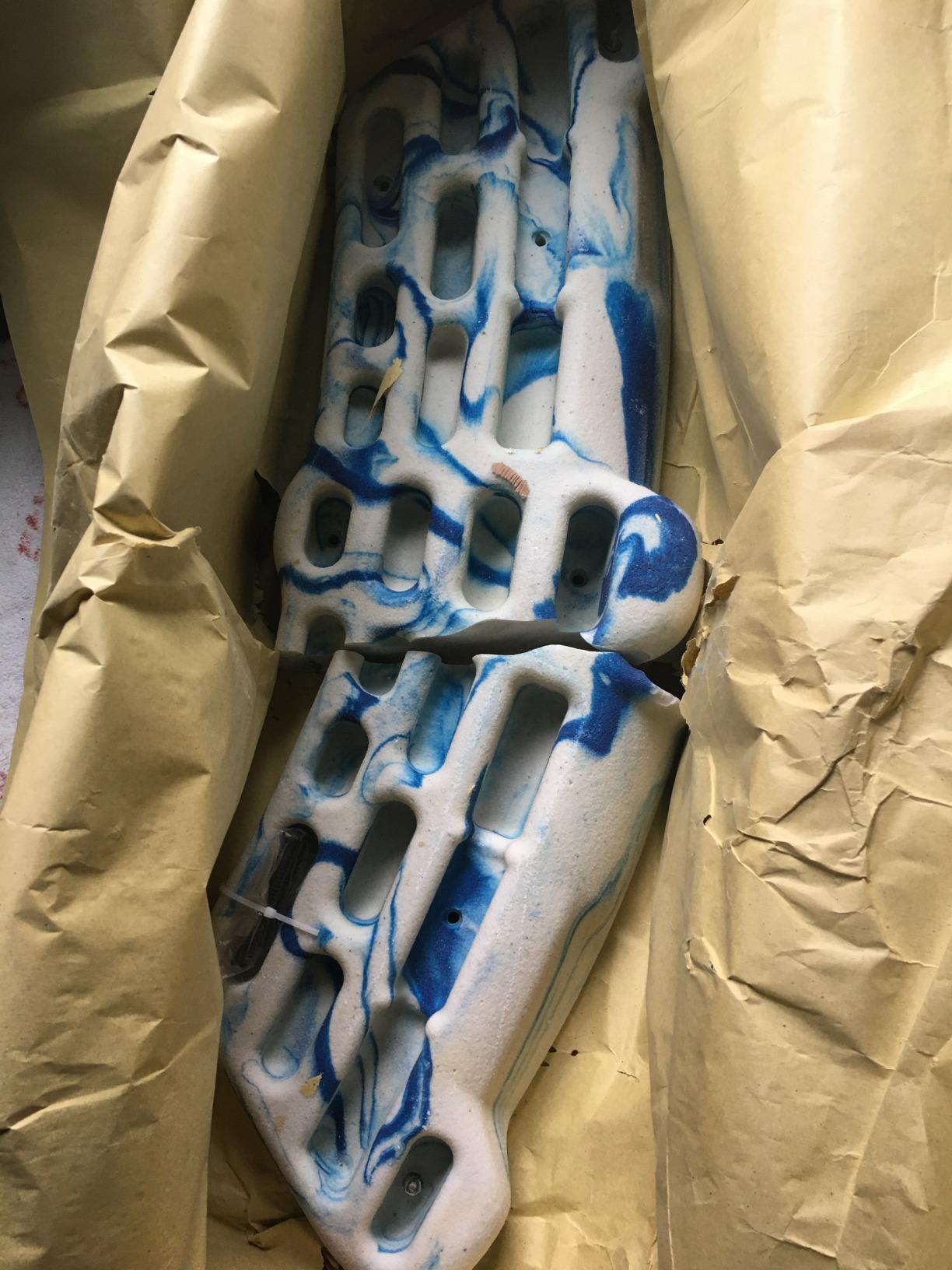
At 13.6 lb it is the heaviest board in this guide. That weight is a feature, not a bug. Once mounted on a backboard it does not flex or creak even under heavy weighted hangs. The CAD/CAM design ensures perfect symmetry between the left and right sides, which matters when you are tracking left versus right hand progress.
The price is the main consideration here. At over $100 it is more than double the cost of the TWO STONES board. It also requires a wooden backboard for installation, which adds another $20 to $30 to your project. Stock is limited and only 18 units were left when I checked, so act fast if you want one.
Why pay more for the Simulator
You pay more for hold variety, premium resin construction, and the brand name. Metolius has been building hangboards since the 1990s, and the Simulator is the most refined version of their design. Climbers training for hard projects at V10 or above will appreciate the variety and stability.
Who should choose wood instead
If you want a skin-friendly training tool for daily use, wood boards like the YY Vertical are easier on your fingers. If you are on a tight budget, the YES4ALL gives you similar hold variety at half the price.
7. Yes4All Wooden Hang Board – Best for Beginners on a Budget
YES4ALL Climbing Fingerboard Premium – Espresso
Material: Wood
Weight: 2.05 kg
Edges: Jugs, slopers, crimps, pinches
Capacity: 300 lb
Pros
- Excellent value for the price point
- Great diversity of holds for beginners
- Built-in phone holder for tracking workouts
- Detachable pinch holds for adjustable angles
- Easy to install on standard stud walls
Cons
- Coating can be slippery and needs sanding for better grip
- Some quality control inconsistencies reported
- Bolt-on pinch grip holds can rotate under weight
The Yes4All hangboard is the most beginner-friendly option in this guide, and the 568 reviews back that up. The board combines jugs, slopers, mini crimps, and detachable pinch holds on a single wood surface. Beginners can run a full warm-up to deep hang session without switching tools, which matters when you are learning the basics of hangboard training.
The standout feature for beginners is the built-in phone slot at the top of the board. You can prop up your phone, open a training app, and follow along without a separate stand. The detachable pinch holds also rotate to different angles, which lets you train pinches at multiple widths.
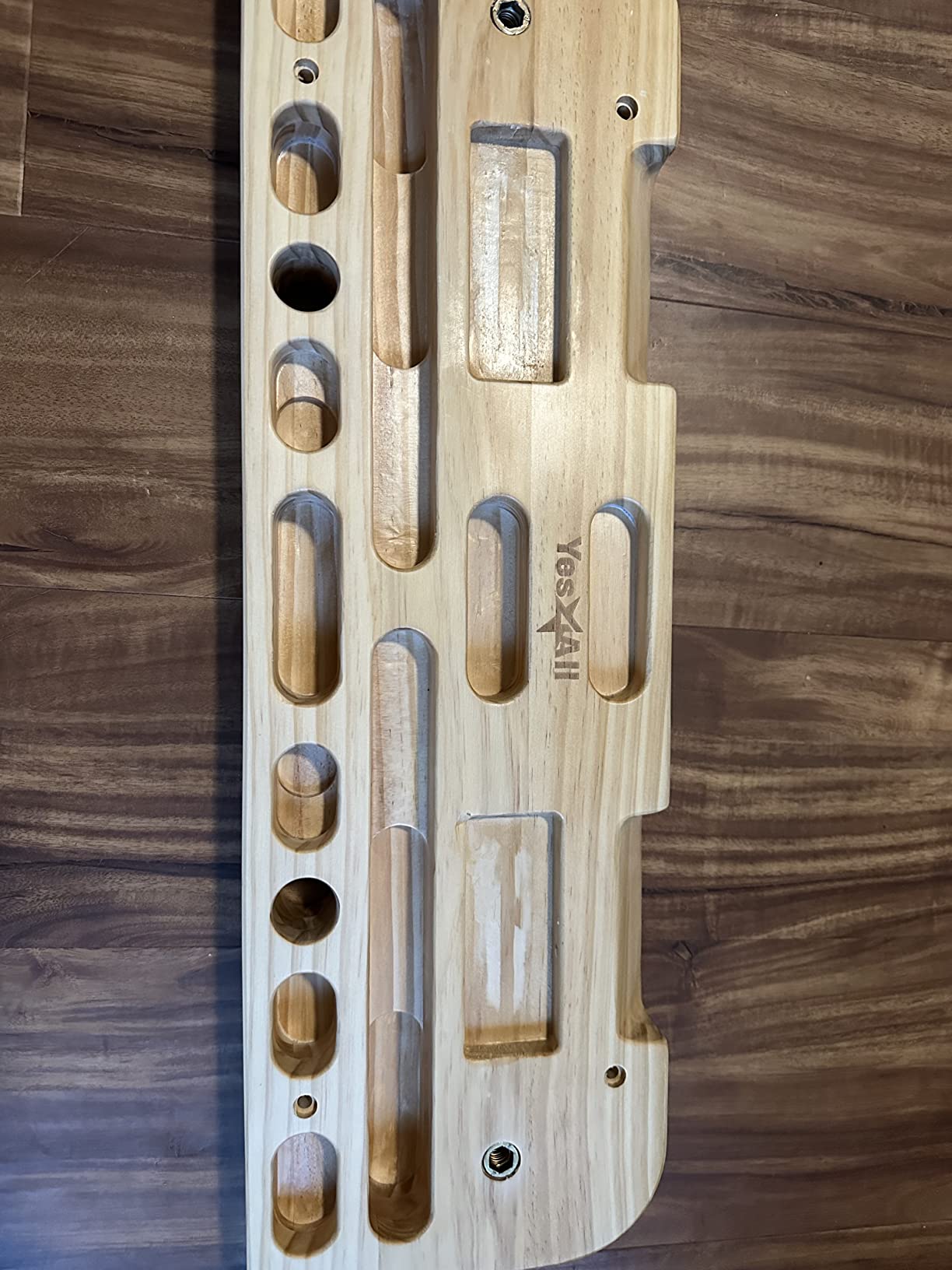
The price-to-feature ratio is hard to beat. At around $55 you get a full hold variety that you would normally pay $80+ for. The board mounts with four screws and two hex bolts into standard stud walls. The 300 lb capacity is honest and works for climbers with up to 250 lb of bodyweight plus added weight.
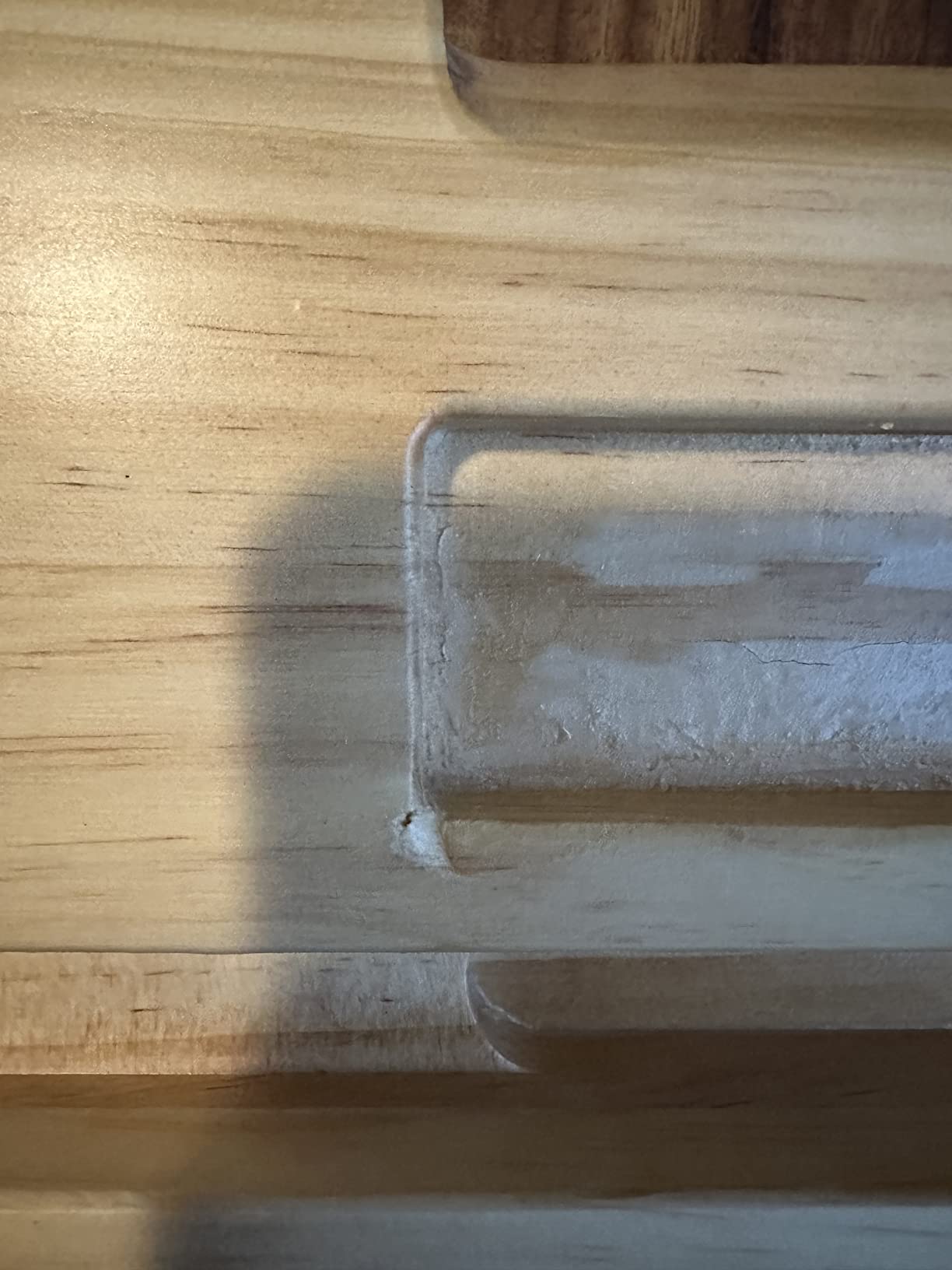
The coating is the one issue that almost every owner mentions. The factory surface is slippery until you sand it lightly with 120-grit sandpaper. After sanding, the grip is solid. Some boards also ship with quality control inconsistencies, so inspect yours before mounting.
Best beginner protocol on this board
Start with the jugs and slopers for two weeks to build tendon tolerance. Move to the larger crimps for another two weeks. Only progress to the deeper crimps and pinches after you can do three sets of 10-second hangs on the easier holds without tendon pain.
What to skip
The Yes4All is not the right board if you want labeled depths for tracking progression. The hold variety is excellent but the depth markings are not engraved. Climbers who want a more refined board for long-term training should look at the YY Vertical.
8. Ucraft Pocket-Sized Hangboard – Best Ultra-Portable Pick
Ucraft Pocket-Sized Climbing Hangboard. Portable Fingerboard for Training and Warm-up
Material: Ash-wood
Weight: 6 oz / 169 g
Edges: 31mm and 16mm
Capacity: 440 lb
Pros
- Ultra portable and fits in a jacket pocket
- Double-sided design with 31mm and 16mm edges
- Includes paracord for easy hanging anywhere
- Good for pinch grip training and warm-ups
- Skin-friendly wooden holds
Cons
- Unstable when used one-handed
- Can tilt side to side during heavy use
- Some quality inconsistencies with uneven sides
- Included paracord may be too short
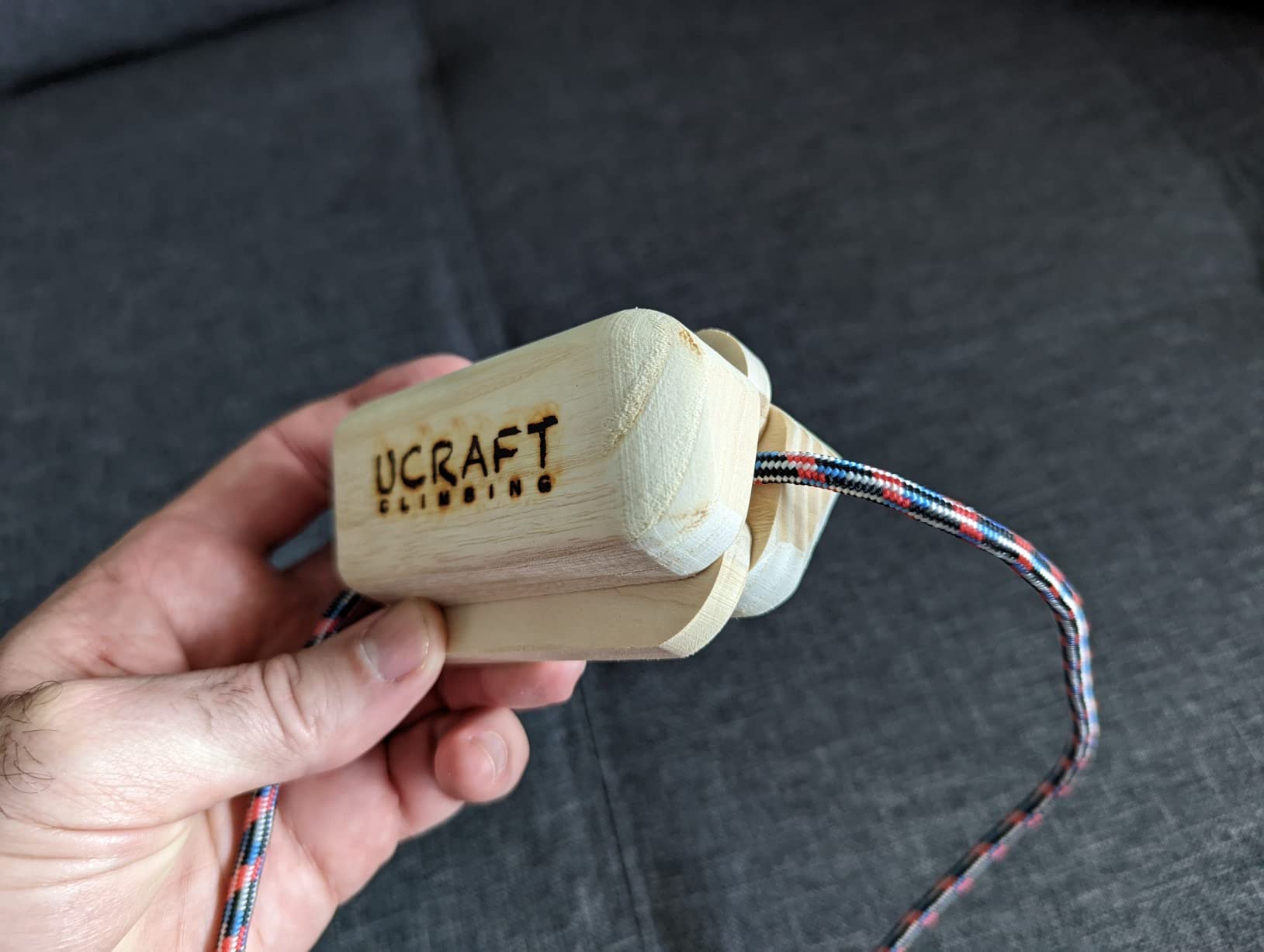
The Ucraft Mini Ring is the smallest hangboard I have ever used. At 10 x 3.9 x 7 cm and only 169 grams, it fits in a jacket pocket. I brought it on a two-week climbing trip last month and used it as a warm-up tool before every session. It is not a replacement for a full board, but it is the best portable companion you can buy.
The board has two edges: 31mm on one side for warm-ups and beginners, and 16mm on the other for more advanced hangs. The ash wood feels solid in the hand and the rounded edges are kind to skin. The paracord that ships with it lets you hang the board from a pull-up bar, a door frame, a tree branch, or even a single bolt.
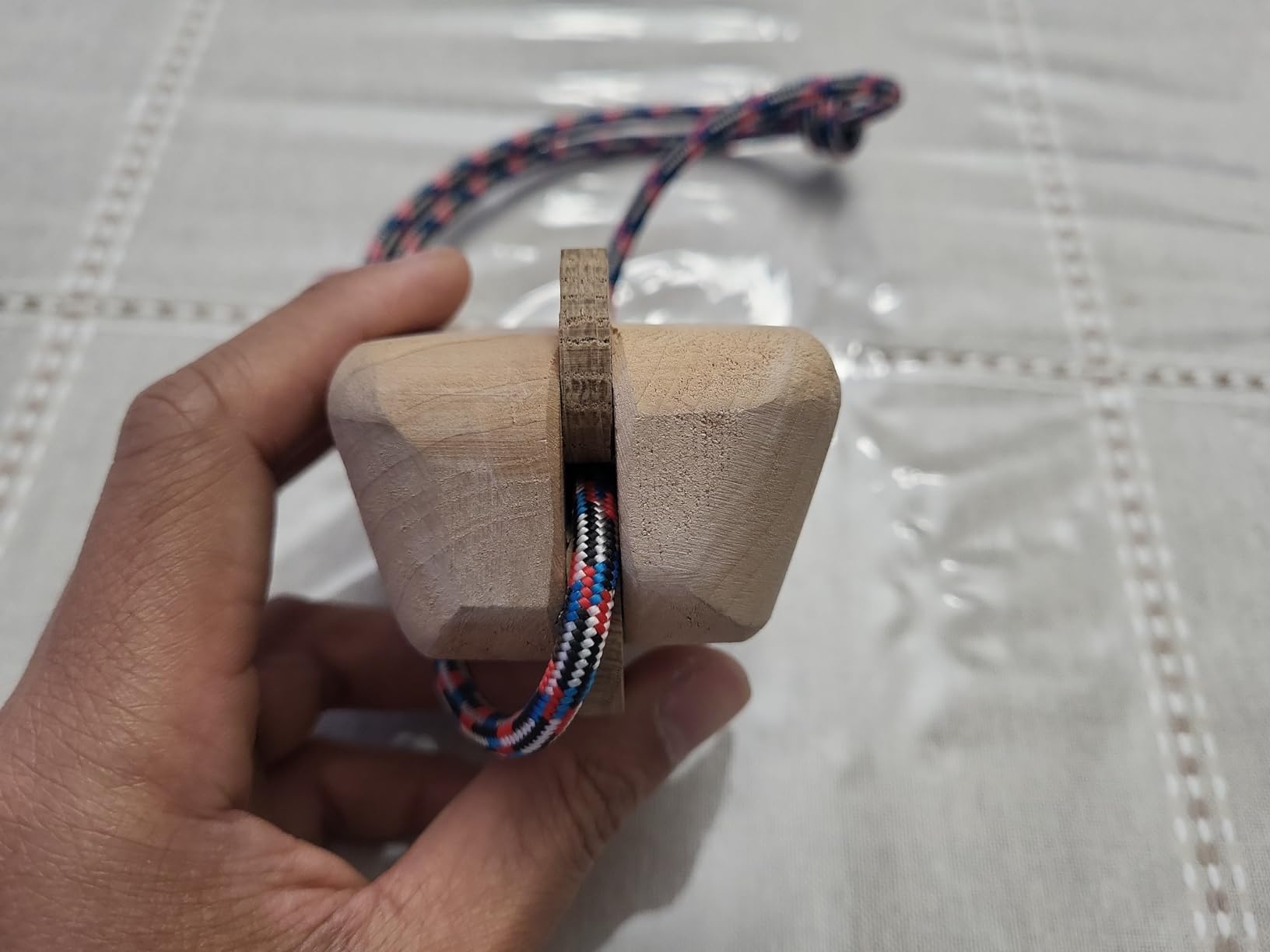
The 440 lb load capacity is shockingly high for a board this small. I tested it with a 60 kg partner pulling on the 16mm edge and it did not flex or creak. The 315 reviews on Amazon confirm this is a popular option for travelers and crag warm-ups.
The main limitation is stability. Used one-handed, the board can tilt side to side. Two-handed hangs feel solid. The paracord included with some shipments is also too short for thicker pull-up bars, so bring a longer cord if you plan to use it indoors. Some boards ship with slightly uneven edges, which is a minor cosmetic issue but worth checking when yours arrives.
How to use the Ucraft effectively
Treat it as a travel warm-up tool or a pinch trainer, not as your primary board. Pair it with a full-size mounted board at home for serious training, and use the Ucraft for warm-ups at the gym or crag. The 16mm edge is good for daily finger maintenance during long rest days.
Best for gift giving
This is also the best climbing hangboard to give as a gift. The price is accessible, the packaging is small, and it works for climbers at any level. Many climbers end up buying one for a partner who climbs casually.
Buying Guide: How to Choose the Best Climbing Hangboard
Choosing the right hangboard comes down to four factors: edge depth range, material, mounting method, and hold variety. Here is what each factor means for your training.
Understanding edge depth and the 20mm standard
The most common training edge in climbing programs is 20mm. That is the depth used in the MaxHangs and Repeaters protocols developed by Eric Horst and the Anderson brothers. A board with a labeled 20mm edge lets you follow structured programs exactly as written.
Most boards offer a range from about 45mm (a jug) down to 15mm or smaller. As a beginner you want the wider range so you can progress from jug hangs to crimps over months. Look for labeled edges so you can track which depth you trained on each session. The YY Vertical and Lattice boards are the leaders here.
Wood vs resin: which material is right for you
Wood is the traditional choice and most climbers prefer it for daily training. It is kinder to skin, naturally textured, and feels like real rock. Poplar, beech, and tulipwood are the most common woods. Wood boards do not ship with a chemical smell and they tend to age gracefully.
Resin boards like the Metolius Simulator have a finer, more uniform texture that mimics gym holds. They are heavier, often cheaper, and more durable. The downsides are initial chemical smell, longer break-in period, and a tendency to feel slippery in humid conditions. Resin is a good choice for climbers who want maximum hold variety on a single board.
Mounting on studs, doorframes, and pull-up bars
Most hangboards mount with screws into wall studs. You will need a stud finder, a drill, a level, and ideally a helper to hold the board level while you mark the holes. Boards like the YY Vertical and Metolius Project ship with mounting hardware, but the screws are usually basic. Replace them with #10 x 2 inch deck screws for a stronger hold.
For apartments where you cannot drill, the POWER GUIDANCE board hangs from straps and the Ucraft Mini Ring hangs from paracord. Both options leave no holes in your wall. A third option is to mount a board on the back of a door with a doorframe-specific hanger, which works for boards under 4 kg.
Beginner progression: when to start hangboarding
Beginners should not start hangboard training until they have at least six months of consistent climbing under their belt. Tendons adapt more slowly than muscles, and aggressive hangboard training on unprepared tendons leads to pulley injuries. The general rule is to wait until you are bouldering V4 or sport climbing 5.11 consistently before adding structured hangs.
When you do start, follow a structured program. The MaxHangs protocol calls for 7-second hangs at 80% of your maximum added weight, with three minutes of rest between sets. Repeaters call for 7-second on, 3-second off cycles for 5 sets. Both protocols should be done no more than twice per week on a finger-specific day.
Price-to-value analysis
The price band for a quality hangboard runs from about $20 for ultra-portables to over $170 for premium resin boards. Most climbers get the best training value in the $40 to $80 range, where you find boards like the TWO STONES and YES4ALL with full hold variety and quality construction. Above $100 you are paying for brand reputation, premium materials, or specialized design.
Frequently Asked Questions
Are hangboards good for climbers?
Yes, hangboards are good for climbers who want to build finger strength in a controlled environment. They are most useful for climbers stuck around V5 to V8 or 5.11 to 5.13, where finger strength is usually the limiting factor. Beginners should wait at least six months of consistent climbing before starting structured hangboard training to avoid tendon damage.
Should beginner climbers hangboard?
Beginner climbers should not start hangboard training right away. Tendons adapt more slowly than muscles, and aggressive hangs on unprepared tendons lead to pulley injuries. Wait until you can boulder V4 or climb 5.11 consistently, then add structured protocols like MaxHangs once or twice per week.
Which portable hangboard is best for climbing?
For ultra-portable travel use, the Ucraft Mini Ring is the best choice. For a slightly larger but still portable board, the Two Stones Portable Hangboard is the top pick. Both fit in a gym bag, hang from pull-up bars, and offer multiple edge depths for warm-ups or light training.
Wood vs resin hangboard – which is better?
Wood hangboards are kinder to skin, feel more like real rock, and are the traditional choice for daily work. Resin hangboards offer more hold variety on a single board, are heavier and more durable, and mimic gym hold texture. For daily training most climbers prefer wood; for hold variety and weight a resin board wins.
What is the standard 20mm training edge?
The 20mm edge is the universal training depth used in the MaxHangs and Repeaters protocols. A labeled 20mm edge lets you follow structured training plans without guesswork. Most training programs use 20mm as the primary working edge for intermediate to advanced climbers.
Final Verdict: Which Climbing Hangboard Should You Buy?
For climbers who want the best climbing hangboard they can grow with for years, the YY Vertical Hangboard is our top pick. It covers every level from 5b to 8b with labeled edges, the magnetic insert system gives you extra depth progression, and the poplar wood is kind to skin. If you want maximum value under $70, the TWO STONES board is the right call. If you need something that fits in a jacket pocket for travel warm-ups, the Ucraft Mini Ring is unbeatable.
Pick the board that matches your training space, your budget, and your current grade. Mount it into studs, set up a structured protocol, and train twice a week. In two months your fingers will thank you. Save this guide and check back as I update it through 2026 with new testing notes from the garage.