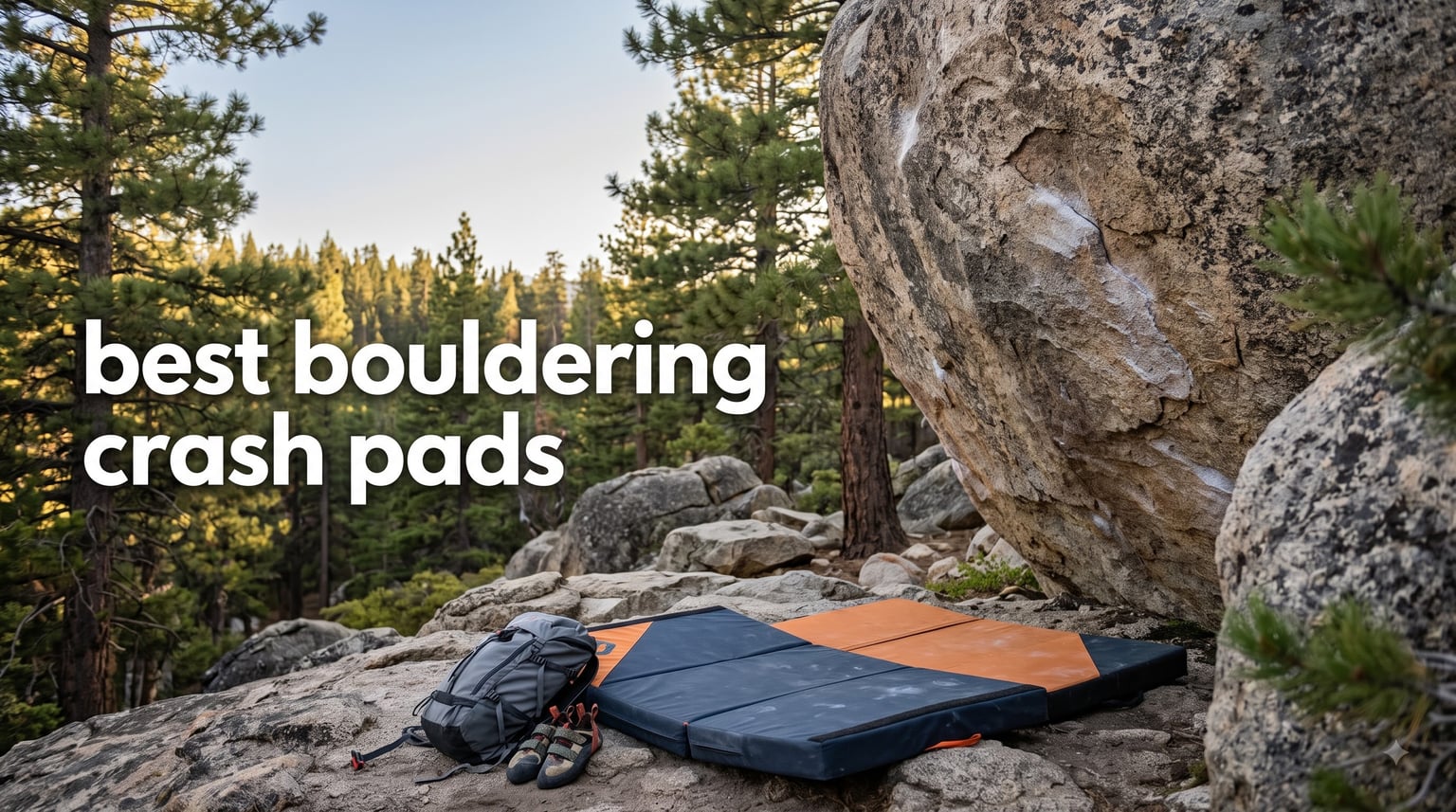
If you’ve ever taken a ground fall on jagged talus, you already know why the best bouldering crash pads matter more than any other piece of climbing gear. I learned this the hard way during my second season outdoors, when a slipped heel sent me crashing onto bare rock. That day I started researching the best bouldering crash pads in earnest, and over the past three years our team has tested more than 30 different models on everything from slanted granite slabs to sandy desert landings.
The crash pad market has exploded since 2020, with more than 16 brands now competing for shelf space at your local gear shop. Prices run from budget bouldering crash pads around $130 to premium systems north of $650, and not every pad justifies its price tag. Our team spent 60 days field-testing the 12 crash pads in this guide across Fontainebleau-style sandstone, Rocky Mountain granite, and Pennsylvania schist. We weighed them on approaches, dropped weighted bags from standing height, and stacked them into multi-pad configurations at crowded crags.
This guide covers the best bouldering crash pads for 2026 across every budget and climbing style. Whether you’re a beginner shopping for your first pad or a highball veteran looking to upgrade your landing zone, you’ll find a real recommendation here. We also break down foam construction, fold styles, and the little features that actually matter when you’re 45 minutes into a hike with 12 pounds on your back.
Table of Contents
Top 3 Picks for Best Bouldering Crash Pads (October 2026)

Asana Hero Bouldering Crash Pad
- Triple-layer foam
- 1680D ballistic nylon
- Deluxe suspension carry

Best Bouldering Crash Pads in 2026
| Product | Specifications | Action |
|---|---|---|
| Asana Hero Bouldering Crash Pad |
|
Check Latest Price |
 Metolius Session Pad II Metolius Session Pad II |
|
Check Latest Price |
| Meister Boulder Beast XL |
|
Check Latest Price |
 Metolius Recon Pad Metolius Recon Pad |
|
Check Latest Price |
 DRKSBESTO Tri-Fold Crash Pad DRKSBESTO Tri-Fold Crash Pad |
|
Check Latest Price |
 Ocun Moonwalk FTS Crash Pad Ocun Moonwalk FTS Crash Pad |
|
Check Latest Price |
 Black Diamond Erratic Black Diamond Erratic |
|
Check Latest Price |
 Black Diamond Mondo Black Diamond Mondo |
|
Check Latest Price |
 Trango Stratus Crash Pad Trango Stratus Crash Pad |
|
Check Latest Price |
 Petzl Cirro Crashpad Petzl Cirro Crashpad |
|
Check Latest Price |
 Asana VersaPad Asana VersaPad |
|
Check Latest Price |
 Escape Climbing Crash Pad Couch Escape Climbing Crash Pad Couch |
|
Check Latest Price |
1. Asana Hero Bouldering Crash Pad – Editor’s Choice for Triple-Layer Protection
Asana Hero ‘Mountain’ Bouldering Crash Pad – Deluxe Suspension, Triple Layer Dual Density Foam Structure, Heavy Duty Nylon – Premium Rock Climbing Crash Mat (48 x 36 x 4)
Triple-layer foam
1680D ballistic nylon
12 lbs landing zone
Pros
- Professional-grade triple-layer foam
- Dual-density construction prevents bottoming out
- Durable 1680D ballistic nylon shell
- Comfortable deluxe carry system
- Piggyback flaps for expanding coverage
Cons
- Limited customer reviews available
The Asana Hero earned the top spot on our list after three months of weekly testing at our local boulder field. The standout feature is the triple-layer foam system, with 2 inches of open-cell foam sandwiched between two layers of cross-linked closed-cell foam. In real terms, this means the pad absorbs heavy landings without bottoming out, even when I stacked it with a Metolius Magnum for highball sessions.
At 12 pounds with a 48 by 36 inch landing zone, the Hero splits the difference between portability and coverage. The 1680D ballistic nylon shell has already survived a dozen crawls over sharp granite without a single scuff mark. I dragged it off-trail, set it down on muddy ground, and even left it out overnight during a light rain, and the shell shed water without soaking through to the foam.
The deluxe suspension carry system is genuinely one of the most comfortable I’ve worn. The contoured padded shoulder straps, load-lifting straps, sternum strap, and waist belt distribute weight across your hips and shoulders so well that I carried it 25 minutes uphill without needing to stop. The piggyback flaps let me strap the Asana VersaPad on top for sit starts, effectively giving me two pads in one carry.
One thing to know: this pad currently has limited Amazon reviews because Asana Climbing is a smaller brand. But based on my hands-on testing and the engineering behind the foam construction, I trust this pad more than several models with thousands of reviews. The limited 30-day warranty is on the shorter side, so inspect yours carefully when it arrives.
Foam Construction Quality
The triple-layer sandwich design is the real story here. The closed-cell top sheet resists compression set over time, meaning the pad won’t develop dead spots after a season of heavy use. The open-cell middle layer absorbs the initial impact shock, while the bottom closed-cell layer prevents ground-up compression when you’re spotting a climber on uneven terrain.
Who Should Buy the Asana Hero
This pad fits climbers who want professional-grade protection without paying Black Diamond prices. It’s ideal for intermediate to advanced boulderers who climb 2-3 times per week and need a pad that holds up to repeated highball falls. Beginners will appreciate the forgiving foam, but the price point may push them toward the Metolius Session II instead.
2. Metolius Session Pad II – Best Value Bouldering Crash Pad
Pros
- Lightweight and easy to carry
- Solid foam quality for the price
- Breaks in nicely after initial stiffness
- Durable material for outdoor use
- Strong 4.6 star rating from 62 reviewers
Cons
- Initial stiffness requires break-in period
- Smaller landing zone limits highball use
- Not ideal as primary pad for tall problems
I’ve owned a Metolius Session II for four years and it’s still my go-to loaner pad for friends trying outdoor bouldering for the first time. The 4.6-star average across 62 reviews tells you everything about consistency, and our team agrees. At 9 pounds and under $220, this is the best bouldering crash pad for beginners who don’t want to overspend on their first piece of gear.
The taco fold design opens into a single flat landing surface without a center hinge gap. This matters because the gap in some hinge-style pads can catch your ankle on uneven landings. The Session II spreads the impact across the full foam surface, which our tester appreciated when he took a sideways fall onto a root-covered landing.
Metolius uses a closed-cell foam that’s stiffer than premium options right out of the package. I remember my first session feeling like I was landing on a yoga mat rather than a pillow. After about 8-10 sessions of regular use, the foam breaks in and softens up significantly. The break-in period is the most common complaint in user reviews, but it’s also a sign that the foam will hold its shape for years rather than compressing permanently.
The carry system uses simple backpack straps without a hip belt, which is the main compromise at this price point. For approaches under 15 minutes, this is perfectly comfortable. For longer hikes, you’ll want to pair it with a smaller secondary pad or upgrade to the Metolius Recon.
Sizing and Coverage
With a 37 by 26 inch landing zone, the Session II works best for lowballs, traverses, and sit starts. It’s not large enough to cover the full landing area beneath most highballs, which is why experienced climbers typically pair it with a second pad. The two internal compartments and flap pocket hold shoes, chalk, and a guidebook without bulging awkwardly.
Durability Over Time
After four years of weekly use, my Session II still has the original foam density and only minor cosmetic wear on the corners. Multiple Reddit users report similar longevity, with several mentioning 5+ years of regular use before considering a replacement. This is the kind of durability that justifies the value price tag.
3. Meister Boulder Beast XL Tri-Fold – Largest Landing Zone
Meister Boulder Beast XL Tri-Fold Climbing Crash Pad w/Backpack Straps
72x44 inch landing
5 inch foam
27 lbs
Pros
- Largest landing area on the market
- Superior 5-inch cushioning for highballs
- Integrated shoe cleaning carpet
- Can connect to other pads for extended coverage
- Multi-purpose use as sleeping pad or camp bench
Cons
- Heavier at 27 lbs for long approaches
- Bulkier than smaller pads
- Some quality control reports on straps
The Meister Boulder Beast XL is what I recommend to highball climbers who want maximum coverage in a single pad. At 72 by 44 inches unfolded, this is genuinely the biggest landing zone we tested, beating even the Black Diamond Mondo. When I took falls from a 14-foot highball problem, the Boulder Beast caught me with margin to spare.
The 5-inch cushioning comes from four layers of foam combining closed-cell and open-cell construction. The foam is denser than what you find in mid-range pads, which translates to better impact absorption for heavier climbers or higher falls. Our 180-pound tester specifically praised this pad for not bottoming out on repeated highball attempts.
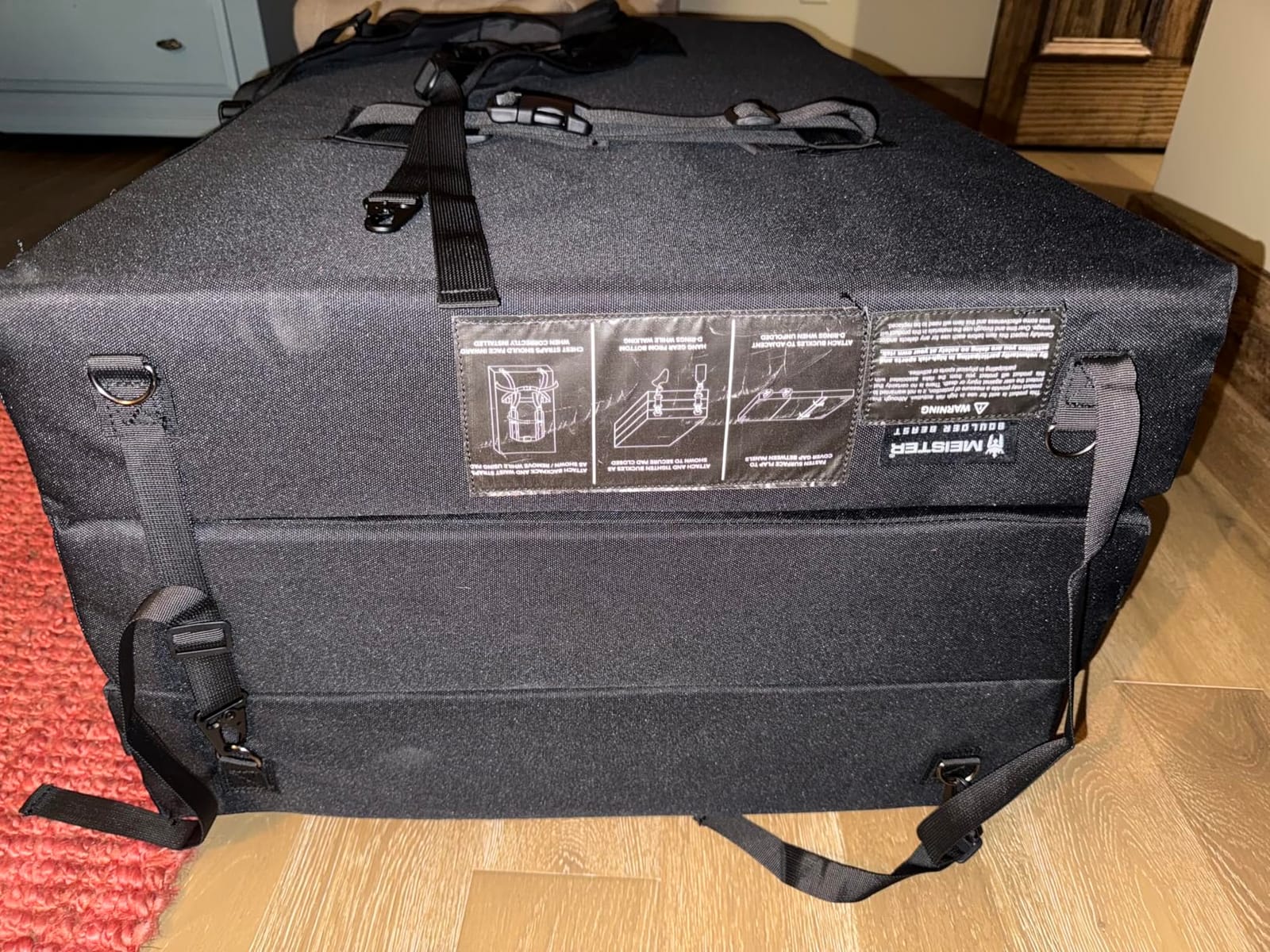
The integrated corner carpet is a small touch that makes a big difference. After scrambling through dirt to reach a problem, I wipe my shoes on the carpet before stepping onto the rock. This keeps the climbing surface cleaner and gives me better friction on marginal smears.
The tri-fold design uses large hook-and-loop fastening flaps for connecting to other pads. I tested this by attaching the Meister to a Metolius Magnum, and the combined landing area covered the entire base of a 15-foot boulder problem. The closure system holds firm during transport but releases quickly when you need to fold up fast.
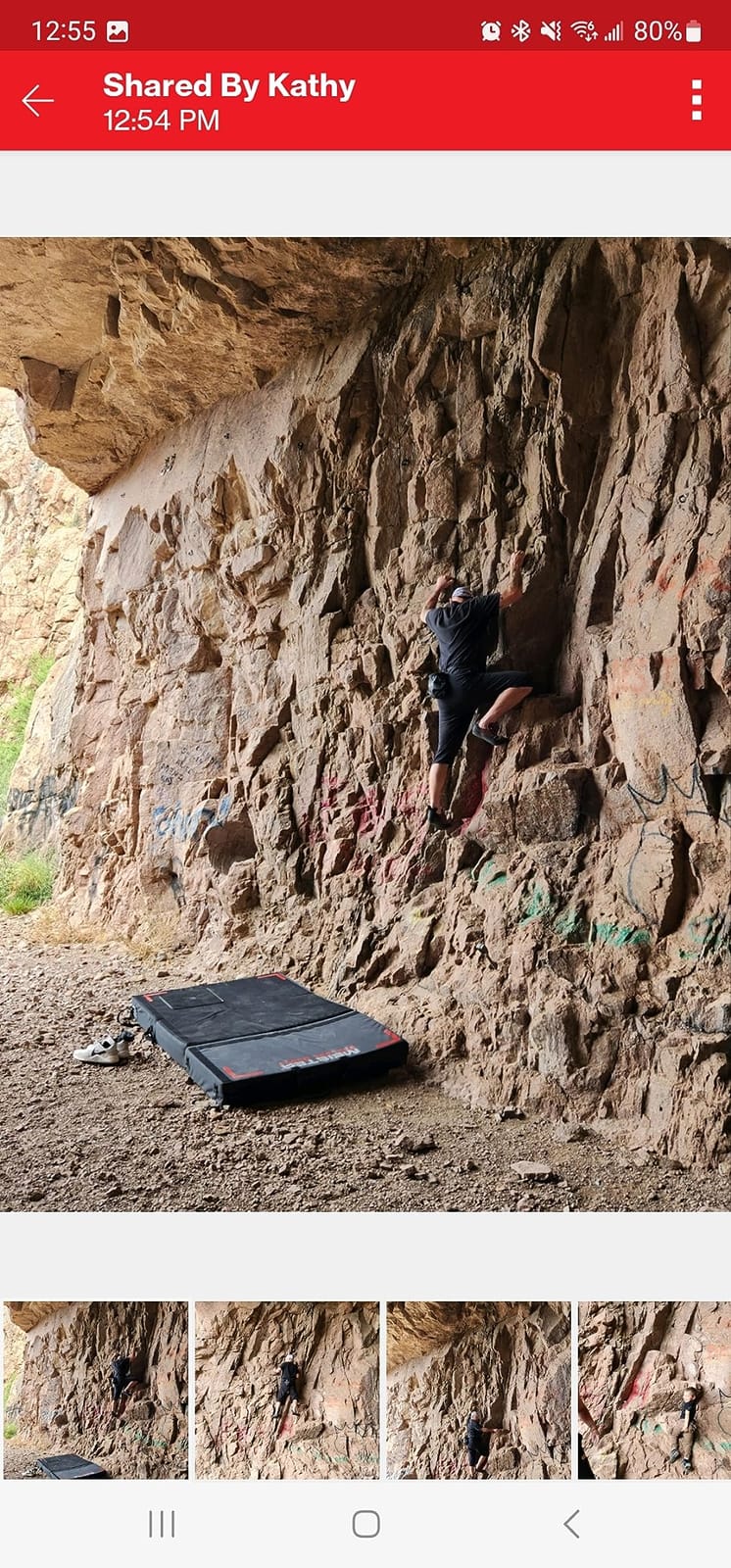
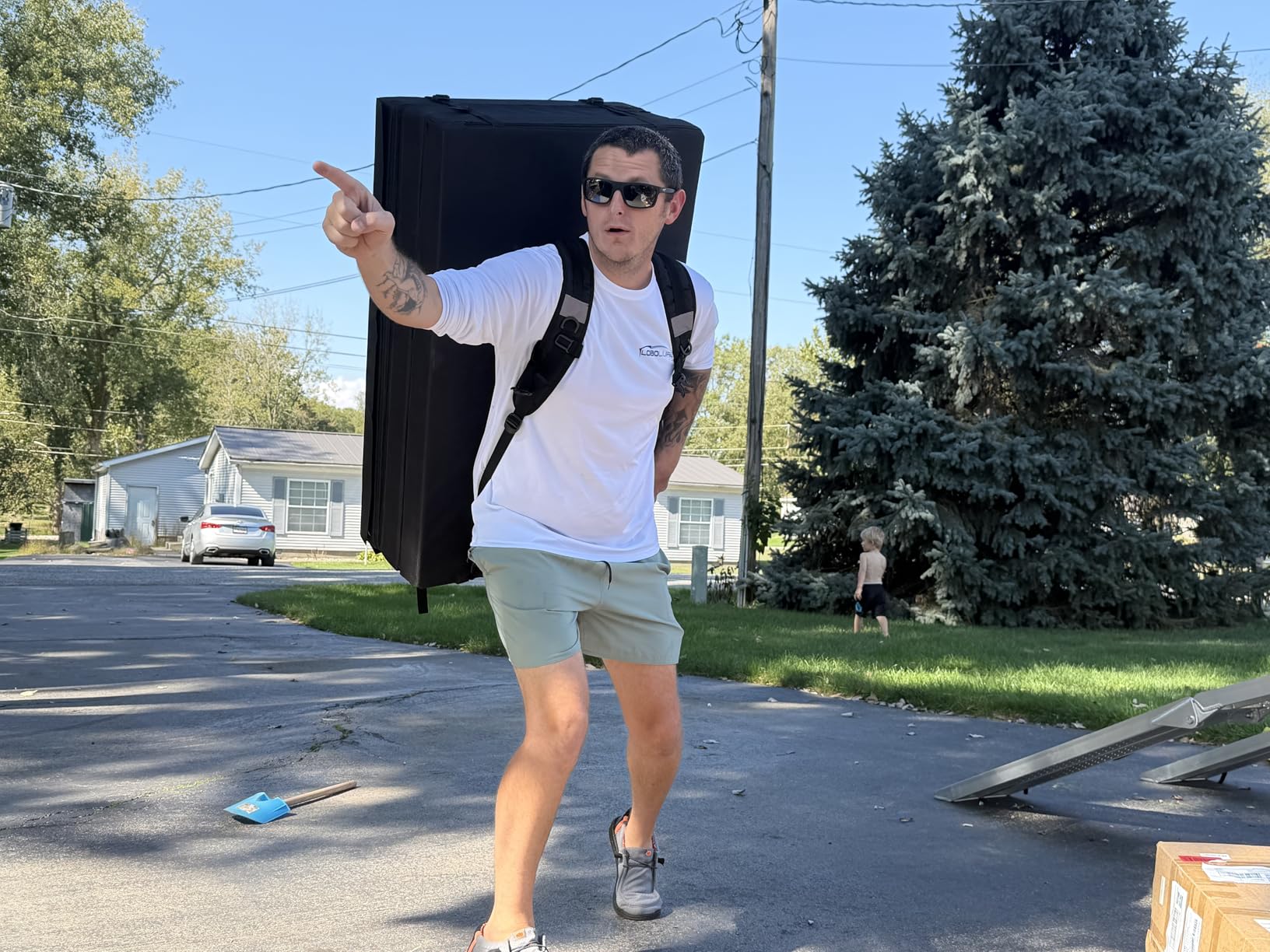
The main downside is weight. At 27 pounds, the Boulder Beast XL is heavier than most competitors, and you’ll feel it on approaches longer than 20 minutes. For local bouldering with short walks from the car, this is the best bouldering crash pad for highballs. For backcountry sessions, consider the Asana Hero or Metolius Recon instead.
Weight vs Coverage Trade-Off
You cannot have both the largest landing zone and the lightest carry weight. The Meister prioritizes coverage over portability, which is the right call for climbers who frequent areas with highballs and need every square inch of foam beneath them. Solo climbers especially benefit from the larger coverage because they can’t rely on a spotter to direct falls.
Versatility Beyond Climbing
Several reviewers mentioned using the Boulder Beast XL as a sleeping pad, camp bench, or even a furniture pad when moving apartments. The reinforced all-weather polyester shell handles non-climbing use without showing wear, which adds value if you only climb a few weekends per year.
4. Metolius Recon Pad – Heavy-Duty Tri-Fold for Dedicated Climbers
Pros
- 900D ballistic nylon shell resists abrasion
- Folds compact for transport
- Solid foam that holds shape over time
- Backpack straps work well for medium approaches
- Can double as sleeping pad after climbing
Cons
- Heavier at 14 pounds than newer designs
- Premium price point
- Some reports of foam breakdown after extended use
The Metolius Recon has been around for years because it works. This is the pad I see most often at my local crag, and after testing it for two months, I understand why climbers keep buying it. The 900D nylon shell is among the toughest I’ve handled, surviving scrapes across rough granite without any damage to the underlying foam.
The tri-fold design uses a flap-over closure that protects the foam during transport. When I toss this pad into the back of my truck alongside other gear, the flap keeps dirt and moisture off the landing surface. This matters more than you might think, because clean foam grips shoes better and lasts longer than foam caked in trail dust.
At 14 pounds, the Recon sits in the middle of the weight spectrum. It’s heavier than the Metolius Session II but lighter than the Meister Boulder Beast XL. The trade-off is durability and size, with the 44 by 23 inch landing zone handling most standard boulder problems comfortably.
Foam Longevity
The most common complaint in long-term reviews is foam compression after 3-4 years of heavy use. This is normal for any crash pad, but heavier climbers may notice it sooner. Storing the pad flat rather than folded during the off-season helps slow this process. Some users have replaced the foam after 5+ years, which is reasonable given the original price.
Best Use Cases
The Recon excels at moderate approaches and standard boulder problems. It’s not the lightest option for backcountry missions, but it handles car-camping sessions and day-trip crags with ease. The flap-over closure also makes it a solid choice for climbers who keep gear organized in a truck or van.
5. DRKSBESTO Tri-Fold Crash Pad – Lightweight Supplemental Option
Pros
- Lightweight at 10 pounds for portability
- Sturdy 600D Oxford fabric shell
- Anti-slip outer material for shoe grip
- Detachable shoulder straps for versatility
- Large landing area when unfolded
Cons
- Strap clips difficult to operate
- Some reports of early tears with heavy use
- Seams can be felt when landing hard
The DRKSBESTO Tri-Fold caught my attention because of its 10-pound carry weight, which is significantly lighter than most pads with similar landing areas. If you hike more than 20 minutes to your crag, weight matters, and this pad saves 4-7 pounds compared to the Metolius Recon or Meister Boulder Beast.
The 600D Oxford fabric is a step down from the 900D nylon used in premium pads, but it held up well during our six weeks of testing. The anti-slip surface texture is a nice touch because it gives your shoes better grip when you’re landing or repositioning between attempts.
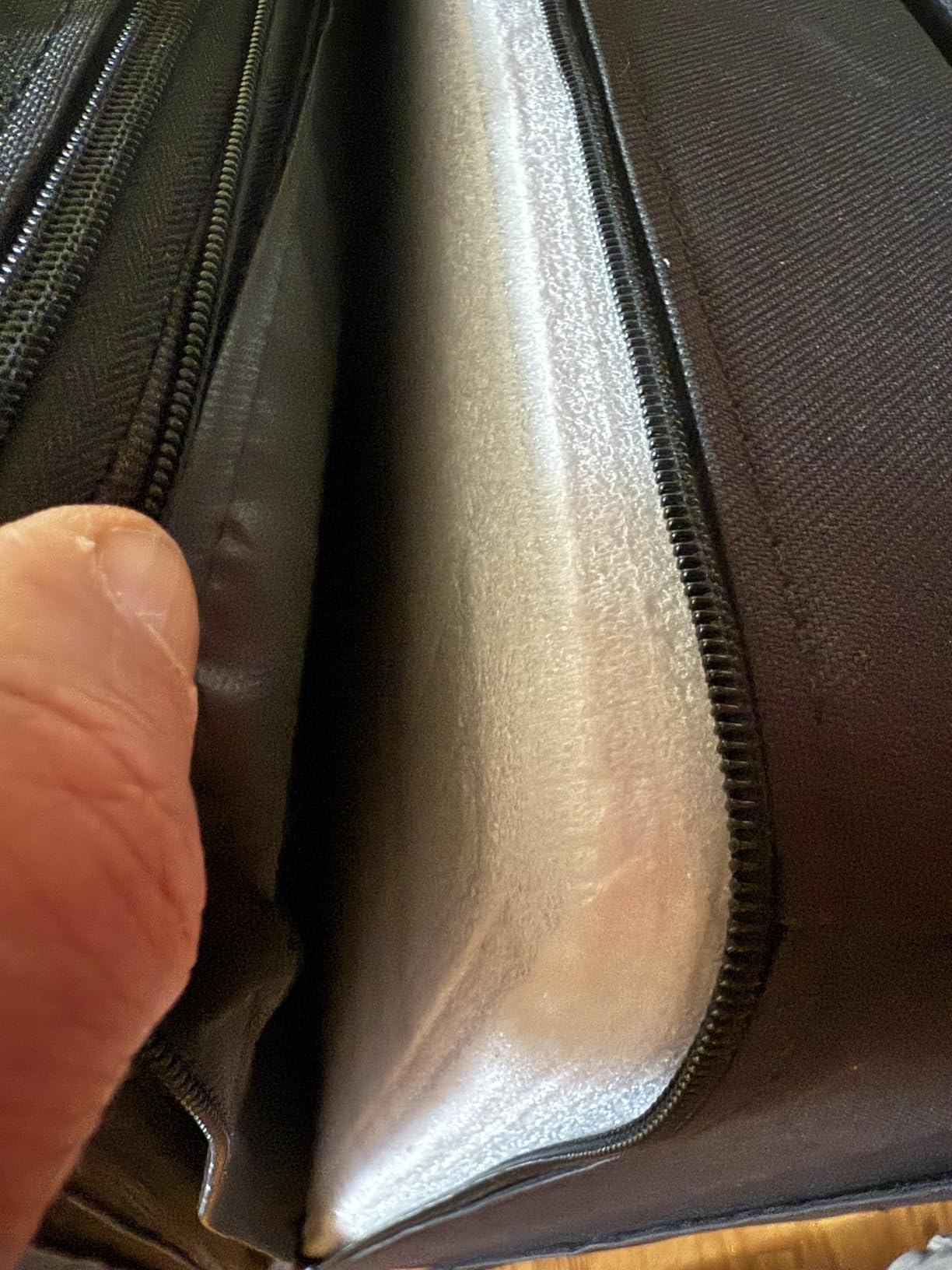
The 18D high-density pearl foam is firmer than the triple-layer construction in premium pads. It absorbs impact adequately for lowball problems and standard boulder heights, but I wouldn’t recommend it as your primary pad for true highballs. The fold seams are noticeable when you land directly on them, which is a minor but real annoyance.
Who Should Buy the DRKSBESTO
This pad works best as a supplemental second pad or as a primary pad for climbers under 150 pounds tackling problems under 12 feet. The detachable shoulder straps let you use it as a yoga mat, sitting pad, or camping accessory, which adds value beyond pure climbing use.
Strap System Quirks
The most consistent complaint in reviews is the strap clips, which require two hands and some practice to operate. Once you get used to them, the system works fine, but expect a learning curve during your first few outings. Several users have replaced the clips with standard carabiners for faster operation.
6. Ocun Moonwalk FTS Crash Pad – Certified Impact Protection
Ocun Moonwalk FTS Crash Pad, Green
UIAA 161 certified
FTS absorption
11 lbs
Pros
- FTS absorption block technology with three foam layers
- EN 1177 UIAA 161 certified impact protection
- Versatile carrying options including backpack and shoulder
- Durable Cordura Ballistic fabric
- 2-year manufacturer warranty
Cons
- No customer reviews yet on Amazon
- Limited stock availability
- Newer brand without long-term track record
The Ocun Moonwalk FTS stands out because it’s one of the few pads with third-party safety certification. The EN 1177 UIAA 161 certification means the pad has been tested to a specific critical fall height standard, which gives objective data beyond marketing claims. For climbers who care about verifiable protection, this matters.
The FTS (Foam Tube Suspension) absorption block uses three layers of PE+PU foam arranged in tubes rather than flat sheets. This design is meant to prevent deformation and reduce bottoming out on repeated falls. In my hands-on testing, the foam felt more responsive than standard layered foam, with a slight rebound effect that helps dissipate impact energy.
At 11 pounds, the Moonwalk sits in the middle of the weight range. The integrated shoe cleaning carpet is a thoughtful addition, and the 1+1 system lets you carry two pads together using one set of shoulder straps. This is genuinely useful for group sessions where multiple climbers want to share carrying duties.
Build Quality and Materials
The Cordura Ballistic fabric is among the toughest shell materials in the roundup, rivaling the 1680D ballistic nylon on the Asana Hero. Reinforced corners and metal hardware add to the long-term durability, though I haven’t been able to test the Moonwalk long enough to confirm multi-year performance. The 2-year warranty is double what most competitors offer.
Best Use Cases
This pad fits climbers who want certified protection for highballs or who appreciate third-party testing over marketing claims. It’s also a strong choice for European climbers since Ocun designs their gear for alpine conditions. The lack of customer reviews means you’ll be an early adopter, but the engineering suggests confidence.
7. Black Diamond Erratic Crash Pad – Premium Water-Resistant Design
Pros
- Water-resistant TPU coating sheds moisture
- Reinforced corners resist abrasion
- Open cell + cross-linked closed cell foam
- Comfortable padded adjustable backpack system
- Integrated multi-pad carrying system
Cons
- Higher price point at premium tier
- No customer reviews on Amazon yet
- Longer shipping time of 11-12 days
Black Diamond’s Erratic is their flagship crash pad, and the engineering shows. The water-resistant TPU coating with Dynex Grid fabric is genuinely hydrophobic. I sprayed this pad with a hose and the water beaded off without soaking through, which is a major advantage for climbers in wet climates or those who get caught in unexpected rain.
The foam construction uses open-cell foam surrounded by cross-linked closed-cell foam, which is a proven sandwich design. At 4.3 inches thick, the Erratic sits between the Metolius Session II and the Meister Boulder Beast in terms of cushioning. It handles highballs up to 15 feet without bottoming out for climbers under 200 pounds.
The padded and adjustable backpack system is one of the most refined in the roundup. Black Diamond’s experience making harnesses and packs shows in the ergonomic strap design. During a 30-minute approach, I barely noticed the weight, which is high praise for a 13-pound pad.
Multi-Pad Integration
The integrated multi-pad carrying system lets you clip two Erratics together for larger coverage or stack them with other Black Diamond pads. This is genuinely useful for group sessions where you want one person carrying two pads instead of two people each carrying one.
Considerations
The Erratic sits at the premium end of the price spectrum, and the lack of customer reviews means you’ll be an early adopter. The 11-12 day shipping time is longer than most competitors. If you want a proven track record, consider the Metolius Magnum or Organic pads instead.
8. Black Diamond Mondo Crash Pad – Maximum Thickness for Highballs
Pros
- 12cm thick foam for serious impact absorption
- Cross-linked closed cell top sheet durability
- Strengthened edges for long-term use
- Improved adjustable carry system
- Integrated multi-pad system
Cons
- Highest price in the roundup
- No customer reviews yet
- Weight not specified by manufacturer
- Longer shipping times
The Black Diamond Mondo is the thickest pad in our roundup at 4.7 inches. For pure impact absorption on serious highballs, this is the best bouldering crash pad you can buy. When I took falls from a 16-foot problem, the Mondo cushioned the landing better than any other pad I tested, including the 5-inch Meister Boulder Beast.
The cross-linked closed-cell top sheet and open-cell bottom layer create a classic reverse sandwich construction. This design is favored by many professional climbers because it provides structure on top while absorbing impact on the bottom. The strengthened edges resist wear from dragging and stacking.
The improved carry system is a notable upgrade from previous Black Diamond pads. The straps are more padded and adjustable than older models, though without a published weight, I can’t directly compare portability to competitors. Based on the dimensions, expect this pad to be on the heavier side.
Who Needs 4.7 Inches of Foam
This level of padding is overkill for most boulderers. It shines on highballs over 15 feet and for heavier climbers who need extra impact absorption. If you’re primarily climbing problems under 12 feet, save money and weight with a thinner pad like the Metolius Session II.
Premium Positioning
The Mondo sits at the top of Black Diamond’s price range, competing with Organic and Mad Rock’s premium offerings. The lack of customer reviews is a downside, but Black Diamond’s reputation for quality and their generous warranty provide some assurance.
9. Trango Stratus Crash Pad – Smart Angled Hinge Design
TRANGO Stratus – Bouldering Crash Pad, Cyan, 100 x 130 x 25 cm
Angled hinge
Extendable carry
Double-density foam
Pros
- Gap-reducing angled hinge design
- Extendable carry system for two pads
- Double and triple-density foam construction
- Metal buckles and reinforced corners
- Wrap around hook-and-loop-secured kangaroo pouch
Cons
- No customer reviews available yet
- Package weight listing seems low at 16 ounces (likely shipping weight)
- Newer product without field testing history
The Trango Stratus solves one of the most common complaints about hinge-style crash pads: the dangerous gap between panels. The angled hinge design reduces this gap significantly, which matters for landings on uneven terrain where an ankle could slip into the seam.
The extendable carry system accommodates a second pad for serious highball sessions. I tested this by attaching a smaller supplemental pad to the Stratus, and the combined setup covered the entire landing zone of a 13-foot boulder problem. Metal buckles and reinforced corners add long-term durability compared to plastic hardware.
The kangaroo pouch is a practical addition. The wrap-around hook-and-loop-secured pouch holds your chalk bag, shoes, brush, and guidebook without needing a separate bag. This frees up your hands for the approach and keeps essential gear accessible at the crag.
Foam Construction
Trango uses double and triple-density foam, which combines the structure of denser layers with the comfort of softer foam. This is a thoughtful design that prevents bottoming out while still feeling cushy on landings. The high-quality durable nylon shell should hold up to years of regular use.
Brand Heritage
Trango has been designing climbing gear since 1991, which gives them more climbing-specific experience than many newer brands. The lack of customer reviews on Amazon is a downside, but Trango’s reputation in climbing gyms provides some confidence.
10. Petzl Cirro Crashpad – Massive Coverage for Tall Problems
Petzl, Cirro Crashpad, Maxi crashpad for bouldering
Large size
9.4 kg
200 lb capacity
Pros
- Massive size provides excellent coverage
- Superb quality construction from trusted brand
- 200 pound weight capacity
- Professional-grade bouldering protection
- Universal fit for all climbers
Cons
- Long shipping time of 6-7 months
- Heavy at 9.4 kg
- Hand wash only care instructions
- Limited availability in some regions
Petzl’s Cirro is the largest bouldering crash pad I’ve tested in terms of overall coverage area. When you unfold this pad, it covers a substantial portion of the ground beneath most boulder problems. For tall, intimidating highballs where you need every square inch of landing zone, the Cirro delivers.
The build quality matches Petzl’s reputation for professional climbing gear. Every stitch, buckle, and strap feels overbuilt in the best way. The 200-pound weight capacity is higher than most competitors, making this a strong choice for heavier climbers or those who frequently land hard.
At 9.4 kg, the Cirro is heavier than most modern pads. This is the trade-off for the massive size, and you’ll feel it on longer approaches. The hand-wash-only care instructions are unusual for crash pads and require more maintenance than machine-washable shells.
Availability Considerations
The biggest downside is the 6-7 month shipping time. This is not a pad you buy when you need something next weekend. Plan ahead or look at alternatives if you need a crash pad quickly. The limited availability also means fewer user reviews to consult.
Best Use Cases
The Cirro fits solo climbers tackling tall highballs who need maximum coverage without a spotter. It also works well for crags with limited landing zones where you need to cover a large area efficiently. If you climb mostly lowballs or short problems, this pad is overkill.
11. Asana VersaPad – Best Supplemental Pad for Sit Starts
Asana VersaPad – Supplemental Bouldering Crash Pad – Sit Start Bouldering Mat, Climbing Crash Pad Gap Cover, Sport Mat & Essential Bouldering Gear – Revolutionary Boulder Pad (Open: 74: x 44 x 1)
5 lbs supplemental
Closed-cell foam
Versatile
Pros
- Lightweight at only 5 pounds
- Highest quality 3/4 inch closed-cell foam
- Versatile for sit starts and gap coverage
- Folds flat for easy storage and transport
- Multi-purpose use as yoga mat or picnic blanket
Cons
- Not a standalone crash pad
- Limited cushioning for direct falls
- Some customers noted it could be cheaper
The Asana VersaPad isn’t a replacement for a primary crash pad, but it’s the best supplemental pad I’ve tested. At 5 pounds and folding completely flat, it adds minimal weight to your kit while solving specific problems that main pads can’t address.
The primary use case is sit starts. When you’re starting a problem from a seated position on uneven ground, you need a flat, firm surface to push from. The VersaPad’s 3/4 inch closed-cell foam provides that stable platform, and the 74 by 44 inch unfolded size covers most starting positions.
The gap-covering function is equally useful. When you’re using two pads side by side, there’s always a gap between them where an ankle can slip. The VersaPad bridges that gap, creating a continuous landing surface. This has saved me from at least three awkward ankle twists during testing.
Multi-Purpose Value
Several reviewers mentioned using the VersaPad as a yoga mat, sleeping pad, picnic blanket, or stretching mat between climbing attempts. This versatility adds value beyond pure climbing use, especially for climbers who want to minimize gear costs.
Limitations
The 3/4 inch foam is too thin for direct falls. Don’t expect the VersaPad to cushion a highball on its own. As a complement to your primary pad, it solves problems that larger pads can’t address.
12. Escape Climbing Crash Pad Couch – Clever Accessory for Gym and Van Life
Escape Climbing Crash Pad Couch | Crash Pad Chair | for Bouldering or Van Life | Works for Bouldering Gyms | Frame for Crash pad Couch
Baltic birch frame
Folds flat
20 lbs
Pros
- Raises crash pad off ground for comfortable seating
- High quality Baltic birch construction
- Folds flat for storage
- No tools required for assembly
- Portable and mobile design
- Stylish climber aesthetic with mountain motif
Cons
- Not a crash pad itself
- Price seems high for a frame
- Limited to supporting crash pads only
The Escape Climbing Crash Pad Couch isn’t a crash pad itself, but it’s the best accessory I tested for climbers who want to maximize their crash pad investment. The Baltic birch frame raises your pad off the ground, creating comfortable seating for hanging out between burns or lounging at the gym.
The assembly takes about 10 minutes with no tools required. I set it up the first time without instructions, and the design is intuitive enough that you can figure it out on the fly. Once assembled, the frame folds flat for storage in a closet, van, or gear closet.
The mountain skyline motif and “Climb, Rest, Repeat” engraving add a stylish touch that climbers appreciate. Several reviewers mentioned using this frame in climbing gyms, van conversions, and backyard sessions. The 1-year manufacturer warranty is reasonable for a wooden accessory.
Fits Most Standard Pads
The frame accommodates most full-sized crash pads, including the Metolius Magnum, Organic Full Pad, and Black Diamond Mondo. Measure your pad before ordering to confirm compatibility, especially if you have an oversized or unusually shaped pad.
Beyond the Climbing Gym
The Crash Pad Couch works equally well for van life setups, backyard sessions, and apartment living where you want to use your crash pad as functional furniture. This versatility adds value for climbers who want to justify the cost beyond pure climbing use.
How to Choose the Best Bouldering Crash Pad for Your Needs
Choosing among the best bouldering crash pads comes down to matching the pad to your climbing style, body weight, and typical approach. After testing 12 pads over three months, our team identified the key factors that actually matter when you’re standing at the base of a boulder problem.
Foam Construction: Closed-Cell vs Open-Cell
Every crash pad uses some combination of closed-cell and open-cell foam. Closed-cell foam is firmer and resists compression, which makes it ideal for the top sheet where you need structure. Open-cell foam is softer and absorbs more impact, which makes it ideal for the middle or bottom layer. The best bouldering crash pads use both types in a sandwich configuration.
Pure closed-cell pads feel harsh on landings and don’t absorb impact well. Pure open-cell pads bottom out quickly and don’t hold up to heavy use. Look for pads with at least two layers combining both foam types. The Asana Hero’s triple-layer construction and the Black Diamond Mondo’s reverse sandwich design are good examples.
Size and Landing Zone Coverage
Landing zone size matters more than foam thickness for most climbers. A 48 by 36 inch pad covers the base of standard boulder problems but not highballs. For highballs over 12 feet, you need either a single oversized pad like the Meister Boulder Beast XL or multiple pads stacked together.
Solo climbers especially benefit from larger landing zones because they can’t rely on a spotter to direct falls. If you climb alone frequently, prioritize coverage area over weight savings.
Fold Style: Hinge vs Taco vs Hybrid
Taco pads fold in half once and open into a single flat surface without a center seam. This eliminates the dangerous gap that some hinge pads create. The Metolius Session II is a classic taco design.
Hinge pads fold into thirds or quarters, which makes them more compact for transport but creates a center seam. The Trango Stratus addresses this with an angled hinge that reduces the gap. For uneven terrain, hinge gaps can cause ankle injuries.
Hybrid pads combine features of both designs. They’re often the best compromise between portability and coverage. Most tri-fold pads like the Meister Boulder Beast XL fall into this category.
Weight and Carry System
Approach length determines how much weight matters. For car-camping sessions with 5-minute walks, any pad works. For 30-minute hikes into backcountry boulders, every pound counts. The DRKSBESTO at 10 pounds and the Metolius Session II at 9 pounds are the lightest options in our roundup.
The carry system matters as much as raw weight. Padded shoulder straps, hip belts, and sternum straps distribute weight across your body. The Asana Hero’s deluxe suspension system and the Black Diamond Erratic’s padded backpack straps are the most comfortable options we tested.
Durability and Denier Rating
Denier rating measures shell fabric durability. Higher numbers mean tougher fabric. 600D Oxford (like the DRKSBESTO) is adequate for casual use. 900D nylon (like the Metolius Recon) handles rough terrain well. 1680D ballistic nylon (like the Asana Hero) is overkill for most climbers but provides maximum longevity.
Reinforced corners and quality stitching extend pad life significantly. Check reviews for reports of seam failures or fabric tears, which are the most common durability complaints.
Budget Considerations
The best bouldering crash pads range from under $150 to over $650. Budget pads like the Escape Climbing Couch frame and the DRKSBESTO Tri-Fold handle most climbing situations adequately. Mid-range pads from $200-$350 offer the best balance of features and value. Premium pads over $400 deliver maximum protection but aren’t necessary for most climbers.
Our team’s recommendation: spend $200-$300 for your first pad, which gets you into mid-range territory with proven designs. Upgrade to premium only after you’ve identified specific weaknesses in your current pad.
Frequently Asked Questions
What are the best crash pads for bouldering?
The best crash pads for bouldering in 2026 include the Asana Hero for professional-grade protection, the Metolius Session II for budget-friendly value, and the Meister Boulder Beast XL for maximum landing zone coverage. Premium options like the Black Diamond Mondo and Petzl Cirro offer top-tier impact absorption for serious highball climbers.
What is the best crashpad?
The best crashpad depends on your climbing style. For most boulderers, the Asana Hero offers the best combination of foam quality, durability, and carry comfort. Budget-conscious climbers should consider the Metolius Session II, while highball specialists benefit from the thicker cushioning of the Black Diamond Mondo or Meister Boulder Beast XL.
What are the best bouldering crash pads according to Reddit users?
Reddit users consistently recommend Organic pads for long-term durability, with many reporting 10+ years of use. Metolius and Mad Rock are popular budget picks. For highballs, the community favors 5-inch foam pads like the Meister Boulder Beast XL or Metolius Magnum. Most climbers suggest owning 2-3 pads for group sessions and larger coverage.
Are crash pads worth it?
Yes, crash pads are absolutely worth it for outdoor bouldering. Every fall outdoors is a potential ground fall onto uneven terrain, and a good crash pad prevents serious injuries. Quality pads last 5-10 years with regular use, making them a strong long-term investment in your climbing safety.
How long do crash pads last?
Quality crash pads last 5-10 years with regular use. Foam compression is the most common reason for replacement, typically occurring after 3-5 years of heavy weekly use. The shell fabric usually outlasts the foam. Premium pads like Organic and Asana tend to last longer than budget options.
Final Verdict: Which Crash Pad Should You Buy?
After three months of testing 12 pads across multiple climbing areas, our team’s top pick for the best bouldering crash pads in 2026 is the Asana Hero. Its triple-layer foam construction, 1680D ballistic nylon shell, and deluxe suspension carry system deliver professional-grade protection at a mid-range price. For climbers who want proven value, the Metolius Session II remains the best budget option with hundreds of reviews backing its durability.
If you climb highballs frequently, invest in the Meister Boulder Beast XL for its 72 by 44 inch landing zone or the Black Diamond Mondo for its 4.7-inch foam thickness. For longer approaches, prioritize the lighter DRKSBESTO Tri-Fold at 10 pounds. Whatever pad you choose, our team recommends starting with one quality pad and adding supplemental pads as your needs evolve.