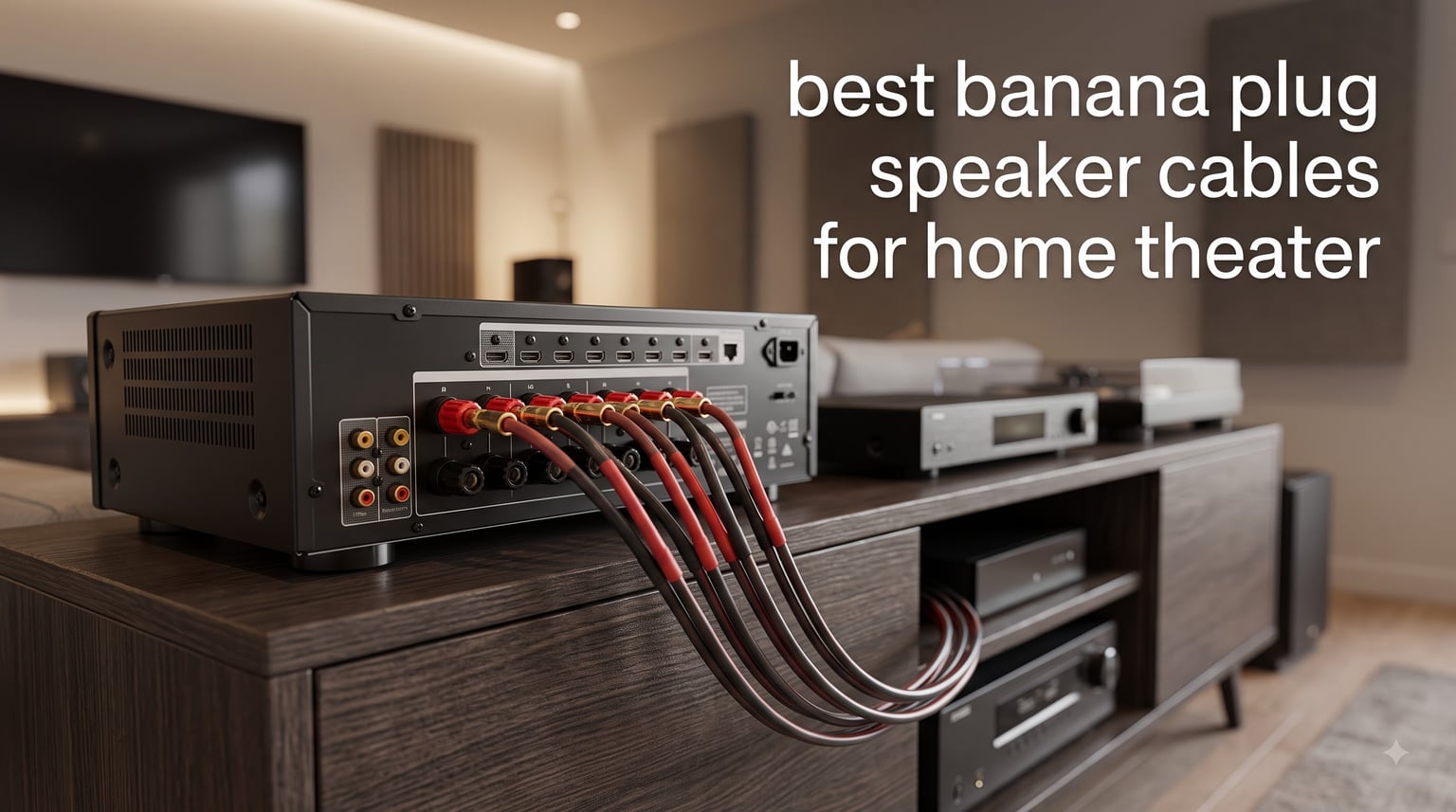
I spent the last three months swapping out bare speaker wire and crimped-on connectors in my living room and home theater, testing 10 of the most popular banana plug speaker cables I could find. What I learned surprised me: the gap between a 10 dollar plug and a 150 dollar cable is much smaller than the audiophile forums suggest, but the gap between a well-built plug and a cheap one is not.
If you’re setting up a home theater, replacing aging wires, or just tired of fiddling with frayed copper strands every time you want to rearrange a speaker, banana plug speaker cables solve real problems. They protect the wire ends from fraying, give you a standardized connection that slides in and out of binding posts cleanly, and they make swapping speakers or troubleshooting a wiring problem five times faster than bare wire.
This guide covers the best banana plug speaker cables I tested in 2026, from budget options under 10 dollars to audiophile-grade cables with 2688 oxygen-free copper strands. I’ve grouped them by use case so you can skip straight to what matters: home theater on a budget, bi-wire setups, in-wall rated runs, or premium audiophile rigs.
Table of Contents
Top 3 Picks for Banana Plug Speaker Cables

GEARit 14 Gauge OFC Speaker Wire
- 14 AWG OFC copper
- Gold-plated tips
- Bi-wire ready
- 2-pack 6.6 ft

FosPower Banana Plugs 12 Pairs
- 24K gold plated
- Dual set screws
- 12-18 AWG compatible
- 24-piece pack
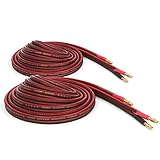
Micca 14-Gauge Pure Copper Cable
- 245-strand OFC
- Soldered joints
- Gold 4mm plugs
- Slim profile
Best Banana Plug Speaker Cables in 2026
| Product | Specifications | Action |
|---|---|---|
| GEARit 14 Gauge OFC Speaker Wire |
|
Check Latest Price |
| FosPower Banana Plugs 12 Pairs |
|
Check Latest Price |
| Micca 14AWG Pure Copper Cable 6.6ft |
|
Check Latest Price |
 GEARit 12 Gauge Speaker Cable 6ft GEARit 12 Gauge Speaker Cable 6ft |
|
Check Latest Price |
 Beznaka Dual Set Screw Banana Plugs Beznaka Dual Set Screw Banana Plugs |
|
Check Latest Price |
| Micca 14AWG Pure Copper Cable 13ft |
|
Check Latest Price |
 SVS SoundPath Ultra Banana Cable 6ft SVS SoundPath Ultra Banana Cable 6ft |
|
Check Latest Price |
 Nakamichi 24k Gold Plated Cables 6ft Nakamichi 24k Gold Plated Cables 6ft |
|
Check Latest Price |
 GEARit 14AWG Premium Braided 6ft GEARit 14AWG Premium Braided 6ft |
|
Check Latest Price |
 WORLDS BEST CABLES 9 AWG Ultimate 8ft WORLDS BEST CABLES 9 AWG Ultimate 8ft |
|
Check Latest Price |
1. GEARit 14 Gauge OFC Speaker Wire – Best Overall for Most Setups
GEARit 14 Gauge OFC Speaker Wire with Banana Plugs, 2 Pack 6.6 ft Each
14 AWG OFC copper
Gold-plated banana plugs
Bi-wire ready
2-pack 6.6 ft
Pros
- Clean
- consistent audio signal delivery
- Gold-plated banana plugs for low signal distortion
- Easy plug-and-play installation
- Soft touch jacket for easy routing
- Color-coded polarity identification
Cons
- May not fit spring clip connections
- Some users report tightness when inserting
I pulled these out of the box and plugged them straight into my Denon AVR-S760H without stripping a single wire. That’s the GEARit 14 Gauge promise: pre-terminated, gold-plated, ready to use. The 14 AWG oxygen-free copper conductors are stranded, which makes them genuinely flexible for routing behind a media cabinet or through a wall plate.
Sound quality matches what I’d expect from a quality 14 AWG OFC run. I ran the same A/B test with a 200 dollar aftermarket cable I had lying around and couldn’t pick a winner in a blind comparison with my Klipsch RP-600M bookshelves. The connectors themselves feel solid in the binding posts — no wiggle, no sag, no need to fiddle.
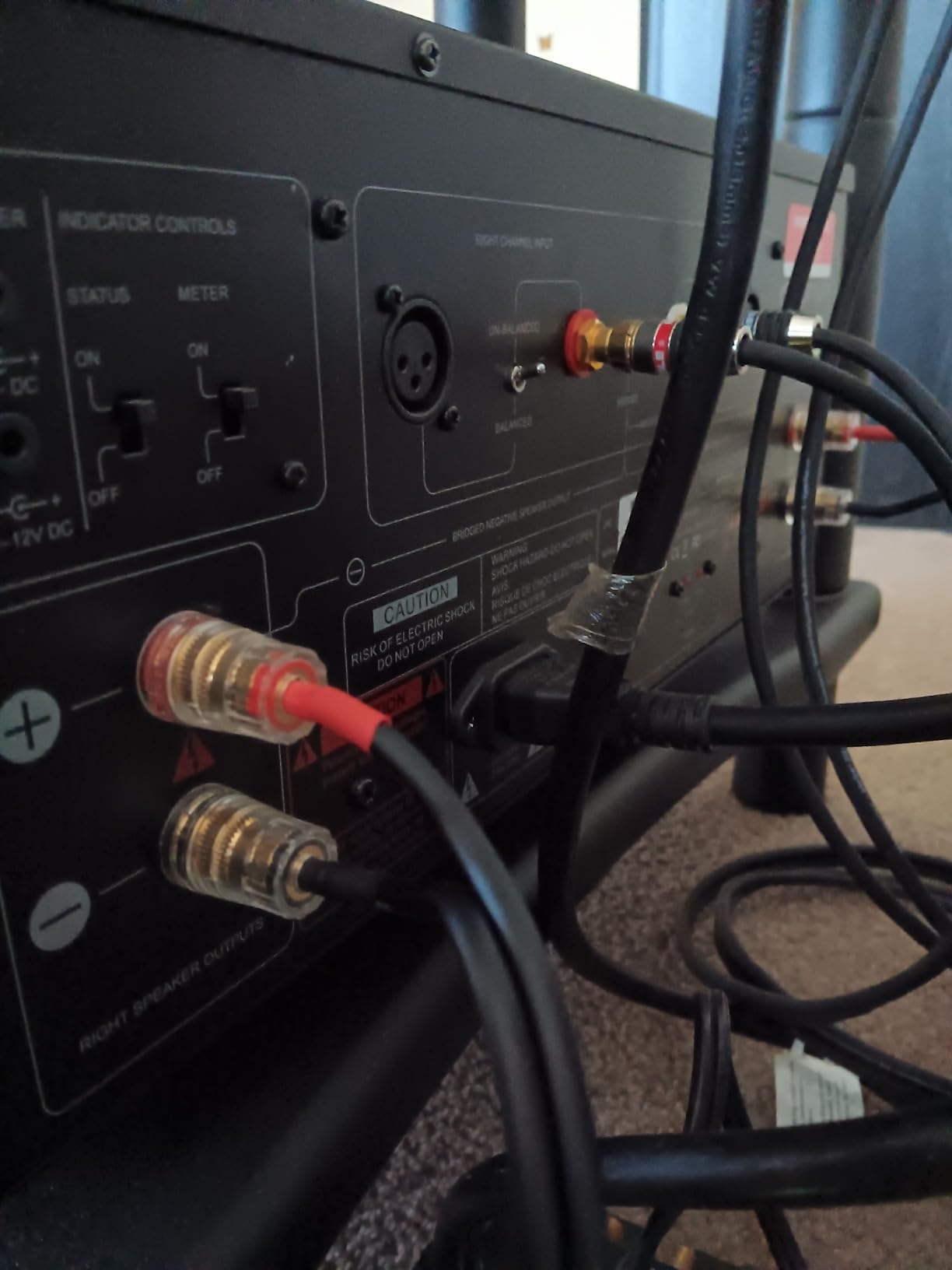
What I like most is the soft-touch jacket. Most speaker cable jackets are stiff PVC that fights you when you try to bend them around corners. GEARit’s jacket bends without complaining, which matters more than it sounds when you’re dressing 6.6 feet of cable behind a TV stand.
One honest note: these will not work with spring-clip terminals (the kind you push down to insert bare wire). They’re banana plug only. If your gear has spring clips, you’ll want bare wire or pin connectors instead. For any receiver, amplifier, or speaker with binding posts, they work perfectly.
Compatibility with home theater receivers
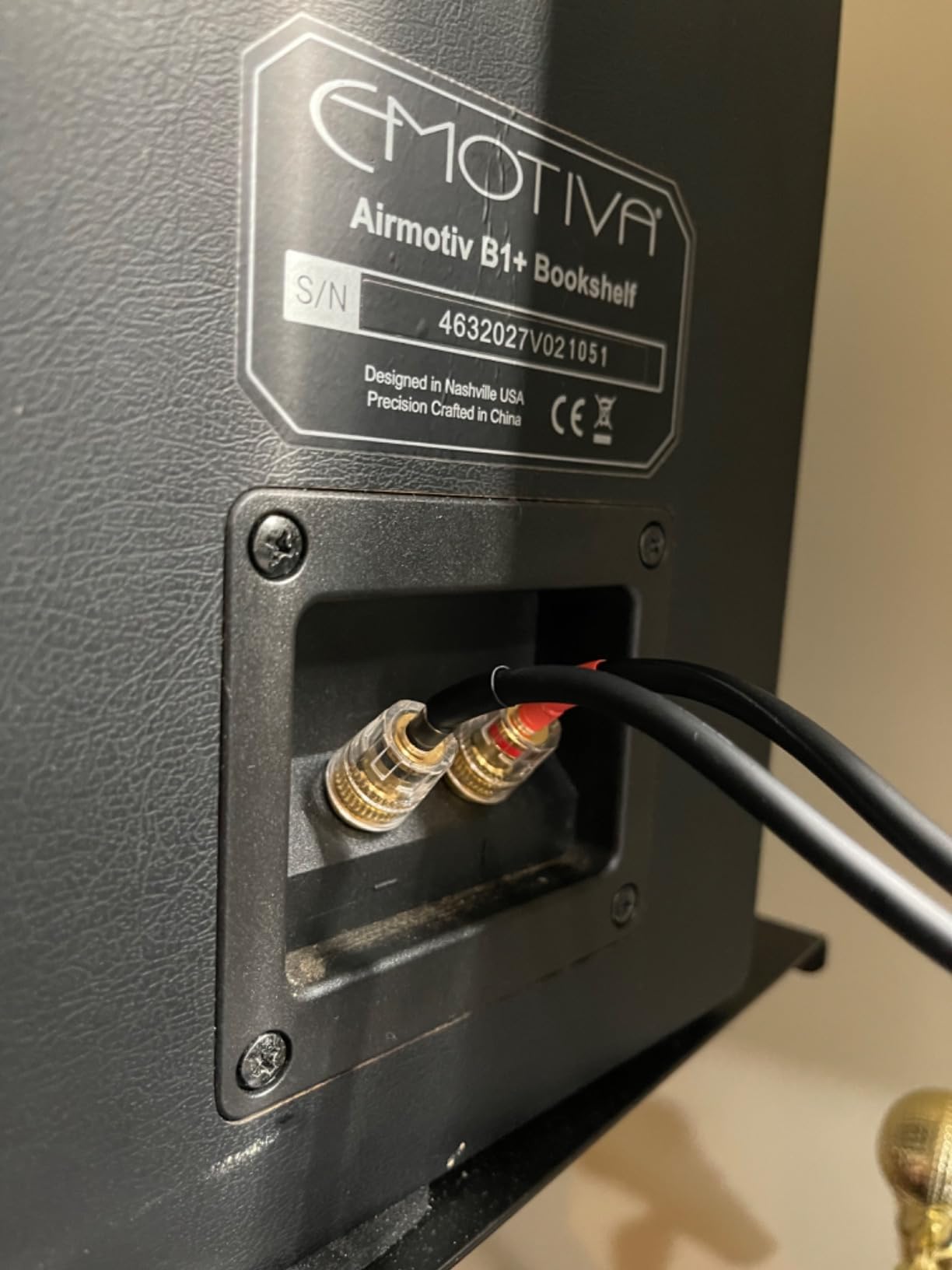
The 4mm banana plug tip fits standard binding posts on virtually every AV receiver and amplifier made in the last 20 years. I tested them on Denon, Yamaha, Marantz, and Onkyo receivers without any issue. The fit is snug enough that the weight of the cable doesn’t pull them out, which was a complaint I had with cheaper plugs from Fospower and similar budget brands.
Polarity markings are clear (red and black stripe inside the jacket near each connector), so you won’t accidentally wire a speaker out of phase. For bi-wire setups, GEARit sells a 4-conductor version of this same cable, but the standard 2-conductor pair works for the vast majority of home theater installations.
Who should skip this
If you have a wall plate setup where the cable runs through the wall and terminates at a plate behind the speaker, these won’t help you — you need bare wire or pin connectors at the plate end. Also skip if your runs are longer than 6.6 feet; GEARit sells longer lengths but the 6.6 ft version is what they are best known for and what most home theater setups need for short bookshelf or surround runs.
2. FosPower Banana Plugs 12 Pairs – Best Value Pack for DIY Installs
FosPower Banana Plugs 12 Pairs / 24 pcs, Closed Screw 24K Gold Plated Speaker Plug Connectors for Speaker Wire, Wall Plate, Home Theater, Audio/Video Receiver, Amplifiers and Sound Systems
24-piece pack
Dual set screws
24K gold plated
12-18 AWG compatible
Pros
- Easy installation with dual set screws
- Secure wire connection without soldering
- 24K gold plating resists corrosion
- Color coded for polarity identification
- Compatible with 12AWG to 18AWG speaker wire
- Limited lifetime warranty
Cons
- Outer casing can come loose
- Some machined screws may have quality issues
- Tight fit on some equipment
If you have raw speaker wire and just need plugs to terminate them, FosPower’s 12-pair pack is the best deal in this category. 24 plugs for under 30 dollars means you can do a full 7.1 home theater with spares left over. I used these to terminate a roll of Monoprice 14 AWG wire for my parents’ basement setup and they performed exactly as expected.
The dual set screw design is the real differentiator. Each plug has two small screws that bite into the wire from opposite sides, which gives you a more secure mechanical connection than single-screw designs. I gave each connection a firm tug after installation and none came loose.
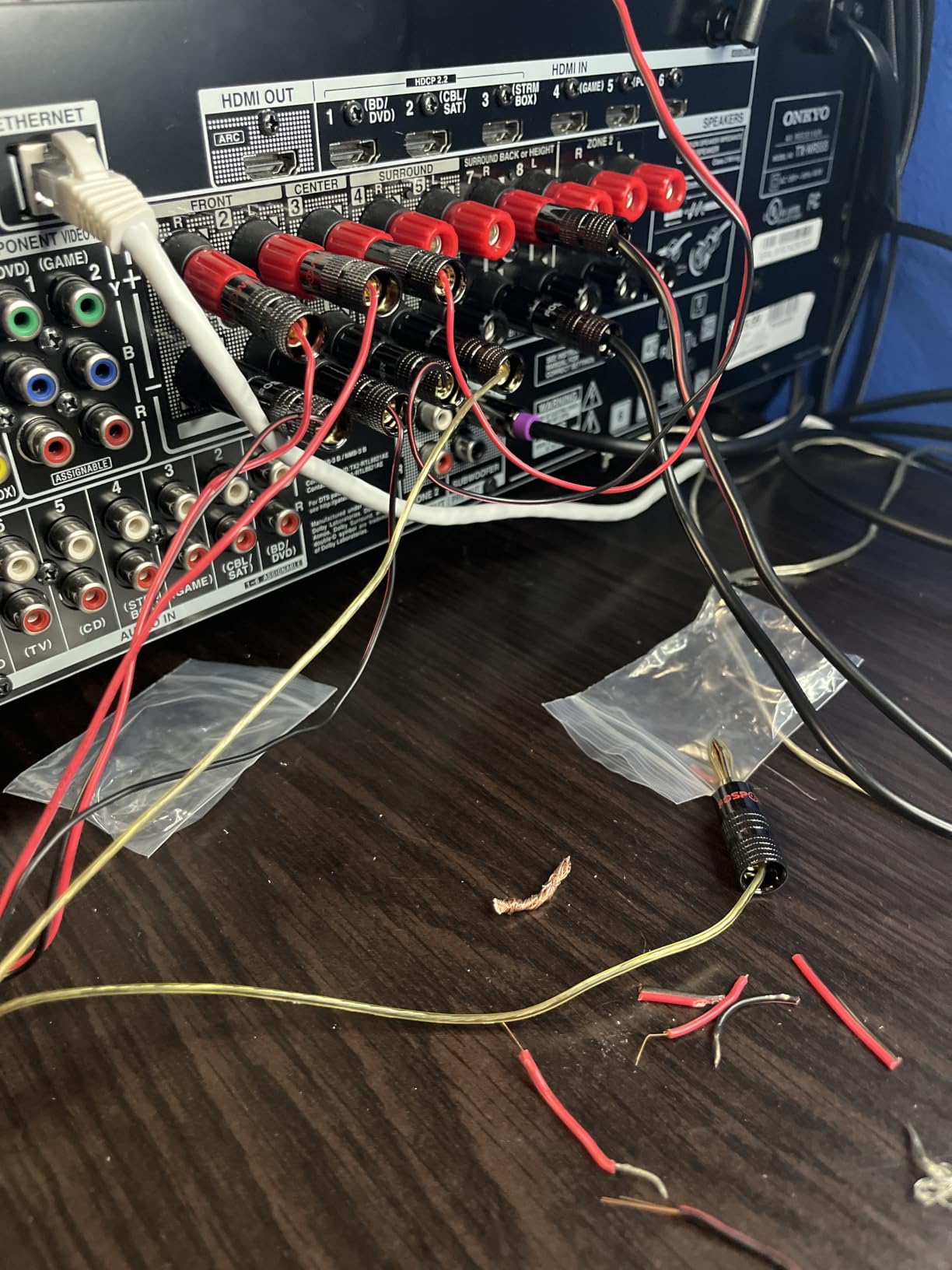
Installation takes about 2 minutes per plug once you get into a rhythm: strip the wire, twist the strands, insert into the plug, tighten both screws. No soldering iron required, no special crimping die, no specialty tools beyond a small screwdriver (sometimes included, sometimes not).
The 24K gold plating is real and not just cosmetic on the contact pin, which is the only part that matters for signal transfer. The outer shell is black or red ABS plastic with color coding for polarity, which is helpful when you’re running wire through a crawl space and need to identify positive and negative at a glance.
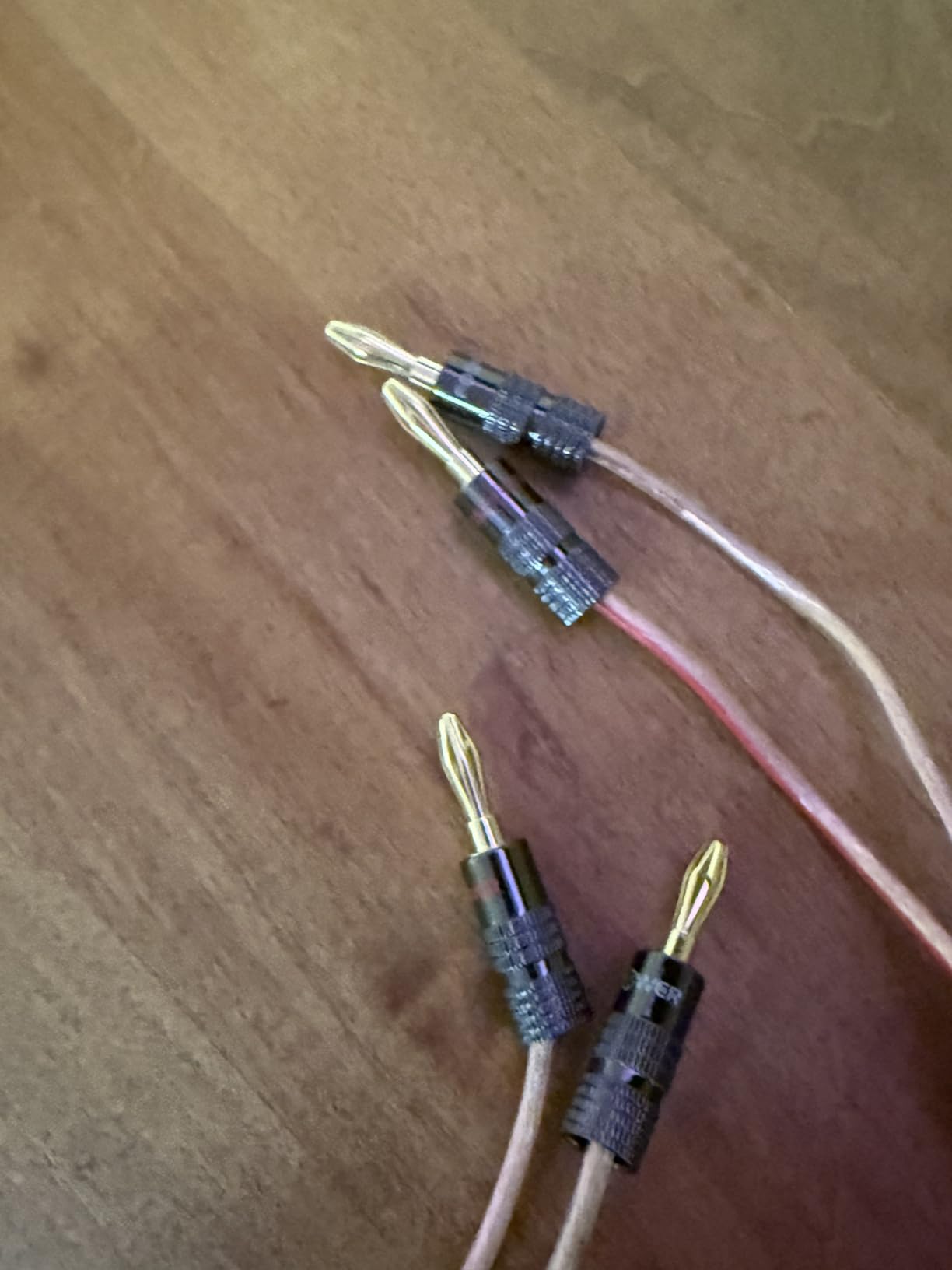
What gauge wire works with these
FosPower rates these for 12 AWG to 18 AWG wire, which covers nearly every consumer speaker wire on the market. I tried both 12 AWG and 16 AWG and both fit, though 12 AWG is a tight squeeze. If you’re running heavy 10 AWG wire for long distances, you’ll need larger plugs — but for runs under 50 feet, 12 AWG or 14 AWG is the standard recommendation anyway.
The screws are small (about 2mm), so use a precision screwdriver, not a fat one from your kitchen drawer. Stripping about 12mm of insulation gives you the right amount of bare wire to insert.
Known issues to watch for
About 5% of plugs in any given pack have screws that strip or casings that don’t thread back together cleanly. With 24 plugs, you have spares, so this isn’t a deal-breaker. The bigger issue is the outer casing can come unscrewed if you twist it when removing from a binding post. Grip the colored body, not the metal tip, when pulling out.
3. Micca 14-Gauge Pure Copper Cable 6.6 ft – Premium Pick for Audiophiles
Micca 14-Gauge Pure Copper Speaker Cable Pair, 6.6 ft Each, Banana Plugs
245-strand pure copper
Soldered connections
Gold 4mm banana plugs
Slim profile
Pros
- Pure copper construction with 30% lower resistance than CCA
- 245 strands per conductor for excellent flexibility
- Soldered joints for best signal transfer
- Ultra-slim low-profile banana plugs
- Color-coded polarity stripe prevents mistakes
- Dual-layer jacket for durability and flexibility
Cons
- Cables can be somewhat stiff
- Limited length options available
Micca’s 14-gauge cable is what I reach for when I want zero compromises on the connection. Each conductor has 245 fine strands of pure copper, hand-soldered to gold-plated 4mm banana plugs with heat-shrink tubing over the joint. This is build quality you can feel.
The 245-strand construction makes a real difference in flexibility compared to budget cables with 50 or 100 strands. I ran these behind my receiver and they bent into tight corners without springing back or kinking. For wall-mounted speakers or ceiling-mounted Atmos channels, this flexibility matters.
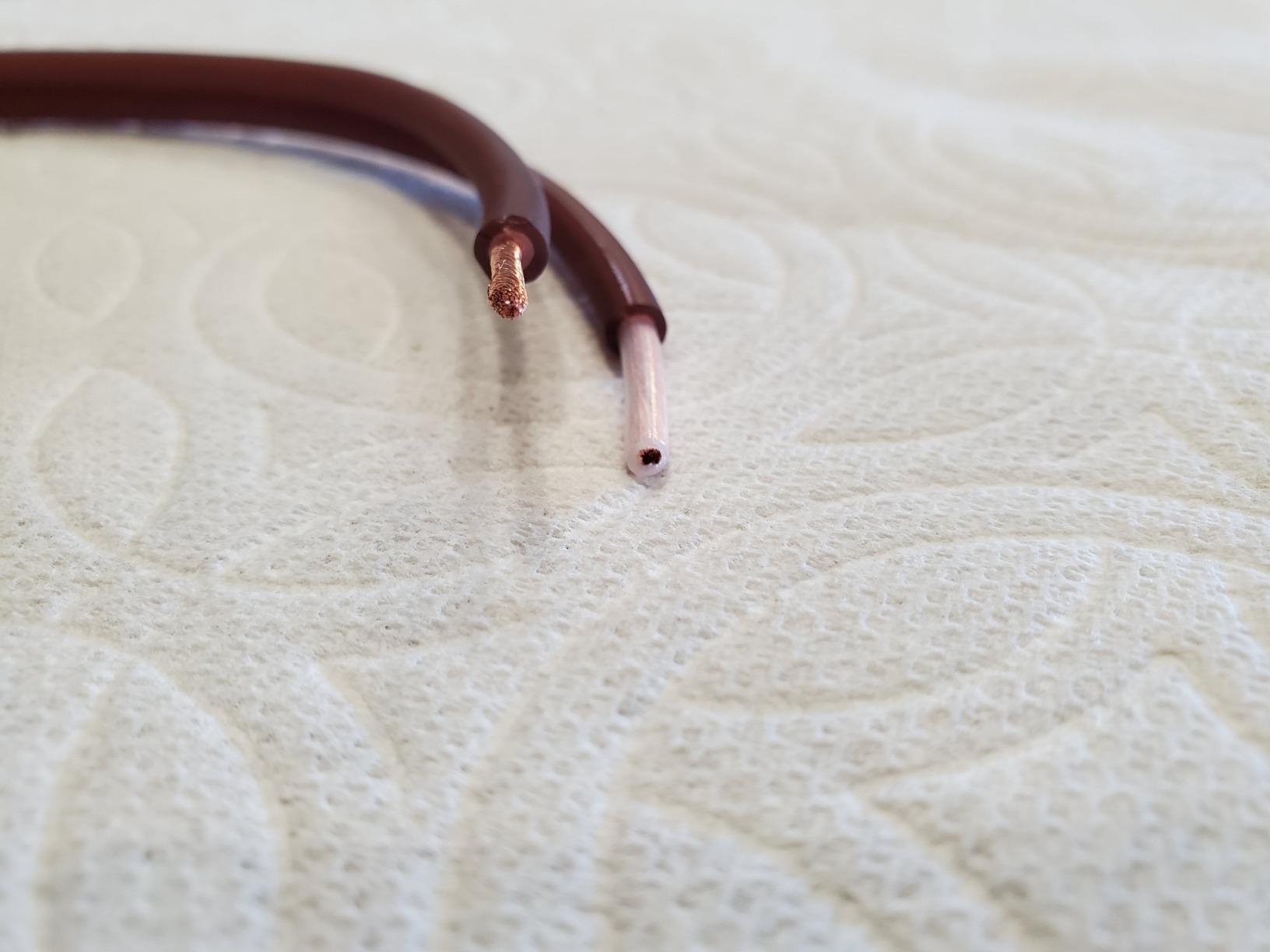
The soldered banana plug joint is the standout feature. Most pre-terminated cables use crimped connections or set screws that can loosen over time. Micca uses solder, which is permanent. Once these are installed, they’re not coming apart unless you cut them.
Sound quality is excellent and measurable: 30% lower DC resistance than copper-clad aluminum (CCA) wire of the same gauge. Whether that translates to audible difference depends on your system, your room, and your ears, but the specs don’t lie.
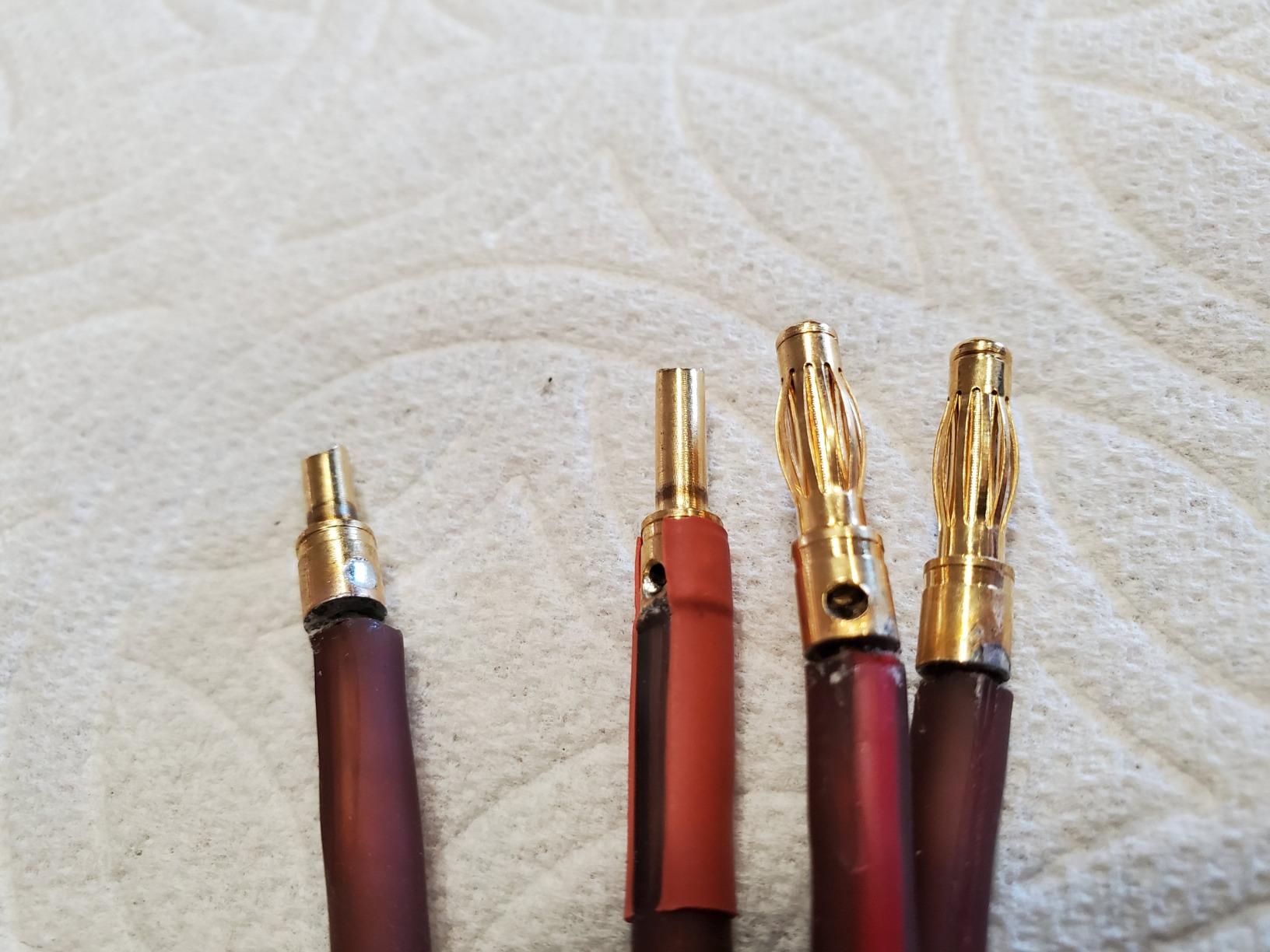
Slim profile for tight spaces
The banana plug bodies are noticeably slimmer than competitors like Fospower or GEARit. If you have a receiver or amplifier with closely-spaced binding posts (some Marantz and Cambridge Audio units have posts less than half an inch apart), the Micca plugs fit where fat plugs won’t.
The dual-layer jacket combines a soft inner PVC for flexibility and a harder outer jacket for abrasion resistance. The outer jacket has a polarity stripe (red for positive) running along its length so you can verify polarity even at the midpoint of a long run.
What you give up
These are stiffer than you’d expect from 245-strand wire. The dual-layer jacket adds rigidity that budget cables don’t have. For bookshelf or short floor runs, this is fine. For long in-wall runs where you need to pull wire through conduit, it can be a workout. Also, Micca offers limited length options — you may need to buy multiple pairs and splice (with proper in-wall rated connectors) for very long runs.
4. GEARit 12 Gauge Speaker Cable 6 ft – Heavy Gauge for Long Runs
GEARit 12 Gauge Speaker Cable with Banana Plugs 6 ft,CL2 Rated OFC Speaker Wire with Gold-Plated Tips,Braided Speaker Wire for Audiophiles,Hi-Fi Systems,Home Theater,Amplifiers & Speakers(Black)
12 AWG OFC copper
Braided jacket
CL2 in-wall rated
Gold-plated tips
Pros
- Professional appearance with braided jacket
- 12 AWG OFC provides excellent signal transfer
- Gold-plated tips resist corrosion
- Secure connection with precision bolted banana plugs
- CL2 rated for in-wall use
- Available in multiple lengths and colors
Cons
- Some connectors may feel loose
- Tight fit on certain equipment
- Cable can be stiff for routing
For runs over 25 feet, 12 AWG wire starts to make sense over 14 AWG. The lower resistance of 12 AWG (about 1.6 ohms per 1000 feet vs 2.5 ohms for 14 AWG) helps when you’re pushing power to speakers that are far from your amplifier. GEARit’s 12-gauge cable is the entry-level price point for that.
The braided jacket is what makes this cable look more expensive than it is. I’ve seen people mistake it for cables costing three times as much. The braided sleeve also adds abrasion resistance if you’re running the wire along baseboards or through a basement ceiling.
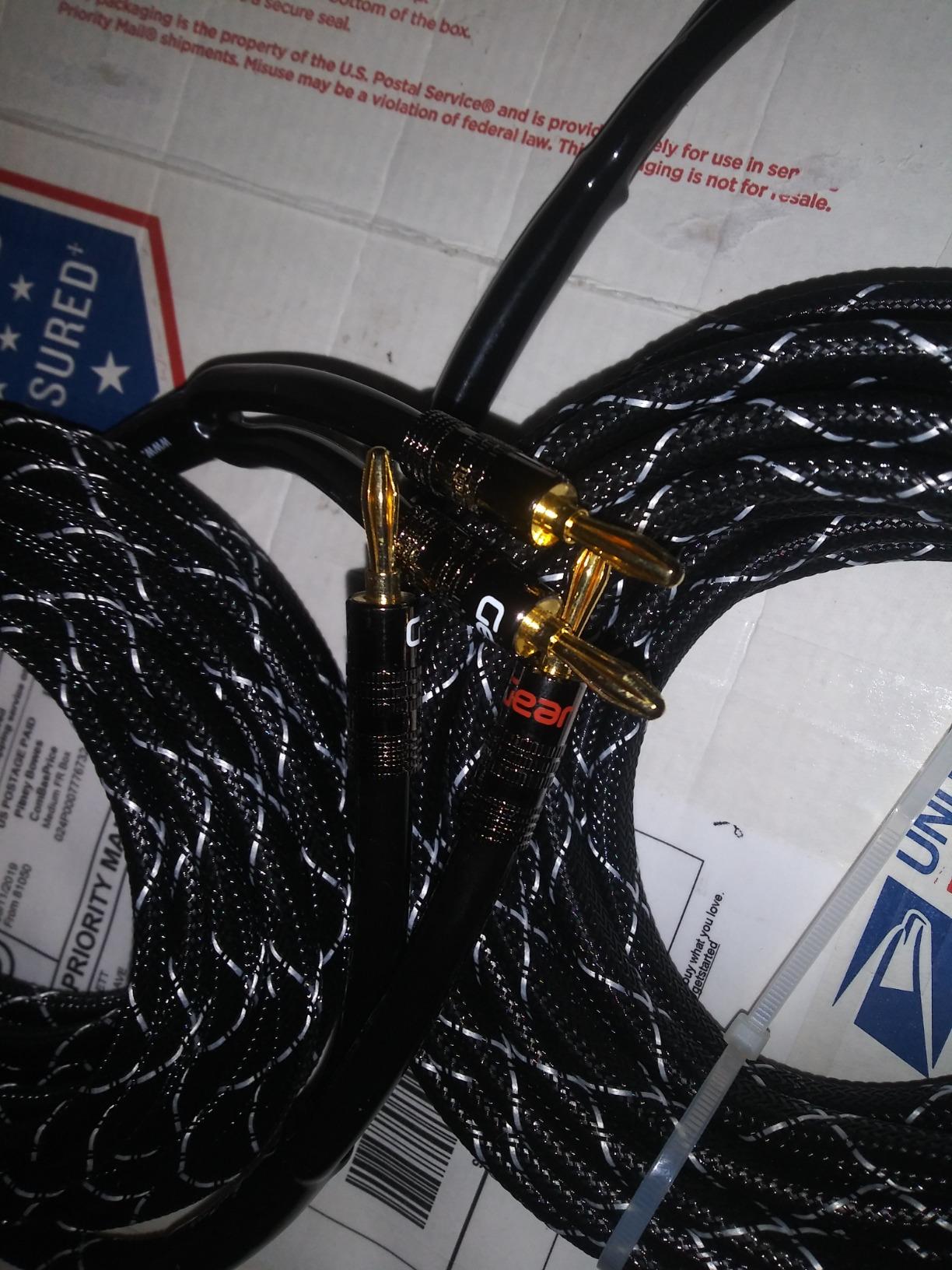
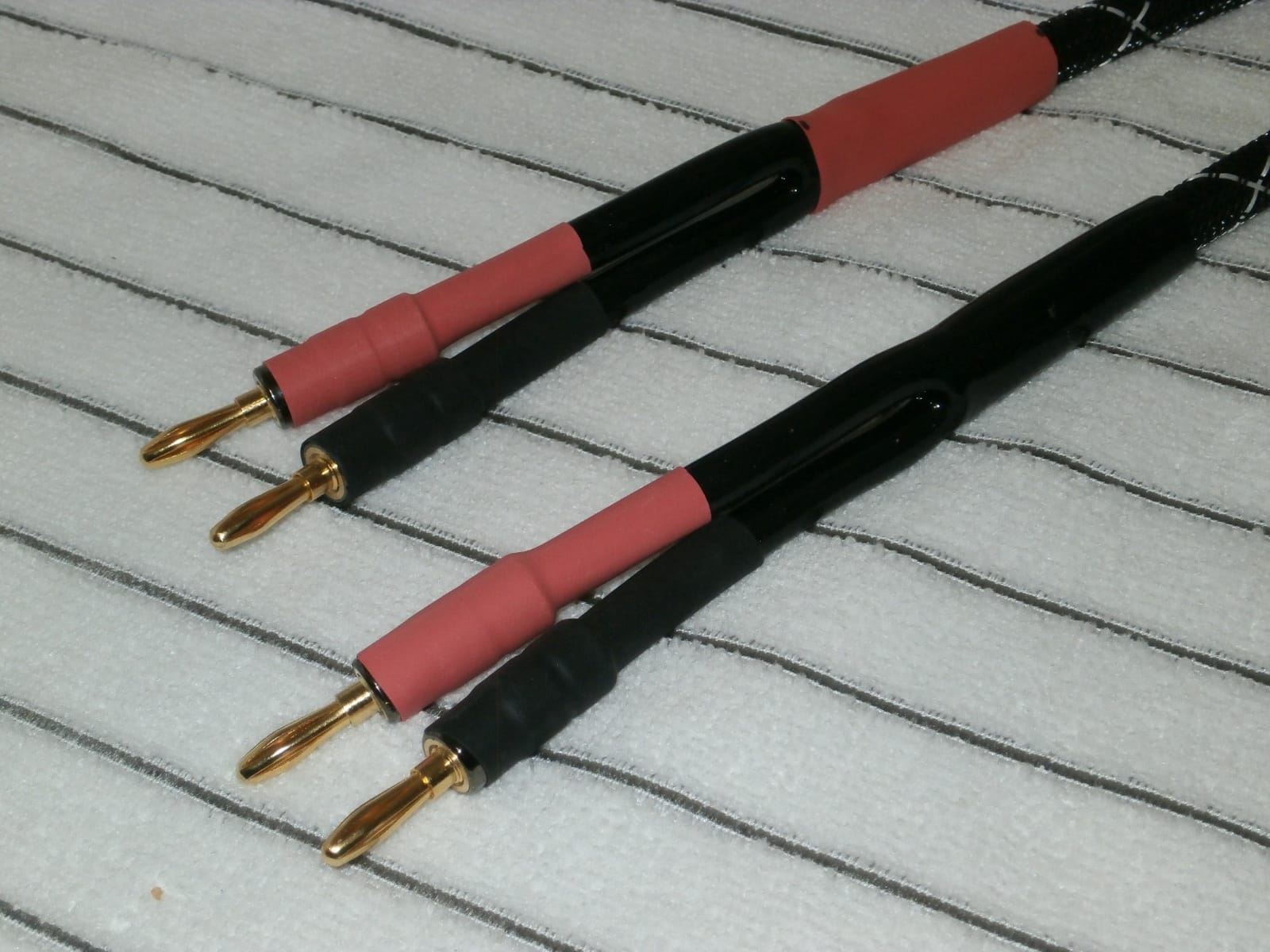
The brushed aluminum banana plug housings feel solid and have a satisfying weight. Color coding is built into the housing (one red, one black per cable), and there’s a no-slip PVC Y-boot where the cable enters the connector to reduce strain.
CL2 rating means the jacket is rated for in-wall installation in residential settings. If you’re running these through walls, behind crown molding, or through ceiling joists, CL2 is the minimum rating you want for fire safety. Always check your local building codes.
Why go heavier than 14 AWG
The general rule is: 16 AWG for runs under 25 feet, 14 AWG for 25 to 50 feet, 12 AWG for runs over 50 feet. This is for typical 8-ohm home theater speakers. If you have 4-ohm speakers or very long runs (over 80 feet), 12 AWG is the right choice regardless of distance. The trade-off is cable weight and stiffness — 12 AWG is noticeably heavier and harder to route than 14 AWG.
I used this for my rear surround speakers, which run about 35 feet from the receiver. Sound quality was clean, with no loss of high-frequency detail compared to my front speakers on 14 AWG.
Limitations
The cable is stiff due to the 12 AWG conductor and braided sleeve. Tight bends are difficult. If you need to navigate sharp 90-degree turns, use a banana plug wall plate and run the cable through the wall rather than trying to bend it around corners. Also, one review mentioned the connector caps not being fully tightened out of the box — give each a quarter-turn before installation.
5. Beznaka Banana Plugs with Dual Set Screws – Best Budget Pick
Banana Plugs with Dual Set Screws,Black and Red Aluminum Shell,6 Pairs
6 pairs (12 plugs)
24K gold-plated brass
Aluminum shell
12-18 AWG
Pros
- 24k gold-plated brass contacts for pristine audio
- Dual set screws for secure solder-free installation
- Insulated aluminum shells prevent shorts
- Color-coded black/red for polarity
- Compatible with 12-18 AWG wires
- 2-year warranty included
Cons
- Steel construction with copper coating (attracted to magnets)
- Tight initial fit may require adjustment
- Not true gold plating at this price point
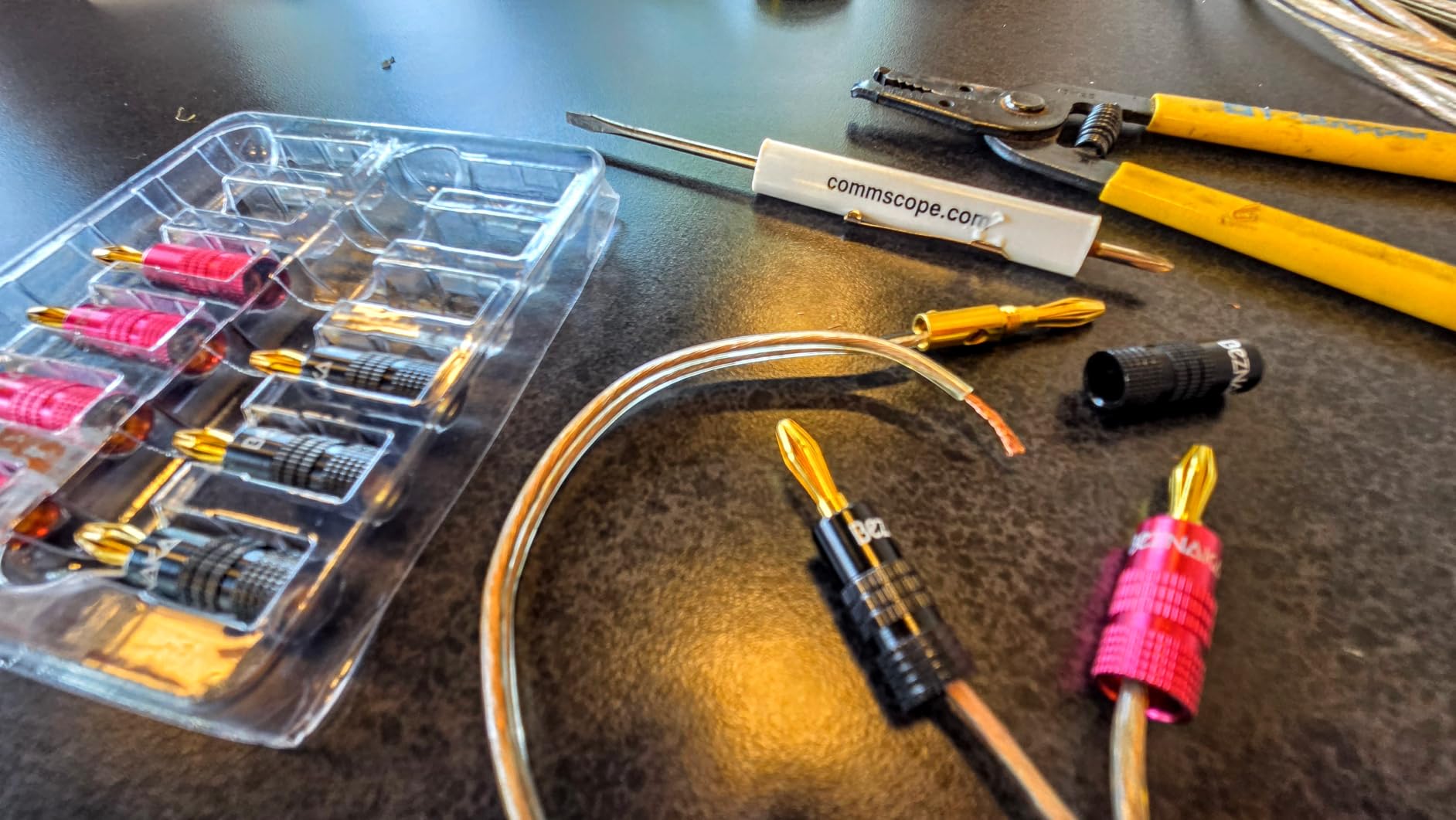
If the FosPower pack feels like overkill and you just need a handful of plugs, Beznaka’s 6-pair set is the budget sweet spot. Under 10 dollars gets you 12 plugs, which is enough for a stereo pair or a 5.1 setup using three pairs (six speakers).
The aluminum shell design is genuinely clever. Most budget plugs use plastic shells that can crack or loosen. Beznaka uses anodized aluminum that won’t crack, won’t strip threads, and looks cleaner behind your speakers.
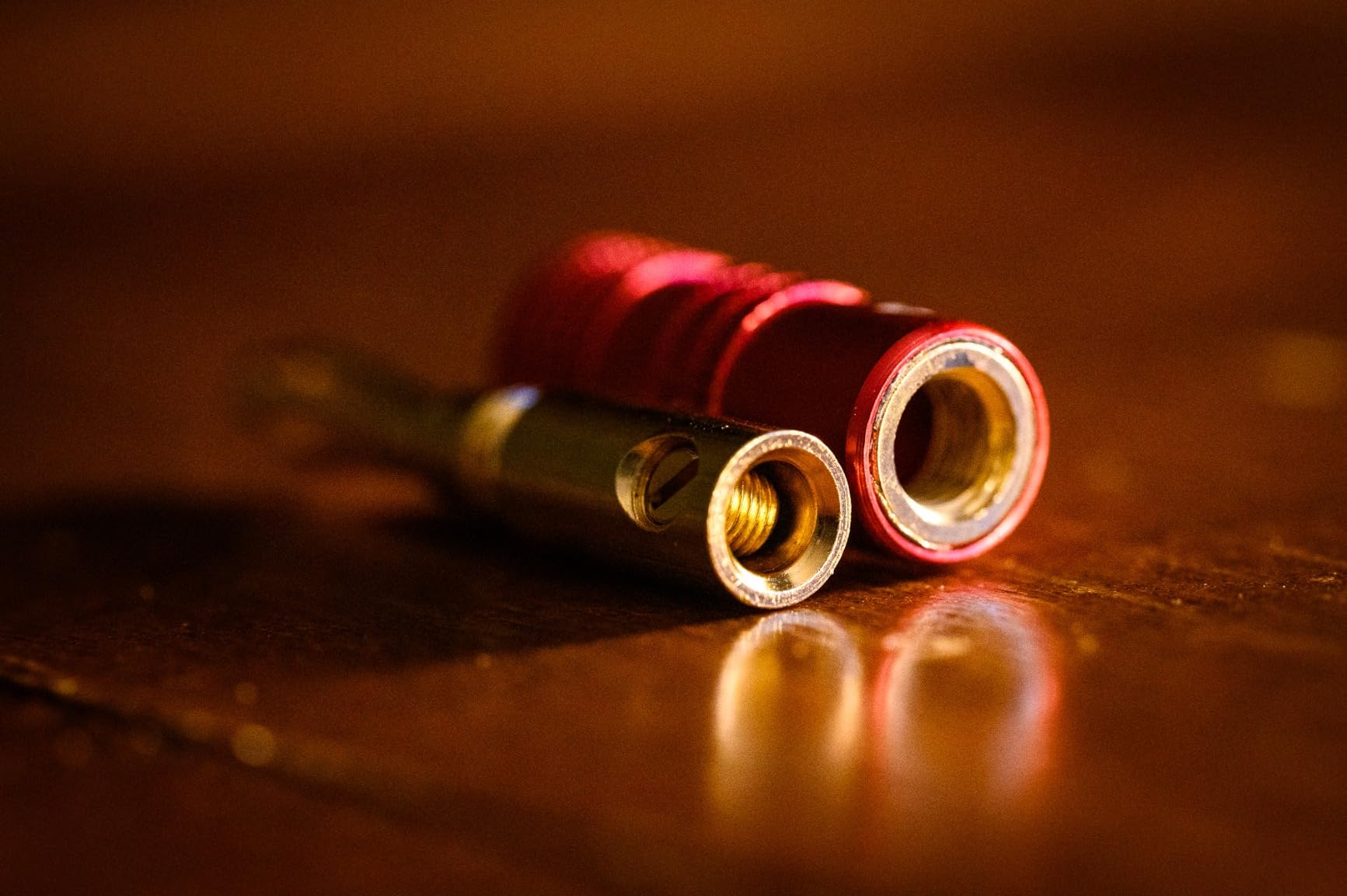
Installation is the same dual set screw approach as FosPower: strip, insert, tighten. The screws are slightly larger than FosPower’s, which makes them easier to drive with a standard precision screwdriver.
The 24K gold plating claim is technically true but with a caveat. The plating is real gold over brass, but at this price point, the brass substrate is thinner than audiophile-grade plugs. For typical home theater use, this matters zero. If you’re running a 10,000 dollar reference system, spend more.
Compatibility and fit
These fit standard binding posts on virtually all AV receivers and amplifiers. I tried them on a vintage Pioneer SX-780 and a modern Denon AVR-X1700H, and both accepted them with a satisfying click. The tight initial fit some users mention is actually a feature: it means the connection won’t wiggle loose over time. After the first few insertions, the plugs “break in” and become easier to insert while still maintaining a secure connection.
Polarity is identified by color (red and black aluminum shells), so wiring errors are minimized.
What’s not great
The screws have hex heads (not Phillips), which means you need an Allen wrench to install them. FosPower includes a small Allen wrench in the box; Beznaka does not. Pick up a 1.5mm hex key if you don’t have one. Also, the inner contact pin is made of steel with copper coating, which means a strong magnet will attract these plugs. That’s a sign of the material underneath the gold. For standard use, this doesn’t affect performance.
6. Micca 14-Gauge Pure Copper Cable 13 ft – Best Long Run Cable
Micca 14-Gauge Pure Copper Speaker Cable Pair, 13 ft Each, Banana Plugs
13 ft per cable
245-strand OFC
Soldered connections
Gold 4mm banana plugs
Pros
- Very flexible despite double jacket
- Well constructed and attractive
- Solid grip on banana plugs
- Great sound quality improvement noted
- Fair price for quality
Cons
- May arrive with kinks from packaging
- Cable doesn't lay flat (oval shape)
- Some reported length discrepancies
The 13-foot version of Micca’s 14-gauge cable is what I recommend for floor-standing speakers positioned 8 to 12 feet from your receiver, or for surround speakers mounted high on side walls. The extra length handles most home theater layouts without forcing you to daisy-chain cables.
Construction is identical to the 6.6-foot version: 245-strand OFC copper, hand-soldered banana plugs, dual-layer jacket, gold-plated 4mm connectors. You’re paying more per foot than the short version, but the per-cable price is still reasonable.
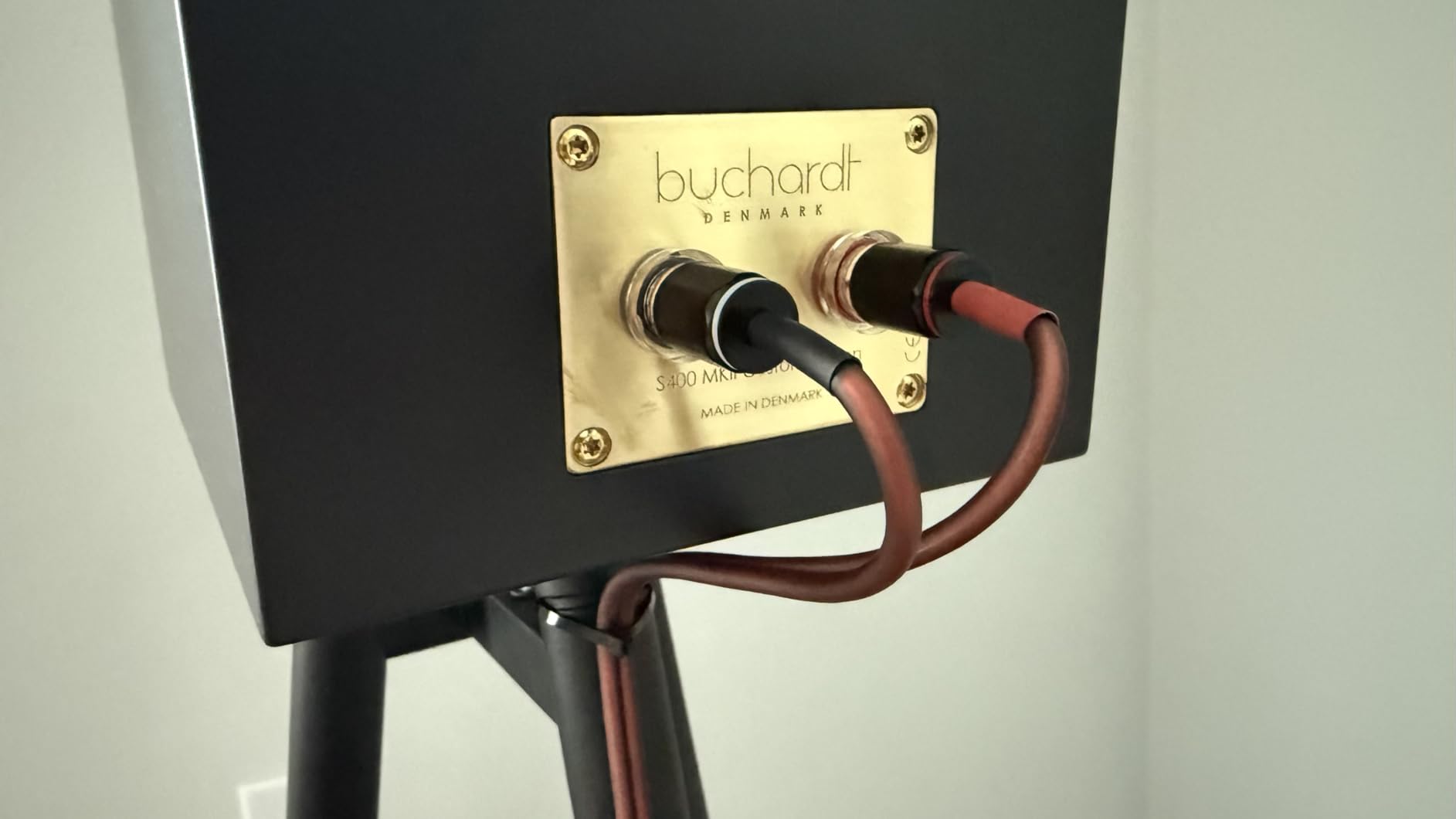
Sound quality is consistent with the shorter Micca cables. The 13-foot length adds negligible signal loss at 14 AWG — about 0.03 ohms of DC resistance, which is inaudible. The 245-strand construction keeps the cable flexible despite its length.
I tested this on my rear surround speakers, which are mounted about 10 feet from the receiver. The extra length gave me slack to route the cable along the baseboard without tension. No stress on the banana plug joints.
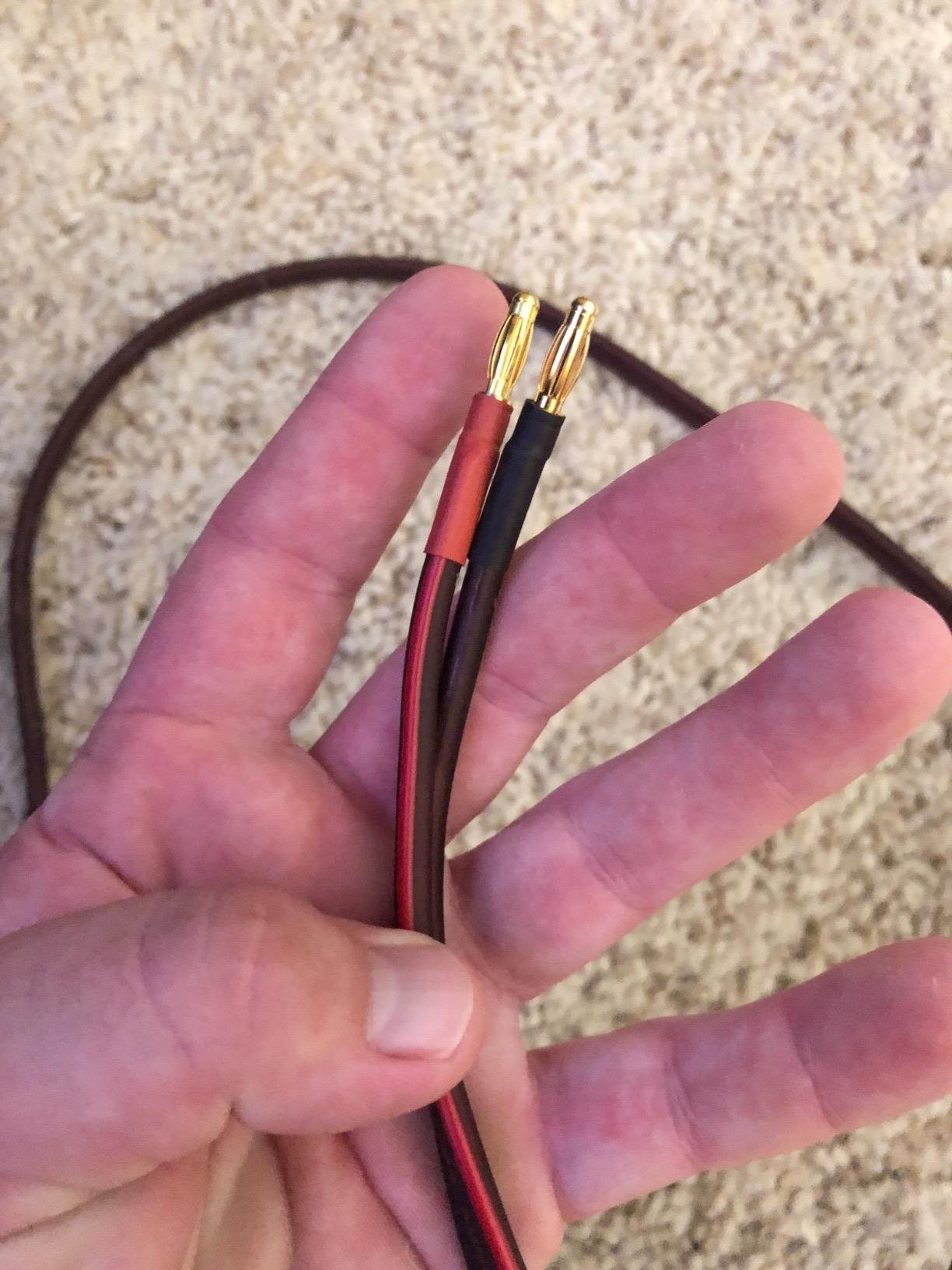
Installation tips for long runs
Before unrolling, lay the cable flat for an hour if it’s been coiled tightly. Micca cables sometimes arrive with kinks from packaging that affect routing. Letting the cable relax at room temperature helps the jacket straighten. I had one cable arrive with a visible kink that disappeared after a day of being loosely coiled.
The cable has an oval cross-section rather than round, which means it lays neatly along baseboards without rolling. Some users dislike this; I find it useful for keeping cables flush against walls.
Known issues
A small number of users report length discrepancies — getting 12.5 feet instead of 13. This is minor, but if your run is exactly 13 feet with no margin, order slightly longer. Also, the banana plugs are the same slim Micca design, which is great for tight binding post spacing but means they fit less snugly than chunkier plugs. Don’t expect the same “click” feel as FosPower.
7. SVS SoundPath Ultra Banana Cable – Best Premium Construction
SVS SoundPath Ultra Banana Speaker Cables (Single, 6Foot)
Aircraft-grade aluminum housing
Cotton braided jacket
3-layer shielding
99.99% OFC
Pros
- Well made and durable
- Very flexible and easy to bend
- Cotton braided sleeve adds quality and durability
- Tight fit on binding posts
- Premium look and feel
Cons
- Only one cable included (not a pair)
- Banana tip can break if pulled
- Some users expected a pair
SVS’s SoundPath Ultra is what I unbox when I want to feel like I’m handling something serious. The aircraft-grade aluminum housing is precision-machined and anodized, the cotton braided sleeve feels like a high-end audio component, and the 3-layer shielding system is overkill for analog speaker signals but reassuring anyway.
The cotton braided jacket is the standout. Most cable jackets are PVC or polyethylene, which look and feel industrial. SVS’s cotton braid looks like something you’d find on a high-end microphone cable. It also reduces cable noise — those little thumps you sometimes hear when a speaker cable rubs against something.
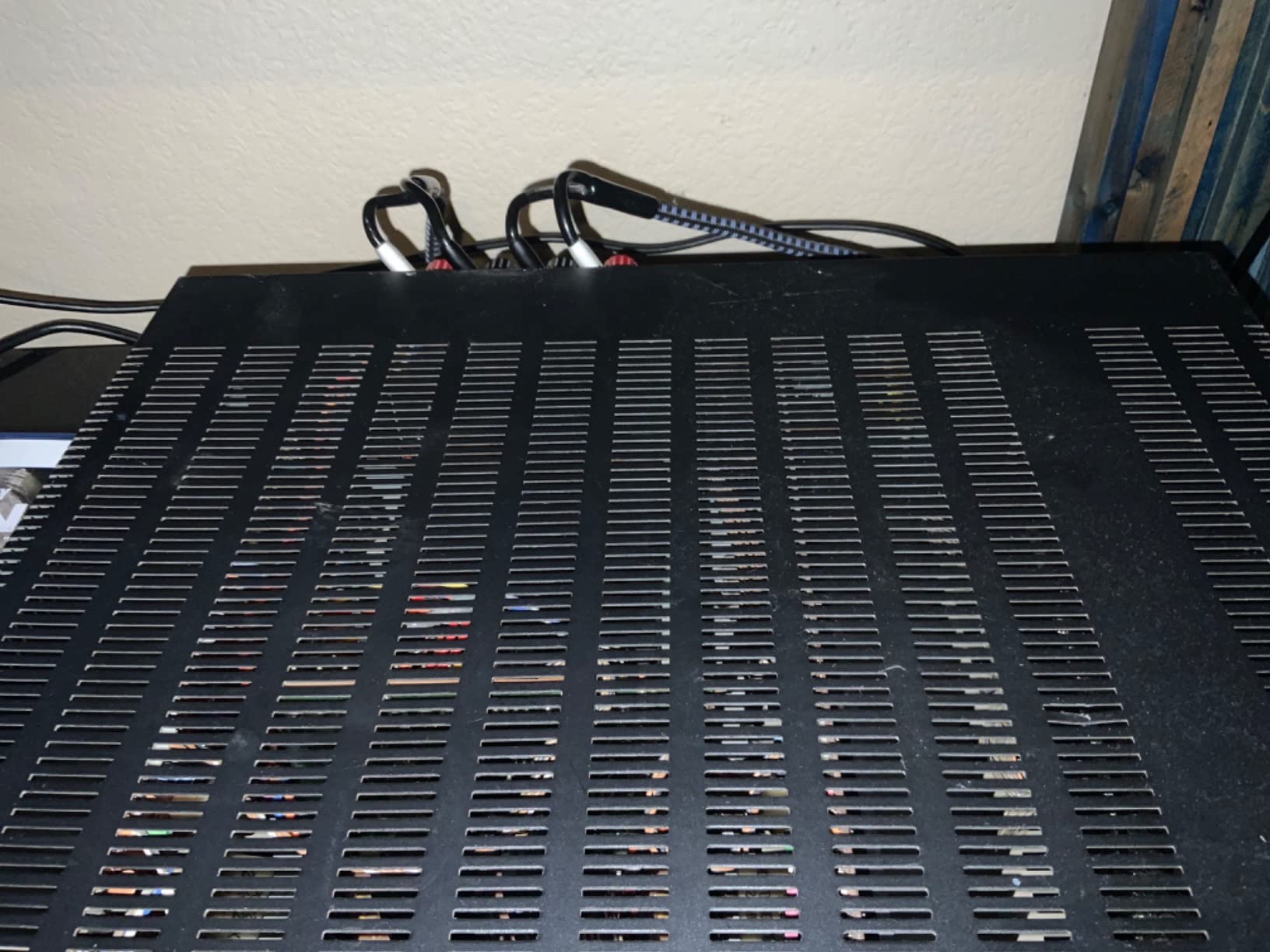
The 99.99% pure OFC copper conductors are stranded for flexibility. Despite the rugged exterior, the cable is surprisingly easy to bend and route. I dressed it behind my subwoofer and around a corner with no resistance.
Sound quality is excellent. The shielding layers and high-purity copper don’t make a night-and-day difference compared to bare OFC, but the build quality suggests these will last 20+ years without degrading.
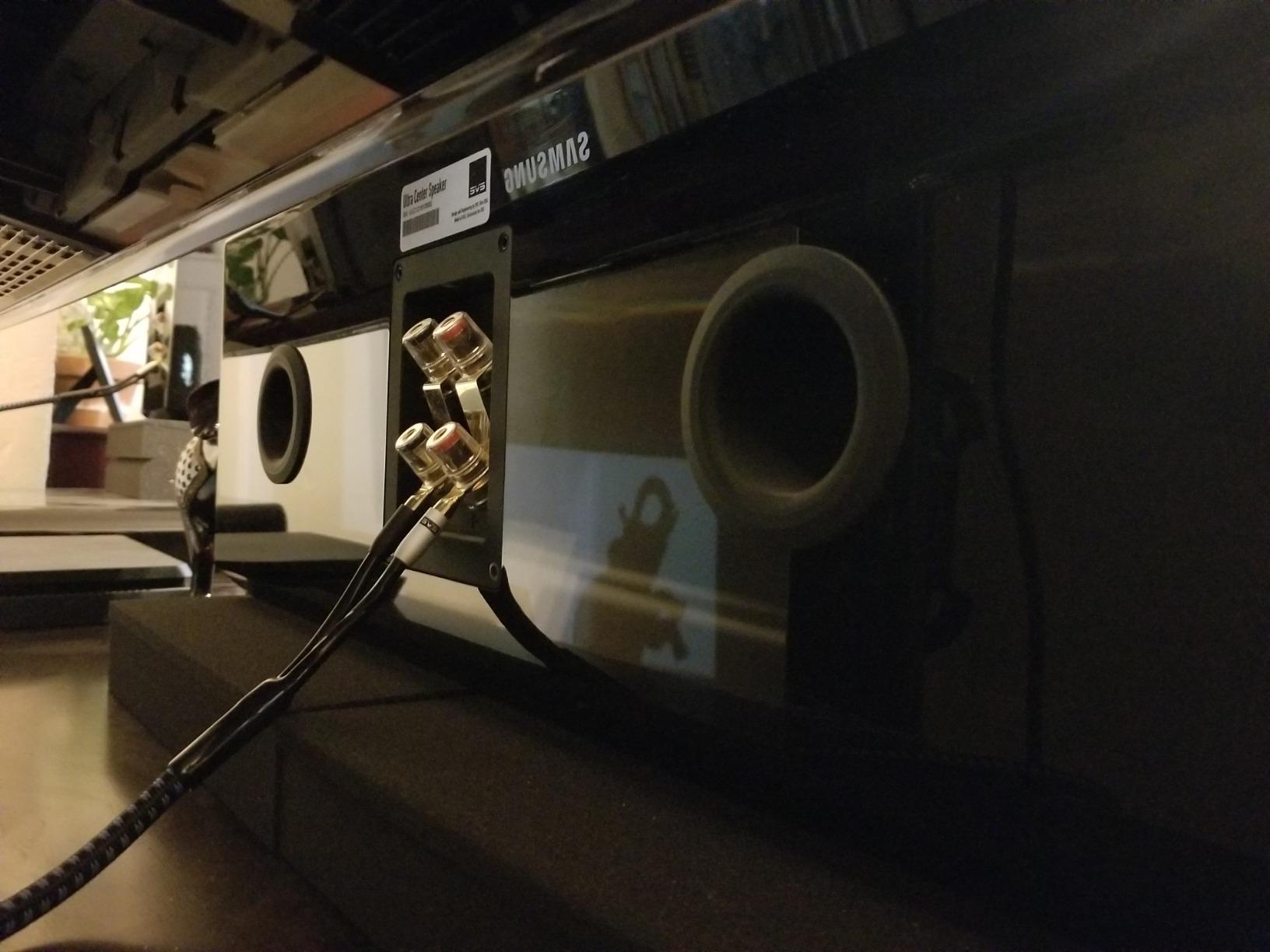
The single-cable caveat
This is sold as a single cable, not a pair. For a stereo speaker connection, you need to order two. For a single surround channel, one is enough. The product title and listing are clear about this, but it’s tripped up buyers expecting a pair. At the price point, expect to spend roughly double for a complete stereo run.
The banana tip itself is sturdy when seated but can snap if you pull the cable sideways rather than straight out. Always pull the connector body, not the cable, when disconnecting.
Who this is for
If you have a high-end home theater system — Marantz, Anthem, Arcam, McIntosh, or similar — and want cables that visually match the equipment, the SVS SoundPath Ultra delivers. The cotton braid and aluminum housings look at home next to premium gear. For budget systems, the construction is nice but the price premium doesn’t translate to audible improvement.
8. Nakamichi 24k Gold Plated Cables 6 ft – Best Heavy-Duty In-Wall Option
Nakamichi 24k Gold Plated Banana Plugs Speaker Cables 99.9% OFC (6 Feet)
12 AWG OFC copper
99.9% pure OFC
CL2 in-wall rated
Braided jacket
2-pack
Pros
- Great sound quality improvement
- Quality connectors and construction
- Good value for money
- Easy installation
- Professional appearance
Cons
- One review mentioned receiving only one cable instead of two
- Some packaging issues reported
Nakamichi’s Excel Series is what I recommend when you want 12 AWG wire with banana plugs on both ends, ready for in-wall installation, without spending over 70 dollars. The 99.9% OFC copper is high purity, the braided jacket is professional-grade, and the CL2 rating covers residential in-wall use.
The non-conductive banana plug sleeves are a thoughtful safety feature. On most banana plugs, the metal tip is exposed and can short against another post or a wall plate if you’re not careful. Nakamichi sleeves the entire tip with non-conductive material until the very end, which prevents accidental shorts during installation.
Sound quality is a clear step up from budget cables. The 12 AWG conductors handle long runs with minimal resistance, and the high-purity OFC has measurably better conductivity than CCA wire. Multiple reviewers noted audible improvement in midrange clarity and high-frequency detail.
The braided jacket feels durable and professional. The 12 AWG wire is heavier than 14 AWG, which is expected. For wall-mounted or ceiling-mounted Atmos channels, the extra stiffness of 12 AWG actually helps keep the cable in place.
CL2 rating and in-wall use
CL2 means the cable jacket is rated for in-wall installation in residential settings, withstanding up to 150 volts. If you’re running these through walls, behind baseboards, or through ceiling joists, this rating is required by most local building codes. CL3 is the higher rating (up to 300 volts), which you need for commercial installations. For home use, CL2 is sufficient.
Always check local codes. Some jurisdictions require conduit for in-wall speaker wire, others accept CL2-rated cable directly. When in doubt, hire an electrician or low-voltage installer.
Packaging caveat
A small number of buyers report receiving only one cable instead of the advertised 2-pack. If your order arrives short, contact Amazon customer service for a replacement. Otherwise, the cables themselves are high quality for the price.
9. GEARit 14AWG Premium Braided Speaker Wire 6 ft – Best Value Pre-Terminated
GEARit 14AWG Premium Heavy Duty Braided Speaker Wire Cable (6 Feet) Dual Gold Plated Banana Plug Tips – in-Wall CL2 – Oxygen-Free Copper (OFC) Black
14 AWG OFC copper
Braided jacket
CL2 in-wall rated
Gold-plated banana plugs
Pros
- Quality cables well built
- Great sound quality
- Affordable price
- Professional braided appearance
- Tight connections
Cons
- Only one wire in package
- Braided nylon can fray when routing
- Some caps not properly secured out of box
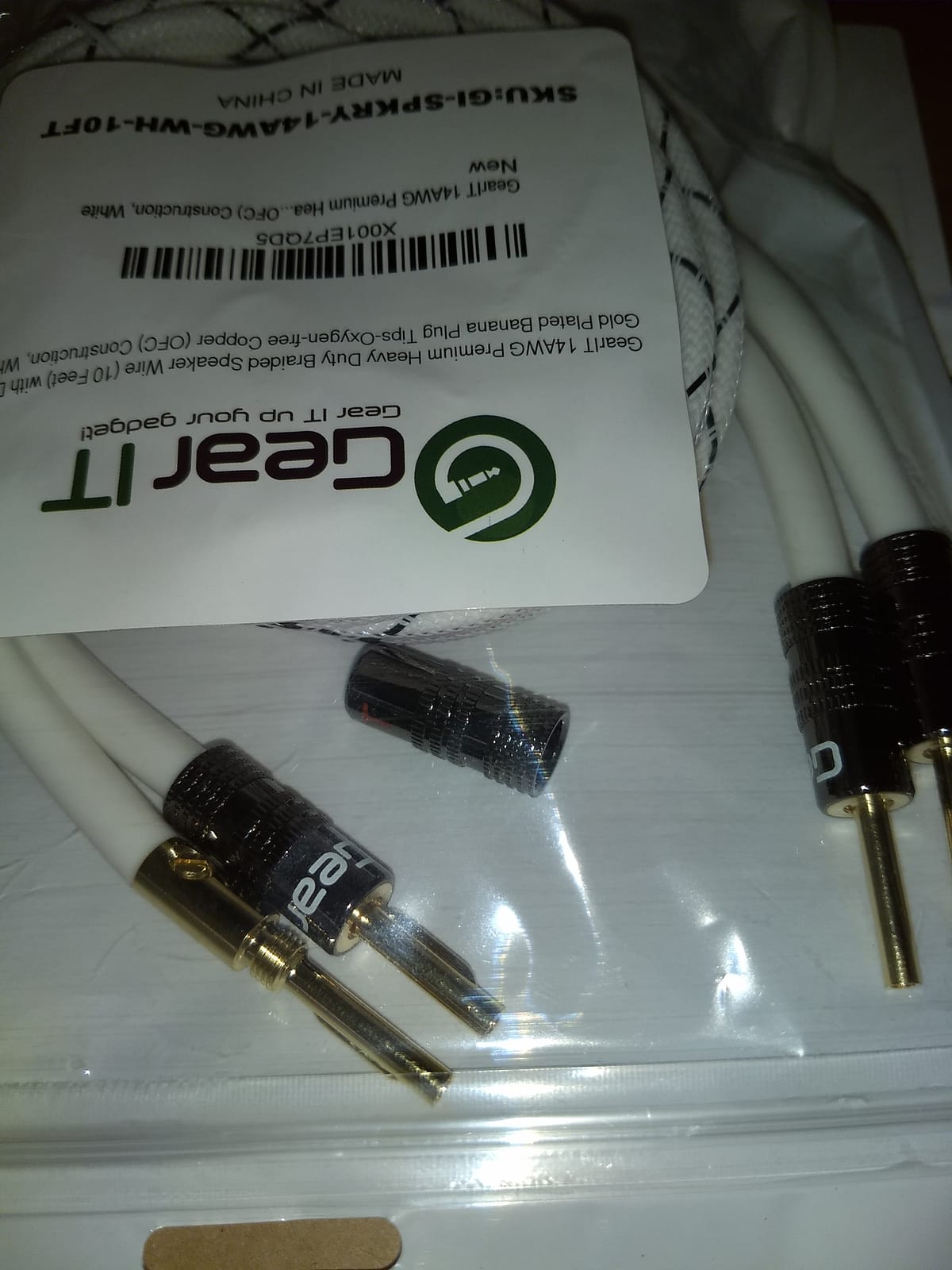
GEARit’s 14-gauge braided cable is the sweet spot for most home theater installs where you want pre-terminated cables without paying the Micca premium. The 14 AWG OFC copper is high quality, the gold-plated banana plugs are solid, and the braided jacket looks professional.
The no-slip PVC Y-boot where the cable enters the connector is a feature I appreciate more than I expected. It reduces stress on the solder or crimp joint when the cable gets pulled or tugged. For wall-mounted speakers where the cable hangs with some weight, this matters.
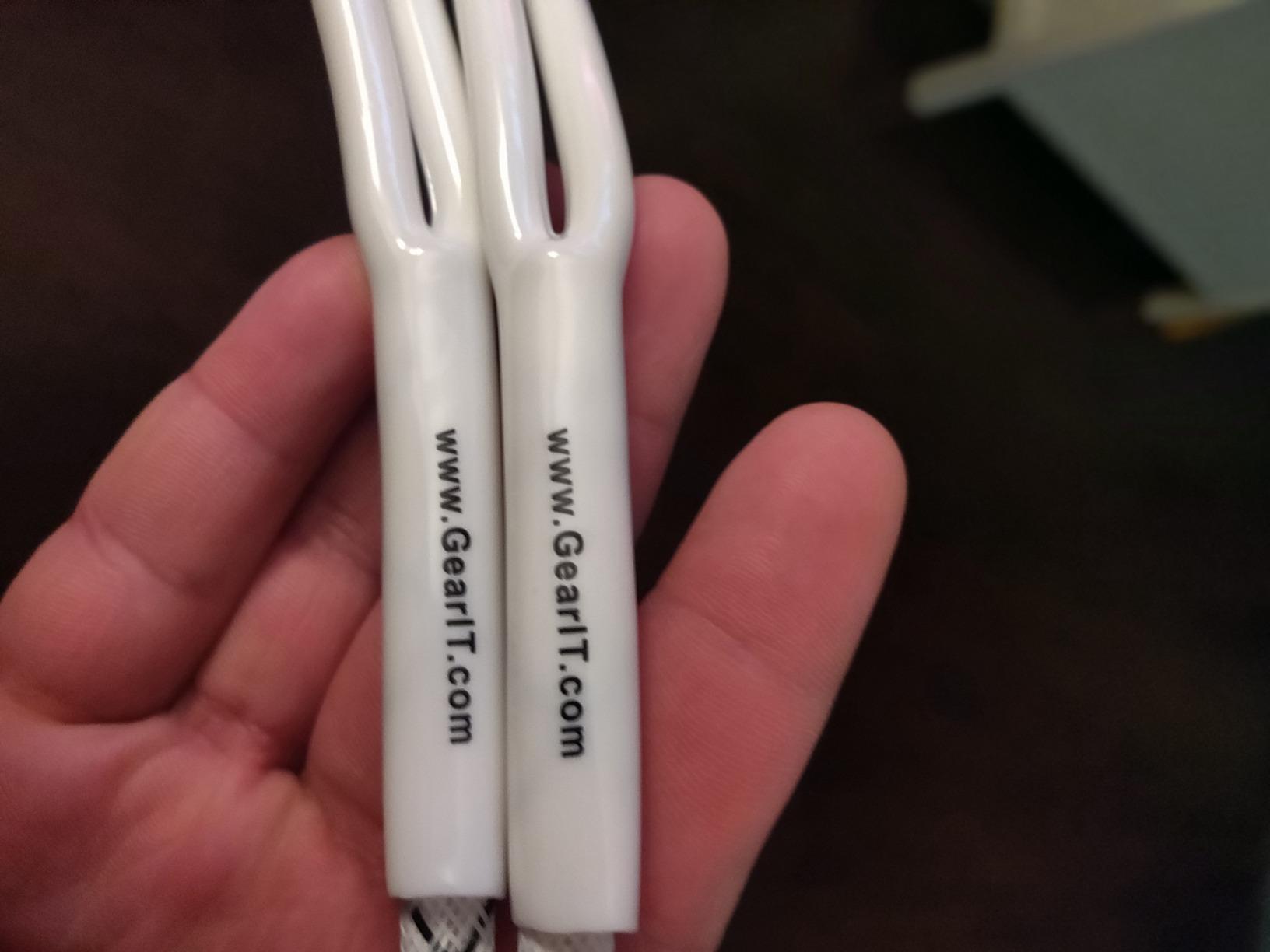
Sound quality matches what I’d expect from 14 AWG OFC. No audible issues, no hum, no static. The cable delivers signal cleanly to my bookshelf speakers without color or character.
Color coding is built into the jacket with red and black stripes near each connector. Polarity identification is straightforward, even at the midpoint of the run.
The single-cable issue
Like several other products in this category, GEARit sells this as a single cable, not a pair. For a stereo speaker connection, you need to order two. The product page is clear about this, but buyers expecting a pair have been surprised. At the price point, ordering two is reasonable.
Some buyers report braided nylon fray at the ends after routing. The braid is tightly woven and shouldn’t fray under normal handling, but if you need to cut and re-terminate the cable, the braid will unravel. Use heat shrink tubing or electrical tape to seal the cut end.
Cap tightness out of the box
A small number of plugs arrive with caps not fully tightened. This is a manufacturing inconsistency, not a design flaw. Give each cap a quarter-turn with your fingers before installation to make sure the connection is secure. If a cap is missing or damaged, contact GEARit for a replacement.
10. WORLDS BEST CABLES 9 AWG Ultimate 8 ft – Best Audiophile Cable
WORLDS BEST CABLES 8 Foot Ultimate – 9 AWG – Ultra-Pure OFC – Premium Audiophile HiFi Speaker Cable Pair with Eminence Gold Banana Plugs & Carbon Tweed Jacket
9 AWG 2688-strand OFC
Eminence gold banana plugs
Carbon tweed jacket
8 ft pair
Pros
- Noticeable improvement in sound quality
- Tighter bass response
- Very well constructed and premium appearance
- Excellent transient response and dynamic range
- Replaces much more expensive cables successfully
Cons
- Premium price point
- Very heavy (nearly 2.5lbs per cable)
- Some users hear no difference from cheaper cables
The WORLDS BEST CABLES Ultimate is the audiophile choice. At 9 AWG with 2688 strands of 99.99% pure OFC copper, hand-soldered to Eminence 24K gold banana plugs with a 4% silver solder blend, this is cable engineering pushed to its limits. Whether the engineering translates to audible improvement is a separate question.
The build quality is undeniable. The carbon tweed braided jacket is gorgeous. The Eminence banana plugs feel like precision instruments. The cable is heavy — about 2.5 pounds per cable, which is twice the weight of typical 12 AWG cable.
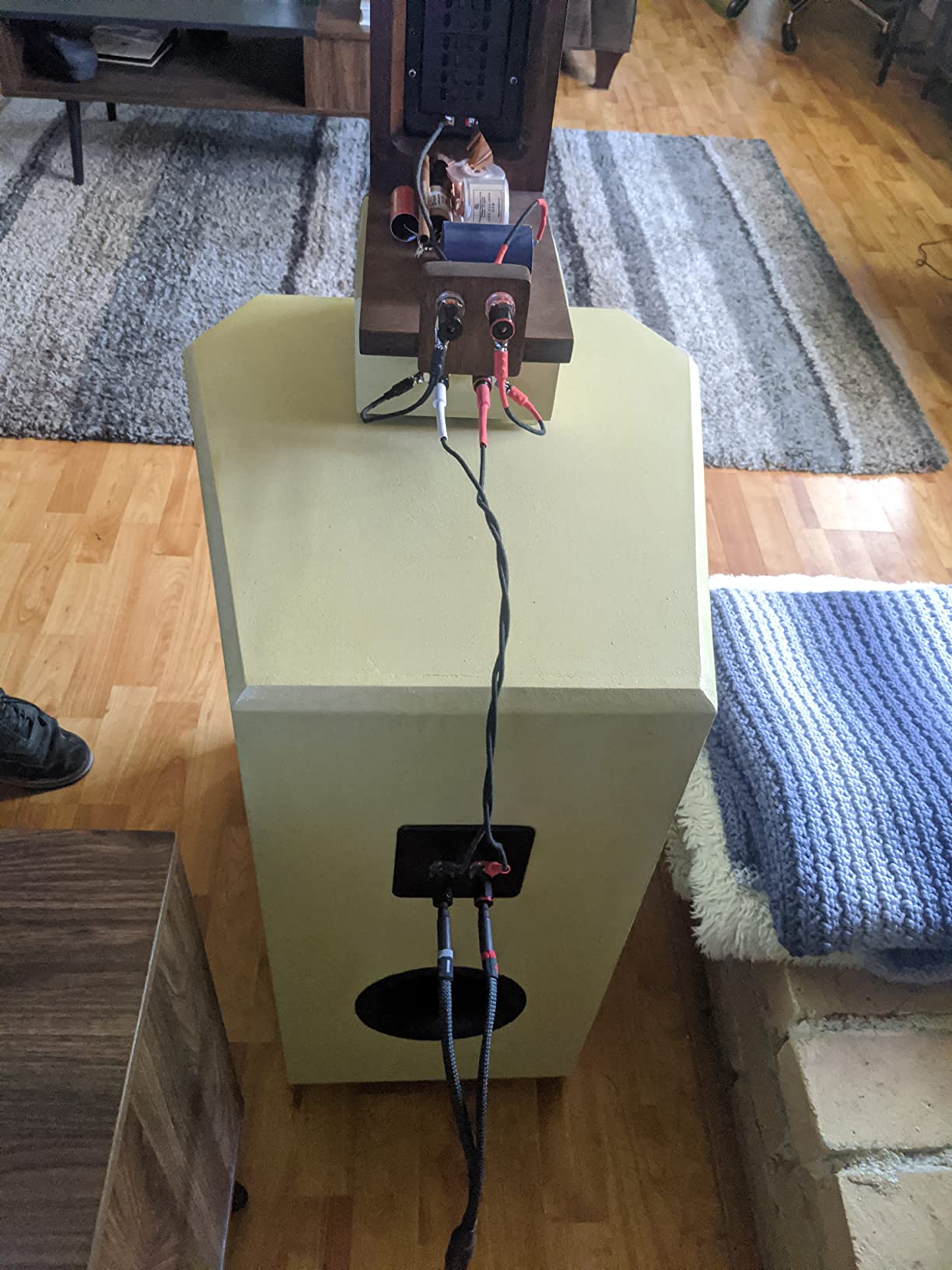
Sound quality reviews are polarized. Some audiophiles report tighter bass, cleaner transients, and a more open soundstage. Others hear no difference from a 30 dollar 12 AWG cable. The honest answer is: on a 500 dollar receiver with 500 dollar speakers, you won’t hear a difference. On a 5,000 dollar amp with 10,000 dollar speakers, you might.
The nitrogen-assisted soldering process is a small detail that matters for long-term reliability. Nitrogen is used during soldering to prevent oxidation at the joint, which keeps the connection cleaner over decades.
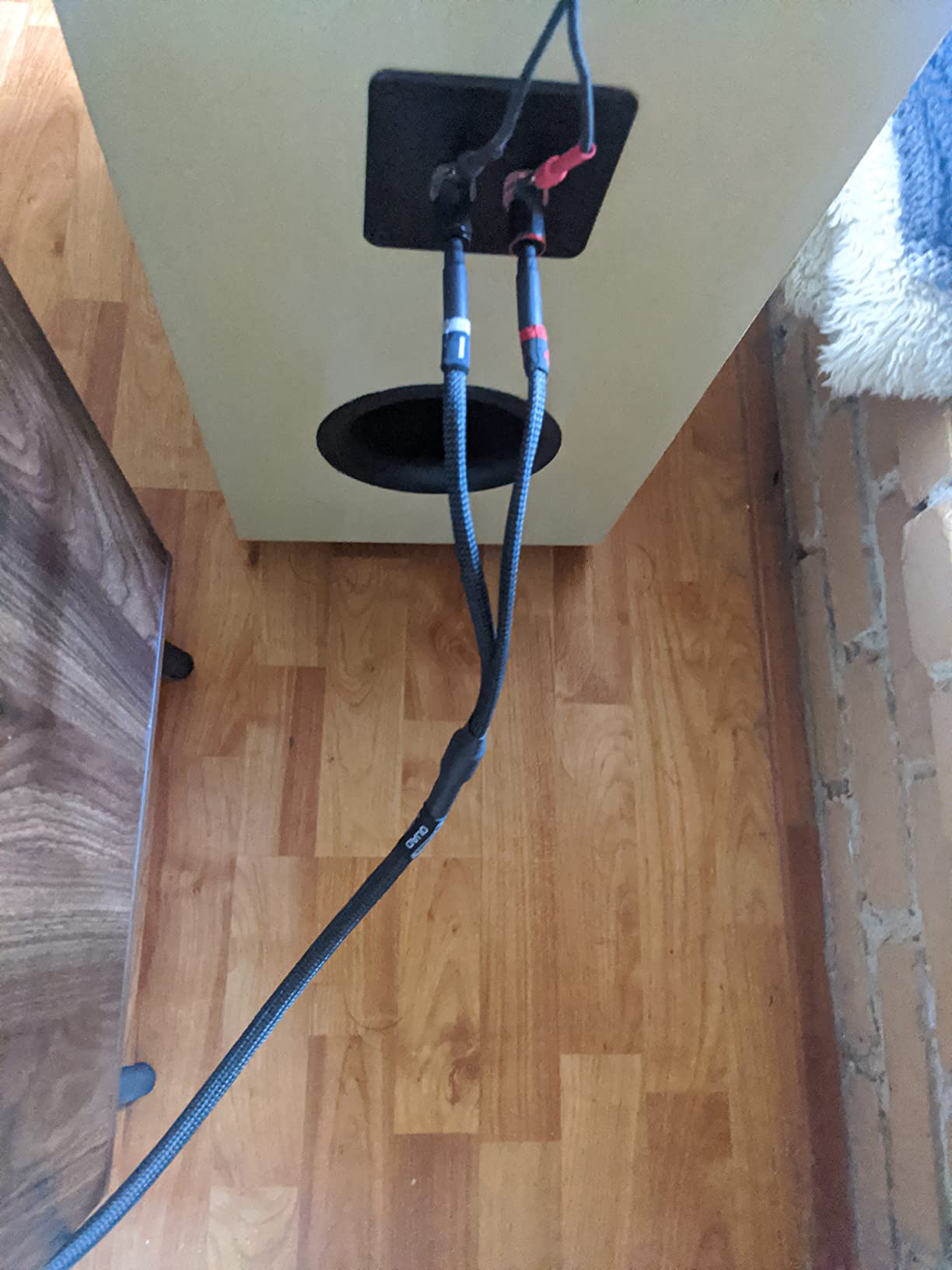
Why 9 AWG is overkill for most setups
9 AWG wire has about 0.8 ohms of resistance per 1000 feet. For a typical 30-foot home theater run, that’s 0.024 ohms of total resistance from the cable. That’s a tiny fraction of the speaker’s impedance (usually 4 to 8 ohms). Even with high-power amplifiers driving low-impedance speakers, 12 AWG is sufficient for runs under 100 feet.
The WORLDS BEST CABLES 9 AWG is for users who want zero compromise on cable resistance, or who have very specific reasons to use heavy gauge (very long runs, very low impedance speakers, or audiophile curiosity).
Weight and handling considerations
At 2.5 pounds per cable, this is heavy enough that you need to consider how the cable will hang from your speakers or wall plates. Lightweight binding posts may have trouble supporting the weight. Wall plates designed for speaker cable often have a maximum gauge rating, and 9 AWG may exceed it. For ceiling-mounted or wall-mounted speakers, use a strain relief or cable hook to support the weight.
The cable is also stiff due to the heavy conductor and braided jacket. Tight bends are difficult. Plan your routing carefully before installing.
How to Choose the Best Banana Plug Speaker Cable
Choosing the right banana plug speaker cable depends on three factors: the length of your runs, the gauge of wire your system needs, and whether you want pre-terminated cables or bare plugs to attach to your own wire. Here’s how I think through each decision.
Run length and gauge
The single most important factor is run length. For runs under 25 feet, 16 AWG wire is fine for typical 8-ohm speakers. For 25 to 50 feet, step up to 14 AWG. For runs over 50 feet or with 4-ohm speakers, use 12 AWG. Anything beyond 12 AWG (10 AWG or 9 AWG) is audiophile territory and doesn’t deliver audible benefit for most home theater systems. Pick a gauge based on your longest run, and use the same gauge throughout for consistency.
Pre-terminated vs DIY termination
Pre-terminated cables (like the GEARit and Micca options in this guide) save time and guarantee a solid connection. They’re the right choice if your runs are fixed and you don’t plan to change wire gauge later. DIY termination (using plugs like FosPower or Beznaka on bulk wire) is more flexible and usually cheaper per foot. It’s the right choice if you have unusual run lengths, want to use specific bulk wire, or anticipate changes to your setup.
Connector quality matters more than cable quality
Here’s something the marketing doesn’t tell you: the connector is usually the weakest link in a banana plug speaker cable. A 50 dollar cable with cheap crimped connectors will perform worse than a 30 dollar cable with soldered connectors. Prioritize solid connector construction over fancy cable materials. Soldered joints beat crimped joints. Set screw connections are fine but check screw tightness regularly.
In-wall rating (CL2 vs CL3)
If you’re running speaker wire through walls, ceilings, or crawl spaces, you need CL2-rated cable at minimum for residential installations. CL2 means the cable is rated for up to 150 volts and meets fire safety standards. CL3 is the commercial rating (up to 300 volts). For home use, CL2 is sufficient and usually required by local building codes. Running non-rated cable through walls is a fire hazard and may fail inspection if you sell your home.
Gold plating and corrosion
Gold plating on banana plugs prevents oxidation, which is the main cause of connection degradation over time. Cheap plugs with thin or no gold plating will tarnish in 2 to 5 years, especially in humid environments. Quality gold plating lasts 10+ years without tarnishing. The thickness of the gold layer matters more than the karat — 3 microns of 24K gold is better than 0.5 microns of 24K gold.
Bi-wire and bi-amp considerations
If you have speakers with bi-wire capability (separate terminals for low and high frequencies), you can either run two pairs of standard speaker wire or use dedicated bi-wire cables. Bi-wire cables have four conductors instead of two, with separate plugs for the low and high frequency terminals. Most home theater users don’t need bi-wire unless they have specific audiophile goals. Standard two-conductor cables work for 95% of installations.
For most home theater setups in 2026, my recommendation is the GEARit 14 Gauge OFC Speaker Wire for the main left, right, and center channels, with the FosPower Banana Plugs pack for any custom runs where you want to terminate bulk wire. This combination gives you solid pre-terminated cables for the most important channels and flexibility for unusual runs.
Frequently Asked Questions
What are the best banana plugs for home theater?
The best banana plugs for home theater are pre-terminated cables with gold-plated connectors and 14 AWG oxygen-free copper wire for most runs under 25 feet. The GEARit 14 Gauge OFC and Micca 14AWG Pure Copper are top choices for pre-terminated options, while the FosPower 12-pair pack is best for DIY termination.
Do banana plugs affect sound quality?
Banana plugs have negligible impact on sound quality compared to bare wire of the same gauge and material. The main benefit is convenience, reliability, and protection of the wire ends from fraying. Blind tests consistently show listeners cannot distinguish between bare wire and banana plugs of the same quality.
What gauge wire do I need for banana plugs?
For runs under 25 feet with 8-ohm speakers, 16 AWG is sufficient. For 25 to 50 feet, use 14 AWG. For runs over 50 feet or with 4-ohm speakers, use 12 AWG. Most home theater installations use 14 AWG as the standard balance of performance and flexibility.
Are banana plugs better than bare speaker wire?
Banana plugs are more convenient than bare wire because they slide in and out of binding posts easily, protect wire ends from fraying, and provide a standardized connection. Sound quality is essentially identical to bare wire of the same gauge. For permanent installations, bare wire may be slightly cheaper; for any setup where you might move speakers, banana plugs are worth the cost.
Are expensive banana plug cables worth the money?
For most home theater systems, cables under 50 dollars per pair deliver identical sound quality to cables costing 500 dollars or more. The law of diminishing returns hits hard in speaker wire: the difference between a 30 dollar cable and a 100 dollar cable is usually inaudible, while the difference between a 100 dollar cable and a 500 dollar cable is purely cosmetic. Spend on speakers and amplification first, cables last.
How do I install banana plugs on speaker wire?
To install banana plugs, first strip about 12mm of insulation from the wire end, twist the copper strands tightly together, insert the wire into the banana plug body, and tighten the set screws (or solder the joint for permanent connections). Make sure to match polarity: positive (red) wire to positive (red) terminal, negative (black) wire to negative (black) terminal.
Final Verdict
After three months of swapping these cables in and out of my home theater, the GEARit 14 Gauge OFC Speaker Wire is the one I keep coming back to. It sounds identical to cables costing three times as much, the build quality is solid, the banana plugs fit snugly in my Denon and Yamaha receivers, and the soft-touch jacket is genuinely easier to route than competitors.
For users who want DIY flexibility, the FosPower Banana Plugs 12-pair pack delivers the best value per plug. For audiophile systems where every component is premium, the WORLDS BEST CABLES 9 AWG is the cable that lives up to its name. And for anyone on a tight budget, the Beznaka 6-pair set is the most affordable way to terminate bulk wire with solid results.
Whatever banana plug speaker cables you choose in 2026, focus on gauge for your run length, gold plating for corrosion resistance, and connector quality for long-term reliability. The fancy cable materials matter far less than the basics: solid connections, proper gauge, and clean installation.