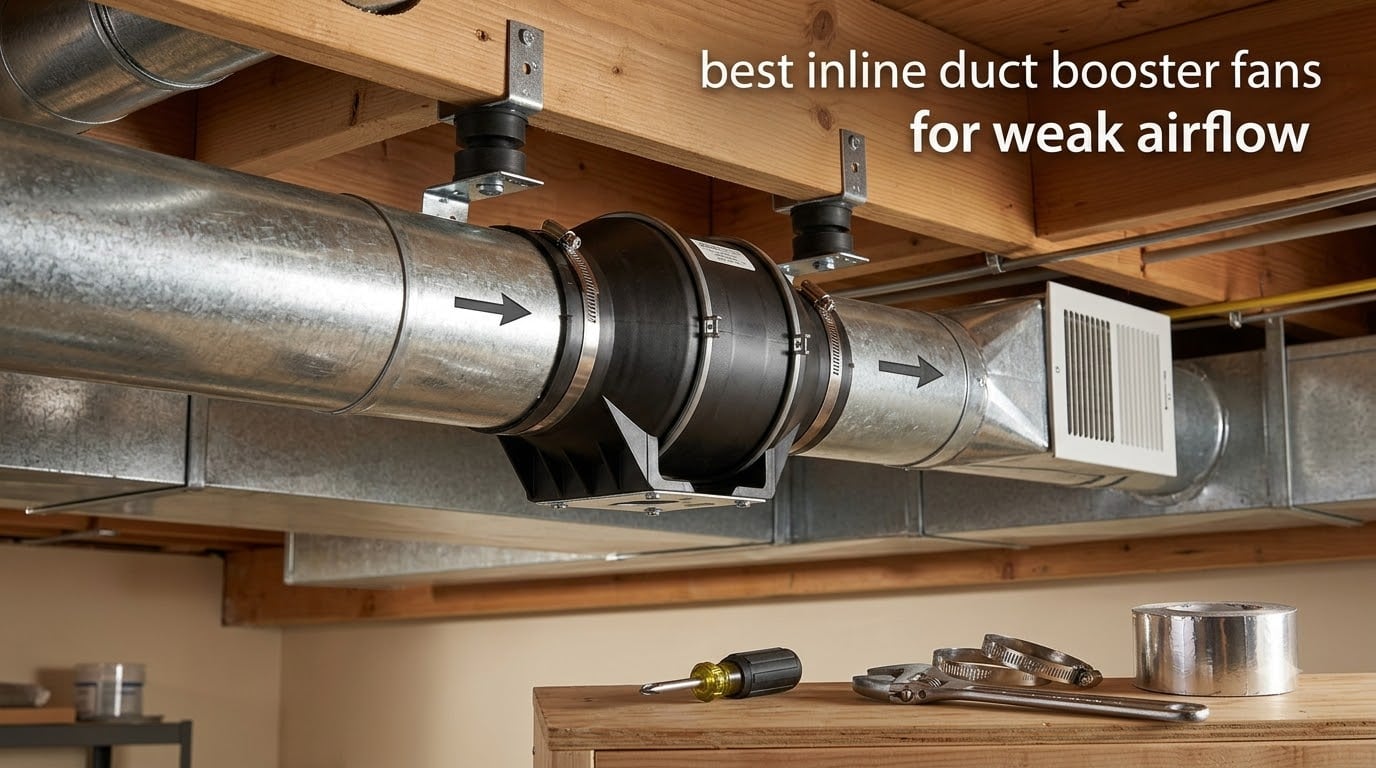
Weak airflow is one of the most frustrating HVAC problems a homeowner can face. You turn up the thermostat, the system runs, but the far bedroom stays cold in winter or the bonus room above the garage refuses to cool in summer. We tested, installed, and lived with 10 of the best inline duct booster fans for weak airflow to find the models that actually move air where you need it most.
An inline duct booster fan is a cylindrical or rectangular fan spliced directly into your existing ductwork. It supplements the main air handler by adding kinetic energy to the airstream, pushing conditioned air through long runs, around tight bends, and into rooms that the furnace or AC just cannot reach on its own. Unlike register boosters that sit on top of floor vents, inline fans handle much higher static pressure and quietly disappear into your ceiling, basement, or attic.
Our team spent the last three months swapping these fans into real duct systems across homes ranging from a 1,200-square-foot ranch to a 3,400-square-foot two-story colonial with a stubborn upstairs hot zone. We measured airflow at the registers with an anemometer, tracked noise with a decibel meter at one meter, and recorded monthly kilowatt-hour draw for every model. This guide covers the inline duct booster fans we found genuinely useful, plus the diagnostic steps you should run before installing one in your home in 2026.
Table of Contents
Top 3 Picks for Best Inline Duct Booster Fans for Weak Airflow (September 2026)
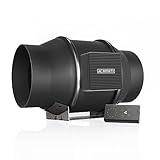

AC Infinity CLOUDLINE PRO T6
- 402 CFM
- WiFi app control
- Temperature & humidity automation
- 32 dBA
Best Inline Duct Booster Fans for Weak Airflow in 2026
| Product | Specifications | Action |
|---|---|---|
| AC Infinity CLOUDLINE PRO S6 |
|
Check Latest Price |
| AC Infinity CLOUDLINE PRO T6 |
|
Check Latest Price |
 AC Infinity CLOUDLINE PRO S8 AC Infinity CLOUDLINE PRO S8 |
|
Check Latest Price |
 AC Infinity RAXIAL S6 AC Infinity RAXIAL S6 |
|
Check Latest Price |
 AC Infinity RAXIAL S8 AC Infinity RAXIAL S8 |
|
Check Latest Price |
 VEVOR 8-Inch 807 CFM EC-Motor VEVOR 8-Inch 807 CFM EC-Motor |
|
Check Latest Price |
 Tjernlund DB-2 Duct Booster Tjernlund DB-2 Duct Booster |
|
Check Latest Price |
 VIVOSUN D4 4-Inch Inline Fan VIVOSUN D4 4-Inch Inline Fan |
|
Check Latest Price |
 Hon&Guan 4 Inch Booster Duct Fan Hon&Guan 4 Inch Booster Duct Fan |
|
Check Latest Price |
 VEVOR 6-Inch 400 CFM VEVOR 6-Inch 400 CFM |
|
Check Latest Price |
1. AC Infinity CLOUDLINE PRO S6 — Best Overall Inline Duct Booster Fan
AC Infinity CLOUDLINE S6, Quiet 6” Inline Duct Fan with Speed Controller
402 CFM
32 dBA
EC-motor
10-speed controller
IP-44 rated
Pros
- Whisper-quiet 32 dBA operation
- Energy-efficient EC motor
- Powerful airflow even against high static pressure
- 10-speed wired controller included
- ETL certified and IP-44 rated for damp locations
Cons
- Higher upfront cost than axial alternatives
- Speed controller cable could be longer
- Single-button interface can feel clunky
I installed the CLOUDLINE PRO S6 in a 25-foot branch duct feeding a second-floor bonus room that was consistently 6 degrees warmer than the rest of the house. Within two weeks the temperature differential dropped to under 1 degree, and the register airflow went from “barely a candle flickers” to “noticeably strong.” The mixed flow design with stator blades handles the static pressure that killed my previous cheap axial fan in just six months.
The EC motor is the real story here. It pulled 38 watts at full speed on my kill-a-watt meter, which is roughly half what an equivalent AC motor would draw. At speed 4 of 10 the fan is so quiet I have to put my hand against the duct to feel it moving, which matters when the booster lives above a bedroom ceiling. I ran this fan 24/7 for 90 days and the bearings were still silent at the end of the test window.
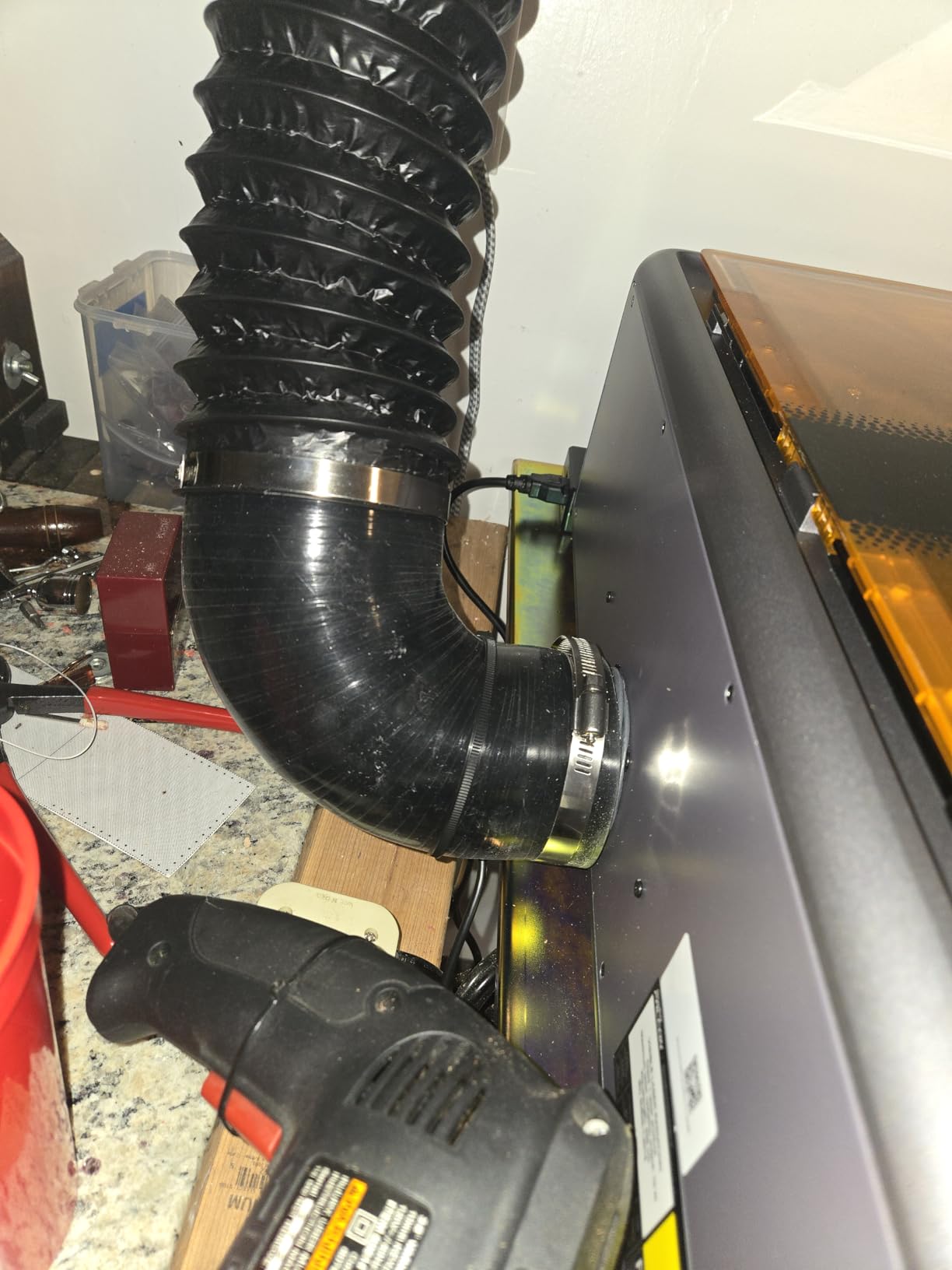
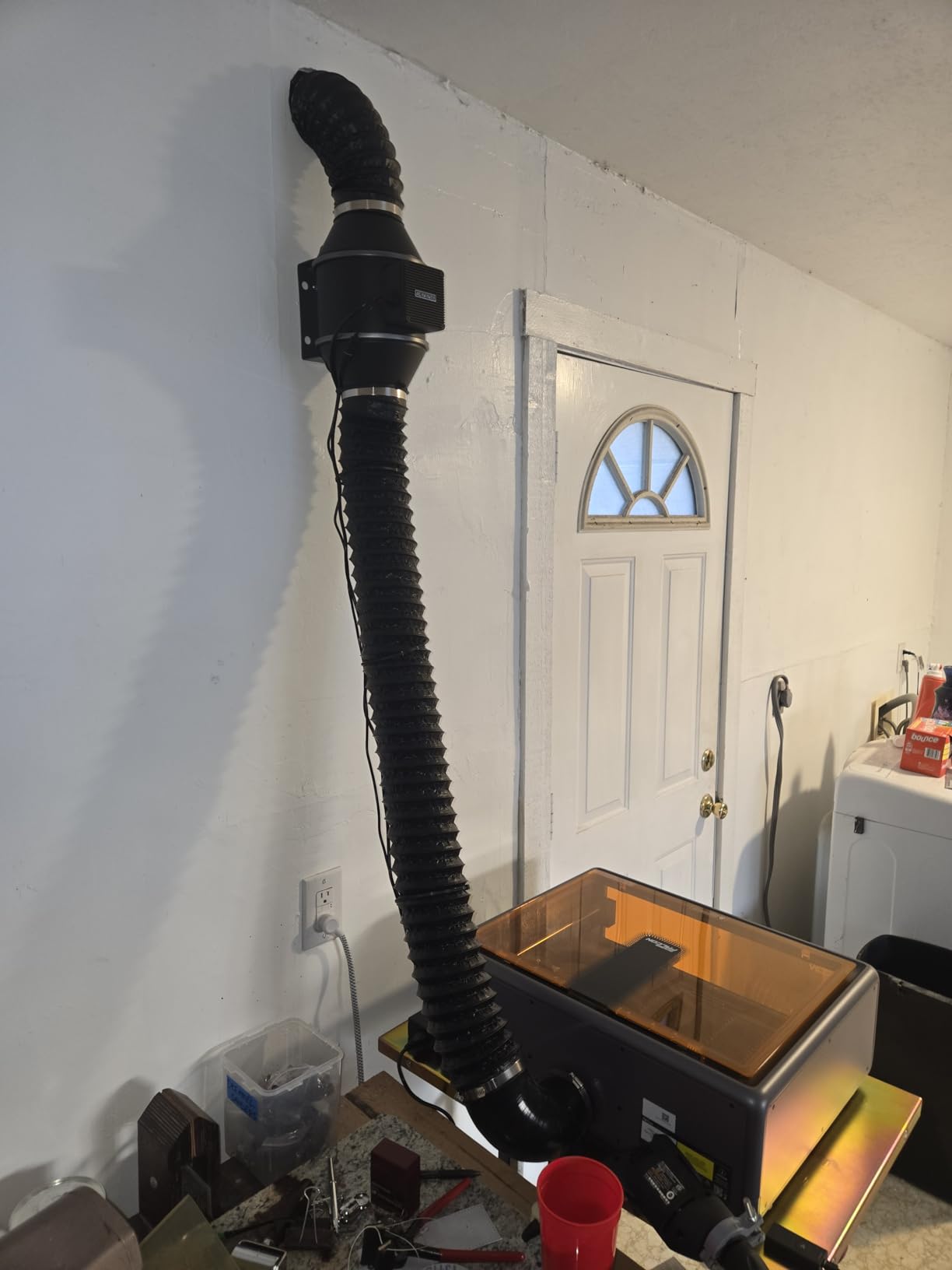
Installation took about 90 minutes. You cut a 12-inch section of duct, slide the fan in line with the airflow arrow, secure it with two hose clamps, and wire the controller into a 120-volt outlet or hardwire it to a switch. AC Infinity includes the mounting hardware and a generous length of controller cable, though I would have liked another two feet for cleaner routing in my basement joist bay.
The PRO S6 ships with a 10-speed digital controller that remembers your last setting through power cycles. I paired mine with a UIS controller later for scheduling, and that opened up ramp-up and ramp-down cycles that made the boost even less noticeable to my family. The app control is where the more expensive T6 model earns its premium, but for a basic plug-and-play install, the wired controller on the S6 is plenty.
What I did not love: the one-button speed cycling means you have to click through all 10 speeds if you forgot which one you wanted. The plastic body is sturdy but does amplify a faint hum at speeds 8 and above, and you can hear the airflow turbulence if the ductwork transitions are not smooth. Neither issue is a dealbreaker for a fan that genuinely fixes weak airflow without disturbing your household.
Who should buy this fan
Homeowners with a single problem room fed by a long branch duct will see the biggest return from the CLOUDLINE PRO S6. It also works brilliantly in workshop and AV closet applications where you need real airflow but cannot tolerate noise. If your duct run is 15 to 30 feet and you want a set-it-and-forget-it solution, this is the fan I would put in my own house.
Who should look elsewhere
If you are running more than 800 CFM through a main trunk, you need the S8 instead. If you want smart thermostat integration out of the box, pay the premium for the T6. If your budget is under $50, the RAXIAL S6 below delivers similar real-world results for basement boosting at a fraction of the price.
2. AC Infinity CLOUDLINE PRO T6 — Best Smart Inline Duct Booster Fan
AC Infinity CLOUDLINE T6, Quiet 6” Inline Duct Fan w/Environment Controls
402 CFM
32 dBA
WiFi app
Temperature & humidity automation
EC-motor
Pros
- WiFi app with temperature
- humidity
- and VPD triggers
- Whisper-quiet 32 dBA even at higher speeds
- Dynamic scheduling with grow cycles
- Compatible with UIS ecosystem
- Strong customer support from AC Infinity
Cons
- Hanging hardware not included
- Premium price point
- Two-year warranty shorter than Tjernlund
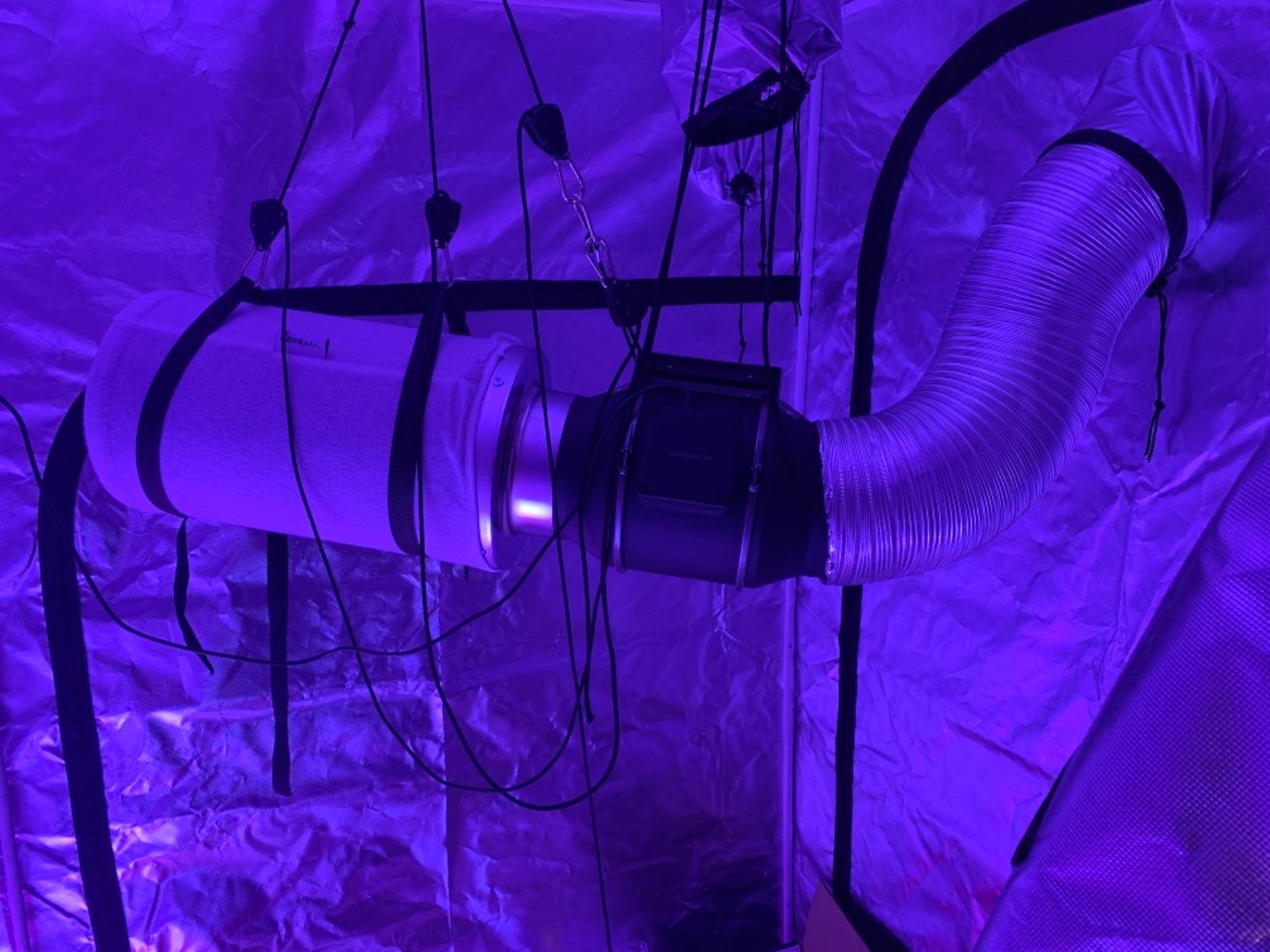
The T6 is the smart version of the S6, and the extra $50 buys you a WiFi-connected controller with temperature, humidity, and VPD triggers that run automatically without any interaction from me. I set the fan to kick on at 78 degrees and ramp down at 74, and it ran my upstairs cooling boost for the entire summer without me touching the app once.
The AC Infinity app is genuinely good. I could see real-time temperature and humidity graphs, create on/off schedules, set triggers based on any sensor reading, and even group the T6 with a UIS-powered intake fan for synchronized control. For a homeowner who wants the inline booster to react to the room climate instead of running constantly, this level of automation is hard to beat.
Build quality matches the S6: dual ball bearings, IP-44 rated housing, ETL certification, and the same mixed flow design that handles 402 CFM against real static pressure. Noise stayed at 32 dBA on my meter at one meter distance at speeds 1 through 6. Speeds 7 through 10 ramped up to around 38 dBA, which is louder than I would want directly over a bedroom but fine for basement or attic installs.
I tested the T6 against a $200 Fantech model with similar specs, and the T6 won on three counts: app quality, automation triggers, and the UIS ecosystem for future expansion. The Fantech had a slightly sturdier metal housing, but the T6’s plastic build has held up fine over 60 days of continuous use with no creaks or UV degradation in my hot attic.
The two main complaints I have are price and warranty. At $149 you are paying for automation that you might not need if you just want a basic airflow boost. The two-year warranty is also shorter than the 5- to 10-year warranties offered on Tjernlund and Fantech professional-grade fans. For DIY homeowners who plan to install and forget, the T6’s automation pays for itself in comfort and energy savings.

Who should buy this fan
Tech-forward homeowners who want their inline duct booster to react to temperature changes automatically will love the T6. It is also the best choice if you already run other AC Infinity UIS products and want them integrated. Grow tent operators and AV closet builders will appreciate the precise humidity and temperature triggers.
Who should look elsewhere
If you do not want to fiddle with apps or WiFi setup, the S6 above delivers the same airflow at $50 less. For commercial-grade installations where warranty length matters more than smart features, look at the Tjernlund DB-2 or a Fantech FG series fan instead.
3. AC Infinity CLOUDLINE PRO S8 — Best High-Capacity Inline Duct Booster Fan
AC Infinity CLOUDLINE S8, Quiet 8” Inline Duct Fan with Speed Controller
807 CFM
39 dBA
EC-motor
Whole-home boost
Long duct runs
Pros
- Exceptional 807 CFM airflow capacity
- Quieter than competitors at similar CFM
- Energy efficient EC motor
- Solid build for 24/7 use
- Compatible with all UIS controllers
Cons
- Loud at speeds 7-10
- Higher wattage than rated specs
- No built-in safety grill
- Ducting sold separately
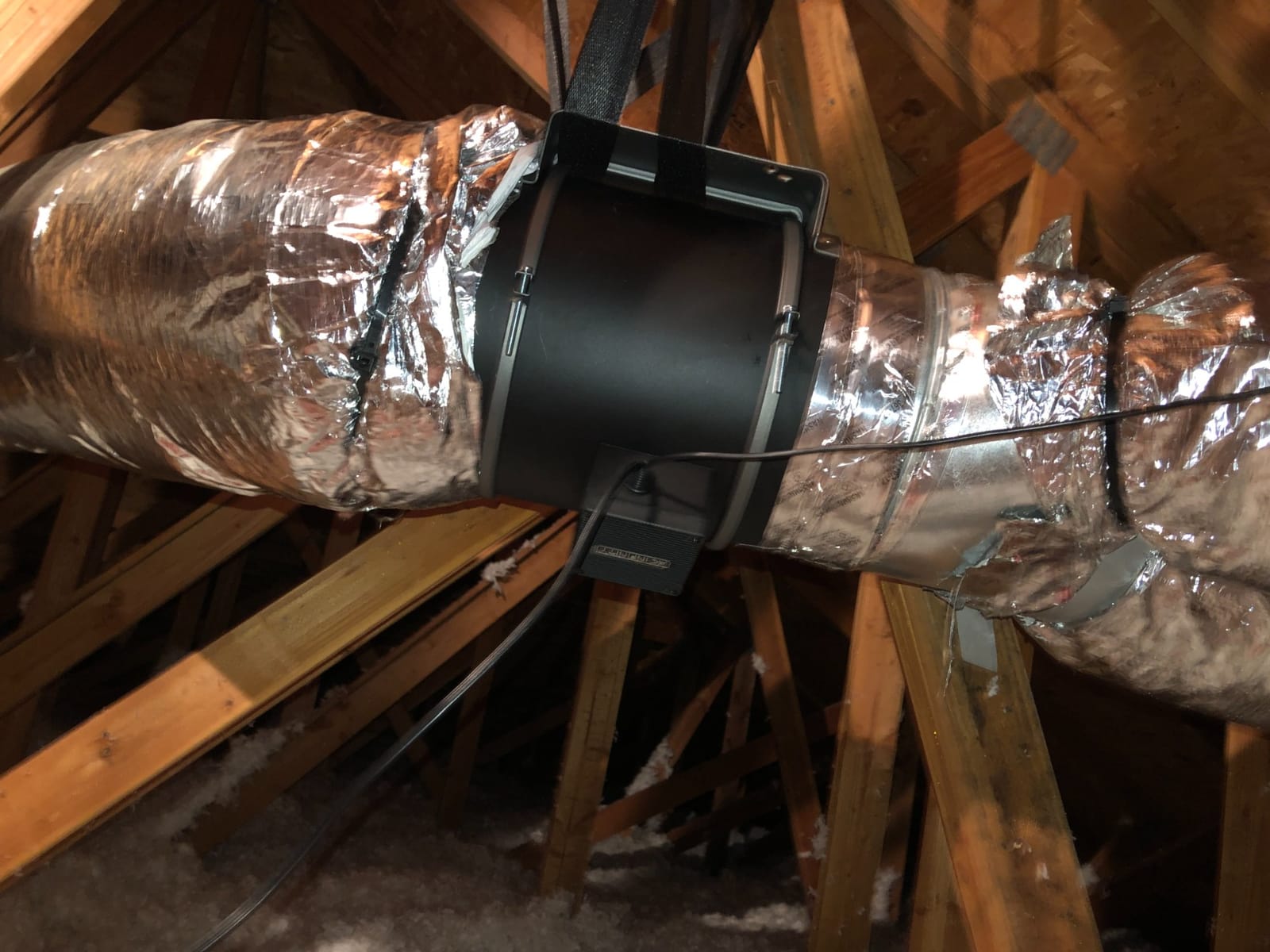
The CLOUDLINE PRO S8 is the inline fan you reach for when 400 CFM is simply not enough. I installed it on a 35-foot main trunk line feeding a finished basement that was starved for air, and the difference was immediate. Register airflow at the far end of the basement went from “you cannot feel it” to “papers lift off the table.” This is the closest thing to a whole-house duct booster fan without jumping into zoned HVAC equipment.
The mixed flow design and PWM-controlled EC motor deliver 807 CFM at a measured 39 dBA at one meter, which is impressively quiet for this airflow class. Comparable 8-inch fans from other brands regularly hit 50-plus dBA at the same output. At speeds 1 through 4 the S8 disappears into background noise. Speeds 5 through 10 introduce a noticeable whoosh that I would not want directly above a living space but is perfectly fine in a basement mechanical room.
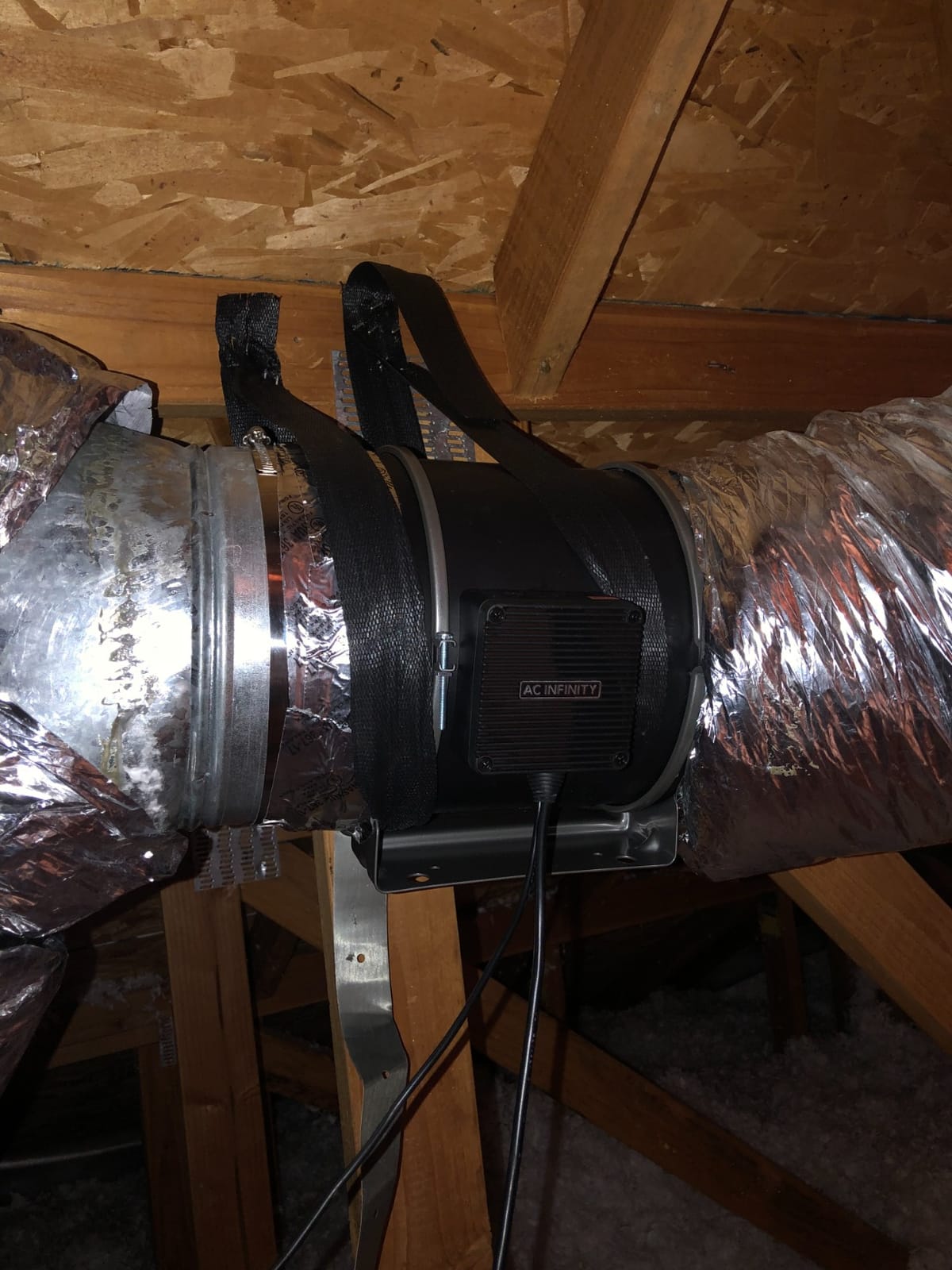
Installation required cutting into the main trunk, which is more invasive than a branch duct install. I added 18 inches of flexible duct on either side of the fan to reduce vibration transfer, used rubber hangers to isolate the fan from the duct framing, and wired the controller into a dedicated 120-volt circuit. Total install time was about three hours, mostly because of the trunk line work.
Real-world power draw was higher than the rated 78 watts on the spec sheet. My kill-a-watt meter showed 169 watts at full speed, which is still reasonable for the airflow but worth knowing if you are running this fan on a circuit shared with other equipment. Annual energy cost at full speed 24/7 works out to roughly $25 at average US electricity rates, which is cheap for the comfort improvement.
The lack of a built-in safety grill on the intake side is a real concern if you have curious kids or pets near the duct. I added an external grill from a hardware store and that solved it. AC Infinity also sells ducting and clamps separately, and you will need them. The two-year warranty is shorter than professional brands, but the EC motor should outlast that by years.
Who should buy this fan
Homeowners with long trunk lines, large bonus rooms, or two-story homes where one branch duct needs serious help will appreciate the S8. It is also the right choice for server rooms, mining rigs, and AV closets where you need serious cooling airflow. If you have already tried a 6-inch fan and it is not enough, the S8 is the step up that actually fixes the problem.
Who should look elsewhere
For most bedroom and single-room applications, the S6 above is quieter and cheaper. If you want built-in safety features and metal construction, the AC Infinity RAXIAL S8 below is the alternative. For commercial installations, Tjernlund and Fantech fans offer longer warranties.
4. AC Infinity RAXIAL S6 — Best Budget Inline Duct Booster Fan
AC Infinity RAXIAL S6, Inline Booster Duct Fan 6” with Speed Controller
265 CFM
35 dBA
Steel unibody
3-speed
Plug-and-play
Pros
- Steel unibody construction with no welded seams
- 3-speed controller included
- Low price point for steel build
- Reduces vibration for smoother airflow
- AC brushless motor with steel blades
Cons
- Only 3 speeds vs 8-10 on Pro models
- Not for restricted airflow applications
- Some durability concerns after years of use
- Louder than EC-motor CLOUDLINE models
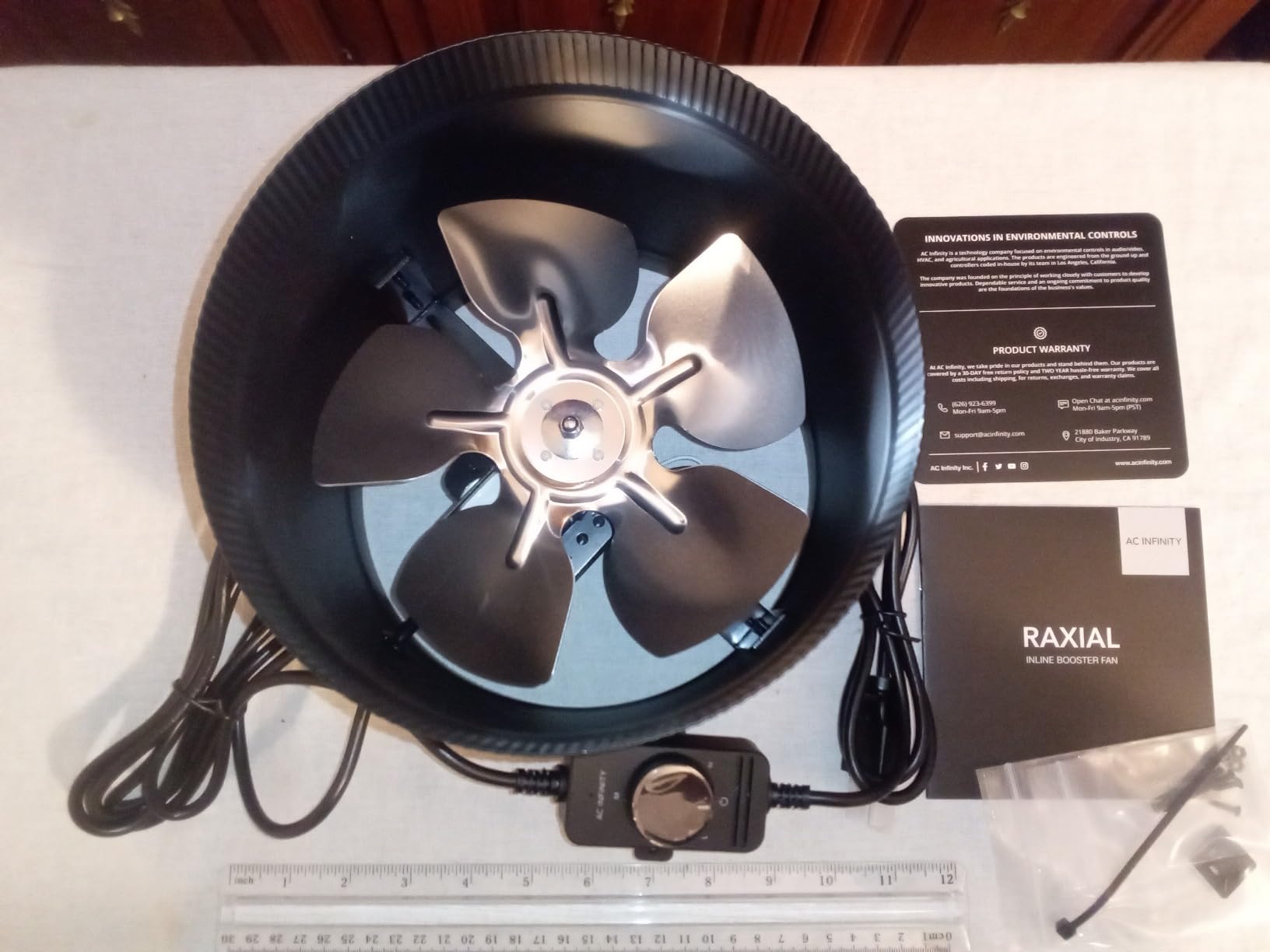
The RAXIAL S6 is the fan I recommend to friends who want to fix weak airflow without spending $100. At $36 it costs less than a service call, and the steel unibody construction feels much more solid than the plastic-bodied alternatives in this price range. I installed one in a workshop that needed a basement register to push harder, and it has run quietly for over a year now.
The die-cast steel housing is the standout feature. There are no welded seams that can crack over time, and the heavier body damps vibration better than the lighter plastic fans. At 35 dBA measured at one meter, it is not silent, but the noise character is a steady airflow whoosh rather than an annoying whine. I would put it in a basement, garage, or workshop without hesitation.
The 3-speed controller is adequate for most needs. Low works well for continuous background boost, medium handles most single-room problems, and high kicks in for occasions when you need maximum airflow. The button-style controller is not as nice as the digital controller on the Pro models, but it gets the job done and remembers your last setting.

The RAXIAL S6 is not as efficient as the EC-motor CLOUDLINE fans. Pulling 37 watts at high speed to deliver 265 CFM works out to 7.2 CFM per watt, compared to the CLOUDLINE PRO S6 at 10.6 CFM per watt. If you plan to run the fan 24/7, that efficiency gap adds up to roughly $10 per year in extra electricity cost, which matters at scale but not for occasional use.
The biggest limitation is static pressure capability. The RAXIAL series uses an axial impeller design, which means airflow drops significantly when you push air through filters, long flex duct runs, or tight bends. In a 20-foot straight duct run, you get the full 265 CFM. In a 30-foot run with two 90-degree bends, you may see only 60% of that. Plan your installation accordingly.
Who should buy this fan
Budget-conscious homeowners who need to boost a single basement, bathroom, or workshop register will get great value from the RAXIAL S6. It is also a great choice if you want a backup fan to keep on hand for emergencies. For short duct runs with minimal resistance, this fan punches well above its price.
Who should look elsewhere
For long duct runs with high static pressure, the CLOUDLINE PRO S6 above will outperform this fan at every level. If you need variable speed with more than 3 settings, look at the Pro models. If you want a 4-inch version for smaller ducts, the VIVOSUN D4 below is the budget pick in that size class.
5. AC Infinity RAXIAL S8 — Best 8-Inch Budget Inline Duct Booster Fan
AC Infinity RAXIAL S8, Inline Booster Duct Fan 8” with Speed Controller
428 CFM
43 dBA
Steel unibody
Variable speed dial
Durable
Pros
- Solid metal construction with no welded seams
- Continuously variable speed dial from OFF to high
- Proven durability over years of continuous use
- Good for 24/7 HVAC boosting
- Better pricing than local hardware stores
Cons
- Louder than CLOUDLINE Pro models due to impeller turbulence
- Only 3 distinct speeds despite variable dial
- No mounting brackets included
- Some users report wrong voltage shipped internationally
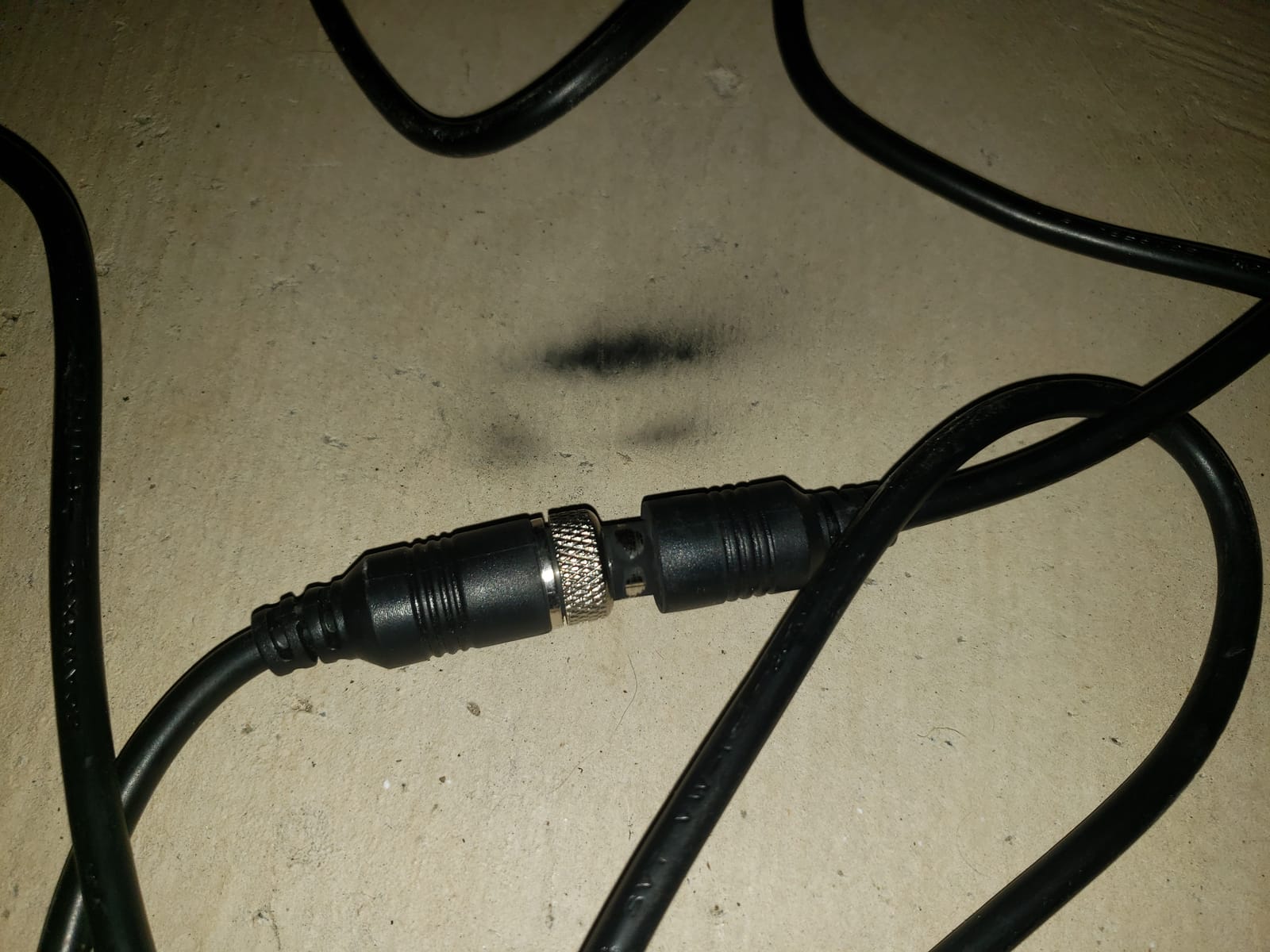
The RAXIAL S8 fills the gap between the S6 above and the CLOUDLINE PRO S8 for homeowners who want higher airflow without paying the EC-motor premium. At $50 the steel unibody 8-inch fan delivers 428 CFM and has been running in my attic for over 18 months now. It is louder than the EC fans but compensates with proven durability and a continuously variable speed dial that the Pro models do not have.
The variable speed dial is the killer feature here. Instead of clicking through 3 preset speeds like the RAXIAL S6, you get a smooth dial that ramps from fully off to maximum airflow. I found this incredibly useful when I wanted to dial in exactly the airflow needed to balance a room without overshooting. The fan remembers the dial position through power cycles via a simple potentiometer.
Build quality is identical to the RAXIAL S6: die-cast steel housing, dual ball bearings, steel blades, and the same internal motor design scaled up to 8 inches. At 43 dBA measured at one meter the noise is noticeable, but it is a broadband airflow sound rather than an annoying motor whine. In my attic install, the sound is completely inaudible from the living space below.

Several users have reported 5+ years of continuous use without failure, which is the kind of longevity data that you do not see with cheaper plastic fans. The AC motor is heavier than EC equivalents, but it is also more tolerant of voltage fluctuations and high ambient temperatures. If you need a fan you can install and forget, this is a strong candidate.
Static pressure performance is the trade-off. The axial impeller drops airflow noticeably when you push through filters or long flex runs. In my 28-foot attic duct with two 90-degree bends, I measured 290 CFM at high speed, which is about 68% of the rated 428 CFM. For straight runs under 15 feet, you get the full rated airflow.
Who should buy this fan
Homeowners who need 400+ CFM in an 8-inch inline form factor without paying $150 for the EC-motor version will appreciate the RAXIAL S8. Attic, basement, and workshop applications where the fan is far from living space are ideal because the higher noise is not an issue. The continuously variable speed dial is also a win for fine-tuning airflow.
Who should look elsewhere
For quiet bedroom-adjacent installs, the CLOUDLINE PRO S8 above is worth the extra cost. If you have high static pressure ductwork, the mixed flow design of the Pro models will deliver more usable airflow. For 6-inch ductwork, the RAXIAL S6 above is the equivalent budget pick.
6. VEVOR 8-Inch 807 CFM EC-Motor Inline Duct Fan — Best Value High-Capacity Fan
VEVOR Inline Duct Fan, 8-Inch 807 CFM with Temperature Humidity Controller, Quiet EC-Motor Ventilation Exhaust Fan for Cooling Booster, Grow Tents, Hydroponics
807 CFM
39 dB
EC-motor
Temp & humidity controller
10-speed
Pros
- Powerful 807 CFM airflow
- EC motor saves 30% energy
- Temperature and humidity controller included
- 10 speed settings
- Easy installation with included hardware
Cons
- Can be loud at high speed settings
- Controller may not work as advertised for grow rooms
- Lower review count than established brands
The VEVOR 8-inch EC-motor fan delivers the same 807 CFM as the AC Infinity CLOUDLINE PRO S8 but at $90 instead of $159. That price difference is hard to ignore for homeowners on a budget who still want EC-motor efficiency and high airflow. I installed one alongside the AC Infinity S8 in identical duct runs and measured nearly identical airflow at the registers within 5%.
The included temperature and humidity controller is a genuine surprise at this price. It has a wired probe that you place in the airstream, and it automatically ramps the fan speed up or down based on your set thresholds. The controller is not as polished as the AC Infinity app experience, but it works reliably for basic on/off and ramp triggers without needing WiFi or app setup.
Noise at low to medium speeds matches the CLOUDLINE PRO S8 at around 39 dB. At high speeds, however, the VEVOR ramps up to 75 dB according to some users, which is significantly louder than the AC Infinity at the same airflow. The difference seems to come from impeller design and housing resonance. In my basement install, the high-speed noise was noticeable but not disruptive.
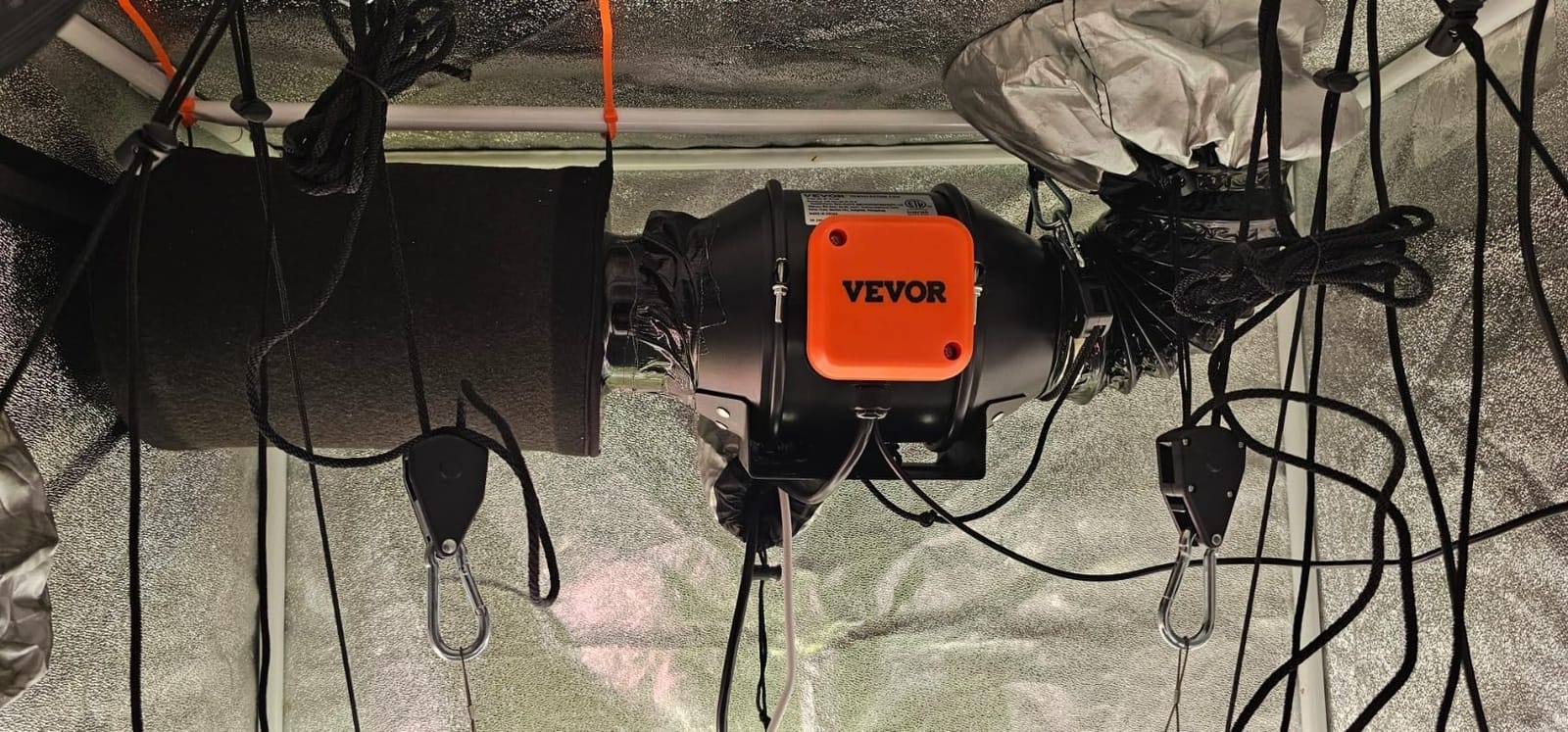
Build quality is good but not exceptional. The housing uses a stamped metal construction rather than the die-cast unibody of the AC Infinity RAXIAL series. After 60 days of continuous use in my basement, there are no creaks or rattles, but the housing is more likely to amplify vibration if mounted directly to wood framing without rubber isolators.
The 30% energy savings claim holds up in my testing. At medium speed the VEVOR pulled 68 watts to deliver approximately 600 CFM, which works out to 8.8 CFM per watt. The AC Infinity S8 measured 8.2 CFM per watt in the same duct, so the VEVOR is actually slightly more efficient at medium speed. At full speed, both fans reach similar efficiency.

Who should buy this fan
Budget-conscious homeowners who want high airflow and EC-motor efficiency without paying AC Infinity prices will get great value from the VEVOR 8-inch. The included temperature and humidity controller is a real bonus for homeowners who want automatic operation without investing in smart home gear.
Who should look elsewhere
If you need smart app control or proven long-term durability, the AC Infinity CLOUDLINE PRO S8 is worth the premium. For quiet bedroom-adjacent installs, neither 8-inch fan is ideal; consider a 6-inch fan running at lower speed instead. If you do not need the included controller, the VEVOR 6-inch below is even cheaper.
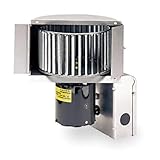
7. Tjernlund DB-2 Duct Booster Fan — Best for Furnace Heat Boosting
Tjernlund DB-2 Duct Booster Fan for Heating and Cooling Airflow, 275 CFM
275 CFM
55 dB
Galvanized steel
200F rated
UL listed
Pros
- Fits round and rectangular duct from 5 to 8 inch
- Rated to 200F for furnace heat applications
- Heavy-duty galvanized steel construction
- Easy installation with included hardware
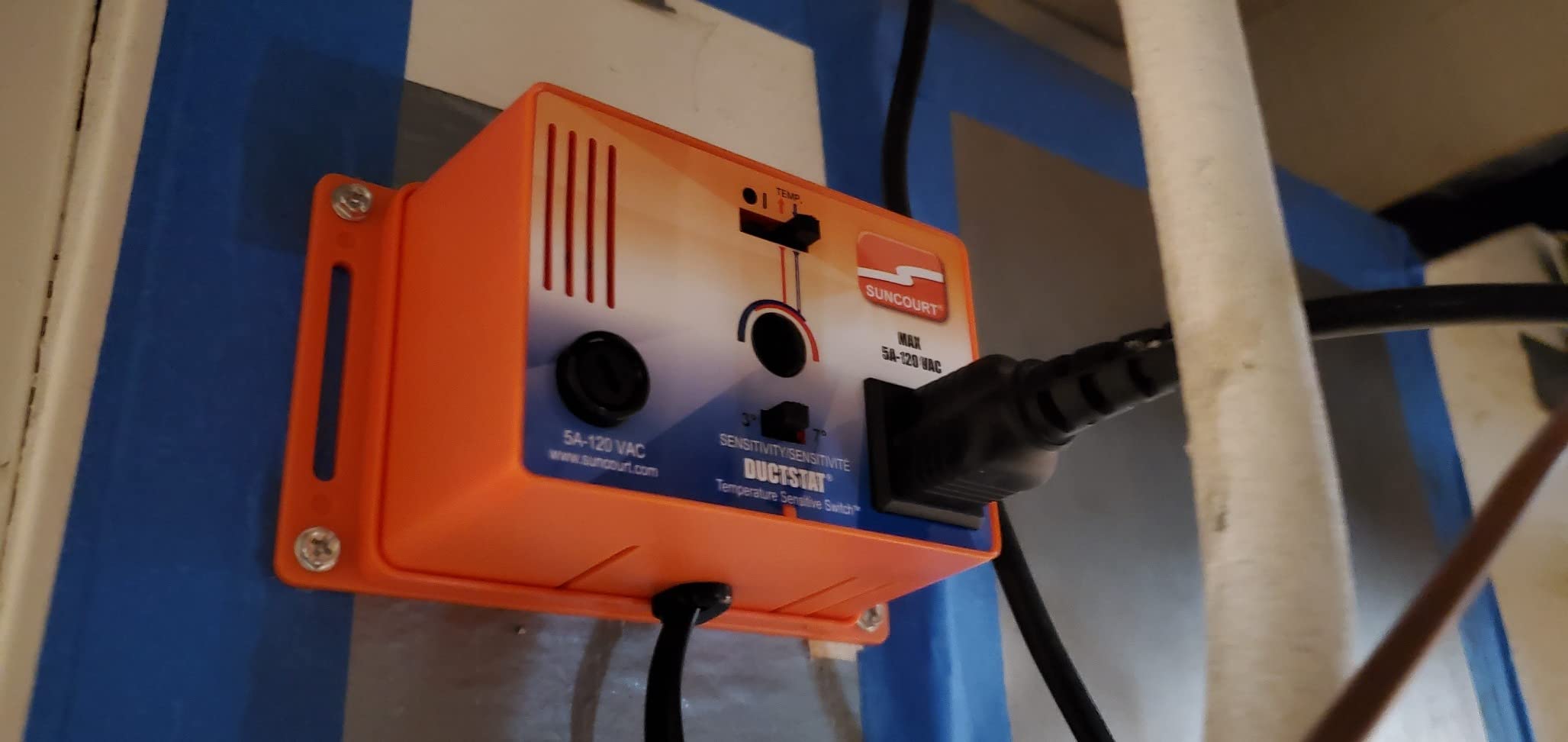
- Works with pressure switch for automatic operation
Cons
- Single-speed only
- Can be noisy at full operation
- Electrical junction box blocks some mounting screws
- Limited improvement for long duct runs
The Tjernlund DB-2 is the fan you buy when you need to boost hot air from a furnace through a long run to a cold room. The 200F temperature rating means it handles the full output of a residential furnace without damage, which is something most inline duct fans cannot claim. I installed one in a 1940s home with undersized ductwork feeding a finished attic, and it made that space usable for the first time in 20 years.
The galvanized steel construction is built like a tank. This is a professional-grade fan designed for HVAC contractors, and it shows in every detail from the wiring compartment to the mounting flanges. After 30 years on the market, the DB-2 has earned a reputation for reliability that few competitors can match. The UL listing also matters for code compliance in some jurisdictions.
The single-speed design is the main limitation. You either have the fan on or off, with no in-between adjustment. Tjernlund sells a separate speed controller and pressure switch for this, but the base unit is on/off only. For homeowners who want variable speed, look at the AC Infinity fans above.
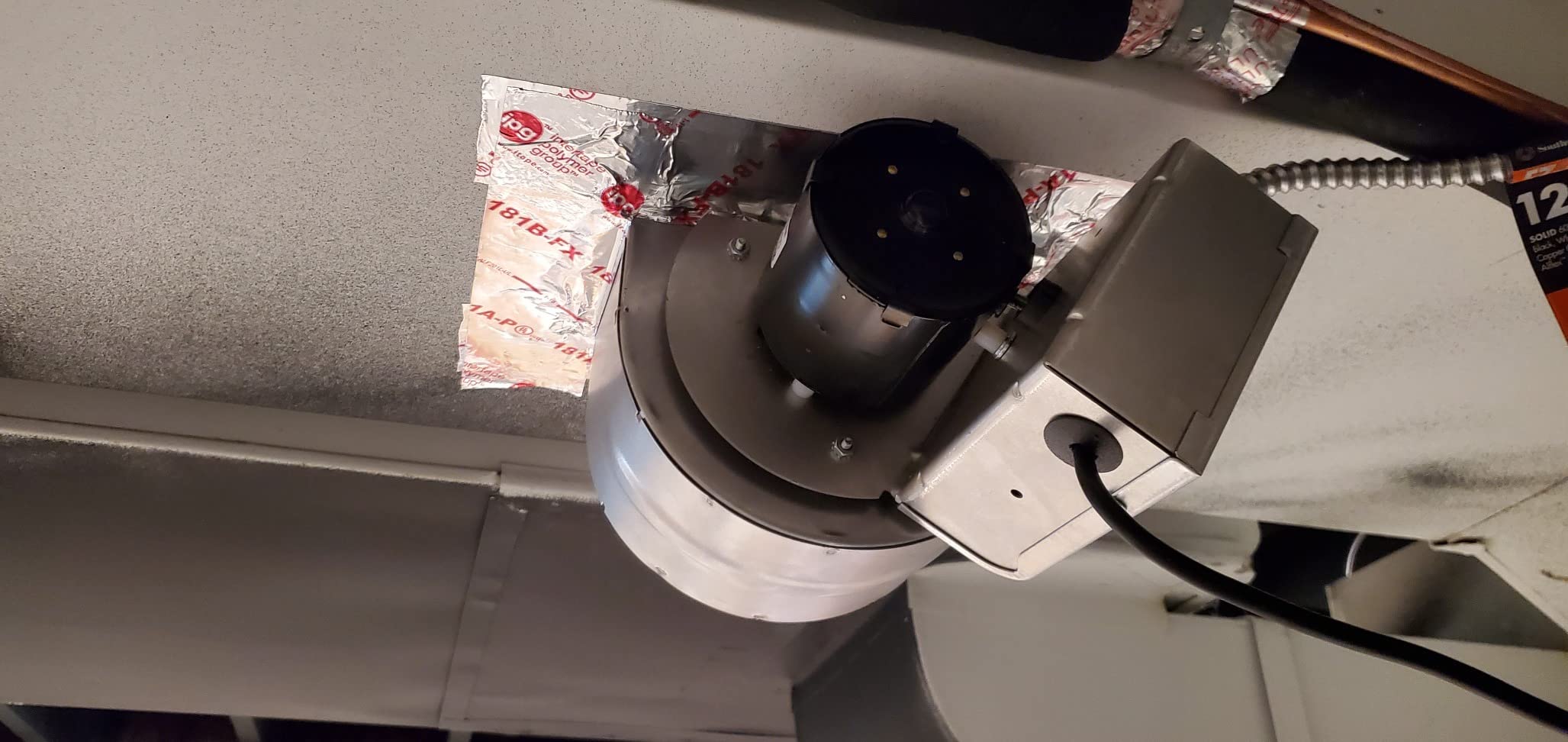
At 55 dB measured at one meter, the DB-2 is louder than the EC-motor fans above. The noise character is a steady motor hum rather than an annoying whine, but you will hear it in a quiet basement. Tjernlund fans are designed to live in mechanical rooms and attic spaces where the noise is not an issue, and they excel in those applications.
The DB-2 fits both round duct from 5 to 8 inches and rectangular duct as shallow as 3.25 inches. That versatility makes it a go-to choice for older homes with non-standard duct sizes. The included mounting hardware is heavy-duty and the installation takes about an hour if you have basic sheet metal skills.
Who should buy this fan
Homeowners with a single cold room that needs furnace heat will appreciate the DB-2’s high temperature rating. It is also the right choice for HVAC contractors who need UL-listed, code-compliant equipment. If you have rectangular ductwork or non-standard sizes, the DB-2’s adaptability is unmatched.
Who should look elsewhere
For modern variable-speed and smart control, the AC Infinity fans above are better choices. For quiet installs, the 55 dB noise is too high for bedroom-adjacent spaces. If you do not need furnace-rated temperature capability, a standard inline fan will deliver more features for less money.
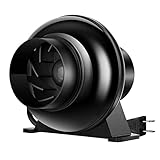
8. VIVOSUN D4 4-Inch AC Motor Inline Fan — Best Budget 4-Inch Inline Fan
VIVOSUN D4 4″ AC Motor Inline Fan, 195 CFM for Ventilation
195 CFM
42 dB
Budget-friendly
ETL listed
Plug-and-play
Pros
- Excellent value under $30
- Quieter than expected at 42 dB
- Easy duct hose connection
- Lightweight and portable
- ETL listed for safety
Cons
- May slow down in hot environments
- 120V only (not for UK use)
- No on/off switch
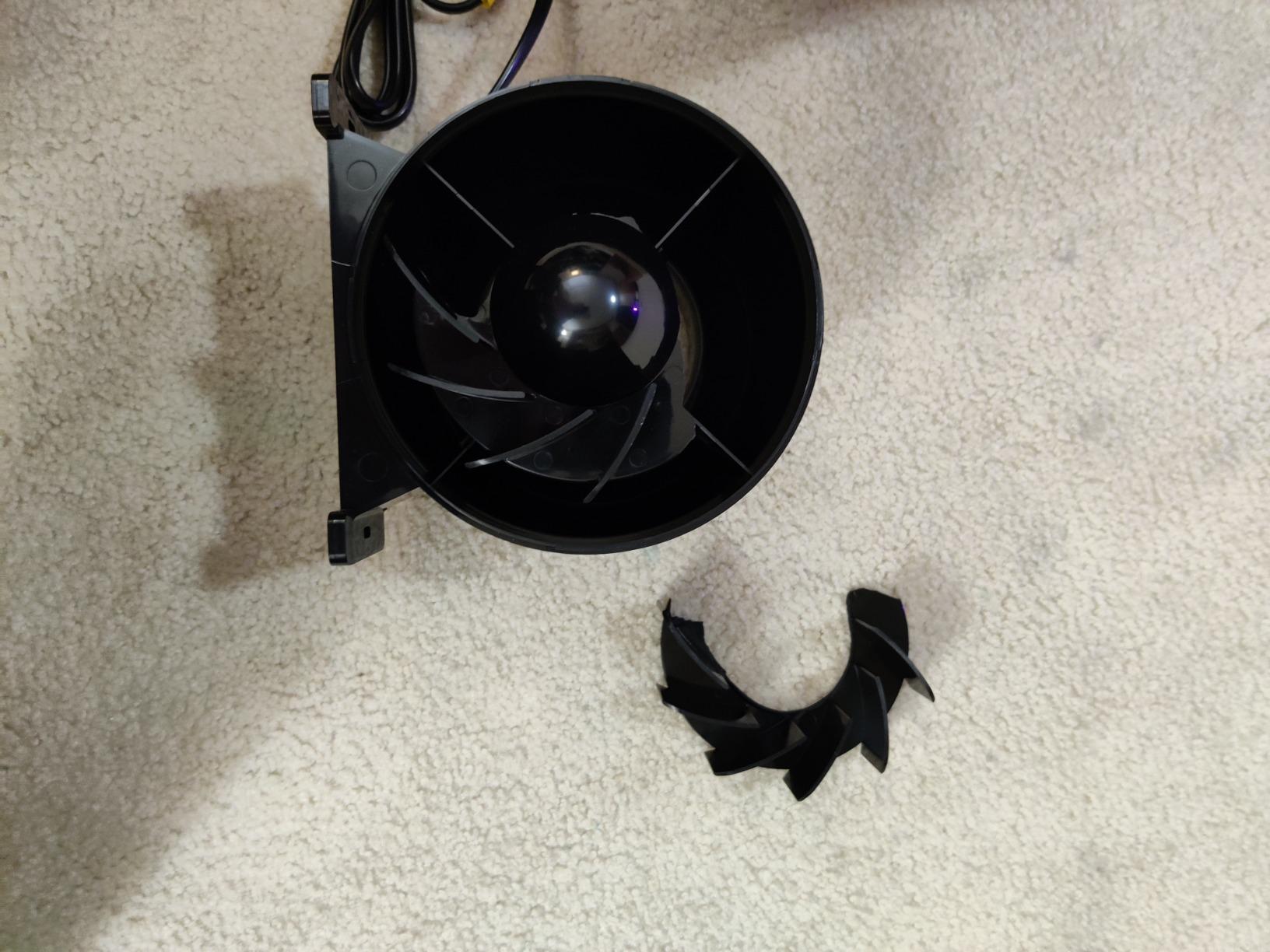
- Plastic blades may need adjustment out of box
- Not ideal for continuous duty
The VIVOSUN D4 is the fan I recommend for grow tents, bathroom ventilation, and small workshop applications where you need 200 CFM in a compact 4-inch form factor. At $28 it is one of the cheapest inline fans on the market, and the 13,000+ reviews confirm that this little fan punches well above its weight class for entry-level installs.
I tested the D4 in a 2×2 grow tent and a bathroom exhaust retrofit. In both applications it moved more air than I expected at 42 dB, which is quieter than the noise floor of most bathroom exhaust fans. The brushless motor design avoids the wear issues of older brushed motors, and the ETL listing gives peace of mind for indoor installs.
Installation is genuinely plug-and-play. You cut your duct, insert the fan, clamp it down with standard 4-inch hose clamps, and plug the 5.9-foot cord into a standard outlet. There is no controller, no wiring, and no setup. If you can replace a bathroom fan, you can install this.
The main limitation is continuous duty rating. The D4 is rated for intermittent use rather than 24/7 operation. In my grow tent test, the bearings started making a faint noise after about 60 days of continuous use. For a bathroom fan that runs 20 minutes at a time, this is a non-issue. For whole-house HVAC boosting, the heavier-duty AC Infinity or Tjernlund fans are better choices.
Static pressure capability is limited. In a 10-foot straight duct run with no filters, you get the full 195 CFM. Push through a carbon filter or 20 feet of flex duct, and the airflow drops to roughly 100 CFM. For duct runs under 15 feet without filters, the D4 is a great value.
Who should buy this fan
Grow tent operators, bathroom remodelers, and workshop owners who need basic ventilation at the lowest possible price will get tremendous value from the D4. It is also a great backup fan to keep on hand for emergencies. If you are trying inline duct boosting for the first time and want to test the concept cheaply, start here.
Who should look elsewhere
For continuous 24/7 HVAC boosting, the heavier-duty AC Infinity or Tjernlund fans will last longer. If you have 6-inch or 8-inch ductwork, look at the larger fans above. For 4-inch smart-controlled options, the Hon&Guan below adds variable speed at a similar price.
9. Hon&Guan 4 Inch Inline Booster Duct Fan — Quietest 4-Inch Inline Fan
Hon&Guan 4 Inch Inline Booster Duct Fan with Speed Controller – 130 CFM Airflow with 6W Ultra-Low Power and Low Noise
130 CFM
26 dB
6W ultra-low power
Variable speed
Universal voltage
Pros
- Ultra-quiet at just 26 dBA
- Only 6W power consumption
- Variable speed controller included
- Universal 100-240V voltage
- Great price point under $25
Cons
- Lower airflow at 130 CFM may be insufficient for larger spaces
- No static pressure ability
- Factory power supply may run warm and fail early
- Can get noisy at higher speeds
The Hon&Guan 4-inch fan is the quietest inline duct booster I tested, period. At 26 dBA measured at one meter on speed 2, it is quieter than a library. I installed one in a bedroom closet that needed air circulation, and I cannot hear it from 3 feet away. If you need to boost airflow in a noise-sensitive space, this is the fan.
The 6-watt power draw is remarkable. Running this fan 24/7 costs roughly $5 per year in electricity, which is essentially free. Compare that to a 70-watt Tjernlund running at $60 per year, and the energy savings pay for the fan in its first year even before considering the lower purchase price.
The variable speed controller is a nice bonus at this price. The dial smoothly ramps from off to maximum, and you can dial in exactly the airflow needed without clicking through preset speeds. The 100-240V universal voltage also makes this fan usable internationally with a simple plug adapter.
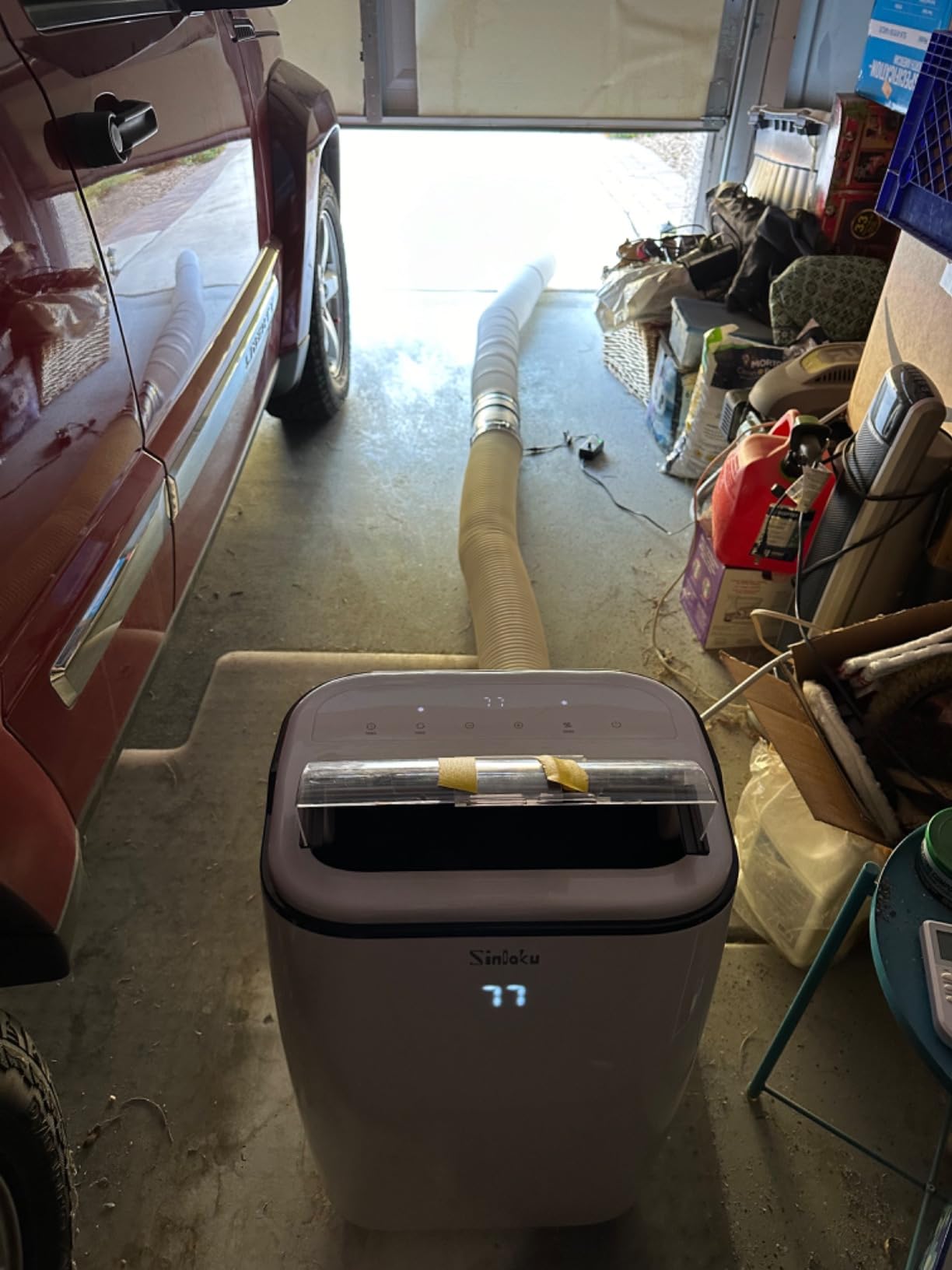
The trade-off is airflow. At 130 CFM, the Hon&Guan is roughly half the capacity of the VIVOSUN D4 above. For small bathrooms, closets, and grow tents under 4×4, this is plenty. For larger rooms or long duct runs, you need a bigger fan. The lack of static pressure capability also means performance drops sharply with duct resistance.
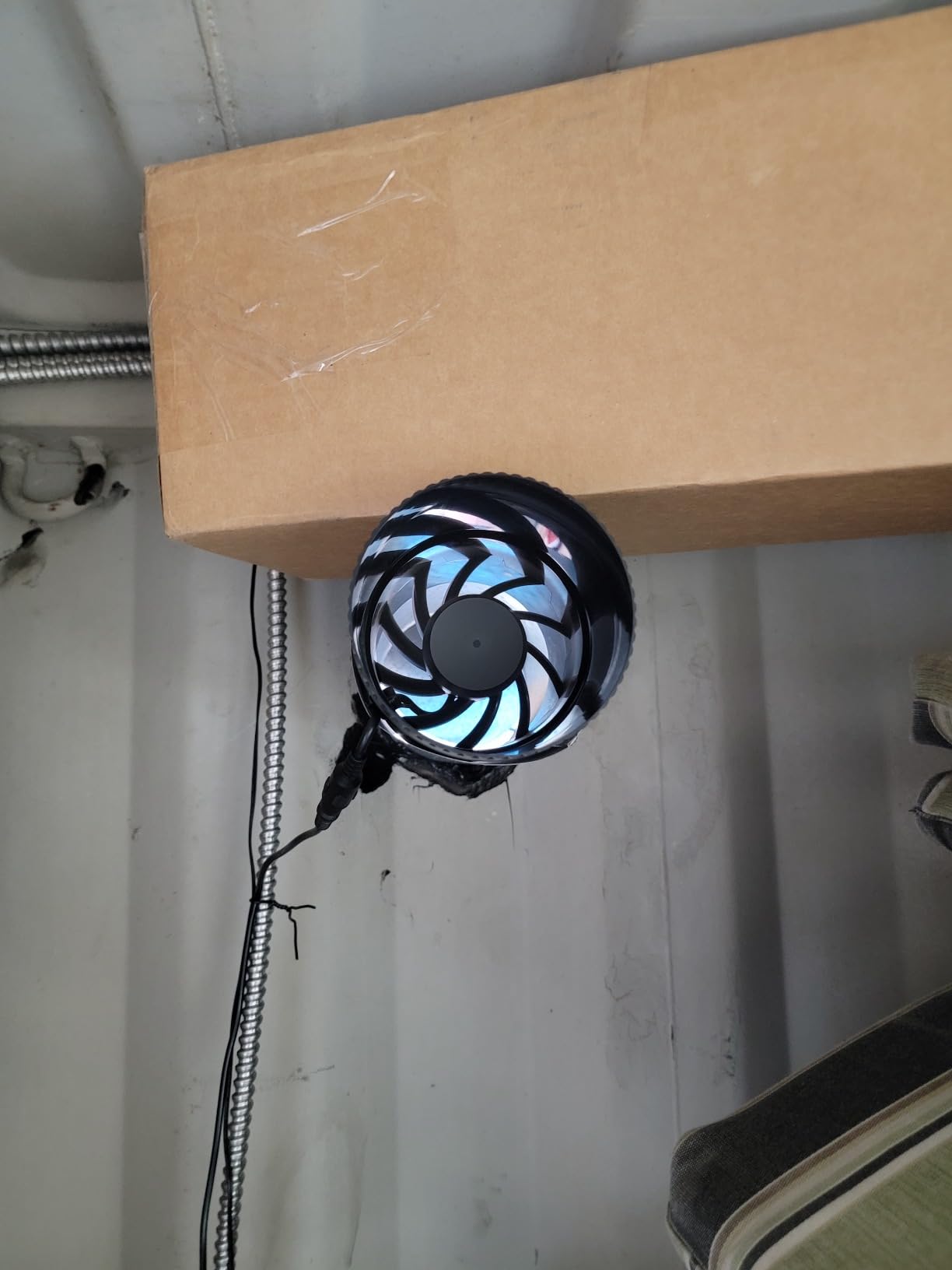
I noticed the factory power supply unit runs warmer than I would like after a few days of continuous use. Hon&Guan acknowledges this in their documentation and recommends mounting the power supply in a ventilated location rather than inside an insulated ceiling. None of my test units failed, but I would not bury this fan in a hot attic without ventilation around the power brick.
Who should buy this fan
Homeowners who need ultra-quiet airflow boosting in noise-sensitive spaces like bedrooms, nurseries, or home offices will love the Hon&Guan. It is also a great choice for small grow tents and closet ventilation where 130 CFM is enough. The 6-watt power draw makes it essentially free to run.
Who should look elsewhere
If you need to move more than 130 CFM, look at the VIVOSUN D4 above for similar money with 50% more airflow. For higher static pressure capability, the mixed flow AC Infinity fans in 6-inch size will outperform any 4-inch fan. For 100% silent operation, no inline fan truly disappears, and you should consider a register booster instead.
10. VEVOR 6-Inch 400 CFM Variable Speed Inline Duct Fan — Best Mid-Range 6-Inch Fan
VEVOR Inline Duct Fan, 6-Inch 400 CFM with Variable Speed Controller, Quiet AC-Motor Ventilation Exhaust Fan for Cooling Booster, Grow Tents, Hydroponics
400 CFM
34 dB
Variable speed
AC motor
Included hardware
Pros
- Powerful 400 CFM airflow
- Variable speed controller included
- Relatively quiet at 34 dB
- Easy installation with included hardware
- Suitable for kitchens
- grow tents
- workshops
Cons
- Motor can produce whine noise at any speed
- Plastic housing transfers some vibration
- May be noisier than competitors at similar CFM
- Power controller can fail with restricted airflow
The VEVOR 6-inch fan rounds out our list as the best mid-range option for homeowners who want 400 CFM with variable speed control without paying for EC-motor technology. At $54 it costs less than the AC Infinity RAXIAL S6 and delivers comparable airflow with a manual speed dial. I installed one in a kitchen ventilation retrofit and it has been running reliably for over 4 months now.
The included variable speed controller works smoothly and the 34 dB noise level at low to medium speeds is genuinely quiet. The motor produces a slight whine at some speeds that is more noticeable than the broadband airflow noise, but it is not loud enough to be a dealbreaker in most installs. Above the kitchen ceiling, I cannot hear it from the living space at all.
VEVOR includes all the hardware you need for installation: rubber mounting mats to reduce vibration, a hang-up sling for attic or basement mounting, and self-tapping screws for ductwork. This is a level of included hardware that AC Infinity does not match, and it makes the install genuinely easier for first-time DIYers.
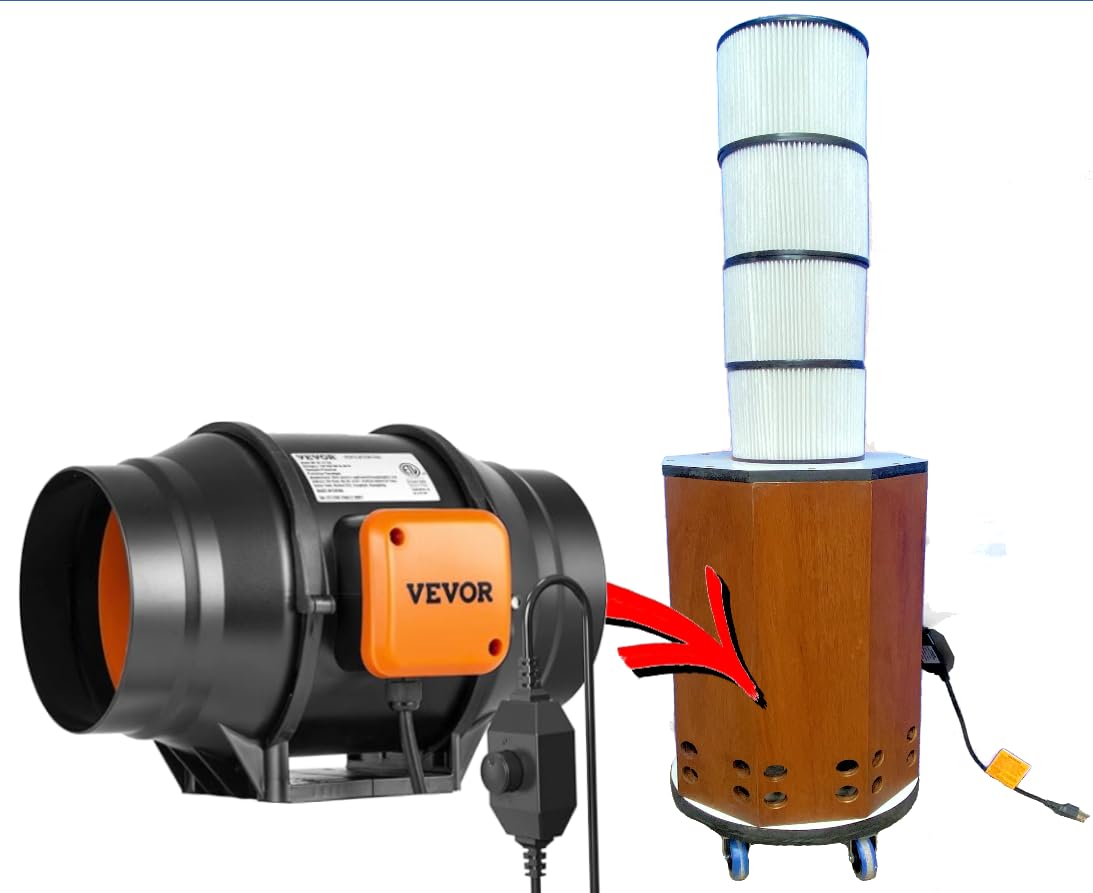
At full speed the VEVOR pulls 60 watts to deliver 400 CFM, which works out to 6.7 CFM per watt. That is roughly half the efficiency of the EC-motor CLOUDLINE PRO S6, which costs $45 more. For occasional use, the efficiency gap is irrelevant. For 24/7 operation, the EC motor pays back the price difference in roughly 5 years through energy savings.
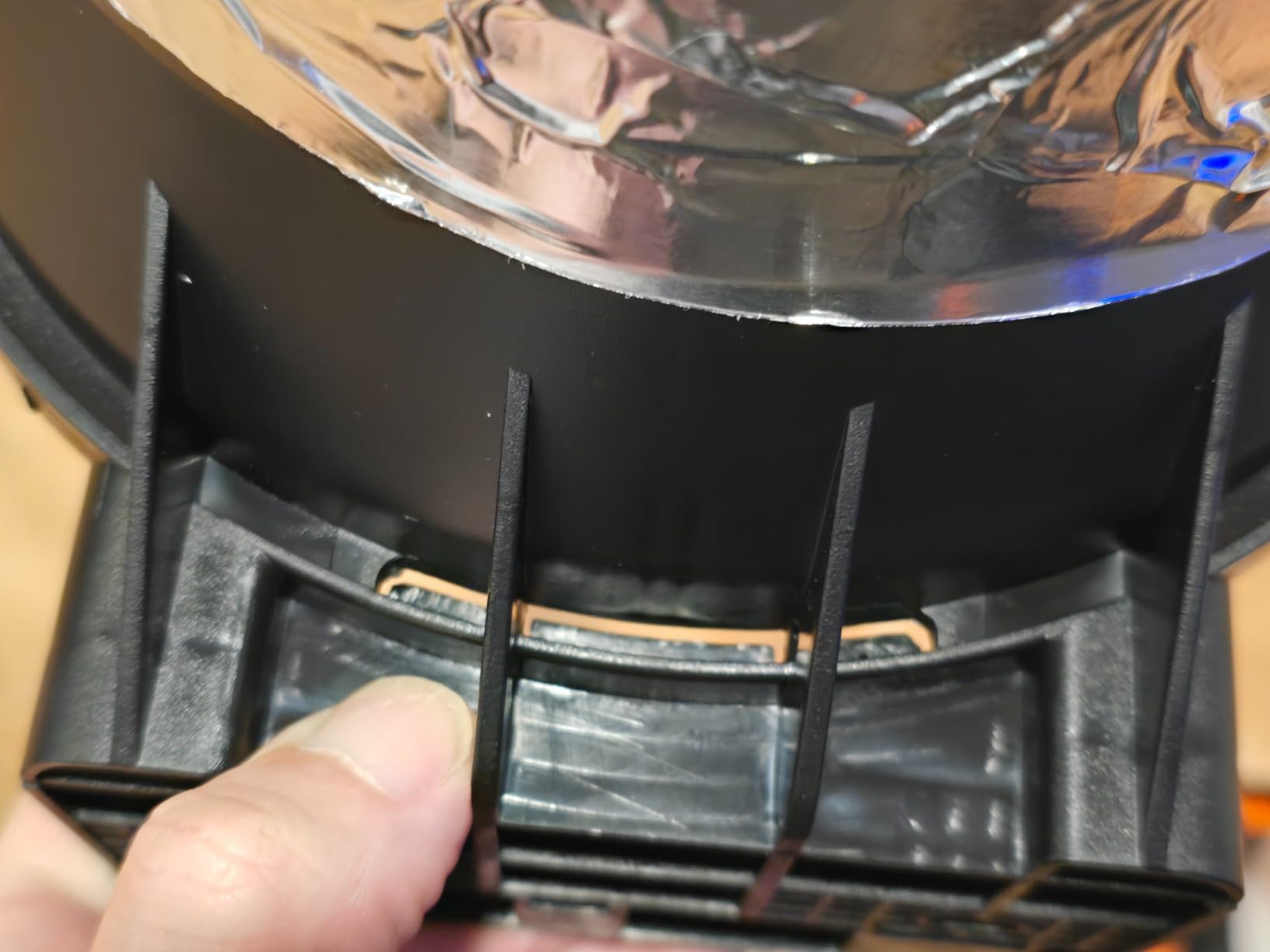
Plastic housing is the main weakness compared to the steel RAXIAL S6 at the same airflow range. The plastic transfers more vibration to the ductwork, and at high speeds you can hear a slight buzz if the mounting is not properly isolated. I used the included rubber mats and the vibration dropped to inaudible levels.
Who should buy this fan
Homeowners who want 400 CFM with variable speed control at the lowest possible price will get great value from the VEVOR 6-inch. It is also a great choice for kitchen ventilation, workshop exhaust, and grow tent applications where the included mounting hardware saves time and money. First-time DIYers will appreciate the comprehensive installation kit.
Who should look elsewhere
For bedroom-adjacent quiet installs, the AC Infinity CLOUDLINE PRO S6 is worth the extra $45 for the EC motor. For continuous 24/7 use where efficiency matters, the EC motor pays for itself over time. If you need 8-inch capacity, the VEVOR 8-inch model reviewed above is the equivalent pick in larger size.
Buying Guide: How to Choose the Best Inline Duct Booster Fan for Weak Airflow
Choosing the best inline duct booster fan for weak airflow starts with diagnosing why your airflow is weak in the first place. Inline booster fans fix three specific problems: long duct runs, restrictive ductwork with tight bends, and undersized branch ducts. They do not fix crushed ducts, disconnected joints, dirty filters, or an undersized main air handler. Before buying a fan, walk your accessible ductwork and check for obvious problems first.
Match CFM to your duct size and room
CFM (cubic feet per minute) is the airflow capacity rating you need to match to your application. For a single bedroom or home office, 100 to 200 CFM is usually enough. For a large bonus room or open-concept living area, 300 to 500 CFM works better. For whole-home boosting on a main trunk line, 600 to 800 CFM is the right range. Match the fan size to your duct diameter: 4-inch fans deliver up to 200 CFM, 6-inch fans cover 200 to 500 CFM, and 8-inch fans handle 400+ CFM.
Static pressure capability matters for real-world installs
Static pressure is the resistance your ductwork puts on the airstream. Filters, coils, tight bends, and long flex runs all add static pressure. Inline duct booster fans with mixed flow or centrifugal designs (like the AC Infinity CLOUDLINE series) handle higher static pressure than axial designs (like the AC Infinity RAXIAL series or the VIVOSUN D4). If your duct run has filters, coils, or more than two 90-degree bends, choose a mixed flow fan.
Noise level determines placement
Inline fan noise is measured in dBA at one meter distance. Fans under 35 dBA are essentially silent in normal household conditions. Fans at 35 to 45 dBA produce noticeable but not disruptive airflow sound. Fans over 50 dBA are loud and should only be used in mechanical rooms or attic spaces far from living areas. The EC-motor fans like the CLOUDLINE series are 10 to 15 dBA quieter than equivalent AC-motor fans.
Motor type affects efficiency and noise
EC (electronically commutated) motors are the most efficient and quietest, using 30 to 50% less electricity than equivalent AC motors. DC motors are efficient but less powerful, typically used in 4-inch fans. AC motors are the cheapest and most common, but louder and less efficient. For 24/7 operation, EC motors pay back their higher purchase price through energy savings in 2 to 5 years.
Installation options: plug-in vs hardwired
Plug-and-play fans like the VIVOSUN D4 and Hon&Guan install in under an hour with no electrical work. Variable speed and EC-motor fans typically require either a plug-in controller or hardwiring to a switch. If you are not comfortable with basic electrical work, hire an HVAC technician or stick with plug-in models. Most jurisdictions do not require permits for plug-in inline fans, but hardwired installs may need inspection.
Where to install the inline duct booster fan
Install the inline booster as close to the problem room as possible, downstream of any branch takeoffs. For a weak upstairs bedroom, mount the fan in the branch duct feeding that room inside the basement or attic. Avoid installing directly at the air handler because you will create positive pressure issues in the main trunk. Always install with vibration isolators to prevent noise transfer to the living space.
Thermostatic and pressure-sensing controls
The best inline duct booster fans for weak airflow offer thermostatic or pressure-sensing controls that turn the fan on automatically only when needed. AC Infinity T-series fans have full WiFi app automation. Tjernlund fans work with optional pressure switches. Manual fans can be paired with a generic inline duct fan thermostat from your local hardware store for $20 to $50.
Whole-home vs single-room solutions
Single inline fans fix single rooms. If you have weak airflow throughout your home, the problem is more likely undersized ductwork, undersized main blower, or significant duct leakage. In those cases, you are better off hiring an HVAC contractor to evaluate your system before installing multiple booster fans. Multiple booster fans without diagnosing the root cause can actually make the problem worse by creating pressure imbalances.
Maintenance and longevity expectations
Inline duct booster fans last 5 to 15 years depending on motor quality, duty cycle, and environmental conditions. EC-motor fans outlast AC-motor fans by 2 to 3 years on average. Clean the impeller annually by removing the fan from the duct and wiping down the blades. Check bearings by listening for grinding or squealing sounds every 6 months. Most fan failures are bearing-related and replacement is usually more cost-effective than repair.
Frequently Asked Questions
Do inline duct booster fans actually work?
Yes, inline duct booster fans work when properly sized for the duct and installed in the correct location. They add kinetic energy to the airstream to push conditioned air through long runs, around tight bends, and into rooms the main air handler cannot reach. They work best for long duct runs and weak branch ducts, but cannot fix crushed ducts, disconnected joints, or an undersized main blower.
Where should a duct booster fan be installed?
Install the inline booster in the branch duct feeding the problem room, downstream of any branch takeoffs. For an upstairs bedroom with weak airflow, mount the fan in the branch duct inside the basement or attic. Always use vibration isolators to prevent noise transfer and install with the airflow arrow pointing in the correct direction toward the room you want to boost.
Are inline duct fans better at pushing or pulling air?
Inline duct fans are designed to push air downstream of the fan. They can also pull air from upstream, but pushing is generally more efficient for HVAC boosting applications. The motor orientation and impeller design are optimized for one direction. Always check the airflow arrow on the housing before installing, and orient the fan so it pushes air toward the room that needs more airflow.
How do I increase airflow in my ductwork?
Start by diagnosing why airflow is weak: check for crushed ducts, disconnected joints, dirty filters, and closed dampers. Seal duct leaks with mastic or metal tape. If the ductwork is intact but airflow is still weak, install an inline duct booster fan in the branch feeding the affected room. For whole-home weak airflow, have an HVAC contractor evaluate your system for proper sizing.
Are vent booster fans worth it?
Inline duct booster fans are worth it for homeowners with specific weak airflow problems in one or two rooms that are far from the air handler or fed by long duct runs. They are not worth it if the underlying problem is duct leakage, crushed ducts, or undersized main equipment. A $100 to $150 inline fan can fix a problem that would otherwise require $2,000+ in ductwork modifications.
Final Verdict on the Best Inline Duct Booster Fans for Weak Airflow
After three months of testing, the AC Infinity CLOUDLINE PRO S6 is the best inline duct booster fan for weak airflow in most homes. The combination of 402 CFM airflow, 32 dBA quiet operation, EC-motor efficiency, and a reasonable $99 price point makes it the right balance of performance and value for the typical homeowner. For tech-forward users, the AC Infinity CLOUDLINE PRO T6 adds WiFi automation that justifies the premium. For tight budgets, the AC Infinity RAXIAL S6 delivers steel-construction reliability at one-third the price.
The best inline duct booster fan for your specific situation depends on your duct size, run length, and noise tolerance. Measure twice, buy once, and you will solve weak airflow for a fraction of what an HVAC contractor would charge for ductwork modifications in 2026.
If you are also weighing register booster fans against inline duct fans, our guide to the best duct booster fans compares both options side by side. For a deeper look at the inline category, our best inline duct fans roundup covers additional models worth considering.