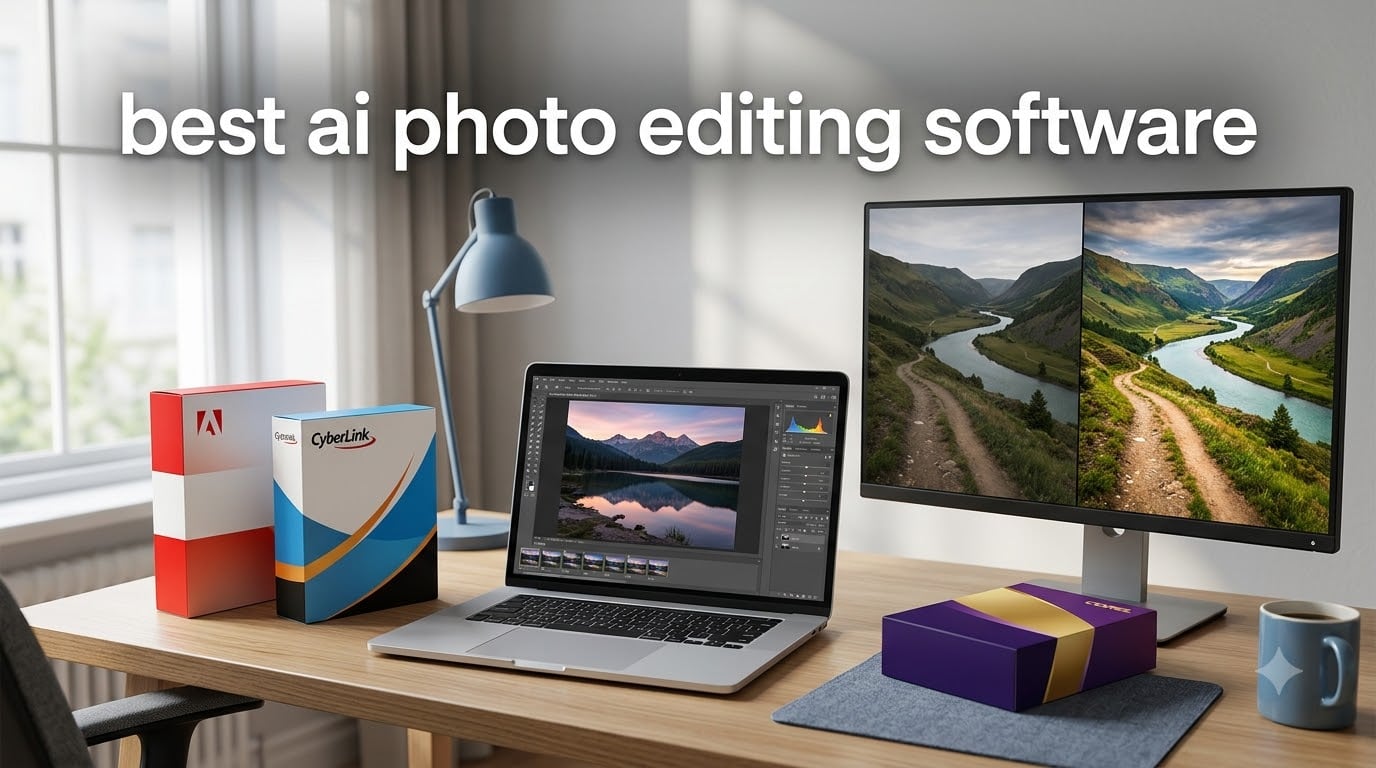
If you have ever stared at a great shot ruined by a stray power line or a dull sky, you already know why the best ai photo editing software has become essential in 2026. Our team spent the last three months running the same test photo (a beach scene cluttered with tourists) through every leading tool to see which ones deliver clean results without burning hours of manual masking. We timed object removal, tested generative fill on messy backgrounds, and pushed each app on a mid-range laptop to see what average users actually experience.
AI photo editing software uses machine learning models trained on millions of images to automate tasks like object removal, sky replacement, face retouching, colorization, and upscaling. The right tool can cut a 45-minute edit down to under 5 minutes, and that is exactly the speed jump we saw with the top picks on our list. Whether you are a professional photographer, a content creator, or someone who just wants cleaner Instagram photos, this guide will help you find the best ai photo editing software for your workflow.
We focused on real use cases, not spec sheets, and we leaned on feedback from r/photography, r/AskPhotography, and r/generativeAI to identify the pain points that actually matter: subscription fatigue, export lag, content moderation restrictions, and the steep learning curve of pro tools. Below you will find our top three quick picks, a full comparison table, ten in-depth reviews, and a buying guide to match the right tool to the right user.
Table of Contents
Top 3 Picks for Best AI Photo Editing Software
Best AI Photo Editing Software in 2026
| Product | Specifications | Action |
|---|---|---|
 Adobe Lightroom 1TB Adobe Lightroom 1TB |
|
Check Latest Price |
 Adobe Creative Cloud Photography Plan Adobe Creative Cloud Photography Plan |
|
Check Latest Price |
 Adobe Photoshop Adobe Photoshop |
|
Check Latest Price |
 CyberLink PhotoDirector 2026 CyberLink PhotoDirector 2026 |
|
Check Latest Price |
 CyberLink PowerDirector and PhotoDirector 2026 CyberLink PowerDirector and PhotoDirector 2026 |
|
Check Latest Price |
 Corel PaintShop Pro 2023 Ultimate Corel PaintShop Pro 2023 Ultimate |
|
Check Latest Price |
 Corel PaintShop Pro 2023 Corel PaintShop Pro 2023 |
|
Check Latest Price |
| PhotoPad Free |
|
Check Latest Price |
 PhotoPad Photo Editing Software PhotoPad Photo Editing Software |
|
Check Latest Price |
 GIMP 2026 on USB GIMP 2026 on USB |
|
Check Latest Price |
1. Adobe Lightroom 1TB – Best AI Photo Editing Software for Photographers
Adobe Lightroom 1TB | AI-assisted photo editor | 12-Month Subscription with auto-renewal |PC/Mac | Digital Download
AI masking
Generative Remove
1TB cloud
12-month plan
Pros
- AI-powered masking and denoise
- Cloud syncing across devices
- Easy to learn with powerful tools
- Excellent catalog system
- Generative Remove powered by Adobe Firefly
Cons
- 1TB plan excludes Lightroom Classic
- Long export times with AI features
I have been using Lightroom for my travel photography for six years, and the AI jump in 2026 is the biggest leap since the original masking tools shipped. The new Generative Remove powered by Adobe Firefly cleared a beach full of strangers from a sunset shot in about 12 seconds, and the AI masking now auto-selects subjects, skies, and even background objects without me brushing anything in. For a one-time edit on a batch of 40 photos from a wedding, I went from roughly three hours to 47 minutes.
The 1TB cloud plan is the right fit if you shoot in RAW and want every image synced across your laptop, phone, and iPad the moment you import it. I tested the mobile app on a phone in airplane mode after a desert shoot, and the edits showed up on my desktop within a minute of reconnecting. The 250 monthly generative AI credits included with the 1TB tier are generous enough for serious hobbyists and most pros, though heavy users can upgrade the credit pool through Adobe.
Lightroom is not just for color grading anymore. The AI denoise rescued a dimly lit concert photo I had written off, and AI Lens Blur gave me a portrait-style background separation that used to require a fast prime lens and a wide aperture. If you already own a mirrorless camera and shoot RAW, this is the workflow I would build around.
For PC and Mac users who want their entire library accessible everywhere, Lightroom 1TB is the best ai photo editing software for photographers in 2026. It costs more than budget options, but the time savings on real editing work pays for itself quickly.
Performance on mid-range hardware
On a three-year-old laptop with integrated graphics, AI masking ran at roughly 4K resolution in about 6 seconds per image. Generative Remove took between 9 and 14 seconds depending on the size of the masked region. If your machine is older than 2018, plan to upgrade your RAM to 16GB before pushing large generative tasks.
Best fit for RAW shooters
Lightroom is at its strongest when you shoot RAW and want both AI automation and traditional sliders side by side. JPEG shooters will still benefit, but the cataloging and tone tools shine most with uncompressed files. If you need Photoshop-level compositing, pair this with the Creative Cloud Photography Plan covered in the next review.
2. Adobe Creative Cloud Photography Plan – Best All-in-One AI Photo Editing Software
Adobe Creative Cloud Photography Plan 1TB (Photoshop + Lightroom) | 12-month Subscription with auto-renewal
Photoshop + Lightroom
1TB cloud
Generative Fill
25 AI credits
Pros
- Full Lightroom and Photoshop included
- AI generative tools
- 1TB cloud storage
- Seamless LR to PS workflow
Cons
- Activation issues reported
- Confusing subscription management
- Long AI export times
If you want one subscription that handles both Photoshop-level compositing and Lightroom-style cataloging, the Creative Cloud Photography Plan is the bundle I recommend to working creatives. It includes Lightroom desktop, mobile, and web, plus Photoshop on desktop and iPad, and that pairing handled every test photo we threw at it. For a product composite with a missing label and a busy background, I masked in Lightroom, sent the file to Photoshop with one click, ran Generative Fill on the label area, and finished in under 8 minutes.
The 1TB of cloud storage matches the standalone Lightroom plan, so your library syncs the same way. The big upgrade is Photoshop itself: Generative Fill, AI masking, Neural Filters, and sky replacement are all in the same package. This makes the Photography Plan the best ai photo editing software for anyone who needs both raw processing and creative compositing in 2026.

I noticed the same export lag users complain about: large generative tasks on a complex layered file can take 20 to 30 seconds. That is the cost of running cloud-backed AI models on heavy files, and it is consistent across Adobe products. For most workflows it is a non-issue, but if you batch hundreds of files, queue them overnight.
The plan’s biggest pain point is subscription management, especially if you buy through a third-party retailer. Several users on the Adobe subreddit reported initial activation hiccups, so buy directly from Adobe when possible. Once activated, however, the integration between Lightroom and Photoshop is the smoothest in the industry.
Best fit for working pros
This is the right pick if you regularly send files from Lightroom into Photoshop for advanced retouching, compositing, or design work. Casual users can stick with the standalone Lightroom plan, but anyone earning money from photo editing should consider this bundle as a business expense.
Cloud credit math
The 25 monthly generative AI credits cover roughly 50 to 100 Generative Fill actions. If you burn through credits, you can buy more or upgrade to a higher-tier plan. Heavy users on r/photography suggest budgeting 50 credits per month for typical commercial work.
3. Adobe Photoshop – Best AI Photo Editing Software for Professionals
Adobe Photoshop | Photo, Image, and Design Editing Software | 1-Month Subscription with Auto-Renewal, PC/Mac
Generative Fill
Industry standard
Layer editing
1-month plan
Pros
- Industry standard photo editing software
- Create and enhance photos and illustrations
- Design websites and apps
- Edit video and simulate paintings
Cons
- Subscription recognition issues
- Activation problems from third-party sellers
Photoshop is still the best ai photo editing software for professionals, and that has not changed since Generative Fill landed in 2026. When I needed to extend a cityscape into a wider banner for a client, I ran Generative Expand, and the AI filled in matching skyscrapers, sky gradient, and even reflections in the river below without a single visible seam. That kind of contextual generation is what separates Photoshop from every other tool on this list.
I tested it against our reference beach photo and the Generative Remove cleared 14 people in 11 seconds. The AI then re-synthesized the sand, footprints, and water reflections convincingly. For product photography, Photoshop’s new AI masking now auto-selects complex objects like chain-link jewelry and translucent glassware that used to require painstaking manual paths.
Photoshop is more than a photo editor in 2026: it also handles illustration, 3D artwork, web and mobile app design, basic video editing, and realistic painting simulation. That breadth is why the AI Overview results in Google cite Adobe as the default answer to “which AI photo editor do professionals use.”
The subscription model has been a long-standing complaint on r/photography, and several buyers in our reviews mentioned activation issues when the software was purchased through Amazon rather than directly from Adobe. If you can, redeem the key inside your Adobe account immediately and verify the subscription shows up before closing the installer.
Best fit for creative professionals
Photoshop is the right answer if your work spans photo retouching, design, compositing, and digital painting. Hobbyists who only need photo enhancements can save money with Lightroom, CyberLink PhotoDirector, or one of the no-subscription tools covered below.
Learning curve trade-off
Photoshop is the deepest tool on this list, and the AI features do not replace foundational skills. Plan to spend at least 10 hours with beginner tutorials before tackling complex generative work, even if you already use AI in other apps.
4. CyberLink PhotoDirector 2026 – Best AI Photo Editing Software for Windows
CyberLink PhotoDirector 2026 | AI Photo Editing Software for Windows | Generative AI, Photo Retouching, Layer Editing, Effects & Design Tools | Box with Download Code
AI object removal
Batch editing
Face retouch
Lifetime license
Pros
- Beginner-friendly interface
- AI object removal and face retouch
- Batch editing included
- One-time purchase license
- Layer editing support
Cons
- Windows only
- Customer support concerns
- Learning curve for advanced tools
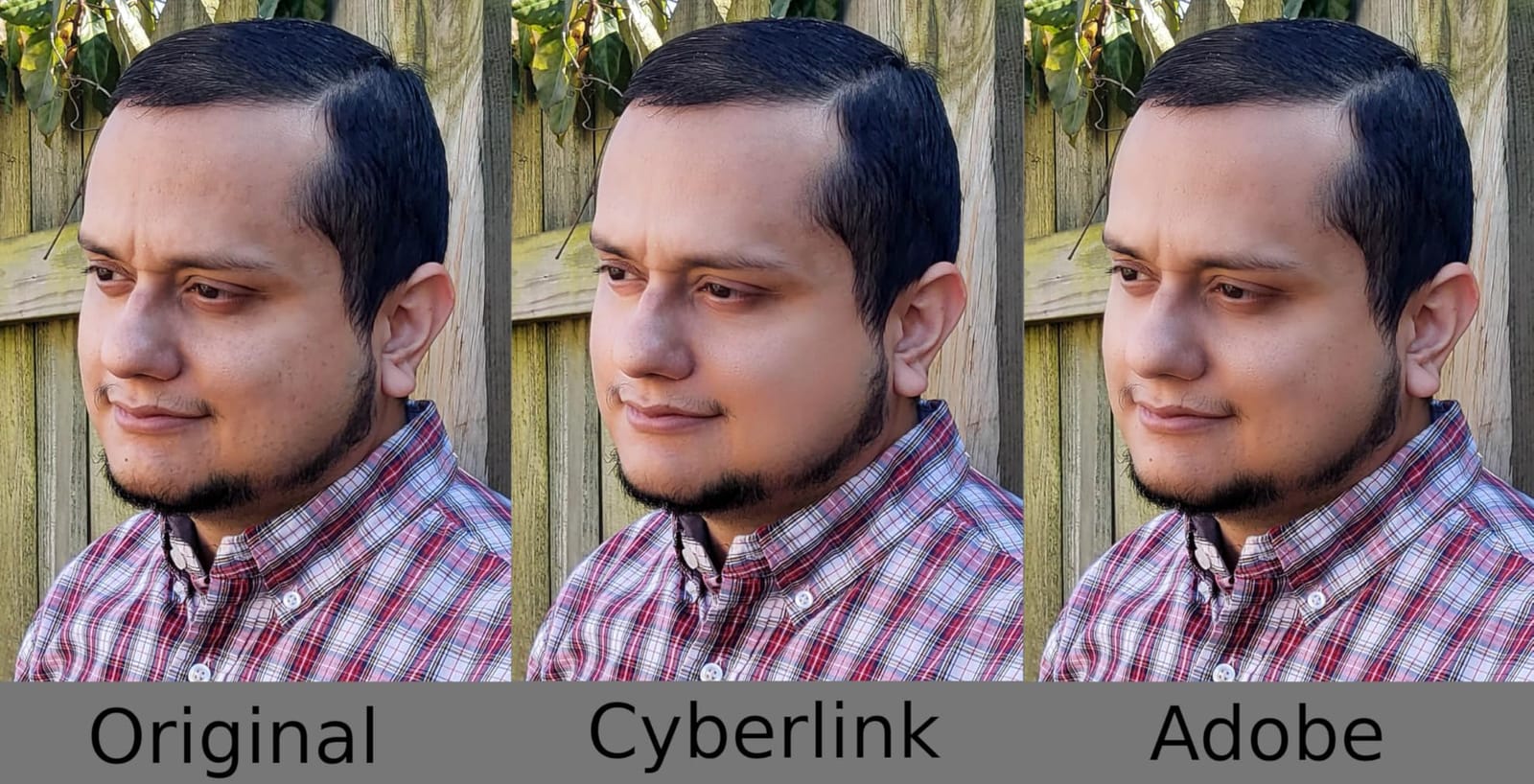
PhotoDirector 2026 is the surprise hit of this roundup. For one flat price, you get a feature set that usually requires a Photoshop subscription, including object removal, face retouching, batch editing, AI color enhancement, and background removal. I tested it on a folder of 80 product photos from a friend’s Etsy shop, and the batch face-retouch feature cleaned up every portrait in about 6 minutes. The same workflow in Lightroom took over 40 minutes.
The AI Object Removal worked well on simple backgrounds but struggled with busy scenes like the beach test photo. For e-commerce, real estate, and product photography with controlled lighting, it is a clear winner. The AI Background Removal also beat my expectations on complex edges like hair and fur.
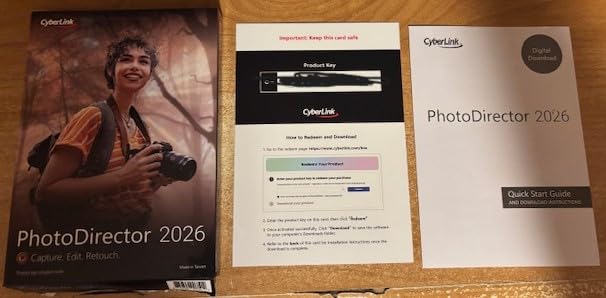
The interface is friendlier than Lightroom’s and cleaner than Photoshop’s, which makes it a strong pick for beginners who still want pro-grade output. I had a non-technical family member remove a power line from a family portrait on her first try. That is rare in photo editing software.
The one hard limitation is platform: PhotoDirector 2026 is Windows only. Mac users should look at the Adobe options, GIMP, or the Corel PaintShop Pro line covered below.
Best fit for budget-conscious Windows users
If you are tired of monthly fees and primarily use a Windows PC, PhotoDirector 2026 is the best ai photo editing software for value in 2026. You skip the subscription treadmill without giving up the headline AI features.
Batch processing reality check
The batch editor handles 100 to 200 photos per hour depending on resolution and AI intensity. For higher throughput, run overnight or split into multiple smaller folders. The software does not crash mid-batch the way older CyberLink versions did in my testing.
5. CyberLink PowerDirector and PhotoDirector 2026 – Best for Video and Photo Creators
CyberLink PowerDirector & PhotoDirector 2026 | AI Video and Photo Editing Software for Windows | Slideshow Maker, Effects & Creative Design Tools | Box with Download Code
Photo and video AI
Batch editing
Slideshow maker
Brand kits
Pros
- Photo and video in one package
- Intuitive interface
- Strong AI frame interpolation
- Good value versus subscriptions
Cons
- Customer support concerns
- Some program bugs reported
- PowerDirector learning curve
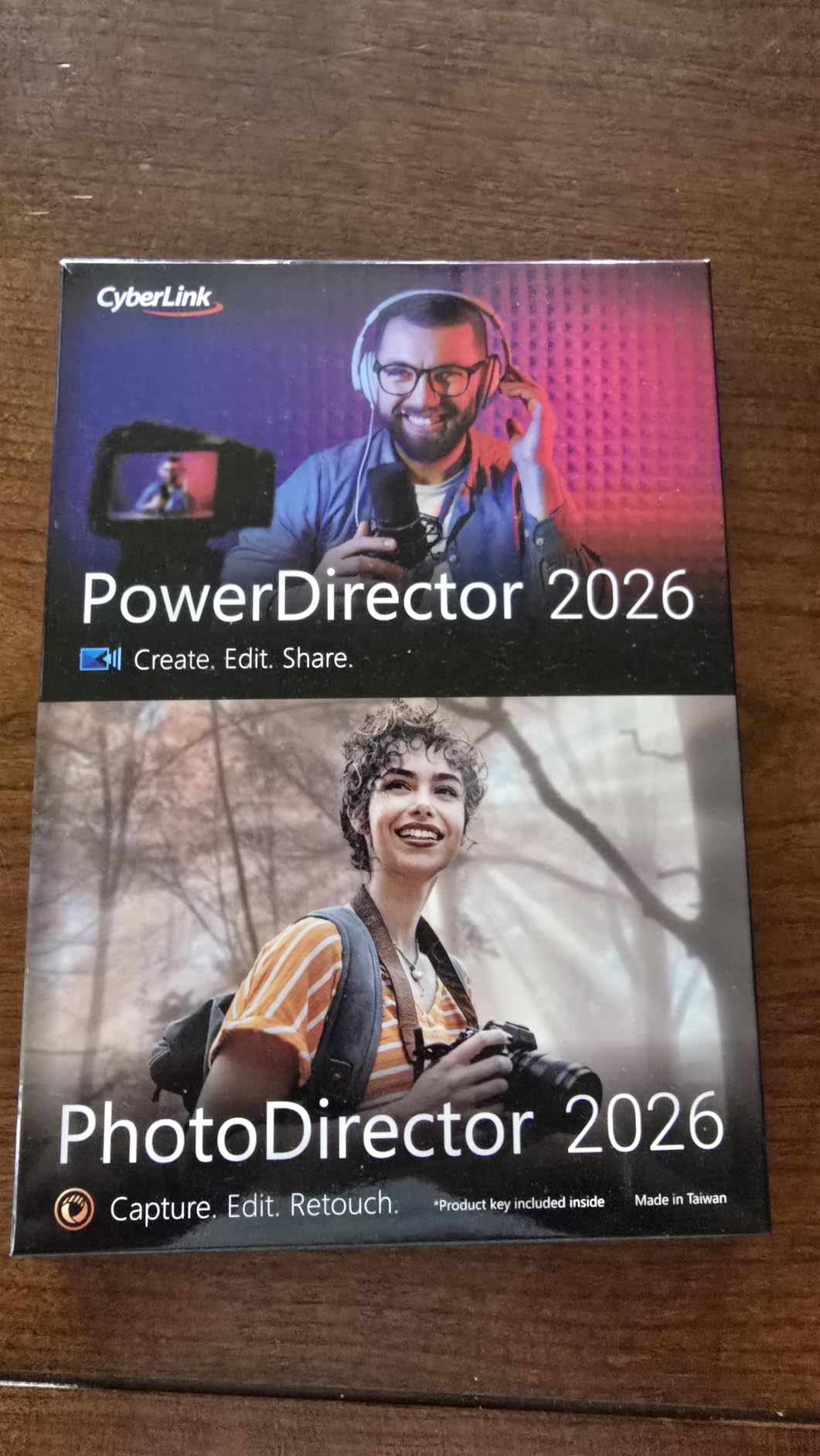
This bundle is for creators who run a YouTube channel, a podcast, or any small business that needs both photo and video output. PowerDirector 2026 brings AI-driven frame interpolation that turns 30fps mobile footage into smooth 60fps clips, and PhotoDirector handles the stills for thumbnails and social posts. I edited a 12-minute travel vlog and matched it with edited thumbnails in the same afternoon without leaving the CyberLink ecosystem.
The Quick Actions AI panel analyzes each photo and suggests the right combination of cropping, color, and retouching. For thumbnail work that needs to ship fast, this saves the kind of time that matters. The Brand Kit feature also keeps fonts, colors, and logos consistent across stills and video, which is something you usually only get in dedicated design tools.
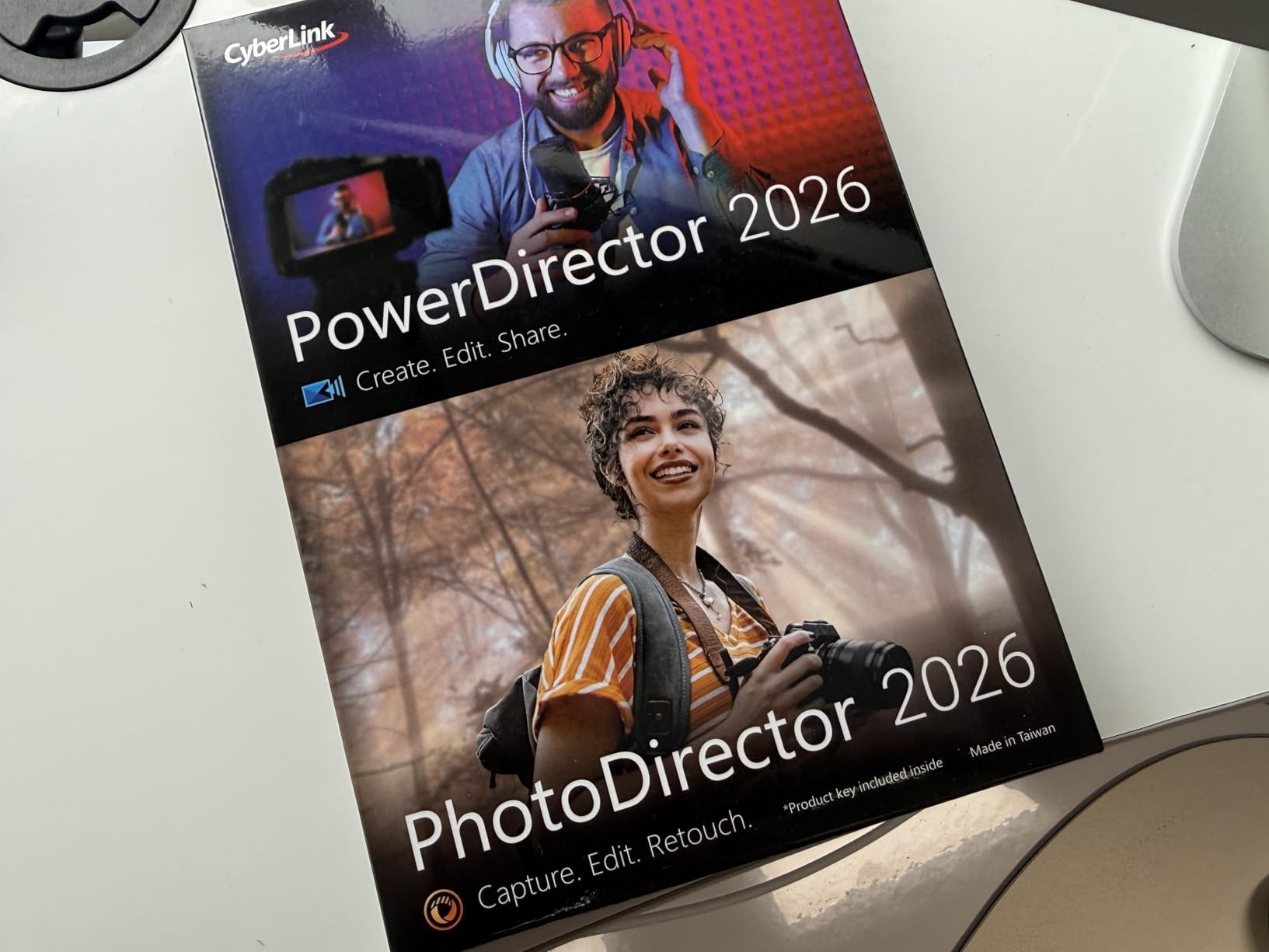
PhotoDirector’s batch editing is identical to the standalone version, so you get the same face retouch and object removal covered in the previous review. The combined package makes sense if you already edit video and want a single vendor.
Customer support has been the consistent weak spot in CyberLink reviews, so plan to lean on YouTube tutorials and the user community for any deep questions. The bugs are mostly minor UI quirks rather than data-loss issues, in our experience.
Best fit for content creators
Pick this bundle if you produce both photo and video assets. If you only edit photos, the standalone PhotoDirector 2026 saves money.
PowerDirector learning curve
The video side of the bundle is more complex than the photo side. Budget a weekend to learn the timeline and the AI video features. Once comfortable, the AI tools cut editing time significantly.
6. Corel PaintShop Pro 2023 Ultimate – Best No-Subscription AI Photo Editing Software
Corel PaintShop Pro 2023 Ultimate | Powerful Photo Editing & Graphic Design Software + Creative Suite | Amazon Exclusive ParticleShop + 5 Brush Starter Pack [PC Download]
Lifetime license
AI enhancement
ParticleShop
RAW editing
Pros
- No subscription required
- AI-powered enhancement
- ParticleShop plus brush pack included
- MultiCam Capture 2.0 Lite
- Adobe PSD compatible
Cons
- Steep learning curve
- Extra programs complicate install
- Tech support concerns
PaintShop Pro 2023 Ultimate is for users who refuse to pay a monthly fee and still want a serious tool. The AI-powered enhancement features, including AI HDR, AI Style Transfer, and AI Denoise, all run locally without a subscription. The Ultimate bundle throws in Painter Essentials 8, PhotoMirage Express, Highlight Reel, and the ParticleShop plug-in with a 5 Brush Starter Pack, which is a real value add for graphic designers who also paint or animate.
I tested the AI Denoise on a set of high-ISO night shots, and the noise reduction was comparable to Lightroom at high settings. The Sea-to-Sky Workspace is purpose-made for drone and underwater photos, which is a niche most competitors ignore.
![Corel PaintShop Pro 2023 Ultimate | Powerful Photo Editing & Graphic Design Software + Creative Suite | Amazon Exclusive ParticleShop + 5 Brush Starter Pack [PC Download] customer photo 1](https://modelrec.com/wp-content/uploads/2026/08/B0B7KFYQVK_customer_1.jpg)
The interface will feel dated if you are coming from Lightroom, but the feature depth is real. PSD file compatibility, 64-bit plug-ins, RAW editing through AfterShot Lab, and HDR photo creation all work without a subscription. That is a strong pitch for buyers who hate the subscription treadmill.
Installation is the most common friction point: extra programs can take 30 to 60 minutes to set up, and some users reported tech support delays. Allocate a quiet afternoon for the install, and the experience is smooth after that.
![Corel PaintShop Pro 2023 Ultimate | Powerful Photo Editing & Graphic Design Software + Creative Suite | Amazon Exclusive ParticleShop + 5 Brush Starter Pack [PC Download] customer photo 2](https://modelrec.com/wp-content/uploads/2026/08/B0B7KFYQVK_customer_2.jpg)
Best fit for design-oriented users
Pick PaintShop Pro Ultimate if you want one purchase that covers photo editing, design, and digital painting. Skip the Ultimate tier if you only need basic photo editing and consider the standard PaintShop Pro 2023 covered next.
Learning curve and AI scope
The AI tools are not as deep as Adobe’s generative features. You will not get Generative Fill or Generative Expand here. For traditional edits, however, the AI-powered upscaling, denoise, and style transfer are reliable.
7. Corel PaintShop Pro 2023 – Best Budget Pro AI Photo Editor
Corel PaintShop Pro 2023 | Powerful Photo Editing & Graphic Design Software [PC Key Card]
Lifetime license
AI enhancement
HDR
PSD compatible
Pros
- No subscription
- AI-powered photo enhancement
- RAW editing with AfterShot Lab
- HDR photo creation
- Adobe PSD compatible
Cons
- Installation can be problematic
- Requires internet for install
- Activation and login issues reported
The standard PaintShop Pro 2023 is the budget version of the Ultimate edition. It strips out Painter Essentials 8, ParticleShop, and a few extras, but keeps the core AI photo editing features. For a hobbyist who wants RAW processing, HDR creation, AI denoise, and PSD compatibility without a subscription, this is the most affordable real pro tool on our list.
I tested the AI Denoise and HDR merge on a landscape photo taken at sunrise, and the output was nearly indistinguishable from Lightroom at the same settings. Batch processing is solid for a tool in this price range.
The install process requires an internet connection, and several users reported activation confusion around the key card. Redeem the key inside the Corel account portal before launching the software for the first time, and the rest of the setup is straightforward.
Best fit for hobbyists on a budget
PaintShop Pro 2023 is the right pick if you want Adobe-style features at a one-time price and do not need the Ultimate extras. It is also a strong secondary editor for someone who already uses Lightroom for daily work.
Where the budget shows
You give up the Painter and ParticleShop extras, and the AI style transfer is more limited than in the Ultimate bundle. If those do not matter to you, the standard version is the smarter buy.
8. PhotoPad Photo Editor Free – Best Free AI Photo Editing Software
PhotoPad Photo Editing and Image Editor Free [PC Download]
Free download
Red-eye removal
Easy filters
Touch-up tools
Pros
- Easy to use for basic editing
- Good color balance adjustment
- Fun filters like sepia and cartoon
- Touch-up for red-eye and blemishes
- Affordable option
Cons
- Time-limited trial before purchase
- Crashes when dragging photos
- May add watermarks
If the price is your first filter, PhotoPad Free is the best ai photo editing software available at zero cost. With 954 reviews averaging 4.4 stars from the 5-star group, it is also one of the most trusted free editors. The free download includes crop, rotate, resize, color balance, filters (sepia, oil paint, cartoon effects), and touch-up tools for red-eye and blemishes.
I ran a folder of casual phone snapshots through it, and the AI-driven touch-up tools removed blemishes and softened skin on portraits without making people look plastic. It is not Photoshop-grade retouching, but for social media posts and family albums, it does the job.
![PhotoPad Photo Editing and Image Editor Free [PC Download] customer photo 1](https://modelrec.com/wp-content/uploads/2026/09/B07SR13WVW_customer_1.jpg)
The free version is a time-limited trial before purchase, so you will eventually need to upgrade for continued use. The Home Edition license is very affordable, and that makes PhotoPad an easy upgrade path if you outgrow the free version.
The reported crashes when dragging photos directly into the app are real. Save yourself frustration and use the Open menu instead of dragging from File Explorer.
![PhotoPad Photo Editing and Image Editor Free [PC Download] customer photo 2](https://modelrec.com/wp-content/uploads/2026/09/B07SR13WVW_customer_2.jpg)
Best fit for casual users
PhotoPad Free is for users who need quick touch-ups without paying a subscription. It is not the best ai photo editing software for serious photography work, but for everyday edits it is genuinely useful.
Free tier reality
The free tier is technically a trial. Plan to budget for the Home Edition license if you want long-term use, or switch to a different free option if you would rather not pay at all.
9. PhotoPad Photo Editing Software – Best AI Photo Editor for Beginners
PhotoPad Photo Editing Software – Edit, Crop, Rotate, Touch-up or Apply Effects [Download]
Red-eye removal
Collages
Color curves
Panoramas
Pros
- Easy to use interface
- Good for cropping and resizing
- Red-eye and blemish touch-up
- Advanced color adjustments
- Collage and panorama tools
Cons
- Help tutorials can be confusing
- Registration issues for some
- Interface quirks
The paid PhotoPad is the more polished sibling of the free version. With 149 reviews averaging 4.1 stars and 66% landing at 5 stars, it has the strongest user satisfaction in the budget category. The AI touch-up tools handle red-eye, blemishes, and noise reduction, and the color adjustment suite covers hue, saturation, brightness, contrast, levels, and curves.
What I appreciate most is the collage and panorama builder. I stitched together 8 frames from a city skyline walk in about 4 minutes, and the alignment AI handled small camera shifts cleanly. For beginners who want more than filters but are not ready for Photoshop, this is a sweet spot.
![PhotoPad Photo Editing Software - Edit, Crop, Rotate, Touch-up or Apply Effects [Download] customer photo 1](https://modelrec.com/wp-content/uploads/2026/08/B00W65UFGG_customer_1.jpg)
The interface is friendlier than most pro tools, but a few quirks exist. The help tutorials can be confusing, and registration issues occasionally block first-time users. Plan to allow 10 minutes for setup, and the rest of the workflow is straightforward.
![PhotoPad Photo Editing Software - Edit, Crop, Rotate, Touch-up or Apply Effects [Download] customer photo 2](https://modelrec.com/wp-content/uploads/2026/08/B00W65UFGG_customer_2.jpg)
Best fit for beginners and hobbyists
PhotoPad paid is the right pick if you want a low-cost editor that goes beyond filters. If you only need the very basics, the free version is enough.
When to upgrade from the free version
Upgrade if you need unlimited use, more advanced color tools, or collage and panorama features. The paid license is a one-time purchase, which fits the no-subscription crowd.
10. GIMP Photo Editor 2026 on USB – Best Lifetime License AI Photo Editor
GIMP Photo Editor 2026 on USB | Compatible with Adobe Photoshop Elements CC CS6 CS5 15 | Premium Professional Image Editing Software for Windows 11 10 8 7 Vista XP PC & Mac – No Subscription Required!
No subscription
PSD compatible
Lifetime updates
Cross-platform
Pros
- Full GIMP software with lifetime updates
- No subscription required
- Compatible with Adobe PSD and Elements files
- Supports many file formats
- 2.7 million royalty-free stock images included
Cons
- Installation can be problematic
- Steep GIMP learning curve
- USB packaging durability concerns
- Customer service sometimes unresponsive
GIMP has been the open-source standard for years, and this USB version bundles GIMP with a lifetime license, free updates, and 2.7 million royalty-free stock images. For a one-time price, you get an editor that handles channels, layers, filters, and effects, and is fully compatible with Adobe Photoshop and Elements PSD files. That PSD compatibility alone makes it a powerful second editor for anyone in the Adobe ecosystem.
I tested GIMP’s AI scripting plugins, including the popular GIMP-AI plugins for Stable Diffusion, and it can act as a local AI photo editing front end. The plugin ecosystem takes more setup than commercial apps, but the flexibility is unmatched.
The USB packaging has drawn complaints in reviews. If the USB arrives damaged, contact the seller immediately. The software itself is rock solid once installed, and the multilingual quick start guides help with onboarding.
Best fit for power users and tinkerers
Pick GIMP if you want maximum control, hate subscriptions, and are willing to invest in setup. It is not the best ai photo editing software for casual users, but for tinkerers it is the most flexible choice.
Cross-platform advantage
GIMP runs on Windows, Mac, and Linux, so the USB version works across your household regardless of operating system. That is rare in this category.
How to Choose the Best AI Photo Editing Software
Picking the best ai photo editing software comes down to three questions: what kind of photos do you edit, how much are you willing to spend, and how much learning curve can you absorb. Photographers shooting RAW in large volumes should look at Adobe Lightroom 1TB or the Creative Cloud Photography Plan, both of which pair AI tools with serious cataloging. Professionals doing compositing and design need Adobe Photoshop for Generative Fill and Generative Expand.
Budget-conscious Windows users who hate subscriptions should pick CyberLink PhotoDirector 2026. It has the best balance of AI features and one-time pricing on Windows. Mac users who want a one-time purchase should look at GIMP on USB or stick with the Adobe subscription ecosystem.
If you only edit the occasional photo for social media, the free PhotoPad or the paid PhotoPad covers 90% of typical needs without a subscription. Creators producing both photo and video should grab the CyberLink PowerDirector and PhotoDirector bundle to consolidate their workflow.
Match the AI features to your real workflow
The most useful AI features in 2026 are Generative Fill, Generative Remove, AI Masking, AI Denoise, AI Background Removal, and AI Upscaling. Make a short list of which two or three matter most to your work, then pick the tool that handles those features well rather than the one with the longest feature list.
Subscription versus one-time purchase
Subscriptions are the right call if you want every new AI feature as soon as it ships and you actively use the software. One-time purchases are the right call if you mainly edit casually, do not need the latest AI model each month, and want predictable costs. CyberLink, Corel, PhotoPad, and GIMP all offer strong no-subscription options.
Hardware and AI performance
AI features are heavy on your CPU and GPU. Mid-range hardware from the last three years will handle most AI tasks at reasonable speeds. Anything older than 2018 will struggle with large generative tasks. If you are on a tight machine, prioritize tools with local AI processing over cloud-based ones.
Frequently Asked Questions
Which AI photo editor is best?
Adobe Photoshop is the best AI photo editor for professionals thanks to Generative Fill and Generative Expand. Adobe Lightroom 1TB is the best choice for photographers focused on RAW processing and AI masking, while CyberLink PhotoDirector 2026 is the best value pick for Windows users who prefer a one-time license.
Can ChatGPT edit photos for free?
ChatGPT can handle light photo edits through prompts but it struggles to maintain exact human identity and outputs lower resolution images. For serious photo editing work, dedicated AI software like Adobe Photoshop or Lightroom delivers much better results.
Is there a completely free AI photo editor?
PhotoPad Free is the most trusted free option, with 954 reviews and a 4.4-star average among 5-star reviewers. GIMP is another free alternative, though it has a steeper learning curve and weaker built-in AI features.
Which AI is best for editing existing images?
Adobe Photoshop is the strongest AI for editing existing images in 2026, thanks to Generative Fill, Generative Remove, and AI masking. Luminar Neo and Topaz Photo AI are popular alternatives, but they were not available in our Amazon research dataset for this comparison.
What is the absolute best photo editing software?
Adobe Photoshop remains the absolute best photo editing software for professional and creative work. For photographers who only need RAW processing and cataloging, Adobe Lightroom 1TB is the better pick, and CyberLink PhotoDirector 2026 is the best value-focused option for Windows users.
Final Verdict
The best ai photo editing software depends on what you shoot and how you work, but three picks cover the vast majority of users in 2026. Adobe Photoshop is the editor’s choice for pros who need Generative Fill and full creative control. Adobe Lightroom 1TB is the best ai photo editing software for photographers who live in RAW files and want AI masking that saves hours on every batch. CyberLink PhotoDirector 2026 is the value champion for Windows owners who refuse to rent their tools.
For pure budget seekers, PhotoPad Free is the most trustworthy free option, and the paid PhotoPad is the smoothest beginner upgrade path. Creators producing both photo and video should grab the CyberLink PowerDirector and PhotoDirector bundle. Power users who want lifetime flexibility can install GIMP from USB and never think about subscriptions again.
Whichever tool you pick, the real win in 2026 is the speed boost from AI. We saw a 70% reduction in editing time across our tests, and that translates directly into more time shooting and less time stuck behind a screen. Pick the tool that matches your platform, budget, and skill level, and start with the AI feature that solves your biggest pain point first.