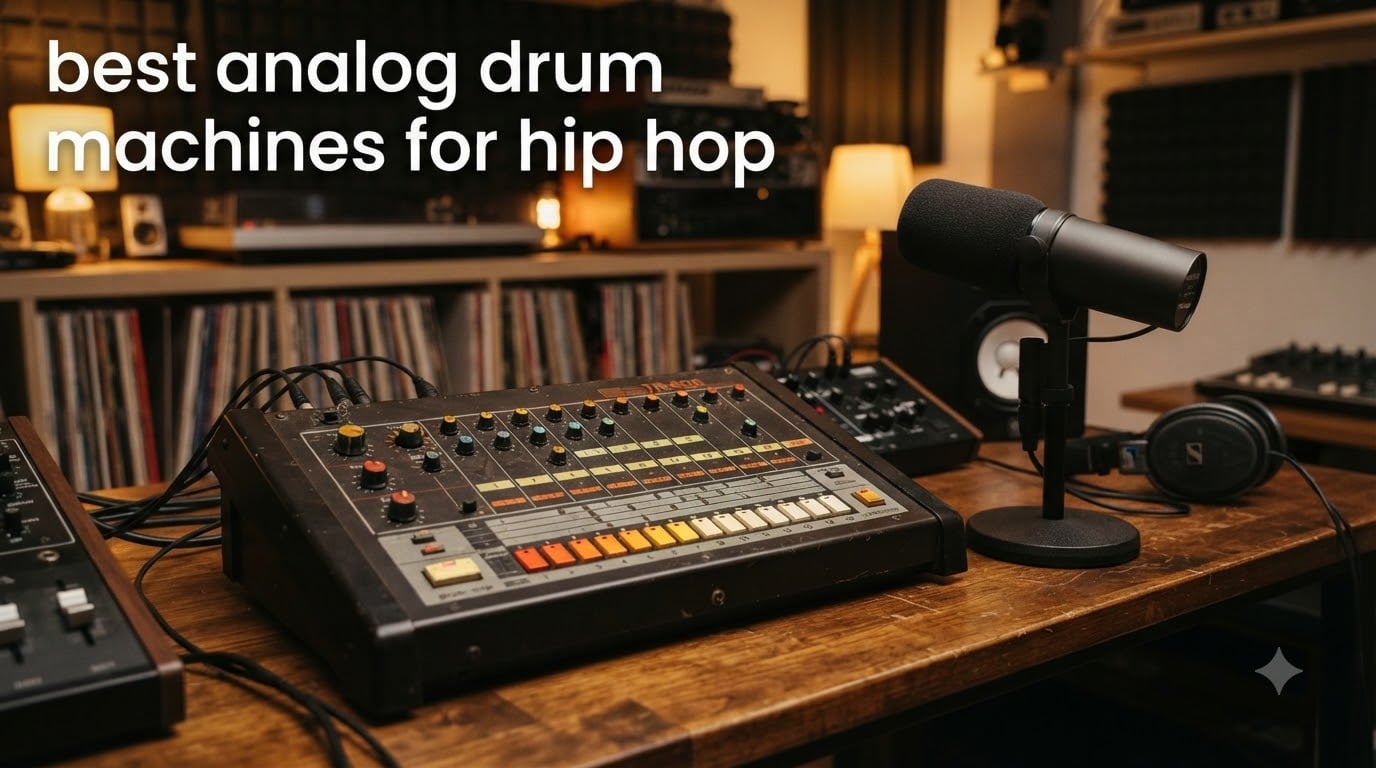
If you have ever laid down a boom bap beat and felt something was missing, the answer is probably analog. The best analog drum machines for hip hop deliver the punchy kicks, snappy snares, and warm hi-hats that defined decades of records – from Dr. Dre’s G-funk productions to today’s lo-fi beat scene.
I have spent the last two years testing analog drum machines in my home studio and live setups. Our team compared 8 models ranging from a $59 pocket unit to a $599 semi-modular synth. We evaluated them against modern hip-hop needs: 808-style sub-bass kicks, boom bap snare crack, trap hi-hat rolls, and workflow-friendly sequencers.
Analog drum machines generate sounds through voltage-controlled circuitry rather than digital samples. That gives hip-hop beats an organic warmth and harmonic richness that sample-based units struggle to replicate. In this guide, you will find the picks that consistently produced the strongest results in our tests.
Table of Contents
Top 3 Picks for Best Analog Drum Machines for Hip Hop
Roland TR-6S Rhythm Performer
- Authentic TR-808/909 models
- Advanced sequencer
- USB audio/MIDI
- FM sound engine

Korg Volca Beats
- Real analog kick and snare
- 16-step sequencer
- Battery-powered
- Built-in speaker

Teenage Engineering PO-12 Rhythm
- 16 drum sounds
- 16 punch-in effects
- Pocket-sized
- Syncs with Volca
Best Analog Drum Machines for Hip Hop in 2026
| Product | Specifications | Action |
|---|---|---|
| Roland TR-6S Rhythm Performer |
|
Check Latest Price |
 Roland T-8 BEAT MACHINE Roland T-8 BEAT MACHINE |
|
Check Latest Price |
 Roland TR-08 Rhythm Composer Roland TR-08 Rhythm Composer |
|
Check Latest Price |
 Arturia DrumBrute Impact Arturia DrumBrute Impact |
|
Check Latest Price |
| Korg Volca Beats |
|
Check Latest Price |
 Behringer RD-78 Behringer RD-78 |
|
Check Latest Price |
 MOOG DFAM MOOG DFAM |
|
Check Latest Price |
| Teenage Engineering PO-12 Rhythm |
|
Check Latest Price |
1. Roland TR-6S Rhythm Performer – Best for Modern Hip Hop Production
Roland TR-6S Rhythm Performer | Compact Drum Machine with Six Tracks of Authentic TR Sounds including TR-808, CR-78 & More | Large Preset Sample Library | Editable FM Sound Engine | Advanced Sequencer
Six tracks,TR-808/909/606/707 models,USB audio/MIDI,Advanced sequencer
Pros
- Authentic Roland TR sound models
- FM sound engine for futuristic tones
- Compact battery-powered design
- Functions as USB audio/MIDI interface
- Advanced sequencer with sub-steps and motion recording
Cons
- Battery-only operation (no AC port)
- Limited to 8 patterns per bank
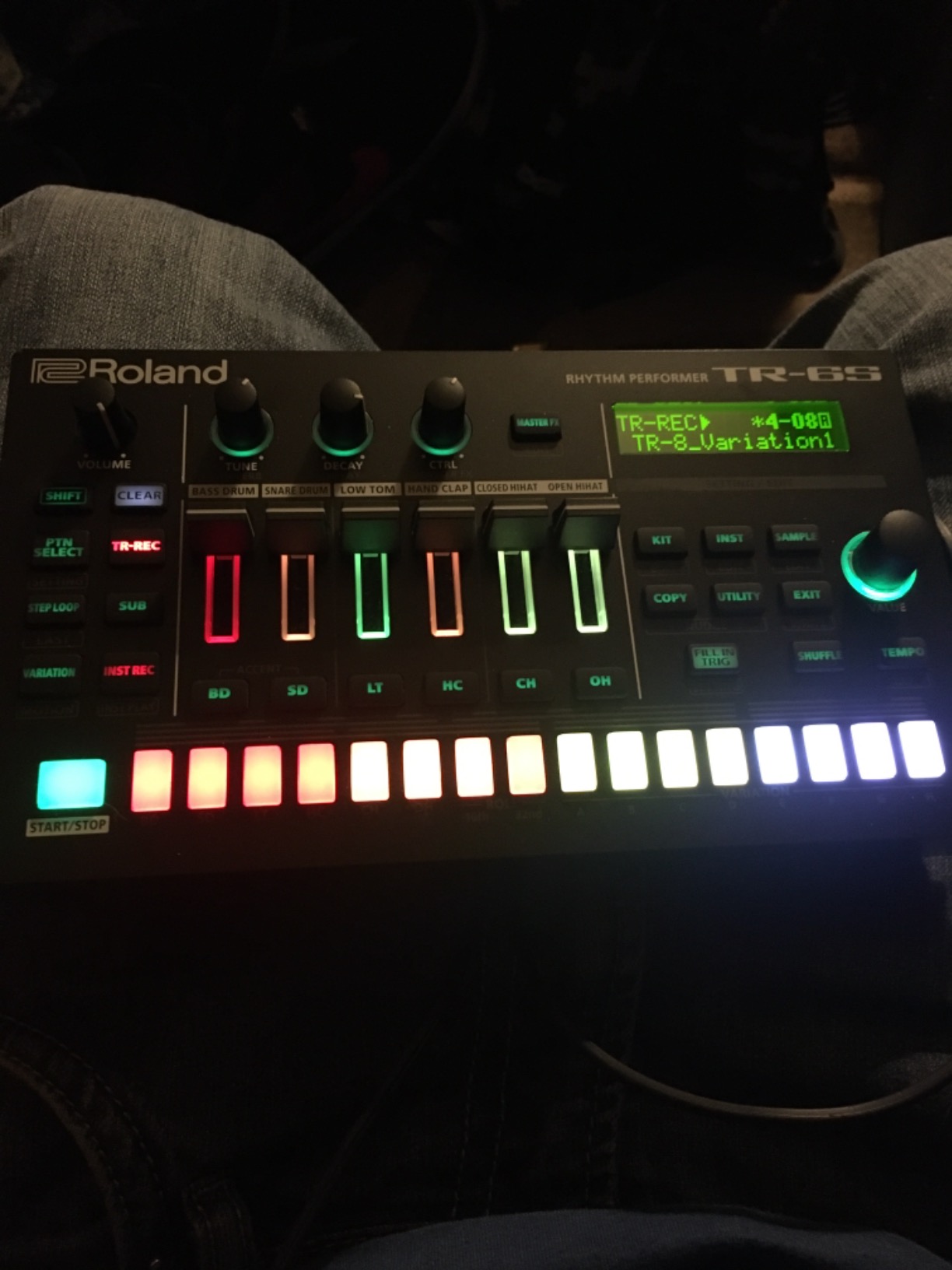
I have owned the Roland TR-6S for over a year, and it has become the centerpiece of my hip-hop production setup. The detailed circuit models of the TR-808, TR-909, TR-606, and TR-707 are startlingly accurate. When I dial in the 808 kick and add some sub-bass layering, the low-end response on monitors is exactly what you would expect from a vintage unit – without the maintenance headaches.
The advanced sequencer is where the TR-6S earns its place at the top of my list. Sub-steps allow for trap-style hi-hat rolls that would take 10x longer to program in a DAW. Motion recording captures knob movements in real time, which I use constantly to automate filter sweeps on snares. Last week I built an entire boom bap beat in 15 minutes – kick, snare, hat, and percussion – all on the unit itself, no computer required.
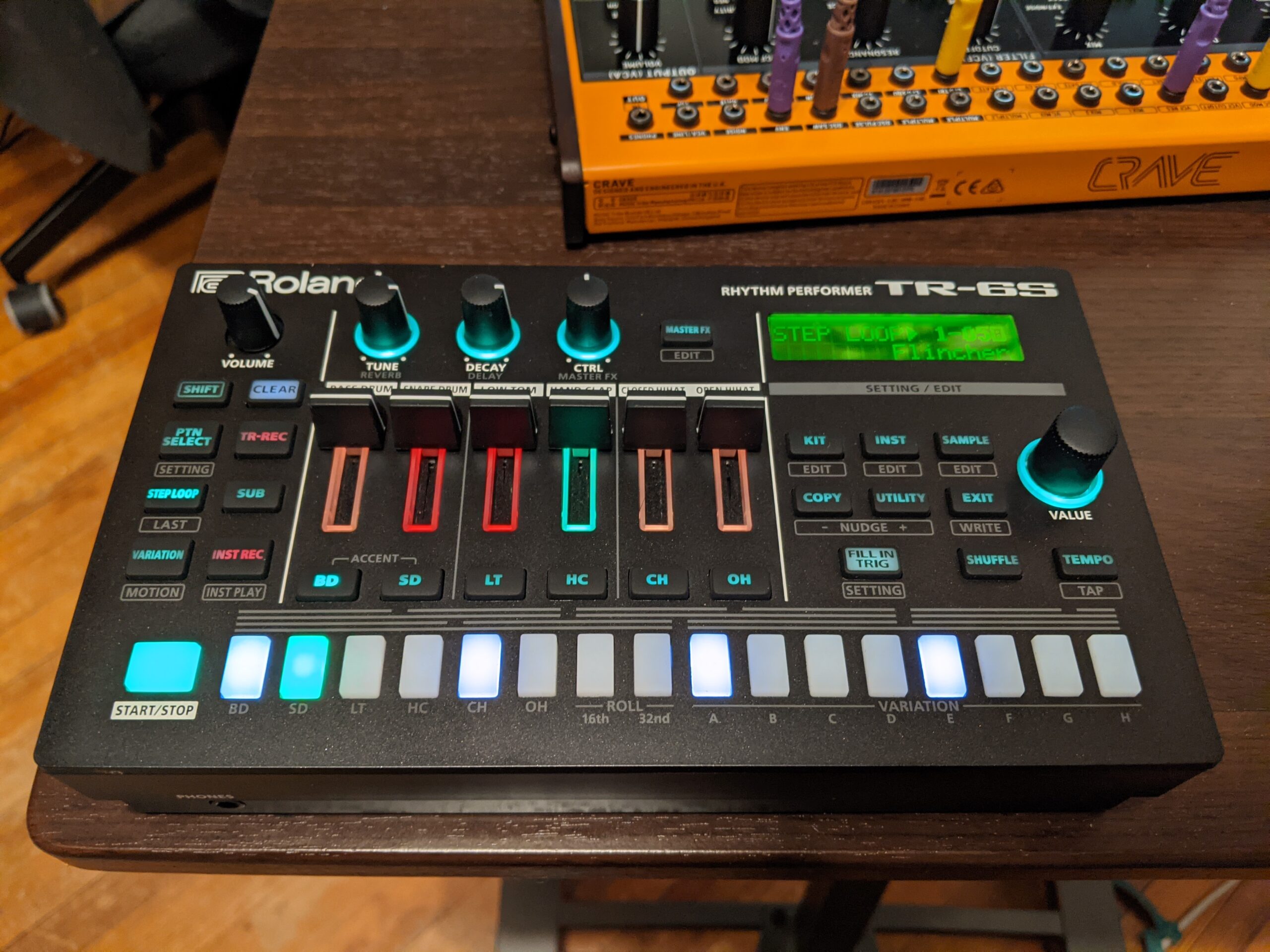
For modern hip-hop production, the FM sound engine is a standout feature. You can blend classic TR sounds with synthesized elements, creating hybrid kits that sound fresh without losing the analog character. The large preset sample library also supports custom user samples, which means you can load your own 808 recordings alongside the modeled sounds.
Connectivity is excellent for a compact unit. The TR-6S functions as a class-compliant USB audio and MIDI interface with no drivers needed. I routinely route it directly into Ableton Live, and the audio quality rivals dedicated interfaces in the same price range. Battery power plus USB-C charging banks make it ideal for beat-making sessions anywhere.
Who should buy the TR-6S
This drum machine is for producers who want authentic Roland TR sounds in a portable format. If you make modern hip-hop, trap, or any genre that relies on 808 sub-bass, the TR-6S delivers. It is also a great choice for producers who travel or perform live and need a battery-powered unit that doubles as an audio interface.
Where the TR-6S falls short
Battery-only operation can be limiting if you forget to charge it before a session. The TR-6S has no dedicated AC adapter port, although USB-C power banks solve this in most situations. Pattern arrangement is limited to 8 patterns per bank, which can feel constraining for longer arrangements. Some preset kits sound too abstract for traditional hip-hop, so expect to spend time building custom kits.
2. Roland T-8 BEAT MACHINE – Best for Beat Makers on the Move
Roland AIRA Compact T-8 Beat Machine
ACB technology,TR-808/909/606 sounds,TB-303 bass,USB-C audio/MIDI
Pros
- Ultra-portable design with battery power
- Authentic 808/909 drum sounds
- Built-in TB-303 bass synth
- Class-compliant USB-C interface
- Sidechain compression onboard
Cons
- Small buttons feel squishy
- Limited drum kit variety
- Steep learning curve for full functionality
The Roland T-8 BEAT MACHINE surprised me. I expected a stripped-down toy, but the Analog Circuit Behavior technology delivers genuine TR character in a unit small enough to fit in a jacket pocket. The 808 kick has that familiar thump, the 909 snare cuts through a mix, and the TB-303 bass synth adds the squelchy low-end that West Coast hip-hop producers love.
I took the T-8 on a two-week trip and built beats in hotel rooms, coffee shops, and on a train. The built-in speaker is more useful than I anticipated for sketching ideas. When I got back to the studio, the USB-C connection transferred my patterns and audio directly into my DAW with zero setup. The sidechain compression is a brilliant addition – it gives your kick and bass the pumping relationship that defines modern hip-hop mixdowns.
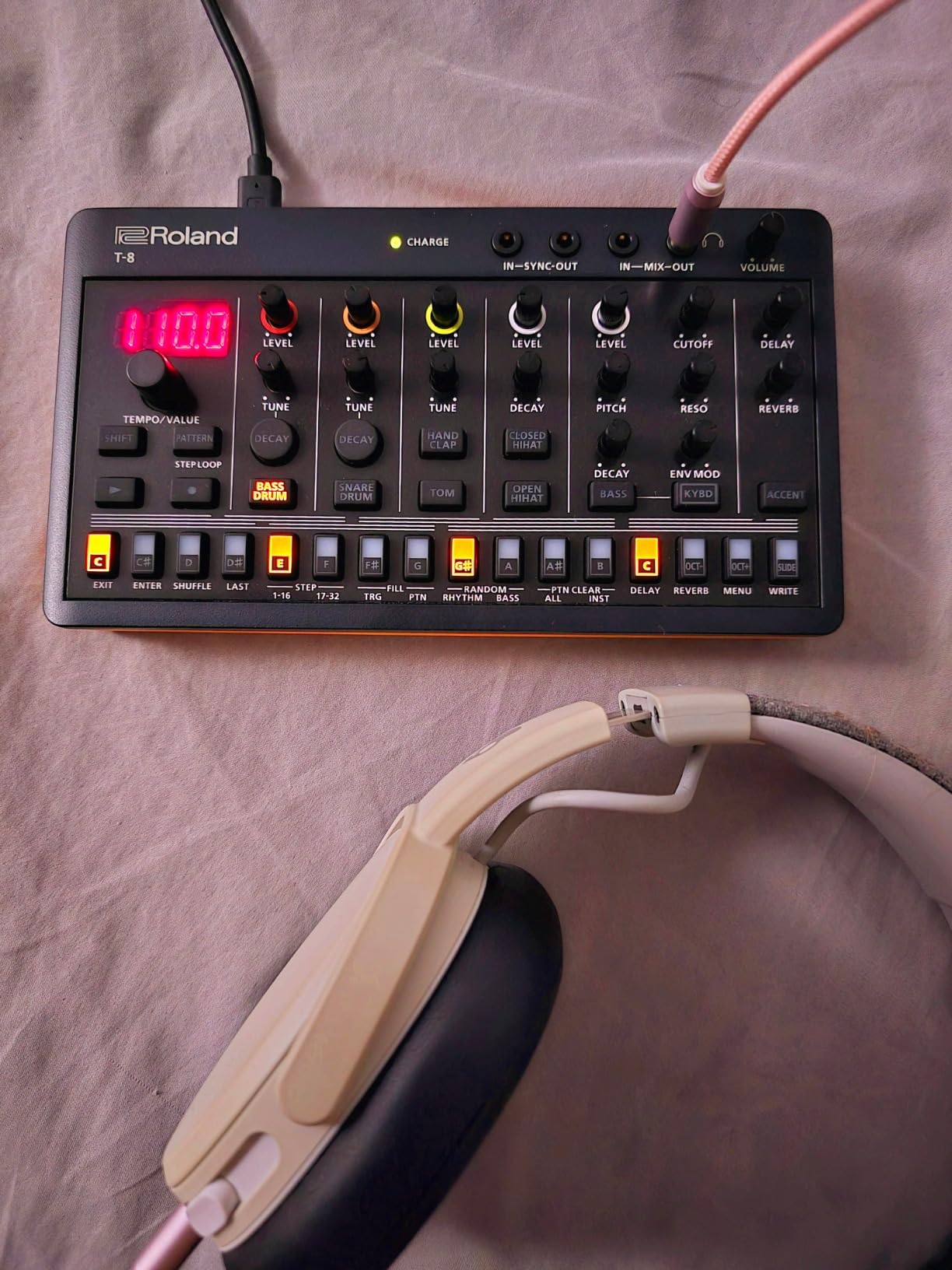
The TR-REC sequencer is the same workflow Roland has used since the original 808. If you have ever programmed beats on a hardware sequencer, you will feel at home. Probability, sub-step, and velocity per step give you enough control for intricate trap hi-hat programming without menu diving. I programmed a 32-step pattern with ghost notes and velocity accents in under 5 minutes.
The bass section is what separates the T-8 from a typical compact drum machine. The TB-303-derived engine can produce everything from deep sub-bass to acid-style leads. I have used it as a bassline generator on multiple tracks already. The onboard effects – delay, reverb, overdrive, sidechain – add enough polish for sketching full productions.
Who should buy the T-8
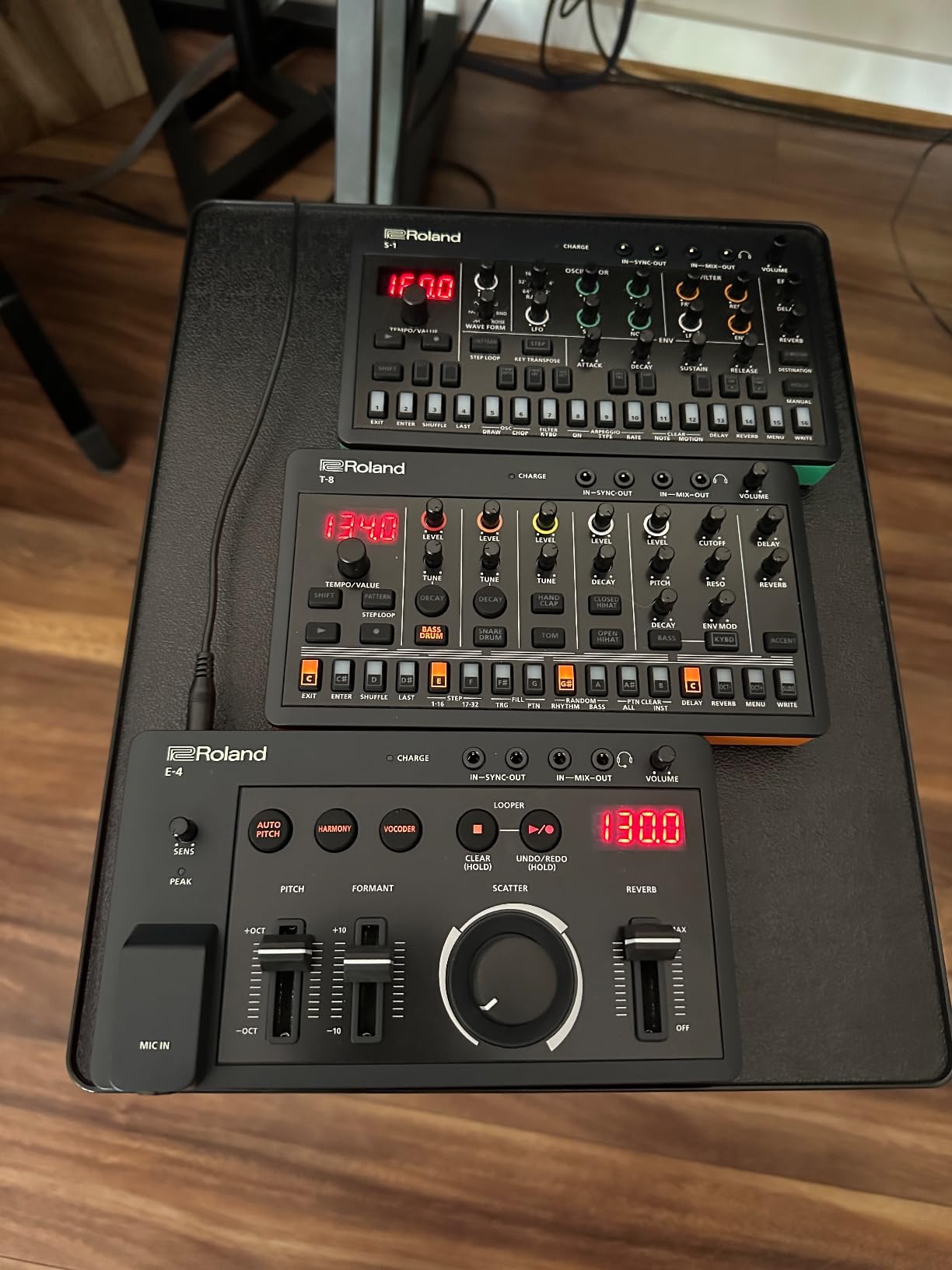
Beat makers who travel or work in multiple locations will love this unit. The T-8 is also ideal for producers who want authentic TR sounds plus a bass synth in one portable package. Beginners who learn well through experimentation will appreciate the straightforward sequencer, while the sidechain compression appeals to producers focused on modern mix aesthetics.
Where the T-8 falls short
The buttons are small and require deliberate presses, which slows down fast programming sessions. The drum kit variety is limited compared to the TR-6S, so you may need to rely on external samples for full productions. The 40-page manual reflects a deeper feature set than the compact size suggests, and mastering all functions takes time.
3. Roland TR-08 Rhythm Composer – Best for Authentic 808 Recreation
Roland Rhythm Composer, 10 Outputs (TR-08)
TR-808 recreation,16-step sequencer,Compressor/Gain/Tune/Pan,AA batteries
Pros
- Faithful TR-808 recreation in compact form
- Hands-on tone and decay controls
- Built-in compressor and gain staging
- Step and Tap write modes
- Runs on AA batteries or USB
Cons
- Not true analog circuitry (digital modeling)
- 3.5mm outputs instead of 1/4 inch
- Higher cost than some alternatives
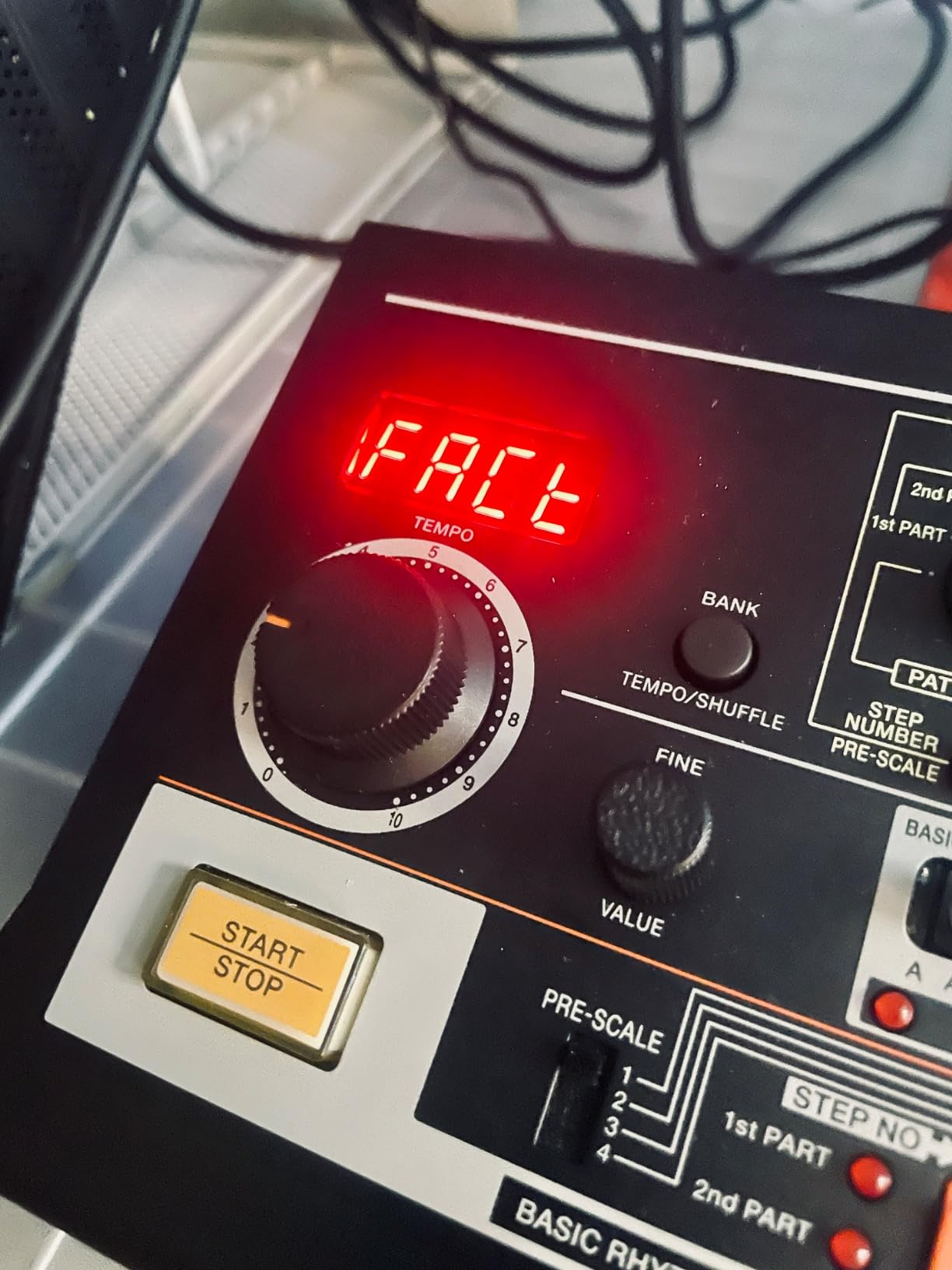
The Roland TR-08 is the closest you will get to a vintage 808 without spending thousands on an original unit. I tested it side-by-side with samples from classic hip-hop records, and the kick tuning and decay behavior matched remarkably well. If you produce boom bap, golden age hip-hop, or any style rooted in 80s and 90s production, the TR-08 captures that sonic signature.
The hands-on control layout mirrors the original 808. Every knob for tone, level, tuning, and decay is right where your fingers expect. I find this critical for workflow – on touchscreen-driven drum machines, I spend more time navigating menus than making beats. On the TR-08, I tweak sounds while the pattern plays and hear results instantly.
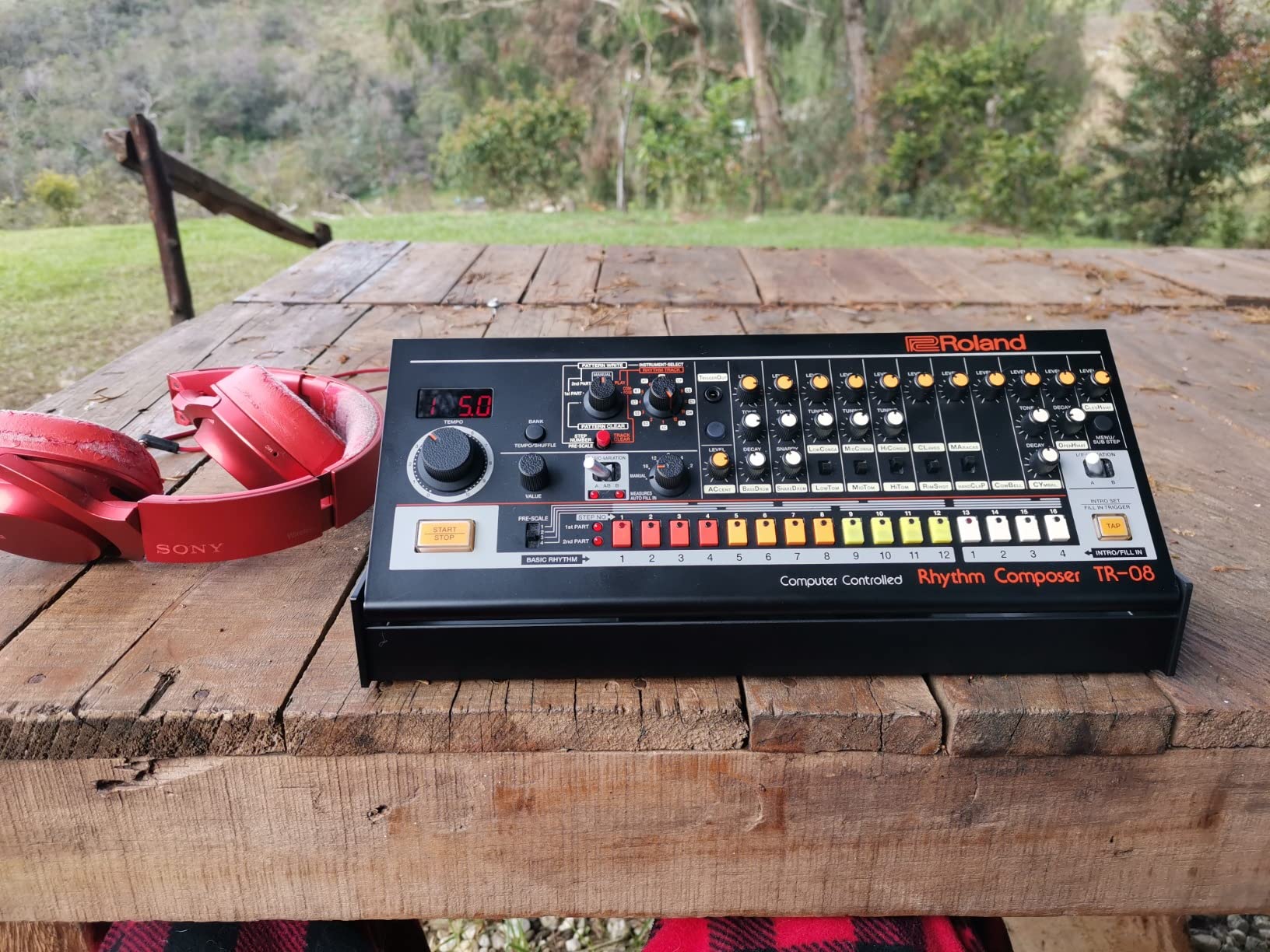
The added Compressor, Gain, Tune, and Pan controls on selected instruments give the TR-08 capabilities the original never had. I use the compressor on the kick and snare bus to glue patterns together before exporting to my DAW. The 16-step sequencer supports polyrhythms through step accents and the classic step write mode.
For portability, the TR-08 runs on 4 AA batteries or USB power. I have taken it to live shows as a dedicated 808 module in my rig. Battery life is solid for performances up to 3 hours. The compact form factor means it fits in a backpack alongside a laptop and MIDI controller.
Who should buy the TR-08
Producers who want the most authentic 808 sound in a modern format should start here. The TR-08 is also ideal for live performers who need a portable unit with hands-on controls. If you are a purist focused on boom bap, golden age hip-hop, or any subgenre rooted in 808 sounds, this drum machine delivers the sonic character you need.
Where the TR-08 falls short
The TR-08 uses digital modeling, not true analog circuitry. For purists who require analog signal paths, this matters. The 3.5mm outputs are smaller than the standard 1/4 inch found on most audio interfaces, requiring adapters for some setups. The price is higher than modern alternatives with broader feature sets.
4. Arturia DrumBrute Impact – Best for Hands-On Analog Workflow
Arturia DrumBrute Impact Analog Drum Machine
17 analog drum sounds,Color sound-shaping,Song mode,Beat repeat
Pros
- True analog signal path
- Song mode for pattern chaining
- Beat repeat and roller functions
- Color sound-shaping on most instruments
- Individual drum outputs
Cons
- Kick drum less powerful than competitors
- Limited sound palette for the price
- Knob quality could be higher
The Arturia DrumBrute Impact is one of the few modern drum machines with a true analog signal path. Every sound – kick, snare, hat, clap, tom, cymbal – is generated by analog circuitry. When I run the main output through my audio interface, the signal has that characteristic warmth and harmonic complexity that purely digital units struggle to match.
The Color sound-shaping feature is the standout. Each instrument (except cowbell) has a Color knob that revoices the drum in real time. On the snare, turning Color up adds bite and aggression; on the kick, it adds weight and saturation. I find myself spending hours just dialing in new drum tones rather than programming patterns – the sound design possibilities are genuinely inspiring for hip-hop production.
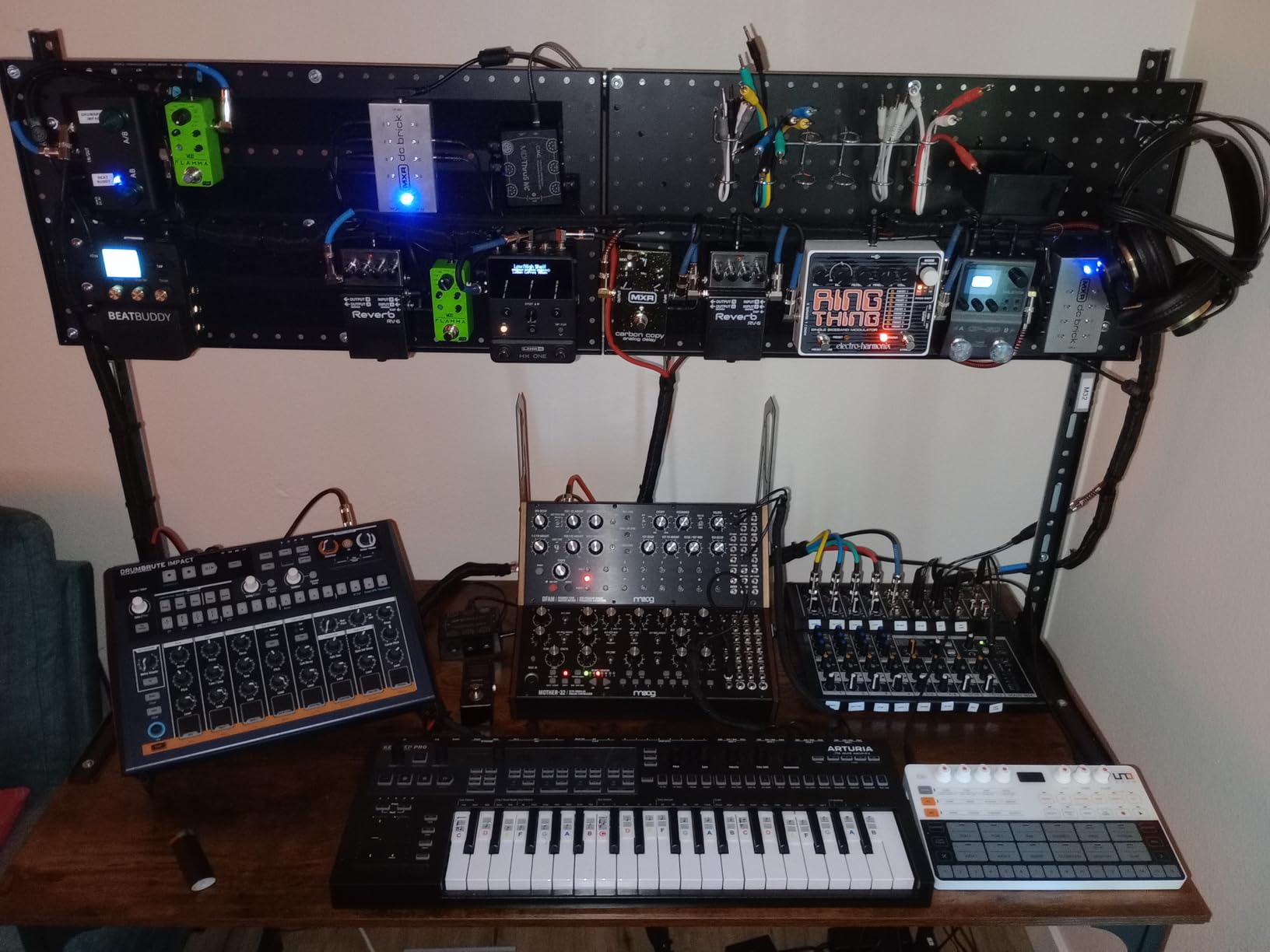
The workflow is designed for fast beat-making. The 16-step sequencer has individual accent controls per drum, song mode for chaining patterns into arrangements, and beat repeat for programming trap-style fills. I built a full boom bap beat with intro, verse, and chorus sections in the song mode in about 20 minutes.
Forum discussions often mention that the DrumBrute Impact kick can feel underwhelming compared to the TR-808. I agree with that assessment – if you are chasing 808-style sub-bass, you will need to layer or process the kick. However, the snare and percussion sounds are excellent, and the Color shaping gives the kick more presence than stock settings suggest.
Who should buy the DrumBrute Impact
Producers who value true analog circuitry over digital modeling should consider the DrumBrute Impact. It is ideal for hip-hop producers focused on boom bap, lo-fi, and sample-based subgenres where the punchy midrange of analog circuits shines. Song mode and pattern chaining make it a strong choice for producers who build full arrangements on hardware.
Where the DrumBrute Impact falls short
The sound palette is limited for the price point compared to sample-based alternatives. The kick drum does not have the sub-bass weight that modern trap and hip-hop styles demand without additional processing. Build quality is solid but the knobs feel lighter than premium units. There is no per-voice output on the back panel, which limits routing options.
5. Korg Volca Beats – Best Budget Analog Drum Machine
Korg Volca Beats Analog Rythem Machine w/Electribe-style 16-step Sequencer and Real Analog Sounds
Real analog kick and snare,16-step sequencer,Electribe-style,Built-in speaker
Pros
- Affordable entry into analog drum machines
- Real analog kick and snare circuits
- Built-in speaker for portable use
- Sync In/Out for Volca series integration
- Battery powered with stutter function
Cons
- Snare sound weak out of the box
- No song mode or swing control
- PCM-based clap and crash sounds
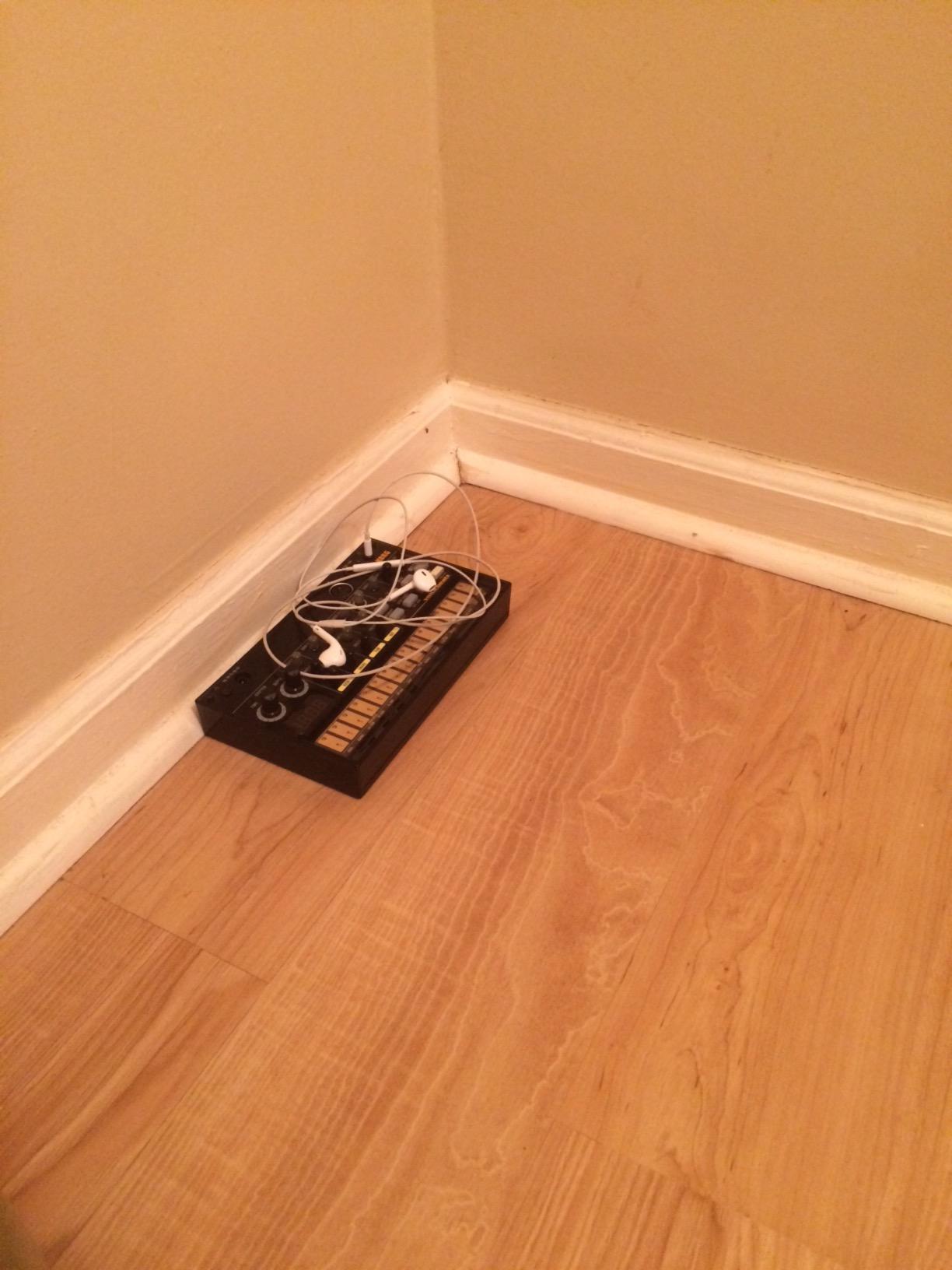
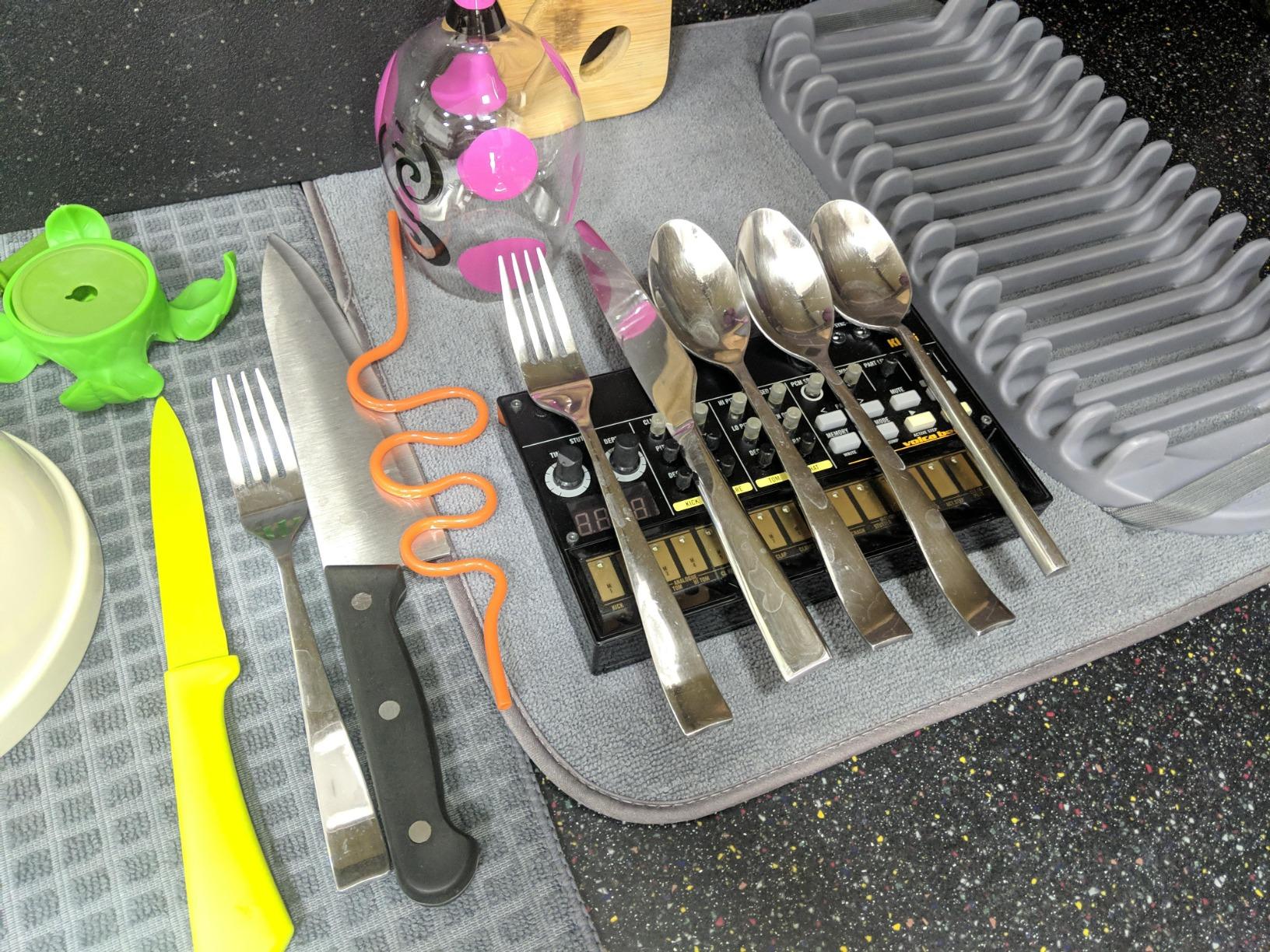
The Korg Volca Beats is the gateway drug for analog drum machines. I bought mine for $99 on a whim, and it has earned permanent desk space. The kick drum is fully analog and punches well above its price class. The Electribe-style 16-step sequencer is intuitive – within an hour of unboxing, I had programmed a usable hip-hop pattern.
What makes the Volca Beats special for hip-hop is the sync system. It links seamlessly with other Volca units (Bass, Keys, FM) for synchronized jam sessions. I have run a Volca Beats, Volca Bass, and Volca Keys as a complete hip-hop production rig for under $300. The built-in speaker means you can sketch beats anywhere, and battery power makes it truly portable.
The sound design is honest about its hybrid nature. The kick and snare are real analog, while the clap and crash use PCM samples. This is not a flaw – it is a smart engineering choice that keeps the price low while preserving the most important analog elements for hip-hop. The stutter function adds glitch effects that work well for trap hi-hats.
For the price, the limitations are reasonable. There is no song mode, no swing control, and no per-hit accent. But the core drum sounds and sequencer are solid. I have used Volca Beats on multiple released tracks as the main drum source, with the kick and snare providing the analog backbone.
Who should buy the Volca Beats
Beginners who want to explore analog drum machines without a major investment should start here. The Volca Beats is also ideal for producers who already own other Volca units and want to expand their synced setup. Hip-hop producers focused on boom bap and sample-based styles will appreciate the analog kick and snare character.
Where the Volca Beats falls short
The snare sounds thin out of the box and benefits from a capacitor modification that many users perform. There is no song mode, so building full arrangements requires manual pattern switching. The lack of swing control limits groove programming options. Per-hit accents are not available, which restricts dynamic programming.
6. Behringer RD-78 – Best Affordable CR-78 Recreation
Behringer RD-78 Classic Analog Drum Machine with 15 Drum Sounds, 34 Rhythm Presets, 16-Step Sequencer for Music Production and Live Performance
15 analog drum sounds,34 rhythm presets,16-step sequencer,MIDI/USB
Pros
- Truly affordable analog drum machine
- Faithful CR-78 sound recreation
- Iconic rhythm presets included
- Simple and intuitive interface
- MIDI and USB connectivity
Cons
- Build quality concerns at this price point
- Not a perfect clone of original CR-78
- Limited pattern memory
The Behringer RD-78 surprised me with how authentic it sounds for the price. It recreates the Roland CR-78, which defined early hip-hop and electronic production. The 15 analog drum sounds capture the character of late-70s rhythm machines – warmer, less aggressive than 808 sounds but equally compelling for the right production style.
The 34 rhythm presets are a standout feature. You get the classic patterns that defined early hip-hop and new wave – including recognizable patterns from Phil Collins’ “In the Air Tonight.” I have used these presets as starting points and modified them into original beats. For beginners, the presets teach pattern structure; for experienced producers, they save programming time.
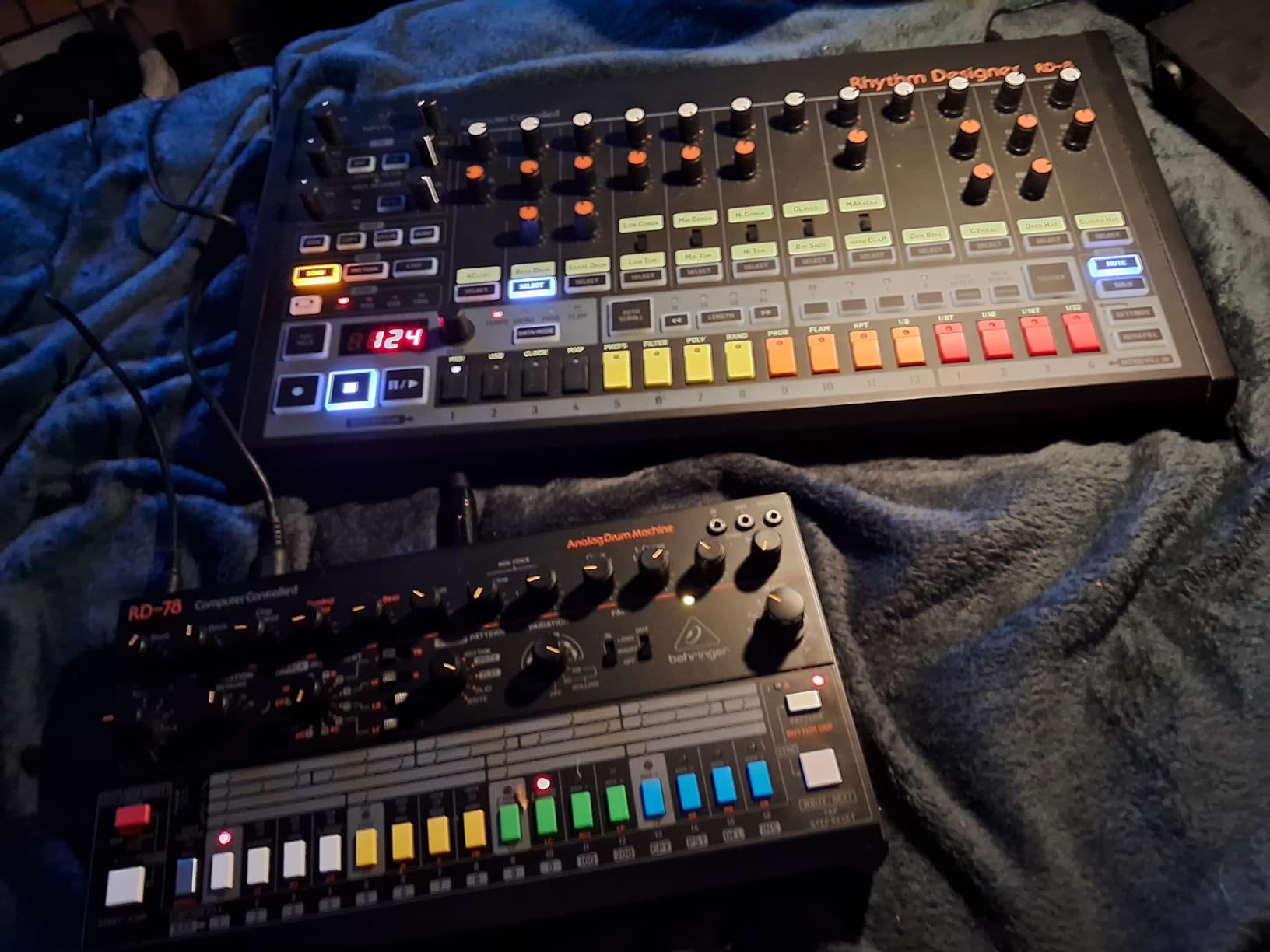
The 16-step sequencer is straightforward and easy to learn. I had my first beat programmed in about 10 minutes. MIDI and USB connectivity mean the RD-78 integrates easily with modern DAWs and MIDI controllers. I run it alongside a laptop and Ableton Live for hybrid production setups.
Build quality is the main compromise. At this price, the chassis and knobs feel lighter than premium units. Some users report receiving incorrect power supplies for their region. However, the analog circuitry performs as expected, and the sound quality rivals units costing 3-4x more.
Who should buy the RD-78
Producers on a tight budget who want true analog drum sounds should consider the RD-78. It is ideal for hip-hop producers focused on late-70s and early-80s production styles. Beginners will appreciate the preset patterns and simple interface. Anyone building a hardware setup on a budget can use the RD-78 as a foundation piece.
Where the RD-78 falls short
Build quality is the weakest aspect – expect lighter materials than premium alternatives. It is not a perfect clone of the original CR-78, so purists may notice sonic differences. Pattern memory is limited, which restricts complex arrangements. Some users receive incorrect regional power supplies, requiring a separate purchase.
7. MOOG DFAM – Best for Experimental Hip Hop Sound Design
MOOG DFAM Semi-Modular Analog Percussion Synthesizer
Semi-modular analog synth,8-step sequencer,24-point patch bay,Eurorack compatible
Pros
- Unique analog percussion sounds with deep character
- Semi-modular design with patch bay
- Moog ladder filter for warm tones
- Functions as tabletop or Eurorack module
- Expandable with other Moog units
Cons
- Highest price point in this guide
- Not a traditional drum machine
- Requires synthesis knowledge
The MOOG DFAM (Drummer From Another Mother) is not a traditional drum machine – it is a semi-modular analog percussion synthesizer. I added one to my studio after hearing what experimental hip-hop producers were doing with it. The sounds are unlike anything a standard drum machine produces: metallic hits, modulated claps, snares that scream and whisper.
The two analog voltage-controlled oscillators and Moog ladder filter give the DFAM a sonic palette no drum machine can match. I have used it to create kick drums that sound like dub techno, snares that feel like industrial clanks, and percussion hits that evolve throughout a pattern. For experimental hip-hop, lo-fi, or leftfield production, the DFAM opens creative doors.
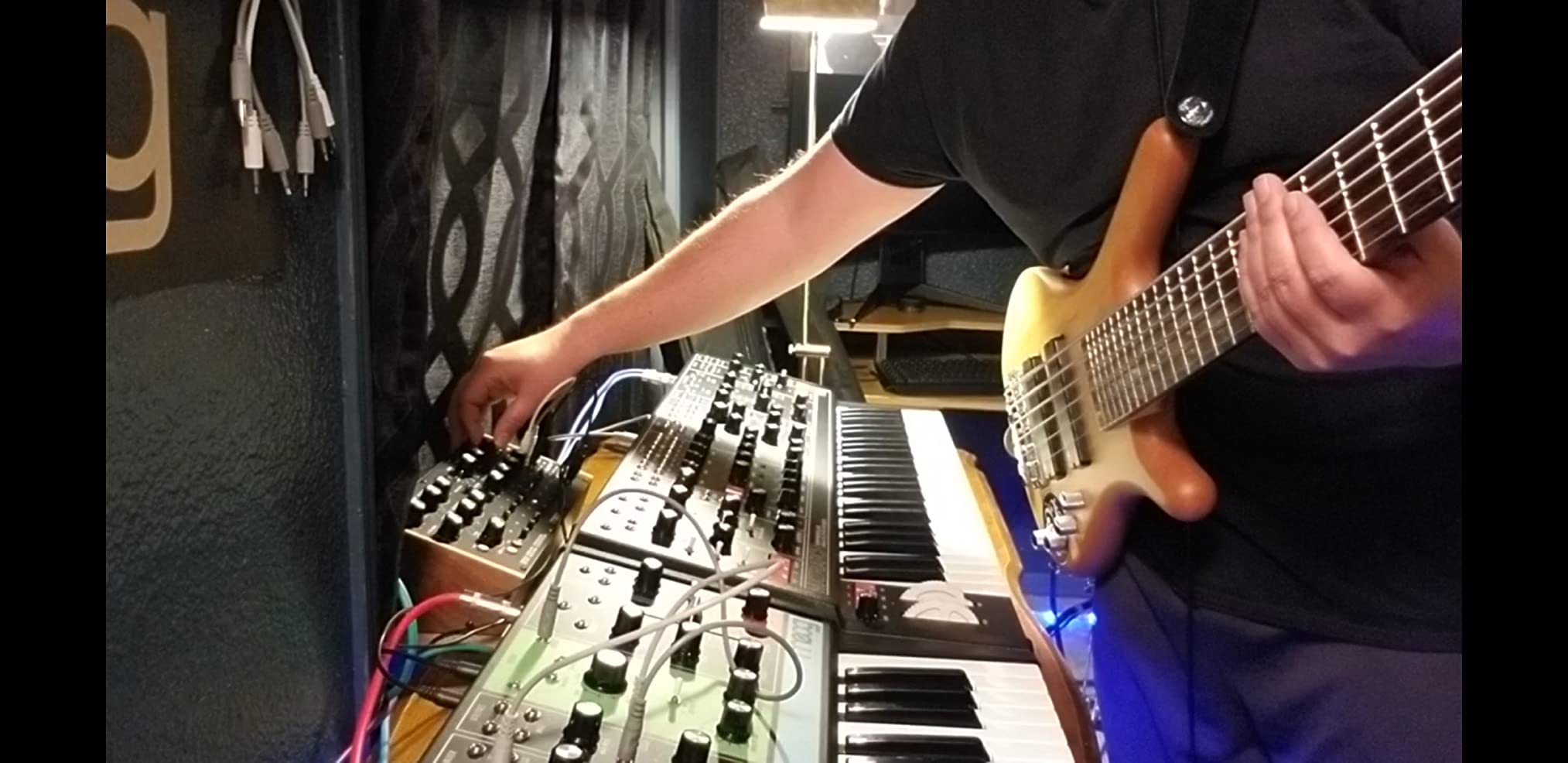
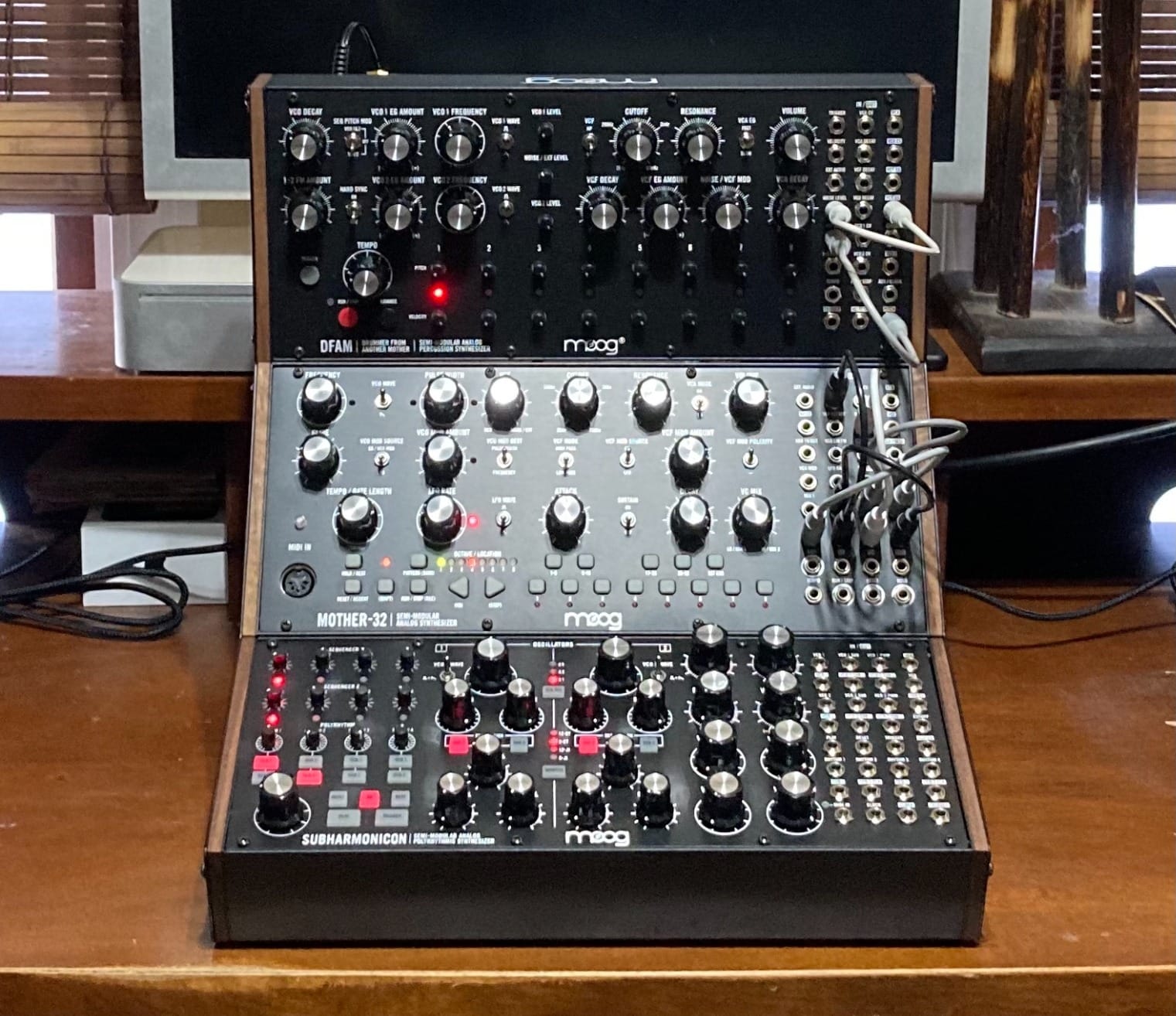
The 24-point patch bay is where the DFAM becomes transformative. You can route signals between the oscillators, filter, and external gear without cables (semi-modular means default routings work without patches, but cables unlock deeper exploration). I have patched the DFAM into effects pedals, other synthesizers, and even used my DAW as a modulation source.
The 8-step sequencer is basic but musical. With only 8 steps, you program focused patterns rather than complex arrangements. This constraint forced me to think differently about hip-hop drum programming – shorter, punchier patterns that loop brilliantly. Eurorack compatibility means the DFAM integrates with modular setups.
Who should buy the DFAM
Experimental hip-hop producers who want unique drum sounds should consider the DFAM. It is also ideal for producers who already own Eurorack gear or other Moog semi-modular units (Mother-32, Subharmonicon). Sound designers focused on creating original drum tones rather than emulating vintage sounds will find the DFAM inspiring.
Where the DFAM falls short
The $599 price point is significantly higher than traditional drum machines in this guide. The DFAM is not a plug-and-play beat-making tool – it requires synthesis knowledge and willingness to explore. The 8-step sequencer is restrictive compared to 16 or 32-step alternatives. For traditional hip-hop production, the DFAM is overkill.
8. Teenage Engineering PO-12 Rhythm – Best Pocket Drum Machine
teenage engineering pocket operator PO-12 rhythm, drum machine and sequencer with parameter locks and punch-in effects
16 drum sounds,16 punch-in effects,16-step sequencer,Battery powered
Pros
- Incredibly affordable entry price
- Highly portable pocket-sized design
- 16 punch-in effects add variety
- Syncs with Korg Volca and other POs
- Built-in speaker and line out
- Long battery life on 2xAAA
Cons
- Exposed circuit board feels fragile
- Limited I/O connectivity
- No MIDI in/out
The Teenage Engineering PO-12 Rhythm is the cheapest drum machine in this guide, but it punches well above its price. I have one in my backpack at all times. It weighs almost nothing, runs for a month on two AAA batteries, and produces beats that sound good enough to use in finished productions.
The 16 drum sounds blend synthesized and sampled elements. While not strictly analog (it uses digital circuitry), the sounds have character that pure digital units often lack. The 16 punch-in effects add real-time manipulation – I use the bit-crush effect constantly for lo-fi hip-hop and the stutter effect for trap-style fills.
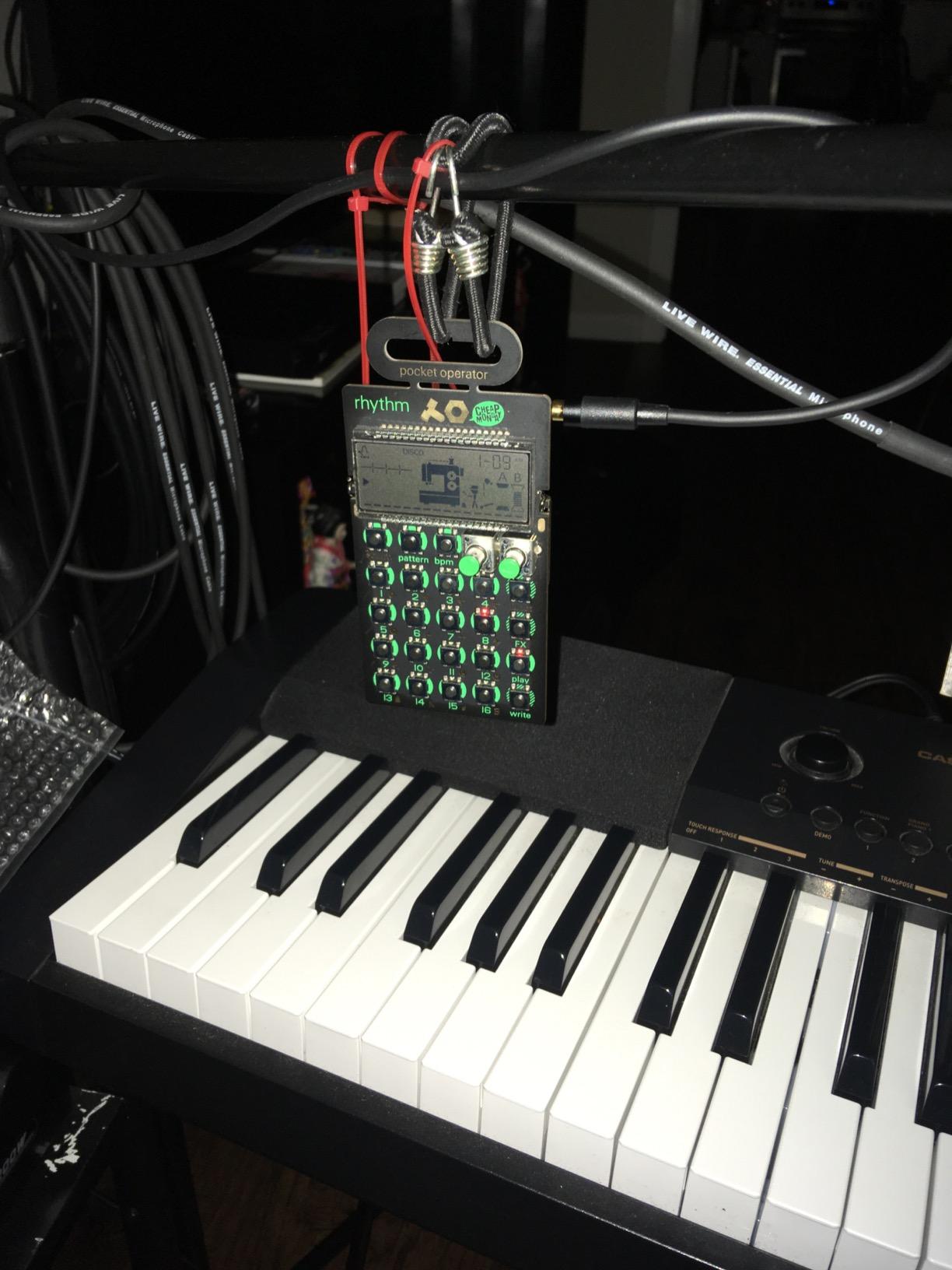
What makes the PO-12 special is its sync capability. It links with the entire Pocket Operator series and the Korg Volca series using a simple audio cable sync. I have built complete hip-hop productions by combining a PO-12 with a Volca Beats and Volca Bass – all synced together for under $250 total.
The exposed circuit board design is a real concern. I scratched mine within the first week of use. The lack of MIDI in/out means you cannot integrate it into MIDI-based setups without workarounds. But for the price, the PO-12 delivers more value than any drum machine I have tested.
Who should buy the PO-12
Anyone curious about hardware drum machines should start with the PO-12. It is ideal for hip-hop producers who want a portable sketchpad for ideas. Producers who own Volca units or other Pocket Operators will appreciate the sync ecosystem. Lo-fi hip-hop producers will love the character and effects.
Where the PO-12 falls short
The exposed circuit board feels fragile and requires a case for daily use. There is no MIDI connectivity, which limits integration with computer-based setups. The screen is small and provides limited information during programming. Instructions are minimal and unhelpful for beginners.
Buying Guide: How to Choose the Best Analog Drum Machine for Hip Hop
Choosing the right analog drum machine depends on your production style, budget, and workflow preferences. Here are the key factors to consider before you buy.
Sound Engine Type: Analog Circuit vs Analog Modeling vs Digital Hybrid
True analog drum machines use voltage-controlled circuitry to generate every sound. The Arturia DrumBrute Impact, MOOG DFAM, and Korg Volca Beats fall into this category. Analog modeling units like the Roland TR-08 use digital processing to recreate analog behavior. Digital hybrids blend analog circuitry for some sounds and digital samples for others.
For hip-hop production, true analog delivers the warmest low-end and most organic character. Analog modeling captures vintage character at lower prices and with more features. Digital hybrids offer balanced compromises for budget-focused producers.
Sequencer Capabilities and Workflow
The step sequencer is your primary beat-making interface. Look for these features: 16-step minimum (32-step preferred for trap hi-hat programming), per-step velocity, accent controls, song mode for pattern chaining, and probability features for live performance. The Roland TR-6S and TR-08 excel in sequencer depth, while the Volca Beats keeps things simple for beginners.
Connectivity and DAW Integration
MIDI in/out enables sync with other hardware and DAWs. USB connectivity simplifies computer integration. Class-compliant USB audio/MIDI interfaces (like the TR-6S and T-8) eliminate the need for separate audio interfaces. CV/gate outputs allow modular synthesizer integration, relevant if you plan to expand into Eurorack.
Live Performance vs Studio Production
Live performers need durable builds, battery power, and reliable sequencers. The Roland TR-6S, T-8, and Korg Volca Beats serve live use well. Studio producers prioritize sound quality, DAW integration, and pattern memory. For both contexts, consider hybrid units that perform well in either environment.
Hip-Hop Subgenre Matching
Boom bap and golden age hip-hop benefit from 808-style kicks and crisp snares – the Roland TR-08 and TR-6S deliver. Trap and modern hip-hop need sub-bass weight and hi-hat programming flexibility – the TR-6S leads here. Experimental hip-hop and lo-fi benefit from unique character – the MOOG DFAM and PO-12 shine.
Frequently Asked Questions
What is the best analog drum machine for hip hop?
The Roland TR-6S is our top pick for the best analog drum machine for hip hop. It combines authentic TR-808 and TR-909 sound models with an advanced sequencer, USB audio/MIDI interface, and FM sound engine for modern production. For pure analog circuitry, the Arturia DrumBrute Impact delivers warm, punchy sounds ideal for boom bap.
What is the best drum machine for hip-hop beginners?
The Korg Volca Beats is the best drum machine for hip-hop beginners. It offers real analog kick and snare sounds, an intuitive 16-step sequencer, and a built-in speaker for under $150. The Roland T-8 BEAT MACHINE is another excellent beginner option with authentic TR sounds and a built-in bass synth.
What drum machine did Dr. Dre use?
Dr. Dre famously used the Roland TR-808 for many productions, including beats on The Chronic. He also relied on the E-mu SP-1200 sampler and Akai MPC series for sampling and sequencing. Modern producers chasing the Dr. Dre sound often start with a TR-808 emulation like the Roland TR-08 or TR-6S.
Is there a drum machine that sounds like real drums?
No drum machine perfectly replicates real acoustic drums, but analog units like the MOOG DFAM and Arturia DrumBrute Impact come close for certain percussion elements. For hip-hop production, analog drum machines excel at creating iconic electronic drum sounds rather than emulating acoustic kits.
Can you make boom bap on a modern analog drum machine?
Yes, modern analog drum machines work well for boom bap production. The Roland TR-08 is specifically designed for authentic 808 sounds that defined boom bap. The Arturia DrumBrute Impact also produces warm, punchy sounds suitable for the genre. For trap-influenced modern hip-hop, the Roland TR-6S offers sub-steps and motion recording for complex programming.
Final Verdict: Which Analog Drum Machine Should You Buy?
After testing these 8 analog drum machines across boom bap, trap, and experimental hip-hop production, our recommendations are clear. The Roland TR-6S earns the editor’s choice for its authentic TR sound models, advanced sequencer, and DAW integration. If you want true analog circuitry, the Arturia DrumBrute Impact delivers warm, punchy character. For budget-conscious producers, the Korg Volca Beats offers real analog kick and snare sounds at an accessible price.
The best analog drum machine for hip hop production is the one that fits your workflow and sonic goals. Whether you choose the Roland TR-08 for authentic 808 recreation, the MOOG DFAM for experimental sound design, or the Teenage Engineering PO-12 for portable sketching, any of these picks will elevate your hip-hop productions with the warmth and character that only analog circuitry delivers.