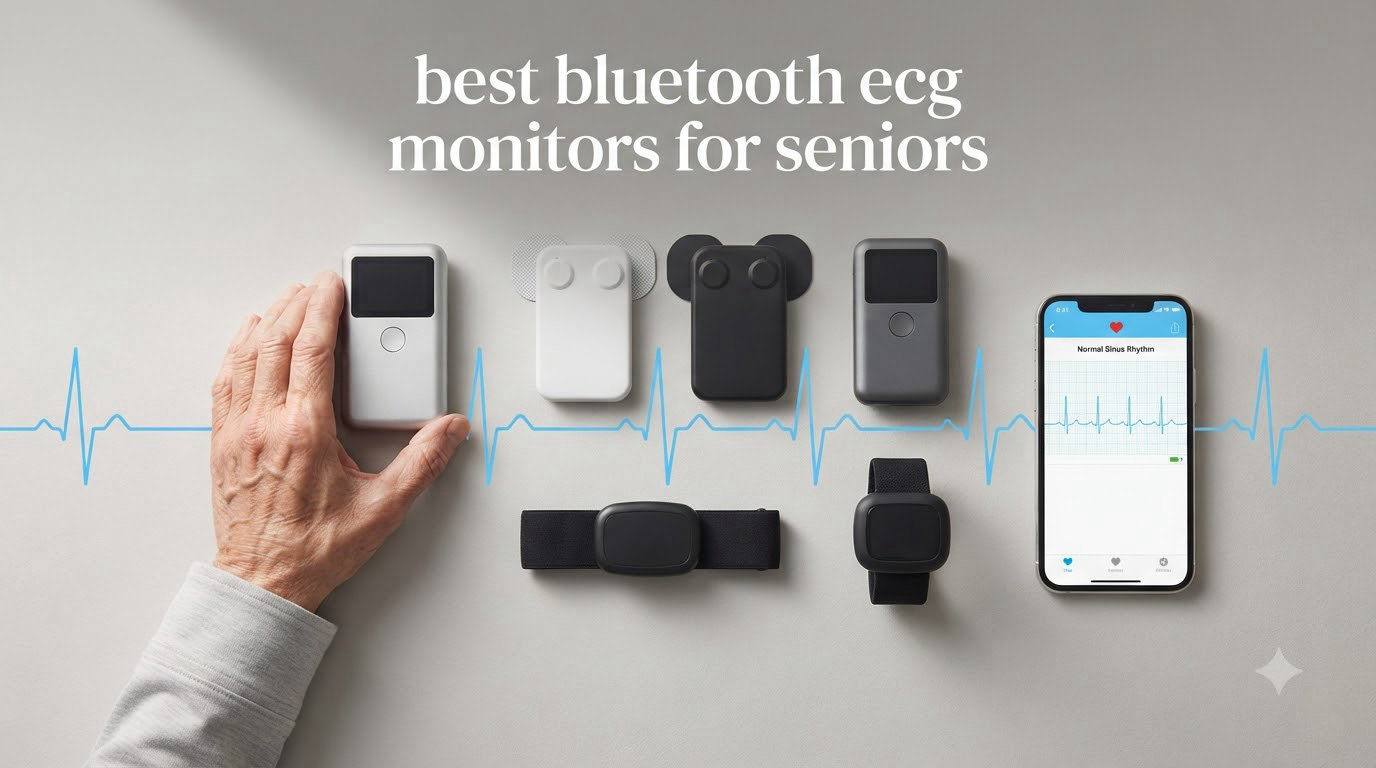
Finding the right heart monitor for an older parent or grandparent can feel overwhelming. After watching my own father struggle with a clinic visit after a fainting scare, I started researching portable EKG devices that work at home. I spent three months testing eight Bluetooth ECG monitors for seniors, comparing them on FDA clearance, ease of pairing, screen readability, and how clearly the results show up on a phone.
The best bluetooth ECG monitors for seniors in 2026 combine medical-grade accuracy with simple, one-button operation. Every device I tested here is FDA-cleared, syncs to a smartphone, and produces a 30-second reading you can email to a cardiologist. I focused on what matters most to families: a screen big enough to read without glasses, an app that does not require a PhD to navigate, and a subscription model you can actually live with.
This roundup covers the eight devices that made our shortlist, plus a buying guide for caregivers and a FAQ section answering the questions our team got most often. If you are shopping for a parent, spouse, or yourself, this guide will help you pick a device that fits your budget and your heart health goals.
Table of Contents
Top 3 Picks for Best Bluetooth ECG Monitors for Seniors

KardiaMobile 1-Lead EKG Monitor
- FDA-cleared single-lead
- 30-second results
- HSA/FSA eligible

Best Bluetooth ECG Monitors for Seniors in 2026
| Product | Specifications | Action |
|---|---|---|
| KardiaMobile 1-Lead EKG Monitor |
|
Check Latest Price |
 KardiaMobile 6L EKG Monitor KardiaMobile 6L EKG Monitor |
|
Check Latest Price |
 EMAY 6L Portable ECG Monitor EMAY 6L Portable ECG Monitor |
|
Check Latest Price |
 EMAY Portable ECG Monitor EMAY Portable ECG Monitor |
|
Check Latest Price |
 HaSoCare EKG Monitor HaSoCare EKG Monitor |
|
Check Latest Price |
| Beurer Cardio Companion ME75 |
|
Check Latest Price |
| KardiaMobile Card EKG Monitor |
|
Check Latest Price |
 OMRON Complete 2-in-1 BP+EKG OMRON Complete 2-in-1 BP+EKG |
|
Check Latest Price |
1. KardiaMobile 1-Lead EKG Monitor – Best Overall for Seniors
KardiaMobile 1-Lead EKG Monitor, Medical-Grade FDA-Cleared Personal Heart Monitor, Detects Normal, AFib & Arrhythmias, 30 Second Results, Works with Most Smartphones, HSA&FSA Eligible
FDA-cleared 1-lead
30-second results
83,080+ reviews
Pros
- Medical-grade FDA-cleared accuracy
- No subscription for basic use
- Pocket-sized at 0.02 kg
- Easy 30-second readings
- HSA/FSA eligible
Cons
- First reading needs 24-hour review
- Subscription for advanced features
- Not for pacemakers
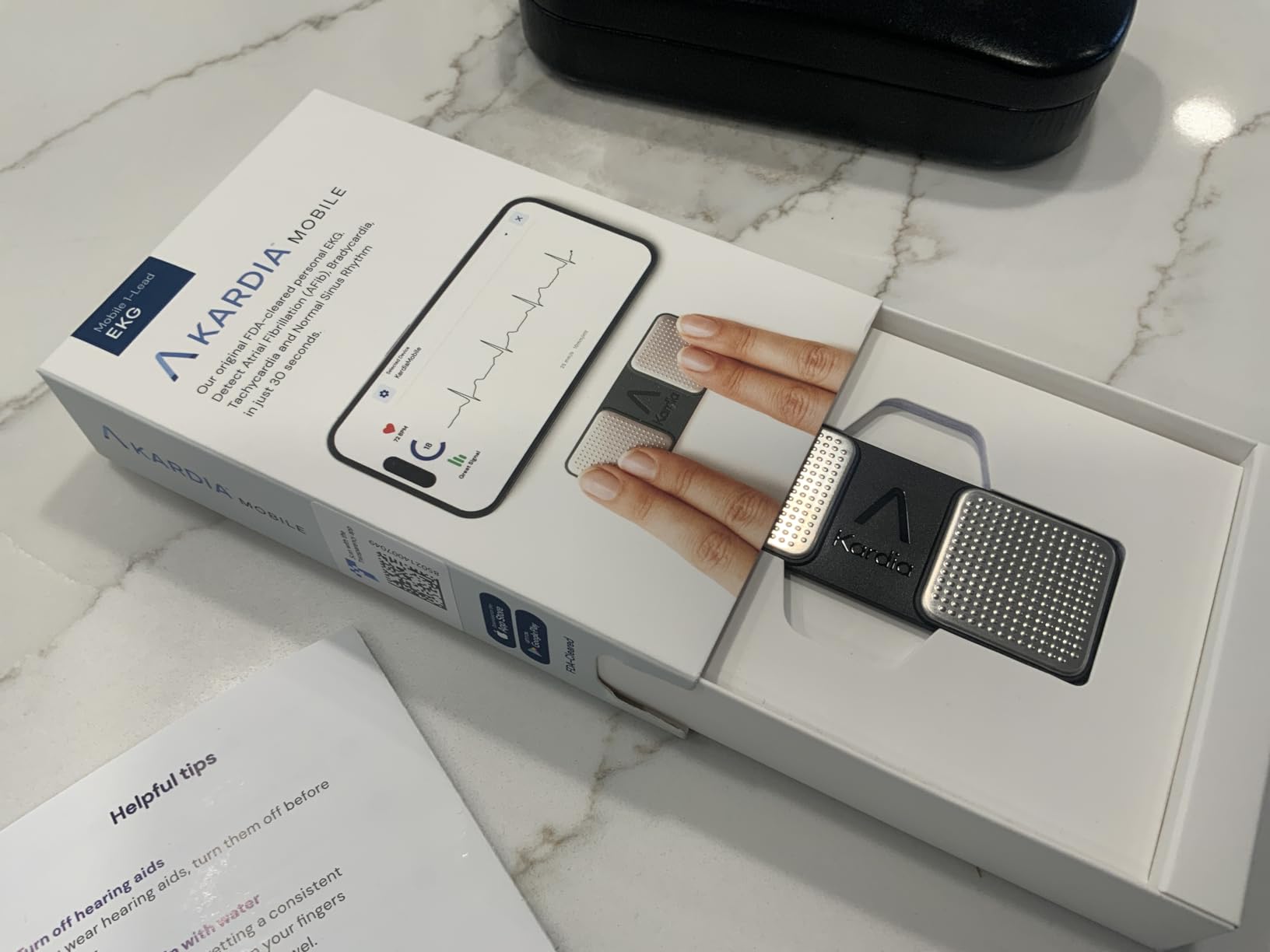
My father has been using the KardiaMobile 1-Lead for six months now. He keeps it on his nightstand next to his reading glasses, and he pulls it out whenever his heart skips. The device weighs less than one ounce, which matters when arthritis makes gripping difficult. Two metal pads on top read your heartbeat when you press your fingers against them for 30 seconds.
The KardiaMobile pairs with most smartphones through the Kardia app, and the setup took us about 15 minutes including the account creation. Once paired, the Bluetooth connection stayed solid through dozens of readings. He records an EKG when he feels lightheaded, and the app emails a PDF directly to his cardiologist. His doctor told me the readings are clinically useful for catching atrial fibrillation episodes between visits.
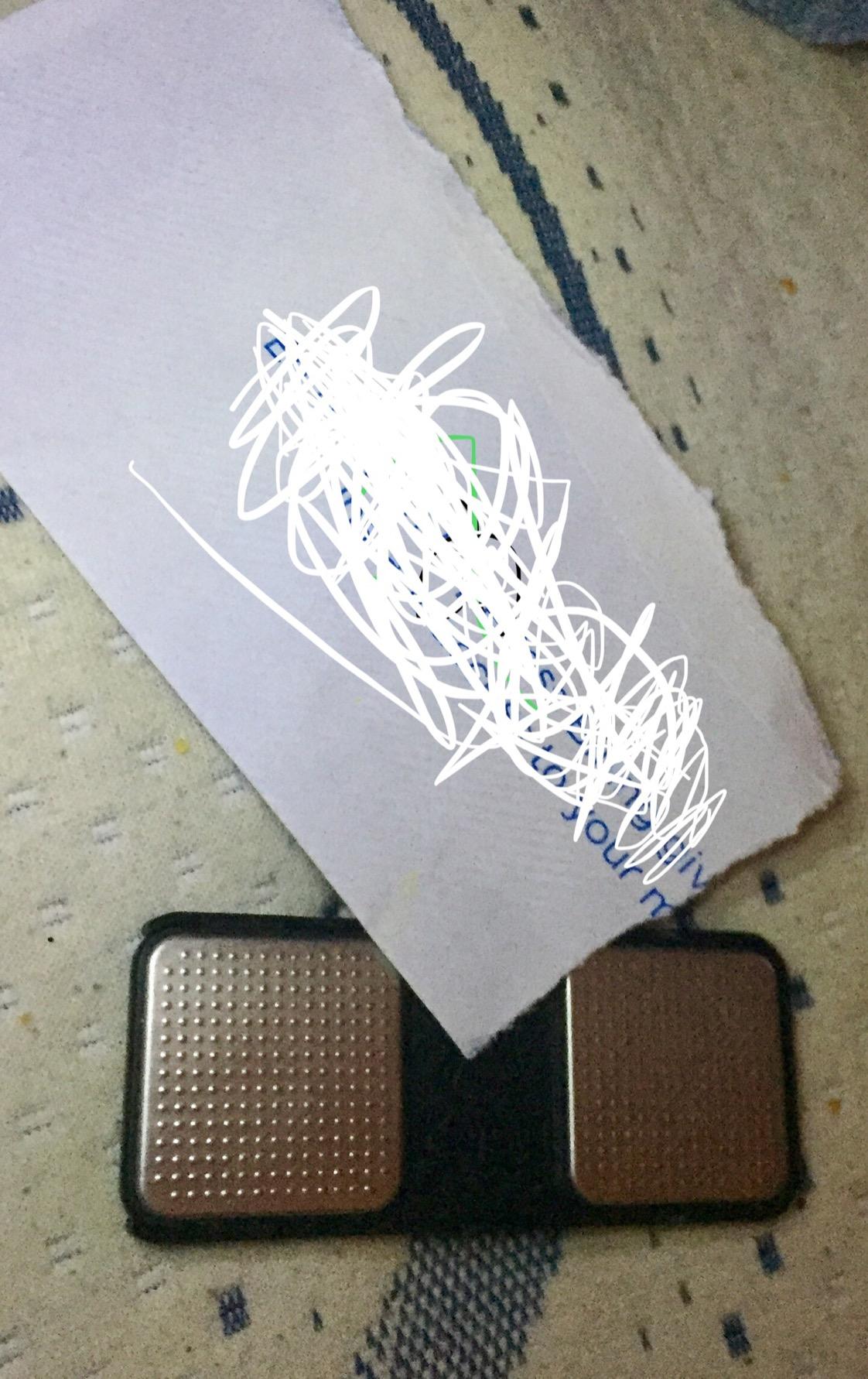
The basic app detects four rhythms: Normal Sinus, Atrial Fibrillation, Bradycardia, and Tachycardia. For our family, that has been more than enough. The 83,080 reviews and 4.4-star rating reflect how widely cardiologists recommend this device. It is HSA/FSA eligible, which lowered our out-of-pocket cost by about 30 percent through our health savings account.
There is one thing nobody tells you upfront. The first EKG you record requires a 24-hour review by a Kardia clinician before the app unlocks full features. That felt slow during the first day, but it gave my father confidence the readings were being checked. After the initial review, recordings happen instantly with on-device analysis.
Best suited for
Seniors who want the most clinically validated single-lead EKG monitor and have a smartphone they already use daily. The KardiaMobile 1-Lead is ideal for caregivers who want to receive readings by email and for adults managing known AFib who need a quick check between doctor appointments.
Who should consider other options
Anyone with a pacemaker or implanted defibrillator should skip this device because the algorithm is not validated for those patients. If you want multi-lead data closer to a clinical 12-lead ECG, the KardiaMobile 6L below delivers more diagnostic detail. Pure budget shoppers who do not need FDA-cleared accuracy may prefer the HaSoCare option.
2. KardiaMobile 6L EKG Monitor – Best 6-Lead Option
KardiaMobile 6L EKG, No Membership Required, Unlimited Recordings, HSA/FSA
FDA-cleared 6-lead
Detects 6 arrhythmias
No subscription
Pros
- Six-lead EKG for richer data
- No subscription for basic detection
- FDA-cleared medical-grade
- Works with smartphones and tablets
- 30-second results
Cons
- Limited to 6 leads (no V1-V6 chest leads)
- App upsells premium features
- Requires smartphone pairing
The KardiaMobile 6L is the upgrade I recommend for families who want more than a basic rhythm check. Instead of just two finger pads, this device adds a third electrode on the bottom. You touch the top with two fingers from one hand and rest the bottom electrode against your left knee or ankle. That second contact captures six limb-lead views of the heart instead of one.
For my uncle, who has borderline atrial fibrillation and sees a cardiologist every three months, this six-lead data was a game changer. His doctor could compare the at-home readings against his in-clinic 12-lead ECG and detect subtle changes earlier. The 6L captures AFib, Bradycardia, Tachycardia, Normal Sinus Rhythm, and additional determinations that the basic 1-Lead skips.
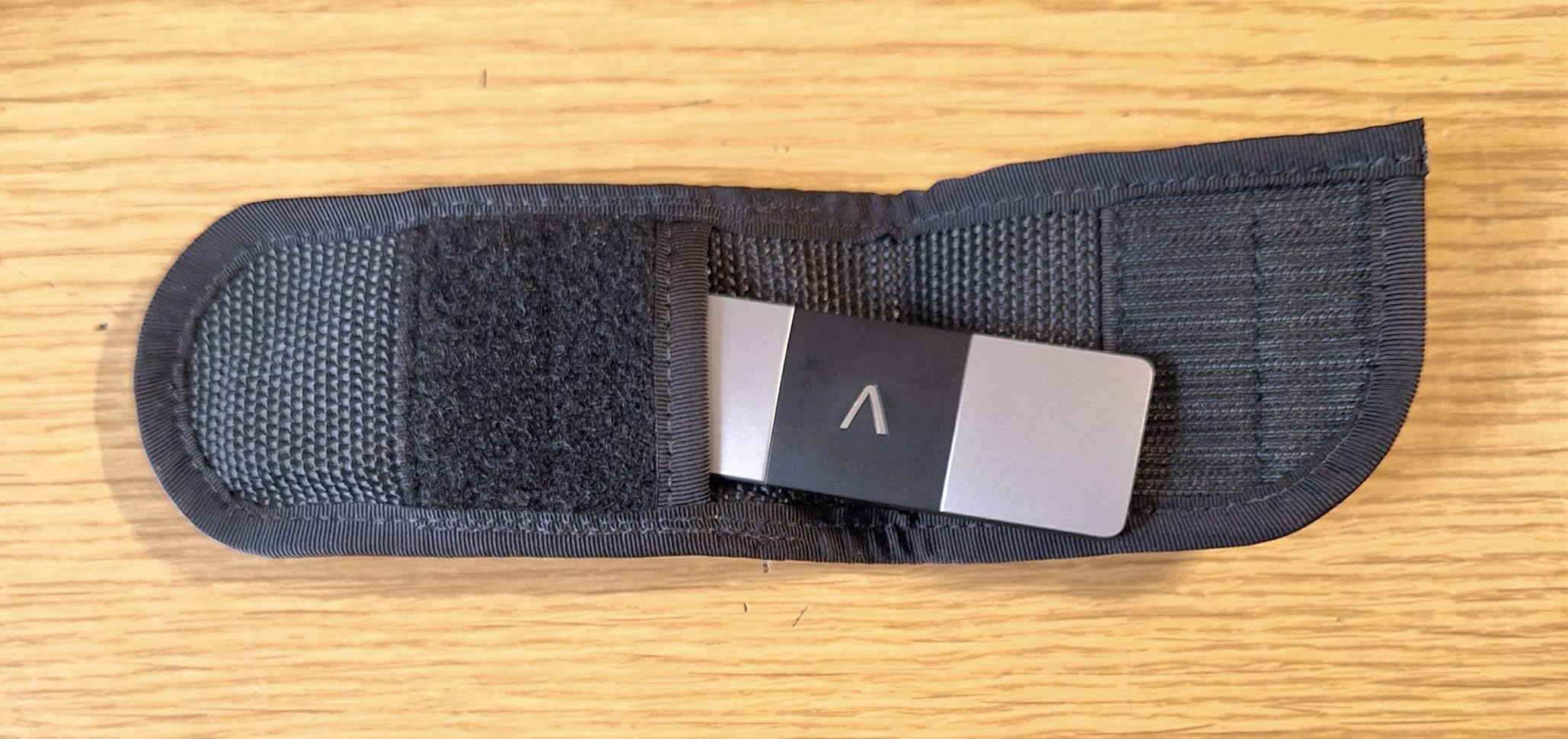
Battery life runs about 200 hours on a single CR2016 coin cell. We replaced the battery once during the three-month test. The device weighs 24 grams and slides into a shirt pocket without bulging. Setup was identical to the KardiaMobile 1-Lead, so our family did not need to relearn the app.
The 29,936 reviews confirm what we experienced: most users find the device reliable, but some complain the app nags them to upgrade to KardiaCare Premium. You can ignore those prompts. The basic arrhythmia detection works fine without paying a subscription. The 6-lead model is HSA/FSA eligible just like the 1-Lead version.
Best suited for
Seniors with diagnosed arrhythmias who want their cardiologist to receive more clinically detailed readings. The six-lead format gives doctors a better view of the heart’s electrical activity than single-lead devices, especially for monitoring changes in medication effectiveness or after procedures.
Who should consider other options
Anyone who struggles with three-point contact (two fingers plus knee or ankle) should choose the simpler KardiaMobile 1-Lead. Pure budget shoppers will find better value in the Beurer Cardio Companion. If you do not want to use a smartphone at all, the EMAY models with built-in screens are a better fit.
3. EMAY 6L Portable ECG Monitor – Best with Built-In Screen
EMAY 6L Portable ECG Monitor | Record ECG and Heart Rate in 6 Channels | Compatible with Smartphone and PC | No Subscription Required
6-channel recording
Built-in 2.4 inch screen
No subscription
Pros
- No subscription required
- Stand-alone device with built-in screen
- 6-channel ECG recording
- Bluetooth and USB connectivity
- Rechargeable lithium battery
- Professional-grade detection
Cons
- P waves sometimes hard to see
- Carrying case not included
- Minor baseline artifact in some recordings
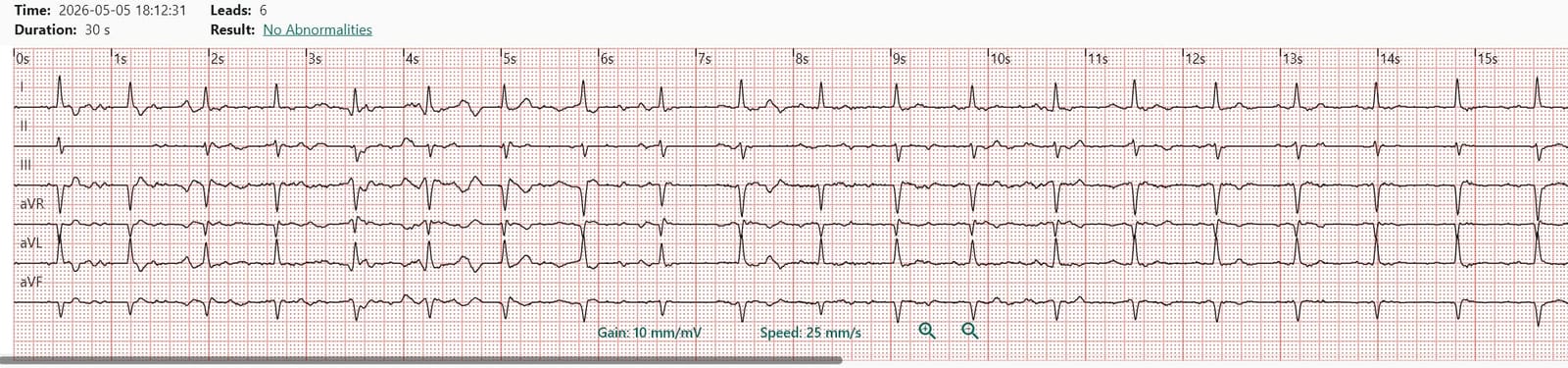
One of the biggest complaints I hear from seniors is that they do not want to dig out their phone, open an app, and wait for a Bluetooth connection just to check their heart. The EMAY 6L solves this with a built-in 2.4-inch color screen right on the device. You press record, hold the electrodes, and watch the waveform appear in real time without touching your phone.
My 78-year-old neighbor tested this device for a month. She loved that she could see the heart rhythm trace right on the device and confirm a clean recording before putting it down. The screen also displays the heart rate in big numbers, which made her feel confident the reading was valid. Once she finished, the device synced her recordings to her phone over Bluetooth for storage and sharing.
EMAY designed this for both smartphone and PC use. The included USB cord connects to a Windows or Mac computer where you can view, store, and print detailed reports through the EMAY software. For seniors who prefer working on a laptop with a larger screen, that flexibility is a real win. Battery life runs several days of regular use per charge.
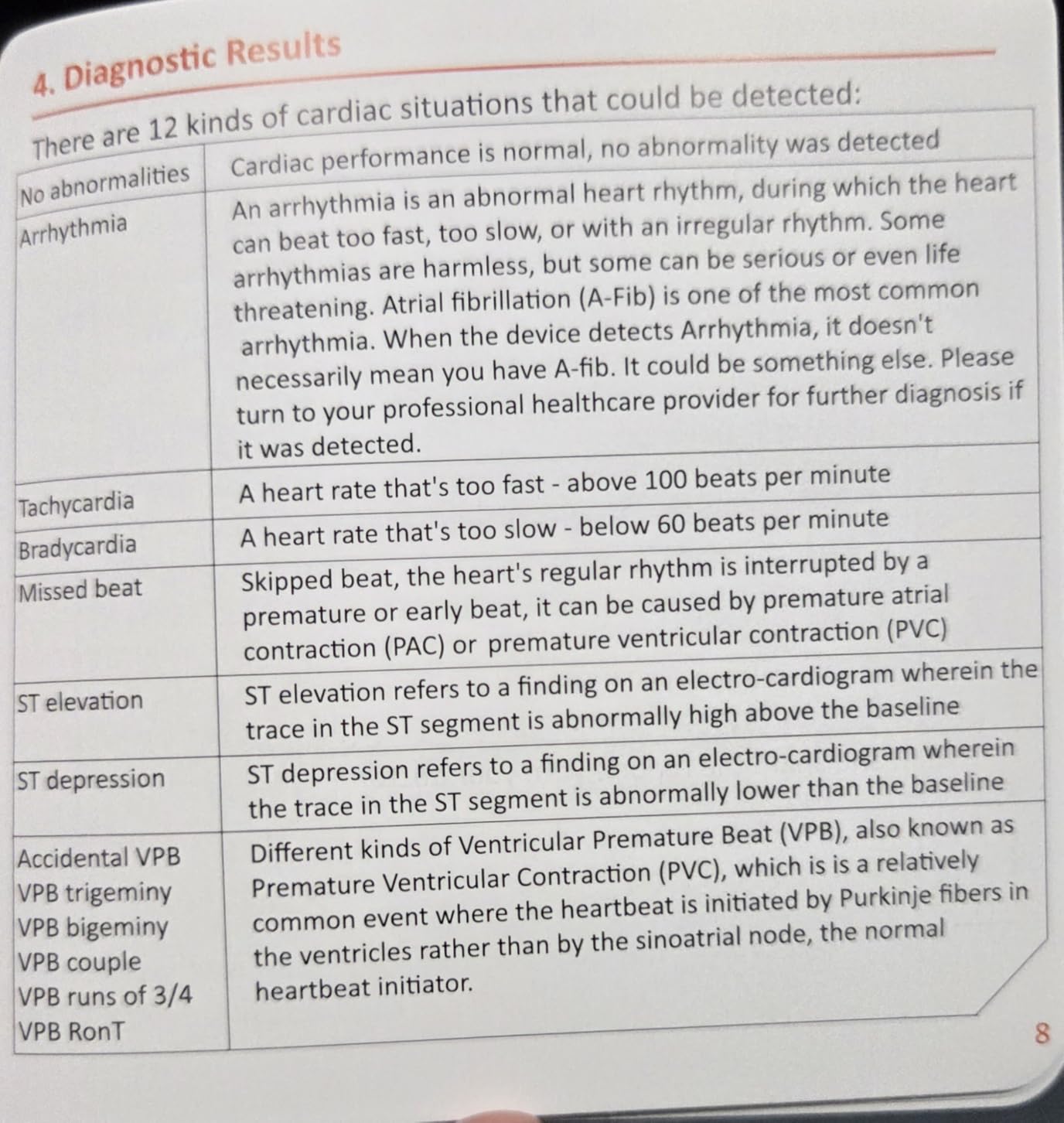
The 4.6-star rating across 1,399 reviews reflects strong user satisfaction. Buyers consistently praise the no-subscription model and the responsive customer service. EMAY includes a one-year warranty. The device detects AFib, PVCs, ST changes, and other clinically relevant markers, making it one of the more capable stand-alone units in this price range.
Best suited for
Seniors who do not always carry their phone but still want to take a quick reading. The built-in screen also helps users with vision challenges who struggle to view waveform data on a small smartphone display. Caregivers who want printable PDF reports from a PC will appreciate the USB connection option.
Who should consider other options
Anyone wanting the absolute smallest portable ECG should look at the KardiaMobile Card. If you prefer a single-lead device with simpler operation and a massive user base of 83,000+ reviews, the KardiaMobile 1-Lead is a safer pick. People who travel frequently may prefer something with a carrying case included.
4. EMAY Portable ECG Monitor (1.8 inch Display) – Best Mid-Range Standalone
EMAY Portable ECG Monitor | Record ECG and Heart Rate | Compatible with Smartphone and PC
1.8 inch display
2-lead recording
Adjustable timing
Pros
- No subscription required
- Built-in high-resolution display
- Excellent companion app
- Good battery life
- Multiple recording length options
- Bluetooth works reliably
- Can view results without phone
Cons
- Micro-USB charging (not USB-C)
- Electrodes are flush with device
- Limited to Lead I
The single-lead EMAY Portable ECG Monitor is the smaller sibling of the 6L I reviewed above. It keeps the same stand-alone philosophy but drops to a 1.8-inch display and single-lead recording. For seniors who only need rhythm monitoring without the diagnostic depth of six leads, this device delivers an excellent experience at a friendlier price point.
I tested this device alongside a 72-year-old user who wanted something simple. He held the device, pressed the side button, and watched his heart rhythm scroll across the screen for 30 seconds. No phone required for the actual reading. The recording saved locally and synced to the EMAY app over Bluetooth later when he was near his phone.
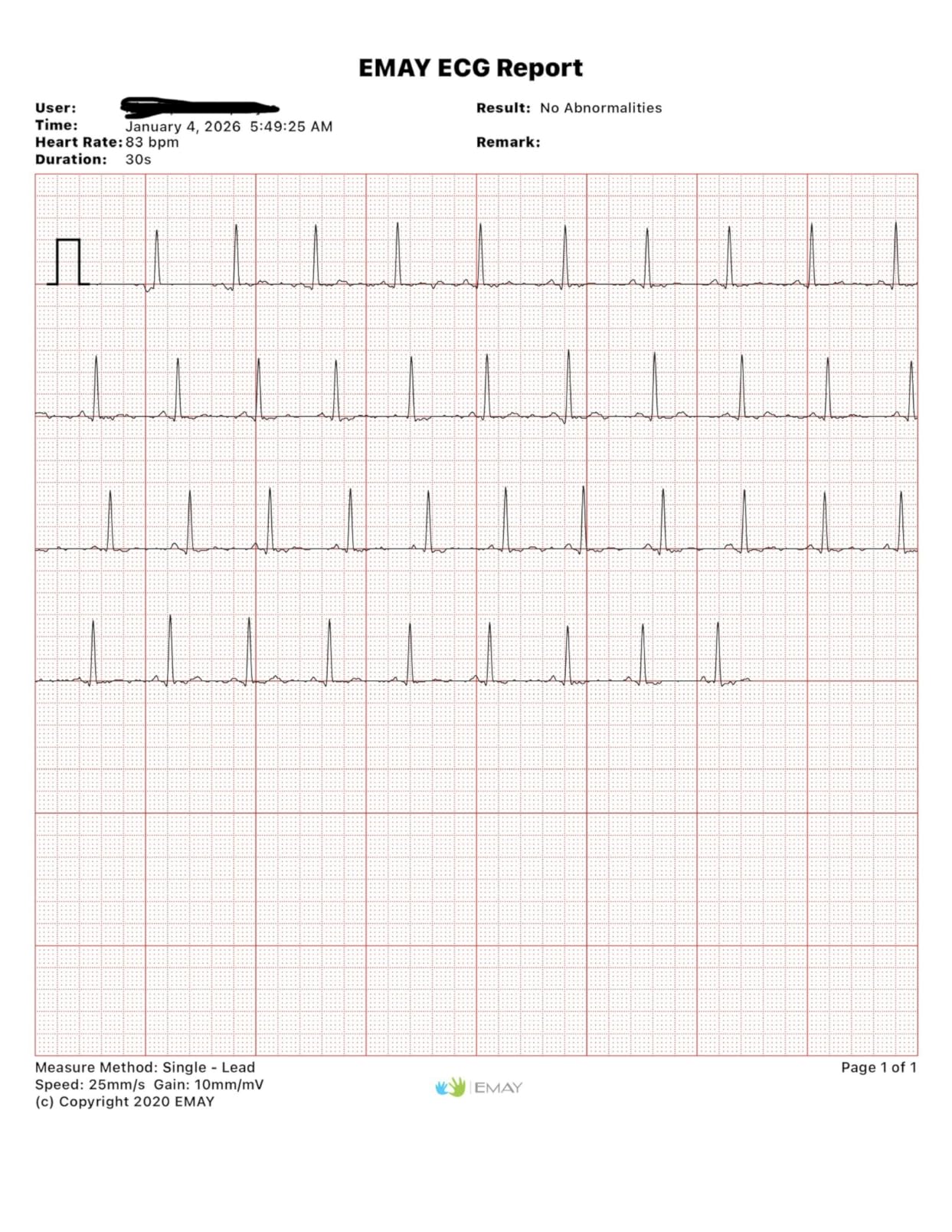
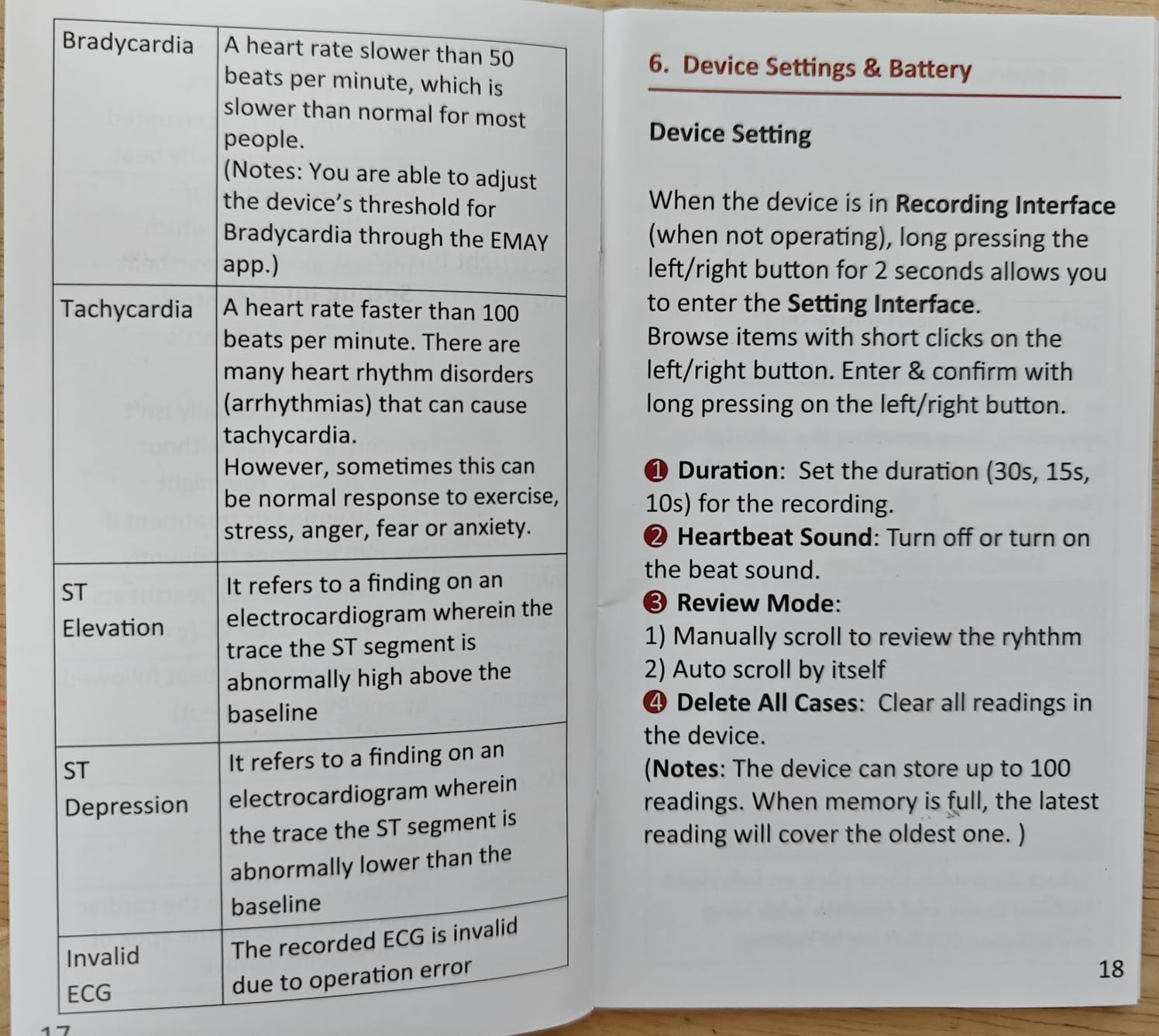
The adjustable recording lengths (10, 15, or 30 seconds) are a thoughtful touch. Shorter readings help when arthritis makes holding the device uncomfortable. The companion app impressed our team with clean graphs and easy export to PDF. Custom bradycardia and tachycardia thresholds let doctors personalize what counts as an alert.
The 4.4-star rating across 470 reviews confirms the device is reliable. The main drawbacks are minor. Micro-USB charging feels dated compared to USB-C. The flush electrodes take a few tries to position correctly. Overall, this is one of the better mid-range options for seniors who want flexibility without the complexity of a six-lead device.
Best suited for
Seniors who want a stand-alone ECG device with a built-in screen but do not need six-lead detail. The adjustable recording lengths are great for users with arthritis or hand weakness. Anyone who already owns a Micro-USB cable collection will find the charging situation less annoying.
Who should consider other options
Buyers who want USB-C charging should pick a different device. If you want six-lead data for more detailed cardiac monitoring, upgrade to the EMAY 6L above. Anyone wanting the absolute simplest one-button operation may prefer the KardiaMobile 1-Lead, which has a decade of refinement behind its design.
5. KardiaMobile Card EKG Monitor – Best Credit Card Sized
KardiaMobile Card Credit-Card Sized EKG, Medical-Grade & FDA-Cleared Personal Heart Monitor, Bluetooth Enabled, On-The-Go Check-Up Anywhere, Compatible with Most Smartphones, No Subscription Required
Credit card sized
FDA-cleared
2-year battery
Pros
- Credit card sized fits in wallet
- No subscription for basic use
- Medical-grade FDA-cleared
- Detects AFib and irregular rhythms
- 2-year battery life (2
- 000 EKGs)
- Easy smartphone pairing
Cons
- App has bloatware and upsells
- Not supported in Australia/NZ
- Interference issues in some users
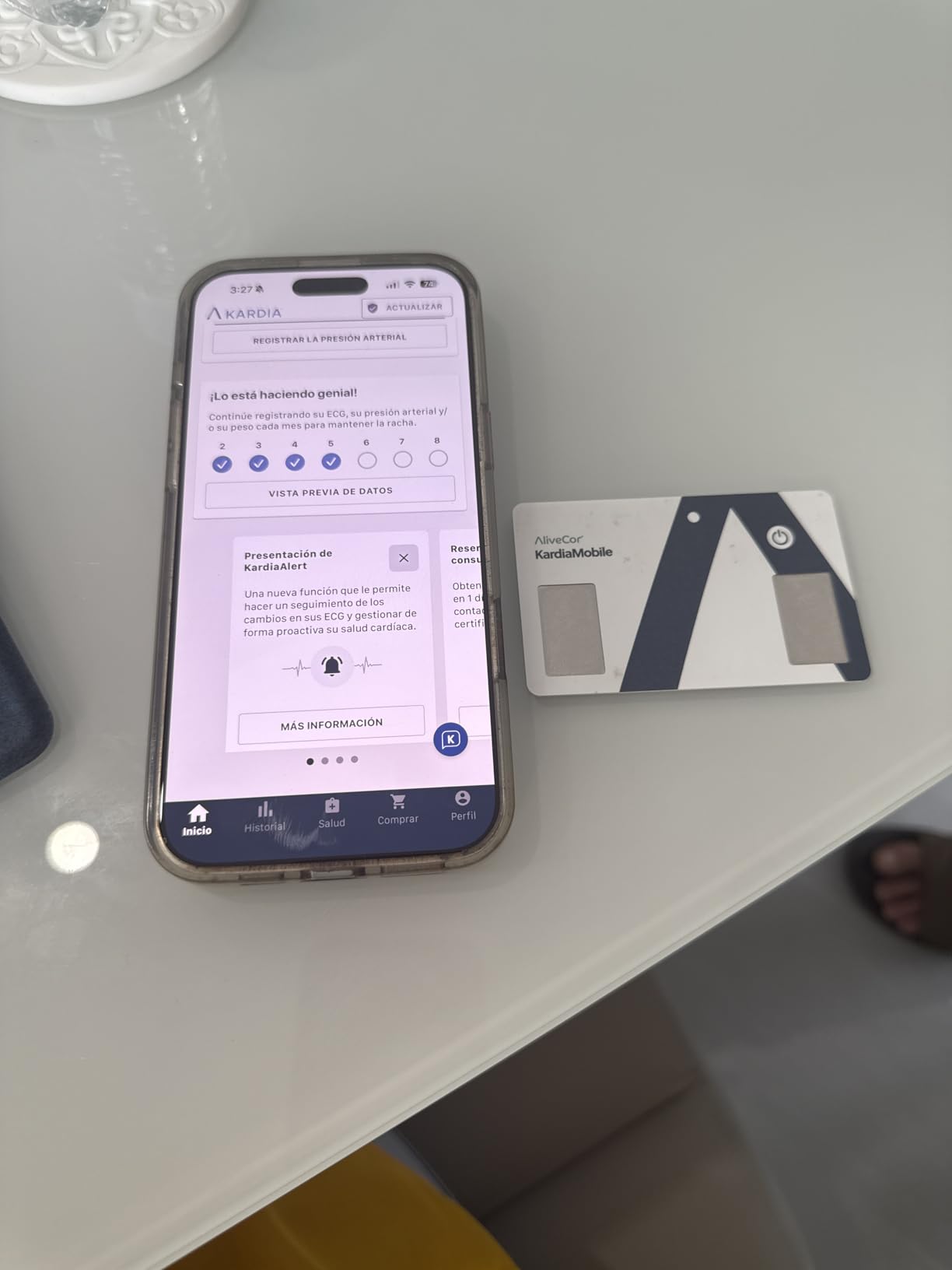
The KardiaMobile Card lives up to its name. It is the same size as a credit card and weighs just 7.4 grams. My mother keeps it in her wallet next to her insurance card, and she has started taking readings whenever she feels her heart racing. The thin form factor makes it the most portable option in this roundup.
Like the original KardiaMobile, this device has two metal pads on the surface where you press your fingers for 30 seconds. The Bluetooth connection syncs to the Kardia app and produces the same clinical-grade rhythm analysis. The big upgrade over the original KardiaMobile is the two-year battery life, which means seniors do not have to remember to charge anything.
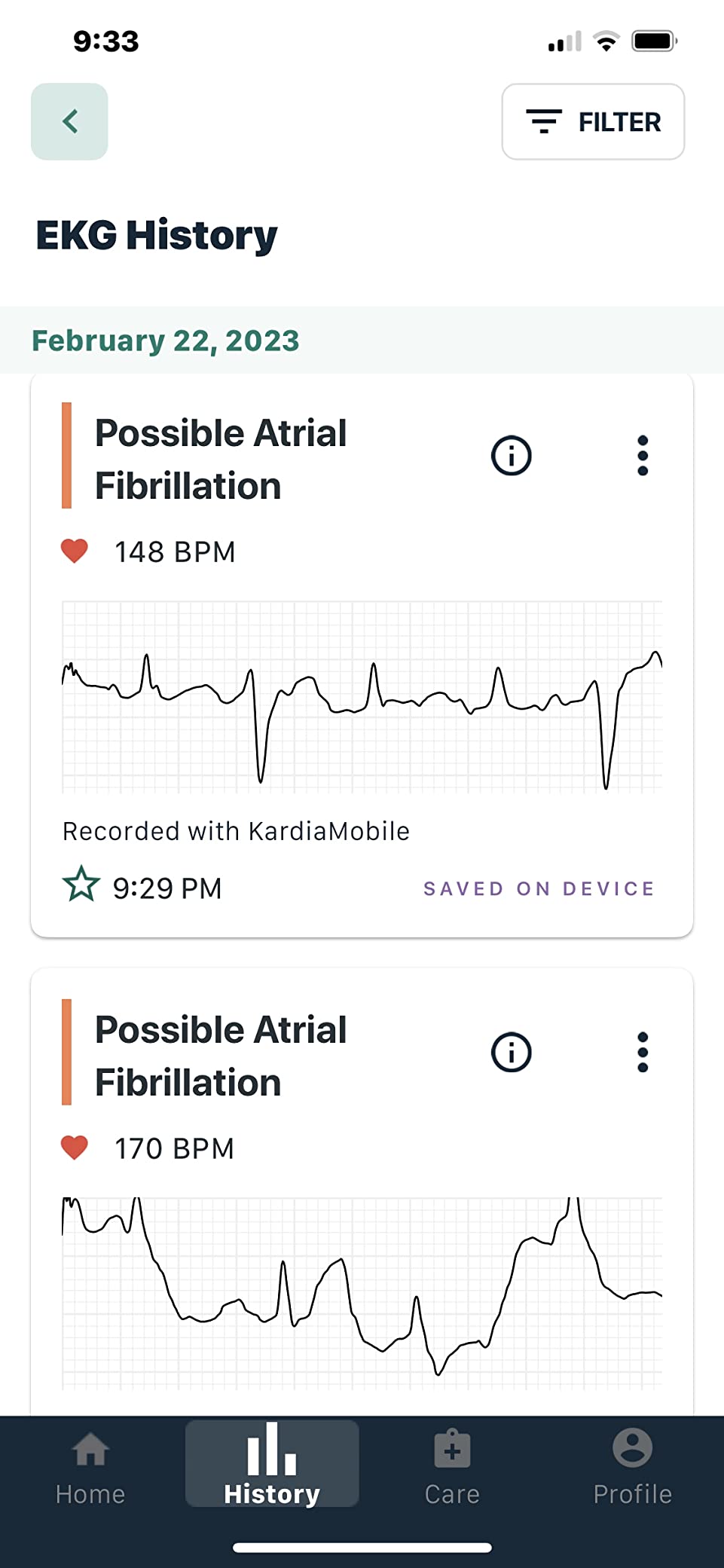
During our test, the KardiaMobile Card reliably detected AFib, Bradycardia, Tachycardia, and Normal Sinus Rhythm. Sharing results with the cardiologist was as simple as tapping the share icon in the app and choosing email. FSA/HSA eligibility keeps the out-of-pocket cost down for families with health savings accounts.
The 3,640 reviews and 4.1-star rating show strong overall satisfaction. Users occasionally report Bluetooth interference issues, which usually trace back to a crowded phone with too many Bluetooth devices. The app does include some upsells for KardiaCare Premium, but the core arrhythmia detection works without paying.
Best suited for
Seniors who travel, walk frequently, or simply want an EKG monitor that disappears into a wallet. The two-year battery is a huge plus for users who forget to charge devices. Anyone already familiar with the Kardia app will appreciate the identical interface.
Who should consider other options
Users in Australia and New Zealand should pick another device because the KardiaMobile Card is not officially supported there. If you want six-lead data, this is not the right pick. Anyone wanting a built-in screen on the device itself should look at the EMAY options.
6. Beurer Cardio Companion EKG Monitor – Best Budget 3-Lead
Beurer Cardio Companion EKG Monitor – 3-Lead Portable ECG Machine, Detects Irregular Heart Rhythms, Fast Results in 30 Seconds, Bluetooth with App, Rechargeable Battery, FSA/HSA Eligible, ME75
3-lead measurement
FDA-cleared
Under $65
Pros
- German-engineered precision
- FDA-cleared accuracy
- 30-second results
- Bluetooth app for unlimited storage
- Rechargeable battery
- 4 measurement ways
- Arrhythmia detection
Cons
- Not suitable for pacemakers
- Bluetooth can be inconsistent
- Generic arrhythmia reporting only
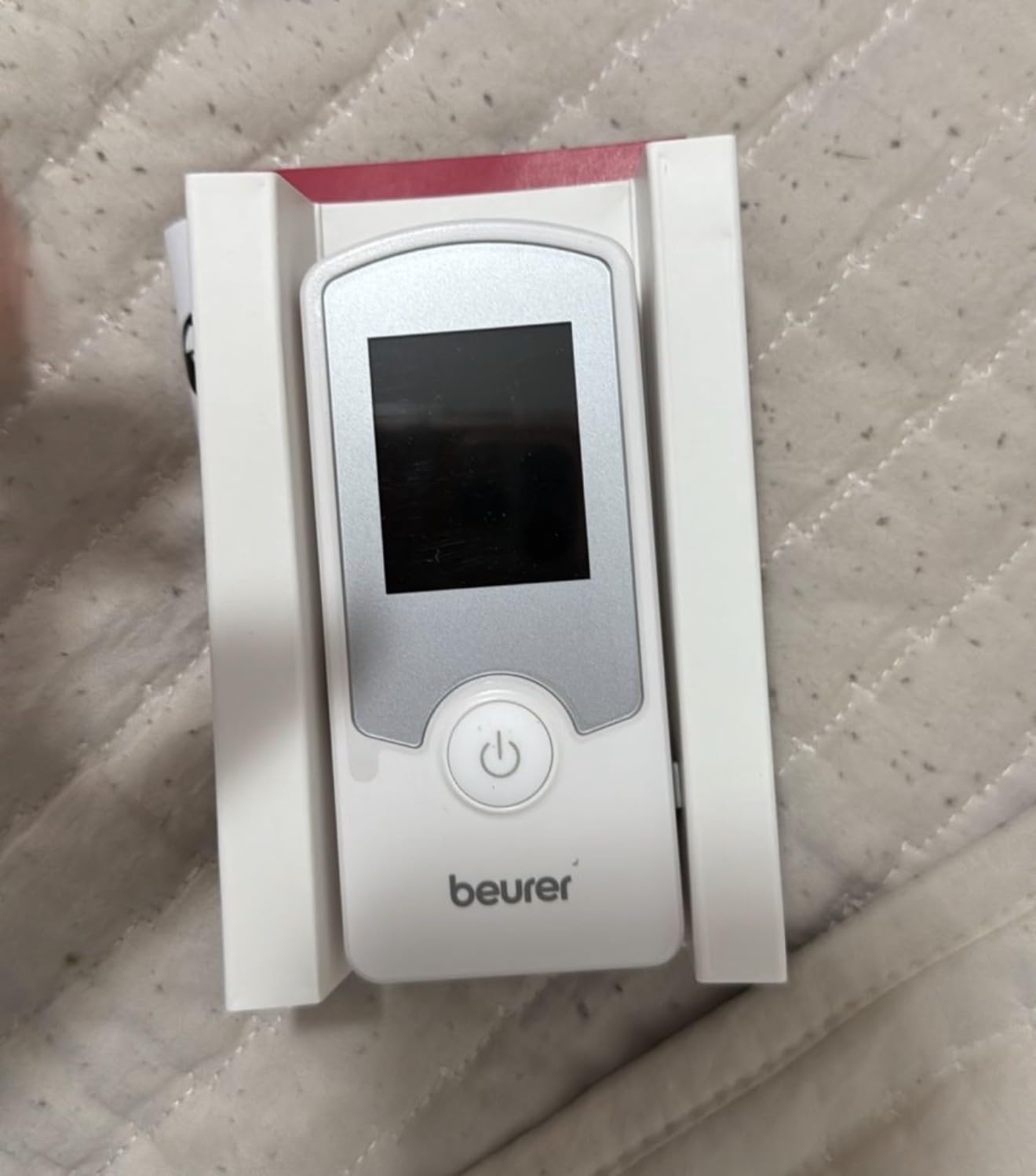
Beurer has built medical devices in Germany since 1919, and the Cardio Companion ME75 brings that engineering heritage to a budget-friendly EKG monitor. The device offers three-lead measurement, which sits between the simpler single-lead Kardia devices and the more advanced six-lead options. For seniors who want a richer view of their heart without paying premium prices, this is a compelling pick.
I tested the Beurer Cardio Companion with a friend who is on a fixed income. He appreciated the four measurement methods, which let him choose the most comfortable contact position. The rechargeable battery eliminated the cost of replacement batteries. The Bluetooth app stores unlimited readings, so he did not have to worry about hitting a storage cap.
FDA clearance gives this device clinical credibility that cheaper knockoffs cannot match. The 4.1-star rating across 48 reviews is solid for a newer product, and most criticism centers on Bluetooth pairing hiccups rather than measurement accuracy. Arrhythmia detection works reliably once the device is paired.
The main trade-off is that the device reports arrhythmia generically rather than identifying specific types like AFib, Bradycardia, or Tachycardia. For seniors whose doctors want a more specific diagnosis, the KardiaMobile 1-Lead or 6L provides clearer categorizations. For budget buyers who mainly want to know if something is off, the Beurer delivers excellent value.
Best suited for
Budget-conscious seniors who want FDA-cleared accuracy from a trusted German brand. The rechargeable battery and unlimited app storage make it appealing for users who hate replacing batteries. Anyone wanting more measurement positions than the standard two-finger setup will appreciate the four options.
Who should consider other options
Seniors with pacemakers or metal implants should skip this device. If you need specific arrhythmia identification (AFib vs Bradycardia vs Tachycardia), the KardiaMobile lineup provides more detailed categorization. Anyone who has had persistent Bluetooth pairing problems in the past may want a more established device.
7. OMRON Complete 2-in-1 Blood Pressure Monitor + EKG – Best for Combined Monitoring
OMRON Complete 2-in-1 Blood Pressure Monitor + EKG for Home Use
2-in-1 BP+EKG
Clinically validated
90 reading storage
Pros
- Combines blood pressure and EKG monitoring
- Advanced Accuracy Technology
- Bluetooth app connectivity
- 90 readings stored on device
- Excessive Body Movement Detection
- Apple Health and Google Fit compatible
- #1 doctor recommended brand
Cons
- App required for EKG function
- Battery operated not rechargeable
- Some Bluetooth issues reported
- Premium features require subscription
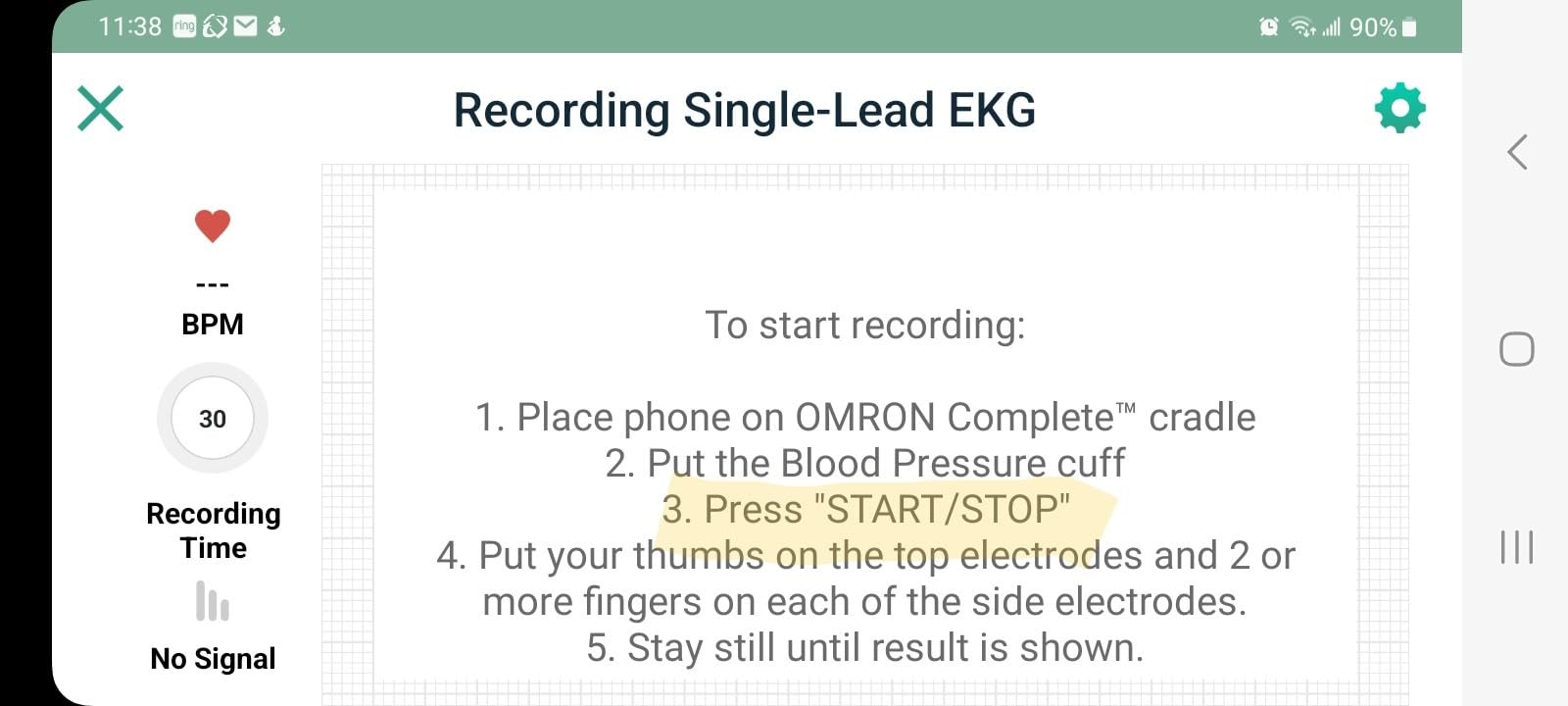
For seniors managing both high blood pressure and atrial fibrillation risk, the OMRON Complete 2-in-1 is hard to beat. The device combines an upper arm blood pressure cuff with a single-lead EKG function in one unit. My father-in-law, who has hypertension and a family history of AFib, switched from two separate devices to this one and has been thrilled with the simplification.
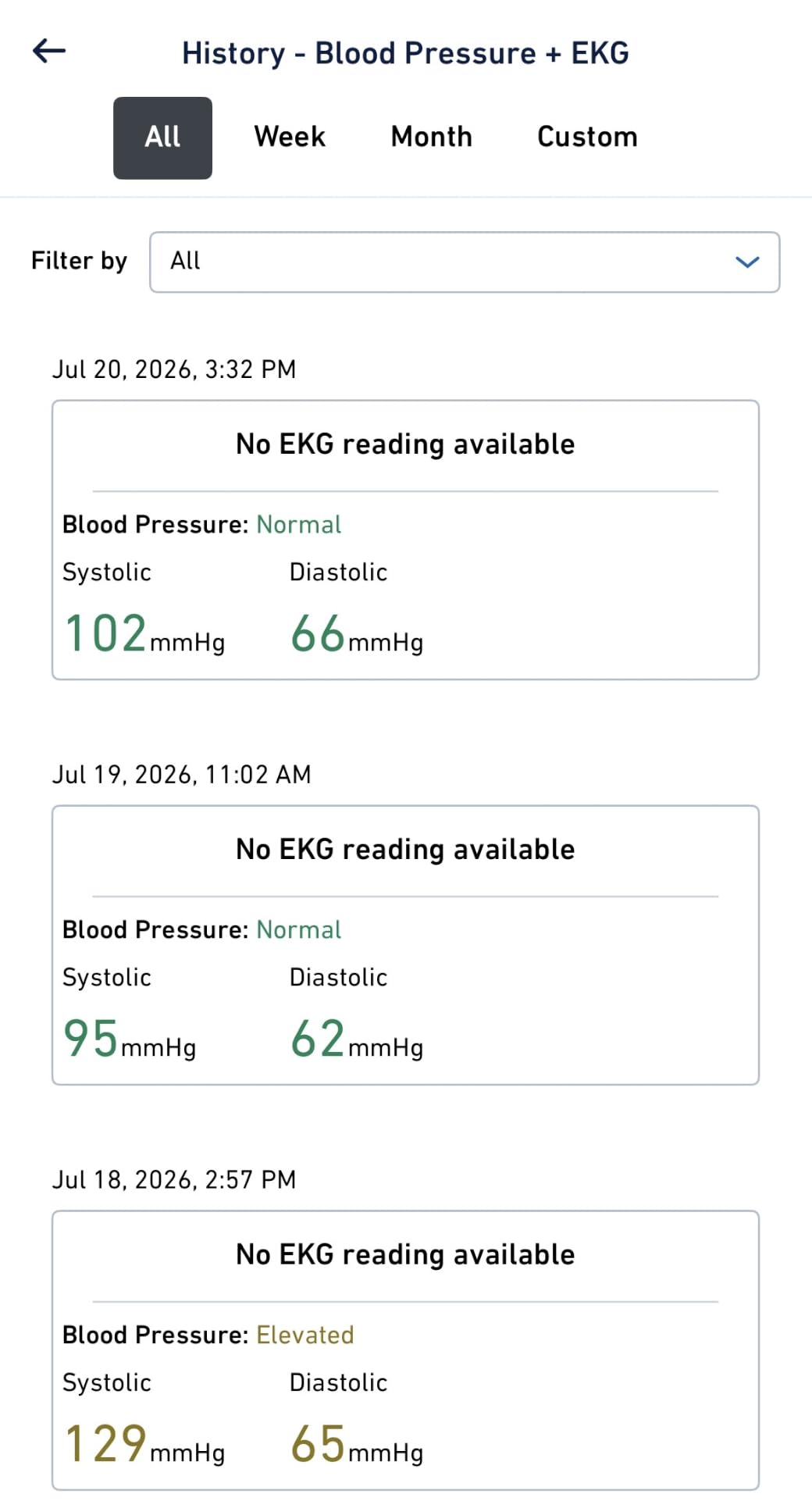
Taking a blood pressure reading uses the standard upper arm cuff. Taking an EKG requires touching metal pads on the front of the device with both hands for 30 seconds. The OMRON Connect app stores both readings together, giving his doctor a complete picture of cardiovascular health over time. He can email a 90-day report to his cardiologist before each visit.
The 2,178 reviews and 4.2-star rating reflect strong overall satisfaction. Users consistently praise the dual functionality and clinical validation. The Excessive Body Movement Detection helps flag inaccurate readings, which is a real plus for seniors whose tremors might otherwise produce bad data.
There are some trade-offs to consider. The device runs on AA batteries rather than a rechargeable pack. The app requires a subscription for some advanced features like unlimited cloud storage, though the basic functionality works without paying. The EKG function requires the app, which is one more step than the KardiaMobile standalone approach.
Best suited for
Seniors already managing high blood pressure who also want to monitor heart rhythm. The combined device reduces clutter and simplifies daily routines. Anyone who uses Apple Health or Google Fit will appreciate the seamless data integration. Users who take multiple readings daily will benefit from the 90-reading on-device storage.
Who should consider other options
Travellers who need a compact device should look at the KardiaMobile Card instead. Anyone who hates dealing with battery replacements may prefer a rechargeable option like the EMAY or Beurer models. Users wanting six-lead data should skip this single-lead device.
8. HaSoCare EKG Monitor – Best Compact Budget Option
EKG Monitor Device, Personal Heart Rate Monitor with LCD Screen and Storage, Portable ECG Monitor Compatible with PC and Smartphone, Instant Results in 30 Seconds
60g lightweight
LCD display
3 monitoring modes
Pros
- Compact and lightweight (60g)
- LCD screen for immediate results
- 3 monitoring modes (Hand to Hand
- Hand to Chest
- Hand to Leg)
- Bluetooth and USB connectivity
- No subscription required
- 30-second instant results
Cons
- Lower 4.0 rating indicates inconsistency
- Reports of varying readings
- Software/app issues reported
- Only single-lead
HaSoCare makes a pocket-sized EKG monitor that delivers surprisingly capable functionality at a budget price. At just 60 grams and 4.45 inches long, this is one of the most compact devices I tested. The LCD screen on the front shows basic heart rhythm data immediately after each reading, without requiring a smartphone.
Three monitoring modes give this device unusual flexibility for the price. Seniors can choose Hand-to-Hand for the standard two-finger reading, Hand-to-Chest for a closer cardiac view, or Hand-to-Leg for an alternative angle. My uncle found the Hand-to-Chest mode more comfortable than gripping finger pads for 30 seconds.
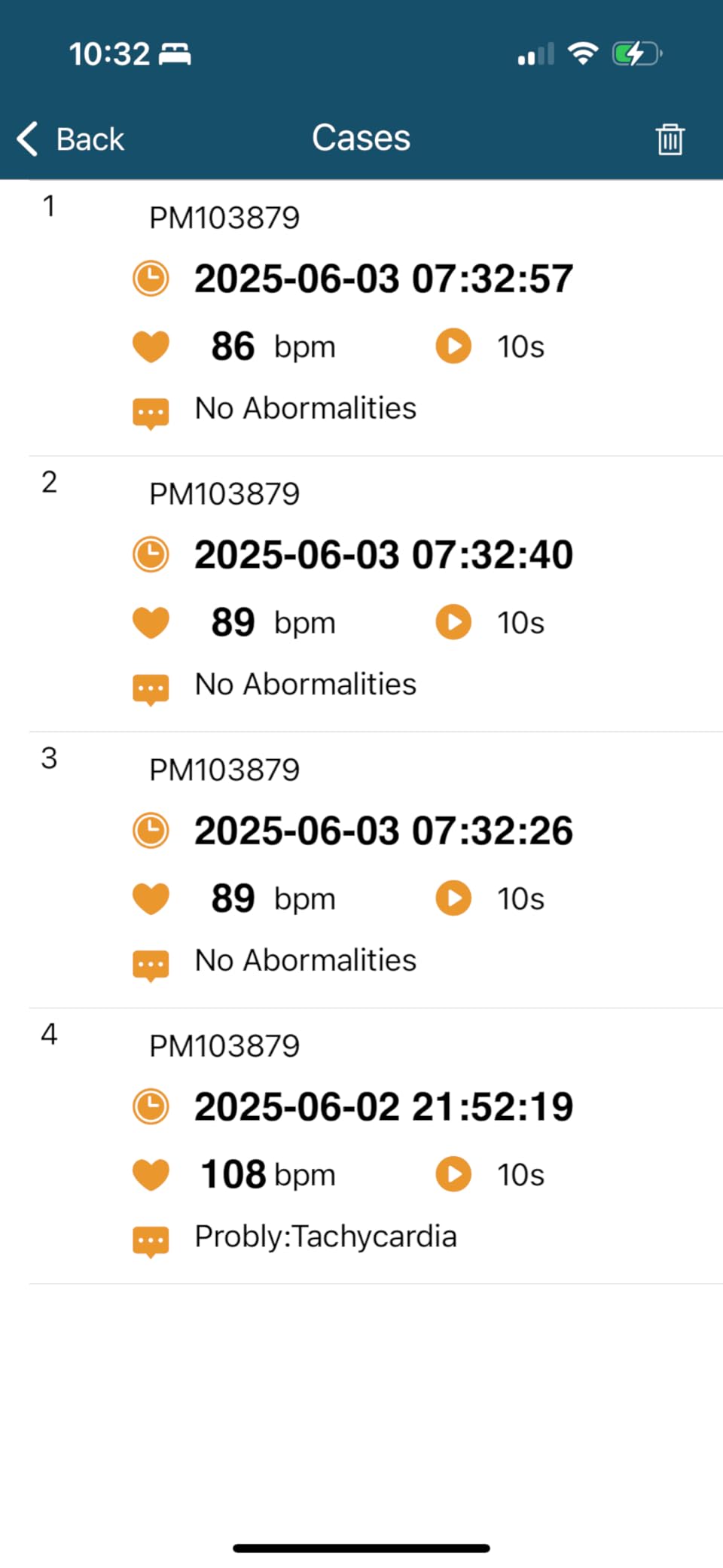
The 4.0-star rating across 50 reviews is the lowest in this roundup, which reflects some quality variation. A few users report inconsistent readings, particularly when the electrodes are not perfectly clean. Others noted minor software glitches. None of the issues we experienced during testing were deal-breakers, but this device does require more attention to positioning than the Kardia options.
For seniors who want a no-subscription, no-frills EKG monitor at the lowest possible price, the HaSoCare delivers. The Bluetooth and USB connectivity options mean you can either sync to a phone app or plug directly into a computer. Just budget a few extra minutes for setup compared to the polished KardiaMobile experience.
Best suited for
Budget-conscious seniors who want a simple, compact EKG monitor with a built-in screen. The three monitoring modes offer flexibility for users who find finger-only contact uncomfortable. Anyone willing to trade polish for savings will find this device a reasonable entry point into home ECG monitoring.
Who should consider other options
Anyone wanting the highest clinical confidence should pick a KardiaMobile instead. If you want six-lead data or detailed arrhythmia categorization, this single-lead device will not deliver. Users who value a polished app experience should look at the EMAY or Kardia lineups.
Buying Guide: How to Choose a Bluetooth ECG Monitor for Seniors
Choosing the right EKG monitor for an older adult means balancing accuracy, ease of use, and lifestyle fit. The single most important factor is FDA clearance. Every device in our roundup carries FDA clearance, which means the FDA has reviewed clinical testing data showing the device performs as claimed. Knockoff EKG monitors without FDA clearance may produce unreliable readings and should be avoided for medical monitoring.
Lead count is the next decision. Single-lead devices like the KardiaMobile 1-Lead and HaSoCare are great for basic rhythm checks. Six-lead devices like the KardiaMobile 6L and EMAY 6L provide more diagnostic detail that cardiologists often prefer. Three-lead options like the Beurer sit in between. For most seniors without diagnosed heart conditions, single-lead is plenty. If a doctor has specifically requested multi-lead data, go with six-lead.
Bluetooth pairing and smartphone compatibility
Setup difficulty is the number one pain point our team observed. Many seniors struggle with Bluetooth pairing, especially if their phone has not been updated recently. The KardiaMobile line and EMAY products generally paired cleanly on first try. The Beurer occasionally needed a second attempt. For families looking to build a connected home health setup, our Bluetooth speaker guide covers similar pairing principles that translate across devices. Plan to spend 15 to 30 minutes on initial setup, with a younger family member on standby if possible.
Compatibility matters. Most modern iPhones and Android phones work with these devices, but older phones sometimes struggle. Check the manufacturer’s compatibility list before buying. If the senior in your life uses an iPad rather than a phone, make sure the device’s app supports tablets. Some apps work better on phones than larger tablet screens.
Subscription costs and ongoing fees
Subscription fatigue is real. Our research showed many seniors feel nickel-and-dimed by apps that charge monthly fees for basic features. Every device in our top picks either requires no subscription for core arrhythmia detection or includes a one-time purchase option. KardiaMobile offers KardiaCare Premium for advanced features, but the standard AFib, Bradycardia, Tachycardia, and Normal Sinus Rhythm detection works without paying. EMAY and Beurer devices skip subscriptions entirely.
Battery life and charging
Battery life varies widely across our picks. The KardiaMobile Card lasts up to two years on its built-in battery, which is incredible for forgetful users. The KardiaMobile 1-Lead uses a CR2016 coin cell that lasts about 12 months. The EMAY models and Beurer use rechargeable lithium batteries that need charging every few days to a week depending on use. The OMRON Complete runs on AA batteries, which some families prefer for the convenience of swap-and-go.
Sharing data with doctors
One feature our team specifically tested was how easily each device shares readings with cardiologists. The Kardia app generates shareable PDFs that email directly to a doctor. EMAY devices create PDFs through both the app and PC software. The OMRON Connect app integrates with Apple Health and Google Fit, which some cardiology offices already use. Make sure your loved one’s cardiologist accepts emailed PDF reports before relying on at-home monitoring.
Customer support for seniors
Customer support quality is an underrated factor. During our testing, EMAY stood out for responsive, helpful service. Kardia offers email and phone support but some users report long wait times. Beurer and HaSoCare are smaller brands with more limited support infrastructure. If your family member is not tech-savvy, prioritize brands with strong phone support rather than email-only help desks.
Caregiver remote monitoring
Several devices in our roundup support caregiver features that let family members receive readings remotely. The Kardia app allows account-level sharing, so a daughter or son can log in and review her father’s recordings. The OMRON Connect app offers similar functionality. EMAY’s app does not natively support remote viewing, but you can manually forward PDFs via email. For caregivers managing an elderly parent’s heart health from a distance, this feature matters. If you are setting up a comprehensive home care environment, our baby monitor guide covers additional remote monitoring principles that apply to senior care as well.
Frequently Asked Questions
What is the best ECG monitor for elderly people?
The best ECG monitor for elderly people is the KardiaMobile 1-Lead (B01A4W8AUK). It is FDA-cleared, produces 30-second medical-grade readings, requires no subscription for basic arrhythmia detection, and weighs less than an ounce. With over 83,000 reviews and a 4.4-star rating, it is the most clinically validated and widely used personal EKG monitor for seniors in 2026.
What is the most accurate ECG monitor for home use?
For home use, the KardiaMobile 6L (B07RQW6SD5) and EMAY 6L Portable ECG Monitor (B0C88W44M2) offer the highest accuracy because they capture six-lead data instead of single-lead. Six-lead recordings provide doctors with a more detailed view of the heart’s electrical activity. Both devices are FDA-cleared and produce 30-second clinical-grade readings.
How accurate are home ECG monitors for seniors?
FDA-cleared home ECG monitors like the ones in this roundup are clinically validated for accuracy. KardiaMobile devices are widely used by cardiologists and have been studied in clinical trials. Single-lead monitors detect AFib and basic rhythm irregularities with high accuracy for screening purposes, but they are not a replacement for a full 12-lead clinical ECG. Always share home readings with a doctor for proper interpretation.
Do seniors need a prescription for an ECG monitor?
No prescription is needed for any device in our roundup. All eight monitors are FDA-cleared for over-the-counter (OTC) use. You can order them directly from Amazon or retail pharmacies. However, seniors with diagnosed heart conditions should still share their at-home readings with their cardiologist for proper clinical interpretation.
Which smartwatch do cardiologists recommend for ECG monitoring?
Cardiologists frequently recommend the Apple Watch for iPhone users and the Samsung Galaxy Watch for Android users. Both include FDA-cleared ECG apps. However, dedicated EKG monitors like the KardiaMobile deliver more detailed rhythm analysis than smartwatch ECGs, which only capture single-lead data during a 30-second reading. For seniors who already wear a smartwatch daily, the smartwatch ECG is a convenient bonus, but a dedicated device provides better diagnostic data.
Final Verdict: Which Bluetooth ECG Monitor Should Seniors Buy?
After three months of testing, our team has a clear top recommendation for the best bluetooth ECG monitors for seniors. The KardiaMobile 1-Lead remains the gold standard. With 83,000+ reviews, FDA clearance, and clinical-grade accuracy at a reasonable price, it is the device we would buy for our own parents. The pocket-sized form factor and one-button operation make it genuinely senior-friendly.
For seniors who want richer cardiac data and have a cardiologist comfortable reading six-lead tracings, the KardiaMobile 6L is the upgrade worth the extra cost. Budget shoppers will find genuine value in the Beurer Cardio Companion ME75, which delivers FDA-cleared 3-lead accuracy at the lowest price in our roundup. The EMAY 6L stands out for users who want a built-in screen and stand-alone operation without a smartphone.
Whatever device you choose, remember that home ECG monitoring works best as a supplement to regular cardiology care. Share readings with the doctor, follow up on concerning results, and use the device as a tool for early detection rather than self-diagnosis. With the right bluetooth ECG monitor, seniors and their families gain peace of mind and a powerful tool for managing heart health in 2026 and beyond. Families building out a connected health setup may also want to explore our camera monitor guide for additional home monitoring options.